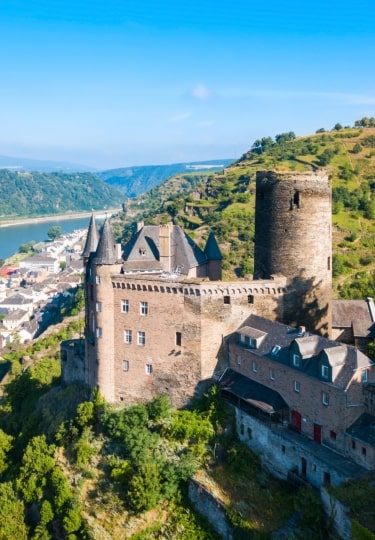
Dramatic fortresses are a commanding feature of the European landscape, but which is the best river cruise to see castles? The answer is, there is no right or wrong choice as you will see castles—from the deck or lounge of your ship or dominating the skyline in towns and cities—on any river sailing into the heart of Europe.
Built in lofty locations to protect against invasion, control trade routes, and as symbols of power, wealth, and prestige by nobility, many castles remain remarkably intact while others are now atmospheric ruins. Here are 14 top destinations to discover castles on a river cruise.
The Middle Rhine Valley
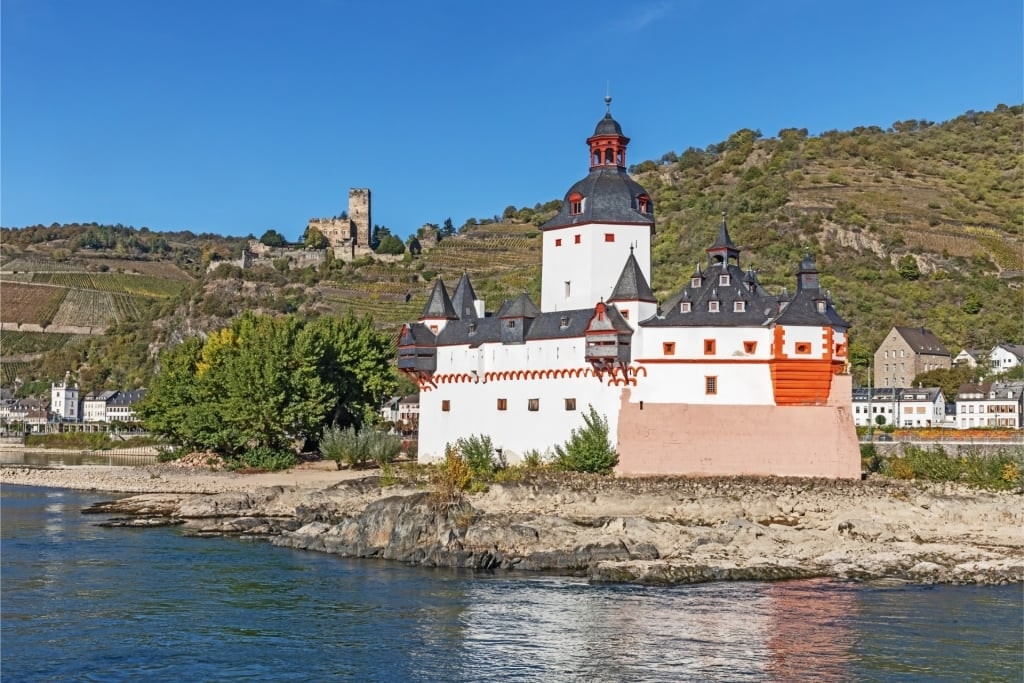
Pfalzgrafenstein Castle, Germany
Germany is known for its romantic castles, and more than 40 of them are concentrated along the 40-mile stretch of the UNESCO-listed Middle Rhine Valley between Bingen and Koblenz, also known as the Romantic Rhine.
It’s impossible to visit every castle on a cruise, so this beautiful valley is the place to sit back and let them come to you. The scenic sailing through the gorge is an anticipated highlight on Rhine sailings, and does offer one of the best river cruises to see castles.
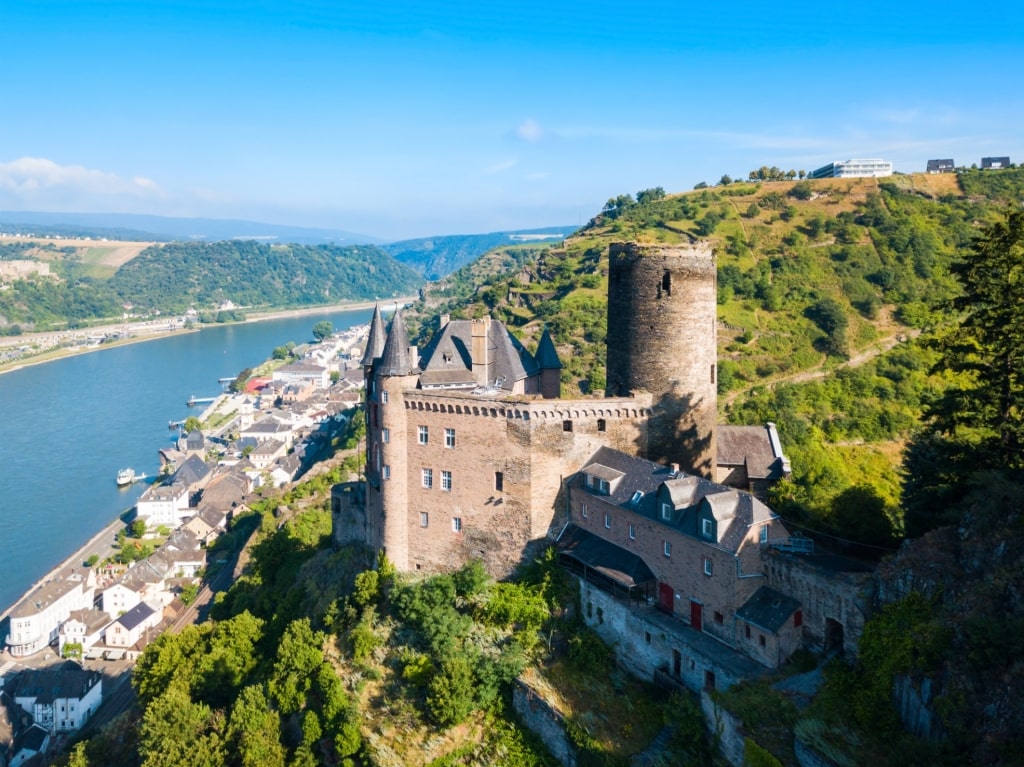
Katz Castle, Germany
The German castles, mostly built between the 12th and 14th centuries, include isolated Pfalzgrafenstein which is on a river island and was once used to collect tolls from passing ships. You’ll also see the intriguingly named twin castles of Katz and Maus—Cat and Mouse—which got their names from two feuding lords.
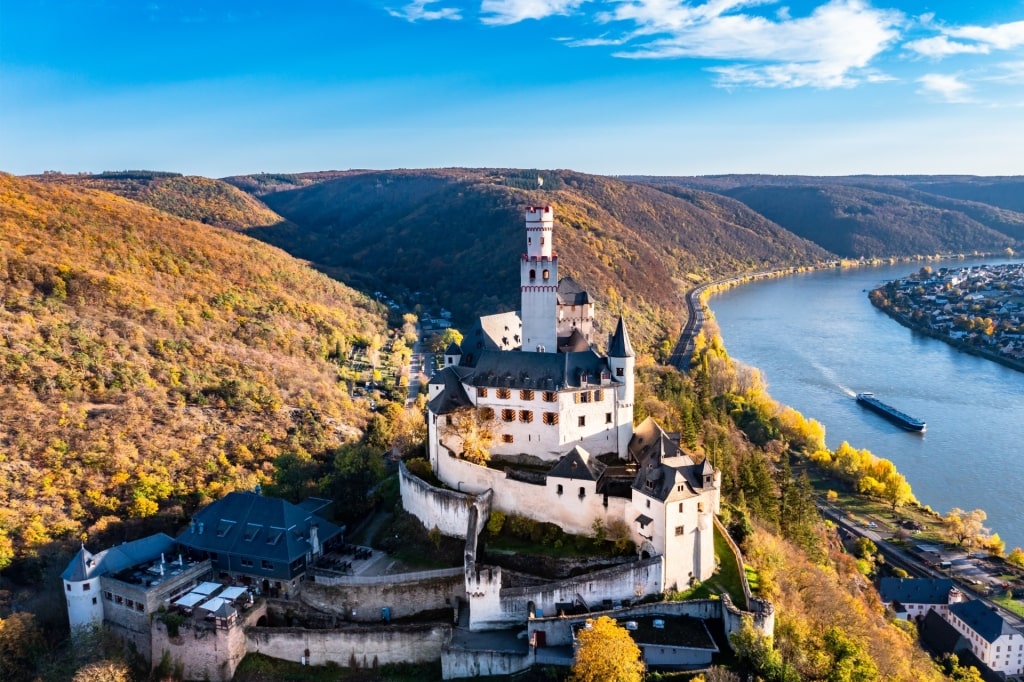
Marksburg Castle, Germany
Balanced majestically on top of a forested hill above Braubach, which is just six miles from Koblenz, Marksburg Castle has an unblemished claim to fame. While many castles lie in ruins, it is the only fortress in the Middle Rhine Valley to have survived intact and never been destroyed; its only war wounds being some damage by artillery fire during the Second World War.
A mix of architectural styles, it dates back to the 13th century, when it was built in a Romanesque style. Striking Gothic buildings were added later.
It has been owned by some of the wealthiest families on the Rhine, and over the centuries it has also been used as a prison and military barracks. When you visit, don’t miss the fascinating medieval herb garden, where only herbs and plants that were known in the Middle Ages are grown.
The Wachau Valley
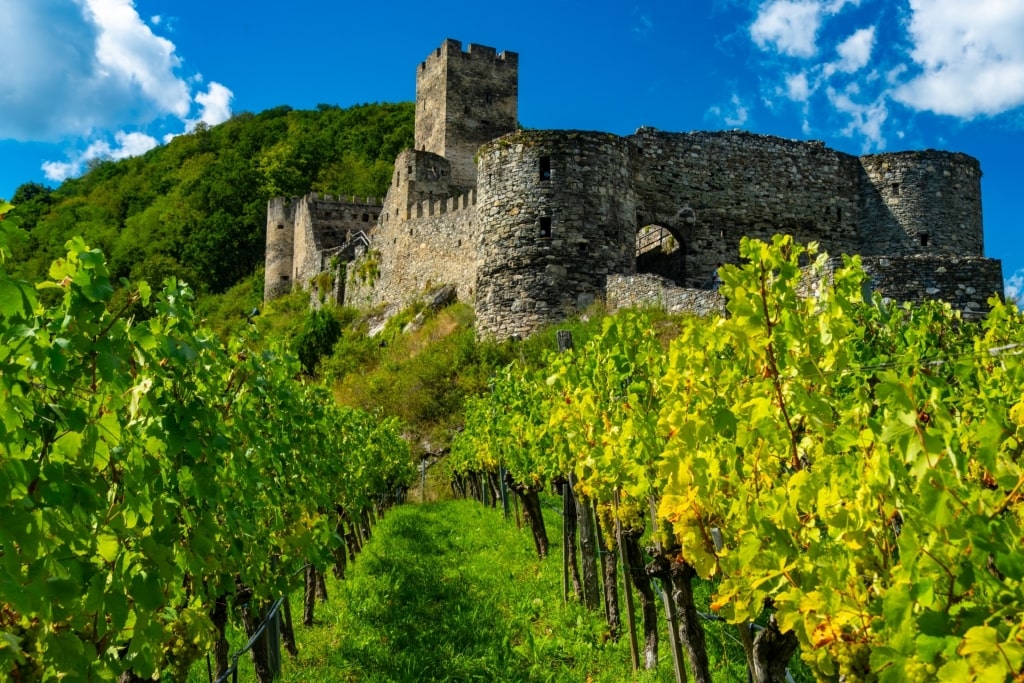
Hinterhaus Castle, Austria
The winding Wachau Valley, running 20 miles between the Danube towns of Krems and Melk, has also been recognized by UNESCO for its outstanding natural beauty and castle-dotted cultural landscape.
Again, be sure you have your camera ready as you float slowly past the 20-plus castles, many of them vividly silhouetted against the skyline. Noble knights once occupied Hinterhaus Castle, while mighty Schönbühel—once the site of a Roman fortress—occupies a strategic bend on the river.
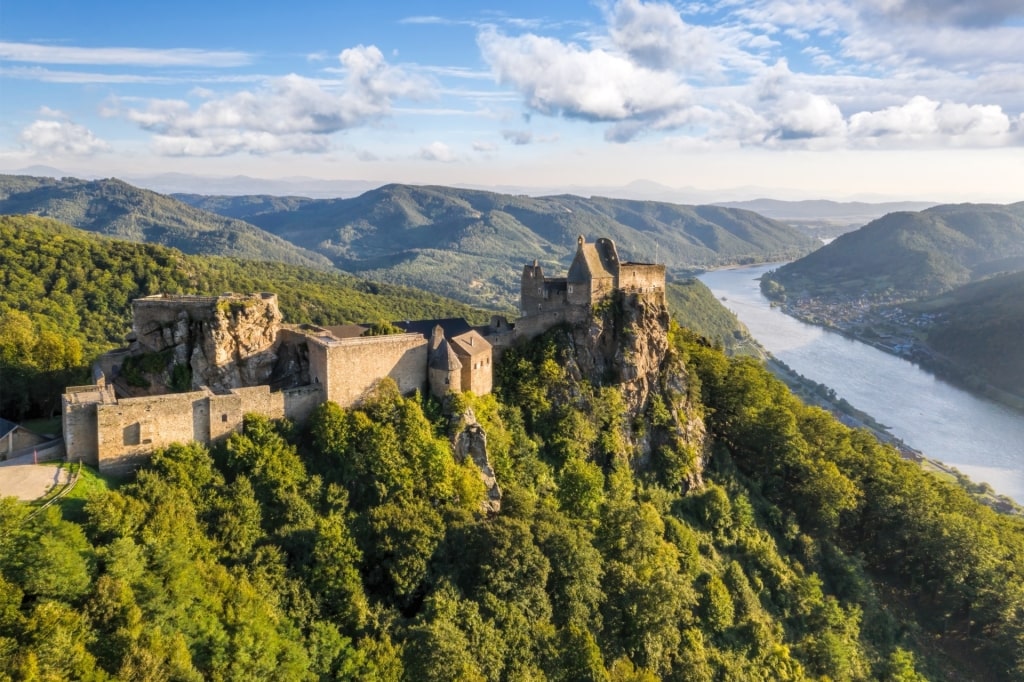
Aggstein Castle, Austria
You’ll marvel at how Aggstein Castle was built nearly 1,000 feet above the river on top of a sheer promontory sloping down on three sides. Distant Senftenberg Castle, meanwhile, was destroyed during a rebellion, and rebuilt, only to be burned down 200 years later.
The jagged ruins of Dürnstein Castle are perched on a rocky outcrop in the Wachau. There’s a steep, winding trail to the top, and it’s worth the hike for the panoramic views over the Danube.
Built between 1140 and 1145, the castle is famous for the imprisonment of the English king, Richard the Lionheart. He was returning from the Crusades in 1192 when he was captured by his Austrian rival Duke Leopold V, and released a year later after England paid a large ransom.
Budapest
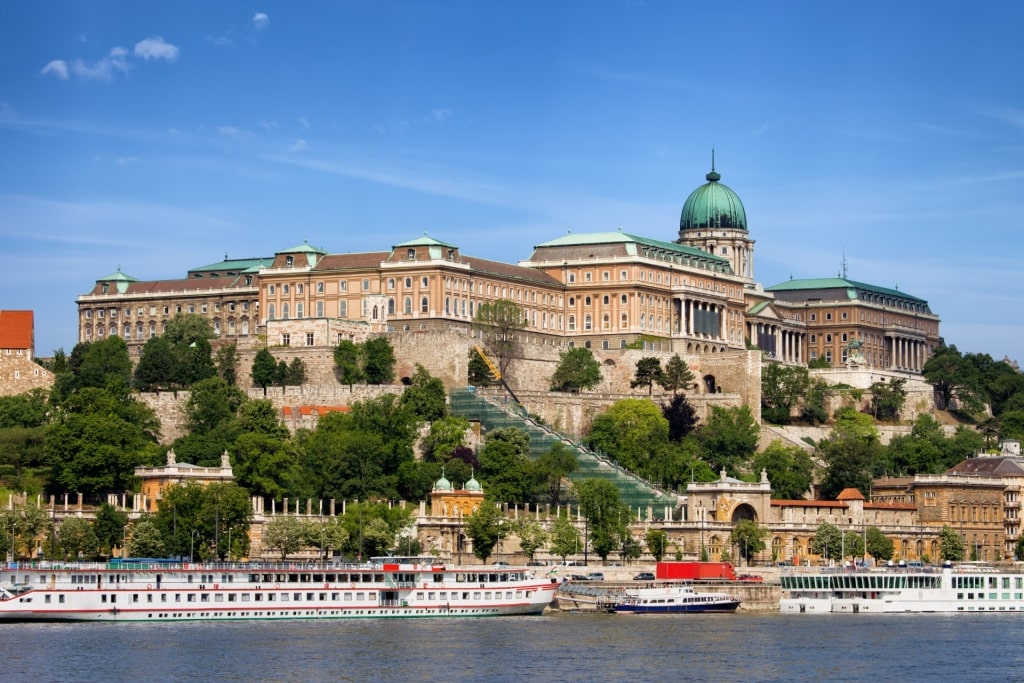
Buda Castle in Budapest, Hungary
The crowning glory on the Buda bank of Budapest—divided by the Danube from Pest—is Buda Castle. The foundations were laid in 1265, and it’s been extended and renovated many times over the centuries.
Once the palace of Hungarian kings and a fortress, nowadays it houses the Budapest History Museum and Hungarian National Gallery. The main castle complex is part of the wider UNESCO-listed Castle District, including the towers and turrets of Fisherman’s Bastion. It’s one of the best river cruise destinations to see castles, and make sure to allow several hours to walk around.
Heidelberg
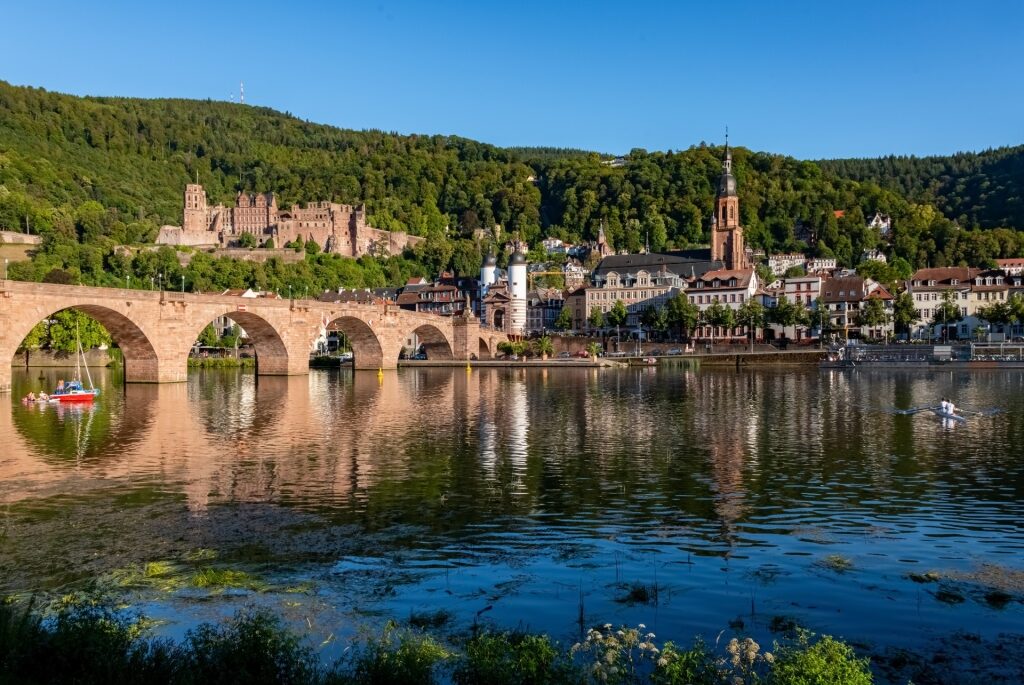
Heidelberg, Germany
Heidelberg Castle, overlooking Germany’s oldest university town of the same name, is one of Germany’s most impressive landmarks and is reached on shore excursions from Mainz, which lies on the river Main, a tributary of the Rhine.
As well as defying gravity with its 300-foot hilltop location, it also disproves the proverb that lightning never strikes twice. It was struck by a lightning bolt and damaged by fire in both 1537 and 1764. The stronghold’s turbulent past also includes being plundered and burned by the French army. Although the castle is mainly ruined now, it’s still a majestic sight.
Bratislava
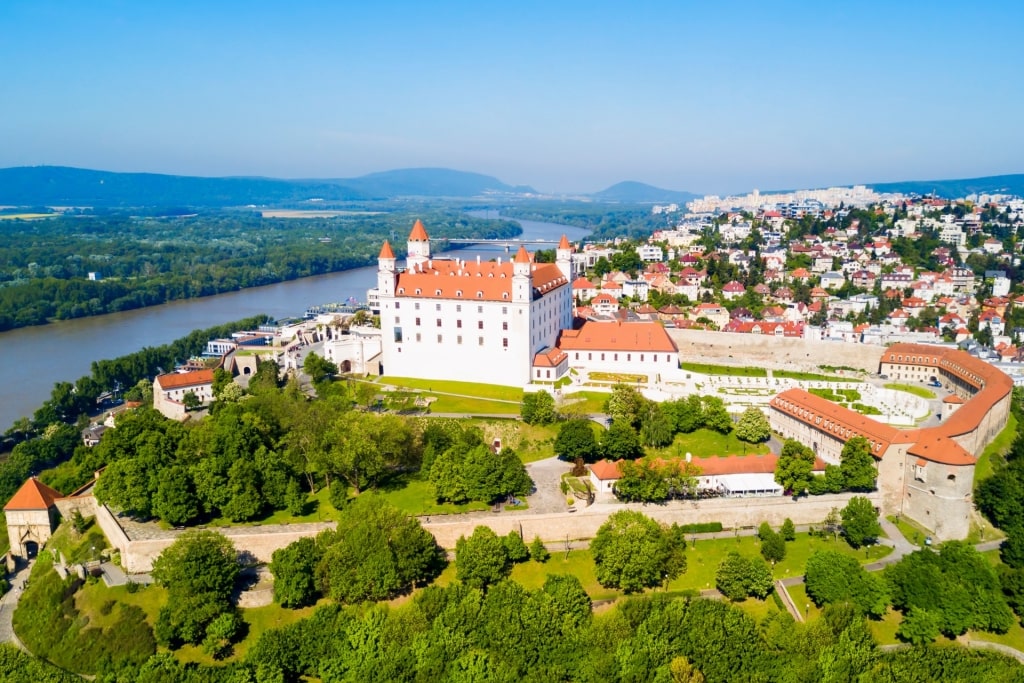
Bratislava Castle, Slovakia
Another of the best river cruises to see castles is a voyage on the Danube to Slovakia, and its capital Bratislava. With a history going back to the 13th century, the white-walled castle with its red-tiled roof has long been a symbol of the city.
It’s been through various guises and after being largely destroyed by fire in 1811, it was rebuilt in the 20th century. The entrance fee for the castle’s historical museum covers a visit to the Crown Tower, the oldest surviving part of the previous building. It was once used to store the Hungarian crown jewels and provides a fantastic view across the city. Back at ground level, take a walk through the terraced castle grounds, which are free to enter.
Koblenz
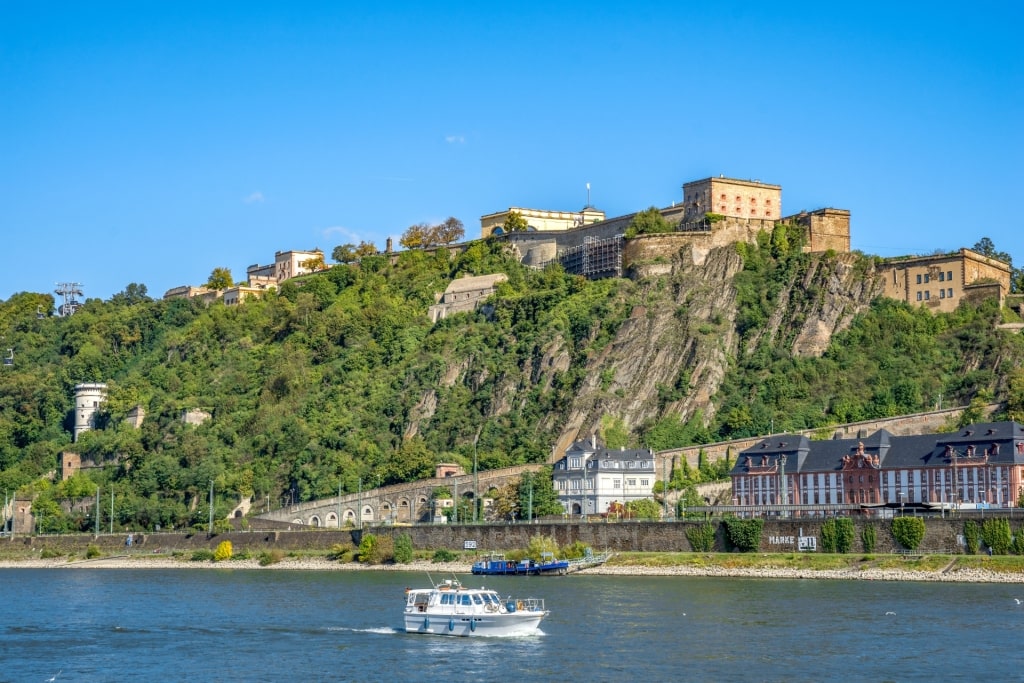
Ehrenbreitstein Fortress in Koblenz, Germany
Imposing Ehrenbreitstein Fortress overlooks Koblenz from its elevated site nearly 400 feet above the Rhine. Its origins go way back to the year 1000, although the vast, self-contained stronghold you see today was built in the early 19th century. It’s the second-largest preserved fortress in Europe after Gibraltar. The fortress overlooks the confluence of the Rhine and the Moselle and has magnificent views from its lofty position.
Once inside, wander around various exhibitions relating to the local area and turbulent history of the fort, before pausing to admire the sweeping views. The fortress is also the magical setting for the Christmas Garden Koblenz, held during the Christmas market river cruise season.
Linz
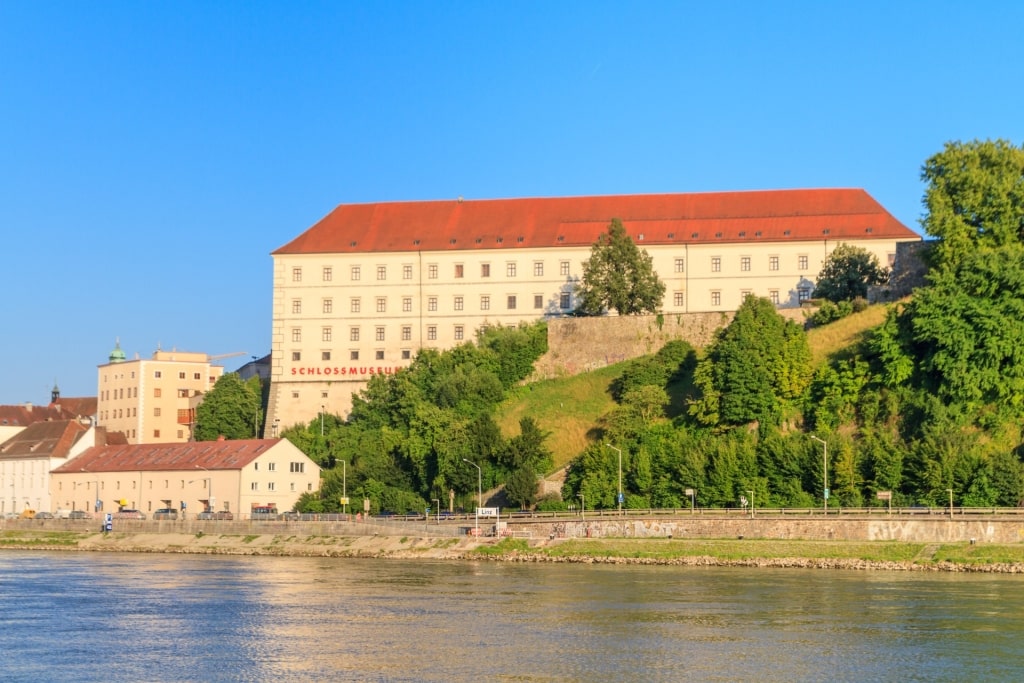
Linz Castle, Austria
This Danube castle doesn’t fit the traditional image of one with turrets and towers, but it’s home to a really interesting museum.
In 1800 a fire destroyed parts of the Old Town and the south wing of the castle. It was only rebuilt in 2007, in time for Linz being the European Capital of Culture in 2009. The museum, inside the strikingly modern glass and steel wing, has exhibits and art tracing the history of Austria to the present day.
Passau
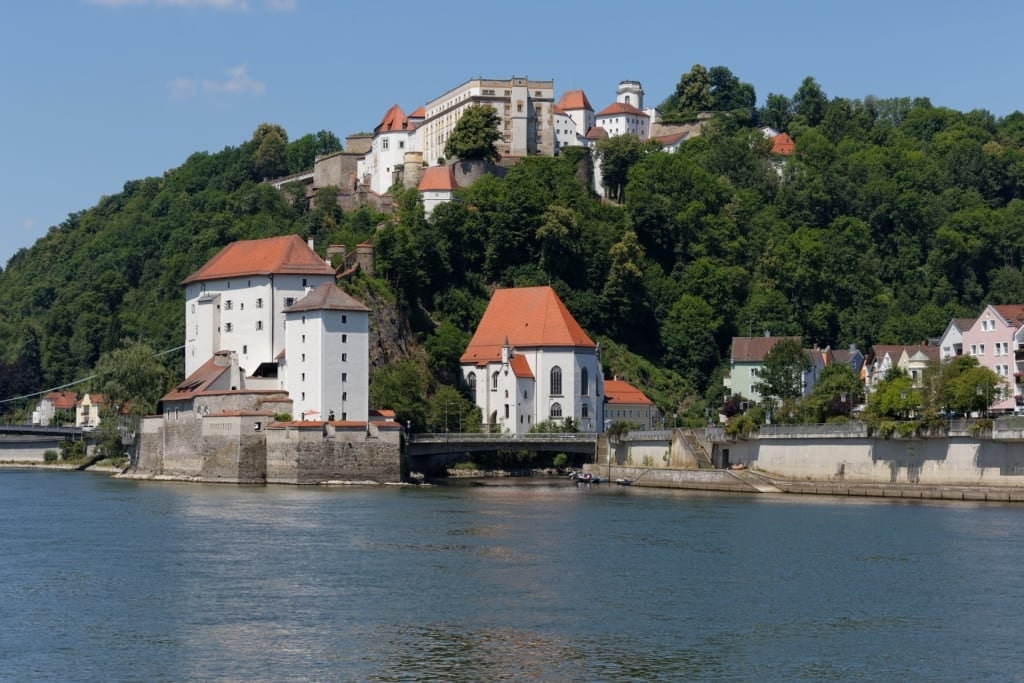
Passau, Germany
Veste Oberhaus, often called Passau Castle, was built in 1219 as a display of the military strength of the unpopular prince-bishops who once ruled the city.
It’s in a prime spot overlooking the meeting point of the Danube, Inn, and Ilz rivers so the prince-bishops could see their enemies coming. So much so, that the local townsfolk attacked the fortress three times in an attempt to overthrow them but were unsuccessful.
Nuremberg
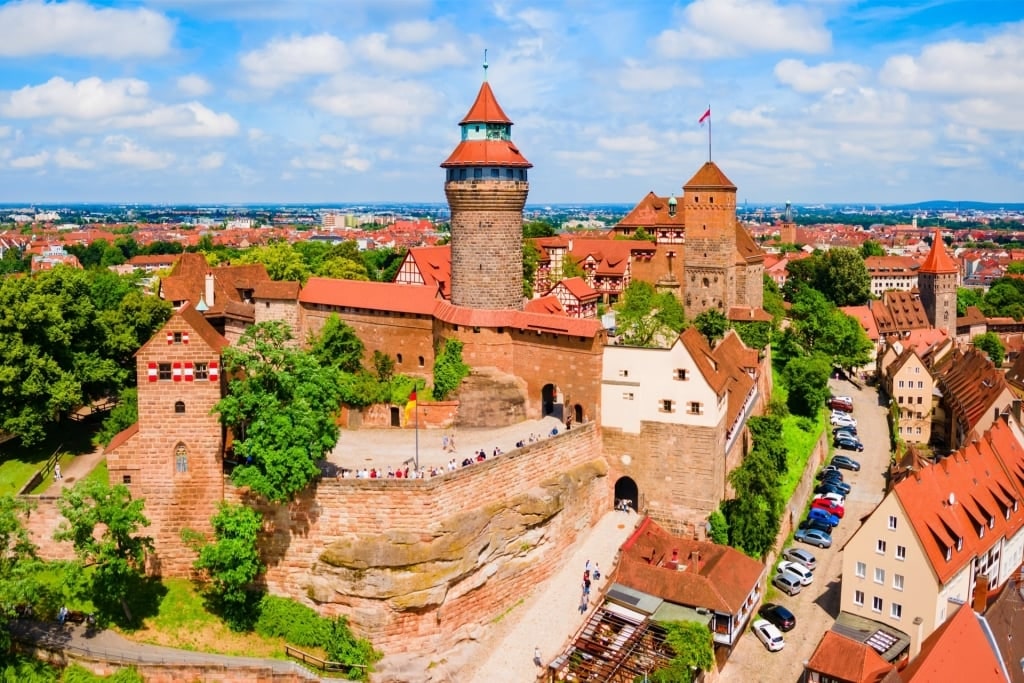
Nuremberg Castle, Germany
Sitting on a sandstone ridge close to the Rhine-Danube Canal, which connects the two rivers, the seemingly impregnable Nuremberg Castle is made up of a group of medieval fortified buildings surrounded by walls.
This complex in Nuremberg used to provide a secure sanctuary for German kings and emperors as they moved from place to place. Peer down the 160-foot well, dug into rock, which provided a vital water supply for surviving sieges.
This castle will appeal to garden-lovers as well as history buffs. The Maria Sibylla Merian garden commemorates the 17th-century Nuremberg-born artist and naturalist who was an early pioneer in the study of insects. There are exotic plants linked to her overseas expeditions here, as well as the “bug hotel” created to attract visiting insects.
Grein
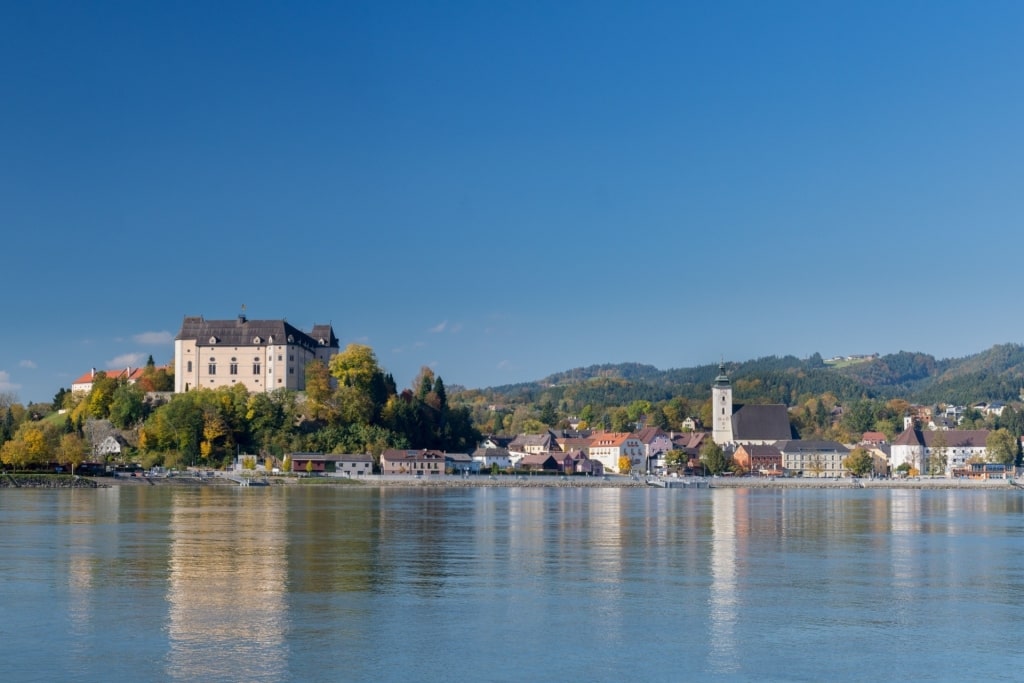
Grein, Austria
It might be a very small town on the Danube, but Grein is crowned by the impressively large Greinburg Castle which is Austria’s oldest continuously inhabited residential castle.
The 15th-century castle has had an illustrious list of royal and noble owners, including the United Kingdom’s Queen Victoria, as it was previously owned by her German-born husband, Albert, and his brother.
Here, you’ll find the Upper Austrian Shipping Museum, which charts the story of nautical traffic on the Danube and will be of interest to river cruise fans. Another curiosity is the ornate and whimsical Sala Terrena, or stone theater, which was created in the 17th century. The walls and ceiling are completely covered with mosaics created from stones from the Danube.
Bamberg
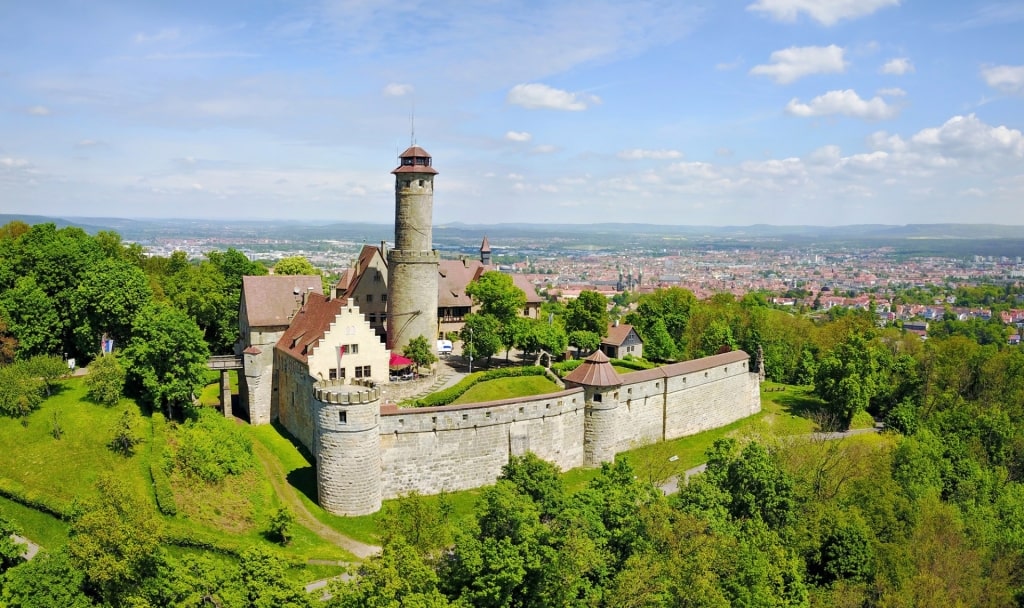
Altenburg Castle in Bamberg, Germany
Like Rome and Lisbon, Bamberg, which lies on the Regnitz river, a tributary of the Main, was also built on seven hills. Each one is capped by a building, such as a church, and Altenburg Castle occupies the highest peak. As such, a voyage here is one of the best river cruises to see castles.
Historical records show there has been a castle on the site since the 11th century. To begin with, it was used by locals as a defense in times of danger. Then, it was occupied by bishops before becoming a prison. Like so many German castles, it has a tumultuous past, and was virtually burned down before eventually being restored.
The oldest surviving part is the 108-foot, 13th-century keep where you can spot a high iron basket once used for fires to send signals and communicate with Giechburg Castle, 12 miles away.
Düsseldorf
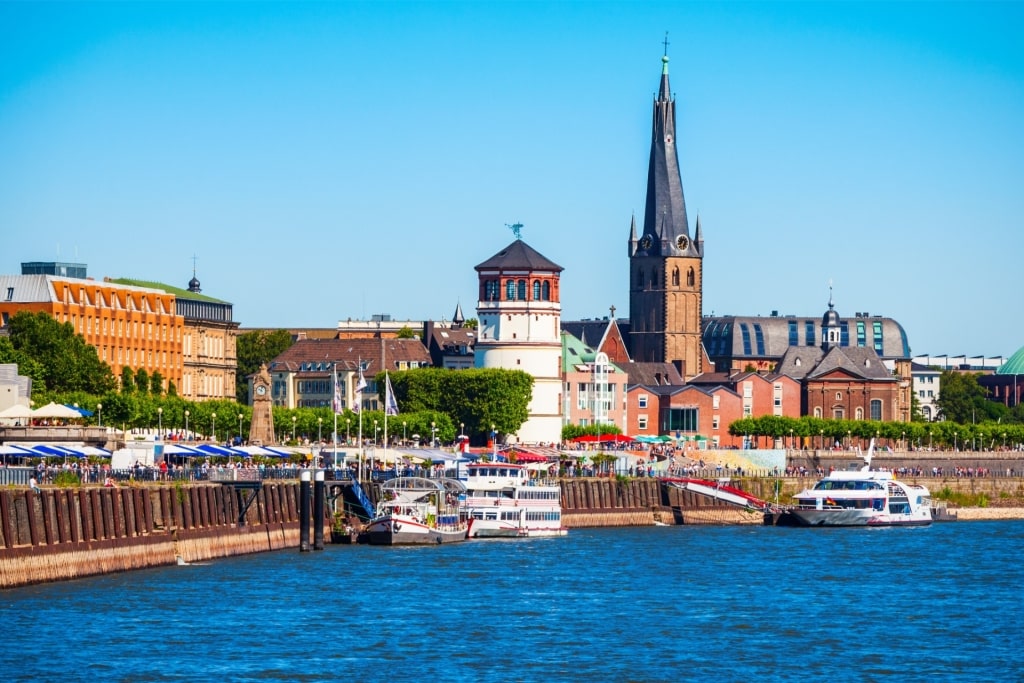
Düsseldorf, Germany
It’s not a castle in the traditional sense, but Düsseldorf’s Schlossturm–Castle Tower–is a fun place to visit as it’s different from any other castle on the Rhine.
A focal point on the Burgplatz, connecting the Old Town with the river bank, it’s all that’s left of the castle built in 1260. Take a closer look, as the first three circular stories are the original ones. A fourth level with a straight-sided polygonal design was added in the 16th century and in 1845, Prussian king Friedrich Wilhelm IV topped it all off when he commissioned a fifth, and final, level.
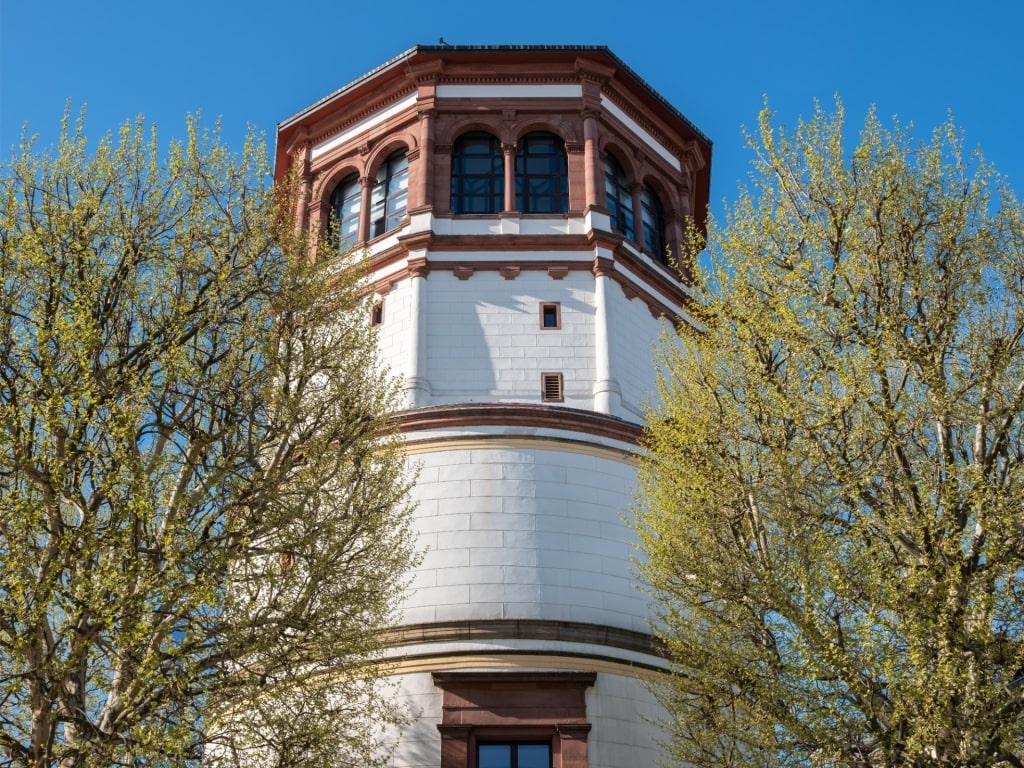
Schlossturm in Düsseldorf, Germany
It’s now home to the Rhine Maritime Museum, and you can enjoy excellent views of the river from the top floor.
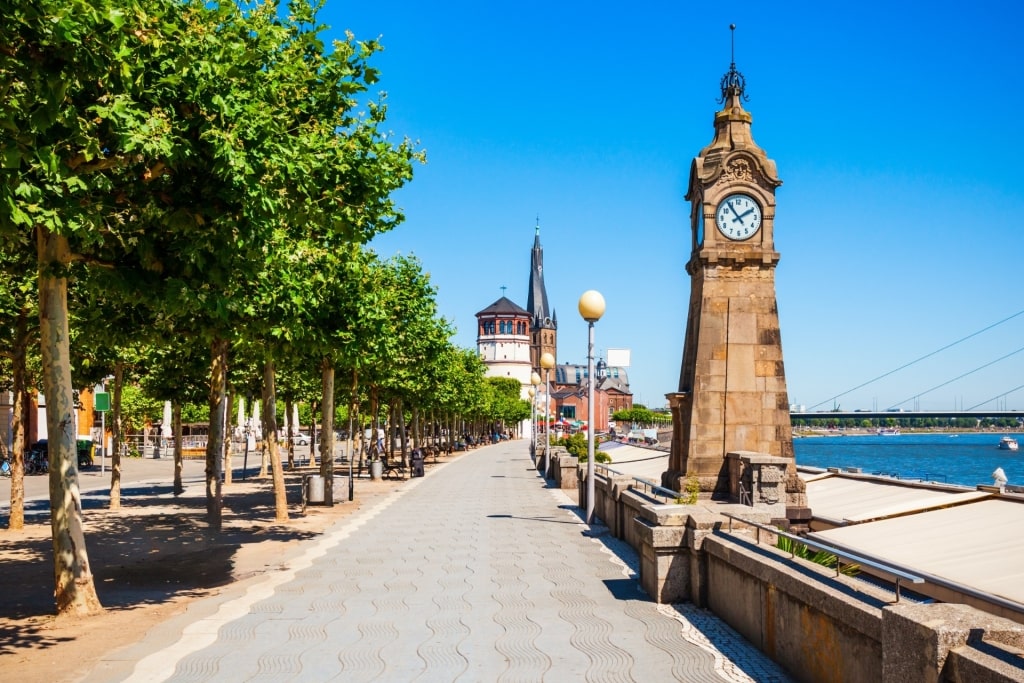
Düsseldorf, Germany
Are you ready to discover some of Europe’s most magnificent castles for yourself? Browse Celebrity’s European river cruises and book your dream vacation today.