
The Danube River flows through the heart of Europe, connecting grand capitals, medieval villages, vineyard-covered valleys, and some of the continent’s most important cultural landmarks. Stretching through several countries, it offers one of the most varied and scenic ways to experience Europe by river.
Having sailed the Danube from Passau to Budapest, I loved that some days felt quiet and rural as we floated past vineyard-covered hillsides, church steeples, and tiny Austrian villages, while others were busy and focused around major capitals like Vienna and Budapest. That variety is part of what makes the Danube such an appealing river cruise for first-time visitors to Europe.
Here’s what to know about the Danube River and how to choose the best itinerary for your travel style.
Where Is the Danube River?
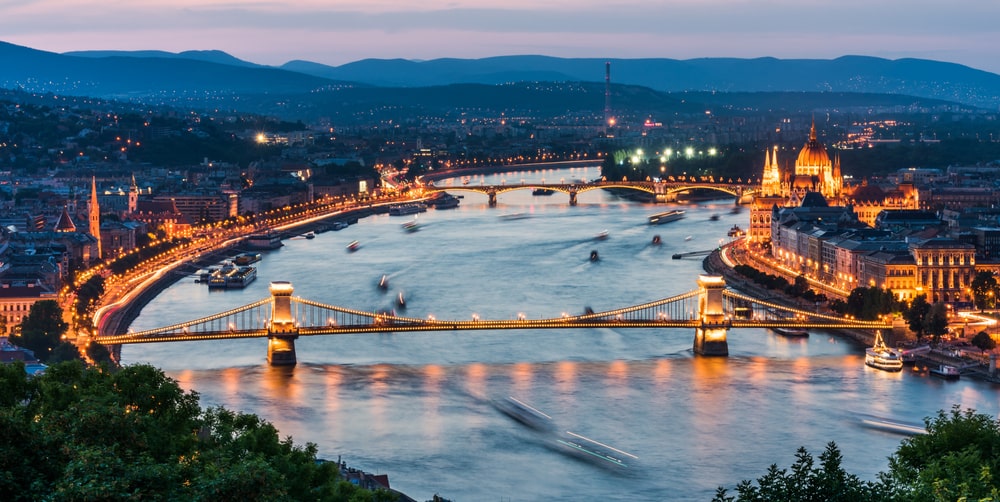
View of Budapest, Hungary, looking down at the Danube River
The Danube River begins in Germany’s Black Forest and flows southeast for nearly 1,800 miles before emptying into the Black Sea in Romania. Along the way, it passes through or borders 10 countries, making it one of Europe’s most international waterways.
The river flows through Germany, Austria, Slovakia, Hungary, Croatia, Serbia, Bulgaria, Romania, Moldova, and Ukraine. For travelers, though, the most popular cruise section is the stretch through Central Europe between Germany and Hungary.
One of the biggest appeals of a Danube cruise is how quickly the landscapes and cultures shift from one country to the next. You can wake up in Germany, have lunch in Austria, and spend the evening in Slovakia, all without unpacking more than once.
Ports and Cities on a Danube River Cruise
Most Danube cruises begin or end in Budapest, Passau, Vienna, or Nuremberg, Germany. The exact route depends on the length of the itinerary and whether the cruises focus on large or smaller ports.
Nuremberg, Germany
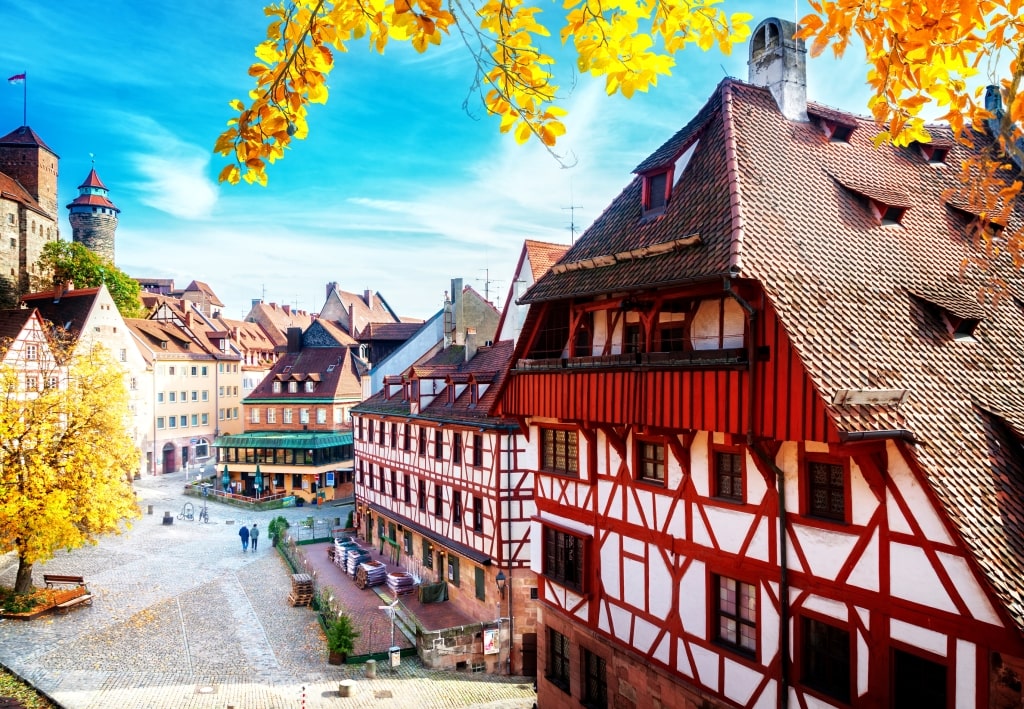
Old Town of Nuremberg on a sunny fall day
Nuremberg is quite simply a fairytale come to life. The remarkably preserved medieval Old Town is filled with half-timbered buildings, Gothic churches, and cobblestone streets, and the city’s Imperial Castle rises above it, providing sweeping views over the red-roofed buildings and church spires below.
Visitors here flock to Hauptmarkt, the city’s central square, to sample the traditional foods sold in its seasonal markets. You’ll also find Franconian sausages, pretzels, and gingerbread throughout the city’s beer halls and restaurants.
During the holiday season, Nuremberg becomes especially popular for its famous Christmas markets, considered among the oldest and most celebrated in Europe.
Passau, Germany
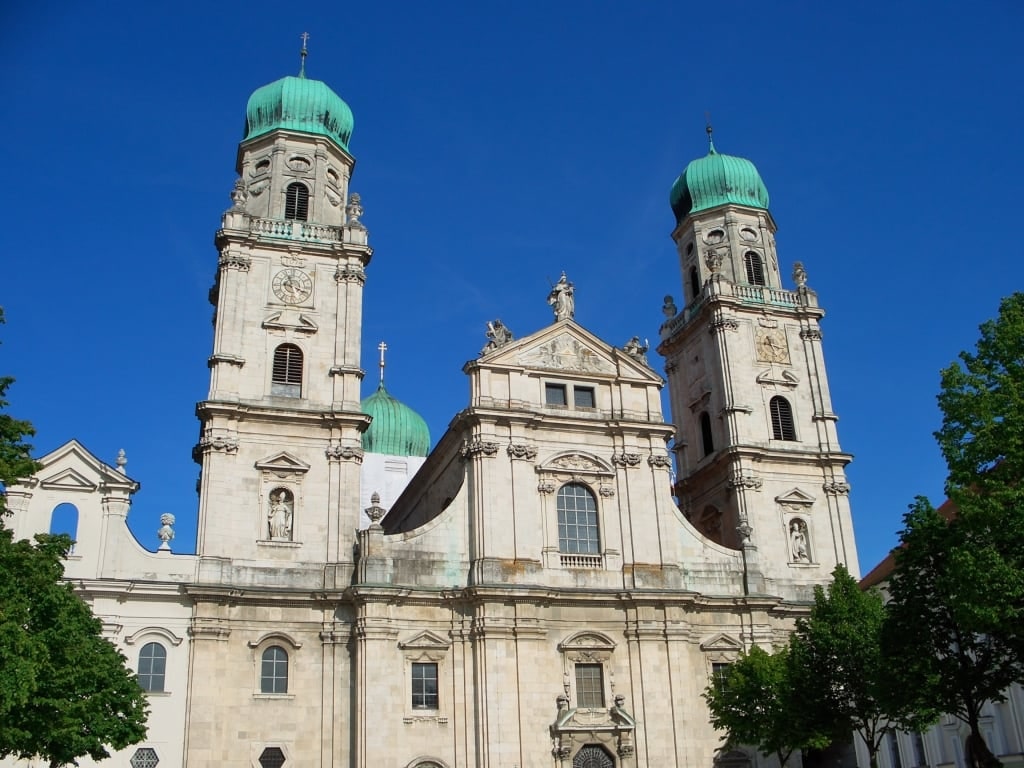
St. Stephen’s Cathedral – Passau, Germany
Many Danube cruises begin or end in Passau, a picturesque Bavarian city where the Danube meets the Inn and Ilz rivers. The colorful Old Town sits on a narrow peninsula framed by surrounding hills and church towers.
Be sure not to miss St. Stephen’s Cathedral, home to one of the world’s largest cathedral organs, and Veste Oberhaus, the hilltop fortress overlooking the river, for panoramic views across the city.
Passau’s riverside promenades, café-lined streets, and compact historic center make it an easy city to explore on foot before or after a cruise.
Linz, Austria
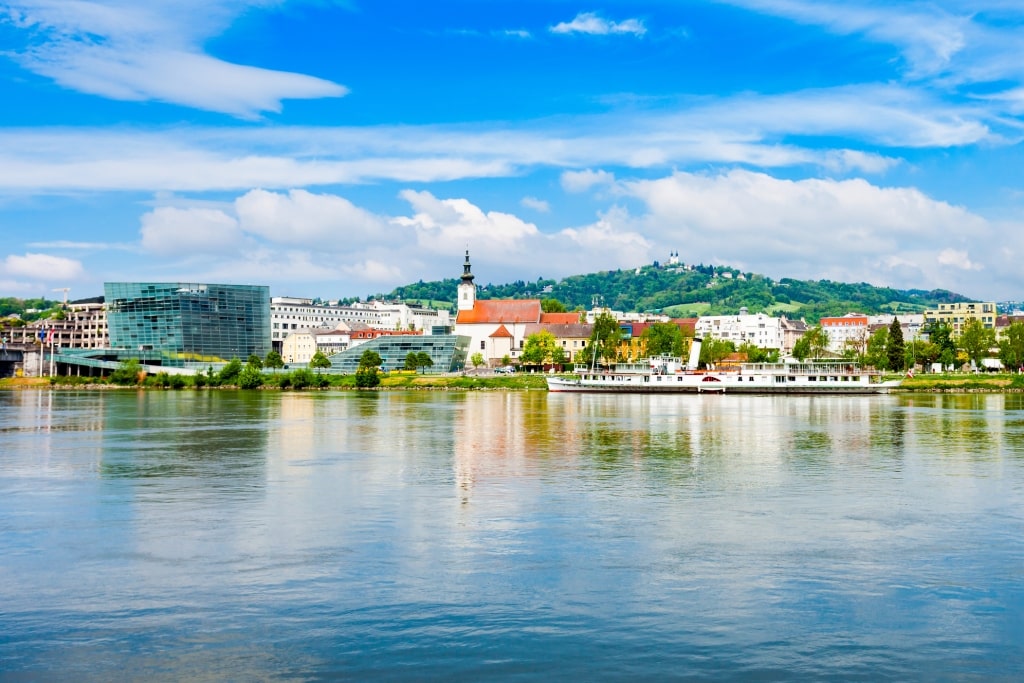
Linz city center and Danube River in Austria
Austria’s third-largest city, Linz, is filled with a modern arts and technology scene. While it is often used to access Salzburg and the Austrian lake region, the city has its own allure and sites to explore.
The Old Town, for example, features pastel-colored Baroque buildings, wide squares, and riverside cafes, while the Lentos Art Museum and Ars Electronica Center showcase Linz’s contemporary side. Visitors can also ride the steep Pöstlingberg tram for views overlooking the Danube and the city below.
That said, river cruise excursions from Linz frequently head toward Salzburg, where travelers visit sites connected to Mozart and The Sound of Music.
Melk, Austria
Melk is best known for the massive Melk Abbey perched high above the Danube. As a stopping point for royalty, the ornate Benedictine monastery is as opulent as a palace and dominates the skyline with golden-yellow walls, elaborate halls, frescoed ceilings, and an impressive library packed with ancient manuscripts.
Cruise guests frequently tour the abbey before walking through Melk’s compact historic center, lined with small shops, cafes, and quiet streets leading down toward the river.
The Wachau Valley scenery is particularly beautiful here, with vineyards and rolling hills stretching out beyond the town.
Dürnstein, Austria
Dürnstein is one of the Danube’s prettiest villages, known for its blue church tower, narrow stone lanes, and hillside vineyards.
The village is small enough to explore on foot, with wine taverns, artisan shops, and riverfront cafes, but many visitors hike up to the ruins of Dürnstein Castle, where King Richard the Lionheart was once imprisoned during the 12th century.
Wachau Valley, Austria
The Wachau Valley is one of the scenic highlights of the Danube and a UNESCO World Heritage Site. This stretch of river between Melk and Krems winds through terraced vineyards, medieval villages, castle ruins, and forested hills.
This wine region is known for its white wines, particularly Grüner Veltliner and Riesling, as well as apricot products. One of the pleasures of cruising on the Danube is simply spending time on deck as the scenery slowly unfolds—with a glass of wine, of course.
Tulln and Hainburg, Austria
These smaller Austrian towns provide a quieter contrast to major capitals along the Danube. Tulln is known for its gardens and riverside parks, particularly the elaborate flower gardens that bloom throughout the warmer months. The town also has Roman roots and a charming historic center filled with colorful buildings and cafes.
Hainburg, near the Slovakian border, is a more local port call with fewer tourists roaming its old streets.
Bratislava, Slovakia
Slovakia’s capital, Bratislava, features a compact Old Town filled with stone-paved streets, colorful facades, and lively squares. Bratislava Castle rises high above the Danube here and provides panoramic views over the city and neighboring Austria and Hungary.
Visitors explore the pedestrian-only historic center, stopping at landmarks like Michael’s Gate, St. Martin’s Cathedral, and the city’s bronze statues tucked throughout the streets.
Bratislava’s café culture and relatively relaxed pace make it one of the Danube’s easiest capitals to explore during a short port stop. Many visitors flock here in the winter to catch the city’s famous Christmas Market.
Gönyű, Hungary
Not many visitors make their way to this small Hungarian river port, which is what makes it so charming. Offering a quieter look at rural Hungary, excursions from Gönyű often focus on traditional villages, local wineries, countryside estates, and smaller towns that many travelers would otherwise miss.
Budapest, Hungary
Most Danube cruises either begin or end in Budapest, one of the river’s most dramatic cities. The Hungarian capital is divided by the Danube itself, with historic Buda rising into the hills on one side and lively Pest stretching across the flatter eastern bank.
There is much to see in this exciting city, including Parliament, Chain Bridge, Fisherman’s Bastion, St. Stephen’s Basilica, Heroes’ Square, and Buda Castle. Thermal baths are another major attraction, with places such as Széchenyi and Gellért Baths bringing visitors year-round.
One of the best parts of a Danube cruise is sailing into or away from Budapest after dark, when the Parliament building and bridges are lit for the night.
Belgrade, Serbia
Located at the meeting point of the Danube and Sava rivers, Belgrade blends Ottoman, Austro-Hungarian, Socialist-era, and modern Balkan influences.
Kalemegdan Fortress is the city’s most famous landmark, sitting high above the rivers and offering fabulous views over the confluence below. Visitors also explore the lively pedestrian streets of Knez Mihailova, Orthodox churches, riverside promenades, and the busy café scene.
Belgrade tends to feel younger, more energetic, and less polished than many Central European capitals, which is part of what makes it so interesting on Lower Danube itineraries.
Iron Gates Gorge, Serbia and Romania
The Iron Gates Gorge is one of the most spectacular natural sections of the Lower Danube, where the river narrows dramatically between massive cliffs along the border of Serbia and Romania. Steep rock walls rise directly from the water, while dense forests and rugged mountains surround the river.
Have your cameras ready on this part of the journey to capture the massive rock carving of Decebalus, the ancient Dacian king, sculpted into the Romanian cliffs overlooking the river.
Ruse, Bulgaria
Often called “Little Vienna,” Ruse is known for its elegant 19th-century architecture and grand civic buildings. Many excursions from Ruse head inland to Veliko Tarnovo, Bulgaria’s former medieval capital, with its hilltop fortress and winding historic streets. Others focus on local monasteries, Orthodox churches, and regional wine tasting experiences.
Bucharest, Romania
Romania’s capital and largest city, Bucharest, is the start or end point for Lower Danube itineraries. The city is a mix of Belle Époque architecture and Communist-era buildings, including the Palace of Parliament, considered one of the world’s largest administrative buildings.
Visitors can also explore the city’s Old Town, filled with restored historic buildings, restaurants, churches, and squares that contrast sharply with Bucharest’s monumental Communist-era architecture.
Best Danube Cruise Itineraries
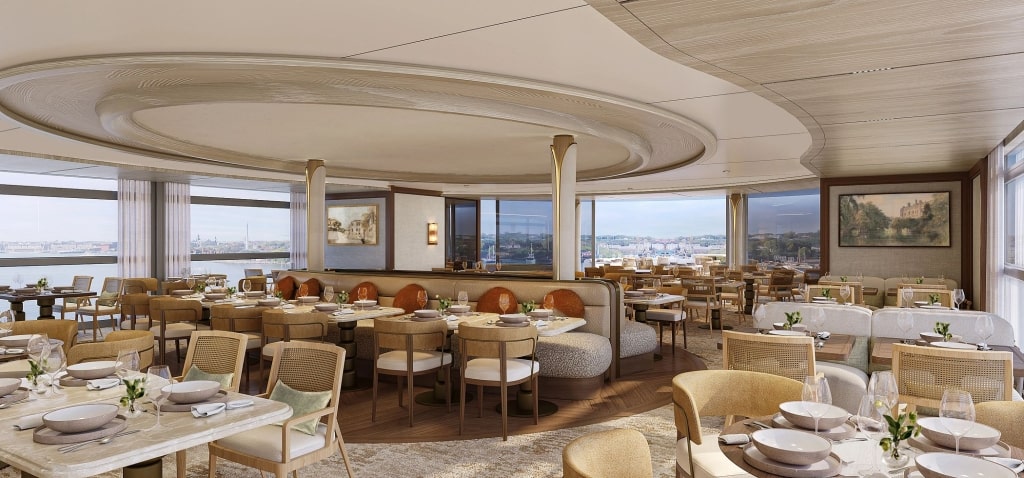
Elegant dining room, featuring panoramic river views, warm contemporary design, and refined table settings for an elevated onboard dining experience.
The best Danube River cruise itinerary depends on how much time you have, which destinations interest you most, and when you plan to travel. Below are the most common itinerary options.
- Classic Danube: These itineraries focus on Central Europe’s best-known destinations, including Budapest, Vienna, and Bratislava. These river cruises also typically include scenic sailing through the Wachau Valley and are generally the best choice for first-time Danube cruises because they include the river’s most iconic highlights in a single week.
- Grand Danube: These itineraries are longer sailings that extend north into Germany, and work well for travelers who want more time on board and a deeper look at Germany’s historic river cities and smaller towns.
- Lower Danube: These itineraries explore Eastern Europe, including Serbia, Bulgaria, and Romania, with more rugged scenery. These cruises are often best for returning river cruisers looking to experience a less traditional side of the Danube.
- Christmas Markets: Christmas market cruises sail during late November and December, when cities such as Vienna, Budapest, and Nuremberg fill with wooden market stalls, festive lights, and seasonal food vendors. These itineraries are popular for holiday travel.
Danube River FAQs
What is the best month to do a Danube River cruise?
May, June, September, and October are often considered the best months because temperatures are comfortable and crowds are generally smaller than during peak summer.
Where do Danube River cruises begin?
Most Danube cruises begin in Budapest, Passau, Vienna, or Nuremberg, depending on the itinerary.
Where do Danube River cruises end?
Danube cruises frequently end in Budapest, Passau, Bucharest, or Nuremberg.
What cities can I visit on a Danube River cruise?
Popular cities include Budapest, Vienna, Bratislava, Passau, Linz, Belgrade, and Bucharest, along with smaller towns throughout Austria and Germany.
How long are Danube River cruises?
Most Danube cruises range from seven to 14 days, although shorter holiday cruises and longer extended itineraries are also available.
Do water levels affect river cruises on the Danube?
Water levels can occasionally affect Danube River cruises, particularly during periods of extreme drought in the late summer or heavy rainfall. Low water levels may require itinerary adjustments, while high water can impact bridge clearances. However, disruptions are relatively uncommon, and cruise lines closely monitor river conditions throughout the season.
What to pack for a Danube River cruise?
Packing is usually easier than packing for an ocean cruise because the atmosphere on board tends to be more relaxed and destination-focused. Comfortable walking shoes are one of the most important things to bring. Layers also help to manage cool mornings and warm afternoons in the summer with lightweight jackets and sweaters for cooler temps. If you’re sailing during the Christmas market season, pack winter gear, including waterproof shoes and gloves.
Planning Your Danube River Cruise
Cruises on the Danube River are one of Europe’s most rewarding travel experiences, whether you’re interested in castles, Christmas markets, wine regions, or historic capitals.
Ready to explore Danube River cruises?