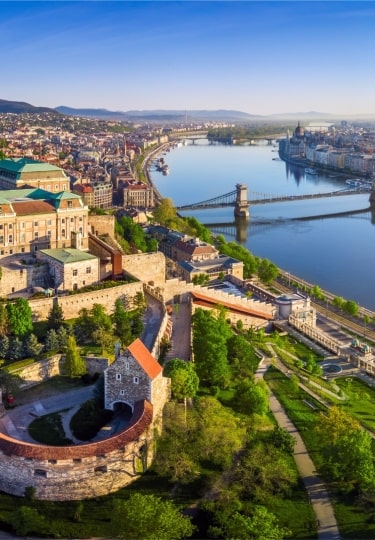
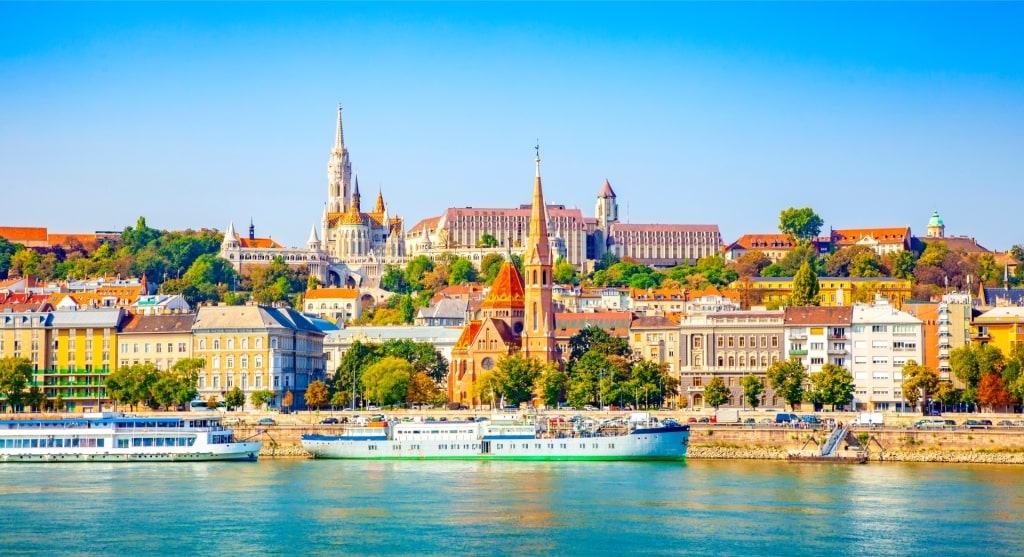
It’s impossible to miss the Castle District in Budapest. The slanting limestone tiers of Castle Hill rise more than 550 feet above the banks of the Danube. Dominating the skyline is Buda Castle, a UNESCO World Heritage site and lofty symbol of the powerful Austro-Hungarian empire that ruled Hungary from 1867 to 1918.
Today, the Castle District resembles a movie set, with its beautifully preserved buildings, narrow cobblestone streets, and far-reaching views over the Danube. It’s the best place to take photos of the Hungarian Parliament, which is modeled on London’s Palace of Westminster and is the largest building in the country. Then stroll around and absorb the history, before stopping off for coffee or a lunch break at a cozy restaurant, or vendéglő, set out with red and white checkered tablecloths.
Attractions in the Castle District, Budapest
Buda Castle
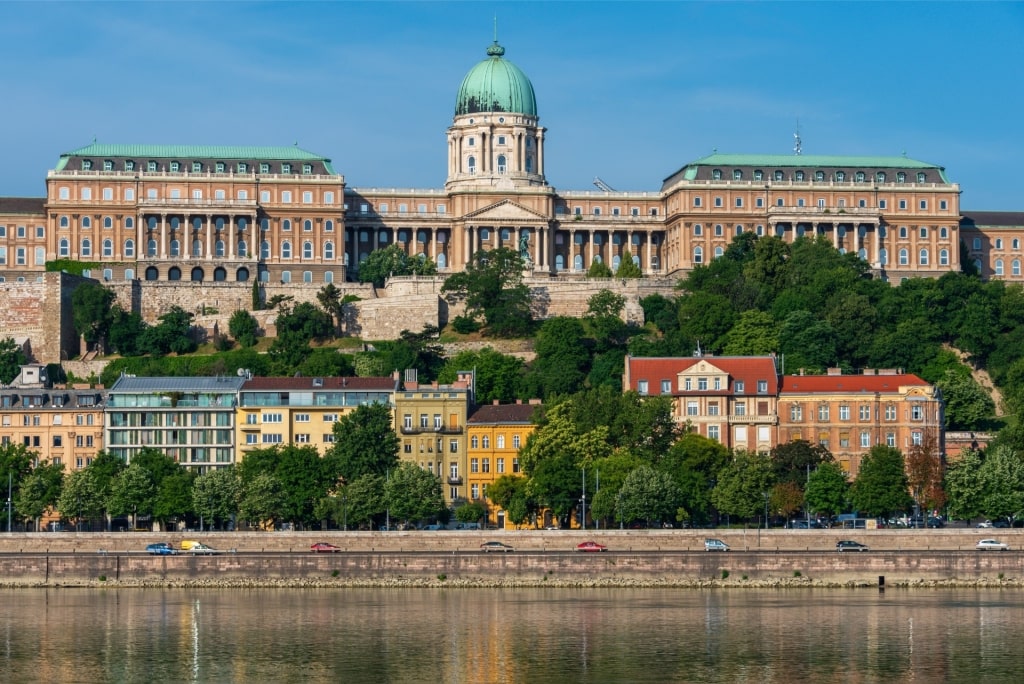
Buda Castle
Take a dive into Hungarian history and art at Buda Castle, which dates back to 1265 and has been renovated and extended over the centuries. Variously the seat of Hungarian kings, a fortress, and an administrative center, today it houses three top attractions—the Royal Palace, Hungarian National Gallery, and Budapest History Museum—within its impressive facade. In 1987, the castle complex and surrounding buildings, including Matthias Church and the Fisherman’s Bastion, became a UNESCO World Heritage site.
The best way to enter is through the grand stone archway of the Habsburg Gate, which is off St. George Square and close to the top of the funicular railway. The grounds and gardens, lined with floral borders and shaded colonnades, are free to enter, so enjoy a leisurely stroll before continuing your exploration.
Hungarian National Gallery
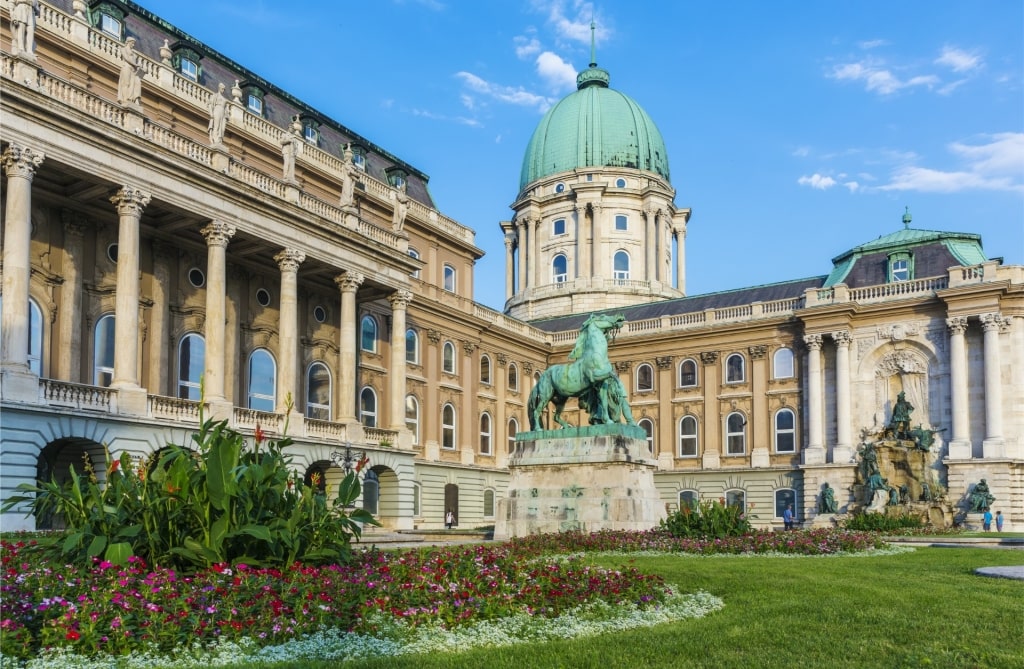
Hungarian National Gallery
Art lovers will be bowled over by the largest public collection of Hungarian fine art, with works spanning the period from the 11th century to the present day. You’ll see paintings by renowned Hungarian artists such as Mihály Munkácsy, who specialized in large-scale paintings of scenes from the Bible and smaller pictures showing everyday life in Hungary.
There are also works by French masters including Paul Cézanne and Pierre-Auguste Renoir and a changing program of temporary exhibitions, so check out what’s on during your visit.
It’s well worth climbing the 54 steps to reach the gallery’s dome, which is the highest point of the former royal palace. There are no paintings here, but instead you’ll be rewarded with expansive 360-degree views over the Buda and Pest sides of the Danube.
Budapest History Museum
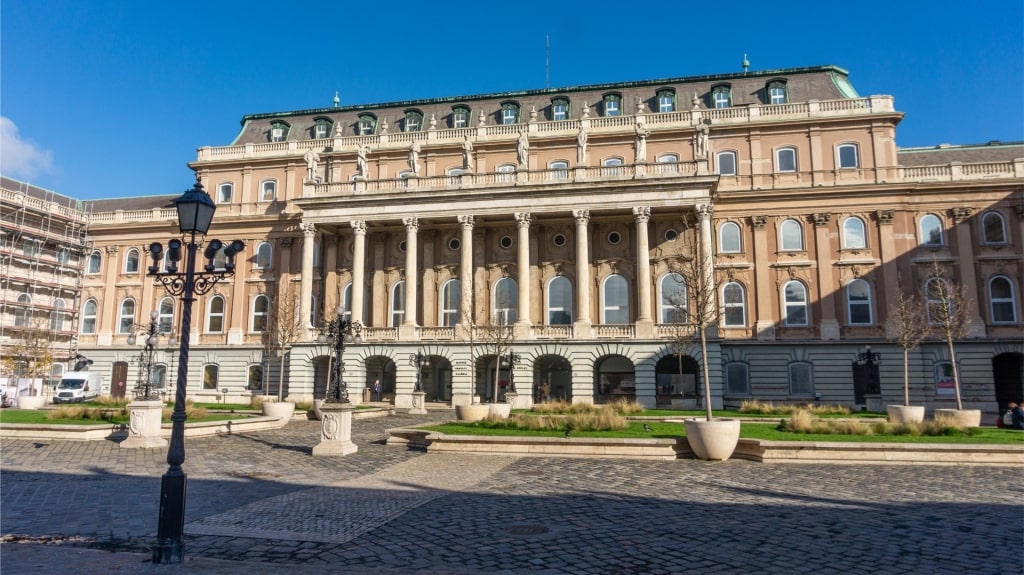
Budapest History Museum
Become a time traveler and stroll through Budapest’s past, from the days when it was the site of an ancient Roman city called Aquincum, to the present day. Next door to the Hungarian National Gallery, and sometimes called the Castle Museum, this attraction also provides a peek at the grandeur of the former castle. Wide stone staircases topped with lights lead to galleries charting Budapest’s evolving and often turbulent past.
From entire rooms, such as the medieval chapel, to displays of clothing, tools, and old photos depicting when Buda and Pest were separate cities, the Budapest museum offers an immersive and far-reaching overview of this history-rich city.
St. Stephen’s Hall
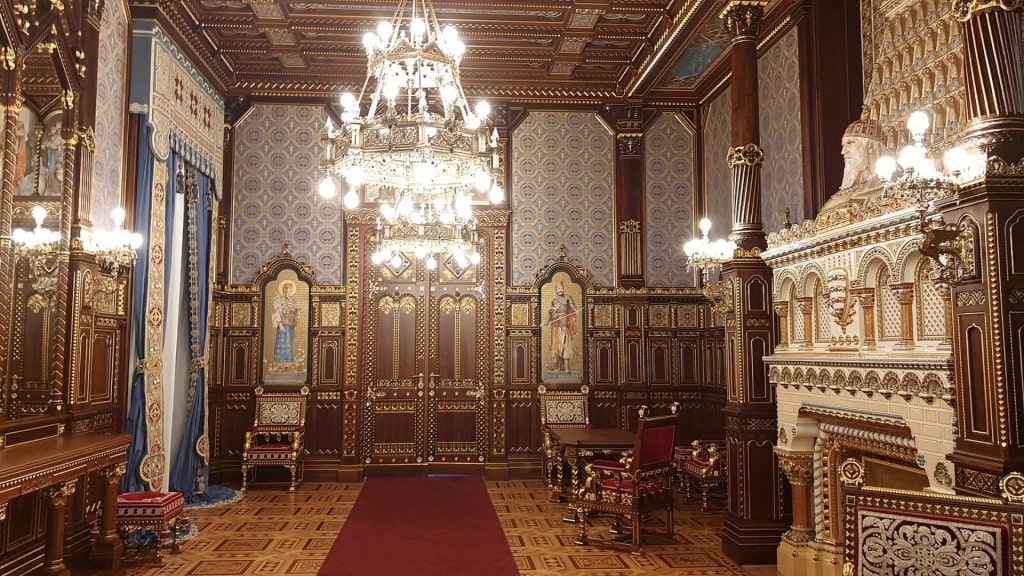
St. Stephen’s Hall Photo by Wiki0856 on Wikimedia Commons, licensed under CC BY-SA 4.0
Along with most of the castle interiors, St. Stephen’s Hall was plundered and destroyed during the Second World War. In 2021, in a project involving hundreds of craftsmen, it was painstakingly rebuilt to the original plans and reopened.
Giving a glimpse of what the Romanesque castle was like in its heyday, the gleaming wooden parquet floors are surrounded by walls filled with regal portraits and artworks. The centerpiece is an imposing 14-foot-high fireplace lined with Hungarian Zsolnay tiles and overlooked by a bust of St. Stephen, the country’s first king and patron saint.
Matthias Church
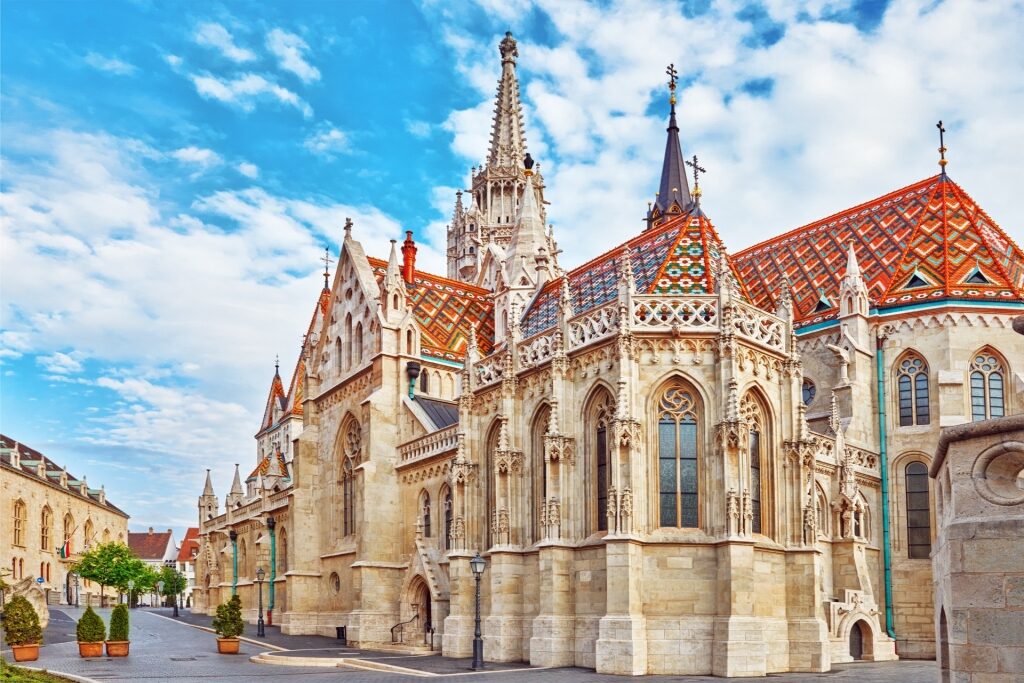
Matthias Church
Topped by Zsolnay tiles in burnished shades of orange, red, brown, and white, the opulent Matthias Church is another Budapest landmark. The interior is equally eye-catching with mosaics and frescoes covering walls, ceilings, and pillars, depicting intricate designs in a kaleidoscope of colors.
The original church on the site was founded in 1015 by the first king, Stephen I, and the current building dates back to the 13th century. Initially a Roman Catholic church, it was used as a mosque by Ottoman Turks when they occupied parts of Hungary, and then a Jesuit temple, before becoming a Catholic church again in the 20th century. Used for coronations and royal weddings, it houses replicas of the Hungarian royal crown and coronation jewels.
Hospital in the Rock
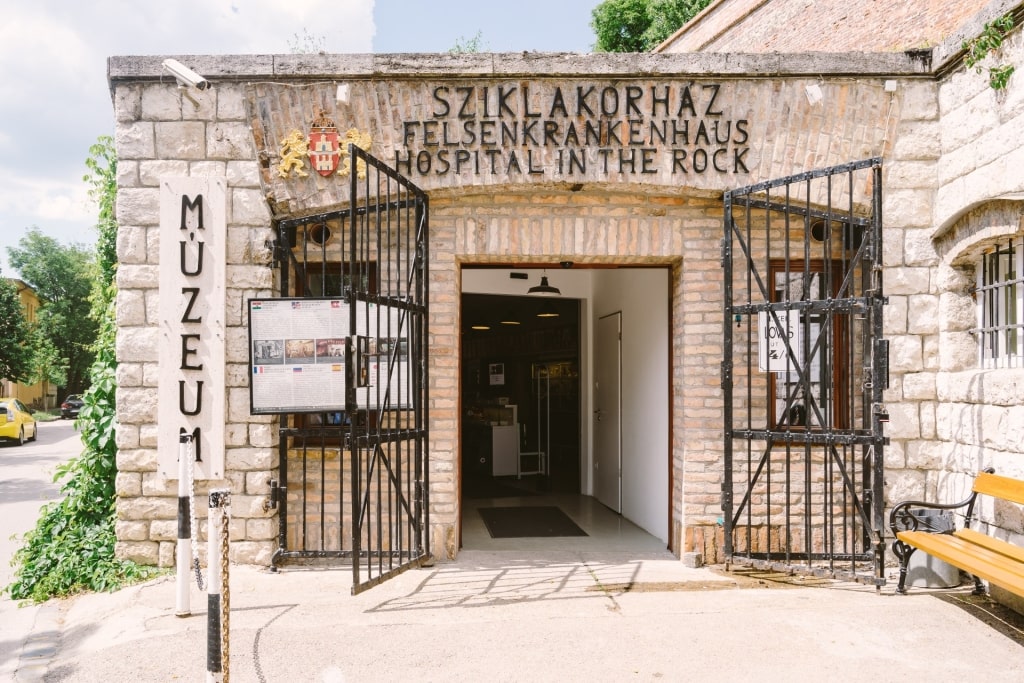
Hospital in the Rock Photo by Wei-Te Wong on Flickr, licensed under CC BY-SA 2.0
Hewn into the labyrinth of caves beneath Castle Hill and off the radar of both locals and visitors for decades is the intriguing Hospital in the Rock.
During a period of growing political unrest in the 1930s, and the growing prospect of war, this subterranean hospital was constructed with an emergency room, surgery, wards, and accommodations for doctors and nurses. It was used during the devastating Second World War siege of Budapest, treating up to 600 injured soldiers and civilians at a time in a space made for 70. It was used again during the 1956 Hungarian Revolution.
Top secret, the hospital was only declassified by the government in 2002 and opened as a museum five years later. There are guided tours through rooms containing original equipment and lifelike waxworks. The tunnels get chilly, so bring a jacket or take one of the retro nurses’ capes which are available to borrow for free inside the almost concealed entrance.
Things to Do in Budapest’s Castle District
Explore the Fisherman’s Bastion
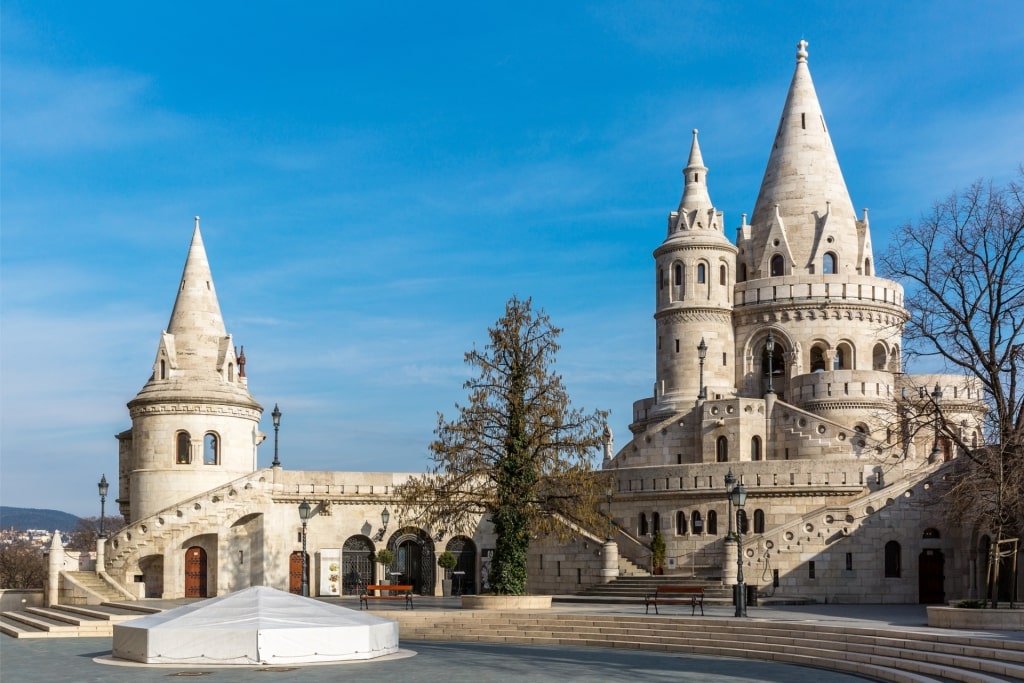
Fisherman’s Bastion
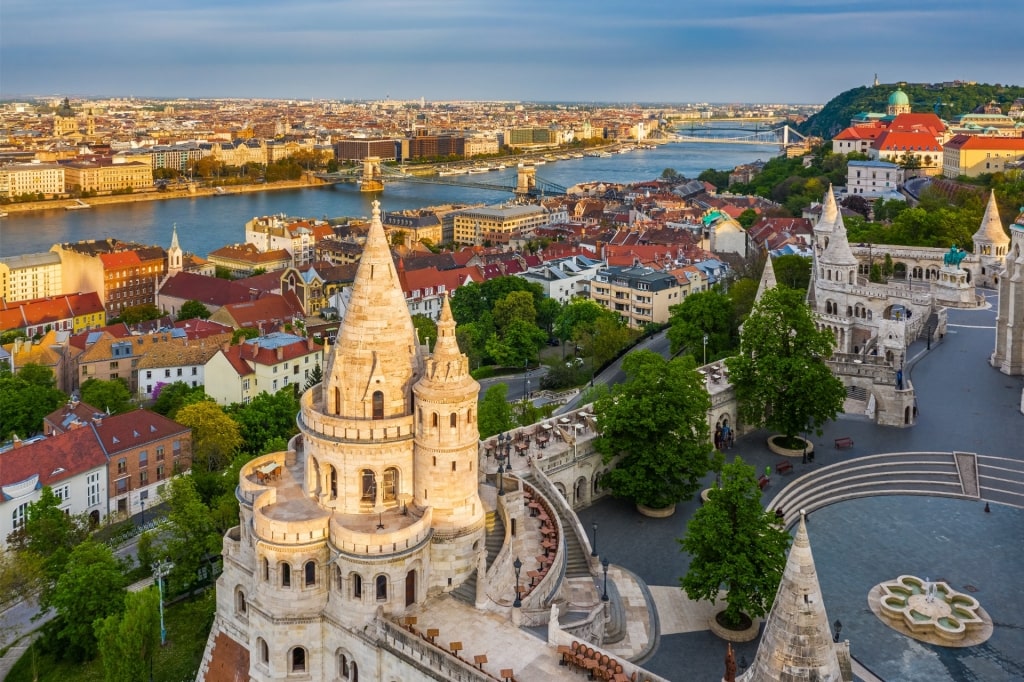
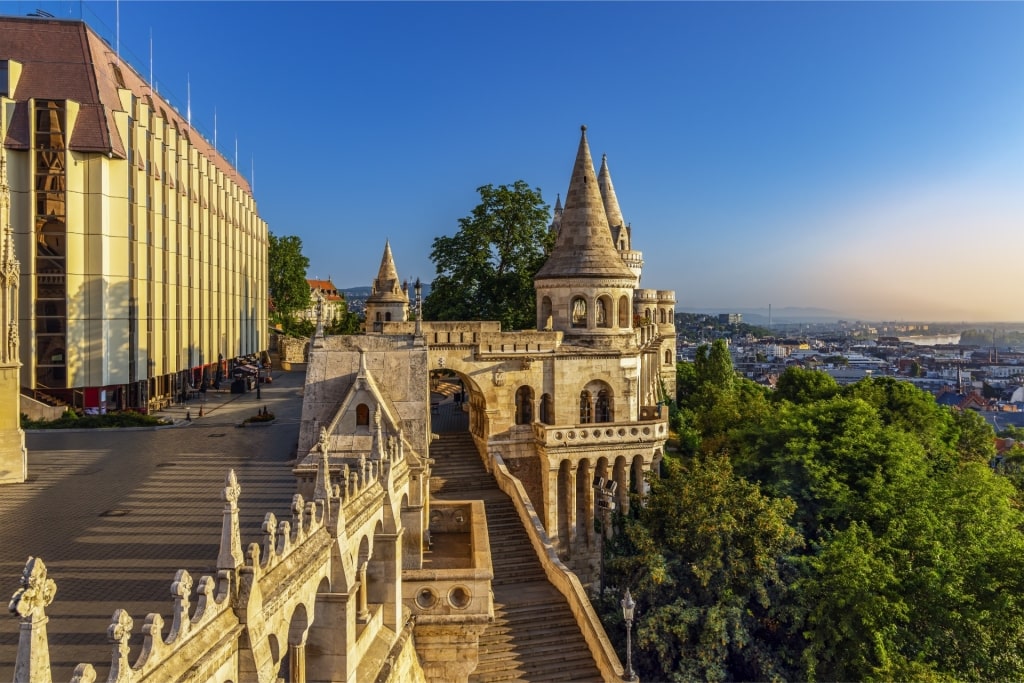
One of the most beautiful spots Budapest is known for, the fairytale towers and turrets of the Fisherman’s Bastion provide panoramic views stretching across the Danube to Pest and beyond.
At one time, Buda was completely separate from Pest on the opposite side of the river, and was linked by a series of wooden bridges when the Hungarian capital became a single city in 1873. Leafy, quieter Buda was permanently linked with flat, busier Pest in 1849 with the construction of the ornate Széchenyi Chain Bridge, guarded by four imperious stone lions.
The Fisherman’s Bastion, linked by a series of stone steps and terraces overlooking serrated walls, provides endless photo opportunities of this panorama.
Fisherman’s Bastion
Despite its appearance, it’s not a fortress but a decorative citadel that was constructed between 1895 and 1902 to commemorate the millennium of the founding of the Hungarian state. It got its name from the fishermen who once lived beneath the walls in the old Víziváros, or Watertown neighborhood, and were instrumental in guarding the bastion and castle area in wartime. You can stroll freely throughout the Fisherman’s Bastion and there is a small entry fee to go inside the towers.
See the Changing of the Guards

Hungarian Presidential Palace
If you keep an eye on the time, it’s easy to catch the foot-perfect changing of the guards at the Hungarian Presidential Palace, which is part of the Buda Castle complex. The guards swap over on the hour in front of the palace and march up and down and salute in perfect unison.
The best time to go is noon, when the ceremony is accompanied by a drummer and has more pomp and sense of occasion.
Admire Liberty Statue
Liberty Statue
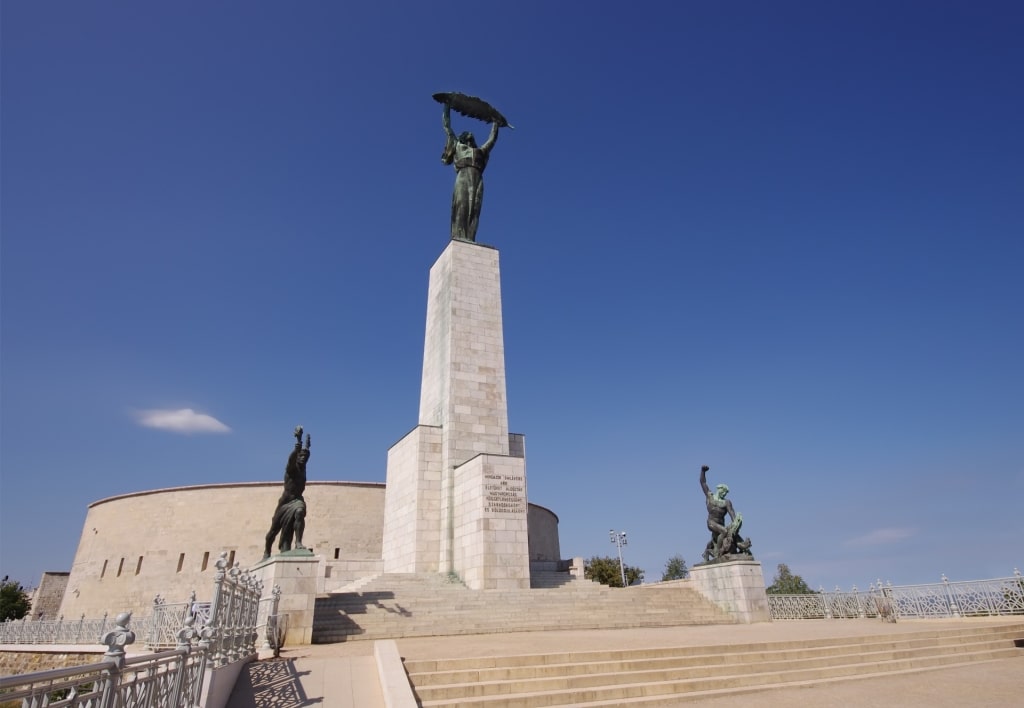
Take a gentle uphill hike to the landmark Liberty Statue overlooking the Danube at the top of Gellért Hill. It’s around a 20-minute walk from the Castle District. Mounted on a tall pedestal, the proud 46-foot bronze figure of a woman holding a palm leaf high above her head is a symbol of peace.
The statue was erected in 1947 to mark the liberation of Hungary from Nazi occupation during the Second World War and is in memory of those who sacrificed their lives for the independence, freedom, and prosperity of Hungary.
Pick Up Some Paprika

Paprika
Drop into one of the many small shops in the Castle District to buy some paprika to take home. The go-to red spice—a staple ingredient in Hungarian cuisine—is made from dried and ground paprika peppers and can vary from sweet and mild to extremely hot and fiery.
Look out for paprika sold in drawstring bags and cute pottery jars, which make great gifts.
Go Shopping in the Castle District
Castle District
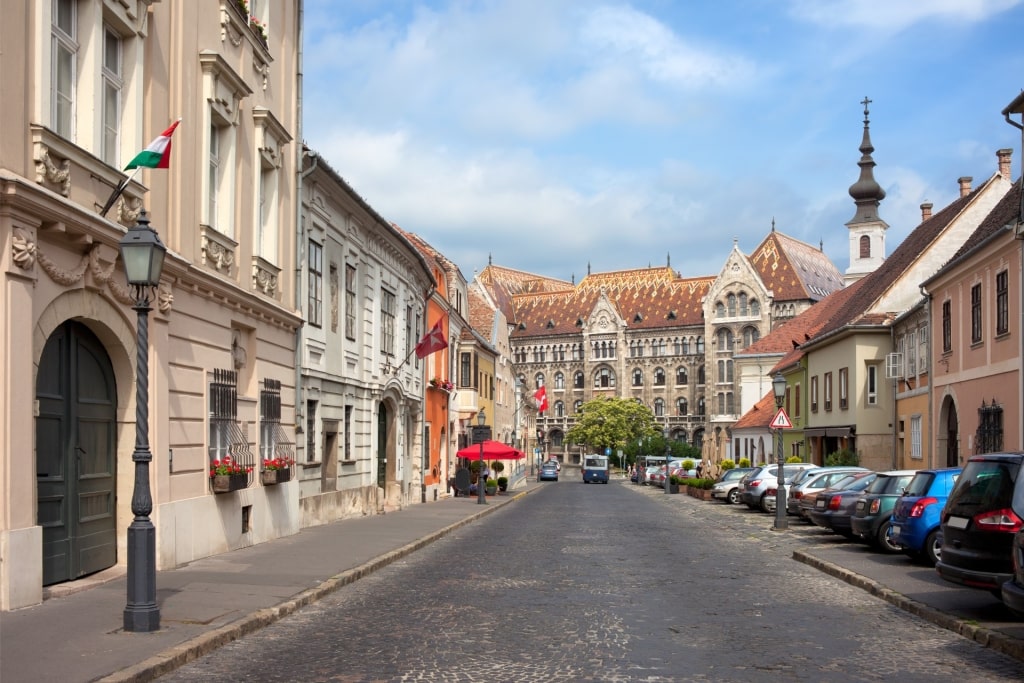
There are no malls in the Castle District, and yet it remains one of the best shopping spots in Budapest. Here, you’ll find plenty of small, individually owned boutiques selling local arts and crafts. Look out for hand-painted pottery with floral motifs and embroidered textiles, including tablecloths and napkins, stitched with brightly colored plants and birds which are typical designs in the Matyó and Kalocsai styles of folk embroidery.
Card players might want to pick up a deck of Hungarian Magyar kártya playing cards. Divided into four suits—acorns, hearts, leaves, and bells—there are only 32 cards in each deck, but many of them are sold with rules for popular Hungarian games such as Ulti.
If you are visiting at Easter or during the festive period in the lead-up to Christmas, you’ll find pop-up stalls dotted throughout the Castle District selling seasonal food and gifts. The Fisherman’s Bastion has a particularly lovely atmosphere from late November through December. There’s a large, twinkling Christmas tree in front of the statue of St. Stephen, and stands sell chimney cakes and warming mulled wine.
Restaurants
Ruszwurm
If you’re looking for a truly quaint, old-world experience, the distinctive olive green façade and arched wooden doors of Ruszwurm lead into Budapest’s oldest pastry shop. Founded in 1827, the interiors are little changed and the shop still has the original cherry wood counter.
It’s well worth standing in line to bag a table inside or outside the café close to Buda Castle. Specialties include the signature Ruszwurm Torte enriched with vanilla and locally known simply as “creamy”. Equally decadent is Ruszwurm’s take on rich chocolate Sacher Torte.
Café Hadik
Café Hadik
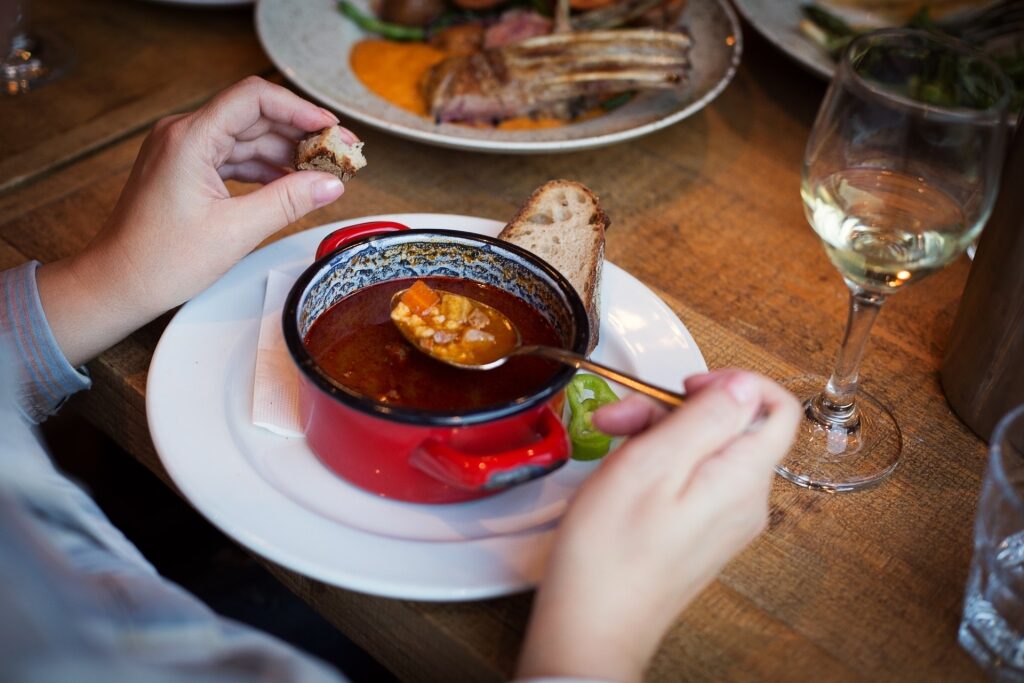
Opened in 1911, this cafe was once a favorite with Hungarian writers, philosophers and intellectuals who gathered to debate politics and other hot topics of the day. The original décor has made way for bare brick walls and contemporary furnishings which continue to draw regulars to enjoy its simple menu.
It’s a great place to try an authentic Hungarian goulash. Many people expect this to be a stew, but it’s actually a richly flavored slow-cooked soup made with beef, vegetables, and paprika, which gives goulash its vibrant red color.
Faust Wine Cellar
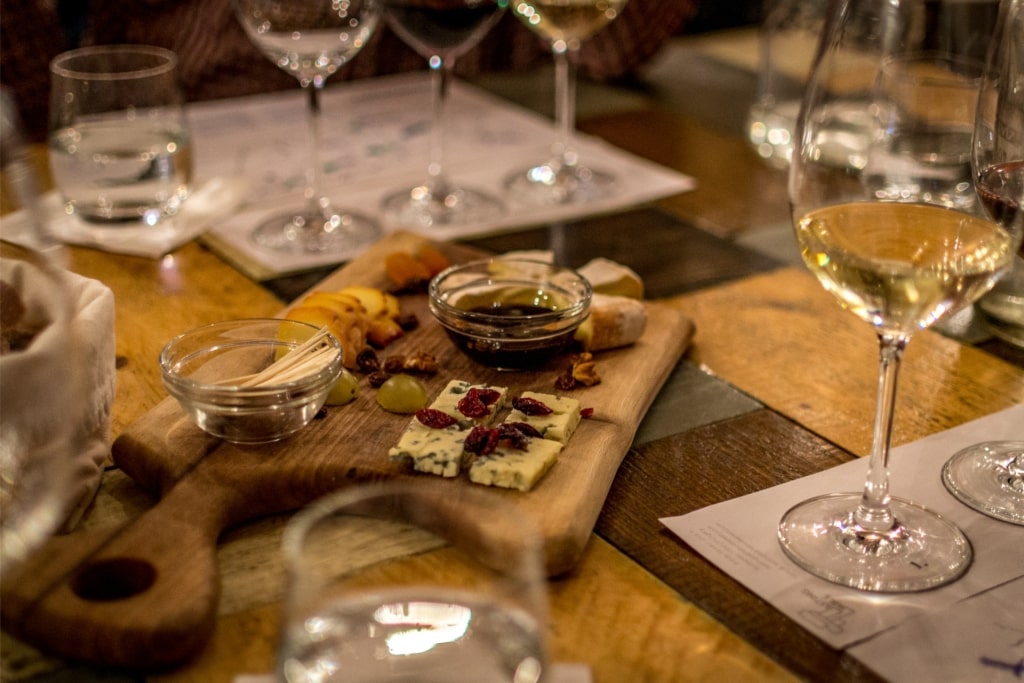
Hungarian wine
Hungarian wines aren’t particularly well-known, yet the country has a proud grape-growing tradition which goes back hundreds of years and is spread across 22 different wine regions. In fact, the Tokaj region was recognized as a classified wine region in the 18th century, long before the world-famous French vineyards of Burgundy and Bordeaux.
Tucked away down steps beneath a medieval convent cloister, and accessed through the Hilton Hotel, is Faust Wine Cellar. It offers informative tutored tastings of Hungarian wines accompanied by tasty bites, such as Hungarian cheese scones, along with the chance to sample the fiery fruit spirit, pálinka. It’s best to book in advance, but walk-ins are welcome.
Travel Tips
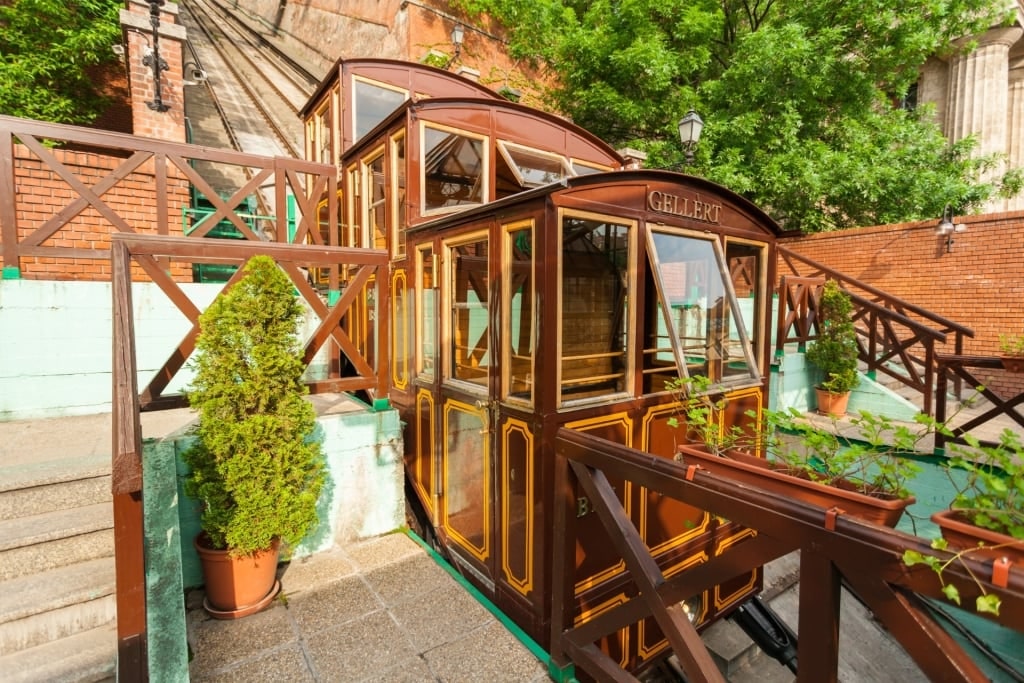
Buda Castle funicular
One of the most popular ways to reach the Buda Castle district is on the historic funicular railway, opened in 1870, which runs from the foot of the hill next to Széchenyi Chain Bridge to Buda Castle. It’s open 8am to 10pm and tickets are available at the booth next to the entrance or online.
Keep your camera handy as the short, 311-foot ascent along the steep track takes less than two minutes. Note that even if you plan to walk one way, you can only buy round-trip tickets.
Fisherman’s Bastion
Once you reach the top, the district is relatively flat and the best way to get around is on foot. There are lots of cobblestone streets surrounding the castle, so be sure to wear comfortable shoes or sneakers. If you’re traveling in spring or fall, take a light rain jacket in case of showers.
If you prefer to explore independently, rather than take an organized tour, buy a digital Budapest Pass for unlimited public transport and entry into attractions and museums including the Hungarian National Gallery, Budapest History Museum, St. Stephen’s Hall, and Matthias Church.
Budapest
Ready to discover the historic Castle District for yourself? Browse Celebrity’s river cruises to Budapest and book your dream voyage today.