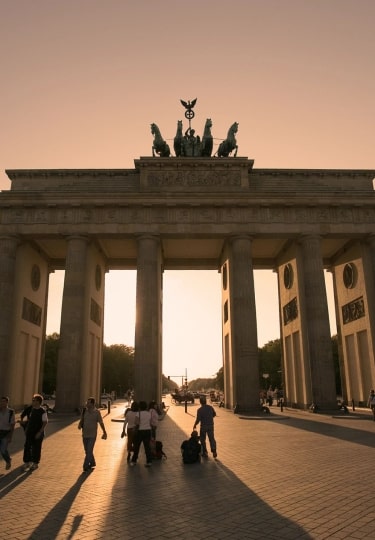
Having traveled in and through Germany many times in various seasons, I think the best time to visit Germany is in the late fall and early winter. But that’s strictly due to my love of the magical Christmas markets.
Some travelers love gazing at spring blooms, while summer sunshine with refreshment breaks in beer gardens is a draw for others. Some are mesmerized by fall colors in the thick forests, while winter sports lovers can get their thrills schussing down snow-covered mountains on skis or snowboards.
River cruises offer unique experiences and are exceptional ways to see multiple big cities and smaller towns while eliminating the need to pack up your things each day, find accommodation, and spend time transferring to hotels. And most river cruises dock right near the center of cities. Also, European river cruises offer several trips to choose from in almost every season.
Visiting Germany by Season
Here’s a cheat sheet offering some basic seasonal trends. Read further to discover more of what Germany has to offer in every season.
- Winter: Expect cold days and snow in many areas, along with lower crowds and prices. It’s a good time for winter sports, museums, and palace visits.
- Spring: Weather is generally mild but unpredictable and can be rainy. Crowds and prices are moderate, making spring a strong time for festivals, seasonal blooms, and city walks.
- Summer: Hot, sunny weather comes with higher crowds and prices. Summer is especially well suited to museums, palaces, and festivals.
- Fall: Expect crisp weather with more rain, along with moderate crowds and prices. Oktoberfest can drive both higher during parts of the season. Fall is a good time for colorful scenery, beer festivals, and fairs.
- Christmas season: Cold weather, with snow possible at higher elevations, coincides with high crowds and prices. It’s especially popular for Christmas markets, shopping, and seasonal food and drinks.
Winter: Cold Weather, Fewer Crowds, and a Cozy Experience
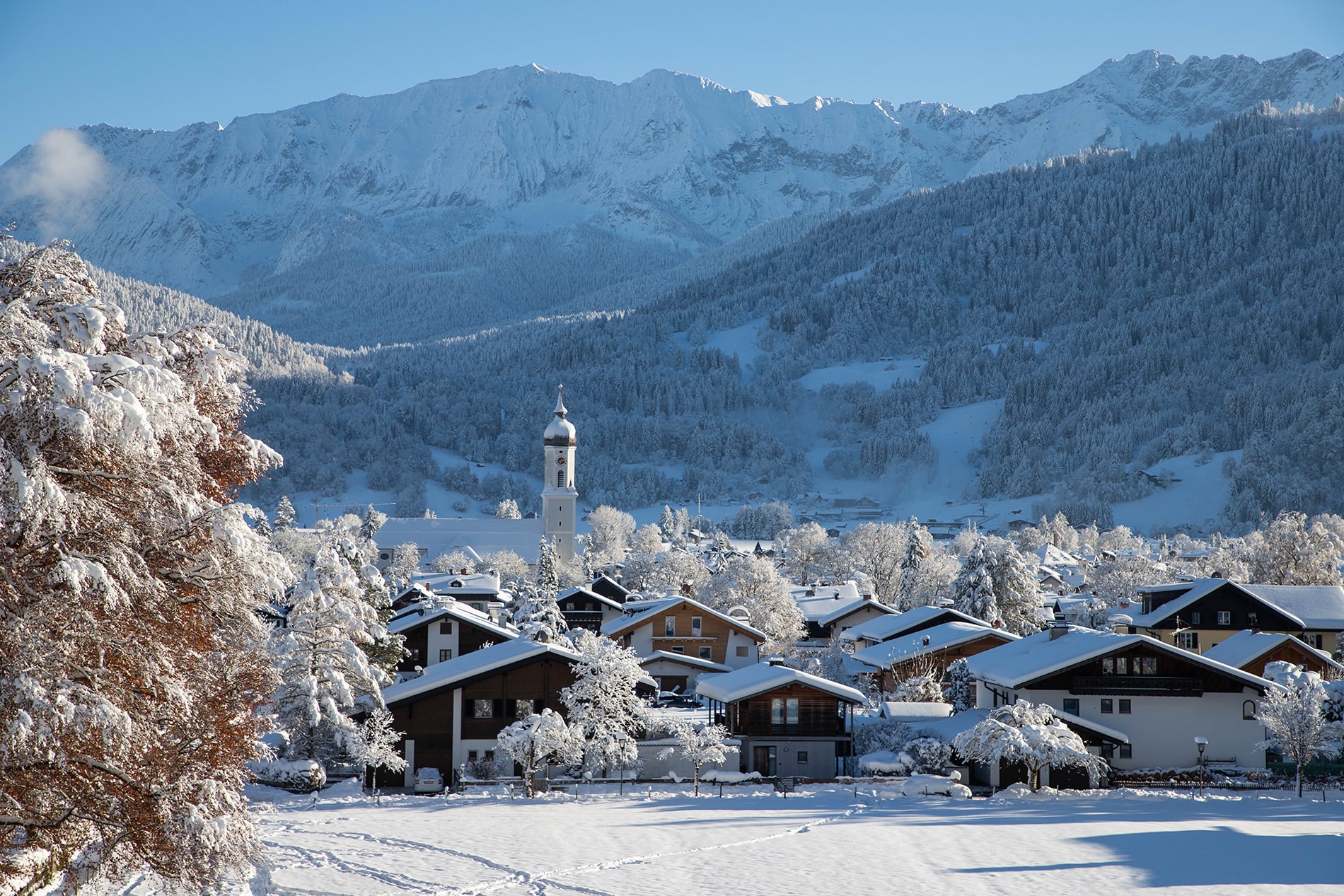
A gorgeous snow-covered village with a distinctive church tower sits nestled beneath the towering, snow-capped peaks of the Bavarian Alps.
If you’re looking to find good deals when visiting Germany, winter is your season. January through March means lower prices and fewer crowds. But there’s more to consider; shorter days and cold weather make for a cozy experience, sipping hot chocolate or something a bit stronger and filling yourself with wiener schnitzel and sauerbraten.
Winter sports abound in Germany. Just over an hour from Munich by car or train, in the Bavarian Alps, lies the town of Garmisch-Partenkirchen. With around 40 miles of downhill ski runs, cross-country skiing, sledding runs, ice skating, snowshoeing, and even a bobsled museum, there’s something for everyone, which makes it a great trip for families.
While it may be cold outside, Germany’s many museums and palaces warmly welcome art and history lovers and fans of royalty. Head to the Alps to visit the famed Neuschwanstein Castle, aka Mad King Ludwig’s Fairytale Castle. Visit the five museums housed on the UNESCO-listed Museumsinsel (Museum Island).
Due to the lack of crowds, this may be one of the best times to visit Berlin, Germany. Gearheads will love Stuttgart, where they can pay a visit to the Porsche Museum. I missed that one, but this Detroit native loved the Mercedes-Benz Museum.
Spring Offers Festivals and Fewer Crowds
Mid-March through mid-May brings a spring awakening. Snow melts and shoulder season begins, before the busy summer season starts. Festivals abound as the blooms bring color to cities and towns.
It’s also a great time for a river cruise since, unlike some summer days, when the water level has been exceptionally low in recent years, requiring river cruise guests to be transferred into some towns and cities by bus, spring brings the winter thaw, generously filling the rivers in all regions. These higher water levels make for a great European river cruise experience.
Celebrate Spring Blooms
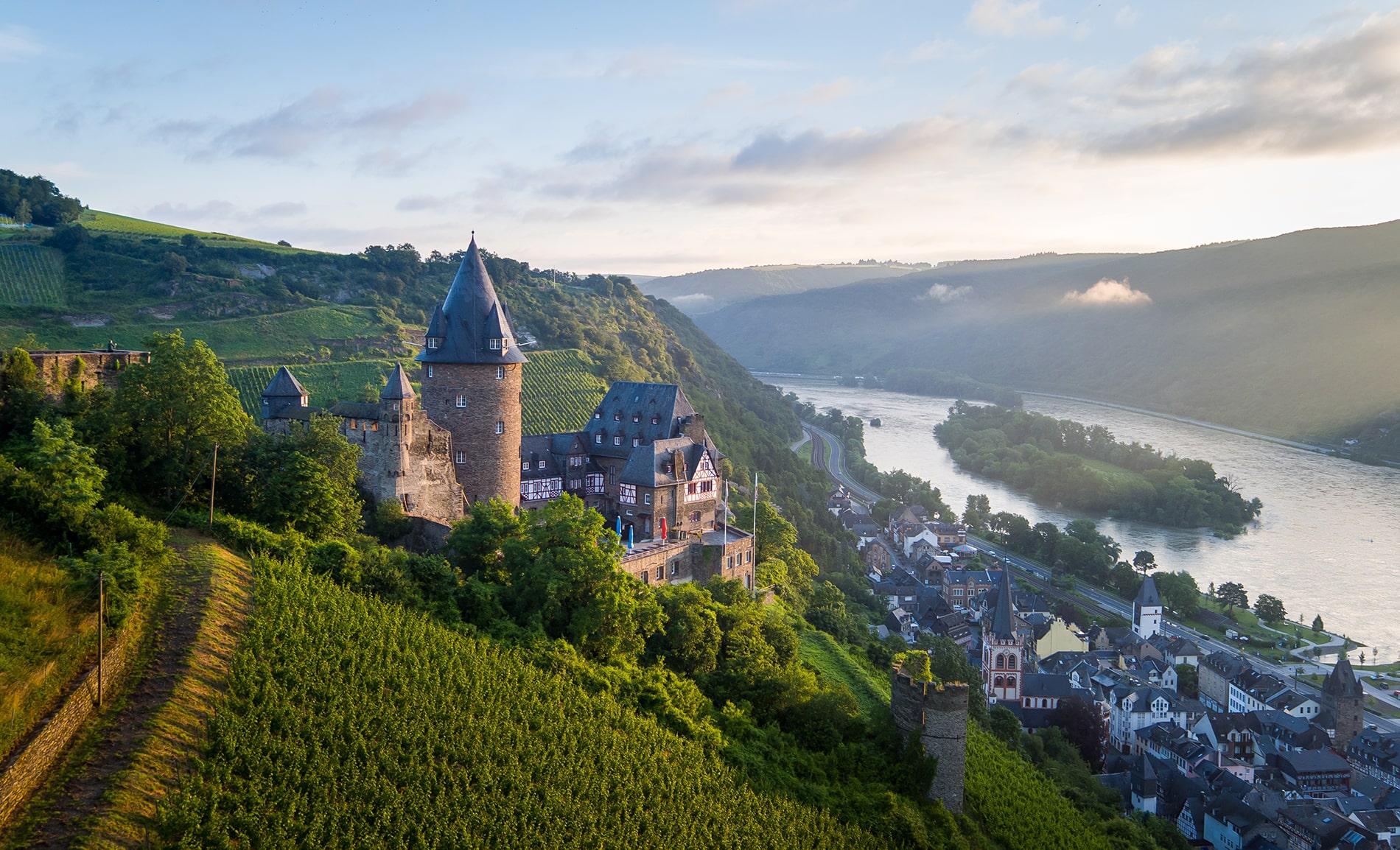
Burg Stahleck stands on a lush hillside, overlooking the town of Bacharach and the winding Rhine River.
The Southern Wine Route in Rhineland-Palatinate offers excellent wine tasting and, if you’re lucky enough to visit in mid-March through the end of April, you can experience “Pink Weeks,” when cherry and almond trees lining the trails are in full bloom, showing off their spectacular colors.
Hike or bike along the 60 miles of trails lined with bright pink blossoms. Stop for refreshments at a forest hut or a wine tavern. Spend an hour exploring Hambach Castle. No matter what, you can’t go wrong when you’re exploring Germany this time of year.
May Day Festivals
While some May Day festivals take place only on May 1, others continue for a few days or weeks. For a truly authentic experience, visit a small town where people dance in the street, drink beer, and decorate a maypole (often a tree with its limbs cut off). Residents guard their maypole while attempting to steal the poles of other villages. If successful, the ransom generally includes large amounts of beer.
Hamburg’s Port Anniversary
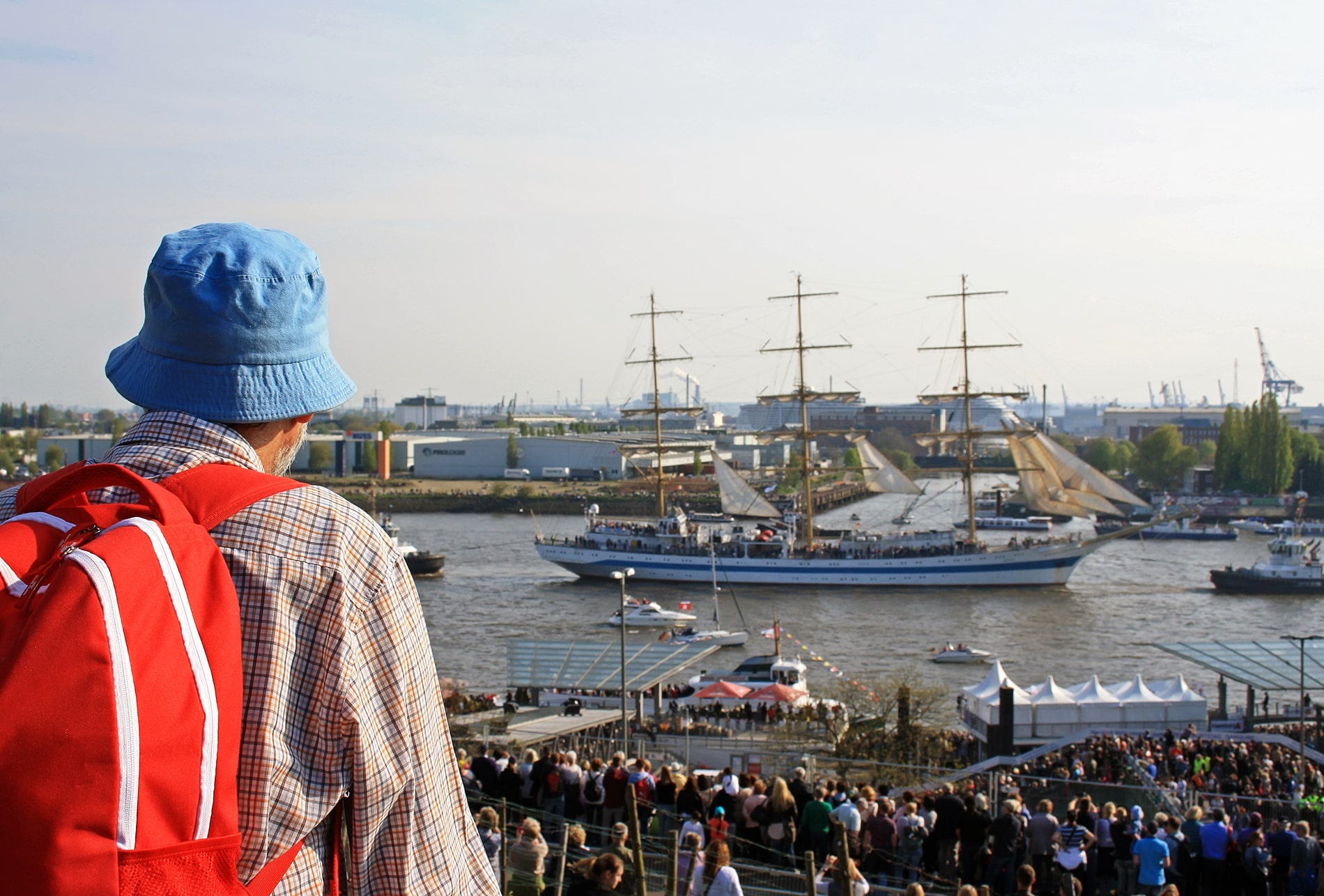
A spectator with a red backpack and blue bucket hat watches a grand tall ship sail down the Elbe River during the Hamburg Port Anniversary.
For over 800 years, Hamburg has celebrated its Hanseatic traditions with an anniversary party in early May. During this three-day gathering of tall ships, preserved heritage vessels, historic lightships, former navy vessels, and cruise ships, visitors are invited to step aboard. There’s even an oh-so-unique tugboat ballet.
Nuremberg Folk Festival
Interested in what your state fair might look like in Germany? Visit the 200-year-old Nuremberg Folk Festival for typical fair rides, regional foods, and fireworks. The fair kicks off with the official tapping of the first keg of beer.
Summer Heats Up in Germany
From mid-May through August, Germany has so much going on that the biggest challenge travelers may face is choosing between them all. Celebrations abound, with fairs and parades taking place across the country. Stop in a museum to cool down or a biergarten for a break and a brew.
Rhine in Flames
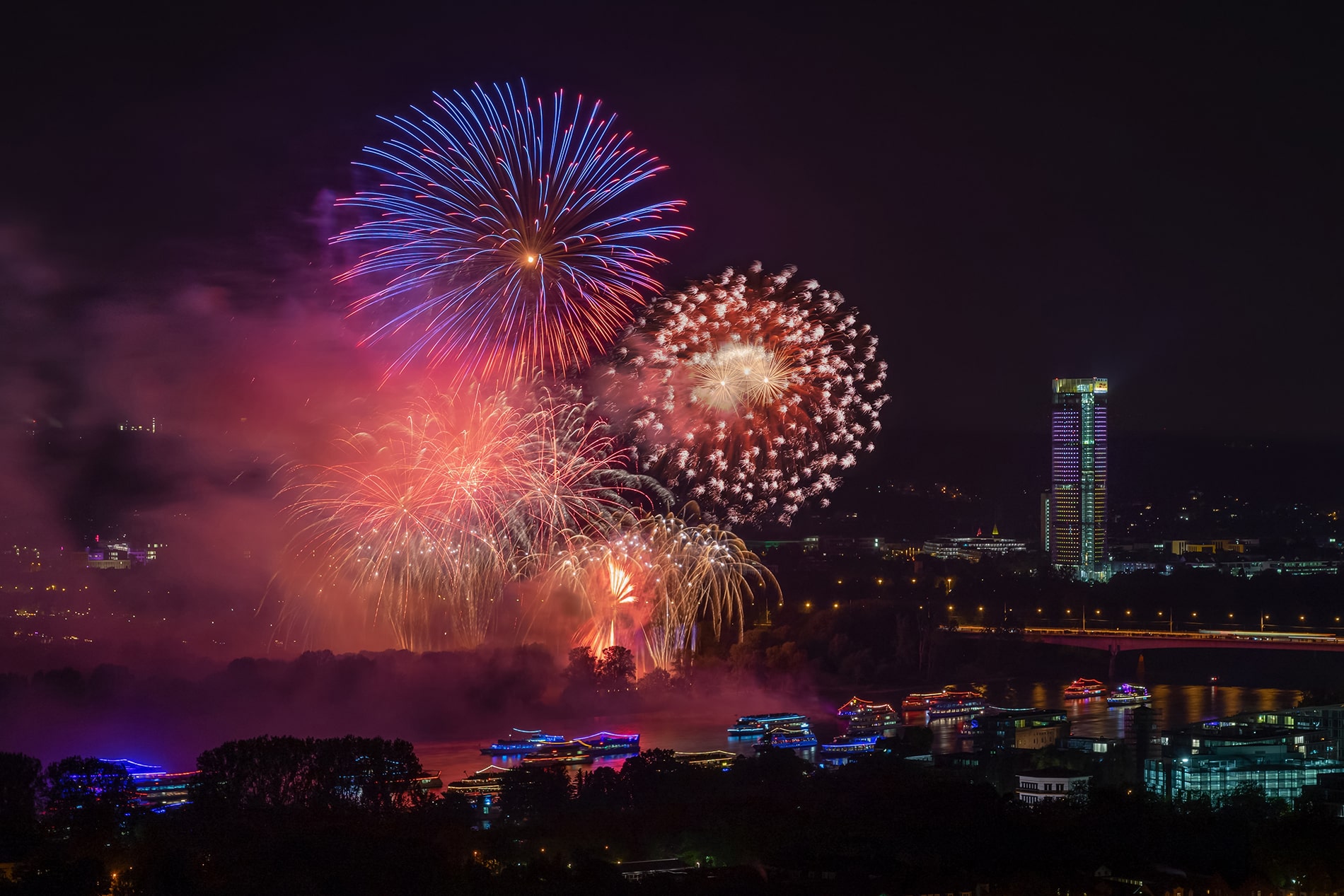
Vibrant fireworks illuminate the night sky over illuminated boats along the Rhine River during the Rhein in Flammen festival in Bonn.
Come to the UNESCO-designated Rhine Valley between Bingen and Rüdesheim in July, or between Spay and Koblenz in August, and you’re in for a treat. A flotilla of up to 60 riverboats glides down this section of the Rhine River, passing fortresses and villages lit up by Bengal torch lights. Fireworks illuminate the night sky all along the journey, with a spectacular finale over Ehrenbreitstein Castle.
Rothenburg Pentecost Festival
A bit of a Renaissance festival with a touch of Civil War battle re-enactment, this festival is a great way to immerse yourself in the history of the region. There’s a Historical Traders’ and Craftsmen’s Market, Shepherds’ Dance performances, beer gardens, and so much more.
The big draw is a performance of the play “Der Meistertrunk,” a reenactment of the rescue of the city during the Thirty Years’ War, which has been honored with a UNESCO listing of Intangible Cultural Heritage.
Celebrate Great Composers
Germany has produced some of the world’s best classical composers, so it’s only right that they celebrate this. Classical music aficionados will be enamored with Mozartfest in Würzburg, the Handel Festival in Halle, and the Bach Festival in Leipzig, where they can attend concerts by world-renowned musicians, see operas on multiple stages, and enjoy regional wines.
Frankfurt Museum Embankment Festival
The end of August might be the best time to visit Frankfurt simply to attend the Museum Embankment Festival. One of the largest festivals in Europe, it celebrates diversity in music, with international and regional artists, DJs, bands, and up-and-coming acts. With something for everyone, it also offers an “Organ and Choir Mile” and even “Sound in the Monastery” concerts held in the Carmelite Monastery.
Pride Festivals
Known as Christopher Street Day (CSD) in Germany, Pride festivals are celebrated in cities across Germany. Berlin and Bremen were the first in Germany to celebrate in 1979, and the joy has spread to Cologne, Frankfurt, Hamburg, and many other locations.
Early Fall Offers a Second Shoulder Season With Fewer Crowds and Cooler Weather
Avoid the summer heat and crowds by traveling in September through early November. Reds, greens, and bright oranges surround you before the trees shed their leaves for the winter.
Of course, the star of the show is Oktoberfest, with thousands of beer lovers traveling to the original fest in Munich. Those wishing to experience fewer crowds might prefer Freimarkt Bremen, which dates back to 1035. Other great celebrations include Stuttgart Cannstatter Volksfest and Frankfurt Dippemess.
Fall isn’t only about beer. Wine is in abundance at Frankfurt’s Rheingau Wine Festival and the 600-year-old Dürkheimer Wurstmarkt in Bad Dürkheim.
Christmas in Germany
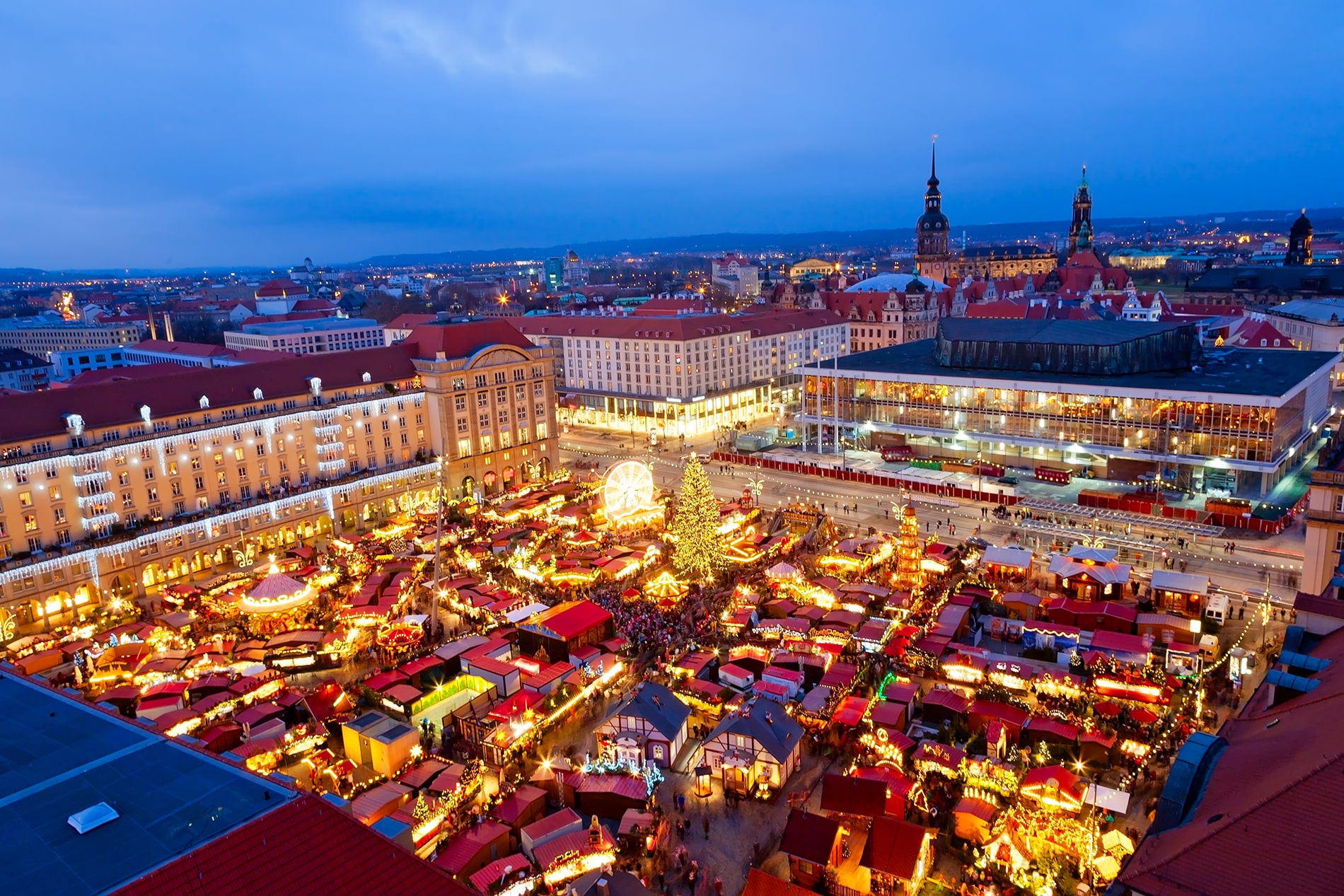
Under the cloak of twilight, the Striezelmarkt Christmas market in Dresden’s Altmarkt square radiates a magical glow as seen from above.
Few things live up to the photos and imagination. Christmas Markets in Germany are an exception. Magical isn’t an overstatement. After visiting no fewer than 10 German Christmas markets, I consider myself a bit of an expert. With the variety of Christmas markets throughout the country, river cruises are a great way to visit multiple cities, towns, and festivities.
The Christkindlesmarkt of Nuremberg is the oldest and most famous of German Christmas markets. First mentioned in 1678, this is the place to try some “Nürnberger lebkuchen,” a soft Nuremberg gingerbread, while you shop for traditional Franconian Christmas decorations.
While Cologne offers a variety of Christmas markets, one you shouldn’t miss stands in the shadow of the UNESCO-listed Cologne Cathedral. Enjoy some glühwein (mulled wine) while munching on reibekuchen, a traditional potato pancake topped with applesauce. Children will love the various markets’ skating rinks and carousels.
For a bit of variety, try the smaller market in Würzburg for some locally made goods at the artisan market and Christmas carol singing in the town square.
FAQs
When is the best time to visit Germany overall?
There is no single “best” time to visit Germany, as the right choice depends on your personal preferences for weather, budget, and crowd levels. Spring (April–May) and fall (September–October) are ideal shoulder seasons that offer pleasant weather and fewer crowds, while summer is vibrant and filled with festivals. Winter offers a cozy atmosphere perfect for visiting museums, palaces, and the country’s iconic Christmas markets.
What are the best months to visit Germany for good weather and fewer crowds?
Try April, May, September, and October. It’s shoulder season, and while weather is never guaranteed, you should have some nice days without the Christmas and summer crowds. A caveat about October: expect some crowds if you’re visiting a city with a popular Oktoberfest celebration.
Which months are best for castles, wine regions, and scenic river views in Germany?
Fall is an excellent time to visit castles and wine regions while enjoying scenic views of the changing colors from a river boat.
What is the best time to visit Germany for first-time travelers?
Spring and summer are great for first-time travelers, with everything open and bustling.
What is the best time to visit Germany for older travelers who want mild weather?
With four seasons, the best time of year to visit Germany is spring and fall, when it’s not too hot and not too cold.
Germany’s Seasons All Have Wonderful Things To Offer
While there’s no best time of year to visit Germany, that’s only because you can’t go wrong no matter when you choose. Still, you can narrow it down by considering your interests, budget, the crowds, and the weather.
Explore Celebrity River Cruises itineraries and discover more of Germany and its wonderful culture.