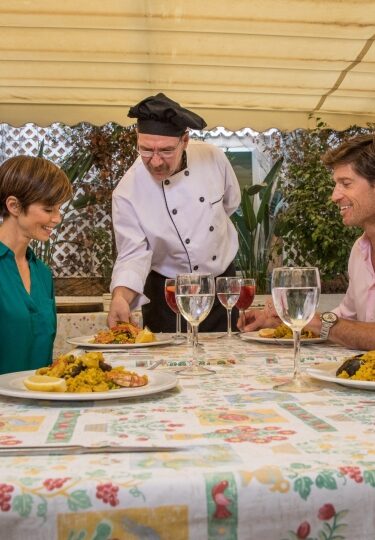
For traveling gourmands, food in Spain is an absolute pleasure to discover. Spain boasts remarkable geographic and cultural diversity, which is reflected on the plate. Imagine seafood-centric tapas with plentiful vermouth in Barcelona, or Valencia’s famed paella. No matter which region you dine in, impeccably sourced ingredients are at the core of every dish.
In the past few decades, Spanish chefs scooped up Michelin stars with elaborate molecular gastronomy. Yet some of the best Spanish cooking is often the simplest. Few pleasures can compete with sipping a chilled cava while nibbling on slices of jamón Ibérico.
Food from Spain is above all a social affair, meant to be savored at a leisurely pace in excellent company.
History & Culture
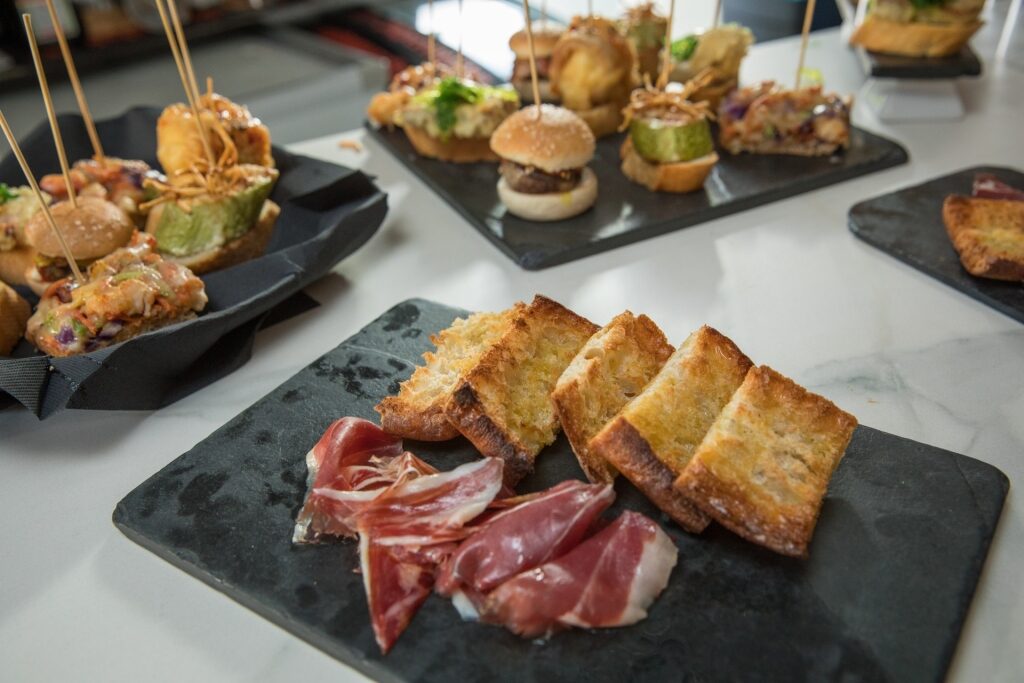
Tapas and pintxos
Many different groups of people have left their mark on what we now think of as Spanish food. For centuries, the Moors—a broad European term for Muslim people of North African descent—ruled the Iberian Peninsula.
They had a profound impact on the cuisine, bringing with them spices like cumin and saffron, as well as the vermicelli noodles used in fideuà. Sweet and savory dishes with garlic and honey or dried apricots have North African roots. Even turrón, arguably Spain’s most popular holiday treat, most likely exists because of the Moors.
Despite persecution and expulsion from the country in the 15th century, Spain’s Sephardic Jewish population had a profound impact on the cuisine. Between the 10th and 12th centuries, known as the “Golden Age,” Muslim, Christian, and Jewish people coexisted relatively peacefully.
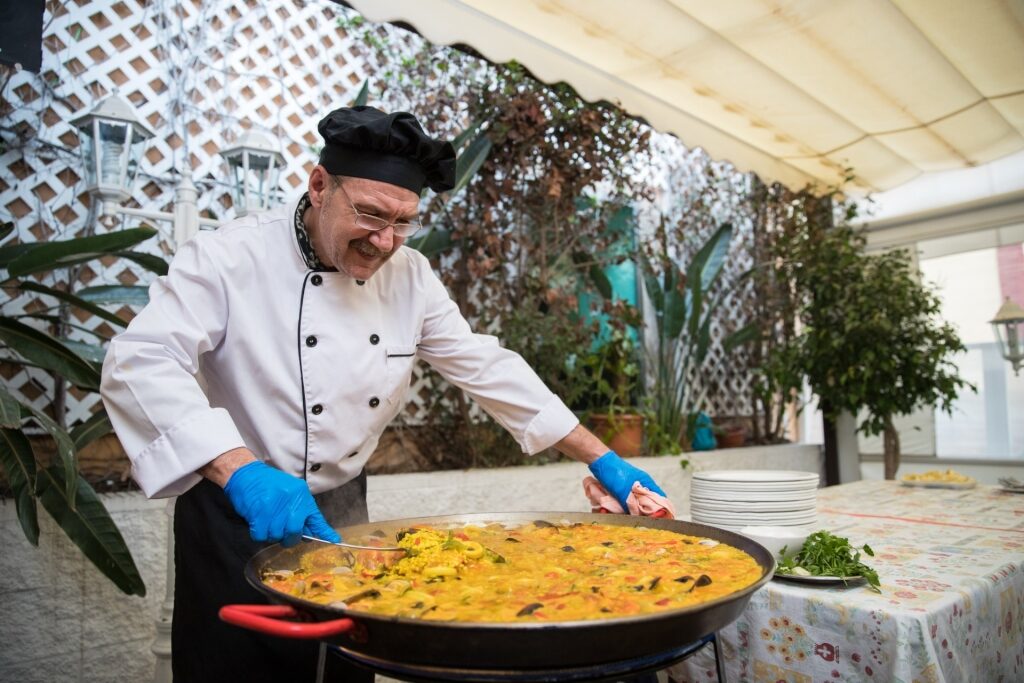
Paella
To this day, Spain is far from a monolith. The country officially recognizes a handful of languages beyond Castilian Spanish, including Basque, Catalan, Valencian, and Galician. Different autonomous communities of the country have their own distinct identities and cuisines.
Regional Cuisines
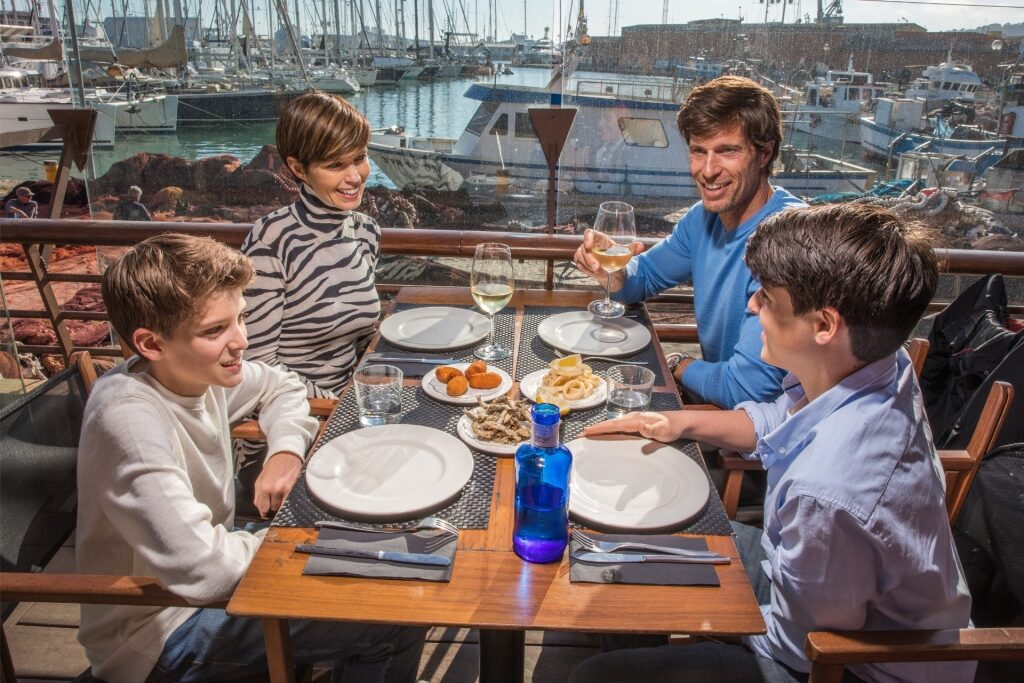
Restaurant in Mallorca
Part of what makes Spanish food so remarkable is the sheer diversity of regional cuisines. Part of that has to do with geography. The country has everything from the fertile plateau of La Mancha to the beaches of the Balearics and the high peaks of the Sierra Nevada.
Another part is rooted in history and culture. Dishes in Andalucia are quite distinct from dishes in Valencia, and the cooking in Basque Country is wildly different from that in Catalonia. Head to the Canary Islands and you’ll notice heavy North African influences, along with tropical fruits like mangoes and avocados.
Meanwhile, the Balearic islands of Ibiza and Mallorca are their own entities entirely. The only way to really understand Spanish cuisine is to travel as widely as possible throughout the country.
Food Experiences
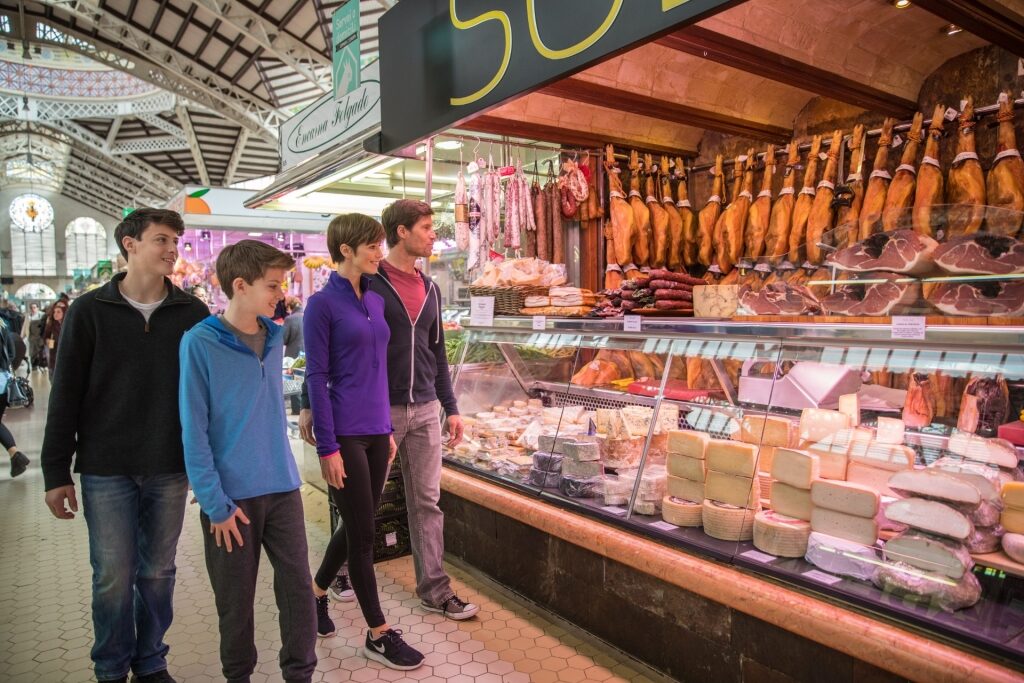
Central Market, Valencia
Spanish food varies widely by region, but relies heavily on the country’s excellent fresh produce and seafood. Tinned fish, once regarded as a commodity product in some countries, has always been revered here. High-quality tinned anchovies, tuna, squid, cockles, octopus, and other delicacies make their way onto all sorts of tapas menus.
Spain is also renowned for producing some of the finest charcuterie on the planet, from chorizo to morcilla. Of particular note is Spain’s renowned ham, which makes its way into everything from bocadillos—sandwiches—to croquettes. Jamón serrano refers to ham made by curing and dry-aging whole pork legs. The higher-grade version is jamón Iberico, which is produced similarly, but made exclusively with the meat of rare Iberian pigs.
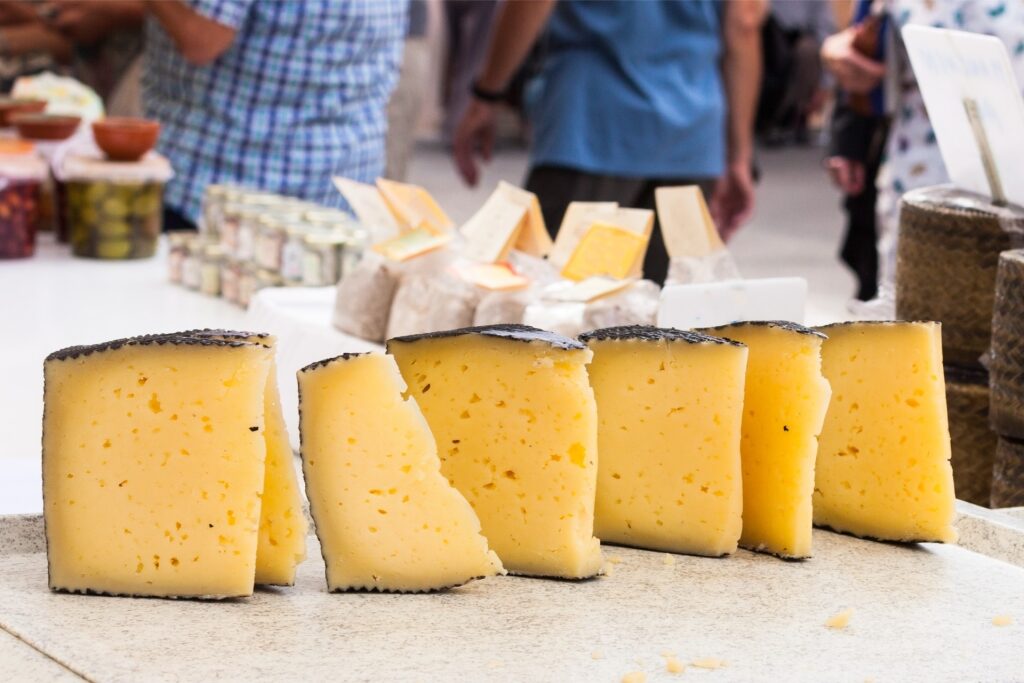
Manchego cheese
Cheeses also play a central role in Spanish cuisine. Manchego, a hard, aged sheep’s milk cheese from La Mancha, is perhaps the best-known internationally. There’s also Cabrales, a funky, potent blue from Asturias, and Idiazabal, a smoked cheese from Basque Country. Overall, Spain is thought to produce around 200 distinct varieties of cheese.
Spain is also the world’s largest producer of olive oil, surpassing Italy and Greece by a wide margin. This liquid gold is often used in abundance in dishes here, whether that’s a tortilla loaded with sliced potatoes confited in olive oil or a platter of fried squid. The olives themselves also feature prominently in tapas spreads and all sorts of dishes.
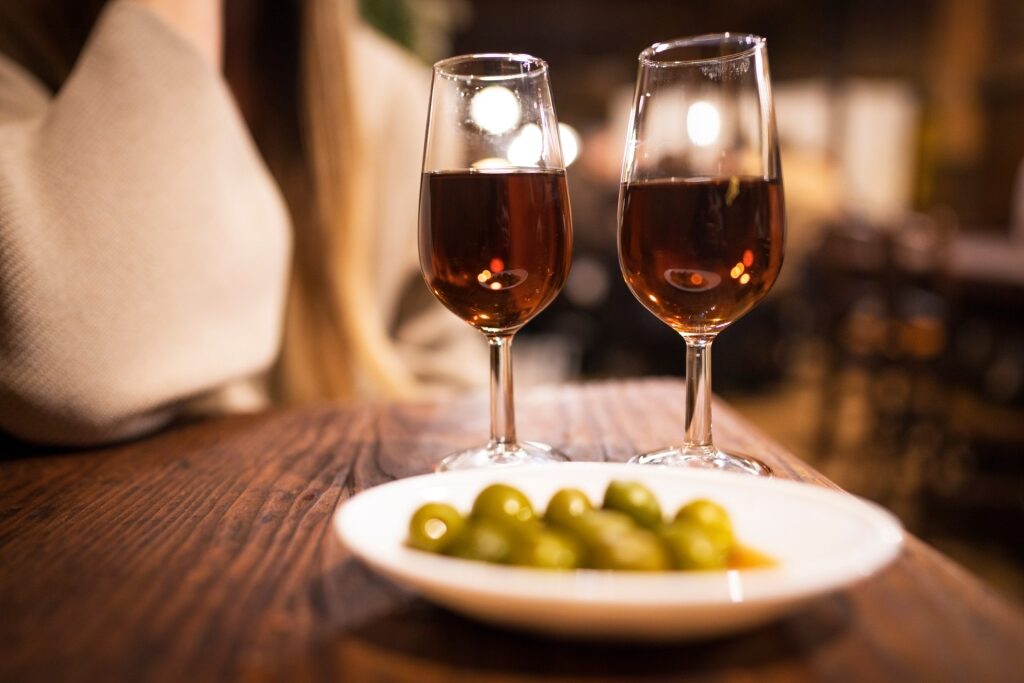
Vermouth
In Barcelona, vermouth isn’t so much a beverage as a way of life. La hora del vermut, or “the hour of vermouth,” is to locals here what aperitivo is to Venetians. This lovely social ritual consists of sipping vermouth on the rocks accompanied by little snacks. An olive or lemon wedge in the glass is common, although not mandatory. The snacks are usually simple, perhaps a few anchovies or olives with high-quality potato chips.
Historically, la hora del vermut took place before lunch, then the most important meal of the day. Nowadays, it often refers to the early evening hours around sunset before dinner. As the workday winds down, locals make their way to Vermuterías. Many of these establishments make their own vermouth in-house, often infusing it with dozens of botanicals and aromatics.
Spanish Foods to Try
Paella
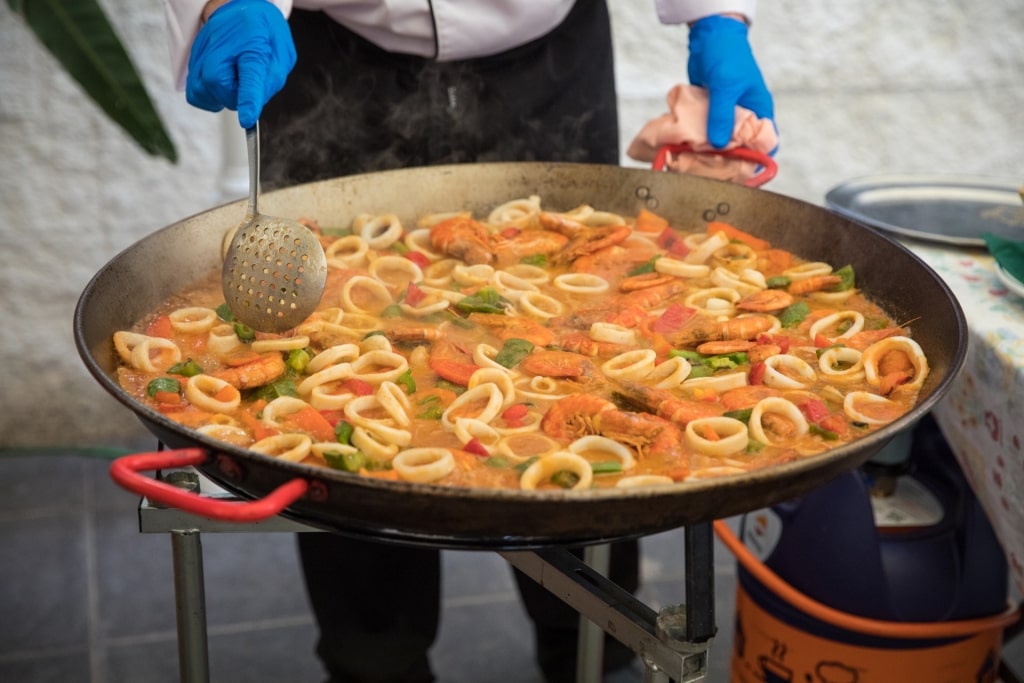
Paella
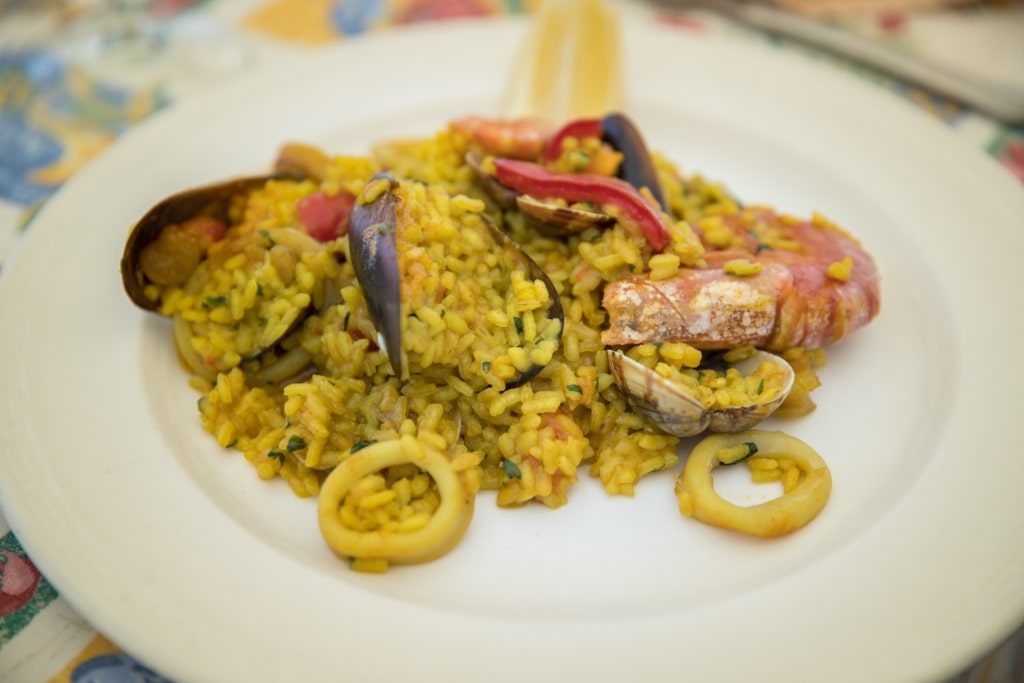
Although paella may be Spain’s best-represented culinary export abroad, it’s still far better enjoyed in its home country. Much of this has to do with the fact that Spain boasts not one paella, but many, many regional variations, each with their own appeal.
The term paella refers to rice that’s cooked, preferably over an open flame, in a large, shallow pan. That rather broad definition encompasses a tremendous range of ingredients and seasonings. Everything from snails to chorizo to wild game may be used, depending on the recipe.
Paella
Arguably the most famous regional variation is paella Valenciana, which typically includes rabbit and chicken and is perfumed with saffron.
Paella de mariscos, or seafood paella, often includes mussels, prawns, squid, cod, and as many other types of seafood as the chef can muster. Oftentimes, this version is midnight black thanks to a glug of squid ink.
A few factors unite these seemingly disparate dishes. First of all, the backbone of every paella is a sofrito, finely minced and sauteed aromatics. Second, any paella worth its salt boasts a socarrat, a crunchy, toasty layer of cooked rice at the bottom.
Jamón Ibérico
Jamón Ibérico
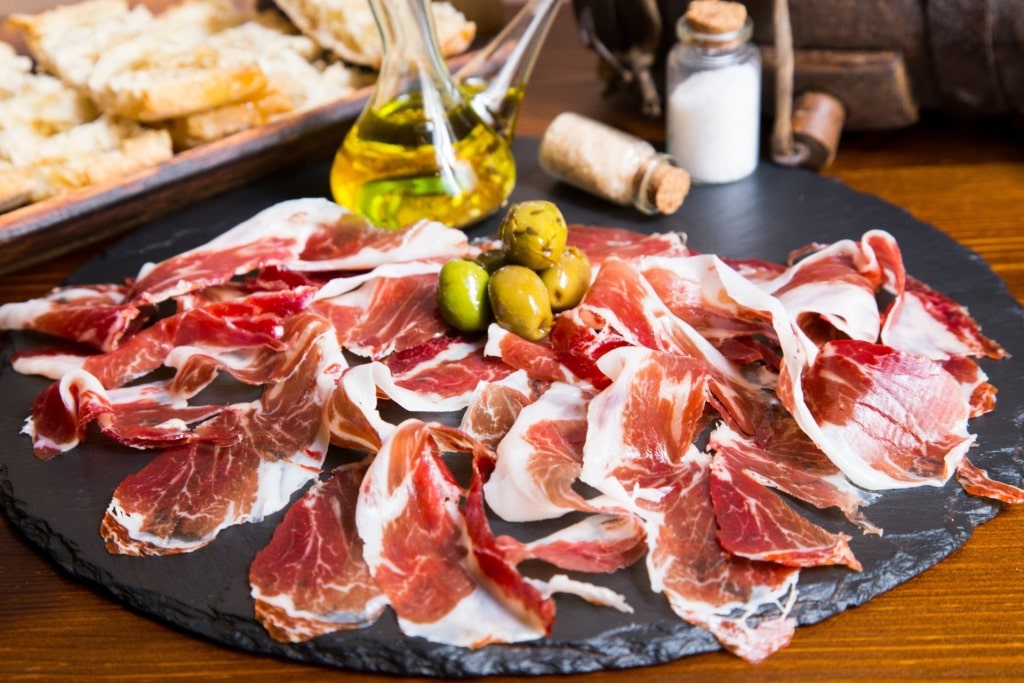
Jamón Ibérico is to your standard ham what a Ferrari is to a Fiat. This most prized Spanish ham is made with the legs of Black Iberian pigs. These heritage breed porkers feast on acorns, which gives their meat an especially rich, nutty flavor. Iberian pork also boasts an impressive amount of marbling, which gives this ham its silky, melt-in-your-mouth texture.
Of course, that kind of quality does not come cheap. Jamón Ibérico is treated and priced like a luxury item because it is. Experts often shave off wafer-thin slices off a whole leg by hand. A few slices are spectacular on a bocadillo (sandwich).
If you’re craving jamón but don’t want to splurge on the really good stuff, don’t worry. Jamón serrano is also utterly delicious and cured in the old, artisanal fashion, but lacks the price tag or the pedigree.
Tortilla Española
Tortilla española
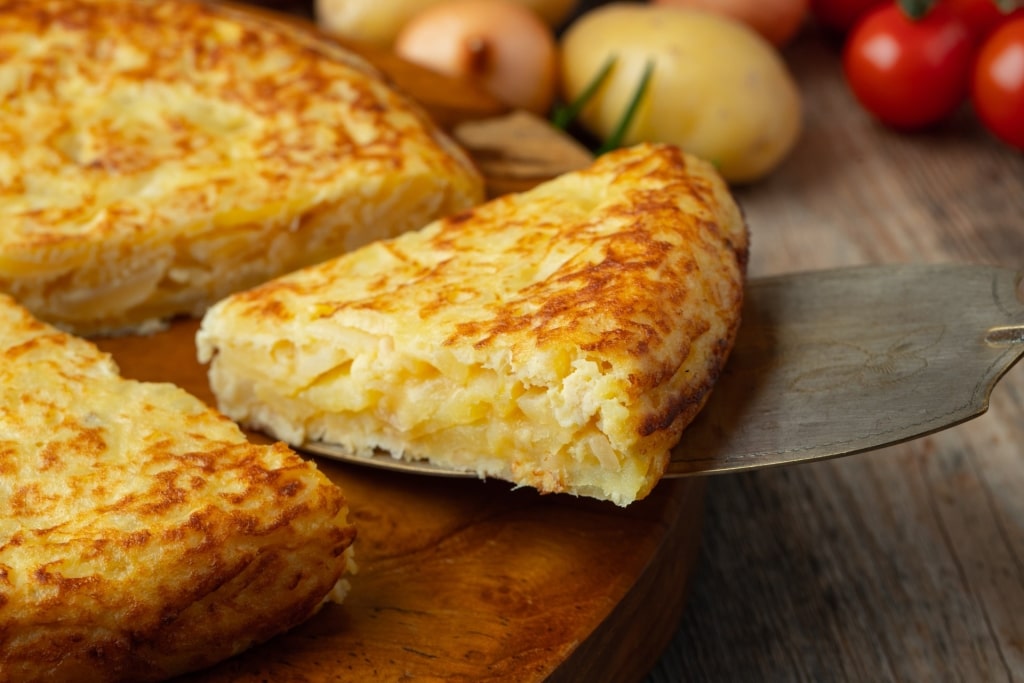
Like many of Spain’s most iconic dishes, tortilla española is greater than the sum of its parts. While a dish consisting of eggs, potatoes, and onions seasoned with nothing more than salt and pepper might not sound especially flavorful, this one is.
The secret lies in the olive oil—lots and lots of olive oil. In a true tortilla, the thinly sliced rounds of potato are half-braised, half-fried in a generous pan of the good stuff. The result boasts a velvety texture that is simply not possible without that much fat. Once the eggs are added, this sophisticated frittata is cooked until bronzed on top.
It can be served warm or cold, sliced into wedges and accompanied by a dollop of aioli. Although tortilla espanola can stand alone, it is usually part of a larger tapas spread.
Gazpacho
Gazpacho
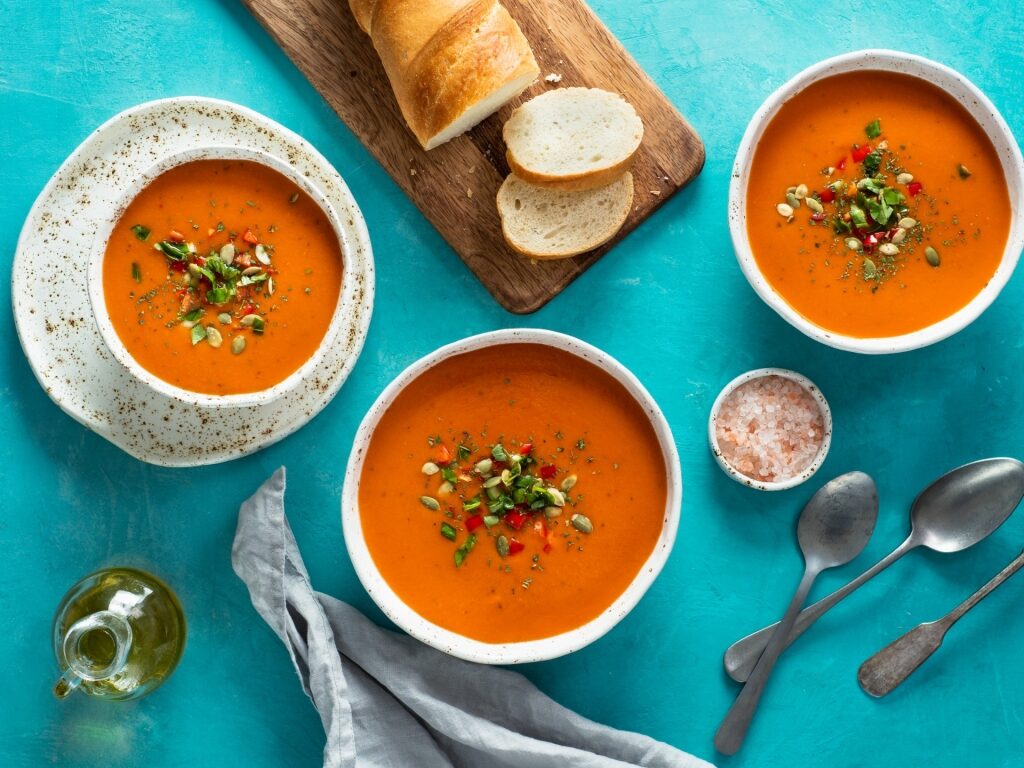
This chilled soup tastes like summer in a bowl. A good gazpacho should be made with ripe, in-season tomatoes, bell peppers, cucumber, onion, and garlic all whirled together in a blender. A generous amount of extra virgin olive oil emulsifies the mixture and gives it a luxurious mouthfeel.
While tomato-based gazpacho is the most famous iteration of this soup, it’s not the only one. White gazpacho consists of grapes, cucumber, blanched almonds, bread, and olive oil pureed together. To the uninitiated, the ingredient list might not sound like much. Once combined, however, it’s deliciously smooth and refreshing on a hot afternoon.
To make matters more confusing, there’s salmorejo, another chilled tomato soup from Andalucia. Unlike gazpacho, which retains a bit of texture, this cold soup of soaked bread, tomatoes, and olive oil is pale orange and velvet-smooth.
Patatas Bravas
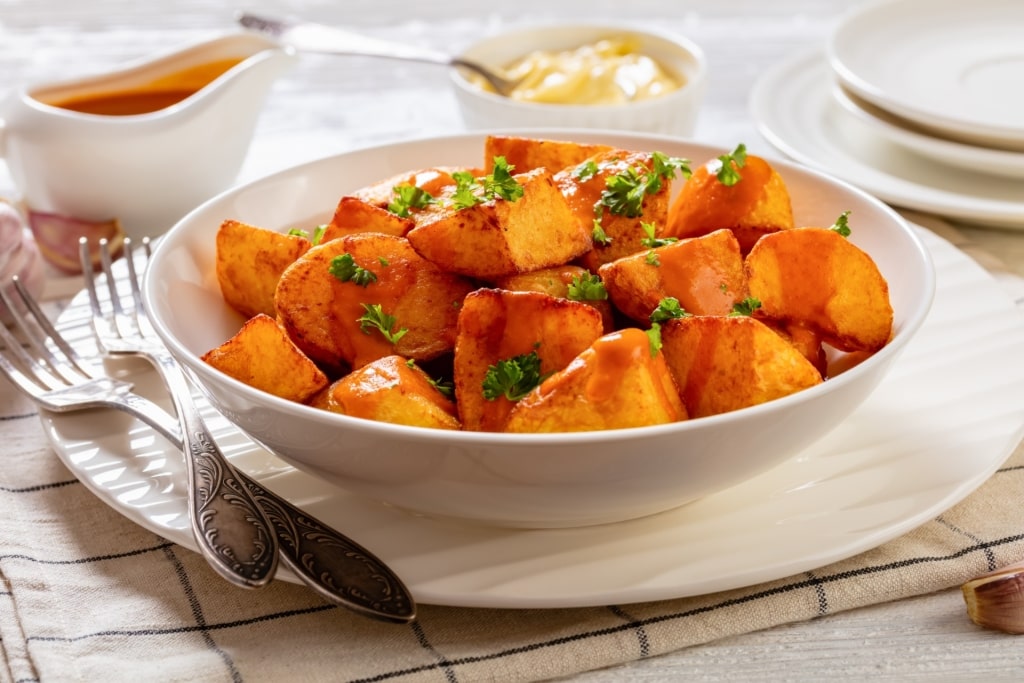
Patatas bravas
An essential component of any tapas spread, patatas bravas are fried chunks of potatoes. Unlike more uniform French fries, bravas tend to come in irregular pieces with craggy, crispy edges.
A dusting of salt and smoked paprika make these utterly addictive. Like other forms of fried spuds, they are best served with a dipping sauce. In this case, it’s a garlicky aioli that often comes draped over the top.
Pimientos de Padrón
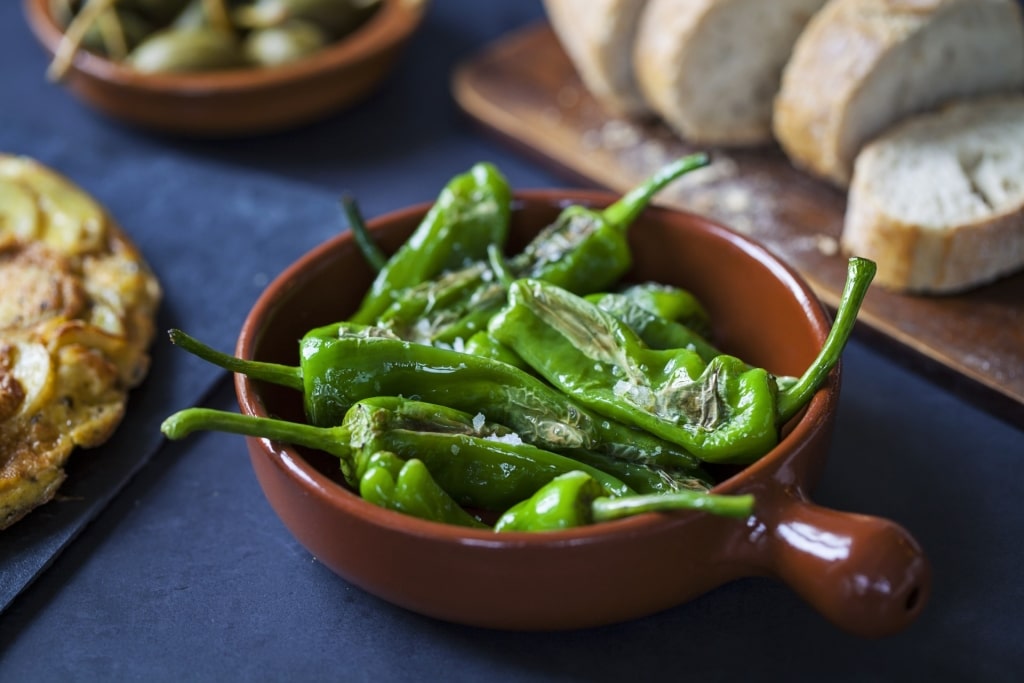
Pimientos de padrón
If you spot a plate of these blistered, green peppers on a tapas spread, beware. Yes, they’re salty, savory, and almost impossible to stop eating. A squeeze of citrus and a sprinkle of flaky salt transforms them into the ultimate bar snack.
But while most of these peppers are mild, every so often you may encounter a fiery specimen. Approximately one out of every 10 peppers packs the capsicum punch of a jalapeno. So approach with caution and come armed with a glass of Rioja or a chilled cerveza just to be safe.
Read: The Ultimate Mallorca Food Guide
Churros
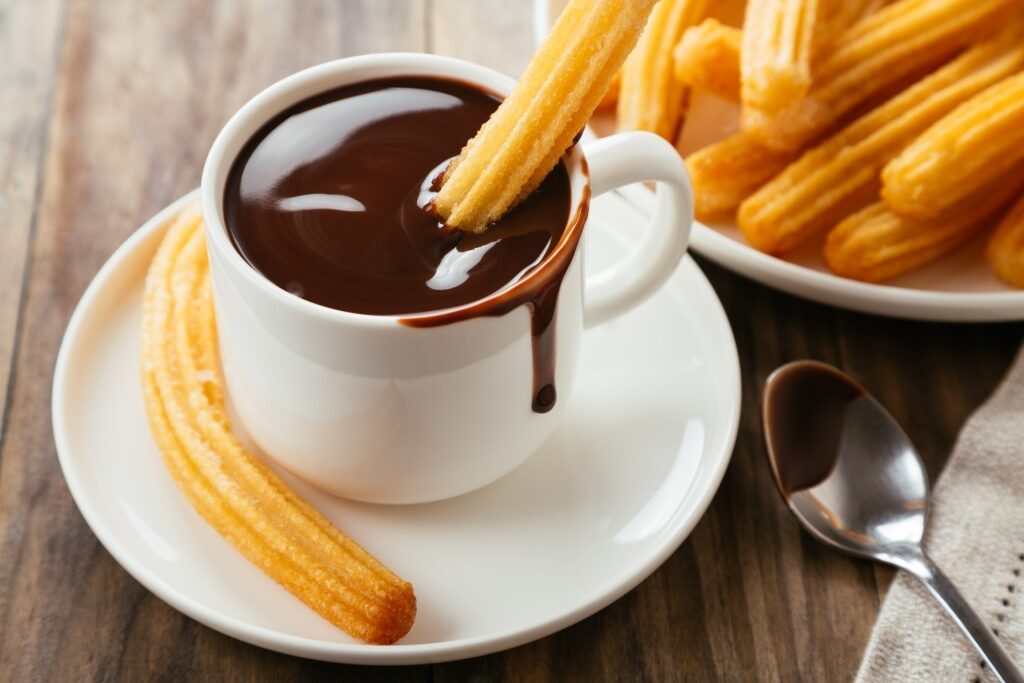
Churros
As with many fried foods, churros are best consumed while still piping hot. These batons are a delicious dessert or snack and enjoyed from morning until the wee hours.
Churros are made with an egg-rich dough extruded through a mold to form a distinctive ridged shape. After a quick stint in bubbling oil, they’re tossed in sugar and served immediately.
Possibly the most satisfying aspect of churros is dunking them in a thick, rich chocolate sauce. They also pair brilliantly with hot chocolate, a beverage the Spanish approach with borderline reverence.
Gambas al Ajillo
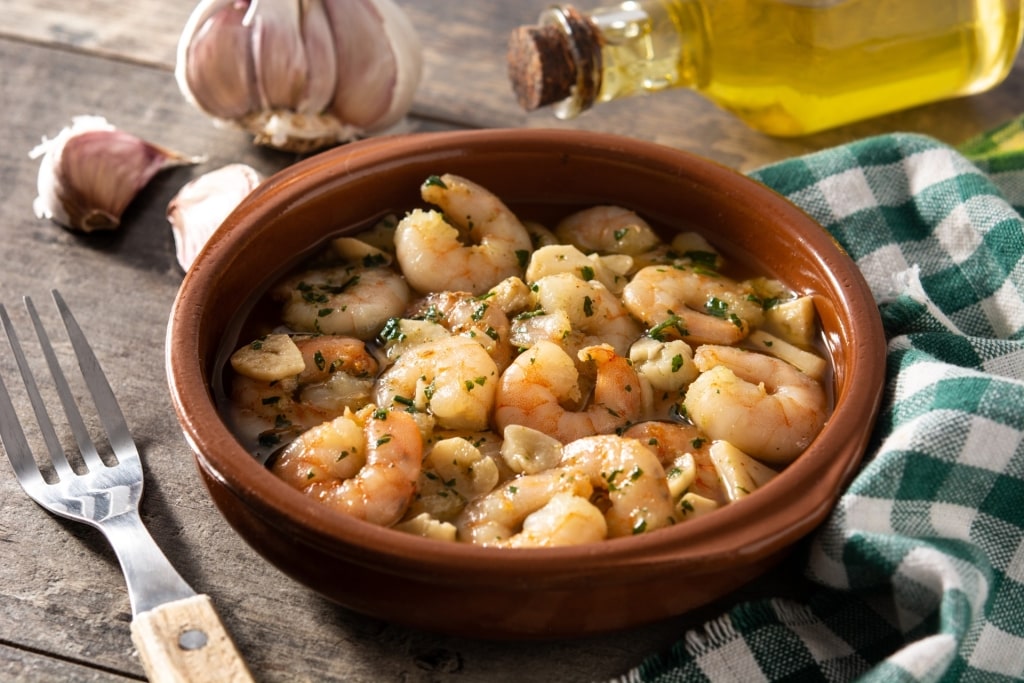
Gambas al ajillo
Spain’s spectacular seafood is on display in this elemental dish of prawns sauteed with copious amounts of garlic.
Any variety of shrimp tastes sensational with this preparation, but the fanciest versions rely on large, head-on prawns. A splash of wine or sherry vinegar often adds acidity, while smoked paprika or chili pepper flakes bring a sultry depth of flavor.
The finished dish often arrives still sizzling and showered with chopped parsley. A crusty piece of bread is an essential accompaniment for dunking in the fragrant sauce.
Pulpo a la Gallega
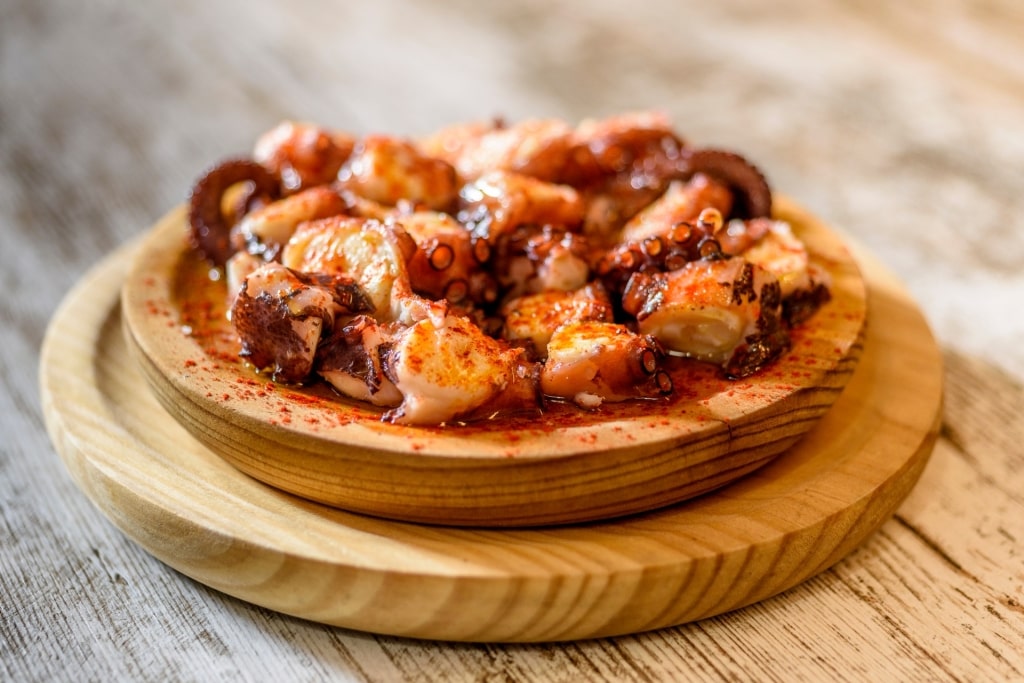
Pulpo a la gallega
Galician-style octopus, which is sometimes also referred to as polbo a feira, is a testament to how time and care can transform a few simple ingredients.
If poorly prepared, octopus can sometimes have a rubbery texture. The skilled cooks of Galicia, however, simmer the cephalopod until tender and pair it with boiled potatoes. Smoked paprika, flaky sea salt, and a drizzle of grassy olive oil round out the dish.
Pulpo a la Gallega is a popular food at festivals on the Iberian peninsula, but it can be enjoyed at tapas joints all over Spain.
Cochinillo Asado
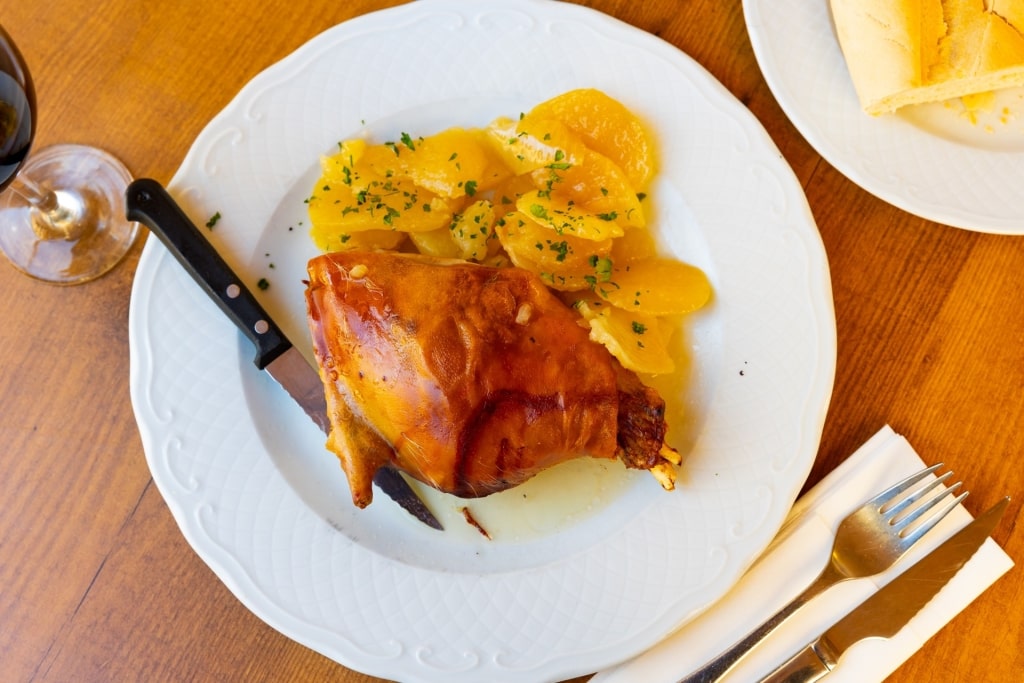
Cochinillo asado
Many cultures have their own rendition of whole-roasted suckling pig and cochinillo asado is Spain’s. Traditionally associated with Castille, it can be found all over Spain. As with any great whole-roasted pig, the secret to success lies in a live fire and plenty of time.
Hours of slow, consistent heat render the pig’s lard, leading to succulent meat and crispy skin. Since cochinillo asado requires considerable work, it’s usually reserved for holiday feasts. Nevertheless, some restaurants serve this delicacy all year-round.
Crema Catalana
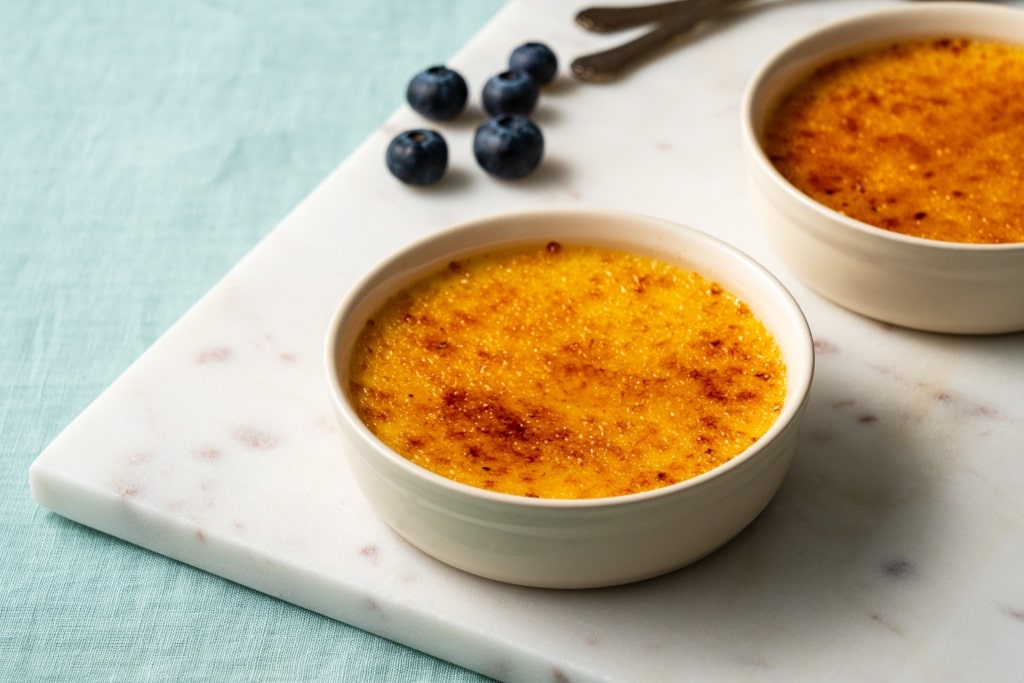
Crema catalana
This luscious custard belongs to the same sweet extended family as crème brûlée and flan. At first glance, these silky, creamy desserts might appear similar. Yet the techniques behind them and the results are noticeably distinct.
Unlike flan, which is baked in a water bath for a uniform texture, crema Catalana is made entirely in a saucepan on the stove. And unlike crème brûlée, which is made with heavy cream, it uses whole milk for a lighter consistency.
To make this custard, cooks simmer milk with cinnamon sticks, orange, and lemon zest until fragrant. Egg yolks, sugar, and cornstarch are then cooked together until thick and glossy. The whole mixture then gets chilled and served, like its French cousin, with blowtorched caramelized sugar on top.
Tarta de Santiago
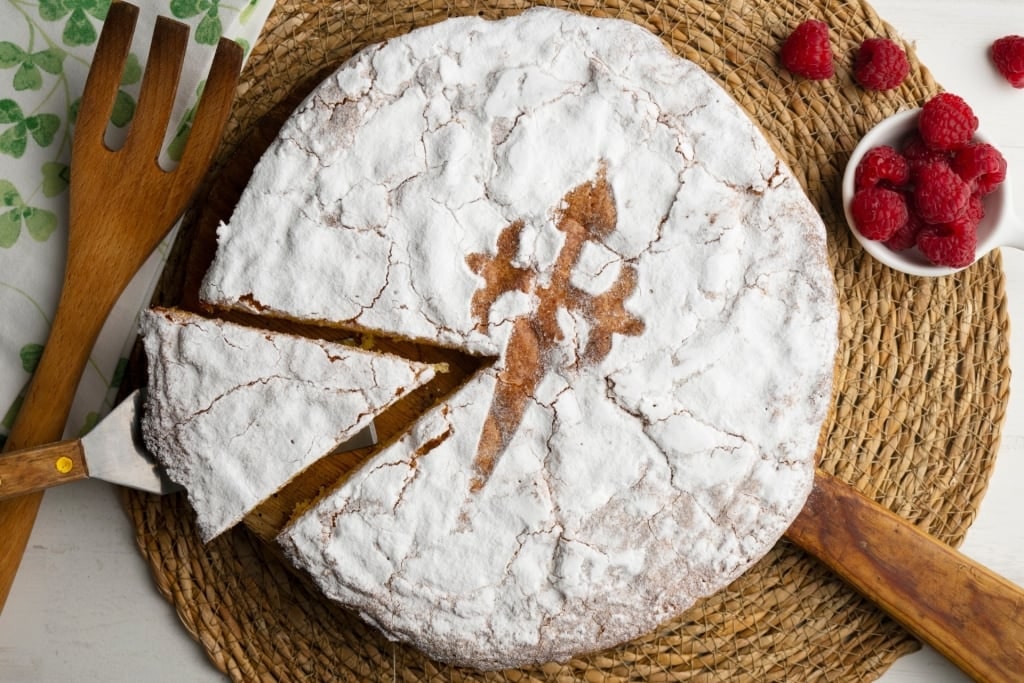
Tarta de Santiago
This fragrant almond cake is one of Galicia’s most iconic desserts. Recipes vary slightly, but consist of pulverized almonds, eggs, and sugar. Citrus zest and a splash of brandy are traditionally added for flavor. Some bakeries up the ante with a flaky pastry crust at the base. The result pairs as well with a glass of fortified wine as it does with an espresso.
During the Middle Ages, the Camino de Santiago was one of the most important Christian pilgrimage routes in Europe. Although it’s unlikely that Catholics journeying through Galicia enjoyed food quite this fine, there are records of this cake dating back to the 16th century.
In 1924, restaurateur Jose Mora Soto began stenciling the Cross of the Order of Santiago onto his cakes. He named them for the region’s most famous saint and the moniker “tarta de Santiago” stuck.
Bacalao al Pil Pil
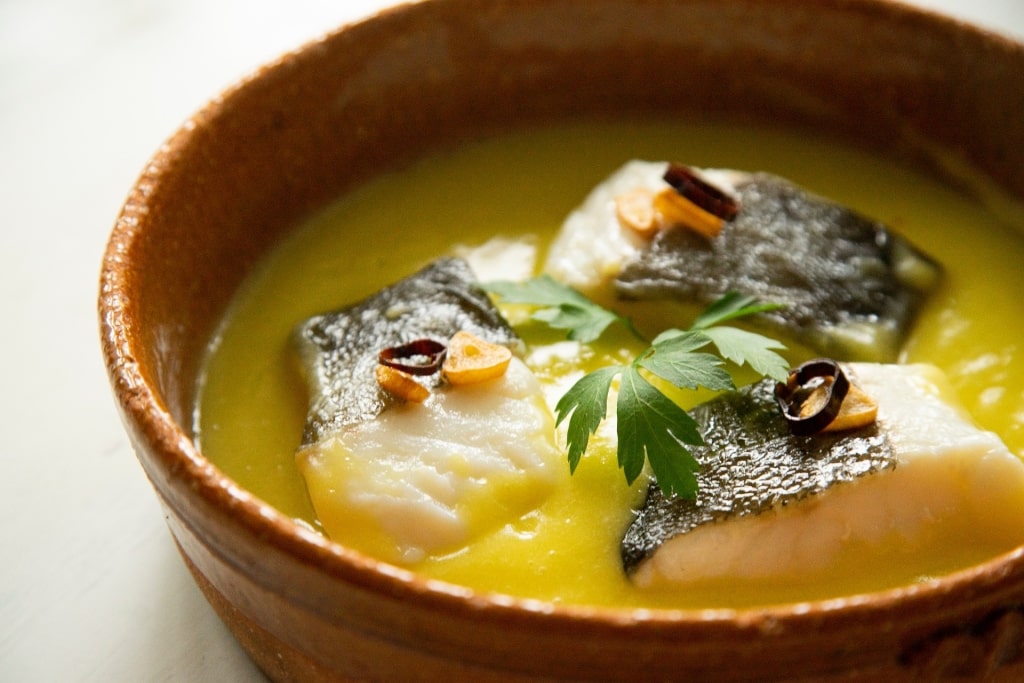
Bacalao al pil pil
Bacalao, or dried, salted cod, evolved as a means of food preservation in times before refrigeration. Because sailors historically relied on it for survival on long voyages, salt cod can now be found from Brazil and the Caribbean to Norway and much of the Mediterranean.
It remains a beloved staple throughout much of Spain. After being soaked for a day or two and rinsed, bacalao has only a mild salinity and a flaky texture.
Bacalao al pil pil hails from the Basque region originally, although many food historians believe its roots extend to North Africa. Like many Spanish classics, this dish relies heavily on technique to coax flavor out of a short list of ingredients.
To make the pil pil sauce, cooks infuse olive oil with garlic and a dried chili, then simmer the cod in it. Here’s where it gets interesting: the cook then uses the natural gelatin of the fish to emulsify the oil. The resulting sauce has the consistency of a runny aioli.
Croquetas
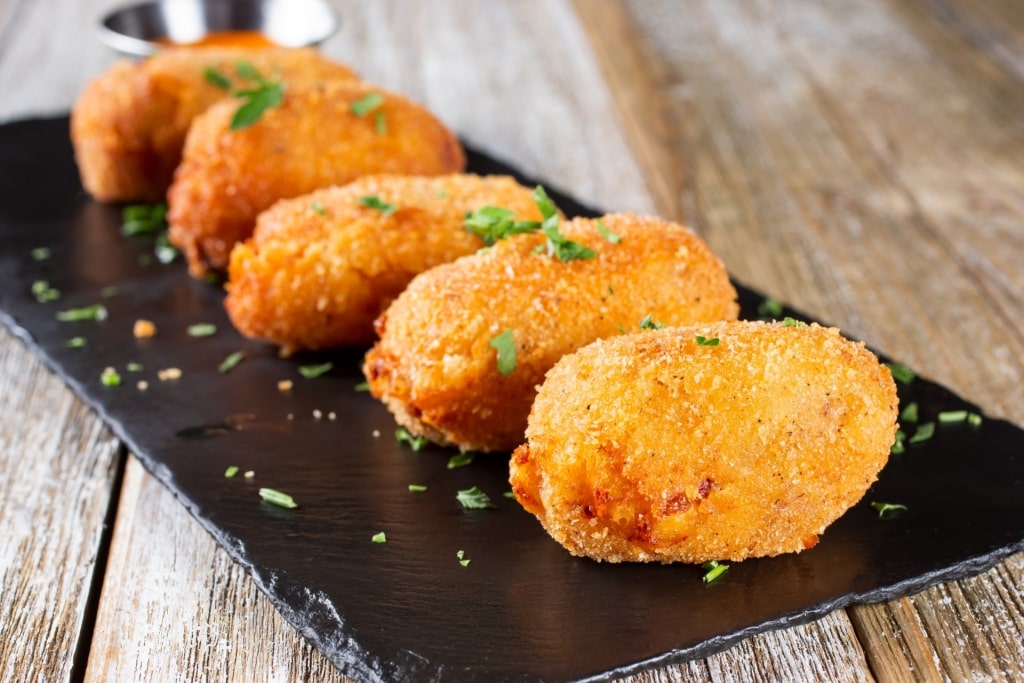
Croquetas
Along with patatas bravas and tortilla española, just about any tapas bar will offer up crunchy croquetas. These deep-fried nuggets have the most humble of origins. For Spanish home cooks, they were traditionally a way to use up leftovers. Just about any scraps of meat, seafood, or cheese could be bound together and transformed into a tasty snack.
Plenty of European cultures had the same thrifty idea, which is why we now have everything from Dutch kroketten to French croquettes. Modern-day tapas bars often incorporate fancier ingredients than yesterday’s leftovers. Croquetas de jamón (ham) and croquetas de bacalao (salt cod) are particularly popular options.
What sets Spanish croquetas apart from some of their counterparts is that they use a thick bechamel to bind the ingredients. That means that the crispy, breadcrumb exterior yields to a sumptuous fried interior and makes croquetas the ultimate comfort food in Spain.
Read: The Ultimate Barcelona Food Guide
Turrón
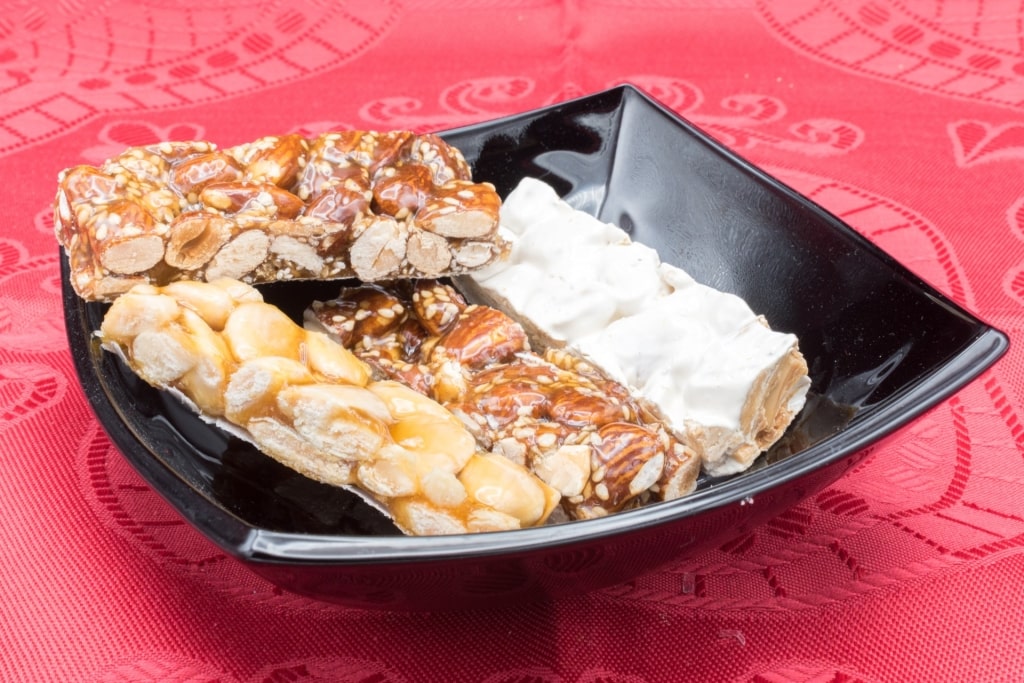
Turrón
Ever since the 15th century, confectioners in Spain have been whipping up this alchemical marvel of caramelized honey and egg whites. Heat and patience transform these ingredients into a crunchy, snow-colored nougat, which is usually studded with toasted nuts.
No one knows the precise origins of this sweet treat, but it’s popular throughout Spain, Italy, and Portugal. Some food historians believe that variations of the candy may date back to ancient Greece and Rome.
Today, it’s especially beloved around Christmas, although it can be enjoyed at any time of year. Since turrón keeps and travels well, it makes for a great edible Spanish souvenir or gift.
Fideuà
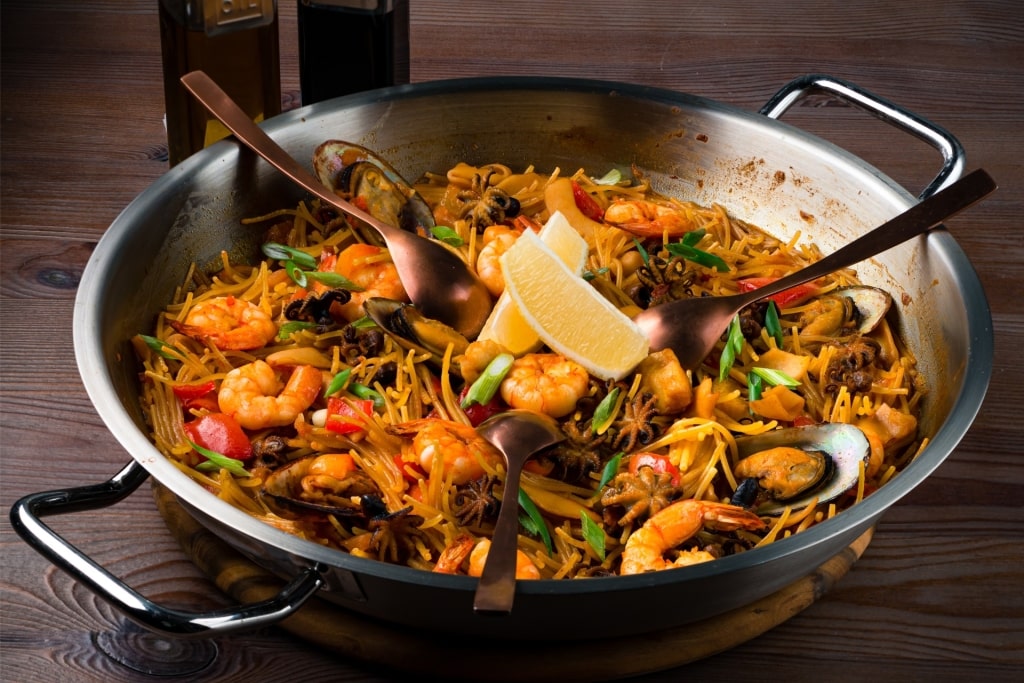
Fideuà
This cousin of paella swaps the Bomba rice for thin, broken noodles. It’s thought to have originated in Gandia, Valencia, although these days you’ll find it all over the country. While paella variations exist with all different types of protein, fideuà is traditionally a seafood dish.
A good fideuà is a study in carefully layered flavors. Many cooks start by toasting the noodles in the pan with olive oil until they’re lightly browned and nutty. Next, in goes a sofrito, that essential mix of finely chopped onions, garlic, tomatoes, and sometimes peppers. After the vegetables caramelize, the noodles simmer in a rich seafood stock. Prawns, squid, mussels, clams, and all sorts of other seafood join the mix.
Salmorejo

Salmorejo
Think of this chilled soup as gazpacho’s sophisticated cousin. Like gazpacho, this Andalucian specialty starts with fresh tomatoes tossed in a blender. Salmorejo skips the cucumbers and bell peppers typically found in gazpacho and adds soaked bread.
Once blended until silky-smooth and emulsified with copious amounts of extra virgin olive oil, the bread acts as a binder and adds a slightly pink hue. And while gazpacho usually has a garnish of diced vegetables, salmorejo often has a heartier topping with ham or boiled eggs.
Rabo de Toro
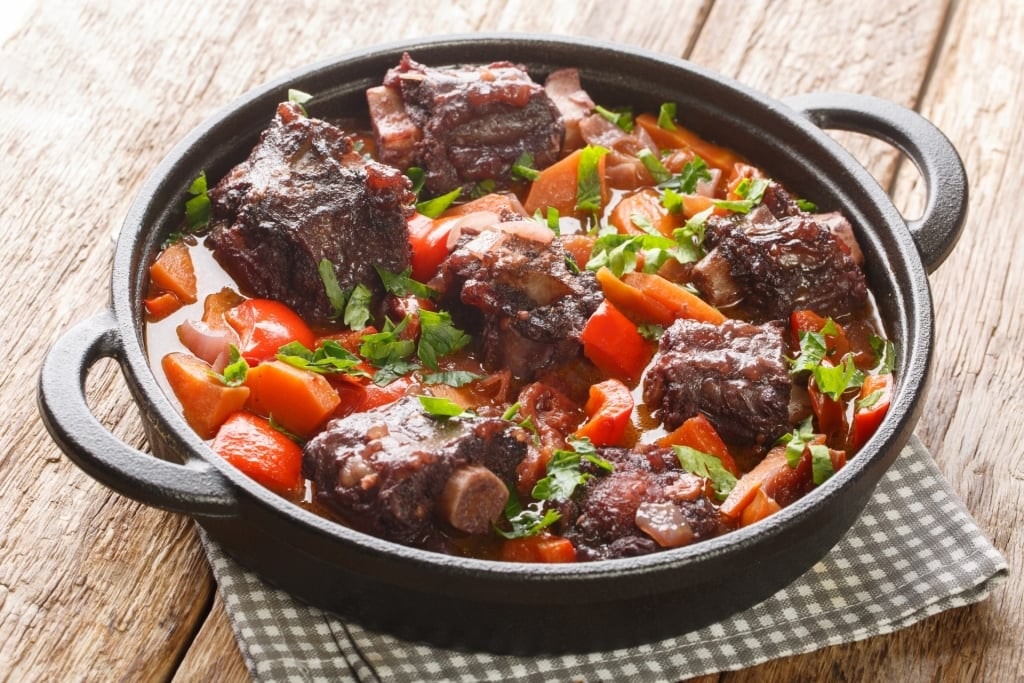
Rabo de toro
This dish of braised “bull’s tail,” or oxtail, is a specialty of Andalucia. It’s a classic case of transforming what could be a tough cut of meat into something remarkable. After slowly simmering for hours with red wine, tomatoes, sherry, and aromatics, the oxtails fall off the bone.
The final dish is rich, comforting, and meltingly tender, all held together by a marrow-infused sauce. It needs no accompaniments, but it pairs well with a full-bodied glass of Rioja and sliced bread for dunking.
Escalivada
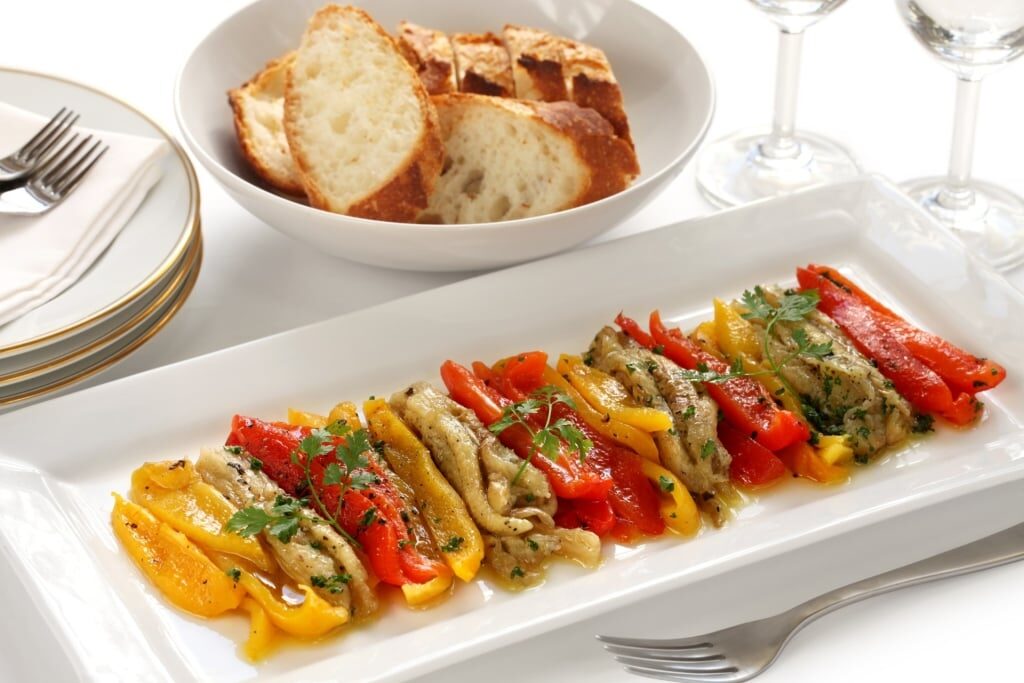
Escalivada
Named for the Catalan word for cooking something in ashes, this vegetable side dish pairs beautifully with just about everything. Escalivada is usually made with a mix of grilled red peppers, eggplants, tomatoes, and onions grilled until lightly charred.
Some cooks still prepare the vegetables by nestling them directly in the coals of a live fire. The blackened bits are then scraped off and the vegetables allowed to cool. Escalivada is seasoned with plenty of olive oil and sometimes vinegar, along with a healthy hit of garlic.
Leche Frita
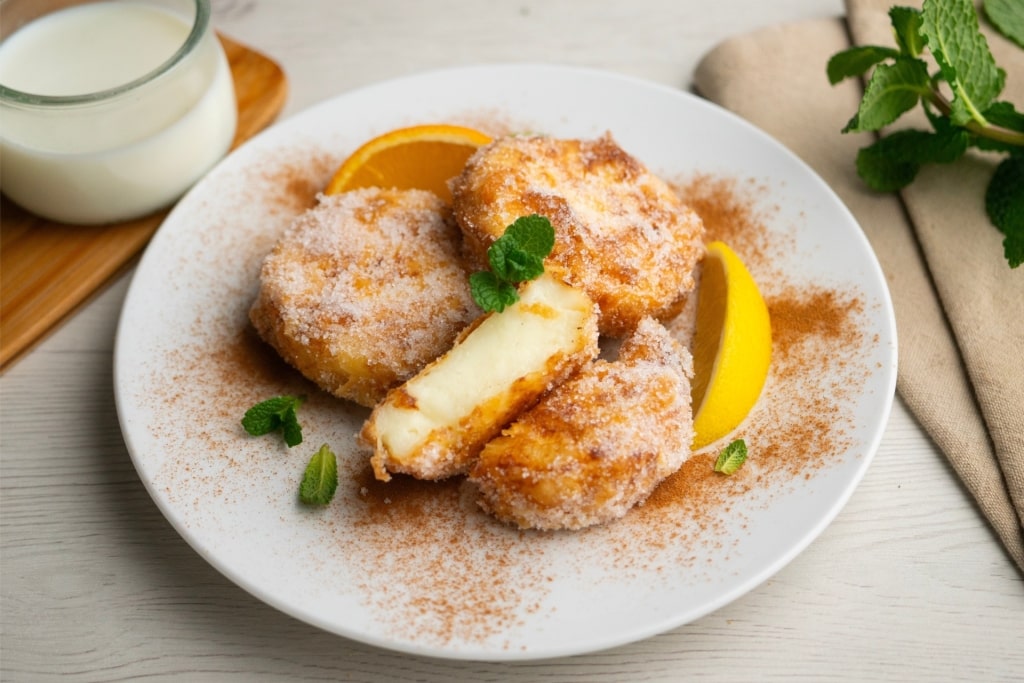
Leche frita
The phrase “fried milk” might initially sound like the sort of culinary trick found at the Iowa State Fair. But leche frita is actually a rustic dessert from northern Spain. Essentially, this is a type of fried custard, made by thickening sweetened milk with flour and egg yolks.
Once the mixture is sufficiently thick, it’s chilled until solid, sliced or molded into various shapes, and fried. A final dusting of cinnamon and a sugary glaze round it all out. Like churros, these are best eaten immediately—and they’re hard to stop eating.
FAQs
What are the most popular Spanish dishes?
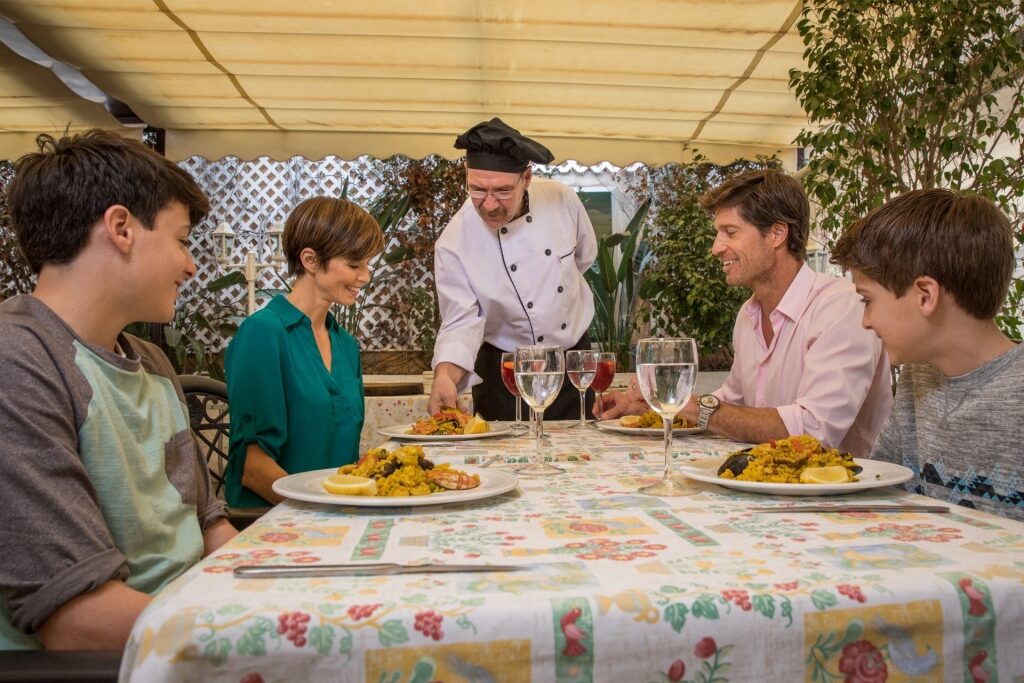
Paella
Paella is easily one of the most loved kinds of Spanish dishes, although recipes for it vary enormously. The category includes everything from paella Valenciana, made with rabbit, chicken, as well as sometimes duck and snails, to seafood paellas stained black with squid ink.
Tortilla Española, patatas bravas, and garlicky shrimp are all staples on a typical tapas spread. You might also find yourself snacking on gildas, small skewers with anchovies, guindillas, and olives while sipping your vermouth. For dessert, crema Catalana is ubiquitous.
What is the difference between tapas and pintxos?
Tapas
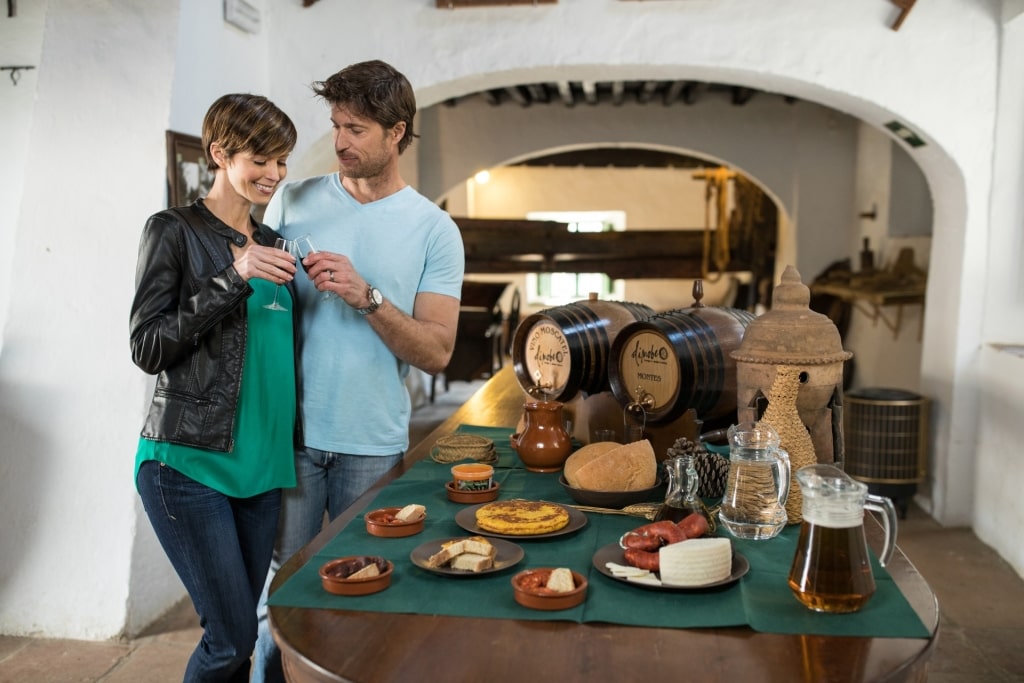
The term tapas covers a broad range of dishes, which range in size from a one-bite croqueta to more substantial meat and seafood dishes. The basic concept boils down to small plates, usually meant to be accompanied by wine, but a lot can fall under that umbrella.
The term can refer to free snacks—olives, pan con tomate, and so on—offered when you purchase a drink. It can also easily refer to sophisticated small plates at a Michelin-starred restaurant. They’re found all over Spain.
Pintxos
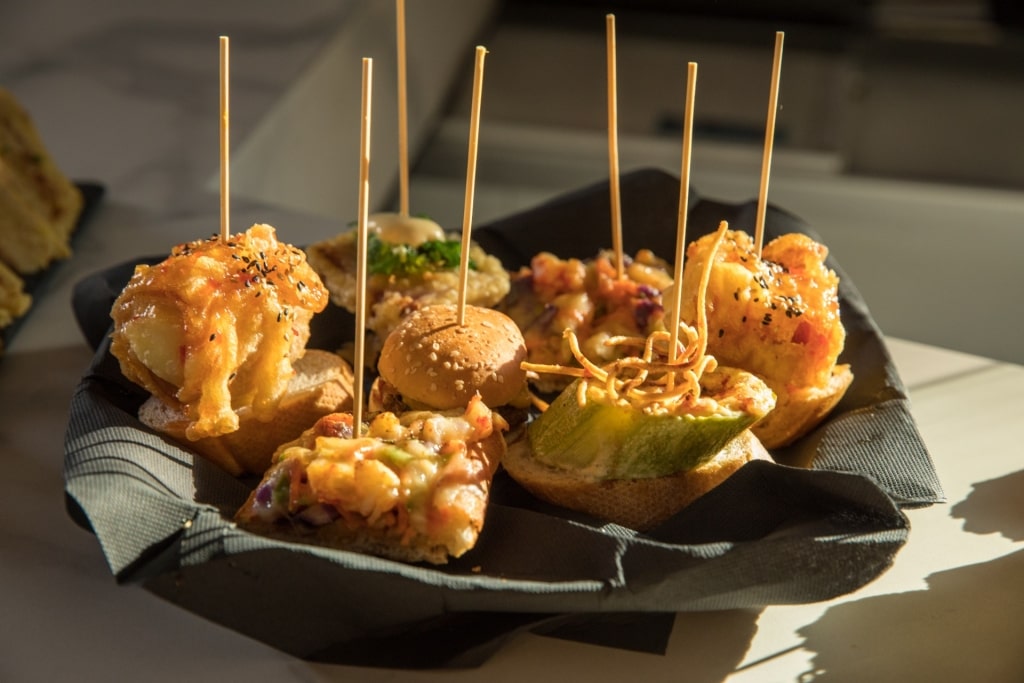
Pintxos, on the other hand, are specifically associated with Basque cuisine and culture. These consist of small skewers, often served atop bread. Pintxos may be simple or elaborate, but they’re almost always a one- or two-bite item. Unlike tapas, which are often prepared to order, pintxos are always laid out in advance. Simply indicate how many of each you’d like and you’ll be charged by the skewer.
What drinks are common in Spain?
Wine
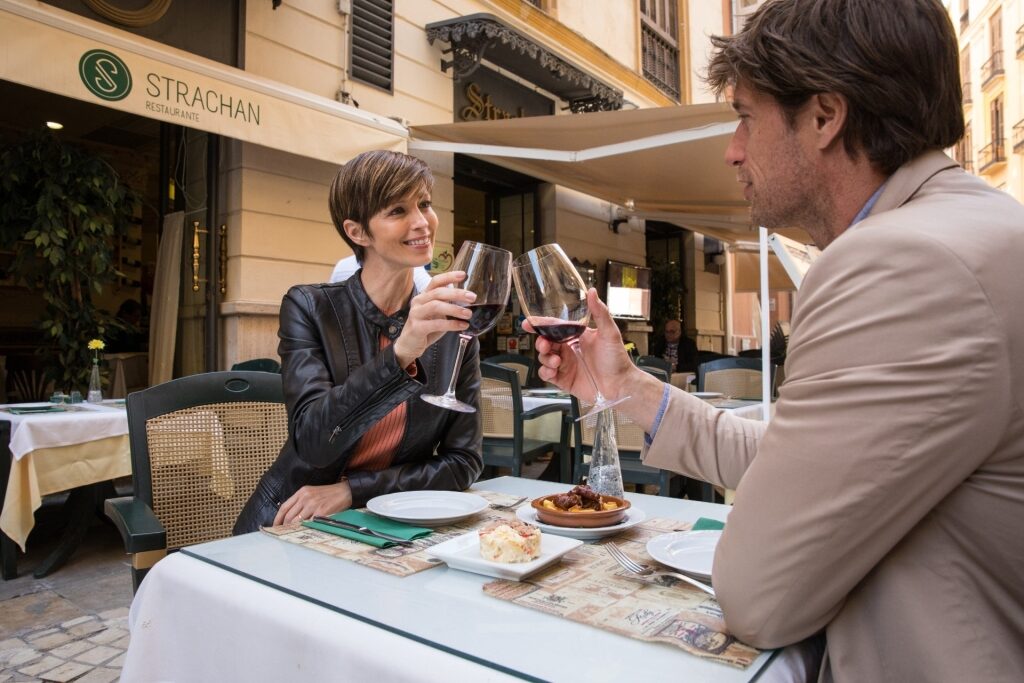
Wine is a near-constant presence in Spain, whether it’s a bright, bubbly glass of cava or a full-bodied tempranillo from Rioja. Sherry is also enormously popular, particularly in Andalucia, where some of the finest sherries in the world are produced around Jerez, from where the drink takes its name.
Wine is consumed both unadulterated and mixed in various ways. When spiked with brandy, sweetened with sugar, and saturated with fruit, it becomes sangria. This popular elixir can be red or white and recipes vary enormously. At its worst, sangria can be a way for restaurants to use up dirt-cheap boxed wine loaded with sugar. When made properly, however, sangria can be wonderfully refreshing with a balanced sweetness.
Kalimotxo
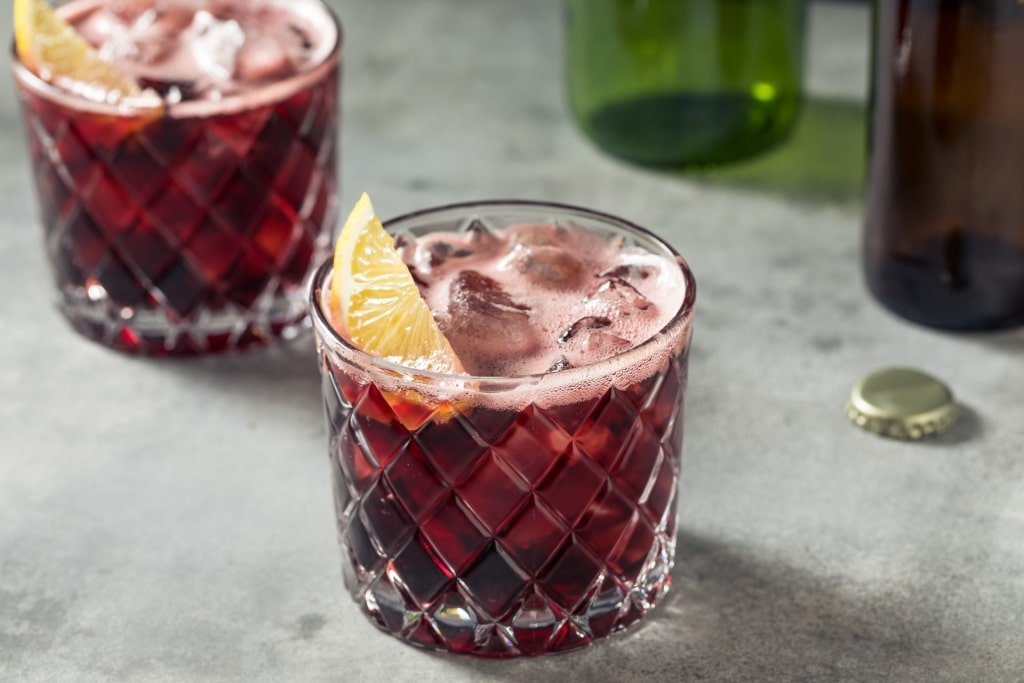
Another popular wine-based drink is kalimotxo, or calimocho outside of Basque Country, the mildly sacrilegious-sounding combination of equal parts red wine and Coca-Cola. Pour over ice with a wedge of lemon or lime and you’re good to go. This concoction has existed in Basque Country since the 1920s, if not earlier. It rose to popularity in the mid-20th century.
In a similar vein is tinto de verano, which roughly means a “summer red” and refers to a mix of red wine with citrus-flavored soda served over ice. Like kalimotxo, it most likely was invented as a way to spruce up cheap wine. It’s also enormously popular during the hotter months.

Rebujito
A close relative of tinto de verano is a rebujito, which swaps the red wine for dry sherry and adds plenty of mint to the mixture. The soda of choice here is typically lemon- or lime-flavored, although lemonade may be used as well. It’s especially beloved in Andalucia, although you can find it all over.
What is a typical Spanish breakfast?
Restaurant in Spain
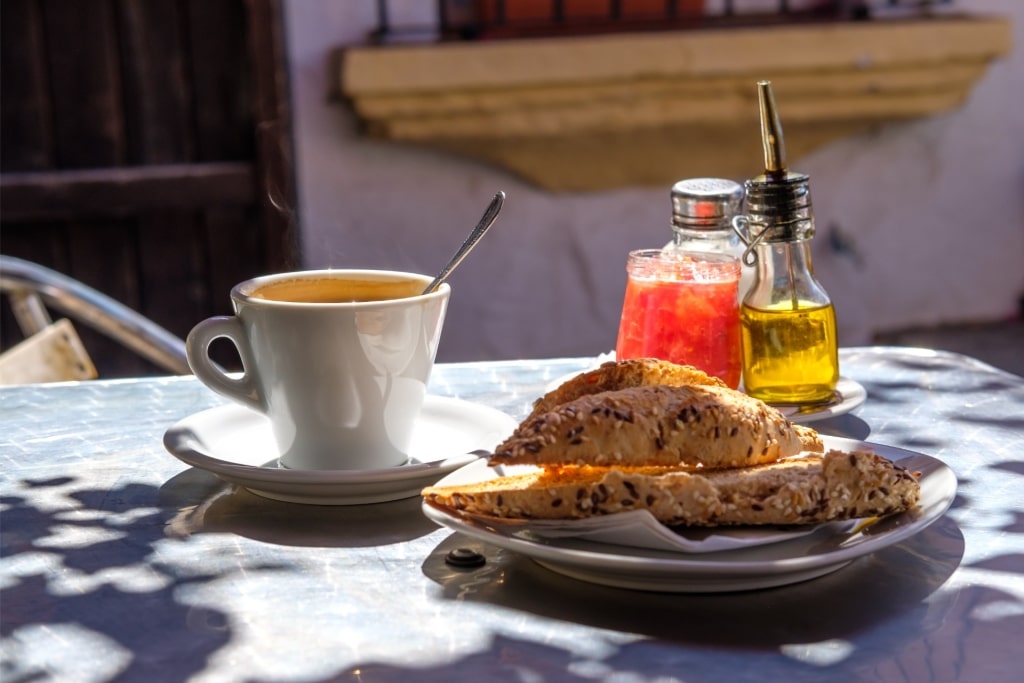
To get on a Spanish eating schedule, you’re going to want to mentally shift your day later. Historically, the most important meal of the day was lunch, which usually doesn’t start until 2 p.m. and can easily run for a couple of hours, at least sometimes accompanied by wine. There’s a reason why the siesta afterwards is such an important tradition. Dinner typically doesn’t start until 9 p.m. at the very earliest and may well run past midnight.
As a result, no one is exactly starving when sunrise rolls around. Desayuno, or breakfast, is often a coffee, perhaps accompanied by a small pastry or something sweet. For a savory version, Spaniards might have a bit of cheese or ham with bread. If you’re worried how you’re going to make it to 2 p.m. on a nibble of croissant, fear not. Almuerzo, or a mid-morning snack, is common around 10 a.m.
Where can I try authentic Spanish food?
Restaurant in Malaga
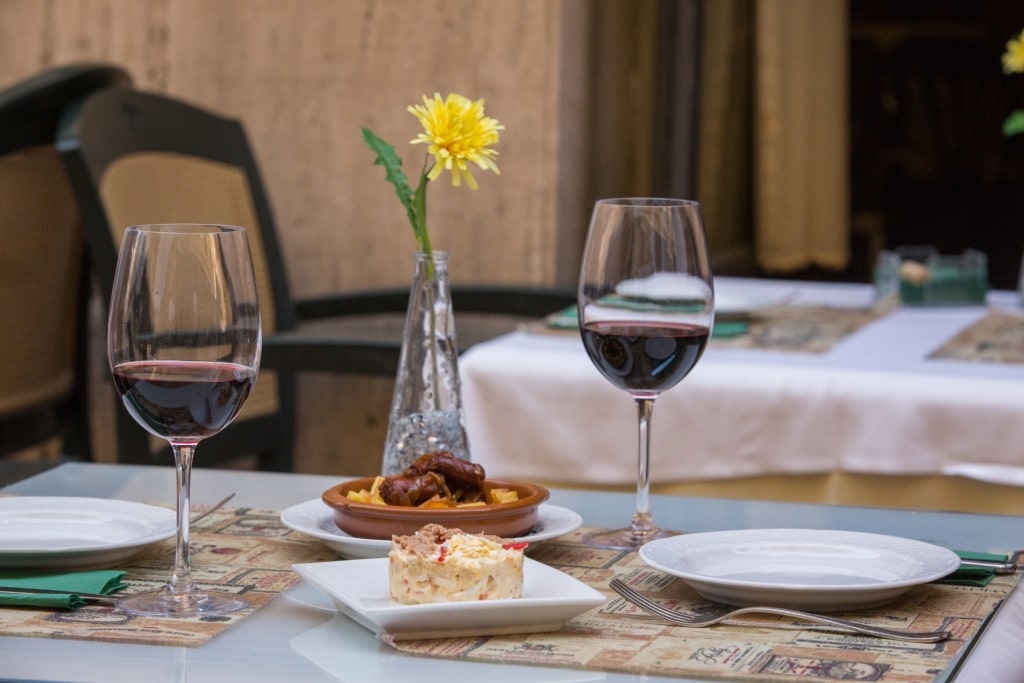
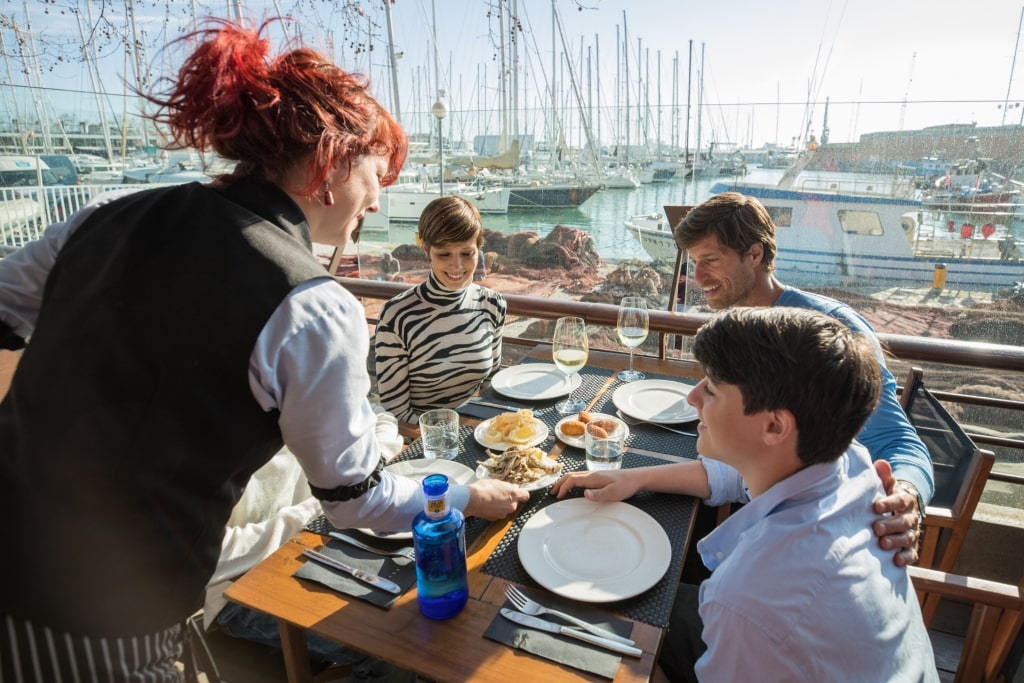
As with many places, the key to eating well in Spain is often getting as far away from the main tourist attractions in town as possible. There are exceptions to this rule, of course, but as the saying goes, the better the view, the worse the food. For the most part, if you’re dining on Las Ramblas in Barcelona or the equivalent, expect disappointment.
That said, there’s so much fabulous food in Spain that it doesn’t take much effort to do better than mediocre tapas. It pays to do a little online research about your specific destination in advance, as well as to explore more local neighborhoods.
Restaurant in Palma de Mallorca
For travelers looking to sample the many culinary pleasures that Spain has to offer, there’s simply no better way to do so than by boarding a cruise with Celebrity. Browse our upcoming Spain cruises and book your next voyage today.