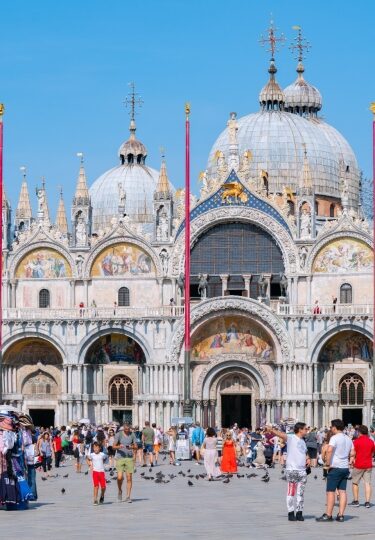
Famous churches in Italy aren’t limited to major cities like Rome, Venice, and Florence. These places of Christian worship are found in dreamy coastal resorts, hilltop towns, and village squares, offering a window into Italy’s past with extravagant designs and surprising relics.
Churches and cathedrals in Italy range from the skyline-defining Cathedral of Santa Maria del Fiore in Florence to the most famous of all, the extraordinary St. Peter’s Basilica in Vatican City. Peeking inside ancient churches and storied cathedrals is one of the best things to do on vacation. Here are the most famous ones to seek out in Italy.
St. Andrew Cathedral, Amalfi
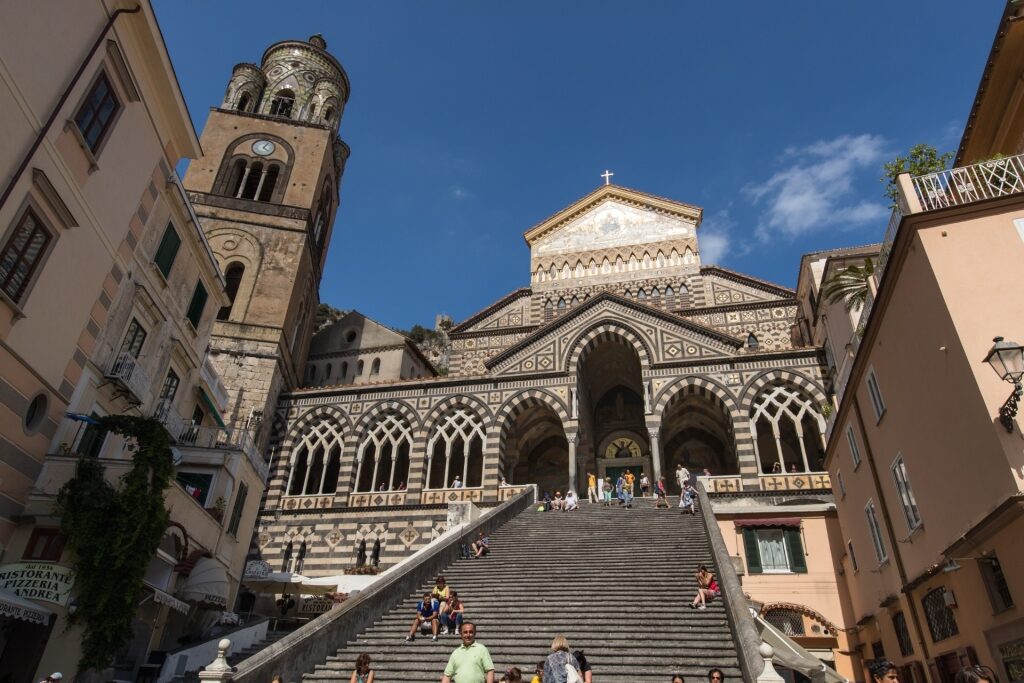
St. Andrew Cathedral, Amalfi
Gorgeous cathedrals in Italy include St. Andrew’s in Amalfi, consisting of the main cathedral, the Church of the Crucifix, and a serene Moorish cloister filled with palm trees. St. Andrew Cathedral towers above the buzzy Piazza Duomo, with a steep stone staircase leading to the church’s entrance from the square.
It is known as the Amalfi Cathedral, dedicated to the Apostle St. Andrew, and was built in the 9th and 10th centuries on the site of an earlier church. Like many historic churches, this one has been refurbished many times since, revealing layers of history, including Gothic, Renaissance, and Baroque architecture.
I recommend climbing the 62-step staircase in the soft morning light and spending plenty of time touring this lofty cathedral and its museum. Rows of chandeliers illuminate the church’s interior, including 20 columns and a gilded ceiling. A highlight, however, is the painting behind the altar, depicting the crucifixion of St. Andrew, whose remains lie in the crypt.
The Pantheon, Rome
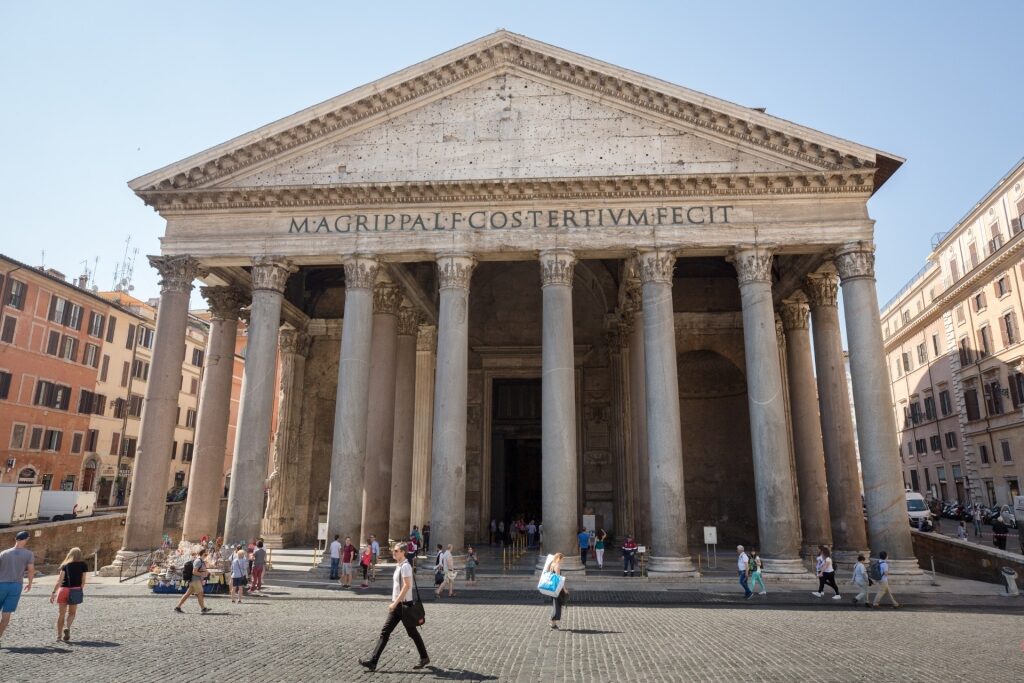
The Pantheon, Rome
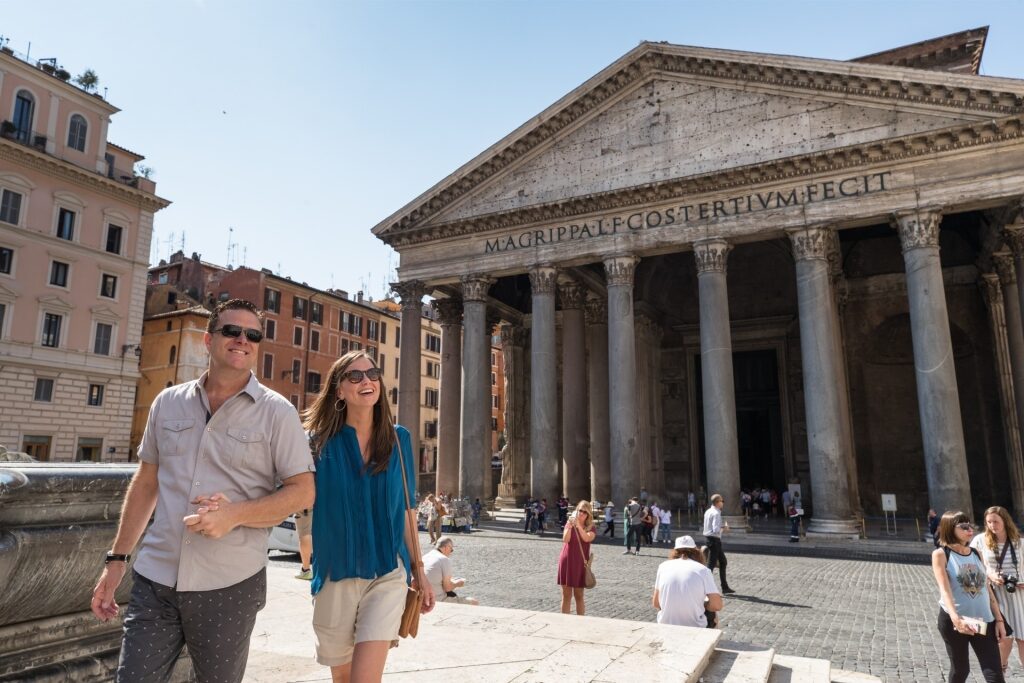
The Pantheon is not only one of the most famous churches in Italy, but one of the best-preserved ancient Roman landmarks, built on the order of Emperor Hadrian between 118 and 125 AD.
In continuous use as a church since the 7th century, the Pantheon’s dome was the largest in the world for over 1,300 years, measuring 142 feet in diameter. It remains the world’s largest unreinforced concrete dome, inspiring countless versions worldwide. In the center of the Pantheon’s soaring dome is the oculus, a 30-foot opening that allows natural light—and rainwater—to filter into the church.
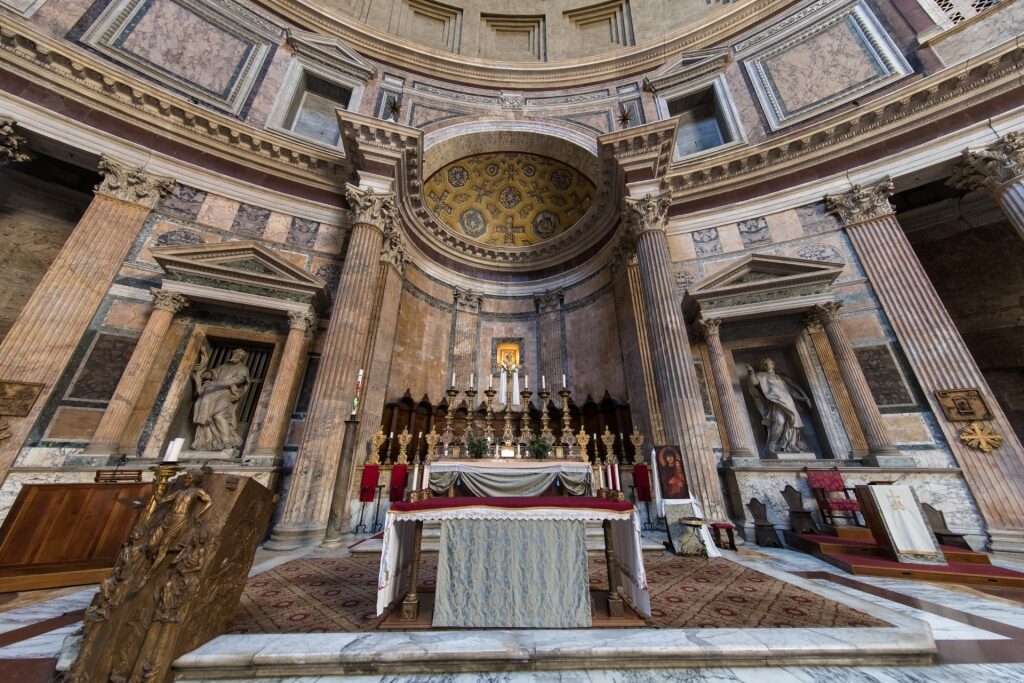
Pantheon, Rome
Enter the Pantheon’s 20-ton bronze doors, and notice the tombs of Renaissance painters and Italian royalty, including Raphael and King Vittorio Emanuele II. Step onto the original marble floor, which you may notice is slightly sloped, designed to drain rainwater.
My tip is to stand beneath the oculus and look directly up, then capture the light beaming through from different angles within the church.
Cathedral of Santa Maria del Castello, Cagliari
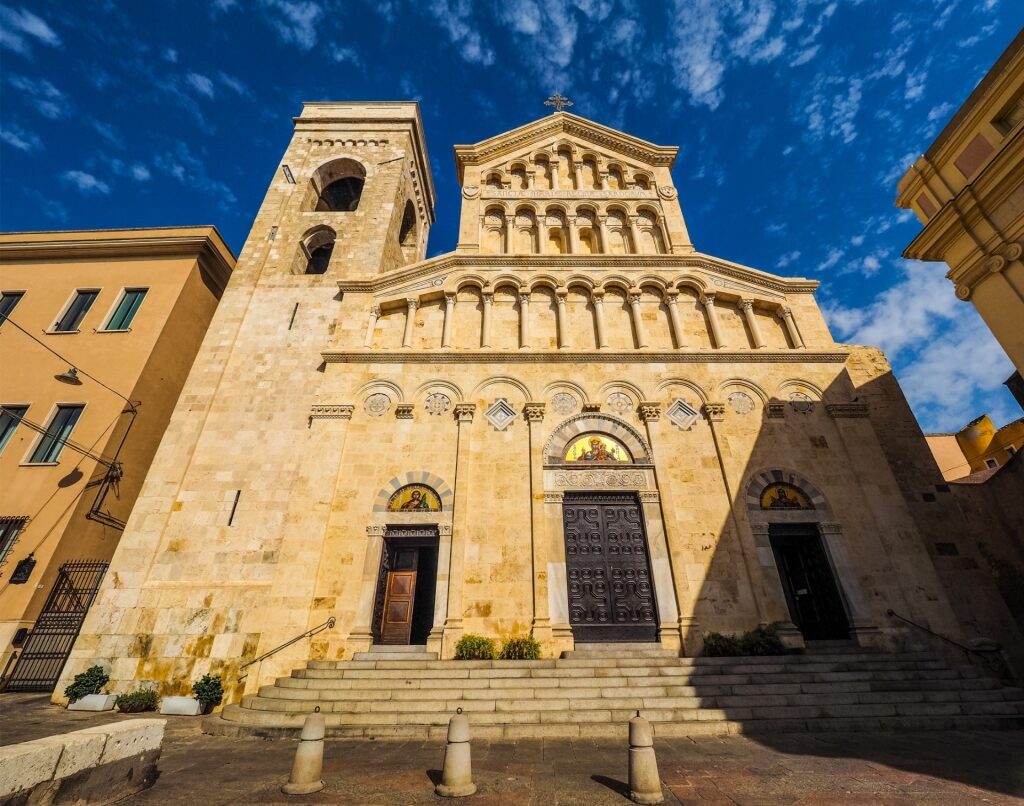
Cathedral of Santa Maria del Castello, Cagliari
The best cathedrals in Italy aren’t restricted to the mainland. Take the Cathedral of Santa Maria del Castello in Cagliari, for example, cradled in the center of Sardinia’s characterful capital, next to the Antico Palazzo di Città, in Piazza Palazzo.
Rich in history and relics, this oatmeal-colored cathedral was built in the 1200s, though it has been restructured many times, including the marble façade, which was replaced in the 20th century. The square-shaped bell tower remains the same as it always has, while inside, visitors are met with fanciful features, such as the 12th-century Pulpit of Guglielmo, originally from Pisa Cathedral.
Step onto the marble floor and marvel at the brilliant frescoes, ornate sculptures, and sublime stonemasonry that make up the pillars and arches inside.
Pisa Cathedral, Pisa
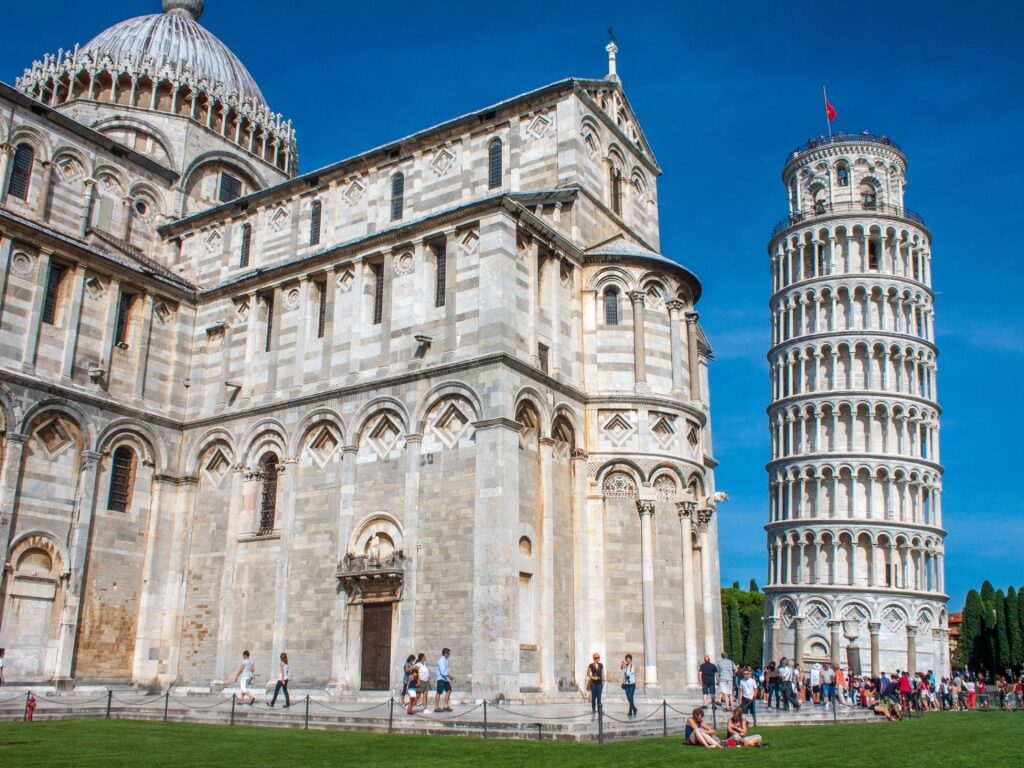
Pisa Cathedral, Pisa
Taking a prime spot in Piazza dei Miracoli, the 14th-century Pisa Cathedral, the seat of the Archbishop of Pisa, is one of the most famous cathedrals in Italy. Pisa Cathedral is a jaw-dropping building, featuring four stories of arcade-style arches and a striped marble façade with a series of Romanesque bronze doors between towering carved columns.
Part of Pisa’s UNESCO World Heritage Site—including the Leaning Tower, the cathedral’s bell tower, the Baptistery, and Camposanto Monumentale—this grand cathedral is just as spectacular inside.
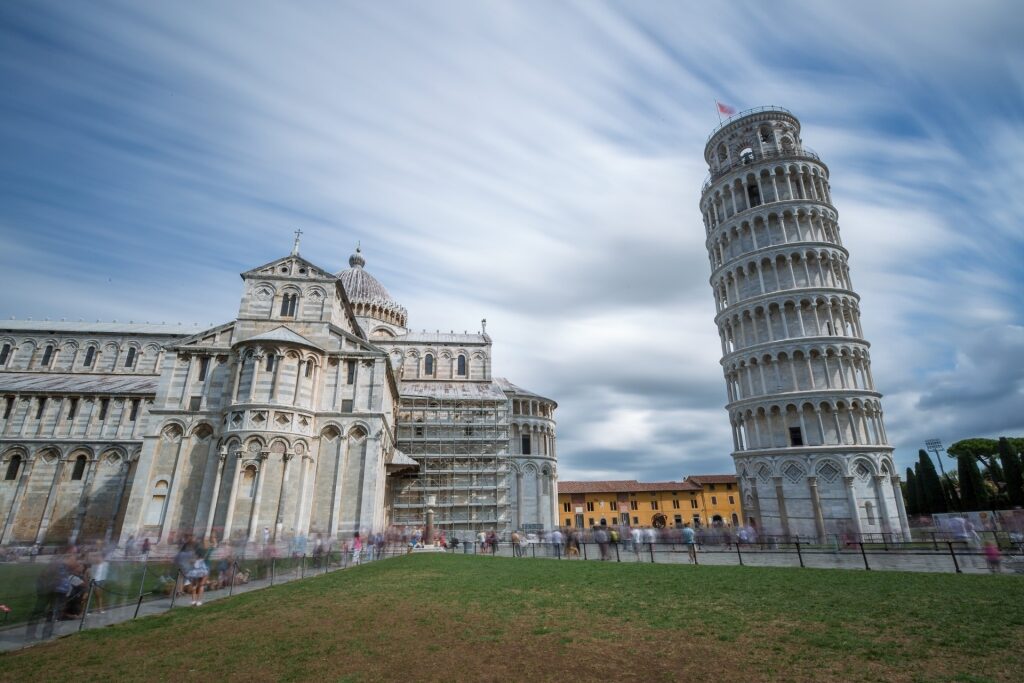
Pisa Cathedral, Pisa
There are soaring Corinthian columns, taken from the mosque of Palermo, and the tomb of St. Ranieri, the patron saint of Pisa. Discover the carved pulpit, the lavish, gilded ceiling, and the Christ in Majesty mosaic, painted in 1302.
My advice is to visit earlier in the day, avoiding peak hours, especially during summertime, when the temperature is cooler and crowds are fewer. Pack your camera and wander the grassy grounds outside. There is a wonderful vantage point of the Leaning Tower and Pisa Cathedral from Piazza dei Miracoli.
Basilica di San Giovanni in Laterano, Rome
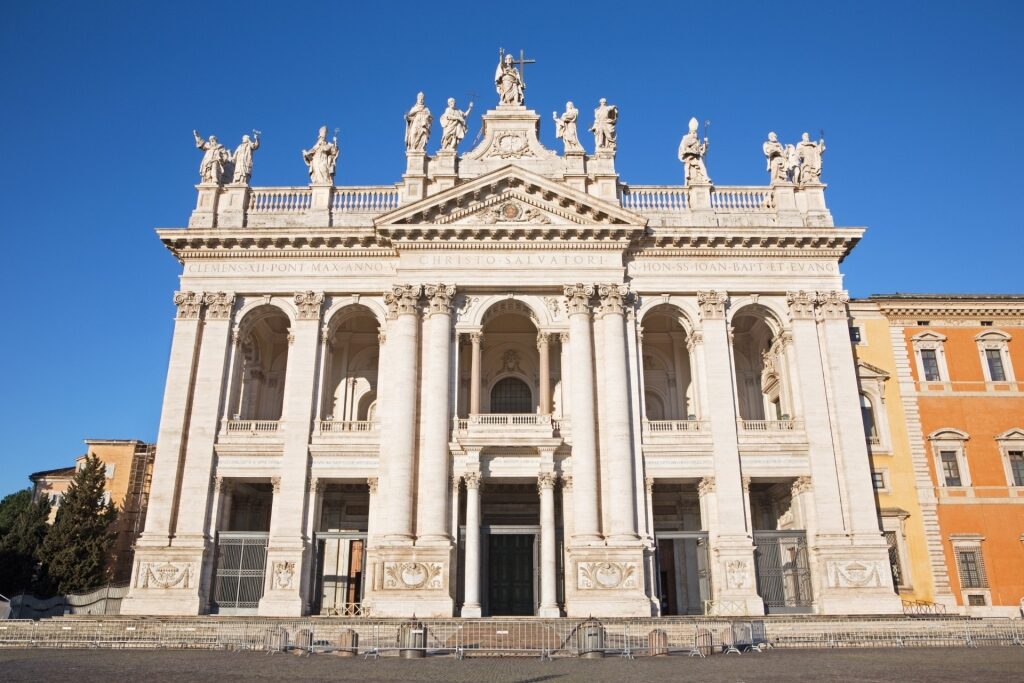
Basilica di San Giovanni in Laterano, Rome
Rome is jam-packed with churches, including one of Italy’s finest, Basilica di San Giovanni in Laterano, the official cathedral of Rome, the seat of the bishop of Rome, and the Pope’s church.
Founded in 313-324 AD, this brilliant basilica has been rebuilt many times, with much of the existing structure from the 17th century, including 15 giant statues above the front façade representing Christ and the Apostles.
The basilica was the Papal residence before the Vatican and remains the home of the Cathedra Romana, the Pope’s episcopal throne, which you can see inside. It also houses the tombs of 23 Popes and many papal relics, including the Papal Altar, which contains relics of St. Peter’s wooden altar and can only be used by the Pope.
Cathedral of Sant’Agata, Catania
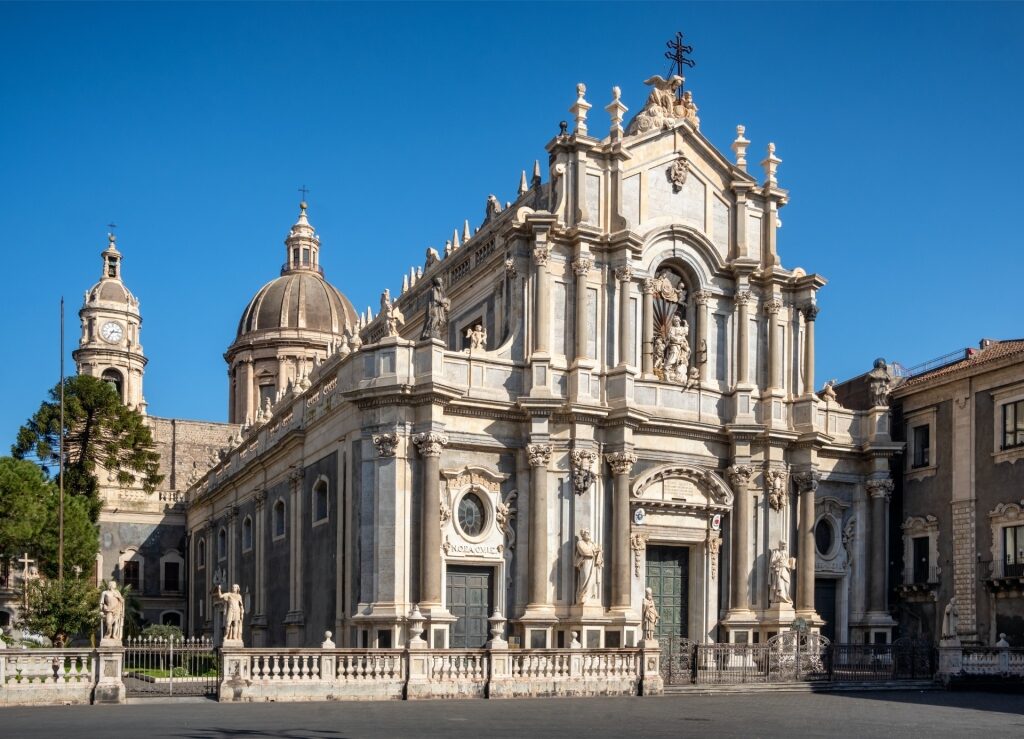
Cathedral of Sant’Agata, Catania
Sicily is home to several famous churches, including the Cathedral of Sant’Agata in Catania. Dedicated to St. Agatha, Catania’s patron saint, the church was constructed on the site of ancient Roman baths in the 11th century, though much of the existing building dates from the 18th century.
The Cathedral of Sant’Agata is set in a beautiful piazza, with a white Carrara marble façade featuring a three-tier Baroque design. There are columns, frescoes, and statues, including sublime statues of St. Agatha and Saints Peter and Paul, plus Sicily’s largest bell within the bell tower, weighing 7.5 tons.
There are several notable tombs inside the cathedral, including Vincenzo Bellini, a famous Sicilian opera composer; King Frederick III of Sicily; and the 19th-century Cardinal and Archbishop of Catania, Giuseppe Benedetto Dusmet, whose body rests in a glass tomb.
Cathedral of Santa Maria del Fiore, Florence
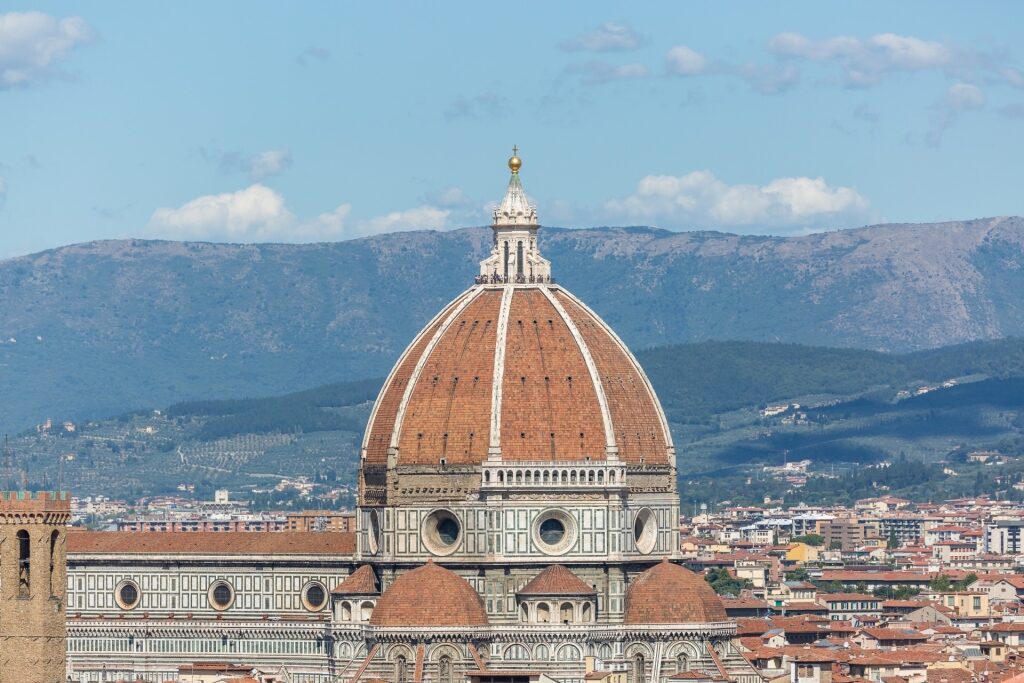
Cathedral of Santa Maria del Fiore, Florence
Combining Gothic and early Renaissance styles, Florence’s 15th-century Cathedral of Santa Maria del Fiore in Piazza del Duomo took 140 years to build.
A symbol of the city’s wealth, Santa Maria del Fiore’s most prominent feature is, of course, its dome. The double-shell structure is the largest masonry dome in the world, featuring a Herringbone brick pattern that has inspired architects and designers across Europe.
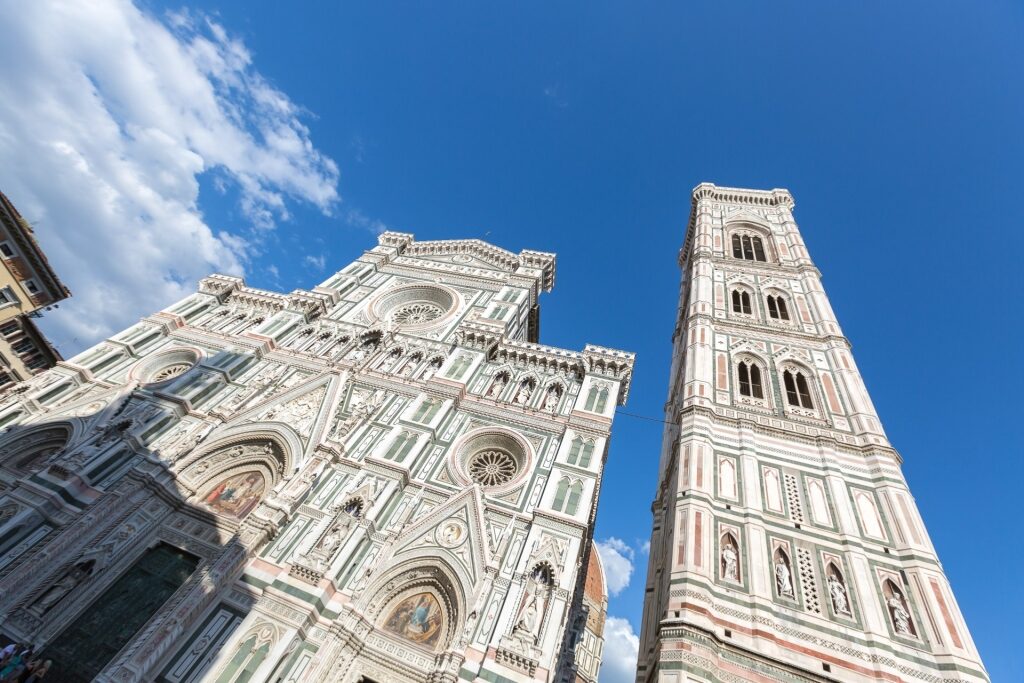
Giotto’s Bell Tower, Florence
Increase your step count and climb Giotto’s Bell Tower’s 414 steps for one of the most magical views of Florence. Or explore the dome itself. With 463 narrow, coiling steps, climbing up here is not for the faint-hearted, though the views are breathtaking.
There’s an enormous amount of relics and Florentine art to explore inside this remarkable cathedral, including the jaw-dropping “Last Judgment” fresco by Vasari and Zuccari, painted on the inside of the dome.
Cathedral of San Martino, Lucca
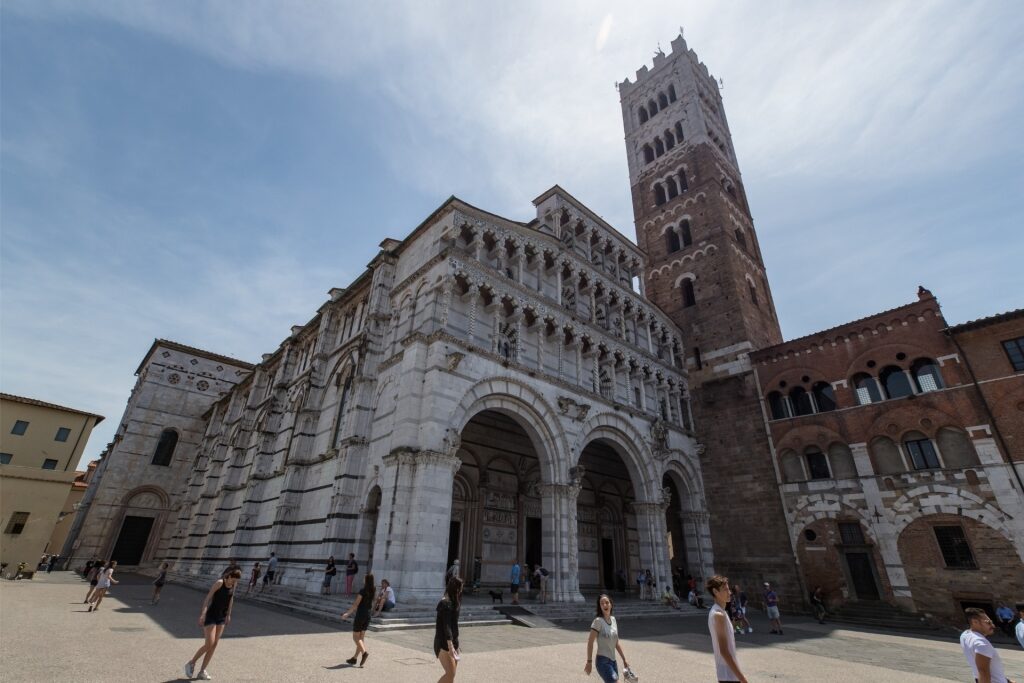
Cathedral of San Martino, Lucca
Lucca’s lovely cathedral and its Campanile have stood on this site in Piazza Antelminelli since the 11th century, consecrated by Pope Alexander II, in the presence of Countess Matilda of Canossa. The Cathedral of San Martino has a likeness to Pisa Cathedral, which inspired Lucca’s version, including the polychrome marble façade and tiered arcades.
Wander inside to view the delightful 14th-century sculptures by Guidetto da Como. See the Volto Santo, an ancient wooden crucifix that’s believed to have been carved by Nicodemus in the 1st century, and gaze at a 16th-century painting of “The Last Supper” by Jacopo Tintoretto.
Cathedral of San Lorenzo, Genoa
Cathedral of San Lorenzo, Genoa
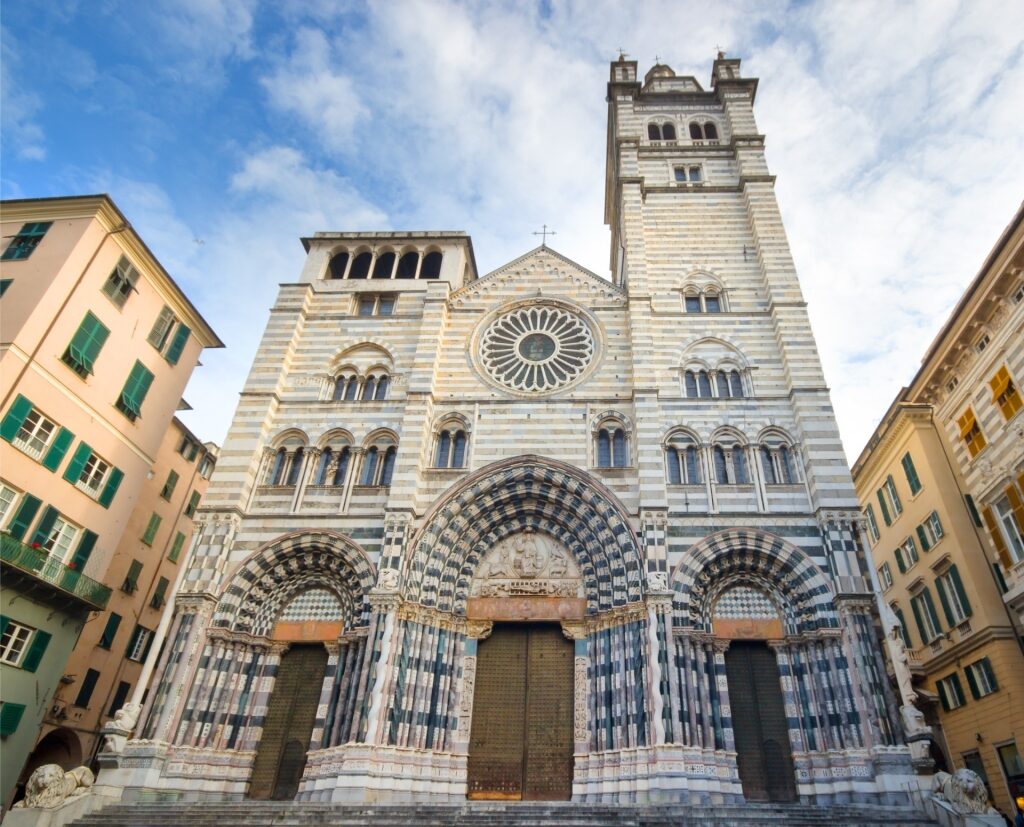
This enchanting 12th-century church is the pride of Genoa. Flanked by two stone lion statues at the foot of the church steps, the Cathedral of San Lorenzo blends Romanesque, Gothic, and Renaissance architecture.
Features include a striped marble façade with a central rose window and lavish portals with 13th- and 14th-century sculptures. Walk the central aisle to appreciate striking red-and-black marble columns.
Explore the relics of St. John the Baptist inside the cathedral’s Chapel of St. John the Baptist and check out the unexploded World War II bomb that landed on the church in 1941, and is now on display.
St. Mark’s Basilica, Venice
St. Mark’s Basilica, Venice
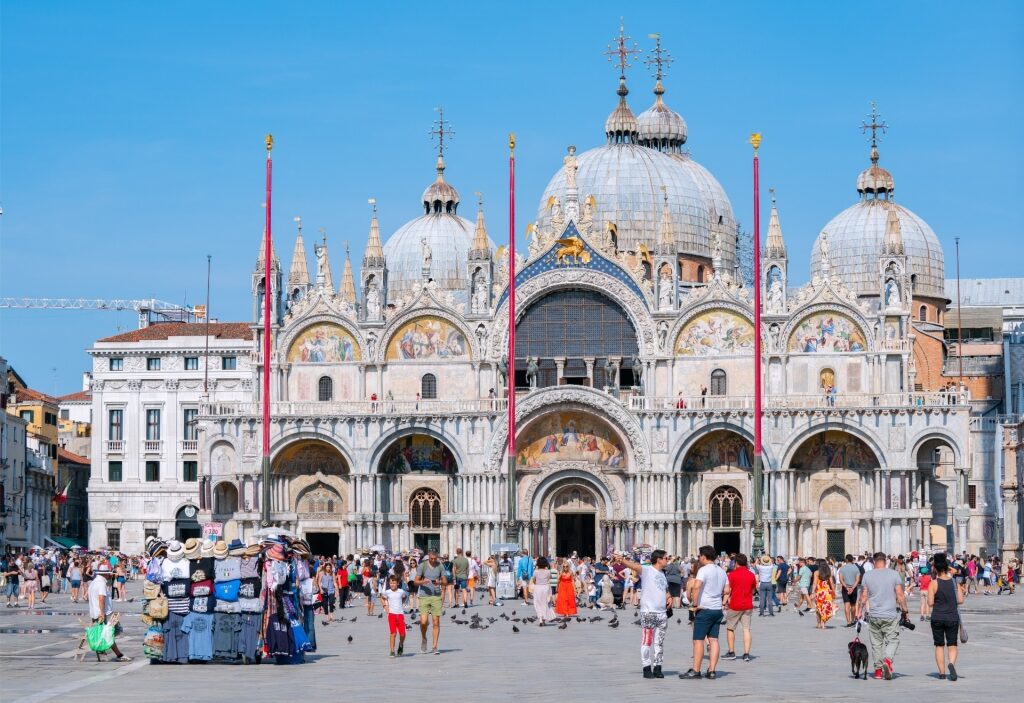
St. Mark’s Basilica is a sensational church in Venice’s St. Mark’s Square. You could visit this Italian masterpiece—with its five domes and dazzling gilded designs—a hundred times and still see something new each time.
Gaze at the bronze horses on the balcony above the main entrance and soak in some of the nearly 90,000 square feet of mosaics that unfurl inside the basilica.
There is endless art, relics, and architectural details to explore. Before it’s time to leave, take the elevator to the viewing level of St. Mark’s Bell Tower for the best views of Venice, including St. Mark’s Basilica itself, the Doge’s Palace, and the Venetian Lagoon. On a clear day, it’s possible to see the jagged peaks of the Dolomites in northeast Italy.
St. Peter’s Basilica, Vatican City
St. Peter’s Basilica, Vatican City
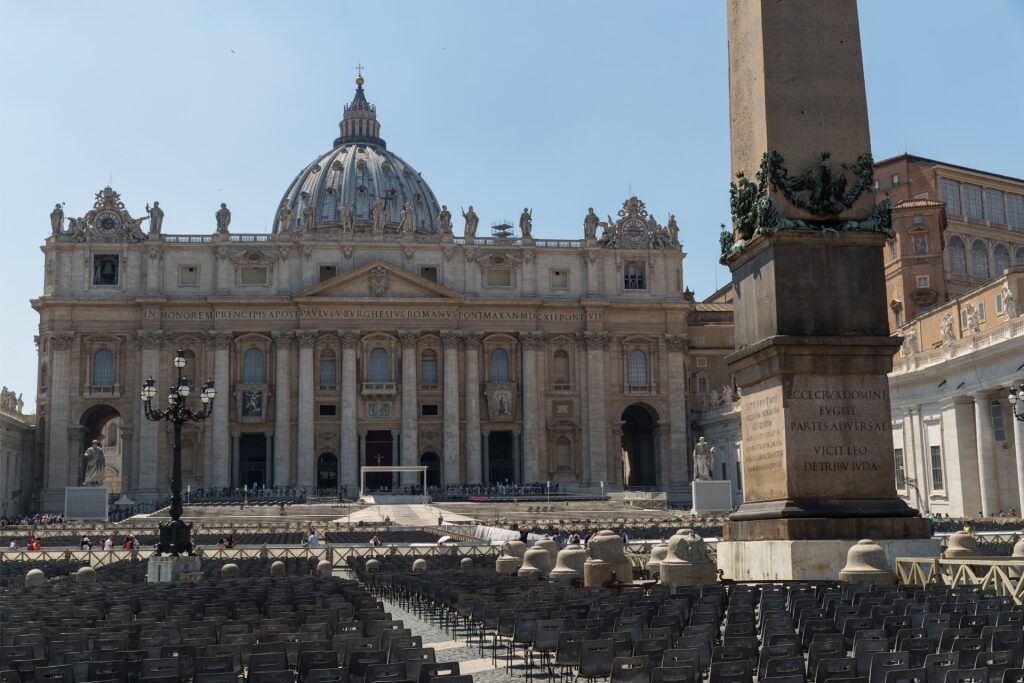
The Vatican’s St. Peter’s Basilica in St. Peter’s Square is the largest church in the world—hosting up to 60,000 visitors—and the epicenter of the Catholic Church. Piercing Rome’s skyline, St. Peter’s Basilica is a true show-stopper, and you’ll want to give it the time it deserves as one of the most famous churches in Italy.
Constructed between 1506 and 1626, the Italian landmark is a masterpiece of the Renaissance, perhaps most famous for its awe-inspiring dome. Designed by Michelangelo, it reaches 448 feet high. If you’re up for a challenge, you can climb it. Be warned, though, there are 554 steps, or 320 if you take the elevator to the terrace level to reach the outer Ring of the Dome.
St. Peter’s Basilica, Vatican City
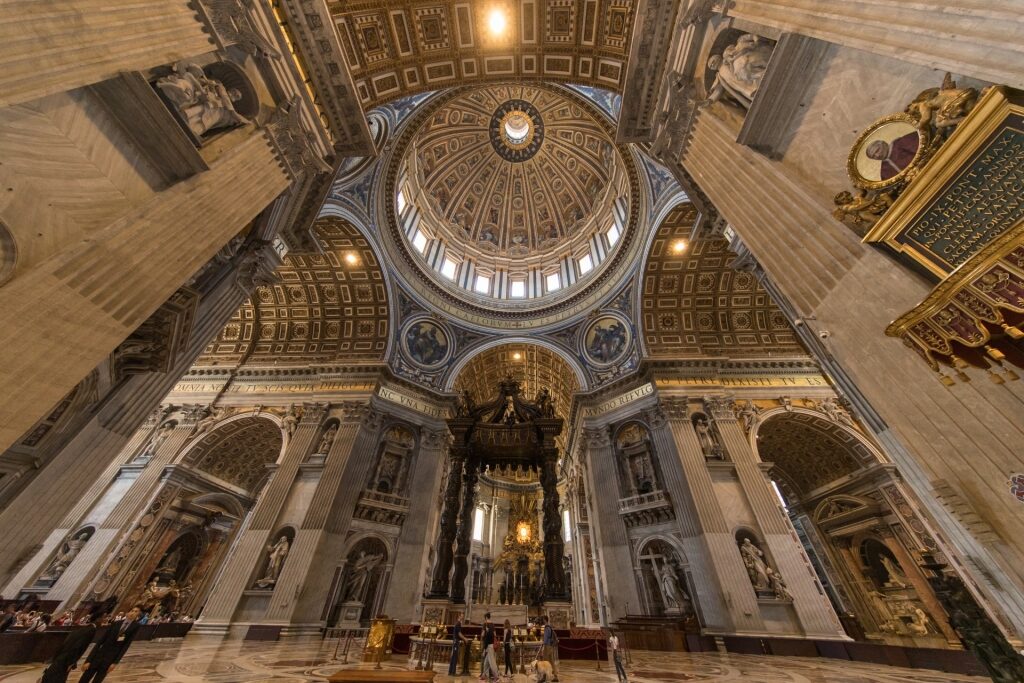
Take in the Cathedra Petri (Chair of Saint Peter), an ancient wooden throne considered to be the episcopal throne of St. Peter, and the Altar of the Confessio, the area beneath the main altar that marks the location of St. Peter’s tomb.
There’s more, including the subterranean Vatican Grottoes, a series of lower-ground vaults; the Vatican Necropolis, below the Vatican Grottoes; and the Pietà, a Carrara marble sculpture of Jesus and Mary by Michelangelo.
Cattedrale di Santa Maria Assunta, Naples
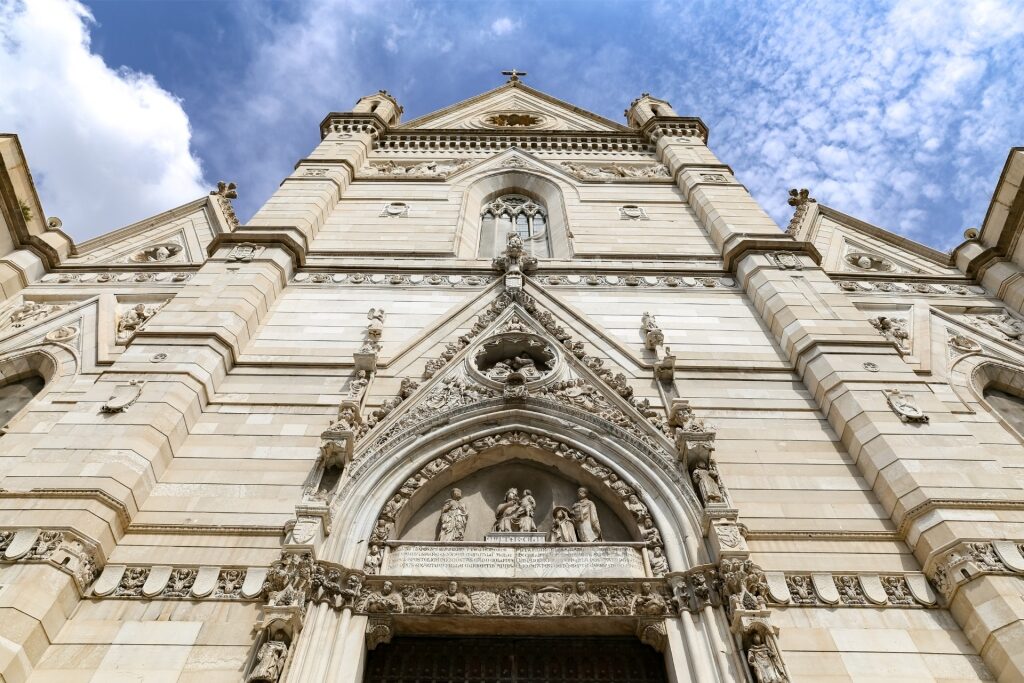
Cattedrale di Santa Maria Assunta, Naples
Cattedrale di Santa Maria Assunta on Via Duomo is a soothing sanctuary in this energetic city. Known as Naples Cathedral, it was consecrated in 1315 and is the city’s most important church. It was built on the remains of an early Christian church and Greek and Roman ruins, now part of an underground archaeological zone.
Cattedrale di Santa Maria Assunta features a Gothic nave with tall pillars and columns. Eighteenth-century renovations saw Baroque upgrades, including chapels adorned with captivating frescoes, bronze sculptures, and gold leaf.
The most important chapel is Cappella del Tesoro di San Gennaro, home to relics of San Gennaro, the patron saint of Naples, including vials of his dried blood.
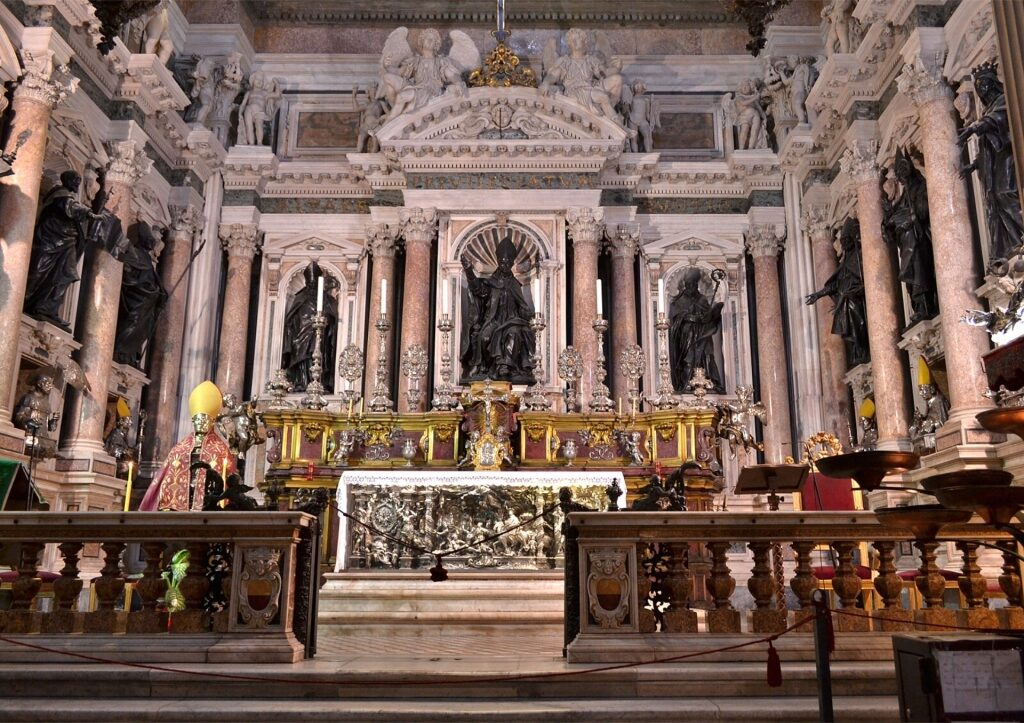
Cappella del Tesoro di San Gennaro Photo by Giuseppe Guida on Wikimedia Commons, licensed under CC BY-SA 4.0
Known as the Miracle of San Gennaro, a centuries-old ritual sees the vials displayed three times a year. This occurs on the first Saturday in May, September 19, which is also celebrated as the Feast of San Gennaro, and December 16, the anniversary of the 1631 Mt. Vesuvius eruption.
Legend has it that if the blood liquefies, it will bring good fortune to the city, and Neapolitans celebrate with bells and cheers. However, if it does not liquefy, it is seen as a warning to Naples.
There’s an enormous amount to see inside, including medieval frescoes in the Minutolo Chapel, the domed frescoes in the San Gennaro Chapel, and the crypt of San Gennaro.
FAQs
What is the oldest church in Italy?
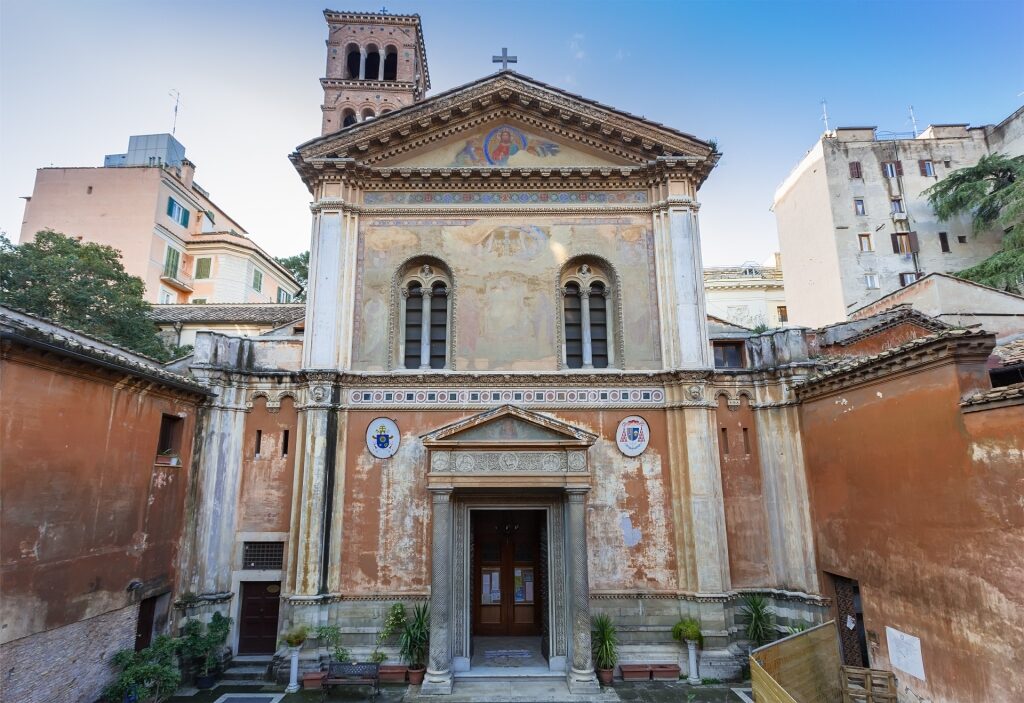
Basilica of Santa Pudenziana al Viminale, Rome
The Basilica of Santa Pudenziana al Viminale in Rome is one of the oldest churches in Italy, founded in 313-324 AD, around the same time as the Basilica di San Giovanni in Laterano. However, as with many historic churches in Italy, both have undergone many changes and rebuilds over time.
What are some must-see churches in Rome?
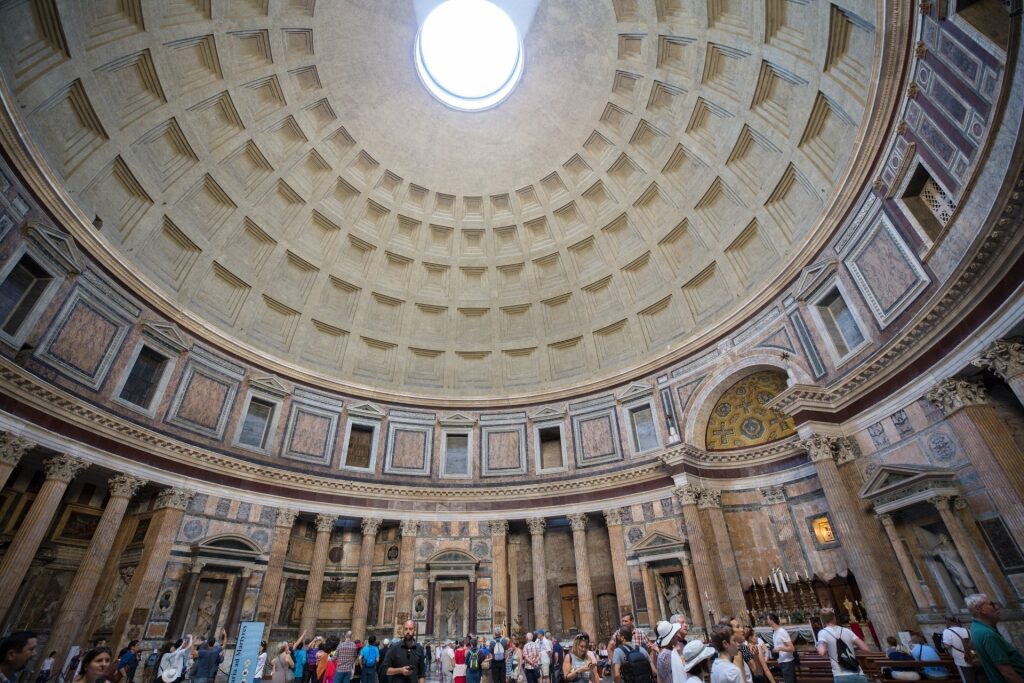
Pantheon, Rome
Must-see churches in Rome include the Vatican’s Sistine Chapel, with breathtaking frescoes by Michelangelo, Botticelli, and Perugino, and the Pantheon, with its marvelous dome.
The most important must-see churches in Rome, however, are the four Papal Basilicas: St. Peter’s Basilica, St. John Lateran’s, St. Mary Major’s, and St. Paul’s Outside the Walls.
Which Italian city has the most beautiful churches?
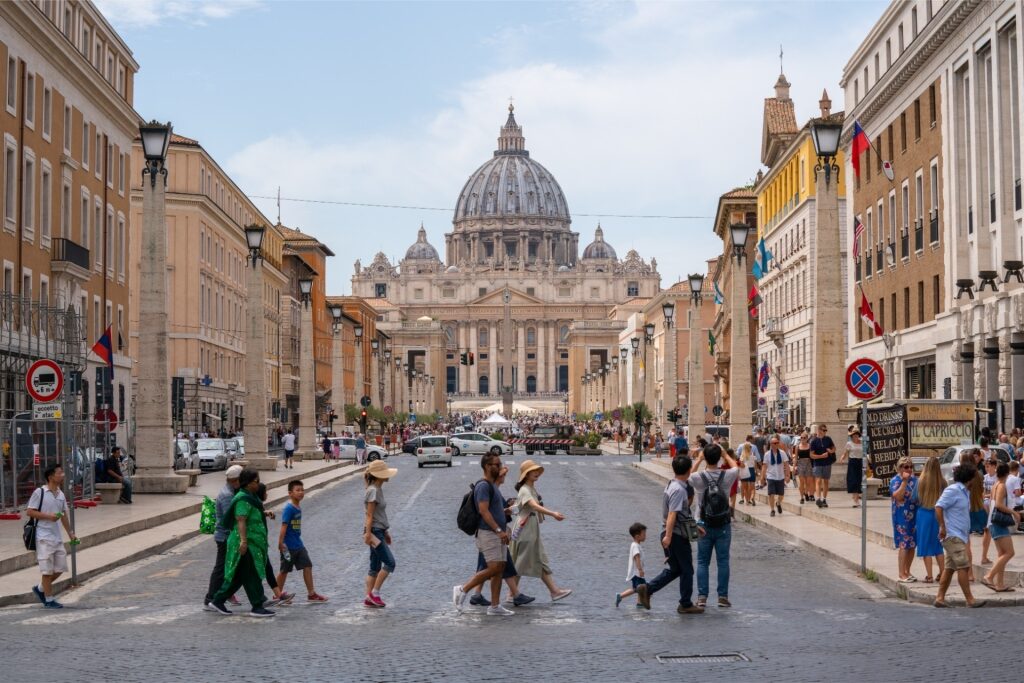
St. Peter’s Basilica, Vatican City
This is entirely subjective, since most Italian cities contain beautiful churches. However, since Rome and the Vatican City have the most churches—and not just the most famous churches in Italy, but in the world—they also boast the most beautiful ones.
What is the difference between a basilica and a cathedral in Italy?
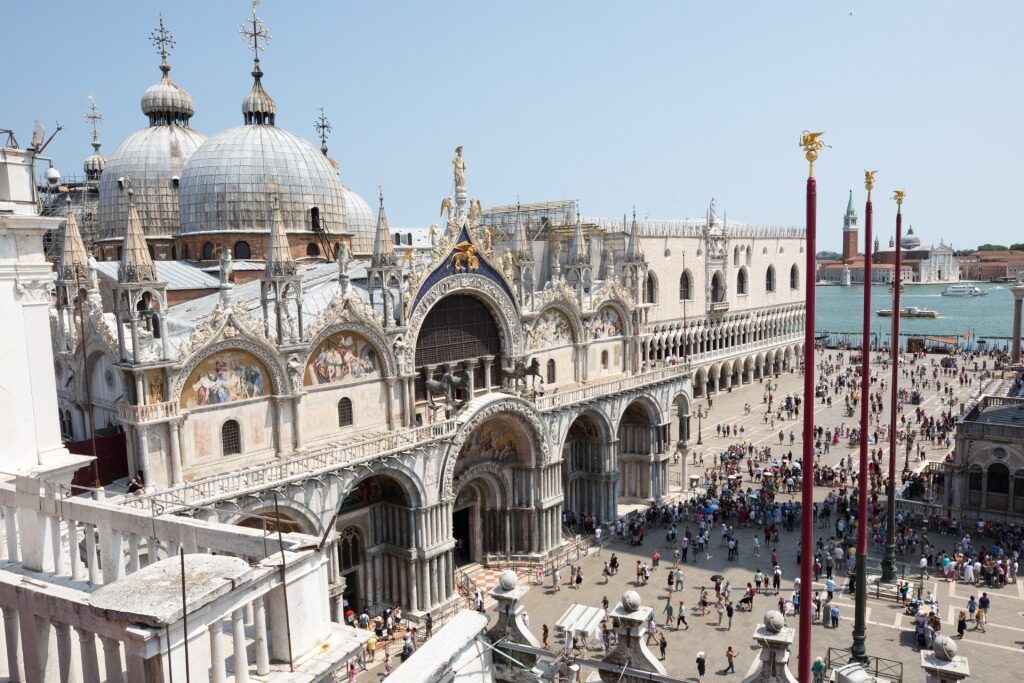
St. Mark’s Basilica, Venice
A cathedral is the main church of a diocese, the place of the bishop’s official seat. Cathedrals are the location of important ceremonies, often located in central piazzas.
A basilica is a church given special ceremonial status by the Pope because of its importance or association with a saint or a significant event. Basilicas often contain relics or are significant pilgrimage sites.
What architectural styles are common in Italian churches?
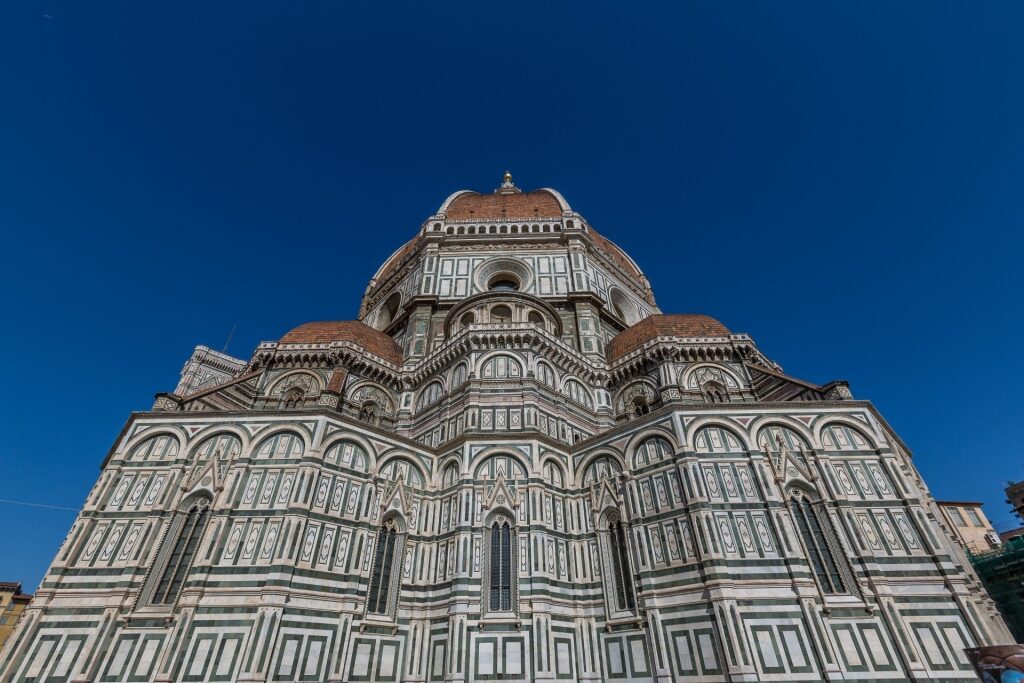
Cathedral of Santa Maria del Fiore, Florence
Famous churches in Italy offer a breadth of architectural styles, including Romanesque, Gothic, Renaissance, Baroque, and Byzantine.
Are there any tips for visiting churches in Italy?
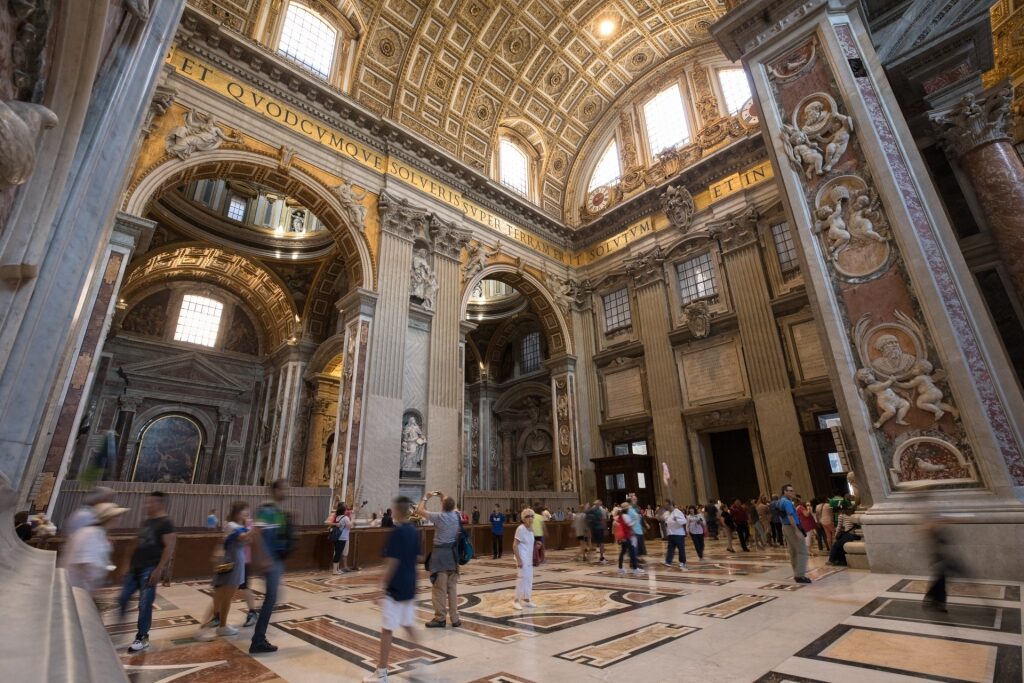
St. Peter’s Basilica, Vatican City
Churches are working buildings, hosting masses, choir concerts, and other religious events. Check ahead for opening hours and whether or not you are required to purchase a ticket for your visit. It’s worth carrying a small amount of loose change when visiting churches in Italy, since most will offer the chance to donate.
Dress modestly when visiting churches in Italy—cover your shoulders, remove any hat, and avoid revealing clothing. Having visited several churches in Italy, mostly during summer, I recommend wearing light clothing, such as a linen two-piece, and comfortable footwear.
Pantheon, Rome
If you are inspired to visit these glorious churches and cathedrals, browse Celebrity’s cruises to Italy and plan your European getaway today.