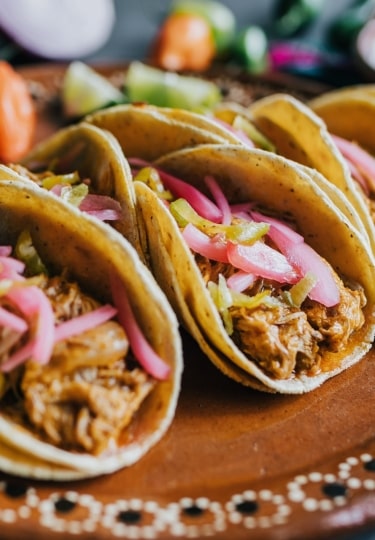
Any Yucatan food guide will make your mouth water if you have any love for deep, smoky flavors. Yucatan’s Maya roots distinguish its food from the Aztec-influenced dishes in central Mexico.
It uses more achiote and sour orange to give an earthy, zesty base that is more about acidity and smoke than heat. Spanish and Caribbean influences add even more depth to its hearty, healthy cuisine.
With dishes from simple soups to complex pit-baked wonders such as Mucbil Pollo, there’s a wide choice. From grazing on street food to enjoying the hospitality of lively restaurants, you’ll never go hungry here.
Cochinita Pibil
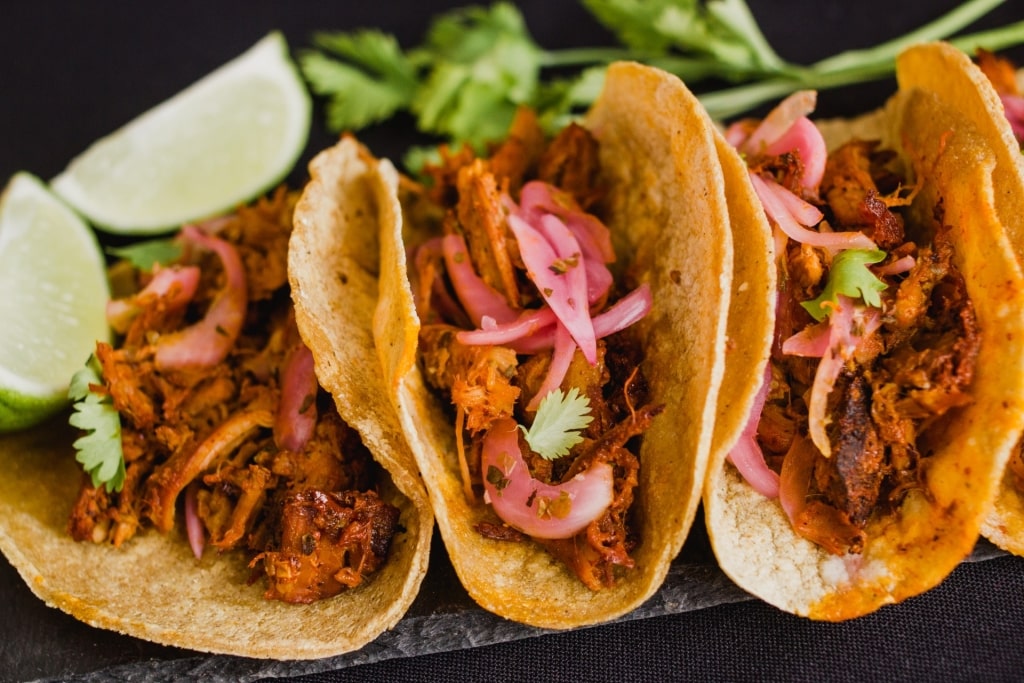
Cochinita pibil
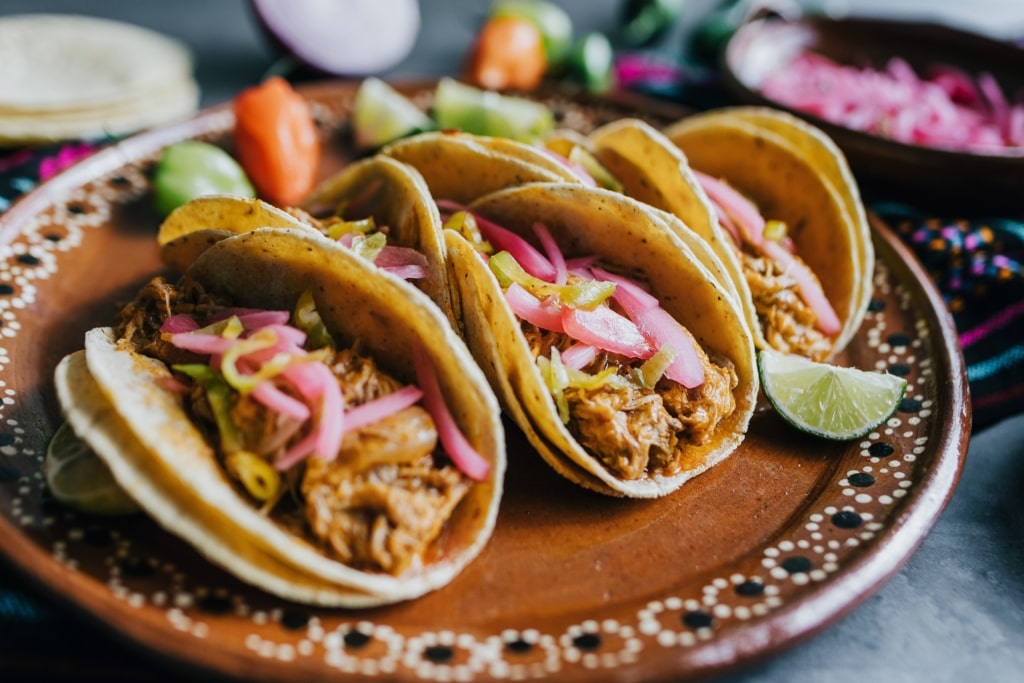
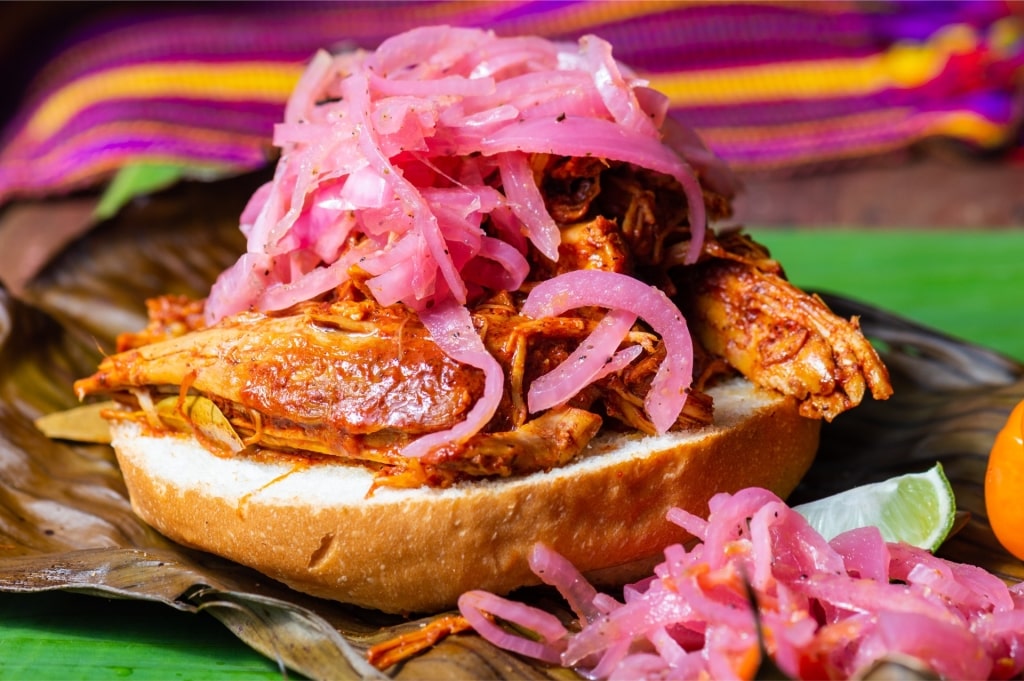
Mexico is famed for its regional specialties. Cochinita pibil is Yucatan cuisine’s signature dish, made with pork marinated in achiote, sour orange, and spices. Achiote is the seed from a small shrub, Bixa orellana, that gives the dish a natural red-orange color and peppery taste.
After marinating, the pork is wrapped in banana leaves, then baked in an underground pit or “pib”. This slow cooking leaves the meat tender and juicy, with a smoky flavor.
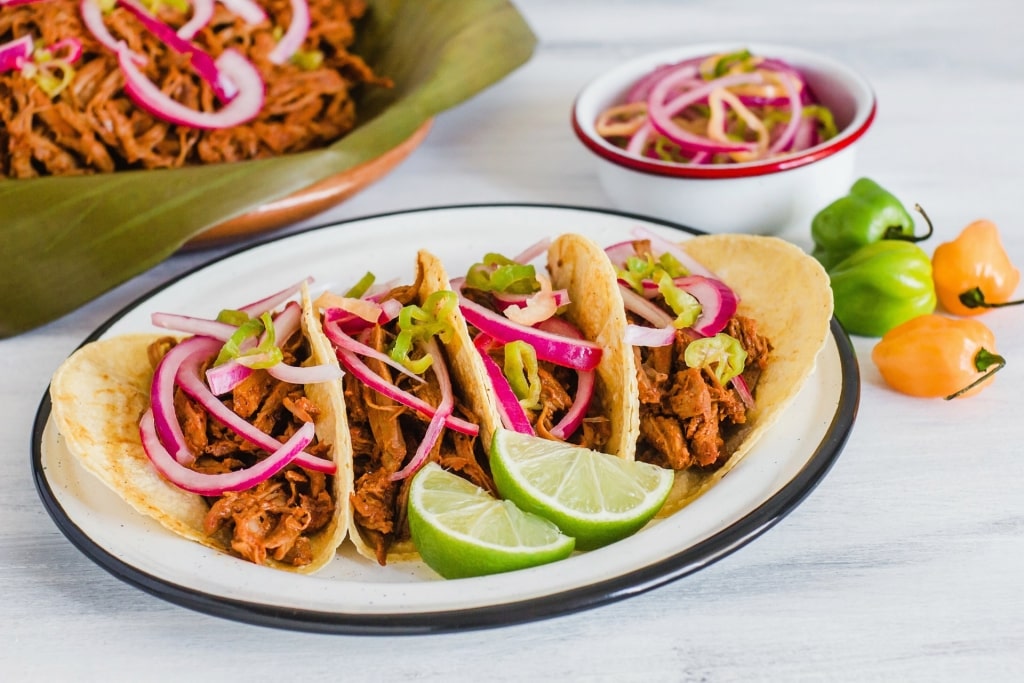
Cochinita pibil
Cochinita pibil has pre-Hispanic origins, when game meats were used, but the Spanish introduced pork—cochinita means “small pig”. Pollo pibil is a variation using chicken, while pibil keh features venison.
The dish is still associated with Maya festivals, particularly Hanal Pixán, or Day of the Dead. It’s usually served in tacos or tortas, topped with pickled red onions and habanero salsa.
Tamales
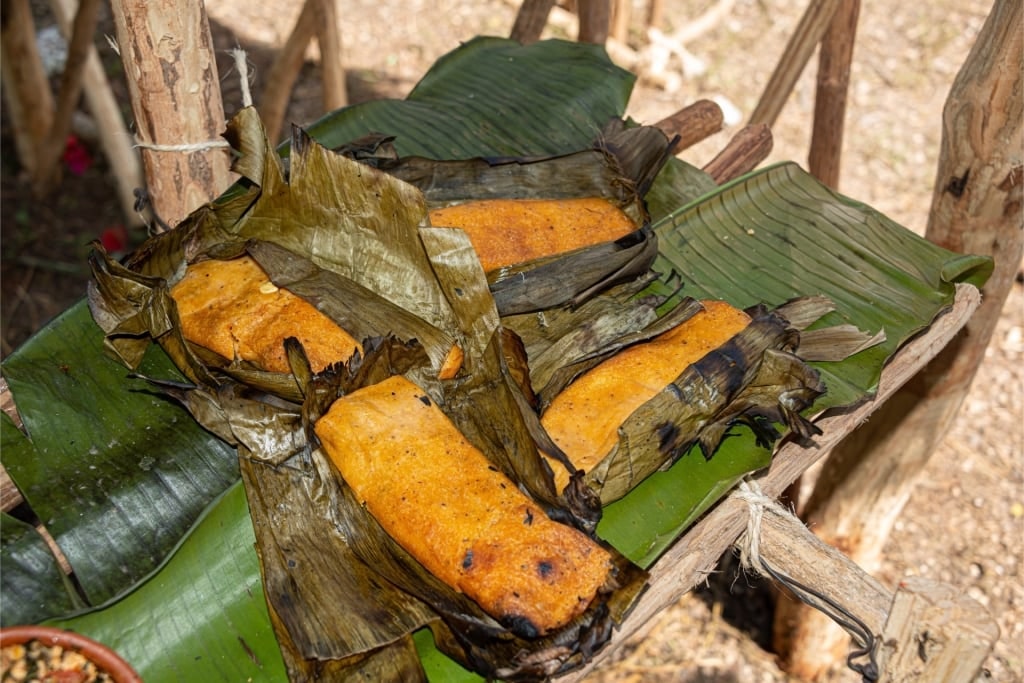
Tamales
Tamales are a common Yucatan food, with tamales torteados or vaporcitos being the most common. These feature a thin masa filled with chicken, turkey, or pork and wrapped in banana leaves.
Tamales colados are named for the strained dough that creates an exceptionally soft texture. Tamales con espelón use distinctive black xpelón beans to add a unique flavor.
The most evocative variety is mucbi pollo, a large tamale traditionally buried and cooked over firewood for Day of the Dead festivities. It’s also wrapped in a banana leaf, something that distinguishes Yucatan’s tamales from the rest of Mexico, where corn husks are used.
Panuchos
Panuchos
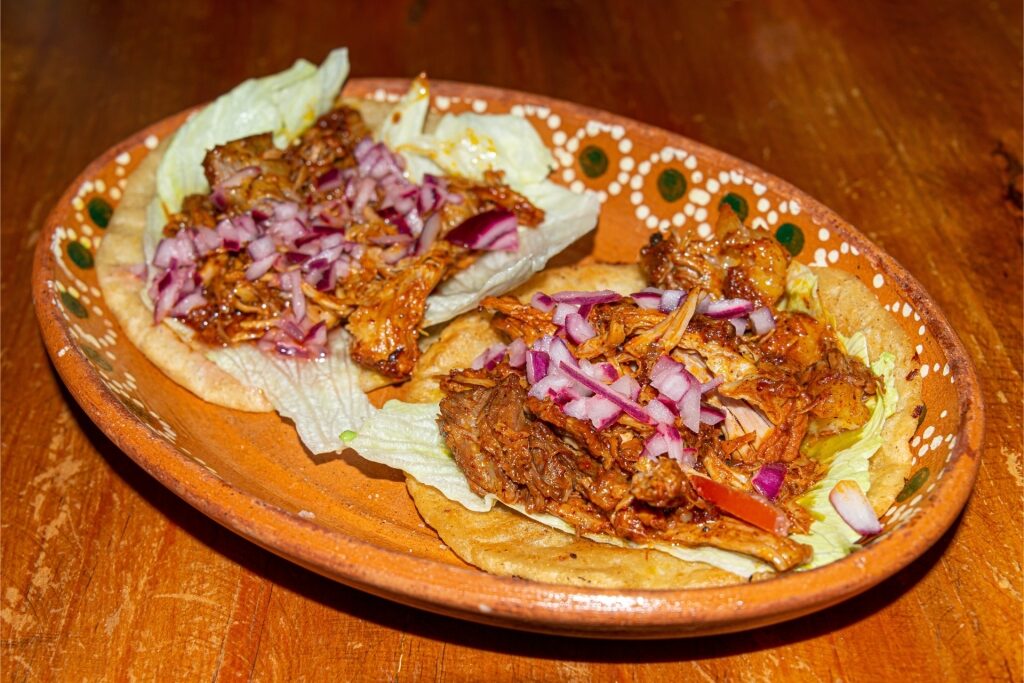
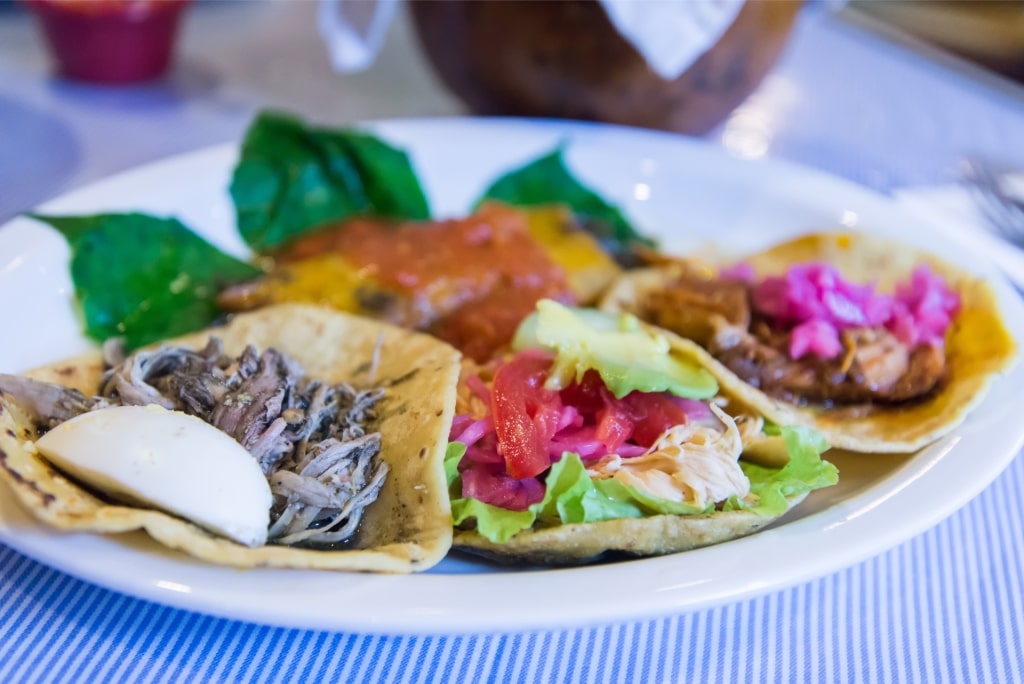
A panucho is a fried corn tortilla stuffed with refried beans, then topped with shredded chicken, avocado, and a spicy salsa. Near the coast, the topping might be seafood, such as shrimp.
Originally, the topping was turkey and the base was bread. The bread was later replaced with a tortilla made from masa, a type of corn flour.
Now a very popular Yucatan street food, panucho toppings also include ingredients such as lettuce, egg, or pickled onions. The hot habanero sauce remains a constant, however.
Salbutes
Salbutes
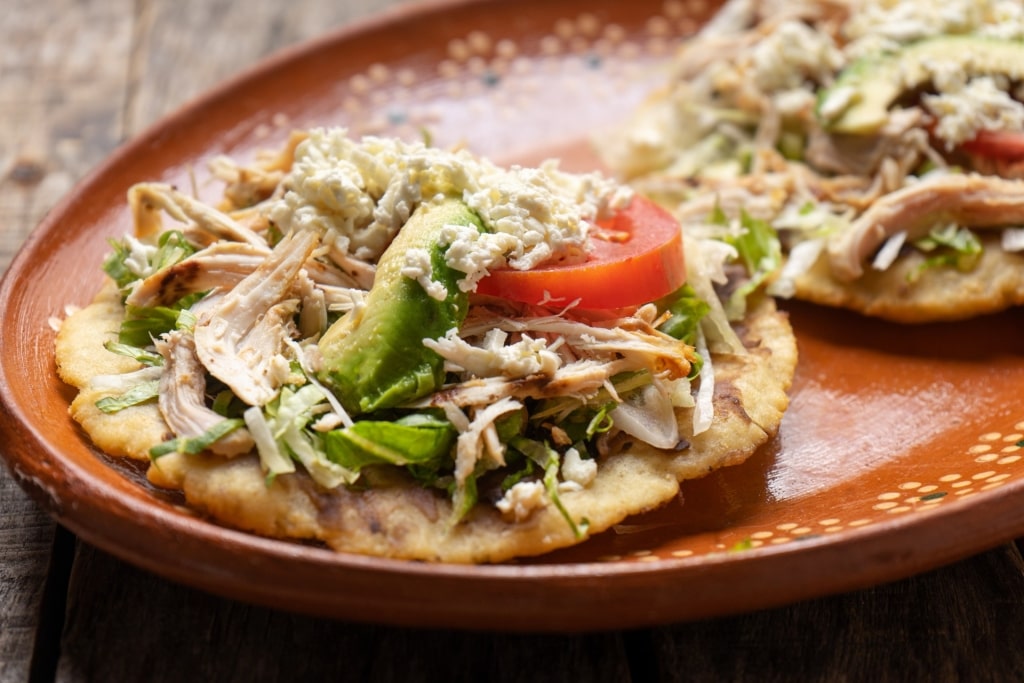
Salbutes are similar to panuchos but are lighter in that the puffed fried tortilla is left without a bean filling. Toppings are often the same, however: shredded turkey or chicken, avocado, and pickled red onions.
As a light snack or antojito, salbutes are a popular street food. What started as a means of using leftover tortillas has become prized in its own right.
Seafood salbutes are common near the coast of Yucatan. Another popular variation is made with chopped boiled eggs instead of meat, topped with fried tomato, onion, and chili.
Sopa de Lima
Sopa de lima
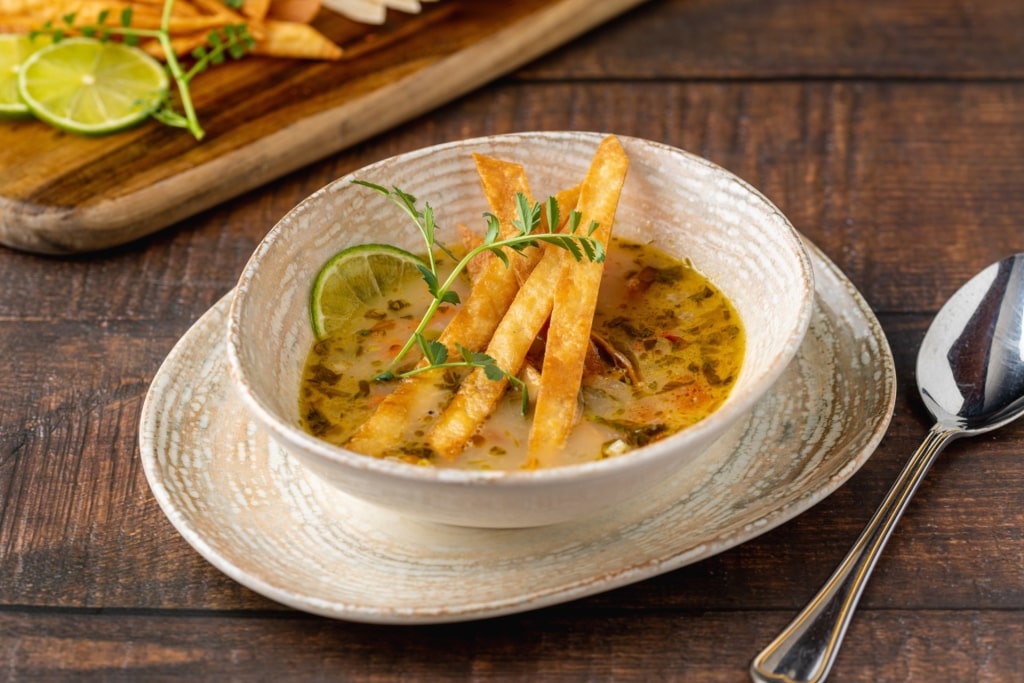
Sopa de Lima is a turkey or chicken soup made tangy by the use of lima agria, or sour lime. Extra flavor comes from a broth rich in garlic, oregano, and achiote.
Another essential ingredient is strips of tortilla, fried until crisp. The carb loading makes this delicious soup hearty and filling.
Like any chicken soup, soda de lima is great comfort food, prescribed by any Mexican madre if you have a cold. A generous splash of hot habanero sauce will certainly help clear any blocked sinuses.
Papadzules
Papadzules
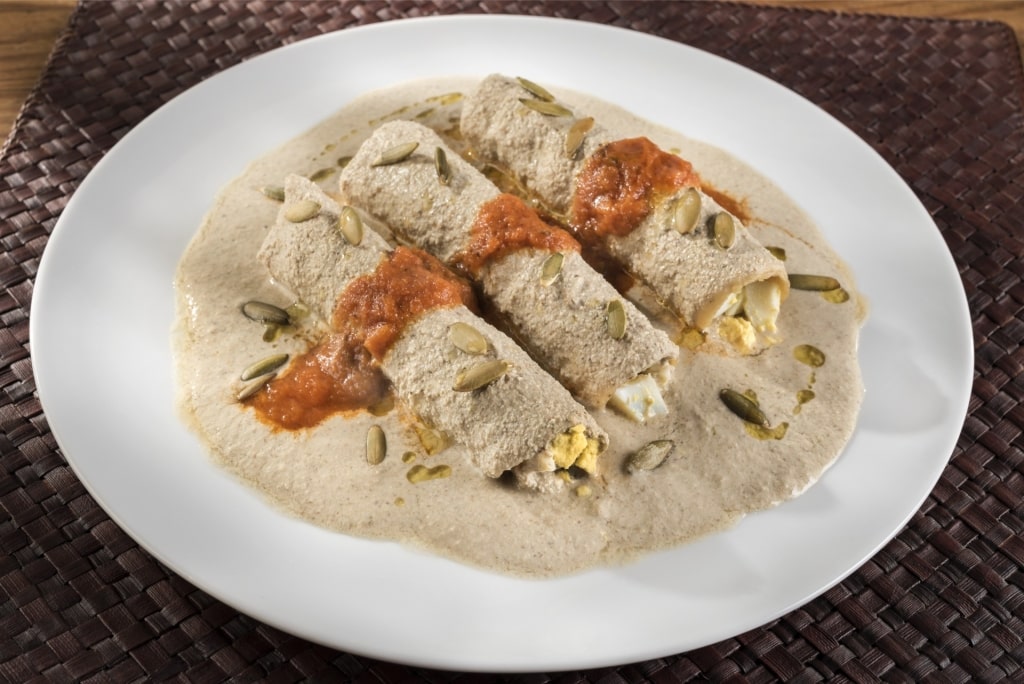
Thought to be the origin of enchiladas, papadzules are rolled tortillas with deep Mayan roots. They are traditionally filled with hard-boiled eggs and covered in pumpkin seed sauce, although street food versions now offer more options.
That original sauce lends a mild earthy or nutty flavour, in contrast to the spicy or cheesy enchilada. The essential ingredients are pepitas, tomato, and epazote.
Pepita is a pumpkin seed, specifically in Yucatan cuisine, from the Cucurbita argyrosperma. Epazote is a small shrub whose leaves have a pungent taste with notes of anything from mint to creosote.
Poc Chuc
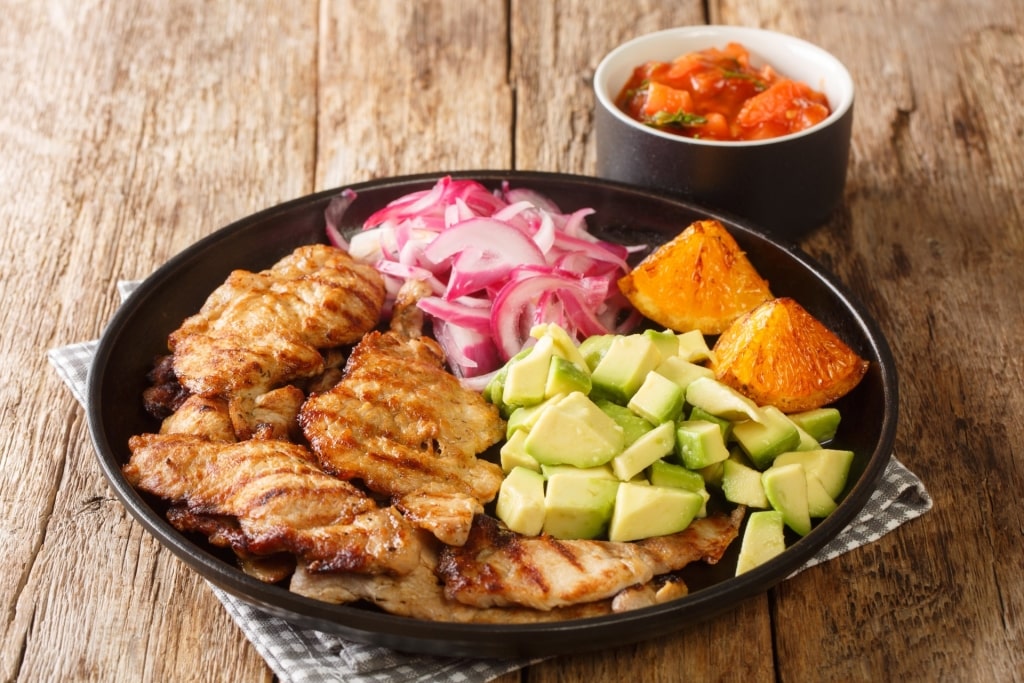
Poc chuc
Sour orange, or Seville orange, is an essential marinade for poc chuc, which is grilled pork. Poc chuc means “toasted over charcoal” in Maya and it was originally made with wild boar.
The citrus tenderises the meat, which is usually served with sides of rice, pickled onions, and a soup made from refried beans. Chiltomate, a smoky tomato salsa, also goes well with it.
You’ll often see poc chuc on set lunches, called comida corrida, or “food on the run”, in Yucatan. These quick, hearty meals, served between 2pm and 4pm, are aimed at regular customers who are often manual workers.
Huevos Motuleños
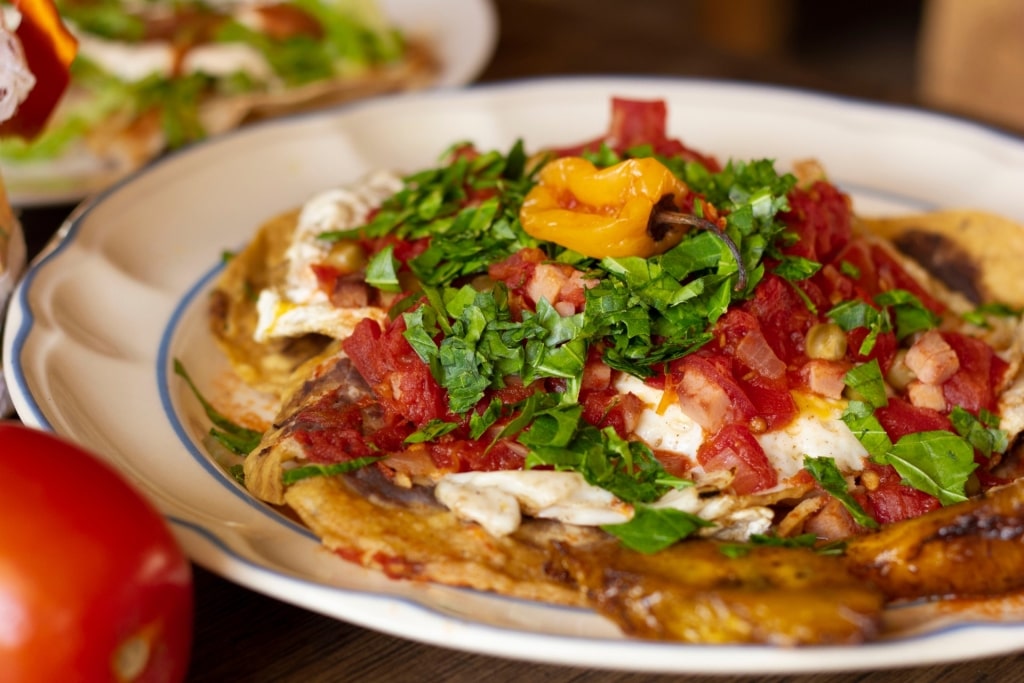
Huevos Motuleños
Motul is a Pueblo Mágico, a small town listed by Yucatan’s authorities for its cultural significance. It’s the birthplace of Huevos Motuleños, a breakfast dish of fried eggs on tortillas topped with black beans, ham, peas, and sliced plantain.
A finish of tomato sauce and crumbled cheese adds a great sweet-savory balance to the dish. You’ll find variations nearer the coast using seafood, while Merida’s version features chorizo.
Legend has it the dish was created spontaneously from local ingredients in early 20th-century Yucatan to feed a group of visiting dignitaries. It’s a lazy Sunday morning brunch rather than an everyday breakfast—that might be the more familiar huevos rancheros.
Relleno Negro
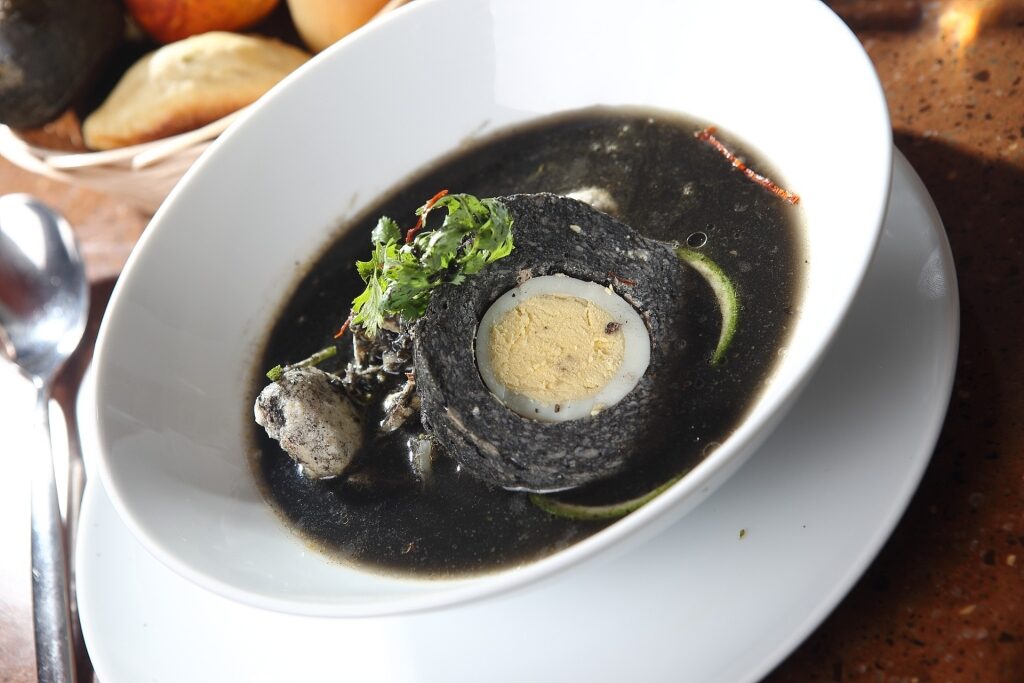
Relleno negro
Don’t let the black color of recado negro sauce put you off trying dishes made with it, such as relleno negro. The recado’s smoky-tasting base is flame-charred tortillas, garlic, and peppers, with herbs, spices, and epazote.
Relleno negro, a rich, black turkey stew, is served at events such as Christmas, weddings or November’s Day of the Dead celebrations. The turkey is boiled in the recado negro broth until tender.
For the last hour, a stuffing-like ball of seasoned ground pork, hard-boiled eggs, onions, and epazote is added to the pot. The turkey and the meatball—called a “but” or boot—are served in slices with some broth and a hard-boiled egg topping.
Marquesitas
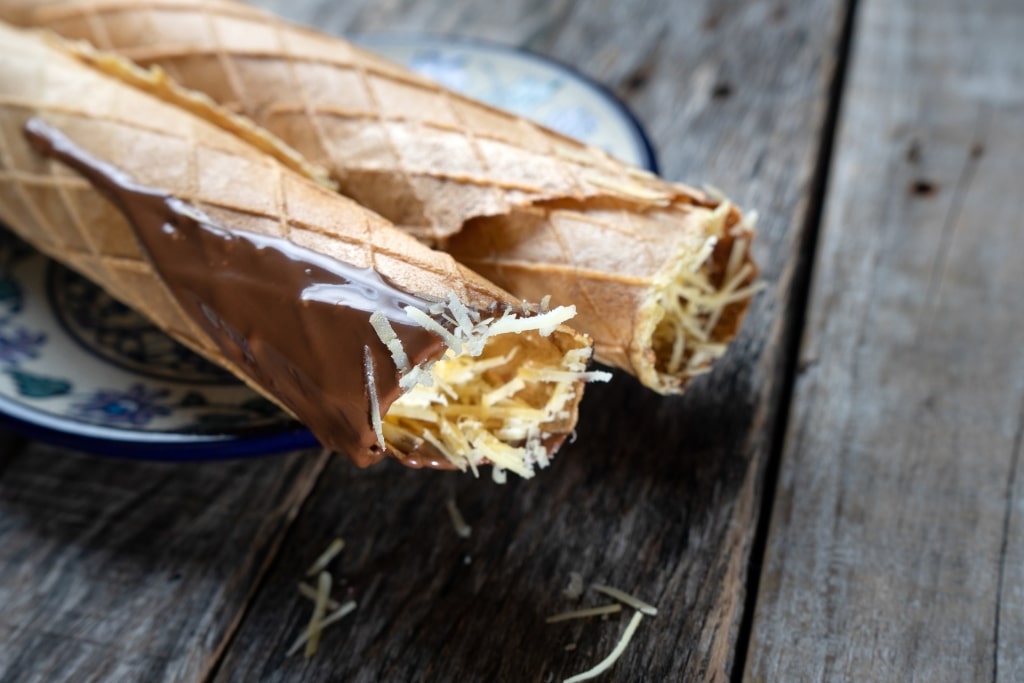
Marquesitas
The port of Progreso is famous for its street food, of which marquesita are among the most varied. These are crepe-style pancakes made with flour batter on a round griddle.
Rolled into a hard cone, the real choice comes with their fillings. These range from Edam cheese topped with Nutella or cajeta/caramel, to banana, guava, or coconut.
With their crisp exterior, reminiscent of an ice-cream cone, and savoury or sweet fillings, they are an irresistible snack. They were pioneered by an ice-cream seller in the 1930s to extend his season into the winter.
Frijol con Puerco
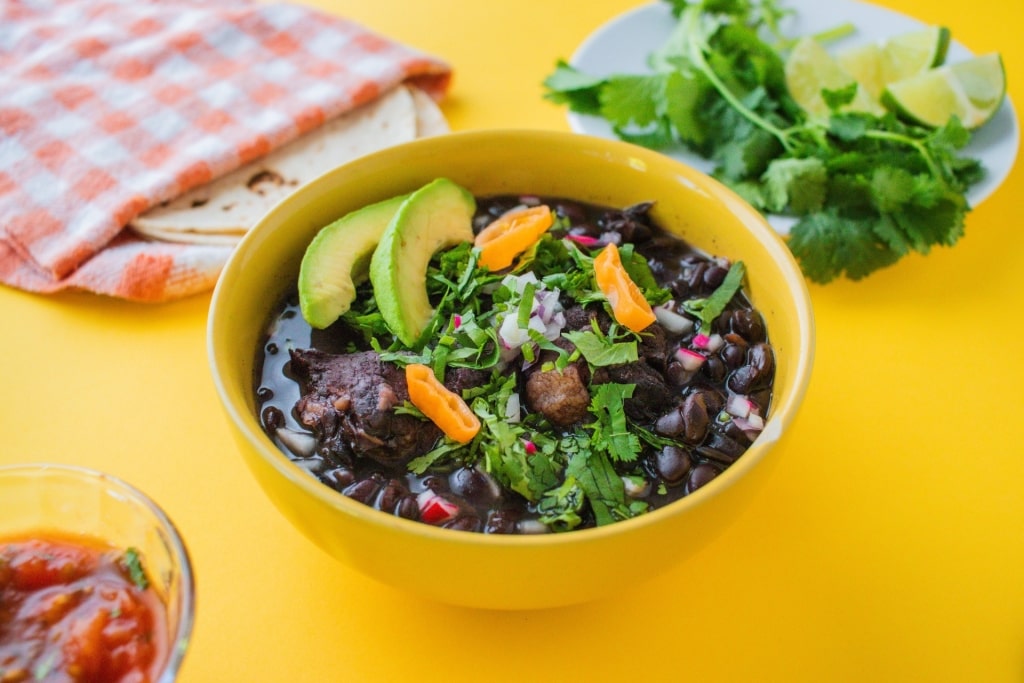
Frijol con puerco
Traditionally eaten on Mondays—no one remembers why—frijol con puerco is slow-cooked black beans with pork. It’s flavored with epazote and served with rice, radishes, and fiery habanero salsa.
In eastern Yucatan, smoked pork is used to give a deeper flavor. Chicharrón, deep fried pork crackling, is often added for the same reason.
This dish is such a Monday tradition that some ice cream parlours have added it as a flavor for that day. While wildly popular as a meal, let’s just say it’s not to everyone‘s taste in helado form.
Pan de Cazón
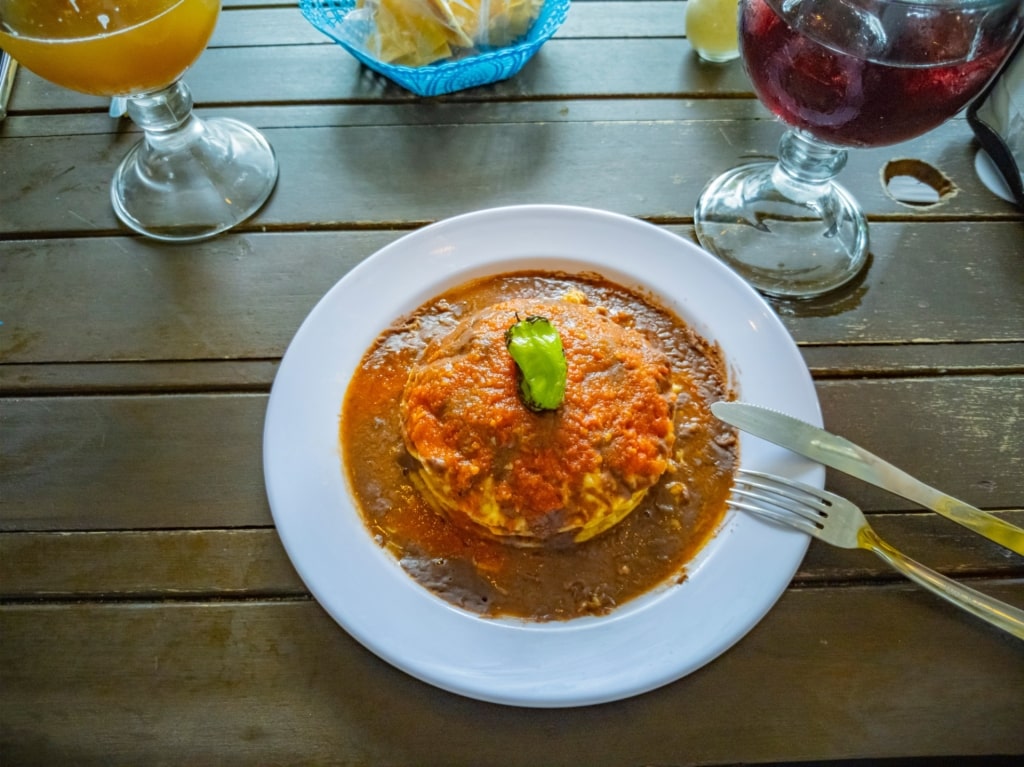
Pan de cazón
This coastal specialty is a lasagne-style dish made with layers of tortillas instead of pasta. The filling is layers of fried dogfish and black beans with a tomato-chili sauce.
Dogfish is a species of small shark, named for its habit of hunting in packs. It has a subtle taste, similar to most other white fish species.
Pan de cazón is often garnished with avocado slices and habanero peppers. With an historic connection to Campeche, it is officially recognized as part of the Gastronomic Cultural Heritage of Mexico.
Read: Mexico Travel Tips
Queso Relleno
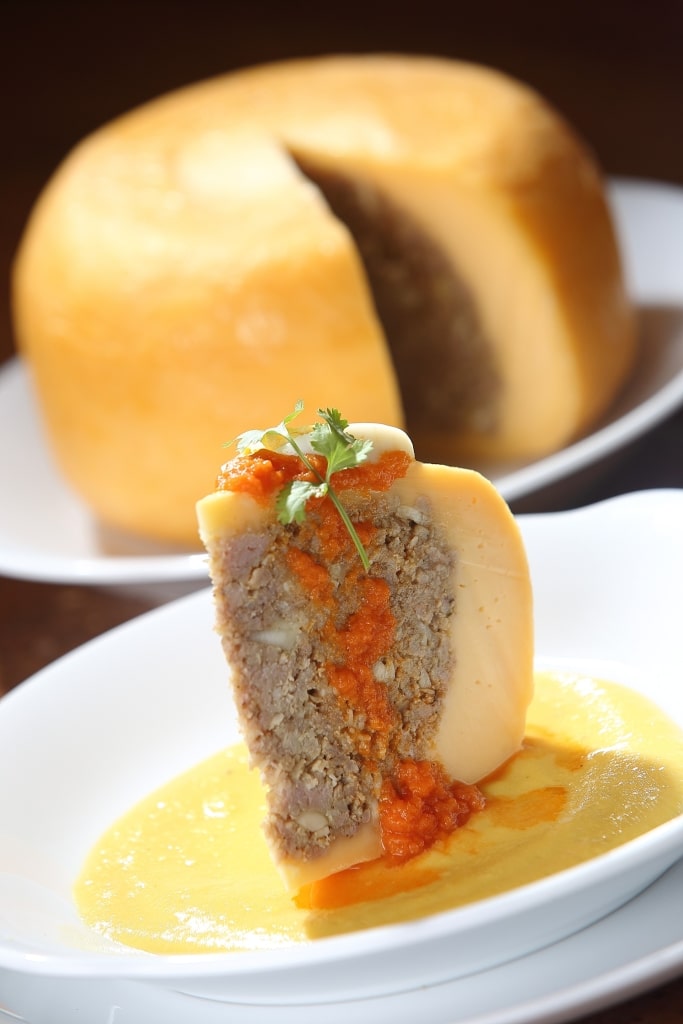
Queso relleno
Hollow out a round of Dutch Edam cheese, then stuff it with spiced ground pork, raisins, and capers. Now steam the cheese until it melts, and you have queso relleno.
This special occasion dish is served with a rich white sauce made of turkey stock and egg yolks. The “k‘ool” sauce is supplemented with tomato sauce and pickled onions.
Edam has been used in Yucatan cuisine since the early 1600s, when it first arrived with the Dutch West India Company. Its wax coating was found to help preserve the cheese from the tropical heat.
Xec
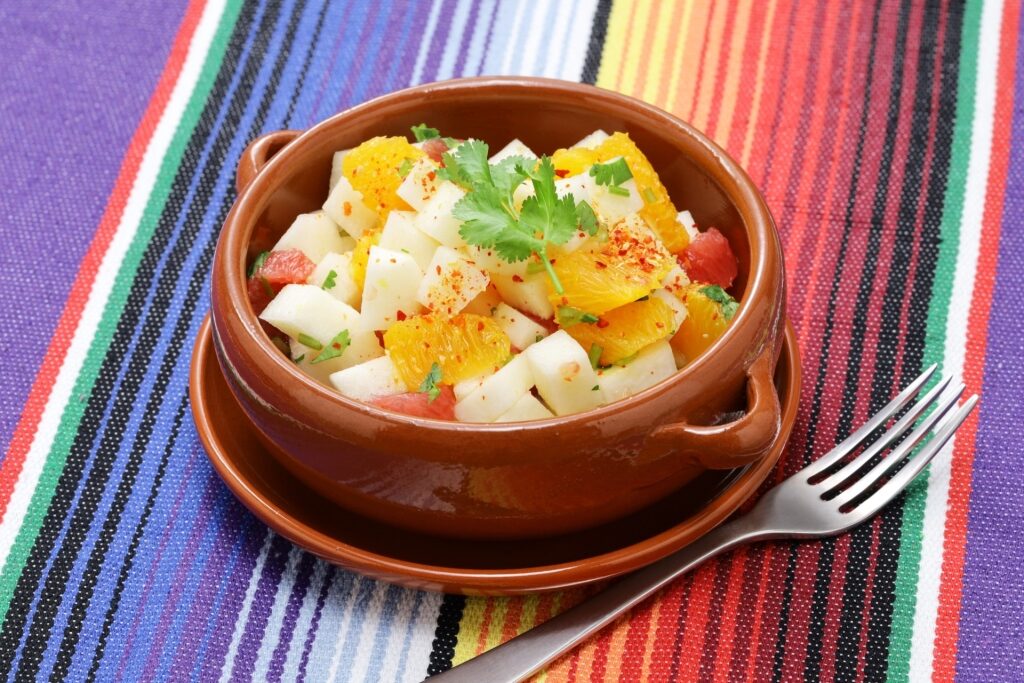
Xec
If you’re in Yucatan in autumn, you will enjoy a fresh salad called Xec or Xe’ek’. It’s made with citrus fruit and jicama, which both come into season then.
Besides the jicama, a tasty root vegetable often called the “Mexican potato”, the usual ingredients are oranges and tangerines. You will often also find cucumber, mango, and toasted pumpkin seeds.
The salad is seasoned with lime juice, salt, powdered chili and often cilantro as well. In markets, you might find it beautifully served in an orange peel shell.
Polcanes
Polcane means “snake head”, which describes the oval shape of these masa cakes. They are made from three traditional Maya staples, corn, beans, and squash, hinting at their ancient origins.
Considered among the most authentic of Maya foods, polcanes have been brought up to date with fillings such as cheese or chicharrón—pork crackling.
However, the classic filling is still tooksel, a mix of white beans and ground pumpkin seeds. Look for it on street stalls, as it’s a cheap, popular snack.
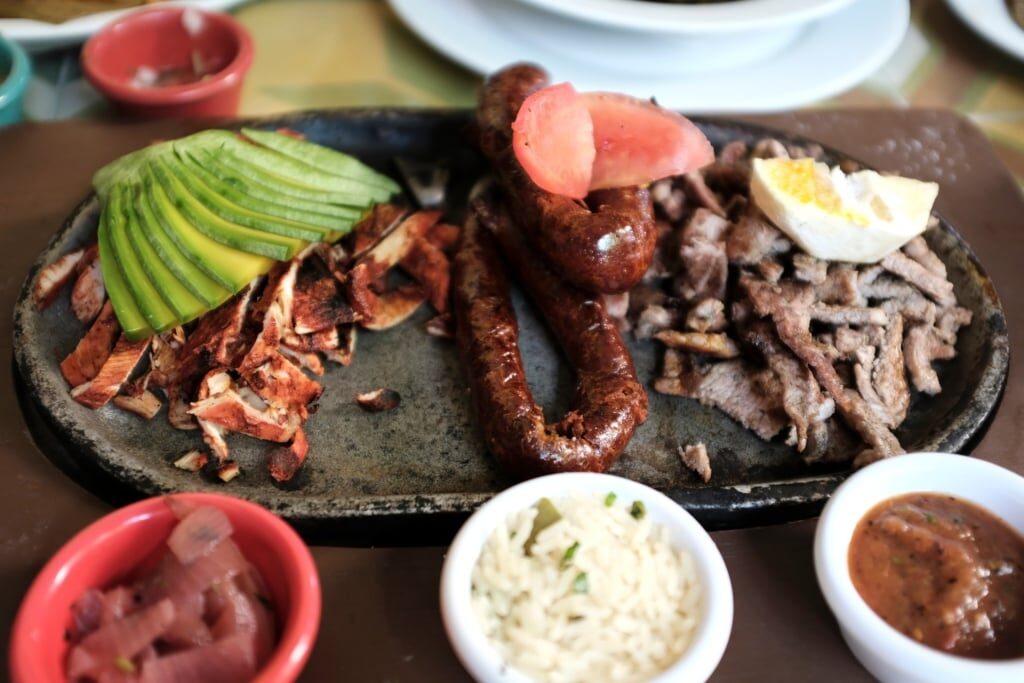
Longaniza de Valladolid
Longaniza de Valladolid
A longaniza is a long, thin sausage made with ground meat, usually pork. Valladolid’s smoked pork version is flavored with achiote, spices such as a clove, cinnamon, and cumin, and sour orange juice.
The achiote gives longaniza de Valladolid a distinctive bright red color. Unlike the better-known chorizo, longaniza tends not to be cured and is often eaten shredded into tacos or quesadillas.
They are a traditional breakfast when chopped into scrambled eggs as huevos con longaniza. The sausages also pair well with habanero sauce, red onion, and refried black beans.
Kibis
Kibis
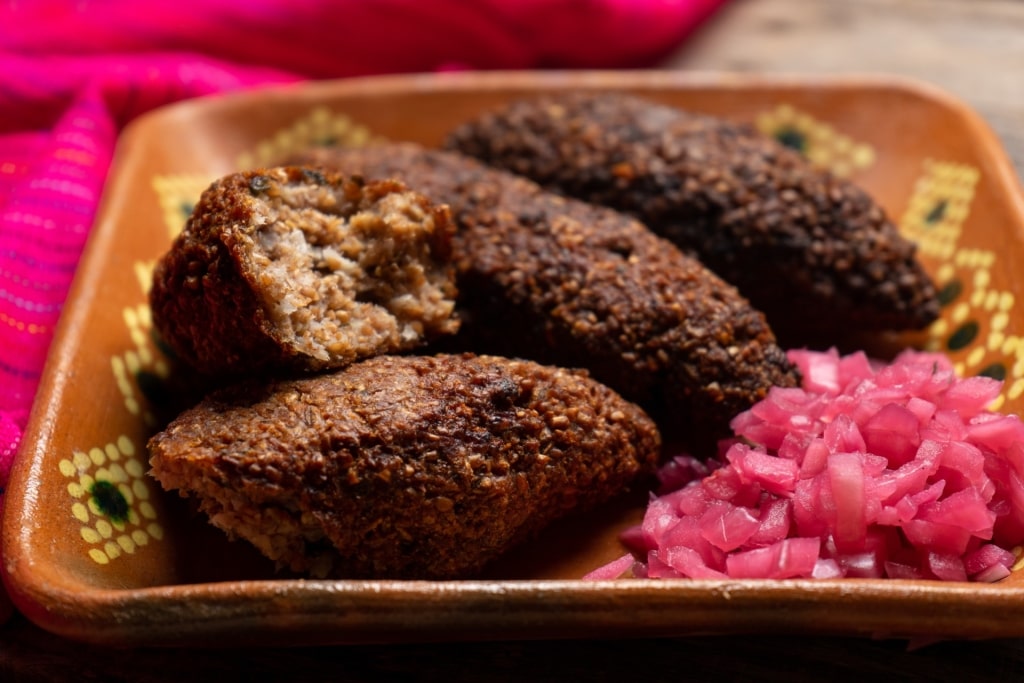
The collapse of the Ottoman Empire in the 1860s started a wave of Middle Eastern immigration to Latin America, including Mexico. One legacy is dishes such as kibi, a local variation on kibbeh.
Eaten as an appetizer or street food, they are a fried ball of cracked bulgur wheat with various fillings. Popular stuffings include cabbage and red onion salad, ground meat, or queso de bola—ball cheese.
Yucatan Food FAQs
Is the Yucatan a good food destination?
Cochinita pibil
With its blend of Maya, Spanish, and Caribbean flavors, Yucatan is a great food destination. The use of fresh tropical ingredients makes the local cuisine very healthy as well.
What dish is the Yucatan most famous for?
Cochinita pibil
Cochinita pibil is a flagship dish, known for its achiote marinade and unusual underground cooking method.
What time does dinner typically start in the Yucatan?
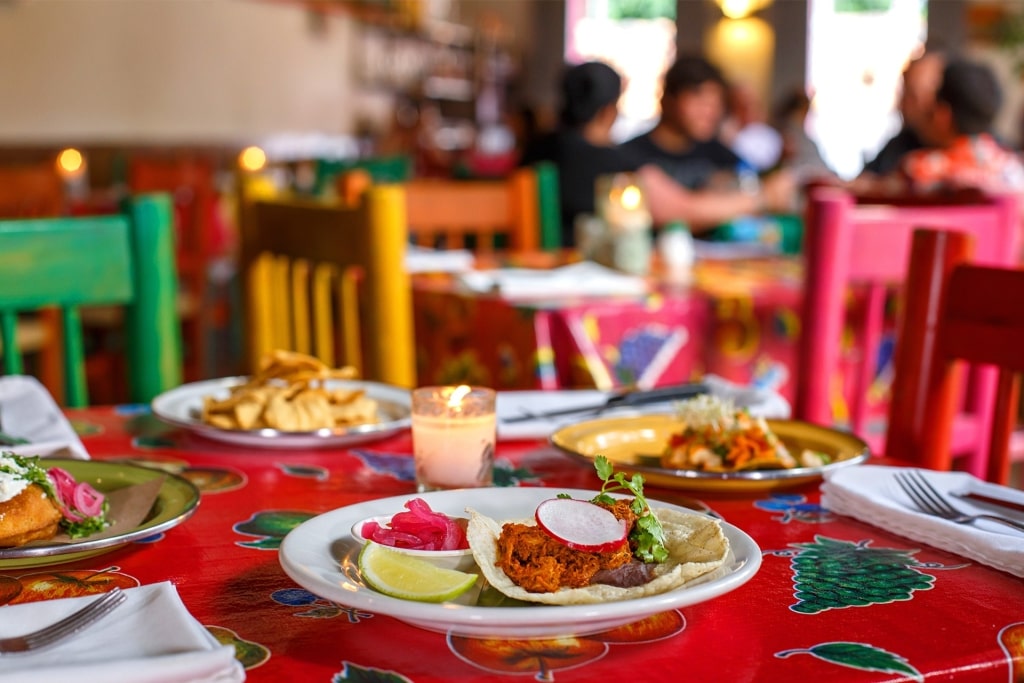
Restaurant in Yucatan
Dinner is late, often around 8:30–10:00 pm, because of the heat and siesta culture. Don’t worry, there’s always plenty of street food at any time, while bars also serve botanas—free snacks—to fill the gap.
What's the best way to experience Yucatan food?
Panuchos
Visit local markets such as Progreso’s Francisco I. Madero market to see the varied produce and taste some great food. Many restaurants offer comida corrida, an affordable set lunch, featuring Yucatan specialties.
Yucatan
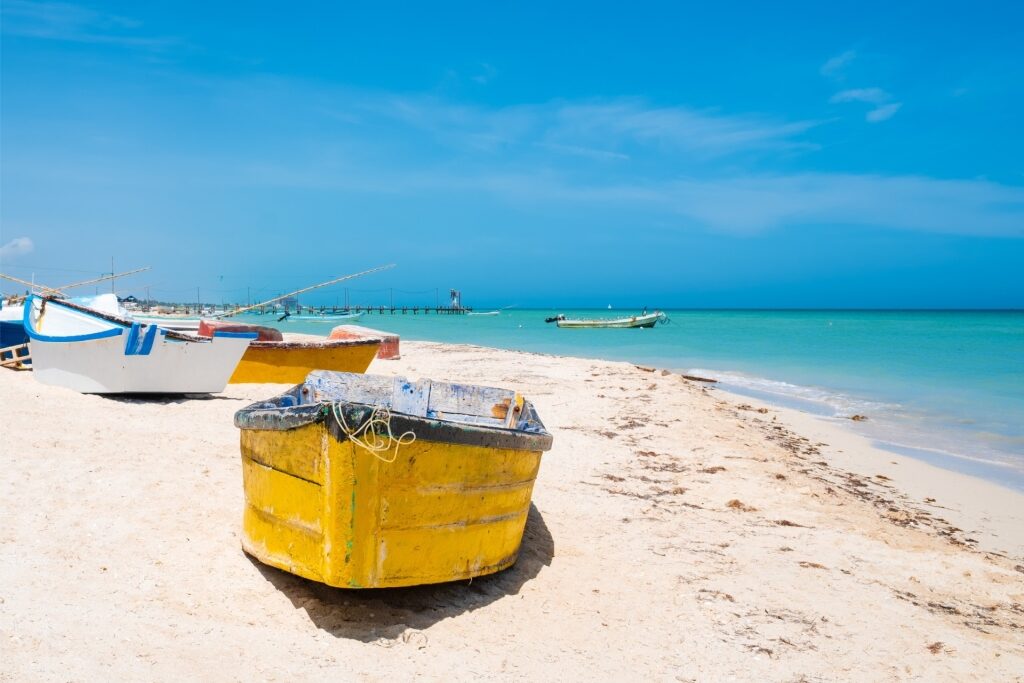
Has this guide to the food of Yucatan given you the taste for a visit? Browse Celebrity’s cruises to the Yucatan and plan your visit to this enchanting destination.