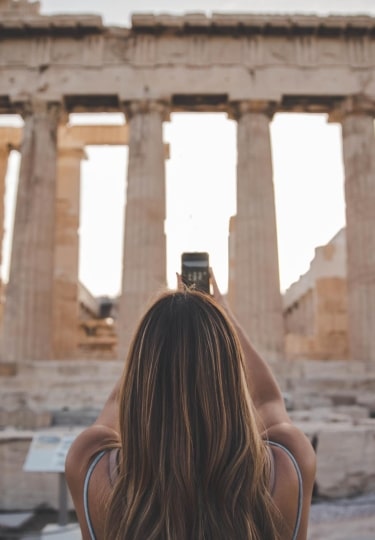
The legends of Greek mythology have inspired travelers for centuries. Whether you’re eager to seek out archaeological sites or want to feel closer to the gods, Greece is an iconic destination filled with legends to discover.
What many visitors might not realize is that there are places from Greek mythology that you can still explore today. Walk in the footsteps of Zeus on Mount Olympus, peer down at the city of Athens from your perch at the Acropolis, or visit more far-flung destinations like the Palace of Knossos, associated with the labyrinth that imprisoned the Minotaur, and Delos, where it’s said that Apollo and Artemis were born. No matter which spot piques your interest, these are eight places in Greek mythology you’ll want to add to your bucket list.
Myth Versus Reality
Aside from bustling tavernas, crumbling ruins, and sun-drenched beaches, mythology is what Greece is known for. That said, it can be difficult to separate myth from reality when it comes to seeking out real-world places that you can visit from Greek mythology. Which places are brick-and-mortar and which are fiction?
Some Greek landmarks, like the Acropolis and Cape Sounion, are well documented both in Greek myth and Greek history. Other places like the Gate to Hades are obviously off the table, while spots like the Colossus of Rhodes were once real but have been lost to time. All of that to say, there are plenty of stunning places you can visit from Greek mythology today that are very real.
8 Real Places From Greek Mythology That You Can Visit
From ancient mountaintops to mythical islands, Greece is home to countless sites steeped in legendary history. Below are real places connected to Greek mythology that you can explore on your next journey.
1. Mount Olympus
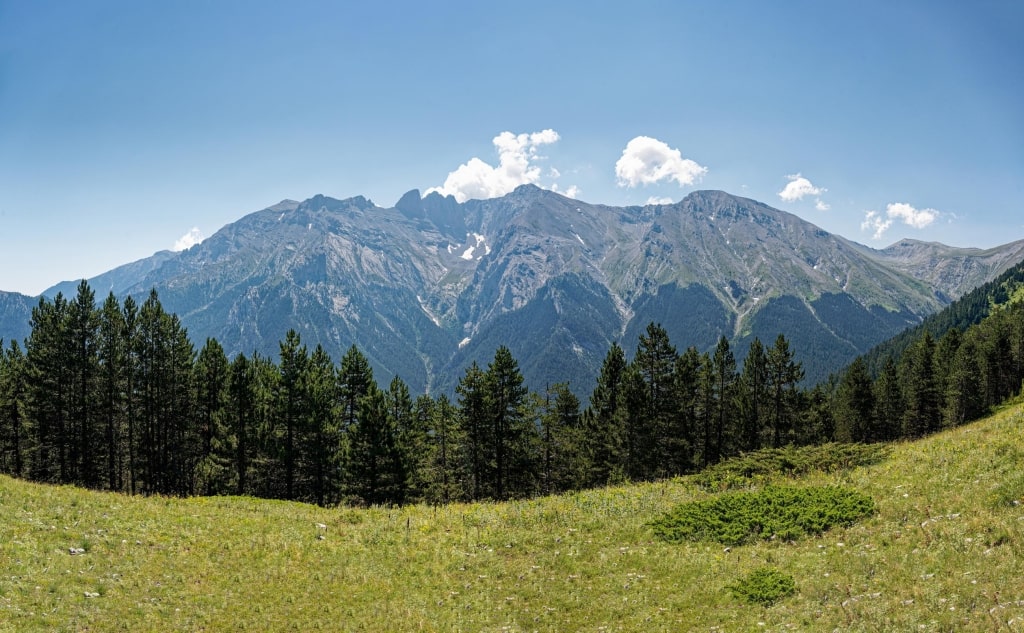
Distant, rugged peaks and forested slopes define Mount Olympus, Greece’s highest peak and the legendary home of the ancient Olympian gods.
As the tallest peak in Greece, it’s no wonder Mount Olympus has inspired centuries of folklore and legend. Located in Northern Greece, this towering limestone and marble spire reaches a height of 9,570 feet. Often ringed in clouds, its highest peak shielded from the sight of mere mortals, Mount Olympus was said to be the home of the Greek gods. Today, visitors can hike the Enipeas Gorge in the shadow of the peak, visit the town of Litochoro in the Macedonian foothills, or climb to the very top, although this is typically a two-day journey.
2. Delphi
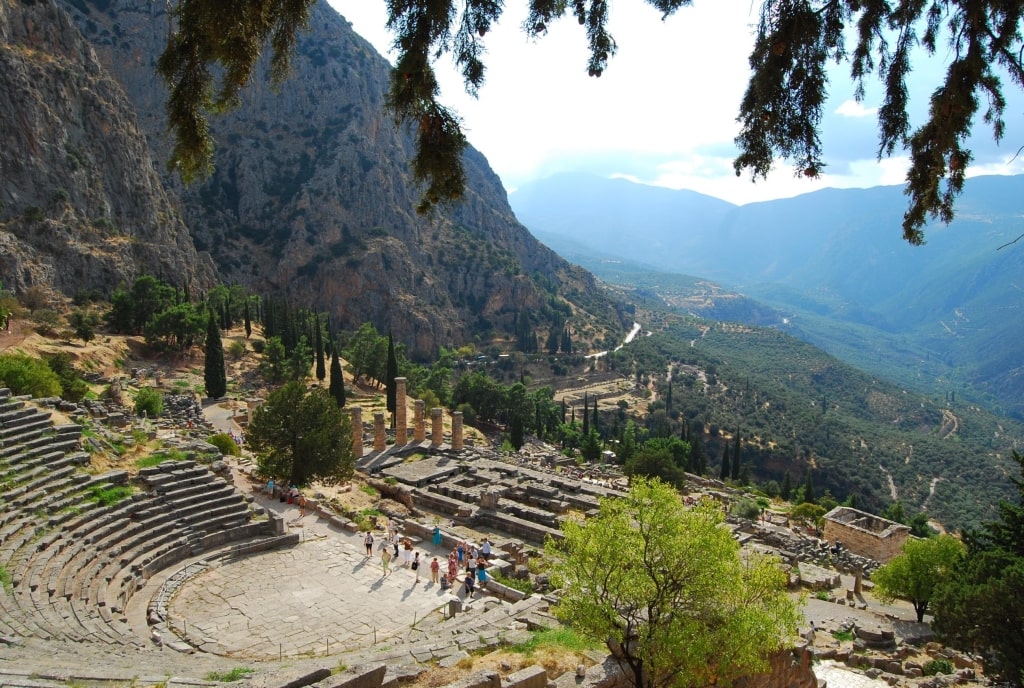
Perched on the slopes of Mount Parnassus in Delphi, Greece, the ancient theater offers sweeping views over the Temple of Apollo and into the Pleistos Valley below.
Considered the center of the universe in Greek mythology, Delphi was an important religious site in ancient times. At the home of the Oracle of Delphi, a priestess known as the Pythia was believed to deliver prophecies from the god Apollo. Greeks came from far and wide to consult her, including humble pilgrims, war generals, and rulers.
Several important structures still stand here today, including the Temple of Apollo, a theater and stadium that held thousands, and the Treasury of the Athenians.
3. Acropolis of Athens
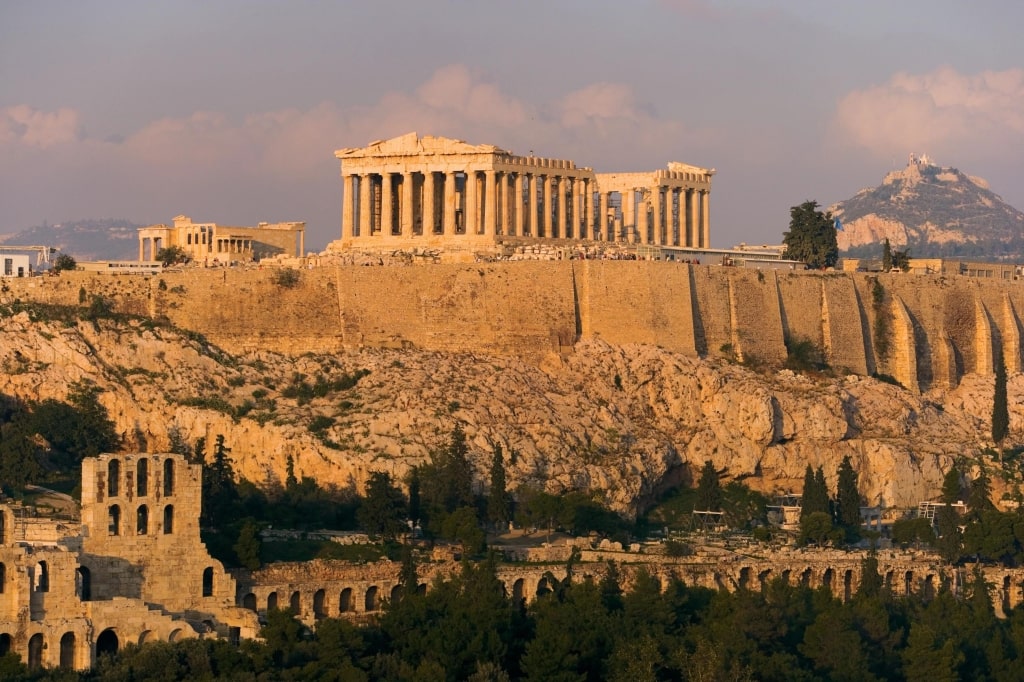
Bathed in warm golden hour light, the ancient ruins of the Parthenon crown the Acropolis above the Odeon of Herodes Atticus in Athens, Greece.
A popular backdrop for many stories in Greek mythology and one of the most famous archaeological sites in Greece, the Acropolis of Athens is home to the Parthenon, Temple of Athena Nike, and Erechtheion. The Parthenon’s sculptures depict famous myths, including the battle between the centaurs and Lapiths and the contest between Poseidon and Athena. Theseus, famous for slaying the Minotaur at the Palace of Knossos, was also said to have walked these very grounds.
The Acropolis is one of the easiest slices of Greek mythology that visitors can explore, making it easy to be transported back to the days of Zeus. One tip: After spending your day exploring these crumbling monuments, there’s nothing like dining on traditional Greek food on a rooftop in Monastiraki with views of the Acropolis in the distance.
4. Delos
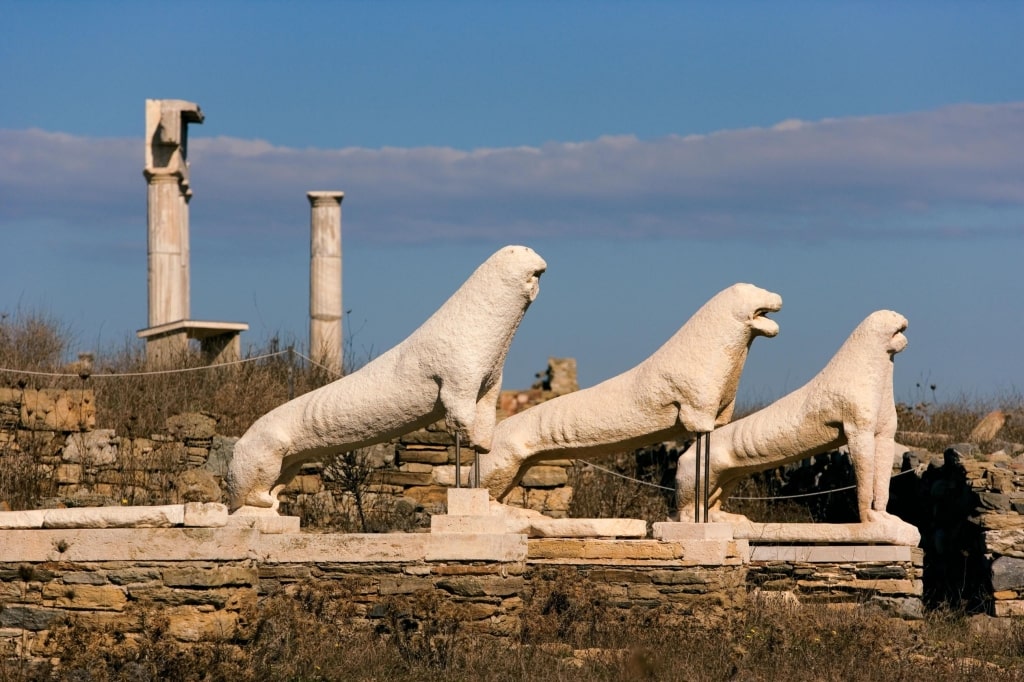
Marble beasts along the famed Terrace of the Lions stand guard over the sacred ruins of Delos, Greece.
A rocky island set adrift in the Aegean Sea, Delos was once a thriving seaport. Today, this entire island in the Cyclades is a UNESCO World Heritage Site and one of the most popular day trips from Mykonos. Legend has it that this is the birthplace of Apollo and Artemis, the twin gods. Their mother, a titan named Leto, was banished by Hera after discovering that Zeus had impregnated her, cursing her with the inability to give birth on dry land.
Poseidon, god of the sea, took pity on her and anchored the island. The myth says that Leto gave birth beside the Sacred Lake of Delos while hanging on to a palm tree. While visitors can no longer see the lake itself, since it was drained in 1925, you can still peer at the dry place where it once existed from the Terrace of the Lions, complete with a palm tree. Delos and its ruins are incredibly well preserved as the island hasn’t been inhabited since the 7th century AD.
5. Knossos
Home to one of Greece’s most important Bronze Age archaeological sites, Knossos is perhaps most famous for its palace, where several stories of Greek mythology took place. Once a stronghold of the Minoan civilization, the Palace of Knossos was the mythological seat of King Minos, a demigod and son of Zeus and Europa. Greek legends here are a tangle, but the most popular myth is that of the Minotaur, a mythical half-man, half-bull.
It was imprisoned in a labyrinth created by the craftsman Daedalus below the palace. Young Athenians were sent as sacrifices to it every nine years until the Athenian prince Theseus killed it with the help of Ariadne, Minos’ daughter. This is also where Icarus was said to have been imprisoned. Just minutes from the port of Heraklion in Crete, visitors can witness the reconstructed frescoes, throne room, and royal apartments of the Palace of Knossos.
6. Ancient Olympia
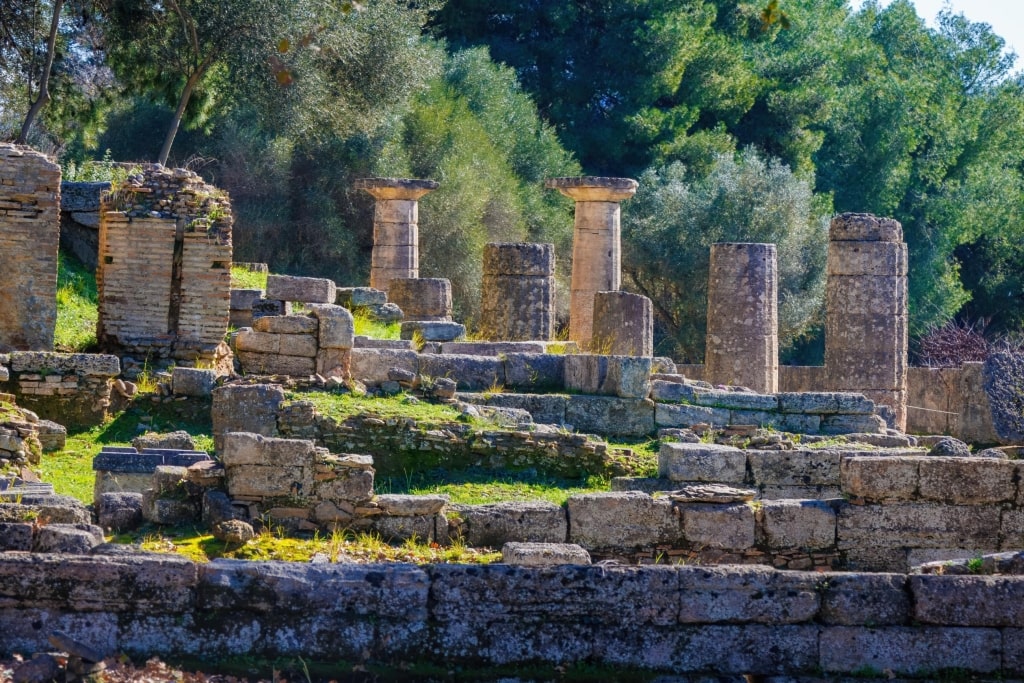
Weathered stone foundations and Doric column fragments emerge from the lush greenery at the ancient Sanctuary of Olympia in Greece.
The site of the original Olympic Games, Ancient Olympia, is deeply entrenched in Greek mythology. There are several origin stories as to who created the games, from Hercules himself to Zeus.
As far as history is concerned, the first recorded Olympic Games took place in 776 B.C. Located in the western Peloponnese region of Greece, the cruise port of Katakolon is just 40 minutes by car away, making Olympia a popular excursion destination.
Today, visitors can stroll through the Ancient Stadium, including the original dirt track, see Doric columns in the Temple of Zeus, and see where the modern Olympic flame is still lit at the Altar of Hera.
7. Cape Sounion
On a rocky peninsula southeast of Athens, Cape Sounion is home to the striking Temple of Poseidon, perched on a hill overlooking the Aegean Sea. According to one version of Greek mythology, King Aegeus stood on this very overlook, waiting for his son Theseus’ return. According to legend, Theseus was instructed to fly white sails if he survived his fight with the Minotaur and black sails if he perished. Unfortunately, he forgot to raise the white sails, causing King Aegeus to believe his son had died and fling himself into the sea. Cape Sounion was also said to have been a stopping point for Menelaus on his return from Troy, where he buried his helmsman, Phrontis.
The site has attracted travelers for centuries, including Lord Byron, who visited in the early 1800s and whose name is carved into the Temple of Poseidon. For history buffs, the Ancient Theater of Thorikos, located near Lavrio, is one of the oldest surviving Greek theaters. If possible, visit Cape Sounion at sunset, when golden hour light reflects off the Doric columns of Poseidon’s Temple.
8. Ithaca
Fans of The Odyssey will love paying a visit to the Ionian island of Ithaca, the mythological home of Odysseus. Off the western coast of the Greek mainland, Ithaca is known for its greenery, covered in olive groves and surrounded by turquoise water. While you won’t find Penelope longingly staring out at the Ionian Sea in search of Odysseus, you will find the School of Homer, an archaeological site that some say is where the Palace of Odysseus once stood. Ithaca is also home to stunning Greek beaches, surrounded by lush foliage and strewn with snow-white pebbles instead of sand.
Seeing Places From Greek Mythology on a Cruise
One of the best ways to see multiple places from Greek mythology is on a Mediterranean cruise, and specifically a Greek island cruise. A few common Greek ports that cruises stop in include Mykonos, Chania (Crete), Heraklion (Crete), Rhodes, Santorini, Katakolon (Olympia), Hydra, Thessaloniki, and, of course, Athens.
If you’re planning a trip to Greece, particularly one where you’ll be seeking out sites from Greek mythology, you’ll want to decide on which areas are most important, as most cruise itineraries tend to focus on a specific region. For example, Athens, Mykonos, and Santorini, or Athens and Crete. Longer cruise itineraries that focus solely on Greece visit up to seven or eight different Greek ports with nearly endless opportunities to discover remnants of ancient Greek myths.
Frequently Asked Questions
Which Greek islands are connected to Greek mythology?
Delos, Crete, Ithaca, Rhodes, and Naxos are generally considered the Greek islands with the strongest connection to Greek mythology.
What is the best way to see multiple Greek mythology locations in one trip?
A Mediterranean cruise is one of the best ways to see the Greek islands and explore multiple places from Greek mythology at once. You’ll have the ability to kick back and relax while the ship does the hard work of getting from A to B. Excursions are a great way to easily reach most archaeological sites that are near your port of call. For example, guests hopping off in Mykonos will have the opportunity to day trip to Delos.
Which places from Greek mythology are easiest to pair with island travel?
The Acropolis in Athens, Cape Sounion, Knossos in Crete, and Delos are all fantastic places from Greek mythology to pair with island hopping. Cape Sounion can be easily explored from Athens, while the Palace of Knossos is tucked away on the island of Crete, and Delos is a popular day trip from Mykonos.
Discover the Places From Greek Mythology With Celebrity
Stand in the footsteps of Zeus, explore the birthplace of Apollo, and lounge on the beaches of Odysseus’ home. Explore cruises to Greece and discover locations from Greek mythology with Celebrity.