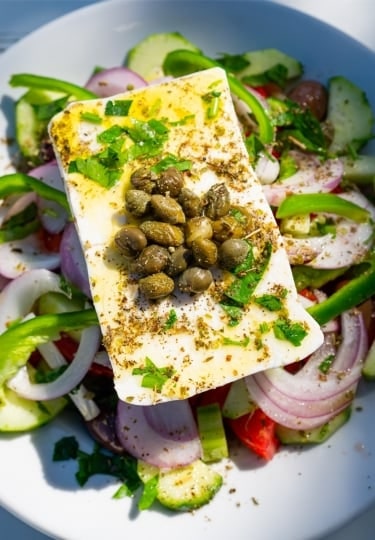
The first time I experienced traditional Greek food I was seven years old. It was August 1975 and we’d just touched down in Crete after a long flight. Only one tiny restaurant in the resort was still open, so we headed over. Tired, hungry, and emotional, my mother told the waiter, “Just bring us something to eat.” It was the kind of open invitation a Greek taverna owner accepts with relish.
Greek salad, tzatziki, fried zucchini, and more quickly filled the table. We were shocked at the sheer amount but battled through it. Just as we thought we were done, a second round arrived—swordfish, simply grilled with lemon. It was meaty, fishy, and unlike anything we’d ever tasted at home. When the bill arrived, out came a plate of sliced watermelon, to my sister’s and my delight, if not my mother’s. Her protests were waved away: “It’s on the house,” the waiter said with a huge grin.
By the end of that vacation, my mother had decided to create a new life for us in Athens, where I lived until well into my twenties. Fast forward more years than I care to admit and I now return to Greece with my own family several times a year. What I love is how little has changed on the food scene: a meal is still simply cooked from the best ingredients, hospitality is warm, and dining remains an event to be savored, never hurried.
History of Greek Cuisine

Restaurant in Greece
Greece has been the birthplace of many things—democracy, philosophy, and drama to name just three. Yet the role of food in Greek life—from early gatherings through centuries of traditional Greek dishes to today’s Michelin-starred dining—is often overlooked when telling the country’s story.
Even as far back as ancient times, meals were elevated into occasions. At the symposia, men gathered to drink wine, recite poetry, and debate ideas that shaped Western civilization. Look closely at the urns and frescoes in Greek museums and you’ll see the evidence: depictions of feasts featuring the Mediterranean’s holy trinity—olives, wheat, and grapes—alongside honey, wild herbs, and fish pulled fresh from the sea.
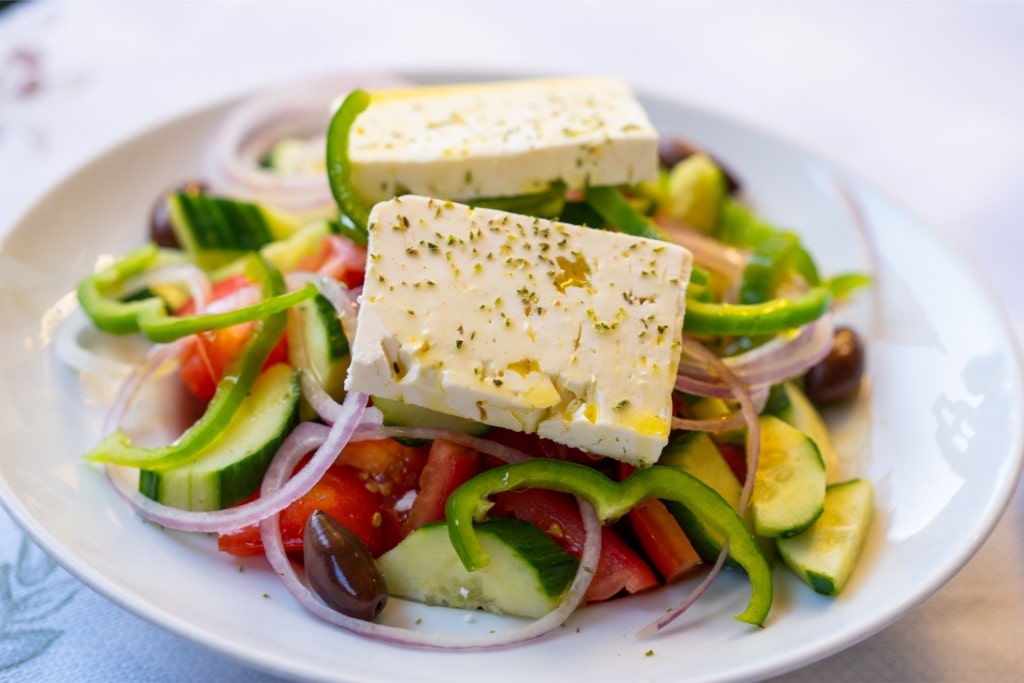
Greek salad
As empires came and went, Greek cuisine adapted. Under the Byzantines, cooks embraced exotic spices and sweet-savory pairings, traditions still visible today in syrup-soaked pastries and rich stews. The Ottomans, who ruled for four centuries from the mid-15th century, introduced flavors from the Near East. That’s why dishes such as baklava, dolmades, and moussaka appear on both sides of the Aegean, each nation claiming them as their own.
For centuries, food changed little: rustic, seasonal, and rooted in family kitchens, village bakeries, and humble tavernas rather than fine dining rooms. With poverty a defining factor from the Ottoman era through the World Wars, many dishes had peasant origins, stretching vegetables, grains, and pulses into hearty fare that can still be seen today.
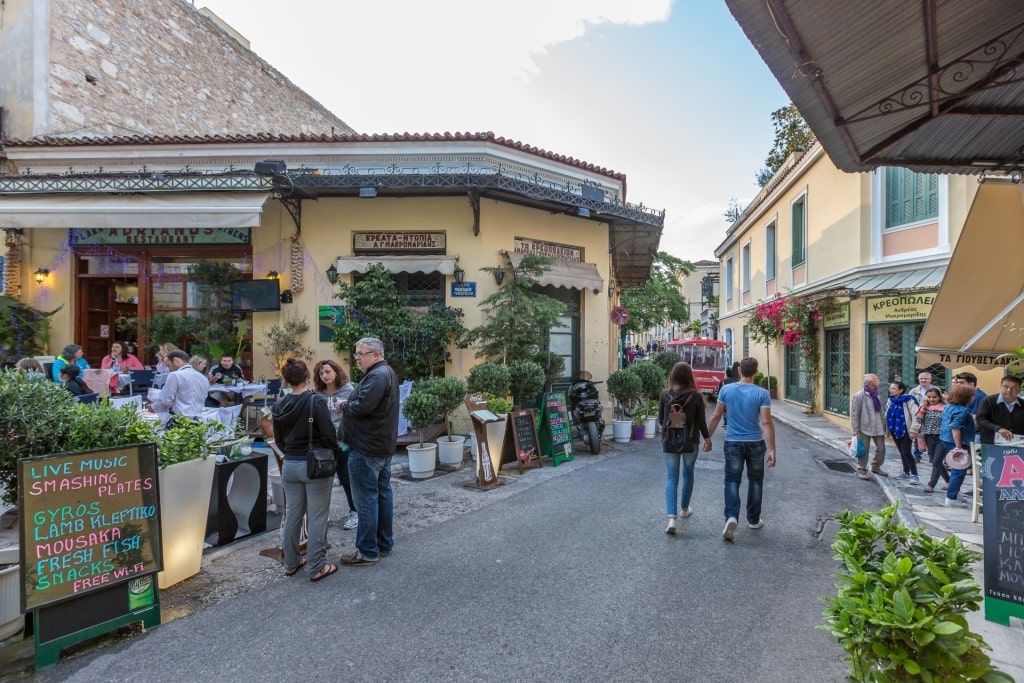
Athens
Greece didn’t gain its first Michelin star until 2002, when chef Lefteris Lazarou’s Varoulko Seaside in Athens was recognized for imaginative takes on seafood and traditional recipes. Since then, Athens has grown into a fine-dining hub, boasting around a dozen Michelin-starred restaurants.
Despite this evolution, the essence of Greek cuisine hasn’t changed: simplicity, seasonality, and sharing remain key elements. Whether cooked by a yiayia—a grandmother—in a village taverna, or plated with tweezers in a modern dining room, a Greek meal is always about celebrating life with good food and good company; slow cooking and slow eating at their best.
Greek Food Culture and Traditions
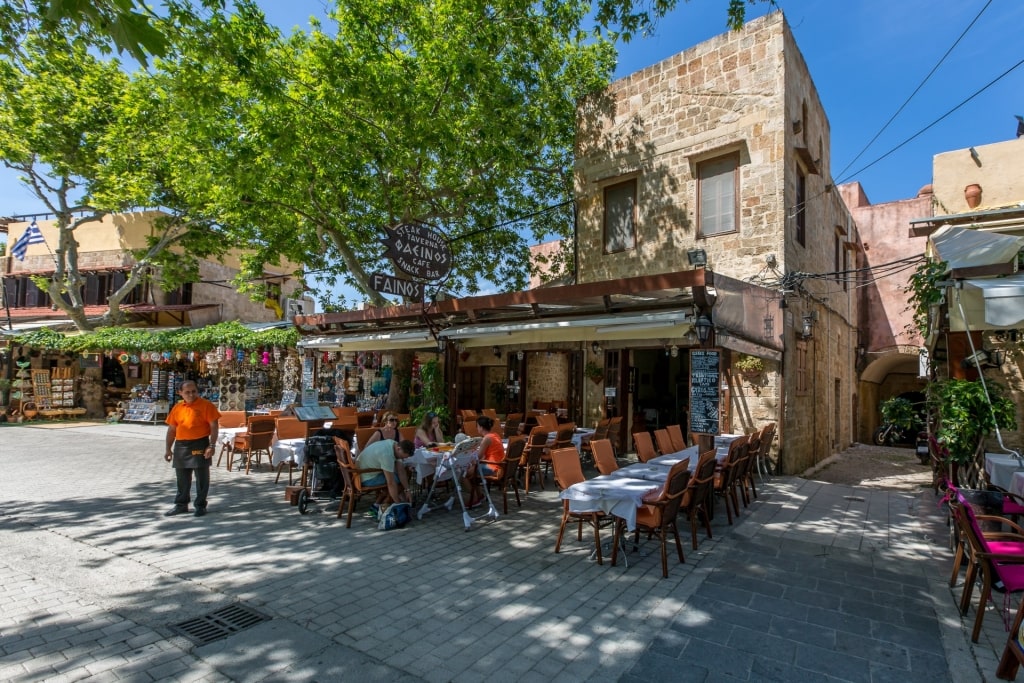
Old Town, Rhodes
Greece has some incredible museums and ancient sites, but if you really want to understand the country and the people, sit down at a table with some locals. Traditional Greek food is delicious, but meals are about more than just eating: rhythm, ritual, and connection all come into play.
On weekdays, that rhythm can be quite quick and functional. Outside of hotels, breakfast is often no more than a quick coffee and a koulouri, a sesame-crusted bread ring not unlike a bagel that is sold at bakeries or on street corners. Lunch can be equally light: a spinach pie, or spanakopita, again from the bakery, or a kebab-style souvlaki, wrapped in paper and eaten on the hoof.
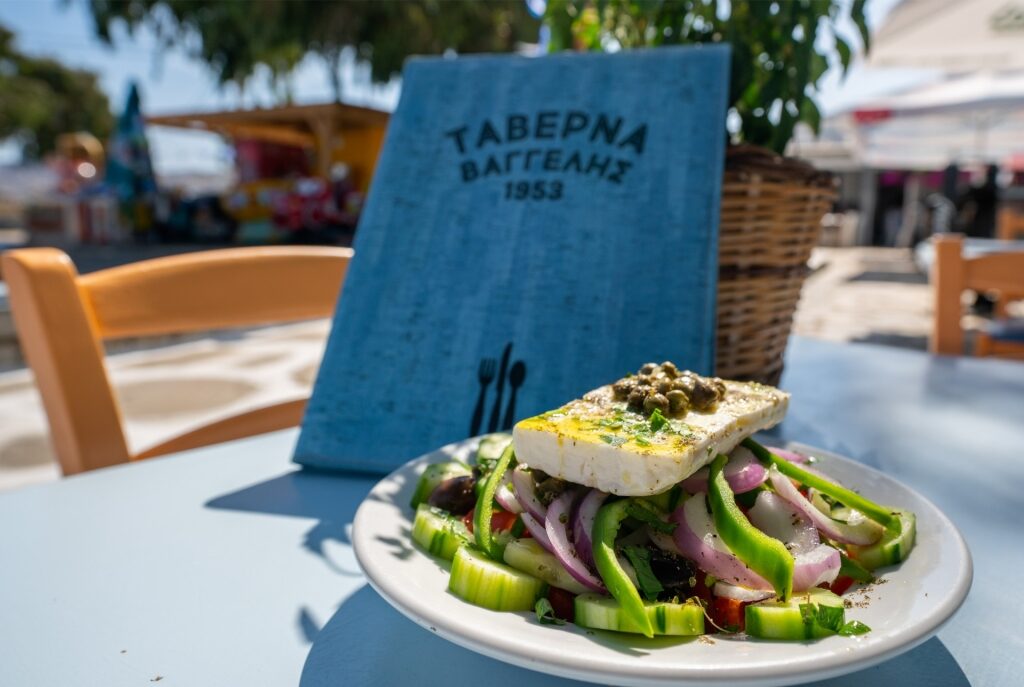
Taverna in Mykonos
On weekends, though, things slow down with lunch and dinner often merging into one long feast that blurs at the edges.
In either case, the evening meal is always the star of the show. Greeks tend to take a siesta in the afternoons and head out for coffee when they first wake up. It means dinner doesn’t often start until around 9 p.m., especially if people are dining out.
Neat, individual dishes are out in Greece; instead, meals are served family-style with plates set in the middle for everyone to share. It’s both communal and chaotic to the uninitiated, but also good fun.
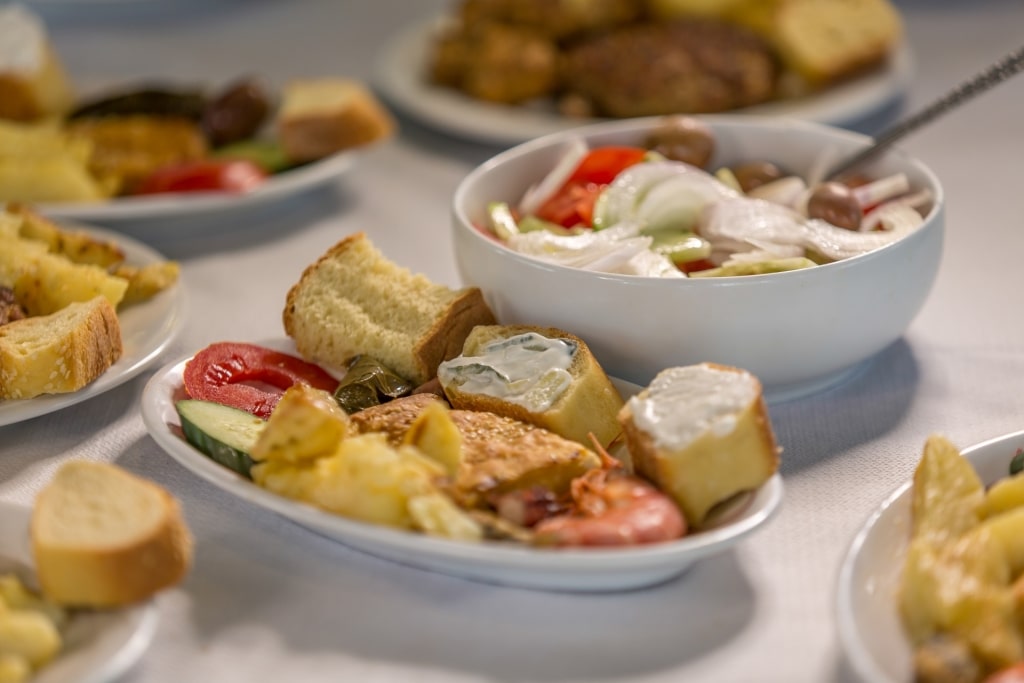
Meze-style dishes
Appetizers are almost always a selection of small plates, meze-style, and they arrive as and when the chef or host prepares them. A selection of dips, salads, olives, cheese, meatballs, and more will arrive in their own time, with huge chunks of crusty “village” bread to mop up the sauces and act as an extra utensil.
It’s tempting to fill up on these, but a word to the wise: the mains—usually grilled fish or meat and slow-cooked tray bakes—are still to come.
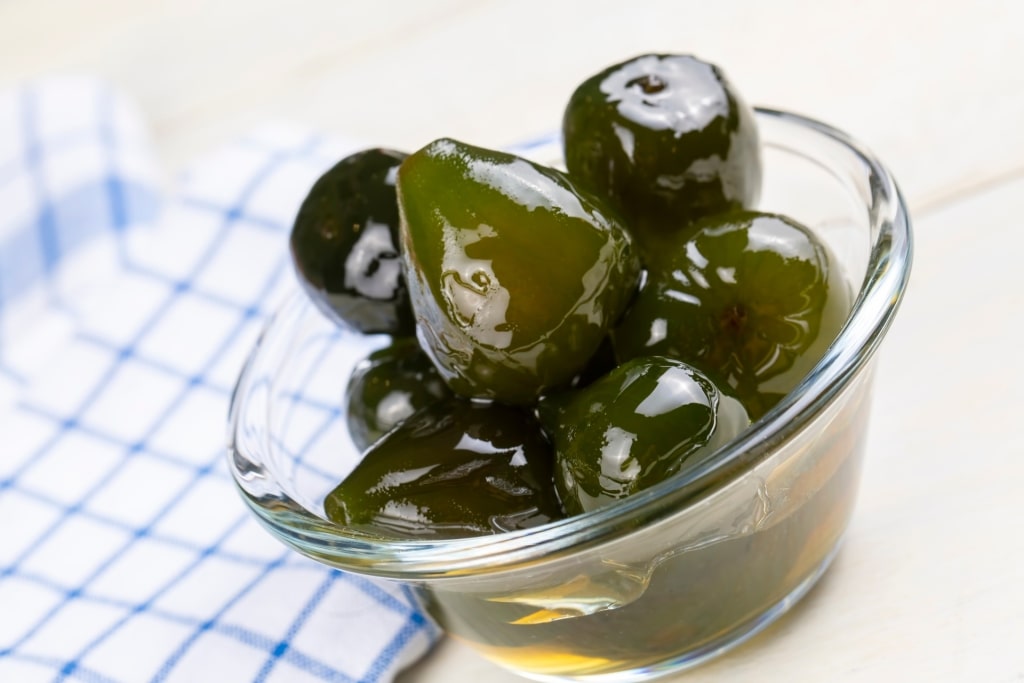
Spoon sweets
Restaurants will notionally have a dessert menu, but in practice most of them will bring something “on the house” alongside the check. Fresh fruit, “spoon sweets”—preserved fruit in syrup—or mini-ice-cream cones are not unusual.
Religion still plays a strong role in Greek society, and fasting periods, especially during Lent, are still observed when dishes without meat, dairy, or even oil are popular.
More than anything, though, meals are an excuse for people to get together. Name days—where you celebrate the feast day of the saint after whom you are named—are as popular, if not more so, than birthdays. Greeks naturally celebrate both with gusto.

Santorini
Then there are weddings, baptisms, funerals, and family reunions that all revolve around food. The latter often sees half the family tree appearing around the table, debating exactly how everyone is related—note there’ll always be a third or fourth cousin or two, many times removed, in there somewhere.
At its heart, then, Greek food culture is as much about abundance and generosity as it is about the dishes themselves. What matters above all is the sense of connection—the feeling that a meal is to be shared with people you love and respect, and taken in its own time.
Regional Flavors Across Greece
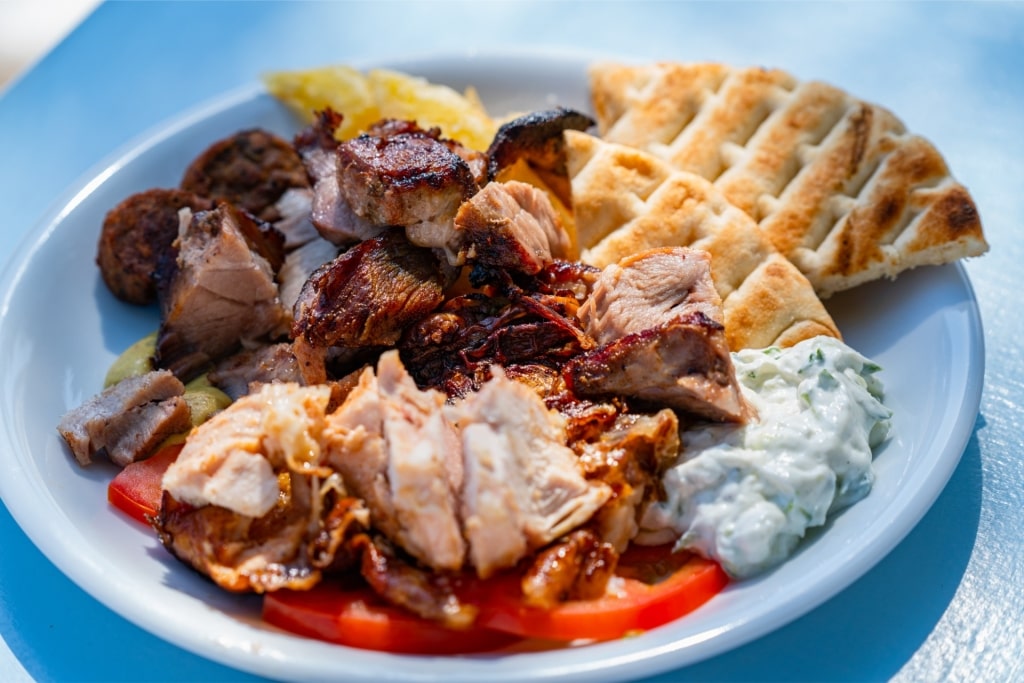
Gyro
The foundations of Greek cuisine remain the same throughout the country with that trinity of olives, grains, and grapes shining through. Yet the various regions have their own spin, largely thanks to the large distances between major cities on the mainland and the geographical spread of the islands.
Athens is where it all comes together. Given that a third of the Greek population lives in the capital and many of them have moved there from other regions, it’s a real melting pot of flavors. Restaurant-wise, there’s everything from corner souvlaki houses to Michelin-starred dining.
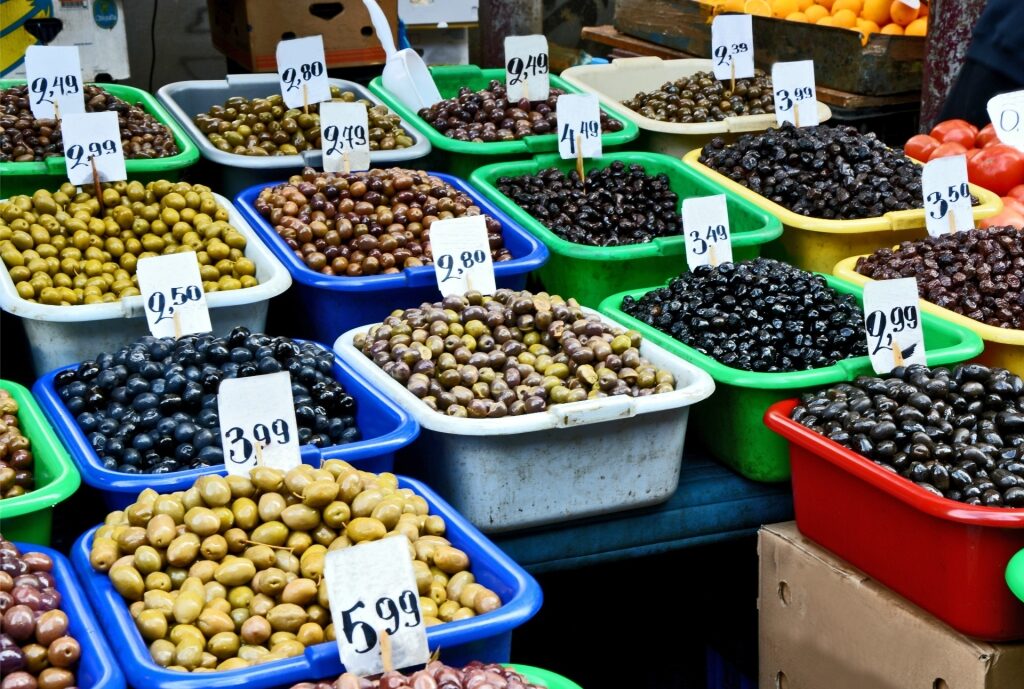
Athens Central Market
A good place to get to grips with what’s on offer is the Athens Central Market, where stalls are piled high with myriad types of olives and even more varieties of spices. There are different sections for vegetables, fish, and meat where you’ll get the freshest beef, chicken, and pork dishes available.
Head north to Macedonia and Thrace—home to the cities of Thessaloniki and Kavala—and Balkan influences shine through, thanks to more warming spices that originally arrived from the east.

Bougatsa
Thessaloniki, Greece’s second capital, is renowned as a foodie city and also has two brilliant central markets. Cuisine here is also inventive as evidenced by a fusion pastry called “bougatsan” that went viral in 2014. Served at the Estrella café, the Greek version of a cronut—croissant and donut—combines a flaky croissant with the creamy semolina custard seen in Thessaloniki’s most famous sweet dish, bougatsa.
Food in Crete contrasts with the rest of the country. Yes, you’ll find traditional Greek cooking, but also many unique dishes, including dakos—a barley rusk topped with feta and tomatoes—and snails cooked in several different ways. Olives are one of the island’s main produce and so dishes that go heavy on olive oil, called ladera, are prominent.

Pastitsada
The Ionian islands off the west coast are more influenced by Italian flavors. Venetian rule in the Middle Ages plus Italian occupation in World War II have left their fingerprints in dishes such as pastitsada, pasta with spiced meat sauce, and sofrito, beef stewed in garlic and wine.
In the southern Aegean islands, the Cyclades and Dodecanese groups, self-sufficiency was key for many years. Preservation techniques—drying, pickling, salting—are a legacy of island life here. Santorini is famed for its wine, cherry tomatoes, and capers, and Mykonos for its spicy cheeses.
On Rhodes, its proximity to Turkey is reflected in flavors that remain from the Ottoman era, such as slow-cooked spiced meat dishes like lakani, a spiced goat and chickpea stew.
Must-Try Traditional Greek Dishes
Moussaka
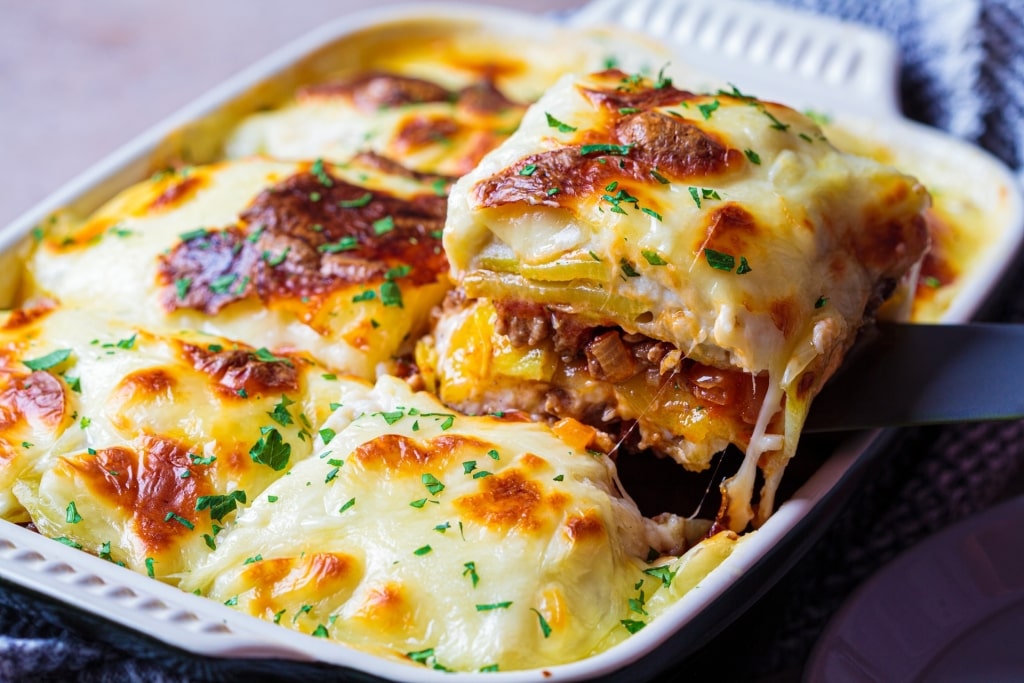
Moussaka
Perhaps the most iconic of all traditional Greek dishes, moussaka is a tray bake with layers of eggplant, ground lamb or beef, and tomatoes, topped with a creamy béchamel sauce.
Moussaka has roots in the days of the Ottoman Empire but it was not until the 1920s, when renowned cookbook author Nikolaos Tselementes added the béchamel topping, that it became the dish known today. Found in homes and tavernas around the country, the base recipe tends to remain the same.
In some places, especially Crete, you might find potatoes are also included, while in the Cyclades, zucchini can replace the eggplant.
Pastitsio
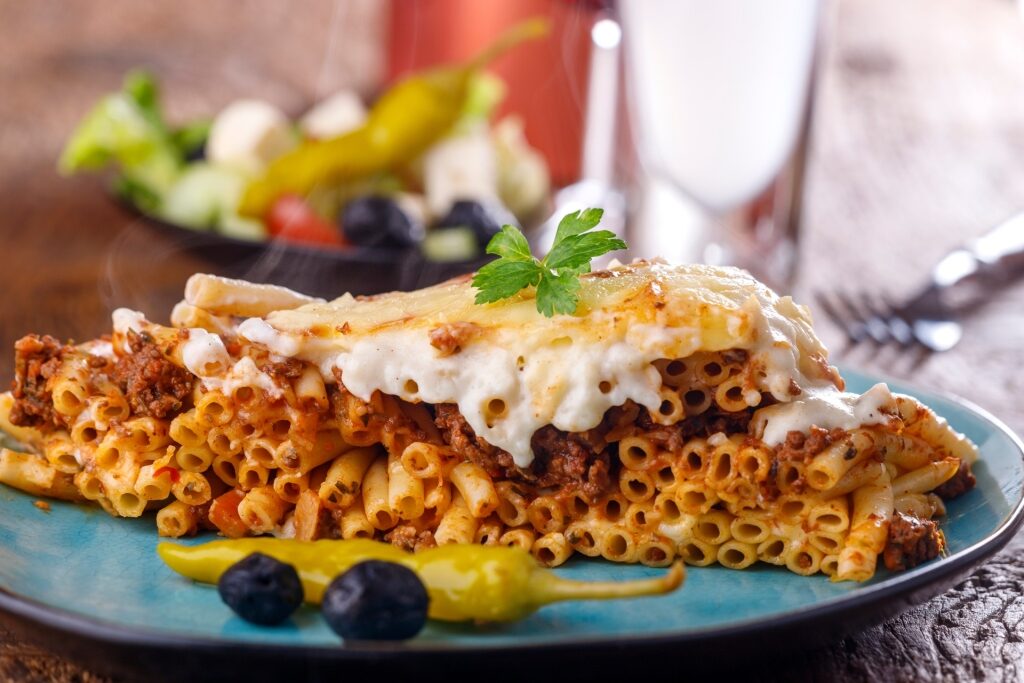
Pastitsio
Another dish codified by Tselementes, pastitsio sits somewhere between a lasagna and a moussaka and reflects both the Venetian and near Eastern influences in Greek cuisine.
The flat sheets of pasta seen in lasagna are replaced by a tubular spaghetti and the meat sauce is slow-cooked with cinnamon before the dish is layered. As with moussaka, it benefits from being allowed to cool a little before serving.
Souvlaki and Gyro
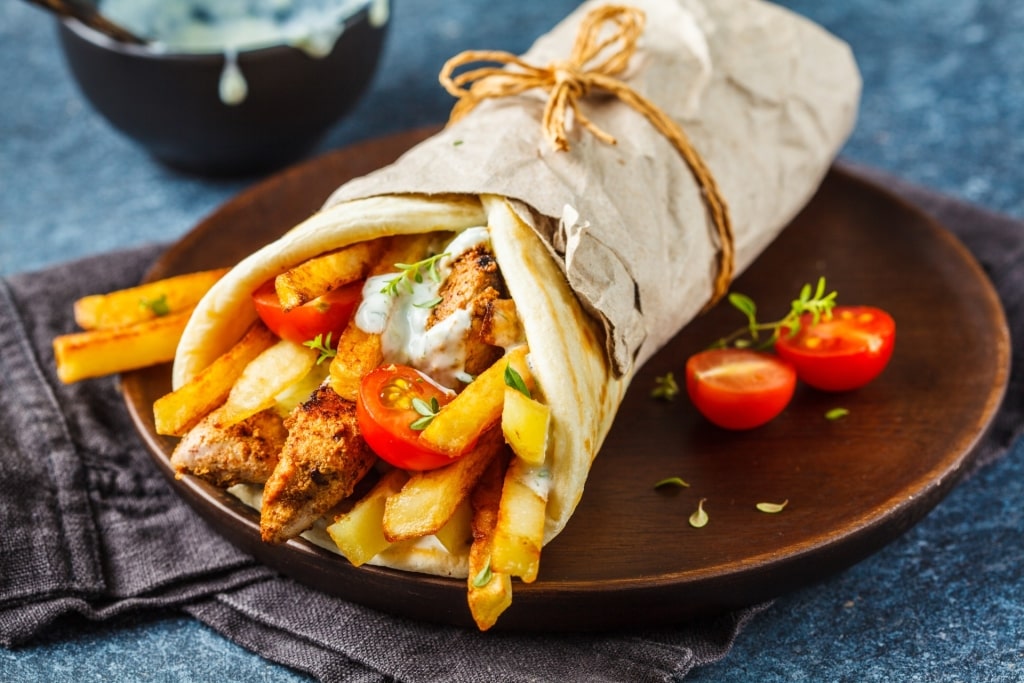
Souvlaki and gyro
Two traditional Greek dishes often confused—but equally delicious—are souvlaki and gyros. Souvlaki is skewered meat grilled over charcoal, while gyros is meat cooked on a vertical spit and shaved into slices. Both can be served as plated mains in restaurants, usually with fries or a small salad.
Souvlaki is, confusingly, also a ubiquitous name for the much-loved Greek fast food: the pita wrap. Souvlaki pita might contain skewered meat—known in this context as kalamaki as the skewer is made of bamboo—or slices of gyros. Either meat is tucked into the pita with tomato, onion, tzatziki, and sometimes fries. Confused? Simply ask the server—it’s all part of the fun.
Feta Cheese
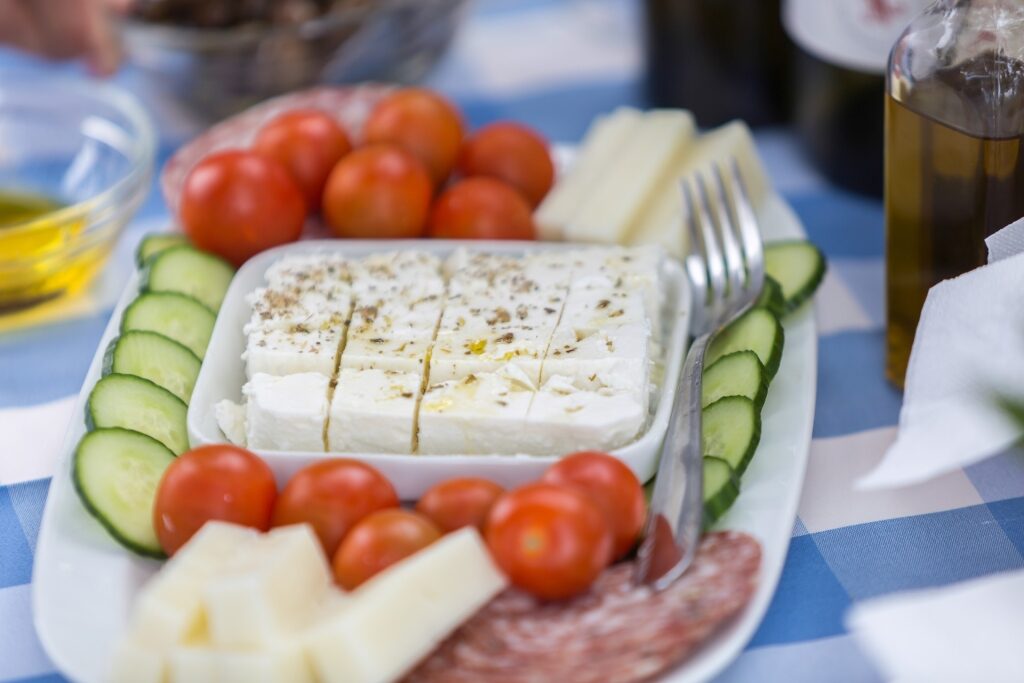
Feta cheese
Greece has some very fine white cheeses but the undisputed number one is feta, a crumbly, tangy cheese from either sheep’s or goat’s milk.
Its origins date back millennia—a white, crumbly sheep’s milk cheese was even mentioned in Homer’s classic, The Odyssey. When the Danes tried to produce and market their own version, the European Union gave feta “protected origin” status, and true feta can now only be made in Greece.

Feta cheese
You’ll find soft and hard versions, with the former a little smoother in texture and flavor and the latter more piquant. The uses for feta can seem endless: baked into spinach pies, grilled and topped with honey and sesame seeds, or classically, crumbled over a Greek salad.
Greek Salad
Greek salad
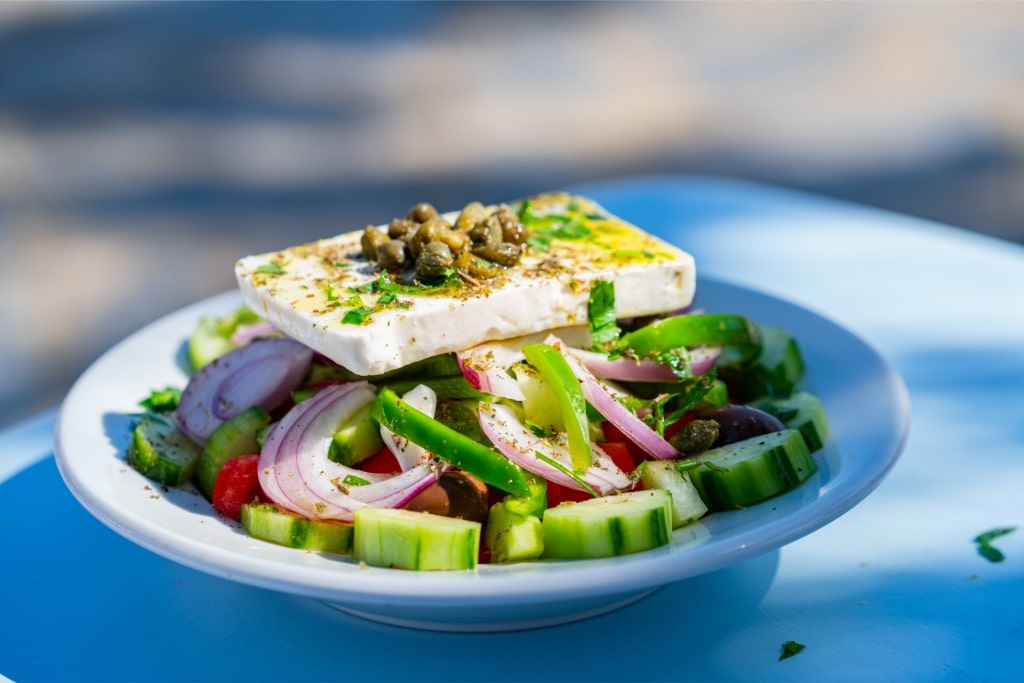
If one traditional Greek dish epitomizes summer, it’s “horiatiki”—village—salad. Known abroad simply as “Greek salad”, it brings together cucumber, ripe vine tomatoes, red onion, and briny olives, crowned with a slab or crumble of feta.
The dressing is nothing more than extra virgin olive oil, a splash of white wine vinegar, and dried oregano, letting the freshness shine. Variations are usually down to the cook, not the region—some slip in lettuce or green peppers, others crumble rusk for added crunch.
Tzatziki
Tzatziki
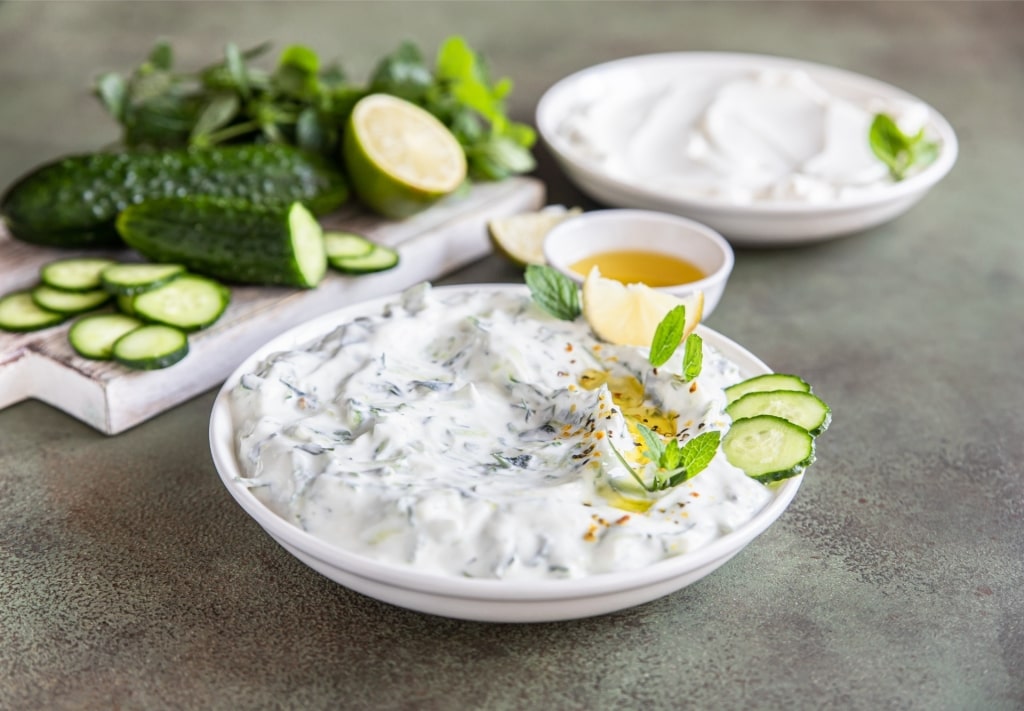
The most ubiquitous of Greek dips, tzatziki is a cooling blend of thick yogurt, grated cucumber, garlic, and olive oil. Potent enough to ward off vampires if made with a heavy hand on the garlic, it’s a staple on almost every table.
Some cooks add fresh herbs like dill or mint, or liven it up with a splash of white wine vinegar or lemon. Served with grilled meats, fried vegetables, or just warm pita, tzatziki is also an essential scoop inside a classic souvlaki wrap.
Wild Greens
Wild greens
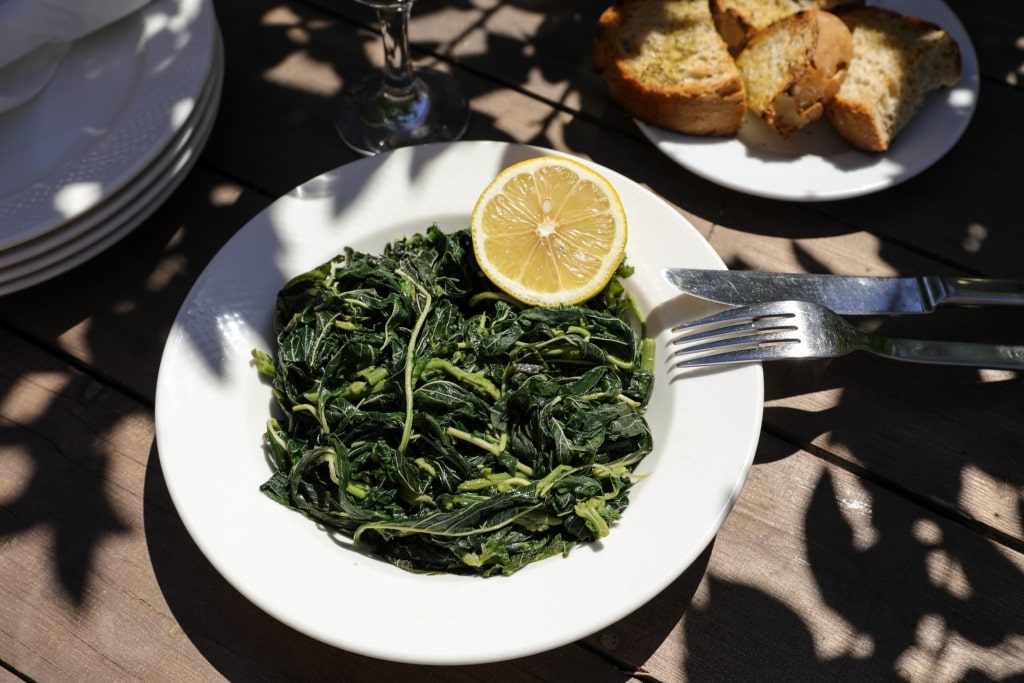
If you’ve been in the Greek countryside and seen old women dressed in black, foraging, it’s more than likely they’ll have been picking “horta”. These wild greens are a cornerstone of traditional Greek food, a reflection of Greece’s frugal past when families relied on nature to provide sustenance.
They include dandelion leaves, amaranth, sorrel, and many more. You’ll find them in tavernas across the country—with the type on offer depending on what’s been foraged that day. They’re served blanched and cooled, with a drizzle of olive oil and a squeeze of lemon—a little like a less refined, wilted spinach.
Savory Pies

Spanakopita
The Greeks have elevated savory pies to a whole other level. Spanakopita, or spinach pie, tyropita—a cheese pie, with feta—and, yes, spanakotyropita, a spinach and cheese pie, can be found at bakeries across the country.
But you can also get peinirli, which is an open ham and cheese pie, kaseropita, a pie made with kasseri yellow cheese, and many more. They can be made as tray bakes and cut into squares, as individual pies, or sometimes as one-bite canapés. If you want to get a decent range, the coffee shop/fast-food chain Everest is a good place to start. They have branches all around the country.
Dolmades
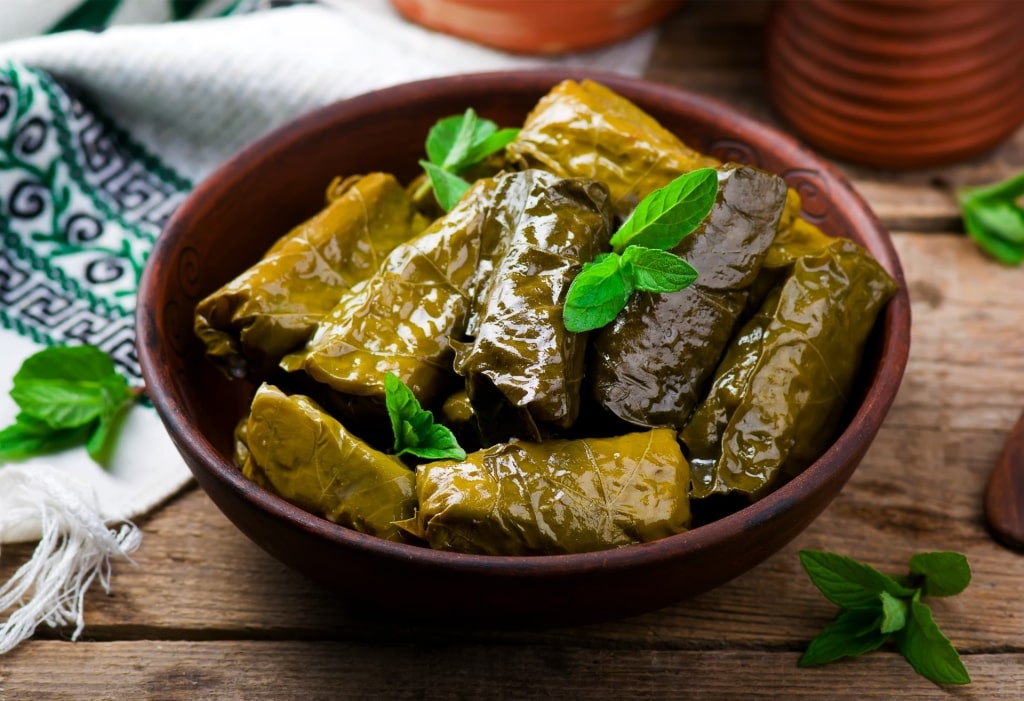
Dolmades
Stuffed vine leaves, or dolmades, are one of the best-known traditional Greek foods as well as a close culinary reminder of the country’s Ottoman past—the word itself comes from the Turkish for “stuffed”.
The leaves are filled with rice, herbs, and sometimes ground meat, and then served cold as a meze, or in a larger warm portion as a main course. A close cousin, usually eaten during winter in Greece, is lahanodolmades—cabbage leaves wrapped around rice and ground beef and topped with an avgolemono, an egg and lemon sauce, that’s much tastier than it sounds.
Saganaki
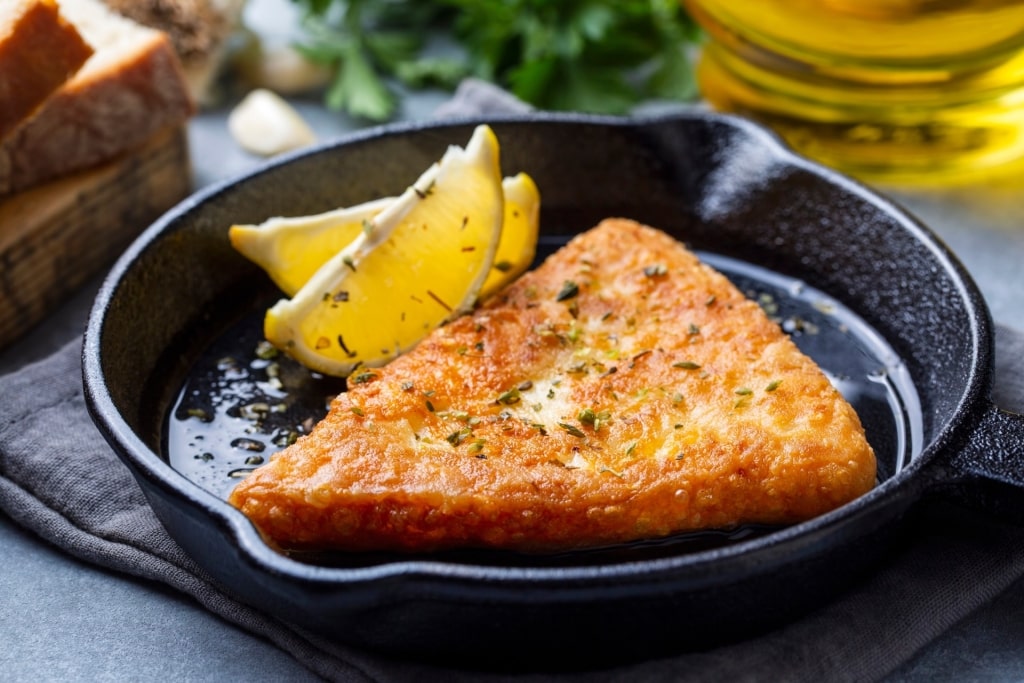
Saganaki
The word saganaki actually refers to the small frying pan in which the dish is cooked, rather than the food. But it’s become shorthand, especially for visitors, for golden, bubbling fried cheese.
The cheese itself must be a hard variety to withstand the high temperatures of the pan without turning into a melted mess. Graviera or kefalotyri are the most common—though Cypriot halloumi is becoming increasingly popular.
Occasionally sprinkled with flour or dipped in a light batter before cooking, it’s served straight from the pan with a squeeze of lemon. Cheese-less versions include prawn or mussels saganaki where the seafood is flash-fried in tomato, garlic, and ouzo, the common thread being the sizzling pan-to-table presentation.
Kleftiko
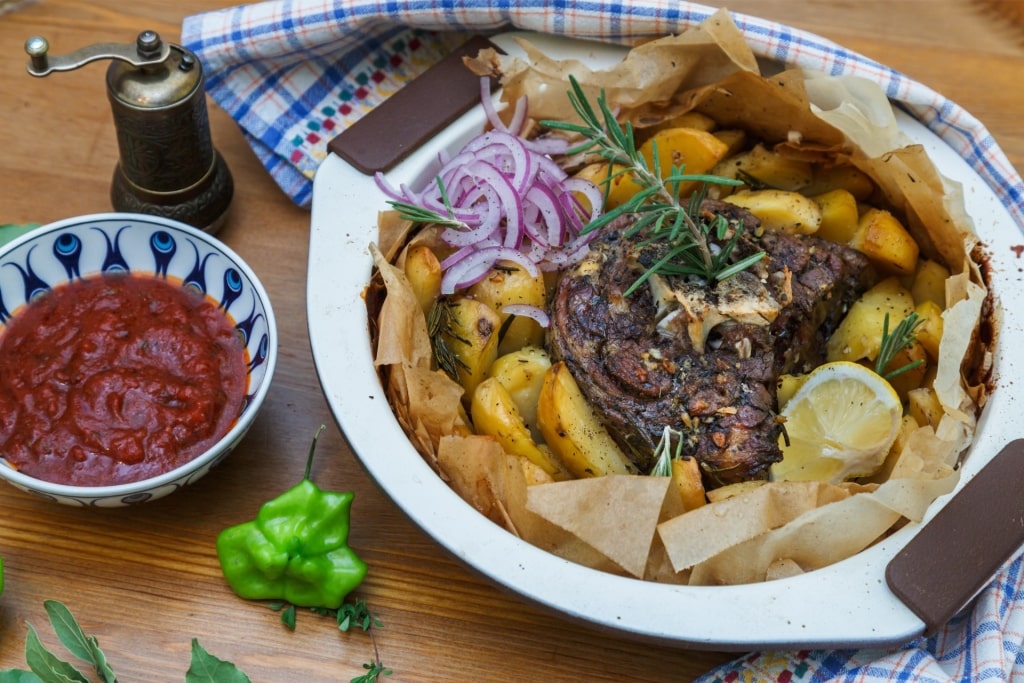
Kleftiko
Kleftiko takes its name from the kleftes—thieves, bandits, and other ne’er-do-wells who roamed Greece’s mountains. After stealing a lamb or goat, they would bury the meat in a pit with herbs and spices, cover it with earth, and build a fire on top. By morning, the hidden feast was fall-off-the-bone tender, with no smoke or scent to betray their rustling crime.
Today’s version is less outlawed but just as tender and just as delicious. Lamb is sealed in a clay pot with potatoes and slow-cooked until meltingly soft. A true one-pot wonder, kleftiko remains one of Greece’s most celebrated traditional dishes.
Fried Zucchini/Zucchini Fritters
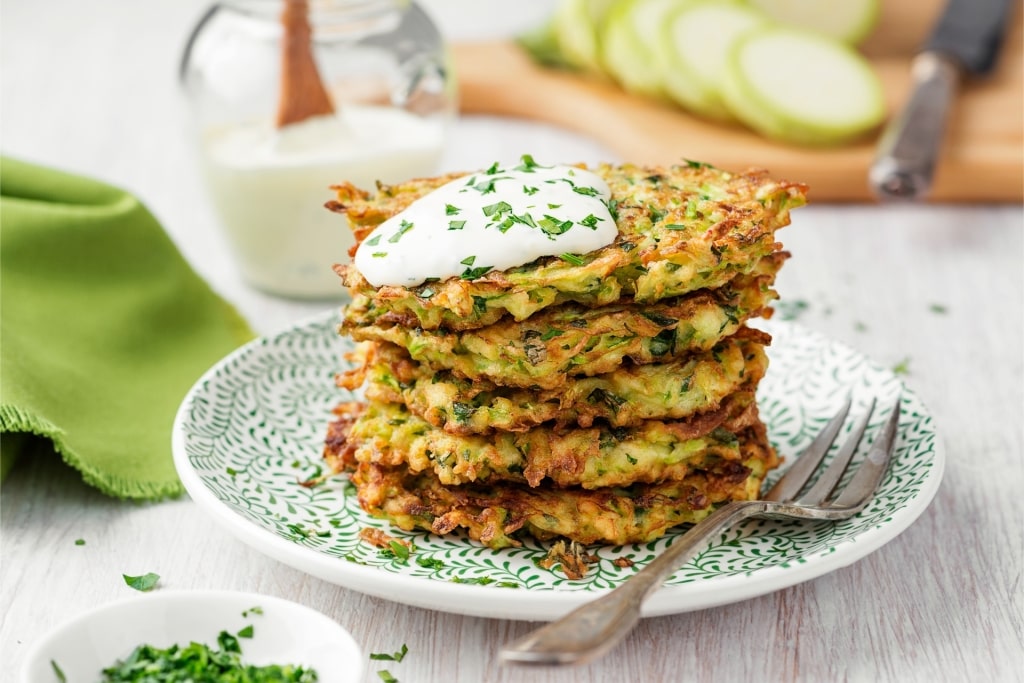
Zucchini fritters
If you want something else to dip in your tzatziki, the answer lies in zucchini. Sliced into rounds or batons like a carrot, the zucchini is then dipped in water and flour before flash frying.
Alternatively, the zucchini can be minced with finely chopped onions, garlic, herbs and flour to form a meatball shape which is again shallow fried. It’s simple, filling, and delicious.
Octopus and Kalamari
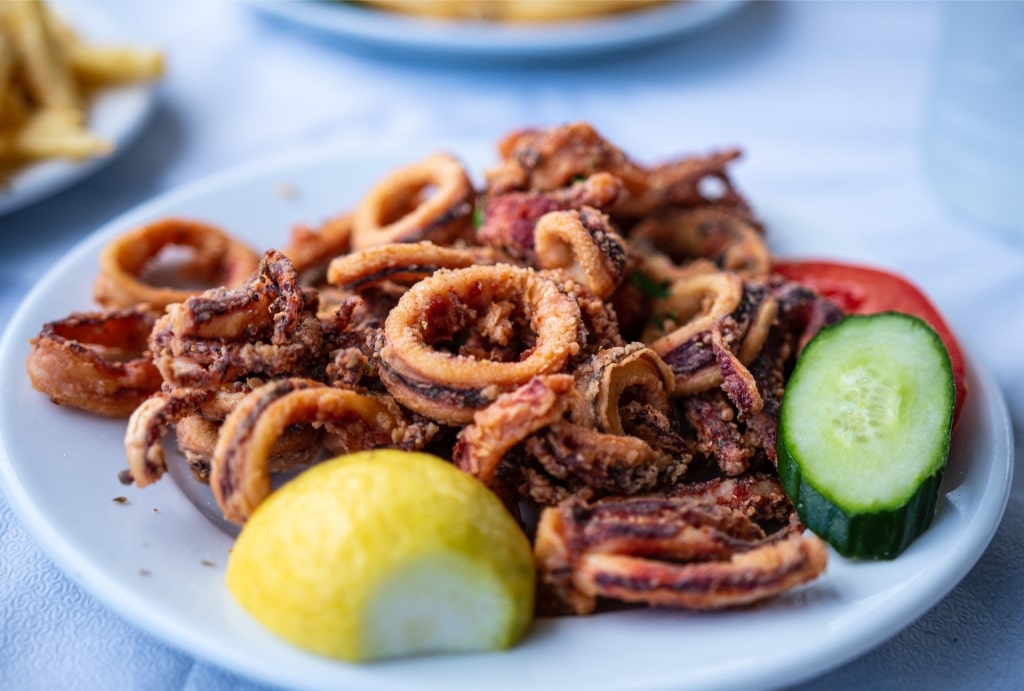
Kalamari
Given Greece’s thousands of miles of coastline, excellent seafood is never far away. But it does come at a price. If you want a taste of the ocean that won’t make you wince when the check comes, octopus and kalamari are two great options.
Kalamari is typically battered and fried and served with a squeeze of lemon. If offered, opt for fresh over frozen, and don’t be put off by the tentacled heads—they taste exactly like the familiar rings.
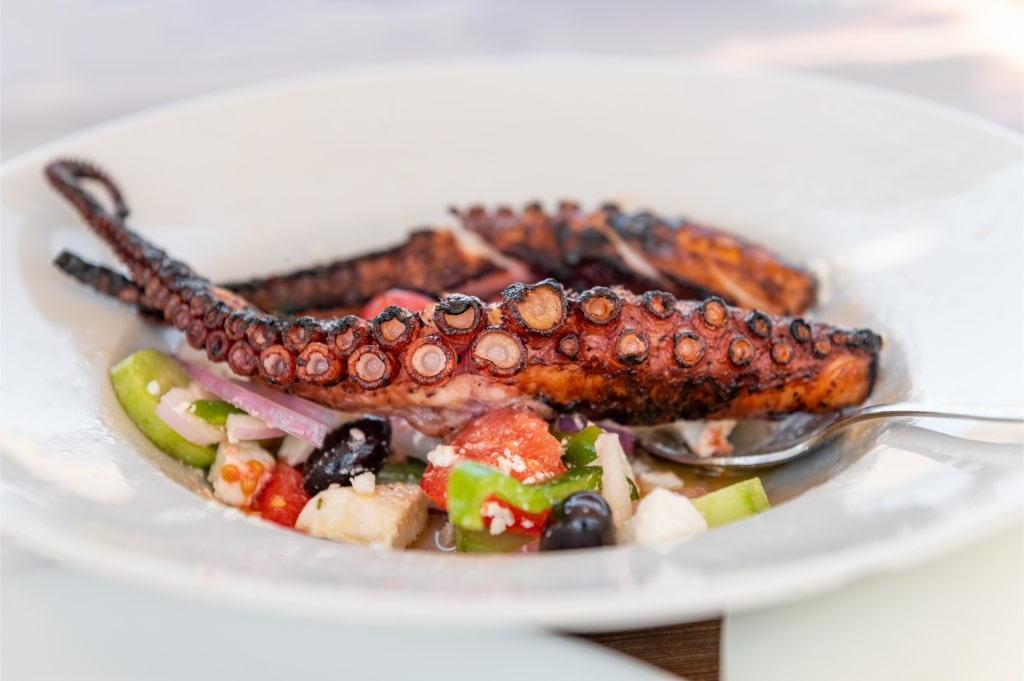
Octopus
Octopus, often seen hanging to dry outside seaside tavernas, is tenderized before cooking. Grilled, it takes on a smoky depth; when poached in ouzo or water and drizzled with vinegar, it’s lighter and fresher. However it’s served, both are classic meze companions to a glass of the popular anise-flavored spirit ouzo.
Gemista
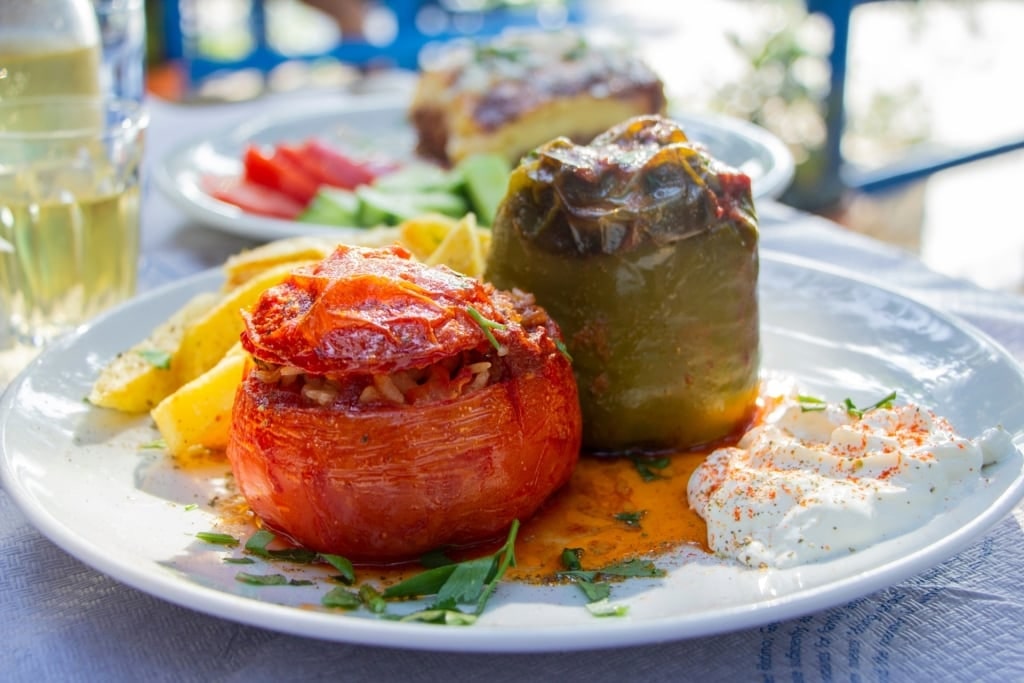
Gemista
Tavernas will quite often have a warming cabinet where they keep the day’s tray bakes and oil-based dishes so you can go in and pick the option that most appeals. It will almost always feature a huge tray of gemista.
Huge tomatoes and peppers that are hollowed out and filled with a mixture of rice, herbs, and spices, and occasionally, ground beef. Surrounded by potatoes and with a liberal splash of olive oil, they are then slow-cooked before being allowed to cool for serving.
Grilled Meats
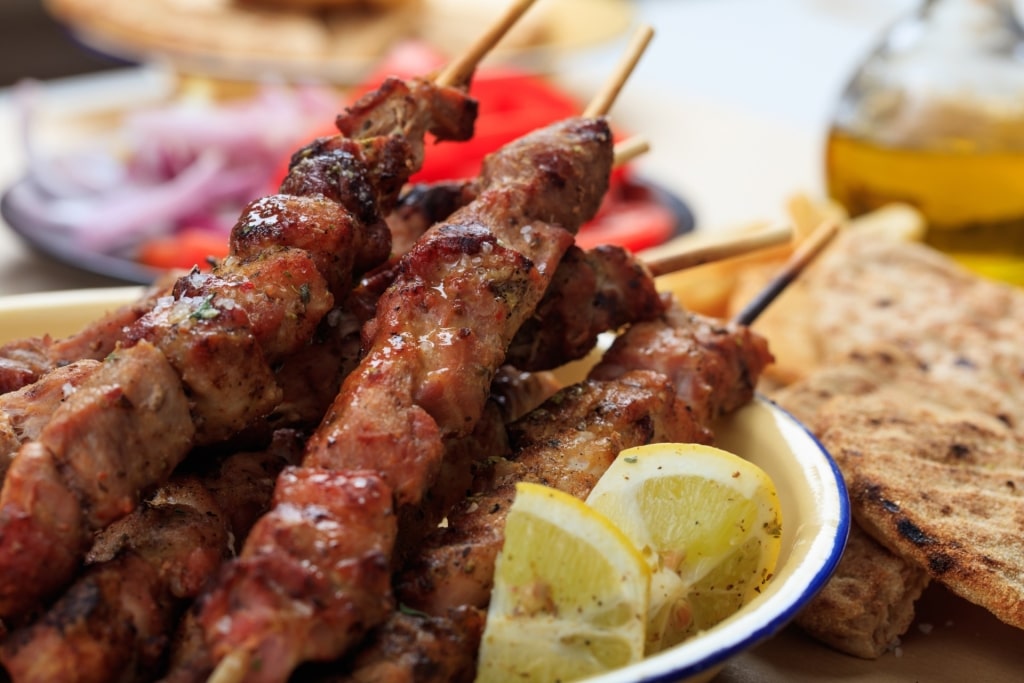
Souvlaki
Sometime in the early afternoon, most Greek tavernas will fire up the charcoal ready for the evening rush. The choice is yours: juicy meatballs, tender lamb chops, chicken or pork souvlaki, steaks, even T-bones.
Whatever you pick, it’s cooked simply—seared over charcoal, and finished with olive oil, oregano, and a sprinkle of salt. There are no frills and no sauces, just the smoky flavor of good meat done right. These grilled dishes are the backbone of many taverna menus, arriving after a round of meze and again, best shared family-style.
Tyrokafteri
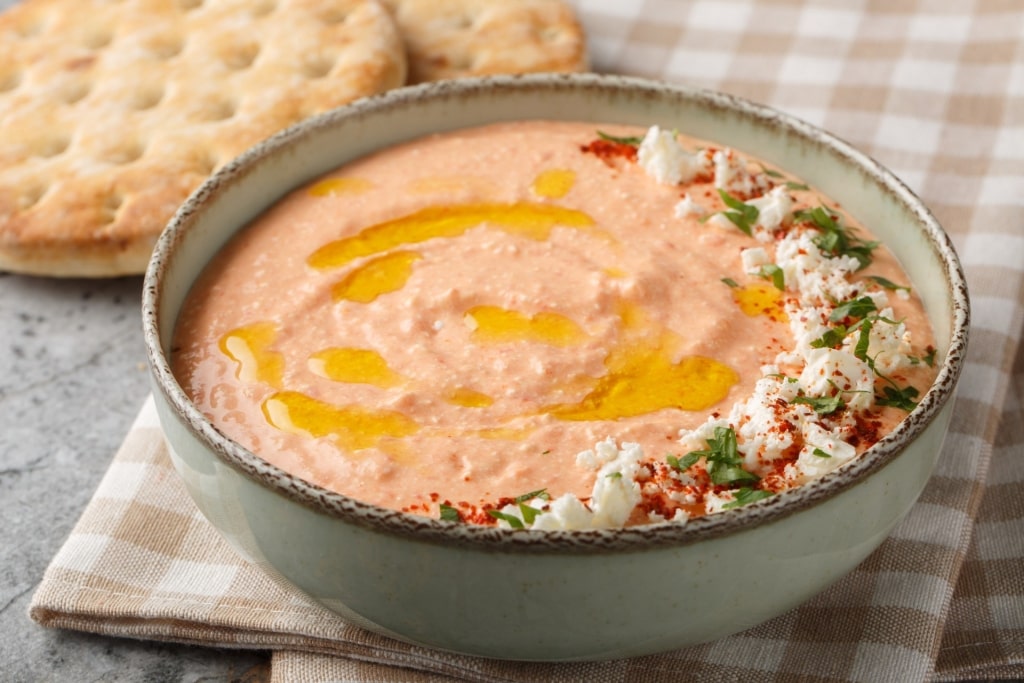
Tyrokafteri
Translated as “spiced cheese”, tyrokafteri is a fiery dip that livens up a meze spread. Made by blending feta with olive oil and hot red peppers—sometimes roasted for smokiness—it’s creamy, tangy, and packs just the right punch of heat.
However it’s prepared, tyrokafteri is best scooped up with warm pita or chunky village bread, the perfect contrast to cooling dips like tzatziki.
Fava
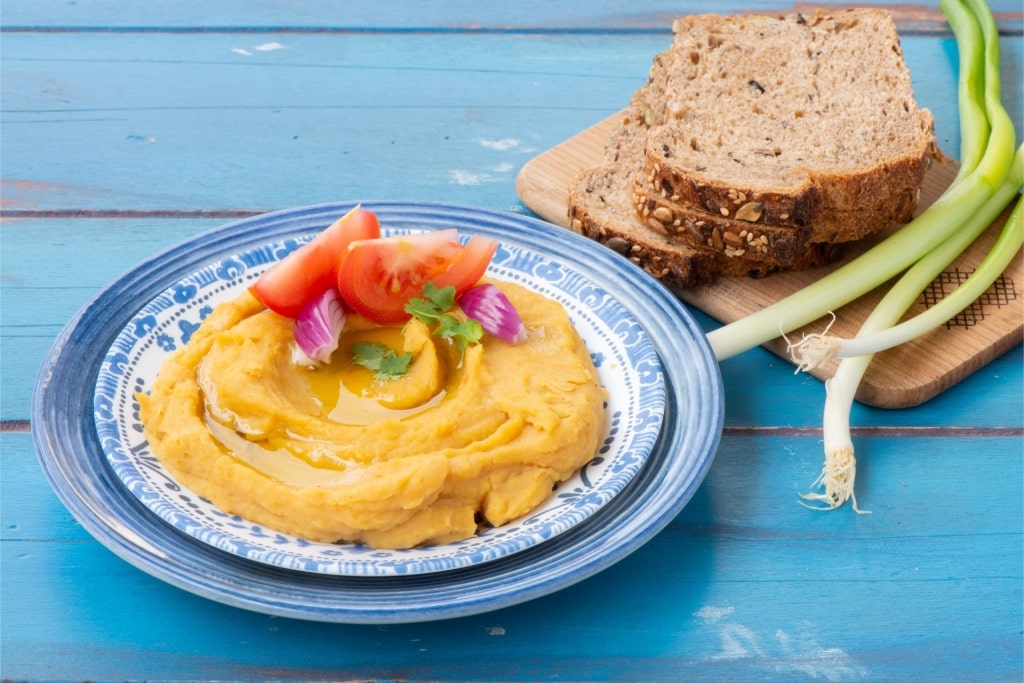
Fava
Fava is one of those dishes that shouldn’t really work, but in effect does so really well. Not to be confused with fava beans, this classic dish that originated in Santorini but can now be found across the country, is made from yellow split peas simmered slowly with olive oil and broth until they collapse into a silky purée.
A close cousin of hummus, it’s blended smooth and often topped with onions, capers, or a drizzle of extra virgin olive oil. Despite its simplicity, it’s deeply satisfying, and a fine addition to a selection of meze.
Fasolada

Fasolada
You’ll never look at canned baked beans the same way after trying fasolada, Greece’s hearty bean soup. Traditionally made with large lima beans—earning it the alternate name gigantes—“giants”—it can just as easily use cannellini or butter beans.
The dried beans are soaked overnight, then simmered with tomatoes, carrots, onions, celery, herbs, and a generous pour of olive oil. Born out of austerity and peasant life, fasolada has been elevated into what many consider Greece’s true national dish. To get the best from a bowl, sprinkle some crumbled feta on top.
Baklava

Baklava
Another dish inspired by Greece’s 400 years under Ottoman rule, baklava is a rich sweet made with thin layered phyllo pastry, chopped nuts, and syrup or honey. The nuts are usually walnuts or almonds, while cinnamon and cloves can also be added for extra flavor. Served in small, diamond-shaped pieces, it’s an excellent post-prandial sweet or accompaniment to thick, black Greek coffee.
Coffee in Greece

Greek coffee
The Greeks have turned coffee drinking into an art form. The traditional drink of choice is Greek coffee—unsurprisingly, known as “Turkish coffee” across the Aegean.
Boiled in a special pot called a briki, it is brought to a boil three times to create a foam on top and a sediment at the bottom, and is served in espresso-style short cups.

Frappé
Next up is frappé, a uniquely Greek invention dreamt up by a coffee salesman who couldn’t sell hot instant coffee in summer and started to chill his brews with ice. Instant coffee, sugar, and a little water are whipped to form a cream before being topped up with water, ice, and sometimes milk, and drunk through a straw.
Those iced frappés have inspired other iced coffee drinks over the years, all with traditional names and the addition of the word “freddo” to show they are served cold. Think freddo espresso, freddo cappuccino, and so on.

Greek coffee
Naturally, hot versions of all popular coffee types are also available. Take note though: staff making coffee in Greece add sugar or sweetener for you, so remember the following terms. Sketos means no sugar, metrios—medium—has one or two spoons, glykos, or sweet, is two or three sugars.
Beers, Wines & Spirits

Wine tasting in Santorini
Greece is best known for wine and ouzo, but beer is increasingly popular. Brands you’ll find almost everywhere are mainly lagers, with Mythos, Fix, and Alpha being the big three. All produce surprisingly good alcohol-free versions, too.
Craft brews are on the rise, though. Corfu Beer and Royal Ionian on Corfu, Volkan Beer on Santorini, and Crete’s Barbantonis Brewery are three to look out for.
Wine has been made here for millennia and while cheap and cheerful brands that will leave you with a ringing head can still be found, each region has its own stars.

Assyrtiko
Santorini’s crisp Assyrtiko, Naoussa’s bold Xinomavro, and Crete’s versatile Vidiano are just a few worth mentioning. Wine can often come straight from the barrel in some tavernas. Ask to try a sip before ordering to make sure it’s to your taste.
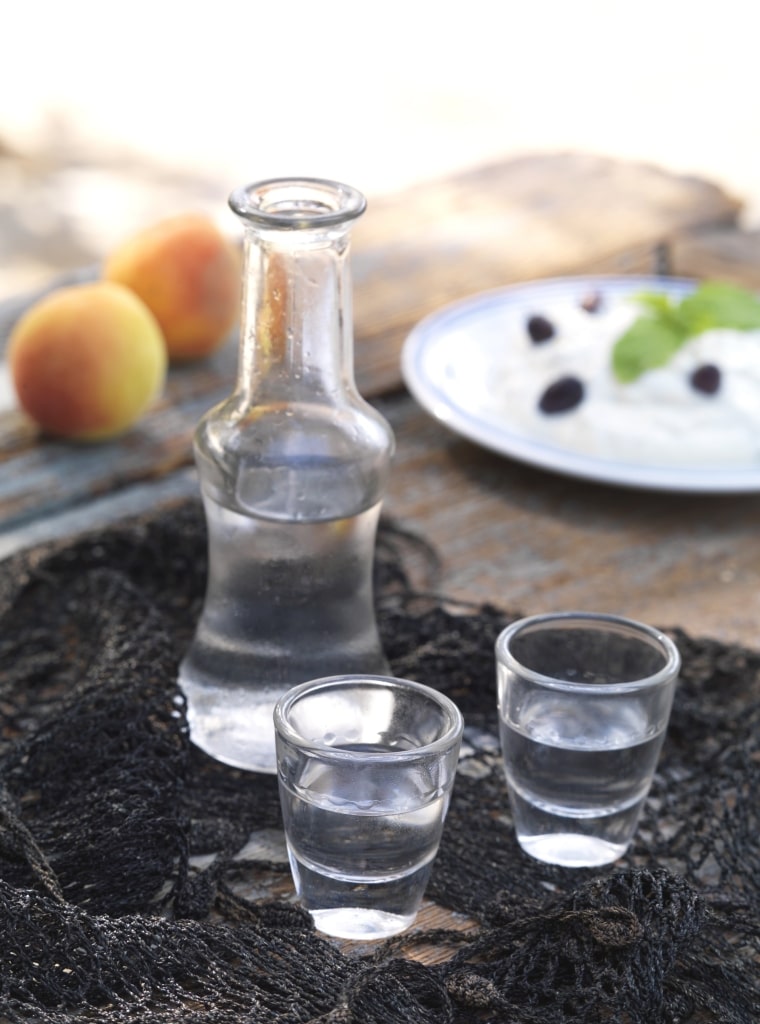
Ouzo
Ouzo remains the national drink, its anise kick often enjoyed by the sea with meze. There are regional spirit variations that often add a real kick and can taste like pure alcohol, which is why they’re downed as shots. Depending on where you are you may see them listed as raki, tsikoudia, or tsipouro—sometimes also flavored with anise. Proceed with caution in any case.
Finally, there’s Metaxa, a dark spirit that was originally labeled as a cognac, then as brandy and is now simply known as “The Greek Spirit” due to naming regulations. The quality and age of each bottle is designated by a star system with three at the bottom—best with a mixer—up to 12, which is a great after-dinner drink on its own.
Tips for Food Lovers Visiting Greece
Visit a Market
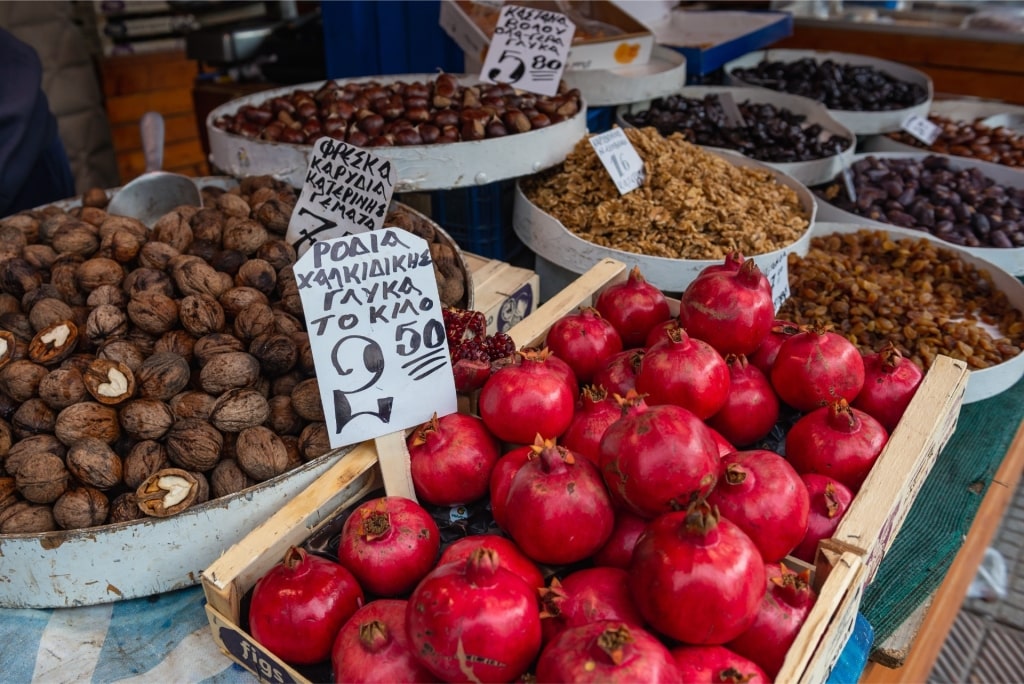
Market in Thessaloniki
Neighborhood street markets—known as the laïki agora, or people’s market—are a great place to see what’s grown and sold in a region. Take a walk around to find everything from glossy eggplants to freshly squeezed pomegranate juice. It’s like a crash course in Greek ingredients.
Know Your Eatery

Taverna in Mykonos
A taverna is the classic all-rounder, while an ouzeri focuses on small plates designed to pair with ouzo. A mezedopoleio is similar but with a slightly broader remit, while a mageirio is the place for home-style cooking. For sweets head to the zacharoplasteio, a patisserie, or fournos, which is a bakery. The latter will also keep you supplied with breads, pies, and pastries.
Read: Ultimate Guide to Tipping in Greece
Menu Categories

Greek taverna
Menus are usually helpfully organized. Orektika are appetizers. Tis oras are grilled or cooked-to-order dishes. Mageirefta are pre-cooked stews and oven dishes, served quickly, and ladera means vegetables cooked slowly in generous amounts of olive oil.
Meal Temperatures

Moussaka
Don’t be surprised if your meal isn’t piping hot. Greece’s oven-baked dishes—moussaka, pastitsio, stuffed vegetables—are often served warm or even closer to room temperature. It’s intentional, not a mistake.
Plant-Based Eating

Horta
Greece’s abundant fruit and vegetables, and history of fasting means there are plenty of options for vegans and vegetarians. Do note that not every meat-free dish is truly vegetarian, as some are cooked with meat broth for depth of flavor. Always ask to make sure.
Greek Cooking for Health

Cooking class in Mykonos
Greek food is the foundation of the Mediterranean diet, celebrated for its health benefits and longevity. The country is home to Ikaria, one of the famed Blue Zones, where people regularly live past 100 thanks to their healthy habits.

Mykonos
Discover all these delicious flavors for yourself. Browse Celebrity’s cruises to Greece and plan your dream escape today.