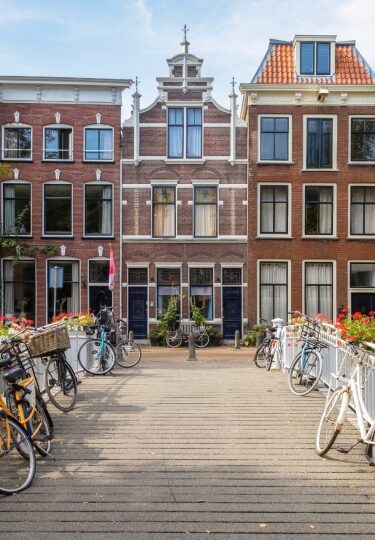
Gouda in South Holland is a small city that somehow manages to be both charming and authentic. While its cheese market is now a visitor attraction, it’s actually the legacy of a centuries-old history of trade.
Those centuries have given Gouda a wonderful heritage of medieval buildings and other sights. It has more than half of the 16th century’s surviving stained glass in the Netherlands, and its oldest Gothic town hall.
Here’s all you need to know about Gouda, the Netherlands.
Why Visit Gouda?

Gouda
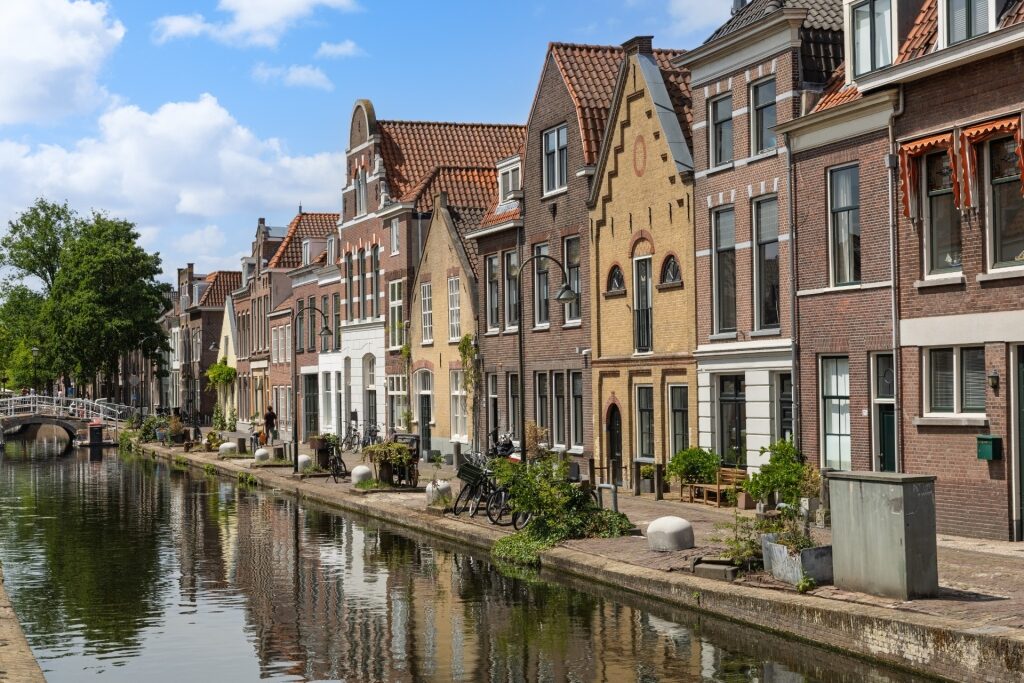
Close your eyes and imagine the ideal, neat, and well-ordered Dutch town. You’re no doubt seeing steep-pitched medieval houses, cobblestone streets, and the scenic canals the Netherlands is known for.
If you’re also thinking there’s probably a lot of cheese, you have captured the perfect picture of Gouda, South Holland. This friendly town of some 70,000 people is the ideal size to experience Dutch daily life outside its major cities.
You can stroll alongside canals, visit interesting shops or galleries, and linger in cozy cafés. Its long history of beer, pipe-making, and cheese has also left Gouda a wealth of impressive sights and fascinating museums.
History & Culture
Gouda
Gouda was first settled in the 11th century around a castle guarding a crossing on the Gouwe River. The name Gouda may come from the gold-colored waters of the river, stained by peat.
The fast-growing town was granted city rights in 1272. That makes it older than more famous Dutch cities such as Amsterdam or Rotterdam.
Although now world famous for its namesake cheese, Gouda’s first major business was beer. It had some 200 breweries in 1470, one for every 20 inhabitants.
The key to that impressive, or worrying, statistic was its position between Rotterdam and Amsterdam. With the IJssel and Gouwe rivers as transport links, the city was a natural trading hub.

Gouda cheese
That key location also helped win Gouda the exclusive right to market cheese in the former county of Holland. This massive area was roughly the same size as the current provinces of North Holland and South Holland combined.
Oddly enough, Gouda has never made cheese on a commercial scale itself, but it did market the output of the farmlands around it. The peat soil underlying the landscape of Holland was well suited to dairy farming, but little else.
Sint-Janskerk
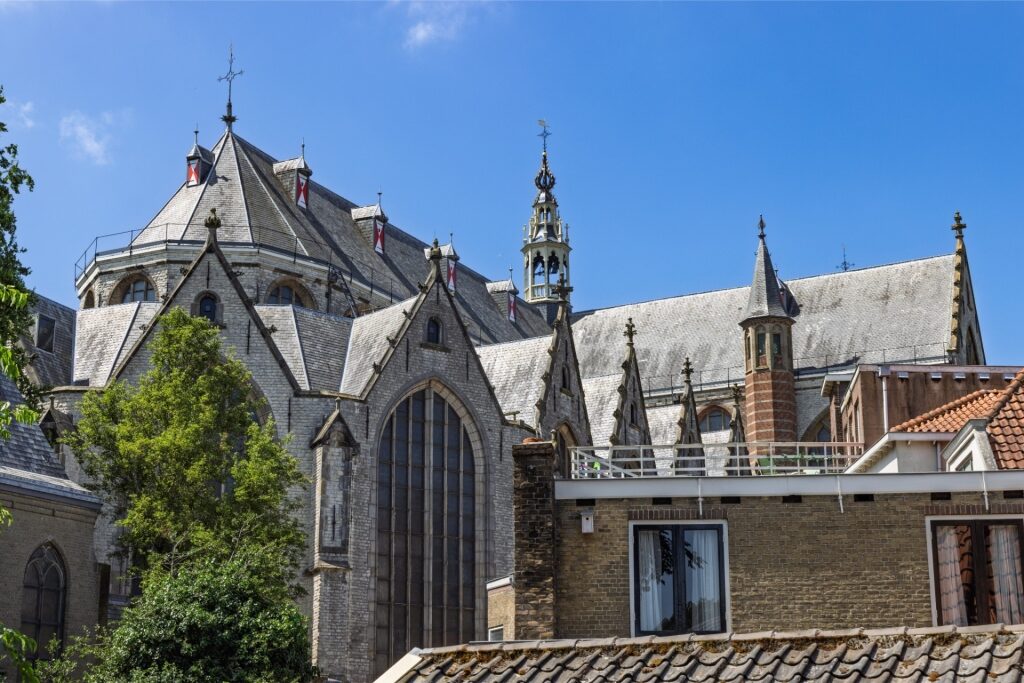
Significant blips in Gouda’s growth were devastating fires in 1361 and 1438, the latter of which laid waste to the city. A further fire in 1552, caused by lightning, destroyed St. John’s Church, which was subsequently rebuilt, becoming Gouda’s most significant landmark.
From the 17th century onward, Gouda also became a world center for clay pipe production. These long-stemmed white tobacco pipes grew in popularity along with the import of tobacco from the Dutch colonies.
By 1987, most cheese sales had moved out to the larger farms and factories. Volunteers now help keep Gouda’s traditional cheese market alive as a colorful attraction.
Gouda
That pride in its world-famous heritage remains a feature of what is now a quiet provincial capital. Life revolves around the cafés on the Markt, the picturesque canals, and the busy commercial center.
Nature & Wildlife

Goudse Hout
The flat land around Gouda is typically polder, low-lying areas reclaimed by a series of drainage channels. The meadows in between are now filled with crops, cows, and birdlife.
Goudse Hout—Goudse Wood—is a large park northeast of Gouda, mostly old polder now rich with trees and bushes. It’s flat with its many parallel waterways crossed by a series of bridges.
There are walking and cycling trails, riding stables, and a lake with a swimming area. Keep an eye out for wildlife, particularly birds such as ducks, terns, and marsh warblers.

Reeuwijkse Plassen
Abutting the Goudse Hout to the north is the Reeuwijkse Plassen, an area of 13 large lakes. Besides a watersports center, there are more walking and cycling trails.
There are several small parks in Gouda itself, most notably tree-filled Houtmansplantsoen. It’s named for the two brothers who opened up the trade route to the East Indies in the 16th century.
Tips for Visiting Gouda
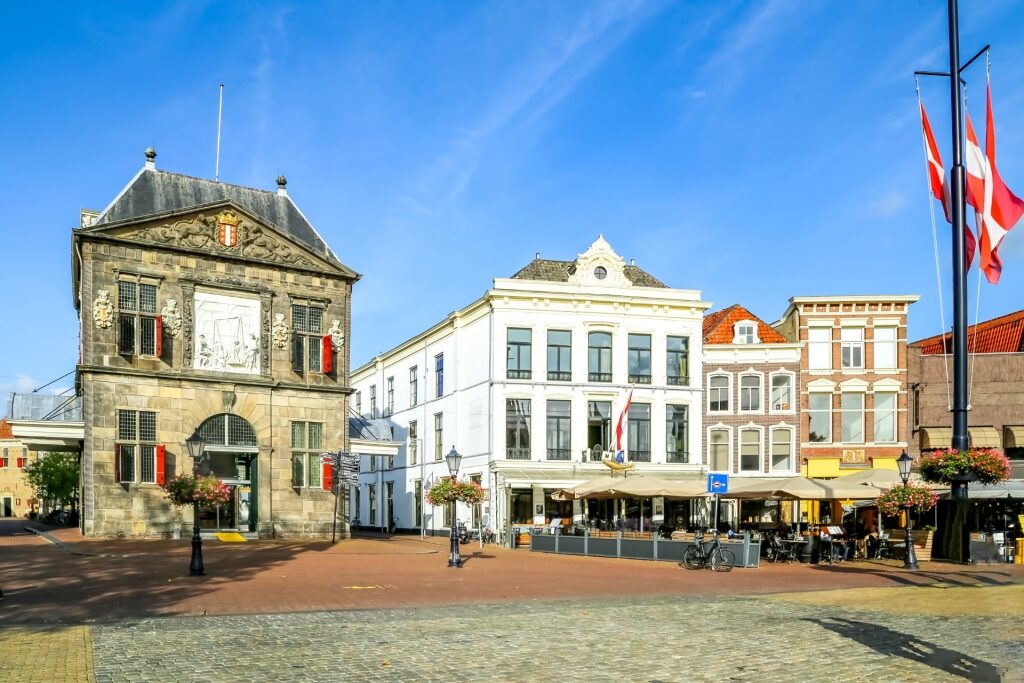
Weighing House
Gouda, South Holland, is a very walkable city, with its key sights in a small area. English language bike tours are available if you want to explore further afield.
Download the Explore Gouda web app to find walking routes that include shopping routes or itineraries taking in historic sights. One very “Dutch” walk explores the subsidence affecting parts of the city center as centuries-old wooden piles deteriorate.
As in most Dutch towns, shopping in Gouda is all about small independent stores and boutiques. Some of the best are concentrated on Lange Groenendaal and Zeugstraat.
Many shops close on Sundays or limit their hours. Museums are commonly open on Sundays but close on Mondays.
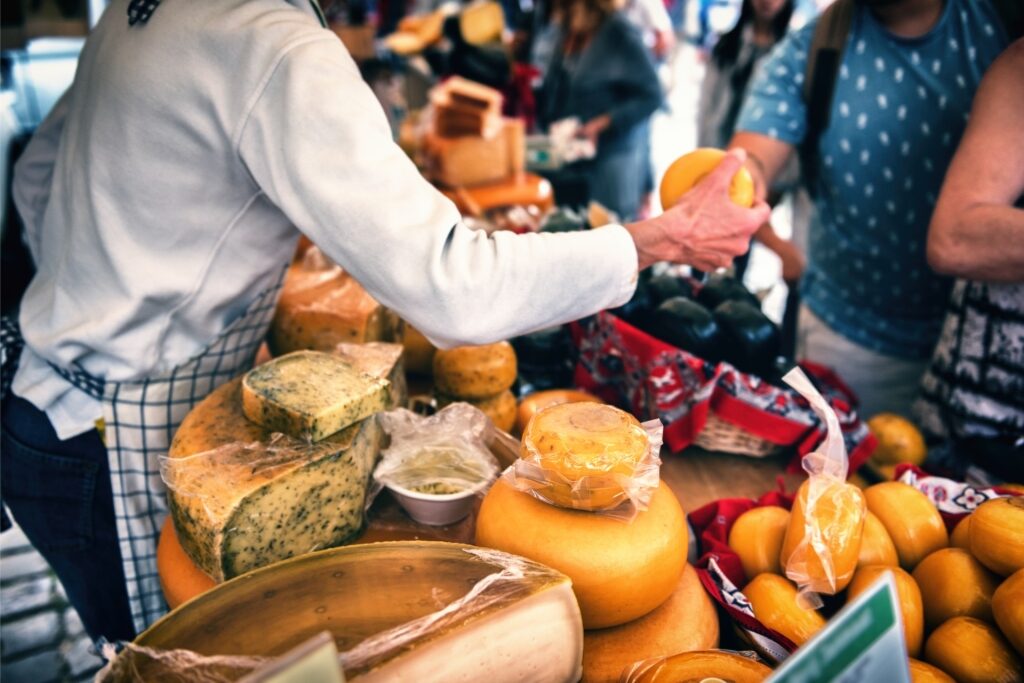
Dutch cheese
Most Dutch people, especially in visitor-facing roles, speak English. A few words of Dutch, such as “Goedemorgen” and “Dank je wel”—“Good morning” and “Thank you”—are always appreciated.
Tipping is not a typical Dutch habit, but it will never be refused. You can leave your loose change or add five or ten percent to your bill.
Things to Do & Attractions in Gouda
Sint-Janskerk
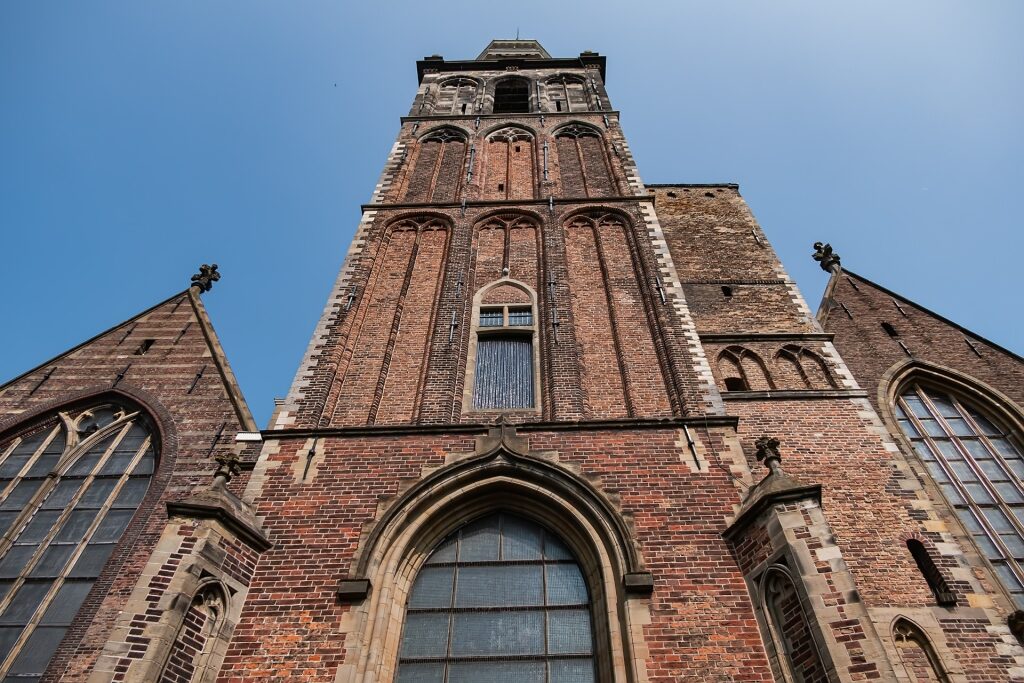
Sint-Janskerk
St. John’s Church, built in 1552, is famous for its 72 stained-glass windows. Remarkably, 61 are the 16th-century originals, many depicting the life of John the Baptist.
These Renaissance-era “Gouda Windows” were created between 1552 and 1572. Their innovative design went back to the Bible for inspiration at a time when the Catholic Church was accused of straying from scripture.
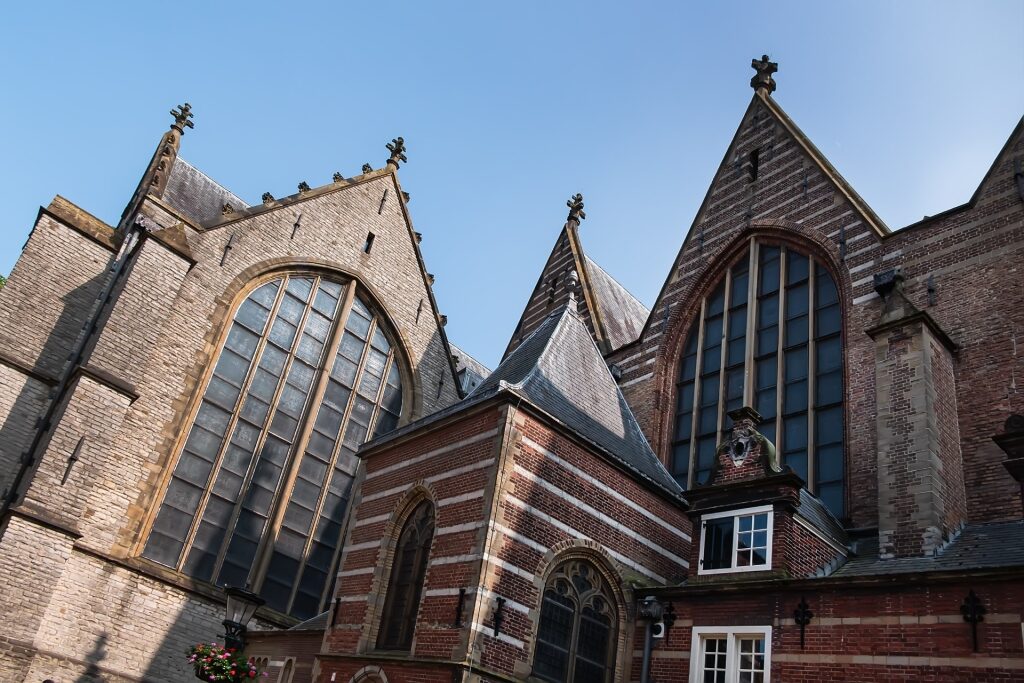
Sint-Janskerk
The windows survived the Iconoclastic Fury of 1566, when Protestant crowds destroyed Catholic imagery across the Netherlands. The church switched sides in 1573, but the city simply added new Protestant-themed windows, so the collection survived.
At 404 feet, the bright, soaring church nave is the longest in the Netherlands. However, its narrow width helps deliver excellent acoustics, so do try to catch a concert here.
Gouda Museum
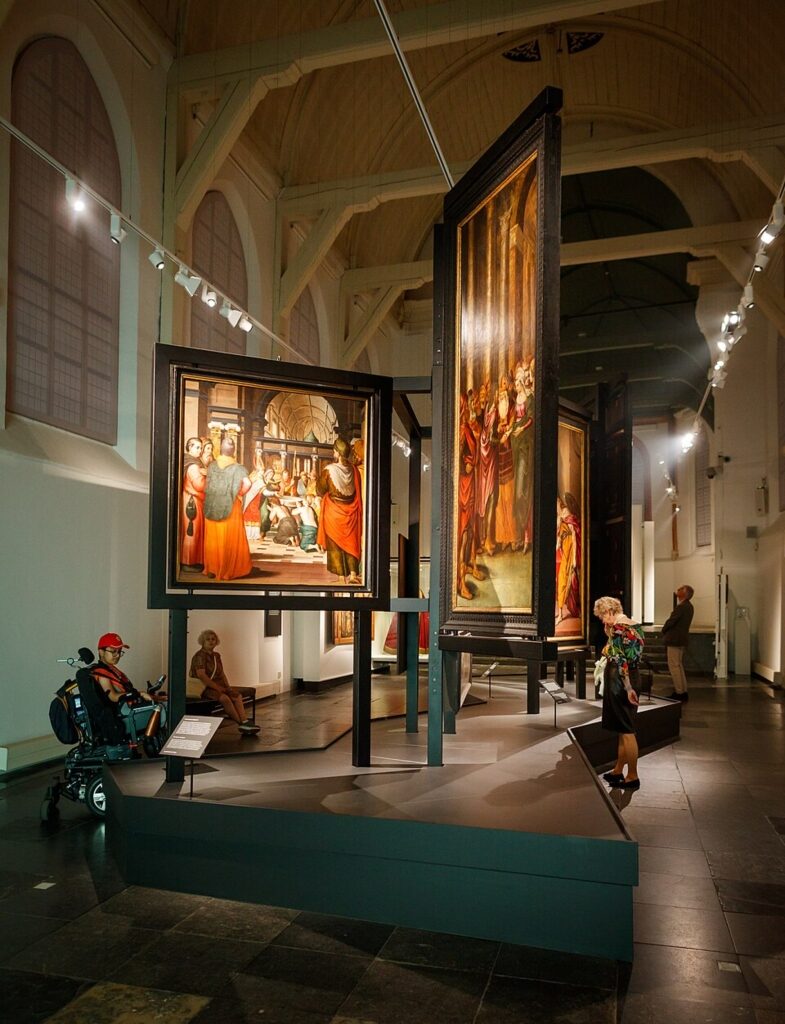
Gouda Museum Photo by MuseumGoudaAE on Wikimedia Commons, licensed under CC BY-SA 4.0
This local history museum, set in a grand former 14th-century hospice, holds an eclectic collection of Dutch art, cheese history, and torture equipment. The gardens are another attraction, if you aren’t seduced by the wonderful museum shop.
A highlight is the scale model of Gouda in 1562. You can see the unfinished St. John’s Church and the scope of the former city walls.
One room holds a collection of long-stem Gouda clay pipes, from the simplest styles to ornate art pieces. The pipes will seem familiar from their multiple appearances in historic Dutch paintings.
Gouda City Hall
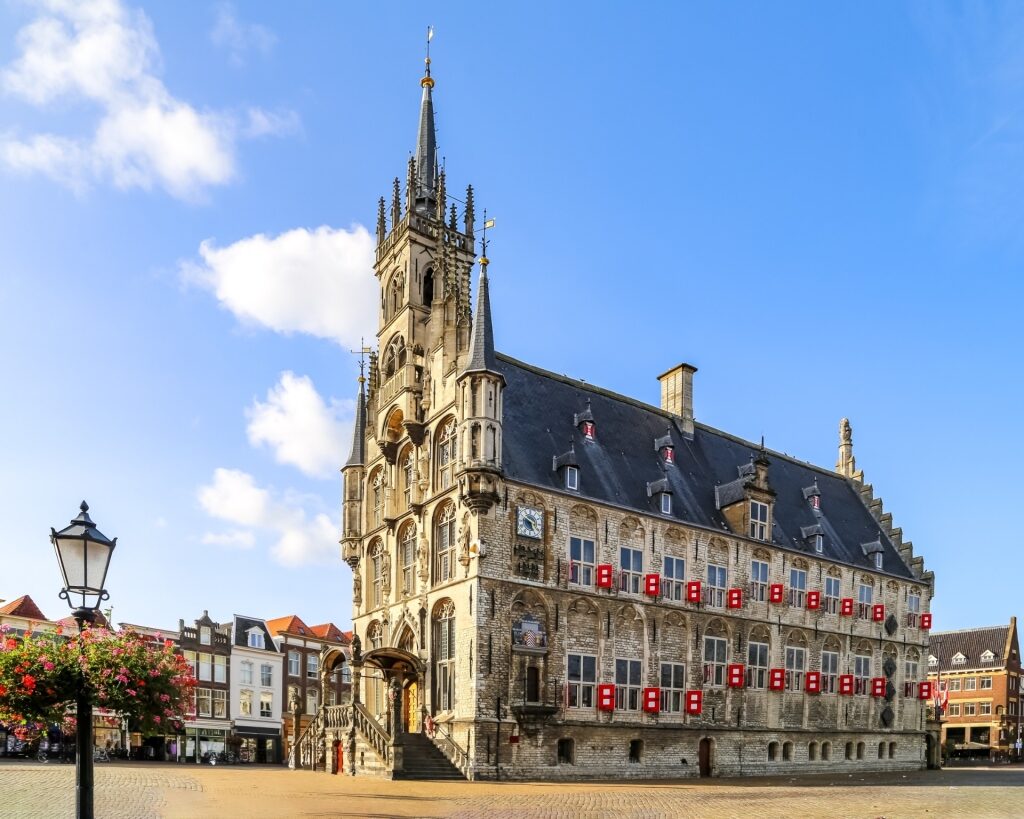
Gouda City Hall
The magnificent Stadhuis dominates the Markt square and is the oldest Gothic city hall in the Netherlands. The clock strikes every hour and half hour, followed two minutes later by a carillon and puppet show.
These mechanical figures reenact the ceremony by which Gouda was granted municipal rights in 1272. Not that the city wants to make a big deal out of it…
Weighing House
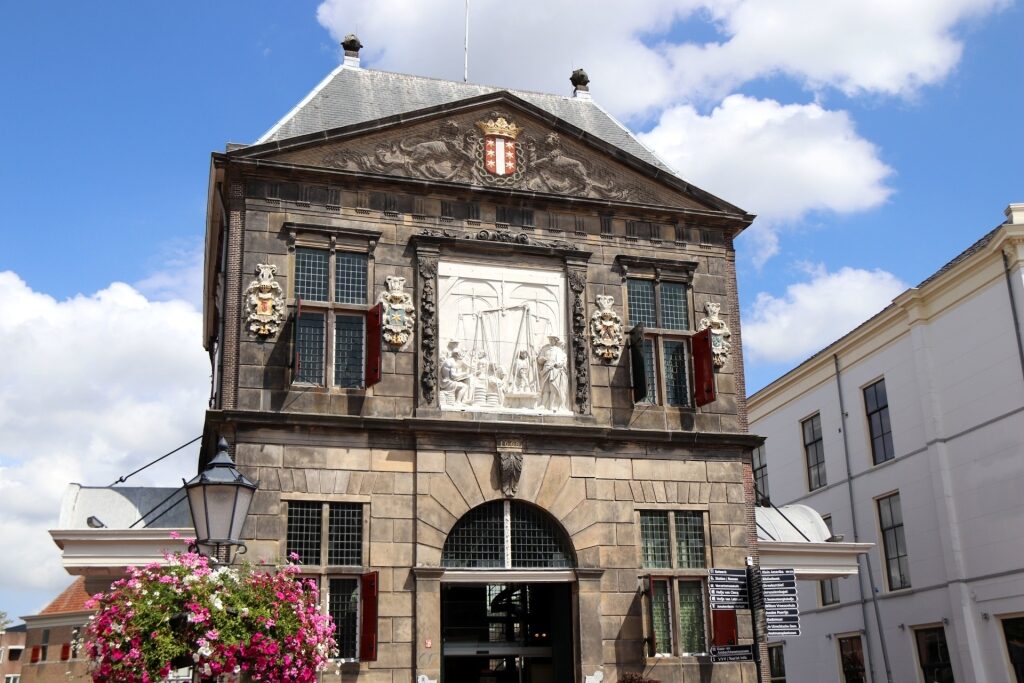
Weighing House
The 17th-century Goudse Waag was originally used to weigh cheese for taxes after sales at the market. A small museum takes you through the history of Gouda cheese and its trade locally.
This is a good place to taste the best Gouda cheeses, and buy some packed for export. You can also weigh yourself on the cheese scale and receive a certificate.
Gouda Cheese Market
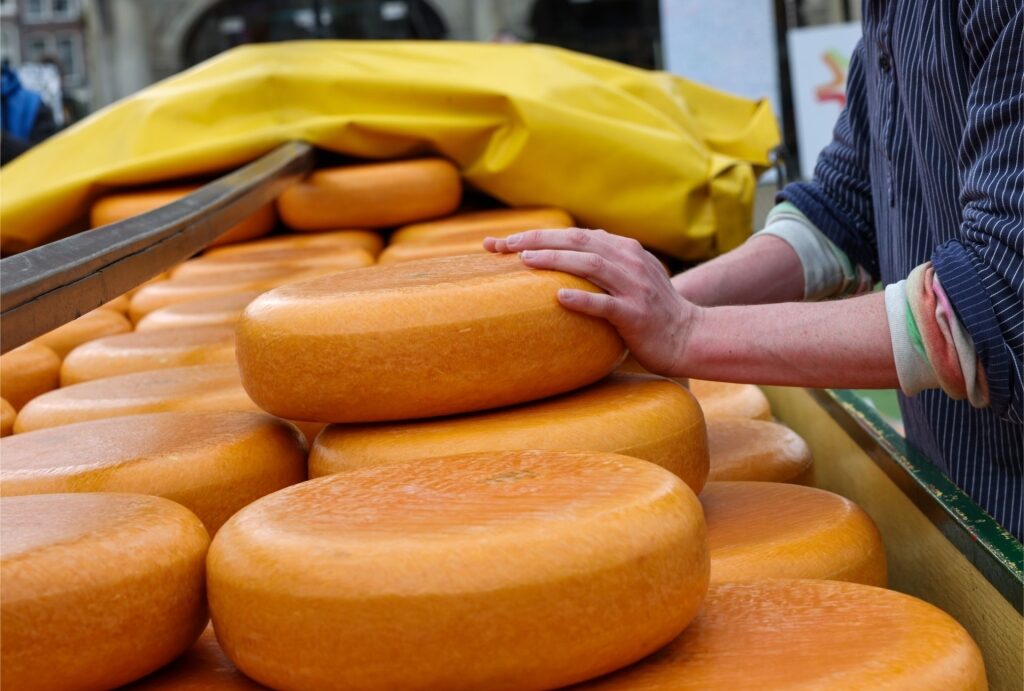
Gouda cheese
Held every Thursday morning from April to September, this market preserves the traditional rituals of the cheese trade. Farmers bring in their colored rounds of cheese to agree on a price with a trader in a bewildering—to outsiders, at least—series of handclaps.
Museum Harbor
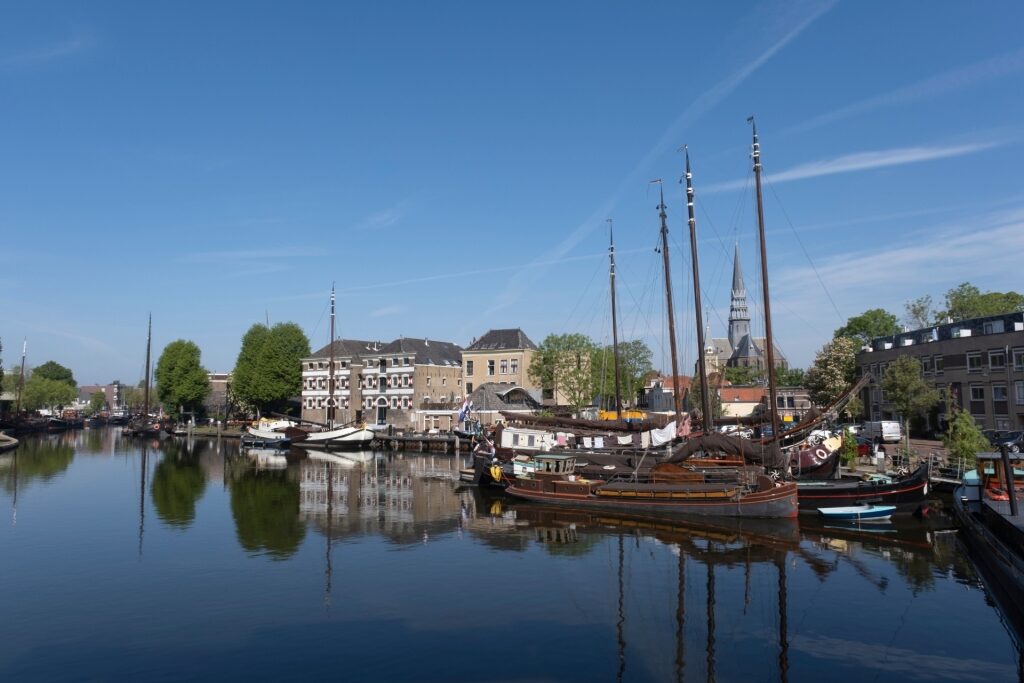
Museum Harbor
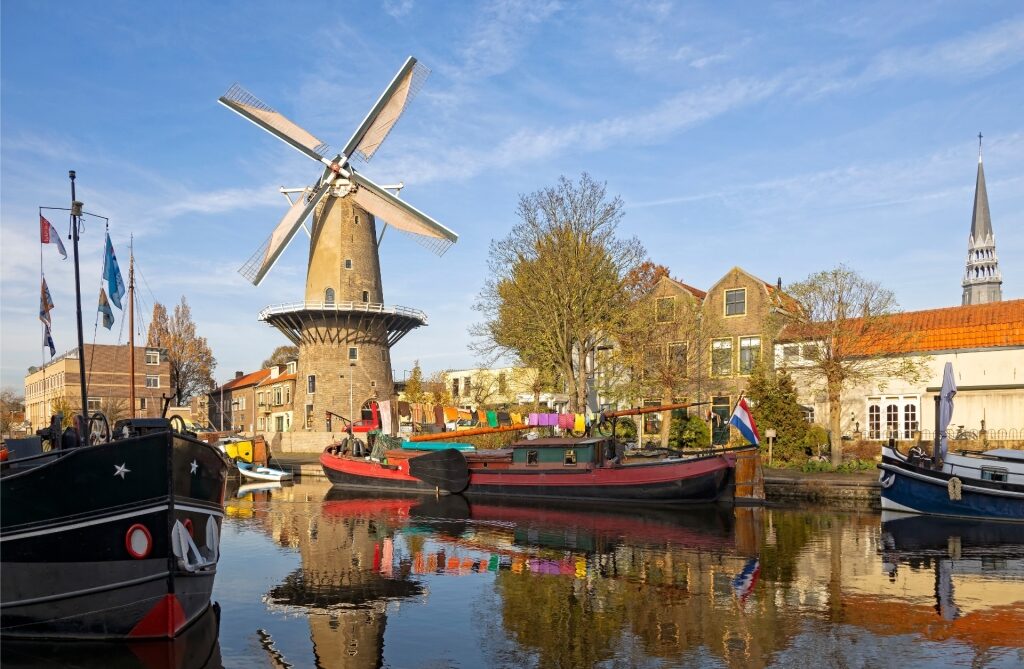
Gouda’s Museumhaven is a delightful piece of history, preserving old boats in their historic port setting. Besides the fishing boats, Dutch barges, and other vessels, there are former warehouses and the Red Lion Windmill.
Red Lion Windmill
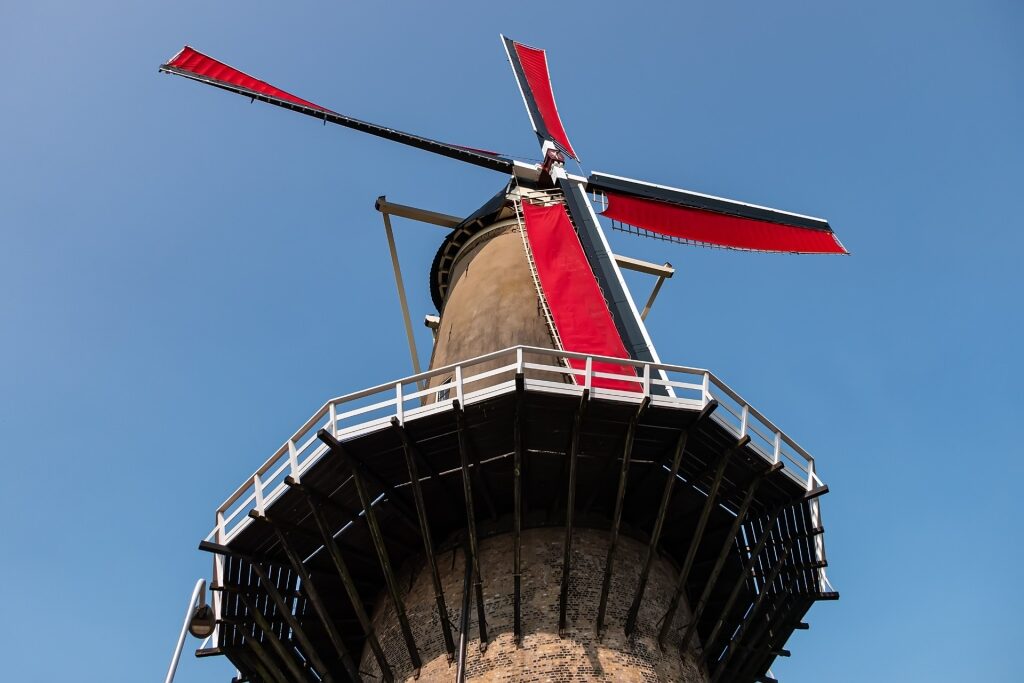
Red Lion Windmill
De Molen De Roode Leeuw is a working windmill in a photogenic canalside setting. While flour is no longer made here, you can tour it to see the milling process.
Built in 1727, the mill represents an important piece of Dutch history. Besides milling, windmills were essential powerhouses for pumping out water from the low-lying Netherlands.
Looierspoort
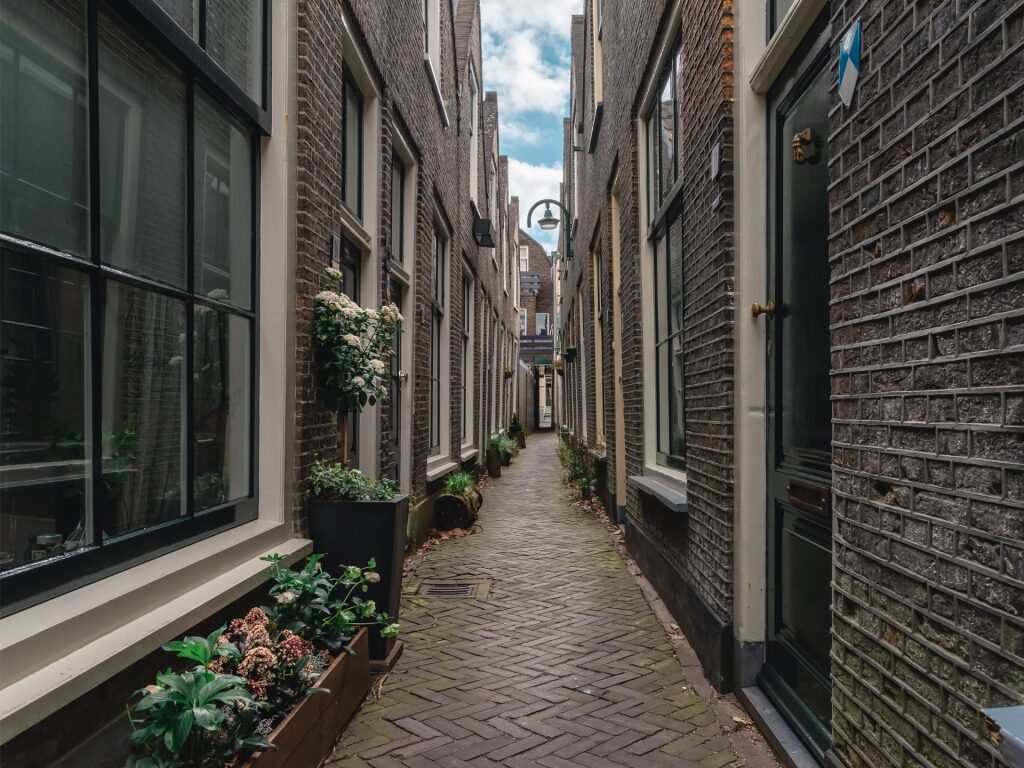
Looierspoort
Said to be the narrowest alley in the Netherlands, Looierspoort is barely an arm’s span wide—don’t try cycling down it. It was once home to many of Gouda’s Jewish population, almost all of whom were deported and executed during World War II.
Old-Catholic Church
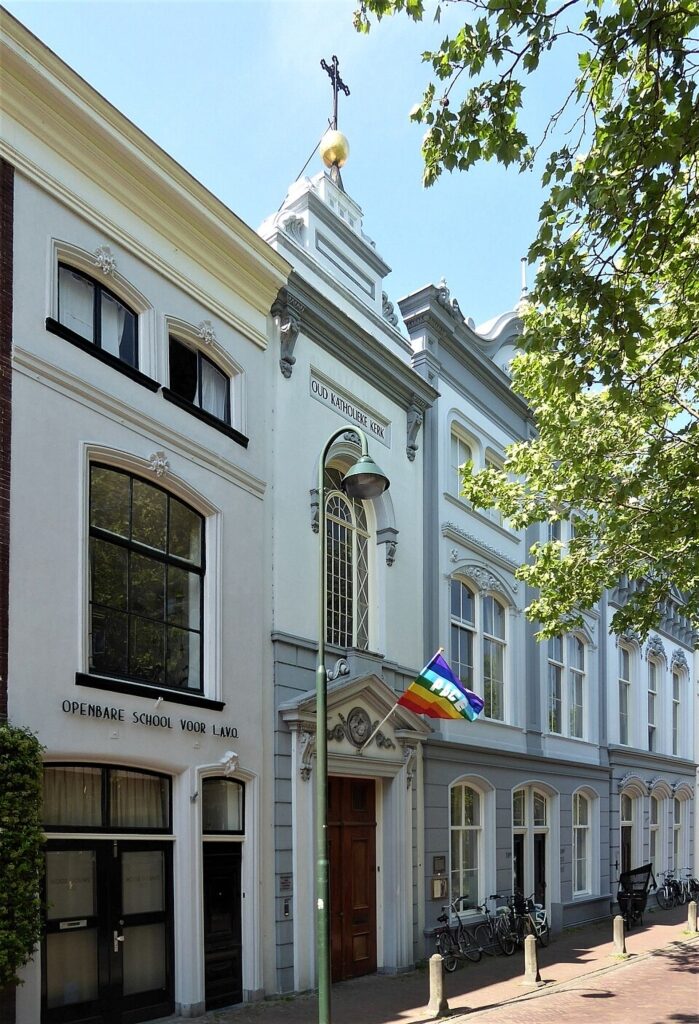
Old-Catholic Church Photo by Chris06 on Wikimedia Commons, licensed under CC BY-SA 4.0
The Oud-Katholieke Kerk is a “secret” church behind a facade of three typical Dutch house fronts. It dates to 1632, a time when any churches not belonging to the Dutch Reformed Church had to be hidden from view.
Food & Drink
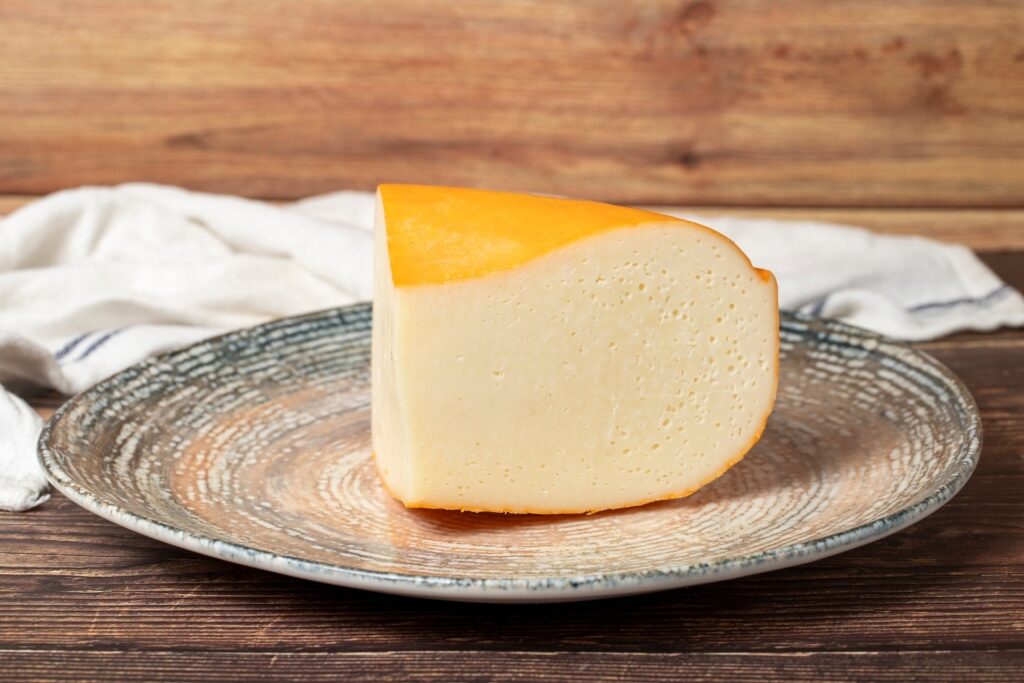
Gouda cheese
Gouda cheese is made by a defined method and can be from anywhere in the world. A label saying “Gouda Holland” does mean it’s made in the Netherlands, but not necessarily in Gouda.
Like fine wine, Gouda tastes different when aged. Jong, Jong Belegen, Belegen, and Oud describe the range from young to old at ten months. Jong, at a month old, is creamy and mild, while Oud is hard, crumbly, and richly nutty. Extra Belegen is a still-creamy, eight-month-old Gouda that is among the most popular.

Siroopwafels
No visit to The Netherlands is complete without trying siroopwafels. Famous worldwide, siroopwafels, or stroopwafels, are thin waffle sandwiches with a cinnamon-flavored syrup filling. Opposite Gouda’s old Town Hall is Kamphuisen, a traditional bakery which claims it made the very first siroopwafels in 1810.
These sweet cookies were immediately popular, and the process was soon industrialized. By 1960, Gouda had some 17 factories, of which four still exist.
However, Kamphuisen remains the best place in Gouda to find a siroopwafel made fresh. It’s traditional to serve them atop a cup of coffee to warm and soften before eating.
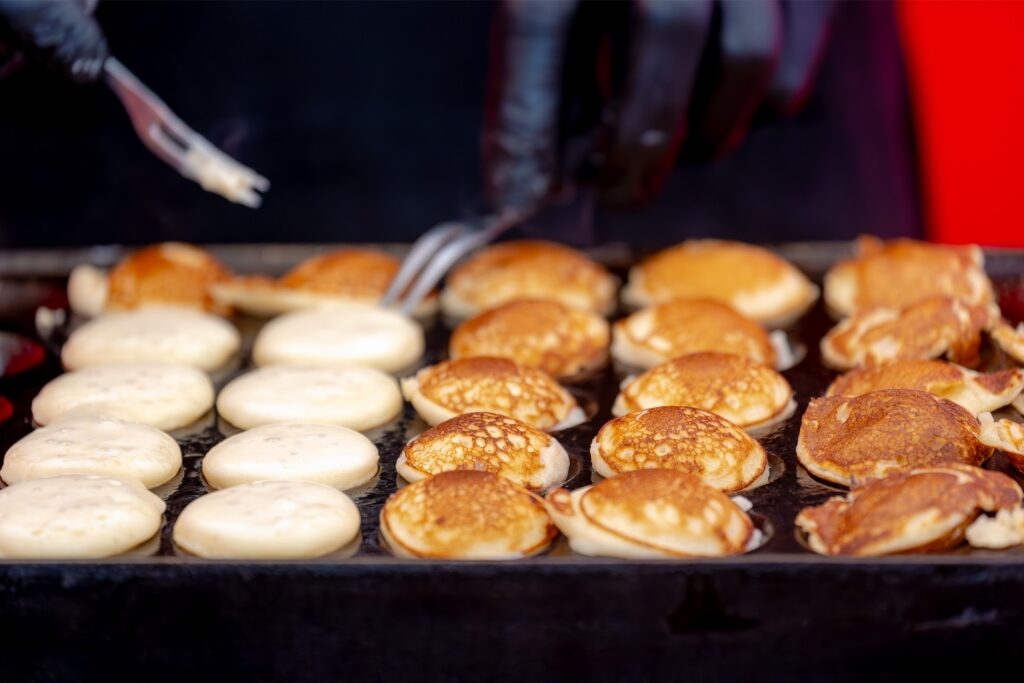
Poffertjes
While not unique to Gouda, you also have to try poffertjes, Dutch mini-pancakes, often sold from market stalls and drenched with butter and lots of sugar. Gouda’s Pannenkoe on Karnemelksloot claims to be the oldest pancake restaurant in the Netherlands.
Another essential snack to sample is bitterballen, small, round croquettes that are best enjoyed in a traditional “brown café”, pubs named for their cozy, dark wood interiors.

Rijsttafel
Finally, learn about The Netherlands’ Indonesian links with a rijsttafel. A “rice table” is a popular Dutch lunchtime meal of curries, satays, and sambals for sharing, with rice at the center of the table. Try it at tiny Toko Ina on Wijdstraat; it’s a food shop with only a few seats.
Best Time to Visit Gouda
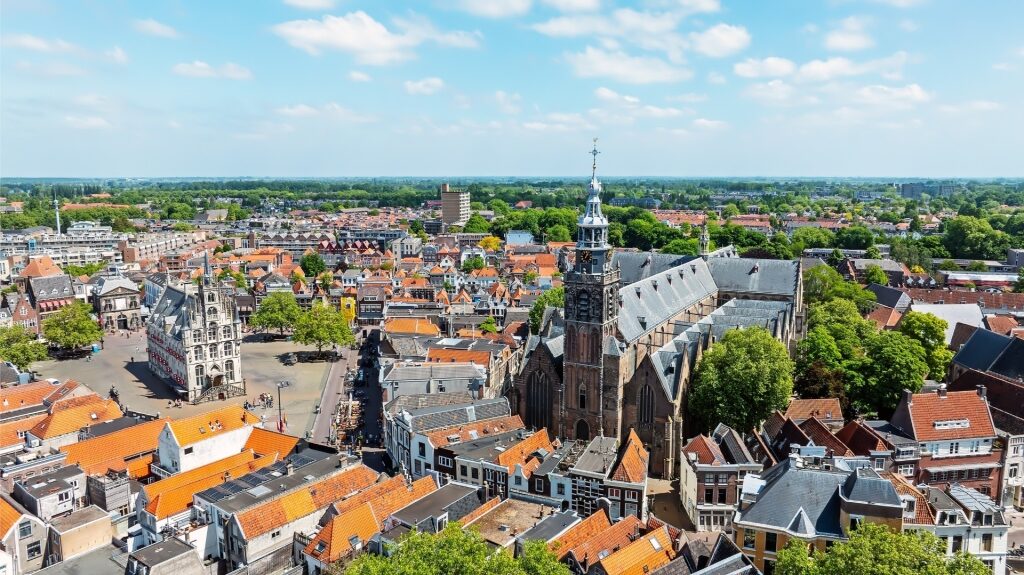
Gouda
The ideal time to visit Gouda is from April to September when the weather is at its best. This is also when the cheese market is held every Thursday morning.
Spring, from April through May, has the added attraction of tulips in bloom. While Gouda itself is not a major tulip town, the surrounding countryside springs into colorful life.
In mid-December, the town hosts a candlelight evening that is a major spectacle. St. John’s Church is lit by thousands of candles, as are many other city center buildings.
FAQs
Is Gouda, the Netherlands, worth visiting?
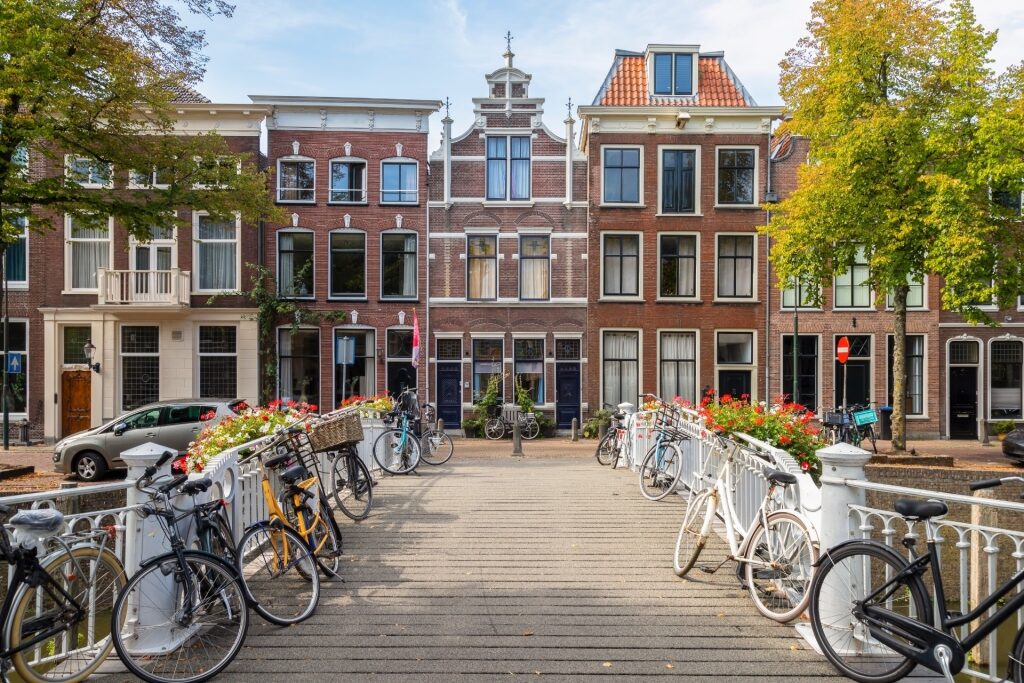
Gouda
Yes, Gouda is a lovely, calm contrast to Amsterdam’s sometimes overwhelming energy. The New York Times voted it one of the Best Places to Visit in 2022, and it’s only improved since.
How do you pronounce Gouda in the Netherlands?
Gouda is pronounced “HOW-da,” with the initial “H” pronounced in the throat like the final “gh” of “lough.”
Where is the town of Gouda?
Gouda is in the west of The Netherlands, between Rotterdam and Utrecht, in the province of South Holland.
What is Gouda in the Netherlands known for?
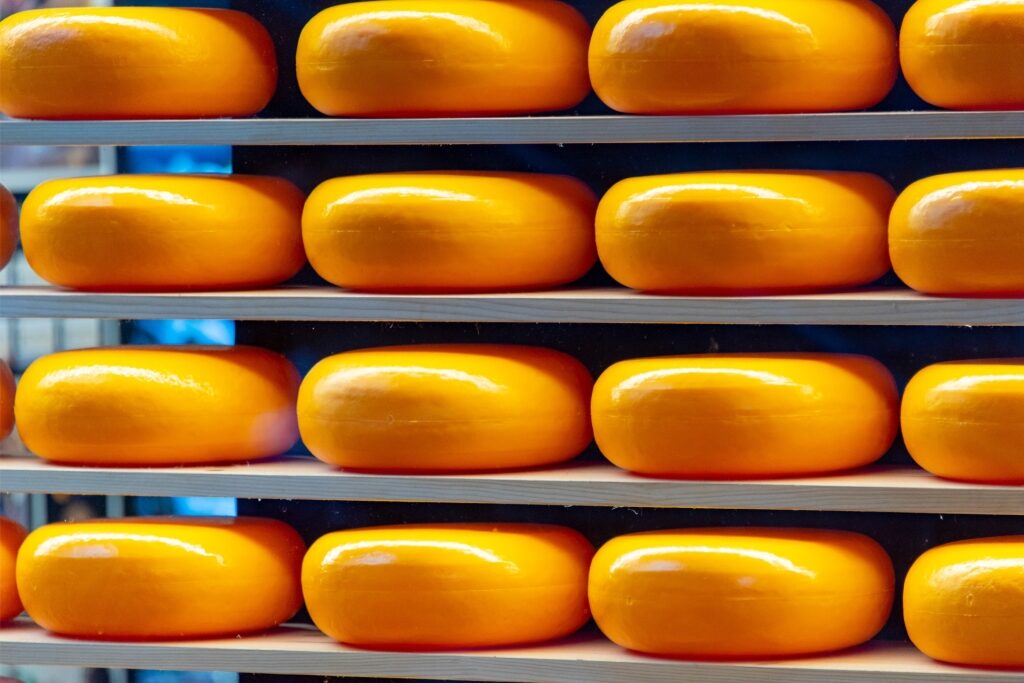
Gouda cheese
Gouda is known for Gouda cheese and as the home of stroopwafels. It is also famous for its many canals, a history of making clay smoking pipes, and its 15th-century city hall.
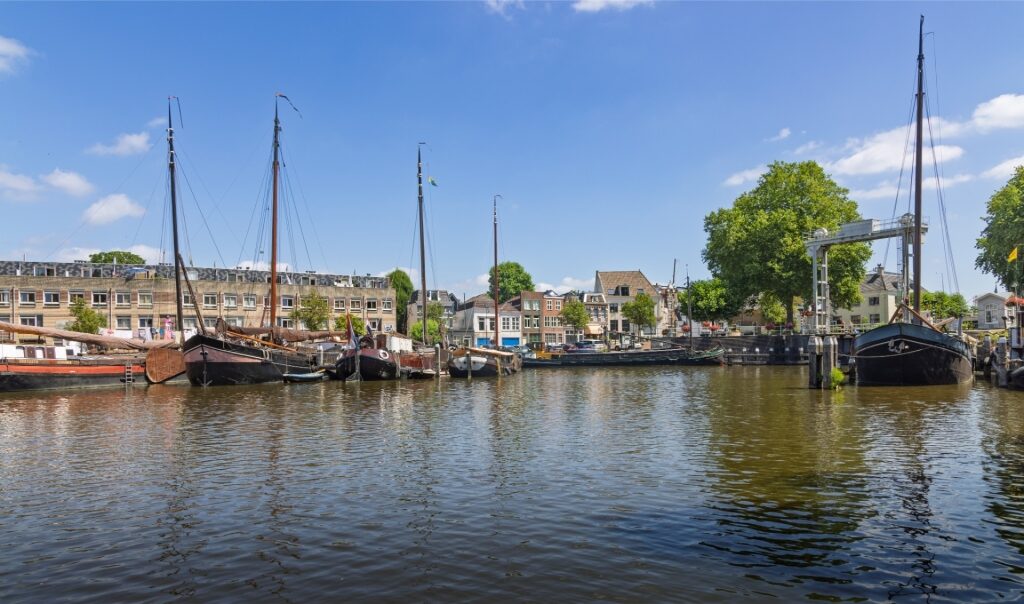
Gouda
Are you tempted to visit this lovely city in The Netherlands? Browse Celebrity’s European river cruises and book your dream vacation today.