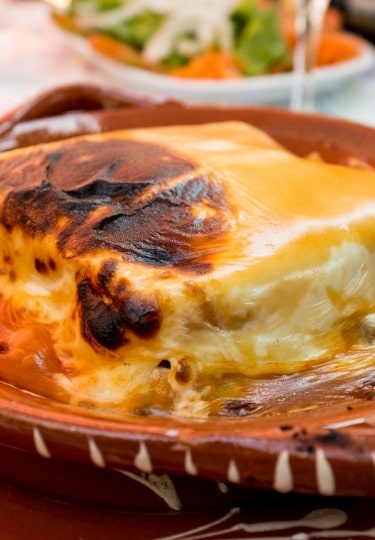
Located on Portugal’s northwest coast between the Atlantic Ocean and the neatly terraced vineyards of the Douro Valley, Porto is blessed with some of Europe’s best produce from land and sea.
What food is Porto famous for? Fish and meat both feature prominently in the city’s kitchens. Hearty sandwiches, rich stews, mouthwatering plates of shellfish, and one of the region’s most famous exports, Port wine have all put Porto cuisine on the map. From caldo verde (Portuguese soup) to tarte de amendoa (almond tart), dine your way around the city with these lip-smacking dishes.
Discover the best food in Porto, plus some tips on where to find it.
Tripas à Moda do Porto
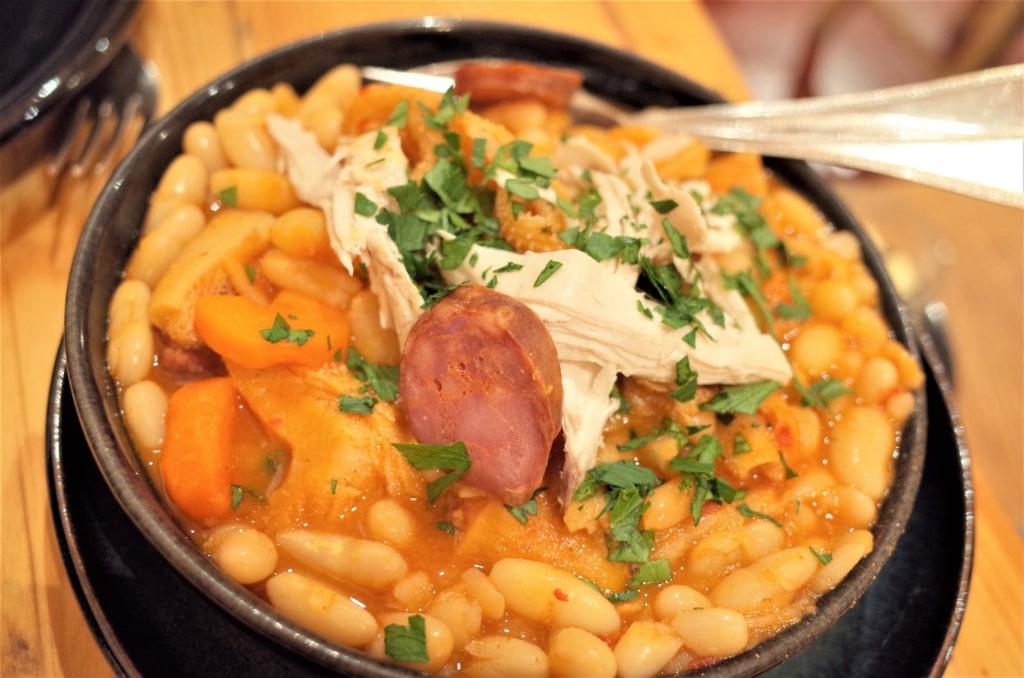
Tripas à moda do Porto
Porto is one of the best foodie destinations in Europe, and if your taste buds are in the mood for a rustic dish that’s unique to the city, tripas à moda do Porto—tripe, Porto style—will hit the spot. You’ll typically find veal tripe used in this dish, together with smoked pork sausage, white beans, onions, carrots, and various spices and herbs thrown together to create a delightfully rich stew.
This centuries-old European dish has a backstory with roots in the 15th century. It’s said that Portuguese explorer Prince Henry the Navigator requested the help of Porto’s residents to prepare for one of his expeditions. Having generously donated all of their meat supplies to the explorer, locals were left with nothing but tripe, so tripas à moda do Porto was born.
Take a seat at the beloved O Buraco restaurant, which translates as The Hole, on Rua do Bolhão, to sample tripas à moda do Porto for yourself.
Francesinha
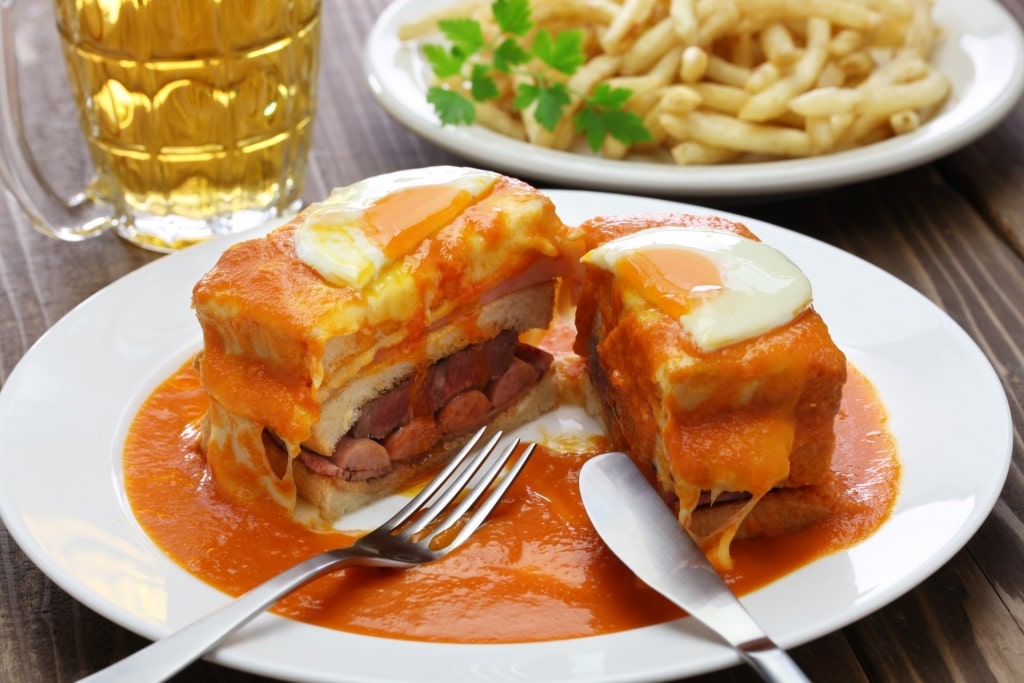
Francesinha
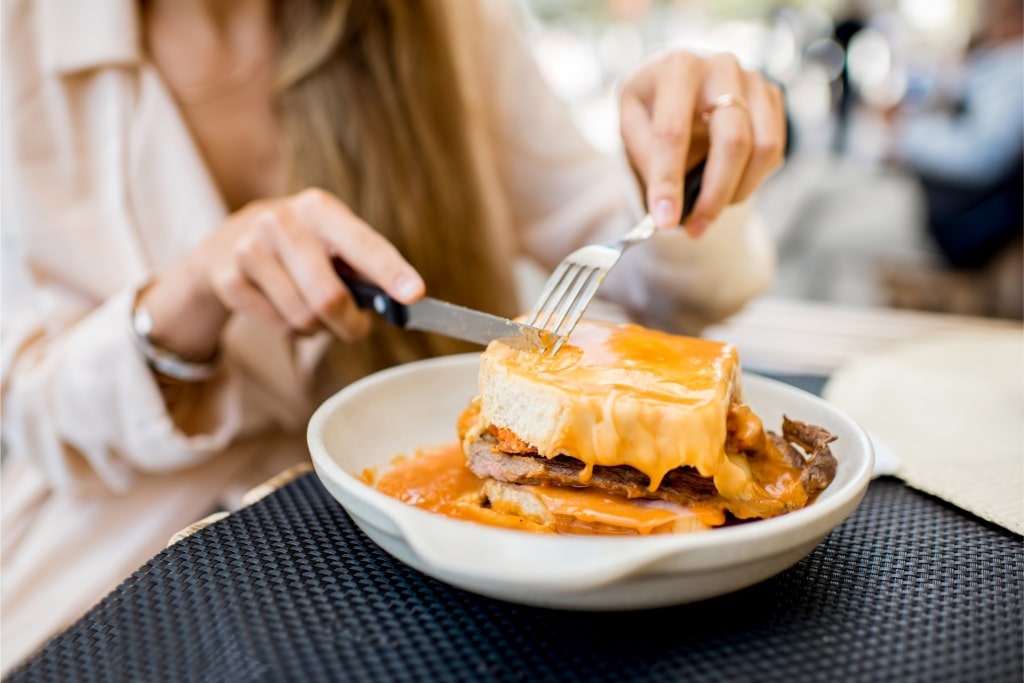
This hulking sandwich might not be the prettiest dish in Porto, or the healthiest for anybody with high cholesterol, but it’s a local institution. Consisting of chunky slices of chorizo, ham, or steak—sometimes all three—layered between two slices of thick bread, what sets the francesinha apart is the melted cheese in which it’s smothered. Sometimes a fried egg, sunny-side up, is added on top for more gooey goodness.
There’s yet more to this famous sandwich: A gravy-like, tomato-based sauce is poured over for added umami. Tackle a famous francesinha served with a side of fries on an empty stomach once you’ve ticked off your list of things to do in Porto.
Bolinhos de Bacalhau
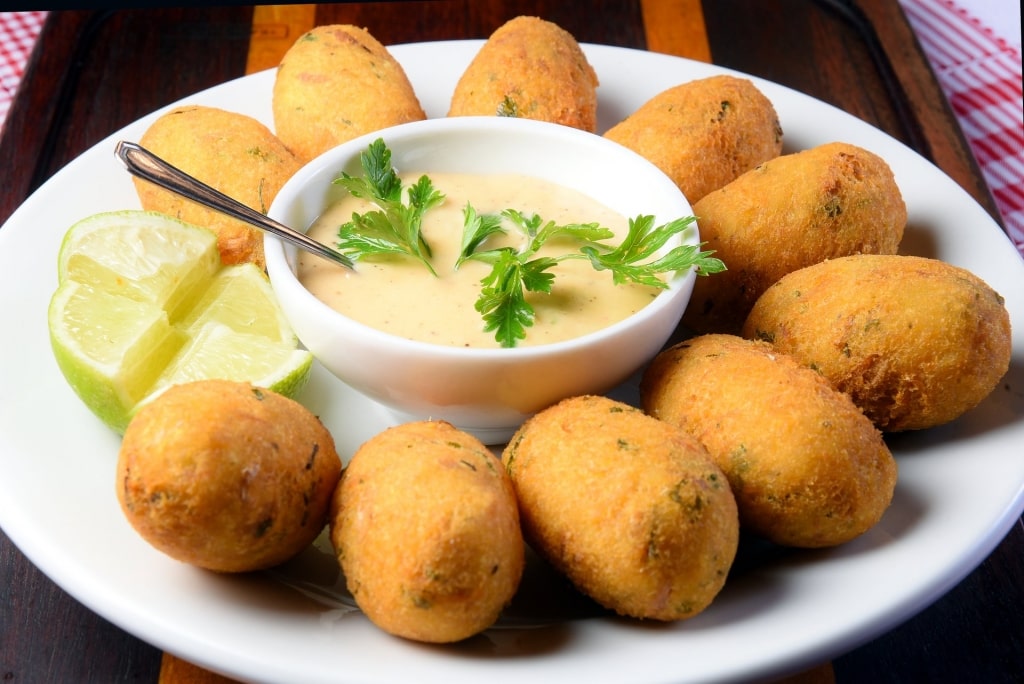
Bolinhos de bacalhau
Food in Portugal is undeniably tasty, including bolinhos de bacalhau—or Portuguese codfish balls—a well-seasoned sphere of potato and codfish, coated in golden breadcrumbs.
Similar to salt cod croquettes, bolinhos de bacalhau is prepared in a quenelle—an elegant three-sided scoop—before being deep-fried. Eat bolinhos de bacalhau hot or cold, but judge the quality by the texture. They must be crunchy on the outside and soft on the inside.
Caldo Verde
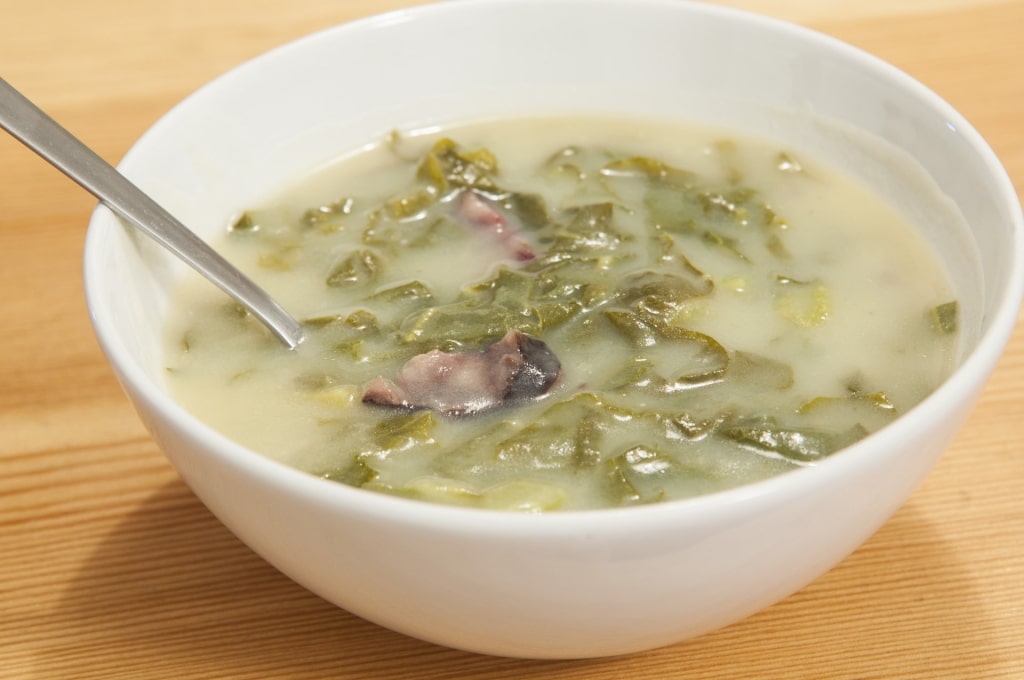
Caldo verde
Traditional food in Porto is satisfying and comforting, with caldo verde a prime example. A robust soul-warming soup that consists of potatoes, kale or cabbage, and chorizo or other types of sausages, caldo verde is a soothing, one-pot dish. Enjoy a hearty bowl with a thick wedge of fluffy bread to mop up the tasty juices.
Caldo verde is traditionally consumed around the Festival of St John of Porto in honor of Saint John the Baptist, which takes place every year around the summer solstice. Street concerts, dancing, and fireworks take place, and copious bowls of caldo verde washed down with wine are consumed during the celebrations. You’ll find caldo verde throughout the city at any time of year, though.
Serra da Estrela Cheese
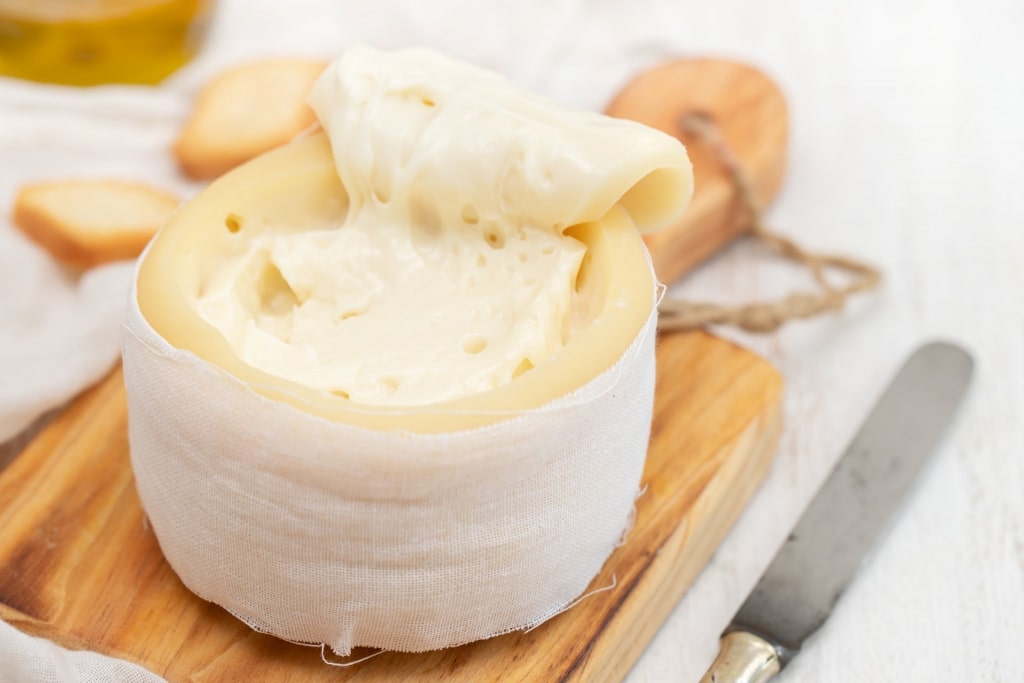
Serra da Estrela cheese
One of the best foods in Porto is a sublime cheese from the pastures of the Serra da Estrela. The creamy, soft-centered cheese is produced from sheep that graze on the wildflowers and herbs of this green mountainous region of Portugal. The cheese is characterized by its contrasting buttery and floral flavors.
In Porto, feast on Serra da Estrela with lashings of honey, fig, or quince, which nicely balance the cheese’s smooth and velvety texture. The dish is a great vegetarian option in what is admittedly a very meat-orientated cuisine. Try Tabua Rasa on Rua da Picaria, a specialist cheese, cured meat, and traditional canned seafood restaurant.
Bacalhau com Natas
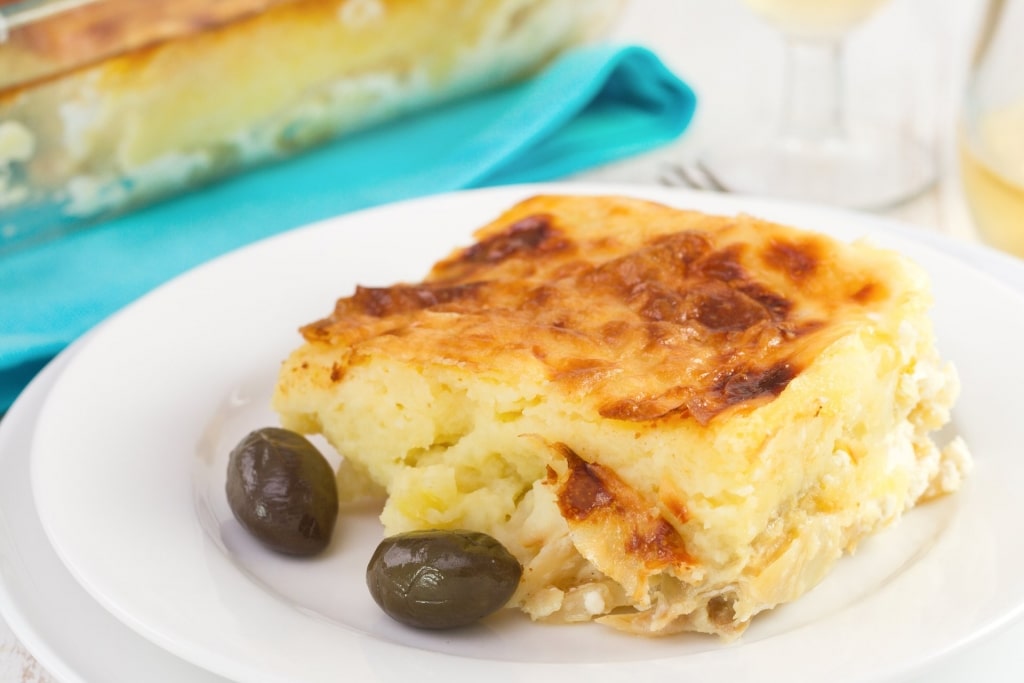
Bacalhau com Natas
Food in Porto frequently involves bacalhau (salt cod), and there are dozens of ways to prepare and cook it. One of the most popular is oven-baked, layered with onion, diced potato, and cream, to create Bacalhau com Natas. Nutmeg, garlic, and herbs such as parsley are used to add depth to the flavor.
Take a seat at one of the many restaurants lining the banks of the Douro and enjoy this sumptuous dish with an ice-cold glass of Vinho Verde or a lightly oaked Douro white wine.
Canned Fish
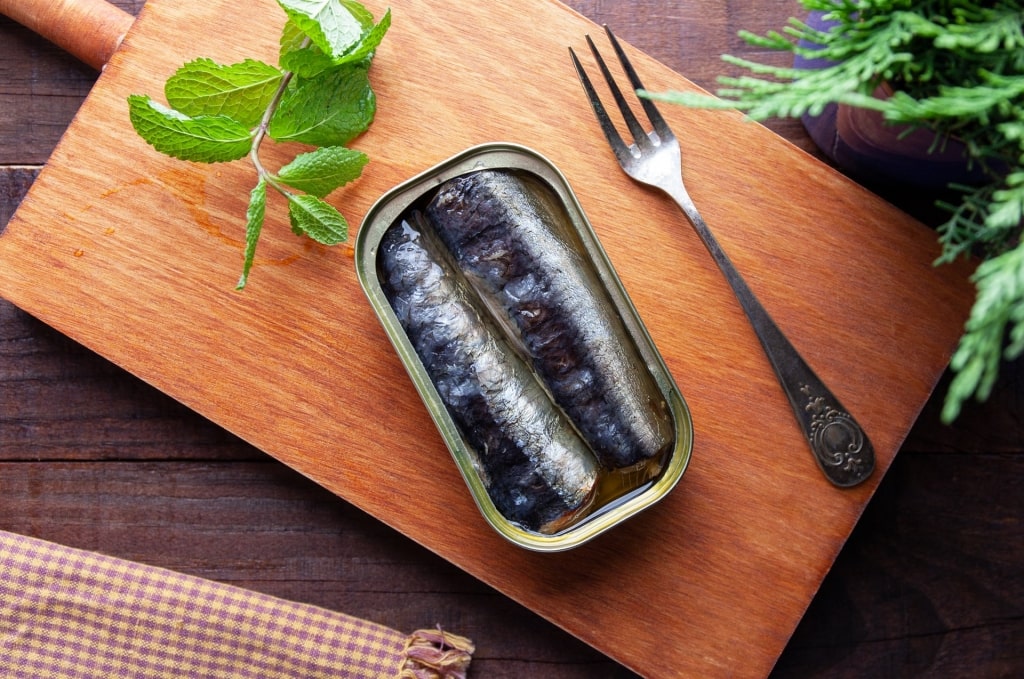
Canned fish
A staple of the Portuguese diet, one of the best foods in Porto is, surprisingly, canned fish. Sardines, anchovies, and mackerel, among other fish, are preserved and packed into cans, often artistically decorated, making them the perfect gourmet souvenir to take home.
Stop by Porto’s Loja das Conservas, with an outpost on Rua Mouzinho da Silveira, to get your hands on some beautifully-packaged canned fish. An array of flavors include mackerel in mustard sauce, mussels in red pickled sauce, and sardines in olive oil with oregano.
If you don’t plan on taking preserved fish home with you, buy a selection of cans and crusty bread from a local bakery for an instant and easy picnic in the serene Palacio de Cristal Gardens, with spectacular views of the Douro River.
Aletria
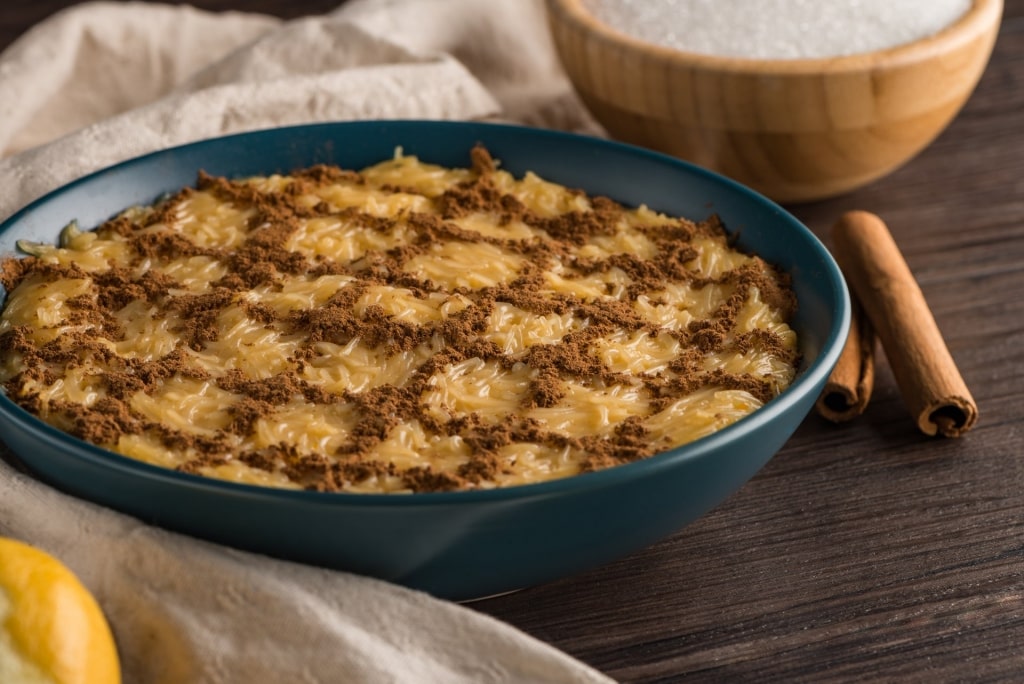
Aletria
Another traditional Portuguese dish, aletria is a sweet dessert made of fine, stringy pasta, with milk, egg yolks, sugar, lemon rind, and cinnamon for a custardy, zesty finish. The dish is usually topped with a criss-cross pattern of cinnamon powder. Vermicelli noodles can also be used to make aletria, which is typically eaten during the holidays in Portugal.
Outside of the holiday season, you’ll find aletria on the menus of traditional restaurants, such as the cute Casa Nanda, near the Bolhão neighborhood, or the upmarket Restaurante Rogério do Redondo, located in the charming Bonfim neighborhood.
Cachorrinho
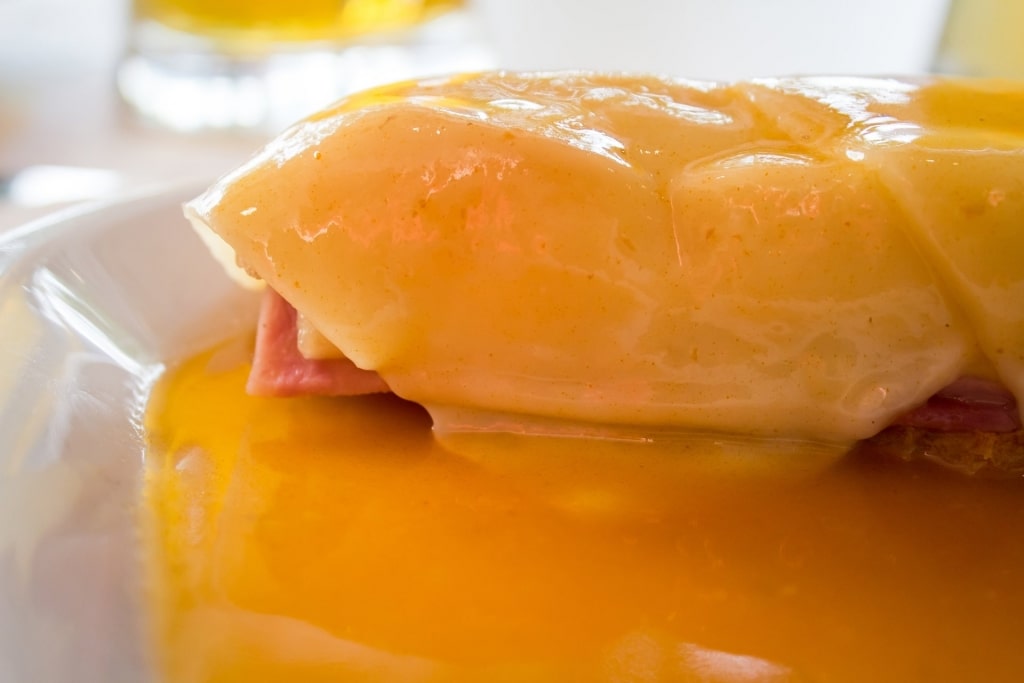
Cachorrinho
Take a break from touring the historic, cobbled streets of Ribeira and fill up on one of Porto’s best dishes, the cachorrinho. To make a cachorrinho, thin slices of crusty bread are stuffed with spicy sausage, sometimes alheira, and coated in a tangy sauce.
From casual hole-in-the-wall joints to traditional restaurants, you’ll find cachorrinho available all over Porto. Take a seat in one of Porto’s pretty squares and order a chilled beer to accompany your meat feast.
If you’re beachside, try Bar Tolo, just one block from the ocean on the attractive Rua da Senhora da Luz.
Bifana Sandwich
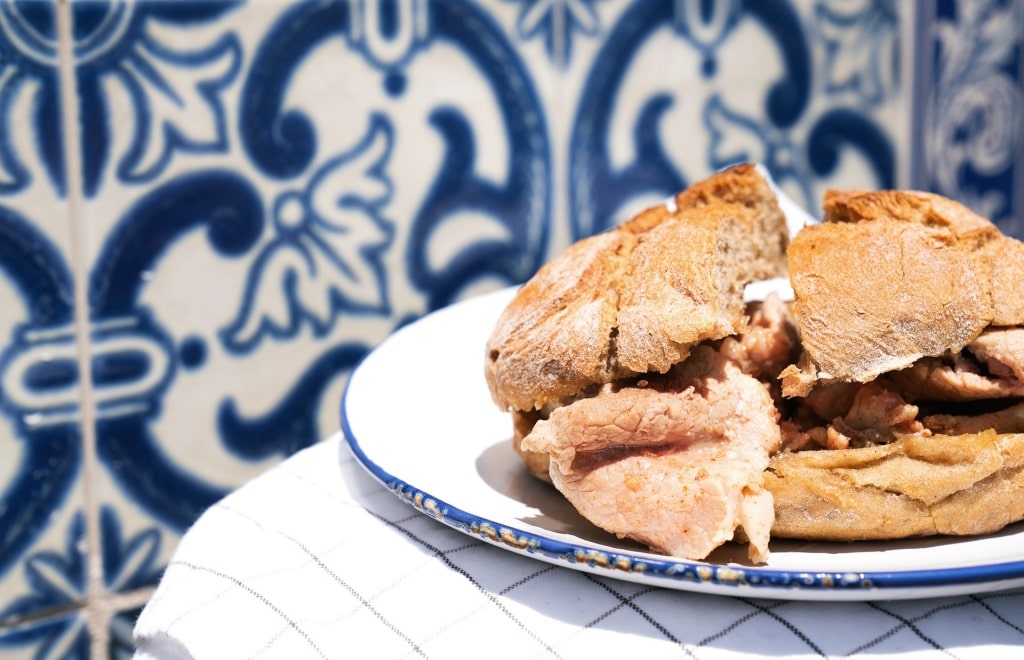
Bifana sandwich
Food in Porto often involves variations on the humble sandwich and one of the best is the bifana. What makes this Porto dish stand out is the succulent, marinated pork that fills the open sub.
The meat is cooked in white wine and chicken stock, with undertones of garlic and smoky paprika, and topped with slithers of caramelized onion. A bifana is Portuguese soul food at its finest.
Alheira Portuguese Sausage
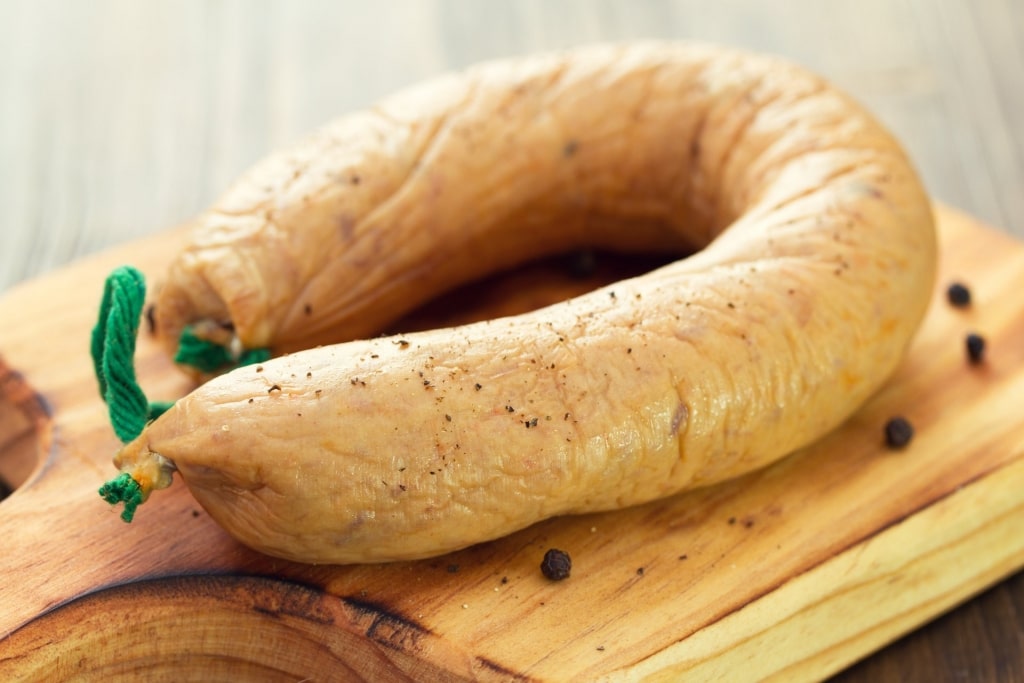
Alheira Portuguese sausage
Head to Bolhão Market—temporarily housed at Rua de Fernandes Tomás while the original building gets a makeover—and pick up some of this marvelous, garlicky sausage, often found dangling from vendors’ stalls.
Unlike most sausages, alheira is typically made up of non-pork meat, such as veal, game, or chicken. It’s an appetizing lunch or snack option, especially when accompanied by a selection of olives, cheeses, and fresh bread.
Grilled Sardines
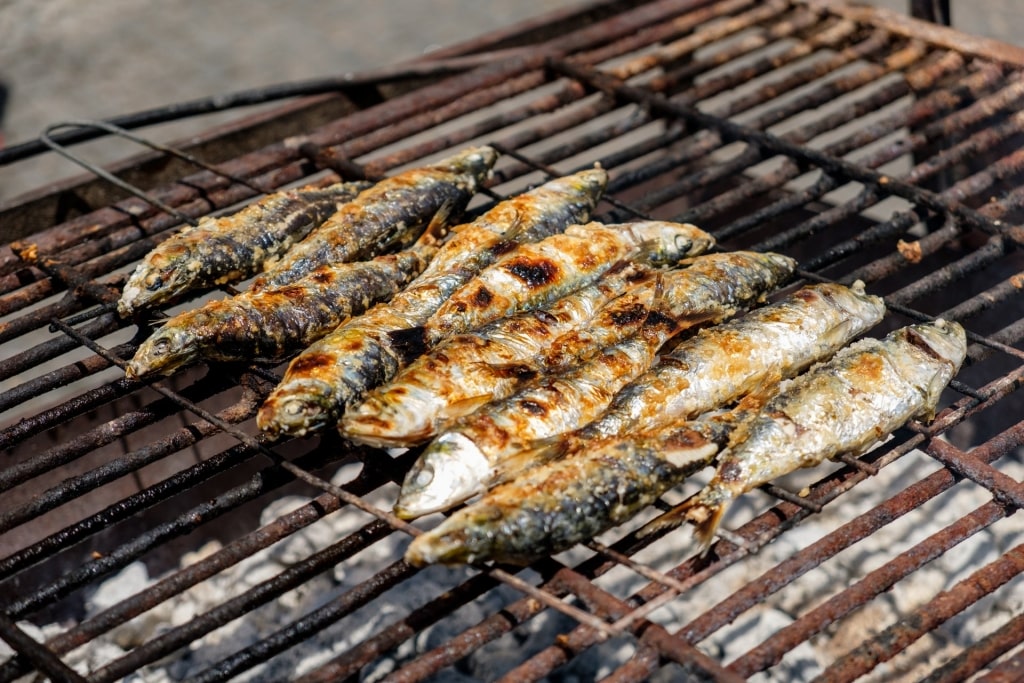
Grilled sardines
Tuck into a plate of plump, grilled sardines by the Douro or on the beach in Porto. These delectable jewels of the sea are served freshly caught and whole, with their silvery, scorched skin, tail, and head still in place for extra bite.
Rich in Omega-3, sardines might be small, but they are packed with flavor and only require a small amount of seasoning—typically a pinch of rock salt, a squeeze of lemon, and a sprinkling of fresh parsley.
Tarte de Amêndoa
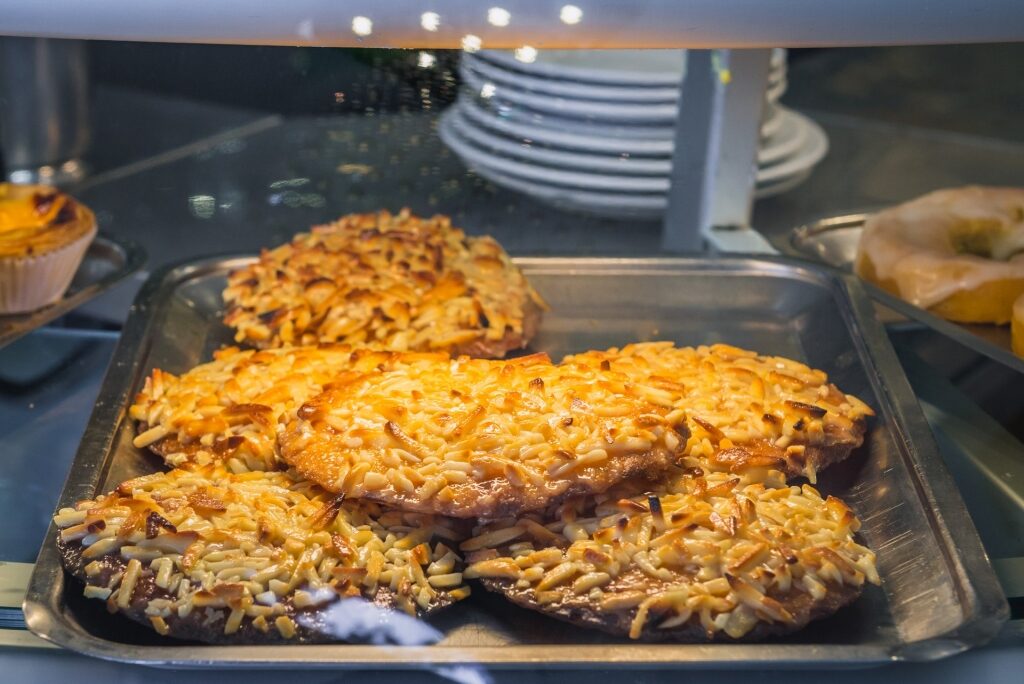
Tarte de amêndoa
Food in Porto doesn’t get much better than this buttery-based, Portuguese almond tart. An ideal daytime snack or sweet finish to a meal, tarte de amêndoa is topped with crunchy, caramelized almonds for a decadent finish. Savor a slice with a serving of whipped cream or crème fraîche.
Try the gorgeous Padaria Ribeiro bakery, which first opened in Porto in 1878. Padaria Ribeiro has four venues in the greater Porto region, including one on Praça Guilherme Gomes Fernandes, near the Baroque Carmo Church in downtown Porto.
Cozido à Portuguesa
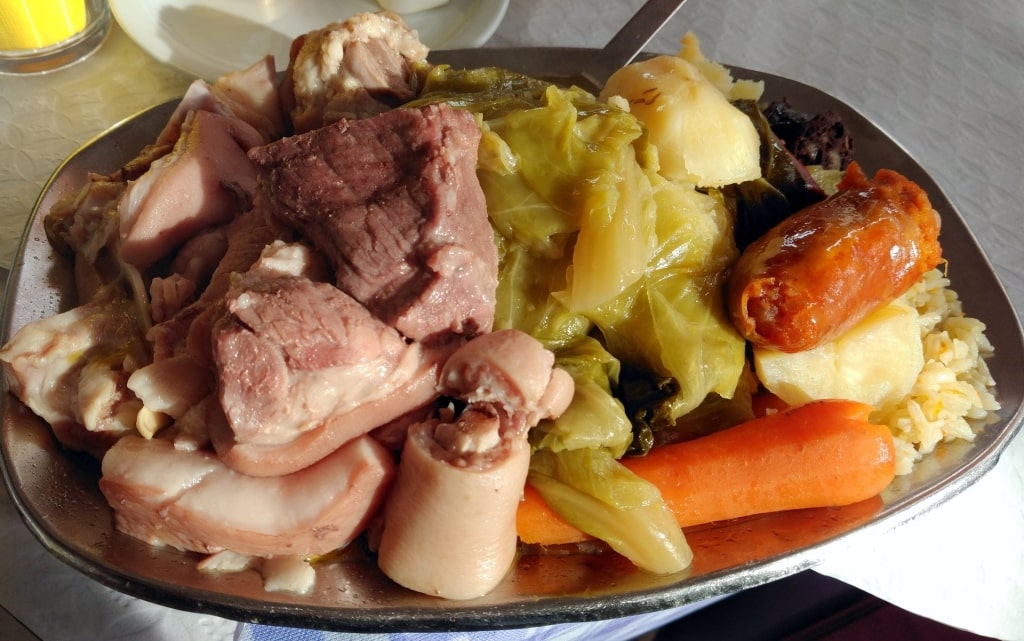
Cozido à Portuguesa
Sink your teeth into a hearty plate of cozido à Portuguesa, a boiled meat stew that is a staple in Porto. The dish combines a variety of cuts of meat—chicken, pork, and beef—typically whatever is available at the market, cooked with a batch of vegetables, including carrots, cabbage, onions, and potatoes.
Variations might also include turnips, beans, and rice. Smoked sausage and an assortment of offal are commonly added to create depth to the dish.
Camarao de Alho
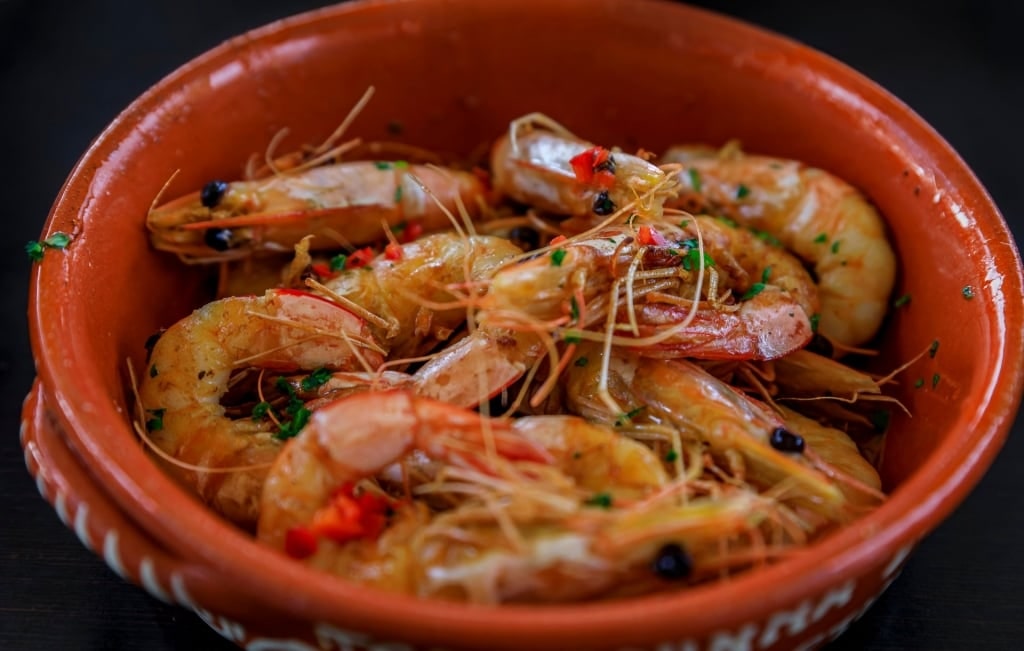
Camarao de alho
Lying on the Atlantic coast and with the Douro River flowing through the city, Porto is a seafood lover’s dream. One popular shellfish dish is camarao de alho (garlic shrimp)—a recurring dish in restaurants across Porto.
Ocean-fresh shrimp, plump and juicy, are sauteed in a pan, allowing the juices to flow with lemon, garlic, and parsley. A popular snack or sharing dish, camarao de alho is best ordered with a selection of plates to share among friends after a day at the beach.
A Marisqueira de Matosinhos, near Matosinhos Beach, just north of the city center, is one of the best spots around for fresh shellfish. Take your pick from spiny lobster, spider crab, oysters, clams, and a variety of shrimp.
Bacalhau à Lagareiro
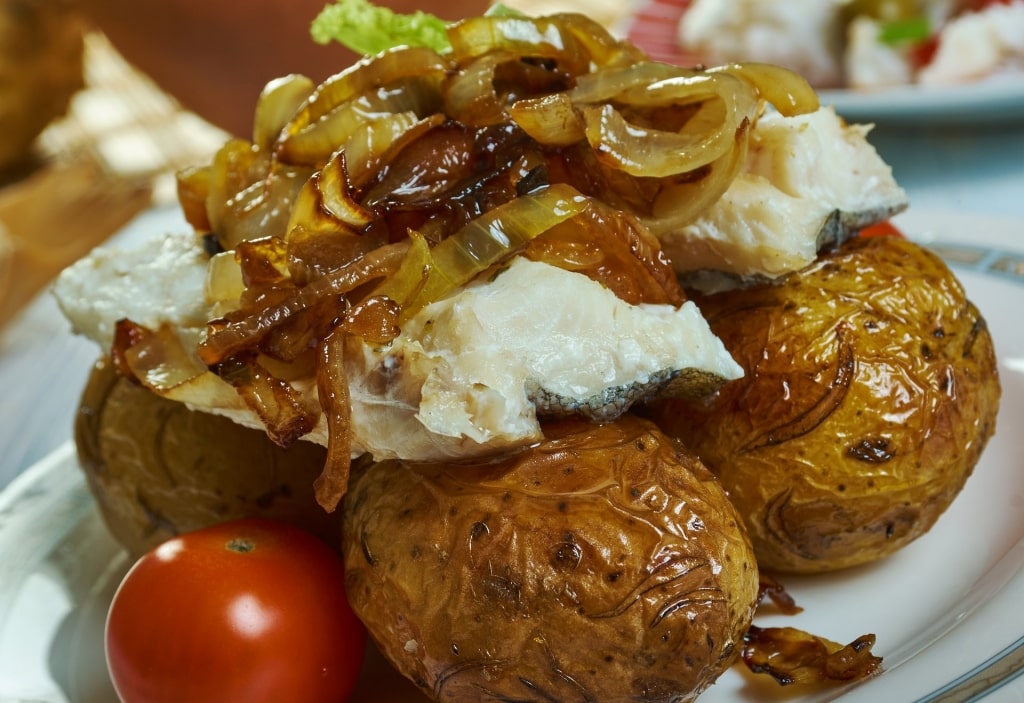
Bacalhau à lagareiro
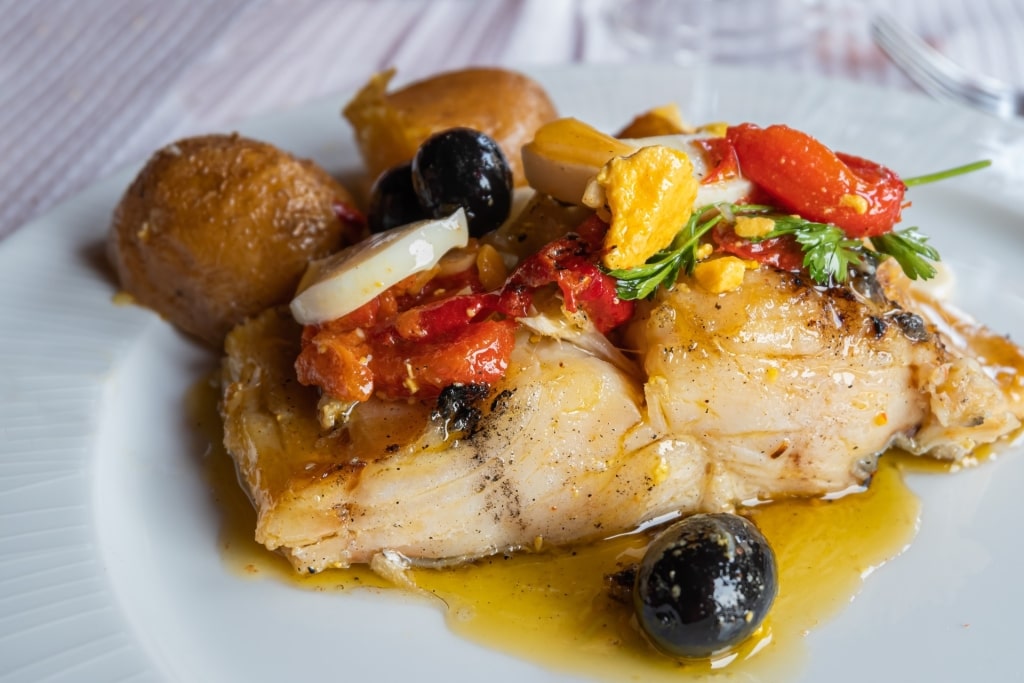
Bacalhau à lagareiro is another Portuguese salt cod dish. This traditional food involves roasted salt cod served with roasted or boiled potatoes. The potatoes are sometimes crushed, always salted, and served with the cod on top.
Sauteed olives, onions, peppers, garlic, parsley, and a generous dousing of olive oil finish this rustic Porto dish.
Salads de Polvo
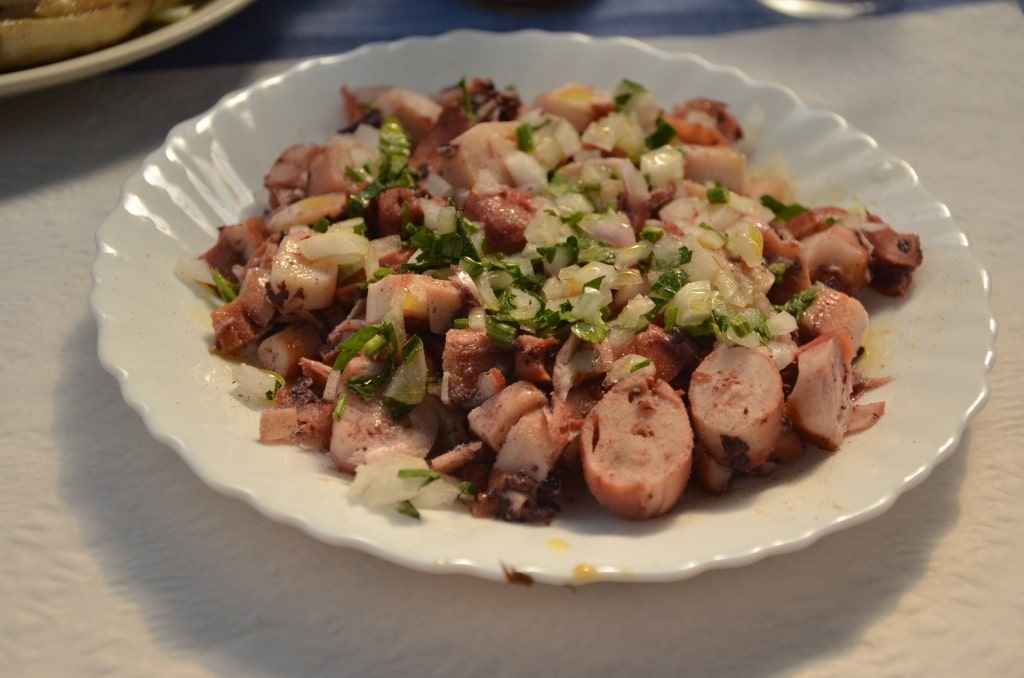
Salads de polvo
This uncomplicated summertime favorite consists of grilled or white-wine braised octopus, commonly served with chopped garlic, onions, and parsley, drizzled with lemon and olive oil. The delicate octopus meat is first tenderized to soften the texture.
Take a seat at one of Porto’s many seaside restaurants and order salads de polvo as part of a selection of small plates—called petiscos—served like Spanish tapas, washed down with a glass of northern Portuguese white wine from the Minho region.
Port Wine
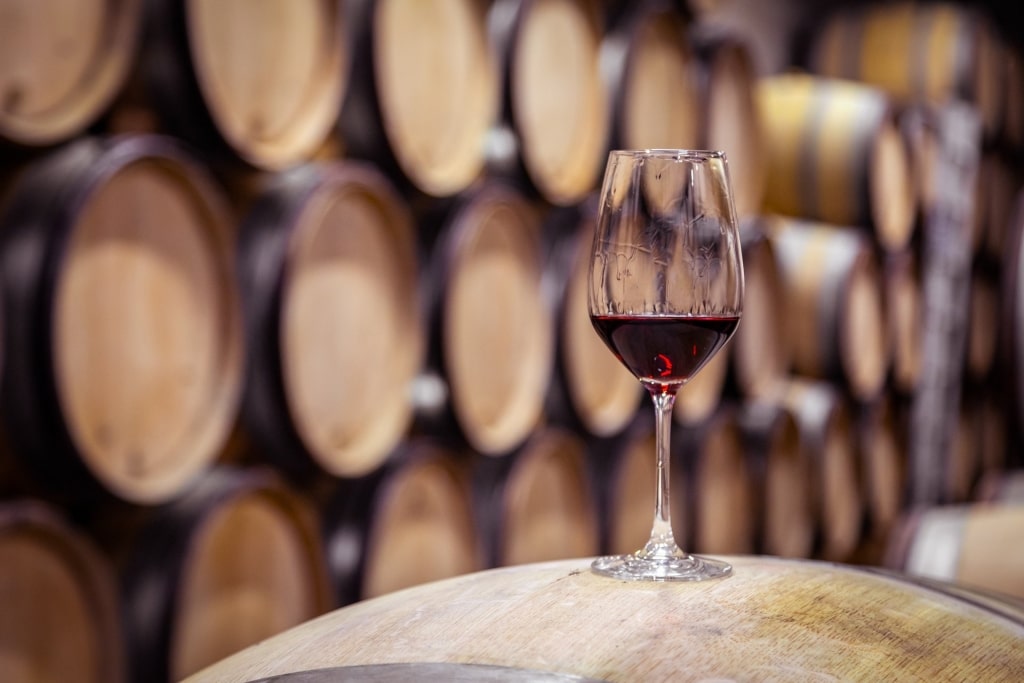
Port wine
Northern Portugal’s wine-growing region is defined by its terraced, sun-drenched vineyards, producing red and white wine but most famously, port.
A luscious fortified wine, port is known for its sweet taste and rich flavors. Port is available in a variety of styles and colors, from ruby-red to tawny and white varieties. Get to know the region’s famous drink on a visit to some of the many port houses and cellars along the Douro Valley.
Rent a car or join a tour tracing the scenic River Douro from the city into the bucolic town of Pinhão or Peso da Régua, an exceptionally beautiful 90-minute journey. As well as plummy ports, indulge in a tasting of delicious white, red, and rosé wines.
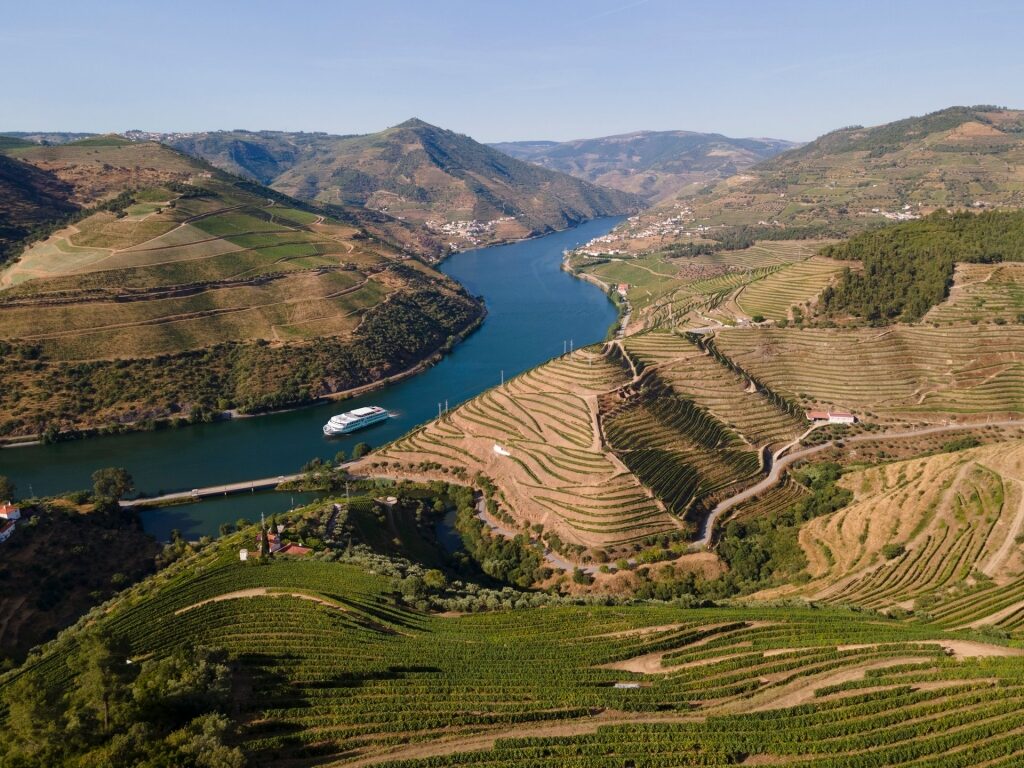
Peso da Régua
In Peso da Régua, visit a local winery where you have the chance to learn more about the history of port, as well as the table wines produced in the region. Take part in a tasting while you’re here, with cheeses and dark chocolatey desserts pairing particularly well with vintage ports.
There are plenty of port cellars in Porto; Churchill’s Lodge, Sandeman, and Caves Cálem are just a few. Porto Cruz Multimedia Center is an interesting place in which to take a deep dive into port through a program of exhibits and events. Take part in a tasting and pick up a bottle of your favorite port to take home as a memento of your vacation.
Bacalhau à Gomes de Sá
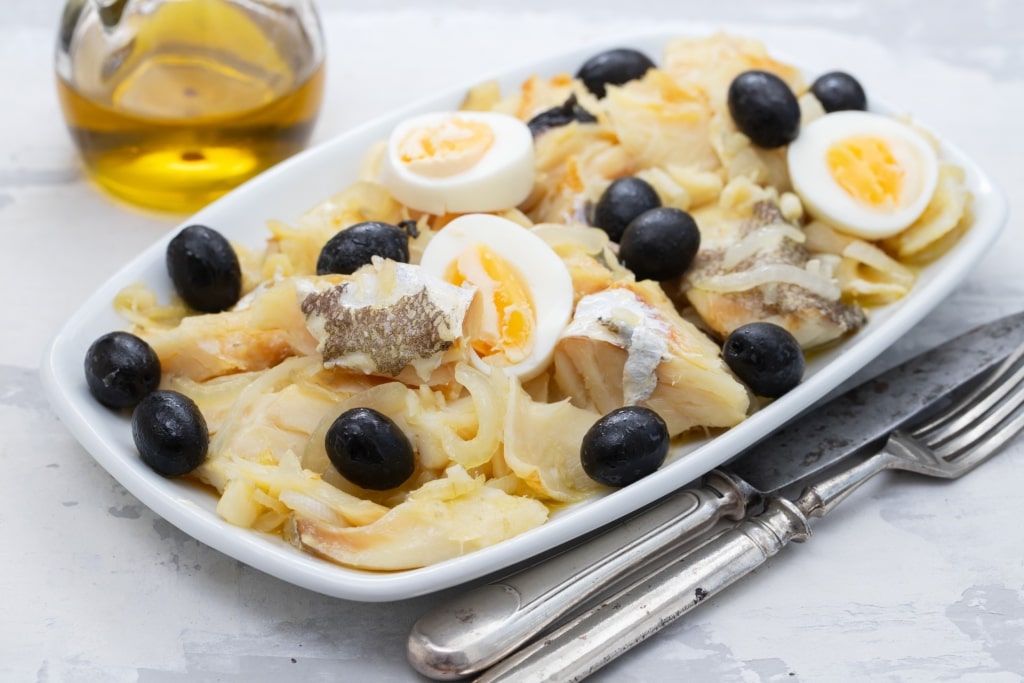
Bacalhau à Gomes de Sá
Porto food includes the herby bacalhau à gomes de sá, a classic cod casserole featuring salted cod, potatoes, onions, garlic, and olive oil, finished with hard-boiled eggs, black olives, and parsley.
This slow-cooked dish can be enjoyed year-round, with the onions caramelized and the whole dish baked, creating a satisfyingly rich finish. It’s named after Gomes de Sá, the son of a 19th-century cod merchant. According to folklore, de Sá created the dish while working at Restaurante Lisbonense in downtown Porto.
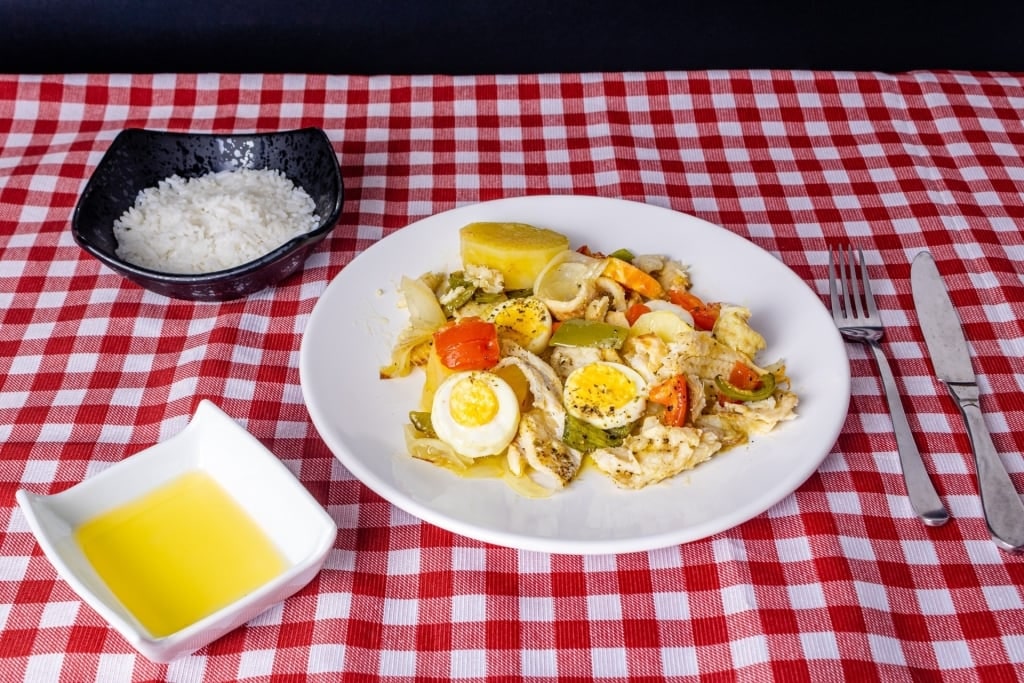
Bacalhau à Gomes de Sá
On a visit to Porto, try it at the fish restaurant Retiro do Bacalhau in the Baixa area, in downtown Porto.
It’s a gorgeous addition to mealtimes—especially when paired with a light and crisp Portuguese Vinho Verde.
Read: Lisbon vs. Porto: Which Should You Visit?
Rojões à Moda do Minho
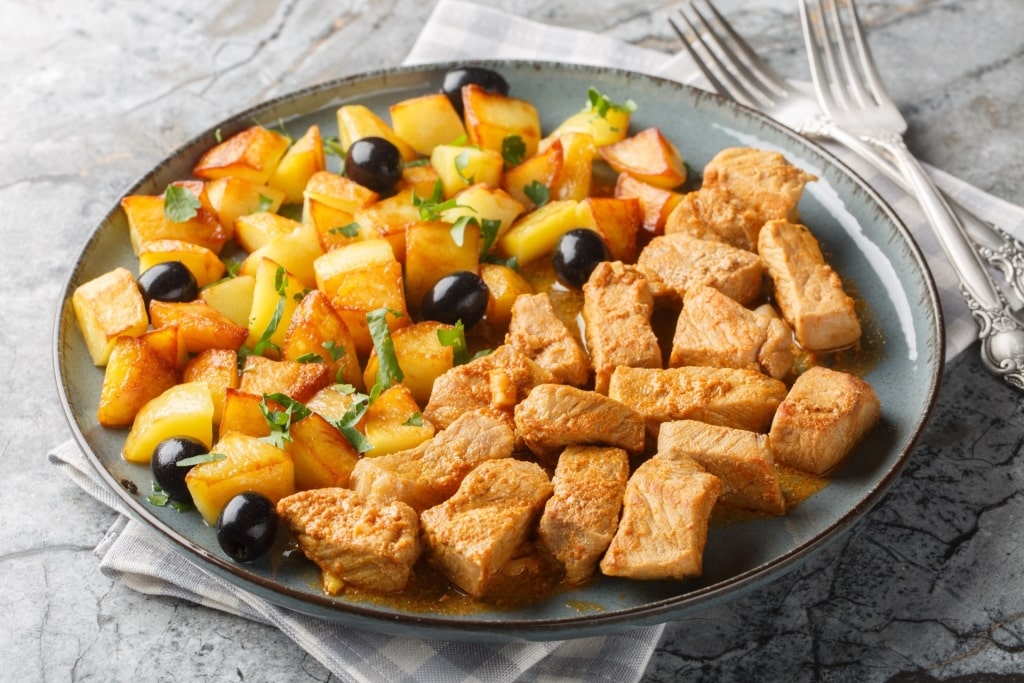
Rojões à moda do Minho
This pork and offal dish is a Porto food found in the more rustic city restaurants. Rojões à moda do Minho, originating in the northern Minho region of Portugal, features pork shoulder or leg that’s marinated overnight in white wine, garlic, salt, pepper, bay leaf, and paprika. To cook, the meat is browned, then simmered over low heat, with pork blood added.
Separately, floured tripe is fried with pork liver and the dish is brought together with potatoes and chestnuts, seasoned with cumin, lemon, and parsley, often accompanied by rice. This hearty, rich dish works well with chunks of bread and a glass of delicious Portuguese wine.
Polvo à Lagareiro
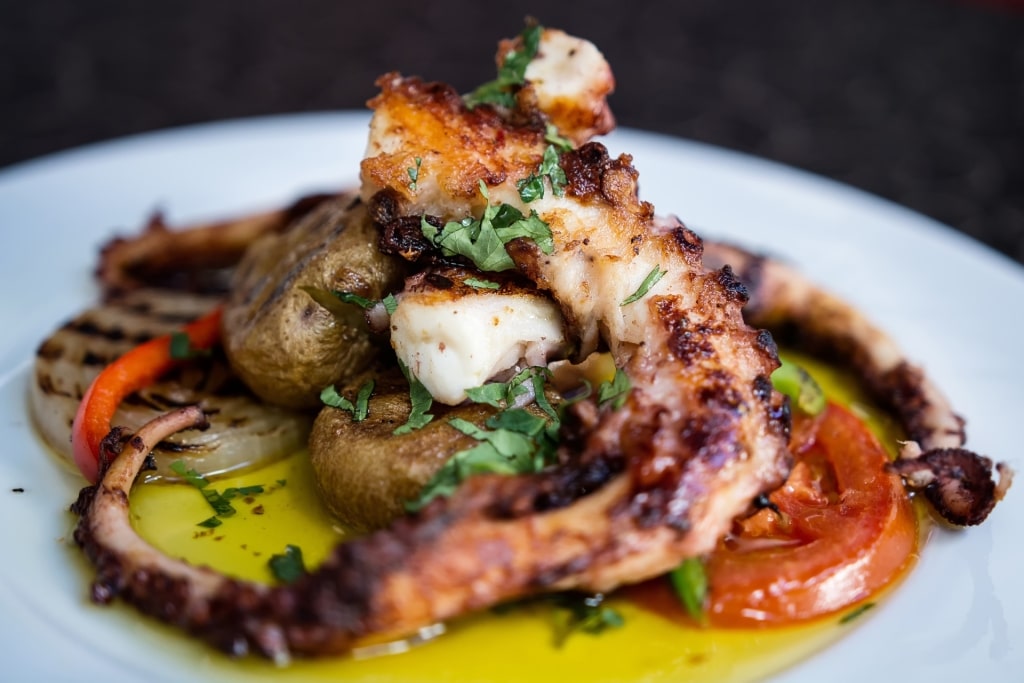
Polvo à lagareiro
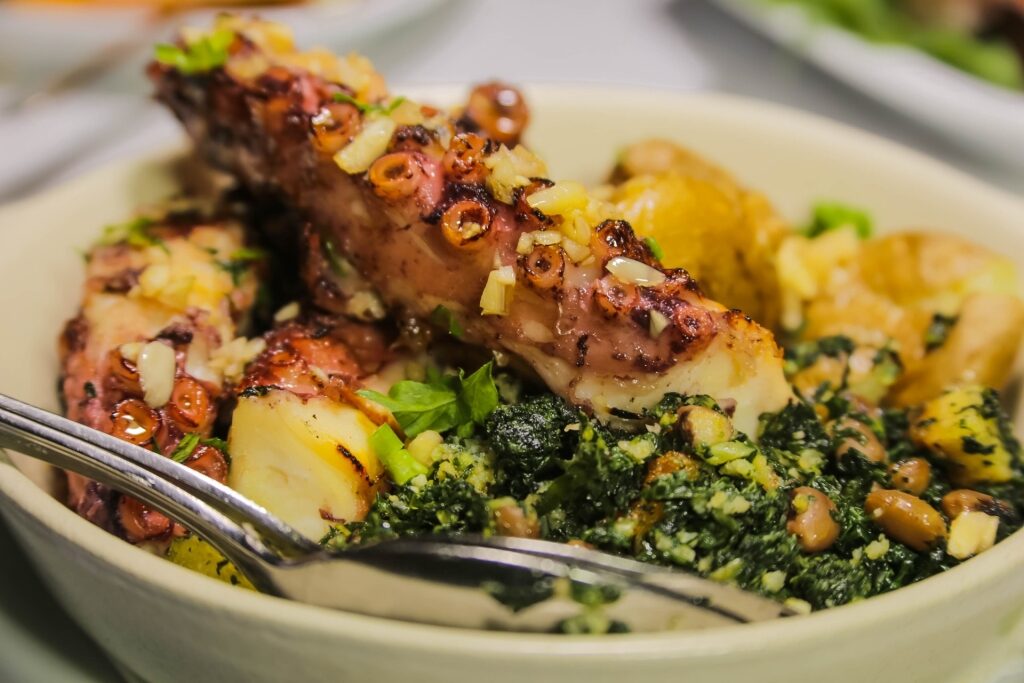
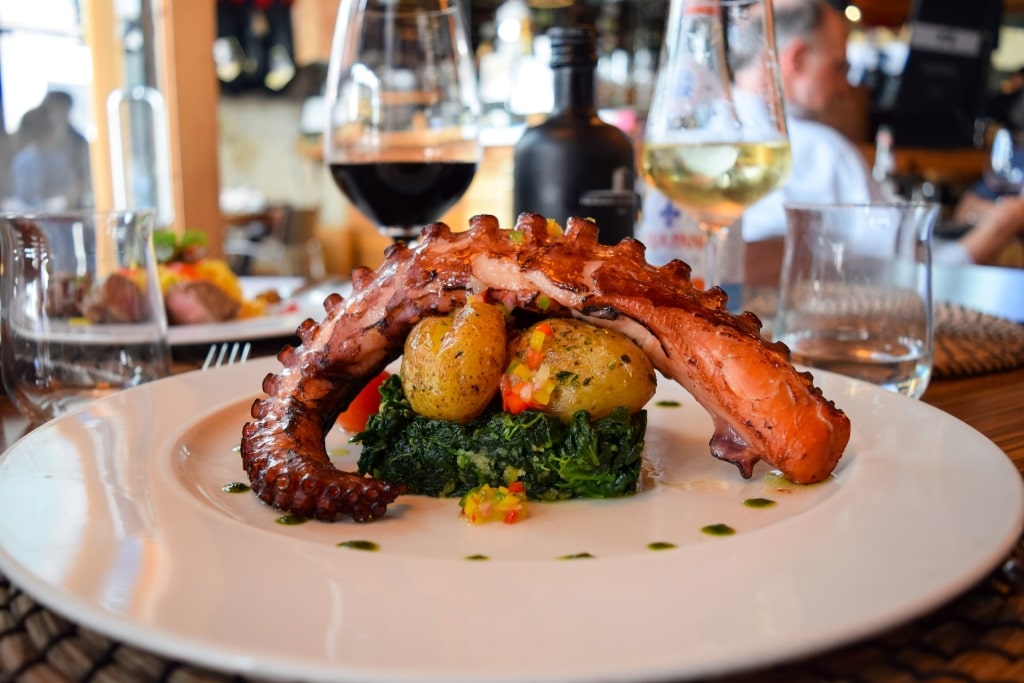
Porto is big on seafood, including polvo à lagareiro, an octopus dish that is generously dressed in extra virgin olive oil after it’s cooked.
The trick to achieving tender octopus is to simmer it gently for around 45 minutes, though the exact timing will depend on the weight. This fragrant dish, consisting of cilantro, garlic, onion, lemon, and bay leaves, is simple in its preparation and typically sees the octopus boiled with bay leaves and onion.
Polvo à lagareiro
Once it has cooked and cooled, the octopus is sliced and brushed with olive oil and grilled over charcoal to give it a chargrilled finish. The rest of the ingredients are then combined to make a dressing, which is liberally poured over the octopus.
Enjoy this meaty, but delicate dish with potatoes or rice, and salad, ideally with a sea view, washed down with a crisp and fruity glass of Douro rosé. Taberna dos Fernandes, near Porto’s waterfront, is the perfect spot to sample polvo à lagareiro on vacation.
Arroz de Pato
Arroz de pato
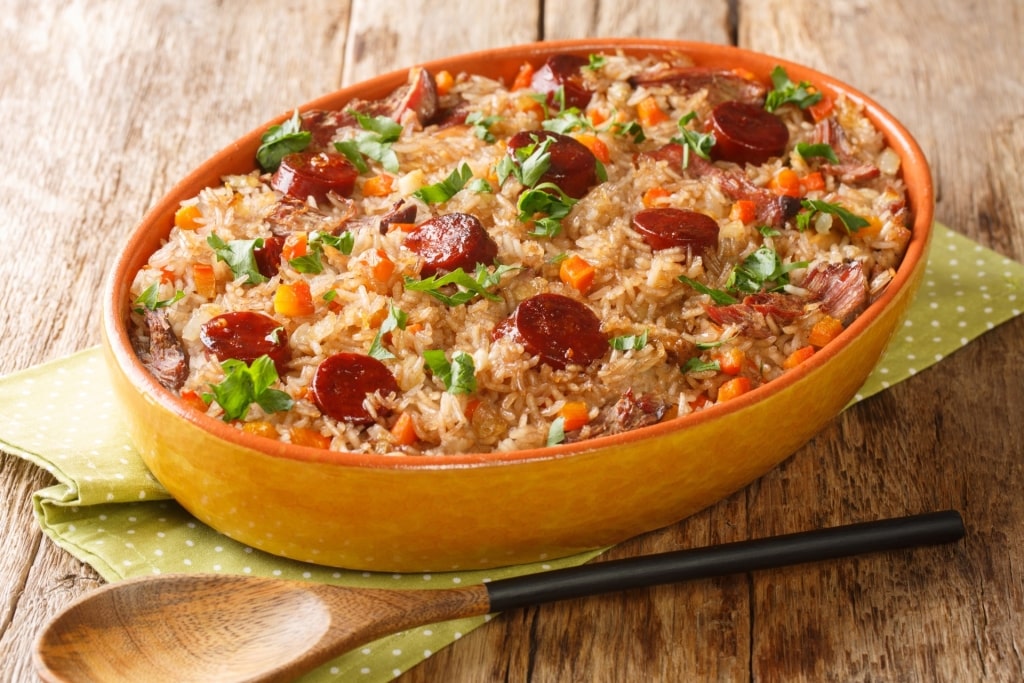
This beloved Portuguese dish, which translates as duck rice, is as comforting as it is delicious, and full of flavor. Shredded duck is layered with short-grain rice and topped with slices of chouriço, a type of Portuguese smoked sausage that’s packed with garlic, paprika, and often, other spices. Arroz de pato is baked in a rich broth until the top is crispy.
Try this revered dish at A Cozinha do Manel on Rua do Heroísmo, located opposite Heroísmo subway station. You’ll spot the restaurant by its sapphire-blue tiles on the building’s exterior. Inside, there’s a narrow bar lined with Portuguese wines leading to a restaurant at the back. With photos of past patrons and pretty tiles adorning the interior, it’s a charming spot for a lunch of fried octopus and arroz de pato.
Arroz de Marisco
Arroz de marisco
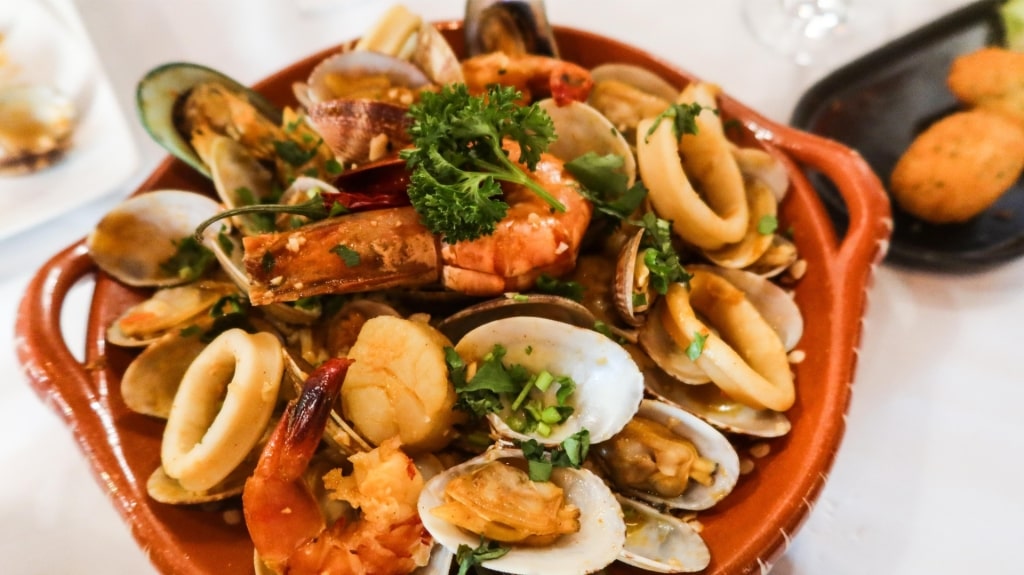
This iconic Porto food is a seafood rice stew that’s perfect for sharing. It’s made using arroz carolino, short-grain rice, which is known for soaking up flavors and giving a creamy finish.
The rice is first simmered in a fish and shellfish stock, with olive oil, garlic, onions, white wine, and tomato.
Arroz de marisco is completed with a cornucopia of seafood: clams, shrimps, mussels, cuttlefish, and lobster, and is similar to bouillabaisse and risotto.
Broa de Avintes
Broa de Avintes
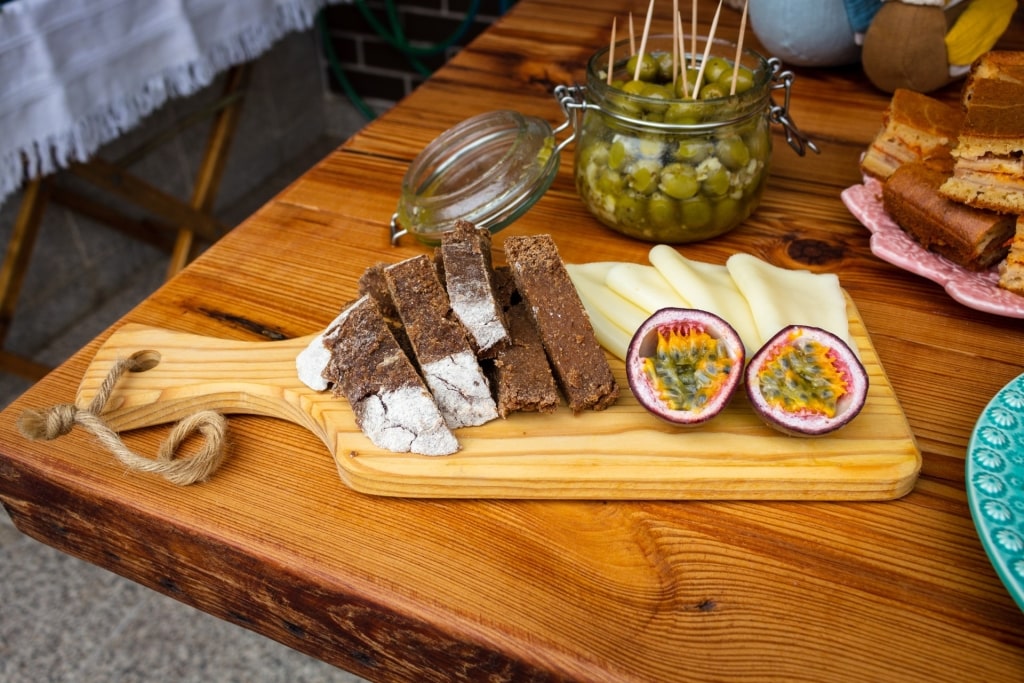
This traditional Portuguese bread has a dark, chestnut hue, and is especially popular in northern Portugal. Broa de Avintes is unusual in that it’s made using corn and rye flour and baked for up to six hours, giving it a distinct color and dense quality.
The result is a sweet and earthy flavor, pairing well with butter, cheese, and cured and smoked meats. It’s also served as an accompaniment to wholesome stews and soups, and is usually served at festivals and family gatherings.
For the real deal, sample broa de Avintes in its destination of origin, Avintes, just outside of Porto. Once baked in community ovens, it’s celebrated with a festival held in its honor, Festa da Broa de Avintes, every August.
Rabanadas à Moda do Porto
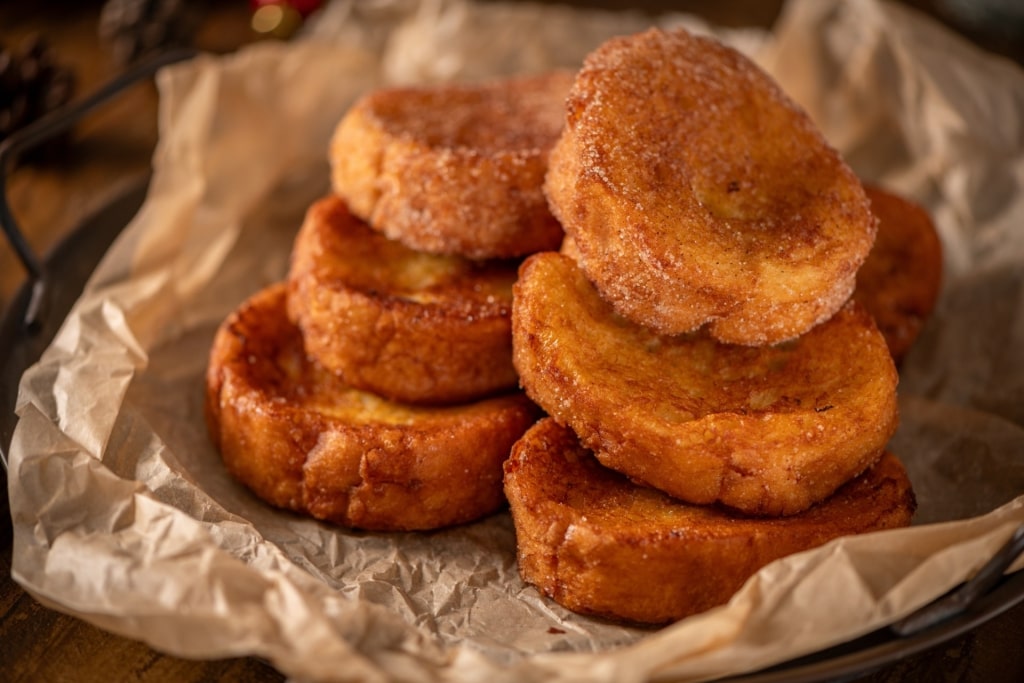
Rabanadas à moda do Porto
Rabanadas à moda do Porto is French toast served the Porto way—lavished in port and honey. Often served during the festive period, this Porto food sees thick-cut white bread soaked in milk, sugar, and cinnamon, then dipped in egg, and fried until golden brown.
The fried bread is then sprinkled with more sugar and cinnamon and drizzled with syrup or a Port reduction. Savor this luxurious dish with a frothy cappuccino at Café Majestic on Rua Santa Catarina, a belle époque grand coffee house.
Pão de Ló de Ovar
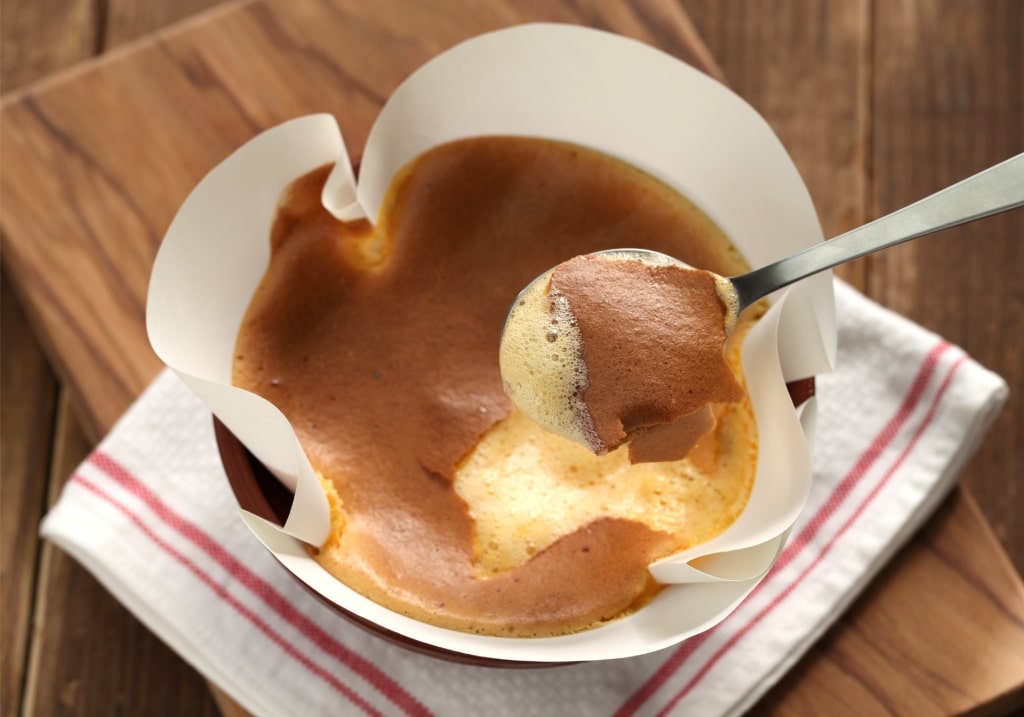
Pão de ló de Ovar
Originating in Ovar, a short distance south of Porto, the sweet pão de ló de Ovar is one of Portugal’s most famous sweet treats. A cake made with eggs, sugar, and flour, it’s traditionally baked in white parchment paper within a clay pot, with the paper cradling this deliciously light sponge cake when it’s served.
Once baked, it is pillow-soft with a creamy texture on the inside, with a golden-brown crust. If you’re a fan of pastel de nata—the egg-custard tart Portugal is famous for—chances are, you’ll love this, too.
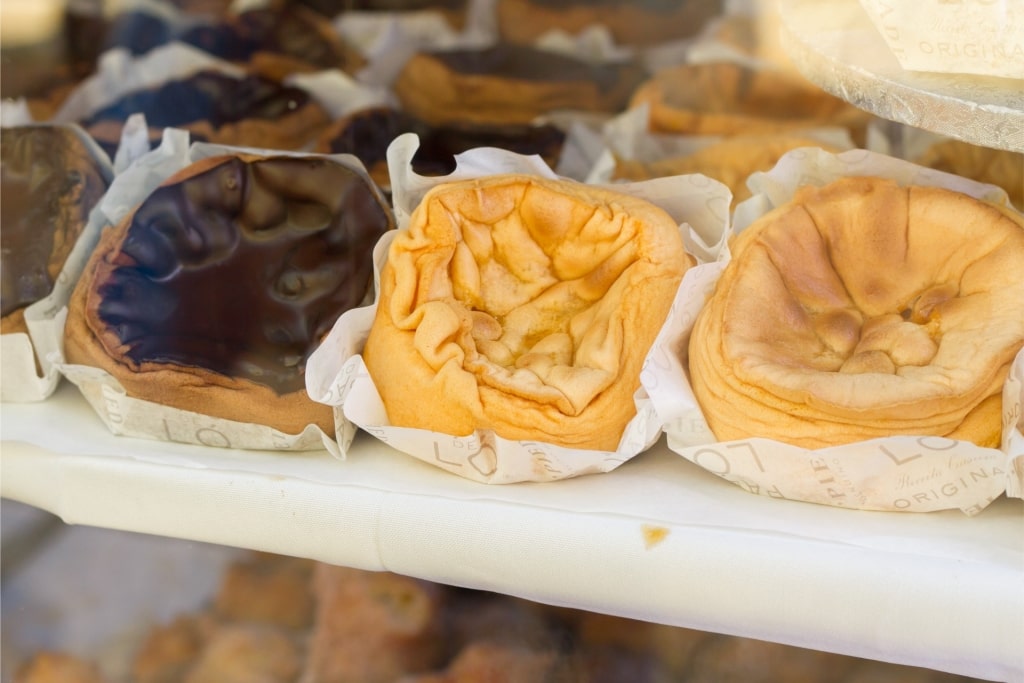
Pão de ló de Ovar
Though it was traditionally a festive dessert, pão de ló de Ovar is eaten year-round, sold at pastry shops and bakeries, including the charming Casinha do Pão de Ló, which translates as Sponge Cake House, in Ovar.
Tucked into an unassuming residential strip, Dr. José Falcao Street, Casinha do Pão de Ló is well worth the short pilgrimage from Porto to Ovar, with a train service connecting the two coastal cities in 40 minutes.
Tripas Doces
This indulgent, pancake-like sweet snack has nothing to do with tripe—much to the relief of many. It’s a thin, crepe-style pancake made from a light batter that’s cooked on a hot plate. To serve, it’s folded over with a variety of filling options inside, such as chocolate spread, custard, and fruits.
Tripas doces originate in Vila Nova de Gaia, just across the river from Porto, though you’ll find them all over the city, often sold on street stalls, at festivals, and fairs. For a savory version, order tripas salgadas, stuffed with cheese or ham.
Arroz de Cabidela
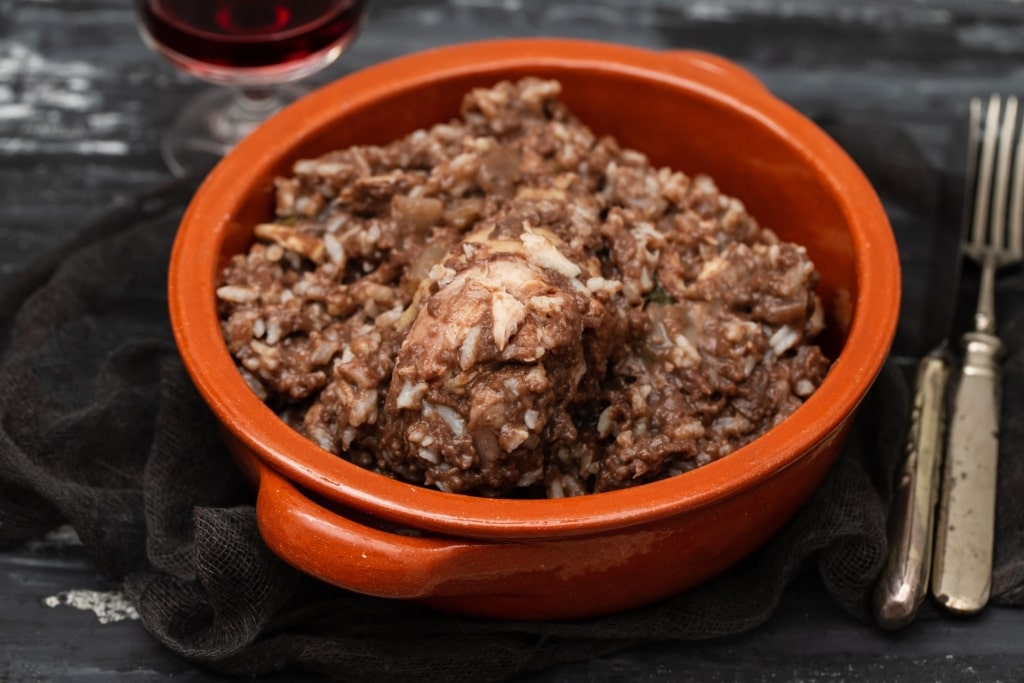
Arroz de Cabidela
Porto food for a savory palate includes arroz de cabidela, which is essentially chicken and rice made with chicken blood. This is added to the dish during the cooking process, along with vinegar or red wine, giving the dish a burgundy shade. Arroz de Cabidela also features onions, garlic, bay leaves, olive oil, and black pepper, with the end result a robust depth of flavor.
Try arroz de cabidela at Solar Moinho de Vento, a charming Porto restaurant facing the colorful Azulejos Painel mural by Joana Vasconcelos in the buzzy Baixa neighborhood.
Posta à Mirandesa
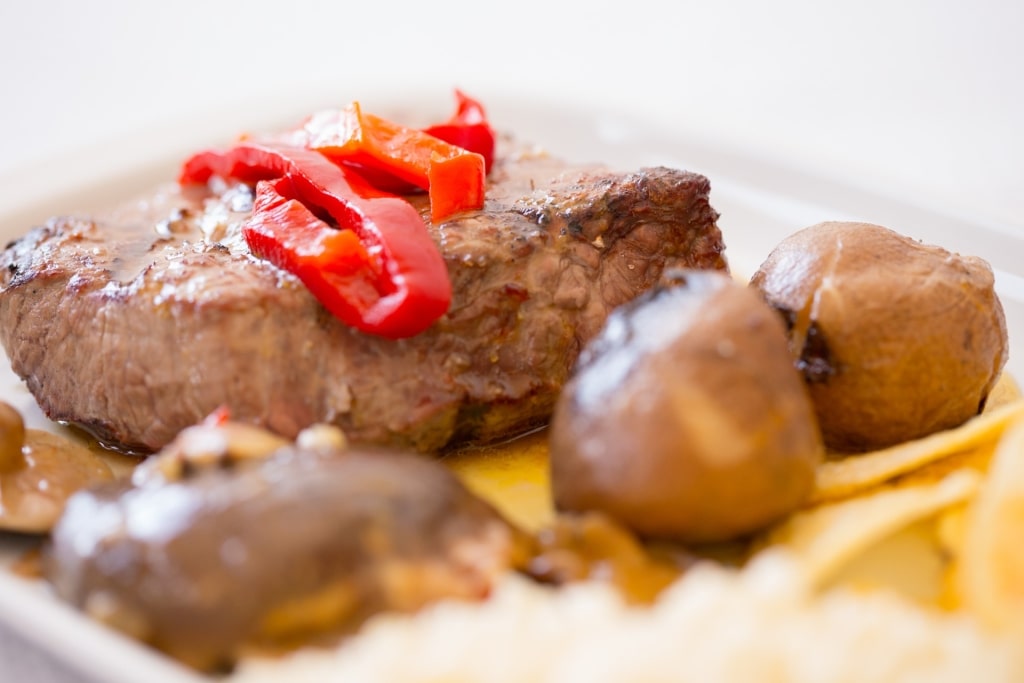
Posta à mirandesa
This delectable steak is a Porto food consisting of thick-cut beef from the native Mirandesa breed—hailing from the northeast region of Portugal—that’s known for its delicate, tender flavor. Posta à Mirandesa is seasoned with salt and cooked medium to rare inside, with a seared brown exterior.
Traditionally, this protein-rich dish is grilled over hot coals and sometimes smoked, which adds to the full-bodied taste. Garlic, olive oil, and paprika are optional, along with sides of salad, potatoes, and sautéed vegetables.
Sopa da Pedra
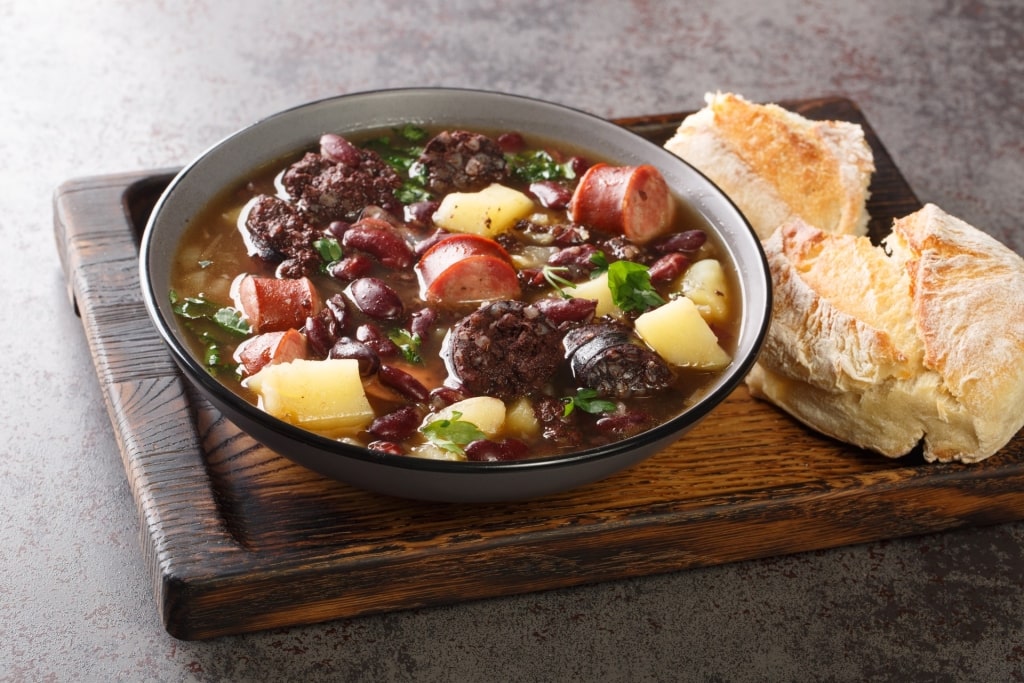
Sopa da Pedra
The translation of this generations-old dish is stone soup and, according to legend, its birthplace is the town of Ribatejo. The story goes that a hungry friar arrived in the town searching for food. He asked local villagers for a pot of boiling water so he could make his “stone soup.”
The friar then placed a stone in the pot and suggested villagers contribute beans, potatoes, and sausage to add to it, which turned into a rich and comforting feast, with the stone said to represent generosity and community spirit.
This triumphant dish is widely eaten in households and restaurants in Portugal, often with additional ingredients of cured meats, onion, garlic, and bay leaves, and accompanied by slices of buttered bread. If you’re hoping to try it in Porto, inquire at more rustic, traditional restaurants.
FAQs
Is Porto a good food city?
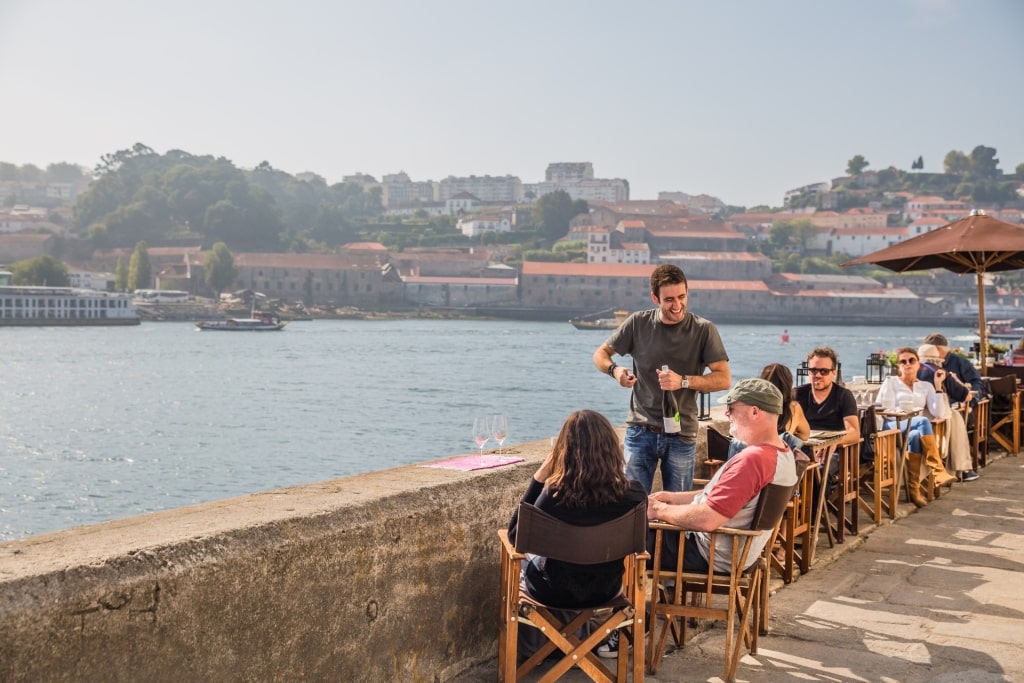
Restaurant in Porto
Absolutely! Food in Porto is among the best in Europe, with outstanding seafood, local and regional produce, gorgeous Port wine, and a delicious selection of sweet treats to sample at cafés, restaurants, bakeries, and markets.
What dish is Porto most famous for?
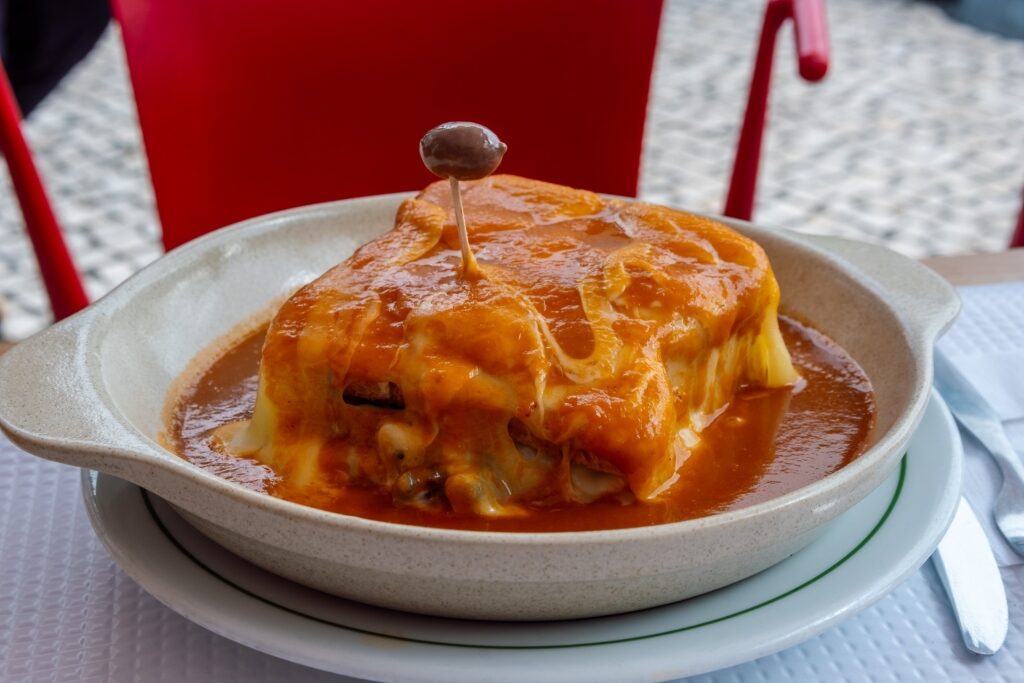
Francesinha
Food in Porto is, arguably, most famous for the francesinha sandwich. This meat-heavy meal is not for the faint-hearted, featuring layers of cured ham, smoked sausage, and grilled or roast steak, which is lathered in melted cheese.
The sandwich is often smothered in a spicy tomato and beer sauce and, as if that weren’t calorific enough, is often served with a fried egg on top and a side of fries. Francesinha might not be the prettiest plate of food, but it’s certainly tasty. Order one at Café Santiago on Rua Passos Manuel with a chilled local cerveja.
Which is the best food market in Porto?
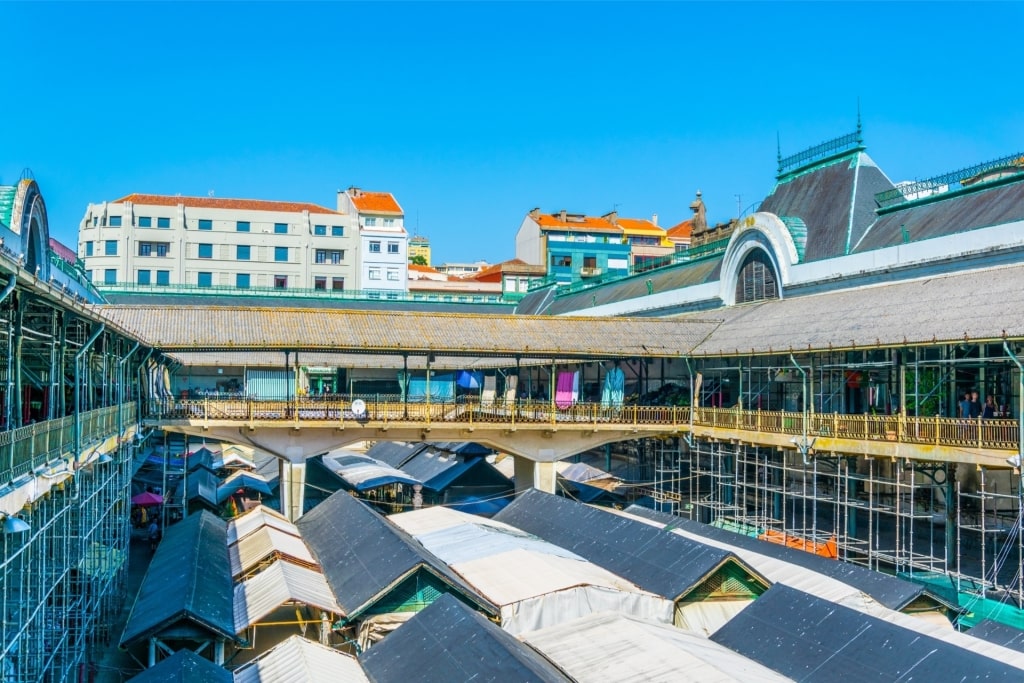
Mercado do Bolhão
Dating back to 1837, Mercado do Bolhão is not only the best market for food in Porto, it’s also the most historic. Bolhão is home to around 70 vendors and is packed with fragrant spices, herbs, and flowers.
Stalls feature Portuguese cured meats, cheeses, fish, including bacalhau and a variety of canned fish, and an array of fresh produce and baked goods, including heavenly pastel de nata custard tarts.
What time does dinner typically start in Porto?
Polvo à lagareiro
Like many European cities, dinnertime in Porto is generally later than in the United States. Locals might sit down for dinner at around 8 p.m. and actually eat at around 9-10 p.m. That said, most restaurants begin serving dinner from 6 or 7 p.m. onwards.
If there is a particular restaurant you are keen to try, check ahead and make a reservation. Consider a lunchtime reservation, too, after some sightseeing and wandering the city’s characterful streets.
Are there any food customs I should know about?
Francesinha
Traditional Porto restaurants will likely serve bread, olives, and even cheese or cured meats, brought to the table once you’ve been seated. Unless stated, these are not free and will incur a small cover charge. They are usually inexpensive and are designed to be enjoyed while perusing the menu.
Wine is generally very good in Portugal, made all the better because it is locally produced. Try the house wines, which in most restaurants are inexpensive and delicious. Port is famous in Porto, though it’s not usually drunk with a meal. Order it as an aperitif, with cheeses, or after your meal.
Bacalhau à lagareiro
Bacalhau, cod, is Portugal’s national dish and there are many ways—apparently 365—to prepare it. It’s common to share dishes around the table in Porto, too, so don’t be afraid to order a few.
Tipping in Porto is generally not included in the bill. It’s not compulsory, but if you’ve enjoyed your meal and service, a 5-10 percent tip is recommended at restaurants.
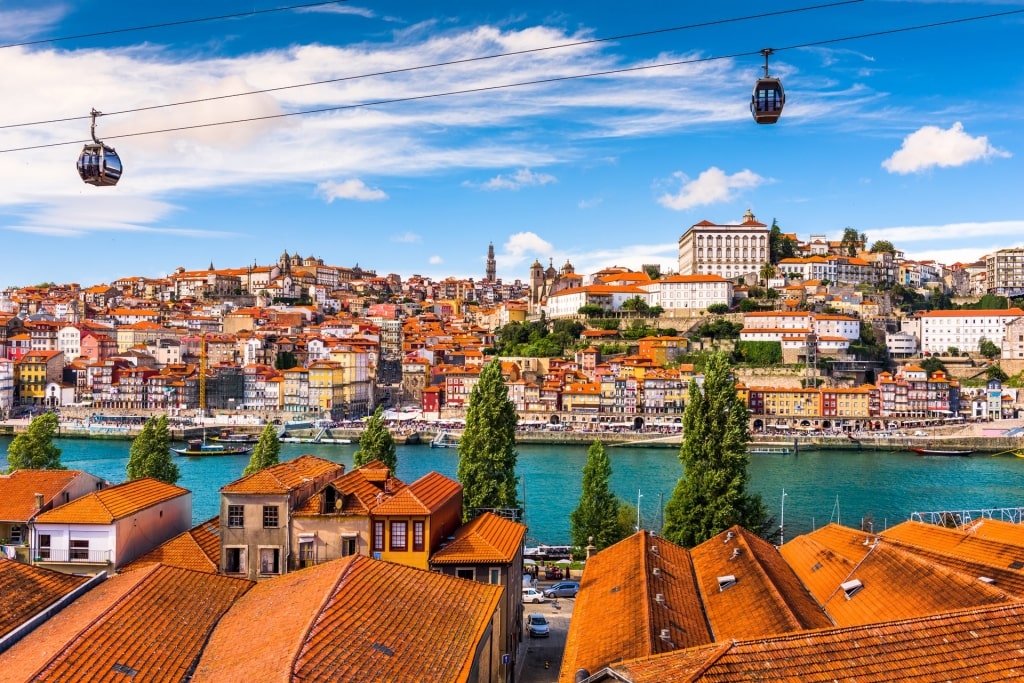
Porto
If you’ve been tantalized by the food in Porto—along with the city’s rich culture, historical landmarks, and pretty streetscapes—explore our cruises to Porto.