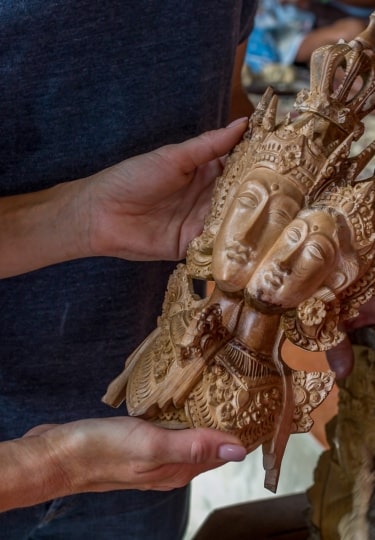
It’s practically impossible to visit the Island of the gods and not return with at least a few Bali souvenirs in your suitcase. Aesthetically pleasing homewares, painstakingly detailed handmade fabrics, and smaller items that let you carry a taste or scent of this magical island home all make for excellent mementos that are much more memorable than a fridge magnet.
Balinese Hinduism heavily influences Balinese handicrafts, and many of the finest things to buy in Bali are unique to the island. While there are some similarities between the fabrics, ceramics, and fashions found in Bali and elsewhere in Indonesia, the local styles—from weaving to wood carving—have evolved independently. This ensures a seemingly endless supply of authentic, unique souvenirs that are near-impossible to find elsewhere.
From the wax-heavy, more contemporary Balinese batik fabrics and storytelling masks depicting Balinese Hindu mythology, to sauces and spa products, Bali’s souvenir selection is sublime.
Canang Sari Incense
Canang sari incense
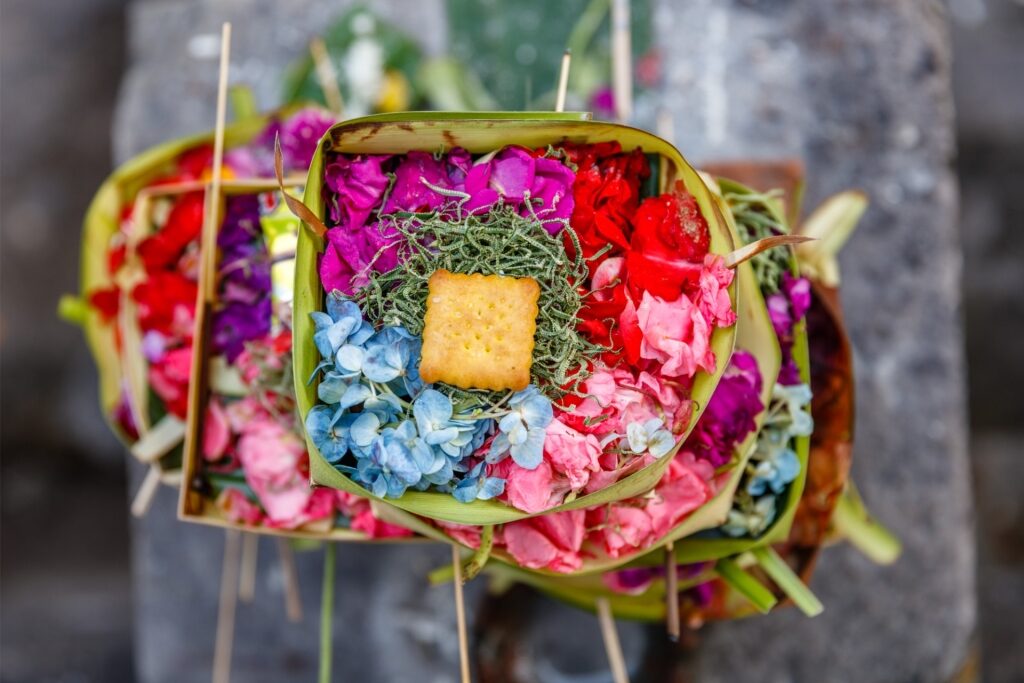
Wherever you set foot in Bali, chances are high that you’ll be stepping around canang sari. These small, daily offerings to the Gods, placed inside a pocket-sized basket woven from palm or banana leaves, are ubiquitous on the island and an essential element of Balinese Hinduism.
Filled with colorful flowers, betel leaves, rice, and sometimes seemingly random offerings, the miniature baskets are a near-certain memory you’ll carry home with you—along with the scent that wafts from the slow-burning incense placed inside.
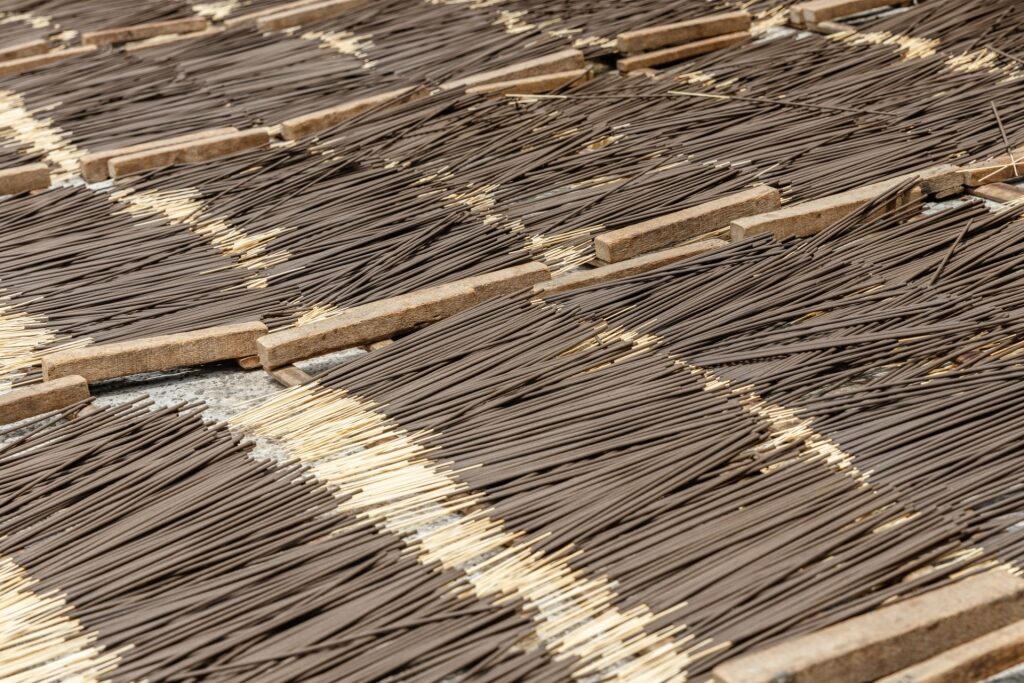
These incense sticks, or dupa, are one of the best and easiest to carry Bali souvenirs. Floral scents such as frangipani or champak, often mixed with sandalwood, are two of the most common fragrances you’ll smell while exploring the island. As the offerings are everywhere, these incense sticks are readily available.
Canang sari
In some stores, you can also buy pre-made canang sari sets, allowing you to craft your own offering after your return. Whenever I burn one in my home, I feel instantly transported to the temples of Ubud, even though I’m a continent away.
Read: Bali Travel Tips
Ceramics
Balinese ceramic plates
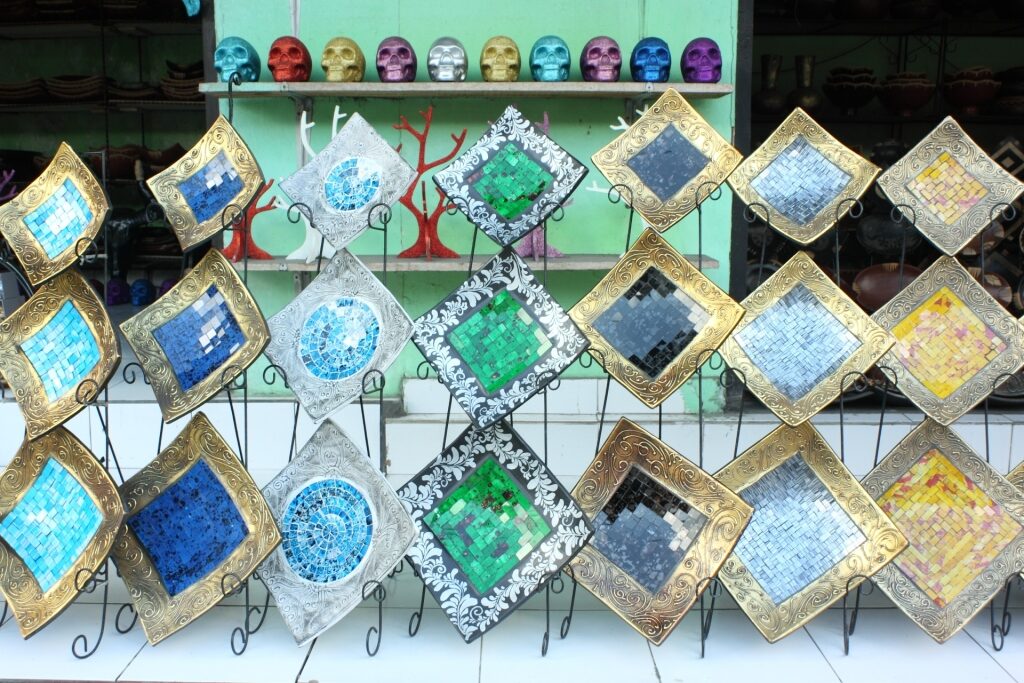
Bali souvenirs don’t come much more beautiful than those purchased from the island’s pottery studios. From terracotta plant pots and plates to individually designed decorative ceramics, you’ll find a wealth of unique, handmade items across the island.
Partly influenced by Chinese ceramics, Balinese potters often blend common Asian motifs with locally influenced patterns, resulting in particularly striking designs, especially on larger items such as vases.
The villages of Kapal and Pejaten are among the most respected places to buy traditional pottery directly from artisans. The contemporary collection at Jenggala Ceramics, in Kuta, is also considered some of the island’s best.
Balinese Batik Fabric
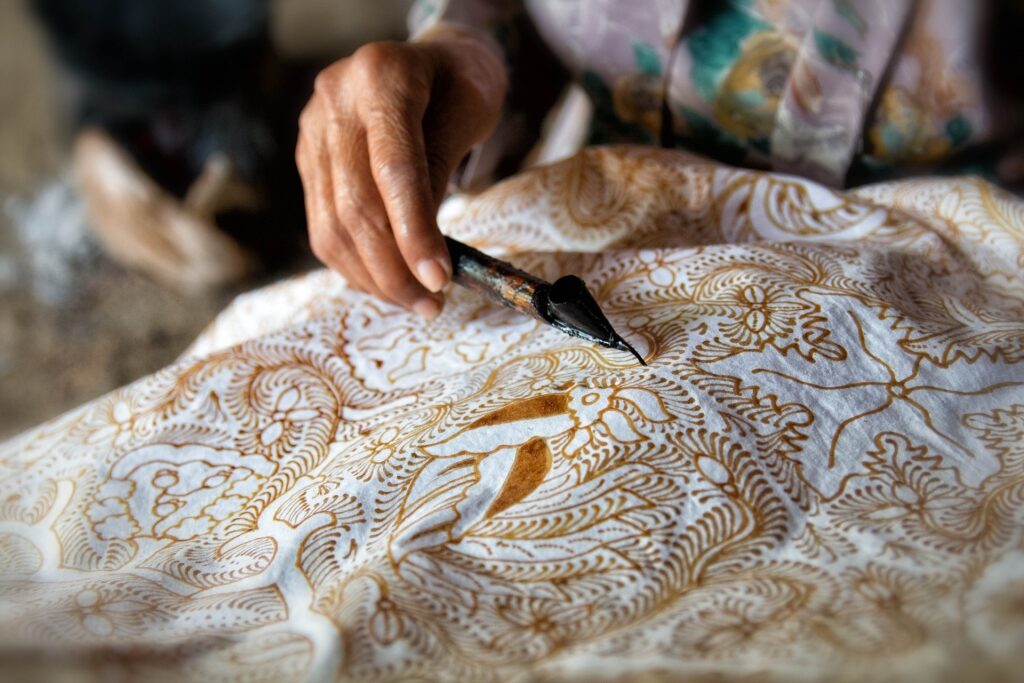
Balinese Batik fabric
Batik is one of Indonesia’s most recognizable fabrics. Inscribed on UNESCO’s Intangible Cultural Heritage of Humanity list, it’s also one of the most culturally rich things to buy in Bali.
This centuries-old practice of wax-resist dyeing fabric originates in the neighboring Indonesian island of Java, where nearly all batik focuses on traditional symbolic motifs. By contrast, Balinese batik is far more modern, developing much of its distinct style in the 20th century.
As such, the local batik leans heavily into Balinese Hindu motifs and more contemporary natural patterns, and usually uses far more vivid colors. The use of additional wax also gives the finished product a different finish than its more traditional counterpart.
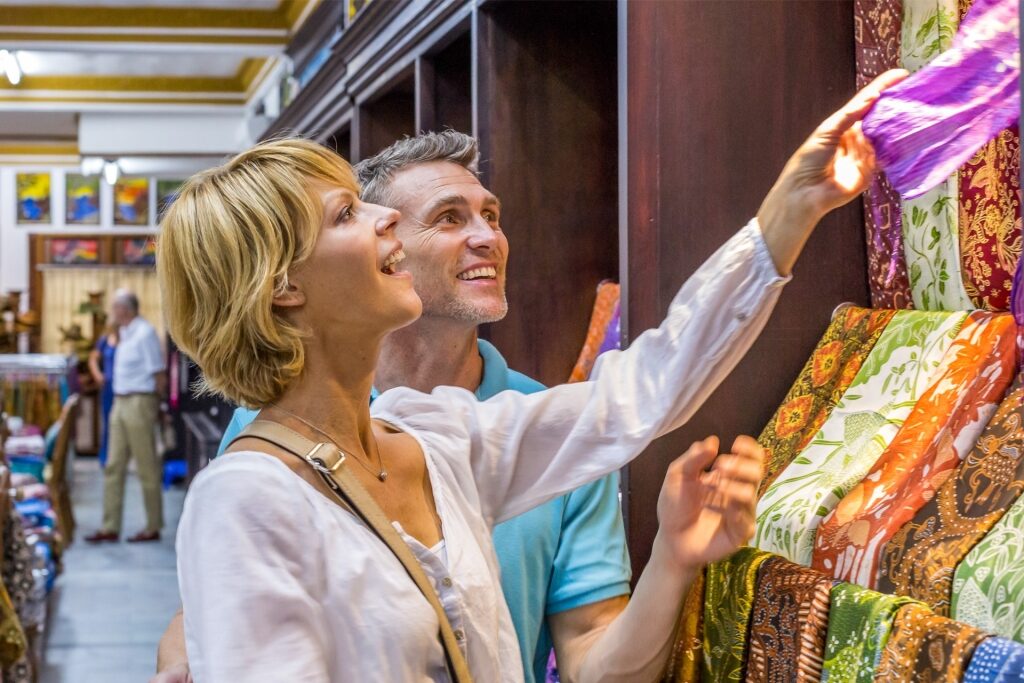
Shopping in Bali
Tohpati Village is considered one of the finest producers of Balinese batik and other hand-woven fabrics. Spending an hour strolling among the different producers is a delight, particularly when you strike up a conversation with the artisans about their personal inspiration.
Styled into sarongs, wall-hanging artworks, a scarf, and soft furnishings, there are plenty of options, all lightweight and easily packaged as souvenirs.
The most personality-rich designs are those made by hand using the canting tool, rather than stamped patterns. This is usually reflected in the price, though it’s worth confirming the method to ensure you’re buying an authentic product, especially if shopping in some of the tourist-focused markets around Kuta.
Gringsing, Ikat & Endek Woven Fabrics
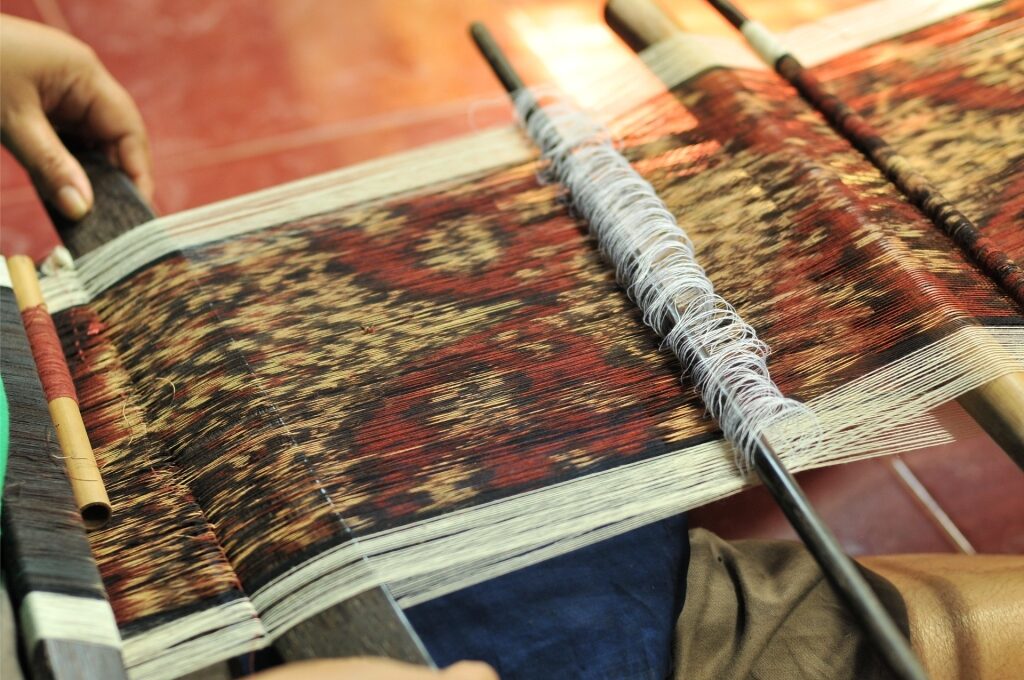
Ikat fabric
Batik might be the most famous method Bali is known for, but the island also produces a handful of other high-quality fabrics, each with its own heritage and purpose.
Ikat is one of the most prevalent. A common weaving technique across Indonesia, it uses tie-dyed yarn on a hand-operated loom to produce some magnificent patterns. Step inside any of the traditional workshops, and you’ll witness the artists working to the machine’s rhythm.
Tenganan Village is one of the most esteemed places to purchase woven fabrics. Most prized is the Balinese Gringsing, produced using a rare and respected double-ikat method. It’s often used for sacred cloth and is believed to protect from illness. Endek is a more common, Balinese version of Ikat.
Handmade Silver Jewelry
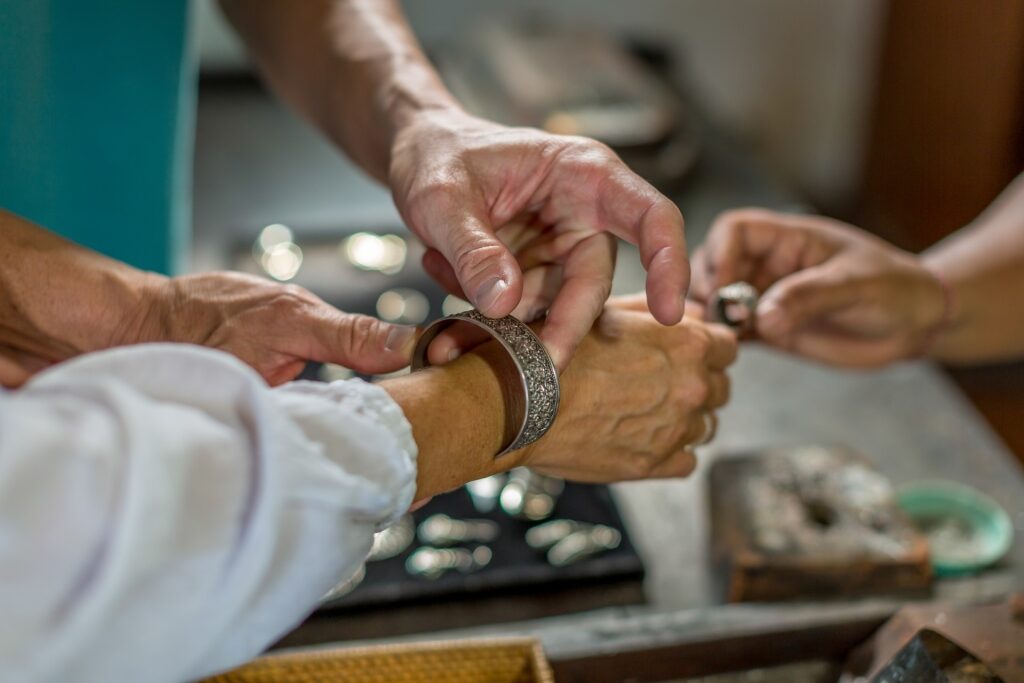
Silver jewelry
For a more discreet, wearable Balinese souvenir, opt for a one-of-a-kind piece of handmade silver or gold jewelry from Celuk Village.
This small community, a short drive northeast of Denpasar, Bali’s capital, is renowned for its expert metalsmiths who produce high-quality bracelets, rings, and necklaces.
Silver craftsmanship has been the hallmark of Celuk since the mid-1900s, and many of the artisans in the village are second, third, or fourth-generation.
In Balinese culture, silver is profoundly spiritual and symbolizes purity, and the designer often guides you through their pieces, highlighting any motif’s special meanings.
Traditional Balinese Masks
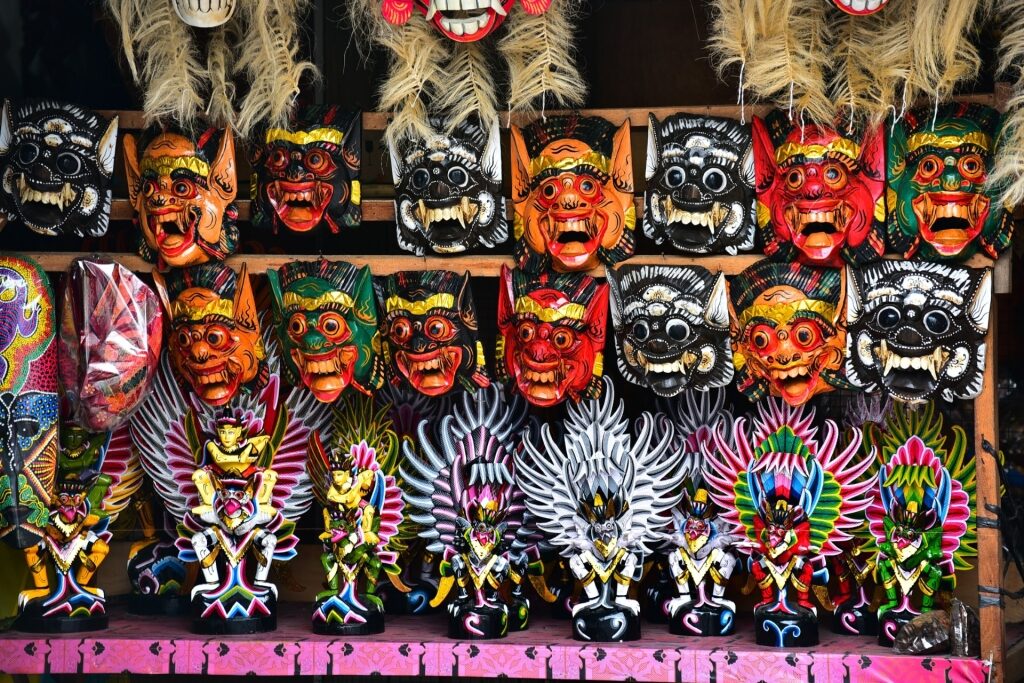
Traditional Balinese masks
Watching traditional Balinese dance performances, whether it’s the rhythmic, chanting Kecak fire dance atop the temple cliffs of Uluwatu, or a mythical Barong dance in Ubud, is one of the top things to do in Bali.
One of the most striking elements of either is the vivid, larger-than-life wooden masks worn by some performers, which enhance the storytelling of Hindu epics such as the Ramayana or introduce spiritual, and often scary, characters.
While you’re never likely to don one of these masks for a ball back home, the craftsmanship, color, and importance placed in each hand-carved wooden mask make them one of the more unique things to buy in Bali. They can make a striking wall decoration.
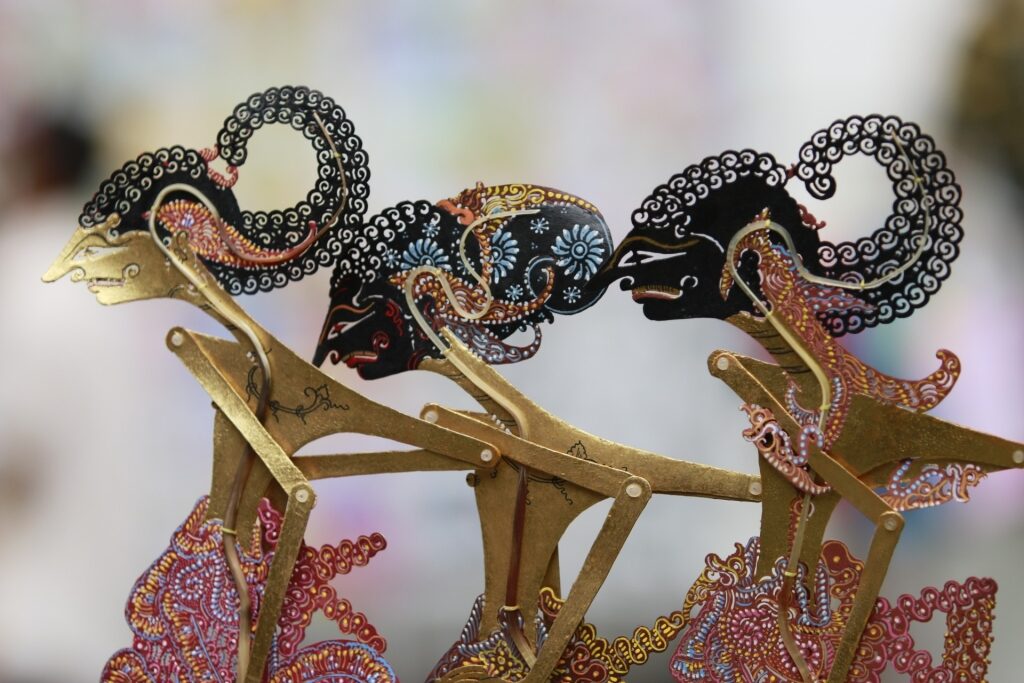
Wayang Kulit
An alternative theatrical souvenir is a characterful carved puppet used in Balinese performances, known as Wayang Kulit. Enjoy a show at Oka Kartini Cultural Center in Ubud, before browsing the many marionettes on sale in the nearby market.
Wooden Carvings
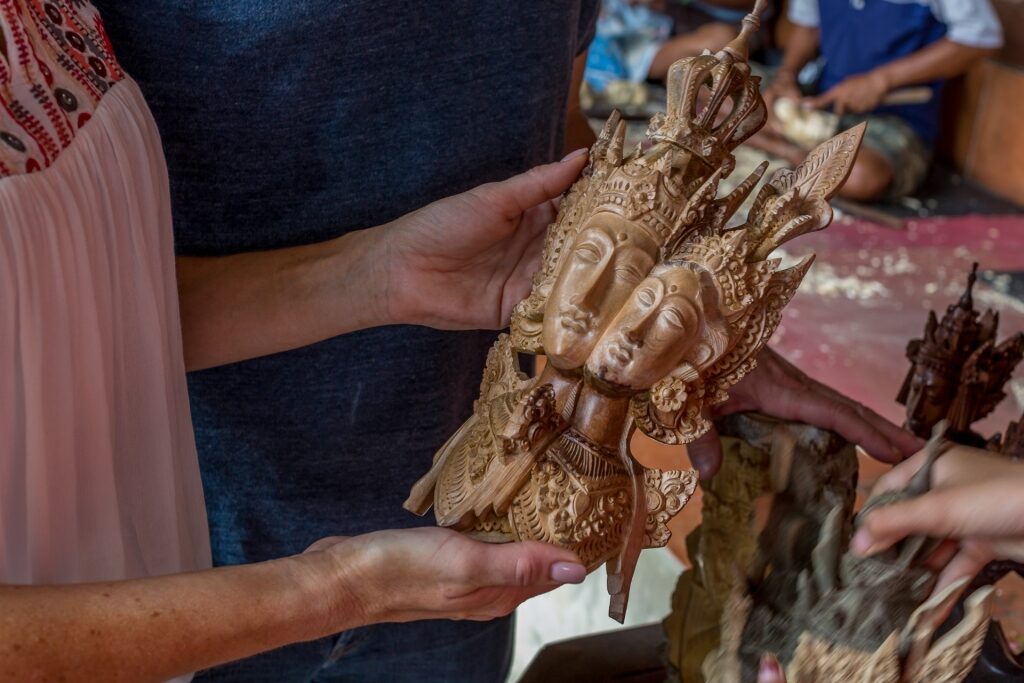
Wooden carving
Wood carving is practiced all across the island and is one of the most important Balinese art forms. Still, a few locations are particularly renowned for their craftsmanship, including Mas Village, a short drive from Ubud, Bali’s spiritual capital.
After exploring the intricate wooden carvings on the doors, statues, and embellishing elements in Ubud Royal Palace, chances are you’ll want to take a small part of this art form home. Flower-motif boxes, miniature Hindu figurines, and tableware are all easily packed for traveling.
Rattan Bags
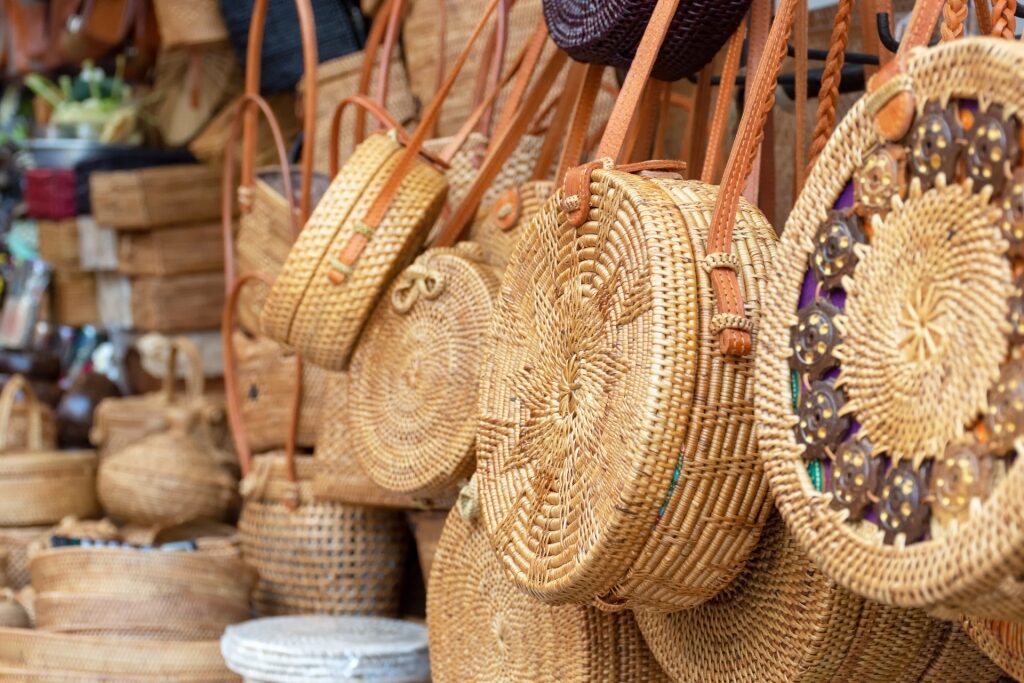
Rattan bags
One of the most instantly recognizable Balinese aesthetics is rattan. Skilled artisans have been using these spiny palms for centuries, shaping them into both essential daily items and more decorative wares.
Over time, the heritage skill has been modernized and is now often used to produce both trendy and beach-ready fashions, including fans, clutches, and over-the-shoulder bags.
The latter are especially common and come in a variety of sizes, shapes, and styles, allowing you to pick the perfect purse for any occasion.
Sambal
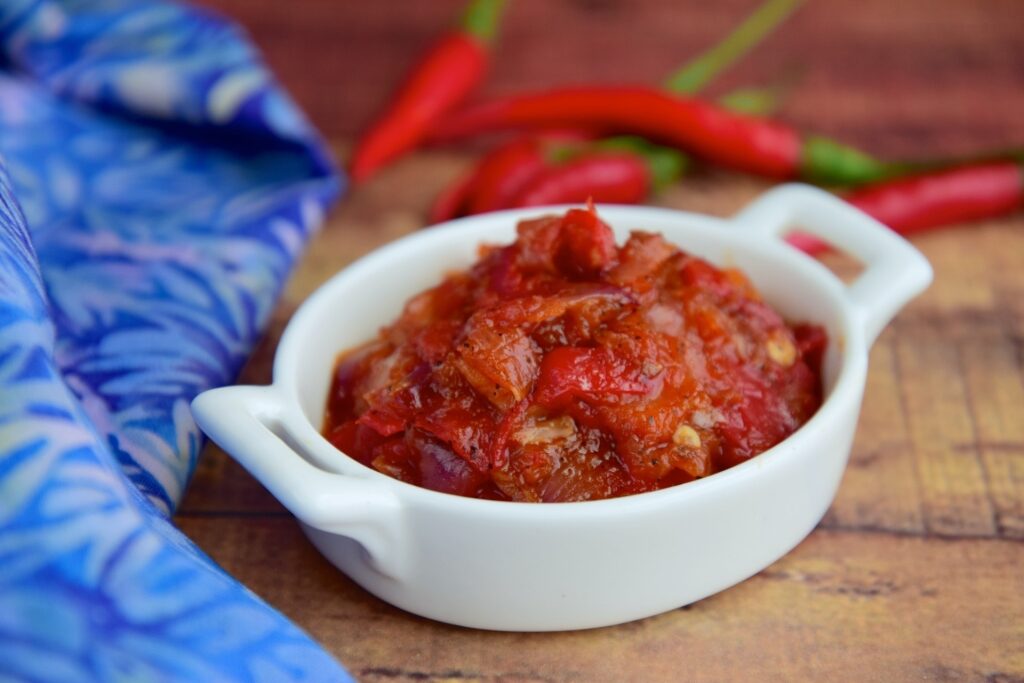
Sambal
Sit down in any warung, Bali’s small, family-run restaurants, and a bottle or bowl of deep-red, spicy sauce will likely be on the table. Sambal is Indonesia’s most ubiquitous chili condiment, suitable to serve with practically anything. But be warned; it comes in many variations.
Ranging from thick, homemade sauces packed with diced chilis to more consistent versions sold in every supermarket, each sambal has its own flavor and spice level.
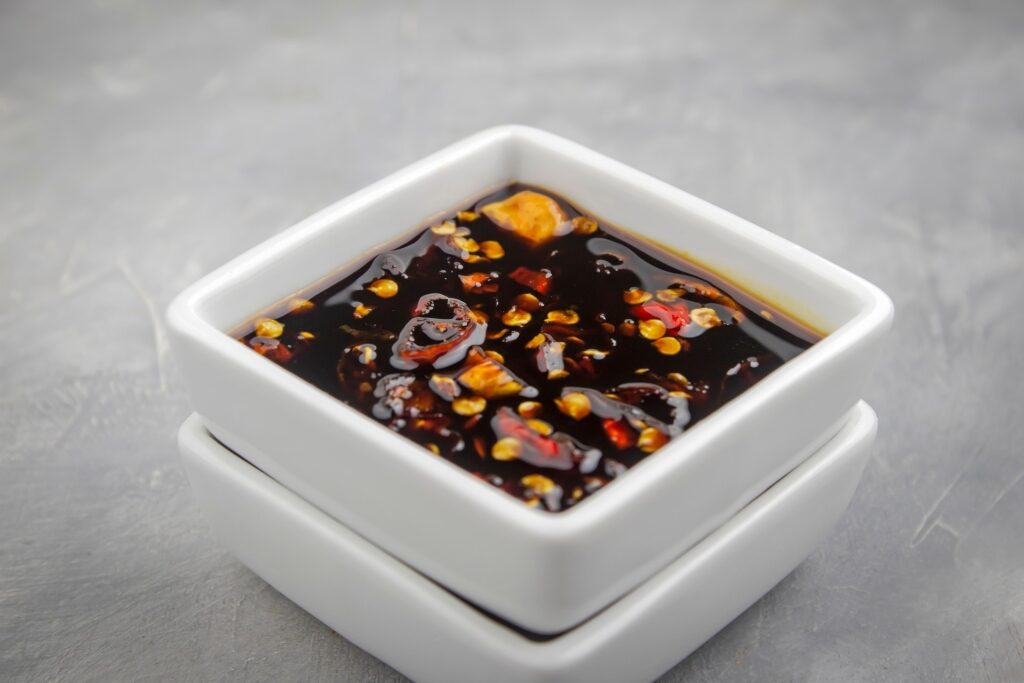
Sambal kecap
If you fancy taking a Balinese flavor home, there’s no better souvenir. Sambal Kecap is one of Indonesia’s most common types, blended with shallots and soy sauce, while Sambal Setan—setan means “devil”—made with Madame Jeanette pepper, is one of the spiciest.
Be sure to sample Bali’s local version, Sambal Matah, during your visit, as this fresh condiment isn’t available packaged to take home.
Coconut Shell Crafts
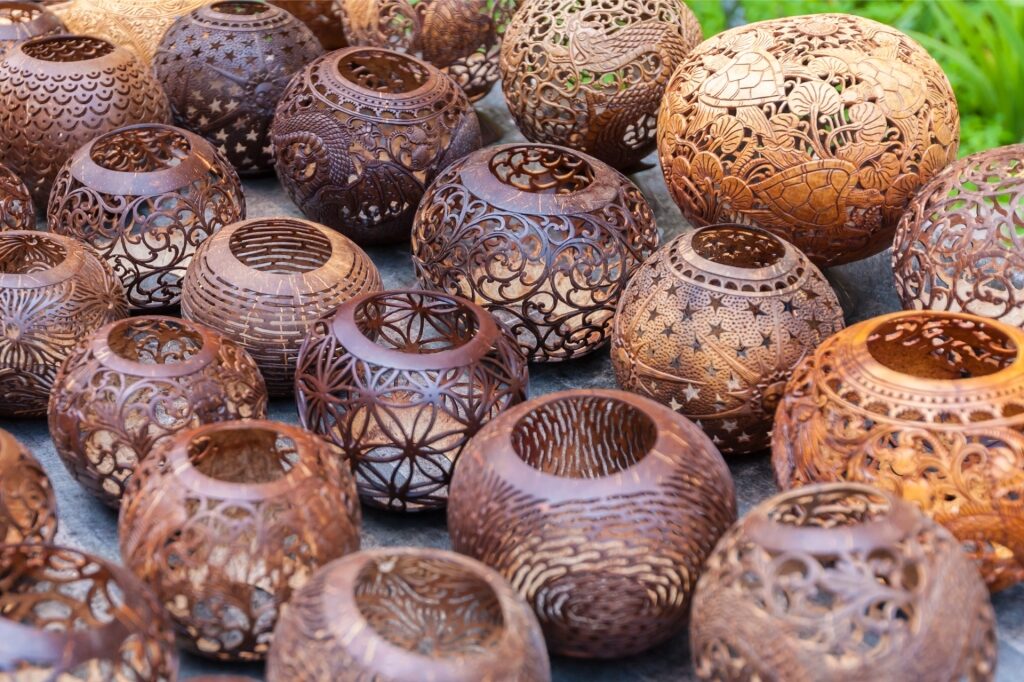
Coconut shell crafts
Whether you’re enjoying the waves crashing on Seminyak’s beaches from a vivid beanbag or resting after trekking to one of Bali’s most breathtaking waterfalls, few drinks are more suitable or rehydrating for the island lifestyle than fresh coconut water.
You’ll find coconuts sold everywhere—Indonesia is the world’s largest coconut producer—and the Balinese have made the most of this natural resource by fashioning the empty shells into an art form.
Most commonly, the shells are halved and reimagined as bowls or cups decorated with motif carvings. Yet it’s also common for the material to be cut down even smaller and fashioned into keyrings or small keepsakes, making for a compact and affordable Bali souvenir.
Spa Products & Essential Oils
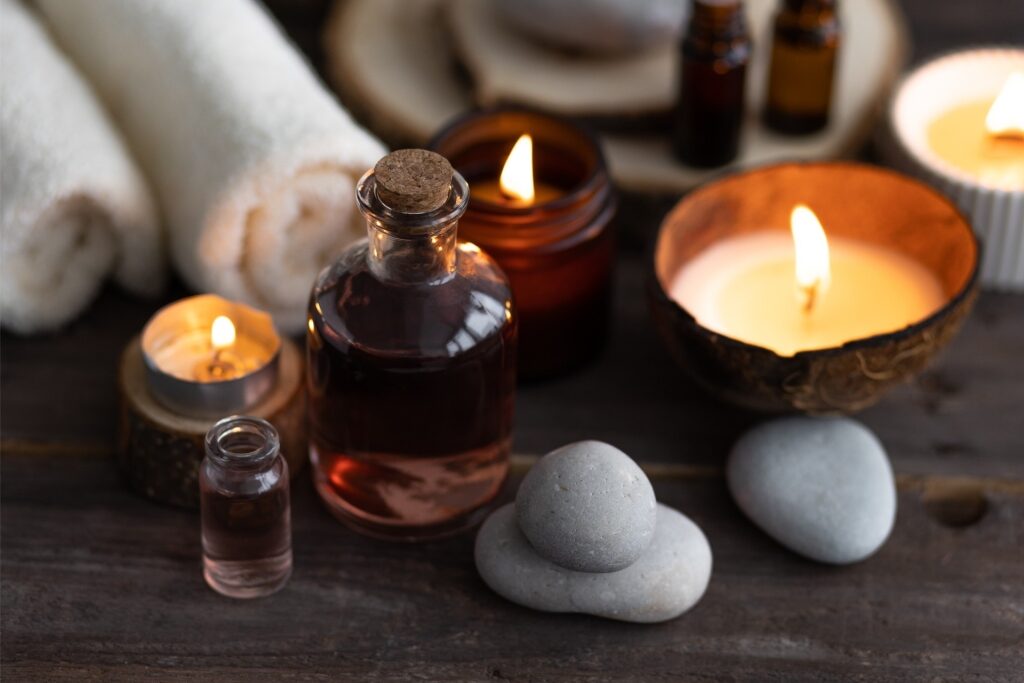
Essential oil
On an island renowned for its wellness offerings, yoga barns, and massage studios, it’s practically a rite of passage to enjoy at least one pampering treatment during your visit, even if it’s just a foot massage.
Stepping into any of Bali’s massage parlors, you’ll instantly be calmed by the fragrance of the local essential oils used. Take a little piece of Bali home with you by buying a bottle.
The distinct sweet aroma of the rare tropical ylang-ylang plant, or the more herbal patchouli flower, are two excellent choices.
Balinese Paintings
Add a splash of heritage color to your walls at home by buying a suitcase-sized canvas painted in one of the traditional Balinese art styles.
One of the most long-standing styles is kamasan, which dates back to the 17th century. Mainly used to depict narrative scenes from Balinese Hindu myths, or historically to pay homage to royalty, these classic paintings are highly detailed. You’ll find many of the best samples of this art form in its birthplace, Kamasan Village.
By contrast, another of Bali’s painting styles, batuan, is usually more somber in color. Often painted solely in black and white—though more contemporary artists experiment with kaleidoscopic compositions—these paintings generally pull inspiration from supernatural storytelling.
FAQs
What souvenirs is Bali famous for?
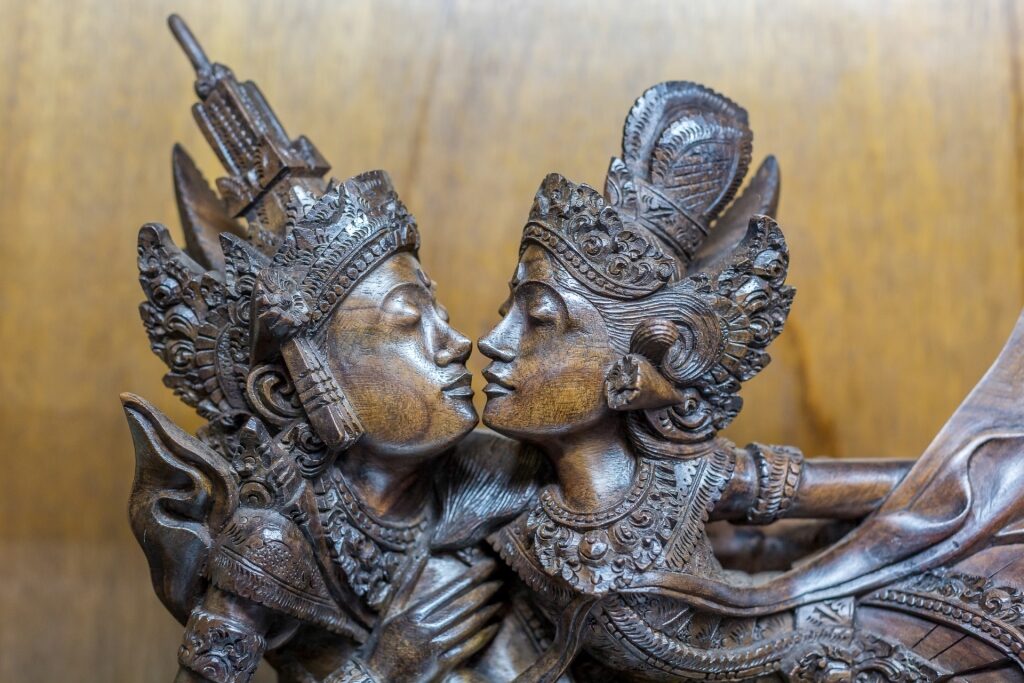
Wooden carving
The most famous Bali souvenirs are ancestral handicrafts, including hand-dyed textiles like Batik, wood-carved items such as statues and masks, and other items made from locally sourced natural materials, such as rattan products.
Where is the best place to buy souvenirs in Bali?
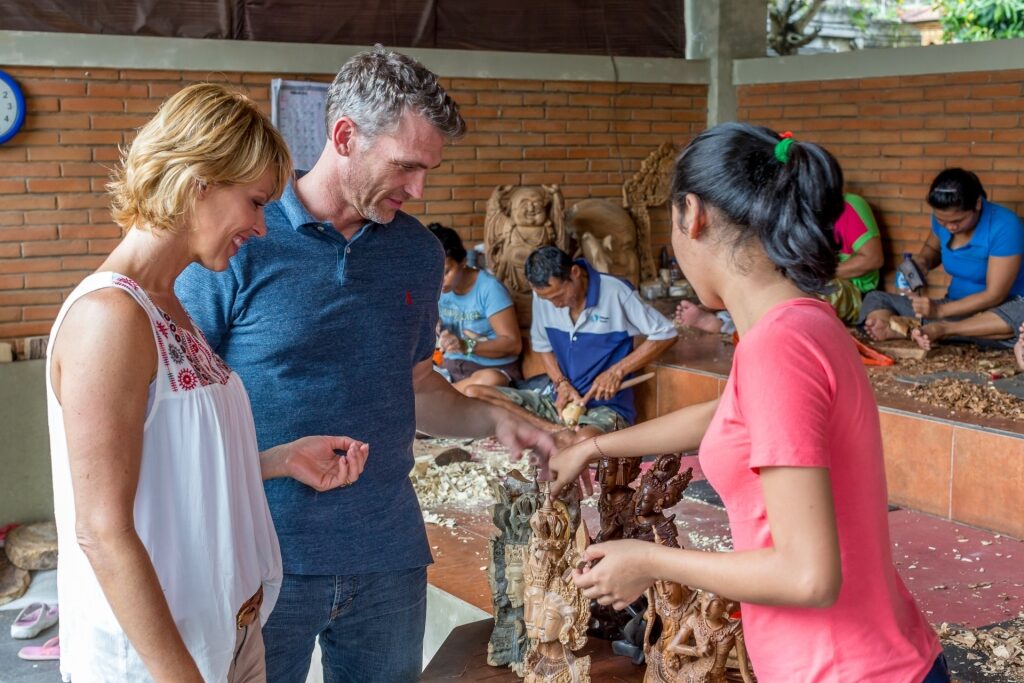
Mas Village
To buy the most authentic Bali souvenirs, head to traditional villages known for their crafts, such as Tohpati Village for batik or Mas Village for wooden carvings. Alternatively, head to the nearest art market. There are many across the island, though Ubud’s is the best known.
What is the most unique souvenir from Bali?
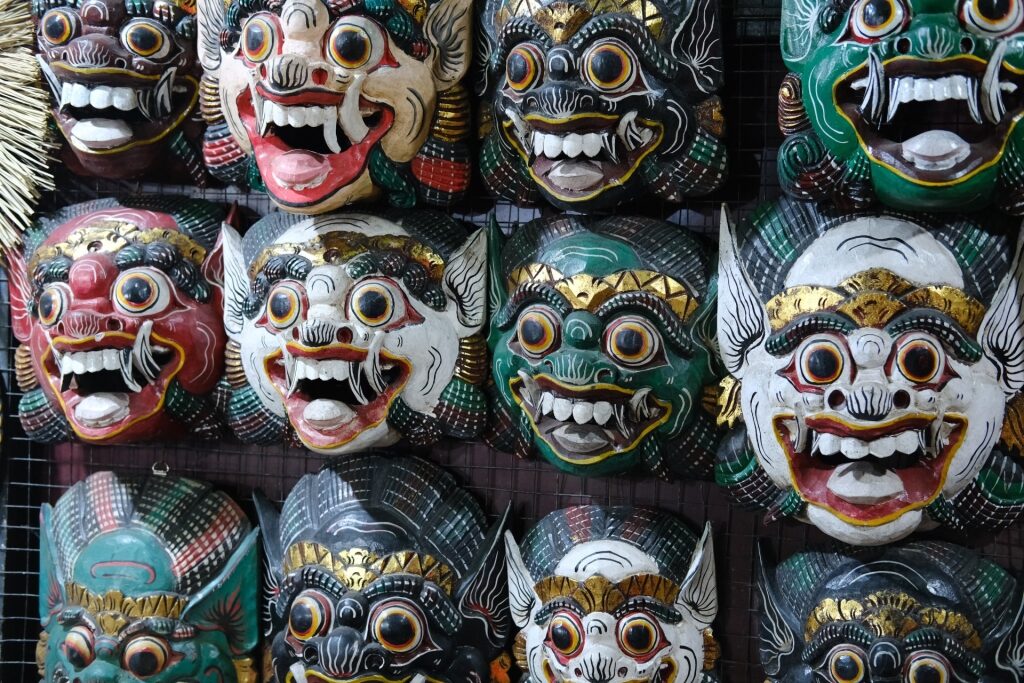
Traditional Balinese masks
Of all the things to buy in Bali, the island’s unique masks, such as those used for the Kecak dance, are arguably the most original souvenir. These striking, large masks are used to recount the Hindu story of the Ramayana and depict mythological figures, including a demon king and a monkey deity.
Are Balinese batiks worth buying?
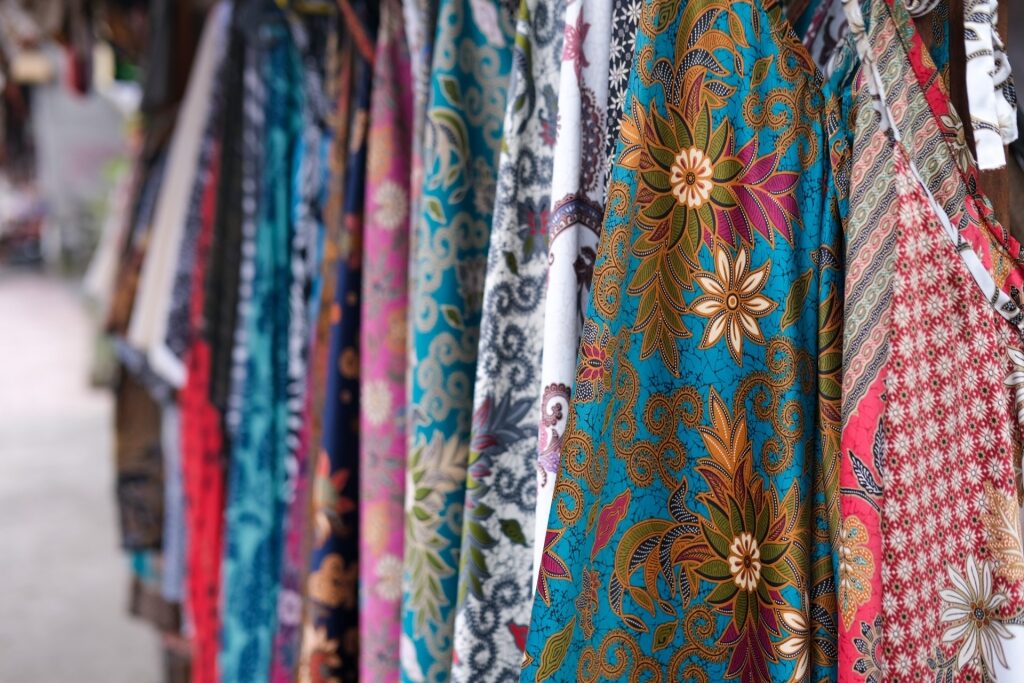
Balinese Batik fabric
Balinese batiks are absolutely worth buying and make excellent souvenirs. The fabric technique is one of Indonesia’s most special, and the Balinese version has its own unique elements. This means that while many batiks can be ordered online from abroad, some of the patterns you’ll see while exploring the island may not be easy to find elsewhere.
What souvenirs should I avoid buying in Bali?
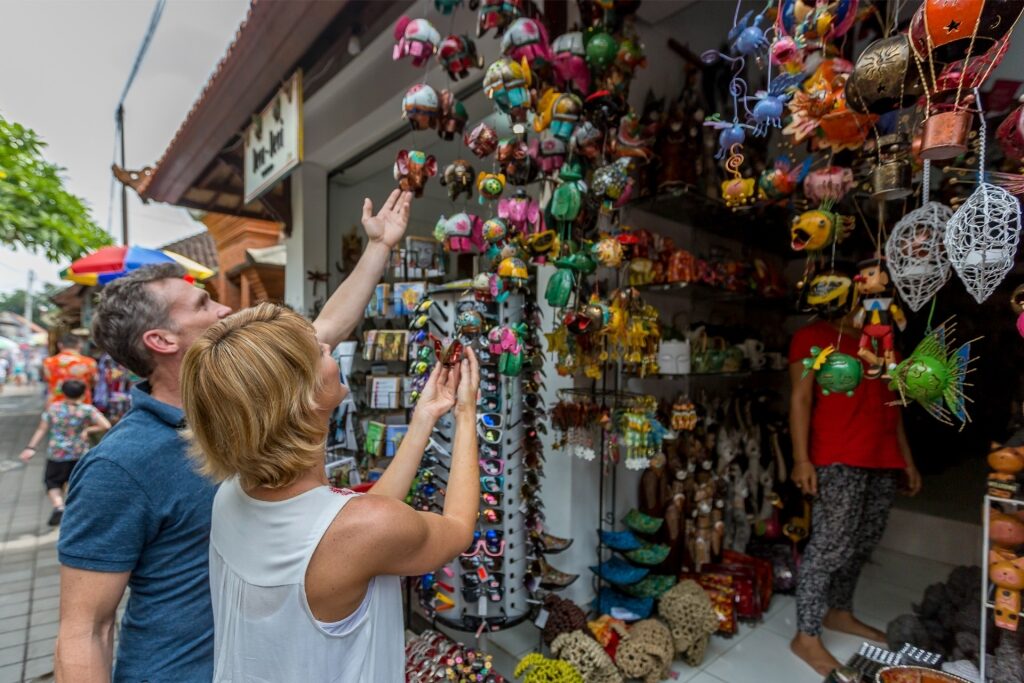
Ubud
When selecting souvenirs in Bali, keep in mind any import rules for your home country; many untreated wood products and certain foodstuffs could cause you problems at customs. Always check claims of authenticity for craft products, and avoid purchasing souvenirs made from unethical materials, such as ivory or non-environmentally friendly coral products.
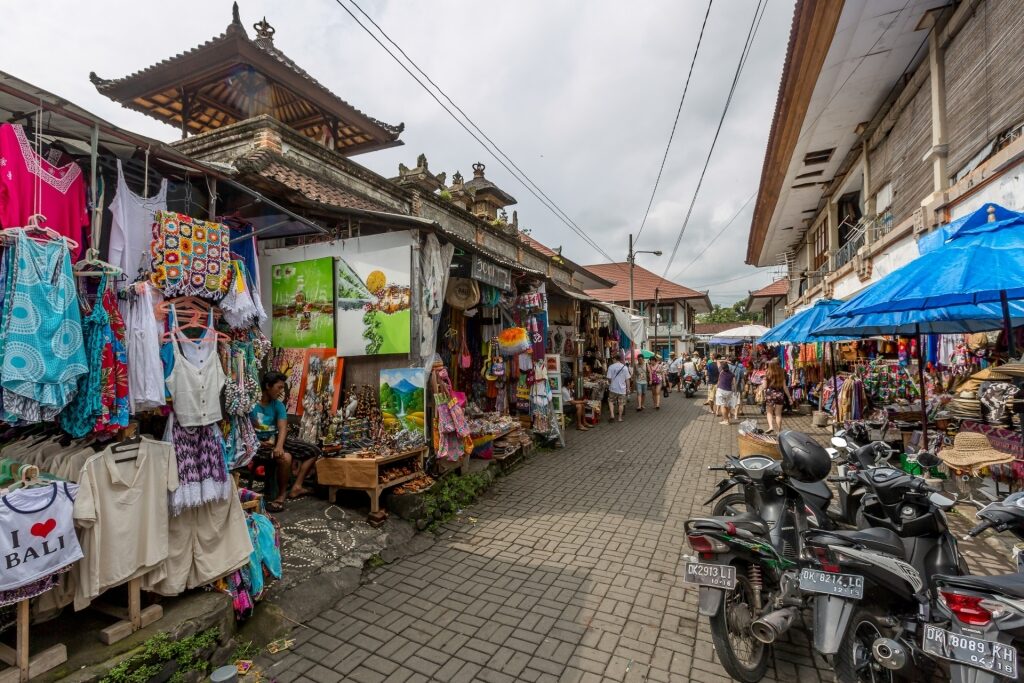
Ubud
Explore Bali’s markets and artisan workshops for yourself. Browse Celebrity’s cruises to Bali to start planning your perfect trip to Indonesia.