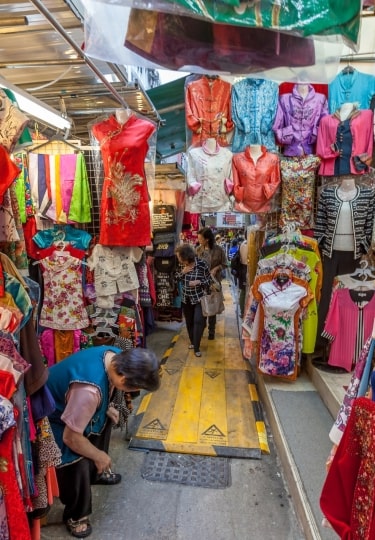
With gleaming shopping malls, designer districts, and vibrant street markets, Hong Kong souvenirs include everything from chopsticks to chess sets. This really is the city that has it all when it comes to shopping.
What’s wonderful about exploring Hong Kong is that it’s easy to squeeze in a spot of shopping between touring museums and famous landmarks, such as Victoria Peak and Avenue of Stars. From luxurious silks to soothing teas, here are the 12 best Hong Kong souvenirs to buy on vacation, with tips on shopping in this thrilling city.
Chinese Tea
Chinese tea
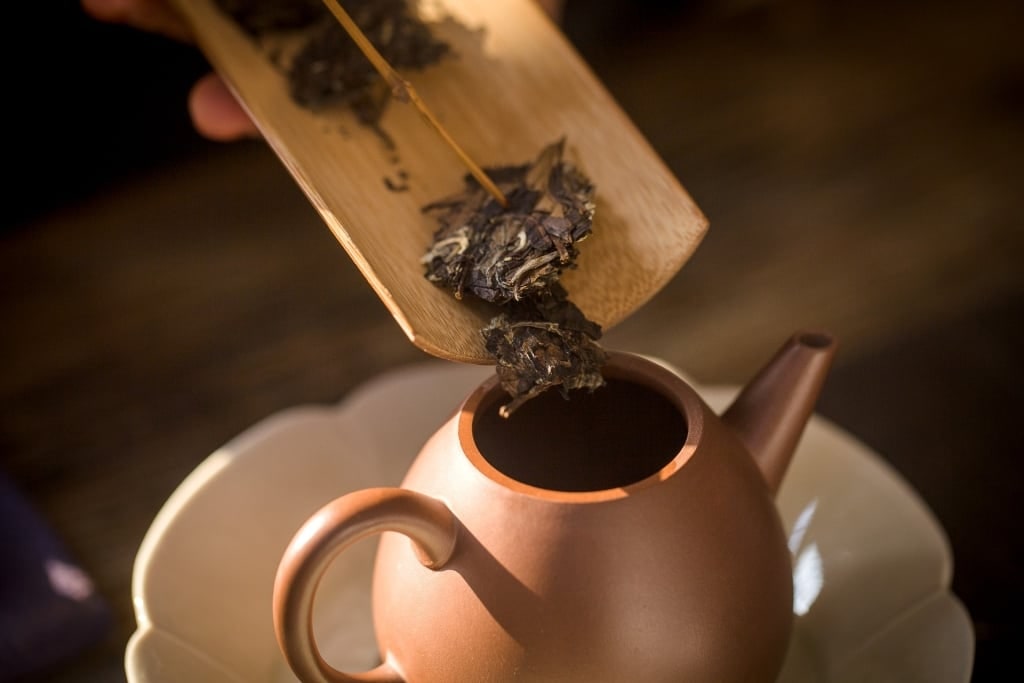
If you’re wondering what to buy in Hong Kong, go for fragrant Chinese tea. Oolong, floral, green, black, and white—China’s tea culture goes back thousands of years, with both traditional tea and more contemporary blends available at markets, tea houses, and cafés.
In bustling Wan Chai, slip into the calming Basao, a modern tea room where you can relax, sip on refreshing blends, and purchase different varieties to take home. Basao’s single-origin teas are available as loose leaves or tea bags, and tea sommeliers are on hand to guide you through the variety of flavors. You could also learn about Chinese Gongfu tea ceremonies, Japanese Matcha tea, and cold-brew tea preparation, so you can make the perfect chai at home.
Tea Sets
Tea sets
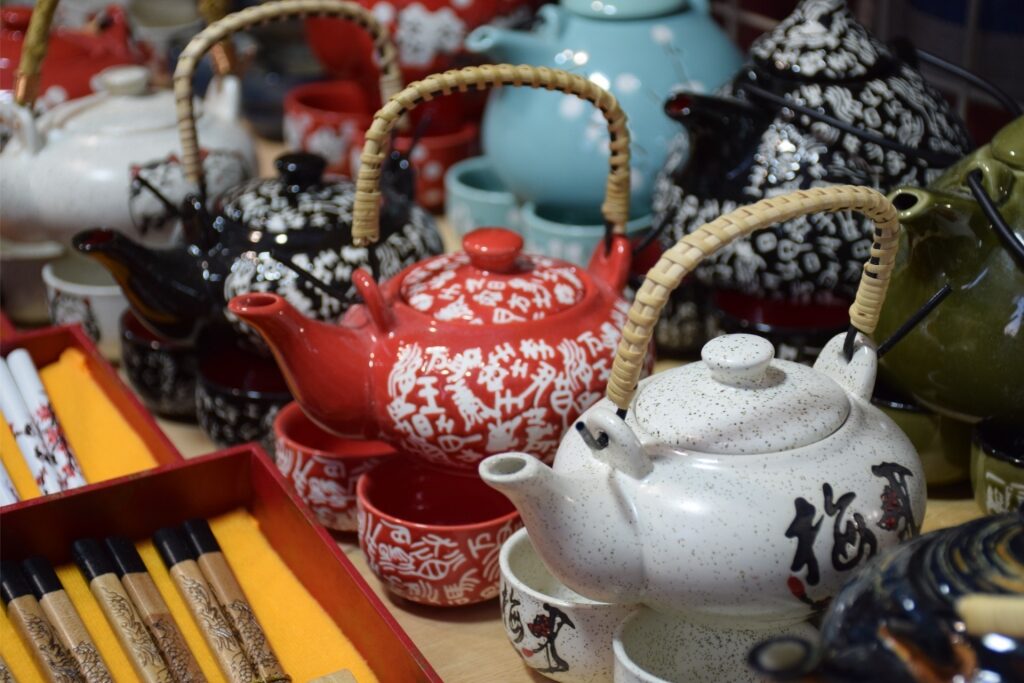
If you’re going to pick up tea in Hong Kong, you’ll also want a tea set to serve it in. Traditionally used in Gongfu tea ceremonies, a Chinese tea set consists of a teapot or other vessel to brew and serve tea in. As well as being functional, traditional Chinese teapots are often decorative, made from clay, cast iron, porcelain, or glass.
A gaiwan is a lidded bowl and is sometimes used instead of a teapot to infuse hot water. Matching tea cups are an essential part of a traditional Chinese tea set, as well as a strainer, spoon, and tea tray.
On a Hong Kong shopping trip, stop by Fook Ming Tong—with branches at the IFC Mall in Central, at Ocean Centre in Tsim Sha Tsui, and Sogo Department Store in Causeway Bay—for pretty ceramic tea sets. I’m a big fan of Ovo, a concept store on Wanchai Road, Wan Chai, where you can pick up glazed teapots and matching tea mugs.
Silk Products
Chinese dresses
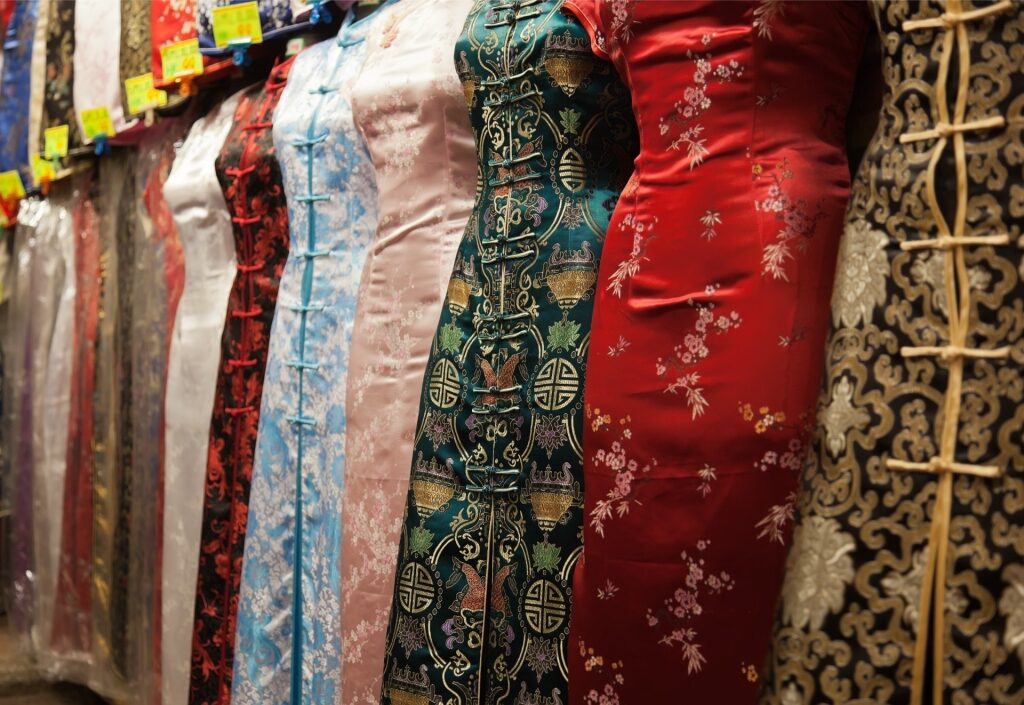
A symbol of luxury, prosperity, craftsmanship, and status in Chinese culture, silk products are popular Hong Kong souvenirs, including scarves, ties, robes, dresses, bedding, and eye masks.
The famous Silk Road, an ancient trading route from Asia to Europe, originates in China, and silk remains a lucrative commodity, with colorful fabrics, patterned and plain, sold at markets, boutiques, and by the tailors who craft dresses and suits.
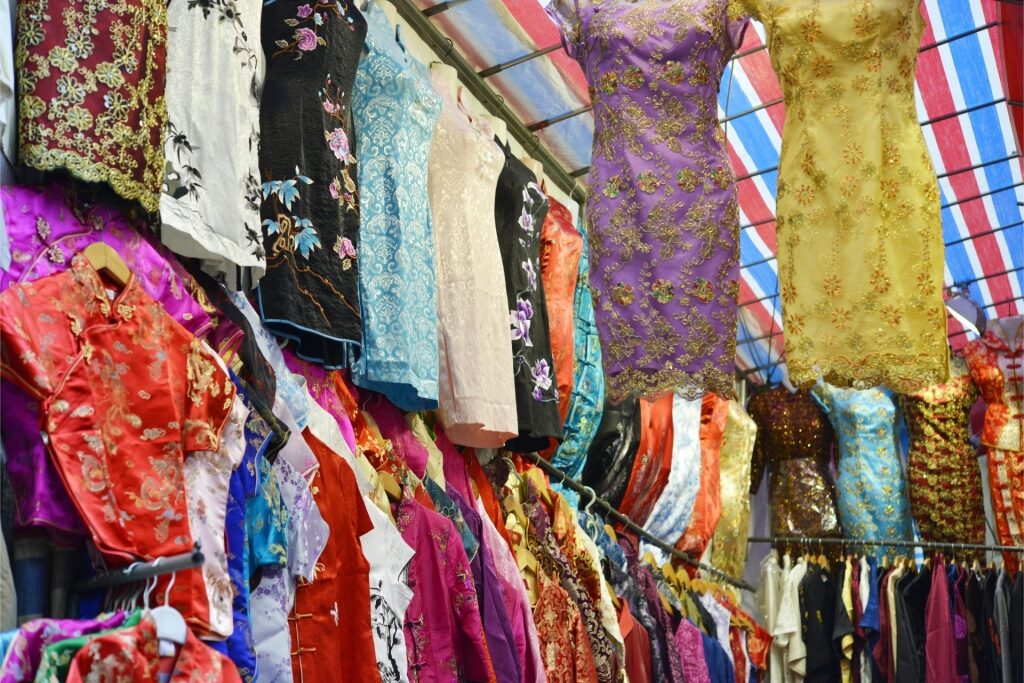
Chinese dresses
Not only is silk a chic fabric—including a variety known as mulberry silk, which is considered the best type for its smooth, strong texture—it’s extremely comfortable and lightweight, which is perfect in Hong Kong’s humid weather.
If you’re looking for a high-end silk specialist, Lilysilk in Harbour City, Kowloon, is the go-to brand for sleek nightwear, blouses, skirts, and scarves. For inexpensive silk purchases, head to Mong Kok Ladies’ Market, where you’ll find an array of garments and accessories on Tung Choi Street.
Antiques
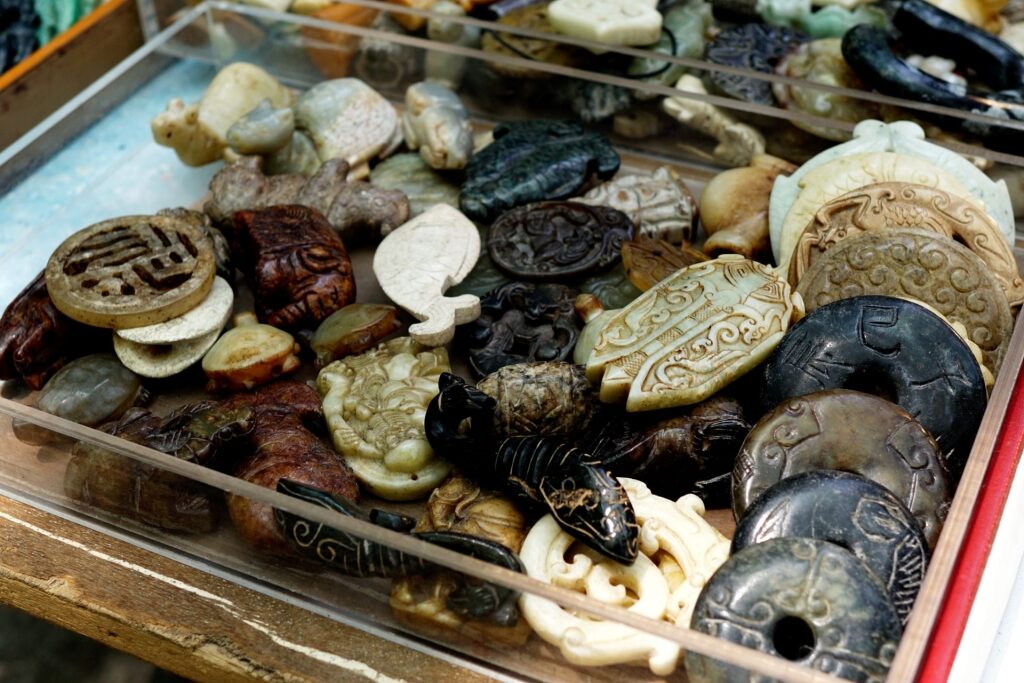
Antiques
You may not want to purchase large antiques on vacation, but there are plenty of smaller items—antique artwork, porcelain, jewelry, and decorative pieces—that you can pick up. One of my top tips when visiting a new destination is to seek out antique and vintage markets and stores to find something unique.
The century-old Cat Street Market is the best place to go for pre-loved, antique Hong Kong souvenirs. Located on Upper Lascar Row, also known as Cat Street, you’ll find this buzzy market in the city’s Central district, near Man Mo Temple. The outdoor stalls sell everything from calligraphy artwork to jade jewelry, and bric-à-brac collectibles.
Wooden Chess Sets
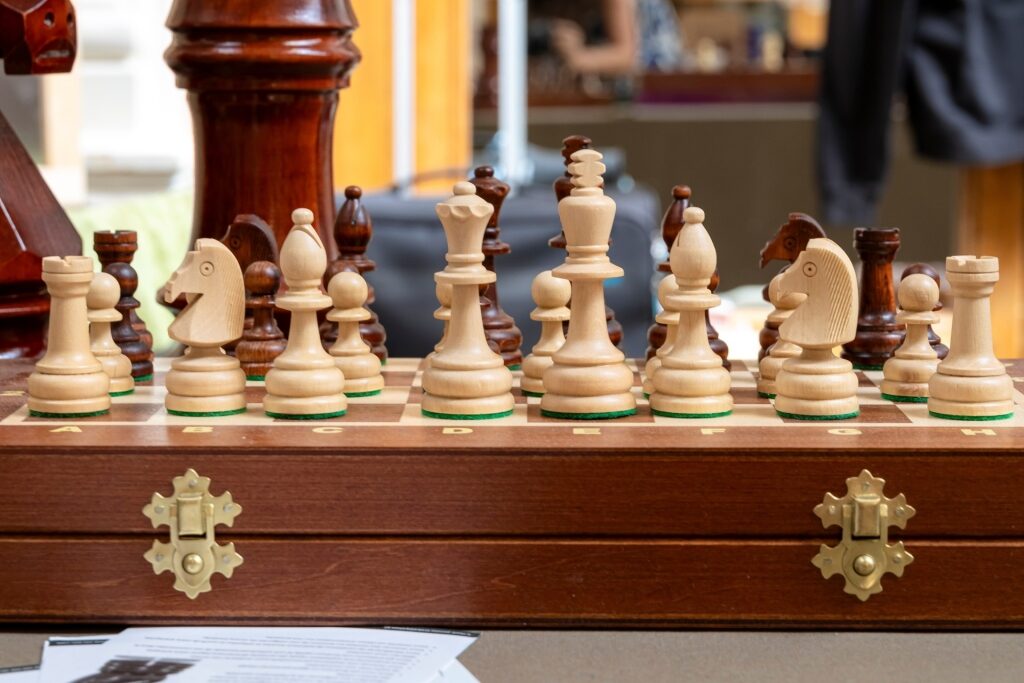
Wooden chess set
One of the best Hong Kong souvenirs to purchase on vacation is a wooden chess set. Whether you’re a novice or a Grandmaster-level player, a wooden chess set is a lovely addition to any home. Look for a wooden chess set at one of Hong Kong’s many street markets, such as Stanley Market in Stanley Bay, Hong Kong Island, or Temple Street Night Market, Kowloon.
XO Sauce
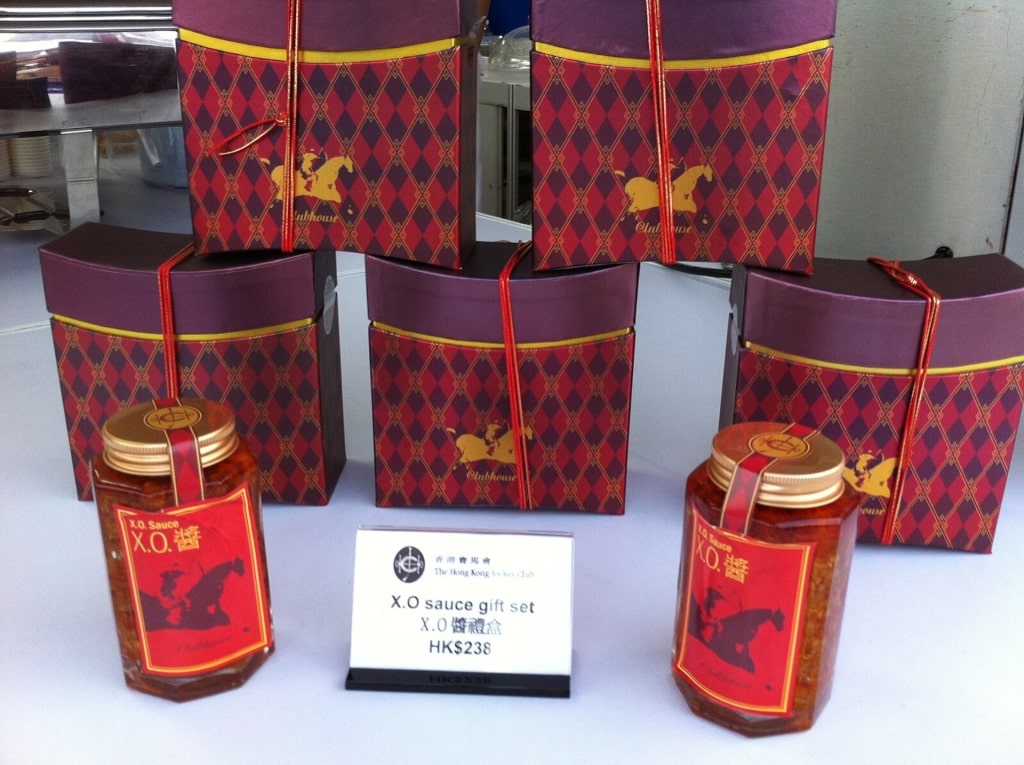
XO Sauce Photo by Ryantongwestra on Wikimedia Commons, licensed under CC BY-SA 3.0
Originating in Hong Kong, the umami-rich XO sauce offers a taste explosion. Combining a blend of dried scallops, dried shrimp, shallots, garlic, chili, and oil, it has fast become the must-have condiment.
Though XO sauce was initially developed in the 1980s as a fine-dining sauce, today it is used to accompany a wide variety of dishes in Hong Kong. Its spicy, garlicky flavor and chunky texture complement stir-fry dishes, dim sum, noodles, fried rice, and seafood.
I recommend picking up XO sauce at its place of origin—the prestigious Peninsula Hotel—for the most authentic Hong Kong souvenir for gourmet-loving friends and family. This Chinese condiment is said to have been created at the hotel’s Spring Moon restaurant and is sold at the hotel’s plush boutique in Tsim Sha Tsui.
For a more affordable option, try Lee Kum Kee XO sauce, which is available at grocery stores all over Hong Kong. Buy at least two, one to give to a loved one and one to keep for yourself.
Dim Sum Bamboo Steamer
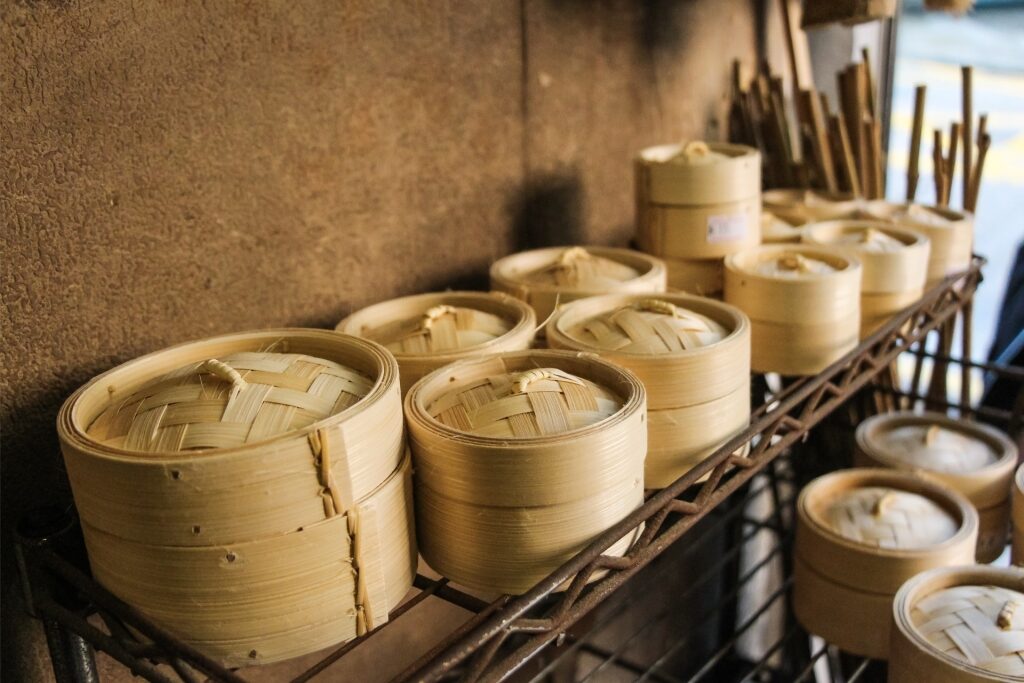
Dim sum bamboo steamer
Dim sum is an art form in Hong Kong and is served everywhere from street markets to high-end restaurants. These small, mouthwatering dumplings consist of vegetables, fish, and meat—usually minced scallop, shrimp, or pork—wrapped in a delicate dough that is steamed or fried.
Referenced as far back as the Tang dynasty, from 618 to 907, common types of dim sum include shrimp dumplings—har gow—and pork, shrimp, and mushroom dumplings, or siu mai. Cook these tasty morsels like a pro when you return home by purchasing a stackable dim sum bamboo steamer.
Pick one up on Shanghai Street in the Yau Ma Tei district of Kowloon, which is famous for traditional kitchenware and grocery shops.
Chopsticks

Chopsticks
Originating in ancient China between 3,000 and 5,000 years ago, chopsticks are one of the world’s oldest eating utensils. These long and elegant chiseled sticks are used to eat dishes of rice, noodles, dumplings, meat, and fish.
Traditionally made of bamboo, wood, or bronze, chopsticks evolved to be made of ivory, jade, gold, and silver, reflecting social status. Today, chopsticks are mostly made of wood, stainless steel, and bamboo for convenience.
There’s something gentle and poised about using chopsticks that I really enjoy, and I’ve bought several sets of them on my various visits to Hong Kong, picked up almost always at markets such as Temple Street Night Market, where they’re easily available, inexpensive, and come in different patterns.
Hak Dei on Shanghai Street in Mong Kok is also a delightful independent homeware store that sells everything from porcelain tea sets to ceramic chopsticks.
Jade Jewelry
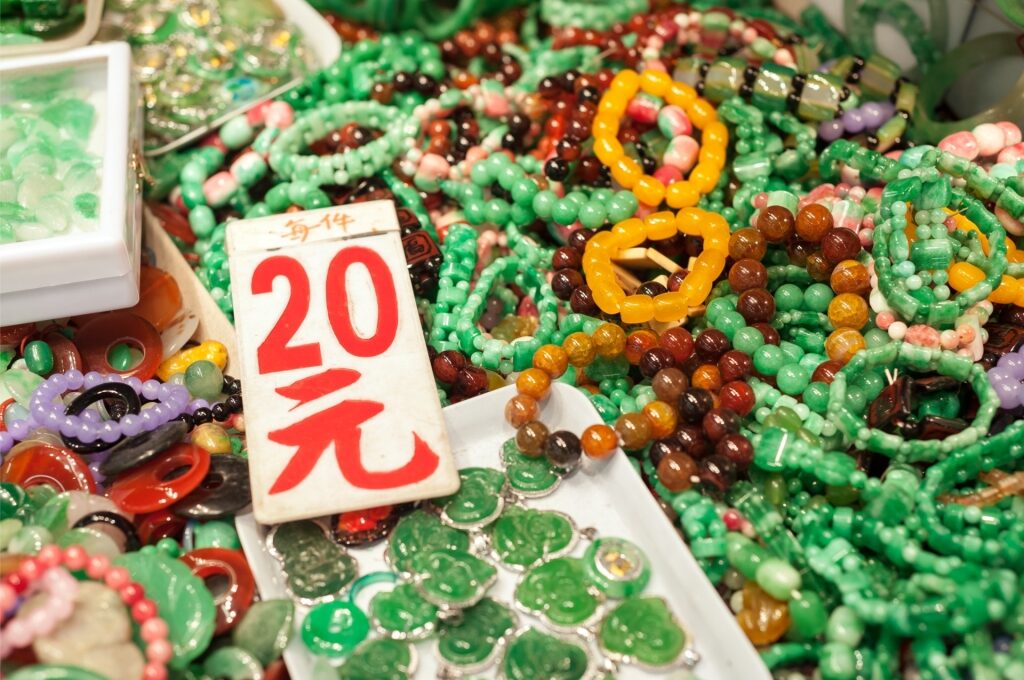
Jade jewelry
If you’re wondering what to buy in Hong Kong for jewelry lovers, the answer is jade. These beautiful green gemstones hold special significance in Hong Kong, loved as a symbol of good luck and good health. Jade is also thought to protect the wearer from negative energy and harm, with gemstones crafted into bangles, pendants, beads, and other jewelry.
To buy jade in Hong Kong, go to Canton Road, near Temple Street Night Market, also known as Jade Street for its many jade jewelers, and Yau Ma Tei Jade Market on Kansu Street, where you can pick up emerald-green trinkets, earrings, and rings.
Read: Singapore vs. Hong Kong: Which Should You Visit?
Fortune Cats
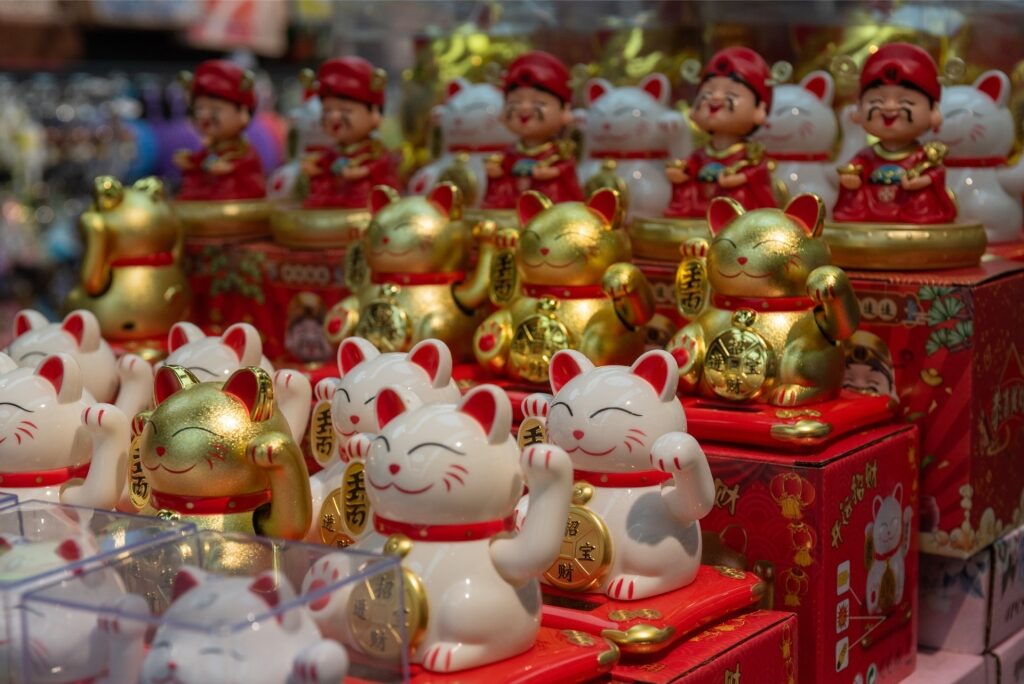
Fortune cats
Also known as maneki neko, and originating in Japan, fortune cats are cutesy cat figurines that are seen as a symbol of good fortune in Hong Kong. Often seen with one paw raised, fortune cats adorn restaurants, bars, offices, shop fronts, and temples.
Fortune cats are usually painted gold, red, white, or black, and there’s a specific meaning behind the feline’s raised paw. You’re more likely to see a left paw raised, which is said to attract customers in restaurants and shops. In homes and offices, the cat typically has a raised right paw, said to draw wealth. If you see a fortune cat with both paws raised, it’s believed to bring protection and prosperity.
Fortune cats make for affordable Hong Kong souvenirs and a fascinating talking point in your home. You’re going to find shops and market stalls all over Hong Kong selling them, including stalls at Temple Street Night Market and Cat Street Market.
A few years ago, I dined at Hong Kong’s sublime Ho Lee Fook restaurant in Central and was struck by the rows of colorful fortune cats adorning the wall as we entered the restaurant.
Mooncakes
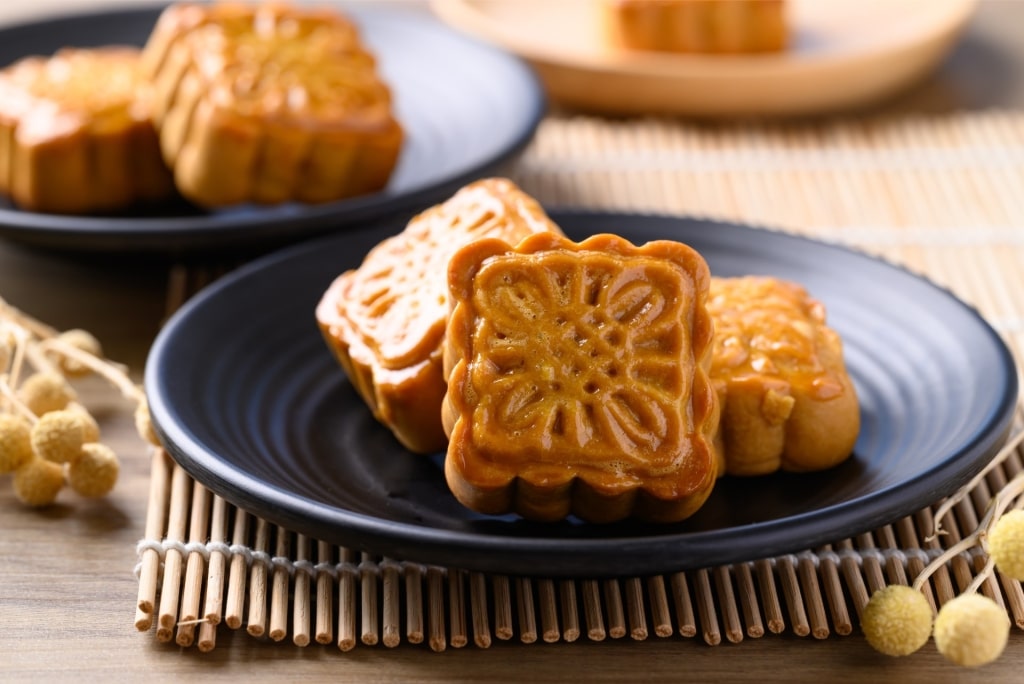
Mooncakes
Are you wondering what to buy in Hong Kong for something tasty but meaningful? Try mooncakes. These small pastries are filled with a sweet-bean or lotus-seed paste and typically feature an intricate pattern or Chinese characters on top to represent longevity, harmony, or the moon.
Though you can buy them year-round at cafés and bakeries, they are traditionally gifted and eaten during the Mid-Autumn Festival, a harvest festival that usually takes place between mid-September and early October.
In recent times, Hong Kong bakeries have become more creative with flavors, creating mango, durian, or passionfruit fillings, as well as chocolate truffle, Hong Kong milk tea, coffee, and custard.
Shop for mooncakes at Wing Wah, with stores in Kowloon and Hong Kong Island, where these gorgeous treats are presented in fancy gift boxes.
Dried Seafood
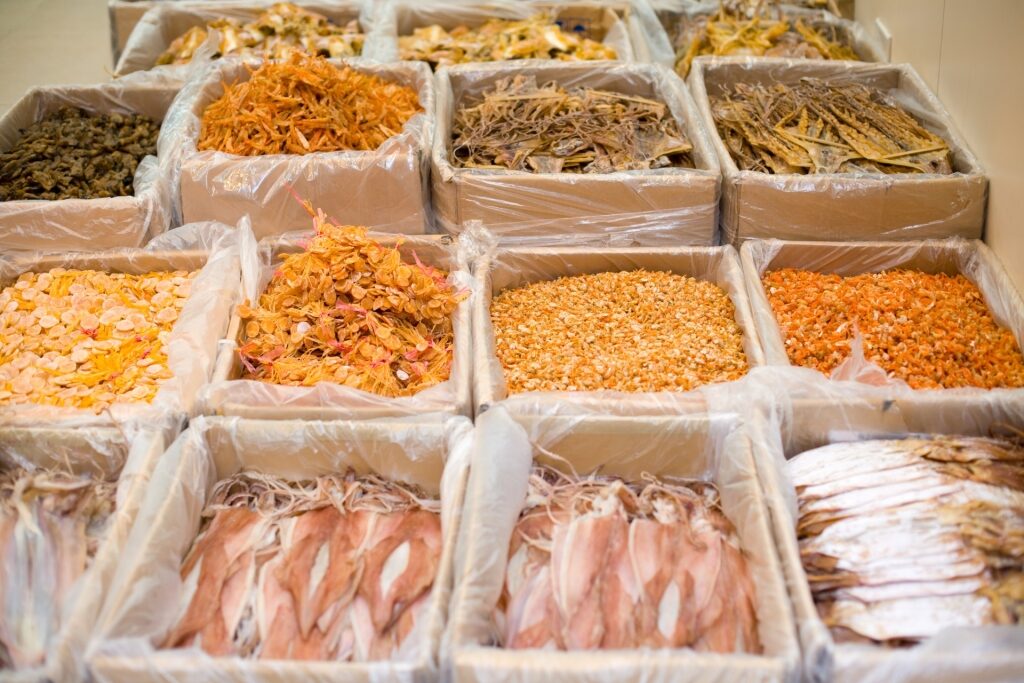
Dried seafood
What to buy in Hong Kong for a more unusual gift includes dried seafood, a local specialty that is widely available at grocery stores and markets. The seafood—including scallops, abalone, sea cucumbers, shrimps, and oysters—is air-dried and offers an intense umami flavor, with a long shelf life.
My advice is to visit one of the specialist stores in lively Sheung Wan, near Hong Kong’s business district.
On Kee Dry Seafood, on Cleverly Street, features shelves piled high with a variety of eye-popping dried and fresh seafood, plus mushrooms, sauces, preserved meats, and health foods.
Tips for Shopping in Hong Kong
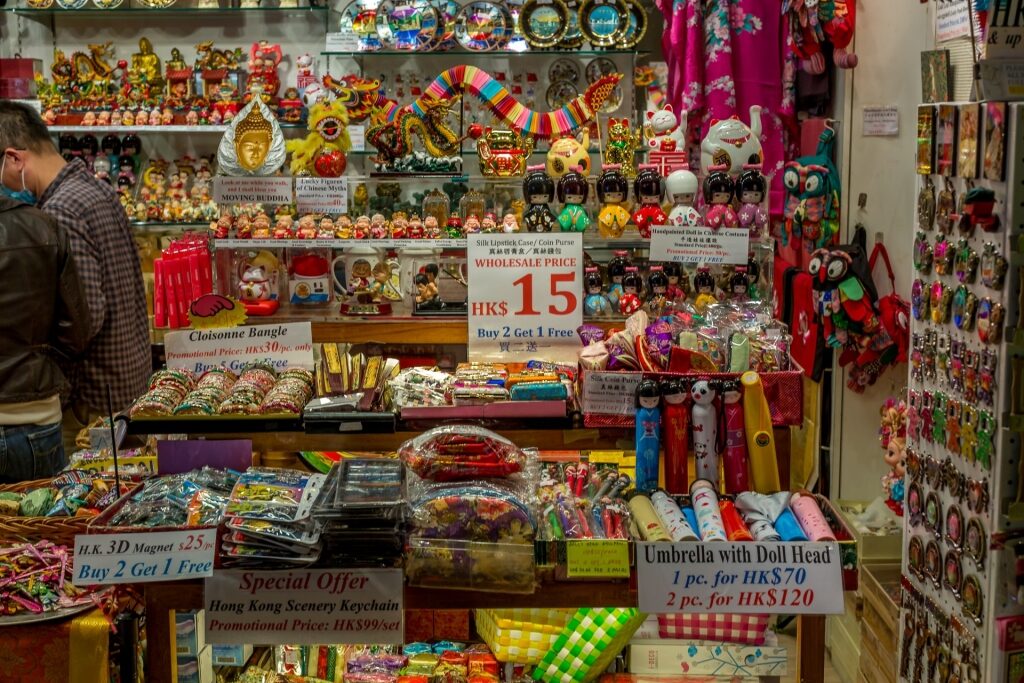
Market in Hong Kong
Shopping is like an Olympic sport in Hong Kong, so make sure you save plenty of space in your suitcase to make purchases. Markets in Hong Kong tend to get going in the evening and stay open until late. They’re a great place to soak up the local culture, dine on tasty, inexpensive food, and shop for souvenirs.
Shopping malls and boutiques will accept major credit cards, but it’s worth carrying small bills in the local currency, Hong Kong dollars, when visiting markets and street stalls. ATMs are abundant and easy to find.
Read: Three Days in Hong Kong
FAQs
What are the most popular souvenirs to buy in Hong Kong?

Jade charms
The most popular souvenirs to buy include items of cultural, culinary, and historical significance. These include tea and tea sets, fortune cats, jade jewelry, silk products, chopsticks, dim sum bamboo steamers, and gourmet items such as XO Sauce.
Where can I buy authentic Hong Kong souvenirs?
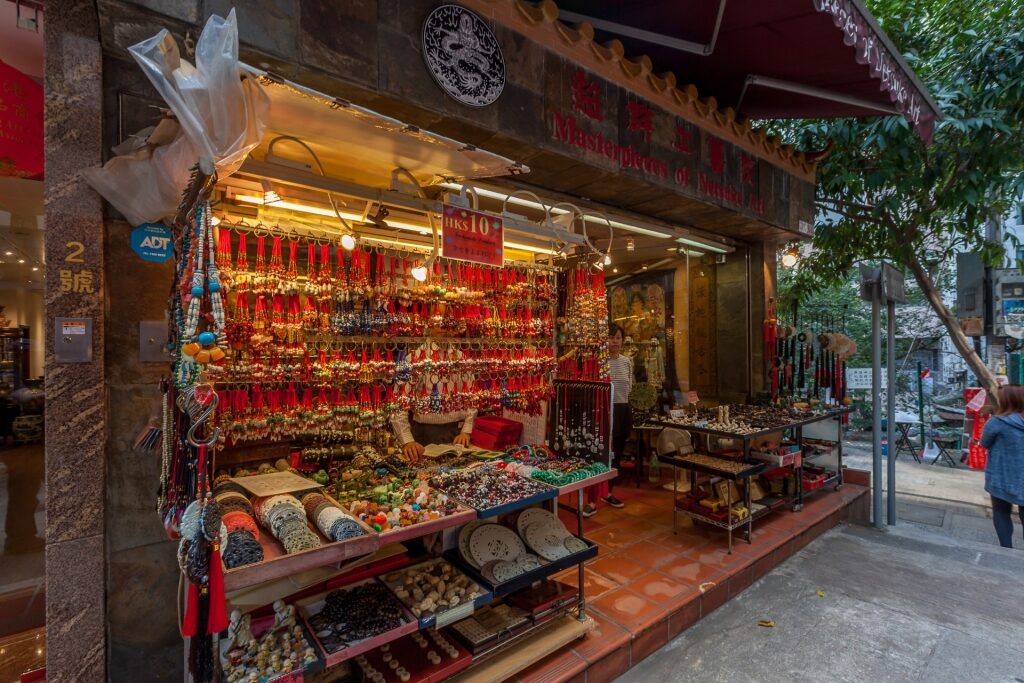
Cat Street
The best places to buy authentic souvenirs include traditional markets, such as Stanley Market, Temple Street Market, Jade Market, and Cat Street, as well as specialist tea shops and tea houses. When buying items such as silk or jade, it’s perfectly acceptable to ask for a certificate of authenticity.
Is it ever OK to bargain at markets in Hong Kong?
Yes, it is fine to barter for items at markets in Hong Kong.
Hong Kong
Shop for the best souvenirs on one of Celebrity’s cruises to Hong Kong. Browse itineraries and book your Asian adventure today.