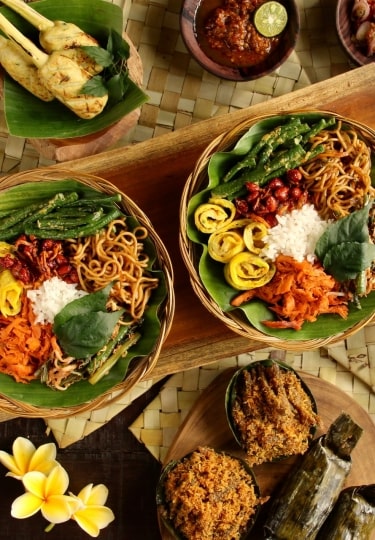
Embrace Bali’s food scene and experience the exotic flavors of Balinese and Indonesian dishes while relishing the intoxicating scenery. Visit a local “warung” (restaurant), or try a quick bite from a “kaki lima” (street cart). Or take a cooking class and learn how to make some of Bali’s fresh, tasty dishes yourself.
There’s a thriving culinary scene on the island, from high-end restaurants with well-known chefs to creative vegan and vegetarian options. This is some of the most mouth-watering Balinese cuisine to try.
Satay
Satay
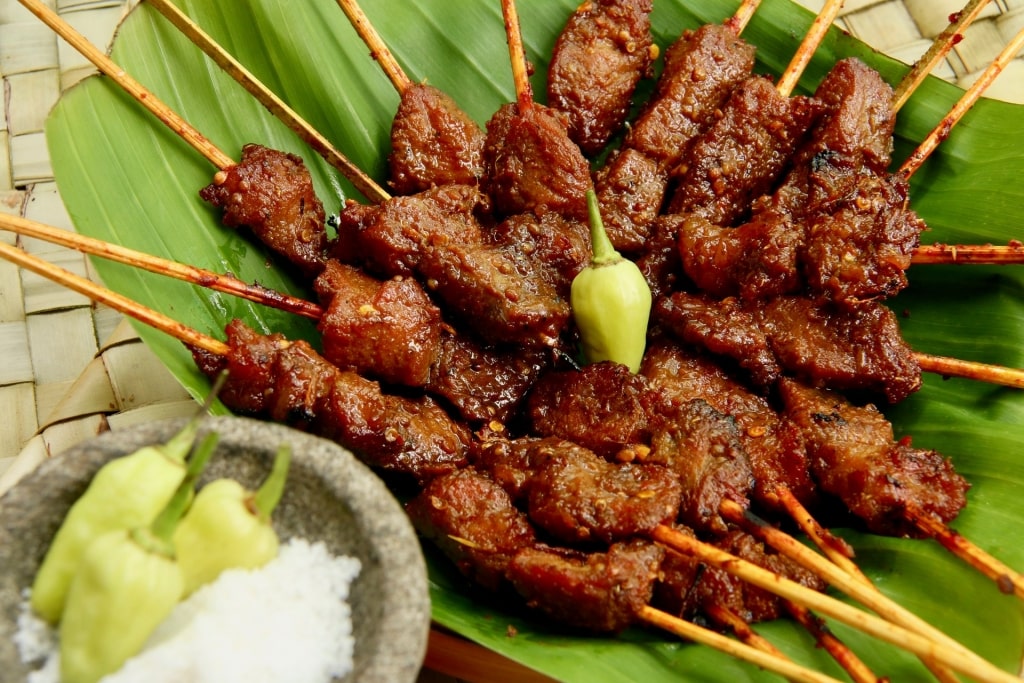
Bali is the birthplace of the popular chicken satay, a stand-out culinary delight that is now served in many different versions throughout the world. Traditionally made with either chicken or goat meat, satay is tender, grilled meat on skewers.
Satay is a staple in Indonesian cuisine and can be found in most places. It’s also served during gatherings or festivities such as Galungan Day, a holiday that celebrates the victory of good over evil on the island of Bali.
Satay
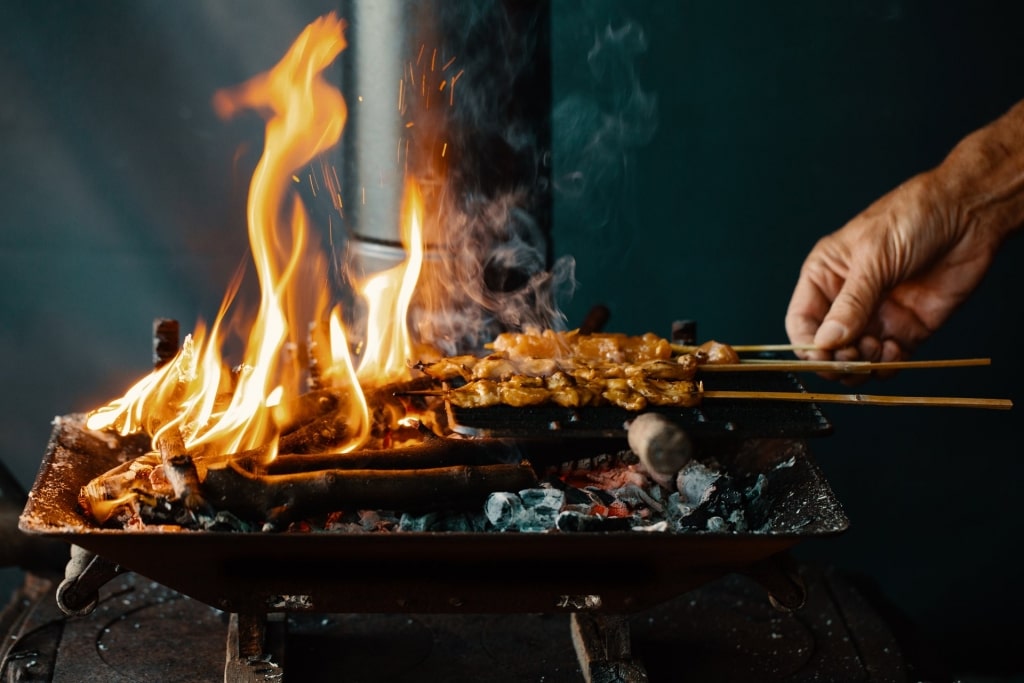
The meat is prepared one of two ways; “tusuk”, meaning skewered, or “lilit”, meaning twisted. It’s grilled over a fire and then typically served with peanut sauce or spicy sambal chili sauce. Trying this classic dish is one of the best things to do in Bali, and you’re likely to order it more than once during your stay—it’s that delicious.
Lawar
Lawar
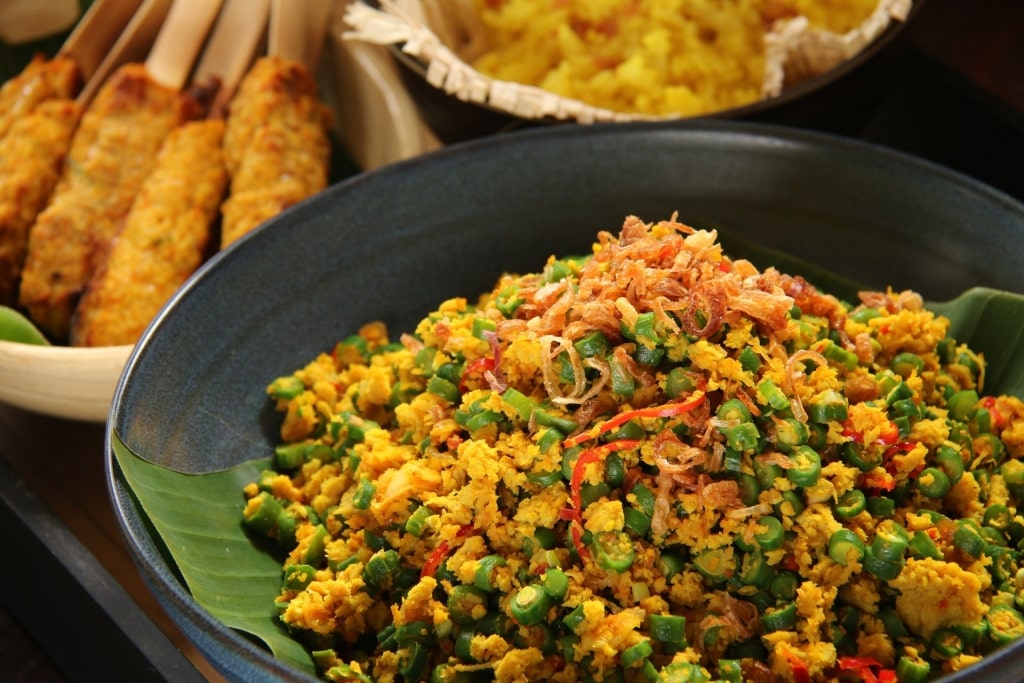
One of the most multifaceted dishes in Bali, lawar is a traditional culinary concoction served at festivals or ceremonies, as well as in most restaurants on the island. The name lawar means “finely chopped” and a wide variety of meats can be used as the foundation of this meal; pork, beef, chicken, or duck.
The chopped meat is mixed with vegetables (mostly beans) as well as egg, coconut, shrimp paste, turmeric, chili powder, palm sugar, kaffir lime leaves, and galangal, which adds a flavor similar to ginger. It’s usually paired with rice or served alongside “babi guling” (roast suckling pork).
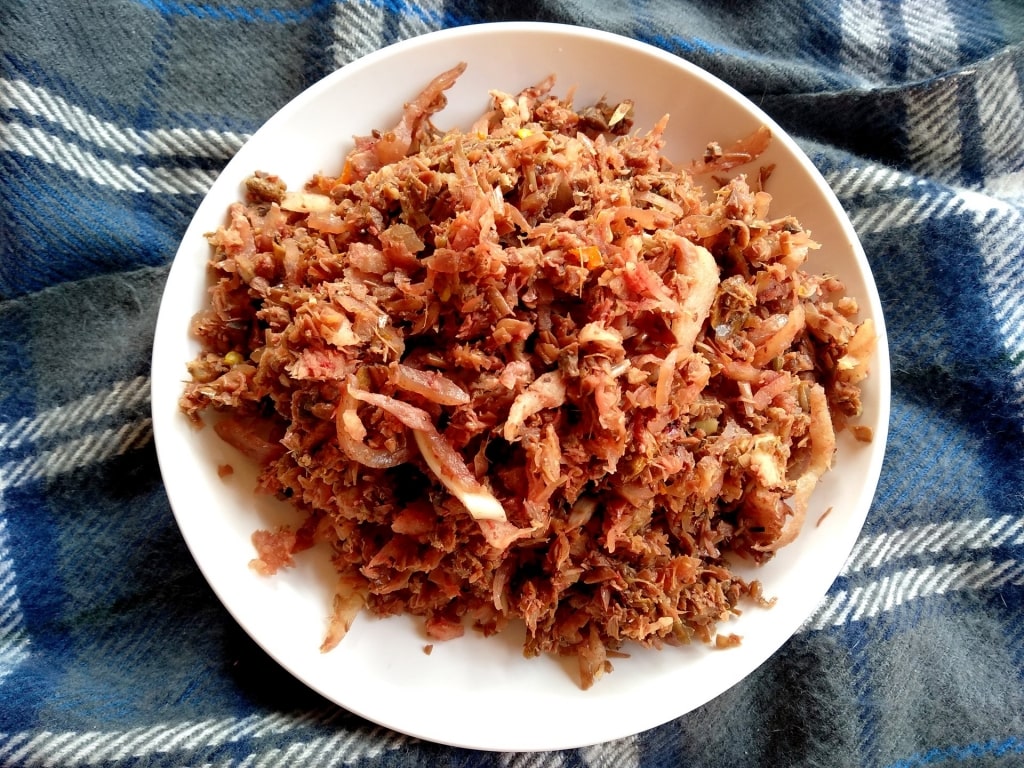
Lawar
Versions containing pig blood for color and taste are available, as well as without it. Although this dish is far from being vegetarian in its original form, a version using jackfruit is popular for those on a meat-free diet.
Read: Best Beaches in Bali
Betutu
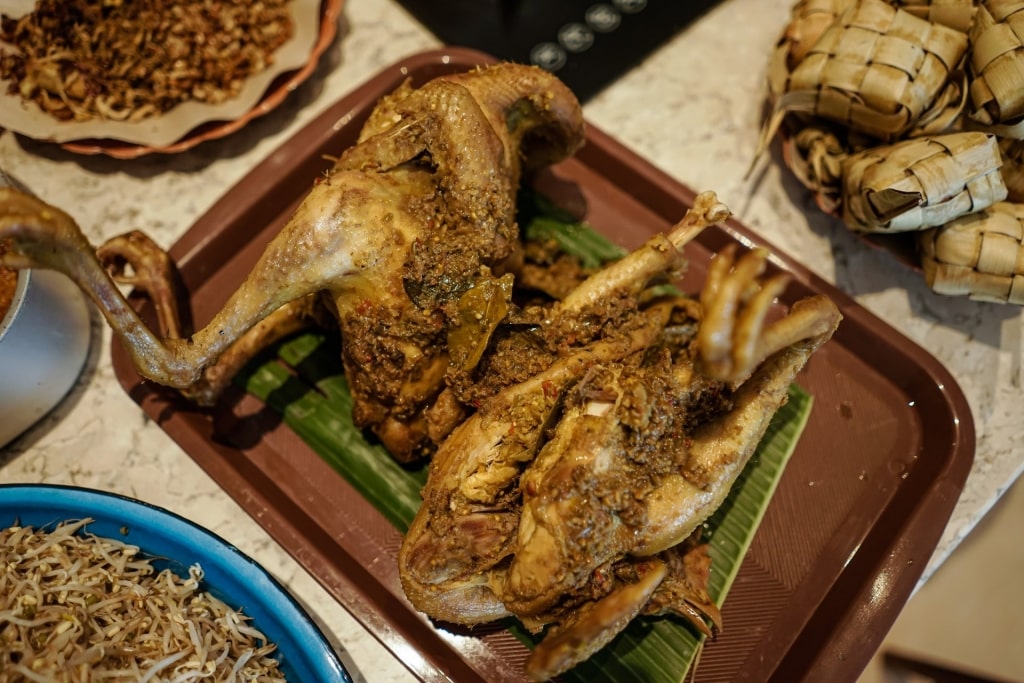
Betutu
Spice lovers will love the fiery version of Betutu, a traditional Indonesian dish consisting of roast duck (bebek betutu) or chicken (ayam betutu), that can be spiced to your liking. The dish is prepared with raw meat, and then rubbed with bumbu, a mixture of spices that are hand-ground into a paste.
The fresh herbs and spices blend ginger, turmeric, garlic, shallots, chili peppers, galangal, and shrimp paste. After being mixed with coconut oil, they’re then applied to the duck or chicken, which is then wrapped in banana or plantain leaves. The whole package is then steam-cooked over hot coals.
In some places, it’s cooked over a barbeque, though this is a less traditional method. You’ll find different versions of Betutu depending on the regions you visit. Either way, you’re in for a rich, moist, and flavorful meal.
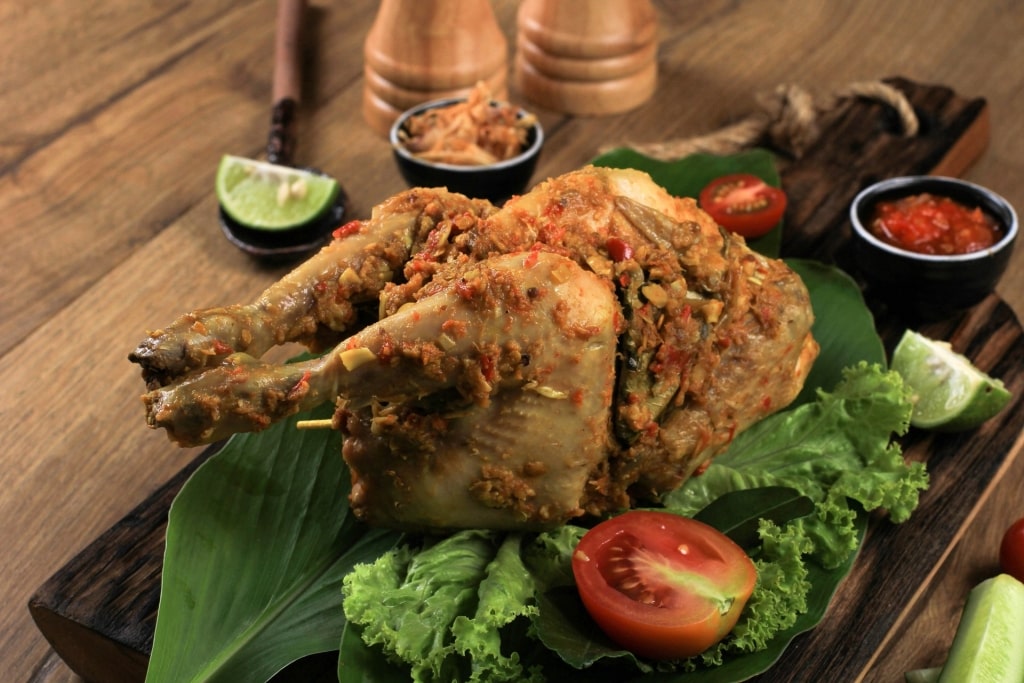
Betutu with sambal terasi
If you want to eat it like the Balinese do, spice the dish up even further with sambal terasi, a hot chili sauce with shrimp paste, onion, red chili peppers, and coconut oil. Betutu is also quite commonly served with crispy fried peanuts as a side dish.
Nasi Goreng
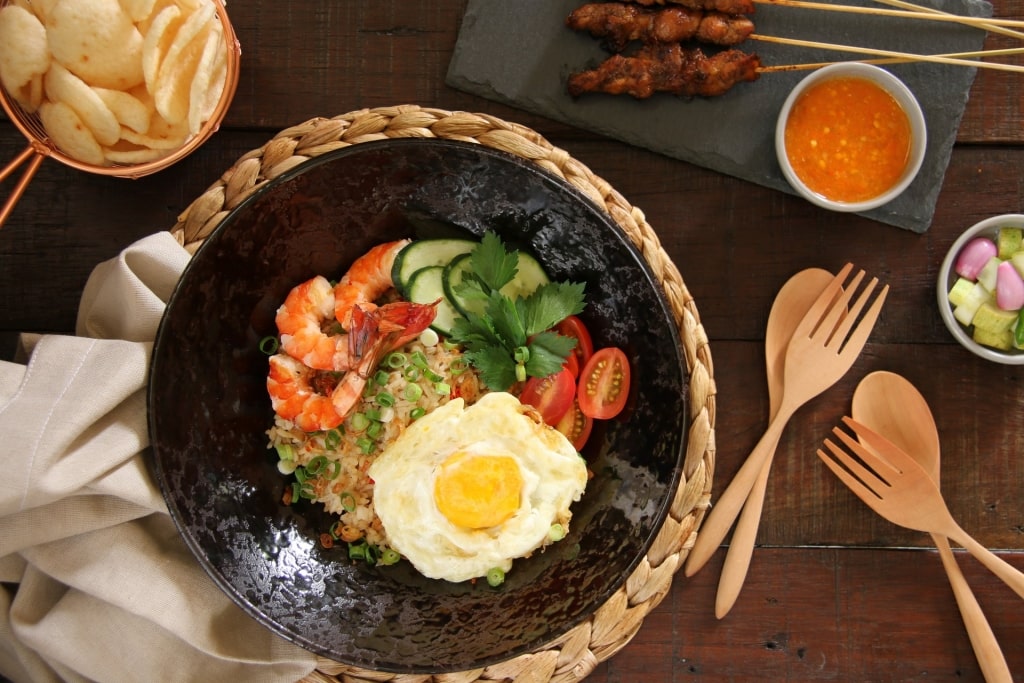
Nasi goreng
This classic fried rice dish is one of the best-loved items in Indonesian cuisine. In fact, it’s considered one of the country’s national dishes. Although it’s often served for breakfast, nasi goreng is a staple menu item in Bali for any meal of the day.
What makes this fried rice unique is the addition of a sweet soy sauce, referred to as “kecap manis”, not to mention the tasty addition of shrimp paste (terasi), shallots, garlic, chili pepper, and an egg, served sunny side up on top.
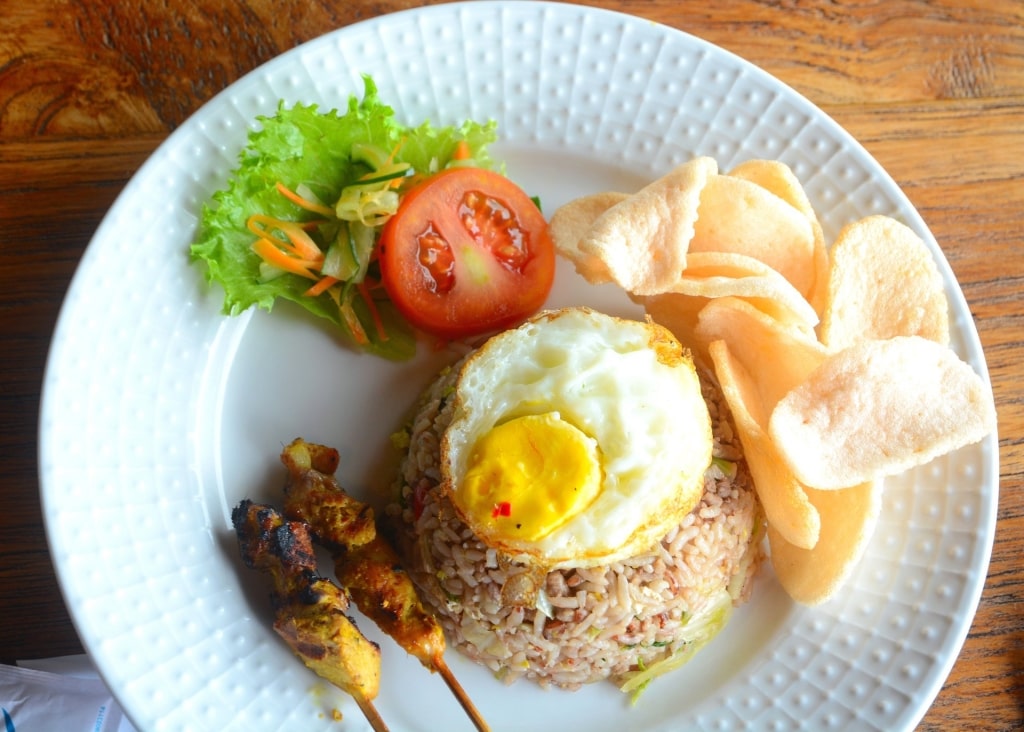
Nasi goreng with krupuk udang
Nasi goreng is usually dished up with a side of crisp prawn crackers, called krupuk udang. The textural contrast makes for an incredibly pleasing pairing. This authentic dish is so popular that you can find it almost anywhere in Bali, from street food vendors and local warungs, to homestays and fine dining establishments.
Sambal Matah
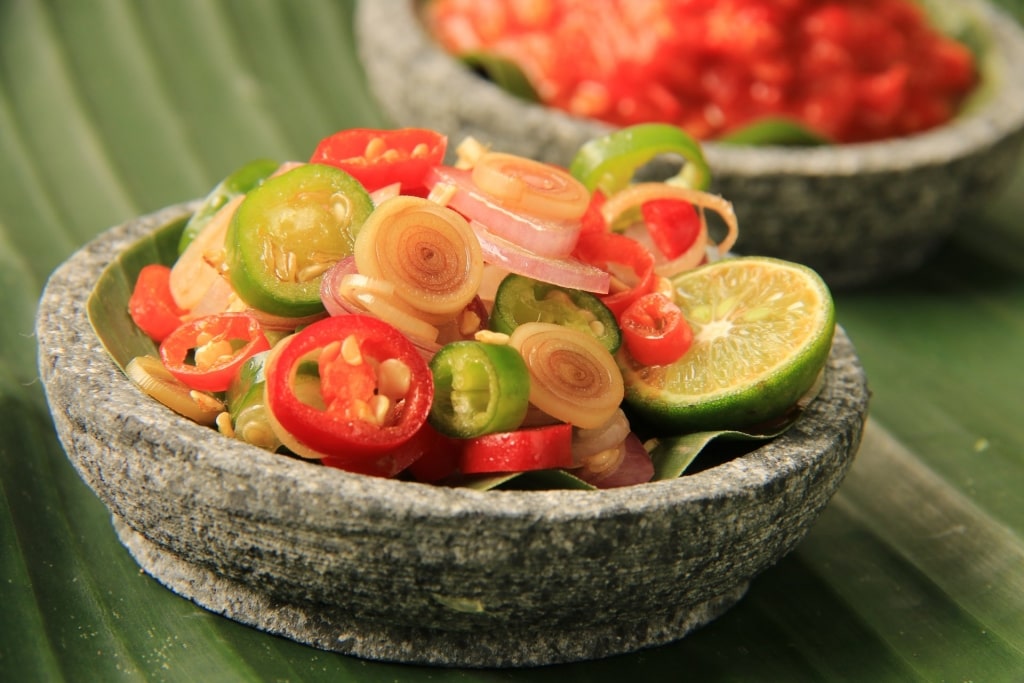
Sambal matah
Bali is the origin of sambal matah, making it the perfect place to try this raw condiment concoction that’s often paired with grilled meat or seafood. Known as a key item in Balinese cuisine, this chili paste or sauce adds a burst of flavor to many dishes, particularly seafood, chicken, pork, and rice or noodles.
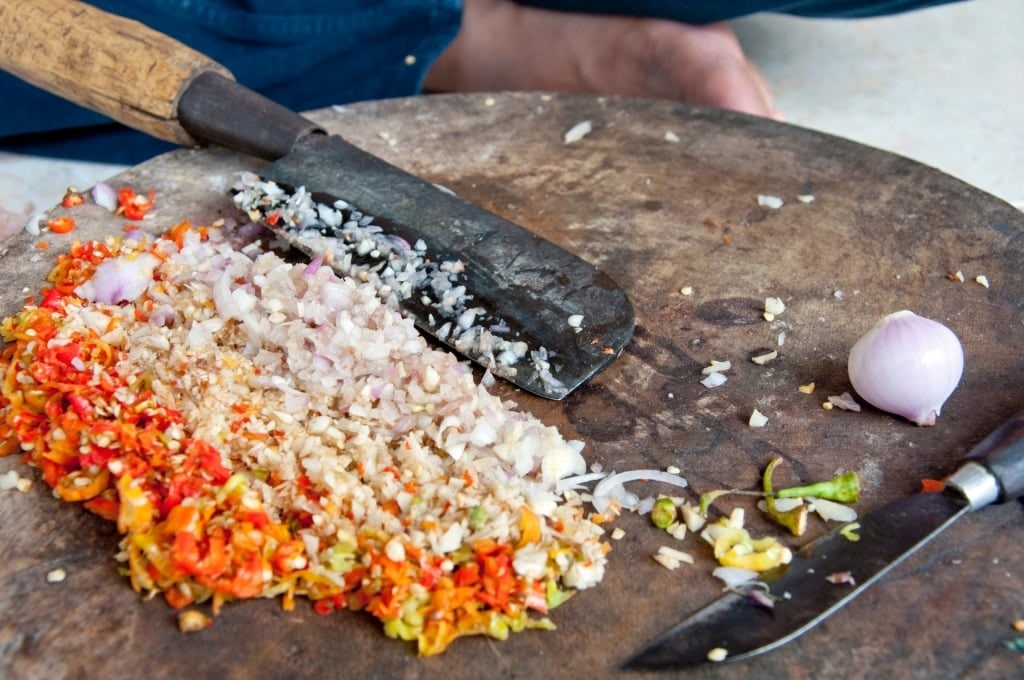
Sambal matah
Although the recipe differs a touch throughout Indonesia, the combination of fresh spices and oil never disappoints. The main ingredients are Thai, bird’s eye, or other long red chilies, shallots, kaffir lime leaves, garlic, salt, lime juice, lemongrass, shrimp paste, and coconut oil, all of which are finely chopped and mixed by hand.
Although it’s somewhat easy to prepare, Sambal Matah offers a unique zest and spice to a wide array of meals in Indonesian cuisine. This is one of the accompaniments to Bali food that is a must-try while visiting the island.
Read: Best Beaches in Southeast Asia
Nasi Campur
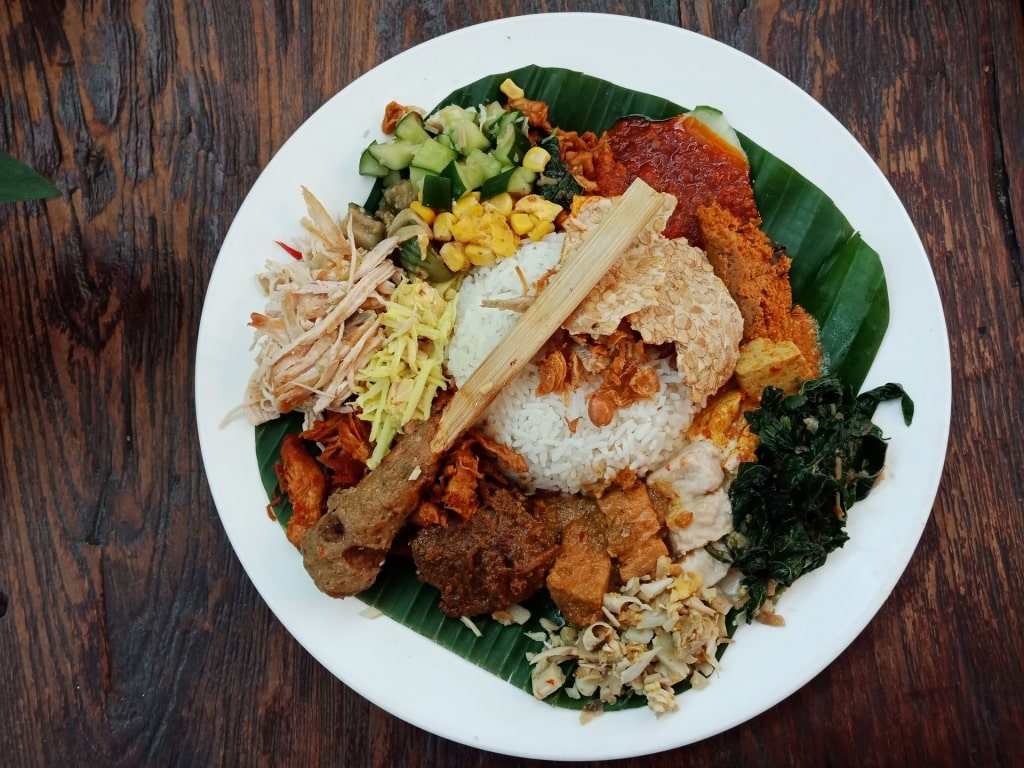
Nasi campur
Translated to “mixed rice”, nasi campur is another Balinese culinary favorite due to its simple but delicious flavors and versatility.
This dish is a choose-your-own-adventure type of meal where you can pick what you’d like to accompany your rice. Side dishes might include chicken, either shredded or in skewer form, vegetables, tempeh, curries, eggs, soy, fish, shrimp, and other stewed meats.
Traditionally, this is a fantastic choice for bigger group dinners, as there is something to appeal to every taste. Don’t forget to ask for sambal matah for that extra kick of spice, if you prefer your meals with some heat.
Laklak
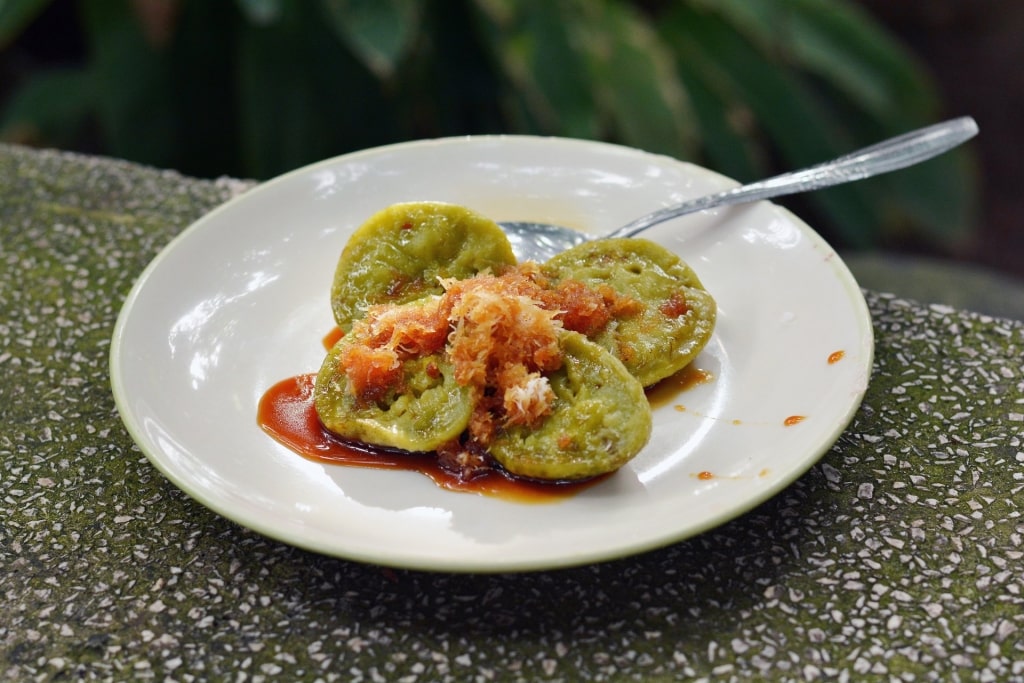
Laklak
The traditional Balinese cake of laklak will satisfy most cravings for a sweet treat. The green and white cakes are made of rice flour and resemble a pancake. Laklak is the perfect snack food and can be purchased at most markets throughout Bali.
The green coloring is created with pandan leaves, giving the small, round confections their hue as well as a unique scent. The cakes are baked by steaming the rice flour before mixing it with coconut milk, grated coconut, palm sugar, boiling water, and brown sugar. They are then cooked in a clay pan, specially made for laklak.
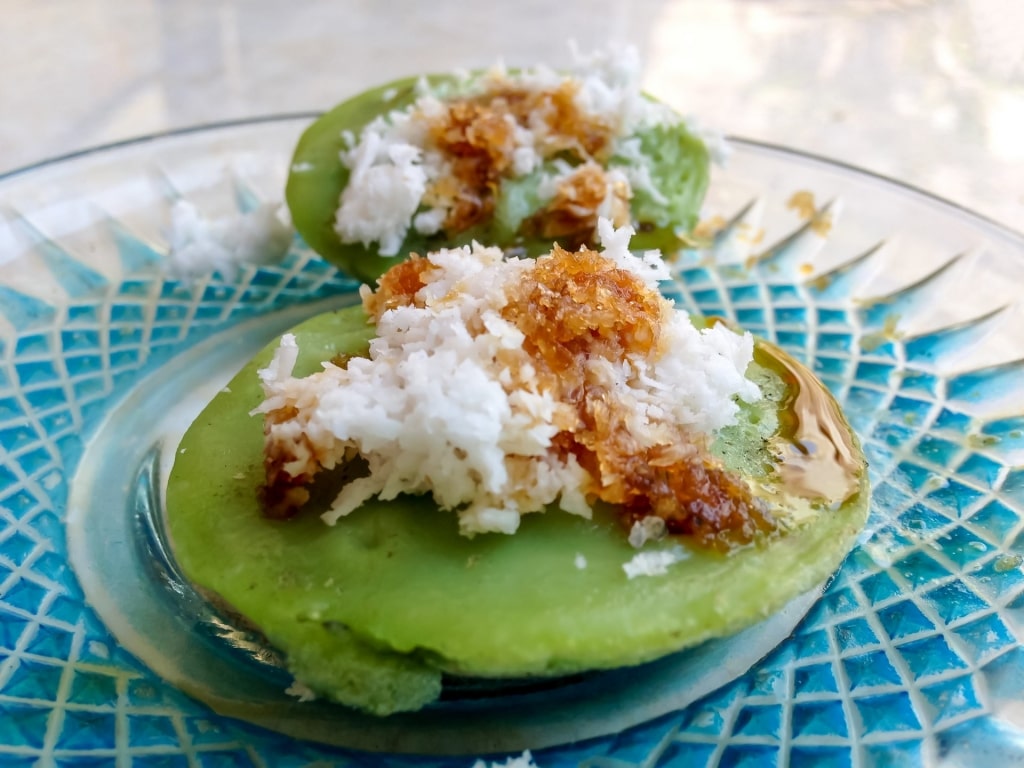
Laklak
Some versions of the cake are topped with coconut flakes or sugar. Laklak is often served at breakfast time, but can be eaten anytime during the day, and is particularly enjoyed with coffee or tea. Laklak is one of the most popular delights in Balinese cuisine.
Bakso
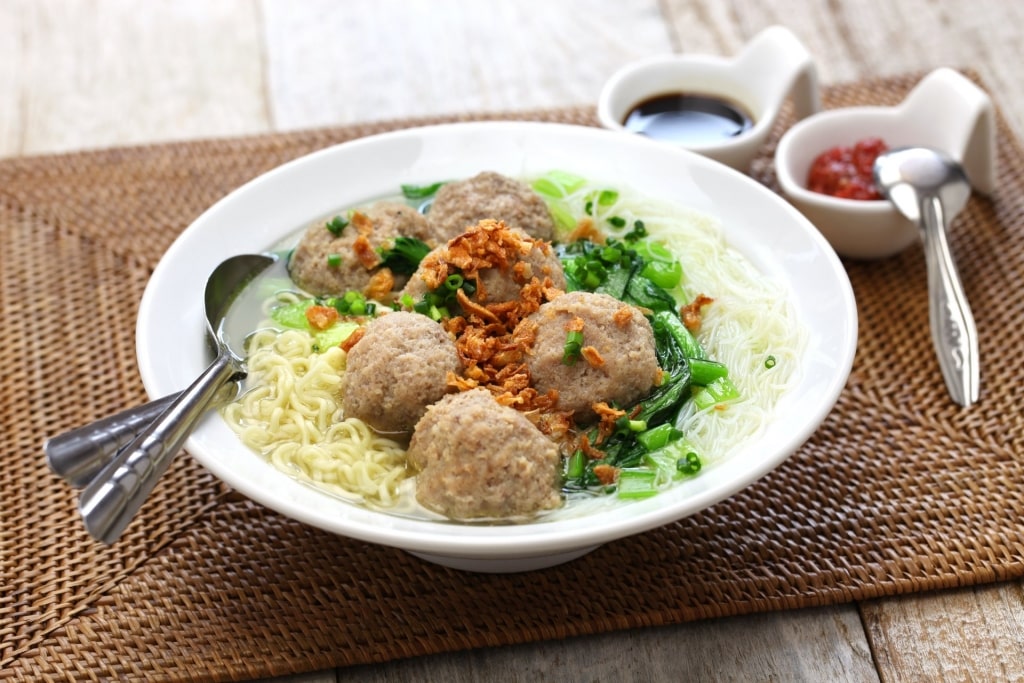
Bakso
Enjoy the Indonesian comfort food of bakso, a versatile meatball dish or meat paste (beef surimi), that is very popular in Bali. Inspired by the Chinese meatball, bakso is made of ground beef, salt, and tapioca flour, although it is sometimes made using chicken, fish, shrimp, or pork.
The meatballs can be served as an individual meatball, in a soup (bakso kuah), or with noodles such as rice vermicelli (mie bakso).
If spice is your thing, test your limits with bakso mercon, meaning “firecracker” bakso. This version has sambal with bird’s eye chili peppers for extra fire. Whichever version you order, it’s usually topped with a selection of items like hard-boiled eggs, various sauces, bok choy, tofu, fried shallots, sambal (chili paste), or wontons.
You’ll find bakso in its various versions throughout Bali. Although it’s a well-loved street food item, it also graces the pages of menus in local warungs and higher-end restaurants.
Read: Best Places to Visit in Southeast Asia
Mie Goreng
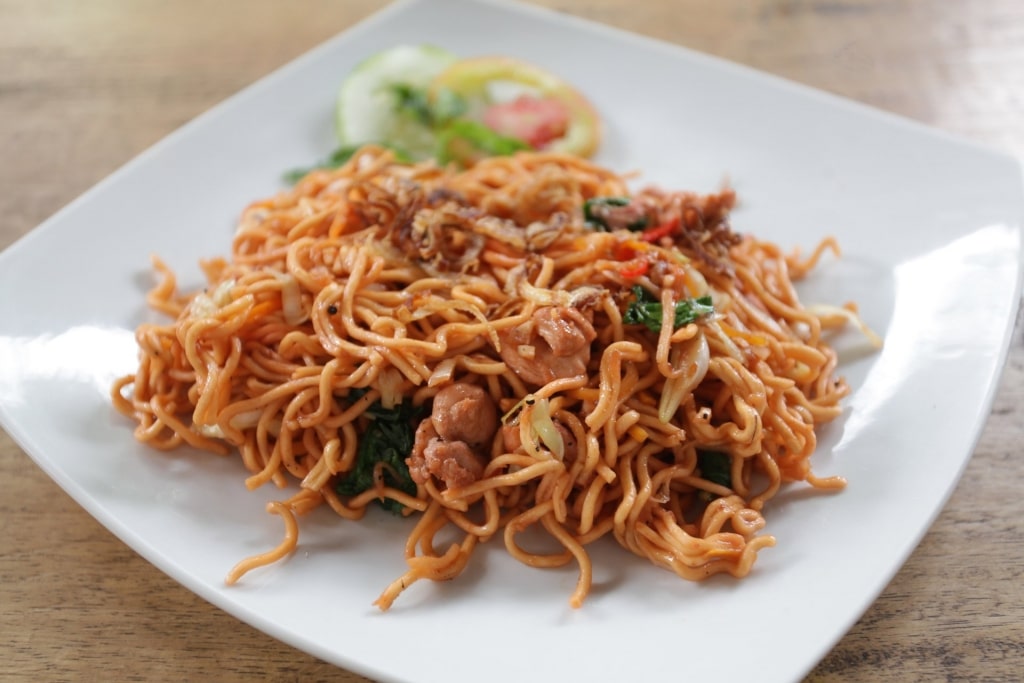
Mie goreng
This fried noodle dish found throughout Bali will leave you swooning. Although it was originally influenced by Chinese cuisine, Indonesians have certainly put their own twist on the quintessential and well-loved meal.
Yellow wheat noodles are the most typical option for mie goreng, although rice noodles and even instant noodles might be used, depending where you order. The fried noodles are cooked in a soy sauce with sambal, kecap manis (sweet soy), sesame oil, ketchup, and oyster sauce that offers an ideal blend of savory and sweet.
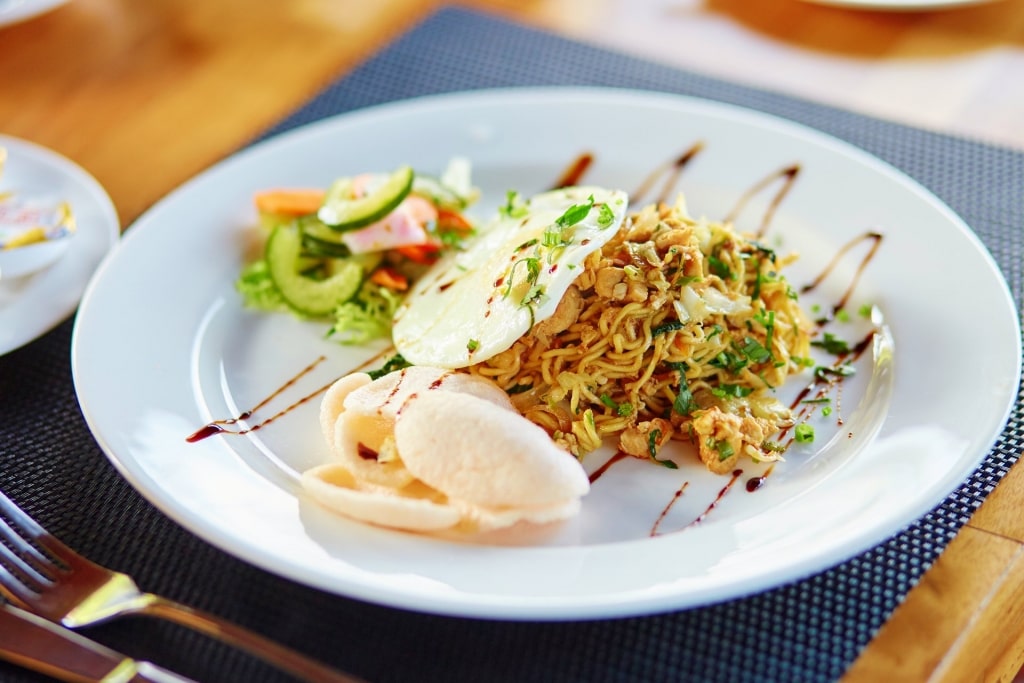
Mie goreng
Mixed in with the noodles is usually a combination of cabbage, bean sprouts, green onions, and egg omelet ribbons. Variations that include chicken, shrimp, or pork just touch the surface of this dish’s versatility.
Other options include vegetables only, beef, squid, and more. Shrimp crackers typically accompany mie goreng as well, for that added crunch. Street food stalls, warungs, and fine dining restaurants all feature this beloved dish on their menus.
Pisang Goreng
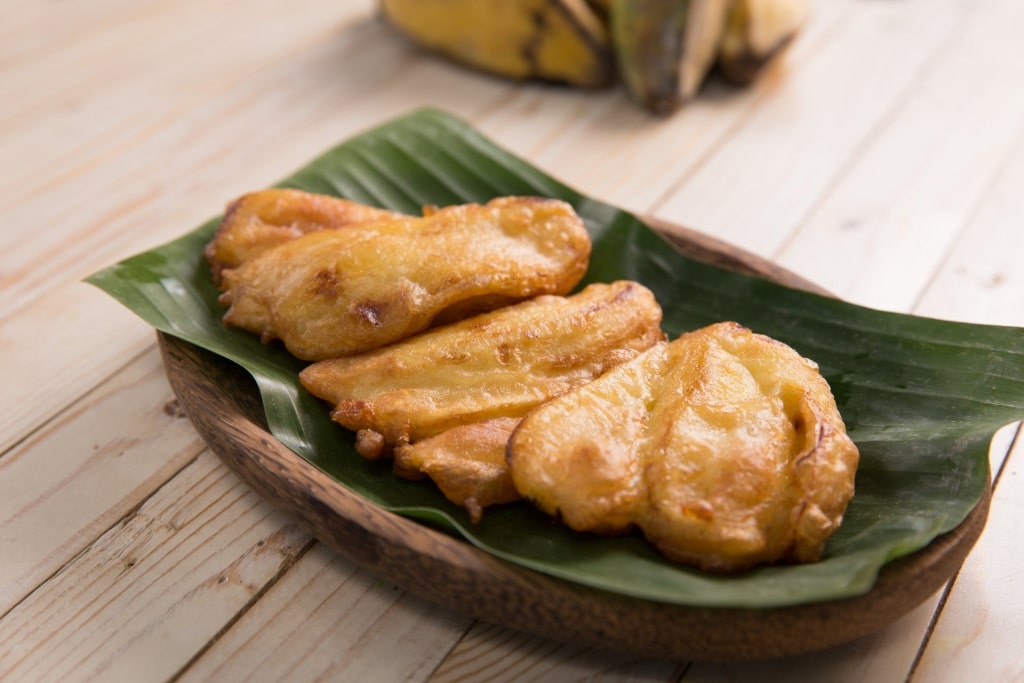
Pisang goreng
Treat yourself to one of Bali’s finest dessert items, pisang goreng. These fried bananas or plantains are served all over the island, and in many different forms. Also known as banana fritters, the bananas are coated with batter and deep-fried in oil, creating that satisfying combination of a crispy exterior and a soft, sweet interior. They can also be fried without the batter.
This popular confection can be found on street food stalls as well as in restaurants. Although a sweet treat, it’s not limited to dessert time, as pisang goreng is often enjoyed at breakfast with a cup of coffee.
Babi Guling
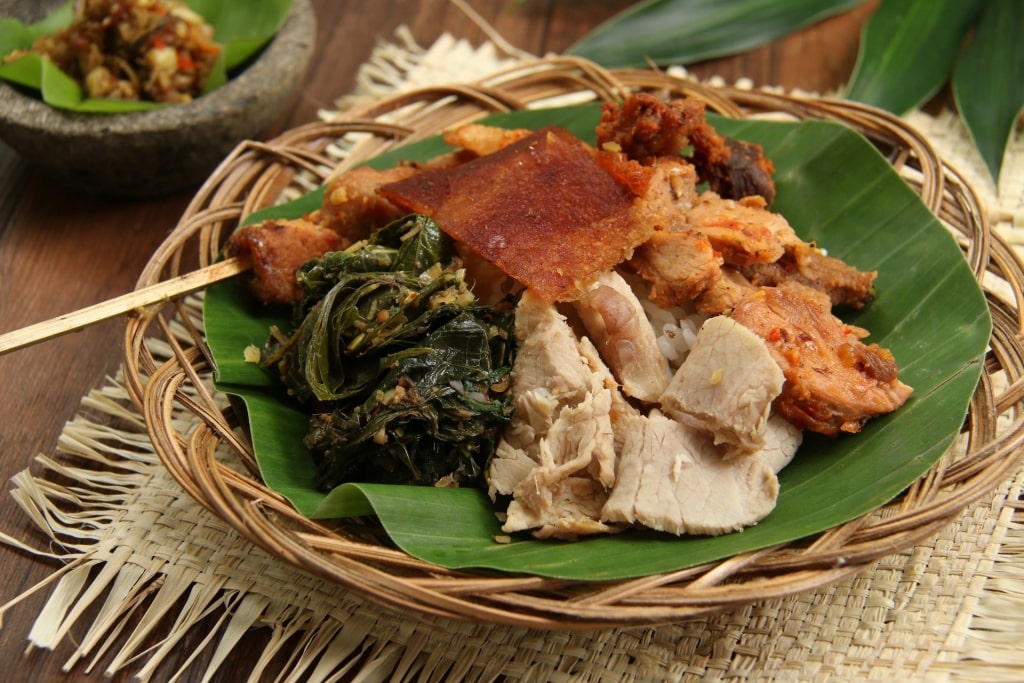
Babi guling
Roast suckling pig is the star of this Indonesian dish, which is filled and rubbed with a spice paste before spending hours roasting to perfection over an open fire. The spiced paste (basa gede) is stuffed inside the entire pig and consists of turmeric, lemongrass, shallots, galangal, garlic, chili, coriander, and shrimp paste.
On the outside, the skin is rubbed with turmeric. The result is a very popular and well-loved dish of pork meat that bursts with flavor, topped with a piece of crisped skin. The meat is usually paired with vegetables and steamed rice, and topped with sambal, of course.
Although this meal is usually reserved for special events, ceremonies, and festivities, you’ll be able to find it in local warungs that serve traditional Indonesian fare.
Ayam Pelalah
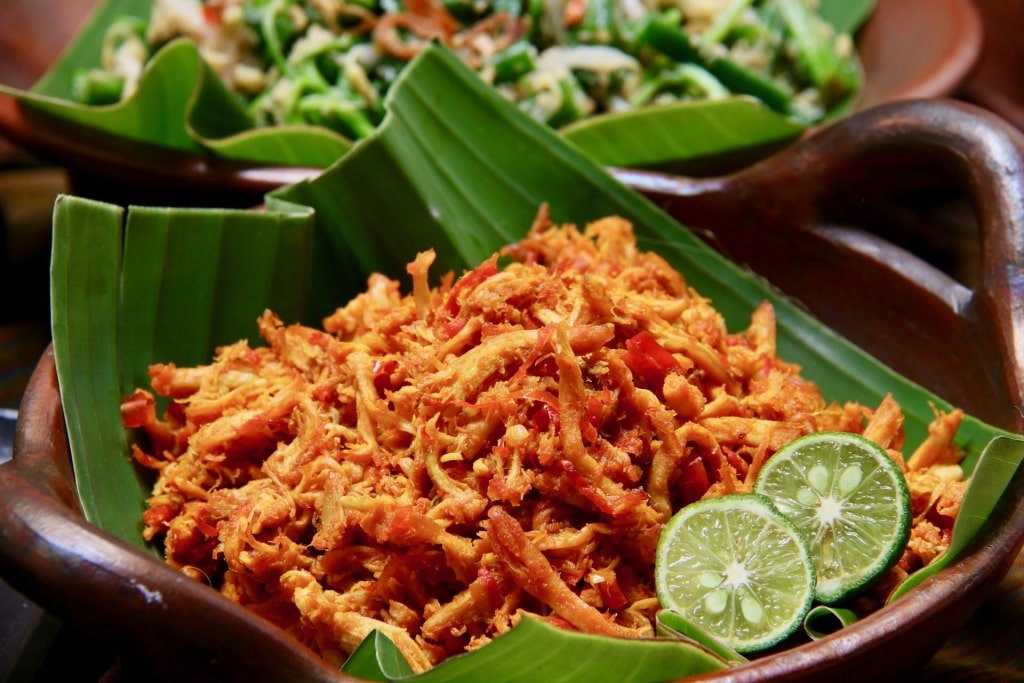
Ayam pelalah
Another Indonesian culinary staple, ayam pelalah is shredded chicken with myriad delicious spices. This dish is anything but simple; the blend of chicken, herbs, and spice paste create a culinary delight that should be on any visitor’s Bali food bucket list.
The spice paste combines hot chili peppers, turmeric, shrimp paste, and garlic with oil. The herbs mixed into the chicken include kaffir lime leaves, lemongrass, and Indonesian bay leaves. After the meat is grilled and shredded, it’s stir-fried with the spices and then dished up with cucumber, tomatoes, and rice. A lime wedge usually tops it all off and you’re ready to enjoy.
You’ll find ayam pelalah almost anywhere on the island, as it’s a popular menu item in restaurants and homes alike.
Read: Best Places to Visit in Bali
Pepes Ikan
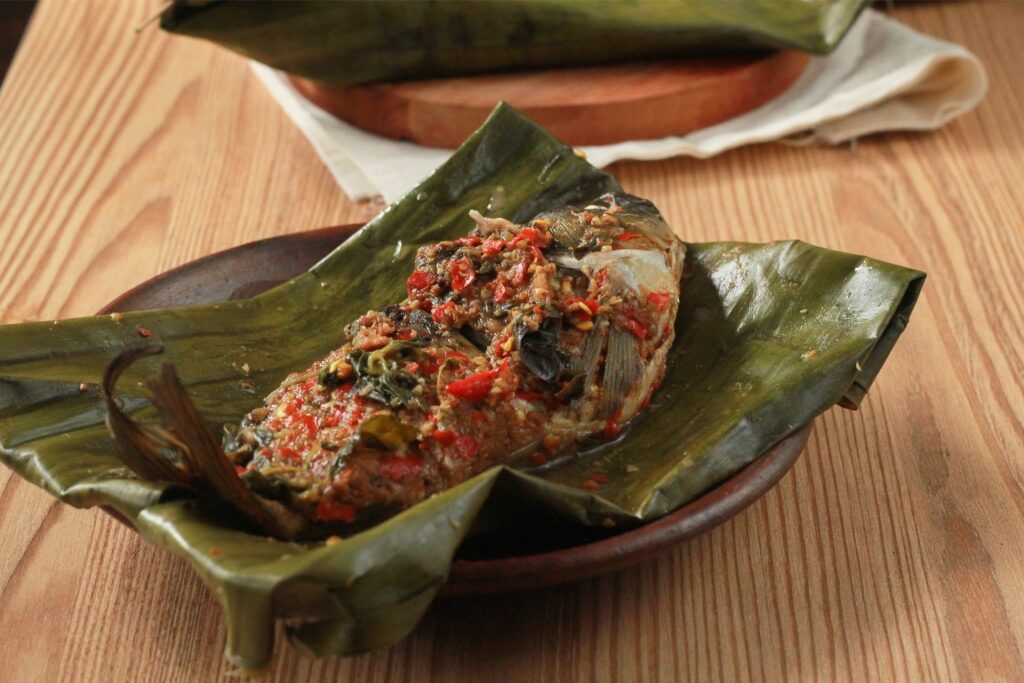
Pepes ikan
This dish relies on an ingenious cooking method to keep the fish flaky and moist. It is thought to have originated among the Sundanese people of West Java. These days, you’ll find variations of it everywhere from Bali to Singapore.
Pepes ikan can be made either with whole fish or filets, either of which are rubbed all over with a bumbu spice paste. The entire thing is then wrapped in a banana leaf package, which gets tossed on the grill or in an oven. As it cooks, the leaves release moisture, which effectively steams the fish while it picks up a touch of smoke.
Bubur Ayam
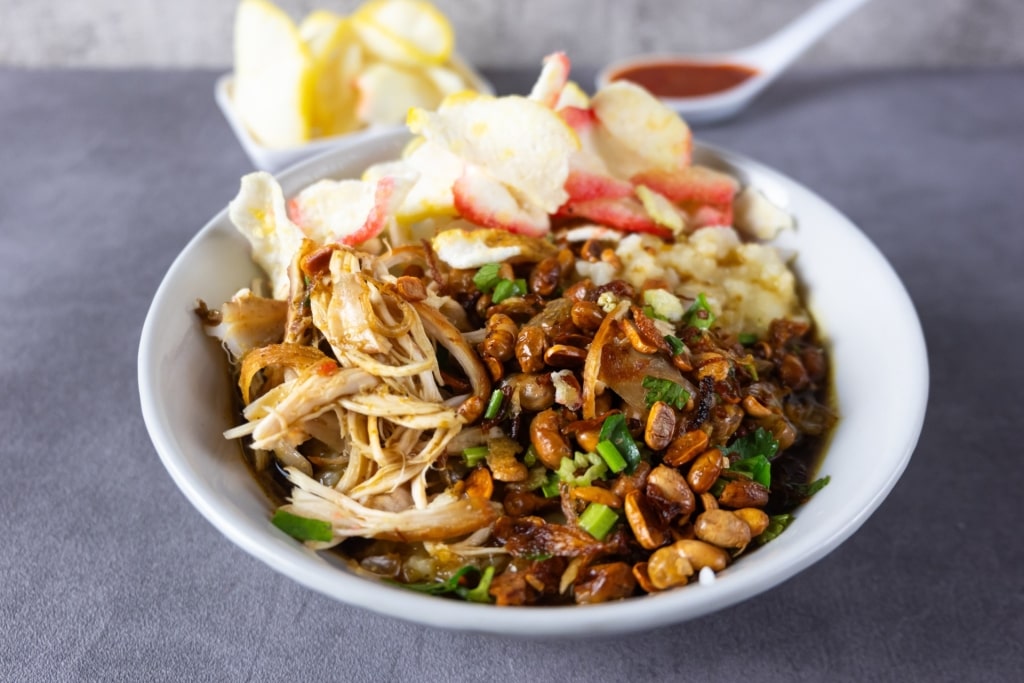
Bubur ayam
Much in the way that chicken noodle soup is thought to be a cure for colds in many Western nations, congee is peak curative comfort food throughout much of China and Southeast Asia. This humble, brothy rice porridge comes in all sorts of variations.
Bubur ayam, made with chicken, is found throughout Indonesia, Singapore, and Malaysia. Picture a steaming bowl of rice cooked until soft, then studded with shredded chicken, a boiled or soft-boiled chicken egg, and other toppings. Often, the best place to get bubur ayam is from a roadside cart; these usually serve it around breakfast and lunch.
Nasi Ayam Campur
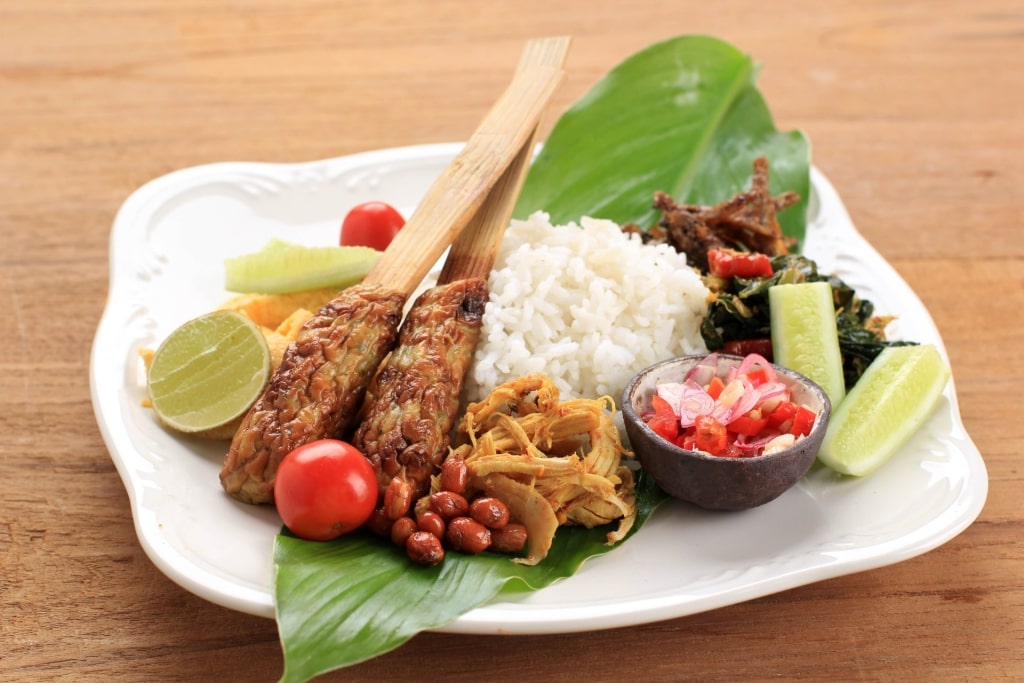
Nasi ayam campur
Unlike babi guling, Bali’s most famous dish, which is made with a whole roasted pig, nasi ayam campur is made with chicken and rice. Like babi guling, it packs a remarkable array of flavors and textures onto a single plate and is a shining star in any Bali food guide. Often, it consists of chicken three ways: slow-cooked thighs, moist breast meat, and often a satay skewer for good measure.
As with babi guling, the heavily seasoned accompaniments push this Balinese food over the edge. There is the typical relish of long beans with toasted coconut, along with fried peanuts and crispy cracklings. A hard-boiled egg is also a common addition.
Plecing Kangkung
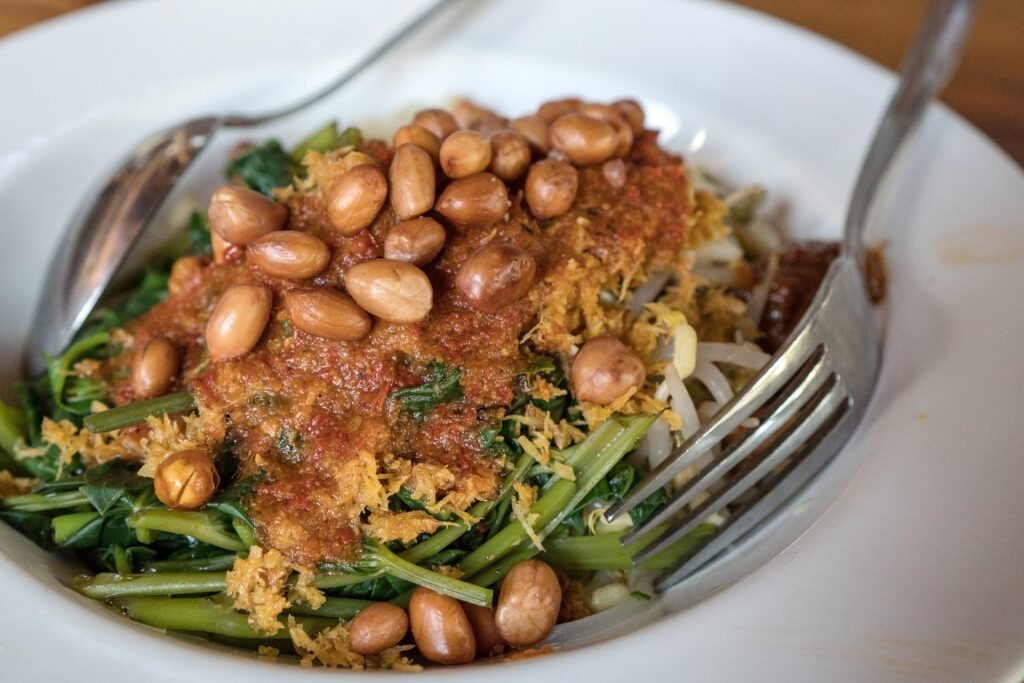
Plecing kangkung
Eating your veggies is never difficult in Bali. The island has an abundance of delicious preparations for fresh greens, including this dish of blanched water spinach, or kangkung. It’s served with an aromatic sambal that gets a wallop of umami from fermented shrimp paste. Tiny, powerful bird’s eye chilies pounded into the mix add a punch.
Plecing kangkung can be enjoyed by itself, but it’s more commonly served as an accompaniment to meat dishes. In Bali, it’s a favored side to bebek betutu, the island’s famous roast duck.
Serombotan
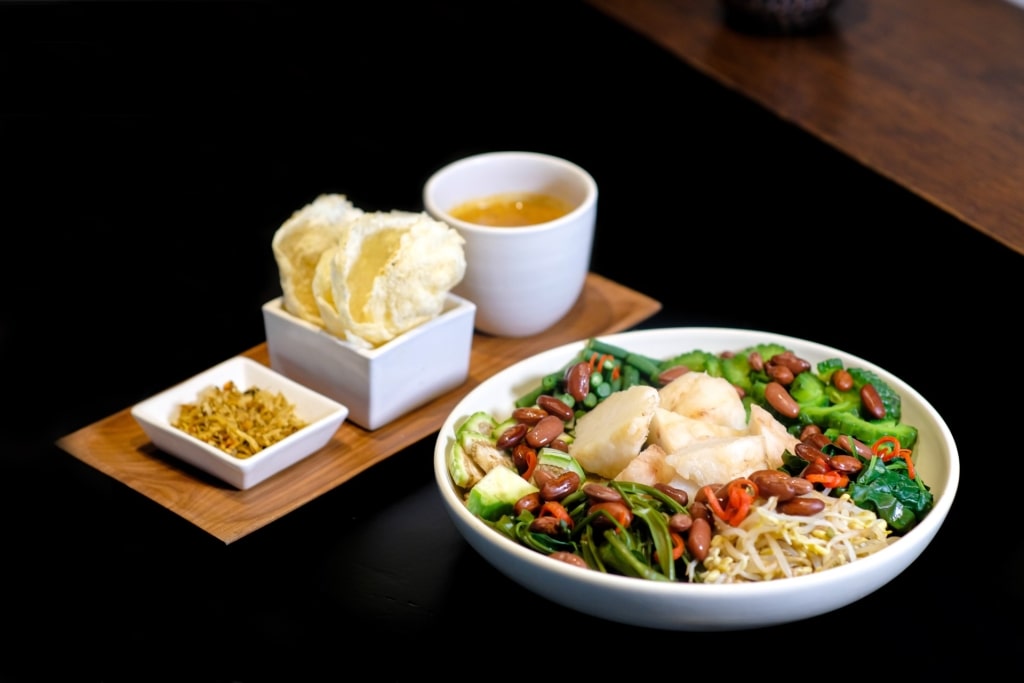
Serombotan
Another excellent dish for veggie-lovers, serombotan consists of lightly boiled greens, eggplant, long beans, bitter melon, and bean sprouts.
While a plate of boiled vegetables may not sound that exciting, this one is particularly flavorful. It comes with crunchy peanuts, plus a trio of sambals: peanut sauce, coconut sauce, and one made with shrimp paste and chilies.
Klepon, or Ondeh-Ondeh
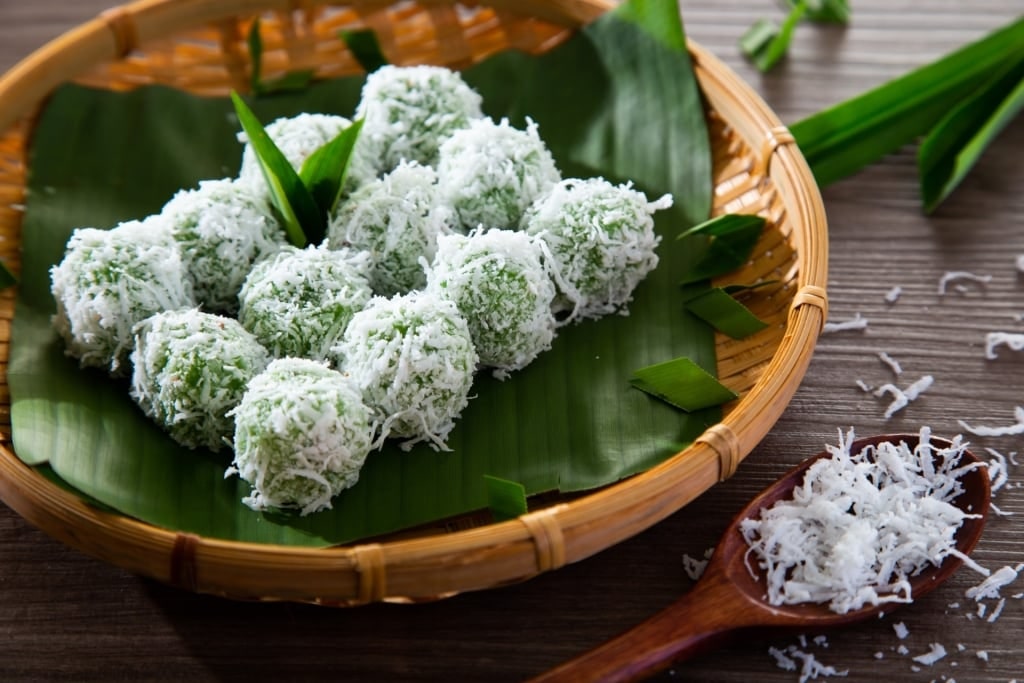
Klepon
These bite-sized sweets are as fun to eat as they are to say. You’ll find them all over Malaysia, Singapore, and parts of Sumatra, as well as Bali and Java, where they originate. They’re made with glutinous rice flour, which gives them a wonderfully bouncy texture. Coconut milk adds richness, while gula jawa, a kind of unrefined palm sugar, adds nuanced sweetness.
Pandan leaves, which have a fragrance somewhat akin to vanilla and pine, are often used for their flavor and bright green color. The finished balls are usually rolled in grated coconut, which gives them a festive appearance.
Es Daluman
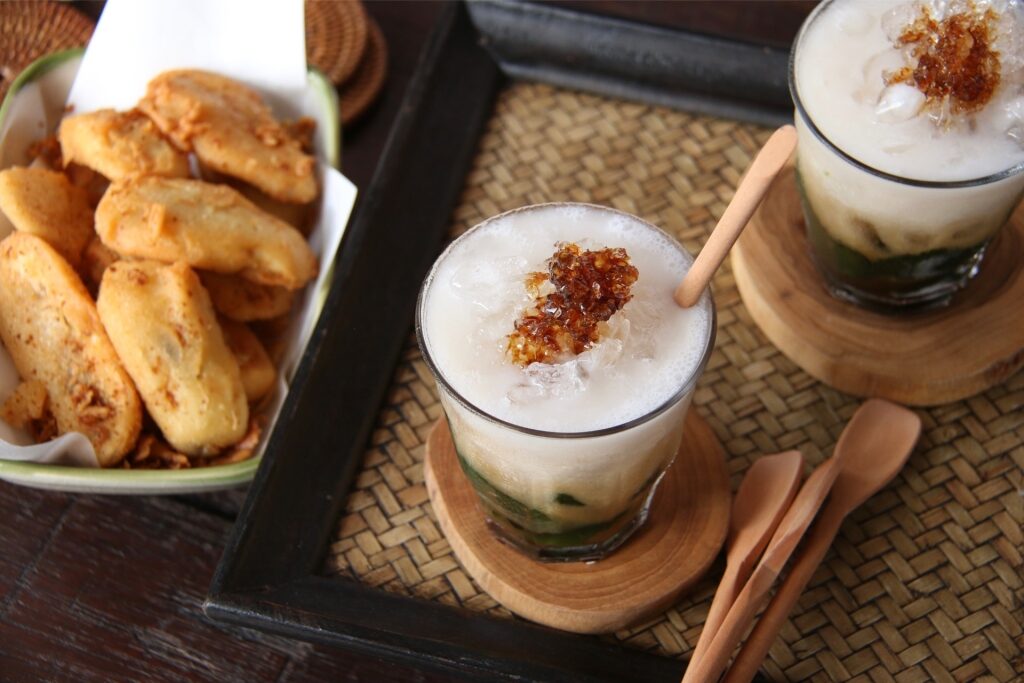
Es daluman
If you’re seeking a way to beat the Balinese heat, look no further than this refreshing drink. The main component is cubed grass jelly, a green, wiggly wonder made from Daluman leaves. The plant, also known as Cyclea barbata, makes for a delicate texture. These sweet treats bob in an icy mixture of coconut milk and palm sugar syrup.
Sate Lilit
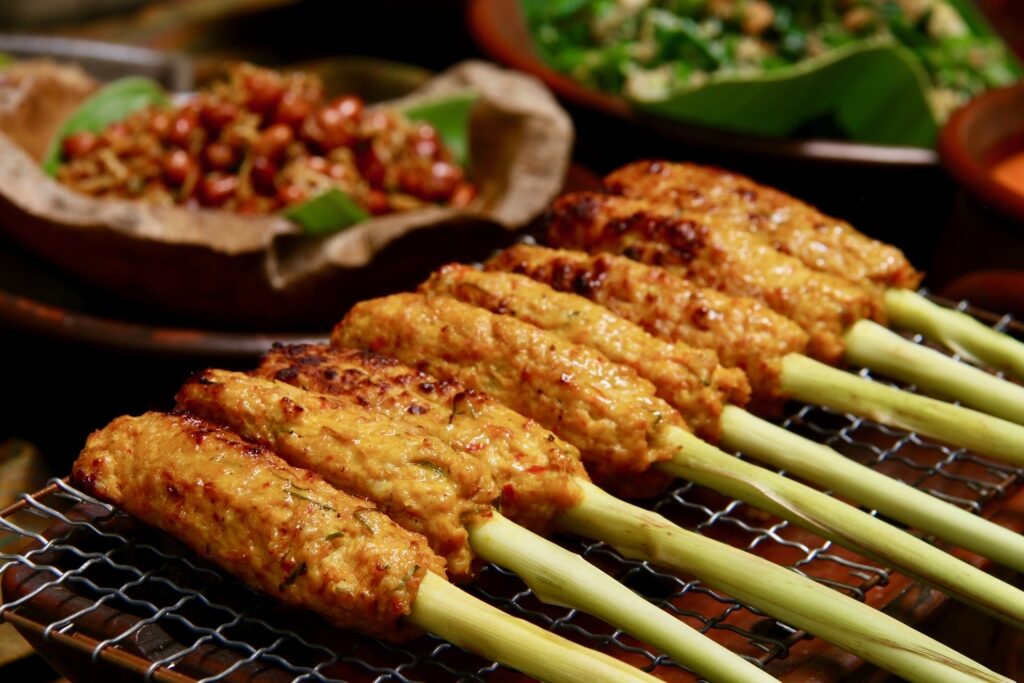
Sate lilit
These seriously flavorful skewers are the ultimate pick-me-up snack or small bite as part of a larger feast. Lilit translates as “to wrap” and describes the way the minced or ground meat is wrapped around a lemongrass stalk, sugarcane piece, or bamboo skewer.
The protein of choice is typically pork or fish, although chicken or beef may be used as well. It’s pounded with coconut milk or cream, citrus, and shallots. Spices, including turmeric, galangal, makrut lime leaves, garlic, and fresh chilies, add a ton of flavor. After a quick stint over charcoal for a satisfying char, the sate skewers are ready to eat.
Read: Bali Travel Tips
FAQs
Is Bali a good food destination?
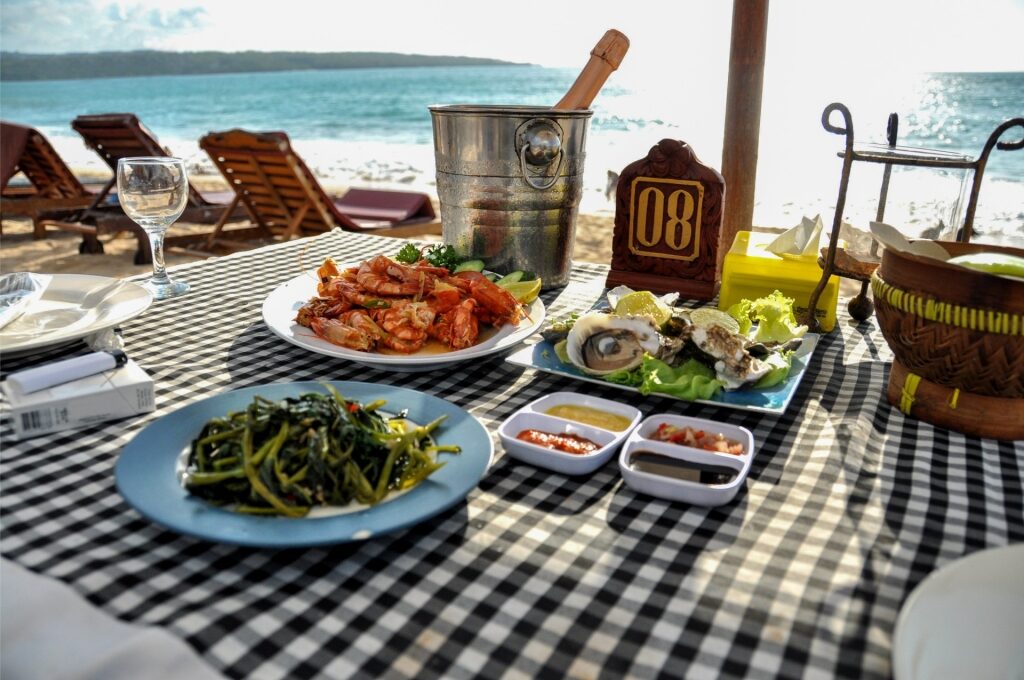
Jimbaran Bay
Yes! While Indonesia as a whole is a wonderful place to eat, in Bali, food is part of a distinctive culinary culture all of its own. There are a few key historical reasons for this. First, in the 13th century, much of Java’s Hindu population fled to Bali. As a result, many ancient Javanese recipes and traditions survived on this particular island. Today, Bali is an anomaly in Indonesia in that much of its population is Hindu, not Muslim. That means you’ll find babi guling—roast pig— and other exceptional pork dishes here, which would not be served on other Muslim-majority islands.
Another factor was that although all of Indonesia was impacted by the destructive actions of European colonists, Bali fared better than, say, the Banda Islands. The Dutch made comparatively little effort to stamp out local cultural traditions and beliefs.
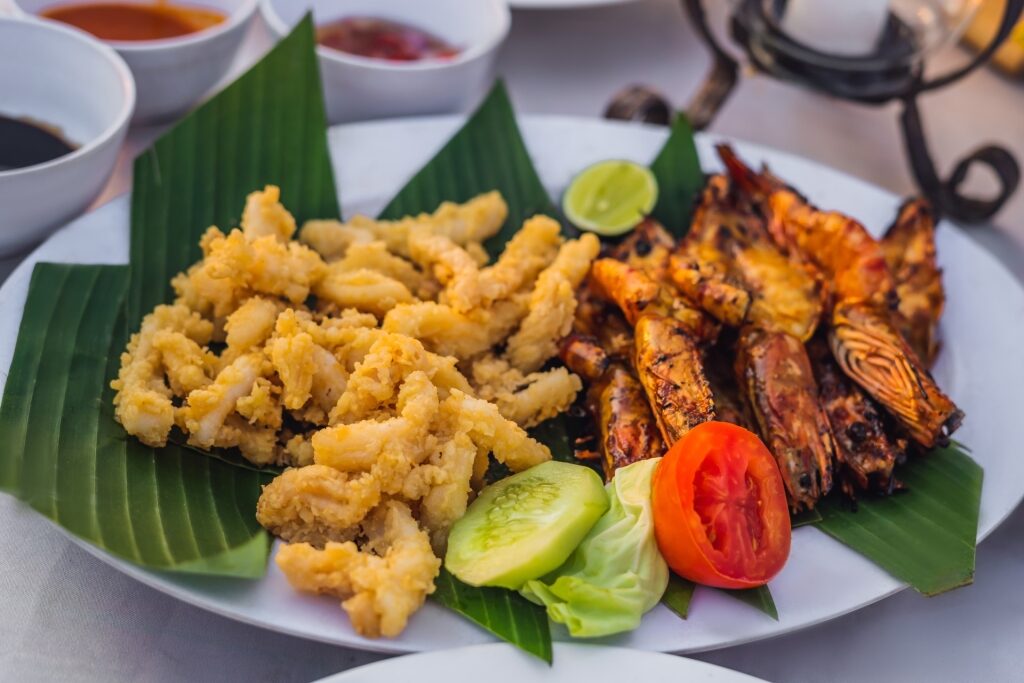
Fried seafood
Bali is also known for being blessed with phenomenal raw ingredients. All sorts of fresh fruits and vegetables thrive in the island’s rich, volcanic soil. You’ll also find an incredible selection of seafood, much of which was hauled in around Jimbaran Bay that morning.
Finally, Bali’s position as one of the most popular destinations for international travelers in Southeast Asia has radically reshaped the food scene here. These days, Balinese food is part of a serious fine dining scene. If you’re looking for tasting menus spotlighting local ingredients, you’ll be spoiled for choice. Fortunately, there are still plenty of roadside warungs and more local eateries. In other words, you can find fantastic food at just about any price point.
What dish is Bali most famous for?
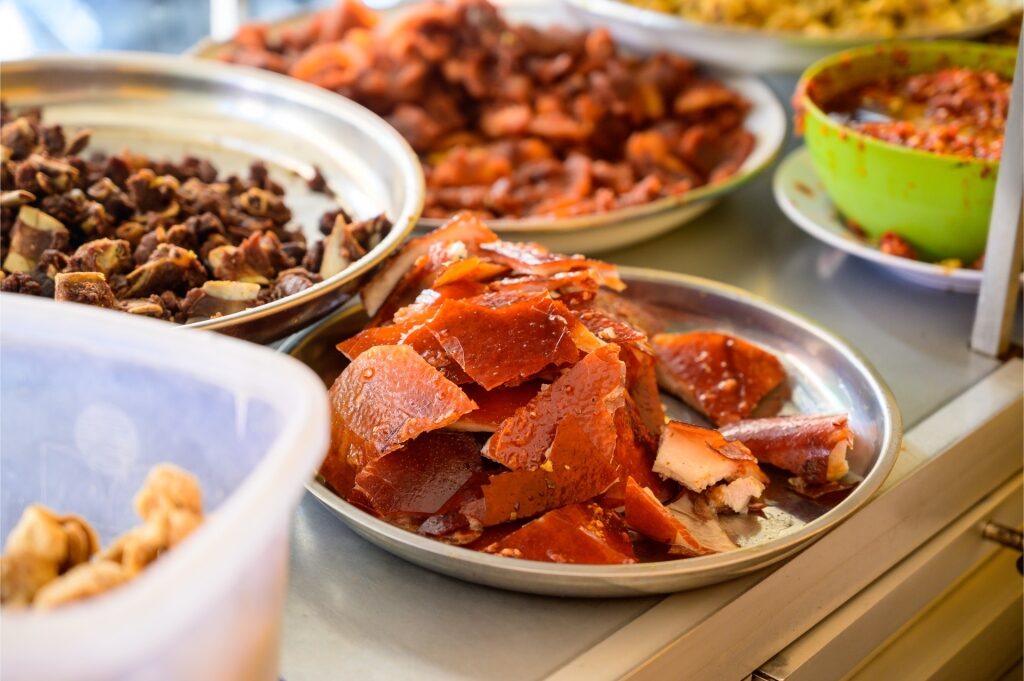
Babi guling
Babi guling, or roast pig, is almost certainly Bali’s most famous dish, although bebek betutu— roast duck—is a close second. This was the one that won over Anthony Bourdain on his visit, and it’s easy to see why. Think of this as the Balinese answer to whole hog barbecue.
The pig is seasoned all over with a fragrant bumbu spice paste, then slow-roasted over smoldering wood or coconut husks for hours. After the meat is tender, it’s served alongside pork blood sausage, pork cracklings, long beans, rice, pork satay, and magnificently crunchy pieces of skin.
What time does dinner typically start in Bali?
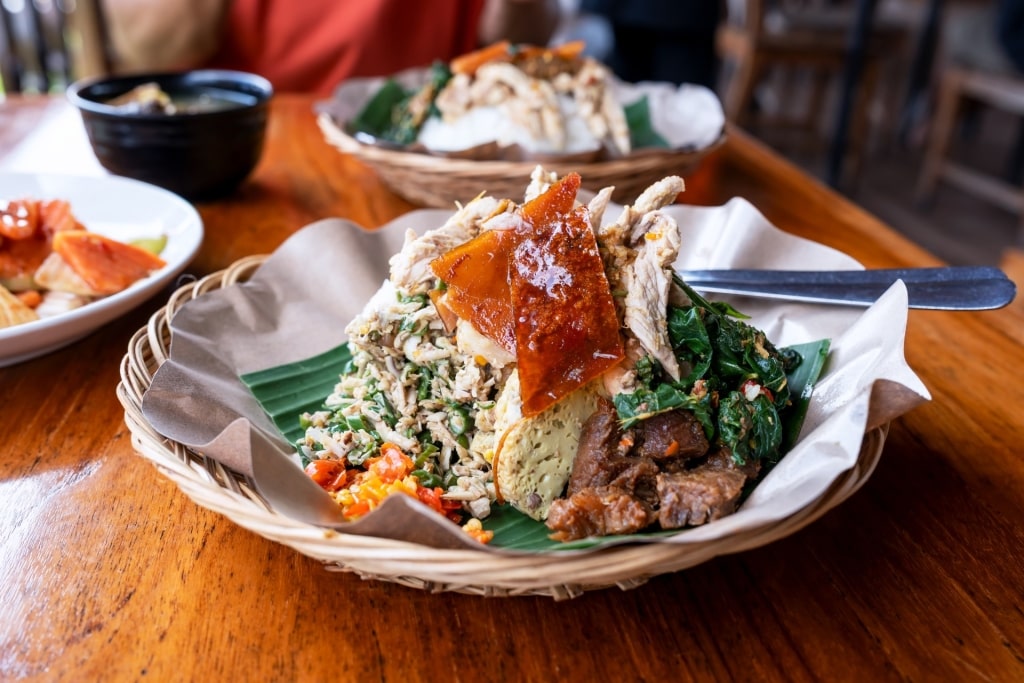
Babi guling
Dinner time in Bali usually starts around 6 p.m., although restaurants tend to fill up closer to 7 p.m. or 8 p.m. Whether or not there are late-night options depends a lot on which part of the island you visit. Rowdy Kuta has bars and restaurants going until the wee hours, while more grown-up Seminyak shuts earlier.
Is street food in Bali safe to eat?
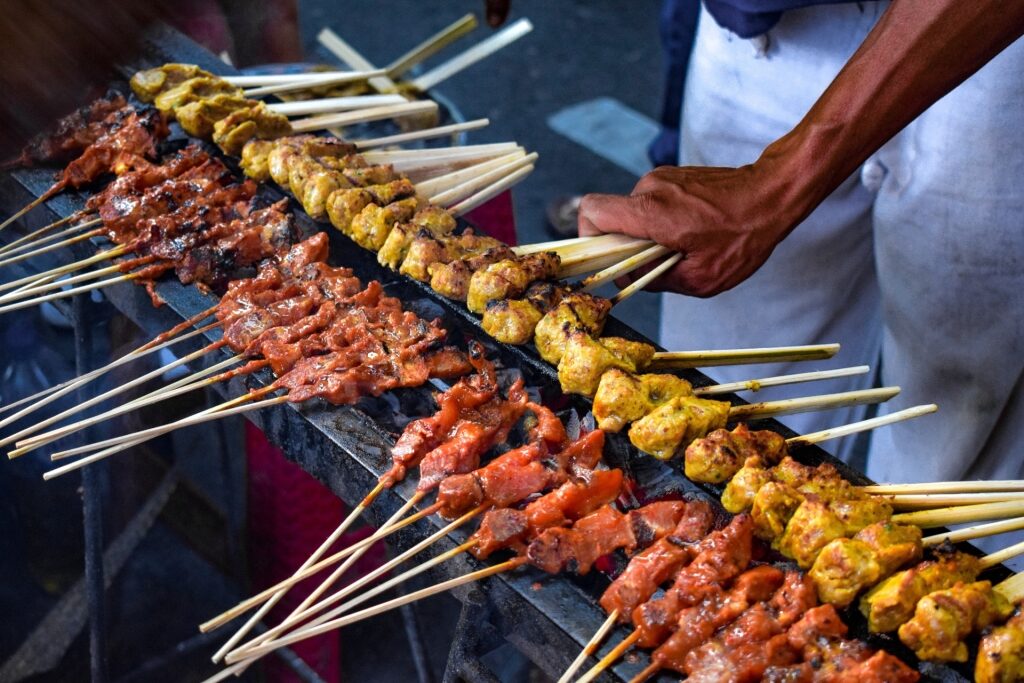
Satay
Absolutely! While Bali has no shortage of fancy restaurants, some of the best food on the island is still found at warungs. It’s important to note that Bali does not have a street food culture in the way that, say, Penang or some other cities in Southeast Asia do. Nevertheless, you’ll find all sorts of delicious eats sold out of carts and in local markets. Hygiene standards are generally solid here, and you can feast without worry.
Is Bali a good food destination for vegetarians?
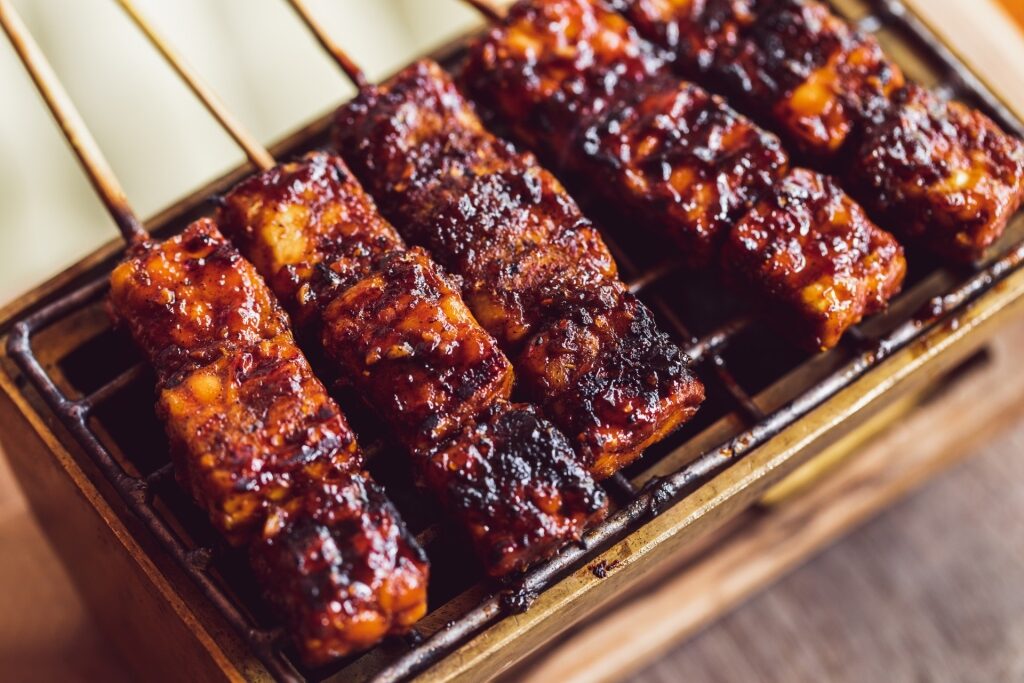
Tempeh
Bali is pretty accommodating to travelers with all kinds of dietary restrictions, particularly those on plant-based diets. While traditional Balinese food features a lot of pork, seafood, and chicken dishes, there are tons of vegan- and vegetarian-friendly offerings as well.
Tempeh, a fermented cake made from soybeans, and tofu are often available for protein. Look for tipat cantok—a vegetable salad with steamed dumplings—and other plant-based dishes. The island also has a wide variety of fresh fruits, so you’ll never suffer from a lack of snacking options.
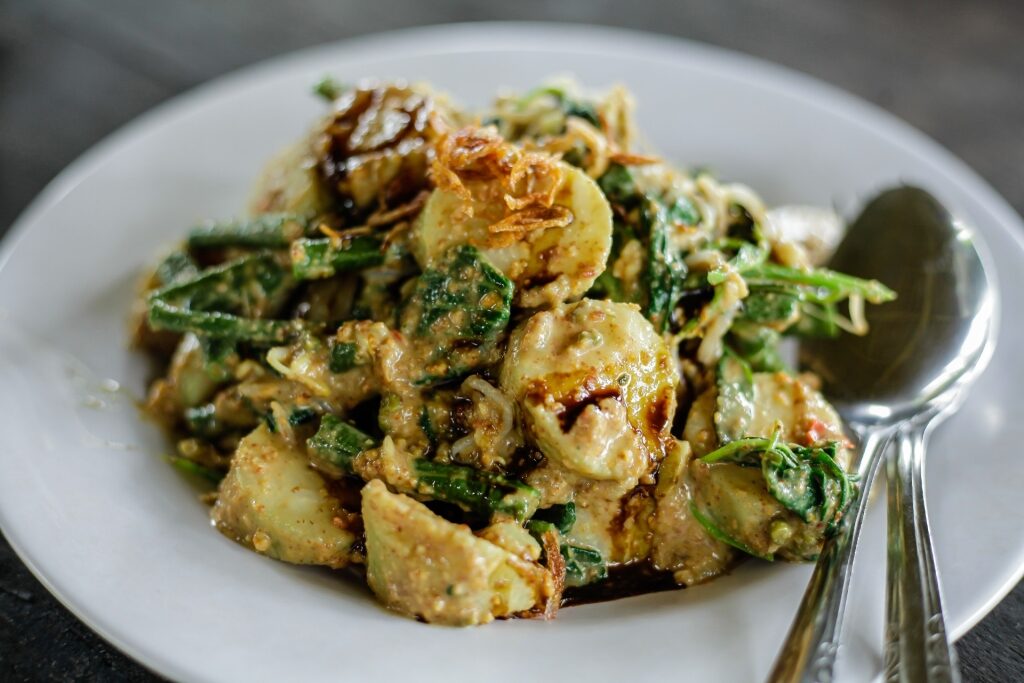
Tipat cantok
One thing to note is that many spice pastes and seasonings rely on fermented shrimp paste. If your diet does not allow for this, you may want to ask in advance.
In recent decades, Bali has built up a strong reputation as an international wellness destination. As a result, the island plays host to a great many spa and wellness retreats—and now has the cuisine to match.
Are there any food customs I should know about?
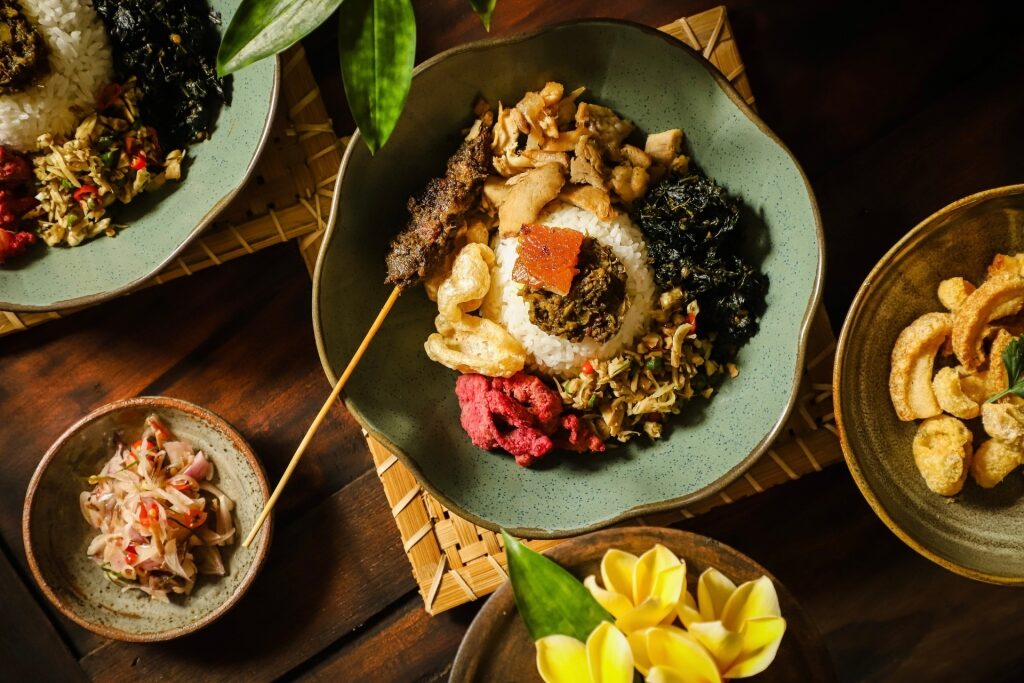
Nasi campur
Historically, Balinese preferred to eat with their fingers, and some meals are still served this way. Therefore, it’s essential to wash your hands before eating.
If eating with your hands, use the fingers on your right hand to delicately pick up small bites. Always pass food with your right hand—never the left. If you do use a fork and spoon, hold the fork in your left hand and use it to push food onto the spoon.
As with many other parts of Southeast Asia, Bali is all about the communal meal. While there are plenty of dishes for solo diners at more casual warungs, most meals are shared. Be mindful of taking too much food at a time from the communal plates and be respectful of your fellow diners. Offer food to those around you before serving yourself and make sure everyone else’s glass is full.
Is tipping expected in Bali?
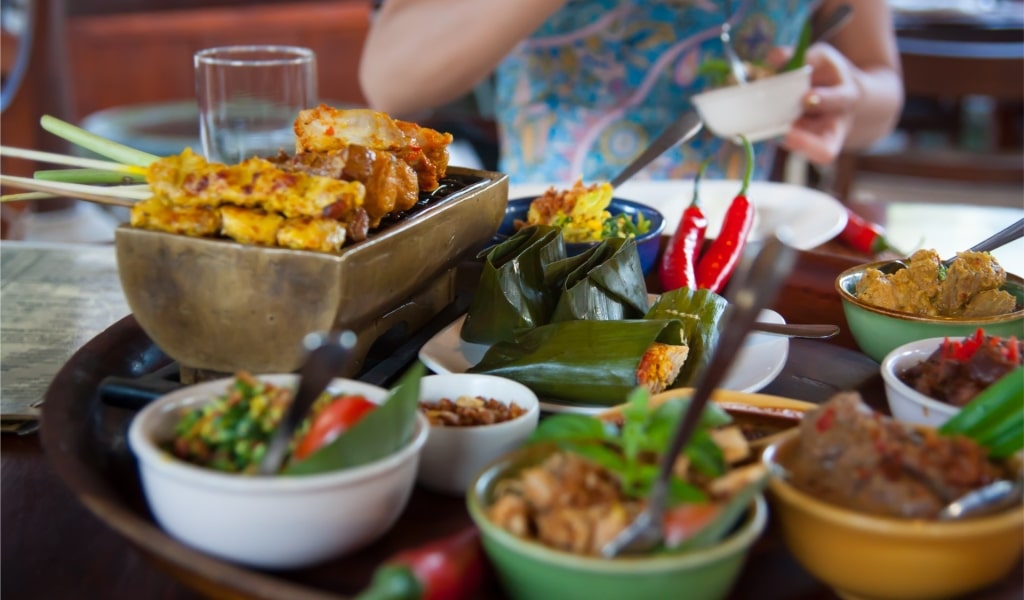
Restaurant in Bali
Tipping is not required in Bali, although it is always appreciated. If you’re at a fine dining or upscale hotel restaurant, a 5 to 10 percent service charge may be added to your bill. Warungs or other local spots will not include a service charge, and it isn’t expected.
That being said, generosity is always a good idea when possible. If you’re paying with cash, round up and leave the small change on the table at the very least. Adding an extra 5 to 10 percent is never a bad idea, especially if the service was exceptional.

Bali
A cruise to Bali is a fantastic way to indulge in all of the incredible food in Indonesia. Browse itineraries and book your tropical getaway today.