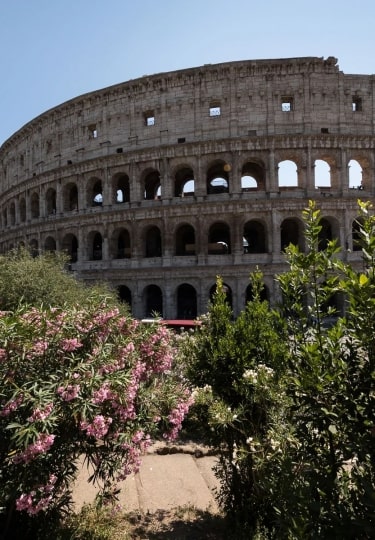
One day, you’re in history class flipping through the chapters of ancient Rome in your textbook. Photos of the Colosseum paint the white pages, followed by text explaining the Vatican City. It seems like a fantasy — something you see in the movies or read as a kid before bedtime. Then, you get the opportunity to embark on a journey that your fingertips once brushed along soft black ink.
During my first visit to Italy’s Eternal City, I stood in awe below Michelangelo’s intricate masterpieces that swept across church ceilings. The Spanish Steps. The Pantheon. The Trevi Fountain. I found myself on a Vespa, smelling olive oil seeping through the windowsills, spilling onto the cobblestone streets, and finding the lesser-known spots like the Aventine Keyhole. It’s a challenge to discover it all in a single day — that is, unless you have the right Rome itinerary. Celebrity Cruises® takes you there.
If you’re wondering what to see in Rome during a cruise stop, keep reading. This guide shares everything you need to know, including getting there from the port, can’t-miss attractions, important tips, and more.
Getting to Rome From Civitavecchia
Celebrity Cruises Mediterranean sailings show you the most iconic places along the sea, even just for a day at a time. Hitting multiple countries in a single itinerary maximizes your vacation, and cruising to and from Rome is one for the books.
Before reaching the Italian capital, guests disembark in Civitavecchia. The port is about a 40-minute express train ride from the Eternal City or a 90-minute coach ride. Celebrity Cruises makes personal transfers effortless, guiding you exactly where you need to go. Some shore excursions include packages that give guests up to ten hours in the city.
For guests with mobility considerations, the coach transfer is the more accessible option, as the train platforms involve quite a few steps. Whichever transfer option you choose, factor in your commute to and from the ship — and enjoy the Italian countryside on the way. It’s part of the experience.
The Rome Guide for Every Type of Cruiser
You’ve sailed the Mediterranean, witnessed sun-drenched coastlines pass from your veranda, and taken the express train to the center of town. Now what? Well, that depends on you.
Rome is known for its detailed art, mouthwatering cuisine, preserved structures, lush parks, and layers of history stretching from ancient Rome to the present day. The city never runs short of sights to explore, and for a 10-hour day, there’s a Rome itinerary for each type of cruiser on board.
The Art & Culture Traveler
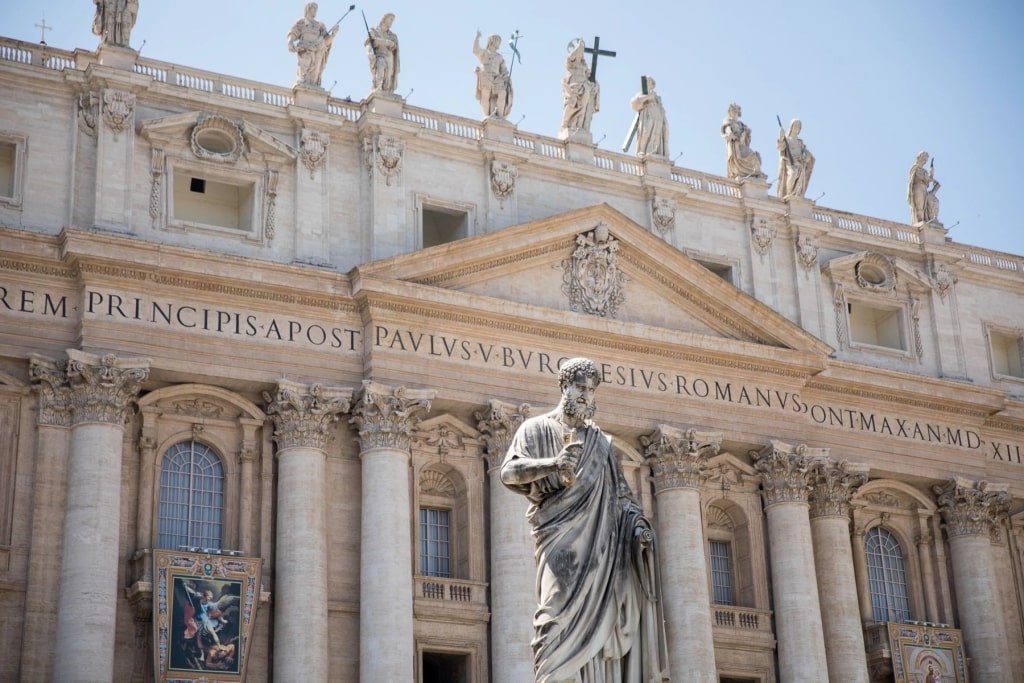
Majestic Saint Peter statue stands foreground framing St. Peter’s Basilica ornate stone façade
The Eternal City is an open-air museum with a cultural pulse unlike anywhere else in the world. Famous sculptures, detailed portraits, and Italian delicacies exhibit a lively canvas that any art enthusiast would dream of spending a full day exploring.
Begin your morning at the Vatican Museums, where you can marvel at some of the world’s greatest artistic achievements. Spend hours wandering around 54 galleries and scoping out more than 70,000 displayed pieces. An earlier pre-booked arrival is sure to be a calmer start.
Next, make your way to the Sistine Chapel. Don’t forget to look up. Michelangelo’s illustrative ceiling stops every visitor in their tracks. Witness High Renaissance art and the very piece that took him four years to complete.
As the early afternoon approaches, head toward St. Peter’s Basilica in Vatican City, where the dome structure is just as breathtaking outside as its marble floors and gold-plated ceilings inside.
After a full morning soaking in the Vatican, find an authentic Roman trattoria nearby for a margherita pizza and cappuccino before wandering over to the Pantheon. The nearly 2,000-year-old temple’s concrete dome and open oculus still baffle engineers today. It is the largest unreinforced-concrete dome in the world.
Continue toward Piazza Navona, where you’ll find the incredible Bernini’s Fountain of the Four Rivers. The monument stands as an anchor to one of Rome’s most theatrical squares, where street artists, outdoor cafés, and centuries of history share the same cobblestones. Finally, end your day with a sweet treat, grabbing a gelato on the streets of Centro Storico.
The History Buff
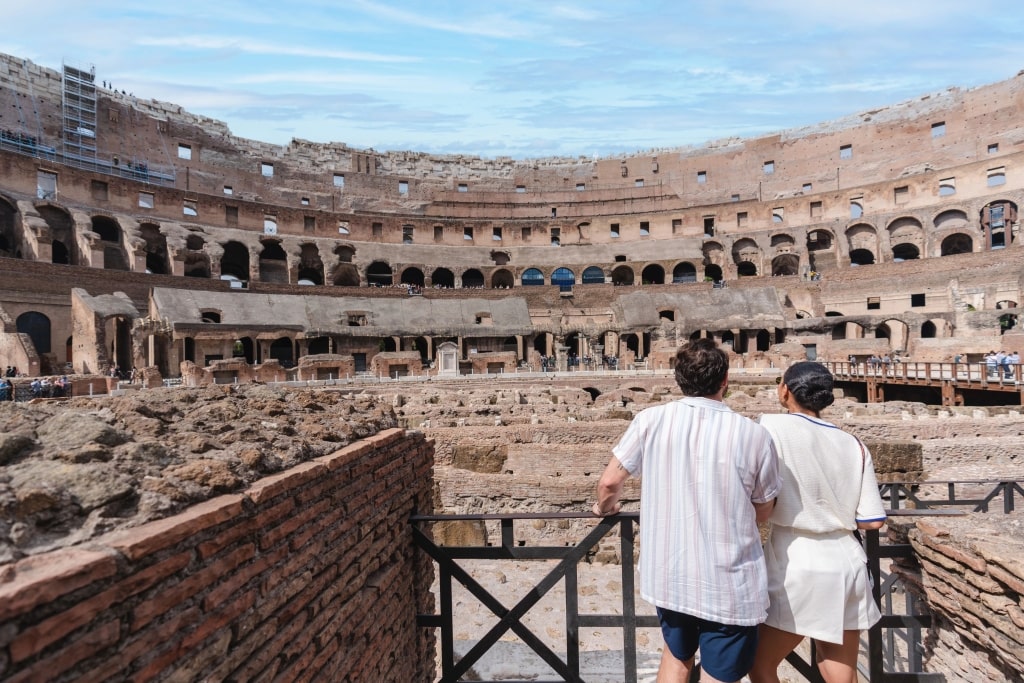
Curious couple admiring iconic Rome Colosseum ancient stone amphitheater ruins
In Rome, “save the best for last” doesn’t exist. Everything has earned its place and is just as impressive as the next. Many swear by the “Caesar’s Shuffle” — an effective route named after Julius Caesar that shuffles you through some of the most spectacular spots in town.
No amount of research or photos will prepare you for the moment you are face-to-face with the Roman Colosseum — that’s why this is your starting point. I’ll never forget riding on a Vespa down the street and seeing the larger-than-life ruin reveal itself at the crown of the road. Walk inside and feel as though you were one of the 50,000 spectators it held.
Next, head down to the Roman Forum, a place that served as the political center of Rome for centuries and remains one of the city’s most important ancient ruins. Then, make your way to Palatine Hill, often considered one of the most ancient parts of the city and the nucleus of the Roman Empire. The Pantheon follows to complete your morning — a true chapter of your history book coming to life.
For lunch, grab an authentic pasta dish with an Aperol Spritz near the Trevi Fountain. Get your euro ready to throw over your left shoulder with your right hand — a legendary guarantee that you’ll return to Rome.
Pause and soak in the fountain before making your way to the Spanish Steps. While it’s not too far away, there are 135 of them, and if you make it to the top, you’ll see panoramic views of the city. The lively piazza below, Piazza di Spagna, is one of the best spots for people-watching. Here is where you’ll feel like every page of that textbook finally made sense.
The Off-The-Beaten-Path Traveler
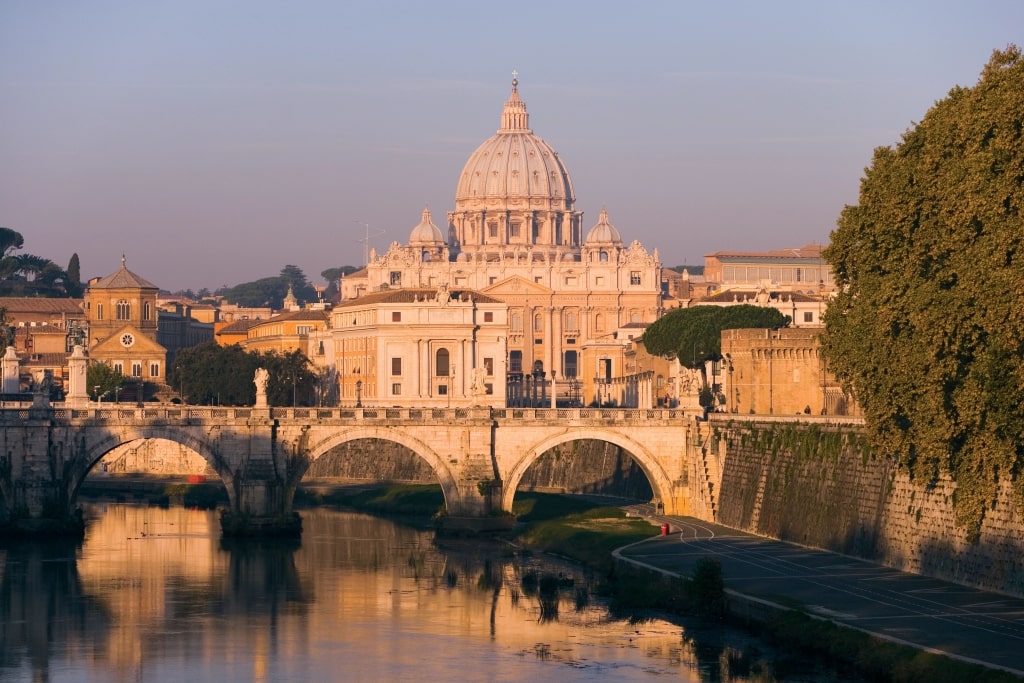
Sunlit Tiber River reflects the stone bridge arches and the iconic, distant towering dome of St. Peter’s Basilica.
If you’re someone who likes a more unique itinerary — one that goes beyond the obvious — start at Villa Borghese. The museum, the gardens, and the scenic viewpoints make it easy to lose track of time. Begin in the Borghese Gallery before heading out to the park. It covers a lot of ground, so I recommend renting a golf cart from a vendor nearby and riding through the walkways to cover it all. Without the museum, the Villa Borghese Gardens alone took me three to four hours to see.
Then, take the public transportation system to the Aventine Keyhole. Yes, that’s exactly what it is — a mere hole in a grand door. It’s hidden in plain sight, and if you didn’t know to stop, you’d probably zip right by it — one of the best-kept secrets of Rome. Walk up to it. Put your eye up to the gap. Be amazed. Here, you’ll discover sweeping views of St. Peter’s Basilica — the keyhole unlocks a front-row seat.
End your afternoon wandering one of Rome’s most beautiful neighborhoods, Trastevere. The cobblestone streets, vine-lined walls, and vibrant florals paint the romantic portrait of the Eternal City you’ve only fantasized about. Spend your remaining hours witnessing the sun set behind the horizon as the streetlights illuminate the surrounding piazzas.
What To Know Before You Go
As you plan your Mediterranean dream getaway, there are a few things to keep in mind for an optimal experience. Rome is a treat in any season, but when you should visit, what you should book in advance, and how you organize your Rome itinerary can have a big impact on how you spend your time overseas.
When Is The Best Time To Visit Rome?
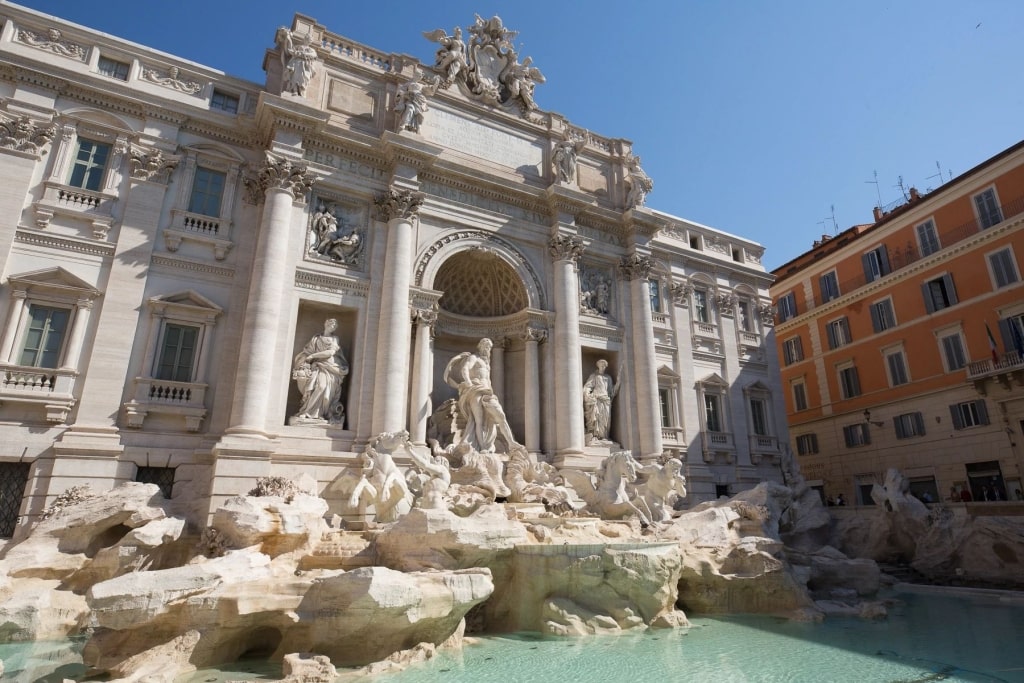
Intricate Trevi Fountain Baroque marble sculptures framing the cascading turquoise pool water
The best time to visit Rome is just before its peak season and soon after. The sweet spot is late April through early June, and again from September through October before temperatures dip. I traveled there in May, and it’s hard to imagine a better time to visit. The weather was heating up, the streets were buzzing, but not overwhelmingly so, and the energy was alive.
Tips for visiting Rome: Pack walking shoes and easy-to-move clothing. Sunscreen and a hat will help, as the sun beams off the bright yellow facades, making the streets feel hotter than they actually are. Cross-body bags or backpacks with zippers are your best bet for keeping belongings secure near any busy tourist attraction, piazzas, or metro stop.
Should I Buy Tickets in Advance?
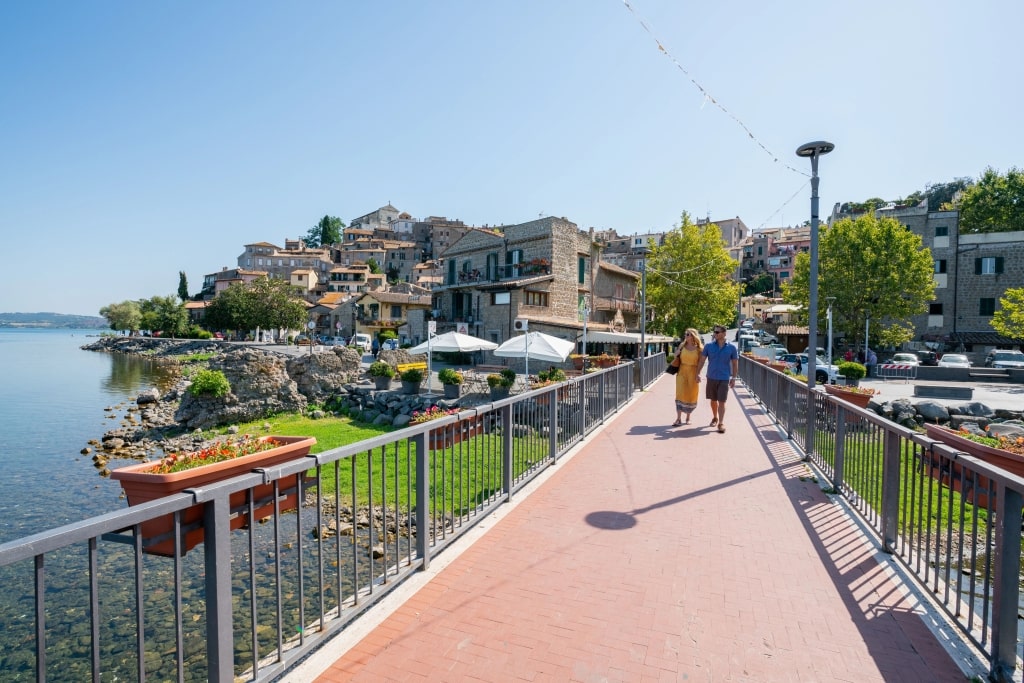
Smiling couple embraces foreground overlooking scenic lakeside Anguillara Sabazia hillside town
Yes. Many of the top Rome attractions require planning, especially if you want to visit the Colosseum, the Roman Forum, the Vatican Museums, the Sistine Chapel, or the Borghese Gallery. Timed-entry tickets can sell out quickly, and booking ahead helps you spend less time waiting in line.
A guided tour can also be helpful if you only have one day in Rome, since it keeps the day moving and adds context to what you’re seeing. Some travelers also consider the Roma Pass, which can include access to select museums and public transportation, though it’s worth comparing the pass with your planned itinerary before buying.
Rome Is Waiting
Rome is more than a destination — the energy lingers long after you’ve left. It’s that feeling you got from seeing those pictures in your classroom for the very first time. That awe-inspiring moment when it all comes to life. There’s no better way to experience the Eternal City than waking up on the Mediterranean with Rome’s iconic skyline just beyond your window.
Your Celebrity Cruises Mediterranean itinerary is waiting. Browse cruises today and chart your course to Rome.