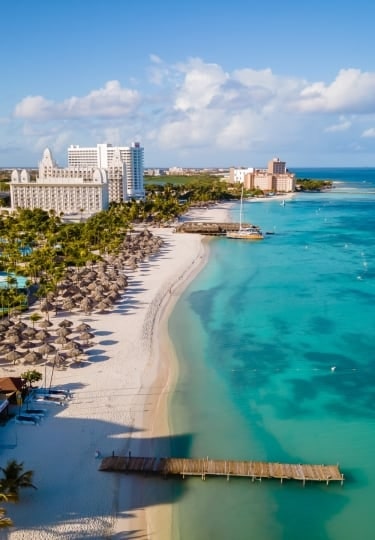
The Aruba vs. Turks and Caicos debate is a common one, and for good reason. Both destinations are home to award-winning beaches, crystal-clear waters, and unique outdoor adventures. Though they share a few similarities, Aruba is better known for its desert landscapes and colorful towns, while Turks and Caicos offer visitors a slower pace and picture-perfect beaches.
Whether you’re after adventure or tranquility, deciding between Turks and Caicos vs. Aruba comes down to personal preference. Both deliver in different ways, so you really can’t go wrong with either option.
Location
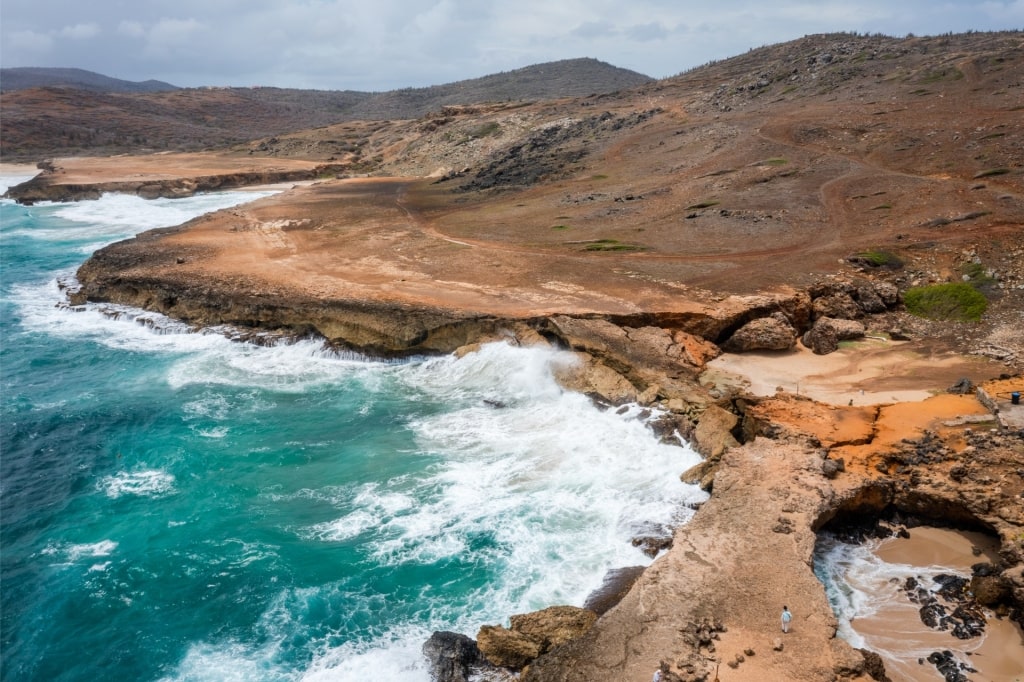
Arikok National Park, Aruba
Aruba and Turks and Caicos might be small on the world map, but both offer far more than their size suggests. Aruba is located in the Southern Caribbean, about 15 miles off the coast of Venezuela.
In contrast, the Turks and Caicos islands are located in the Atlantic Ocean, southeast of the Bahamas and north of Hispaniola. Aruba is part of the Dutch Caribbean, whereas Turks and Caicos is a British Overseas Territory.
One key difference between Aruba and Turks and Caicos is the landscape. Despite Aruba’s location in the Caribbean and its reputation for beautiful beaches, the island is volcanic and arid. It also feels more urban compared to Turks and Caicos, which gives off a more secluded, peaceful vibe.
Weather & Best Times to Visit
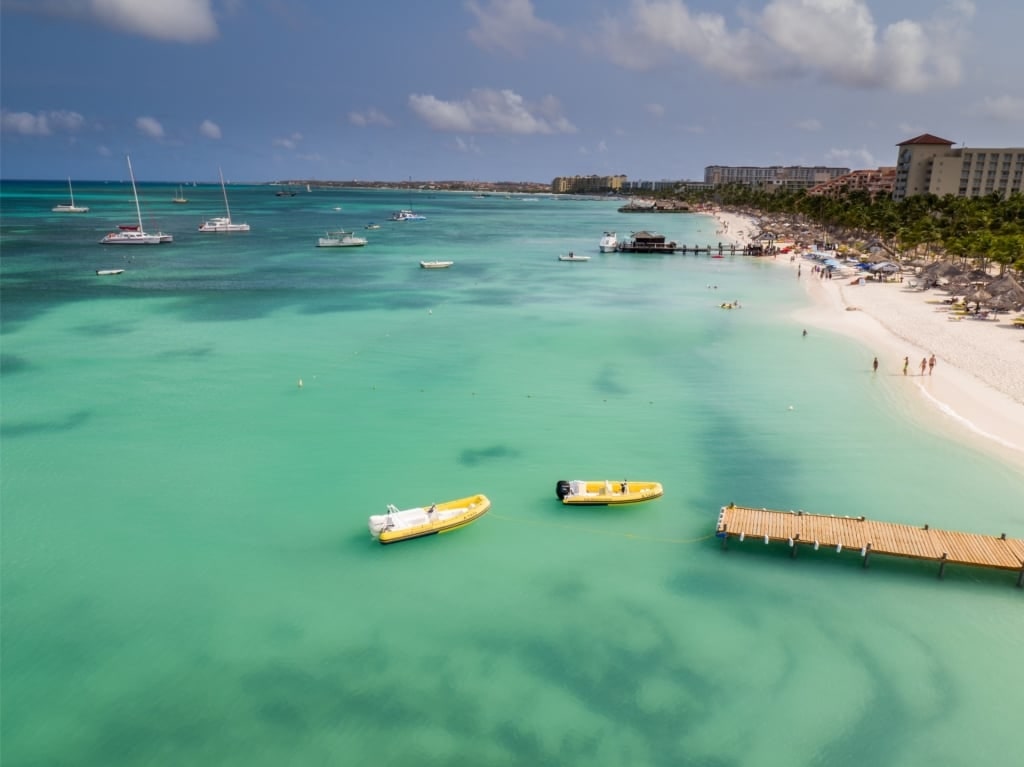
Palm Beach, Aruba
Both Aruba and Turks and Caicos are excellent vacation spots, basking in year-round warm weather. That said, there are a few differences to note.
Aruba tends to be dry and sunny year-round, with very little rainfall compared to other islands in the Caribbean. Temperatures consistently remain in the eighties, regardless of the time of year. This allows lots of flexibility for travelers, as there’s really no “high” or “low” season.
Since Aruba is outside the hurricane belt, you don’t have to worry about any incoming storms. The best months to visit Aruba are typically mid-January through May, primarily because many travelers head here to escape the cold winters in their hometowns. A summer or fall trip to Aruba is just as lovely.
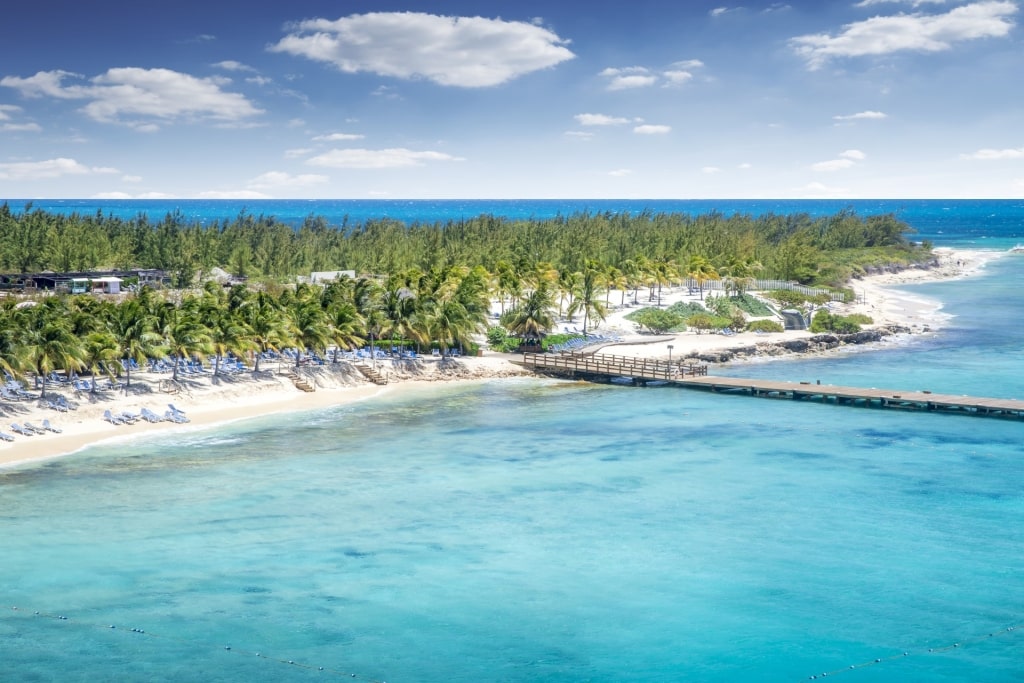
Grand Turk, Turks and Caicos
Similarly, Turks and Caicos enjoy year-round warm weather, with highs in the eighties as well. Since these islands are not outside the hurricane belt, you may want to avoid visiting during hurricane season. August through October brings the highest risk of tropical storms. The best time to visit Turks & Caicos is December through April, when you’ll find mostly sunny skies and minimal rain.
Although Turks and Caicos is slightly more weather-dependent and has a more distinct high season than Aruba, however, it remains a popular destination for year-round vacations.
History & Culture
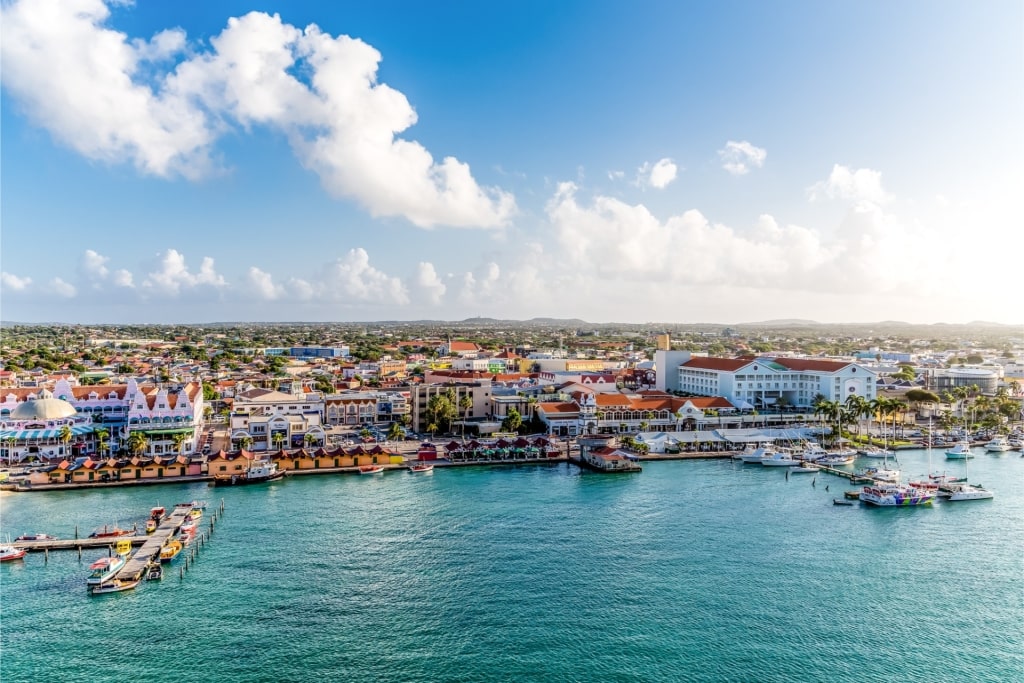
Oranjestad, Aruba
When comparing Turks and Caicos vs. Aruba, both islands share certain cultural influences while offering distinctly different atmospheres.
Aruba has Dutch colonial roots, as well as Latin American and Indigenous influences, which create a unique blend of European and Caribbean elements. People speak Dutch and Papiamento the most, followed by Spanish and English. Carnival is a celebrated time on the island, and a fun way to experience this unique mix of cultural influences.
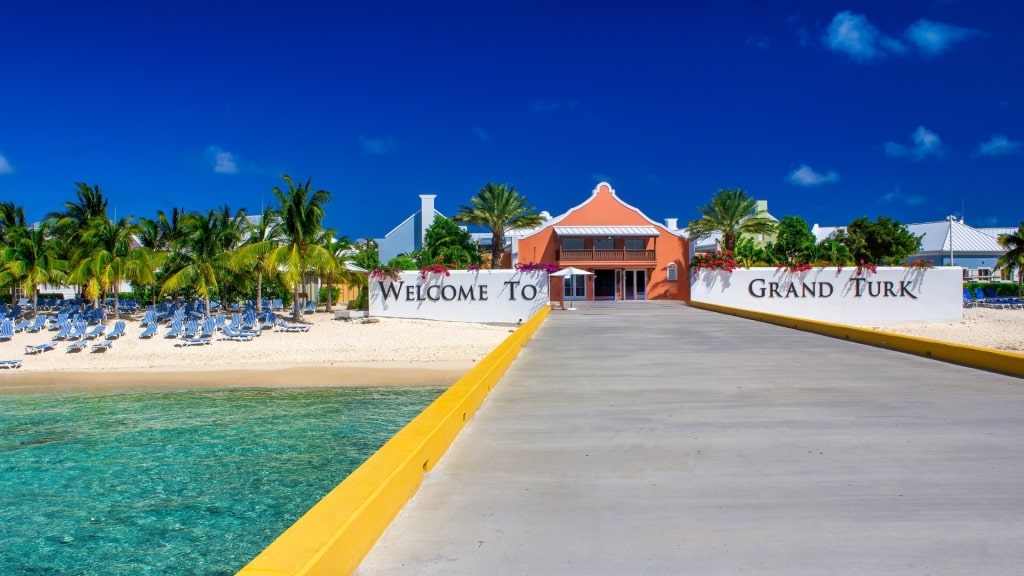
Grand Turk, Turks and Caicos
Turks and Caicos has a mix of British colonial history and African heritage reflected in its traditions. English is the official language here, which makes it especially easy for travelers to communicate and explore the island. Compared to Aruba, the culture of Turks and Caicos is more low-key, with a focus on island heritage and traditions.
While it’s easy to spend your whole trip at the beach, both Aruba and Turks and Caicos Islands offer rich cultural experiences worth checking out.
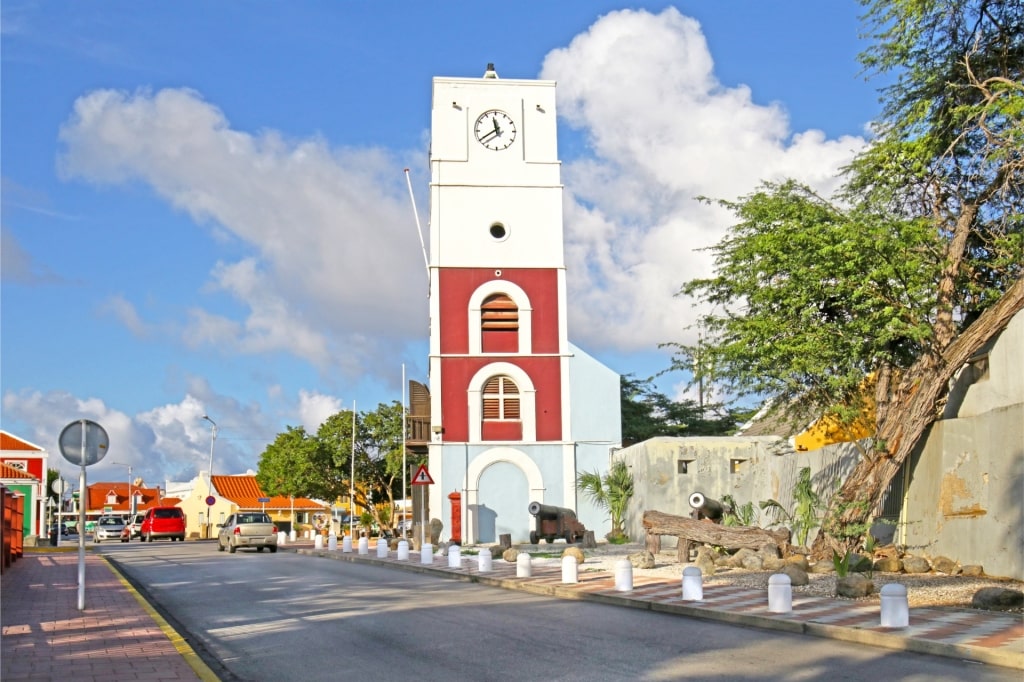
Fort Zoutman, Aruba
In Aruba, Oranjestad—the capital—is where you’ll find most of the island’s historical landmarks and museums. One of the most notable is Fort Zoutman and the Willem III Tower, the oldest surviving structure on the island.
The fort was originally built in 1798 to defend against pirates, with the tower added later in 1868. Today, the site houses the Historical Museum of Aruba, where you can find exhibits on colonial life and local traditions that are still prevalent today.

San Nicolas, Aruba
Aruba’s second-largest city, San Nicolas, has become the island’s cultural and artistic hub. Art lovers will want to spend a few hours exploring the colorful street art for which Aruba is known, which fills nearly every block.
Both local and international artists have contributed to the area’s transformation from an oil refinery town to a creative hub. The annual Aruba Art Fair, held during the first weekend of September, draws visitors from around the world.
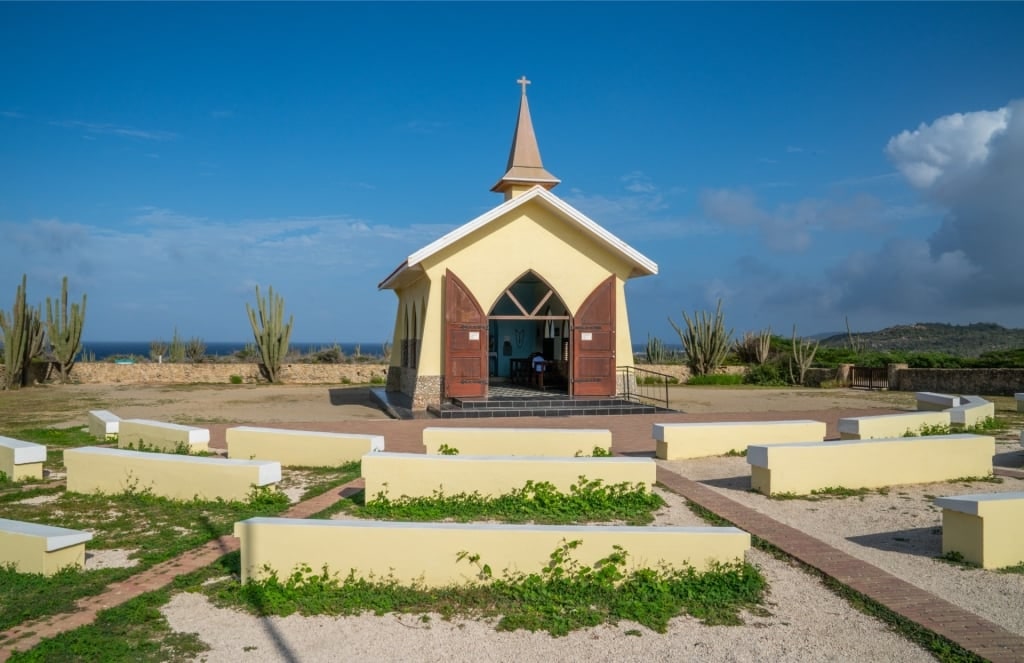
Alto Vista Chapel, Aruba
Another must-see in Aruba is the Alto Vista Chapel, perched on a hilltop overlooking Aruba’s arid landscape and coastline. This small, picturesque chapel, dating back to 1750, is considered the site of the island’s first Catholic church.
While still used for services, it is now mostly visited as a cultural landmark and scenic viewpoint. The chapel becomes especially popular during mid-January, when pilgrims gather for the Feast of Santa Filomena.
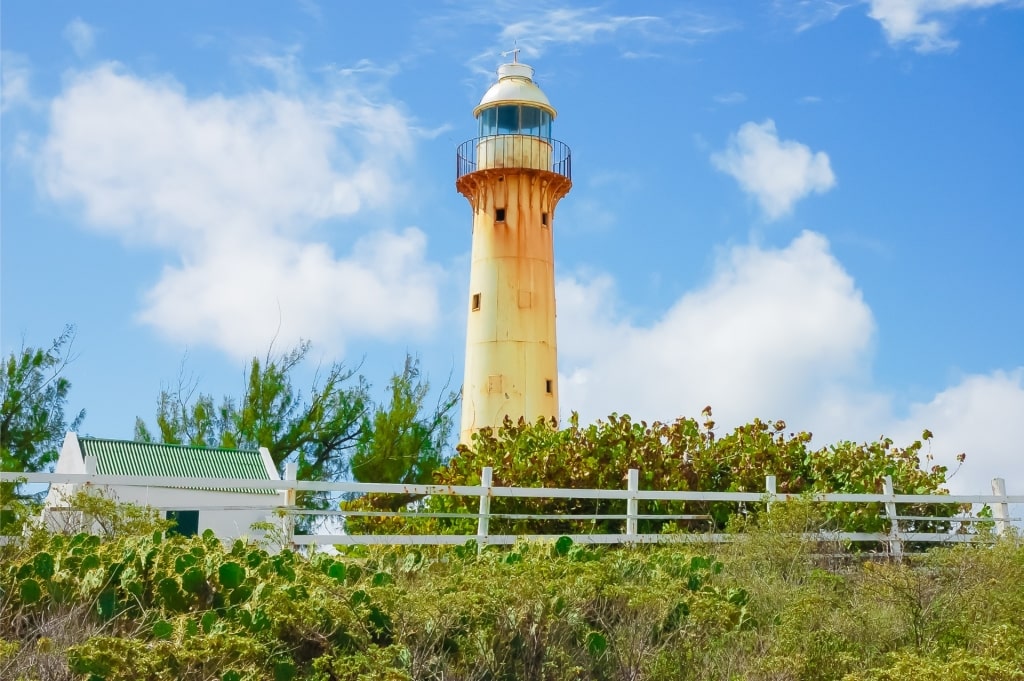
Grand Turk Lighthouse, Turks and Caicos
On Grand Turk, the main island in the Turks and Caicos archipelago, you’ll find the Grand Turk Lighthouse. This lighthouse was initially constructed in the 1850s as a means to warn ships of the island’s northern reefs. While visitors can’t climb the lighthouse itself, the surrounding grounds are accessible for a small fee.
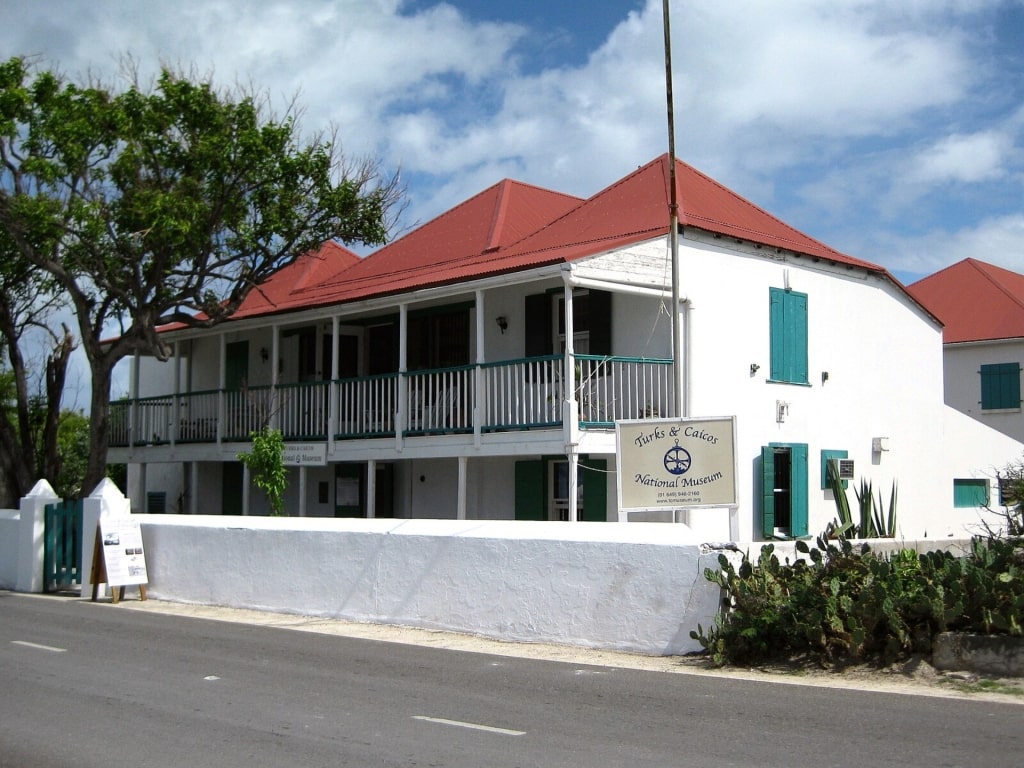
Turks & Caicos National Museum Photo by TampAGS on Wikimedia Commons, licensed under CC BY-SA 3.0
To delve deeper into the island’s past, one of the best things to do in Turks and Caicos is to visit the National Museum, also situated on Grand Turk. Although modest in size, the museum provides a comprehensive overview of the island’s history, from Lucayan heritage and colonial settlement to shipwrecks, slavery, and even the U.S. space program. The museum is housed in Guinep House, one of the oldest buildings in the country.
Another noteworthy stop is Her Majesty’s Prison, a British colonial-era facility that opened in the 1830s and remained in operation until 1994. Today, it serves as a historic site open to visitors. Guided tours lead you through areas like the original cell blocks and the warden’s quarters.
Beaches
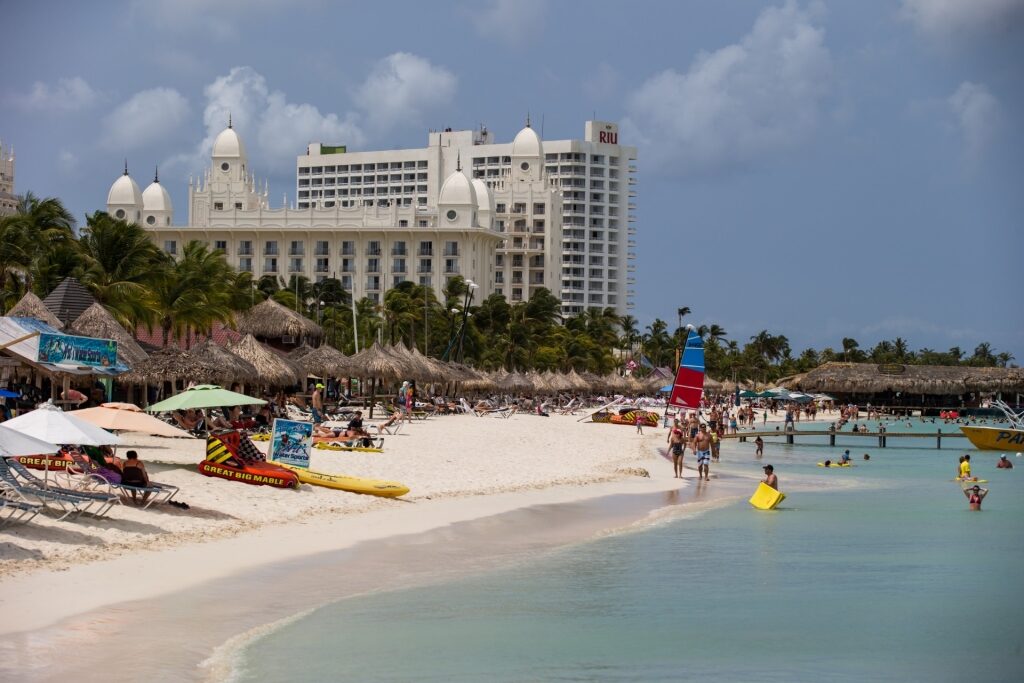
Palm Beach, Aruba
No trip to either Aruba or Turks and Caicos is complete without a day at the beach—and when it comes to comparing the two, there’s no winner as both have fantastic beaches.
Although Aruba has a drier, desert-like climate, there are still several beautiful beaches to visit. Palm Beach is located right in the heart of the island’s high-rise hotel area, which is pretty built up and has everything from gear rental kiosks, bars serving up refreshing cocktails, and a bustling boardwalk to keep you busy. Many people come here not only for the social atmosphere but for watersports like paddleboarding.
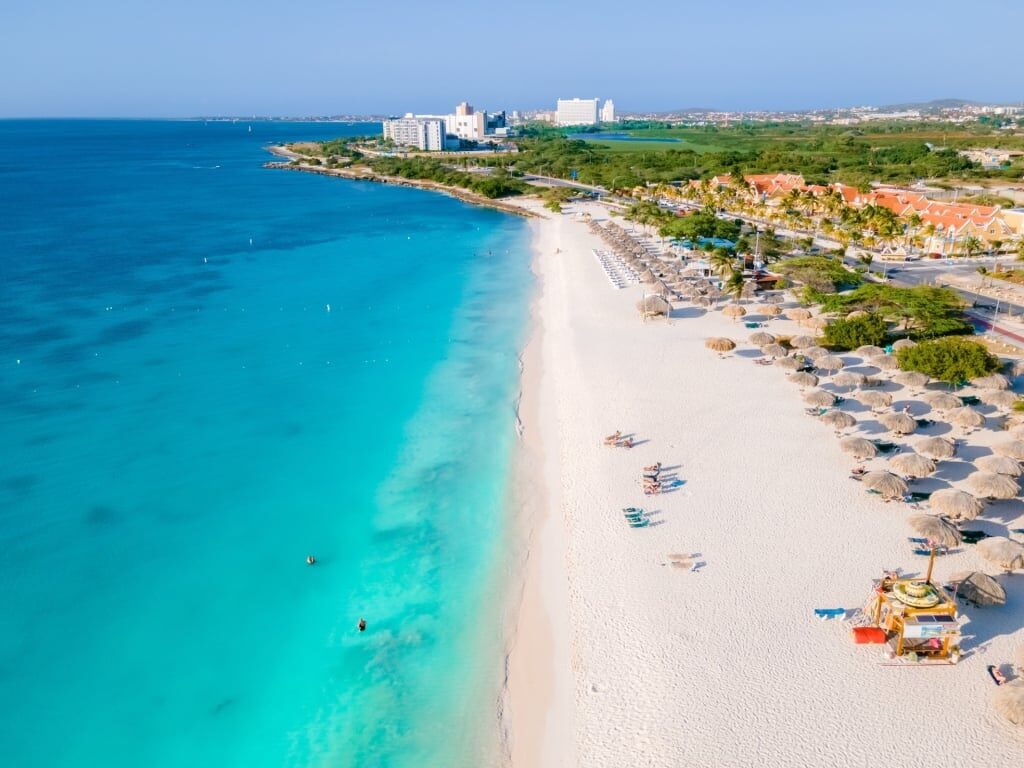
Eagle Beach, Aruba
Another popular beach in Aruba is Eagle Beach. It’s just a short drive from Palm Beach, but it feels more relaxed and has a distinctly local feel. It’s an excellent go-to for travelers who want to see the island’s famous divi-divi trees and enjoy a bit of a reprieve from the crowds. It’s the perfect spot to unwind while still having access to amenities.
To spot different types of wildlife in Aruba, consider a visit to Mangel Halto. The water here is shallow and crystal clear, making it ideal for snorkeling in Aruba or simply wading in. The beach is surrounded by mangroves that add an element of shade and tranquility. In many ways, it’s one of Aruba’s best-kept secrets.
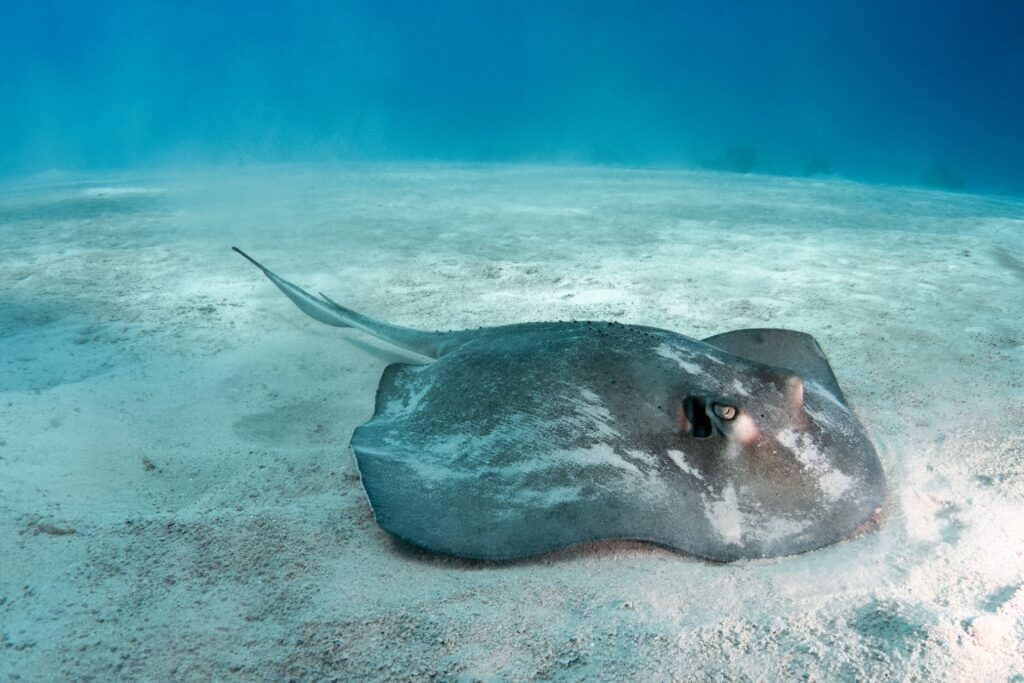
Stingray in Turks and Caicos
Over in Turks and Caicos, Gibbs Cay is a must-visit for most travelers. Often referred to as “Stingray City,” Gibbs Cay is a small, uninhabited island off Grand Turk that’s a sought-after spot for nature lovers and families.
The water here is shallow and clear, and it’s an opportunity to snorkel and spot the stingrays that often swim nearby. Although a popular spot for tourists, the cay is largely undeveloped, which gives it a remote feel.
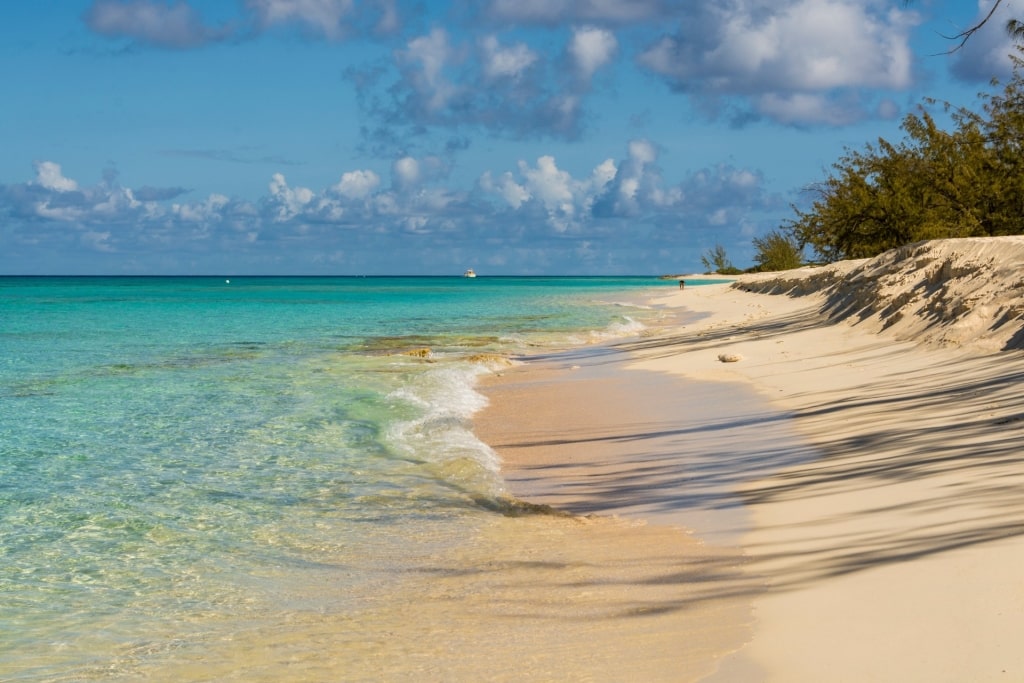
Governor’s Beach, Turks and Caicos
Easily one of the most beautiful beaches in Turks and Caicos is Governor’s Beach. Despite being pretty close to town, the beach manages to feel quiet and peaceful. Swim in the turquoise water or soak up the sun’s rays on the white, powdery sand.
If time permits, consider making the hour-and-a-half journey to Grace Bay Beach. It’s located on the island of Providenciales and does require a bit of advance planning to reach, but it’s well worth the effort. The beach is best known for its crystal-clear waters that are calm and perfect for swimming. Amenities are available on-site, as are several dining options, making it easy to spend a whole day there.
Things to Do

Arikok National Park, Aruba
When it comes to adventure, both Turks and Caicos and Aruba have it all—it just depends on how you want to explore: by land, sea, or even submarine.
One of the best things to do in Aruba is to head to De Palm Island for a full day of snorkeling or SNUBA. Think of SNUBA as a hybrid between snorkeling and scuba diving—it allows you to explore deeper underwater, up to 20 feet, but without the need for heavy tanks or certification. While snorkeling around De Palm Island, you’re likely to spot a different species of colorful reef fish, including blue parrotfish.
To explore Aruba’s desert-like interior, sign up for a guided horseback ride through Arikok National Park. Depending on your route, you’ll pass towering cacti, limestone cliffs, and a secluded beach or two. While it can get hot during the day, especially in summer, this is a peaceful and memorable way to connect with the island’s wilder side.
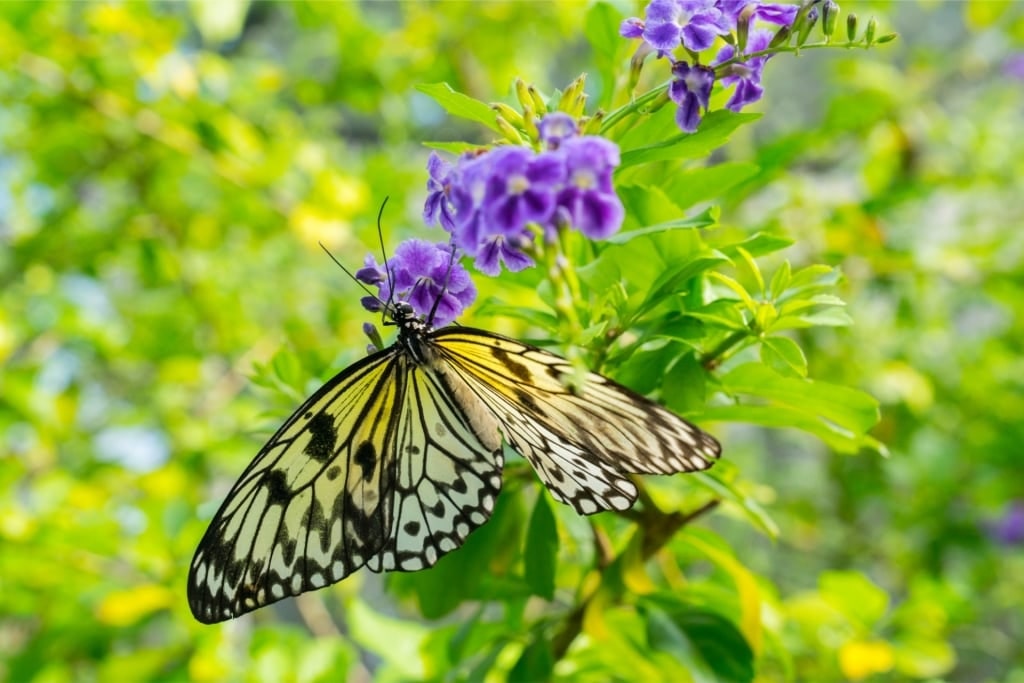
Butterfly Farm, Aruba
For a slower-paced activity, visit Aruba’s Butterfly Farm. This enclosed tropical garden is home to hundreds of exotic butterflies from around the world. It’s one of the best things to do in Aruba with kids and a favorite among families thanks to its guided tours and numerous photo opportunities.
If you’re not one to get your feet wet, consider taking a submarine ride with Atlantis Submarines. The vessel is fully pressurized, air-conditioned, and can descend to depths of up to 130 feet below the water’s surface.
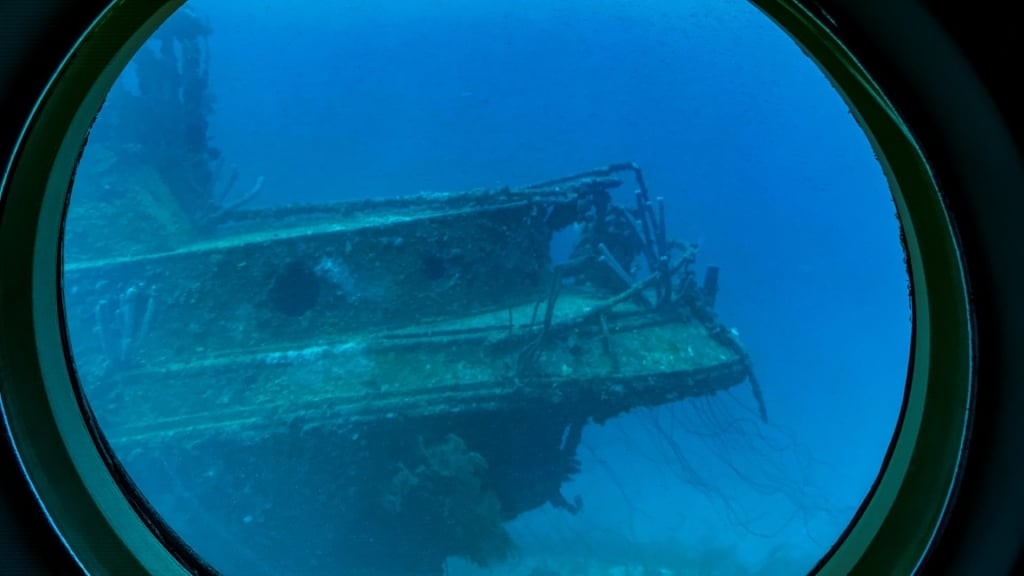
Atlantis Submarine, Aruba
It’s a great option if you’re not quite ready to scuba dive in Aruba or are still waiting to get certified. You’ll have a front-row view of coral reefs, tropical fish, and a few shipwrecks along the seafloor. Tours last approximately 90 minutes, making it a convenient half-day activity.
A great way to experience Turks and Caicos is by taking a clear-bottom kayak tour around Providenciales. Unlike traditional kayaks, these transparent vessels let you glide across the water while viewing marine life beneath the surface. Most eco tours take you through shallow mangrove channels, over coral beds, and into calm lagoon areas. Keep an eye out for a variety of wildlife, ranging from turtles and starfish to tropical fish in every color and size.
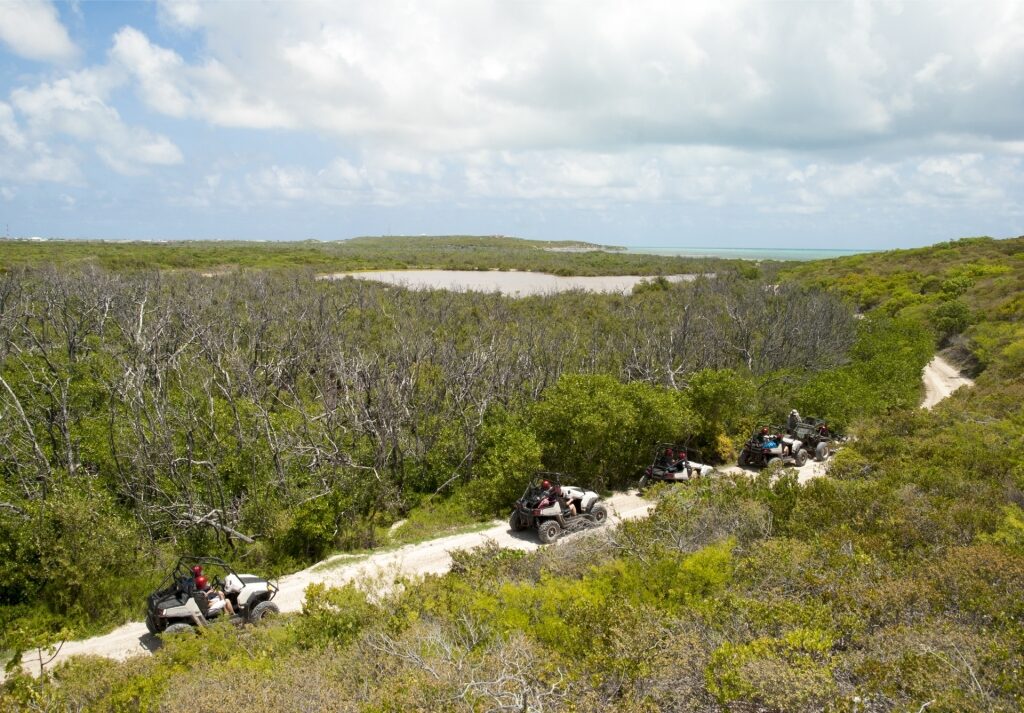
Grand Turk, Turks and Caicos
For something more adrenaline-pumping, consider a dune buggy or ATV tour on Grand Turk. These land-based adventures take you across rugged terrain, past historical landmarks, and through old salt flats that once powered the island’s economy. Things can get a bit bumpy, so make sure you’re physically up for the ride.
To combine snorkeling with sightseeing, hop aboard a catamaran cruise. Many tours depart from Providenciales and include stops at some of Turks and Caicos’ top snorkeling spots, such as Leeward Reef, the barrier reef, or even Little Water Cay, also known as Iguana Island. Otherwise, stretch out on a lounger, enjoy some drinks and snacks, and soak in the stunning views.
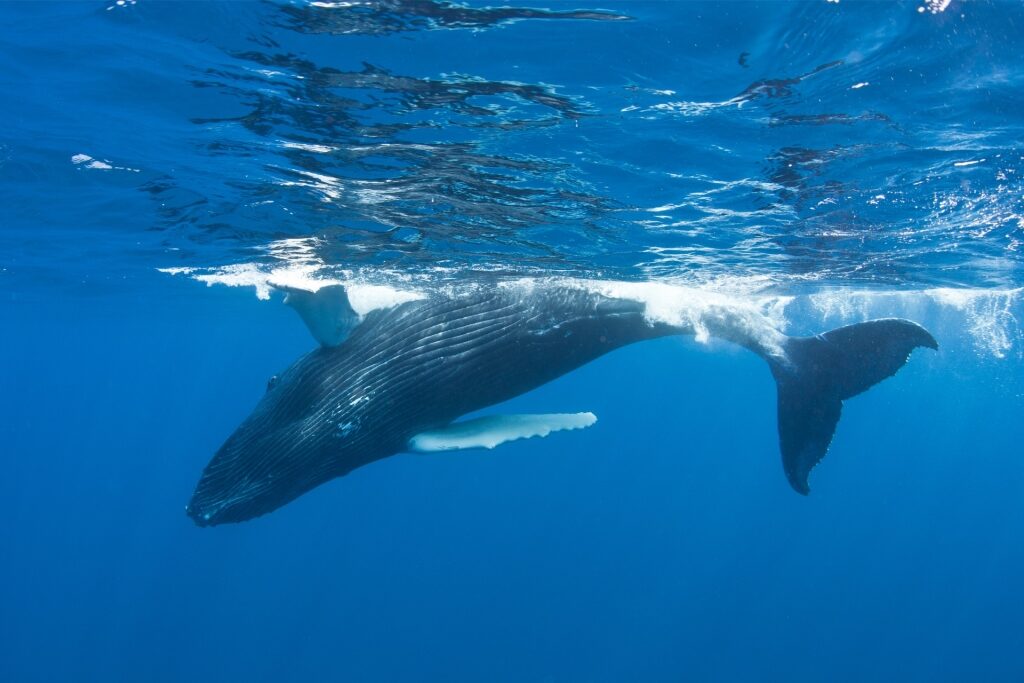
Humpback whale
If you visit between January and early April, consider signing up for a whale-watching boat tour in Turks and Caicos. During this period, humpback whales undertake their yearly migration, and Turks and Caicos are one of the best places in the Caribbean to witness them in action.
A guided tour offers the opportunity to learn about whales and observe behaviors such as breaching and tail slapping. Some tours even use hydrophones, allowing you to hear the whales’ songs underwater. Snorkeling tours may also be available; however, participants must maintain a respectful distance at all times.
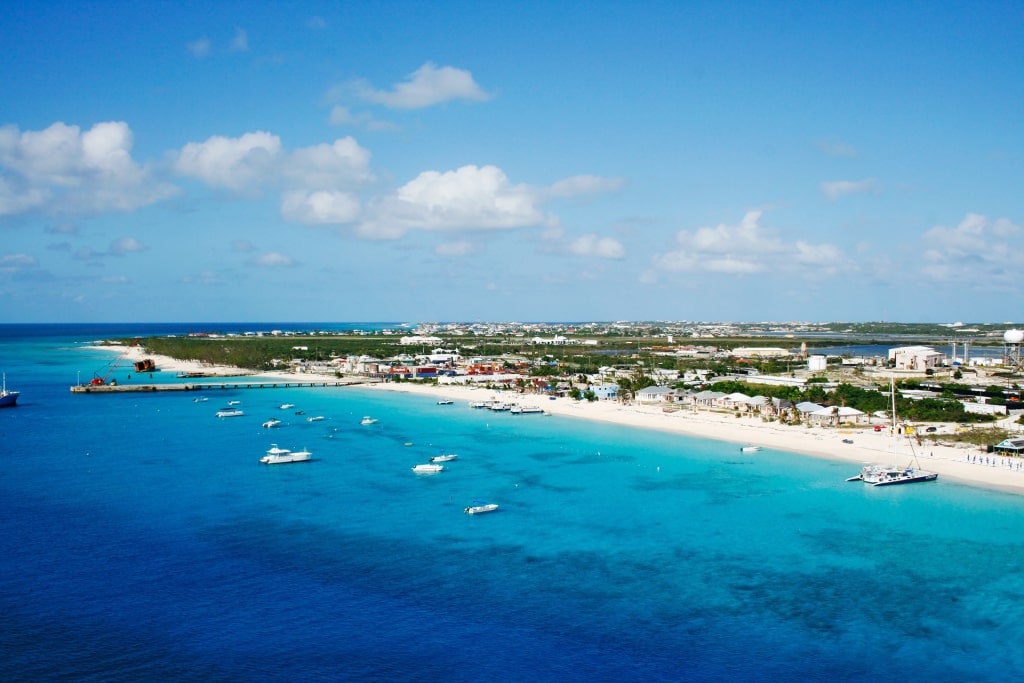
Grand Turk, Turks and Caicos
Discover the beauty of the Turks and Caicos and Aruba for yourself. Browse Celebrity Cruises’ itineraries and plan your tropical escape.