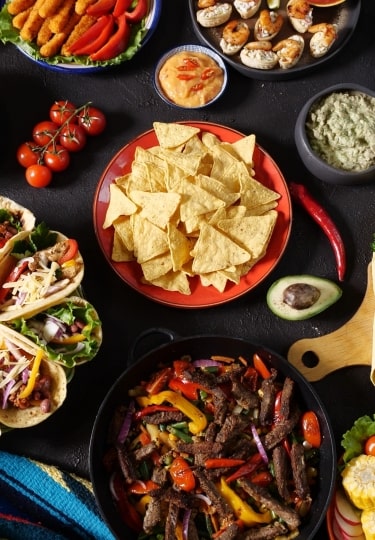
No trip to Mexico is complete without indulging in traditional Mexican food. Mexican cuisine is incredibly diverse, a tapestry of ingredients and flavors shaped over centuries by Indigenous communities, Spanish colonization, regional traditions, and more contemporary immigration. The country’s cuisine tells the story of Mexico’s layered history, including its ritual practices, ancestral culinary techniques, and community customs, which is why it was inscribed on the UNESCO Intangible Cultural Heritage of Humanity list in 2010.
From tamales and carnitas to desserts like flan and churros, these are the traditional Mexican dishes you must try on a cruise to the country. Along the way, you’ll find everything from slow-cooked pork and rich sauce to handmade corn tortillas, fragrant spices, and regional specialties that show why Mexican food is one of the world’s most celebrated cuisines.
A Brief History of Mexican Cuisine
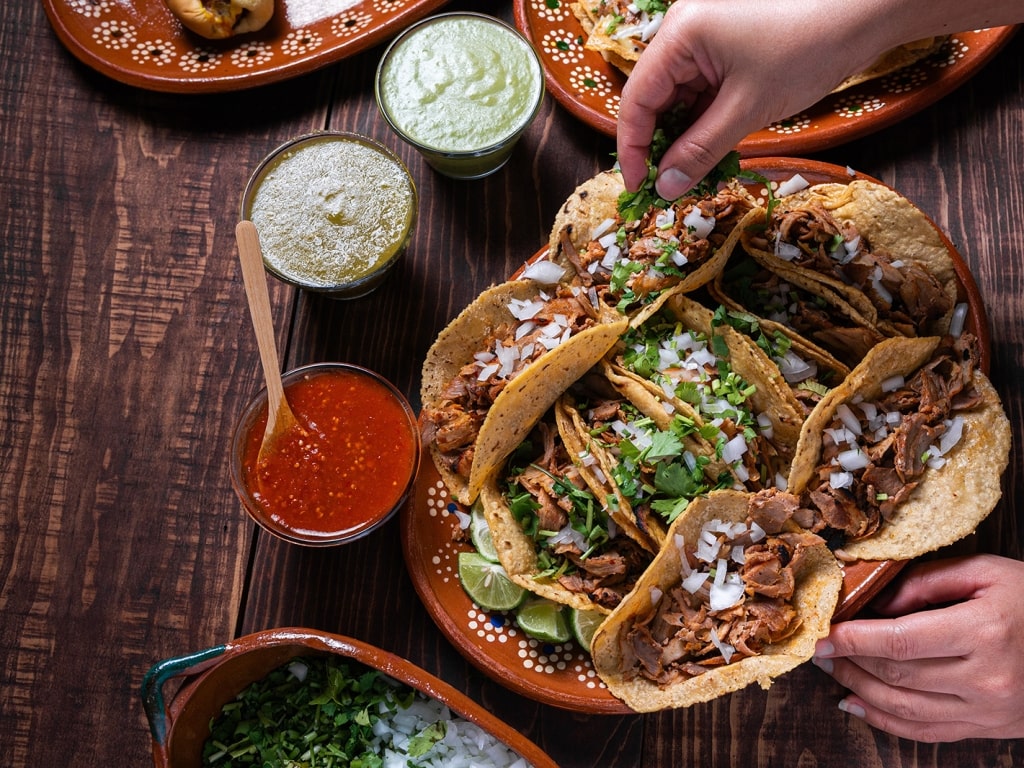
Traditional tacos al pastor topped with fresh cilantro and diced onions served alongside vibrant salsas
Mexican cuisine developed from the fusion of Indigenous foodways and Spanish culinary traditions, creating a layered blend of rich flavors, ingredients, and cooking techniques. Today, much of traditional Mexican cuisine is built upon foundational Indigenous ingredients, including corn, beans, chiles, squash, tomatoes, avocado, and cacao.
From these ingredients come traditional Mexican recipes still consumed today, tethered to their heritage through ancestral preparation techniques like molcajete grinding; nixtamalization, a process for preparing maize; comal cooking, where meats, vegetables, and tortillas are grilled on a flat cooking surface; and pib-style underground cooking, which has deep roots in the Yucatán.
While dishes vary by region, one thing is constant: authentic Mexican food is a culinary trip to the past. Guests on board a Celebrity Cruises ship can sample various local specialties in the ports that form Celebrity’s Mexico cruise itineraries, including Cozumel, Costa Maya, Cabo San Lucas, Puerto Vallarta, Ensenada, and Mazatlán.
Mole Poblano
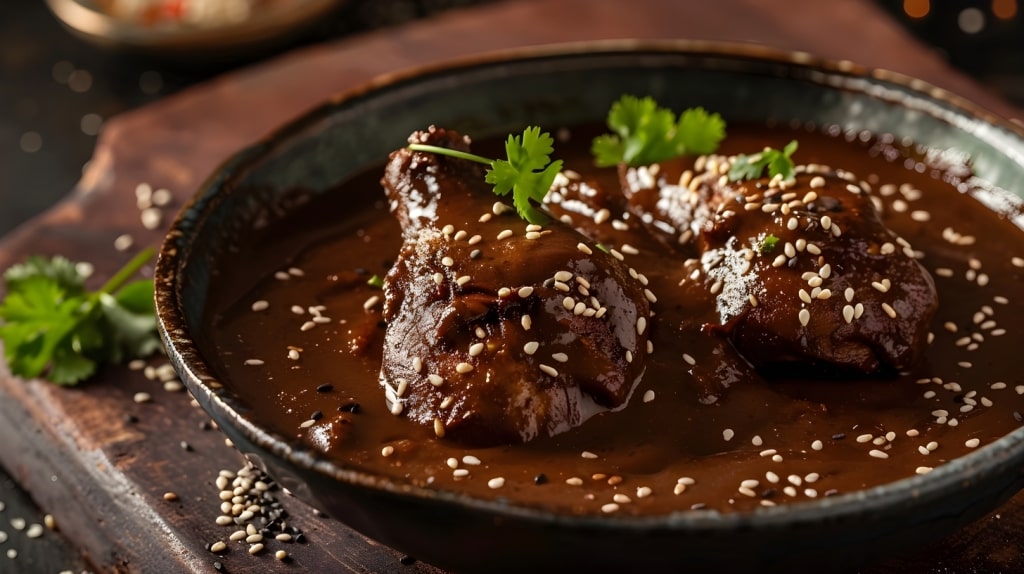
Chicken smothered in rich mole poblano, sprinkled with toasted sesame seeds and fresh cilantro
Mole poblano is a rich, complex sauce that blends savory, sweet, and spicy flavors into one deeply rich Mexican dish. It’s typically served with Mexican rice, warm corn tortillas, or slathered over chicken in an enchilada — sometimes called enmoladas. Mole poblano has been enjoyed for centuries. According to legend, such recipes date back to the 17th century, when Dominican nuns at the Santa Rosa Convent in Puebla, a city in east-central Mexico, created them for a special visit from a bishop.
Pozole
Pozole, a soup made with meat like pork or chicken and hominy (large, puffy nixtamalized maize kernels), dates to Mexico’s pre-Hispanic era. The word “pozole” comes from the Nahuatl word pozolli, or posolli, which roughly translates to a stew of maize kernels in English.
In fact, maize was considered to be a sacred plant to the Aztecs and many Indigenous peoples of Mesoamerica. Today, the comfort staple can be garnished with shredded lettuce, chili peppers, onion, garlic, avocado, lime, and salsa verde.
Tamales
Tamales are undoubtedly an icon of traditional Mexican cuisine. The recipe, which has been consumed for thousands of years, has barely changed since it was first created. The traditional Mesoamerican dish is made of masa, a starchy corn-based dough that’s filled with meat, cheese, or vegetables. It’s then wrapped in a corn husk or banana leaf and steamed. Archaeological evidence of their consumption dates back to between 8,000 and 5,000 BCE, making them one of the oldest Mexican recipes still widely consumed today.
Tacos al Pastor
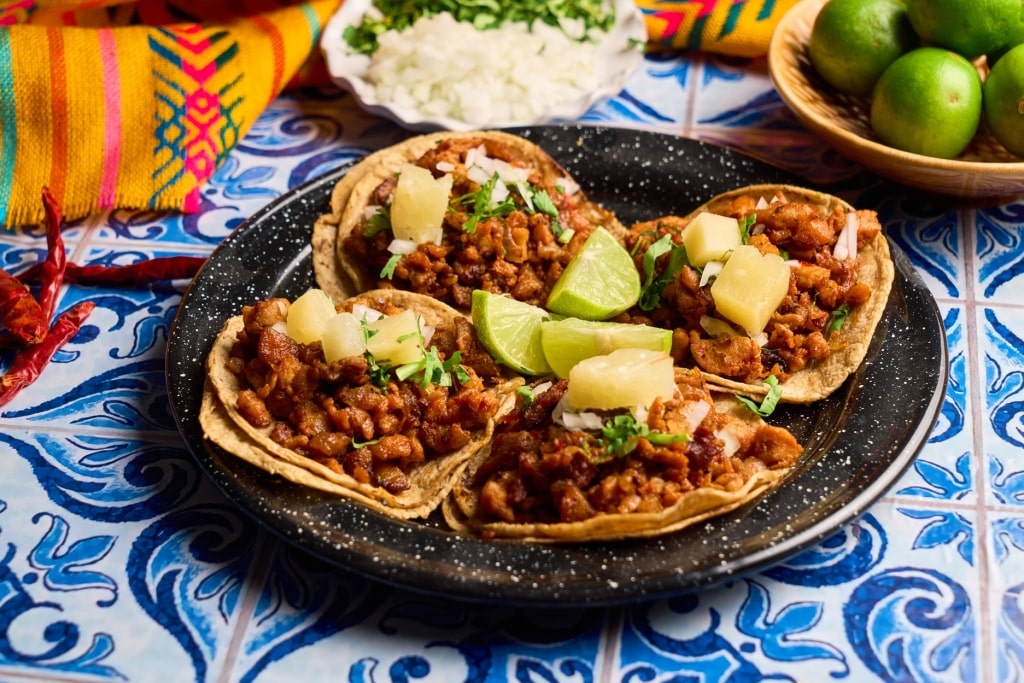
Four tacos al pastor featuring seasoned pork, fresh pineapple chunks, diced onions, and chopped cilantro
Widely consumed across Mexico, tacos al pastor consist of razor-thin slices of marinated, spit-roasted pork served on small corn tortillas. The fragrant meat is then typically topped with garnishes, including onion, cilantro, salsa, or sweet grilled pineapple.
Tacos al pastor have a surprising background, one that fuses two cultures. The dish was invented in Puebla and Mexico City in the 1930s as a culinary fusion between Lebanese immigrants and Mexican locals. Today, it’s one of the country’s most beloved examples of Mexican street food.
Chiles en Nogada
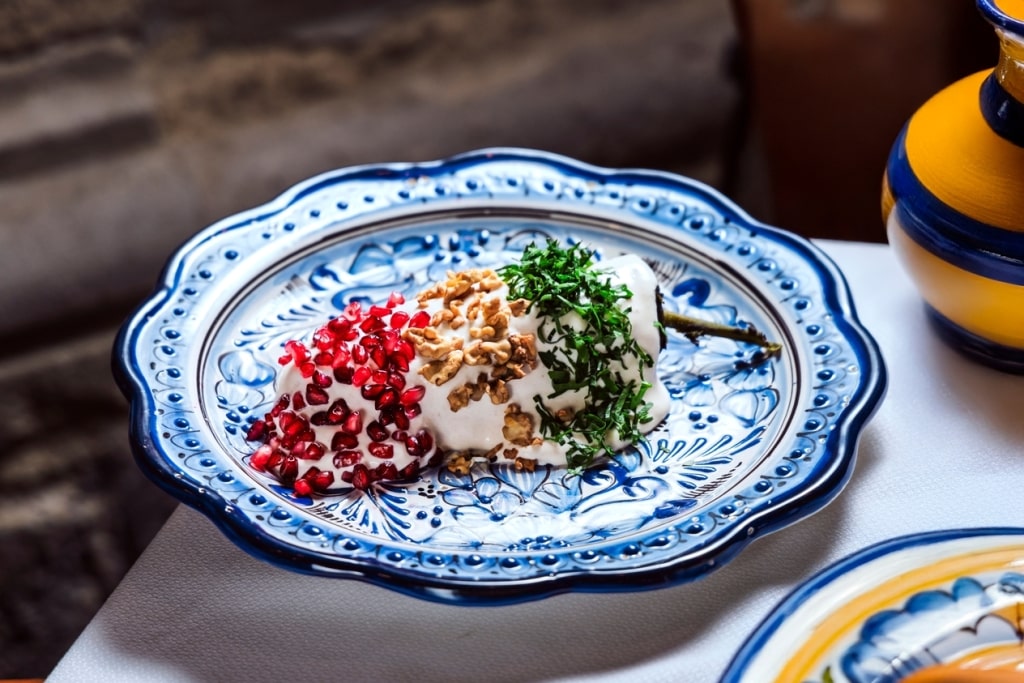
Traditional Chiles en Nogada features walnut cream sauce, vibrant pomegranate seeds, and fresh parsley leaves
A historic and traditional Mexican dish originating from Puebla, chiles en nogada consists of roasted poblano chiles stuffed with picadillo and later slathered in a creamy walnut-based sauce. This is then garnished with toppings like pomegranate seeds and parsley to create a recipe bursting with the colors of the Mexican flag.
The dish is closely associated with Mexican Independence Day, making it as symbolic as it is flavorful. Its mix of fruit, meat, spices, nuts, and fresh herbs shows the layered complexity that defines Mexican gastronomy.
Cochinita Pibil
A traditional, slow-roasted pork dish hailing from the Yucatán Peninsula, cochinita pibil is representative of the fusion of ancient Mayan cuisine and Spanish influence. Even the dish’s name melds these two worlds together: cochinita is Spanish for little pig, while pibil comes from the Mayan word pib, meaning buried underground.
Pib is also an underground oven that the Mayans used to slow-cook food, which was typically wrapped in banana leaves. Before the arrival of the Spanish, the Mayans slow-cooked wild game like deer, turkey, or wild boar.
Today, the meat is heavily marinated in a combination of lime, orange, and grapefruit juices before being wrapped in banana leaves and slow-cooked on a grill with hardwood smoke to mimic the smokiness of a traditional pib. Guests can sample this ancient delicacy when at port in Cozumel and Costa Maya.
Enchiladas
Enchiladas are a traditional savory dish in which a tortilla is rolled around a filling, from shredded chicken and beef to cheese and beans, then smothered in a chili, tomato, or cheese sauce. They are typically baked until both the filling and the sauce are bubbling, and then served with rice and beans. Enchiladas can trace their roots back to the ancient Maya and Aztec civilizations of Mesoamerica, who used simple corn tortillas to wrap around small fish.
Across Mexico, enchiladas vary by region, filling, and flavor. Some are finished with red chile sauce, others with green tomatillo sauce, mole, crema, or fresh salsa.
Birria
This meat stew, a regional variation of barbacoa, originates from the western, Pacific Ocean-fringed state of Jalisco. The meat, typically goat, beef, or lamb, is marinated in an adobo made from various spices and herbs, including garlic and dried chiles, before being slow-cooked. The result is juicy and tender meat that’s served in a rich, savory, and slightly spicy broth. Guests can sample the regional delicacy when at port in Puerto Vallarta.
Birria is often served as a stew, though it has also become popular as a taco filling, especially when paired with consommé for dipping. Either way, it’s a deeply flavorful example of regional Mexican cooking.
Carnitas
Carnitas is a rich and very popular pork dish that consists of braising heavily marbled pork in its own fat for several hours. This creates meat that’s juicy and tender on the inside, with deliciously crispy edges. Carnitas is often served with corn tortillas, onion, cilantro, lime, and salsa, allowing the slow-cooked pork to stay at the center of the plate.
Carnitas can be found all over Mexico, from roadside stands to high-end restaurants, and guests can sample it at every port on Celebrity Mexico cruises.
Carne Asada
Literally translating to “grilled meat” in English, carne asada is skirt or flank steak that’s marinated in a bold, tangy blend of citrus, garlic, and various herbs to give the meat a zesty flavor profile. Once marinated, the meat is quickly seared over an open flame and then thinly sliced. It can be served as the main dish, with sides like beans and rice, or chopped up to be tucked into burritos and street tacos.
Carne asada is especially popular in northern Mexico, where grilling traditions are central to regional food culture. It’s simple, smoky, and satisfying, making it one of the most crowd-pleasing dishes to try while traveling through Mexico.
Mexican Desserts and Drinks To Try
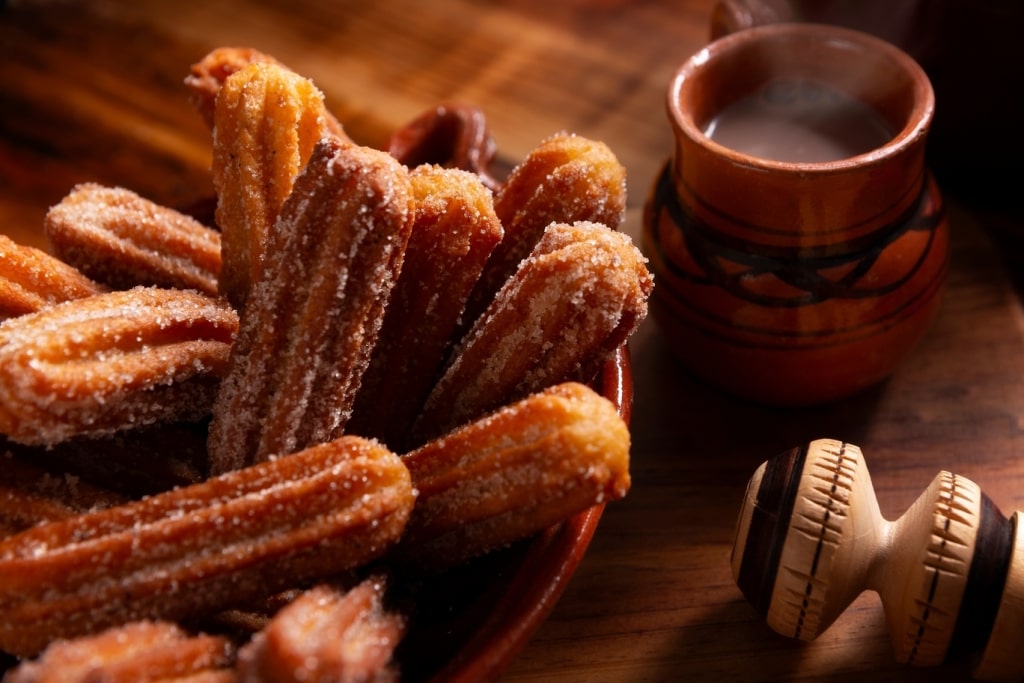
Golden, crispy Mexican churros dusted with sweet cinnamon sugar sit beside rich chocolate dipping sauce
While Mexican cuisine reigns supreme with its plethora of bold and savory dishes, its ample list of traditional Mexican desserts and drinks shouldn’t be overlooked. These sweet treats add another layer of immersion into the country’s culture and cuisine and should definitely be sampled when at port.
Churros, crispy deep-fried dough pipes coated in cinnamon and sugar and often served with decadently rich hot chocolate, are an iconic Mexican postre, or dessert. That’s not to mention flan, a rich, silky-smooth baked custard that’s topped with a layer of liquid caramel to create a dish that’s almost too pretty to eat, or horchata, a sweet and creamy beverage made from white rice, cinnamon, sugar, and vanilla that’s served over ice.
On particularly warm days, aguas frescas (Spanish for “fresh waters”) are a refreshing and hydrating staple of Mexican street food. These non-alcoholic beverages are made by blending grains, flowers, or fruits with water and sweeteners like sugar or agave.
Other sweets to look for include tres leches cake, cajeta, and paletas, which show how much range Mexico’s dessert traditions have, from creamy and caramel-rich to bright, icy, and fruit-forward.
Eat Your Way Through Mexico
The diversity and richness of Mexican cuisine are worth a trip to the country alone. Each dish carries with it a historical legacy that can be experienced in just one bite. There are countrywide staples and regions with their own particular delicacies, which is why a cruise to Mexico is one of the best ways to immerse yourself in this UNESCO-recognized cuisine.
Ready to indulge in Mexican gastronomy? Explore cruises to Mexico today.