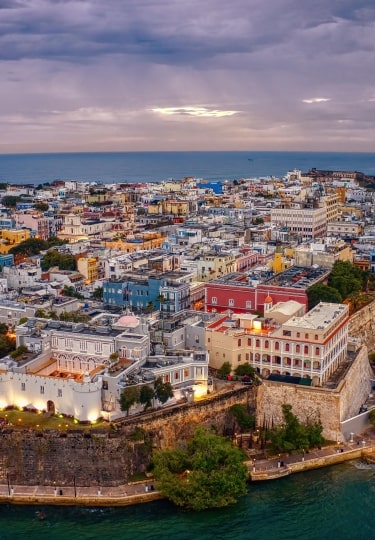
Old San Juan is the historic heart of Puerto Rico, and it’s known for its walkable colonial district, 16th-century Spanish architecture, blazing blue cobblestone streets, and a massive UNESCO World Heritage site known as La Fortaleza and San Juan National Historic Site. Inscribed in 1983, it encompasses and protects some of the largest and oldest European-built military forts in the Americas, cementing San Juan as a major historic and cultural getaway.
San Juan is the second-oldest European-founded city in the Americas, and is the historic and cultural heart of Puerto Rico. Founded in 1521 by the Spanish to serve as a fortified gateway to the Caribbean, the city is rife with historical monuments and restaurants and bars serving traditional Puerto Rican food and rum cocktails. That’s not to mention the tropical rainforests and world-famous bays located just a short drive away from the historic center. This is a place where history, culture, and nature collide.
Key Attractions in Old San Juan
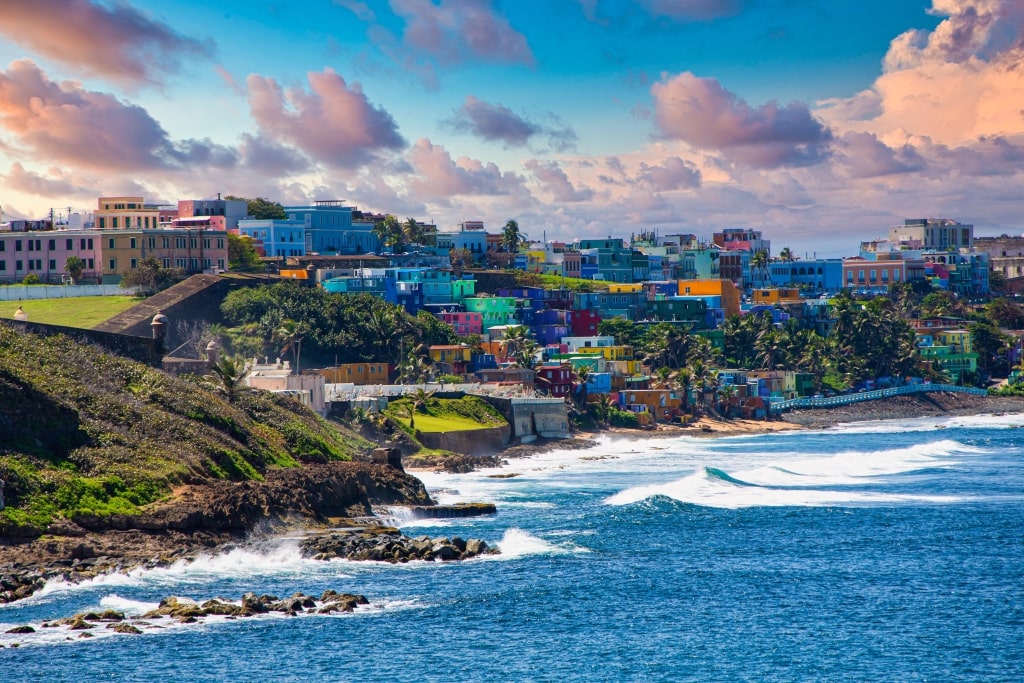
Vibrant La Perla neighborhood structures flank a rocky Old San Juan coastline framing ocean waves.
From its military forts to its popular streets lined with bars, restaurants, and shops, there’s no shortage of things to do and see in Old San Juan. Here are some of the best attractions you might see on a cruise to or from Puerto Rico.
Historic Forts
San Juan was a strategic gatekeeper of the Spanish empire in the Caribbean, and Spanish soldiers spent nearly 300 years developing defensive systems around the old city. Today, the city wall, sentry boxes, and historic forts remain among the most iconic attractions in Puerto Rico.
Castillo San Felipe del Morro, often called El Morro, stands on a 140-foot promontory at the entrance to San Juan Bay. The six-level fortress faces the Atlantic Ocean and is one of the most recognizable landmarks in Old San Juan. Together with Castillo San Cristóbal, La Fortaleza, and other historic defenses, El Morro is part of La Fortaleza and San Juan National Historic Site, a UNESCO World Heritage Site inscribed in 1983.
Castillo San Cristóbal was designed to protect San Juan from land attacks from the east. Considered one of the largest Spanish-built fortifications in the Americas, San Cristóbal has three levels, tunnels, ramparts, and extensive outer defenses that took more than a century to complete. Visiting both Castillo San Felipe del Morro and Castillo San Cristóbal gives you a fuller sense of how important San Juan was to Spanish settlers and the Spanish empire in the Caribbean.
Popular Streets
Many of the streets in Old San Juan are paved with adoquines, blue cobblestone pavers made in the 19th century from waste from iron smelting. These colorful streets wind past colonial architecture, bright facades, and some of the most photographed colorful buildings in Puerto Rico.
Fortaleza Street, also known as Calle Fortaleza or Calle de la Fortaleza, is one of Old San Juan’s best-known streets. It starts near Plaza Colón and leads toward La Fortaleza, the 16th-century governor’s mansion overlooking San Juan Bay. The street is lined with government buildings, hotels, restaurants, craft shops, and cafés, making it one of the best places to take in the energy of San Juan Antiguo.
Calle San Sebastián is known for bars, restaurants, music, and nightlife, while Calle del Cristo is a popular street for galleries, shops, and historic architecture. Plaza de Armas, one of the old city’s main squares, is home to San Juan City Hall and makes a good starting point for exploring nearby landmarks.
For religious and architectural history, stop by San Juan Cathedral, officially known as the Cathedral Basilica of San Juan Bautista. The cathedral is one of the oldest churches in the Americas and is known for the tomb of Juan Ponce de León. Nearby, San José Church is another important historic landmark, and Hotel El Convento, a former convent turned hotel, adds to the area’s old-world atmosphere.
For waterfront views, follow Paseo de la Princesa toward Puerta de San Juan, also known as the San Juan Gate. This red city gate once served as one of the main entrances through the city wall. From there, Paseo del Morro traces the edge of San Juan Bay below El Morro, offering another perspective on the old city’s fortifications.
Save a Gato
Save a Gato is a cat sanctuary run by a volunteer group that feeds and neuters feral cats in the colonial district. This free-roaming cat colony lives along the Paseo del Morro, near the El Morro fortress, and it’s believed that the felines descend from the ones first brought over by Spanish settlers centuries ago.
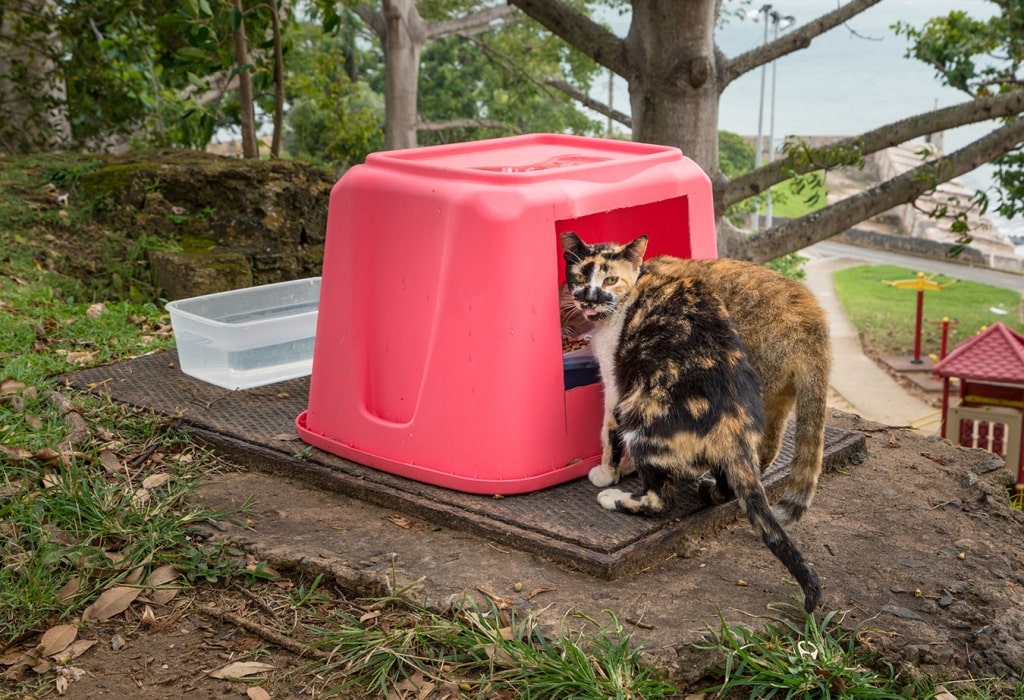
Stray cats gather at a bright pink feeding shelter provided by Save a Gato along the coastal parklands of San Juan.
Food To Try in Old San Juan
No trip to Puerto Rico is complete without sampling some of its many delicacies. From juicy slow-roasted pork to fruity cocktails, these are the foods you must try during a visit to San Juan.
Mofongo
This iconic Caribbean dish, native to Puerto Rico and the Dominican Republic, is made from fried green plantains mashed together with garlic, olive oil, savory broth, and chicharrón, fried pork skin. It is typically shaped into a dome or bowl and crowned with meats like steak, chicken, or fresh seafood.
Lechón
If there’s one food that Puerto Rico is renowned for, it’s pork — and Lechón is arguably the most popular of all. The pork dish consists of a whole pig, heavily seasoned with garlic and adobo, that’s slow-roasted on a spit over an open flame. This results in juicy and tender meat that’s wrapped in blistered, crispy skin.
Mallorcas
Mallorcas are fluffy, sweet, coiled breakfast rolls topped with a generous dusting of powdered sugar. While the outside is flaky, the inside is soft and brioche-like. They’re commonly found in Puerto Rican bakeries all over the island and are an ideal treat for visitors with a sweet tooth.
Piña Colada
The piña colada is one of the Caribbean’s most iconic cocktails, and it has deep roots in Puerto Rico, which claims the original recipe. The drink, which blends silver rum, cream of coconut, heavy cream, and fresh pineapple, was allegedly created in 1954 at the Caribe Hilton in San Juan. As it’s been Puerto Rico’s national drink since 1978, you can easily find it at major restaurants, bars, lounges, and more.
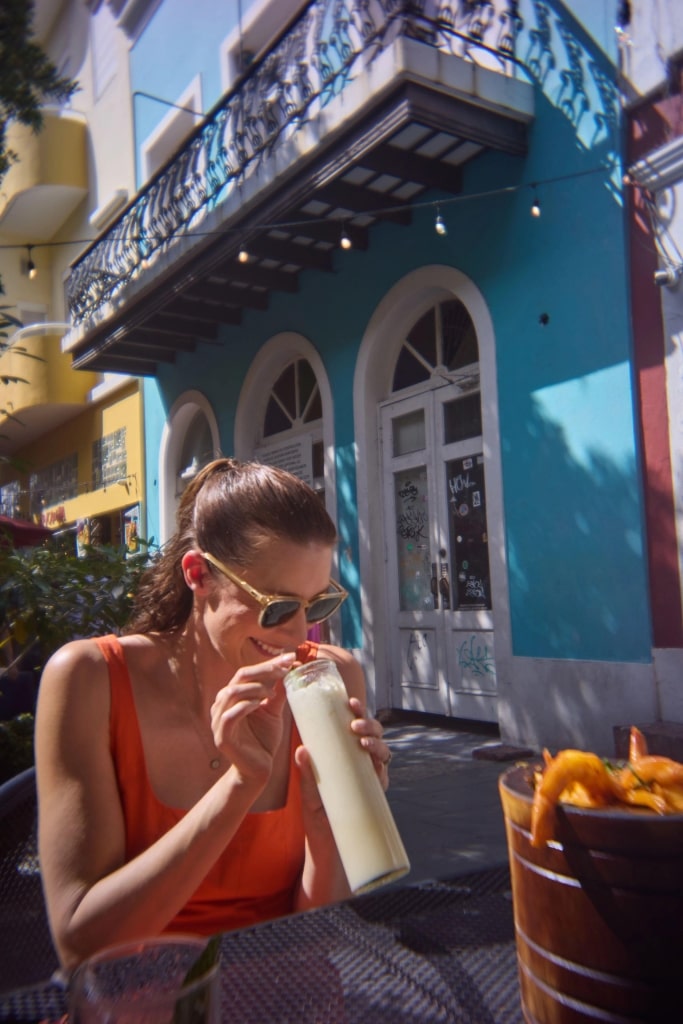
A smiling woman holds a piña colada on the historic streets of San Juan.
Things To Do Near Old San Juan
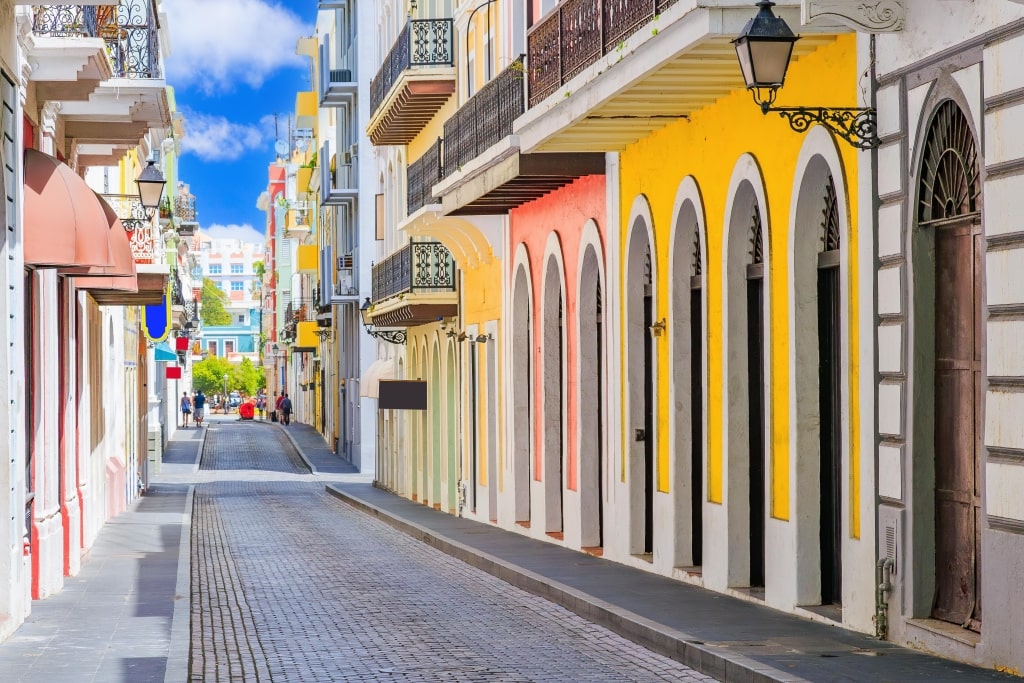
Old San Juan cobblestone streets highlight brightly colored colonial buildings flanking narrow historic pathways.
While San Juan is the island’s social and cultural hub, Puerto Rico is known for much more, and shore excursions are one of the best ways to take advantage of all that the island has to offer.
From swimming through coral reefs to exploring bioluminescent bays, these are some of the best ways to discover the island’s natural beauty. Best of all, many of these activities are easily accessible from San Juan.
Swimming and Snorkeling at Condado Beach
Despite being an urban beach, Condado Beach in the heart of San Juan ranks as one of the most popular and lively beaches in Puerto Rico. It features long stretches of golden sands and crystalline waters that are ideal for swimming and snorkeling activities. For visitors hoping to encounter some of the island’s marine life, Playa El Escambrón, located roughly a 30-minute walk from Old San Juan, is known for its vibrant coral reefs, home to schools of tropical fish.
El Yunque National Forest
Located in northern Puerto Rico, just 40 minutes from San Juan, El Yunque National Forest is a tropical rainforest (the only one of its kind in the United States) that spans over 28,000 acres.
It makes for a great day trip from Old San Juan, and is home to several winding trails, gushing waterfalls, and hundreds of species of flora and fauna. Visitors can explore natural pools, hike through the rainforest, lounge on secluded beaches, or zipline above the treetops.
Bioluminescent Bays
Puerto Rico is home to three of the world’s five bioluminescent bays. Microscopic organisms in the water called dinoflagellates turn neon blue when disturbed, causing the water to sparkle as if filled with sapphires and diamonds. Mosquito Bay in Vieques, located a short ferry or flight from the mainland, holds the Guinness World Record for the world’s brightest bioluminescent bay. While swimming is prohibited to protect the bay’s delicate ecosystem, visitors can go on a guided kayak tour and watch the water shimmer with every paddle.
Laguna Grande in Fajardo is located less than a two-hour drive from San Juan and can be explored by kayak, while La Parguera on the southwestern coast in Lajas is the island’s only bioluminescent bay that permits boat tours and swimming in the water. It’s recommended to visit the island’s bioluminescent bays during a crescent or new moon for the best visibility, as a full moon will wash out the water’s bioluminescence.
Sailing and Catamaran Tours
One of the best ways to discover the island is by sea on sailing and catamaran tours. These offer ample opportunity to explore uninhabited cays with white-sand beaches and to go snorkeling in crystalline waters filled with tropical schools of fish and sea turtles. There are also various sunset and evening tours, where you can watch the sun set beneath Old San Juan’s skyline, directly from the sea.
What To Know About Visiting Puerto Rico
As Puerto Rico is a United States territory, the island uses U.S. dollars. That also means that U.S. citizens don’t need a passport to visit and can enter with a REAL ID driver’s license. While Spanish is the primary language, English is widely understood and used.
When To Visit Puerto Rico
While Puerto Rico is known for its year-round tropical climate, weather conditions do fluctuate based on the season. December through April is the ideal dry season, perfect for lounging on the beach and hiking activities. While these months are widely regarded as having the best weather, it also means it is the busy season, so expect crowds. The summer months, mainly May through July, bring high humidity levels and warm temperatures, with occasional brief but heavy afternoon showers. The months of August through October see the fewest crowds, but there’s an increased risk of rain and hurricanes.
San Juan: Puerto Rico’s Historical and Colorful Capital
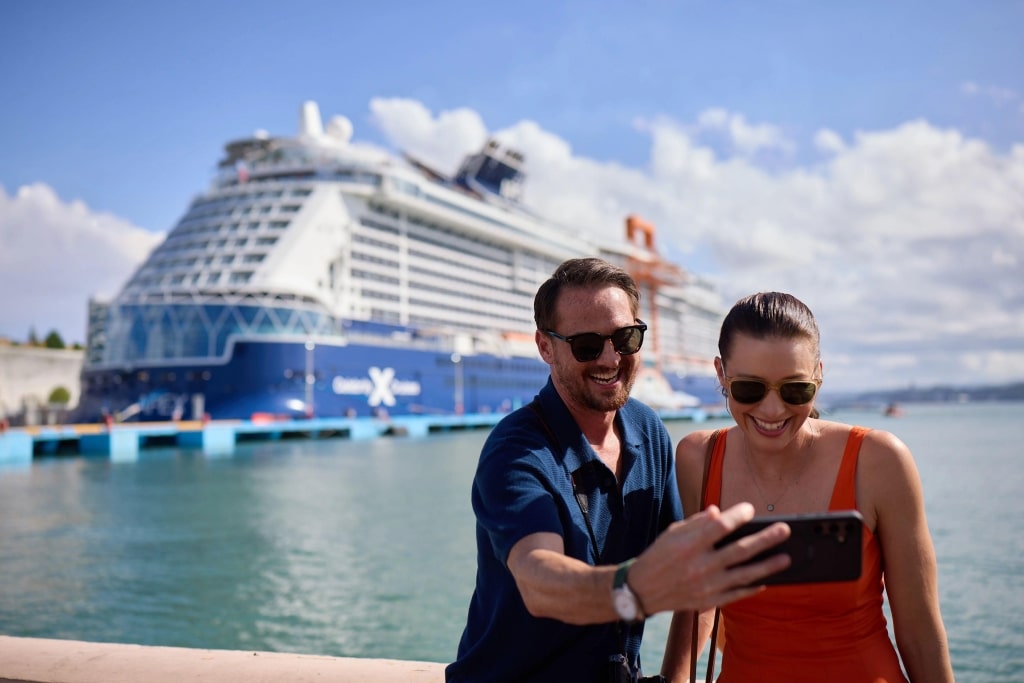
A smiling couple poses in the foreground, overlooking a majestic distant Celebrity cruise ship docking.
San Juan is a vibrant, accessible Caribbean getaway that offers a rich blend of colonial history and culture, tropical nature, and savory cuisine. From its urban beaches and the blue cobblestone streets of its colonial district to the national rainforest located just 40 minutes outside of the city, Puerto Rico’s capital offers something for everyone.
Browse cruises to San Juan and get to know Puerto Rico’s capital with Celebrity.