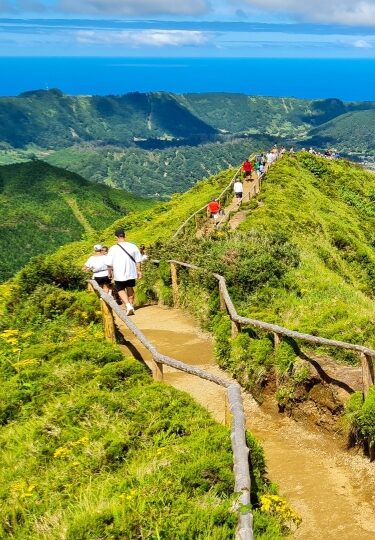
São Miguel, Azores, is the largest and most populated island of Portugal’s verdant, volcanic Atlantic archipelago. With dazzling crater lakes, dramatic volcanic backdrops, surf-pounded black sands, and whale watching aplenty, it truly has something for all.
Most of these traits are shared across all the Azores’ nine islands scattered across the Atlantic Ocean, but São Miguel leads the pack with its geothermal activity and inviting hot springs, something the other islands lack.
Add in the more developed infrastructure, the fact that Ponta Delgada is often considered the Azores de facto capital—in reality, the title is split between three island cities—and you’ll soon see why São Miguel is more than just a microcosm of the entire archipelago.
Why Visit São Miguel, Azores
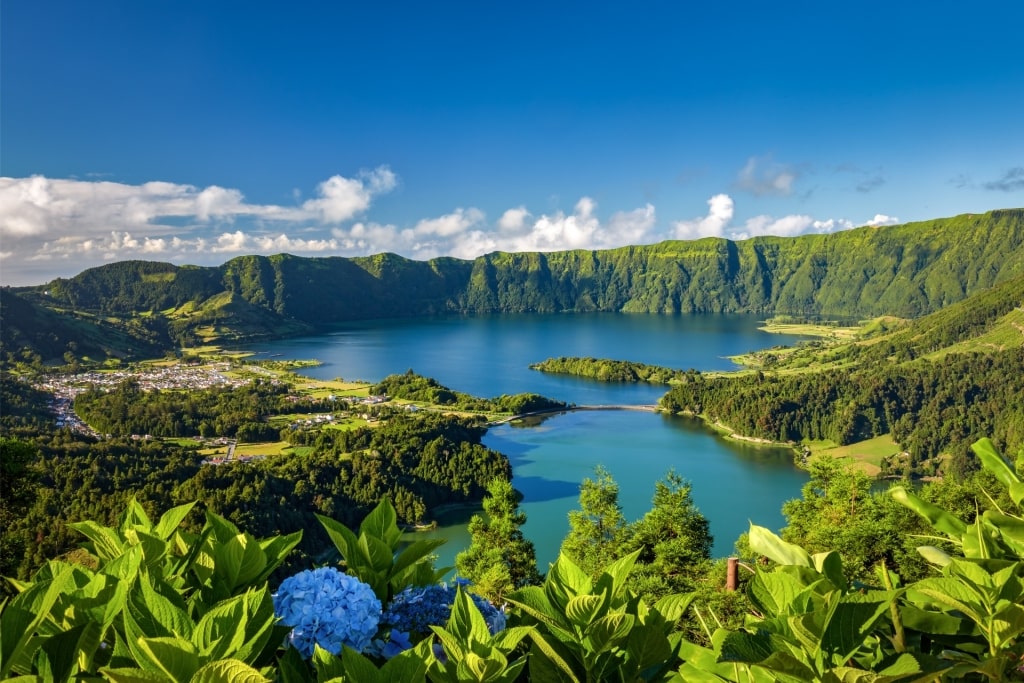
Sete Cidades
São Miguel doesn’t have golden beaches or water temperatures remotely like those of the Caribbean Sea, but that’s part of the appeal.
What it does have is unapologetically green volcanic landscapes, craggy coastlines that whisper the stories of sailors, crater lakes shining in unimaginable hues, straight-from-the-Atlantic fish, and a distinctly Azorean way of life that will make you think “every day should feel this way.”
Alluring for both adventure and rejuvenation, for surfers as much as seafood fanatics, and equally so for waterfall chasers as wildlife seekers, this far-flung European island ticks all the boxes. You don’t need a firm reason to visit São Miguel; simply turn up and it will work its magic.
History & Culture
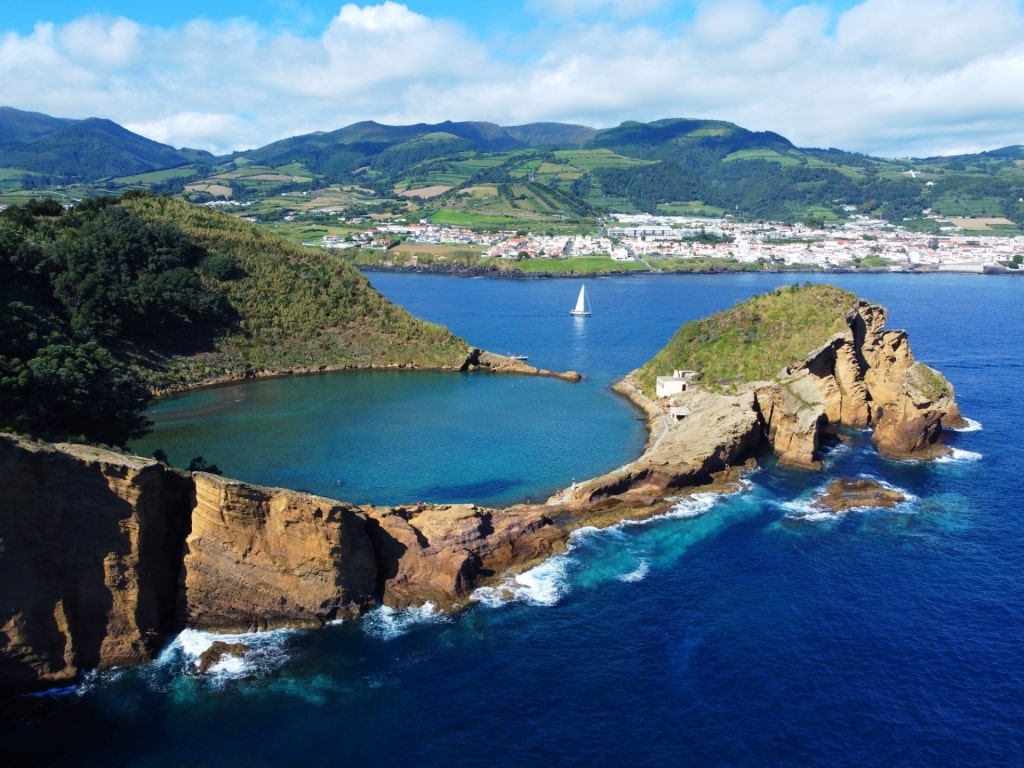
Vila Franca do Campo
São Miguel was uninhabited by humans when Portuguese sailors and settlers arrived in the 15th century, though some historians believe the Vikings may have been the first to set foot here.
Either way, São Miguel’s story started around four million years ago when the first of its six volcanic zones and cones emerged from the ocean floor, slowly shaping the island’s topography through fissure eruptions and lava flows.
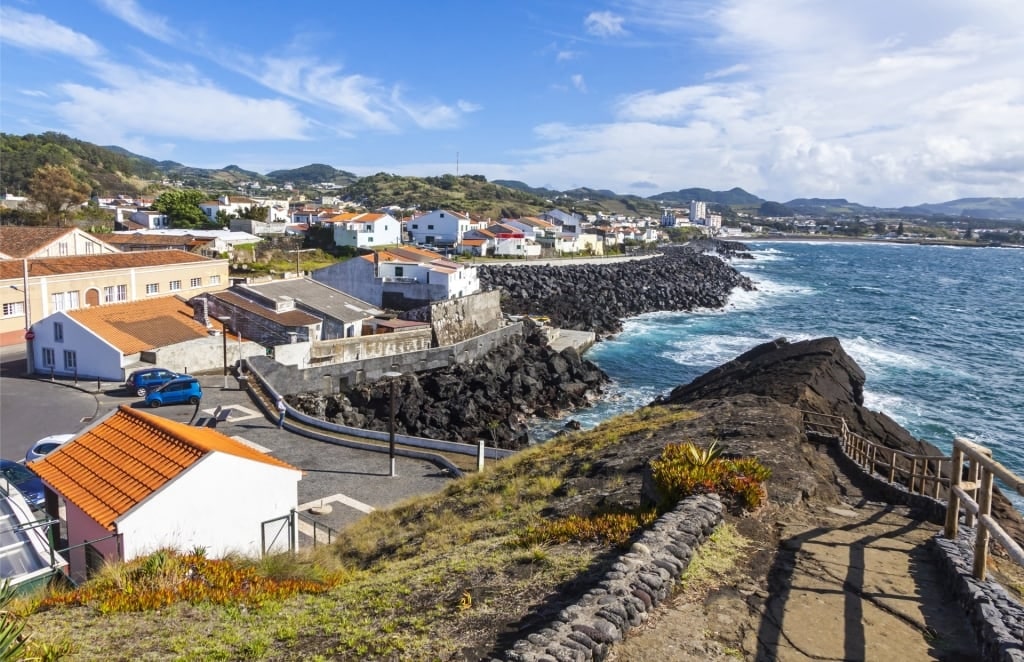
Ponta Delgada
Seismic activity continues to this day, though rarely as damaging as it has been historically. In 1522, the island’s first capital, Vila Franca do Campo, was devastated by an earthquake, leading to the fishing village of Ponta Delgada taking the capital crown in 1546.
In the six centuries since its settlement, São Miguel has developed in ways similar to the Portuguese mainland, while also cultivating its own distinctly Azorean cuisine, culture, and customs.
Serving as a key stopover point during Portugal’s Age of Discovery colonization era, the island flourished, in large part, due to imported agricultural products that thrived in the local climate but could not be produced on the mainland, including sugar cane and citrus fruits.
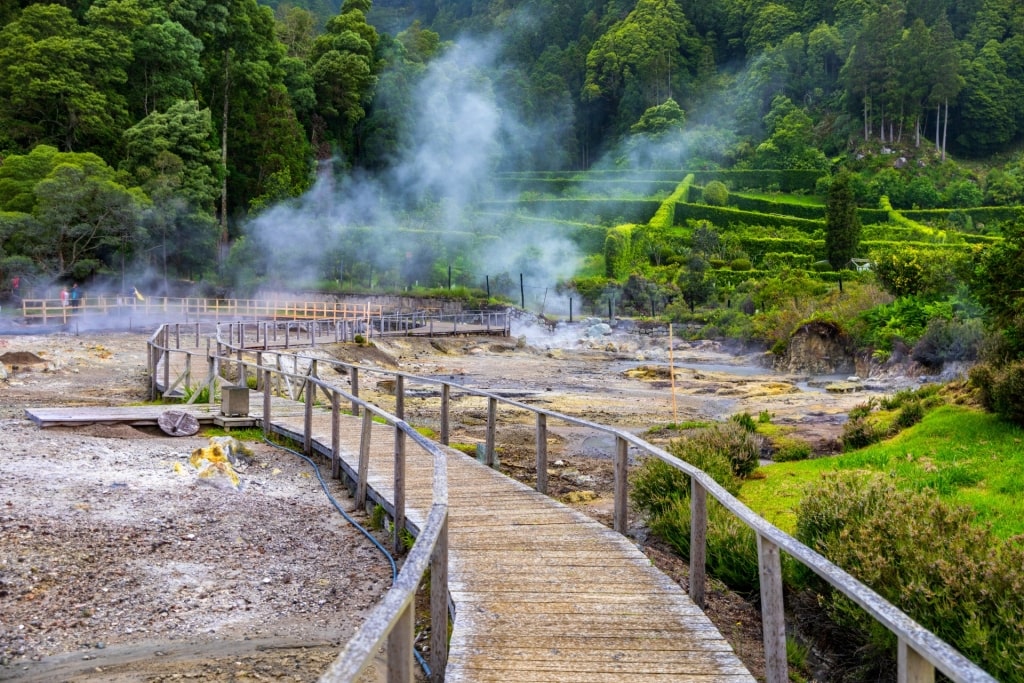
Furnas Lake
As the island’s population grew, so did local places of worship and festivals unique to the Azores. The island’s geothermal activity was harnessed to create local specialities. São Miguel further developed into the most populous island. In 1974, the Azores were officially declared an autonomous region, gaining further sovereignty from Portugal with the establishment of a local government.
Wildlife & Nature
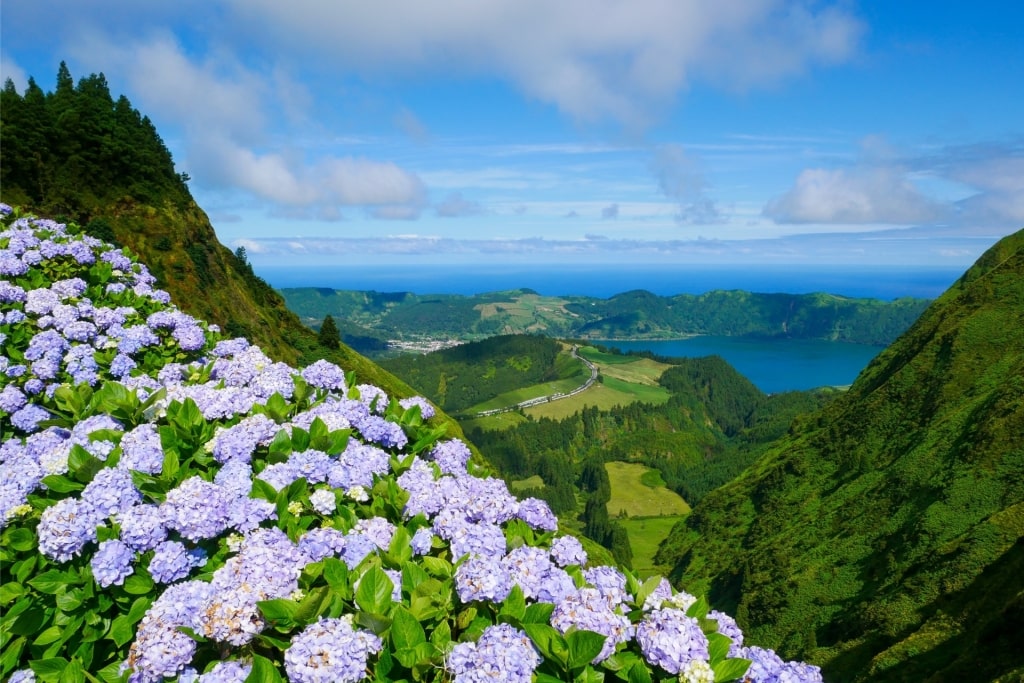
Sete Cidades
São Miguel is synonymous with nature. Whether you’re tracking hiking paths lined with pastel blue and lilac hydrangeas, splashing around in lava-carved rock pools, or sinking into a healing hot spring pool, the island’s natural beauty will make your heart sing.
Shaped by millions of years of volcanic activity, the whole island feels like an adventure garden. Venture into lava tubes for an intimate, subterranean introduction to seismic activity, or circumnavigate otherworldly crater lakes, and you’ll be in awe. More modern additions, such as tea plantations, accentuate the island’s natural green palette.
On the craggy coast, where the whims of the Atlantic dictate much of daily life, cooled lava has created natural rock pools and ashy sands. Sail into the deep blue beyond and you’ll likely spot one of the resident sperm whales.
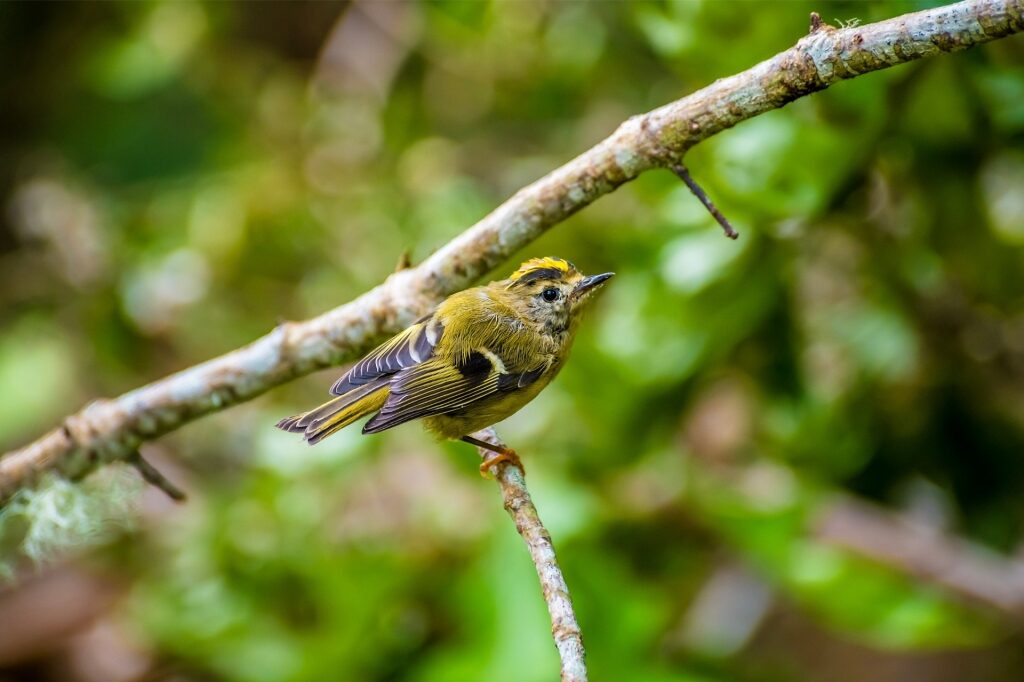
Goldcrest
São Miguel is also an excellent destination for birding. Hundreds of resident and migratory species can be sighted depending on the season, including the endemic goldcrest. Pico da Vara, a birdlife conservation zone, is outstanding, and the only place on the planet where you might see the endangered Azores bullfinch.
Tips for Visiting São Miguel, Azores
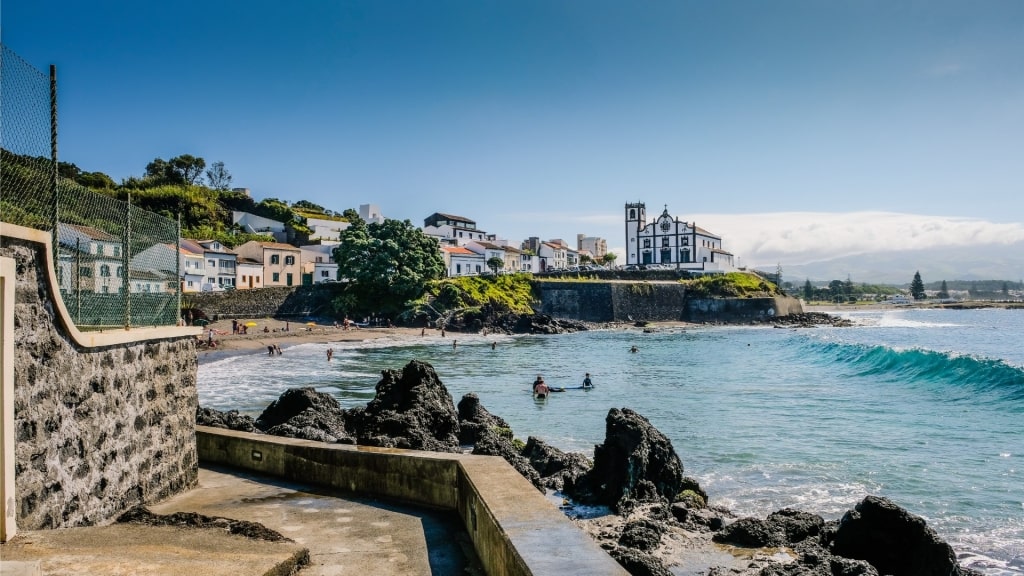
Ponta Delgada
São Miguel, though more developed than many of the Azores islands, has fairly limited public transport. Compact Ponte Delgada is easily explored on foot and the urban bus network is convenient for reaching nearby beaches on the central south coast.
However, if you want to explore the island’s beautiful lakes, springs, and lookouts, you’ll require a vehicle. Car rental is best arranged well in advance, as demand often outstrips supply. Alternatively, you could opt to book a driver or taxi for the day, or join one of the many excursions and tours that cover all the main attractions.
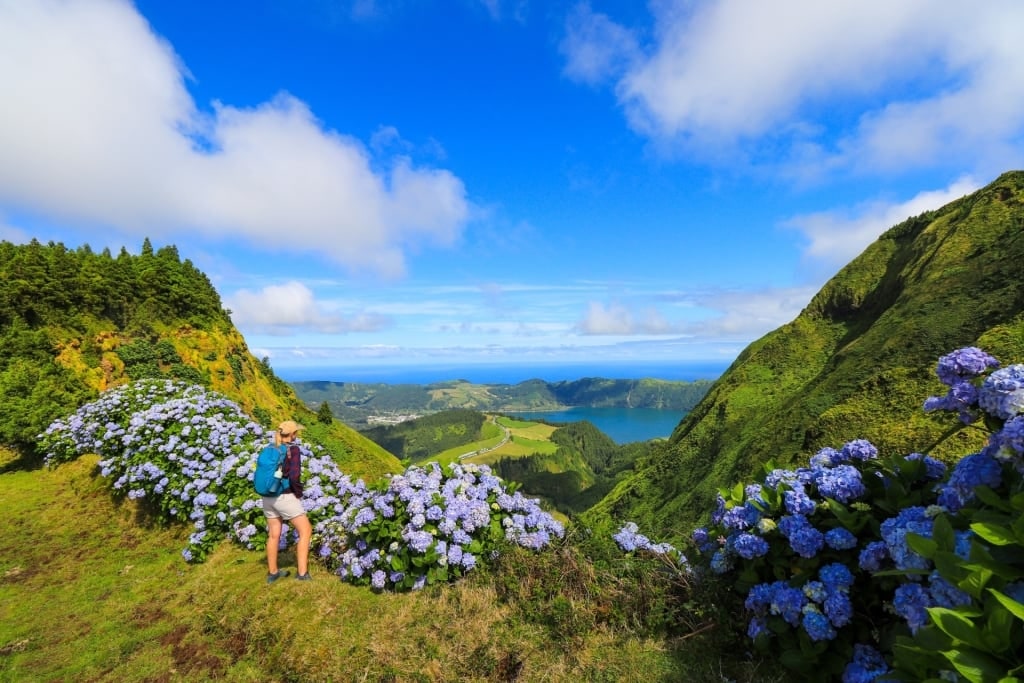
Sete Cidades
Clothing in the Azores favors comfort over flashiness, a trend it’s advisable to follow as a visitor. Wear comfy shoes, ideally suited for hiking, and bring a few light layers in your day bag so you can quickly adapt to the Atlantic breeze and regularly changing weather. A rain jacket is also recommended.
It’s always advisable to carry cash in the Azores as some smaller businesses, cafés, and beach bars don’t accept cards. Due to the limited number of ATMs outside of Ponta Delgada, it’s best to make withdrawals on arrival.
Things to Do & Attractions in São Miguel, Azores
See Shimmering Crater Lakes
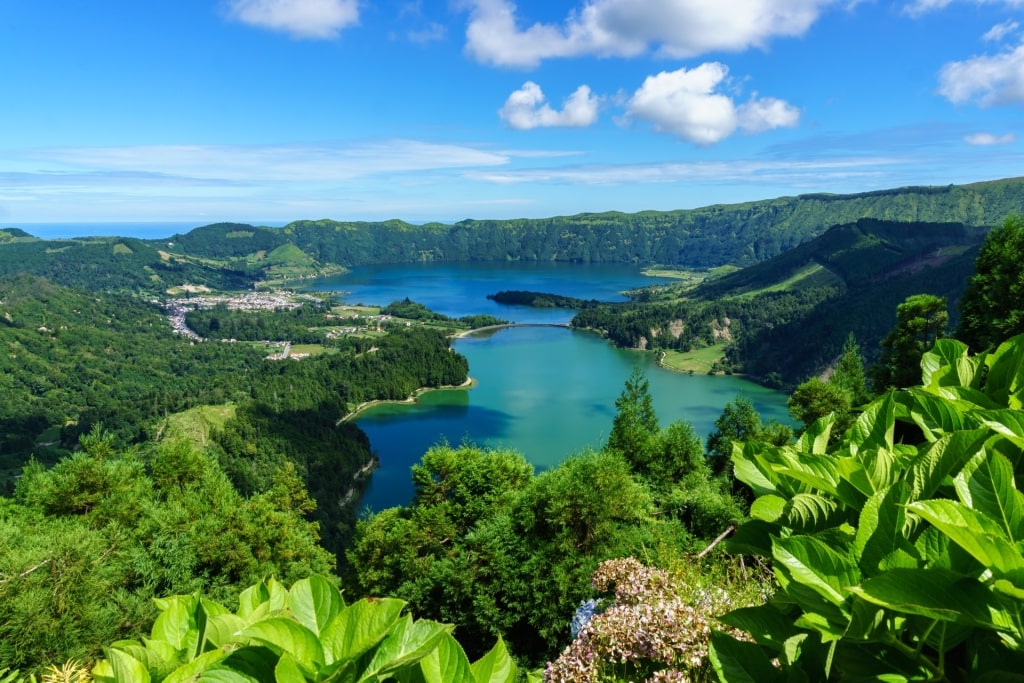
Sete Cidades
São Miguel’s handful of swoon-worthy crater lakes are enchanting. Most impressive is Sete Cidades, famed for its twin lakes that shimmer in distinct blues and greens, though it’s technically one vast body of water; light reflection provides the color difference.
Relish it at one of the Azores’ most iconic panoramic viewpoints, Vista do Rei, then follow the easy, two-hour PR03 SMI trail that descends the crater’s verdant slopes into the lakeside village. Renting a kayak from here to enjoy the lake is an unforgettable experience. For a post-hike break, pop into O Poejo tea house for a cup of Azores-grown tea.
In the center of the island, forest-hemmed Lagoa do Fogo also dazzles. While more challenging to hike to, the best views are actually from the pair of roadside miradouros, or viewpoints, accessible by car.
Experience Furnas Valley’s Thermal Springs & Unique Cuisine
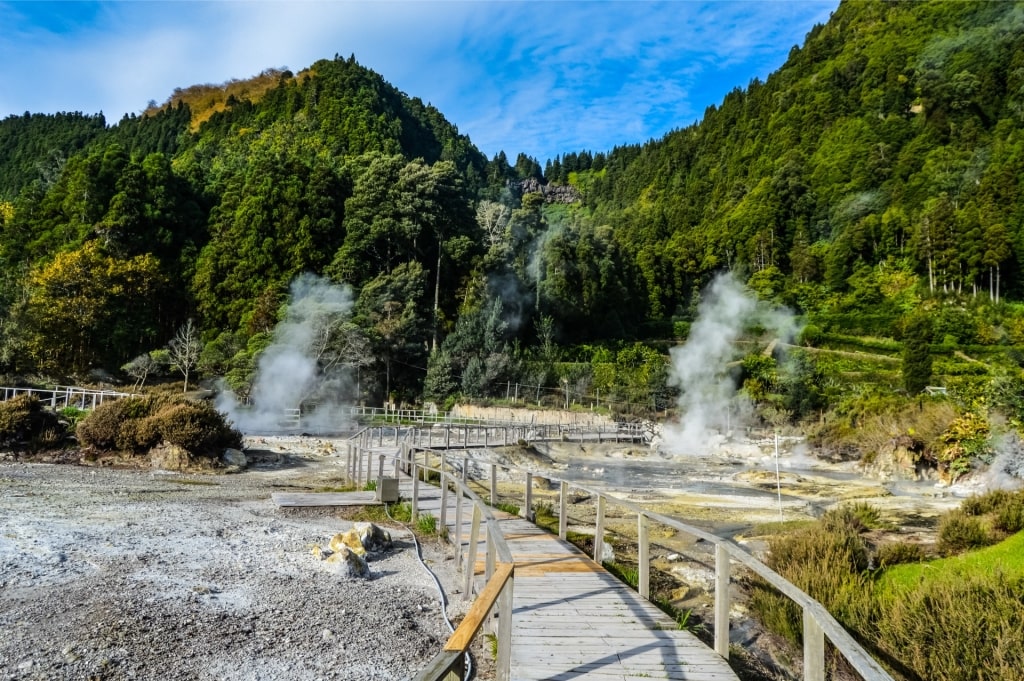
Furnas Lake
Bubbling, billowing, and steaming away in the sulfur heart of São Miguel, the Furnas Valley is one of the best places to visit in Portugal. Here, you can witness the Azores’ geothermal activity in all its glory.
Introduce yourself to steam-blowing fumaroles by walking above them on the boardwalk by Furnas Lake. Then, take a plunge in the rejuvenating thermal waters in town.
Choose from the long-standing Terra Nostra Garden, a lovely tropical garden anchored around a large, murky pool fed by iron-rich volcanic spring waters kept at a constant 108ºF, or the handful of smaller pools at Poça da Dona Beija.
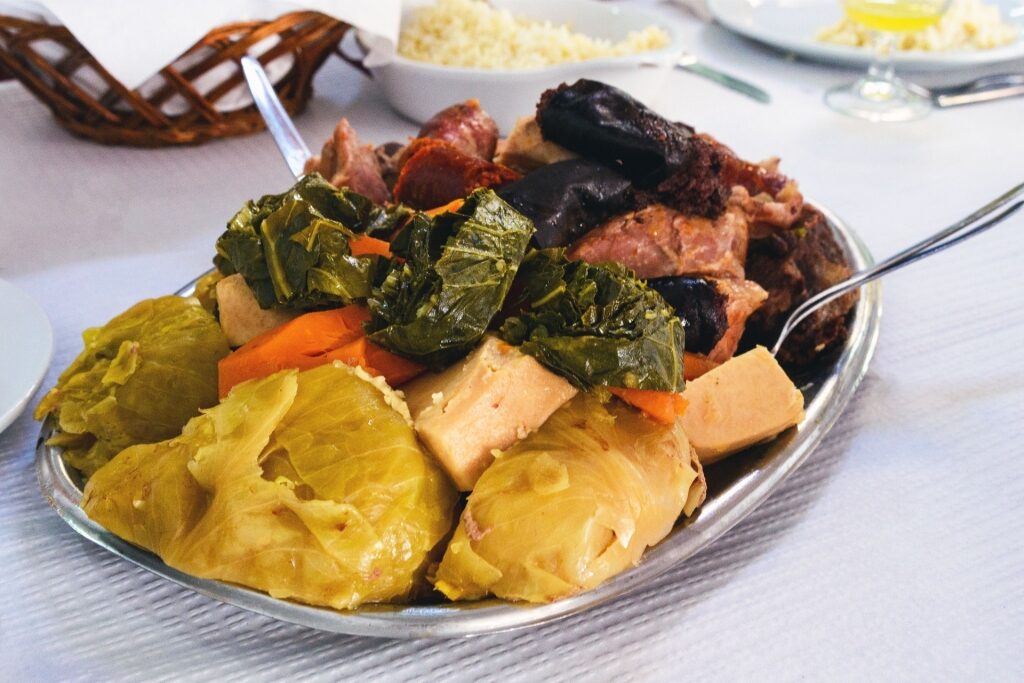
Cozido das Furnas
Don’t leave without trying the Azores’ most memorable dining experience. Cozido das Furnas is a stew consisting of beef, other cuts of meat, potatoes, and cabbage, which is covered in earth and cooked underground using geothermal steam. Restaurant Caldeiras e Vulcões is located closest to the cooking site, making it easy to observe the method before dining.
Go Whale Watching
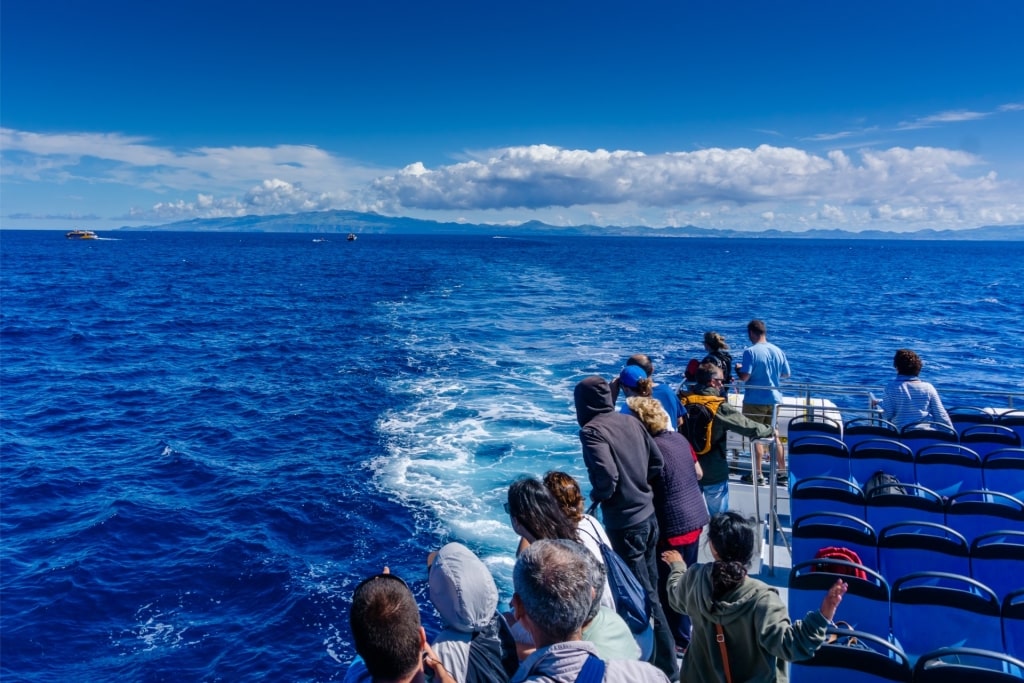
Whale watching in the Azores
The Azores are one of the best places to go whale watching in the world. With a year-round population of sperm whales and common and bottlenose dolphins, the chances of spotting cetaceans on a boat trip are high. Visit during spring’s migratory season, and the prospects are further improved, as blue, fin, and sei whales cross the route.
Multiple companies offer excursions from Ponta Delgada; however, it’s advisable to book with an operator run by marine biologists. Their expert knowledge not only improves the chances of sightings but also typically contributes to conservation efforts.
Tour Ponta Delgada’s Historic Sites
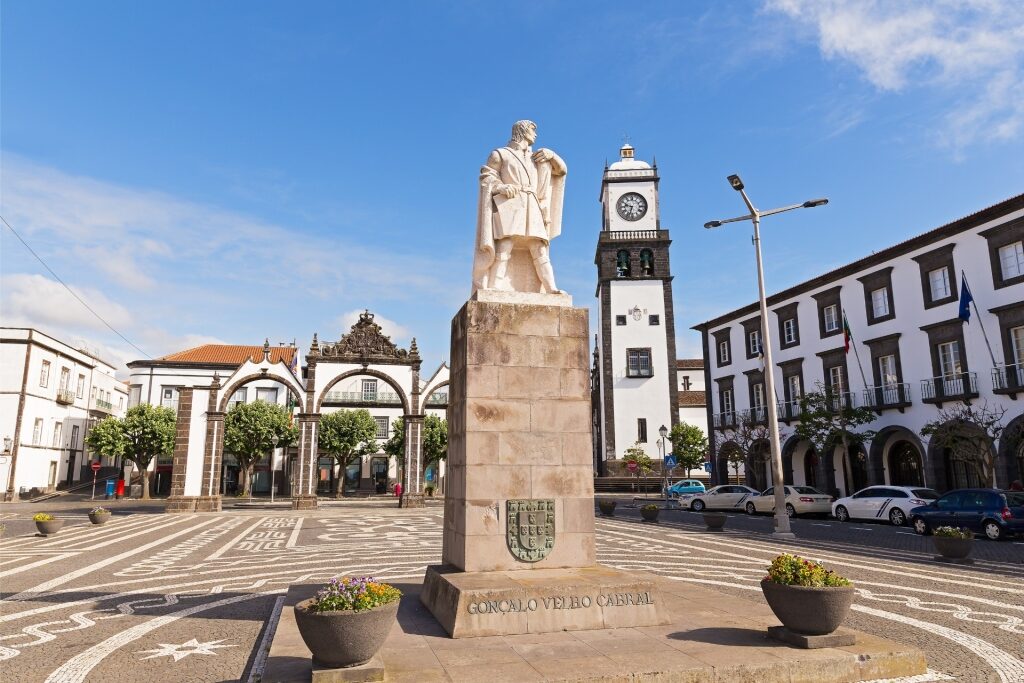
Ponta Delgada
Ponta Delgada, São Miguel’s oceanside capital city, is compact, largely pedestrianized, and a delight to amble while taking in the distinctively Azorean dark basalt and whitewashed local architecture.
Historical highlights include the three-arched Portas da Cidade, the 18th-century city gates that now stand alone in Praça de Gonçalo Velhol and nearby Igreja Matriz de São Sebastião, one of the first churches constructed on the island.
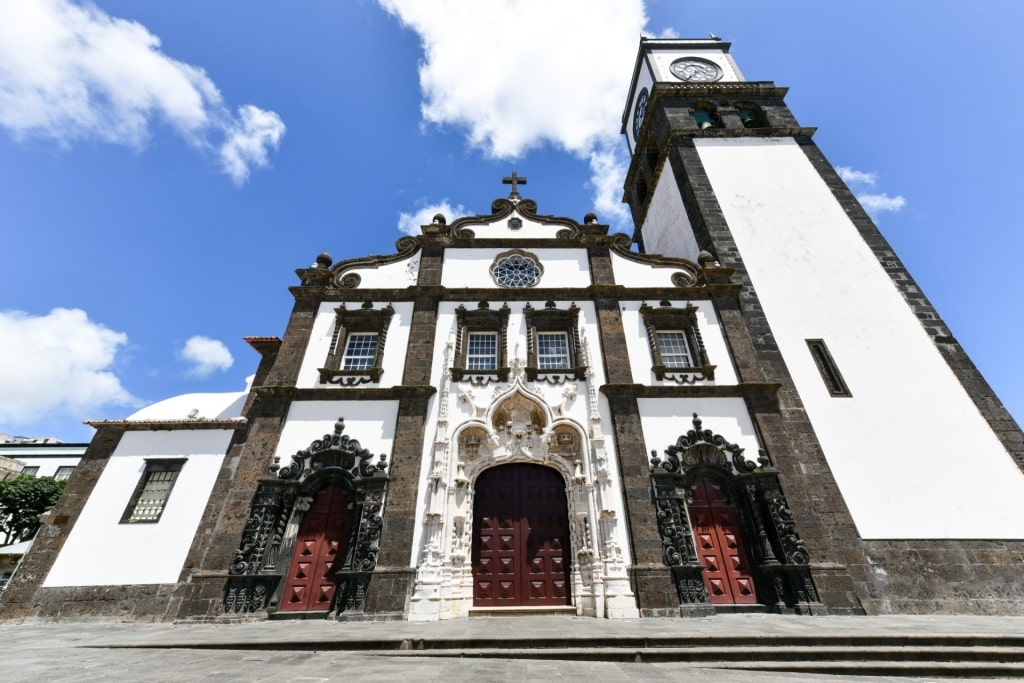
Igreja Matriz de São Sebastião, Ponta Delgada
The church has undergone substantial renovations since the 15th century. The Chapel of Nossa Senhora da Esperança, which glitters in gilding and blue and white azulejos—the traditional hand-painted ceramic tiles Portugal is famous for—is also mesmerizing.
Along the way, you’ll also gain insight into the contemporary Azores thanks to creative chefs, chic bars, and boutiques. Personality-packed Louvre Michaelense does a good job of showcasing all three—and serves a divine chocolate torte.
Enter a Lava Tube
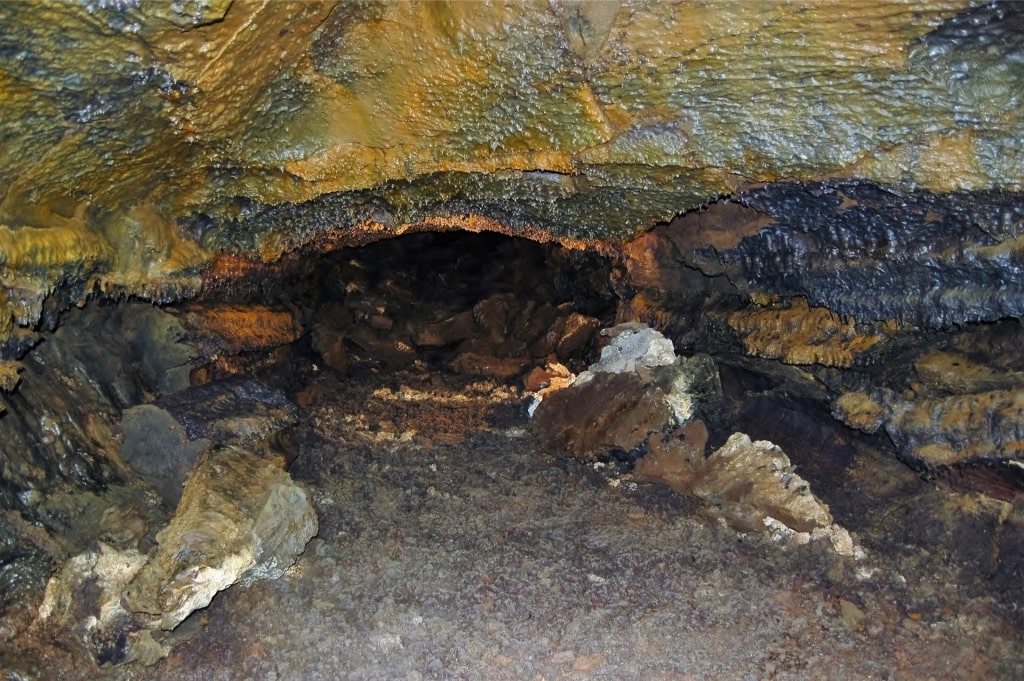
Gruta do Carvão
On the outskirts of Ponta Delgada, pre-booked tours of the often-overlooked Gruta do Carvão present an up-close insight into what lava leaves behind.
Spend an hour descending nearly 3,000 feet deep into the earth via this lava tunnel—the longest on the island—and, while marveling at seismic scars, you’ll learn more about São Miguel’s formation and volcanic activity.
Taste Local Tea & Pineapples
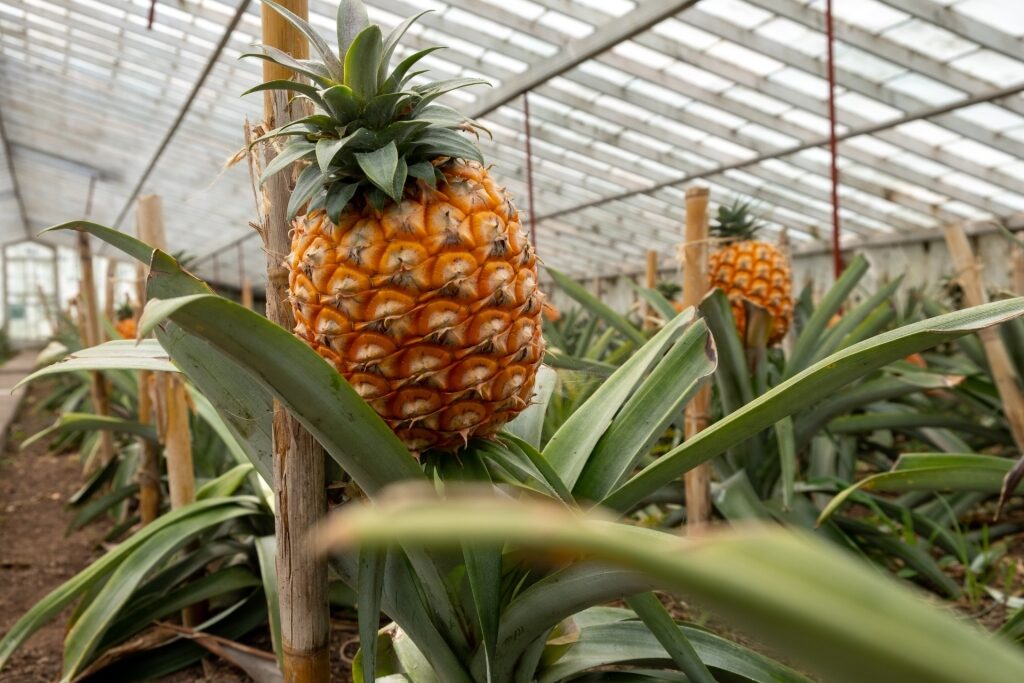
Greenhouse in Ponta Delgada
Two of São Miguel’s most pleasing local flavors are those imported from South America.
In Ponta Delgada, pineapples have been grown in greenhouses since the 19th century. Imported as a fruit replacement for the dwindling citrus crop, Azorean pineapples use a smoking method, which helps them achieve a super-sweet taste.
After a walk through the greenhouses, you can try the pineapples on site au naturel, or as a jam or liquor.
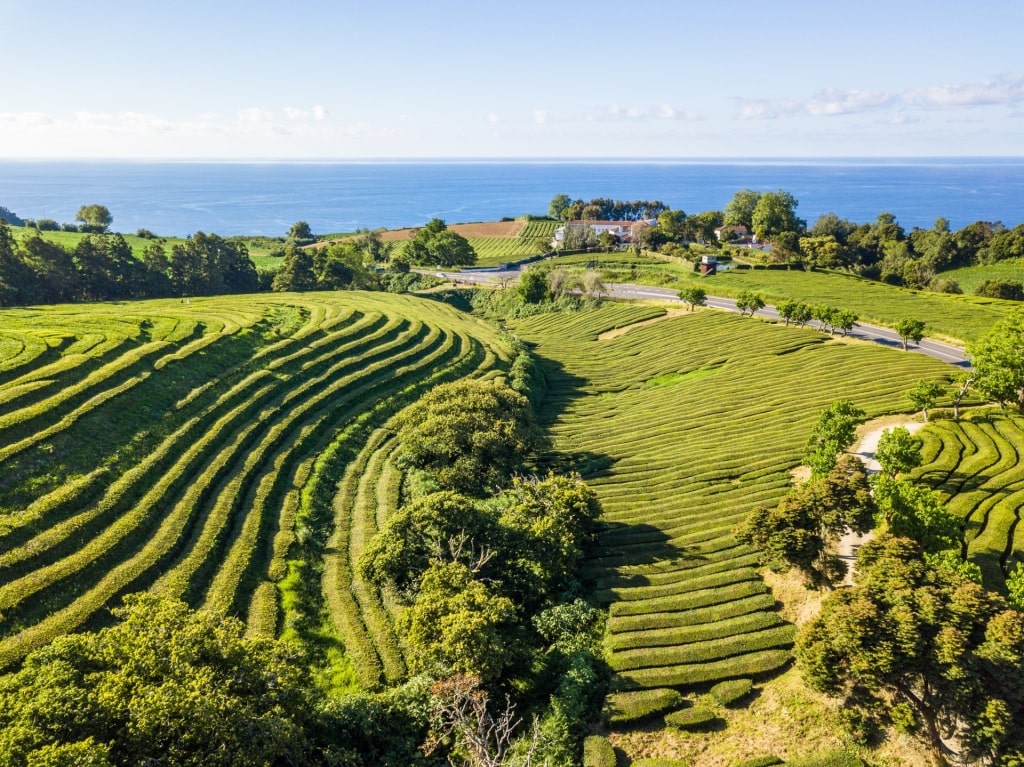
Gorreana Tea Plantation
Likewise, the tea plantations on São Miguel’s north coast were initially grown from South American seeds, which were later replaced with Chinese plants.
At Gorreana Tea Plantation, founded in 1883, enjoy a serene stroll through the well-manicured grounds with sloping ocean views. Afterwards, head into the factory for a brief tour, followed by a tasting in the gift shop.
Bathe at Volcanic Beaches & Rock Pools
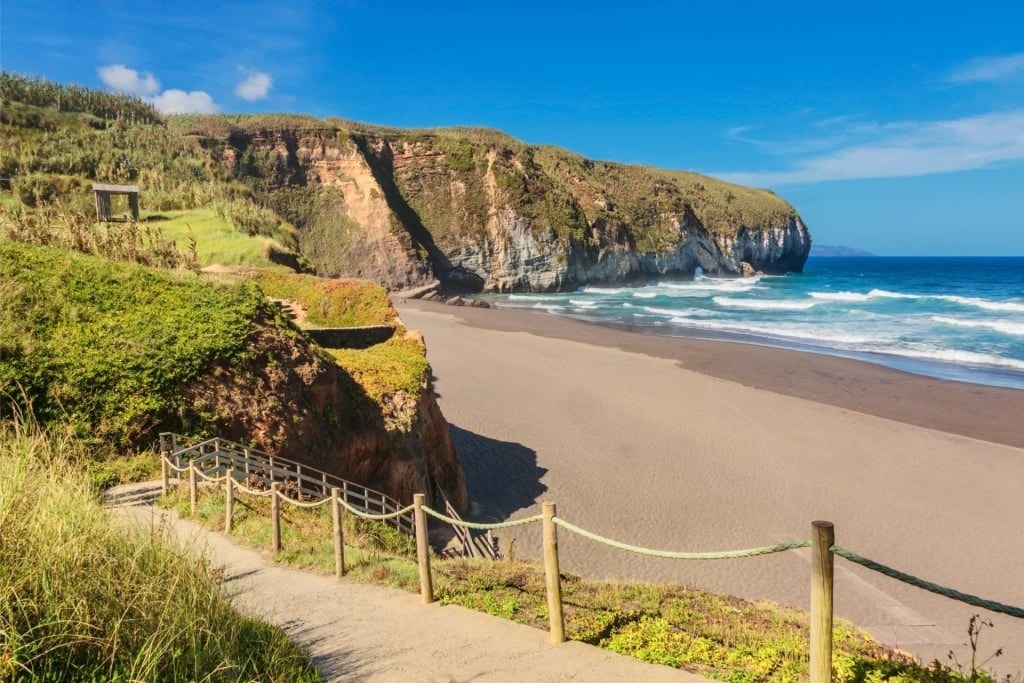
Praia do Areal de Santa Bárbara
With wild waves and craggy cliffs, São Miguel is a surfer’s paradise. But even without a board, there’s plenty to love along the volcanic coastline.
For an afternoon of sunbathing and paddling on dramatic black sands, set your sights on cliff-backed Praia do Areal de Santa Bárbara in the north, or Praia do Fogo on the southeastern coast. If you dig your feet deep into the sand here, you’ll feel the warmth from hydrothermal vents below.
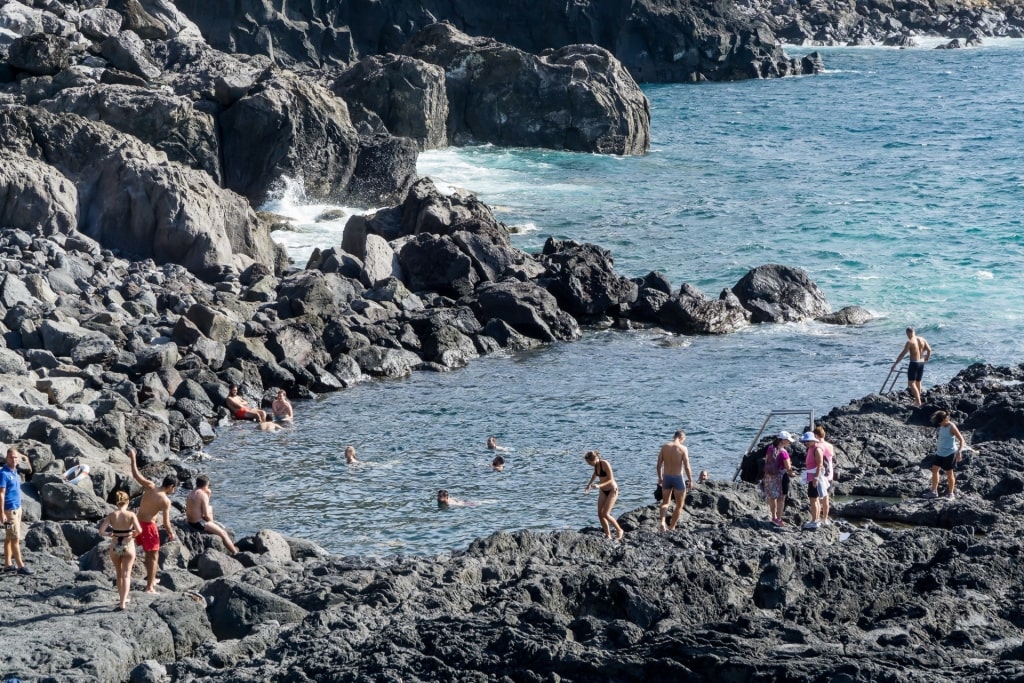
Ponta da Ferraria
If you’d prefer to swim, skip the Azorean beach and head to a lido or natural rock pool instead. The Complexo Municipal de Piscinas, located just outside Ponta Delgada, features semi-enclosed pools surrounded by ink-black lava rocks. More unique is the rugged Ponta da Ferraria, warmed by thermal vents.
Food & Drink
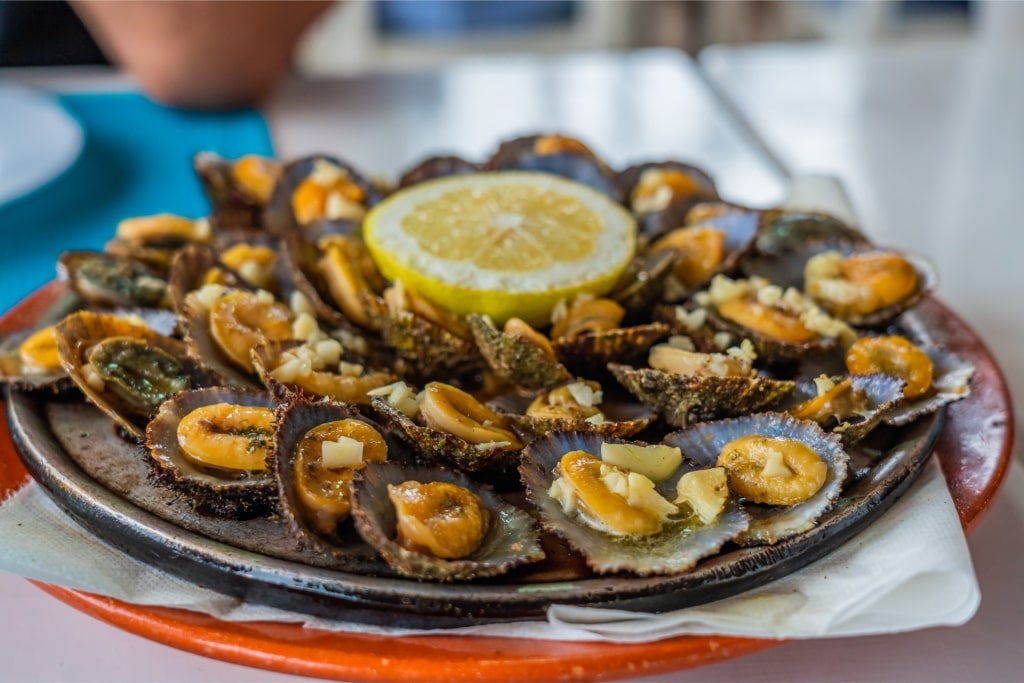
Lapas dos Açores
Gastronomy in São Miguel, Azores, is mainly focused on the bounty of the Atlantic Ocean.
Local seafood specialties include Lapas dos Açores, a typically sizzling pan of mollusks, also known as limpets, harvested from the coastal rocks, and Chicharros Fritos, fried Atlantic horse mackerel served with a tomato sauce. Borda d’Água, east of Ponta Delgada, is an excellent, unfussy restaurant to enjoy the freshest fish.
On land, São Miguel’s free-roaming “happy cows” are to thank for many provincial dishes, including the quality dairy used to produce Azorean cheese. The best tend to hail from the island of São Jorge. Cozido das Furnas also utilises the high-quality beef in its slow-steamed stews.
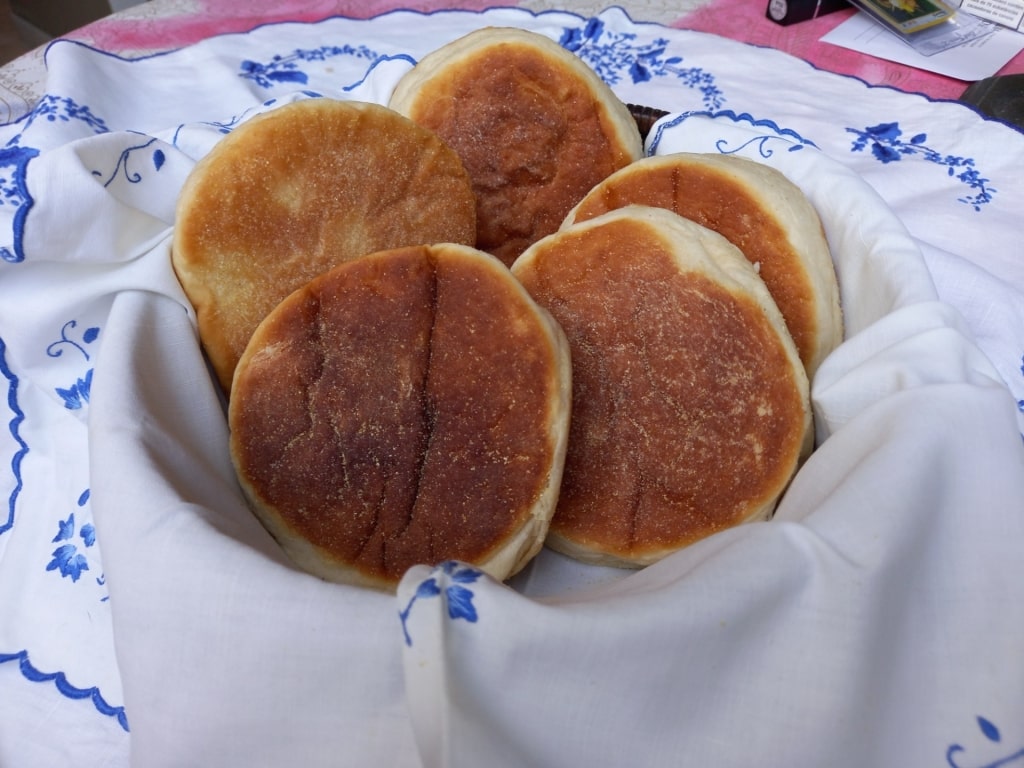
Bolo Lêvedo
Bolo Lêvedo, a traditional muffin bread, makes for a delicious on-the-go snack when filled with garlic butter and cheese or ham; try it with a Kima, the local soda made from passionfruit.
Try to sample Azorean wine when you’re in São Miguel. Even though the island doesn’t have vineyards, it’s not hard to source the volcanic wines from Pico Island, which are crisp, minerally, and perfect on a warm day, watching the waves crash against the ragged coast.
Best Time to Visit
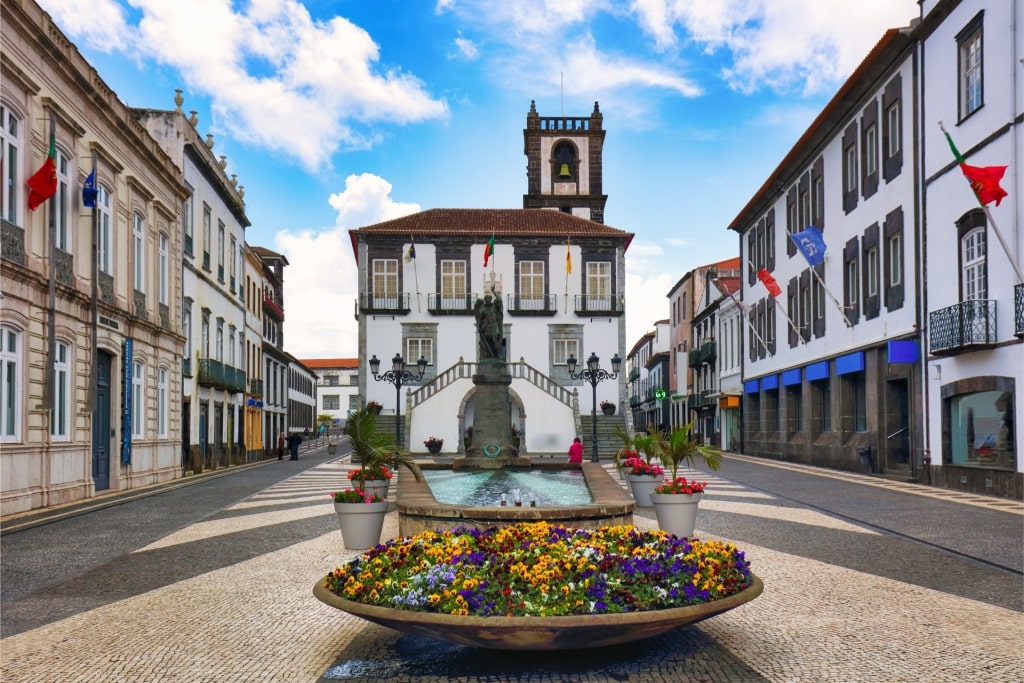
Ponta Delgada
São Miguel has a mild and consistent climate and is regarded as the most year-round island destination in the Azores due to the range of experiences it offers.
Still, it’s advised to visit between April and October, when there’s a lower chance of strong winds and heavy rains that can disrupt plans. June through August is when the weather is most reliable, but it’s also the most popular time to visit, which comes with its own challenges.
During this peak summer season, the most popular sites can be crowded and car rental is often expensive—that’s if you’ve even been able to secure one.
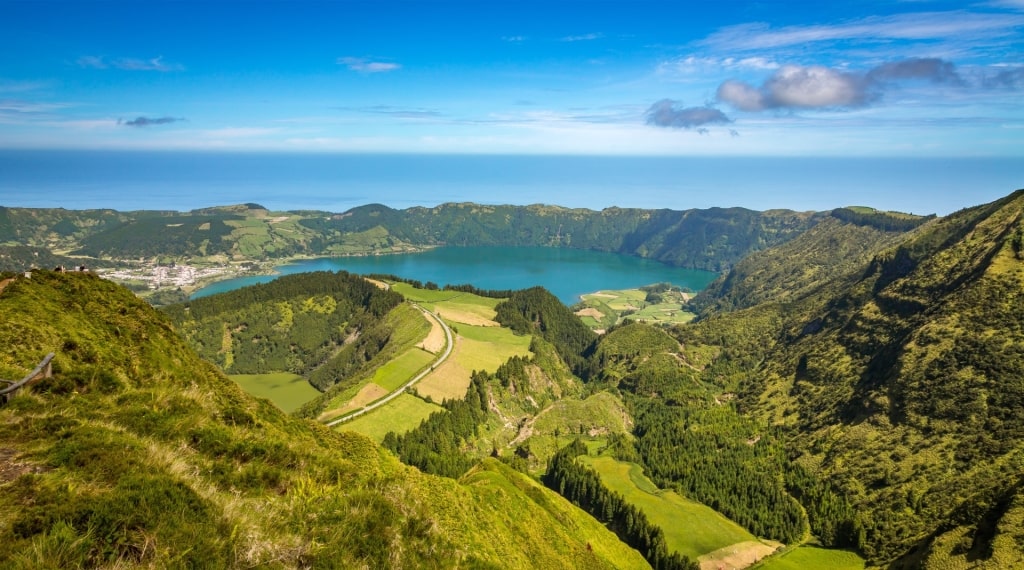
Sete Cidades
For the most rounded experience, when you can appreciate a slow-paced and more serene São Miguel, plan a shoulder-season visit around April or October.
Visit during spring’s cetacean migration period, and alongside the resident year-round whale population, you’ll potentially spot other species, such as blue and sei whales. Birding is also far superior in autumn and fall, when the migratory species cross the Atlantic.
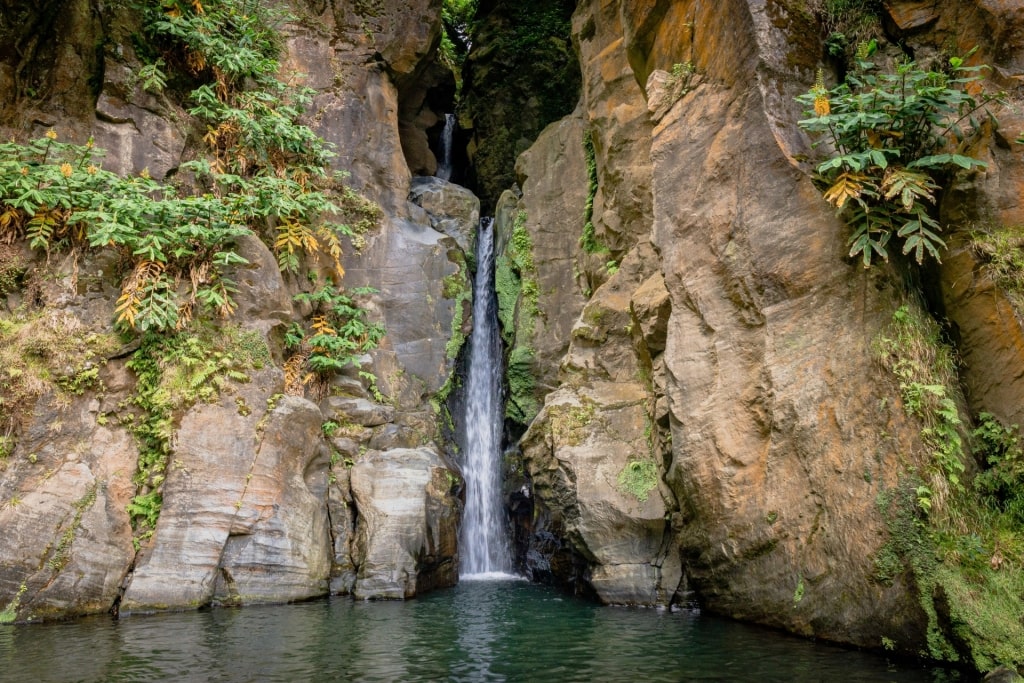
Salto do Cabrito
If there’s a short shower? No worries—it’s what keeps the waterfalls such as Salto do Cabrito flowing and the landscape so green. There’s always a hot spring or tea tasting around the corner to wait it out.
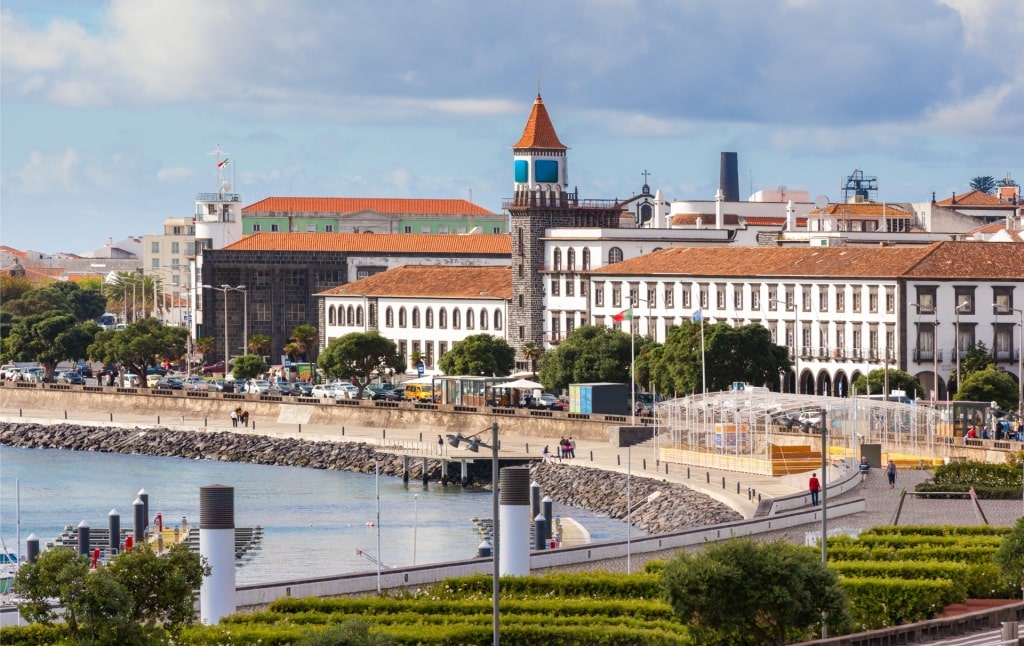
Ponta Delgada
Swoon over São Miguel’s magical lakes and lush landscapes on a voyage with Celebrity. Browse cruises to the Azores and start planning your perfect Atlantic vacation.