What Is Iceland known for? This treasure island in the North Atlantic is known as the Land of Fire and Ice for its gasp-inducing landscape of glaciers and volcanoes.
Iceland is known for its dazzling array of wildlife, too, from whales that can often be seen breaching in the ocean to the high-pitched shrill of Arctic terns, plus Atlantic puffins, Icelandic horses, and languid seals. Remote islands, such as Vigur and Grimsey, are home to small communities and a plethora of rich birdlife, while cities such as Reykjavik and Akureyri offer culture and gastronomy.
What is Iceland famous for? From the capital’s iconic church to otherworldly lava fields, you will love discovering this unique place for yourself.
Thundering Waterfalls
Gullfoss
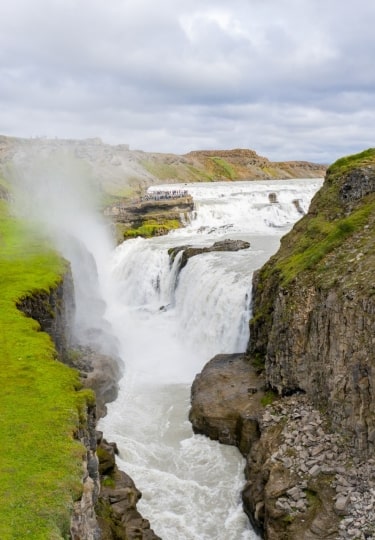
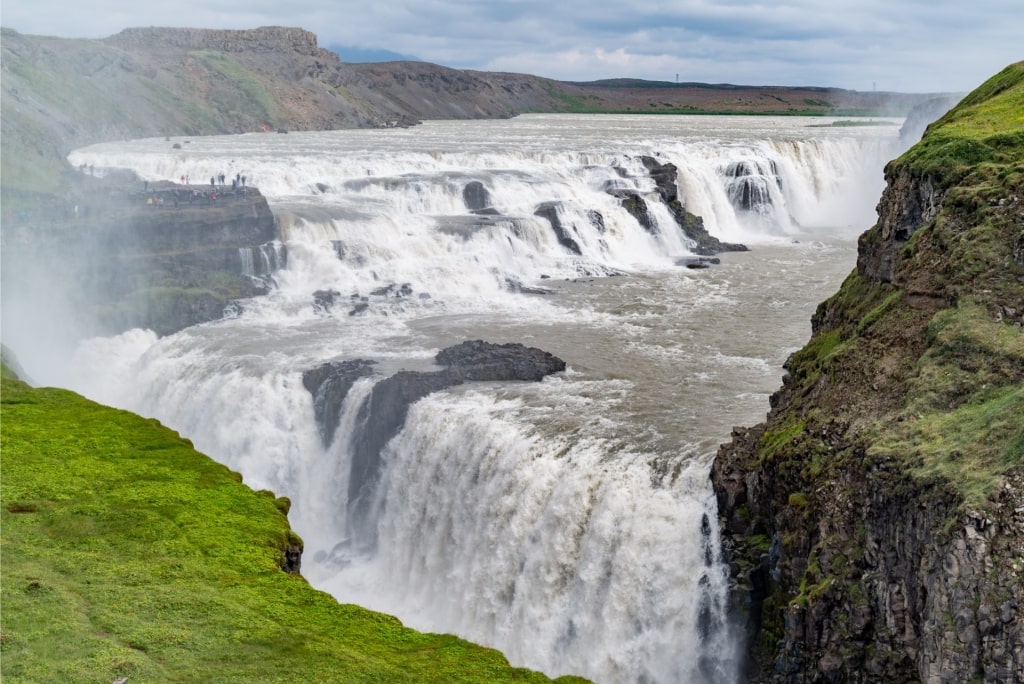
Iceland is well-known for its thousands of waterfalls, so many that you won’t have to travel far to see several in one short trip. Waterfalls in Iceland trickle down steep fjords, cascade down mountains, and thunder into canyons, including Gullfoss in southwest Iceland.
Lying on the Hvítá river canyon and fed by the Langjökull glacier, Gullfoss is around two hours’ scenic drive from the capital city of Reykjavik and features a dramatic 105-foot, two-tier drop, with 358 cubic feet of water surging into the canyon every second during summer.
In the Westfjords, in the remote northwest of Iceland, Dynjandi is a spectacular veiled waterfall near the town of Isafjordur. On a hike to the base of Dynjandi, you will also take in five smaller waterfalls at the innermost point of the Arnarfjörður fjord.
Godafoss
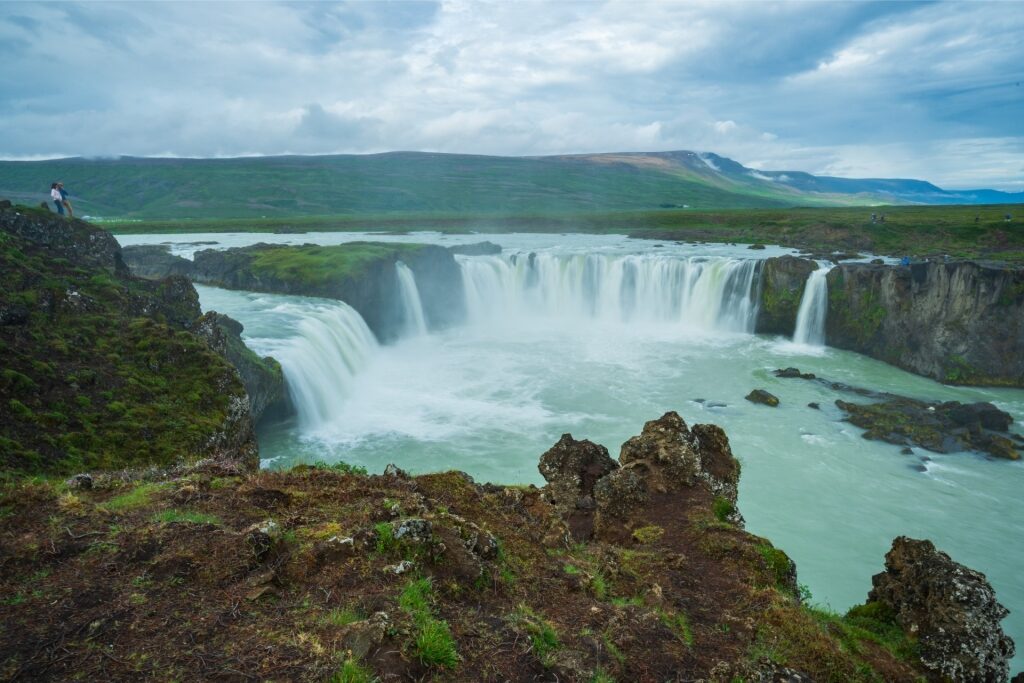
If you’re in northeast Iceland, near Akureyri, the most impressive waterfall is the curved Godafoss, spanning around 100 feet and plummeting 39 feet into a serene pool. In the southwest, feel the refreshing spray of Skógafoss and Seljalandsfoss—both boast a breathtaking 200-foot drop—just a short drive from one other.
Cuisine

Restaurant in Reykjavik
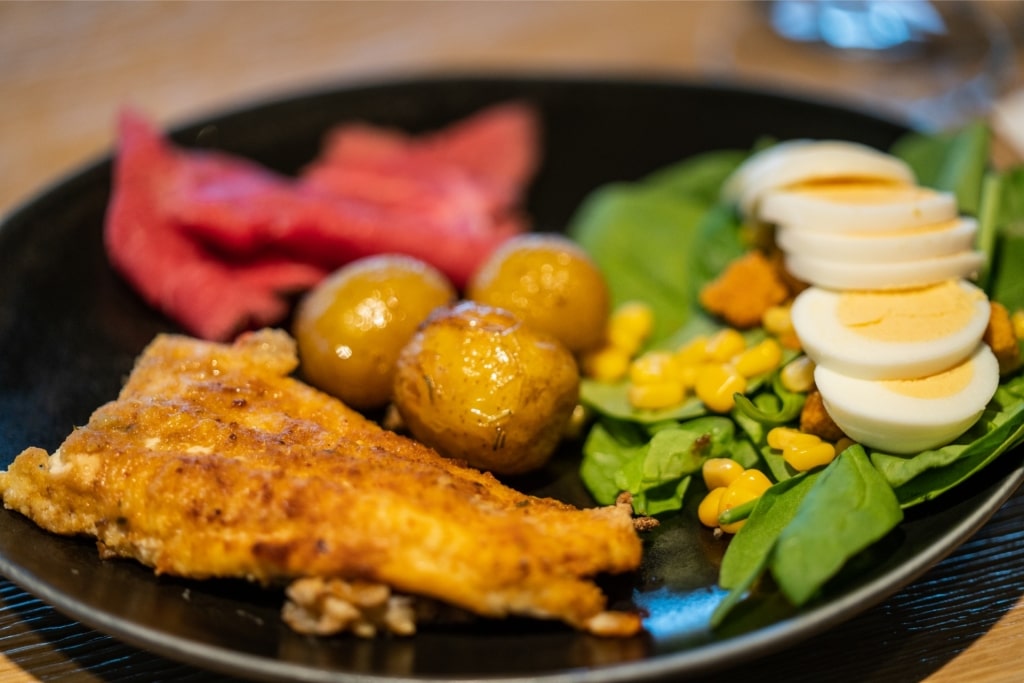
Iceland is known for its outstanding seafood, free-grazing lamb dishes, and mountain-fresh herbs. There are some more usual Icelandic delicacies, too, including fermented shark, horsemeat sausage, and lundi—puffin meat.
Taking a guided food tour is one of the best things to do in Reykjavik to get an insider’s perspective on Icelandic food culture. Here, cuisine ranges from traditional Icelandic dishes and street food to high-end gastronomy.
Icelandic food
Graze on cod tacos, sourdough pizza, and lamb cutlets at the neon-lit Hlemmur Food Hall. Located at the city’s former bus terminal at one end of the main shopping strip, Laugavegur, there’s also Vietnamese coffee, gelato, and cured meats among the offerings.
Hotdogs are arguably Reykjavik’s most famous street food. Pick one up at Bæjarins Beztu Pylsur—known for creating Reykjavik’s best hotdogs—topped with fried onion, ketchup, and mustard.
For gourmet fare, try Fish Market or Dill, for multi-course tasting menus that celebrate foraged and seasonal ingredients.
Geothermal Baths
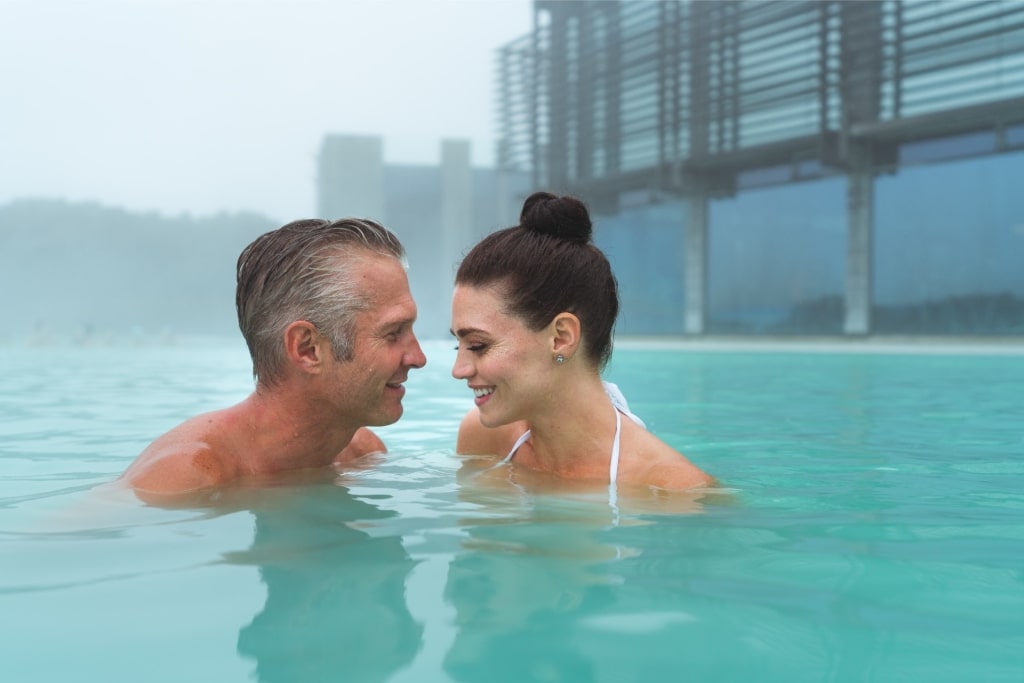
Blue Lagoon
What is Iceland known for? For many, it’s the country’s steaming baths where visitors go to relax in deliciously warm water heated using geothermal energy. The best known, and most popular, is the Blue Lagoon, a must-see destination that puts Iceland high on the bucket list for travelers. This surreal, milk-blue pool is nestled amid colossal lava fields on the Reykjanes Peninsula.
Visit the Blue Lagoon, where you can lather on a mud mask and enjoy a drink at the swim-up bar. Blue Lagoon coaches pick up from Keflavík Airport and locations around the city, taking 30-45 minutes. There is a spa for luxury treatments, a café, a restaurant, and a gift shop where visitors can purchase skin, hair, and body products.
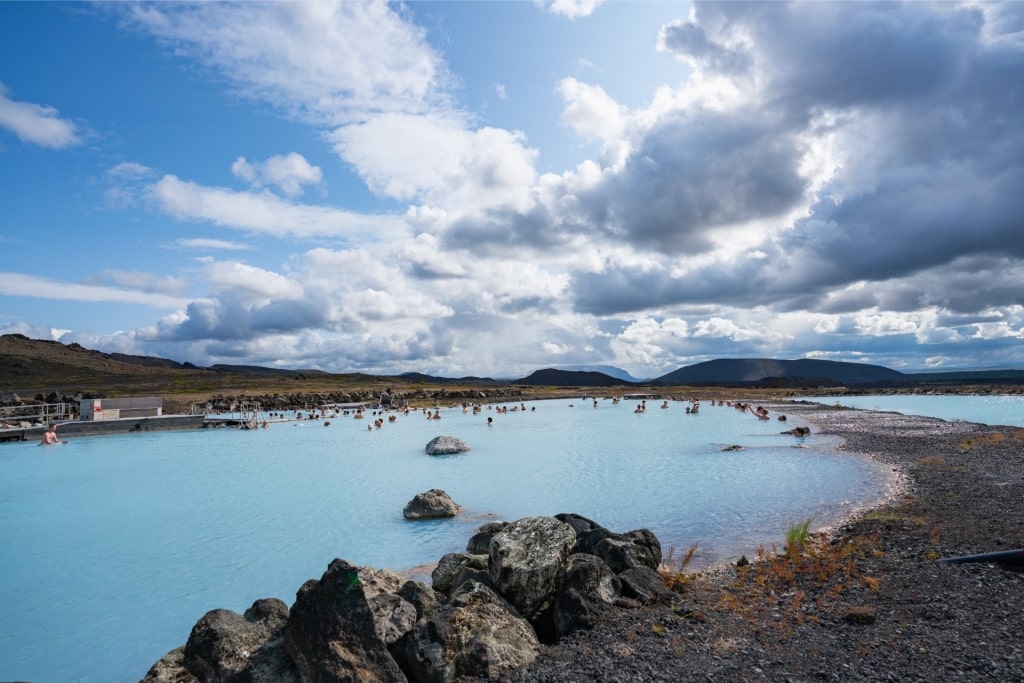
Myvatn Nature Baths
Around an hour north of Reykjavik is the dreamy Hvammsvik Hot Springs, a lesser-visited spot with eight natural pools and mountain and ocean views. Myvatn Nature Baths is North Iceland’s answer to the Blue Lagoon, while Geothermal Sea Baths in Husavik offers four pools with cinematic Arctic views.
Hallgrimskirkja
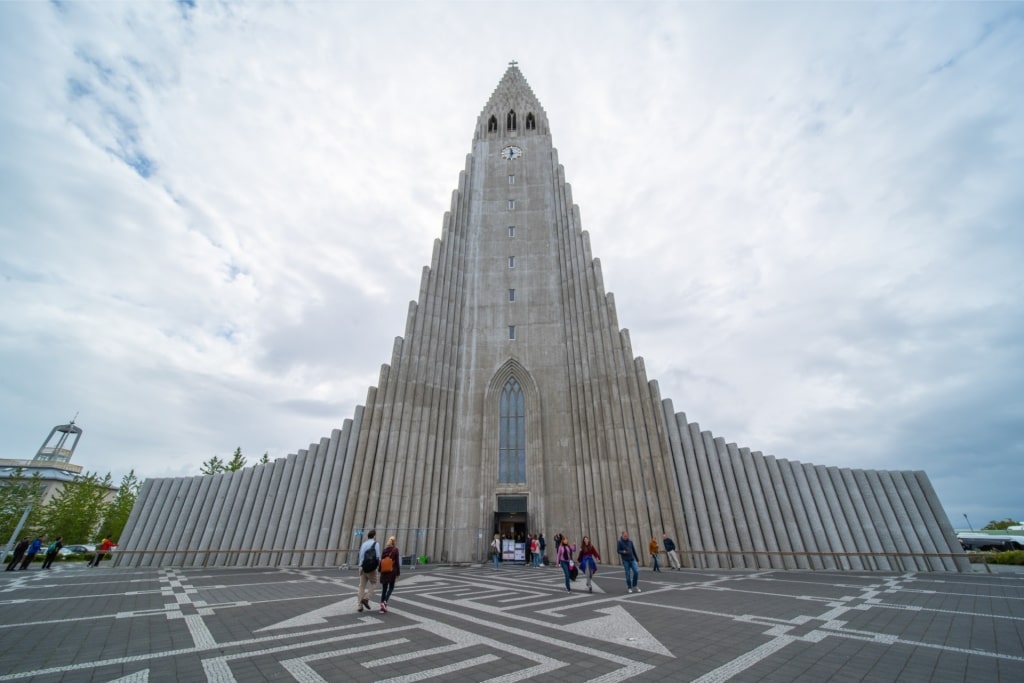
Hallgrimskirkja
What is Iceland known for? When it comes to architecture, it’s Hallgrimskirkja Cathedral, the highest building in Iceland. This elegant gray church rises 240 feet in downtown Reykjavik with its design inspired by columns of basalt rock.
Dedicated to Icelandic poet Hallgrímur Pétursson, this unique building was designed by state architect Guðjón Samúelsson, who also designed the National Theatre of Iceland. It was completed in 1986. Inside this Evangelical-Lutheran church, there is a modernist vaulted ceiling and the largest organ in Iceland.
Take the elevator to Hallgrimskirkja’s eighth-floor viewing platform on the same level as the church clock with a large copper bell and several smaller bells hanging above. From here, visitors are treated to 360-degree views of Reykjavik.
Lava Fields
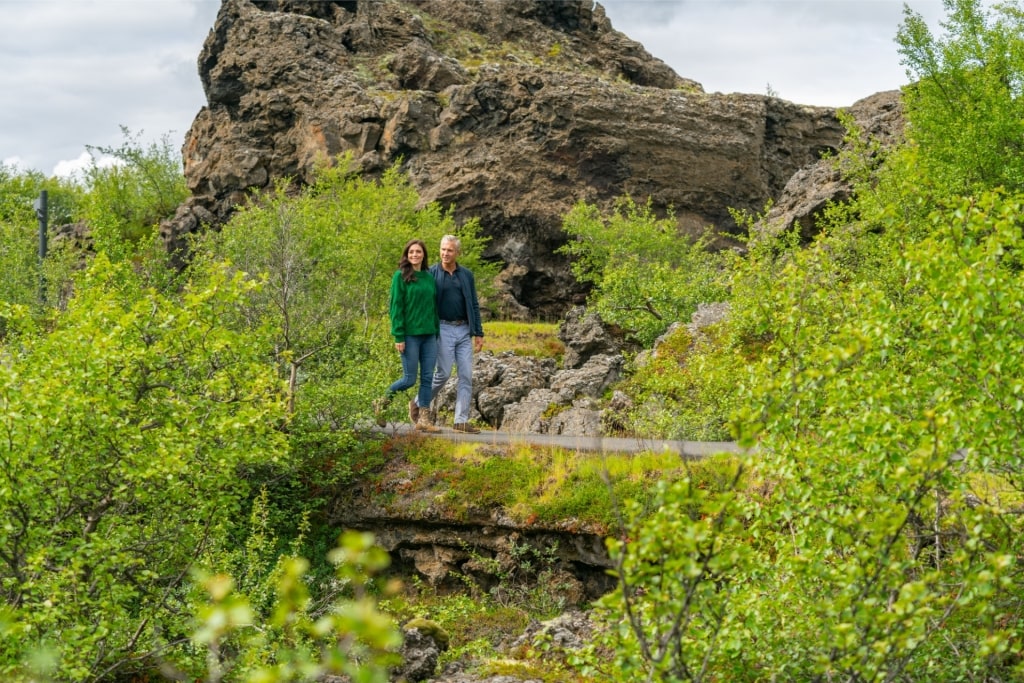
Dimmuborgir
Some of Iceland’s lunar-like landscape, including areas of the Reykjanes Peninsula near Reykjavik, is owed to otherworldly lava fields, featuring dramatic rock formations.
One of the best things to do in Iceland is to wander among Dimmuborgir, located next to Lake Myvatn in the north. This extraordinary lava field was created following a massive volcanic eruption 2,300 years ago and is believed to resemble a labyrinth medieval fortress, hence its name, with Dimmuborgir translating to Dark City.
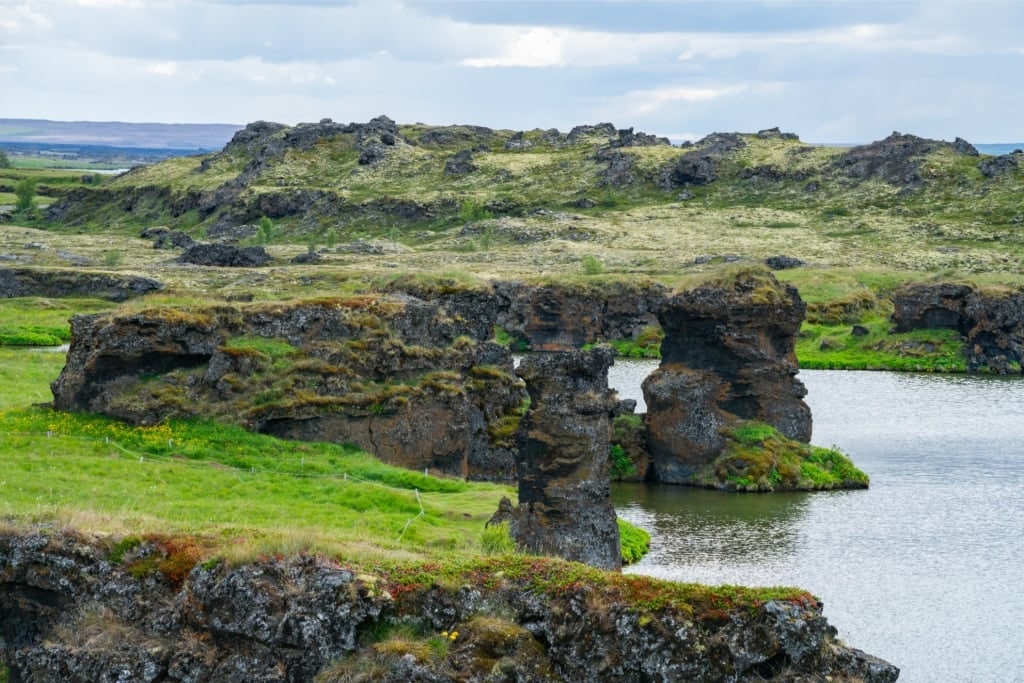
Dimmuborgir
The lava from the eruption flowed across a lake, leading the water to boil. The lake’s water caused the lava to cool quicker, and rising steam shattered the lava as it solidified, creating towering stacks, lava tubes, hidden caverns, and natural chambers.
There’s plenty to see and do close by Dimmuborgir, too, including kicking back in the mineral-rich waters of Mývatn Nature Baths; visit Grjótagjá, a lava cave concealing a hot spring lake; and hiking Krafla crater, a caldera with a teal-blue lake lying on a volcanic fissure.
Read: Best Places to Visit in Iceland
Icelandic Horses
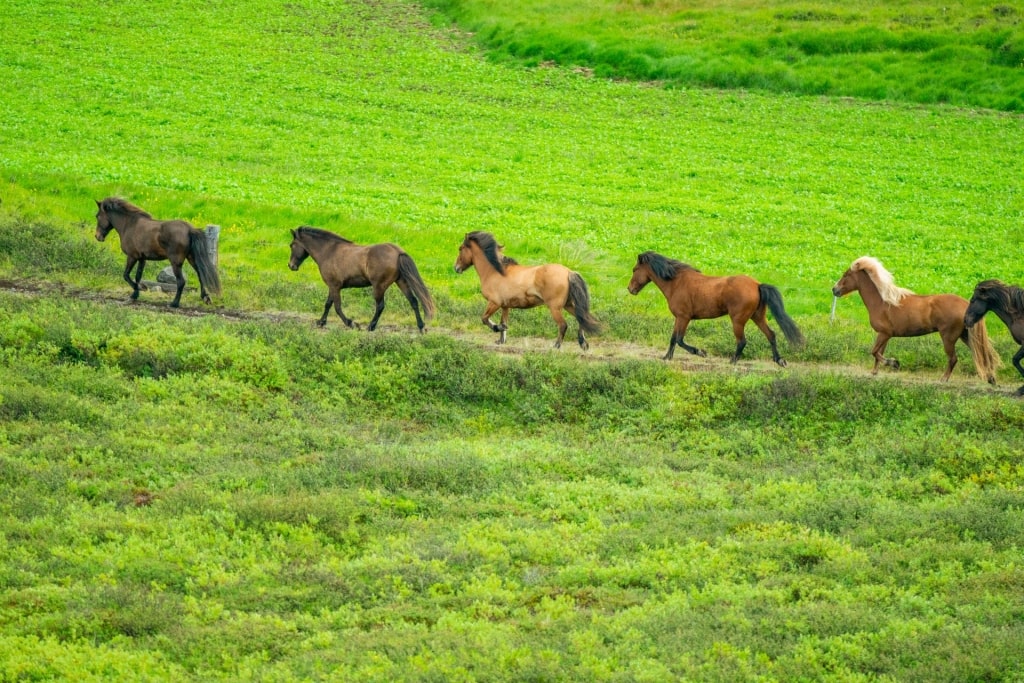
Icelandic horses
If you spend time traveling around Iceland, chances are you’ll encounter the country’s majestic horses, introduced to Iceland at the same time as the first Norse settlers arrived, over a thousand years ago.
Icelandic horses have gorgeous thick coats, usually in black, white, or chestnut-red, and are celebrated for their gentle temperament and five gaits—walk, trot, gallop, tölt, and pace. Horses are prohibited from being imported into the country, with the Icelandic breed considered exceptionally healthy, living up to 40 years, and one of the purest in the world.
Horse studs are dotted around Iceland, with Brúnir in Eyjafjordur in the north a fine example. Ran by Einar and Hugrún and their twin daughters, Guðbjörg and Þórhildur, Brúnir is an idyllic horse-breeding farm where you can meet these beautiful creatures and watch an equestrian show, After admiring the farm’s horses, stop for cake at the farm’s café and view Einar’s artwork at the farm’s exhibition.
Reynisfjara Black Beach
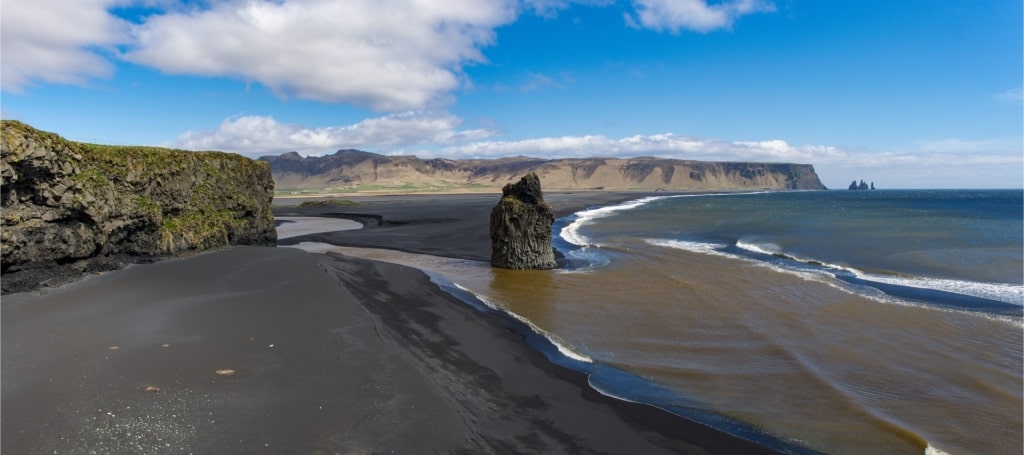
Reynisfjara
The many black-colored beaches in Iceland get their dark hue from lava sediment. The most famous is Reynisfjara, on the island’s wind-beaten south coast.
Near the town of Vik, around a two-and-a-half-hour drive from Reykjavik, Reynisfjara’s jet-black shore is pummeled by some of the strongest waves on the planet. The tallest wave recorded here was 120-feet, equivalent to a 10-story building.
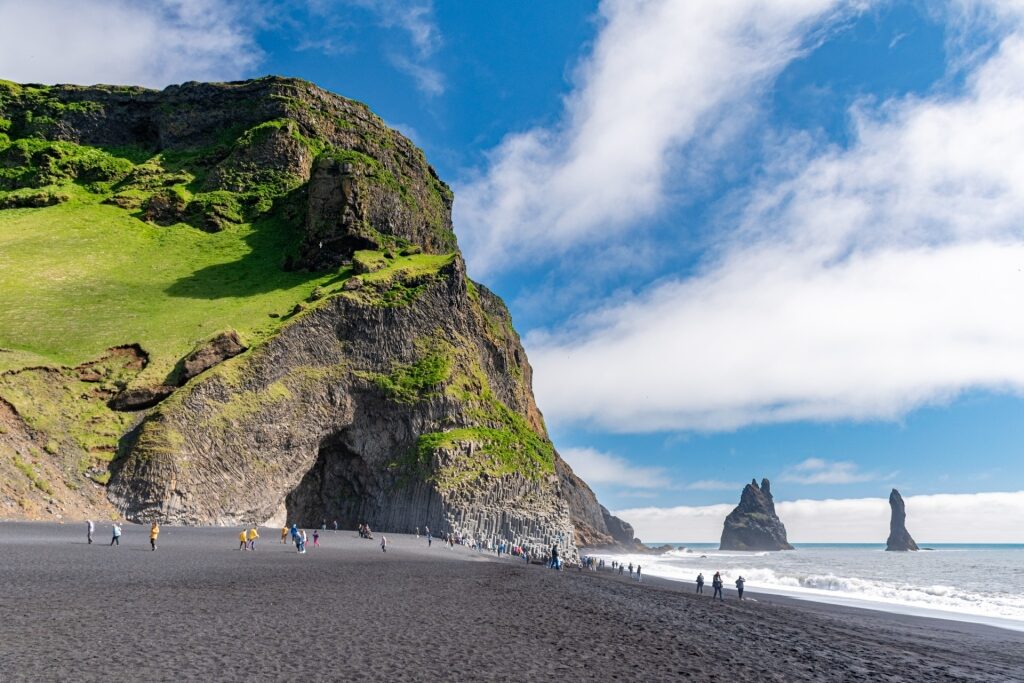
Reynisfjara
Explore Hálsanefshellir sea cave that is framed by unique hexagonal basalt columns. You could also hike to the grassy cliff top above the black sand beach and gaze at the jagged black sea stacks, or to Dyrhólaey, a peninsula with a sea-arch that juts out into the ocean, to the west of Reynisfjara. Pack binoculars to look for puffins, fulmars, and guillemots nesting on the sea stacks and cliffs around the beach.
Remain a safe distance from the water when wandering on Reynisfjara Beach because rogue waves, also known as sneaker waves, can appear without warning, rising quickly before crashing onto the shore.
Glaciers
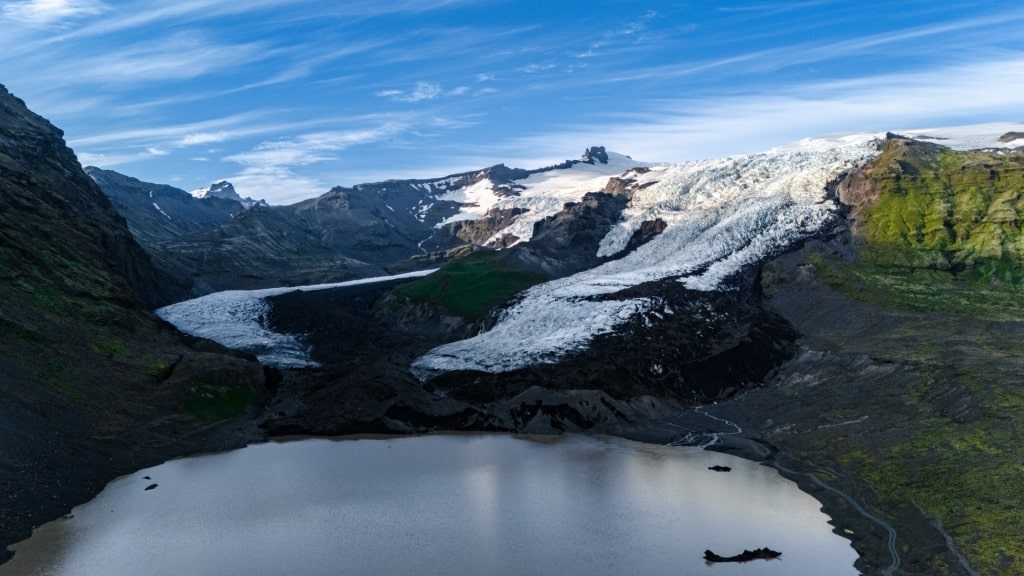
Vatnajökull
One of Iceland’s biggest claims to fame is the country’s shape-shifting glaciers—the “ice” part of the country’s moniker, The Land of Fire and Ice.
These natural slow-moving behemoths are made of compressed snow that forms a thick mass of ice. There are 269 named glaciers in Iceland, covering around 11 percent of the country, including Vatnajökull, the largest ice cap in Europe.
Langjökull is Europe’s second largest glacier and is reachable from Reykjavik in around an hour, a short distance north of the Geysir Geothermal Area and Gullfoss waterfall.
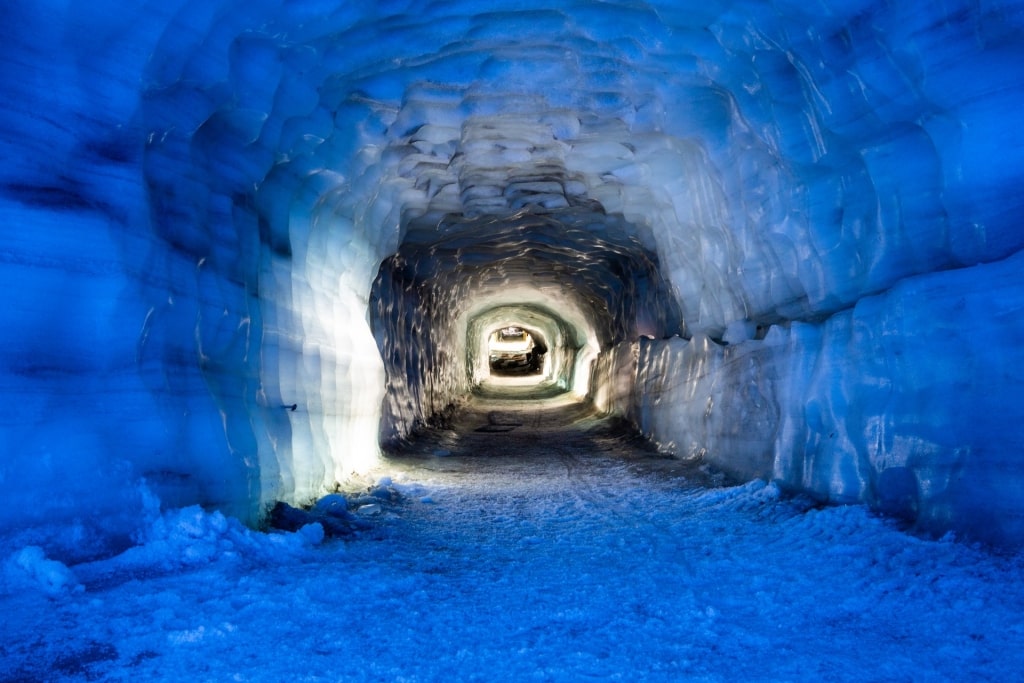
Langjökull
Langjökull glacier conceals two active volcanoes and, at its thickest, the ice runs up to 1,903 feet deep. It’s even possible to step inside the glacier, with a man-made tunnel carved into the mass of ice near the north side of the glacier that opens year-round.
Guided Jeep safaris, hiking, and helicopter tours are also popular ways to explore this breathtaking glacier, known as one of the most beautiful places in Iceland.
Bird Life
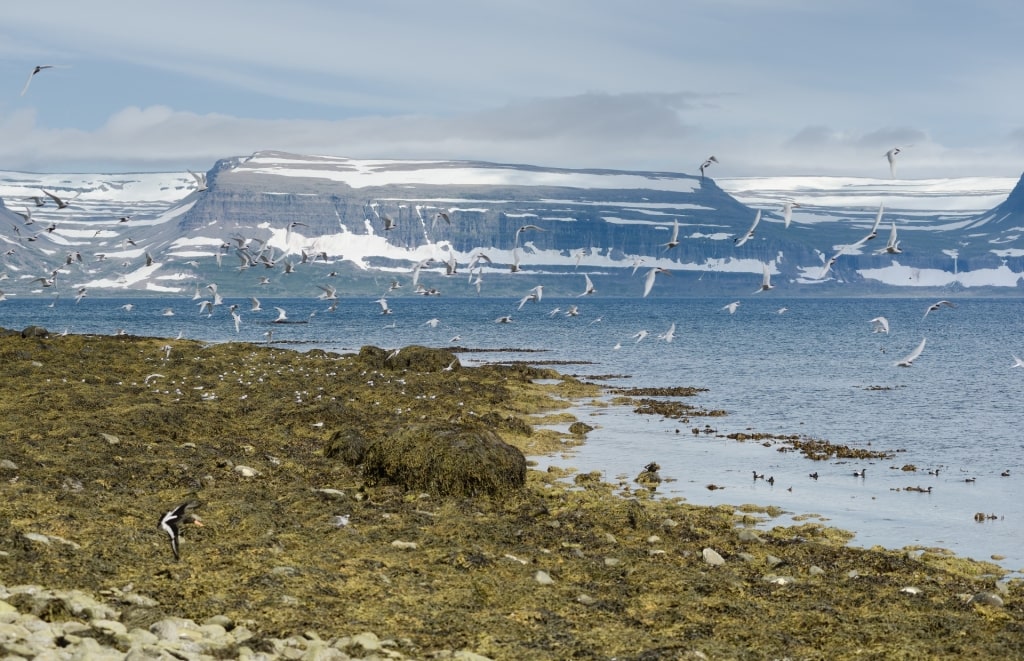
Vigur Island
Bird life thrives in Iceland, especially during summer when the country sees an influx of thousands of migratory seabirds.
Symbolic of Iceland is the Atlantic puffin, with these photogenic seabirds arriving in their droves to burrow on cliffs around the country. A colony of 100,000 nests on Vigur Island in the Westfjords alone, between May and early August.
Vigur also receives around 7,000 eider ducks each year, with the silky-soft eider down collected and harvested by the island’s three owner-residents every summer. Vigur also boasts the largest colony of black guillemot in Europe and plenty of Arctic terns that you might spot on a day trip from nearby Isafjordur.
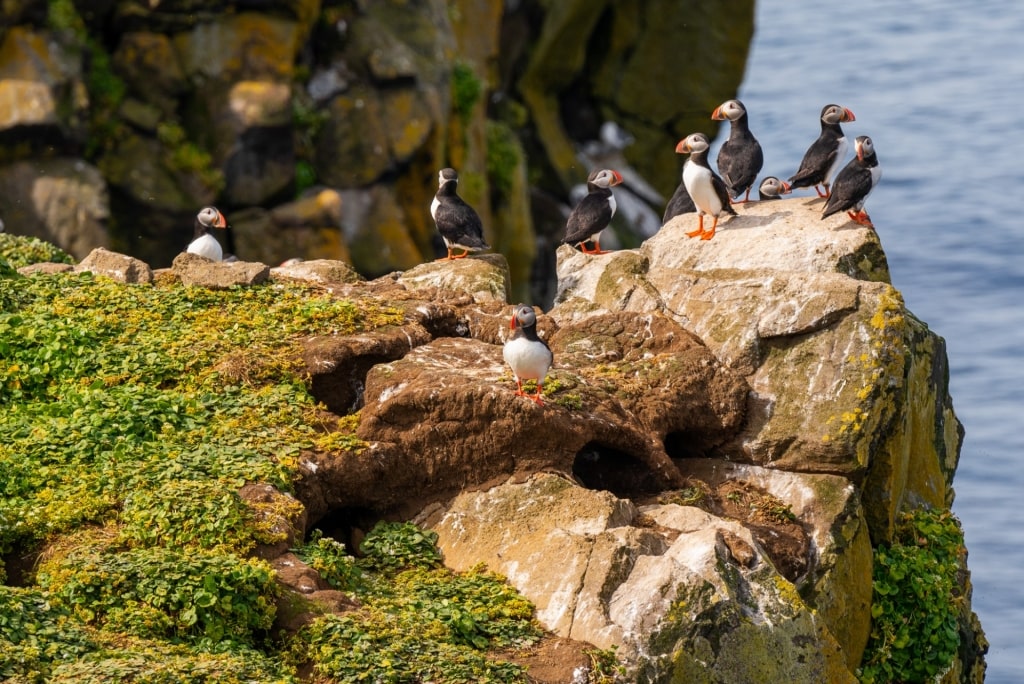
Puffins
Grimsey, too, off Akureyri, is a mecca for puffins, Arctic terns, black-legged kittiwake, northern fulmars, and razorbills.
Travelers can spot tufted ducks, common eider, and whooper swans on Reykjavik’s central lake during summer in Iceland, while Lake Myvatn in the north welcomes gyrfalcons, the largest type of falcon in the world.
Geysir Geothermal Area
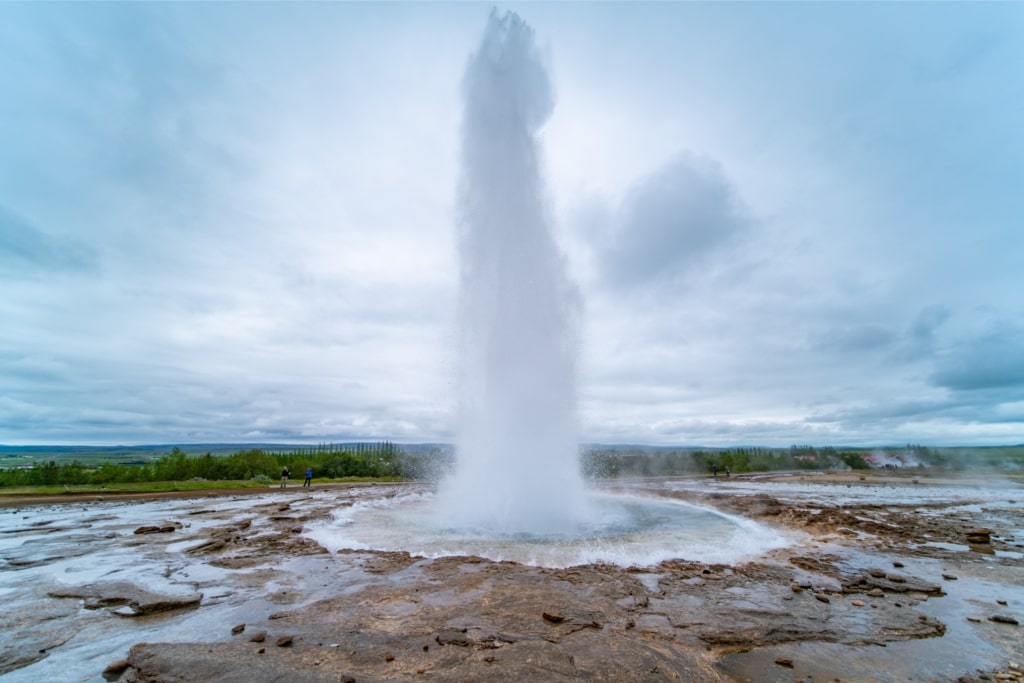
Strokkur
What is Iceland known for? One of the most famous images of Iceland is Geysir Geothermal Area, known for its hot springs thrusting plumes of boiling water and steam into the air.
Beneath the surface, a water-filled tube runs through the Earth’s crust, with magma heating the tube and eventually pushing the columns of water into the air.
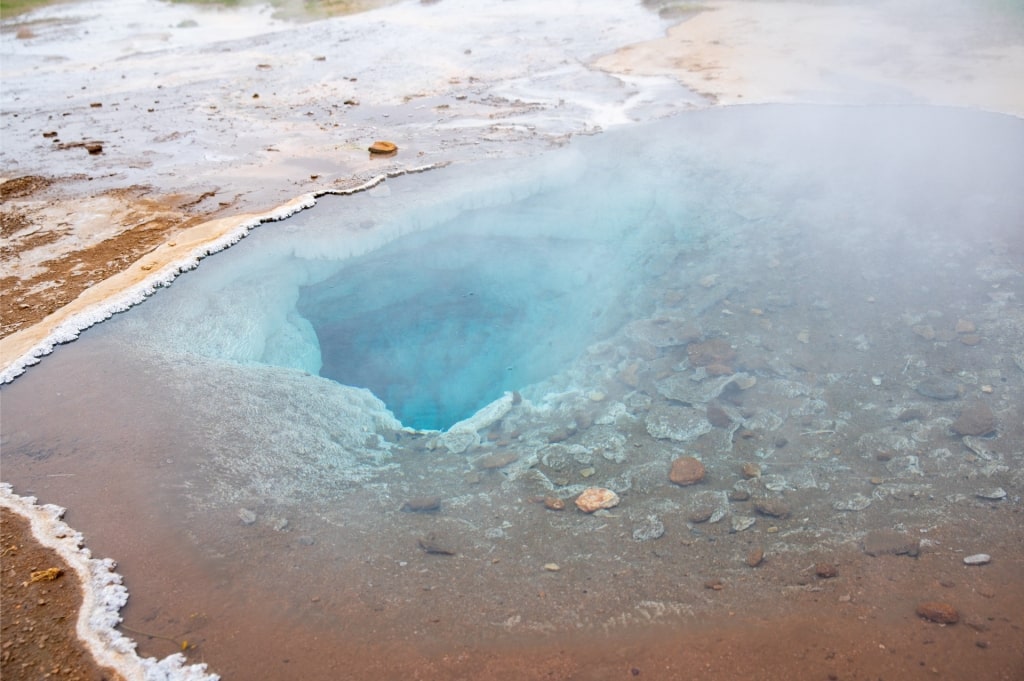
Strokkur
The most famous is the Great Geysir—though it’s actually been dormant since 1935—which first began spouting water and steam following a series of earthquakes and a volcanic eruption toward the end of the 13th century.
Strokkur is now the big-ticket geyser in the area, spurting geothermal water up to 100 feet into the air every 10 minutes or so.
Witness Strokkur on Iceland’s Golden Circle route—which also includes Gullfoss Waterfall and Þingvellir National Park—to see geysers, simmering mud pools, and warm streams. Facilities here include a restaurant, gift shop, and bathrooms.
Grimsey Island
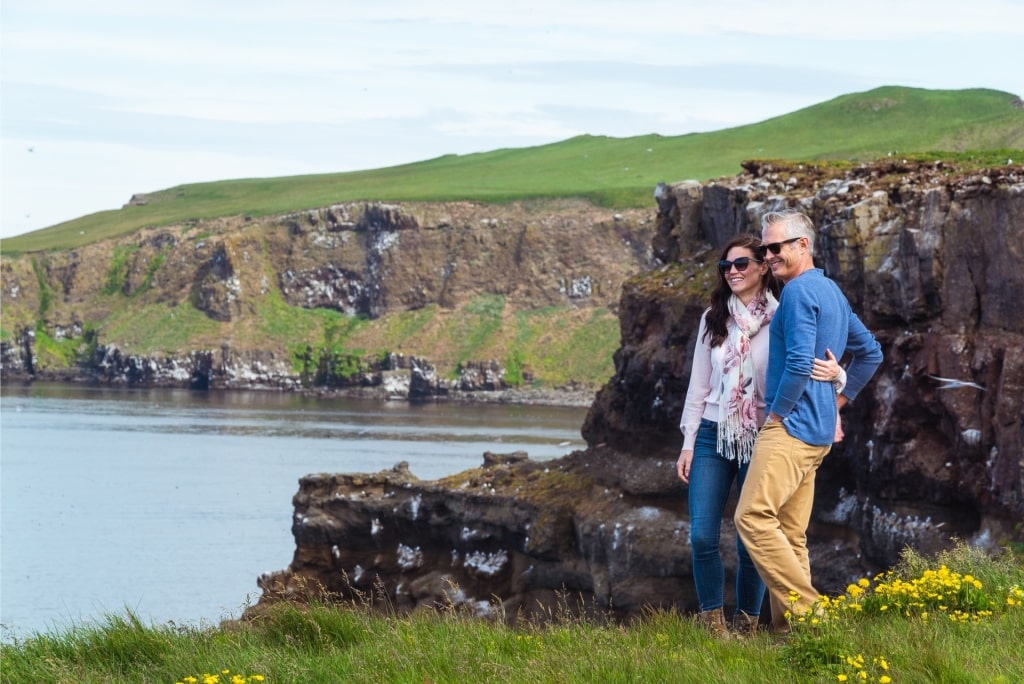
Grimsey Island
This tiny, craggy island lies right on the Arctic Circle, 25 miles north of Akureyri, in the far north of Iceland. Grimsey has around 100 residents, with a cluster of houses, a cafe, a gift shop selling Icelandic knits, and a small, white church close to the harbor.
As well as drawing a variety of thrilling seabirds to its rugged coastline, you might also spot dolphins and whales in the frigid waters around the island.
The best thing to do on Grimsey is to hike along the coastal path from the harbor to the Orbis et Globus installation, which takes around 45 minutes. This giant sphere marks the point where the Arctic Circle crosses the island. You might even spot Icelandic horses galloping in the open fields around the Orbis.
Whales
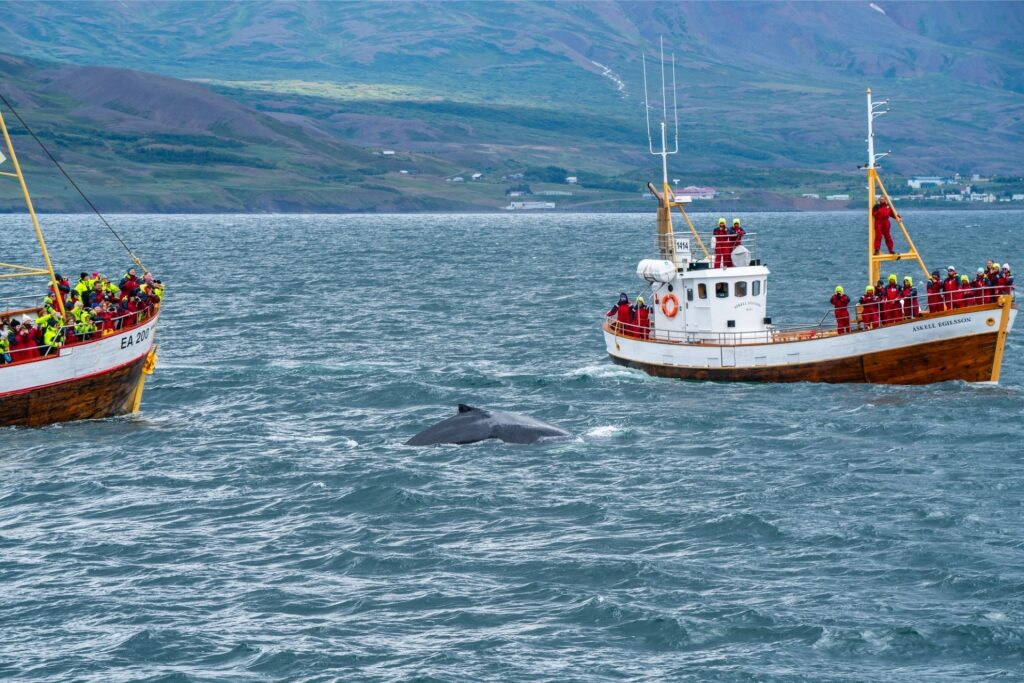
Whale watching in Akureyri
What is Iceland famous for? For wildlife lovers, its waters are known as a wonderful feeding ground for 24 species of whales.
Go in search of cetaceans on a whale-watching trip from Reykjavik, Akureyri, or Isafjordur, where you might see beaked, humpback, minke, killer, or pilot whales. For the best whale spotting, pack binoculars and a camera with a good lens—you might even capture them breaching and tail-slapping the water.
If you’re visiting Iceland and looking to learn more about these magnificent mammals, stop by the Whales of Iceland museum in Reykjavik. At the Whale Museum in Husavik, near Akureyri, life-size models and skeletons are on display.
Thingvellir National Park
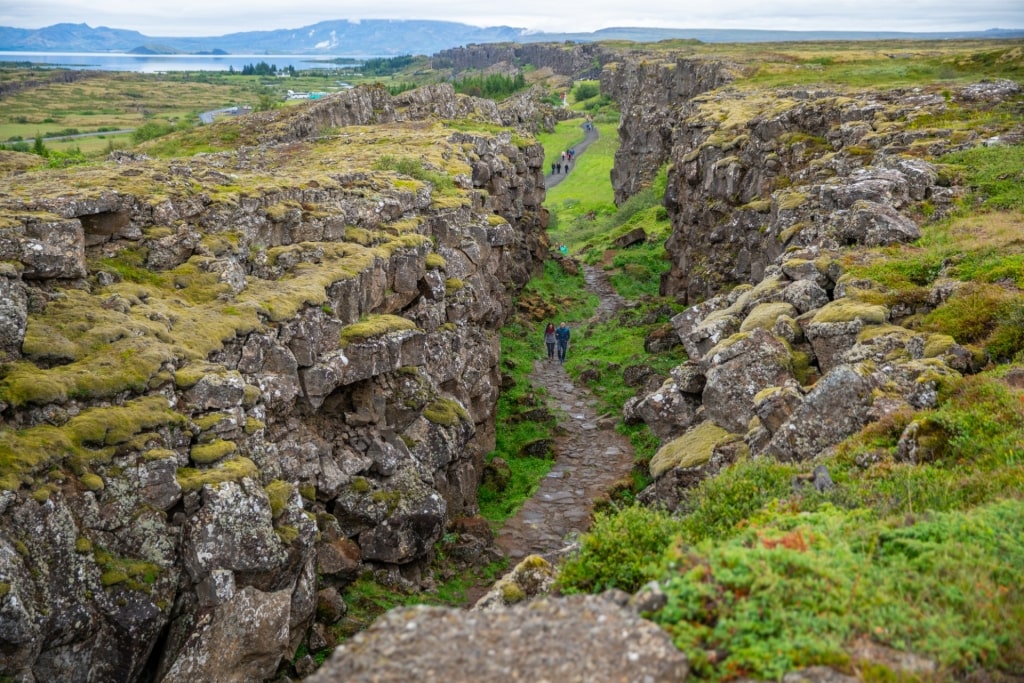
Thingvellir National Park
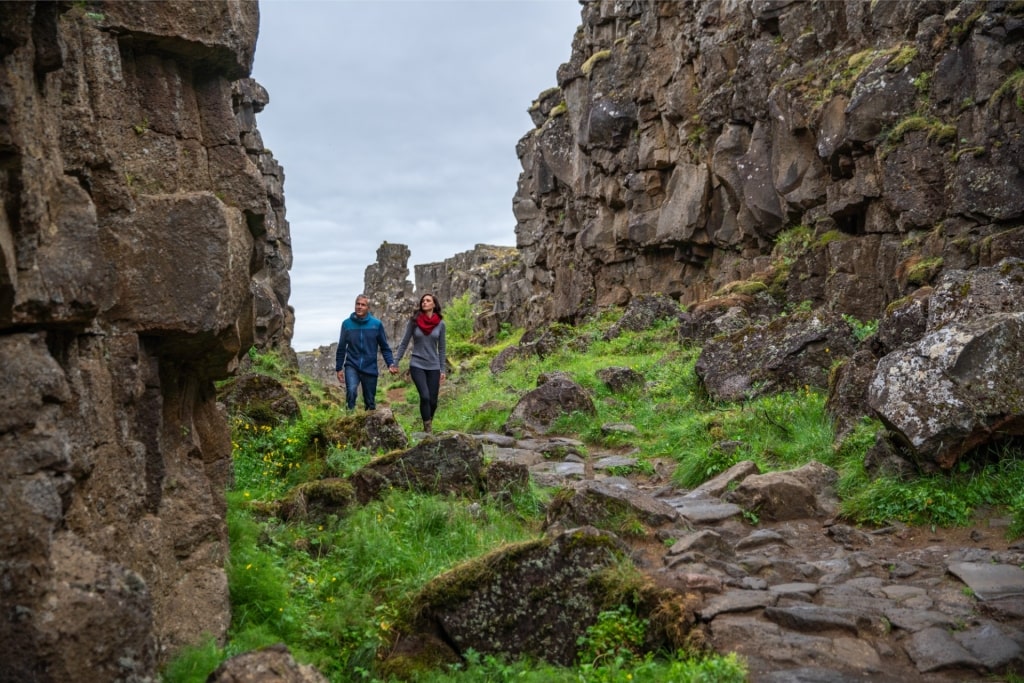
This UNESCO-listed national park holds huge significance in Icelandic culture as the location of Althing, the country’s first parliament, which was held here between the 10th and 18th centuries. If you ask a geologist, what is Iceland famous for, they might tell you all about Thingvellir’s rift valley, created by the North American and Eurasian continental plates slowly pulling apart.
Central to Thingvellir is Thingvallavatn, a beautiful lake filled with Arctic char, with gorges, fissures, mountains, and waterfalls adding to the drama of this storied landscape.
From exploring the ruins of the first general assembly to hiking and horseback riding, there’s plenty to see and do in Thingvellir. Silfra is one of the best diving sites in the world, and you can scuba dive within the rift valley. At the visitor center, stop by the café, gift shop, and Heart of Iceland exhibition to learn more about the history and nature of this remarkable park.
Craft Breweries

Brewery in Iceland
What is Iceland famous for? Breweries! Despite beer being prohibited in Iceland between 1915 and 1989, the country now has a thriving craft beer scene with scores of microbreweries.
What sets Icelandic breweries apart is that they often use glacial water to create golden pilsners, crisp IPAs, and rich stouts, which you can sample at brewhouses and taprooms open for tours and tastings.
One of the most popular Icelandic beer brands is Akureyri-based Einstök Beer Company. They produce eight varieties—including Icelandic Pale Ale, Icelandic White Ale, and Icelandic Toasted Porter—that can be enjoyed at Einstök Bar in Reykjavík and at Brewer’s Lounge in Akureyri.
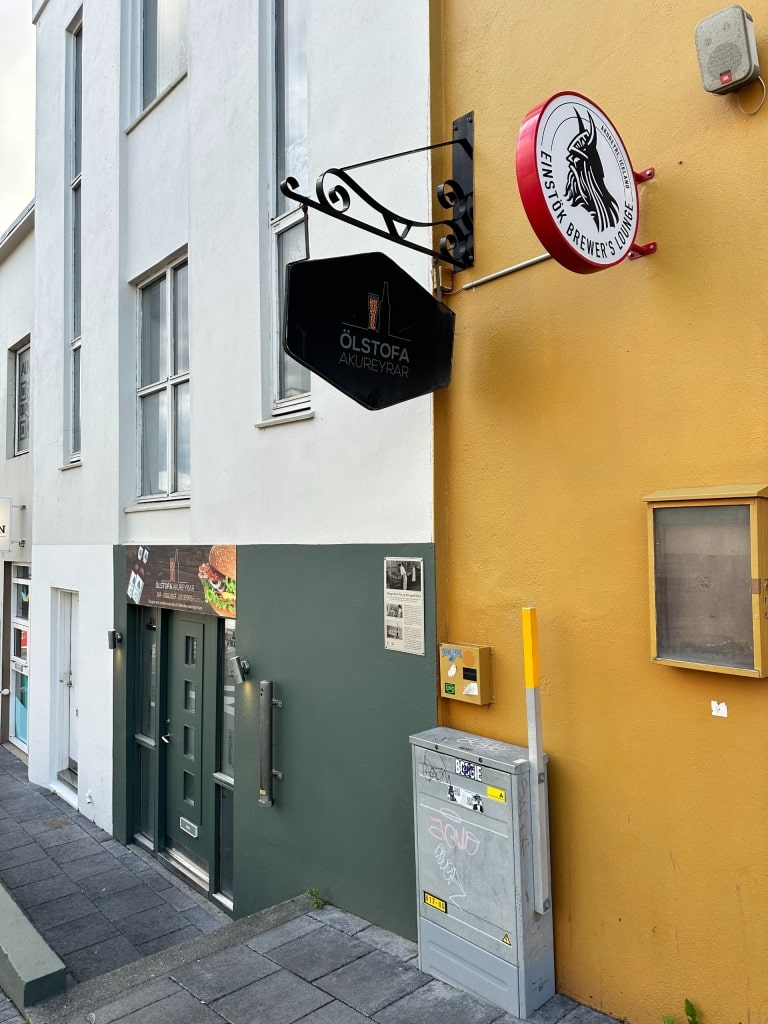
Einstök
Ægir Brewery produces delicious, flavorful beers in Reykjavík, including a hoppy California Pale Ale and the refreshing Dag Mango Pale Ale.
Go one step further at Kaldi Beer Spa in Árskógssandur, near Akureyri, and bathe in a wooden beer tub that’s filled with a mix of warm water, live beer yeast, young beer, hops, natural bath salts, and aromatic beer oil.
The beer used in each bath is alcohol-free, unfermented, and three to five days old. To complement the experience, a beer tap is set up next to each tub so that you can pour your own Bruggsmiðjan Kaldi Brewery beer. It’s a wonderful and uniquely Icelandic experience to sip on a local brew, surrounded by gorgeous fjord and mountain views, while relaxing in a warm beer bath.
Hesteyri Abandoned Village
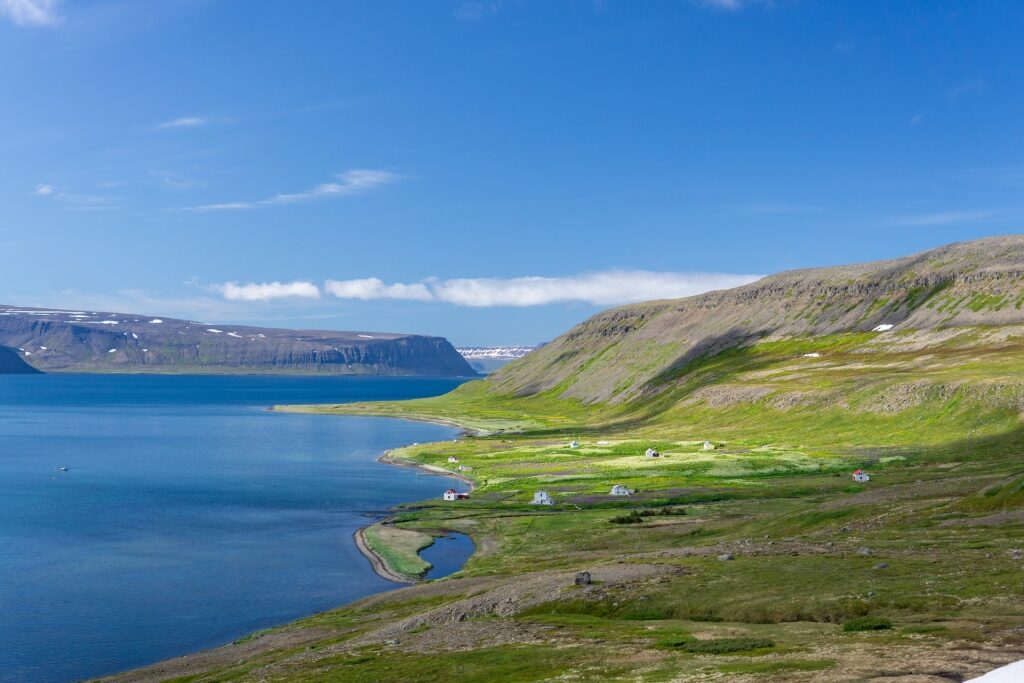
Hesteyri
Hesteyri is a deserted village on the far-flung Hesteyrarfjörður within Hornstrandir Nature Reserve in Iceland’s Westfjords. A community of around 80 people once lived in this former fishing village, but it was famously abandoned by the middle of the 20th century, with the remaining houses now used as summer homes.
You might spot whales and dolphins as you cross the fjord by boat from Ísafjörður to reach Hesteyri on a summer day trip. The village’s former Old Doctor’s House is now home to a family-run café, where you can enjoy coffee and cake.
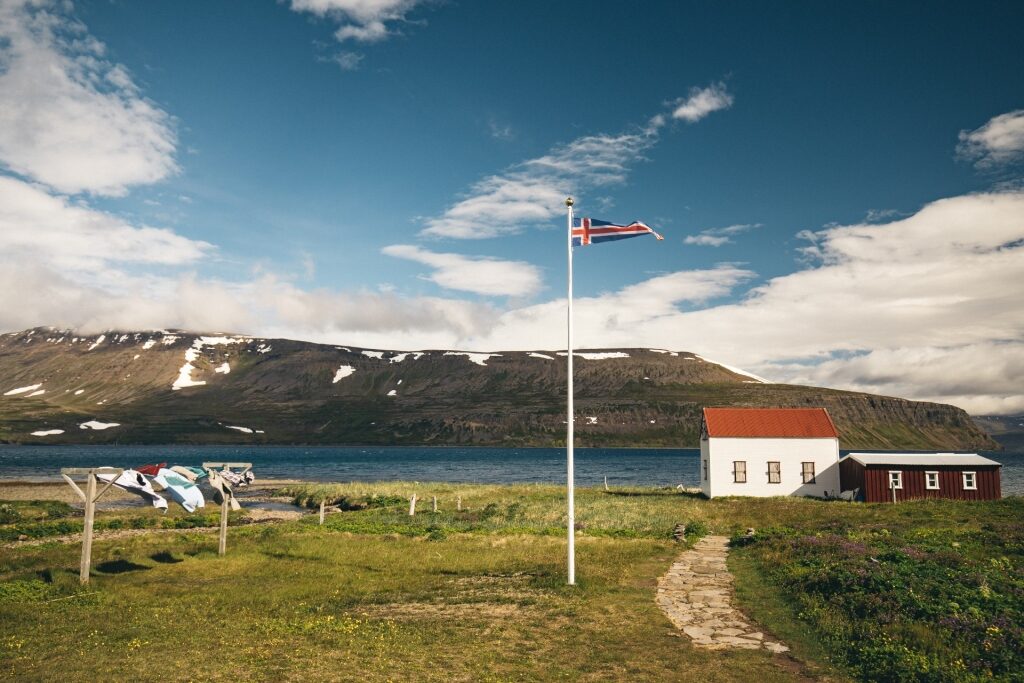
Hesteyri
Set off on a breezy trek to see coastal paths decorated with violet-hued wildflowers, the ruins of Hesteyri Whaling Factory, and a plethora of wildlife. You might even spot Iceland’s elusive Arctic fox.
Read: What to Pack for Iceland
Excellent Museums
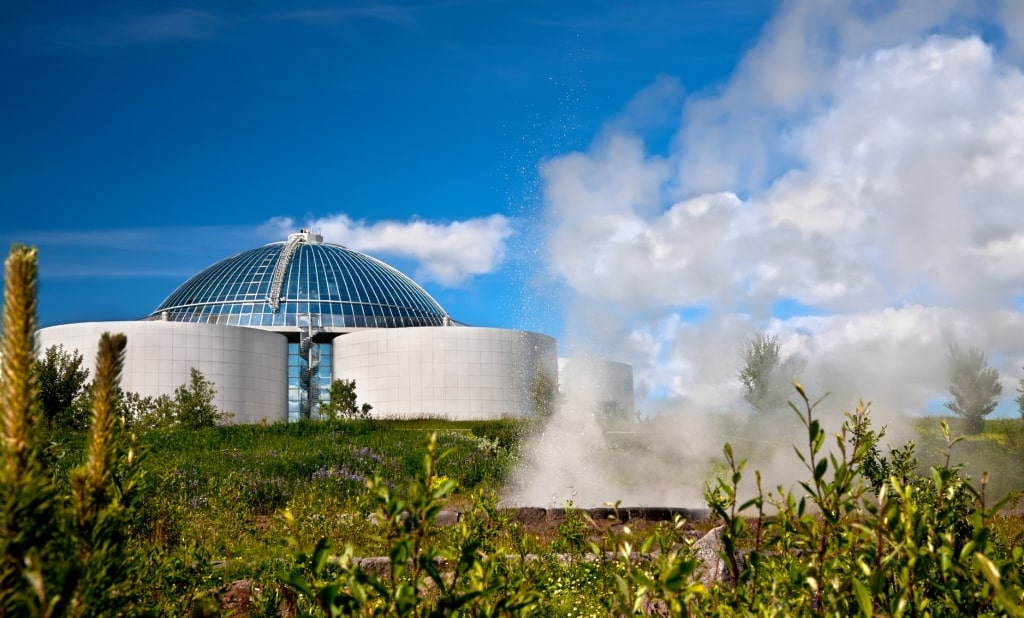
Perlan Museum
If you ask someone who lives in Reykjavík, “What is Iceland known for?”, they might say the country’s exhilarating outdoor activities, but they might also guide you to Iceland’s breadth of outstanding museums, which cover everything from art and history to nature and geology.
One of the city’s most famous museums is Perlan, an immersive exhibition that showcases Iceland’s mind-bending nature and landscapes and takes a deep dive into geology and wildlife. Visitors can experience a 328-foot artificial ice cave and a spectacular artificial geyser, Styrmir, that shoots water 82 feet into the air.
If you’re pondering what else Iceland is famous for, the Northern Lights rank high on the list. At Aurora Reykjavík, you can see footage of these streaking green and purple lights for yourself, with the museum revealing the science and astronomy behind how, when, and why this natural phenomenon occurs.
There’s more, with the Reykjavík Maritime Museum revealing fascinating seafaring stories and the Natural History Museum of Kópavogur home to an array of taxidermied birds and a whale skeleton.
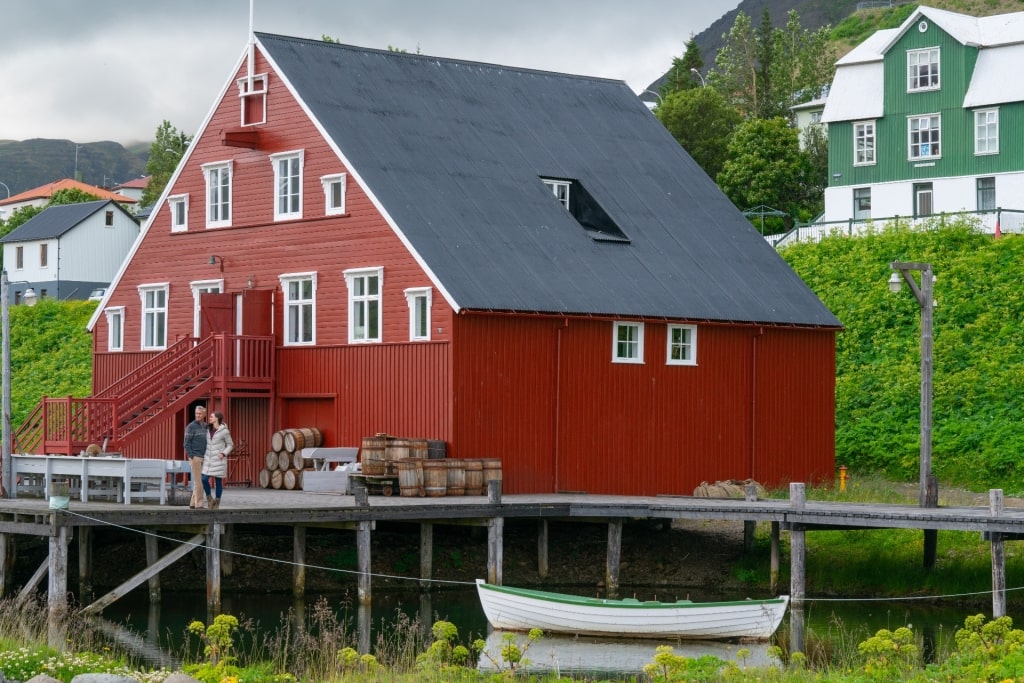
Herring Era Museum
Outside of Reykjavík, there are more world-beating museums, including the storied Herring Era Museum in Siglufjörður, near Akureyri. Located in the far north, where herring fishing once thrived, it’s the largest maritime museum in Iceland. Set across five traditional buildings, the Herring Era Museum tells the story of the herring industry in Siglufjörður and depicts life during the Herring Gold Rush era of the 1940s, when thousands of people worked in the industry.
Calm Fjords
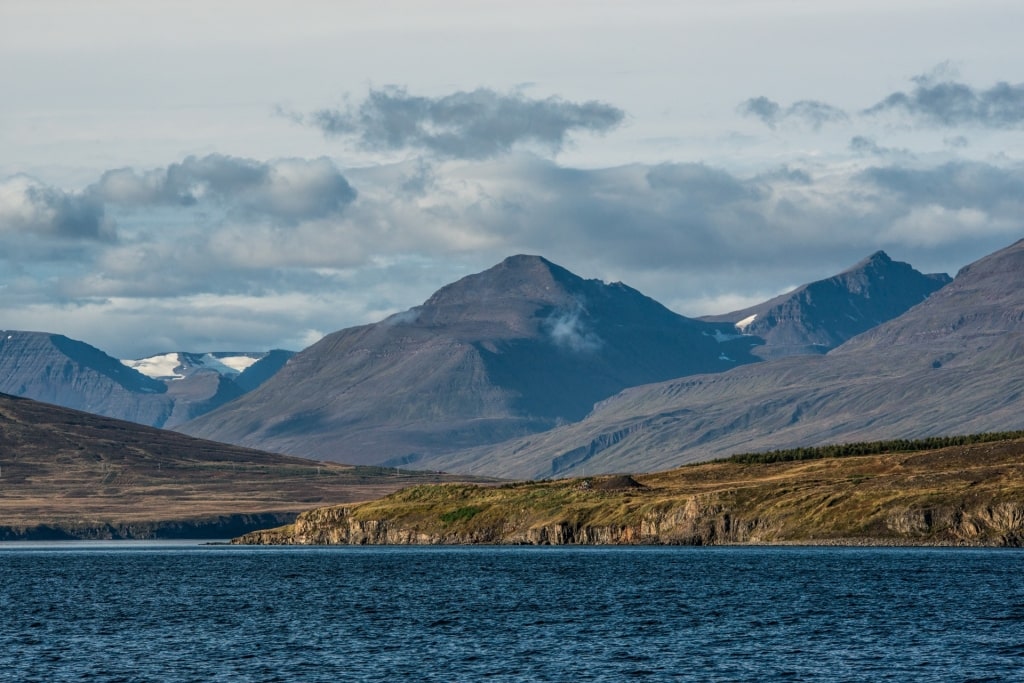
Eyjafjörður
Dotted around Iceland’s frilly edges are hundreds of serene fjords that are perfect for kayaking and boat trip adventures. These deep inlets of water are one of the things Iceland is famous for. They were formed during the last ice age and are adorned with tumbling waterfalls, tiny villages dotted along the shores. You could see whales in the fjords on a scenic hike or kayak trip.
Iceland’s longest fjord is Eyjafjörður, which unfurls 37 miles to Akureyri at its innermost point. It’s surrounded by snow-capped mountains, including the 5,000-foot Mount Kerling. Ísafjarðardjúp in the Westfjords is defined by tiny islands, puffin colonies, and traditional fishing villages.
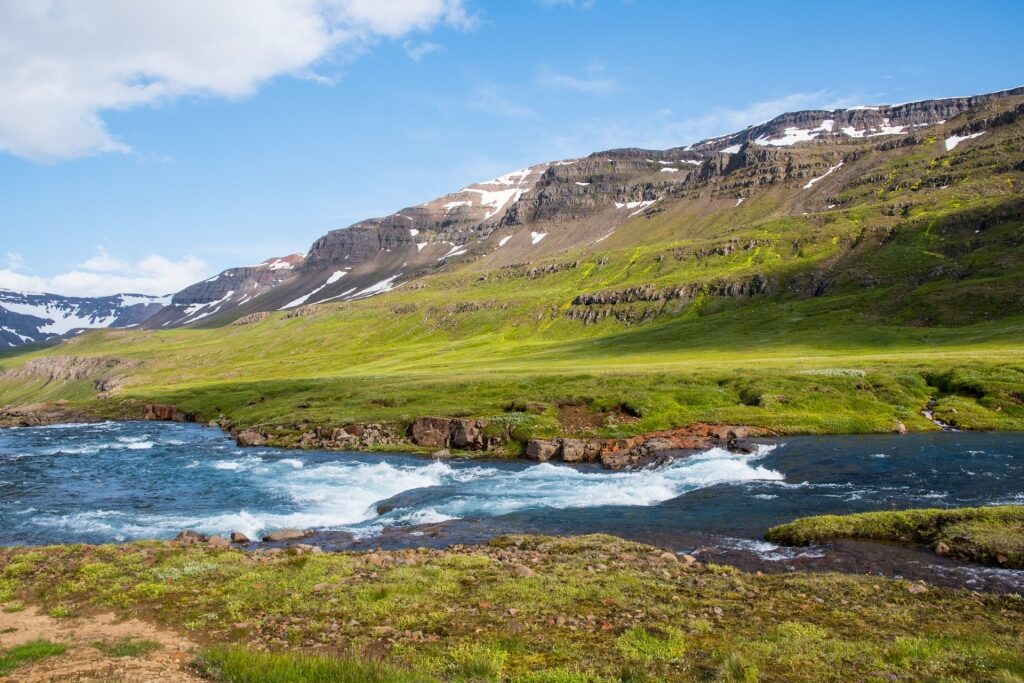
Seyðisfjörður
Seyðisfjörður in the Eastfjords offers mountain hikes, storybook villages, and more incredible birdlife. Hvalfjörður is an easy day trip from Reykjavík, just a 45-minute drive from the capital, with Hvammsvík Hot Springs and the 650-foot Glymur, Iceland’s second-tallest waterfall, close by.
Rugged Mountains
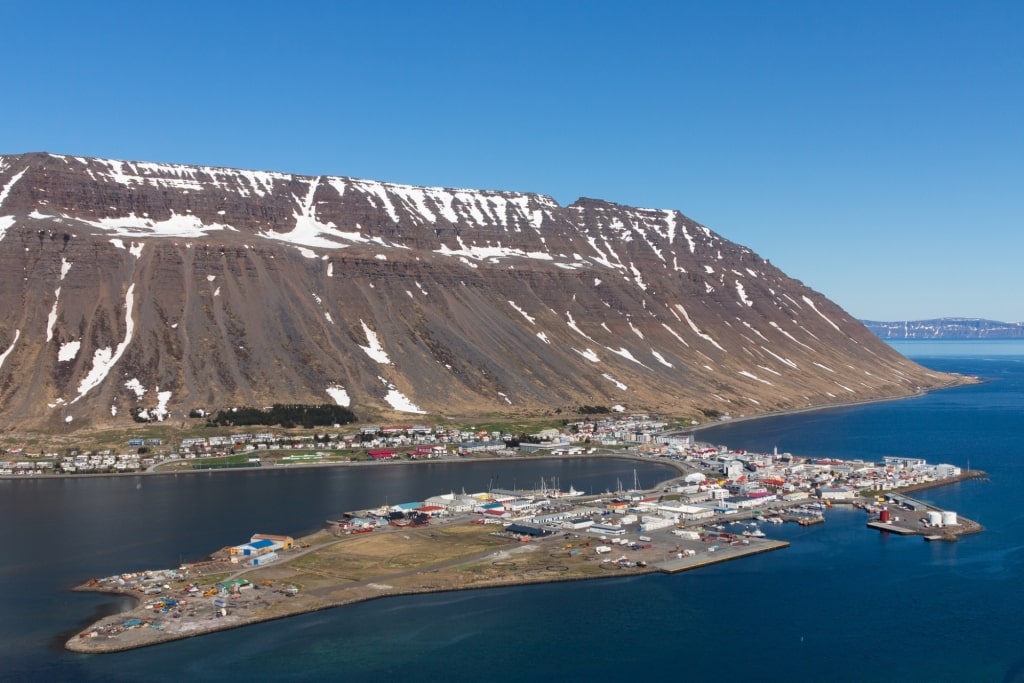
Isafjordur
Iceland’s wild landscape is an amateur geologist’s dream, home to thousands of dramatic mountains of all shapes and sizes, some rising from flat plains, while others shadow smaller mountains.
The Westfjords are a fantastic place to go hiking, with mountains dating back millions of years rising above mirror-flat fjords. In the north, near Akureyri, the mountains characteristically have steep slopes giving way to vast, sweeping valleys, while the Eastfjords offer more rugged terrain.
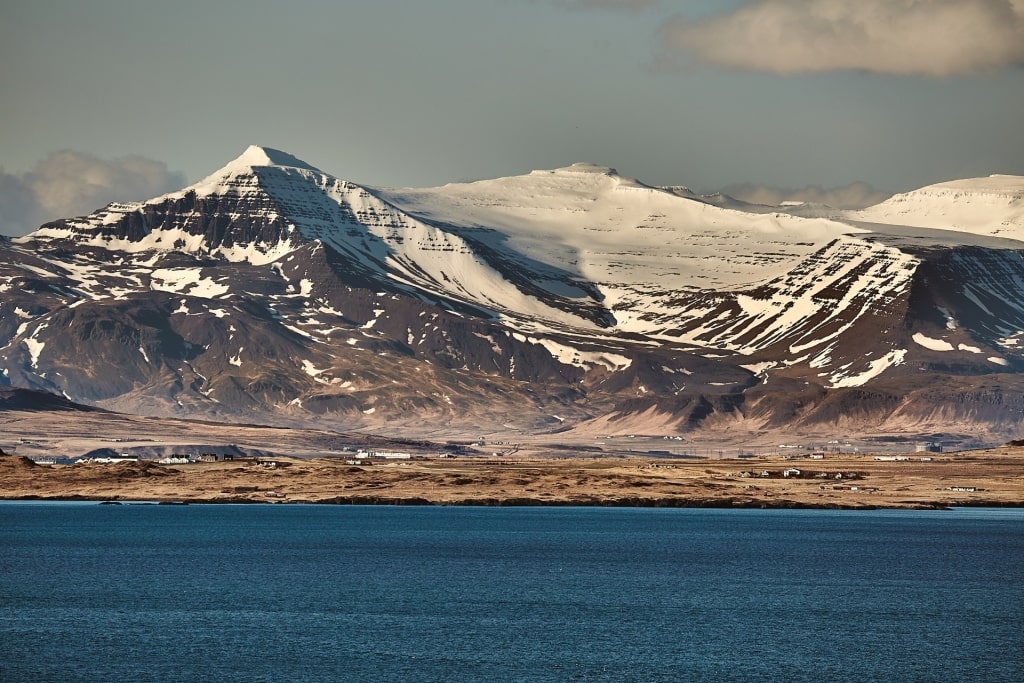
Mount Esja
You don’t have to travel far to hike a mountain in Iceland. Reykjavík’s dramatic backdrop is the 2,999-foot Mount Esja, famous for its flat summit, where there are hiking trails for all levels. Þverfellshorn is among the most popular trails on Esja for its panoramic views of Reykjavík and the surrounding coastline.
South of the city, you could climb the cone-shaped Mount Keilir, surrounded by lava fields, on the Reykjanes Peninsula. The 1,243-foot hyaloclastite mountain was formed during the last ice age, shaped by volcanic activity.
Factoring in two to three hours to hike Mount Keilir is recommended. It’s not overly steep, though some of the terrain is rugged. On a clear day, you’ll be able to see the Atlantic Ocean, steam rising from the Blue Lagoon Geothermal Spa, and the Snæfellsjökull glacier.
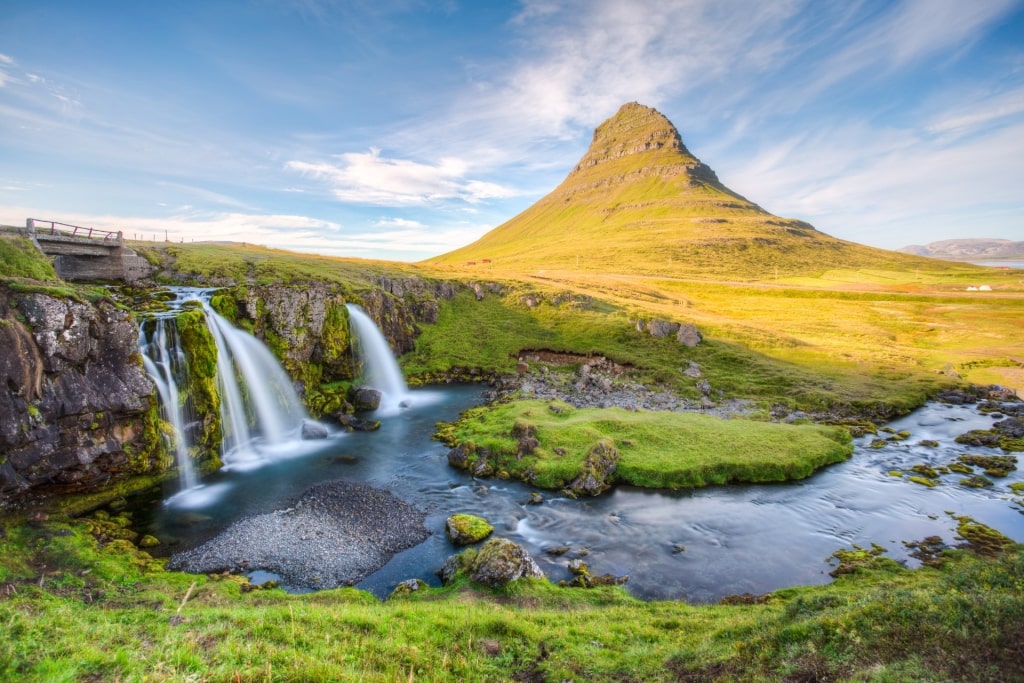
Kirkjufell Mountain
Kirkjufell Mountain is another spectacular cone-shaped mountain in Iceland. Located a short distance from Grundarfjörður, on the Snæfellsnes Peninsula, Kirkjufell is named after the word “church” because of its steeple-like shape.
Kirkjufell is blanketed in snow during winter, while summer reveals a carpet of green and the nearby Kirkjufellsfoss flows in three cascades into the Kirkjufellsá River, making for a scenic vantage point for photographs.
Read: Iceland vs. Greenland: Which Should You Visit?
Wild Berries
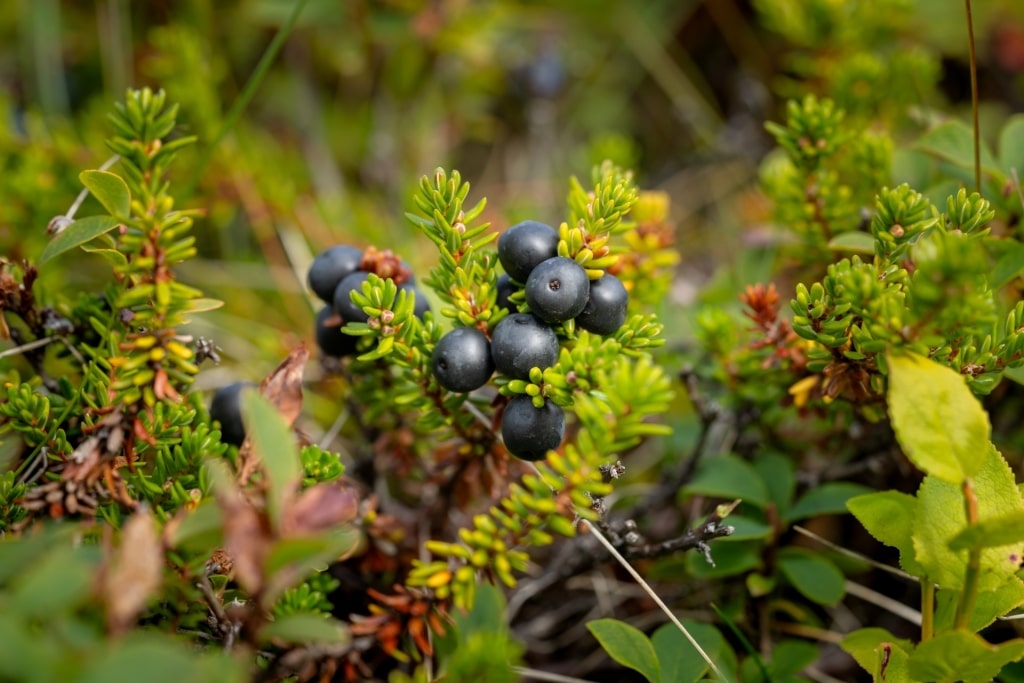
Crowberries
If you’re an avid forager, you might be wondering, “What is Iceland known for?” with a picnic in mind. During summer, Iceland is a fantastic place to forage for wild berries, and is famed for its delicious and intensely flavorful bilberries, crowberries, strawberries, and redcurrants.
It’s best only to forage for wild berries if you’re with a local guide who is an expert on what to pick and what not to pick. If you go for a hike in Iceland during summer, however, chances are you will come across these glistening berries growing from hedgerows.
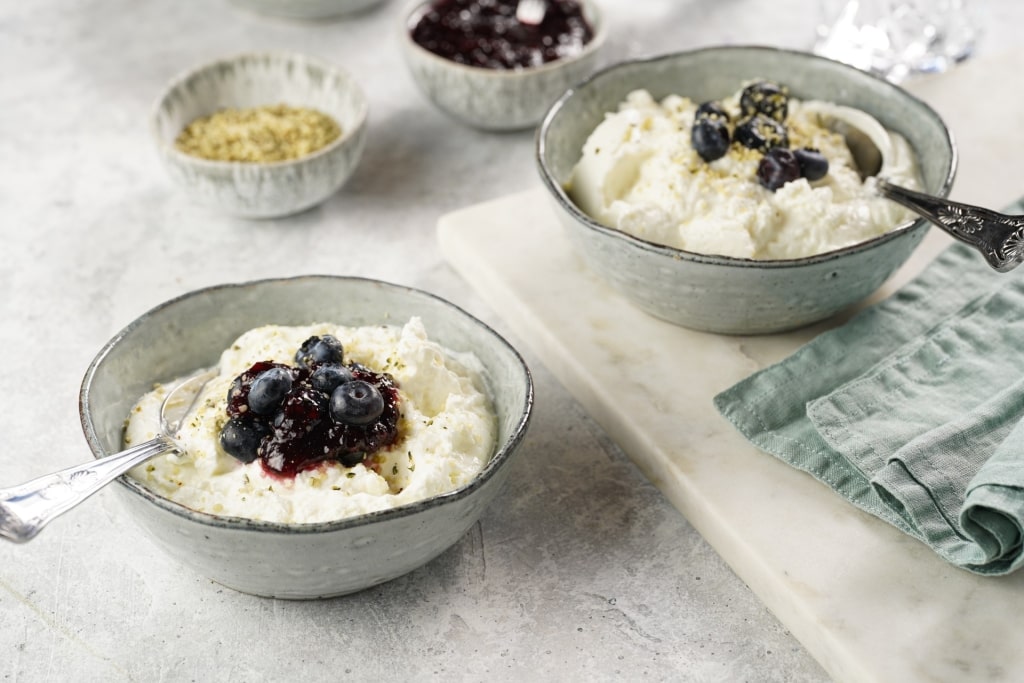
Skyr
Wild berries are used to make jams and chutneys, and are delicious served with cheeses and Skyr, an Icelandic yogurt. Look out for them in gift stores, as they make for a lovely souvenir to take home.
The Midnight Sun
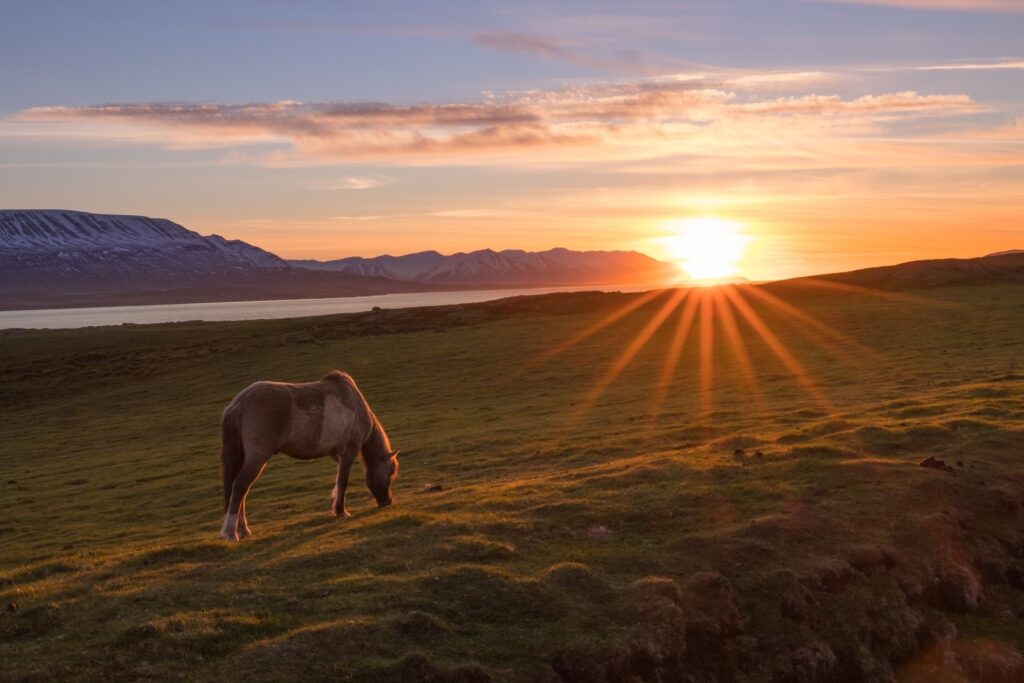
Akureyri
What is Iceland famous for? A natural phenomenon known as the midnight sun occurs in Iceland every summer, peaking at the time of the summer solstice, on June 21. At this time of year, the sun never sets below the horizon inside the Arctic Circle. Iceland lies just below the polar circle, its northernmost island, Grímsey, just over the line, so you can expect to see long, light summer days anywhere in the country from mid-May through early August.
The sky might glow in shades of pink or orange, with a soft, hazy twilight. The further north you travel, the more sunlight you can expect, especially in places such as Akureyri, Ísafjörður, and Grímsey Island. It’s a wonderful time to visit Iceland, because the extra daylight offers more time to explore the extraordinary outdoors—from bathing in geothermal pools to hiking to spectacular waterfalls, or simply kicking back with a local craft beer alfresco.
FAQs
What food is Iceland known for?
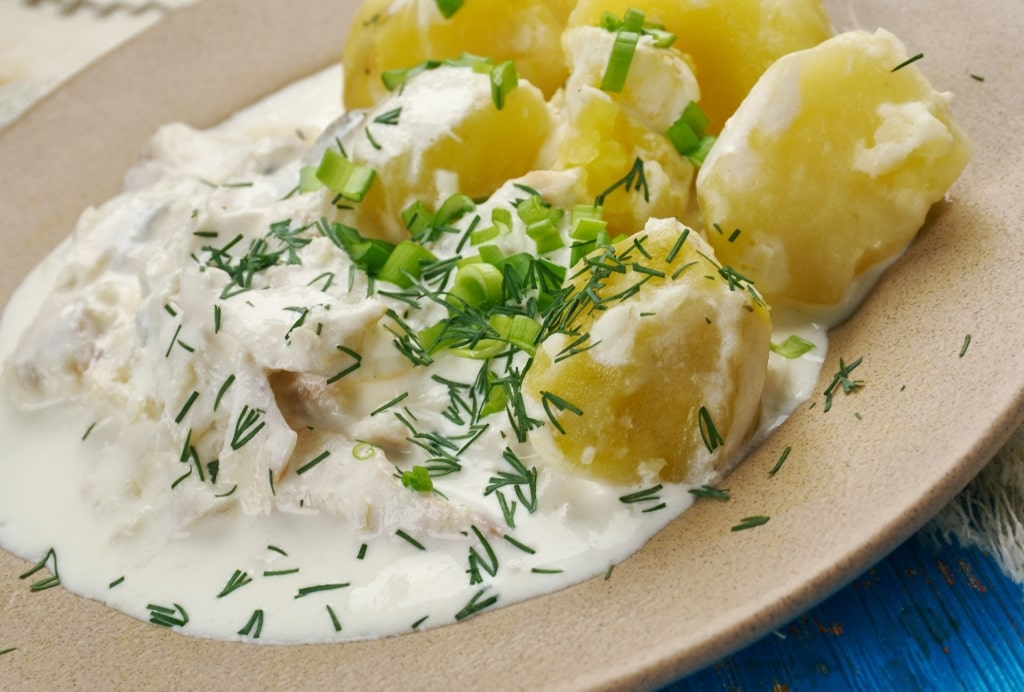
Plokkfiskur
Iceland has an incredible food scene with its nutrient-rich waters home to some of the world’s best cod, Arctic char, haddock, and langoustine. Fresh fish is used in several dishes, including plokkfiskur, a warming fish stew made with cod or haddock, potatoes, onions, and a creamy béchamel sauce.
Iceland is famous for Harðfiskur, a salted, dried white fish dish, usually cod. Hákarl, which is more infamous, is fermented shark. Some visitors to Iceland are desperate to try it, while others are happy to avoid it.
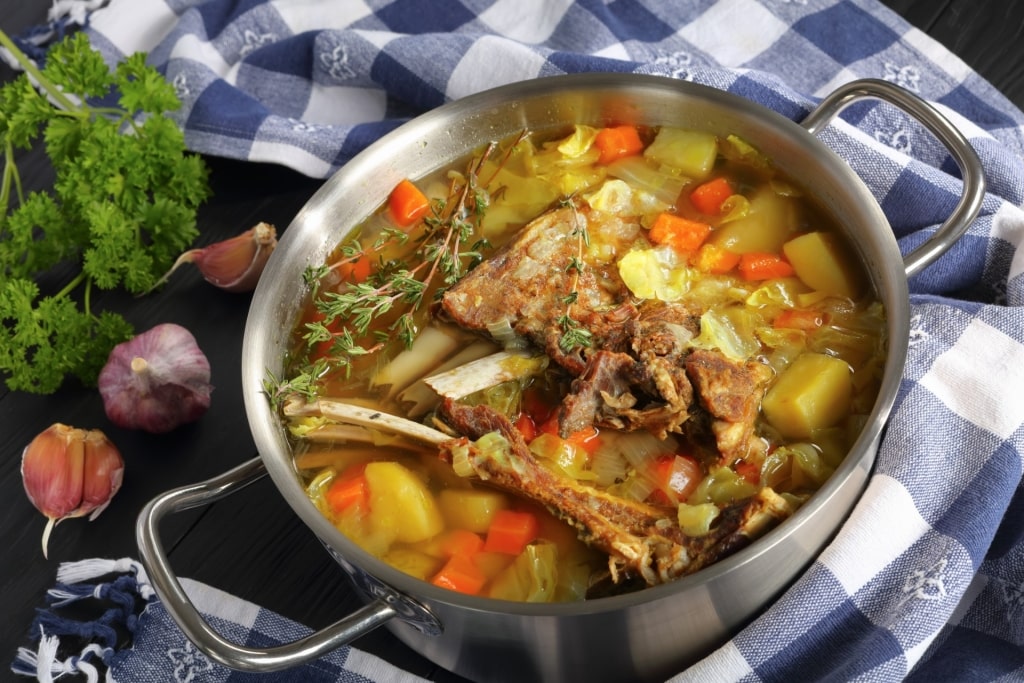
Icelandic lamb soup
Iceland is also very well known for its delicious lamb, with the free-roaming animals grazing on fresh, wild herbs. If you’re a meat-eater, one of the best places to try Icelandic lamb is Hlemmur, a Reykjavík food hall made up of a collection of heavenly food stalls. Fjárhúsið, which translates as The Sheephouse, serves dishes including lamb burgers and lamb soup, as well as other options, including a mouthwatering cod served in a delicate tempura batter.
Another protein-rich Icelandic food is Skyr, a thick and smooth yogurt that’s usually eaten with berries and honey.
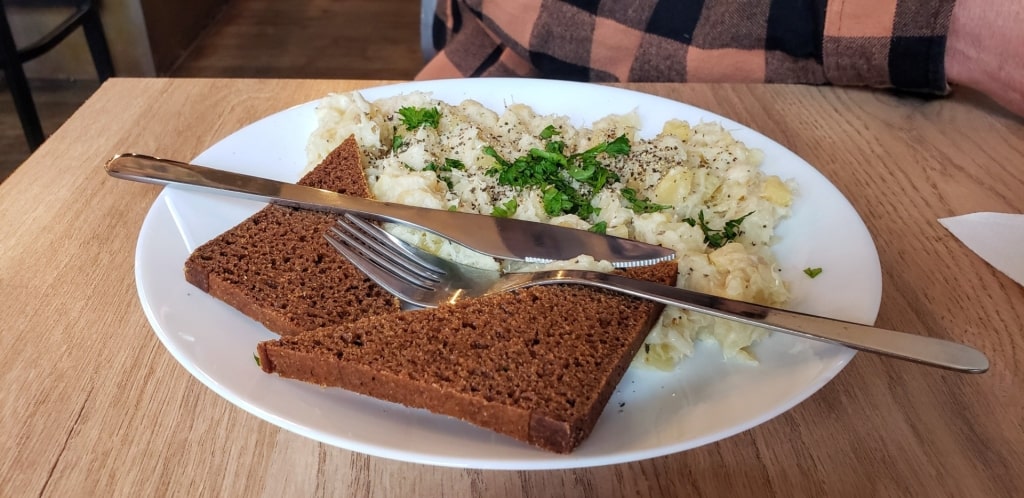
Rúgbrauð
Iceland is famous for its baked goods, too, including rúgbrauð, a dense rye bread that’s traditionally baked underground, using geothermal heat. It is one of the best things to eat in Iceland, especially when it’s slathered in butter, layered with smoked salmon, and dressed with small sprigs of dill.
Other traditional dishes that you may, or may not, want to try include Svið, boiled sheep’s head, and hrútspungar, pickled ram’s testicles.
What is something you can only buy in Iceland?
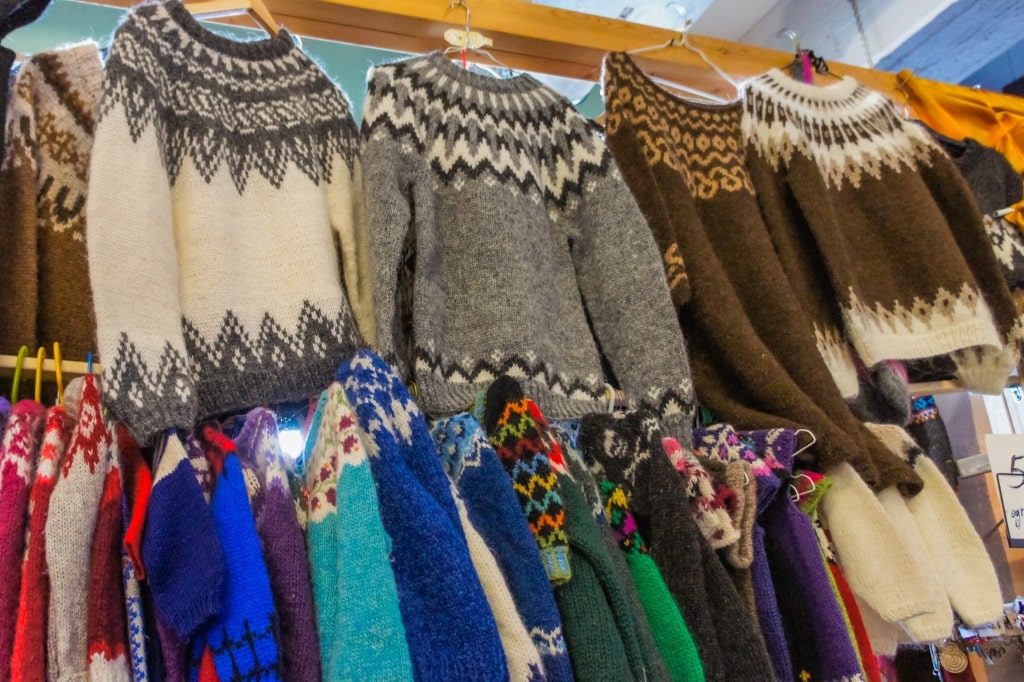
Lopapeysa
There are many things you can buy that are unique to Iceland, including luxurious Blue Lagoon skin- and body-care products, such as the hydrating Mineral Mask; geothermal salts for cooking; and Brennivín, Iceland’s famous liquor, often drunk as a shot.
Knitted items are, however, the most famous souvenir to buy in Iceland. Lopapeysa is an Icelandic sweater you won’t find anywhere else in the world, in a style that is uniquely Icelandic. Using Icelandic wool, the sweaters are hand-knitted, featuring local patterns and motifs. You’ll find them in stores across Iceland, including when shopping in Reykjavík and at the tiny gift shop on Grímsey Island, on the edge of the Arctic Circle.
What unique natural features is Iceland known for?
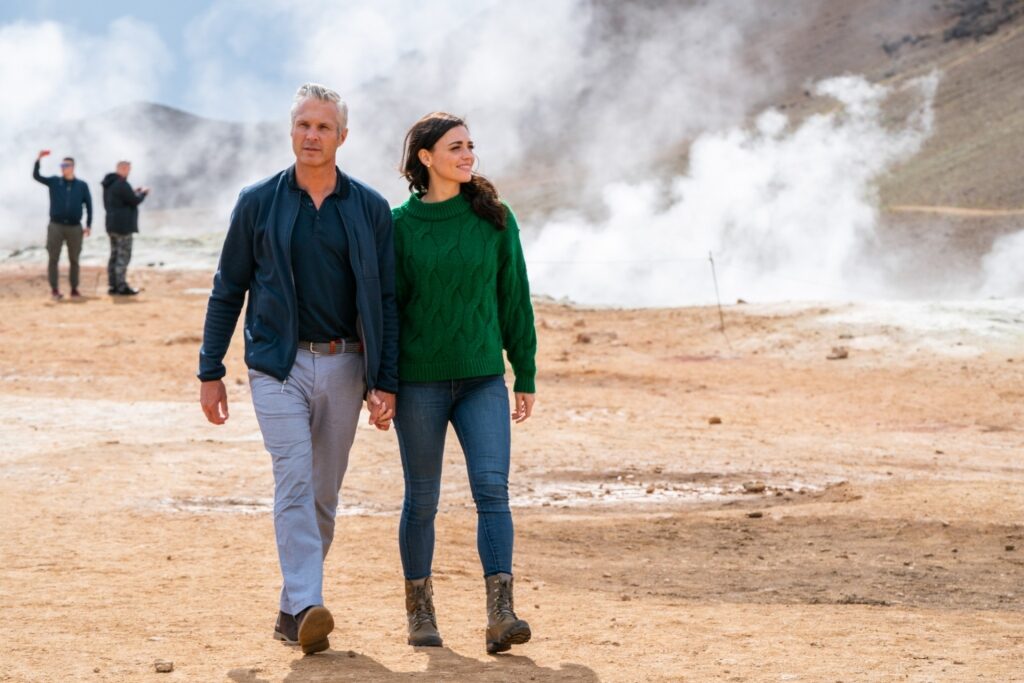
Reykjanes Peninsula
Known as the Land of Fire and Ice, Iceland is famous for its geothermal activity. There are vast ice caps draped over volcanoes, while glacial meltwater creates thundering waterfalls that add to the drama of fast-flowing rivers.
Lava bubbles from fissures in the Earth’s surface and boiling steam spouts from geysers, making it one of the most remarkable places on Earth.
What wildlife is Iceland known for?
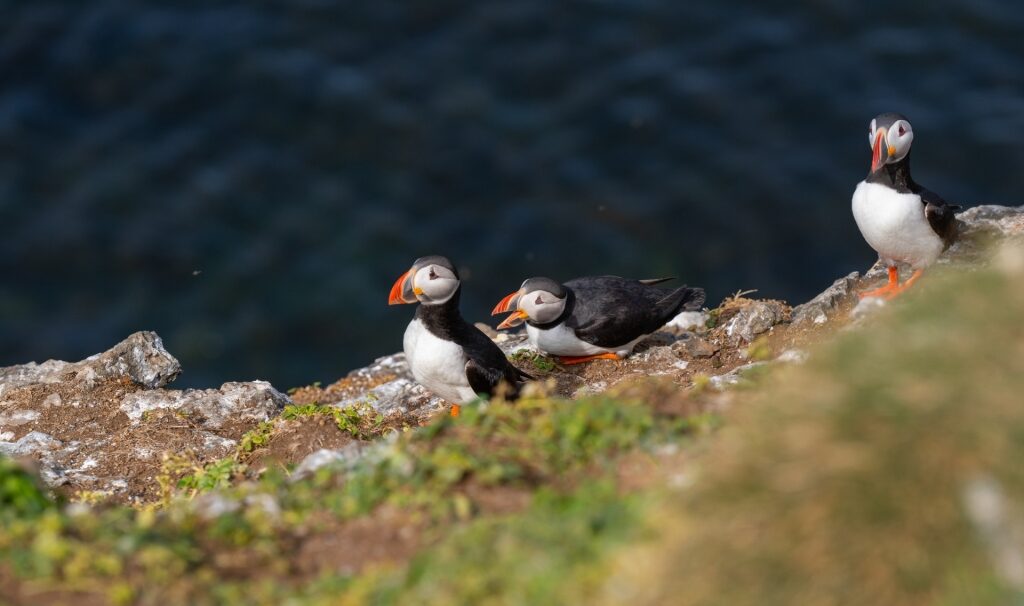
Puffins
Iceland is famous for its extraordinary wildlife, including wild horses, whales, dolphins, seals, and birdlife.
Among the avian species, Iceland is best known for cute Atlantic puffins, which flock here during summer in their hundreds of thousands, setting up colonies on cliffs on Vigur Island in the Westfjords, Grímsey in the north, and Dyrhólaey, near Vík, in the south.
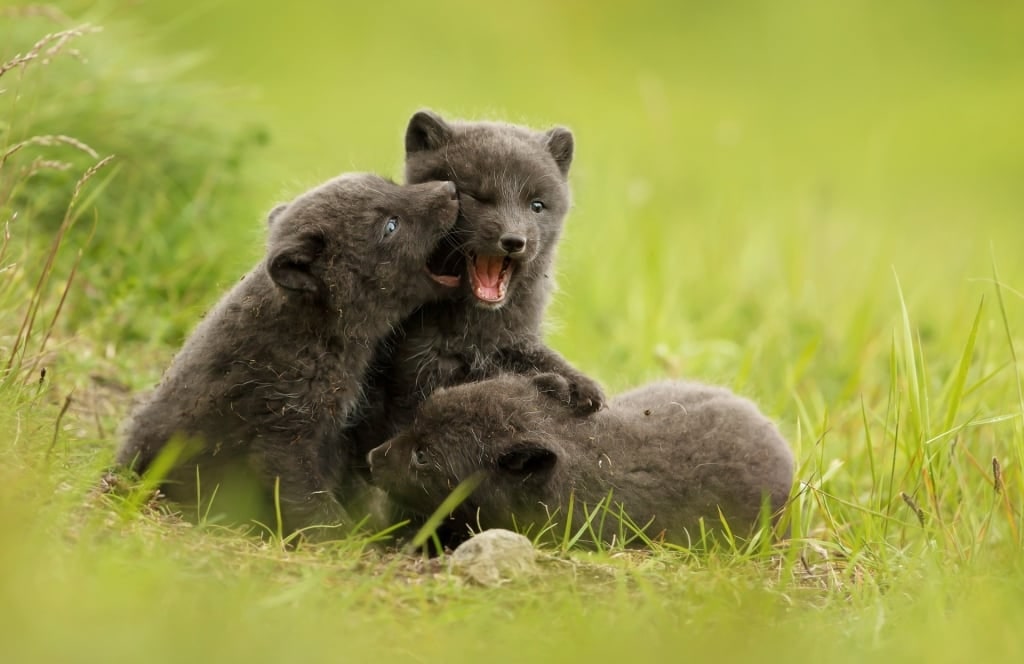
Arctic fox
Arctic terns, eider ducks, gyrfalcons, northern fulmars, razorbills, kittiwakes, and black guillemots are among the dozens of varieties you’ll see, particularly during summer, in Iceland.
Though they’re more elusive, Iceland is also famous for Arctic foxes—the country’s only native mammal. Known for their thick white, gray, and brown fur, their coat changes color with the seasons. Travelers visiting the Westfjords can stop by the Arctic Fox Centre in Súðavík, a short drive from Ísafjörður, to learn about their ecology, history, and Iceland’s history of fox hunting.
Thingvellir National Park
Explore Celebrity Cruises’ unforgettable cruises to Iceland that will take you to Akureyri, Reykjavik, and Isafjordur, and book your dream vacation today.