Japan’s nonstop, futuristic, yet culture-respecting capital is famed for being expansive, exhilarating, and evocative—but what is Tokyo known for beyond being the world’s most populous city?
Superlatives aside, the answers are surprisingly eclectic. Sky-high modern towers are as recognizable as Shinto shrines. Neon-glowing neighborhoods hawking electronics are as revered as Meiji-era architecture. And the city simultaneously holds the title for the most Michelin-starred restaurants and vending machines per capita.
At once celebrated for its contemporary and classical plaudits, asking what is Tokyo famous for often leads to more questions—questions best researched on a visit to this magnificent megalopolis.
Sky-High Towers

Tokyo Skytree
It’s not only the Greater Tokyo Area that’s supersized—Tokyo also boasts one of the best skylines in the world. On a clear day from the right rooftop, you might even squint legendary, snow-dusted Mount Fuji looming in the distance.
Arguably the most recognizable skyscraper is Tokyo Skytree. This soaring telecommunications tower was the world’s second tallest construction when it opened in 2012. Discernable for its slender, sky-piercing lattice frame ringed by various viewing decks, its pinnacle is at 2,080 feet.
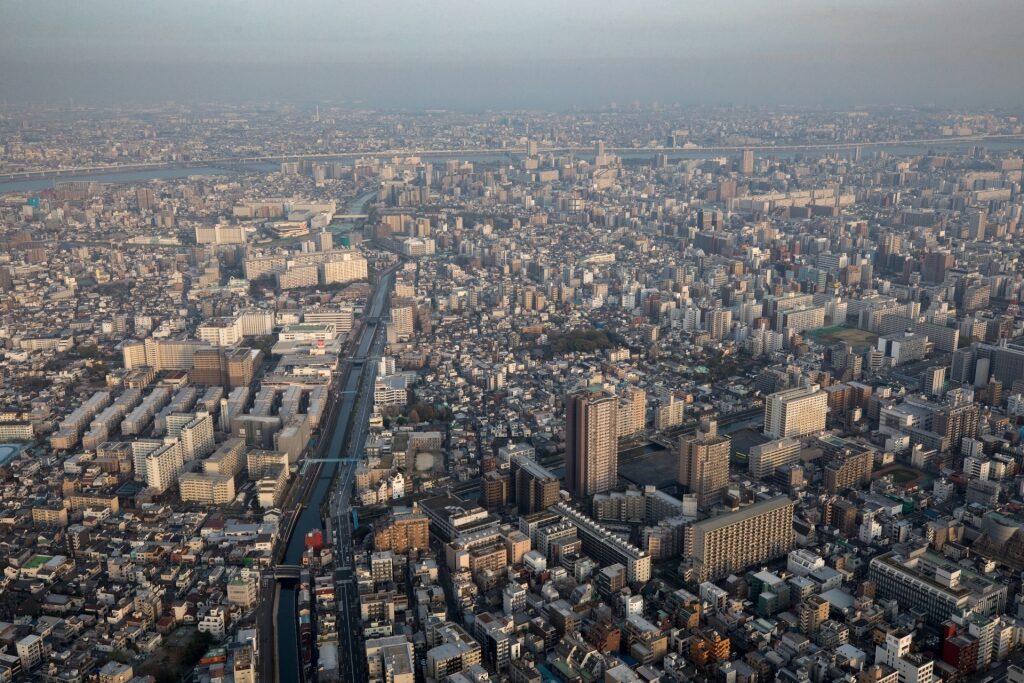
View from Tokyo Skytree
Ride the elevator to one of the two observation decks, and you’ll enjoy sweeping panoramas across this sprawling modern city. Japan might be known as the Land of the Rising Sun, or Nippon in Japanese, but from here, at night, the skyline subjectively sparkles at its brightest.
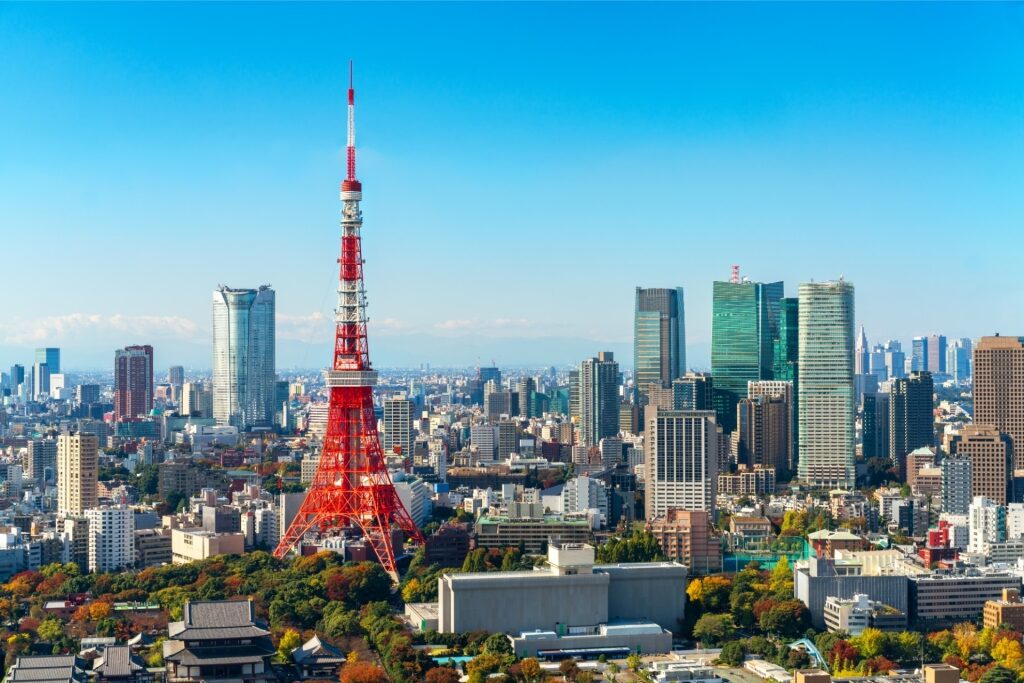
Tokyo Tower
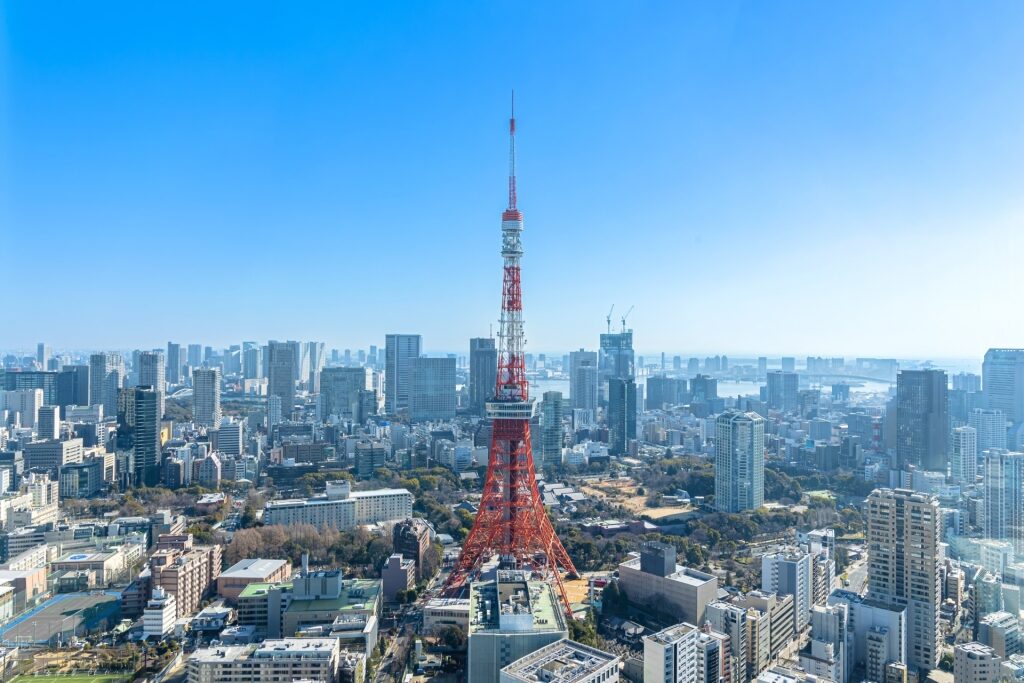
Other notable structures embellishing Tokyo’s skyline include the visitable Tokyo Tower, similar in design to Paris’ Eiffel Tower, and Roppongi Hills, a mixed-purpose development home to a vast mall and topped by a rooftop bar.
Not all of Tokyo’s recognizable above-city landmarks are as dominating, though. A replica of the Statue of Liberty, gifted by France, is diminutive compared to its NYC counterpart.
Award-Winning Cuisine
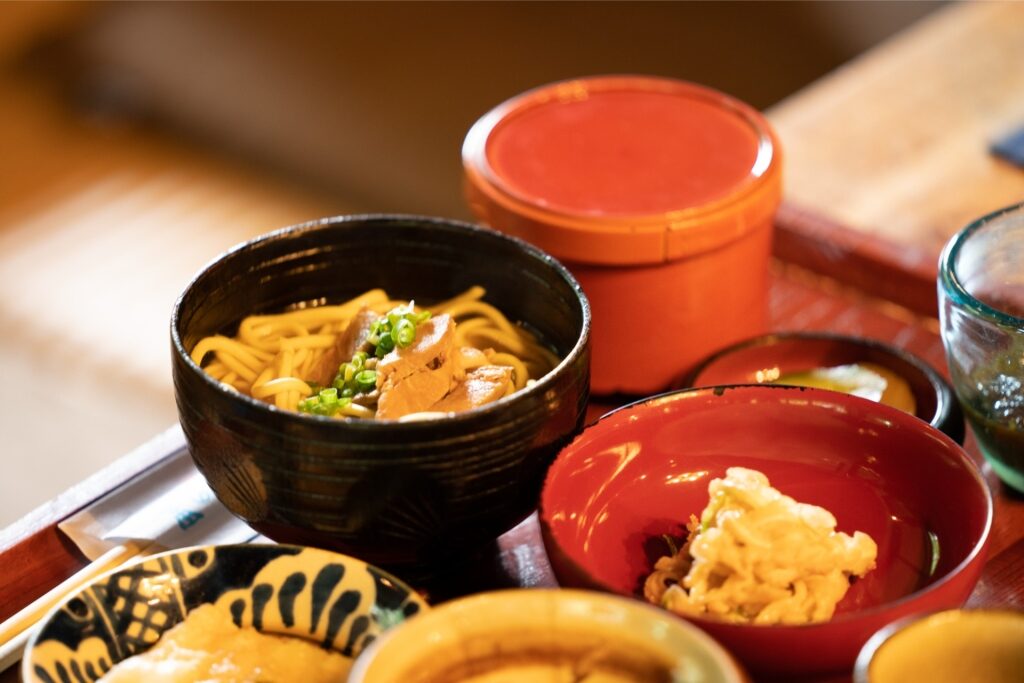
Japanese food
What is Tokyo known for? Being tasty. From hand-pressed nigirizushi to Tokyo-style tempura and all the nabe, or hot pots, noodles and tofu between, embracing this city’s Japanese food scene is never a chore.
Famed for being home to the most Michelin-starred eateries in the world—170 at the last count—there’s a first-class culinary experience on practically every corner.

Japanese food
Not that upscale restaurants necessarily rule the roost; low-key, family-run shokudo restaurants are equally recognized for their soba noodles, supposedly better slurped than chewed, and sizzling sukiyaki beef hot pots.
Sushi might be Japan’s most internationally known savory staple. But dining well here is an everyday, all-menu-encompassing experience, firmly placing Tokyo among the best places to travel for food.
Tokyo Imperial Palace
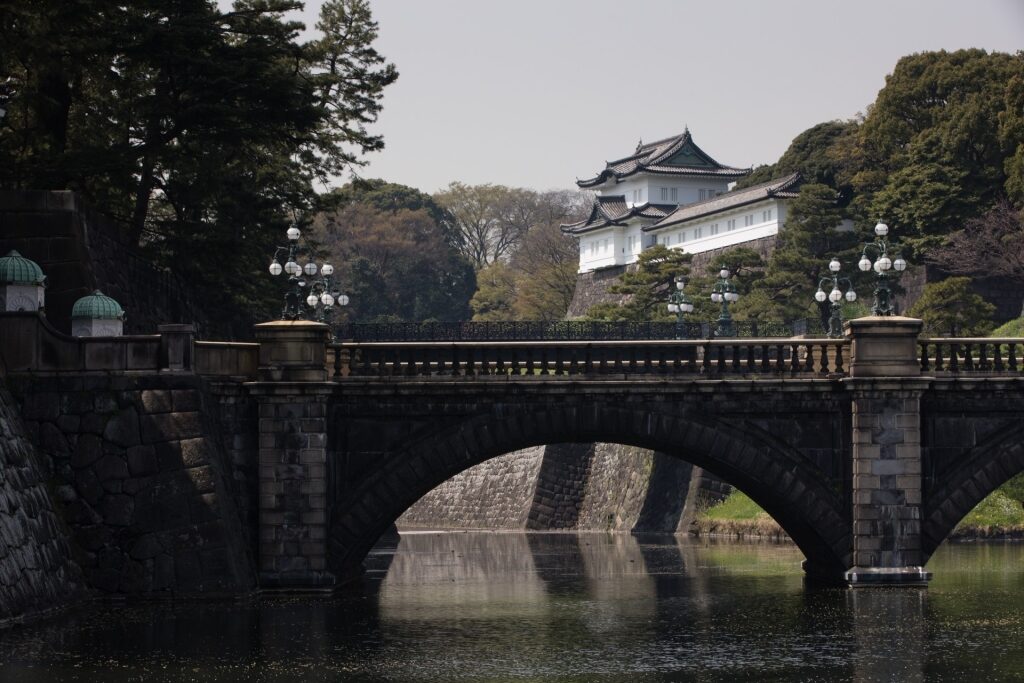
Tokyo Imperial Palace
Completed in 1888—two decades after Edo was renamed Tokyo and the capital was relocated from the city now known as Kyoto—the Tokyo Imperial Palace is one of Japan’s most prominent symbols of change.
Signaling a shift simultaneously towards modernity and a reimagined rule of old, the new palace was the result of the Meiji Restoration, which saw Japan once again return to imperial rule.
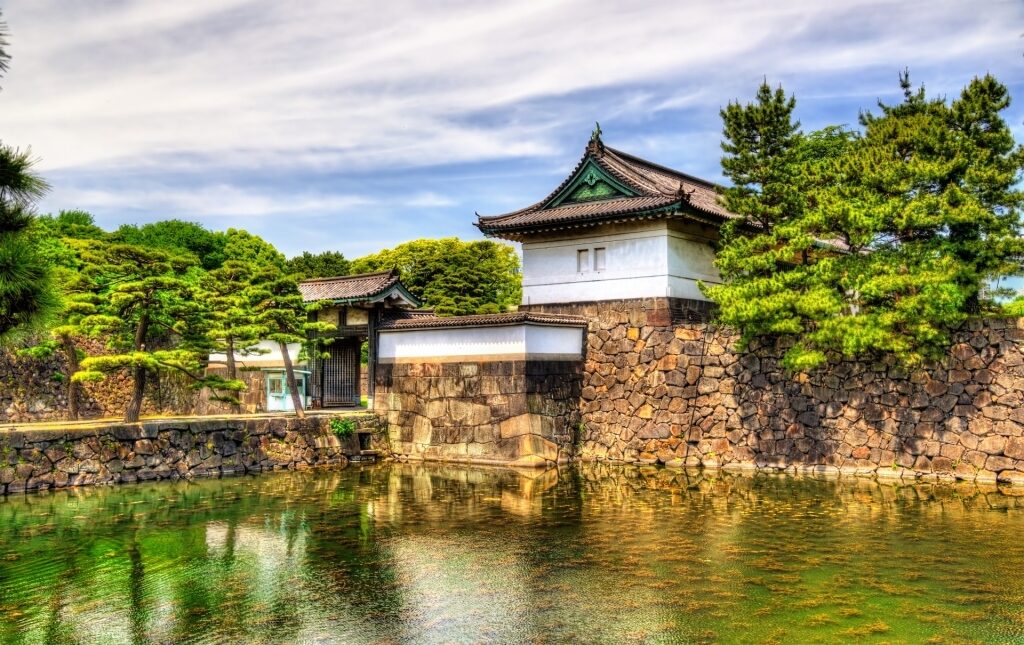
Tokyo Imperial Palace
The Meiji period ushered in a new era for Japan, with democratic principles quickly leading to economic growth and a fast-developing society. As such, this Japanese landmark is as much a monument to one of the country’s most pivotal moments as a stately abode.
Still, the principal residence of Japan’s Emperor, the Tokyo Imperial Palace and its inner grounds have restricted access. However, joining one of the few daily guided tours for a peek inside is possible if you can secure one of the highly sought-after tickets.
The outer grounds, East Gardens, and various gates and bridges crossing the moat are freely accessible. The ruins of Edo Castle, the eminent building before the Meiji coup, are also visitable.
Shrines & Temples
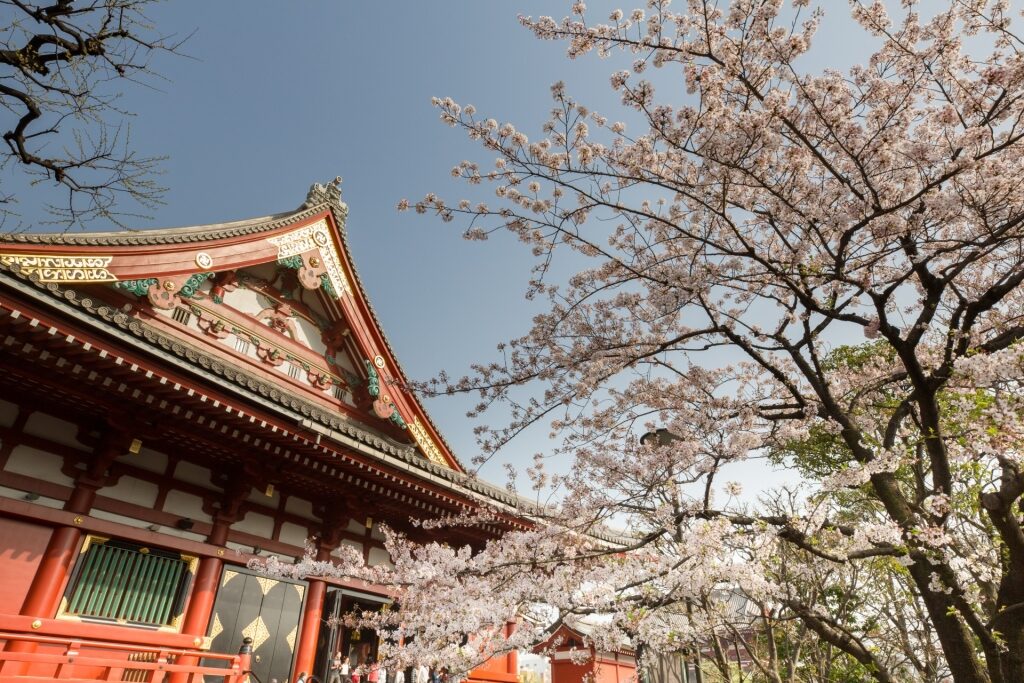
Senso-ji Temple
When most people guess what Tokyo is known for, temples and shrines are two obvious answers. Estimates place the number of each at around 75,000 across the country, and some of the finest are in the capital.
It’s a good idea to visit both types of sacred sites in Japan to better understand the nation’s history, cultural norms, and religions. Temples are Buddhist, while Shinto Shrines are dedicated to Japan’s long-standing spiritual belief system.
Since 1947, Japan has officially been a secular country, and both Shintoism and Buddhism peacefully co-exist and, to a degree, complement each other.
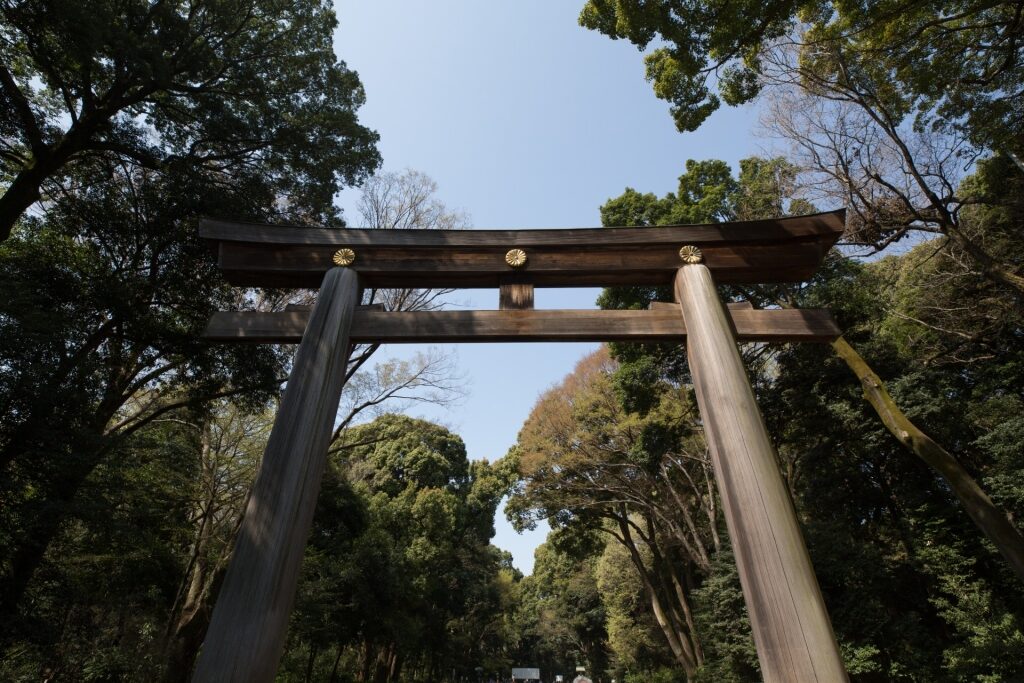
Meiji Shrine
The most iconic Shinto Shrine in Tokyo is Meiji Shrine or Meiji Jingū—Jingū refers to any shrine dedicated to the Meiji Emperor and Empress.
It is set in a sprawling artificial forest planted with over 200 tree species from across Japan. Serene and reflective, the early 20th-century shrine is renowned for having the largest wooden torii gate, or shrine entranceway, in the world. Visit at 2 pm to witness the nikku-sai, a daily food offering.
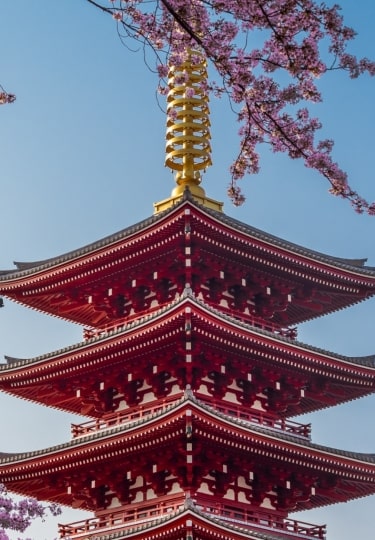
Tokyo’s most recognizable and oldest temple is Senso-ji, founded in 645 AD. A magnificent complex coated in crimson and scented by osenko incense sticks, the main hall and adjacent five-tier pagoda are one of Tokyo’s most picturesque and busy sights.
Shibuya Crossing

Shibuya Crossing
A more contemporary reply to what is Tokyo famous for is the world’s most iconic pedestrian intersections. It is a somewhat surprising entry to earn pride of place in nearly every visitor’s guide, but once you’ve seen Shibuya’s centerpiece in action, you’ll understand why.
The most famous sight in its namesake district, the Shibuya Scramble Crossing is special as all traffic lights switch to red simultaneously. Then, thousands of people at one time start walking across in any direction—hence the scramble crossing moniker.
More than just a miniature microcosm of this fast-moving megalopolis, the crossing is a cultural icon. Flanked by illuminated digital billboards and placed atop the city’s busiest station, it’s earned silver screen fame in numerous Hollywood blockbusters.
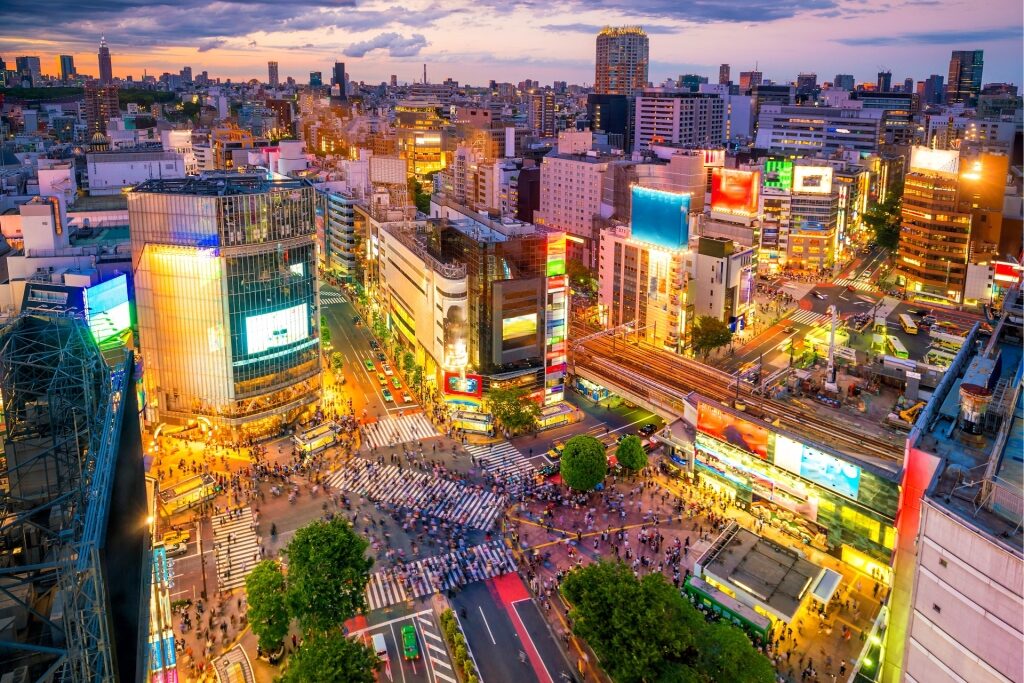
Shibuya Crossing
On a standard working day, around two to three million people patiently wait for the 90-second countdown to pass to make their move. Walking across the junction is practically a Tokyo rite of passage, but witnessing the controlled chaos from above is equally fascinating.
Sit in a nearby rooftop bar or first-floor coffee house and occasionally peer over to see the steady stream of people coming and going. It’s quite the spectacle, even more so at night when neon advertising lights bathe the hub in flashy colors.
Cherry Blossom Season
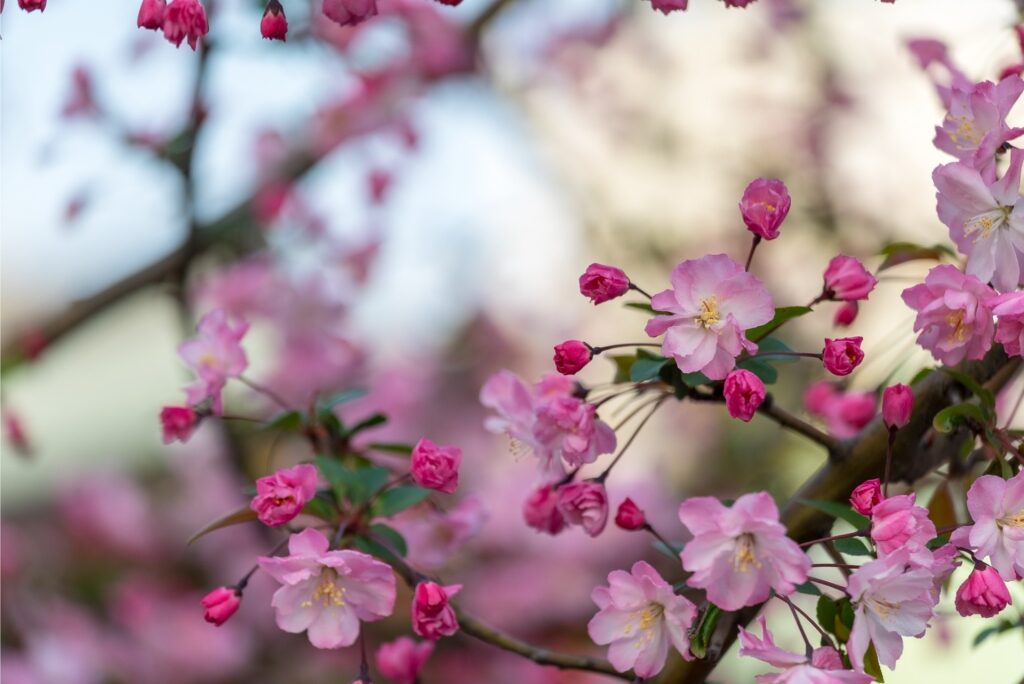
Cherry blossom
The most internationally recognized event that Japan is known for is the Sakura, or cherry blossom season, when a gorgeous explosion of pastel pinks and white hues brings an almost ethereal appeal to swathes of the country.
Even the big city sees its share of delicate petals, with Tokyo’s blooms often arriving at the end of March. The mankai, or peak, is usually in early April, with the flowers sometimes remaining until early March.
Plan your visit to coincide with arguably the world’s most famous flower festival, and you can partake in hanami, the Japanese word for flower viewing. This is a perfect reason to get acquainted with Tokyo’s pretty parks and serene gardens.
In Ueno Park, you’ll be greeted by more than 1,000 cherry trees flanking its central avenue, practically raining down pink confetti towards the end of the season.
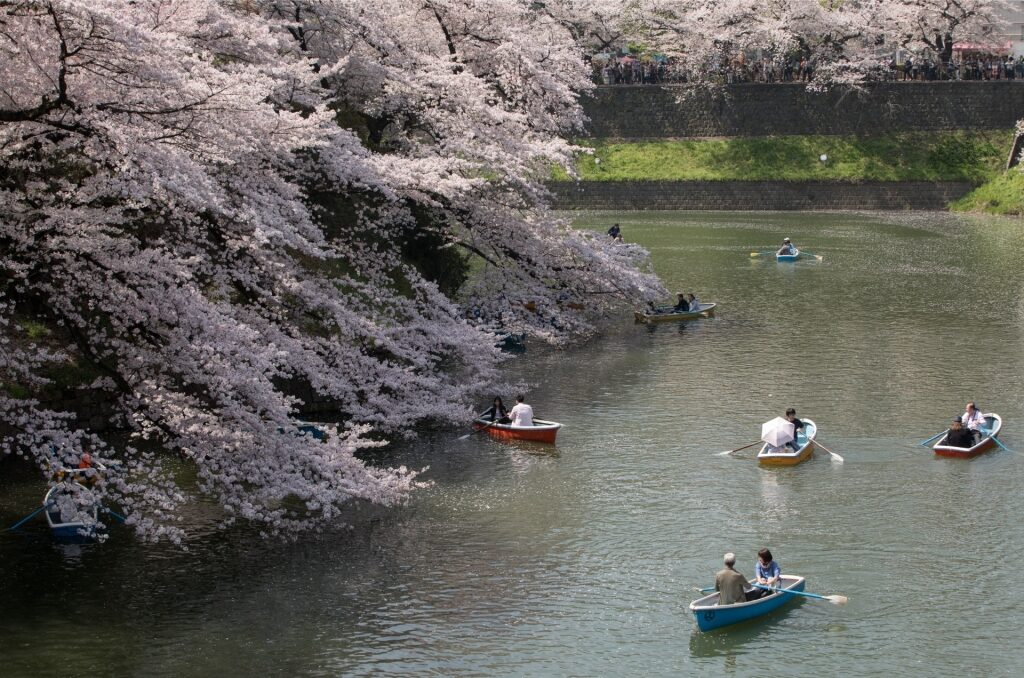
Chidorigafuchi
Further afield, the vast Shinjuku Gyoen National Garden, on the city’s fringes, is the perfect place for a picnic under the shade of a pink canopy. However, for the ultimate hanami experience, hop on a boat at Chidorigafuchi, the moat hemming the Imperial Palace’s island.
From the water, you’ll feel like you’re sailing into a fairytale as you glide through a tunnel of blossoms. And given that the Japanese even have a dedicated word for viewing illuminated blossoms at night—yozakura—it’s not uncommon to plan a whole afternoon and evening around admiring nature’s captivating canvas.
Shopping, Fashion, & Markets

Japanese souvenirs
Tokyo and shopping go hand in hand. From Odaiba Island’s Venice-themed mall to the upscale boutiques of Chuo-Dori Street in Ginza, the choice of shopping destination is often overwhelming.
Thankfully, the city’s distinct districts serve as a helpful retail therapy guide. One of the most interesting and internationally intriguing areas is Harajuku in Shibuya.
The term Harajuku fashion has dominated Tokyo Fashion Week and headlines in recent years, and the area is a fantastical mishmash of self-expression with often outlandish streetwear and individually styled outfits, making it Tokyo’s place to see and be seen.
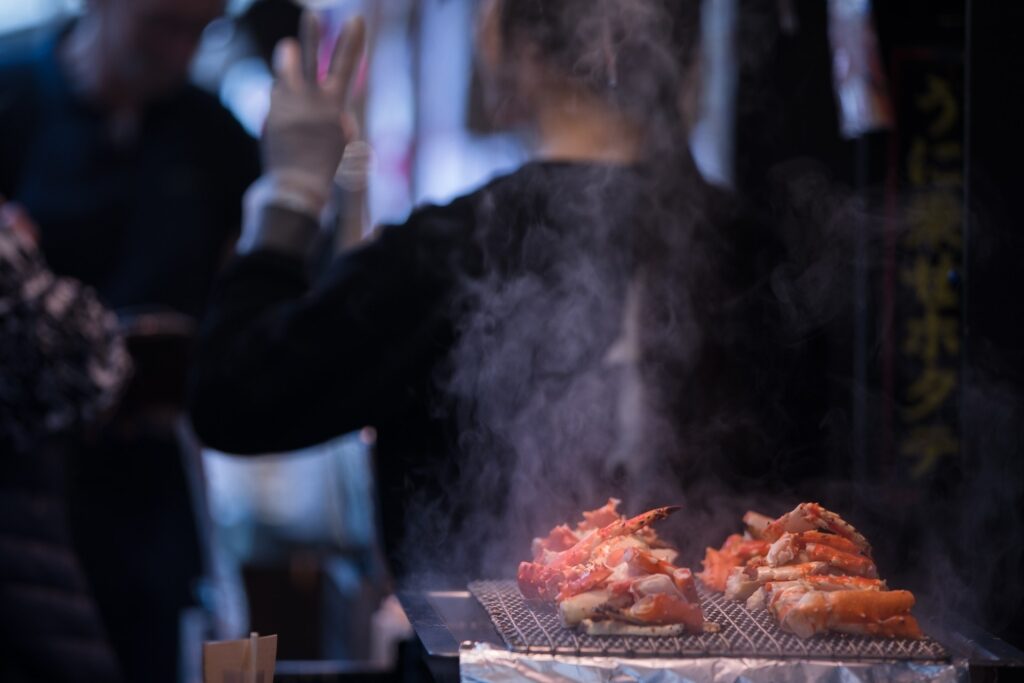
Tsukiji Outer Market
If you’re a foodie rather than a fashionista, head for Tsukiji Outer Market, even though the main inner fish auctions have sadly relocated.
Once one of the world’s largest wholesale fish markets, it remains an energetic and renowned destination to sample local seafood flavors, with countless street stalls and restaurants selling and serving everything from sushi and fish-shaped taiyaki cakes to hand-carved chef knives.
Akihabara & Animanga

Akihabara
Ask a gamer what Tokyo is known for, and they are sure to answer Akihabara. Known as the “Electric City,” this animated neighborhood is a hub of all things pop culture and electronics, with stores hawking gadgets and games, and arcades offering hours of entertainment.
The area is equally renowned for its animanga culture, an amalgamation of anime, Japan’s animated cartoons, and manga, referring to comics and other forms of animation. Enthusiasts of either will find all the latest releases, vintage collectibles, and every pop-up-themed event they could dream of in this immersive pocket of the city.
Excellent Public Transport

Shinkansen
In 1964, the first Shinkansen, commonly called the bullet train, departed Tokyo station, becoming the world’s first high-speed rail route.
Since then, Japan has been at the forefront regarding transport speed and cleanliness, and somehow—given the sheer numbers who use the system—surprisingly organized and on-time public transport.
Thankfully, there’s no need to barrel across the countryside to experience Japan’s world-class transport system. The Tokyo Metro system predates the Shinkansen by 37 years, and with its counterpart, the Toei Subway, it accommodates around seven million passengers daily.
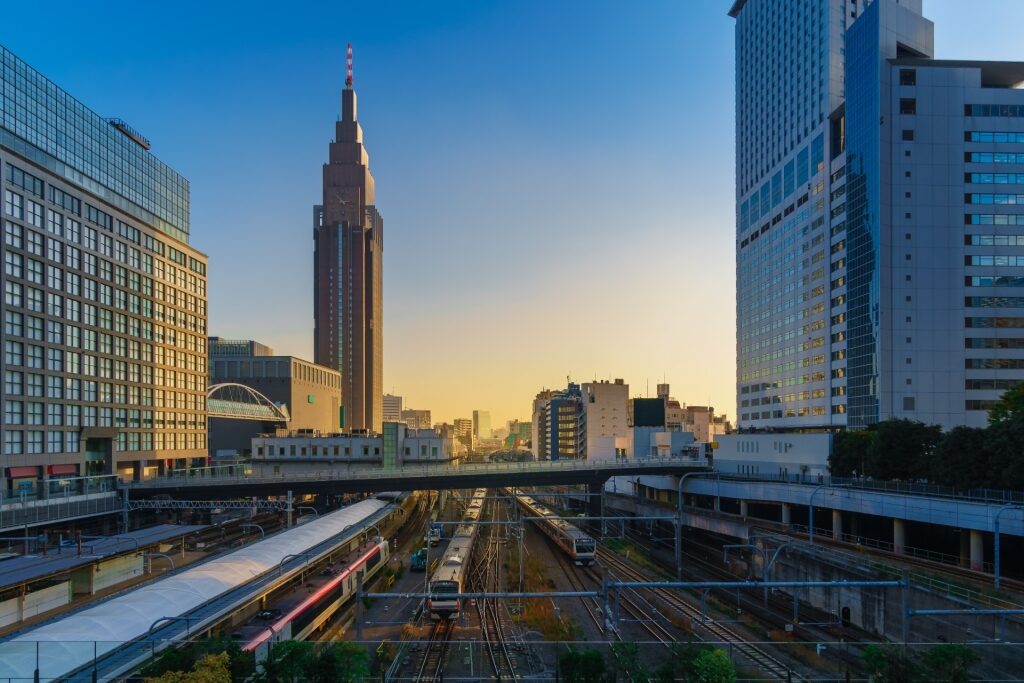
Shinjuku Station
Other transport distinctions that Tokyo is known for include the sometimes confusing Shinjuku Station, being crowned the world’s busiest. Then there are the novel heated seats in all cars, and the infamous oshiyas, or “pushers.” These employed pushers ensure everyone is squeezed in during rush hour and it all adds to the experience.
While the transport system is essential in such a sprawling city, it serves a secondary purpose. Many metro stations are almost self-contained, subterranean cities.
Even if riding the rails isn’t on your agenda, descend to one of the larger terminals to experience a world of retail and restaurants. Listen out for the quirky individual game-like music played at certain stations.
Theme Parks & Themed Attractions

Tokyo Disneyland
Tokyo’s embrace of all things animated, quirky, and entertaining has earned this Japanese city top billing in the list of Asian theme park destinations.
In 1853 the country’s first amusement park, Asakusa Hanayashiki, opened in the city’s Taitō ward. Since then, it’s been joined by many others, including international household names.
Tokyo Disneyland and DisneySea are two of the most famous, with striking similarities to their Californian cousins. Still, the Tokyo experience is unique, with a host of different rides and experiences alongside the classics, including a more interactive and accessible castle.
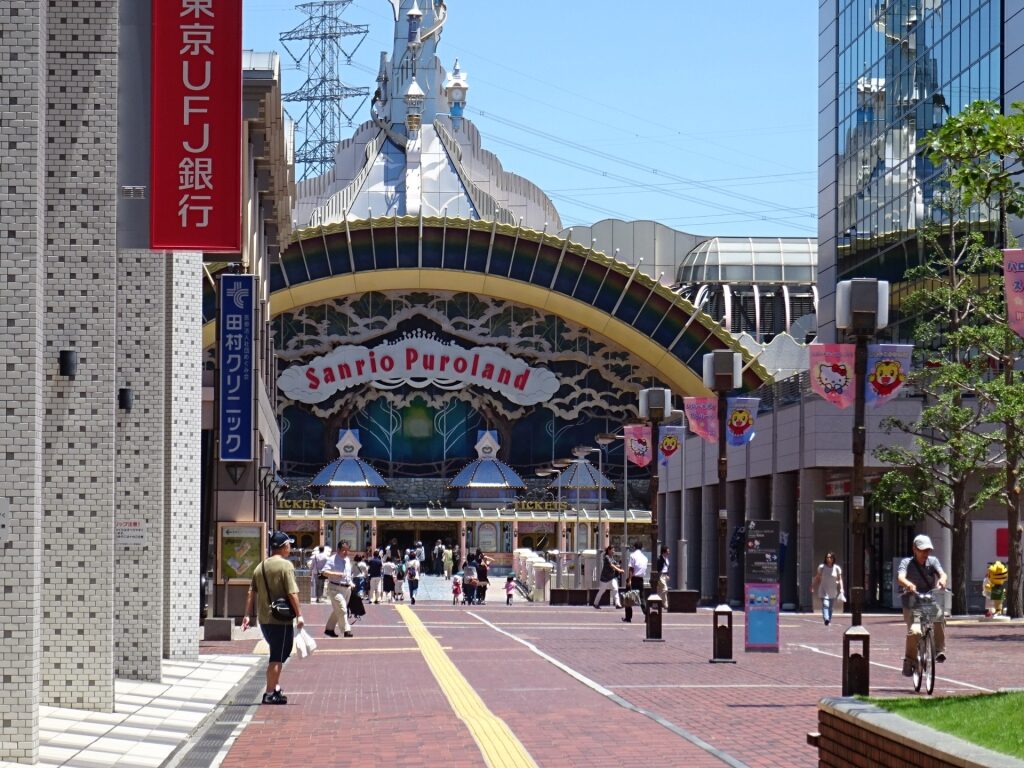
Sanrio Puroland Photo by Konaine on Wikimedia Commons, licensed under CC BY-SA 4.0
More regional picks include Sanrio Puroland, founded by the company responsible for many of Japan’s most loved characters, including Hello Kitty. Joypolis, on artificial Odaiba island, is a vast indoor arcade park operated by SEGA, the Japanese computer game company.
Still, this is Tokyo, so there’s no need to head to a dedicated space to experience animated entertainment. Dine in one of the city’s Robot Cafes, attended by a mechanical server, or go Mario Karting in costume through downtown Akihabara to experience the theme park that is living, breathing Tokyo.
Tokyo National Museum
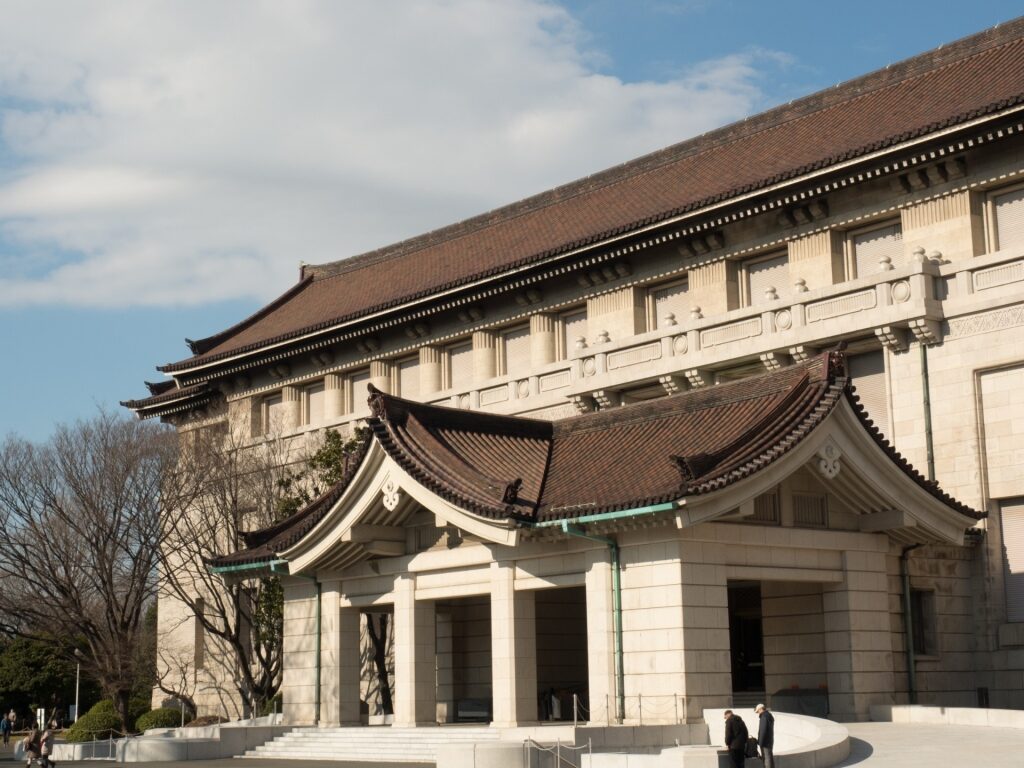
Tokyo National Museum
For a deep, informative look into Japan’s history, humanities, and artistic chronology, there’s arguably no better place to start than the Tokyo National Museum in Ueno Park.
One of the most famous cultural attractions that Tokyo is known for, the museum’s importance can’t be overstated. Especially as the museum was founded in 1872, making it the oldest museum in the country.
Over 100,000 items comprise the prestigious catalog, including around 90 items designated so significant to Japan’s heritage that they are listed as National Treasures. However, only around three percent of the collection is displayed at any given time.
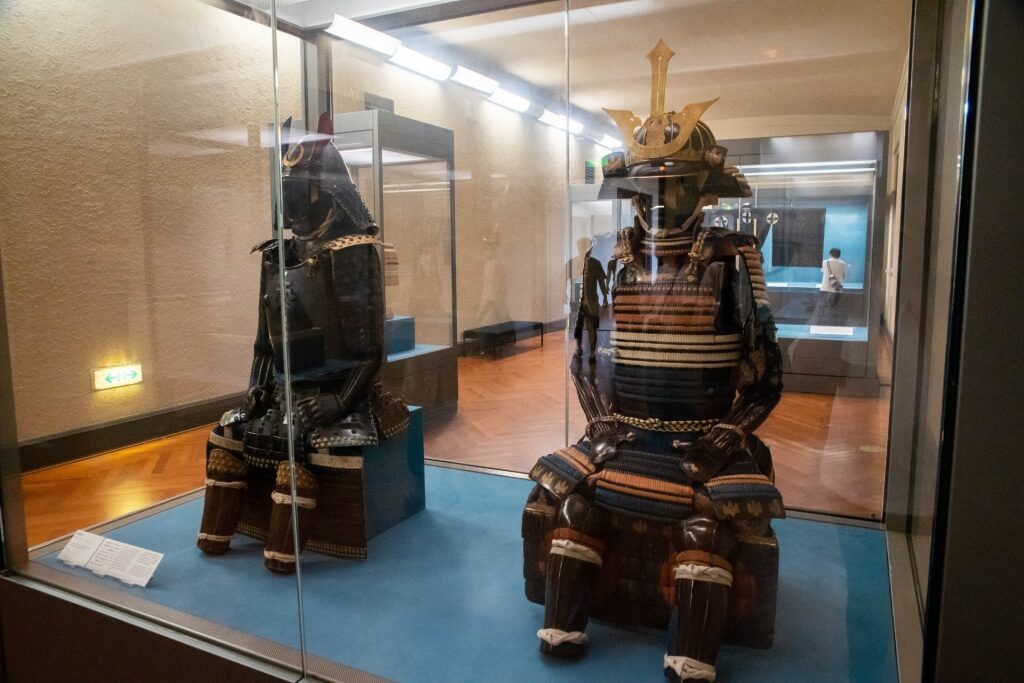
Tokyo National Museum Photo by Dick Thomas Johnson on Wikimedia Commons, licensed under CC BY 2.0
The museum is renowned for its size and it’s easy to spend a whole day wandering around, letting the eras of Japan—from prehistory to modern times—and neighboring nations unfurl across the multitude of art and artifacts.
While the exhibits change regularly, some of the most notable National Treasures in the museum’s care include 16th-century ink paintings from the Muromachi period, lacquered Edo writing boxes, and a sixth-century Kofun engraved sword. You can check the online e-museum to see which items are currently viewable.
Vending Machines
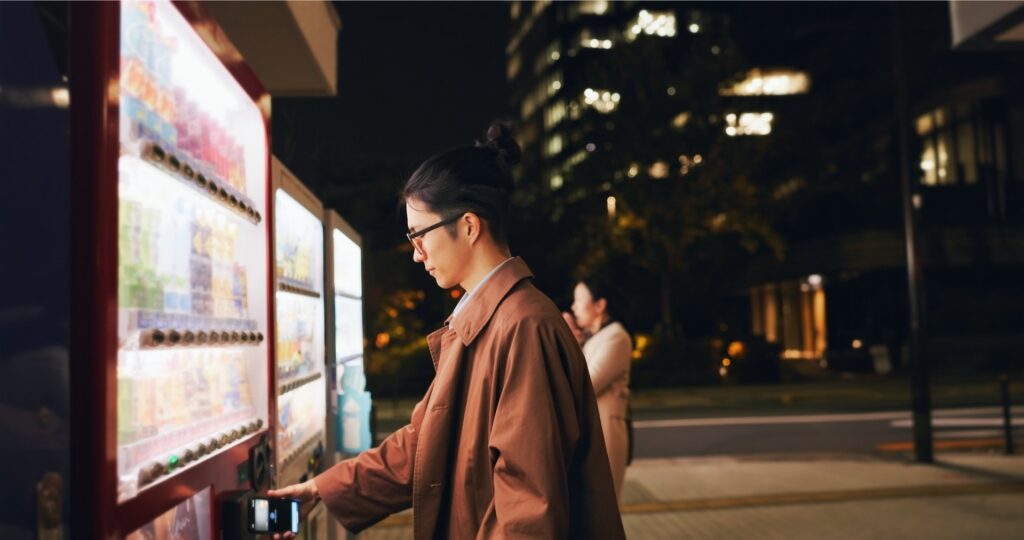
Vending machine in Tokyo
Tokyo has a strange obsession with vending machines. There’s one on practically every street corner.
Estimates place the number of automatic snack and drink machines at around one for every 40 people. And while this is a nationwide phenomenon, this places approximately four million of Japan’s over five million vending machines in Tokyo.
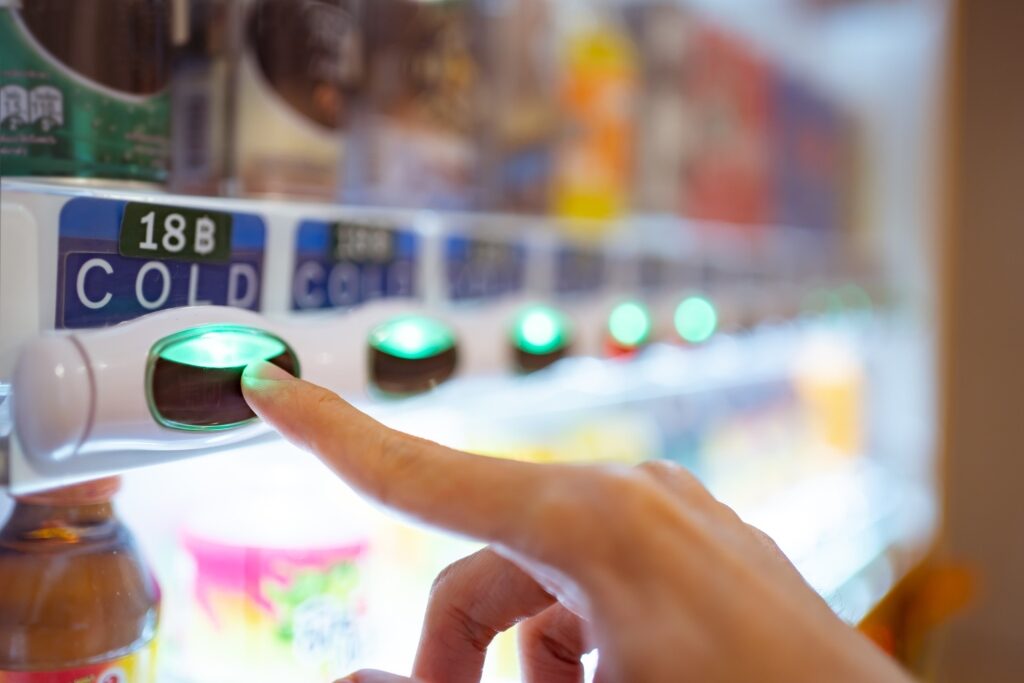
Vending machine in Tokyo
Part of the national landscape since 1888, these machines quickly grew in popularity in the mid-20th century. Soon, there was a steady stream of refreshing summer drinks, winter-warming metal bottles of coffee, and a wide variety of only-in-Japan snacks everywhere.
Some machines have animated touch screens, quirky designs, and items beyond the obvious. While cold juice or cute chocolate bars are standard, some also dispense noodles, fashion accessories, and gachapon capsule toys.
Read: Three Days in Tokyo
Tokyo Dome City
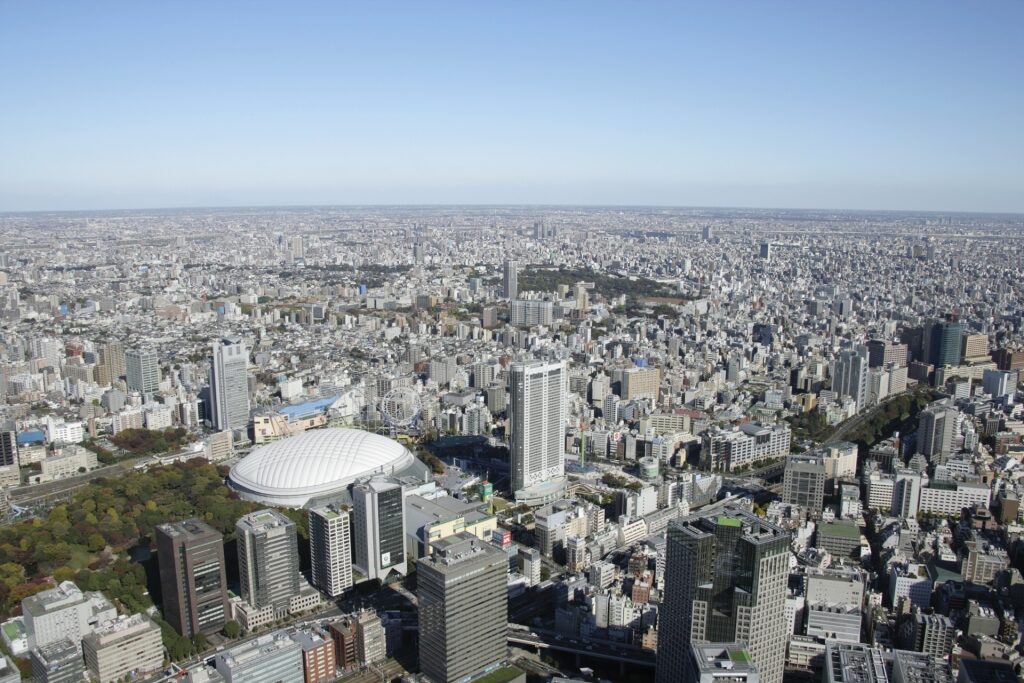
Tokyo Dome City
The Japanese love baseball, so if you’re a fan, a visit to Tokyo Dome City is in order.
The star of the show is the Tokyo Dome, colloquially known as the “Big Egg,” as it features a distinctive shell shape.
The Dome opened in 1988 and seats around 45,000 fans for baseball games and approximately 55,000 for major concerts. The Yomiuri Giants are the home team; whether or not you’re a fan, taking in a baseball game here is a hoot, with the crack of the bat and cheering supporters.
Adjacent to the Dome, you’ll find Tokyo Dome City Attractions, where you can ride the Thunder Dolphin roller coaster, which swoops through parts of the complex, including a hole in an upper corner of the LaQua building.
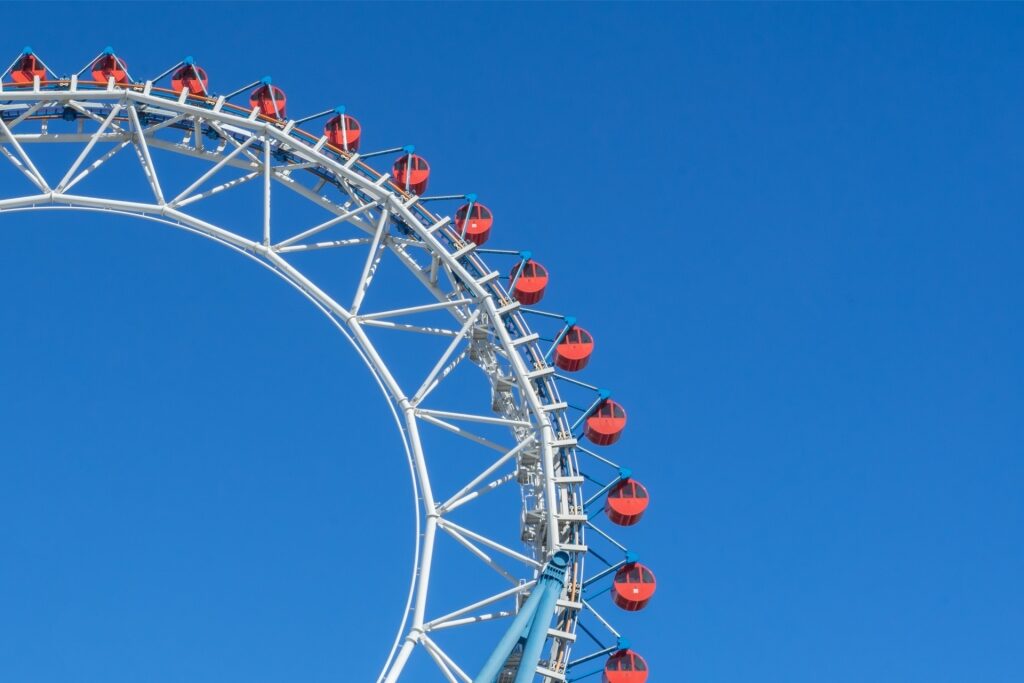
Big O, Tokyo Dome City
You can also hop on the “Big O” Ferris wheel, which will afford you some outstanding views of the city. The roller coaster also zips through the center of this massive Ferris wheel.
LaQua itself is a wellness, entertainment, and spa zone featuring onsen-style hot spring baths, shops, restaurants, and cafés, as well as lots of glitzy lights.
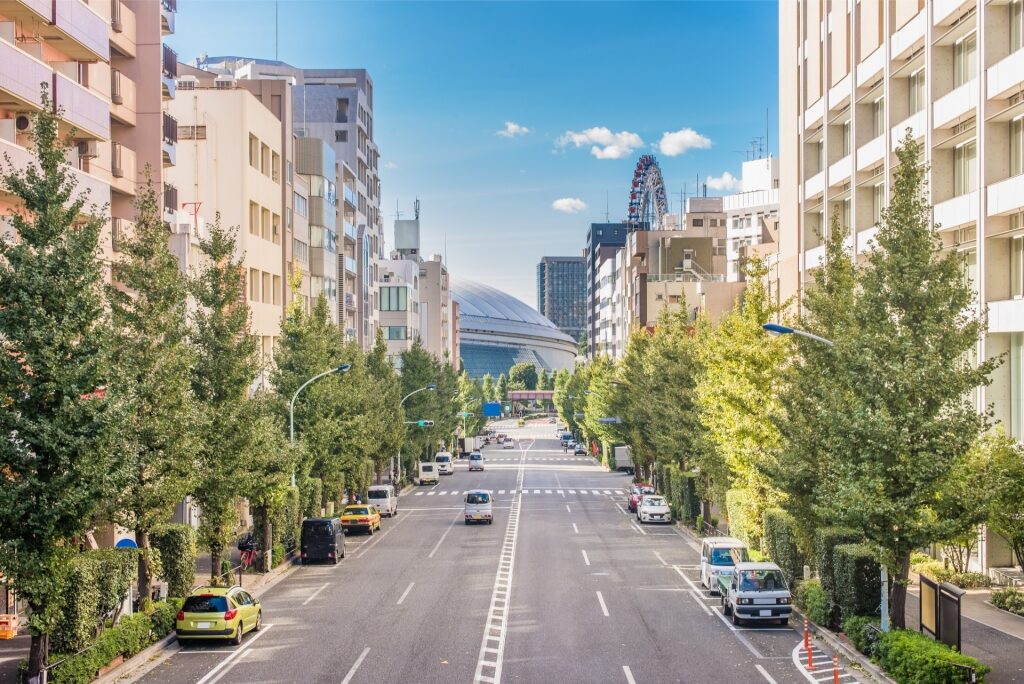
Tokyo Dome City
If crowds are a concern, consider avoiding weekend evenings. Also, buy attraction tickets or “skip passes” ahead of time, if possible—especially for popular rides like Thunder Dolphin—to jump to the head of the lines.
Karaoke Box Culture

Karaoke box
What is Tokyo known for? Karaoke, of course. Karaoke and the Japanese capital fit together like sashimi and rice. When you first enter a “karaoke box,” you’ll be led to your very own private soundproof room with decorated walls, a remote or tablet to select songs, and programmed lights that react to the music’s bass drops.
Now it’s time to sing! When the drinks arrive, consider options such as a citrusy chu-hai cocktail, beer, or soft drinks. It’s best to go with friends to make the most of these “boxes” as you cheer each other on while trying to hit the high notes in your favorite songs.

Karaoke box
Visiting one or several karaoke boxes in Tokyo, where you can book rooms and times based on the size of your group, will give you a glimpse into Japan’s obsession with boisterous, fun, and occasionally boozy—but also, for many, quite serious—karaoke culture.
Chains like Big Echo and Karaoke-kan offer decent English menu song catalogs and non-Japanese tracks that aren’t too challenging for foreigners, in case the Japanese language is not your forte.
Karaoke Kan Shibuya’s Udagawacho branch is a Tokyo-based karaoke joint made famous by Scarlett Johansson and Bill Murray’s famous movie, shot in the city in 2003. Many tourists visit Karaoke Kan Shibuya and attempt to sing in the rooms—601 and 602—featured in the film. Pro tip: reserve well in advance, as these marquee spots tend to fill up quickly.
Mount Fuji Views
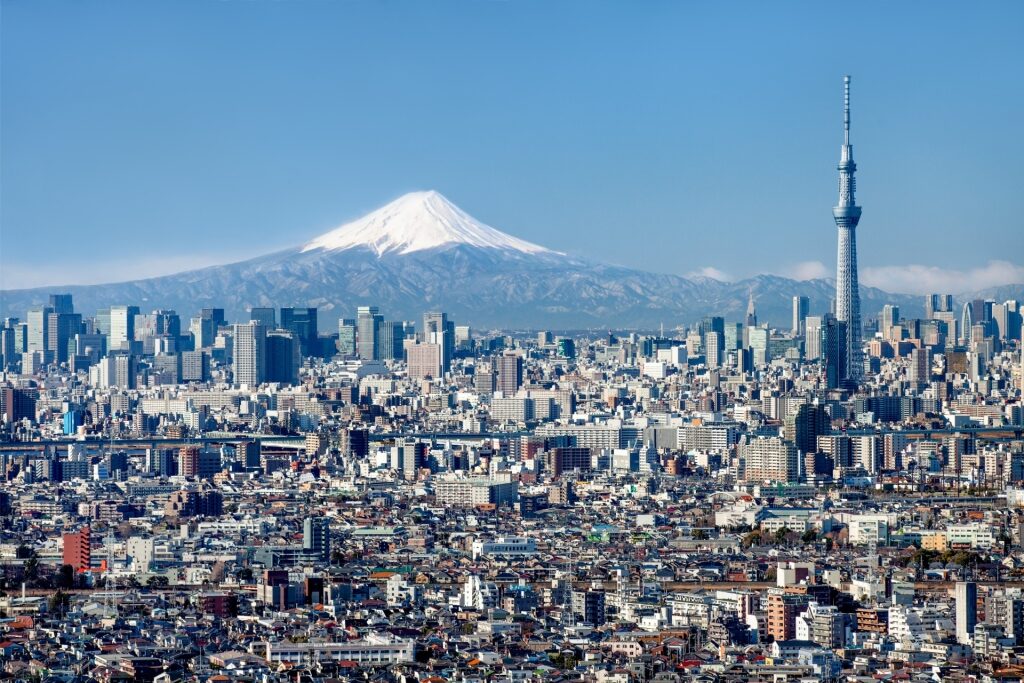
Mount Fuji
Seeing Mount Fuji for real should definitely make your to-do list when you’re in the Tokyo region, as this iconic landmark is something Japan and Tokyo are known for. The mountaintop, although not located in Tokyo prefecture, is within easy reach of the capital.
You’ll want to choose your vantage point and time of day wisely. On a clear day, especially in spring when the cherry blossoms are in bloom, or in autumn when the maple leaves are out, the sight is breathtaking.
Here are some of the best places to see, photograph, or contemplate the beauty of Mount Fuji:
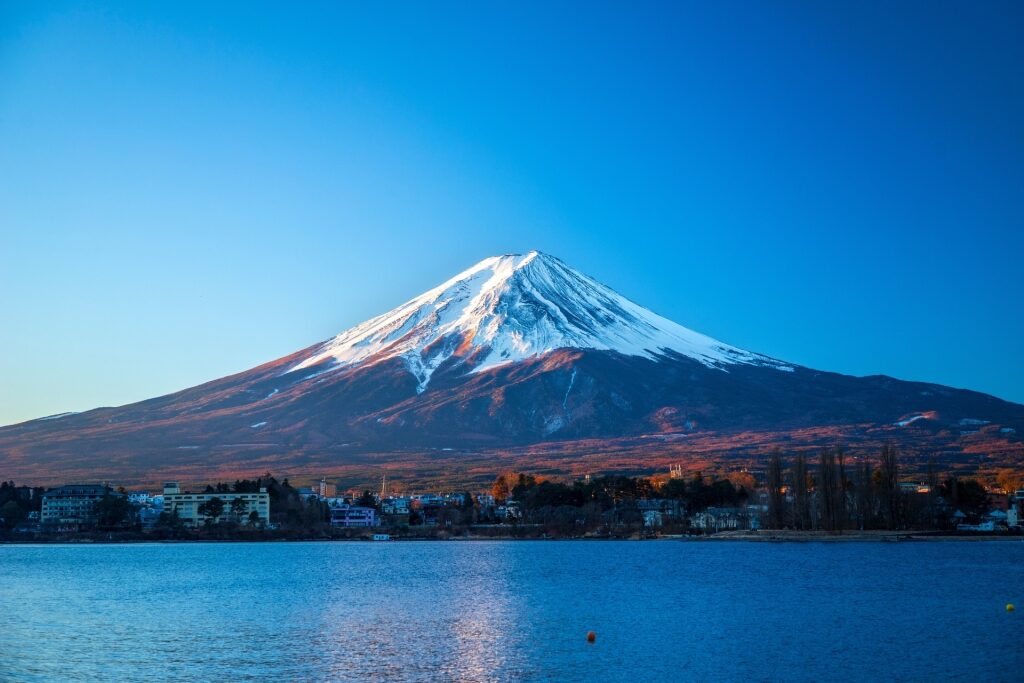
View from Lake Kawaguchiko
Lake Kawaguchiko is part of the Fuji Five Lakes region. From the very popular northern shore, especially around Oishi Park, the waters are calm and reflect the mountain exquisitely.
Lake Yamanaka, one of the five lakes, offers sweeping views of Mount Fuji. You’ll encounter fewer crowds if you venture past the main photo area. Cycling around the northern side of the lake affords you many opportunities to frame Fuji in your camera lens.
For Fuji views from Tokyo, you can try your luck with the observatories in some of the high-rises, such as the Tokyo Metropolitan Government Building in Shinjuku, Tokyo Skytree, Mori Tower, and Tokyo Tower; however, atmospheric conditions often obscure the view of the volcano.
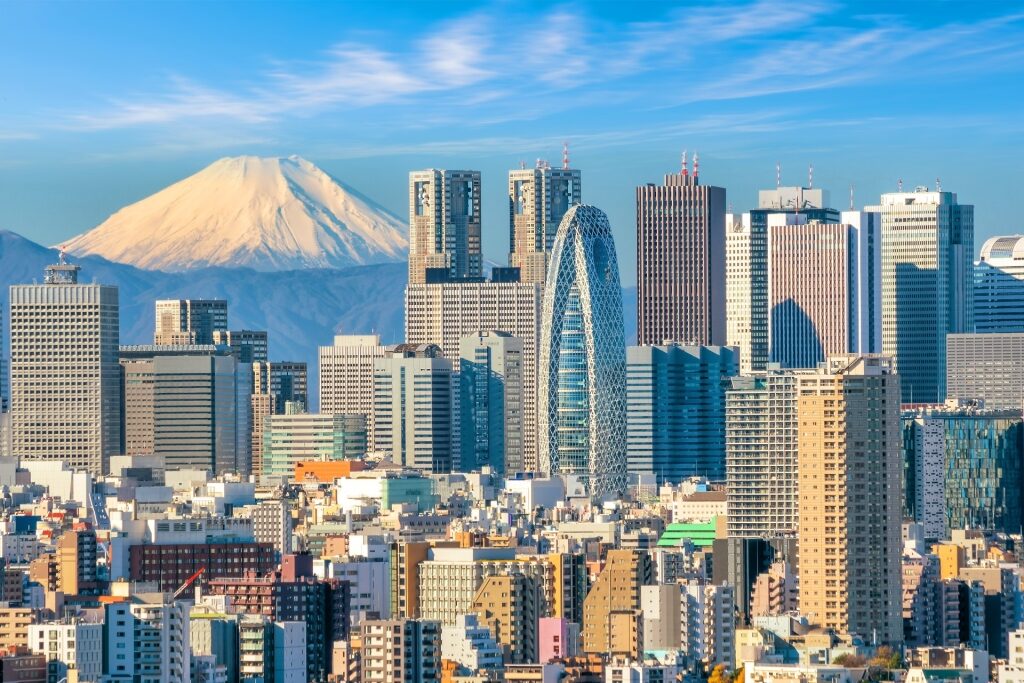
Tokyo
One of the most popular vantage points in recent years was the so-called “Mt. Fuji Lawson” in Fujikawaguchiko, where the Lawson convenience store was perfectly aligned with Fuji in the background.
The site became a social media sensation, attracting large crowds, which eventually led to traffic congestion, illegal parking, noise, and littering. Consequently, the local government constructed a barrier to obscure the view, although you may still be able to catch a glimpse of the volcano here.
Pachinko Parlors
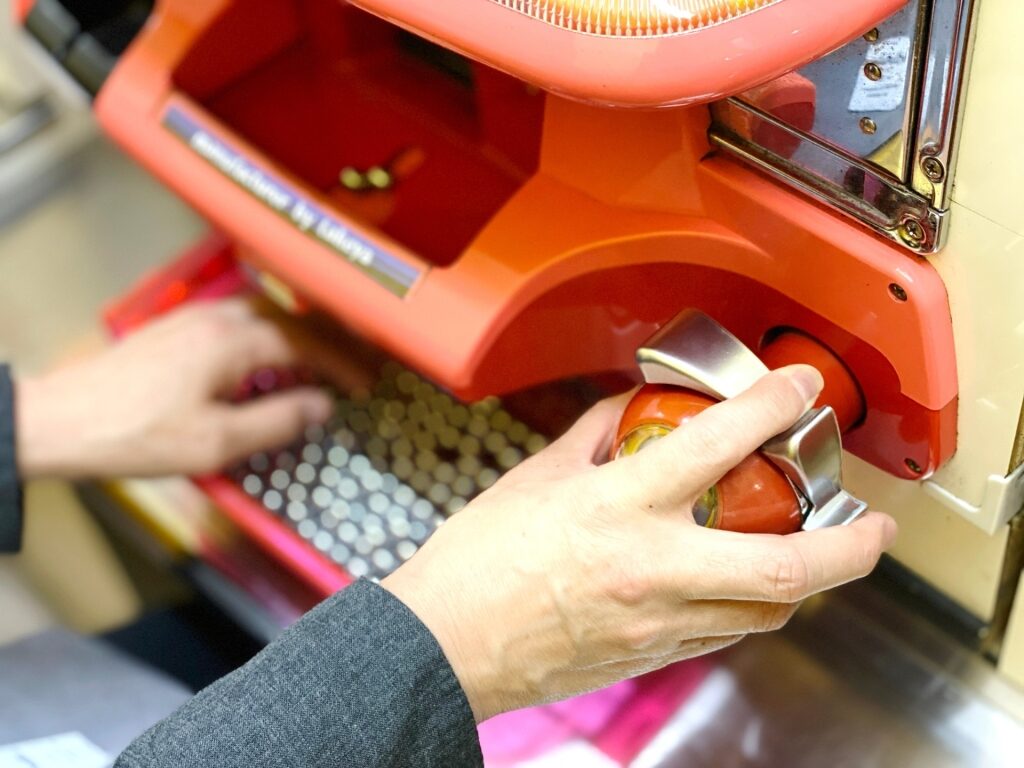
Pachinko parlor
Pachinko parlors, which are, in a nutshell, a hybrid of pinball games and gambling, can be found in Tokyo neighborhoods such as Shinjuku, Shibuya, and Ikebukuro.
When you step inside a pachinko parlor, you’ll immediately notice the smell: a mix of electric heat and an occasional whiff of sweat and cigarettes, although many places have improved their air quality, and some have even implemented smoking restrictions.
These parlors will drop you into an arena of sensory overload. Rows and rows of machines—each with its own theme, such as anime and pop culture—feature buttons, flashing LEDs, and players hunched forward, launching steel balls while trying for jackpots.
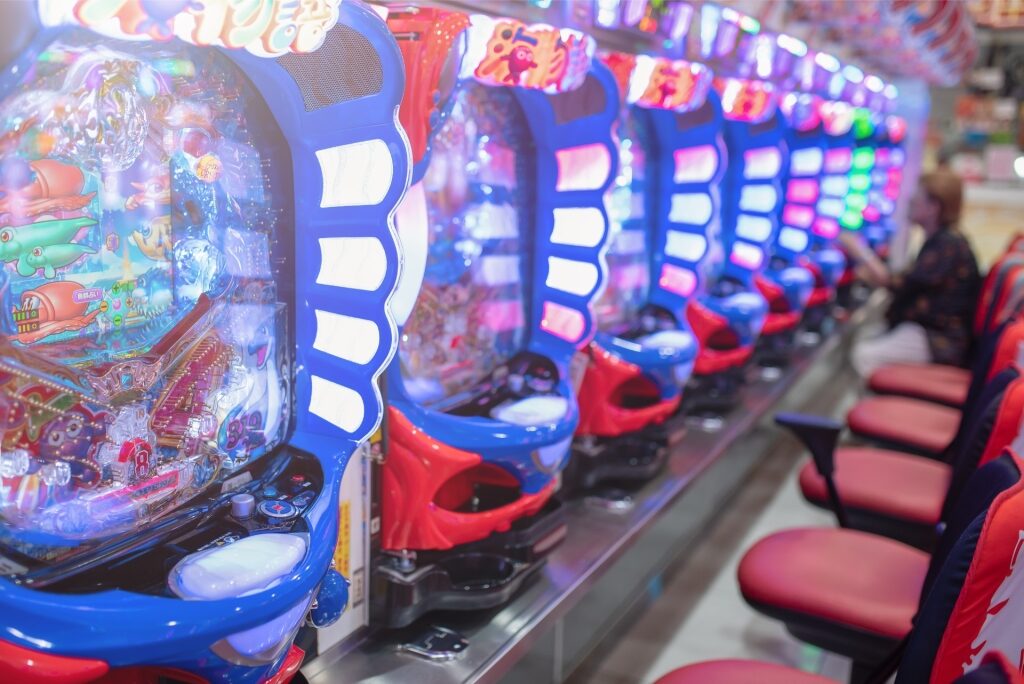
Pachinko parlor
Pachinko gained popularity after World War II. Today, it’s a central form of entertainment in Japan. However, regulations are strict, and it’s not technically considered gambling, as winnings, such as prizes or tokens, are usually traded for cash outside at a separate shop to skirt the gambling restrictions.
Parlors are open during the day, and of course, late into the night. You’ll need to purchase balls, which act as currency, to play. Many establishments have cash changers, and staff tend to be polite, though often with less English proficiency than in tourist-focused spots.
While pachinko is less popular now than it was in its heyday, it remains very visible, especially in Shinjuku, with huge signs and gaudy exteriors. If you’re looking for a truly “Japanese” experience in Tokyo—and don’t mind losing a bit of money—pachinko might be for you.
Sumo Wrestling
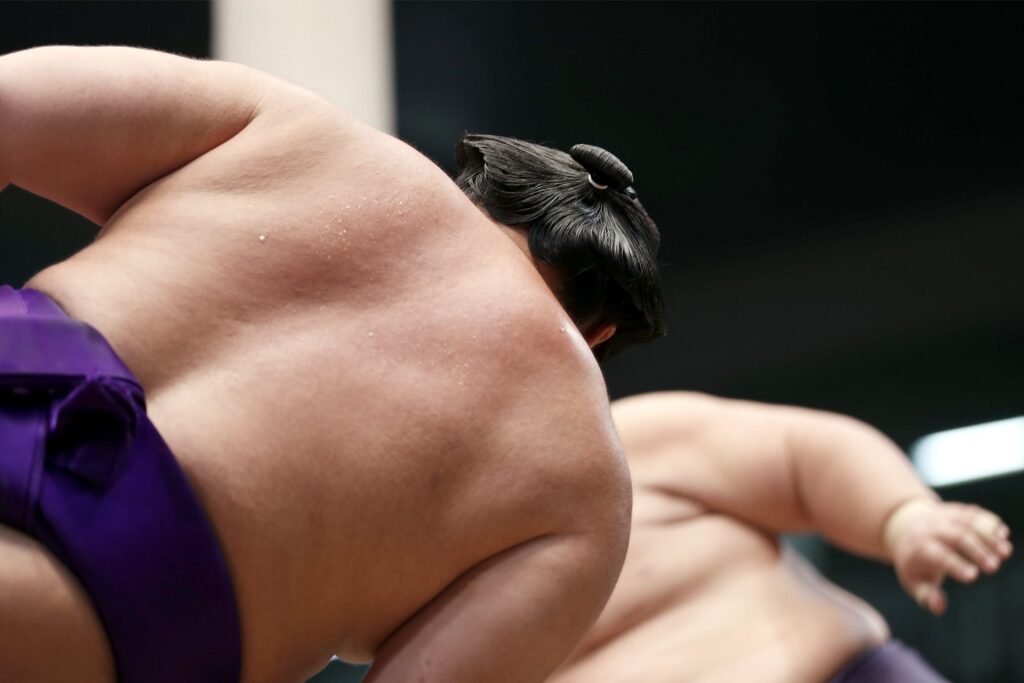
Sumo wrestling
If you ever get the chance to see sumo live, you should go. This full-contact grappling contest, featuring giant loincloth-clad wrestlers, is unique to Japan.
Stripped down to its essentials, sumo involves two massive rikishi wrestlers battling inside a dohyo clay ring, trying to shove the other man out of the ring by grappling and pushing him around by his mawashi loincloth. It’s quite a spectacle.
In Tokyo, sumo’s “honbasho” tournaments are held three times a year—in January, May, and September—at Ryōgoku Kokugikan stadium. Each tournament lasts 15 days.
You can also check out sumo matches outside of tournament times by visiting a sumo stable to watch their morning practice sessions.
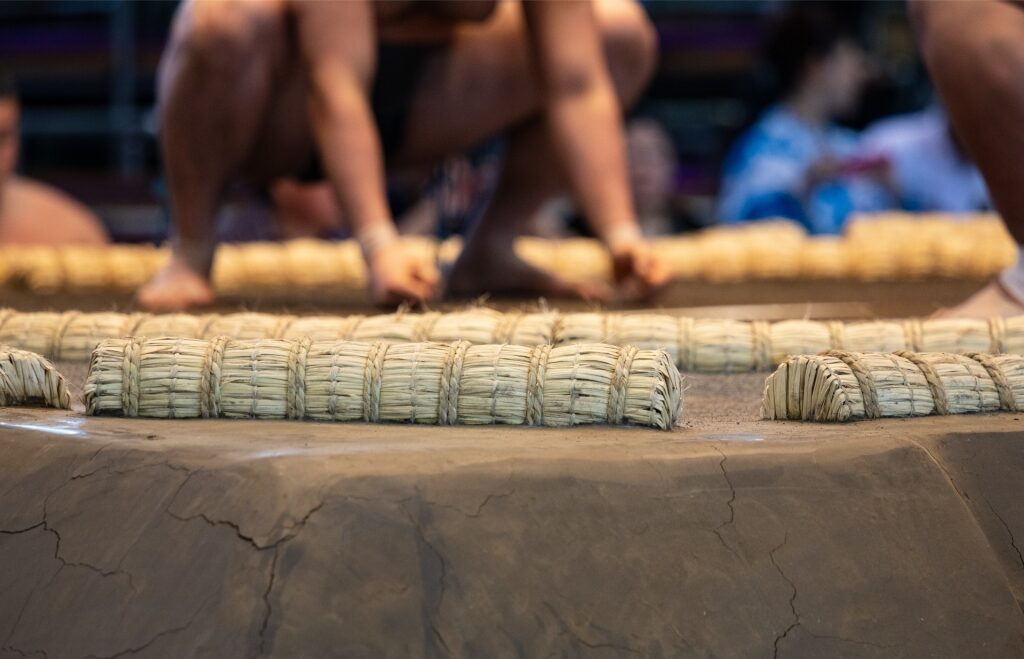
Sumo wrestling tournament
For the tournaments, if you arrive in the morning, you’ll get to listen to the wrestlers’ ring-entering Shinto-inspired dohyō-iri ceremonies, the beat of taiko drums, and the stomping ritual of the sumo wrestlers.
Match length varies; lower division bouts are typically brief, often lasting only a few seconds, while higher division matches in the afternoon are longer and more ritualized.
If you decide to attend a match, buy tickets well in advance. If you’re only interested in the top divisions with the most famous wrestlers, you can arrive in the late afternoon. For the entire experience, including lower divisions and morning warm-ups, arrive early.
Tsukiji & Toyosu Fish Markets
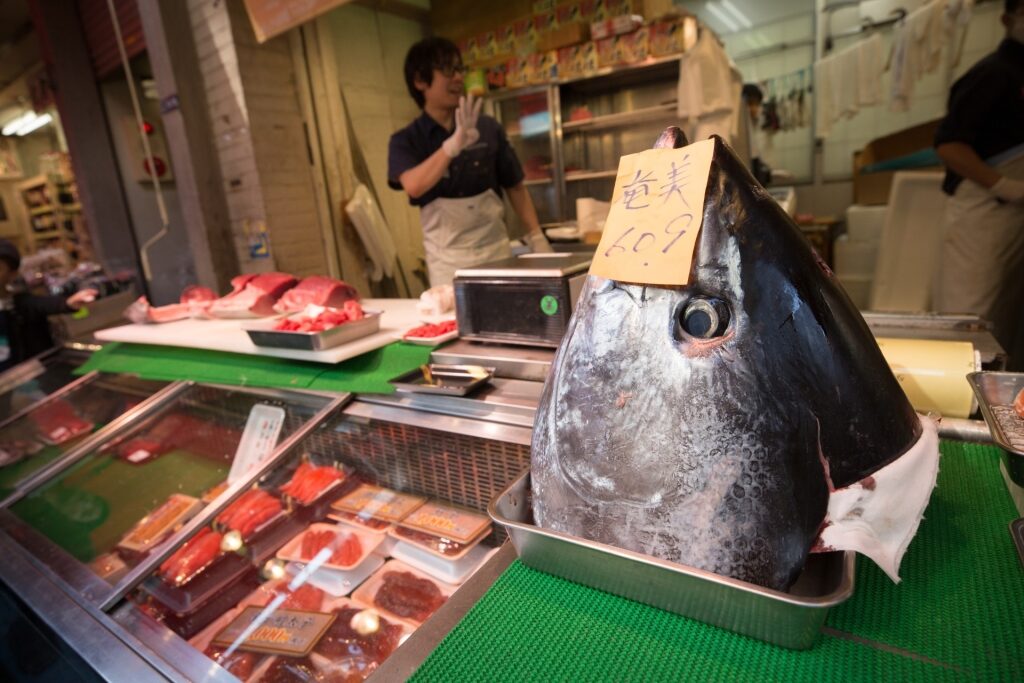
Tsukiji Outer Market
If you think there might be something “fishy” going on at the artificial Toyosu Island, as well as in the streets of the Tsukiji Outer Market, you’re right.
Tsukiji’s inner wholesale fish market was once famed for its tuna auctions and massive scale. The primary market has since relocated to Toyosu, featuring a more modern facility with enclosed halls, climate control, and enhanced infrastructure.
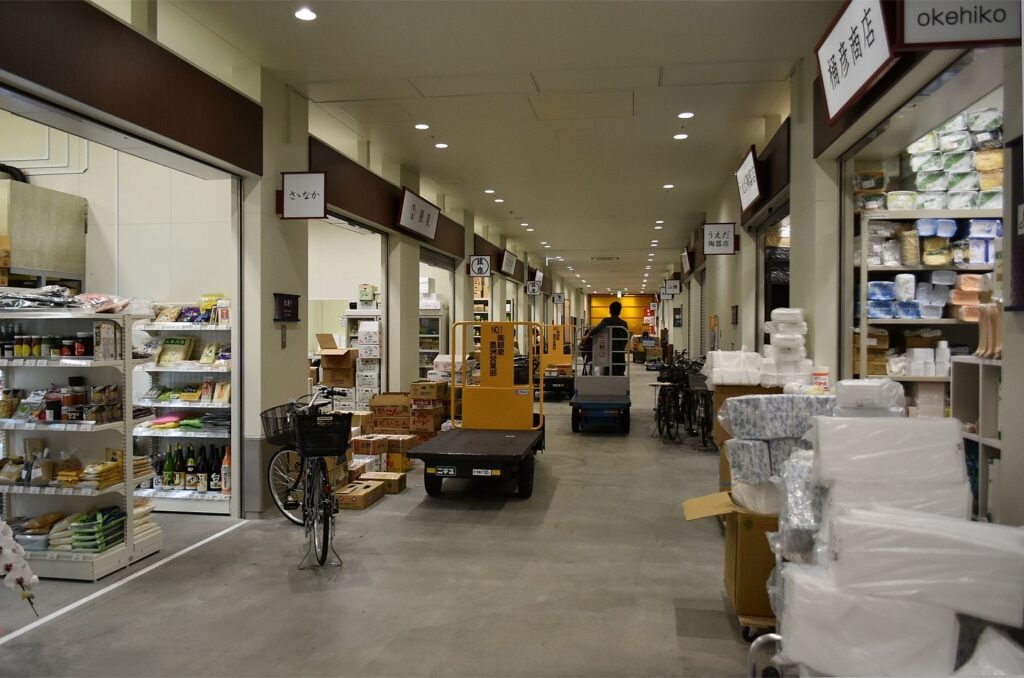
Toyosu Market Photo by 江戸村のとくぞう on Wikimedia Commons, licensed under CC BY-SA 4.0
Toyosu Market is a great place to watch tuna auctions on the visitor decks—if they are open, as they may close seasonally—and to drop by the wholesale seafood, fruit, and vegetable buildings. The main auctions usually take place very early, often before dawn.
Tsukiji Outer Market, however, offers a more bustling market experience, featuring a vibrant food scene with narrow alleys, stalls, and restaurants, along with the aromas of seafood, miso soup, and fish cakes frying, as well as sweet tamagoyaki eggs cooking on skewers.
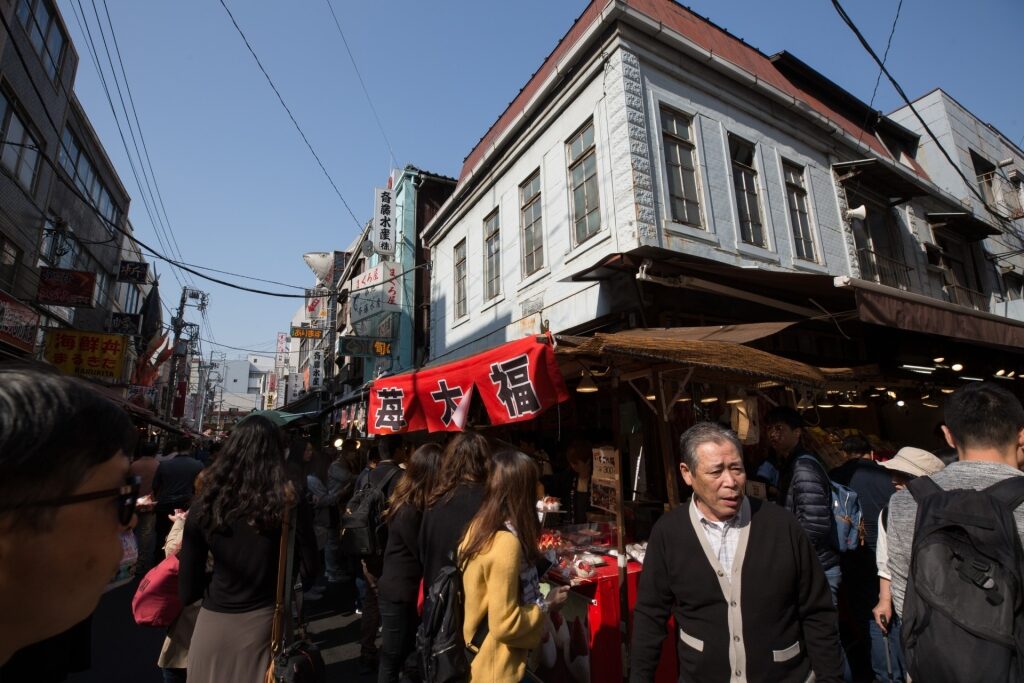
Tsukiji Outer Market
Arrive early, ideally around 6 or 7 a.m., for a remarkably fresh sushi breakfast, or a bit later, around 9 or 10 a.m., to explore the outer market, teeming with activity.
The Ghibli & Suginami Art and Animation Museums
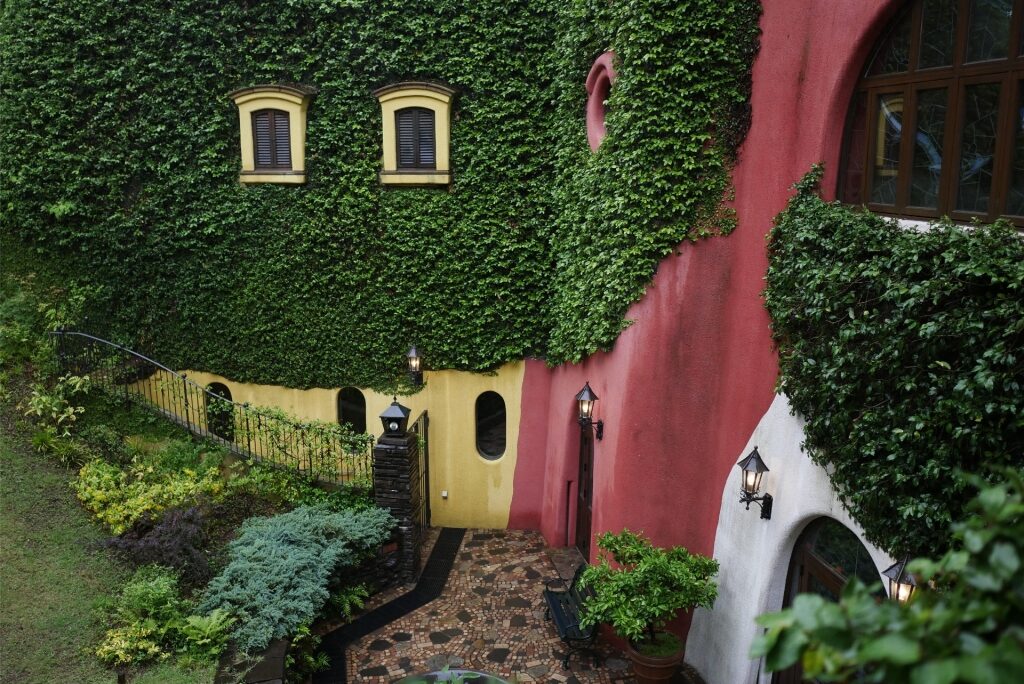
Ghibli Museum
Want to delve deeper still into Japanese art and animation? Head to the Ghibli Museum in Tokyo’s Mitaka suburb, which won’t disappoint.
The Tokyo museum will provide you with insight into the globally renowned Studio Ghibli, famous for its distinctive, elegant hand-drawn animation style and its beloved feature-length masterpieces.
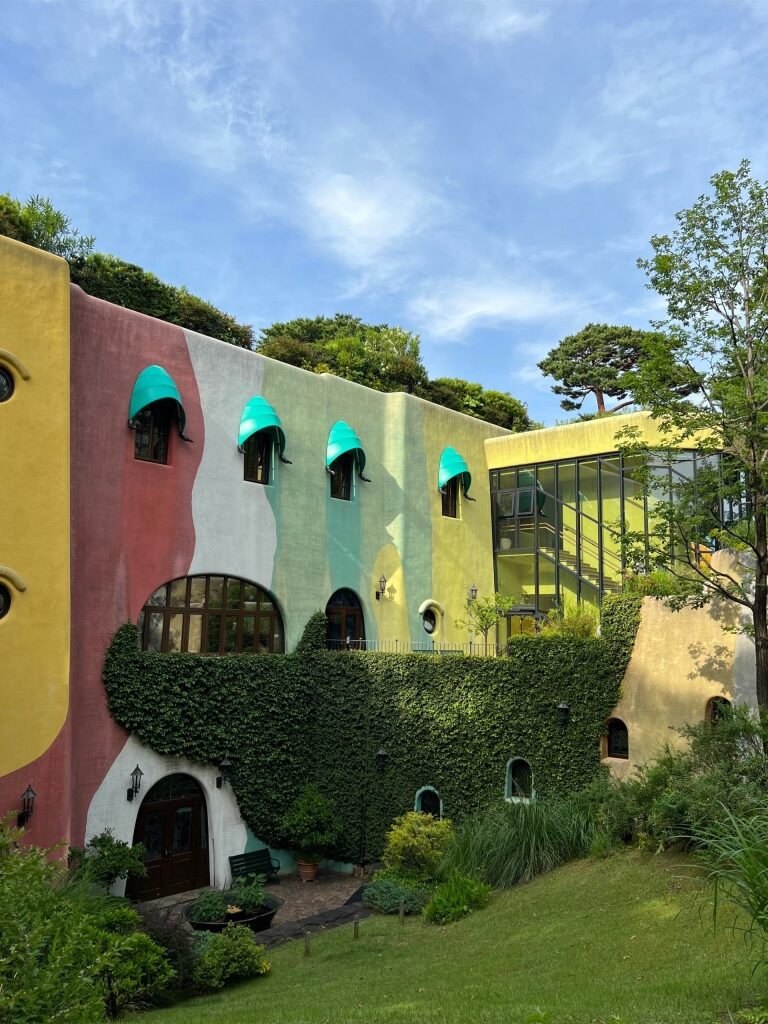
Ghibli Museum
You can walk through the rooftop gardens and check out the robot statue there, explore the Cat Bus room, which honors this twelve-legged animated cat that, you guessed it, also serves as a bus, and watch exclusive short Ghibli films that you won’t find anywhere else.
Note that Ghibli Museum tickets are available for advance purchase only, either online or at Lawson convenience stores. Therefore, book well in advance, at least one month, and also be aware that the museum is closed on Tuesdays.
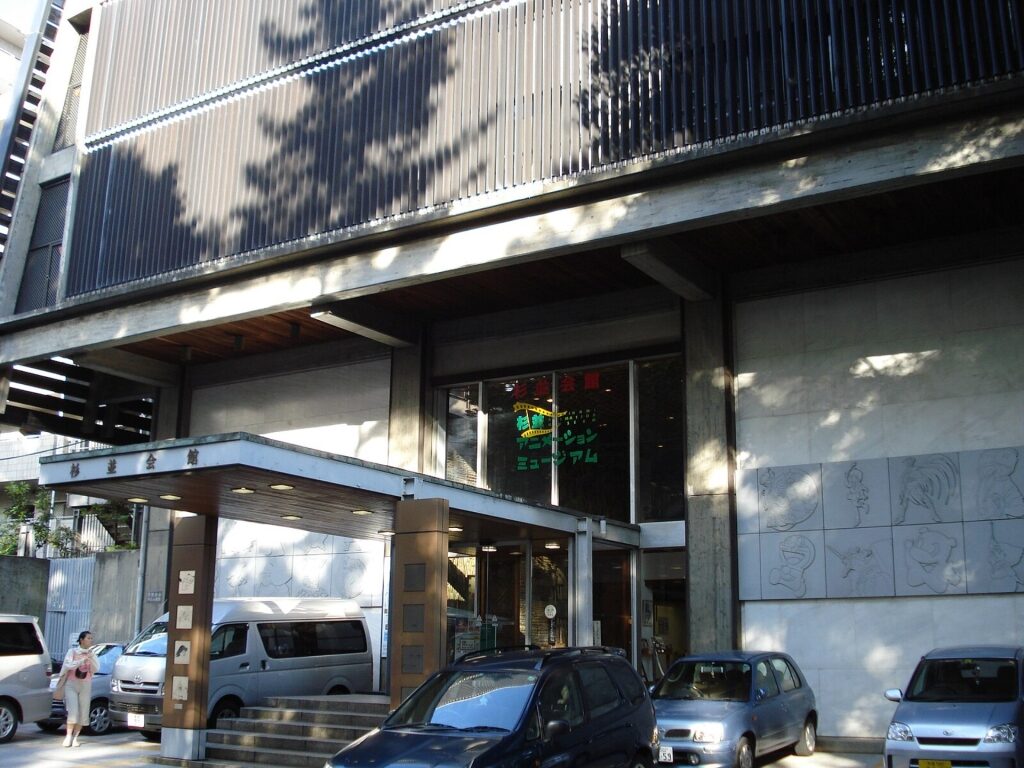
Suginami Animation Museum Photo by TokyoMontana on Wikimedia Commons, licensed under CC BY-SA 3.0
To gain an even more comprehensive understanding of Japanese animation as an art form, you can also visit the Suginami Animation Museum. This museum is free, and it covers a lot of ground related to anime.
You can draw your own characters and give voice dubbing a whirl in a sound booth during your visit. The exhibits here trace anime’s history from early hand-drawn works to modern digital techniques, and include storyboards and other materials from the production process.
There is a screening room with classic and modern anime to enjoy, as well. Suginami also features temporary exhibits, which change throughout the year, highlighting various studios, artists, and genres.
The Asakusa Historic District
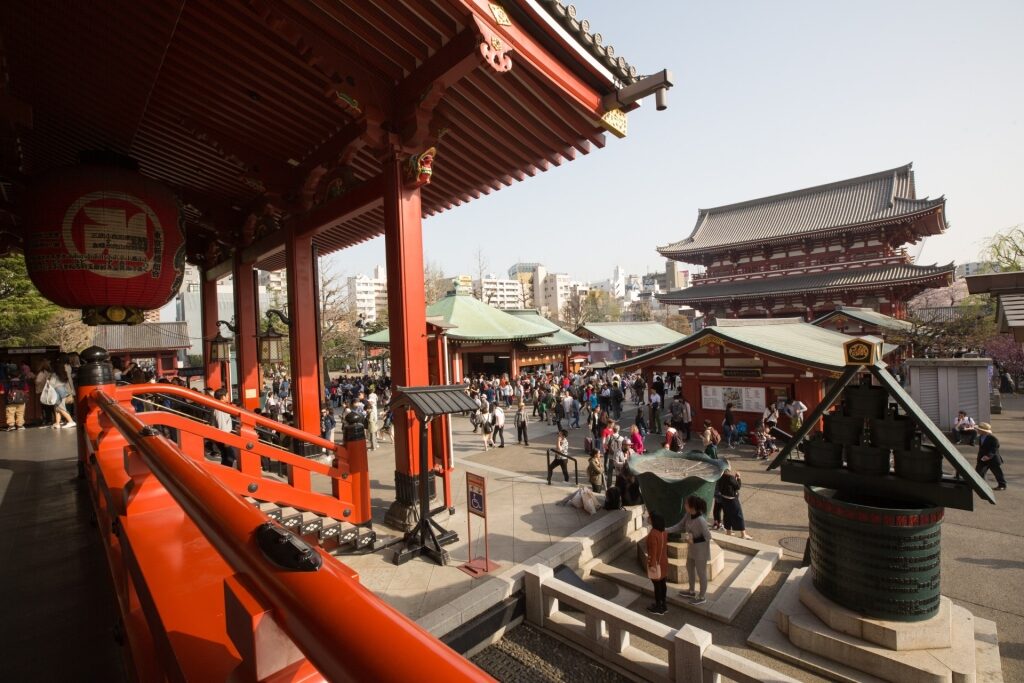
Asakusa
When you enter Asakusa, you will smell incense in the air and see wooden lanterns, low-rise buildings, and kimono-clad visitors. Asakusa is centered on Senso-ji Temple, Tokyo’s oldest Buddhist temple, completed in the late 7th century.
Pass under the Kaminarimon Gate, also known as the Thunder Gate, with its giant red lantern, and then walk through Nakamise Dori, a shopping street lined with stalls filled with handmade crafts, senbei rice crackers, yukata kimonos, fans, and traditional sweets.
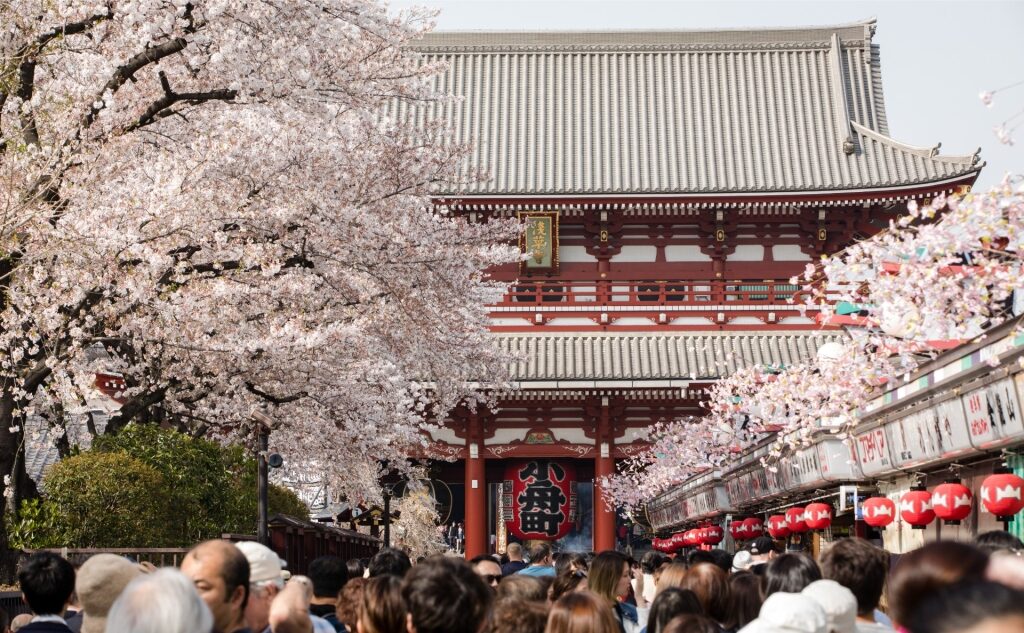
Kaminarimon Gate
Beyond the temple, Asakusa has other attractions, including Hanayashiki, Japan’s oldest amusement park, along with alleys with small shops selling old-style crafts and kitchenware.
While much of Tokyo’s architecture was destroyed during World War II, Asakusa has managed to preserve—or rebuild—in a more traditional style, which is why it still evokes a sense of Old Tokyo.
If you visit early in the morning, you will run into fewer crowds, and the temple area will be calmer. In the late afternoon and early evening, lanterns glow, shops light up, and river ferries pass by on the Sumida River, casting a golden hue over the area, making it a great time to visit as well.
FAQs
What food is Tokyo known for?
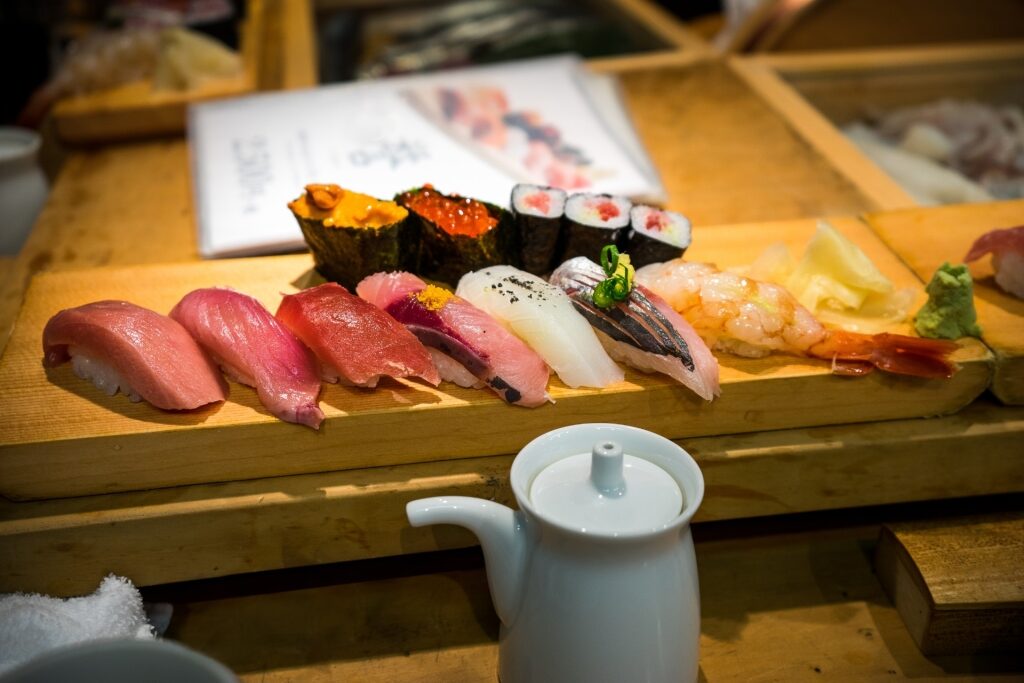
Sushi
Tokyo is on the global culinary map for its sushi, especially Edomae sushi, ramen, tempura, soba, and a wide range of amazing street foods including yakitori, as well as monjayaki savory pancakes. You’ll also find stellar fine dining here, with a remarkable number of Michelin-starred restaurants to keep the most discerning epicures busy.
Which landmarks is Tokyo best known for?
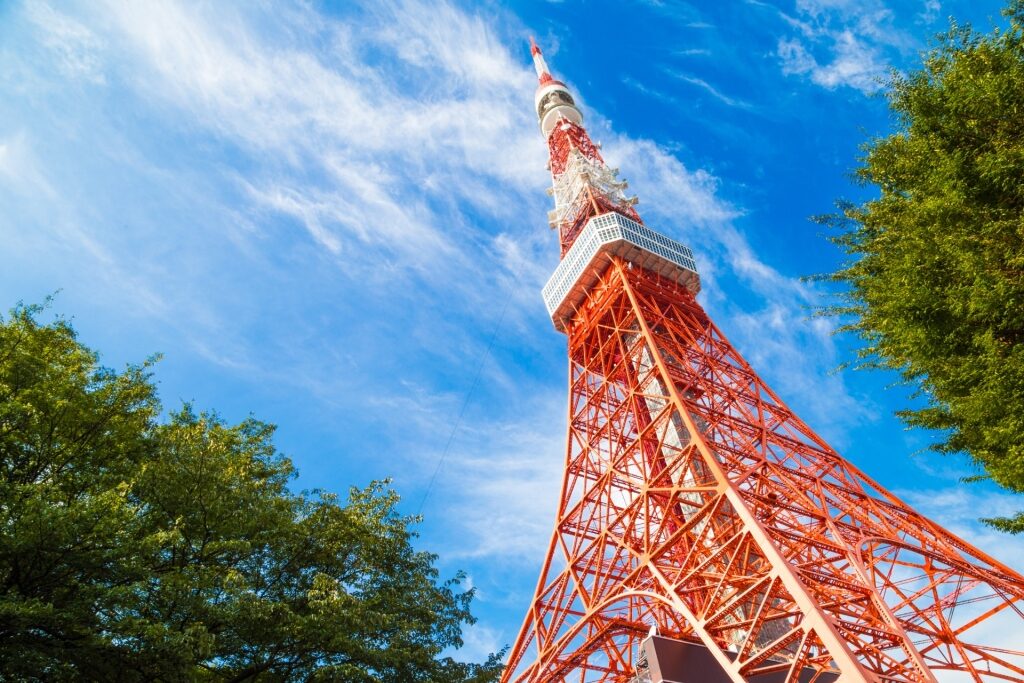
Tokyo Tower
What is Tokyo known for? Certainly, its architecture. Tokyo Tower, Tokyo Skytree, the Imperial Palace, Shibuya Crossing, and historic sites such as Senso-ji Temple in Asakusa are among the most famous landmarks you will encounter. The neon-lit lanes of Shinjuku and Akihabara are also among the cultural districts that Tokyo is known for.
What cultural experiences is Tokyo known for?
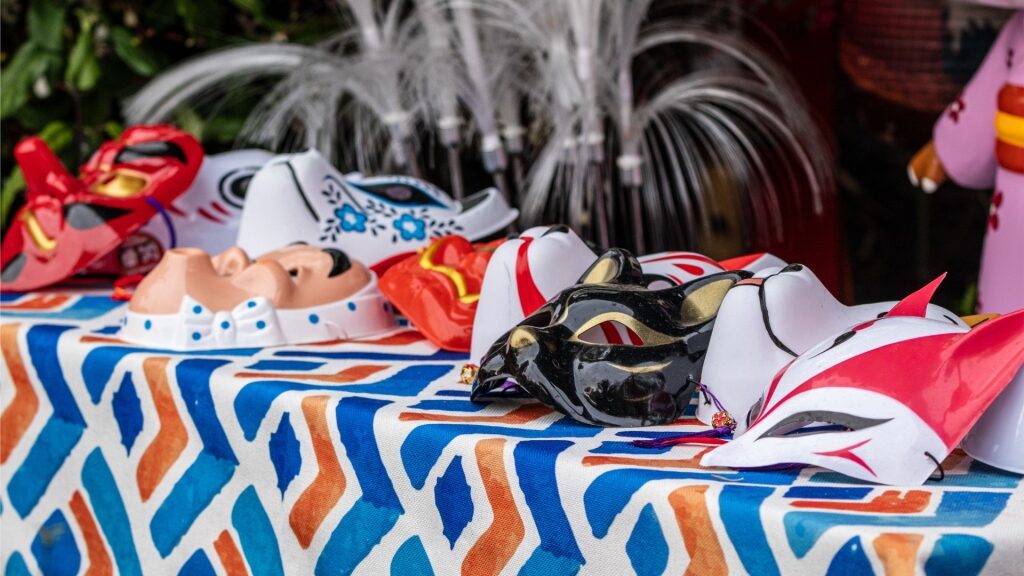
Kanda Matsuri
Depending on when you arrive, you can experience sumo wrestling, traditional kabuki theater, tea ceremonies, seasonal festivals such as the colorful Kanda Matsuri Shinto festival in May, anime culture, and karaoke.
What makes Tokyo unique compared to other cities in Japan?
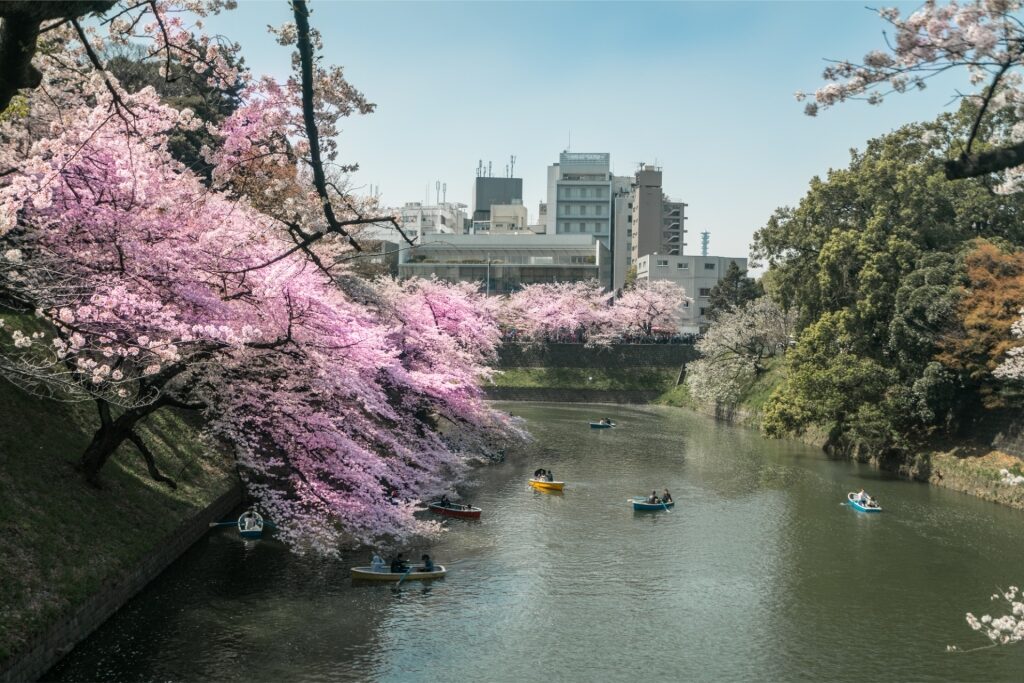
Chidorigafuchi Park
Tokyo offers a fascinating mixture of ancient temples and traditional gardens, set alongside cutting-edge architecture, technology, and fashion, providing visitors with an incredible variety of cultural experiences in the world’s largest city.
Tokyo
Ready to immerse yourself in Japan’s megalopolis? Browse Celebrity’s cruises to Tokyo to plan an unforgettable vacation.