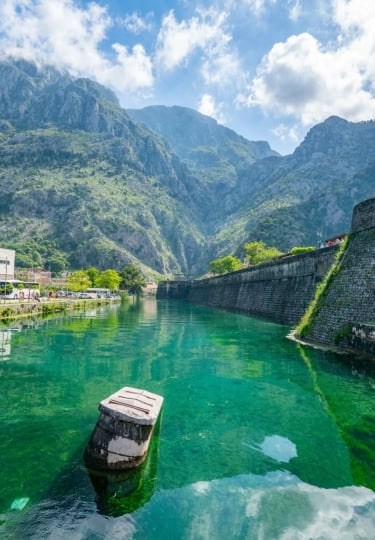
Old Town Kotor is a charming collection of restored Romanesque churches, Venetian palazzi, and pocket-sized trgovi, or public squares, weighted under two millennia of history.
Knitted together by narrow, semi-polished stone streets sauntered by Kotor’s countless community cats, and bound by triangle-shaped fortifications that point towards the sublime, fjord-like Bay of Kotor, this sun-kissed Adriatic town is the definition of postcard perfect.
Stroll every medieval alleyway, scale the challenging yet cinematic switchback castle climb, and then reward yourself with a typical cherry strudel. Along the way, you’ll be enchanted by every corner of Kotor Old Town.
Attractions in Old Town Kotor
Gurdic and Sea Gates
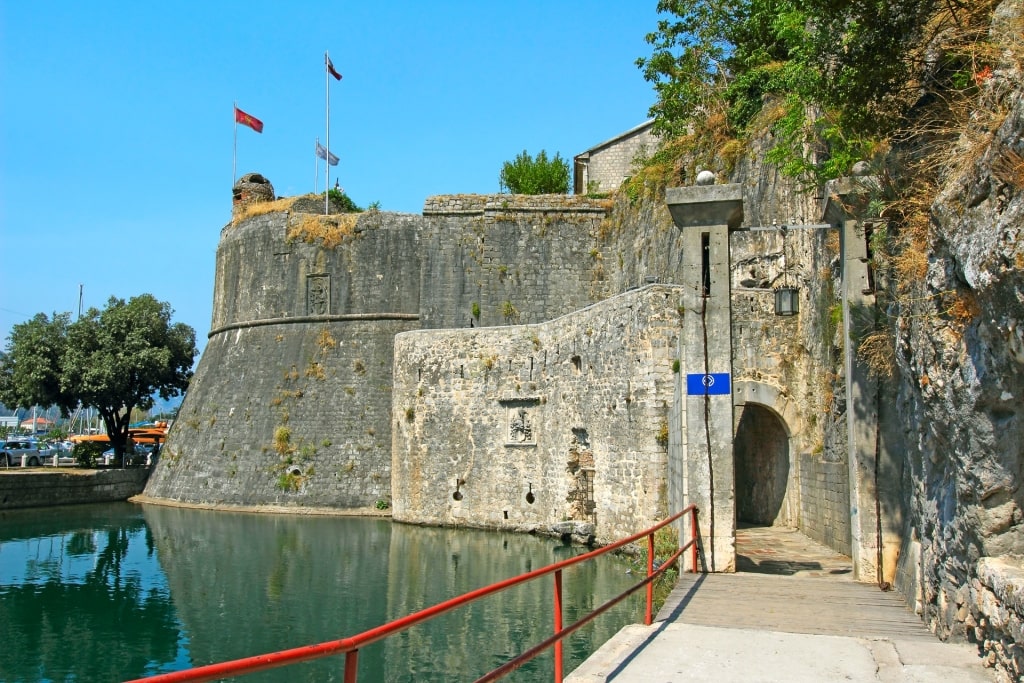
Gurdic Gate
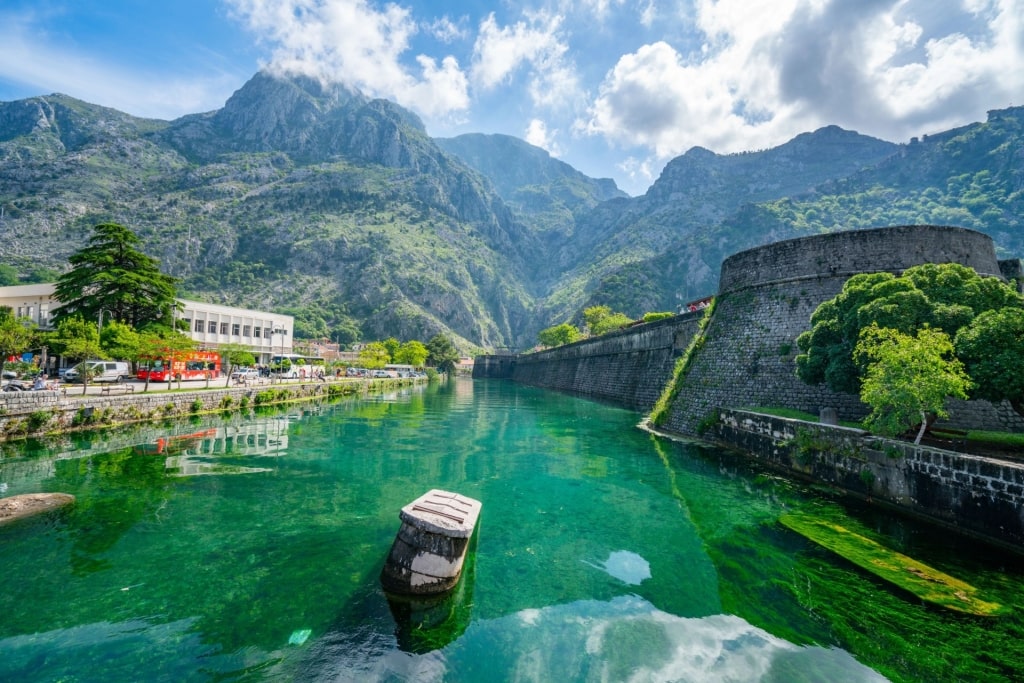
Before even entering Kotor Old Town, often referred to as Kotor Stari Grad, you’ll face one of its two prominent landmarks: the Gurdic Gate or the Sea Gate.
Providing a foreboding entrance to Kotor’s imposing walls, the Gurdic Gate, also known as the South Gate, is the most photogenic of the pair. This slit in the lower walls, accessed by walking around the rampart’s waters, provides the first of three entrance portals, each built in a different period since the 13th century.
The more typical 16th-century Sea Gate, known as the Main Gate, is a stone-arched entrance along a long flank of walls. An inscription above the gate, attributed to Yugoslavian president Tito, as a reminder of Kotor’s liberation from the Nazis.
Kotor Clock Tower
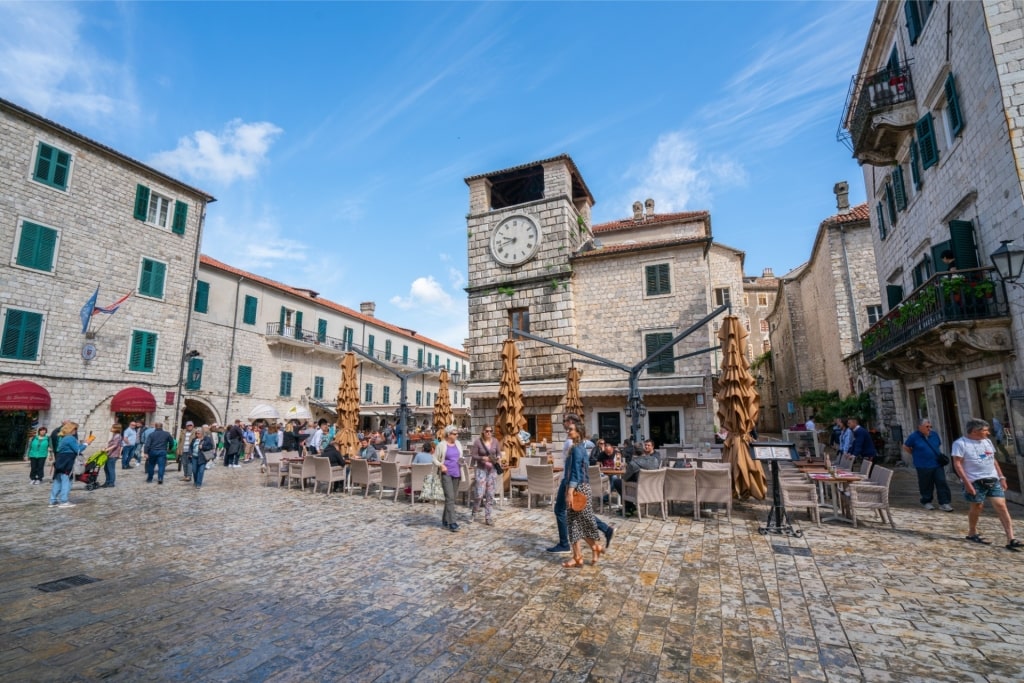
Kotor Clock Tower
Constructed at the turn of the 17th century, Old Town Kotor’s stumpy clock tower has surveyed the L-shaped Trg od Oružja, or Square of Arms, for over 600 years.
Not that it looks its age. Two significant earthquakes in 1667 and 1979 ensured that the stone-built tower and clock face have since been thoroughly restored, although it remains slightly tilted until this day.
Entering the Stari Grad via the Sea Gate, the three-floor clock tower—barely higher than the surrounding palaces and townhouses—is the first landmark you’ll see.
Sadly, it’s not currently possible to enter or climb the clock tower. Instead, pop into Moritz Eis opposite, order a few scoops of gelato—the lemon and mint flavor is particularly tempting on a hot day—and enjoy the refreshment while studying the stonework up close.
St. Tryphon’s Cathedral
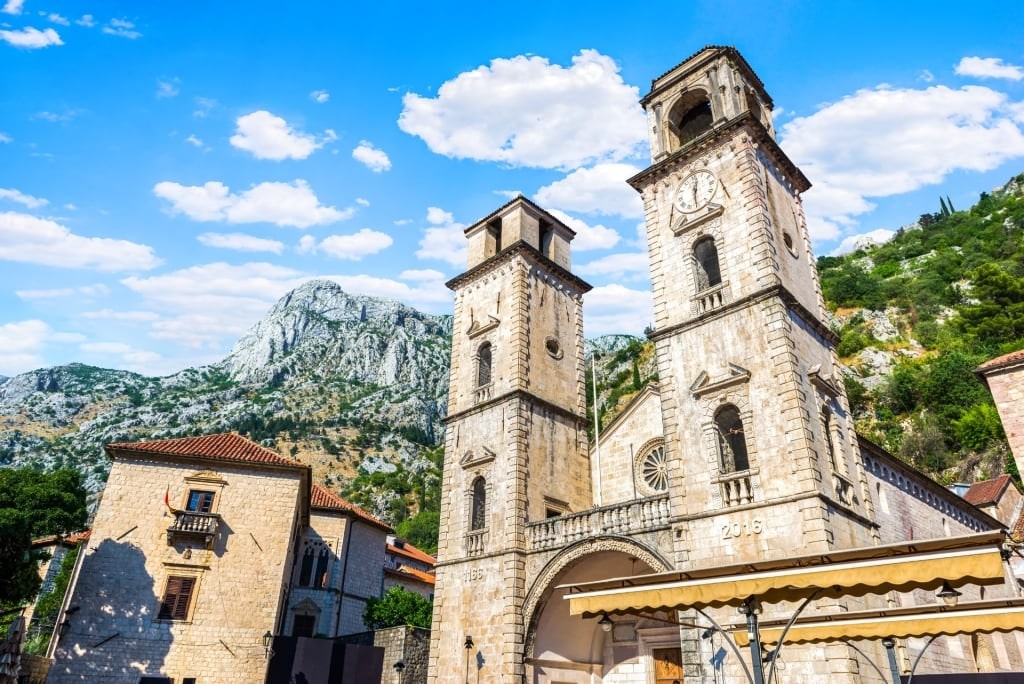
St. Tryphon’s Cathedral
Kotor Cathedral, officially St. Tryphon’s Cathedral, is by far the old town’s grandest building. Built in 1166, the Cathedral is dedicated to Kotor’s patron saint, Tryphon of Campsada. It is said that his relics arrived in the Eastern European city in 809, and the original church here laid the foundations for the 12th-century cathedral.
As with many of Old Town Kotor’s landmarks, St. Tryphon’s has been reconstructed following various earthquakes, preserving some of edifice’s Romanesque architecture. The Baroque facade, including the twin bell towers, and the vaulted ceiling’s embellishments, were added during the Venetian rule.
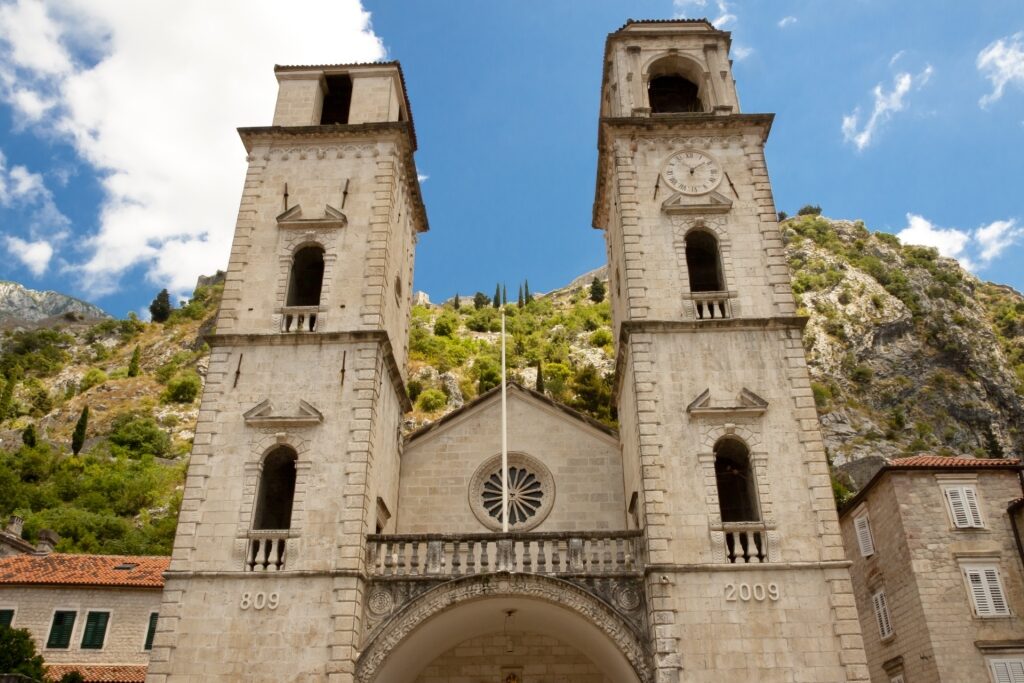
St. Tryphon’s Cathedral
Entry to the cathedral includes access to the beguiling, three-aisled basilica, where the building’s chronology is visible through original medieval Greek-painted frescoes, Byzantine additions, Baroque flourishes, and the upper floor’s museum.
The three most impressive features are the silver-gilded altar in the main nave, a 15th-century wooden crucifix in the Sacred Art Museum, and the said body parts of St. Tryphon secured in the chapel.
Karampana Fountain
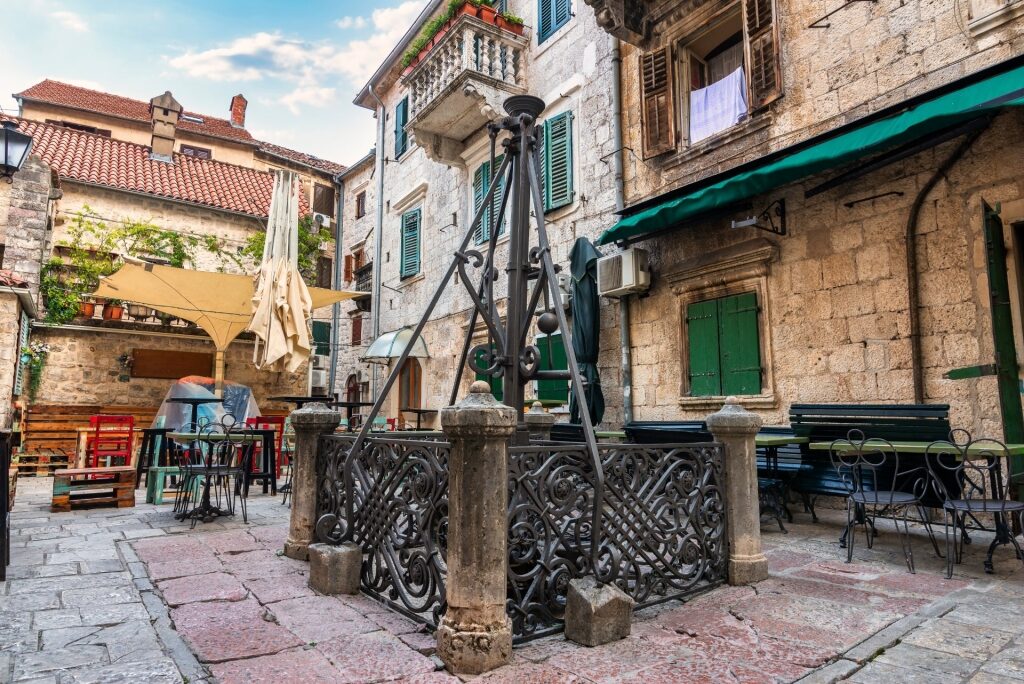
Karampana Fountain
Although the centerpiece of its diminutive, namesake square, the Karampana Fountain is one of those sights that you can spot, photograph, and quickly move on from. But its historical significance means this wrought iron landmark deserves a closer inspection.
The fountain, dating back to the late 17th century, was Kotor Old Town’s primary source of drinking water until 1917, when a modern water system was introduced.
For over 200 years, locals gathered to pump water while lingering for neighborly catch-ups—a tradition that continues today on the café terraces.
The fountain even lent its name to a 20th-century humorous publication, the Karampane, printed and distributed by the Maritime Museum on the adjacent square. The archive is still available in the museum’s library.
Maritime Museum of Montenegro
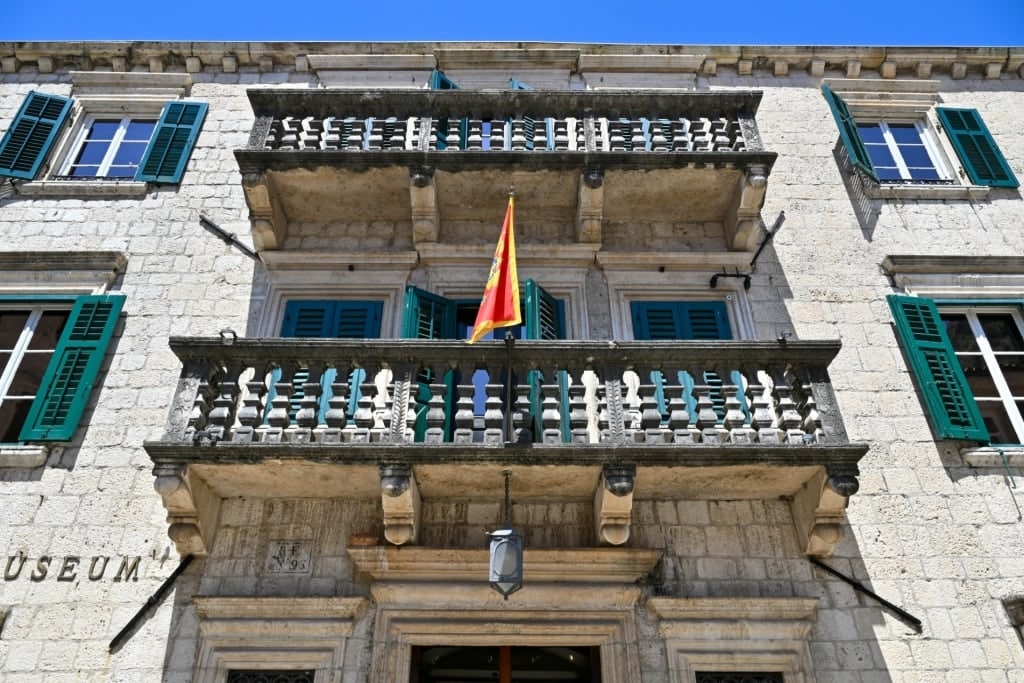
Maritime Museum of Montenegro
The Maritime Museum of Montenegro is a time capsule of naval history covering Kotor and the wider country, which has expanded over the years to occupy three floors of a Baroque palace.
Established initially to display items from the Boka Marine fraternity—a nautical organization said to have been founded in the 9th century—the museum’s collection has grown substantially since opening in 1900.
The fraternity’s exhibition of maritime uniforms, ancient flags, and vintage photos remains, alongside another dozen spaces displaying an eclectic mix of a former Austrian admiral’s furniture, a well-preserved selection of 17th-century rifles, and model ships.
Dedicate the most time to the two central halls and in particular, the folklore collection. Both command attention for their palatial architecture and insight into the lifestyles of the Montenegrin elite, narrated through displays of filigree jewelry and elegant, highly embellished gowns.
Things to Do in Kotor’s Old Town
Find Kotor’s Feline Friends
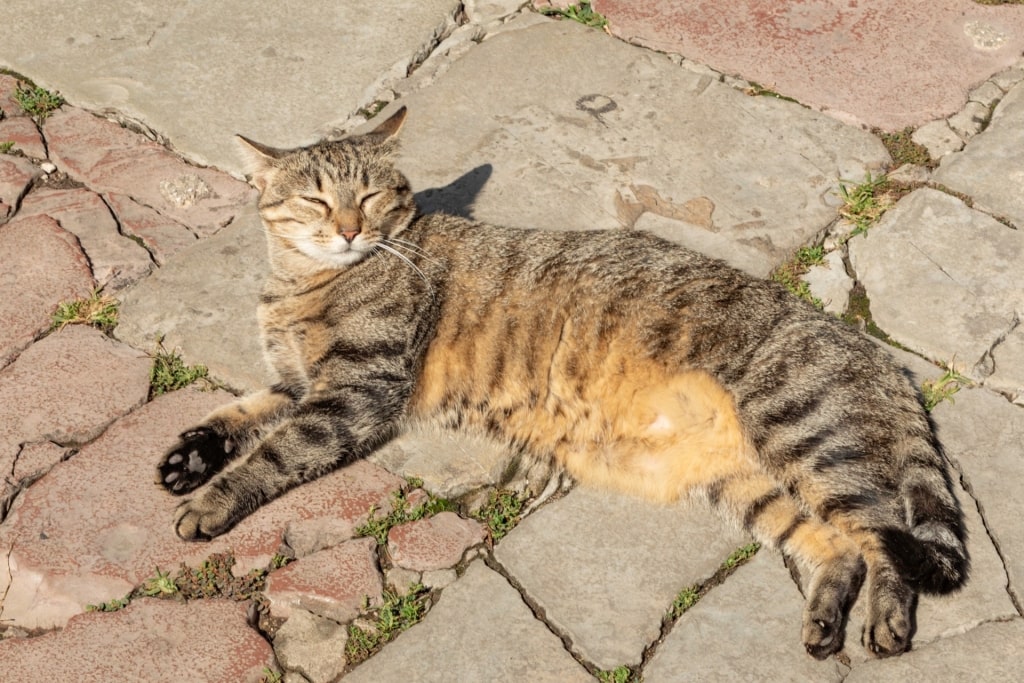
Cat
Within minutes of roaming Old Town Kotor, you’ll have encountered one of the town’s cute and friendly community cats.
Estimates place the number of felines living in Kotor above 1,000, and you’ll find them everywhere. Be it lounging in the sun, perched on windowsills, or ambling into bars, chances are you’ll soon hear a meow asking for a snack or a stroke.
Like many old port towns, cats were introduced to control rats onboard ships. Nowadays, they have become an unofficial symbol of the town, which is fitting, given that Kotor’s official symbol is the Winged Lion of St. Mark since the Venetian era.
There’s even a Cat Museum, decked out with old kitty photos. It’s small and cute, if not particularly impressive, and the inexpensive entrance fee helps to care for Kotor’s furry friends.
Walk Kotor’s City Walls and Kampana Tower
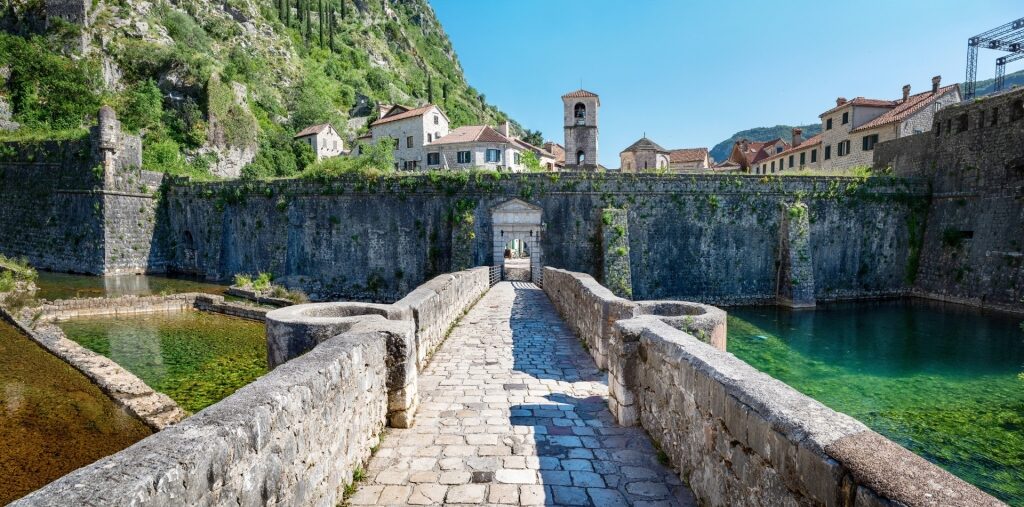
City Walls
For the best introduction to Old Town Kotor, head directly to the ramparts. The City Walls stretch for around 2.8 miles, surrounding the entire town, though only parts are accessible.
From slightly above—the walls stand at 65 feet high in parts—you’ll have an excellent overview of the medieval streets, architecture, and squares that await below.
Some patches of the walls date back to the 13th century. However, the majority of what is visible today dates back to the Venetian period and onwards, including heavily restored sections due to earthquake damage.
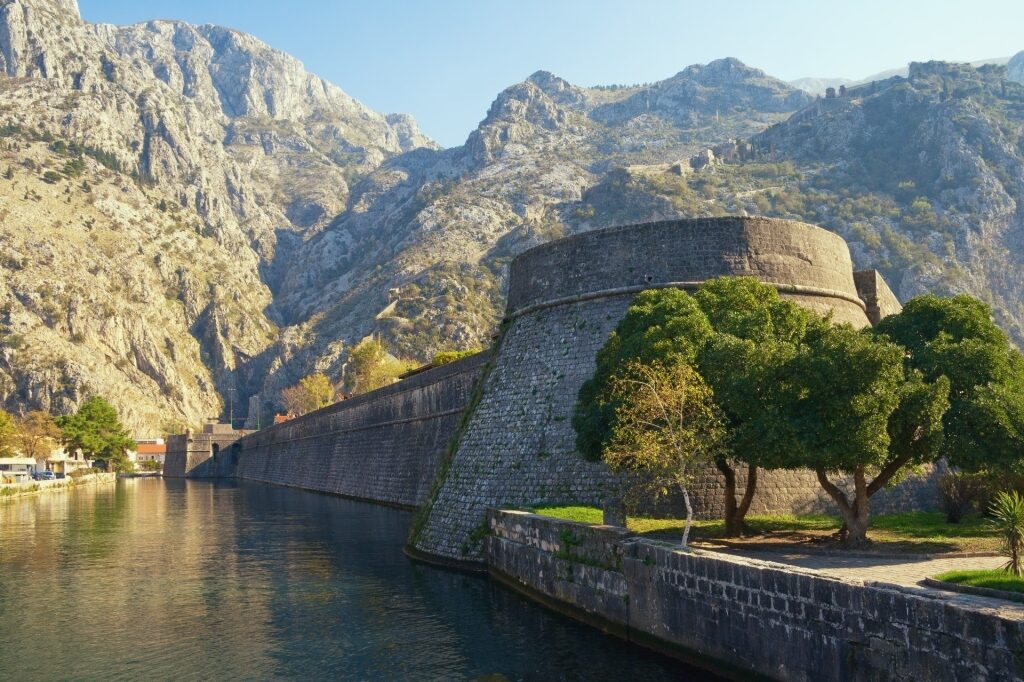
Kampana Tower
Of the half dozen bastions dotting the walls, the squat, semicircular Kampana Tower is the most impressive. Defending the northwestern point of Kotor’s “triangle”, it anchors the section of walls built along the Scurda River.
Climb to the Castle Of San Giovanni
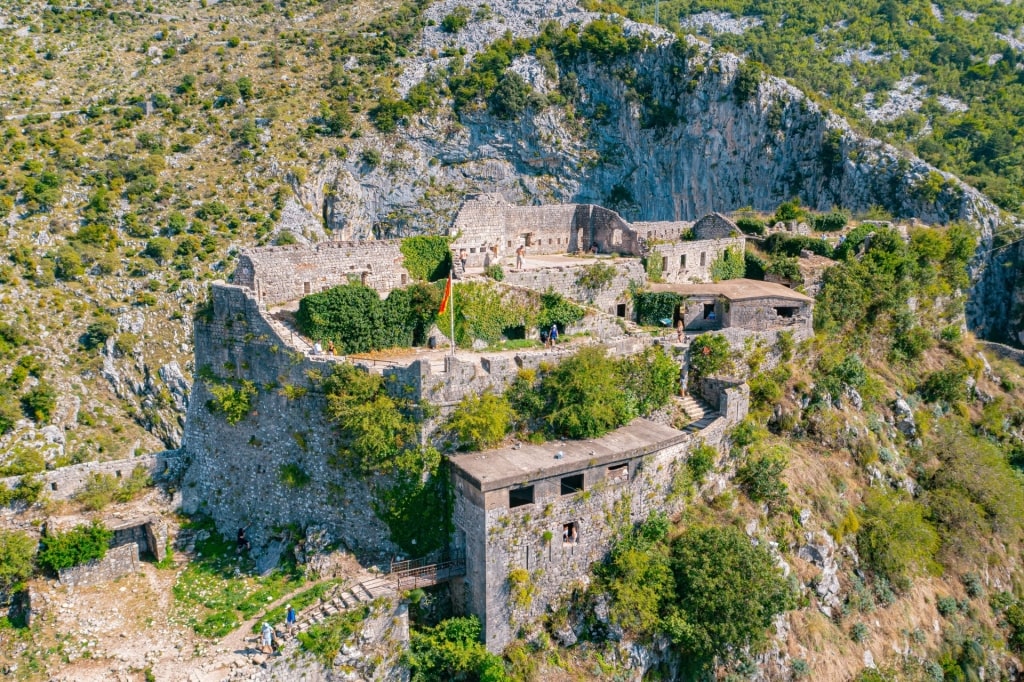
Castle of San Giovanni
For a more active and awe-inspiring view of the Old Town and its walls, one of the best things to do in Kotor is to tackle the hill-climbing switchback Ladder of Kotor trail to the Castle of San Giovanni, or the alternative steep staircase.
Also known as Old Kotor Fort or St. John’s Castle, the original fortifications date back to the early Byzantine period, though the full walls and fort were established in the 14th century.
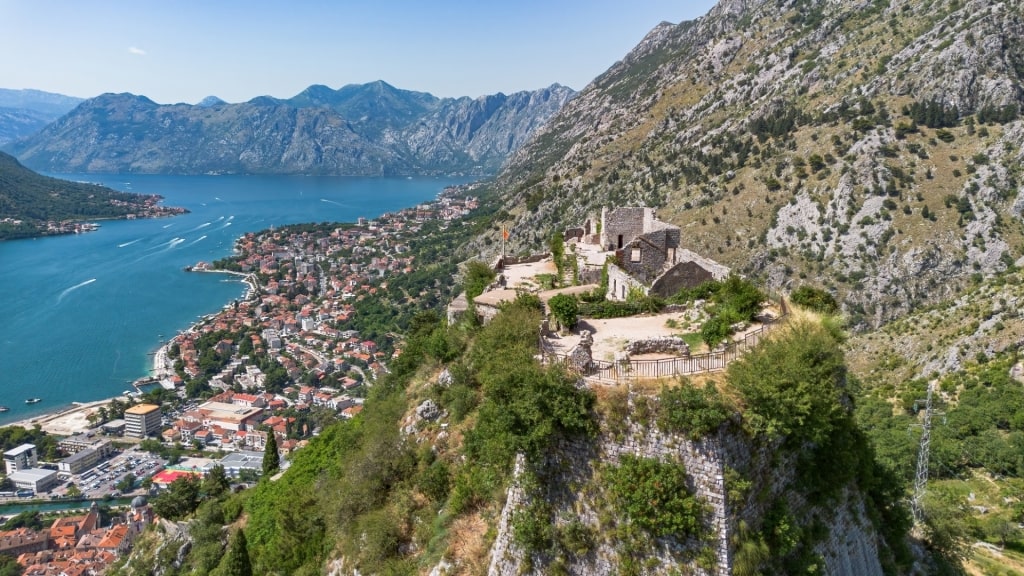
Castle of San Giovanni
Yet the reward for the challenging, 3,000-odd feet climb—allow around two hours—up the zig-zag route isn’t the architecture, but the aerial views.
From high above, you’ll see all of the UNESCO World Heritage Site of Kotor spill out before you.
Cocooned by limestone cliffs, including the magnificent Mt. Lovćen, which stands at 5,738 feet, and backed by the breathtakingly cobalt-blue Bay of Kotor, this panorama of the Old Town is unrivaled.
Trace Time On a Tour of Dazzling Churches
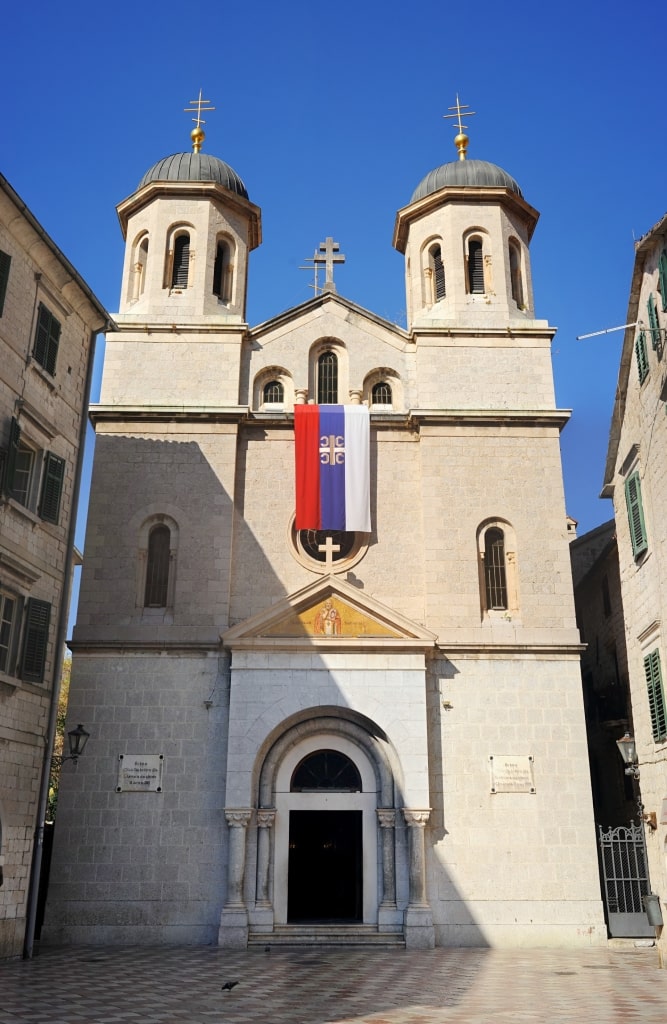
St. Nicholas’ Church
St. Tryphon’s might steal the show, but it’s far from being the only church worth visiting in Old Town Kotor. There are around a dozen churches in the Kotor area, and a trio of those are worth building into your itinerary as brief visits.
St. Nicholas’ Church is the largest and most commanding. Constructed at the start of the 20th century above a ruined religious building, the Orthodox church blends Kotor’s typical beige stone with dominant dark green domes.
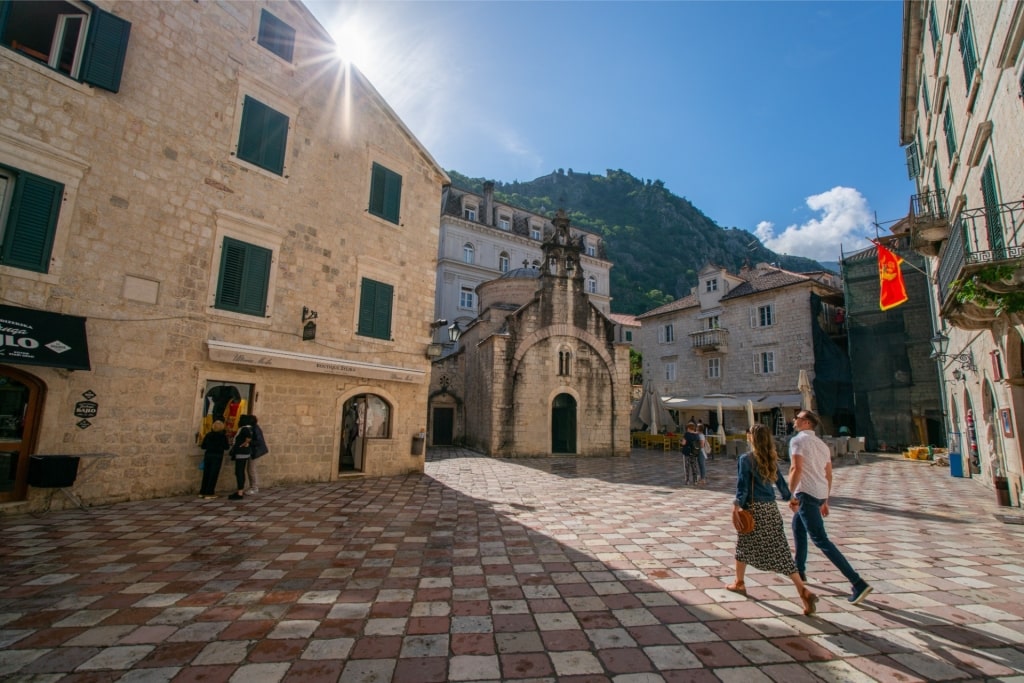
St. Luke’s Church
The most striking feature inside are the large canvases painted with halo-capped saints—the altar-backing panels are particularly impressive.
St. Luke’s, another Serbian Orthodox church, is worth a peek as the structure was left unscathed by the earthquake, preserving the 12th-century design. Catholic St Mary’s Church, although rather plain inside since the interior was plastered over, still has a few preserved sections of its vivid 14th-century frescoes remaining.
Feel Royal in Pretty Palaces
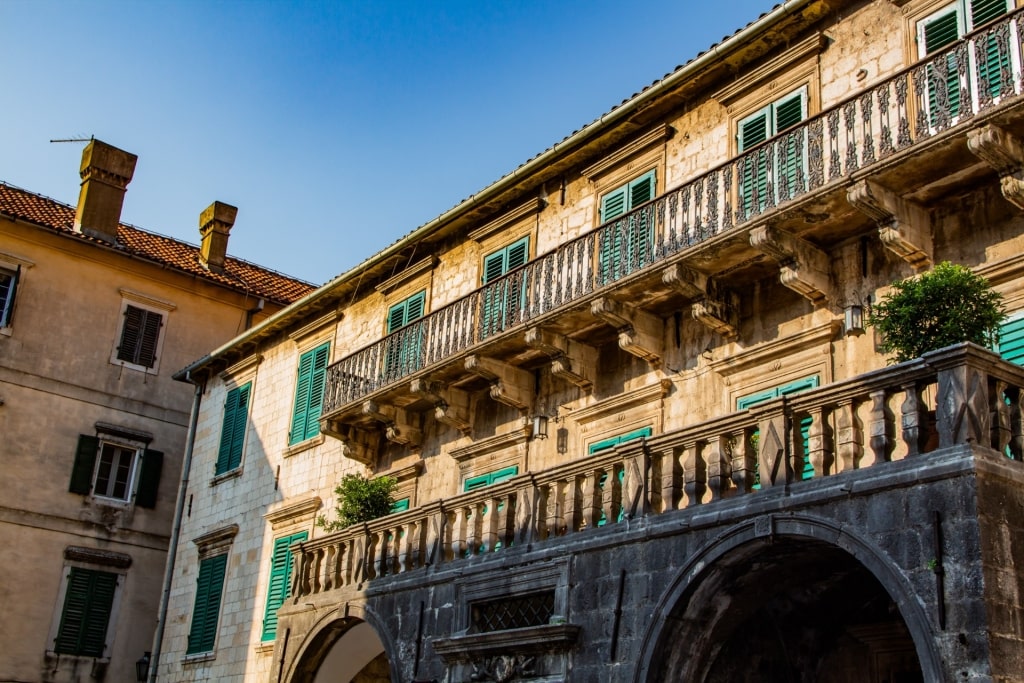
Pima Palace
During the Venetian rule, Kotor became a town of palazzi, a type of palatial building typical of Venice and wider Italy. These nods to previous wealth are visible on every street. Many, such as Palazzo Sindik and Palazzo Drusko, remain privately owned and have been converted into residences or alternative uses.
Thankfully, parts of one of the most representative palazzo of the Renaissance-Baroque period are open to the public. The opulent 17th-century Pima Palace, situated on Trg od Brašna, or Town Square, is instantly recognizable for its jade-colored shutters, detailed iron railings, and portico entrance.
For a glimpse inside the palace—albeit a somewhat stripped-back presentation from its decadent past—pop into the Gallery of Solidarity, which has occupied Pima’s ground floor since 2011. The 400-piece collection includes paintings and sculptures, all with links to the former Yugoslavia.
Buy a Souvenir at Kotor Bazaar
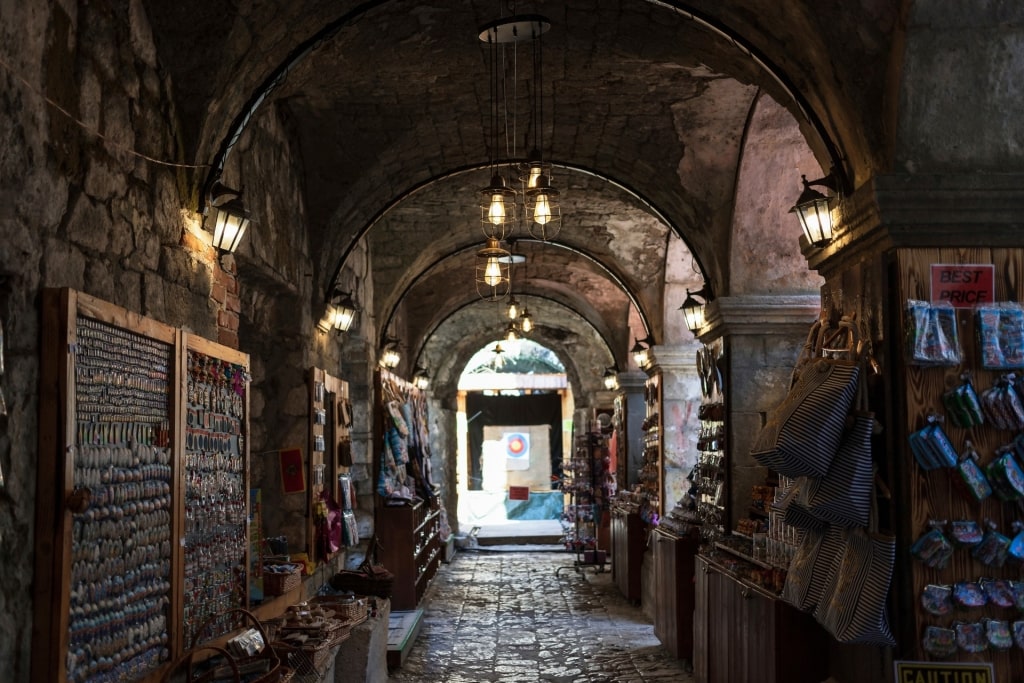
Kotor Bazaar
Set in one of the Old Town’s most picturesque pockets, the diminutive Kotor Bazaar, also known as Galerija Tician, is a striking, if slightly touristy, spot for purchasing souvenirs.
The clutch of colorful small stores occupies the cloister of a former Dominican monastery, the faded stone arches dating back to the 15th century.
Typical foodstuffs, including cheeses and local liquors, are available, but the majority of the space is given over to the expected fridge magnets, cat-themed keyrings, and colorful, likely overpriced, Ottoman-style lamps. Still, it’s worth a brief stroll through to appreciate the architecture.
People-Watch on the Square of Arms
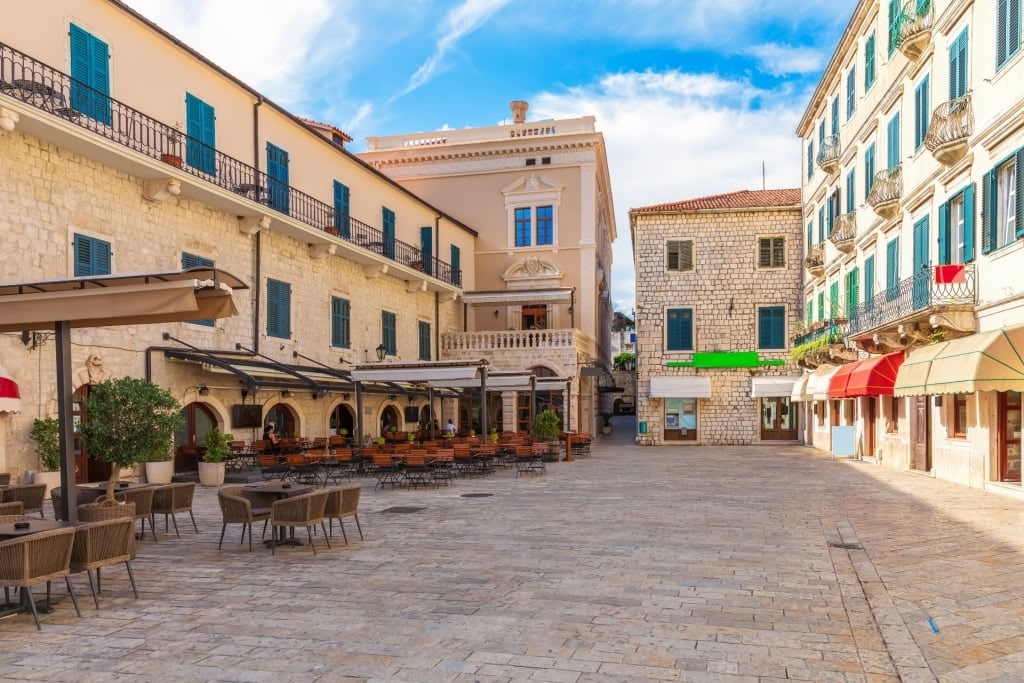
Square of Arms
The Trg od Oružja, or Square of Arms, has been Kotor Old Town’s central meeting place for centuries. Nowadays, it remains most visitors’ first and last impression of this historic town.
Before departing back to the spectacular bay via the Sea Gate, linger a while to soak up the animated atmosphere and imagine the current comings and goings are those of sailors centuries ago—ideally with a Moritz Eis gelato in hand.
Restaurants
Forza Café
Set on the Square of Arms, Forza is the perfect place to watch the world go by. It’s also a go-to stop to try one of Kotor Old Town’s signature sweet treats: cherry strudel.
Making the most of the local supply of Marasca cherries, it shouldn’t be skipped. However, if your sweet tooth is craving something less sour, order the Splitska torta, a mouthwatering mix of vanilla cream, figs, and walnuts.
Konoba Trpeza
With weathered, uneven stone walls both inside and out, and a plethora of fishing nets and nautical memorabilia adorning the walls, Konoba Trpeza’s atmosphere is historic maritime chic.
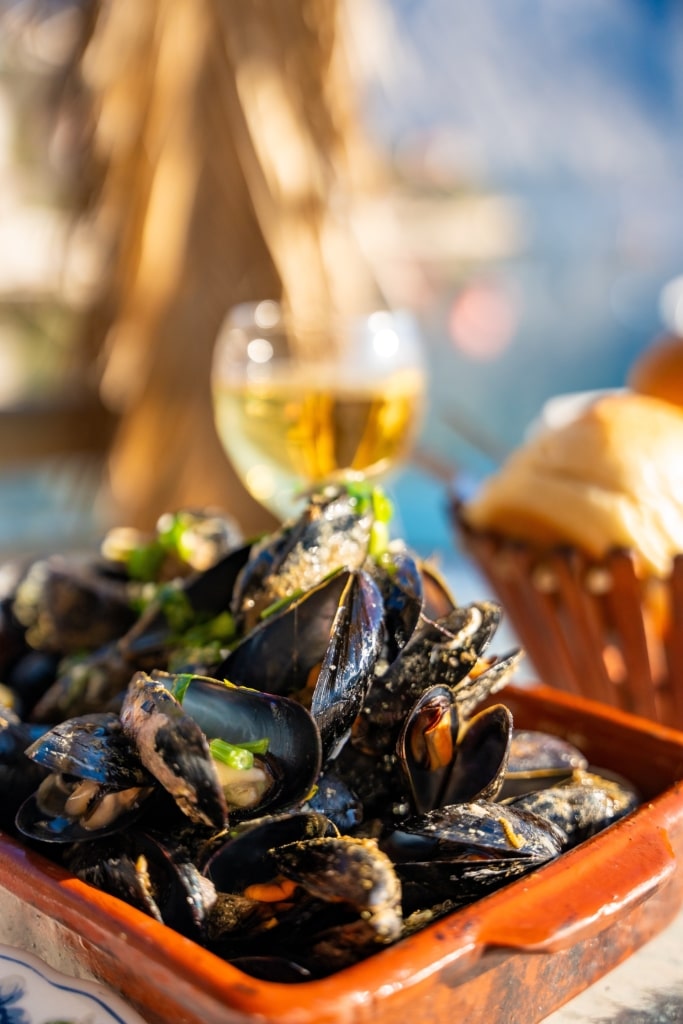
Mussels
Settle in the courtyard with a chilled spritz, select your fresh fish from the ice display, and order a portion of steamed mussels to taste the bounty harvested from the Bay of Kotor.
Ombra
Snag a table on Ombra’s shaded terrace for a fresh Mediterranean feast that revives Kotor’s former Venetian links. The mainly Italian-anchored menu has seafood-packed risottos, contemporary twists on classic pasta dishes, and properly wood-fired pizzas.
Restoran Atrium
Atrium consistently delivers a first-class dining experience. Stepping inside the glass-roofed dining room, it’s impossible not to be wowed by this former Franciscan monastery’s pillars and crumbling stonework.
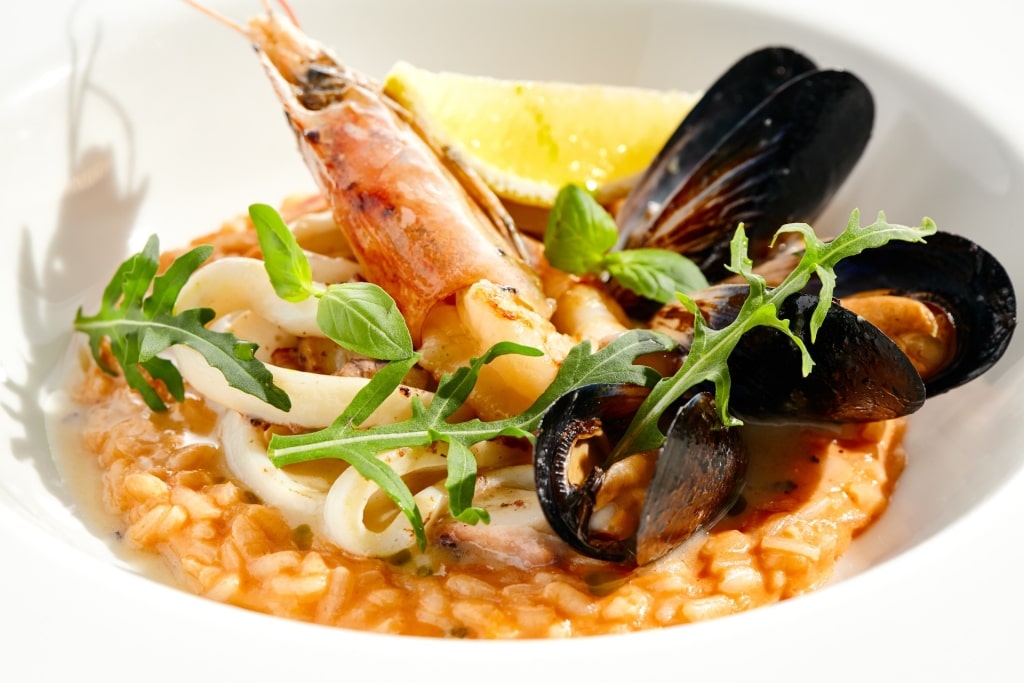
Risotto
Equally impressive is the Japanese fusion menu. Opt for high-quality sushi or Montenegrin staples, such as mussels, pork neck, and risotto rice, expertly blended with Eastern flavors. Just leave room for dessert—the chocolate fondant with rich cherry coulis is divine.
Travel Tips
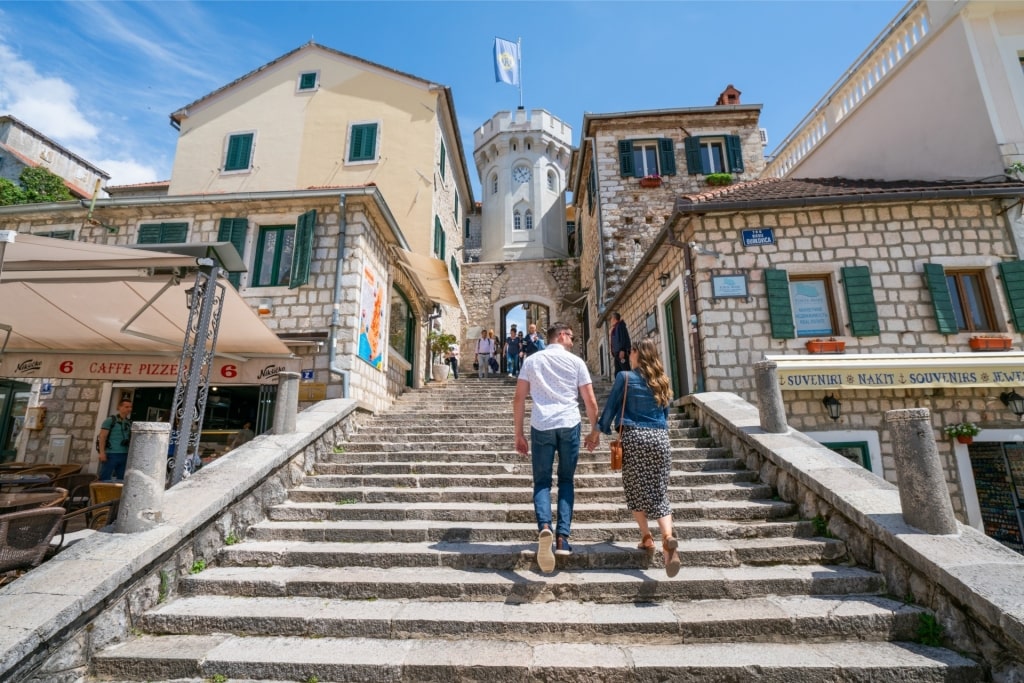
Old Town Kotor
Getting around car-free Old Town Kotor is a delight. The pedestrianized area within the walls is compact, flat, and easily walkable, and the narrow streets provide much-appreciated summer shade.
However, if you plan to tackle the climb to St. John’s Castle, start early on arrival to try and avoid the midday sun and usual crowds. Your comfiest shoes and lightweight clothing is a must in Kotor.
Although not part of the EU, Montenegro has used the Euro as its de facto currency since 2002. Card payments are widely accepted, although cash is often handy in cafés, particularly for tipping—10% for good service—or for purchasing smaller souvenirs.
When selecting souvenirs, look for local specialty products. Prized Montenegrin honey, rajika, a fruit brandy, and wines from the nearby Savina region—including hard-to-find-elsewhere whites produced from the indigenous Zizak grape—make delicious gifts.
Read: Most Romantic Cities in Europe
Old Town Kotor
To fully appreciate the beauty of Montenegro, arrive on one of Celebrity’s cruises to Kotor. Browse itineraries to start planning a memorable Mediterranean vacation.