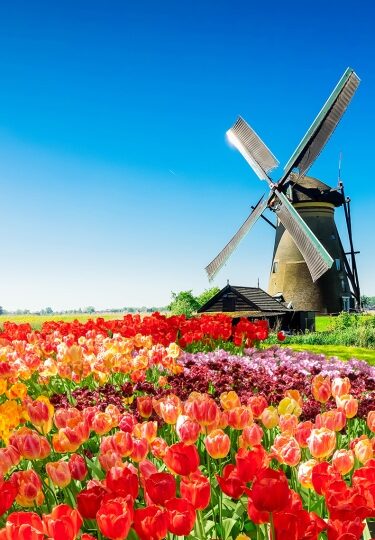
The Kinderdijk Windmills are a UNESCO World Heritage site in South Holland and one of the Netherlands’ most recognizable landscapes. Known for 19 historic 18th-century windmills, this unique destination is easily reached from Rotterdam or Dordrecht. The windmills are iconic not only for their stately beauty, but also for their role in a centuries-old water-management system that helps keep low-lying land dry and habitable.
Explore wonders such as the windmills and the idyllic Dutch countryside on an inspiring Rhine River cruise.
What To See at Kinderdijk
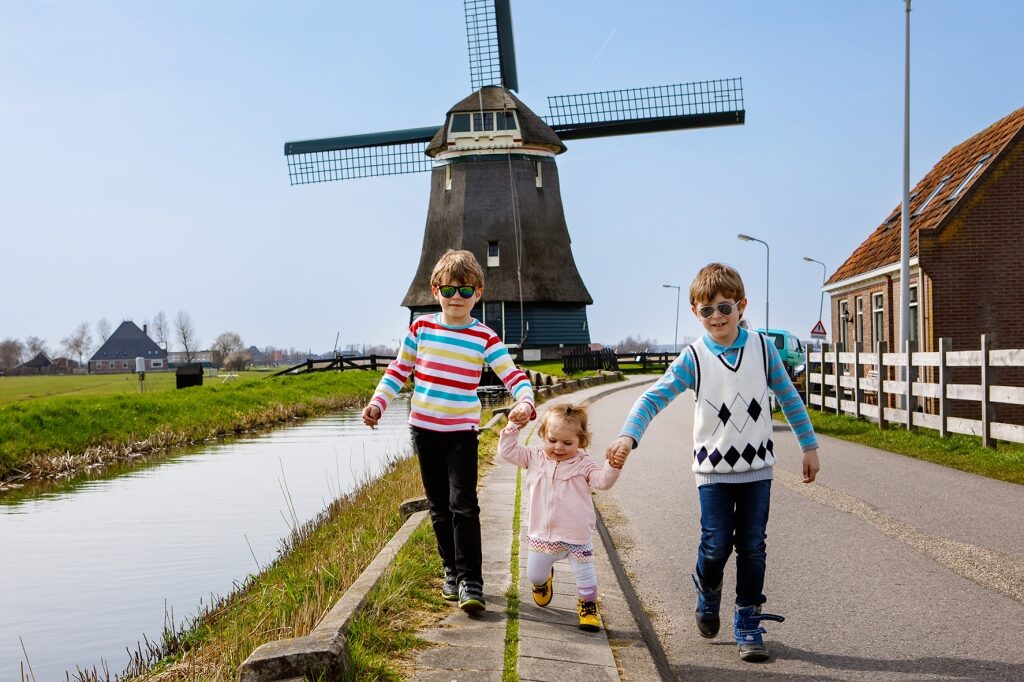
Children walking hand-in-hand past a traditional windmill capture the joyful, family-friendly side of exploring the Dutch countryside.
A visit to Kinderdijk offers more than the breathtaking sight of 19 windmills lining the waterways. Museum mill experiences and interactive exhibits add cultural context for travelers who want to understand the area’s deeper local history, not just take beautiful photos.
A trip to Kinderdijk from an Amsterdam-based river cruise is part history, part scenery, part landmark, and is manageable for nearly any traveler. Walking paths offer close-up views and slower exploration, while boat-based viewing provides a scenic, low-exertion option for those with mobility concerns. Although a favorite with photographers, the relationship between the windmills, polders, canals, dikes, water control systems, and the locals they serve paints a more intriguing picture than a beautiful backdrop.
The Role of Windmills in Dutch Water Management
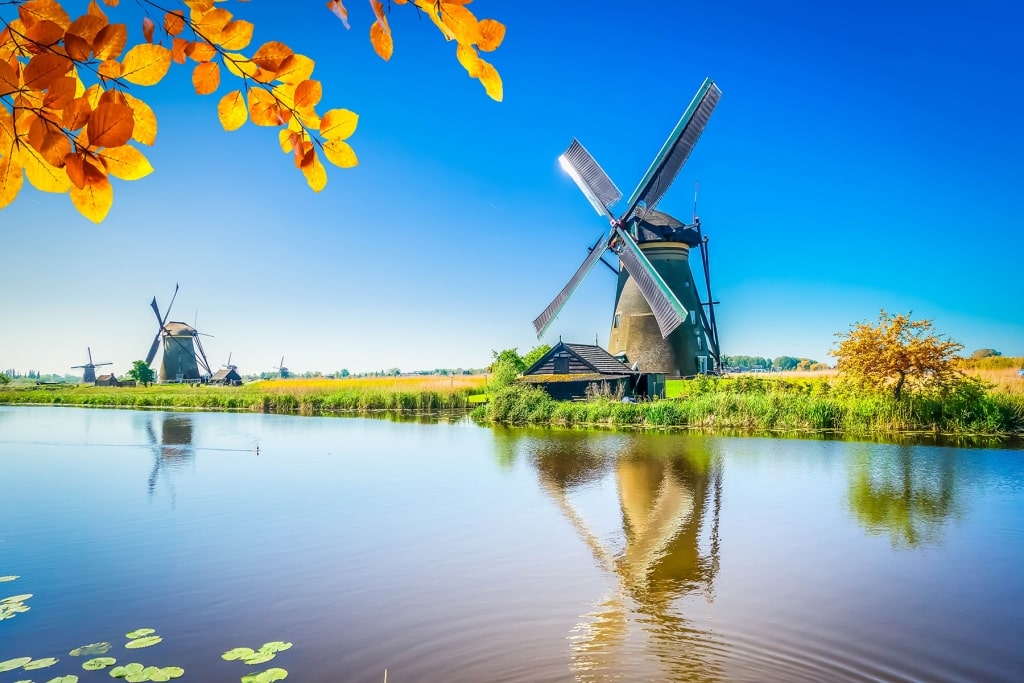
Framed by golden autumn foliage, Kinderdijk’s historic windmills reflect across calm canal waters on a crisp Dutch afternoon.
Kinderdijk is not just a scenic landmark. The view may look poetic, but the purpose is entirely practical. The 19 windmills are spaced carefully so their sails can catch clear, unobstructed wind. Together, the well-preserved structures and wider engineered landscape reflect centuries of careful water management in a region shaped by polders, canals, dikes, and changing river levels.
The giant wooden sails of the windmills at Kinderdijk catch the breeze, using wind power to turn internal gears and move water from low-lying polder ditches into higher storage basins. From there, the water can be released into the river when the tide drops. Without systems like these, much of the surrounding land would be vulnerable to flooding.
Take a European river cruise and step into the broader story of those living below sea level to learn how they manage critical land drainage as they go about their lives. UNESCO recognized the site’s historical function as one of global significance, as well as the windmill network’s cultural and historical importance to the local population.
The Best Way To Explore the Windmills
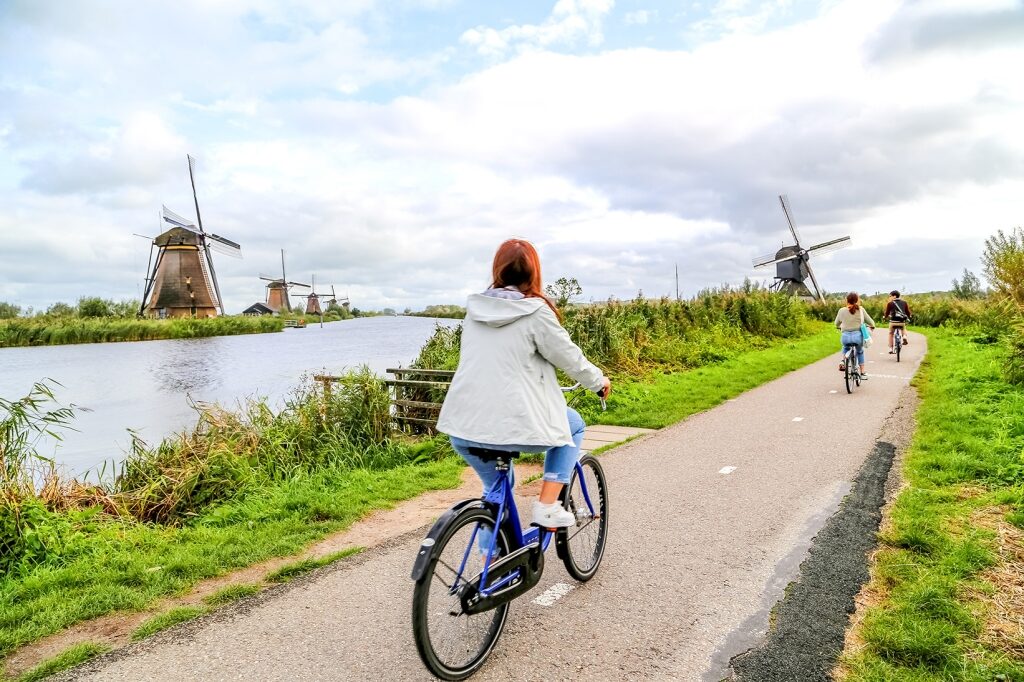
Cycling along scenic canal paths lined with historic windmills offers an active, immersive way to discover Kinderdijk on a shore excursion.
There are several ways to experience the Kinderdijk Windmills, depending on your comfort level, mobility, and preferred pace.
- Walking offers flexibility and close-up views.
- Boat rides provide a scenic perspective with less walking.
- Biking covers more ground for active travelers.
With thoughtful planning, travelers can still enjoy the landscape without choosing a more active visit. The accessible layout of the windmills also makes Kinderdijk a compelling stop for travelers considering Rhine and Danube River cruises, especially when visiting from nearby Dordrecht or Rotterdam.
Kinderdijk vs. Zaanse Schans
Kinderdijk and Zaanse Schans are two of the most well-known windmill destinations in the Netherlands, but they offer very different experiences in terms of history, setting, and accessibility. The comparison below highlights the key differences between the two sites.
- History: Most of Kinderdijk’s windmills date from 1738 to 1740, although the Blokweer Mill dates to 1630. Zaanse Schans includes structures dating from 1578 onward, many of which were relocated to the site in the 1960s.
- Location: Kinderdijk is around a 30-minute drive from Rotterdam or Dordrecht. Zaanse Schans is roughly 20 minutes from Amsterdam by train or bus.
- Atmosphere: Kinderdijk offers a vast, iconic windmill landscape set among waterways and open countryside. Zaanse Schans has more of an open-air village feel.
- Historical significance: Kinderdijk is a UNESCO World Heritage Site recognized for its historic water-management landscape. Zaanse Schans brings together relocated historic structures in a preserved village setting.
- For first-time visitors: Kinderdijk is especially convenient for travelers visiting from the Dordrecht river port, while Zaanse Schans offers easy access for travelers based in Amsterdam.
How To Visit the Kinderdijk Windmills
Rotterdam and Dordrecht are common gateways for visiting the Kinderdijk Windmills, with both cities about a 30-minute drive from the UNESCO World Heritage Site. Many Rhine River cruise guests visit from Dordrecht, treating Kinderdijk as a half-day outing to take photographs, see the highlights, and experience the site’s historic landscape.
A deeper visit can be even more rewarding. Museum and interpretive stops explain what life is like in a region shaped by the constant threat of flooding, how Dutch water management works, and why these systems continue to play such an important role in daily life.
For the best experience, visit during the shoulder seasons of spring and autumn to avoid the heaviest summer crowds. If you’re visiting during peak tourist season, consider going before 9 a.m. or after 5 p.m. for cooler temperatures and a quieter atmosphere. The first week of September also brings Verlichtingsweek, or Illumination Week, when the windmills are lit beneath the night sky.
If you are strolling, what to wear matters. Pack sturdy closed-toe shoes to handle the gravel paths and consider a windbreaker or breathable rain jacket as the walkways are exposed and subject to gusty drafts off the water.
Kinderdijk Windmill FAQs
What are the Kinderdijk Windmills and why are they famous?
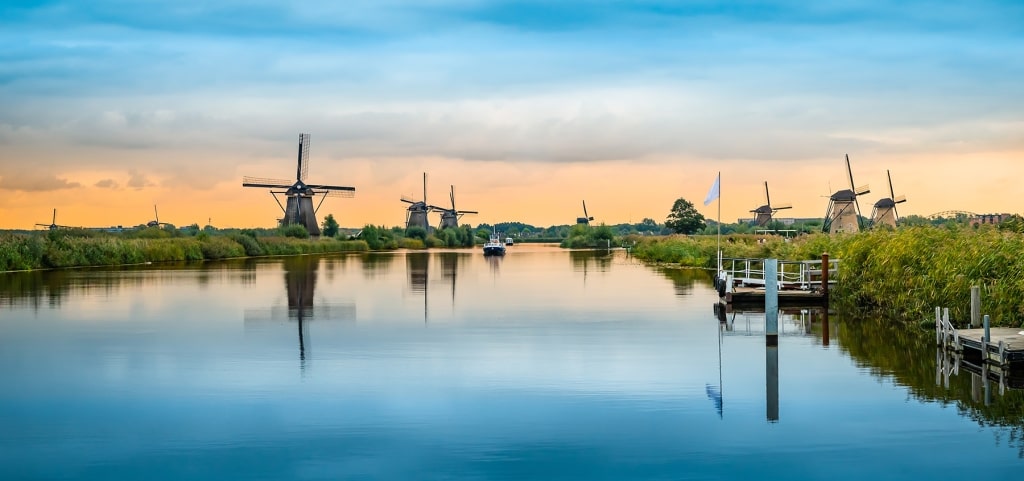
Reflecting across glassy waters under a soft dusk sky, the iconic windmills of Kinderdijk set a serene scene along the river.
These famous windmills are a UNESCO World Heritage site, recognized for their historical attributes as well as their importance in the region’s water and land management.
How much time do you need at Kinderdijk Windmills?
Most visitors should plan for a half day at Kinderdijk. This allows enough time to view the windmills, walk part of the site, take photos, and visit key museums or interpretive areas. A longer visit gives you more time to explore at a slower pace.
Can you visit the Kinderdijk Windmills on a Rhine River cruise?
Yes, the Kinderdijk Windmills can be visited on some Rhine River cruise itineraries, especially from the river cruise port of Dordrecht. From there, the site is typically reached as a half-day excursion.
How do I get to the Kinderdijk Windmills from Rotterdam?
From Rotterdam, travelers can reach Kinderdijk by car, organized tour, or public transportation. Public transit may require a combination of train, bus, or waterbus service, so it’s worth checking schedules in advance if you’re visiting independently.
Is Kinderdijk a good excursion for older travelers or mobility-conscious guests?
Kinderdijk is a highly accessible excursion for older travelers or mobility-conscious guests. Boat tours provide a viewing option for guests with reduced mobility, while more active visitors can explore the paths by bike or on foot.
Kinderdijk Windmills vs. Zaanse Schans: Which is better for first-time visitors?
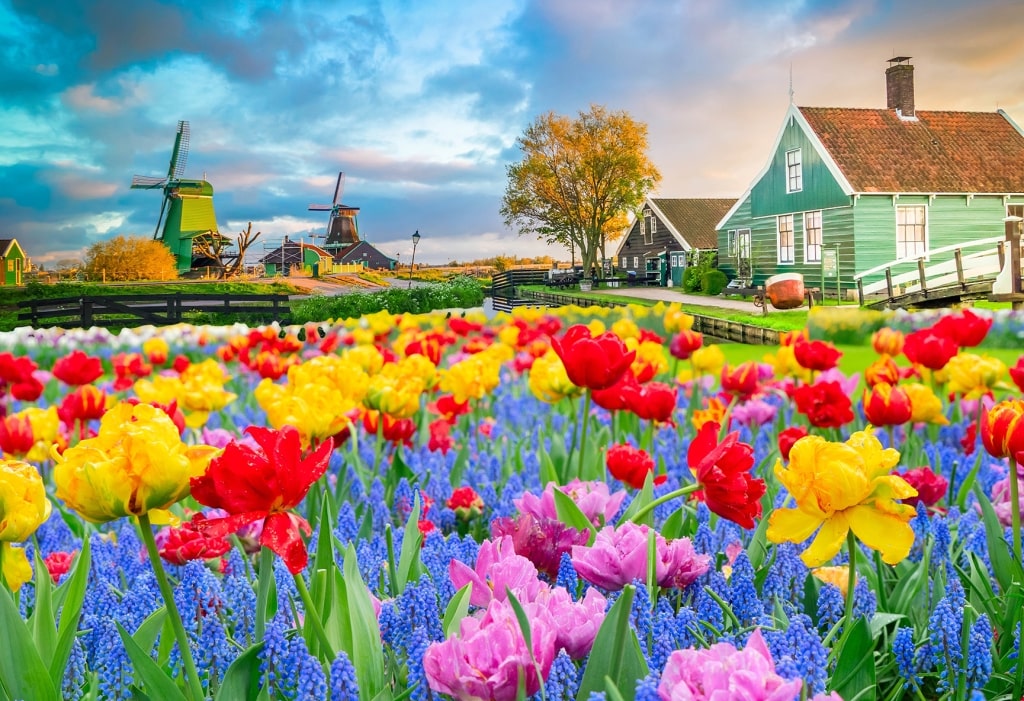
Vibrant flowerbeds, green wooden houses, and historic windmills bring the colorful, postcard-perfect charm of Zaanse Schans to life.
Kinderdijk is ideal for travelers who want to see an authentic UNESCO-listed windmill landscape, especially on a tour from Dordrecht. Zaanse Schans is easier to reach from Amsterdam and offers more of an open-air village experience, making it convenient for first-time visitors based in the city.
What is the best time of year to visit the Kinderdijk Windmills?
Spring and autumn are often the best times to visit Kinderdijk, with milder temperatures and fewer crowds than summer. If visiting in the summer months, early morning or late afternoon can offer a more comfortable and peaceful experience.
Plan Your Rhine River Journey
A visit to the Kinderdijk Windmills offers a memorable glimpse into the Netherlands’ history, landscape, and relationship with water. Set among canals, dikes, and open countryside, Kinderdijk is more than a beautiful landmark; it’s a living reminder of how Dutch communities have shaped and protected the land for centuries.
On a Rhine River cruise, Kinderdijk becomes part of a broader journey through Europe’s vineyard-lined valleys, castle-topped hills, historic towns, and culturally rich cities. Whether you’re drawn to UNESCO World Heritage Sites, scenic countryside, or everyday stories of local life, the region offers countless ways to connect with the past and present of the places you visit.
Visit the famous Kinderdijk windmills on a cruise to Dordrecht. Discover more of Europe’s history, culture, and scenery when you explore Rhine River cruises.