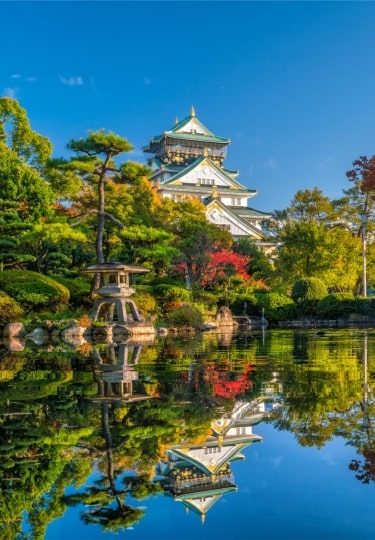
Any visitor has a wide choice of top historical places in Japan to explore. From feudal castles to Buddhist shrines, many locations are centuries old.
The oldest is the Sannai-Maruyama site near Aomori, which dates to several thousand years BCE. Compared to that, places such as Tokyo’s Meiji Jingu are youngsters, even if parts go back 2,000 years. Here are 20 of the best historical sites in Japan to discover for yourself.
Hirosaki Castle, Aomori
Hirosaki Castle, Aomori
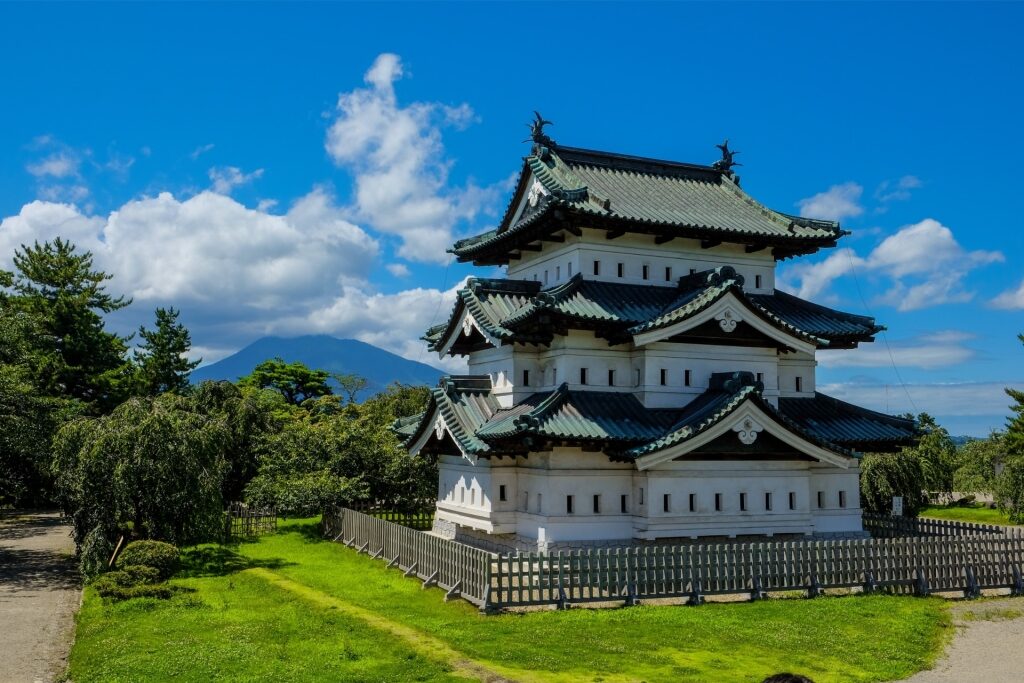
One of Japan’s only 12 surviving original Edo-period castles, Hirosaki was built in 1611. Its three-story keep, three watchtowers, and massive stone walls with five fortified gates make for an impressive sight.
The park around the castle bursts into color with a cherry blossom display every spring in Japan. Photographers love the 2,500 trees creating a sea of pink framing the black-and-white keep; this is one of the best historical places in Japan for capturing the perfect image.
Walking around, you’ll find Western-style gardens, moats with traditional bridges, and a botanical garden. With its Dragon Pagoda and coffee shops, the botanical garden is an attraction in its own right.
Sannai-Maruyama Archaeological Site, Aomori
Sannai-Maruyama Archaeological Site, Aomori
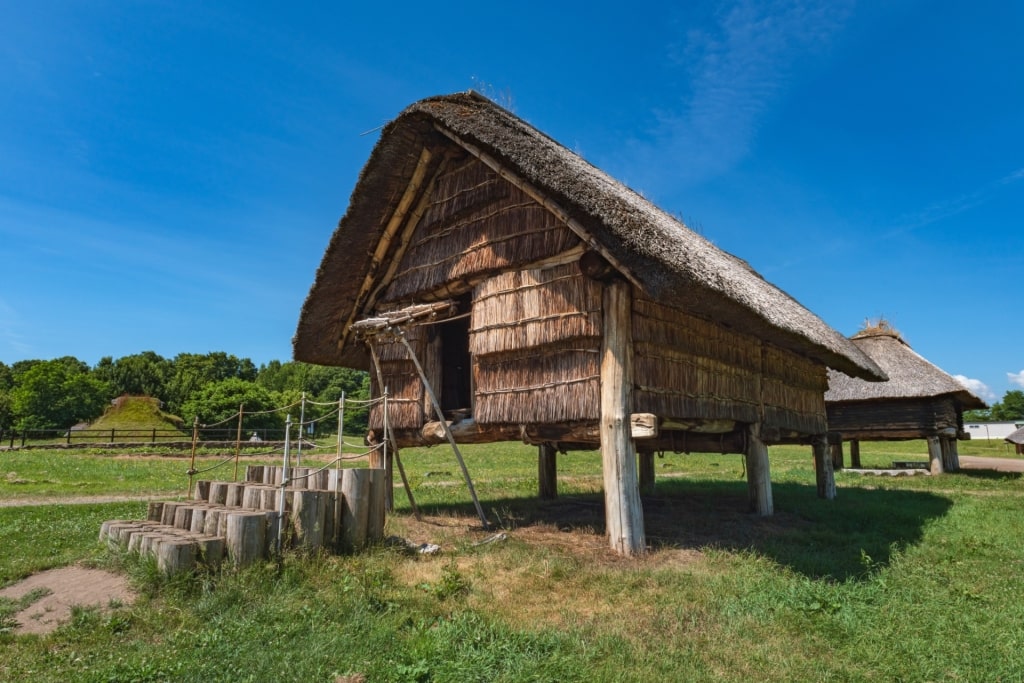
Plans for a new baseball stadium were disrupted when the remains of a prehistoric settlement were discovered in Aomori in 1992. Dating to around 3900-2300 BCE, the site is where a complex hunter-gatherer society lived for centuries.
Visitors can visit reconstructed pit houses and larger community buildings, including an intriguing wooden tower. In the site museum, you see discoveries including rope-pattern pottery, stone tools, and clay figurines.
Archeologists believe the Jōmon people who lived here were among the first in the world to use pottery. The site is near the Aomori Art Museum, making a good pairing for visitors.
Nebuta Museum WA RASSE, Aomori
Nebuta Museum WA RASSE, Aomori
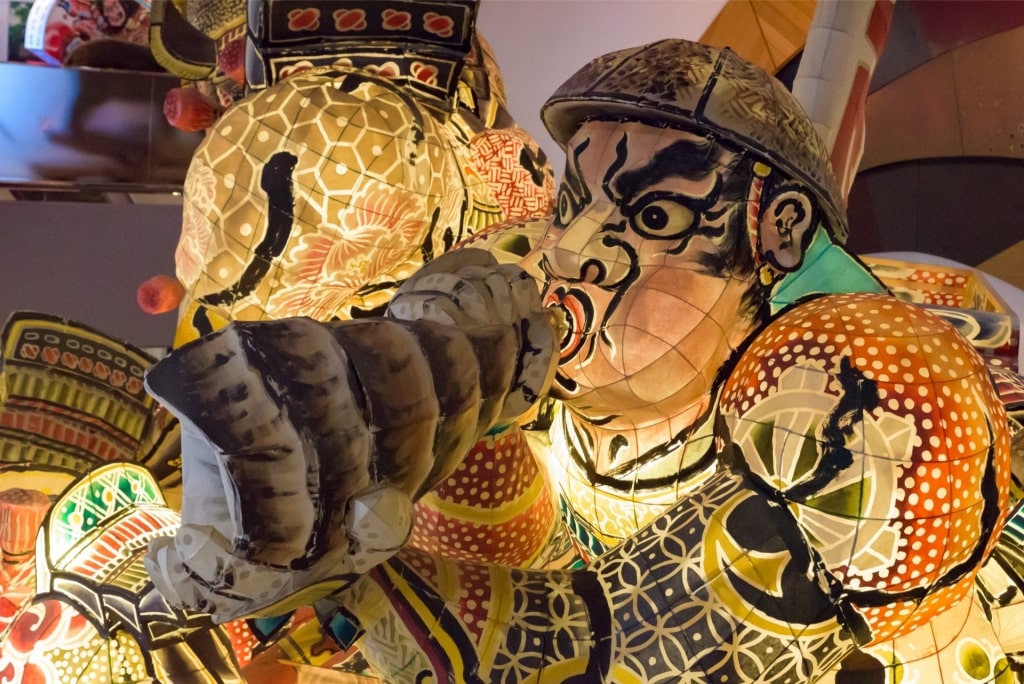
Aomori City’s Nebuta Festival, held every August, is one of the highlights of the Japanese summer. If you miss it, you can enjoy its spirit in the two-story Nebuta Museum.
At the heart of the festival are its colossal illuminated floats. Four from the most recent August are always on show here, along with displays showing their creation.
Video and sound brings the festival to life, and you can try drumming or dancing along. The museum’s shop has some unique Nebuta gifts alongside other local souvenirs and produce.
Hiroshima Peace Memorial Park & Museum, Hiroshima
Hiroshima Peace Memorial Park & Museum, Hiroshima
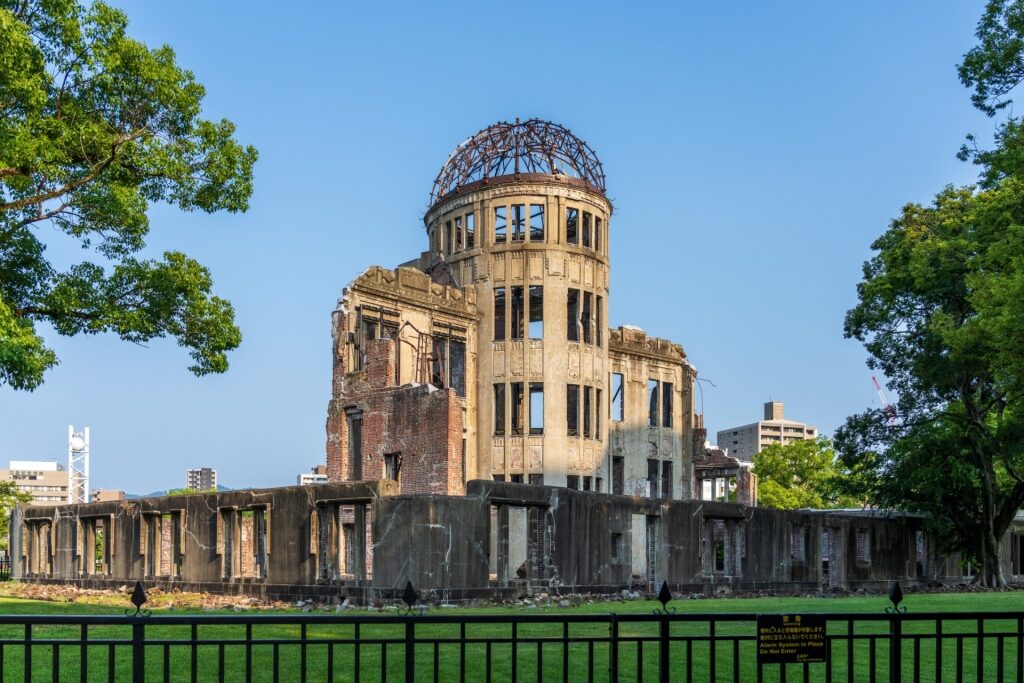
Few historical sites in the world are as famous as Hiroshima Peace Memorial Park. It’s dedicated to the victims of the atomic bombing of the city on August 6, 1945.
At its heart is the concrete building near the bomb’s epicenter, known as the A-Bomb Dome. The wider park holds a Cenotaph for Victims, the Children’s Peace Monument, and the Peace Bell.
The Peace Memorial Museum puts all this into more context. You can see artifacts, photographs, and poignant stories about the bomb’s immediate effects and longer term consequences.
Itsukushima Shrine, Hiroshima
Itsukushima Shrine, Hiroshima
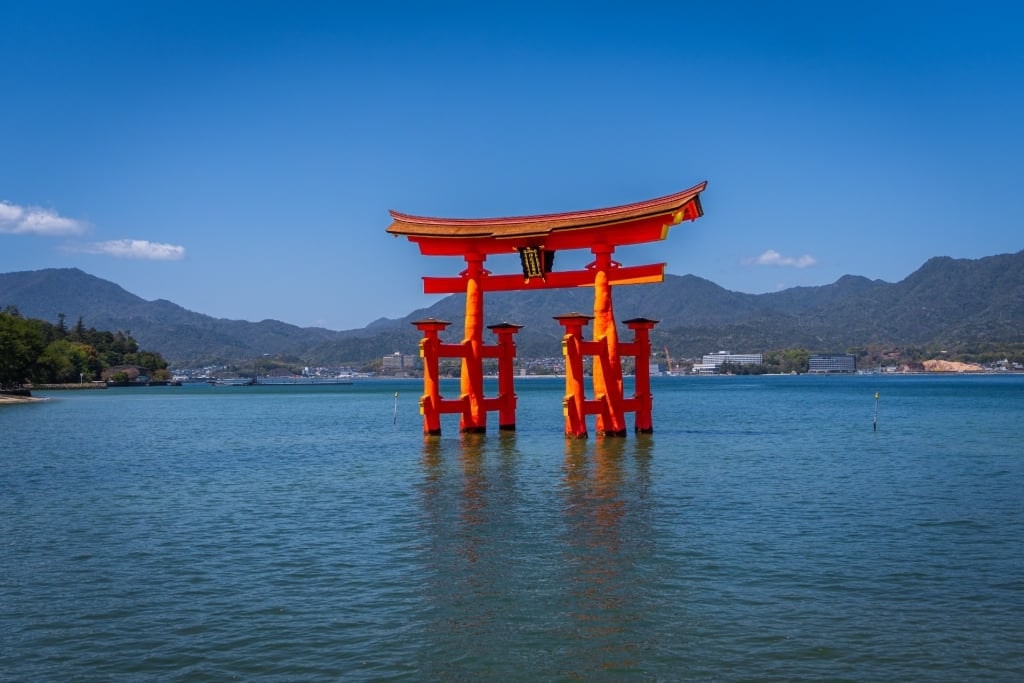
Itsukushima Shrine is famous for its “floating” gate—one of the best torii in Japan. Built over tidal flats, it appears to stand on water during high tide.
The shrine is on Miyajima, an island sacred to shintoism in the Seto Inland Sea. Standing on piles, the shrine also seems to float—making real the Shinto belief no one should touch land on the island.
Now a Unesco World Heritage site, Itsukushima is a large complex connected by boardwalks. Founded in the 6th century, the present vermilion-lacquered structure is from 1168.
Chiran Samurai Residence District, Kagoshima
Chiran Samurai Residence District, Kagoshima
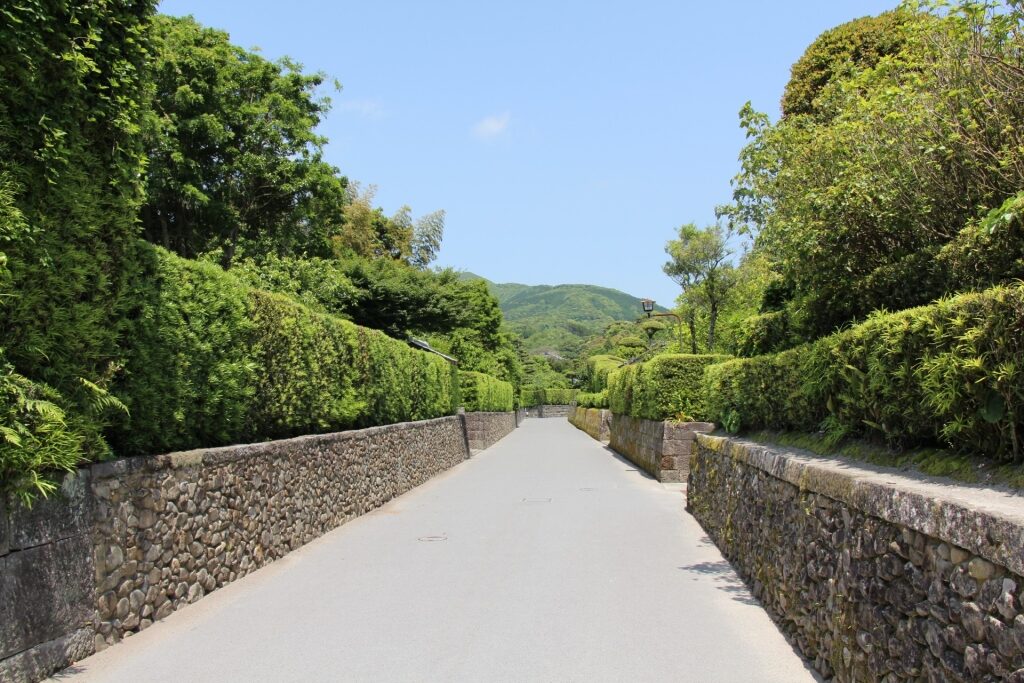
Dispel any notions you have about samurai asceticism by seeing how they actually lived. Preserved as they were some 260 years ago, the Chiran Samurai District—an off-the-beaten-path gem in Japan—features seven gardens and several homes open to the public.
Narrow lanes are lined with stone walls topped with well-tended azalea hedges. Behind the walls are beautiful gardens, each different but most “borrowing” the view of distant Kaimondake volcano.
Only a few minutes away is the Chiran Peace Museum, a poignant memorial to WWII Kamikaze pilots. It’s an unmissable guide to a very different aspect of the samurai spirit.
Ikuta Shrine, Kobe
Ikuta Shrine, Kobe
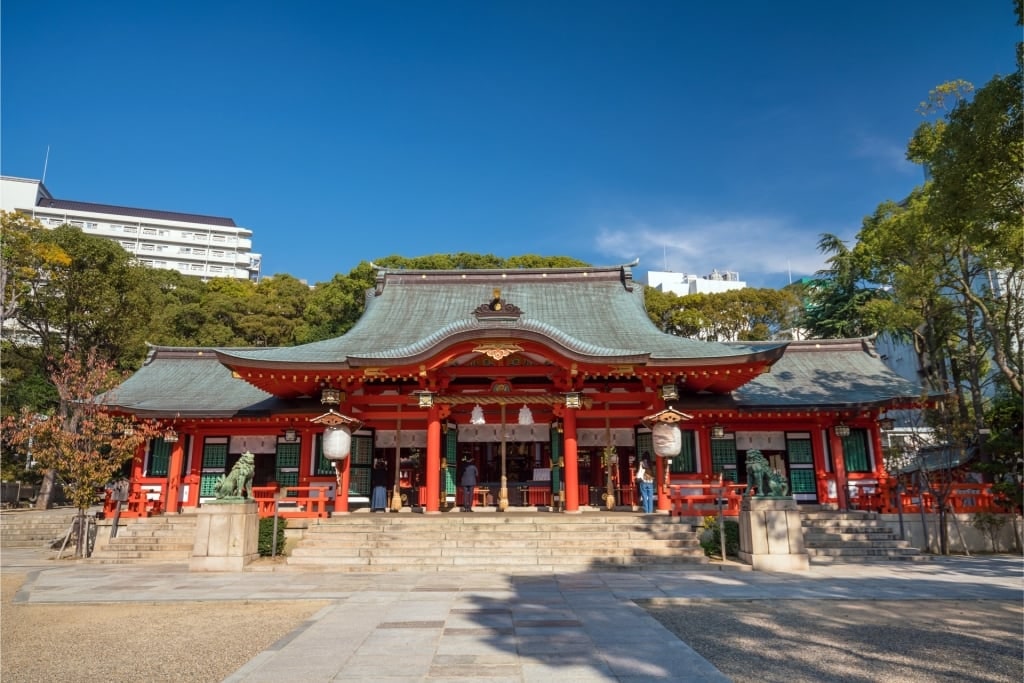
Among Japan’s oldest Shinto shrines, Ikuta dates back more than 1,800 years. It’s hidden within a small, quiet woodland in the busy Sannomiya shopping district of Kobe.
Faithfully rebuilt after wartime bombing, the shrine also survived Kobe’s massive 1995 earthquake. That’s made it a major symbol of the city’s resilience and of continuity.
At the large, red-lacquered tower gate you can buy a paper fortune slip or good luck charm. Behind the shrine, ancient trees create a surprisingly green oasis.
Kochi Castle, Kochi
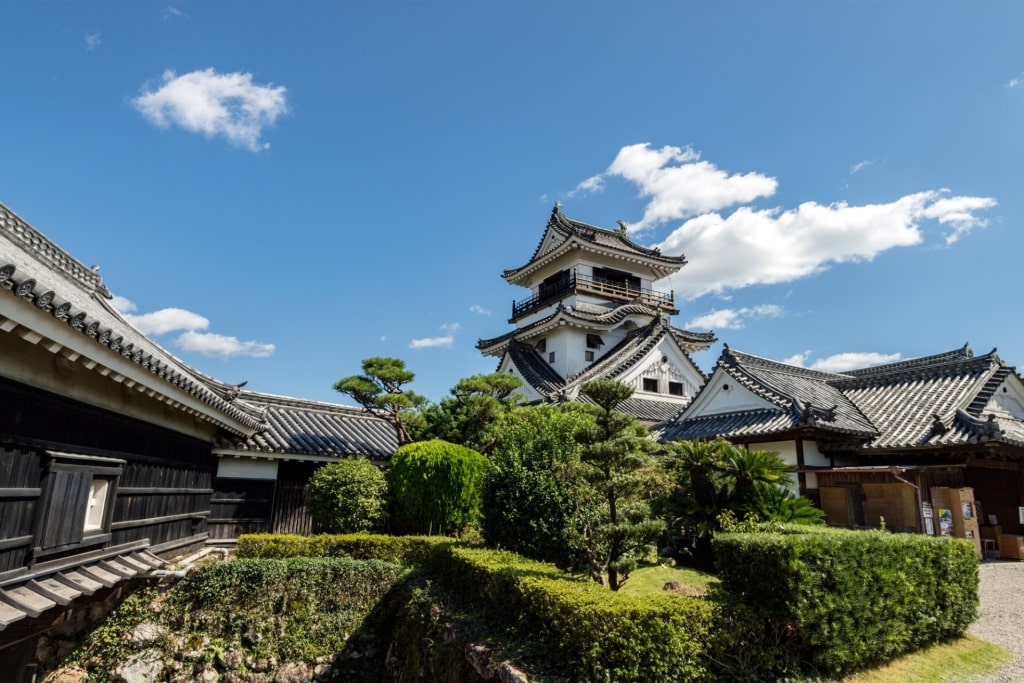
Kochi Castle, Kochi
One of only 12 original castles remaining in Japan, Kochi was built in 1611. It’s unique in that it still has its original central keep and the connecting residence.
The six-story castle watch tower was rebuilt in 1753 after a fire some decades earlier. The black-and-white color scheme and elegant tiered roofs of the whole show off classic Edo-Period architecture.
Standing on a hill, the castle was both a defensive structure and a symbol of authority. This strategic setting gives its visitors wonderful views over Kochi city.
Kinkaku-ji, Kyoto
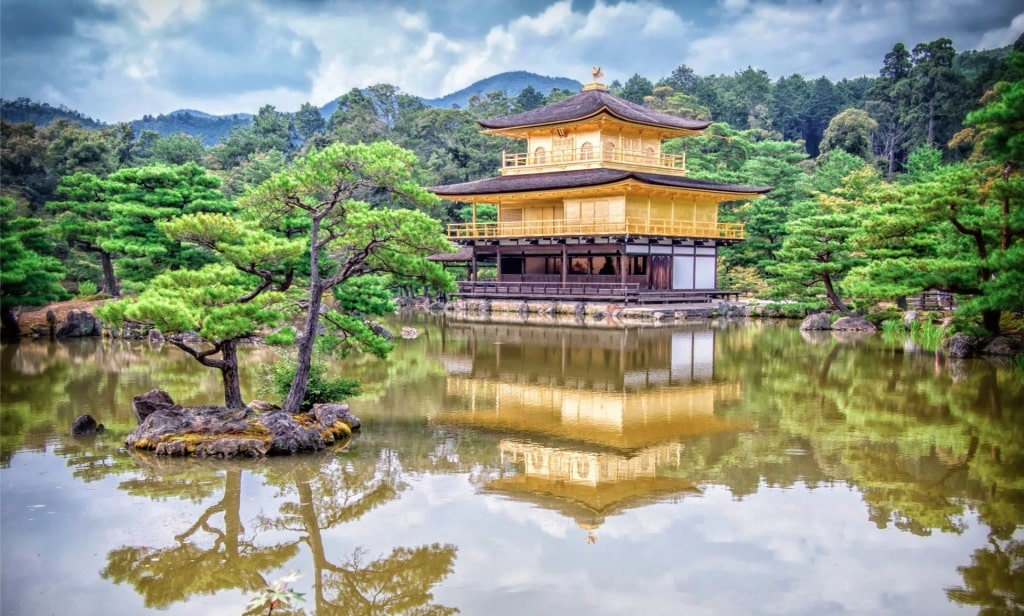
Kinkaku-ji, Kyoto
Better known as “The Golden Pavilion”, Kinkaku-ji is a major Zen Buddhist temple and one of the best places to visit in Japan for first-timers. Its nickname comes from the gold leaf covering the top two floors of the main pavilion.
This Relic Hall sits beside the Mirror Pond, creating a reflection that’s a beautiful double image. Each of the pavilion’s three floors is built in a different architectural style.
Originally designed in 1397 as a retirement villa for a shogun, it became a temple after his death. The present structure is a 1955 rebuild following an arson attack by a monk.
Himeji Castle, Osaka
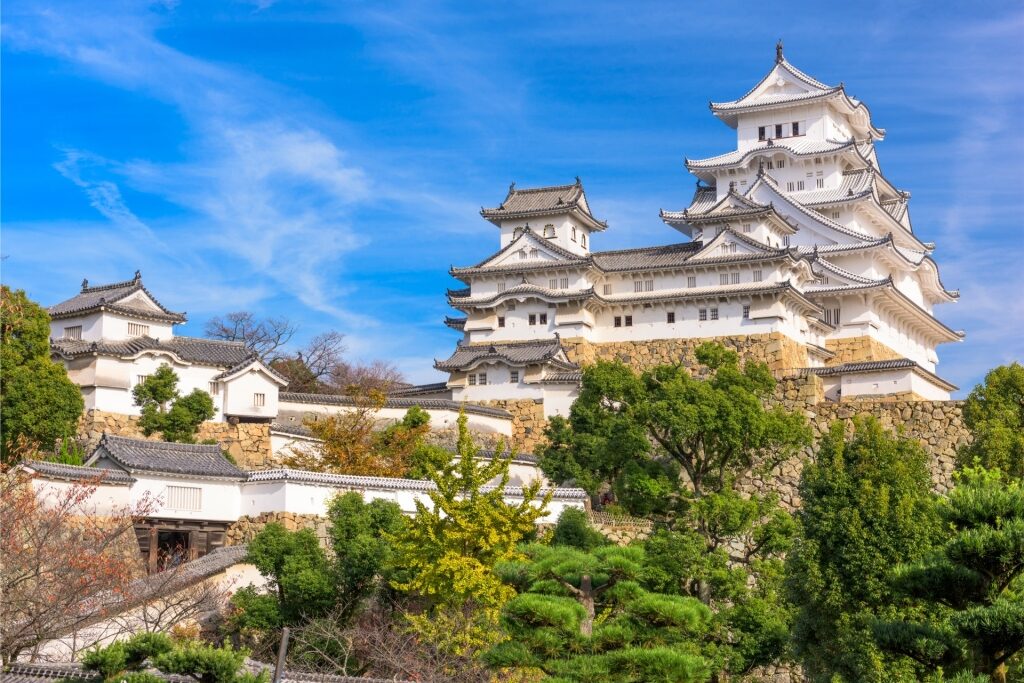
Himeji Castle, Osaka
Japan’s most magnificent surviving feudal castle, Himeji dates back to around 1609. It has been nicknamed “White Heron Castle” for its brilliant white walls and elegance.
Attackers faced a daunting mix of maze-like approach, three moats, and a six-story main keep. The largest wooden castle in Japan, it originally had 84 gates, of which 21 remain.
In the grounds is the tranquil Koko-en Garden, which is twinned with the Rohō-en garden in Phoenix, Arizona. It has a pond, waterfall, bamboo garden, and a tea garden.
Nara Park, Osaka
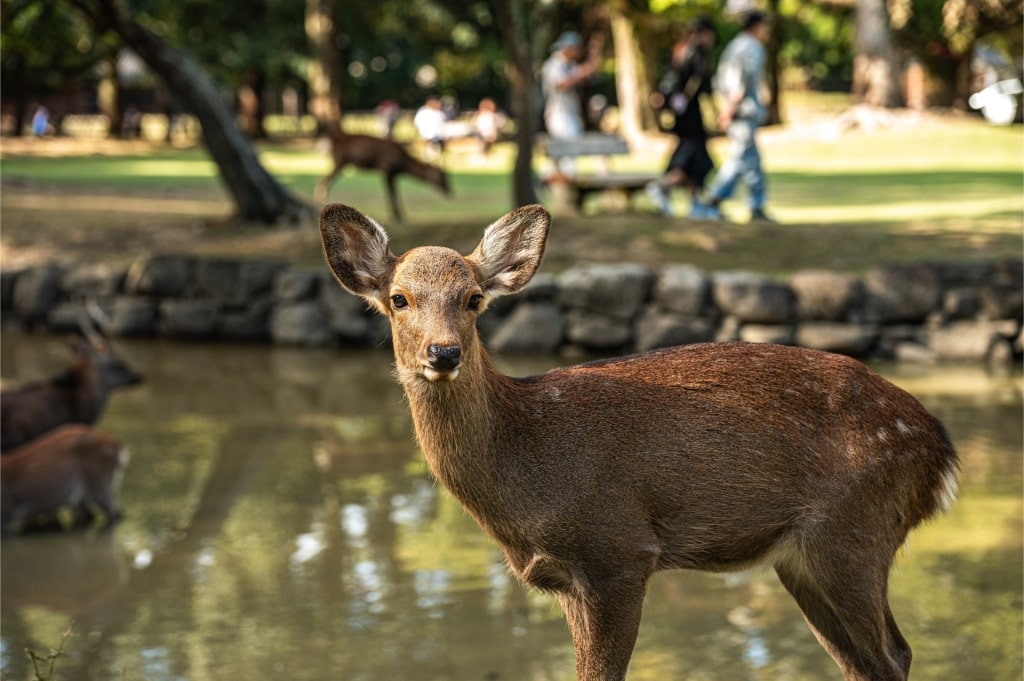
Nara Park, Osaka
This sprawling park contains Japan’s most important Buddhist temple and its most atmospheric Shinto shrine. With more than 1,000 sacred deer roaming freely in the grounds, Nara is a living museum in Japan’s ancient capital.
Todaiji is a famous temple best known for the Great Buddha Hall and its colossal bronze Buddha. From there, thousands of stone and bronze lanterns lead you through the forest to Kasuga Taisha Shrine.
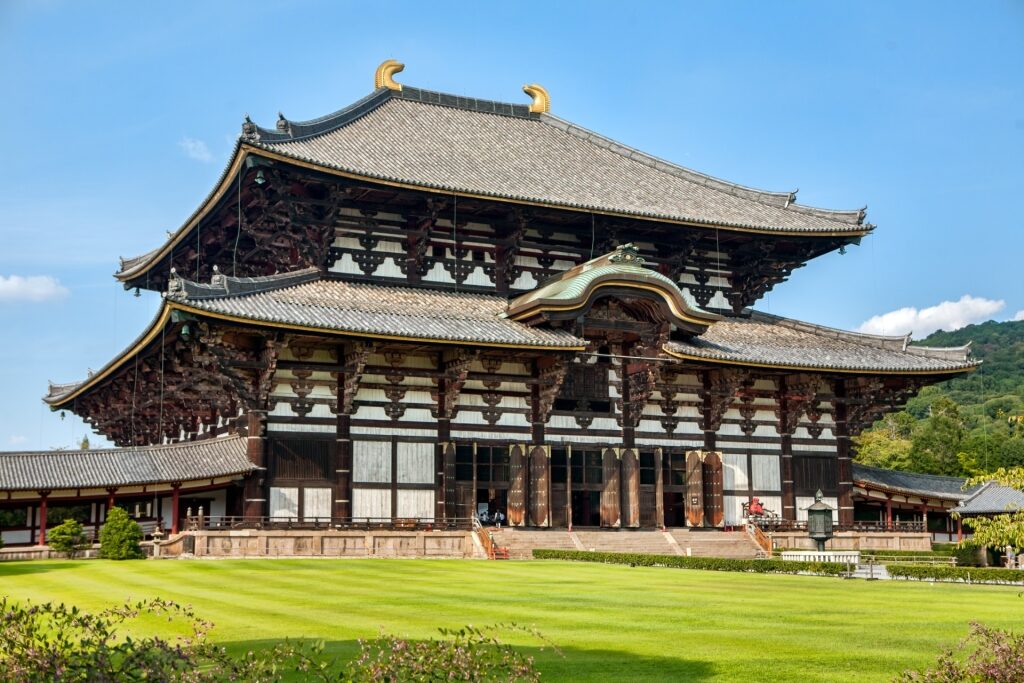
Todaiji Temple
Around its vermillion buildings, the deer—considered divine messengers—have roamed for more than 1,000 years. They have learned to bow politely in exchange for the crackers you can buy from park vendors.
Kiyomizu-dera, Kyoto
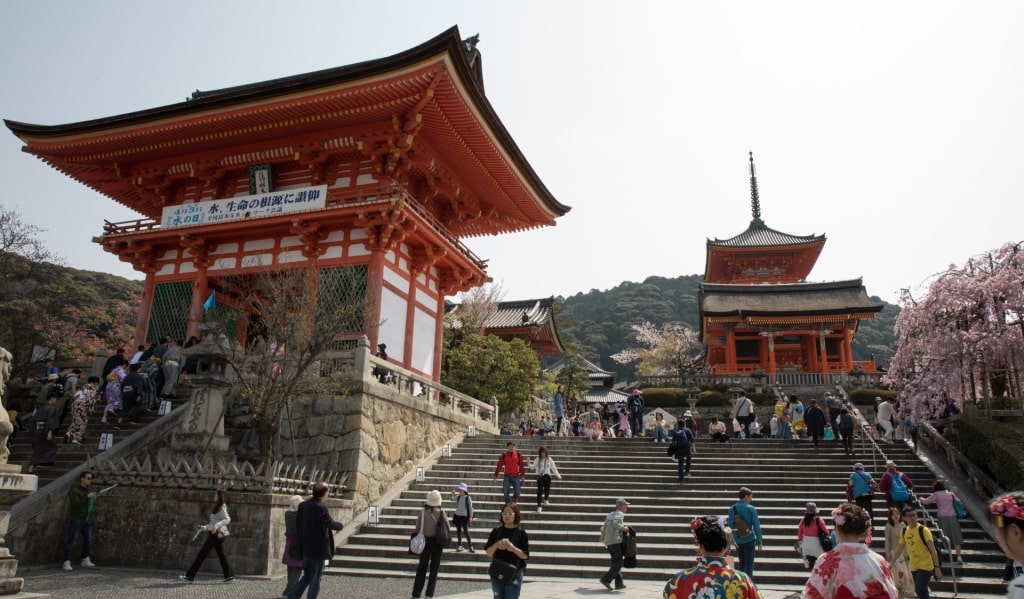
Kiyomizu-dera, Kyoto
Founded in 778 AD, this historic Buddhist temple is perched dramatically on the slopes of Mount Otowa. Its massive wooden stage, built in traditional style without nails, has panoramic views of the Japanese city of Kyoto.
The temple complex includes the main hall, pagodas, gates, and many trees. It also holds Otowa Waterfall, where visitors drink for health, longevity, or success.
As a bonus, Jishu Shrine within the grounds is dedicated to love and matchmaking. Higashiyama streets leading up to the temple still have their traditional merchant houses.
Nijō Castle, Kyoto
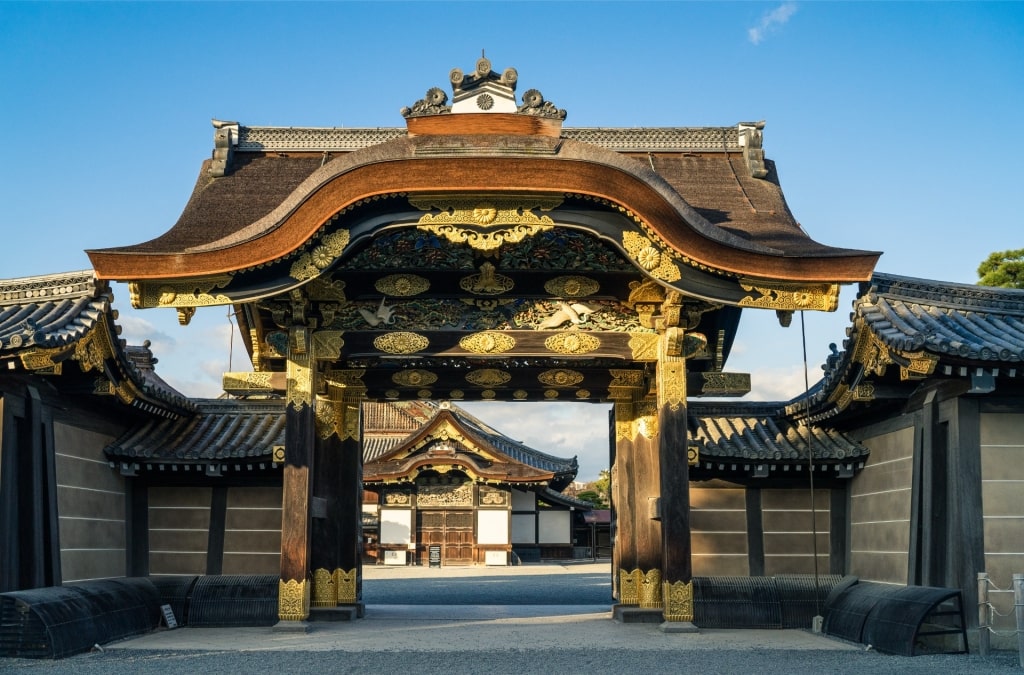
Nijō Castle, Kyoto
Built in 1603, Nijō was the Kyoto residence of a powerful shogun, Tokugawa Ieyasu. It’s famous for its “Nightingale Floors” that chirp when walked on to alert against intruders.
The defences start with a surrounding wall and then a moat. The island created by the moat is a haven filled with hundreds of cherry, plum, and other trees.
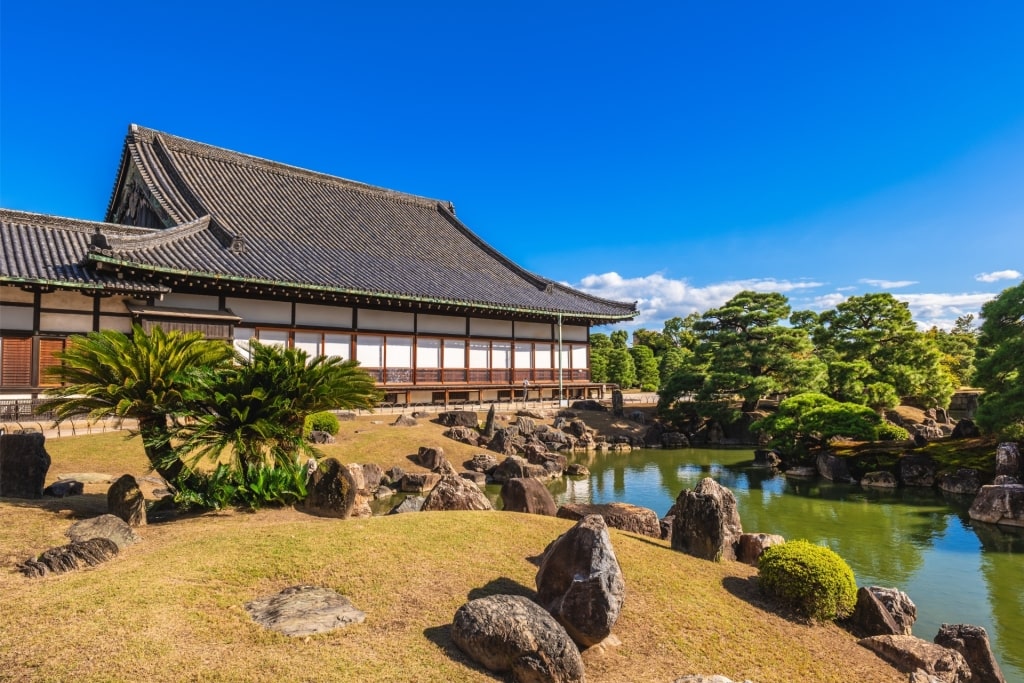
Ninomaru Palace
The castle’s Ninomaru Palace also has 954 beautiful screen paintings by artists of the Kanō school, active from the 15th through 19th centuries. Some of these bold, vigorous images fill entire rooms.
Fushimi Inari Taisha, Kyoto
Fushimi Inari Taisha, Kyoto
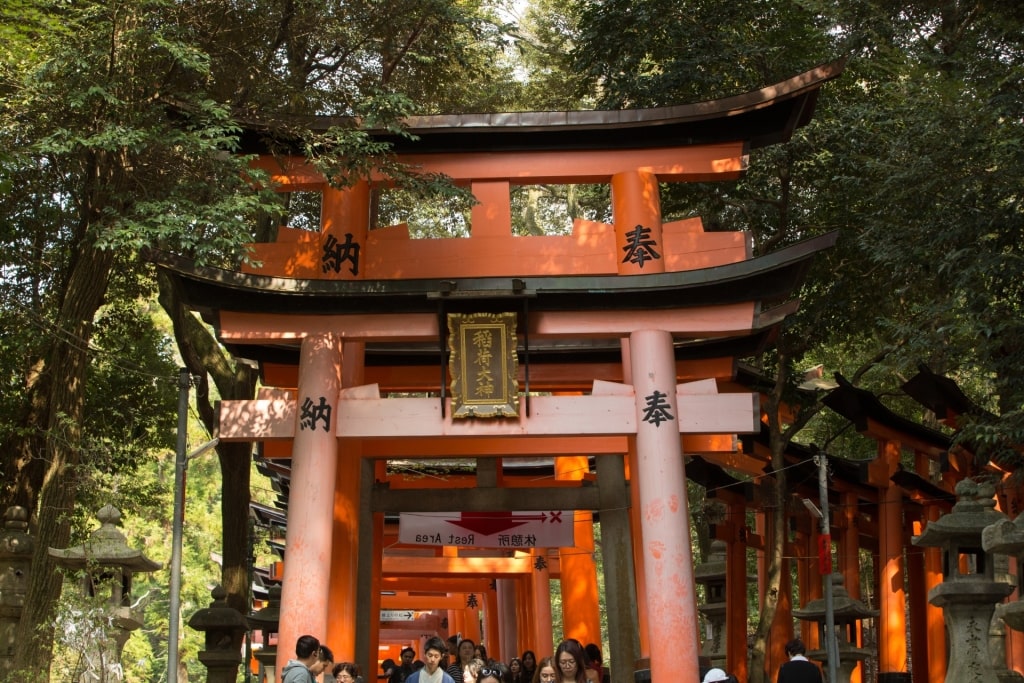
Dedicated to Inari, the Shinto deity of rice, fertility, and business, this is the head shrine of thousands of Inari shrines Japan is known for. Its foundation in 711 AD predates the birth of Kyoto itself and makes it one of the most historical places in Japan.
However, the shrine is most famous for its thousands of vermilion torii gates. Donated by businesses and individuals, these gates will lead you on endless paths up Mount Inari.
Inari’s messengers are said to be foxes, so you’ll also find hundreds of fox statues. Do leave time to visit the shrine itself, with its impressive buildings and lanterns.
Osaka Castle, Osaka
Osaka Castle, Osaka
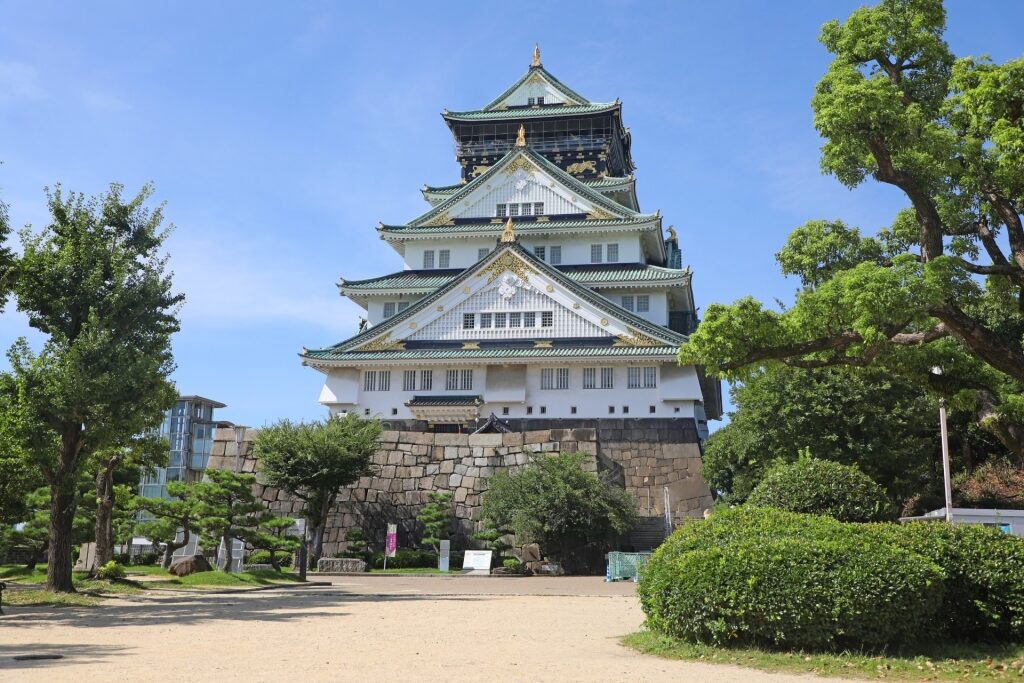
Although it looks ancient, Osaka Castle is a concrete-cored reconstruction from 1931. It’s a modernised copy of the castle built in 1583 by Toyotomi Hideyoshi, “Japan’s Napoleon”.
However, the impressive stone walls on which it stands are original. Its imposing moats, large public park, and views over Osaka are equally impressive.
The on-site museum holds thousands of artefacts, from suits of armor to miniature battle scenes, that will bring the castle’s history to life. It will also explain its major historical significance.
Read: Best Places to Visit in Japan
Kunozan Toshogu Shrine, Shimizu

Kunozan Toshogu Shrine, Shimizu
This magnificent Shinto shrine, dedicated to Tokugawa Ieyasu, predates the more famous one in Nikko. Built in 1617, immediately after his death, it has a dramatic setting on Mount Kuno overlooking Suruga Bay.
That does mean there is a steep walk to reach the shrine complex, although a ropeway is now an easier option. The shrine’s buildings are a photogenic mix of bright colors, intricate carvings, black lacquer, and lavish gold leaf.
Around Ieyasu’s original mausoleum, you’ll also find an elaborate Honden, or main hall, bell tower, and drum tower. It’s one of the most historical sites in Japan and a designated National Treasure.
Senso-ji Temple, Tokyo
Senso-ji Temple, Tokyo
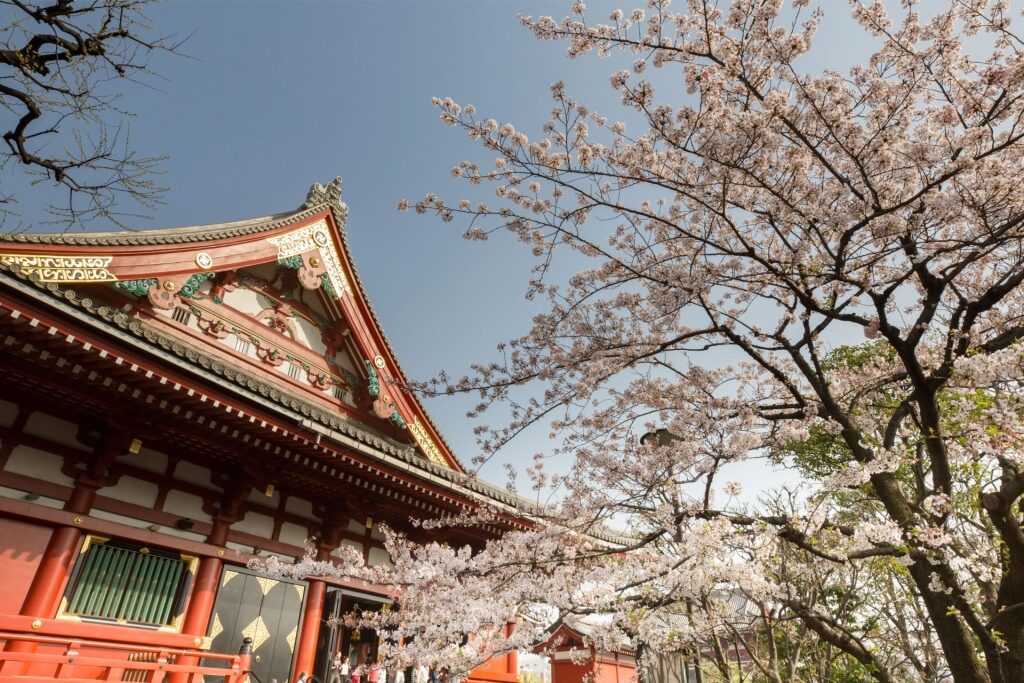
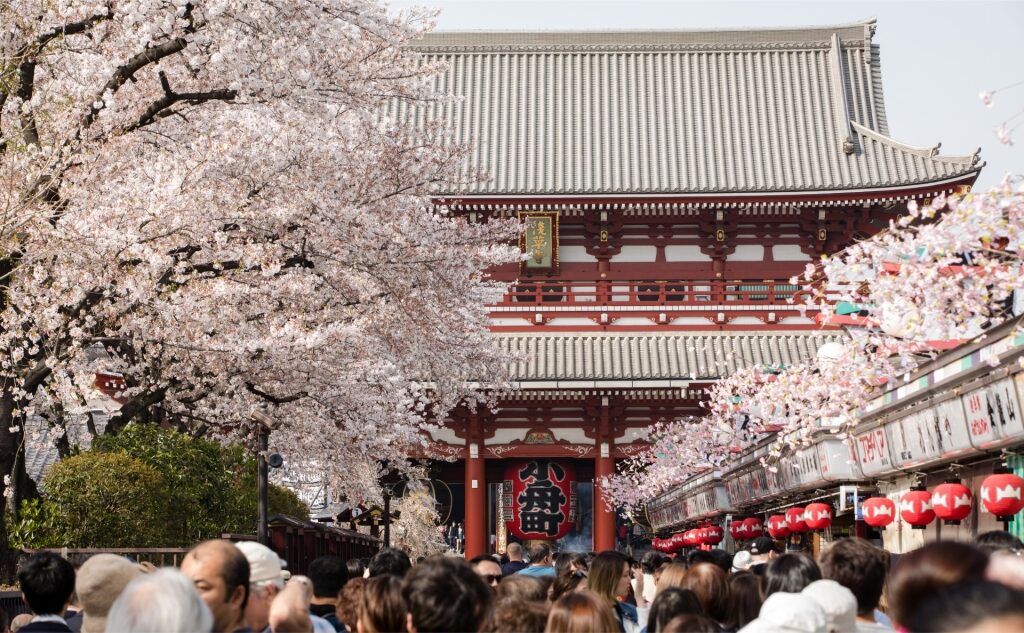
Tokyo’s oldest and most significant Buddhist temple is thought to have been founded in 628. Its red Kaminarimon, or Thunder Gate, with its giant lantern is a major city landmark.
The Kaminarimon marks the entrance to Nakamise-dori, the busy market street that has served pilgrims for centuries. That leads to the imposing Hozomon, or Treasure House Gate, the entrance to the temple itself.
The temple is dedicated to Kannon, the Buddhist goddess of mercy, and a statue of the deity sits in the main hall. A five-story pagoda is a prominent Japanese landmark to orientate yourself within the massive crowds that visit every day.
Meiji Jingu Shrine, Tokyo
Meiji Jingu Shrine, Tokyo
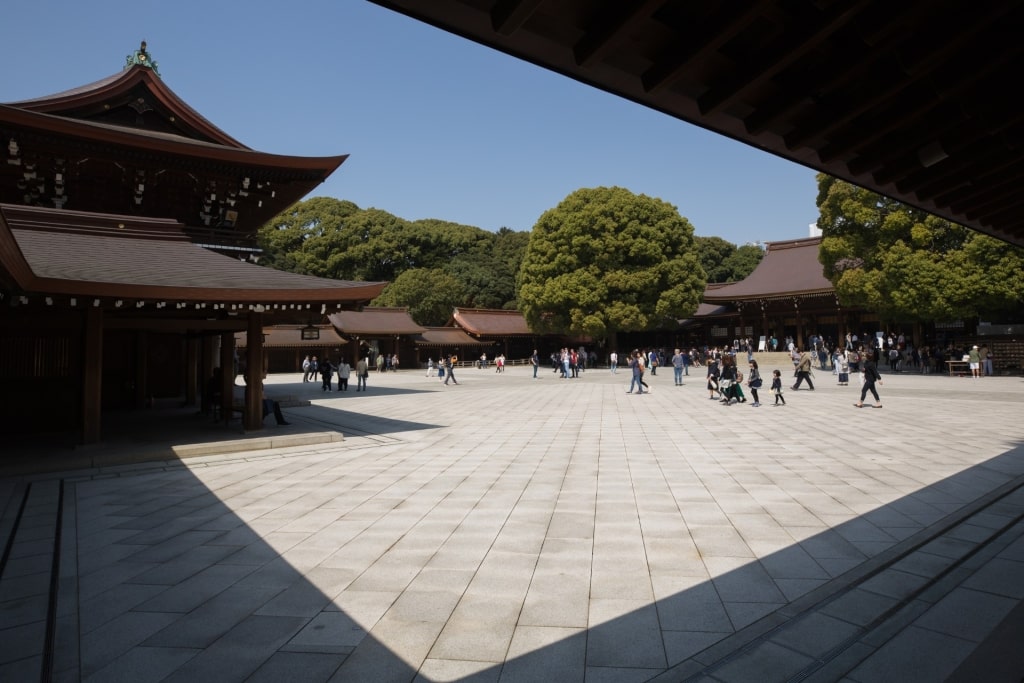
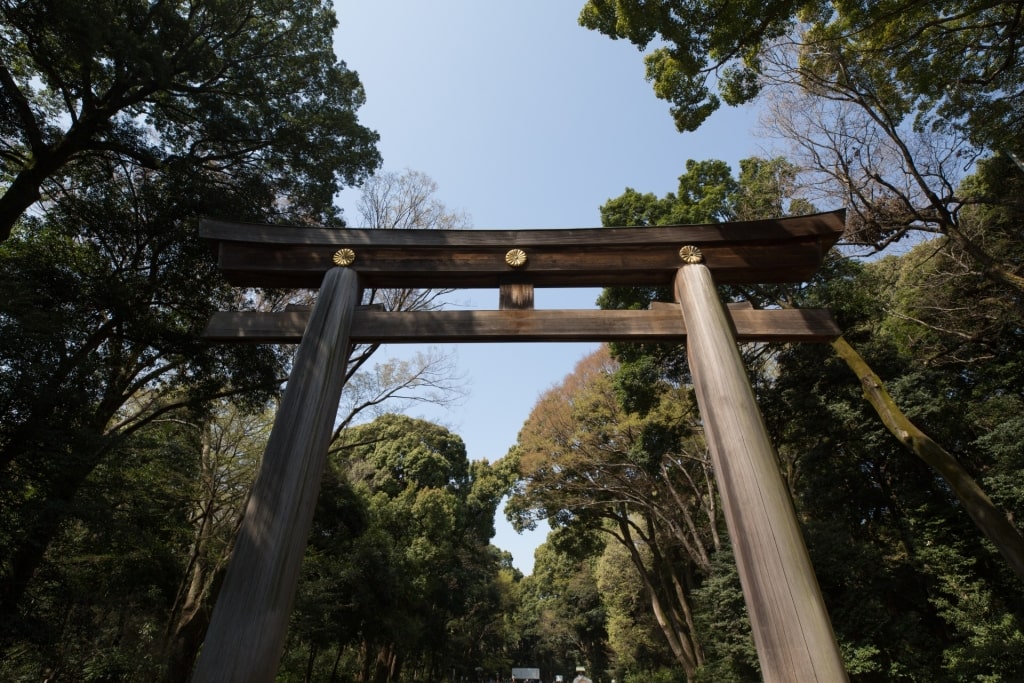
Dedicated to the deified spirits of Emperor Meiji and Empress Shoken, this major Shinto shrine was completed in 1920. Rebuilt after WWII bombing, it sits in a vast, dense forest in central Tokyo.
The shrine’s cypress wood and copper structure is a prime example of classic Japanese shrine architecture. The expansive Inner Garden is famous for its beautiful irises—a favorite of Empress Shoken—that bloom in June.
Meiji Jingu Shrine, Tokyo
The shrine is popular for traditional Shinto ceremonies, New Year’s visits, and weddings. Its 120,000 mature trees, donated from all over Japan, make it a beautiful, restful refuge from the busy city.
Nikko Toshogu Shrine, Tokyo
Nikko Toshogu Shrine, Tokyo
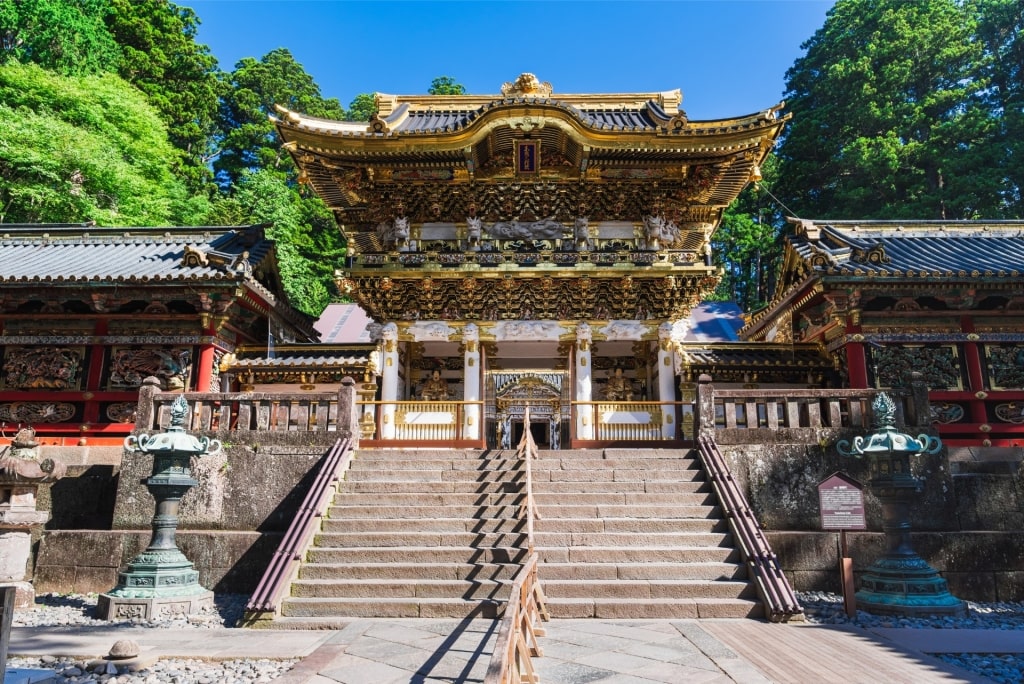
The most lavishly decorated shrine complex in Japan, built in 1617, stands among 400-year-old trees. It’s the final, fitting resting place of Tokugawa Ieyasu, the shogun who unified Japan.
Two hours north of Tokyo, in the Japanese mountains of Nikko, the shrine is a Unesco-recognized site for its superb craft skills. Intricate wood carvings, gold leaf, and brilliant colors make for a glorious celebration of the decorative arts.
Among the most famous sights are a “see no evil, hear no evil, speak no evil” three monkeys carving. The golden Yomeimon Gate is nicknamed the “Twilight Gate” because you could supposedly pass from dawn to dusk looking at its details.
Ryukyu Kingdom District, Okinawa
Shuri Castle, Okinawa
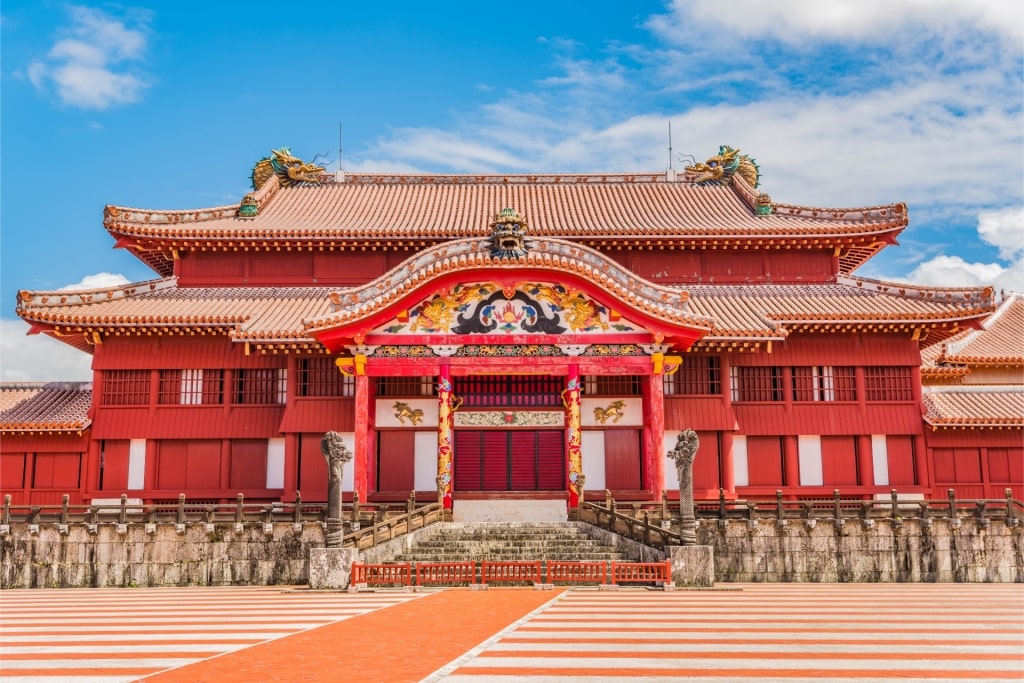
Okinawa’s Shuri Castle is a must-see historical site as a center for the Ryukyu Kingdom that ruled Okinawa for centuries. The distinctive red architecture blends Chinese, Japanese, and indigenous influences.
The main buildings were destroyed by fire in 2019 but the reconstruction is due to finish by late 2026. You can still visit the castle, seeing the fascinating restoration work, and the nearby 500-year-old gate.
The Tamaudun Mausoleum, a ten-minute walk away, holds royal tombs from the 1500s. At the nearby Shikinaen Garden, you can visit the royal villa to learn more about the Ryukyu Kingdom and its links to China’s Ming Dynasty.
Senso-ji Temple, Tokyo
Are you tempted to learn more about this fascinating country? Browse Celebrity’s cruises to Japan and find your perfect vacation.