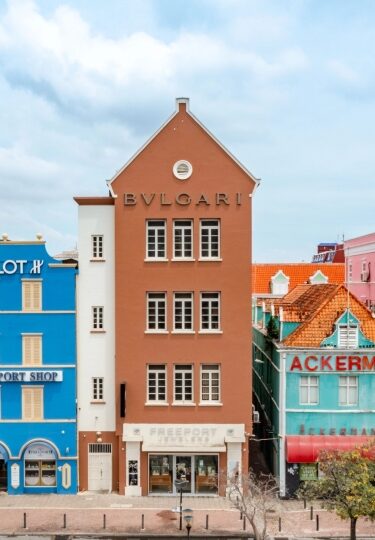
Willemstad, Curaçao, is a city that wears its colors proudly. The island capital is instantly recognizable, largely thanks to the bright façades of its best-known—and most photographed—district, Handelskade. But its appeal runs much deeper than those pretty-as-a-postcard views.
Dutch colonial gables rub shoulders with Caribbean verandas, street murals brighten once-faded walls, and the sounds of music and market chatter carry on the breeze.
This is a place where history and everyday life mingle. One moment you’re standing in a square that’s part of a UNESCO World Heritage site, the next you’re eating goat stew elbow-to-elbow with locals at a communal market table.
Why Visit Willemstad, Curaçao?
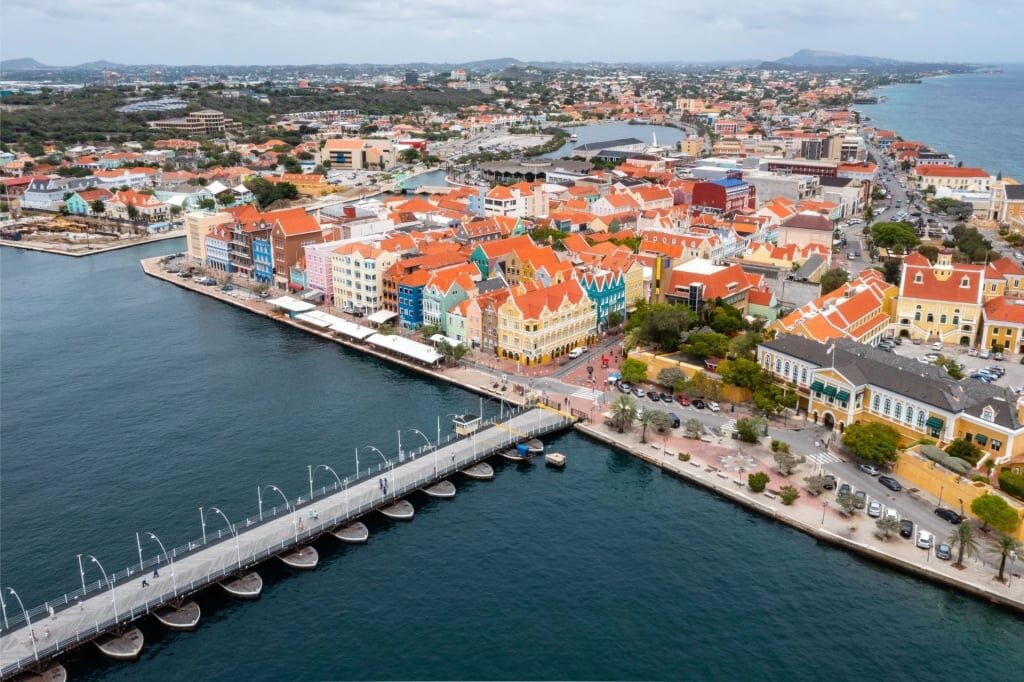
Willemstad
Willemstad, Curaçao is the island’s capital and beating heart, and also one of the most colorful and engaging cities in the Caribbean. In contrast to neighboring Aruba with its gleaming resorts, or the diving mecca of Bonaire, it firmly puts the C for culture into the ABC Islands.
The big draw is Handelskade with its rows of brightly painted 18th-century merchant houses lining St. Anna Bay, the channel that splits the city into the two sides of Punda and Otrobanda. Add in the Queen Emma Bridge—the “Swinging Old Lady” pontoon that connects the two—and you’ve got one of the Caribbean’s most photographed waterfronts.
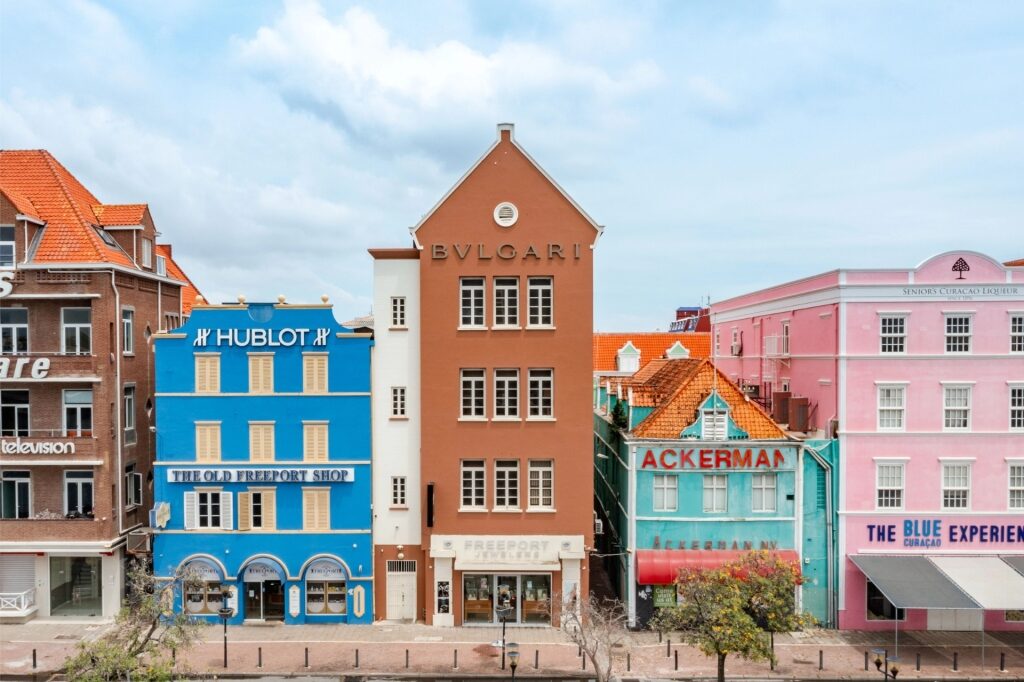
Punda
Behind that picture-perfect façade lies a compact, walkable town that’s very much alive. The city hums with color, street art, sizzling food aromas, and music drifting from public squares. It’s no surprise then that Willemstad’s oldest parts were awarded UNESCO World Heritage status in 1997.
What makes it special is the balance. Dutch-influenced organization blends with Caribbean rhythm. It’s ordered, but not stuffy, relaxed, but not buttoned-down. And that mix filters into everything from the language and architecture to the food and art.
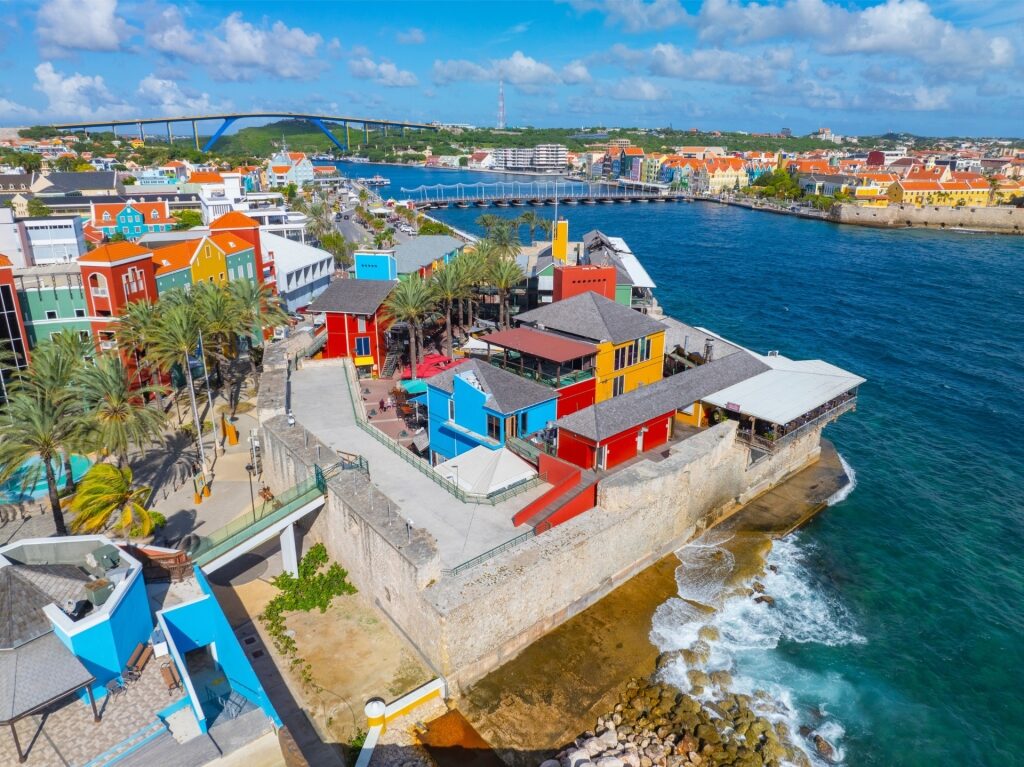
Otrobanda
Even the city’s two sides reflect the mix. Punda, the older quarter, is filled with colonial buildings, shops, and cafés. Otrobanda, across the bay, shows more grit and creativity, with its restored façades, faded murals, and small boutiques.
In a region where many islands can feel like a variation on the same theme, Willemstad stands apart as somewhere distinctive that demands to be experienced.
History & Culture
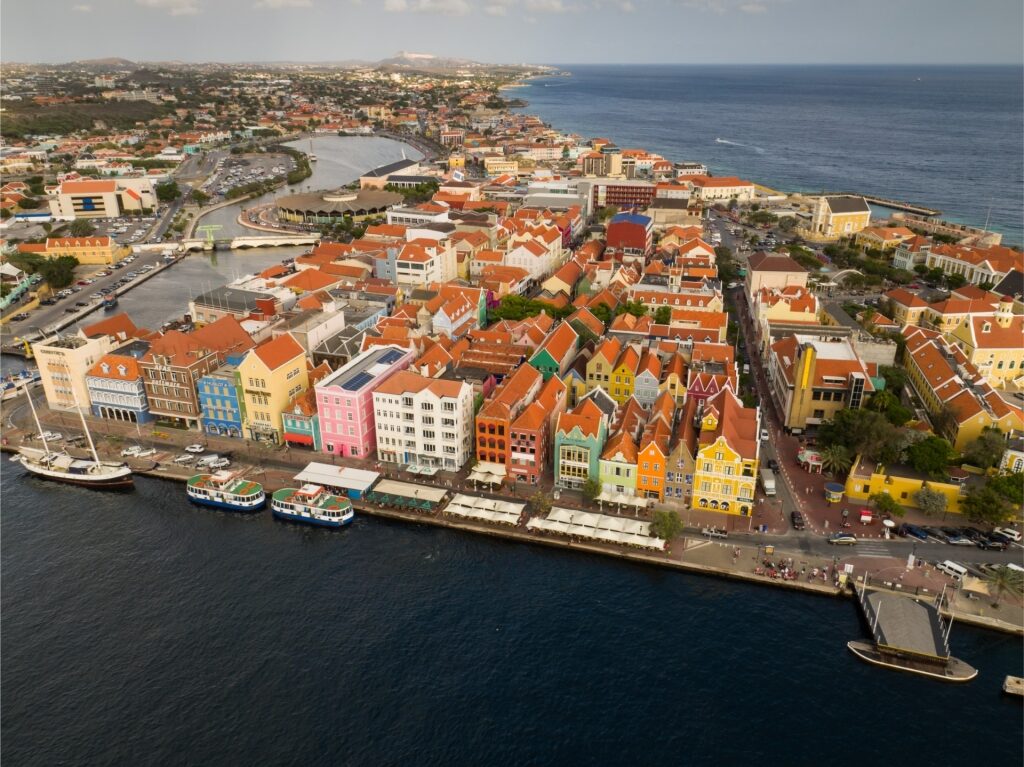
Willemstad
For an island that’s part of an archipelago dubbed the Islas Inútiles—useless islands—by the Spanish conquistadors, Curaçao has certainly come a long way.
Long before they arrived, the island was inhabited by the Arawak, a subset of the Amerindian groups that came from what is now mainland Colombia. They lived mainly by fishing and farming, as well as trading with other nearby islands. Evidence of their rock carvings and tools survives around the island in various caves.
The Spanish arrived in 1499 and, finding no gold or silver, gave Curaçao its disparaging epithet, but still used it subsequently for raising cattle and enslaving the indigenous people.
The arrival of the Dutch West India Company, which seized Curaçao in 1634, changed the course of the island’s history. The new colonialists developed Willemstad and made it a center for trade, both in goods and, sadly, human beings, with slaves from West Africa brought here to be processed for onward sale.
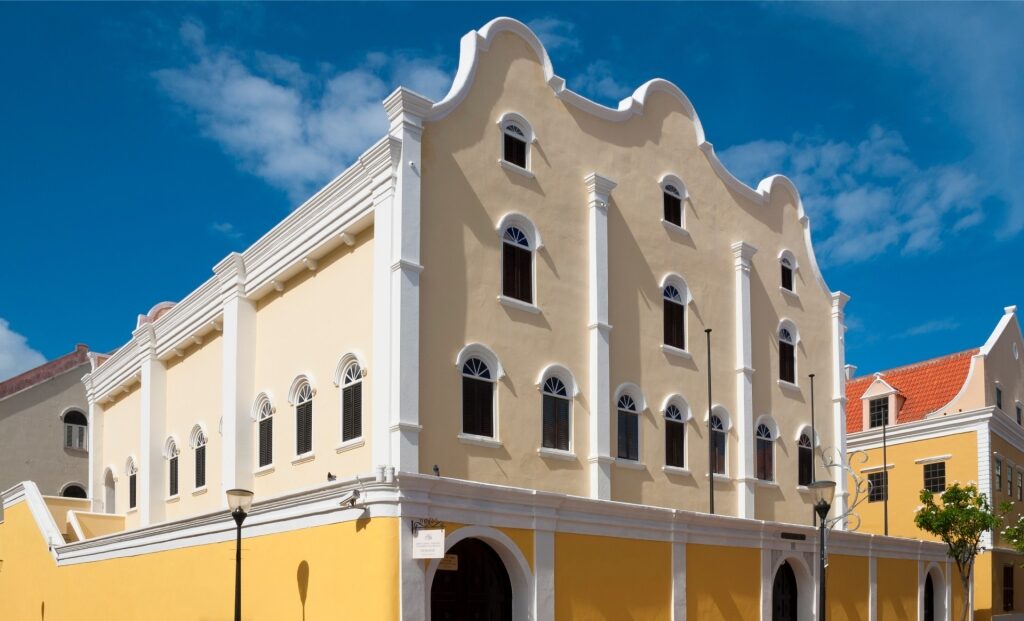
Mikvé Israel-Emanuel Synagogue
Meanwhile, Jews fleeing persecution in both Brazil and Europe flocked to the island where they were granted religious freedom. This influx resulted in the building of the Mikvé Israel-Emanuel Synagogue. Constructed in 1732, it’s now the oldest continuously used synagogue in the Americas.
Slavery may have been abolished in 1863, but its legacy remains in culture, language, and society—not least in Papiamentu, the island’s unique creole mix of European and African flavors.
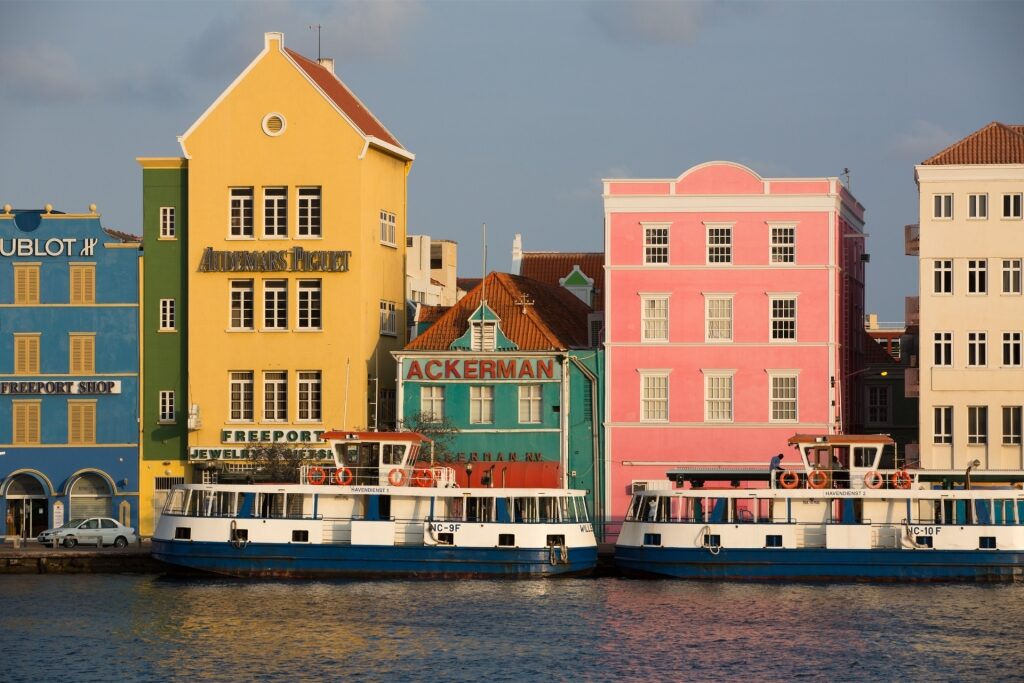
Punda
The island’s fortunes later rose when it became a refining center for Venezuelan oil, though today tourism and international finance dominate the economic landscape. Politically, it remained part of the Netherlands Antilles until 2010, when it became an autonomous country within the Kingdom of the Netherlands.
Today, its double-sided history runs throughout daily life, from the orderly Dutch gabled houses painted in bright Caribbean colors to a cuisine that fuses European, African, and Latin American influences.
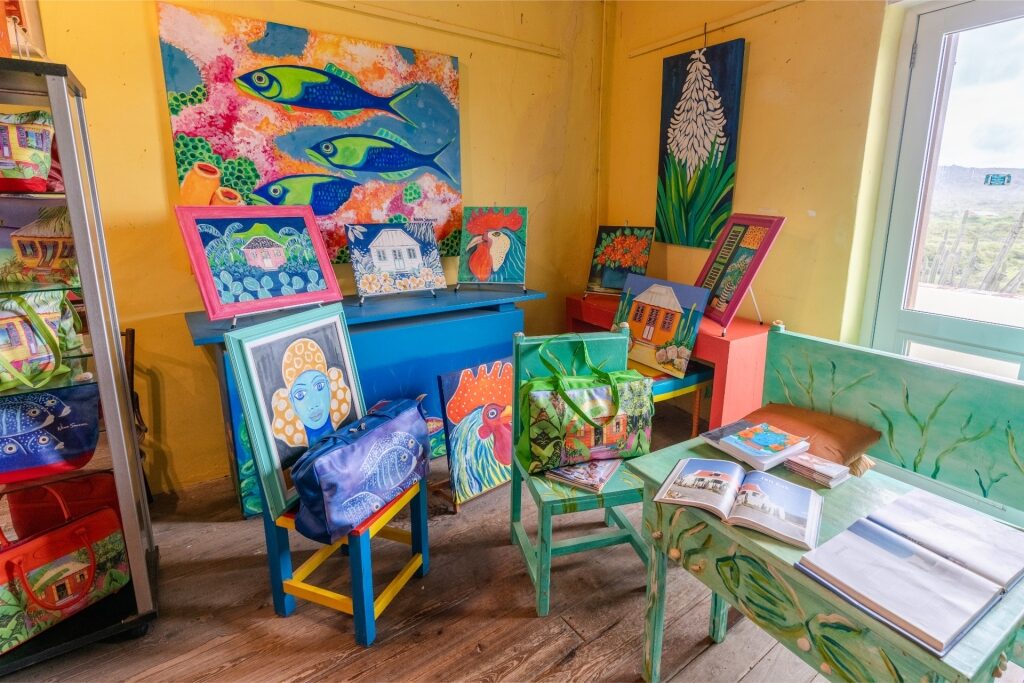
Nena Sanchez Gallery
Locals interpret that creative blend in different ways. Hand-painted Chichi dolls celebrate strong Caribbean women, artists such as Nena Sanchez produce color-soaked canvases that echo the town’s vibrancy, and street murals and boutique galleries dominate in Otrobanda and Pietermaai, respectively.
Wildlife & Nature
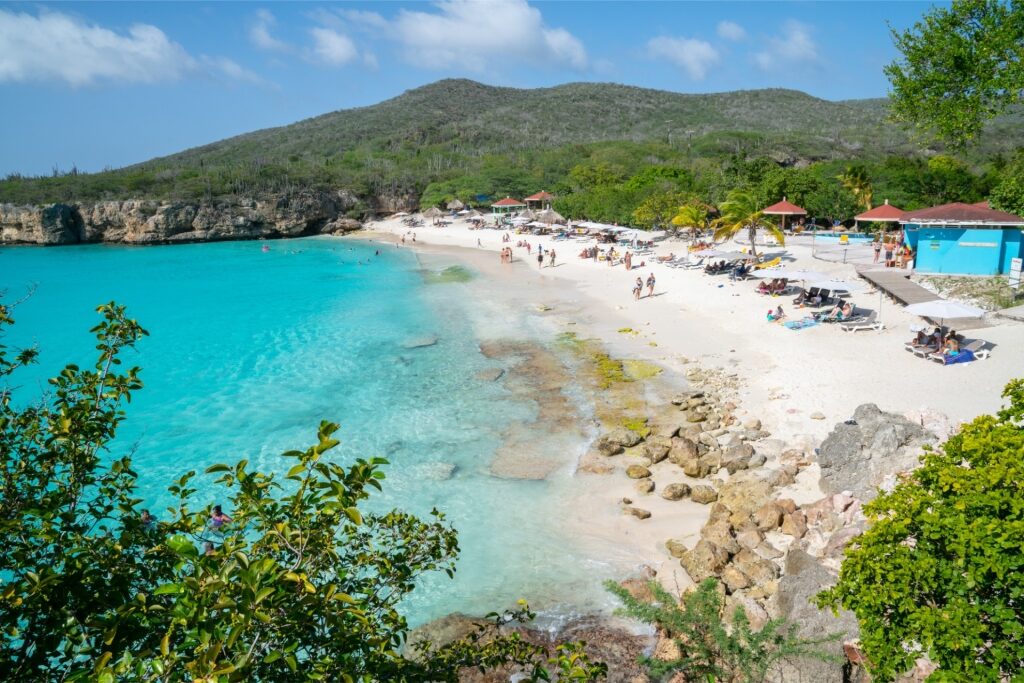
Knip Beach
As a capital and a working city, Willemstad is probably better known for its architecture and culture, but there are some natural spaces to discover.
On the edge of the city lies Curaçao Rif Mangrove Park, a protected reserve with raised boardwalks and the chance to kayak through shaded channels. The best beaches in Curaçao are out of town, but Avila Beach in Pietermaai, plus Mambo Beach and Seaquarium Beach to the east are fairly lively stretches with decent swimming and snorkeling.
Wilhelmina Park in Punda is also worth a walk, a natural space with the chance to snap a selfie by the bright-lettered Curaçao signs. Those with a bit more time can venture just beyond the city. The Hato Caves, a short drive away, reveal limestone formations, hanging stalactites, and ancient petroglyphs.
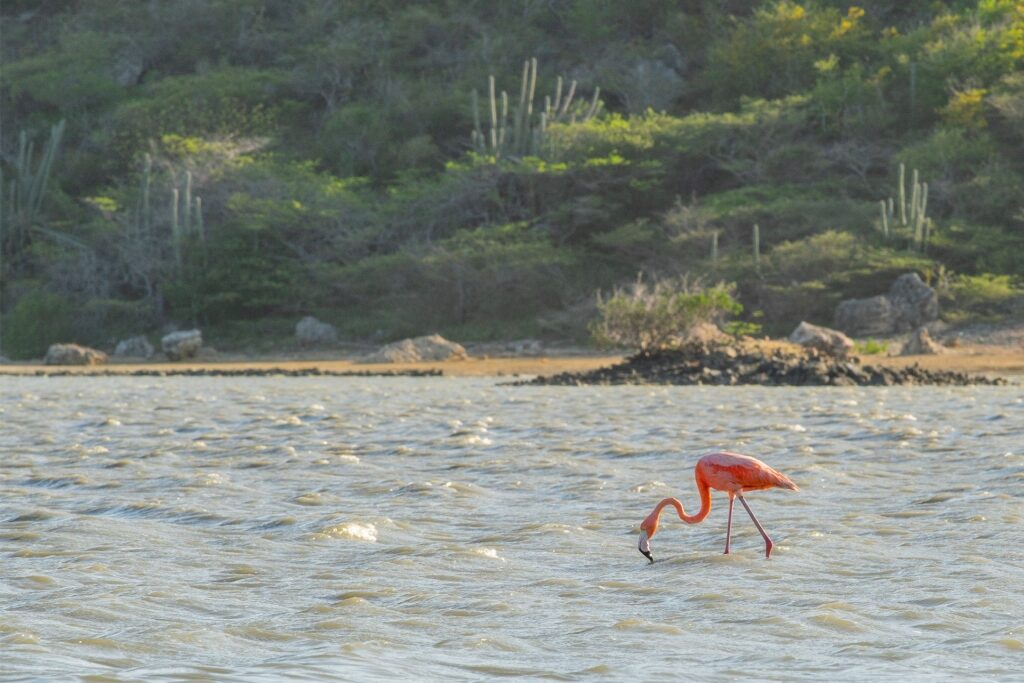
Flamingo
Head west, and the salt flats at Jan Kok are a good spot to see flamingoes. Knip and Kokomo beaches, meanwhile, provide the kind of turquoise waters and white sand views normally seen in glossy travel magazines.
Tips for Visiting Willemstad
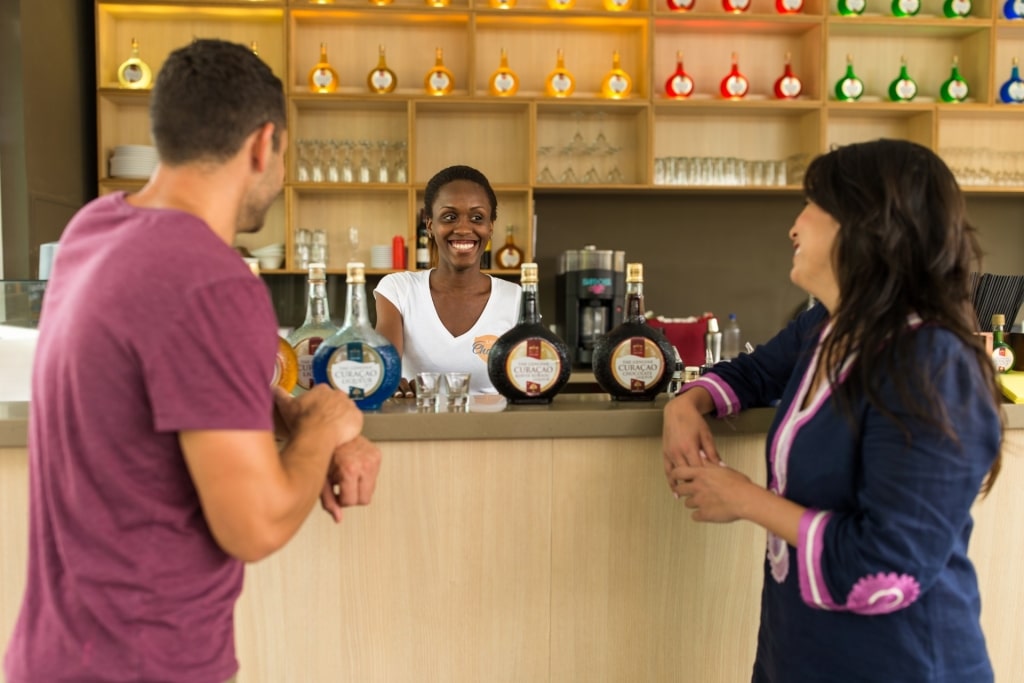
Landhuis Chobolobo
Willemstad is compact and easily explored on foot, so make sure to pack comfortable walking shoes. Bring a hat and sunscreen, particularly if walking around, and carry a water bottle—restaurants and shops will happily fill it for you.
The currency is the Netherlands Antillean guilder, but most places will accept U.S. dollars. Bank and credit cards are widely accepted, too.
When it comes to what to buy, there are two real icons to take home as souvenirs: Blue Curaçao liqueur and Chichi dolls.
Things to Do & Attractions in Willemstad
Handelskade
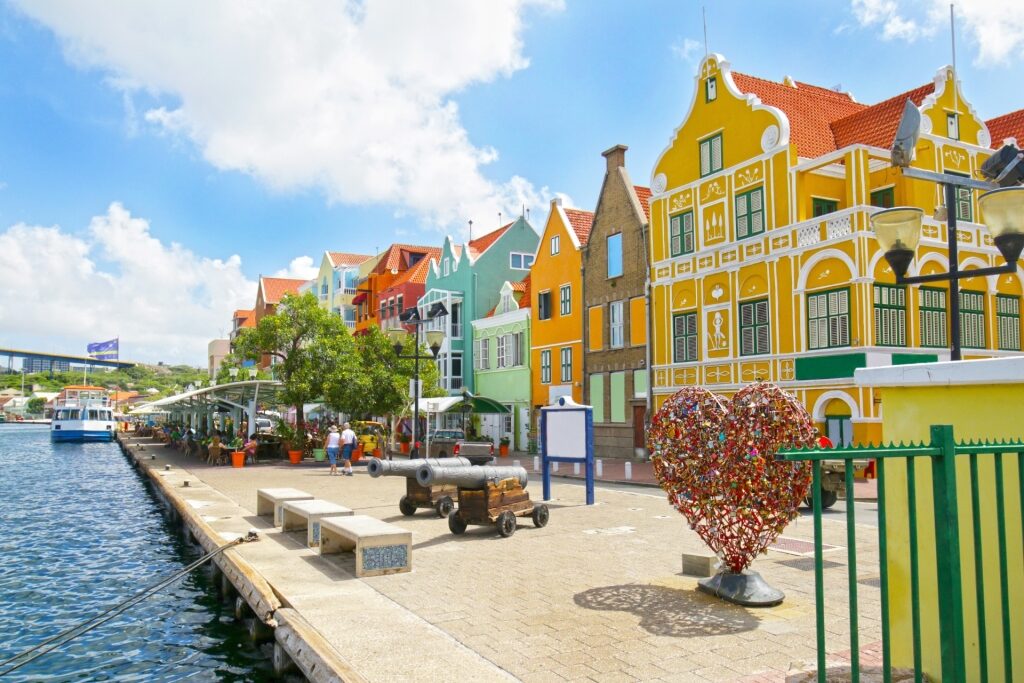
Handelskade
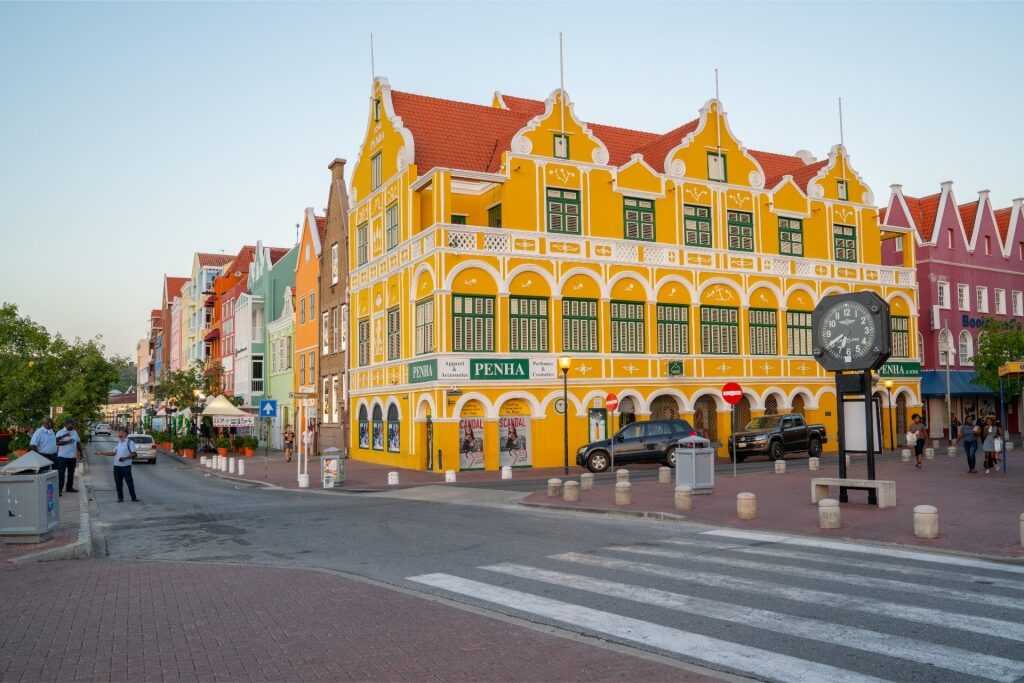
If you’ve seen images of Willemstad, Curaçao, you’ve likely seen images of Handelskade. Here, the brightly painted 18th-century Dutch houses are colored everything from sherbet pinks to sunshine yellows and sea blues.
Part of the historic UNESCO-listed center and lining St. Anna Bay, they were originally warehouses and trading offices for Dutch merchants. According to local folklore, the colors stem from a 19th-century governor’s decree that ordered them to be painted because the previous white color gave the governor a headache.
It was later revealed he had financial links to the paint company, but his alleged scam was to the benefit of visitors today. Now, they house cafés, shops, and the occasional office.
Historic Area of Willemstad
Punda
Handelskade may be the poster child of Willemstad’s historic center, but there’s far more beyond that colorful façade. Punda, the oldest part of town, was laid out by the Dutch on a grid southeast of St. Anna Bay. It’s home to some of the city’s most recognizable landmarks, including the Mikvé Israel-Emanuel Synagogue, the floating market, Plasa Bieu, and Wilhelmina Park.
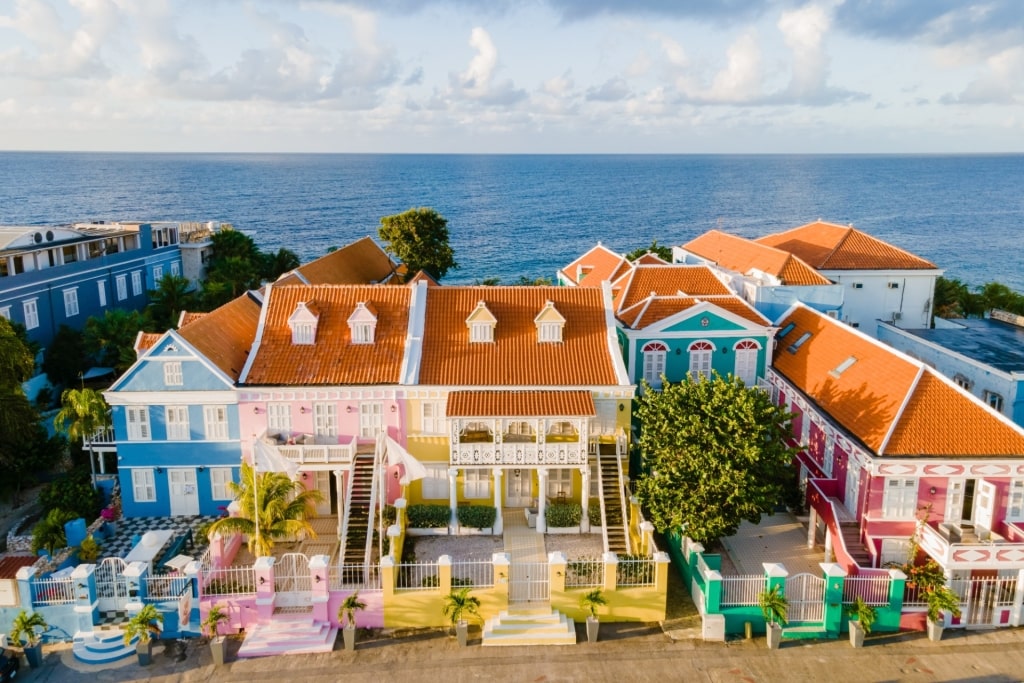
Pietermaai
Beside it sits Pietermaai. Its pastel mansions have been reimagined as boutique hotels, cocktail bars, and stylish restaurants, giving the district a bohemian yet polished feel.
The biggest contrast with these three is Otrobanda, on the opposite side of the bay. Once the working-class part of town, it’s been subject to some artistic regeneration, not least at Rif Fort. Here, the 18th-century bastion has been transformed into a waterfront mall with a courtyard, stores, and cool places to eat and drink.
Plasa Bieu
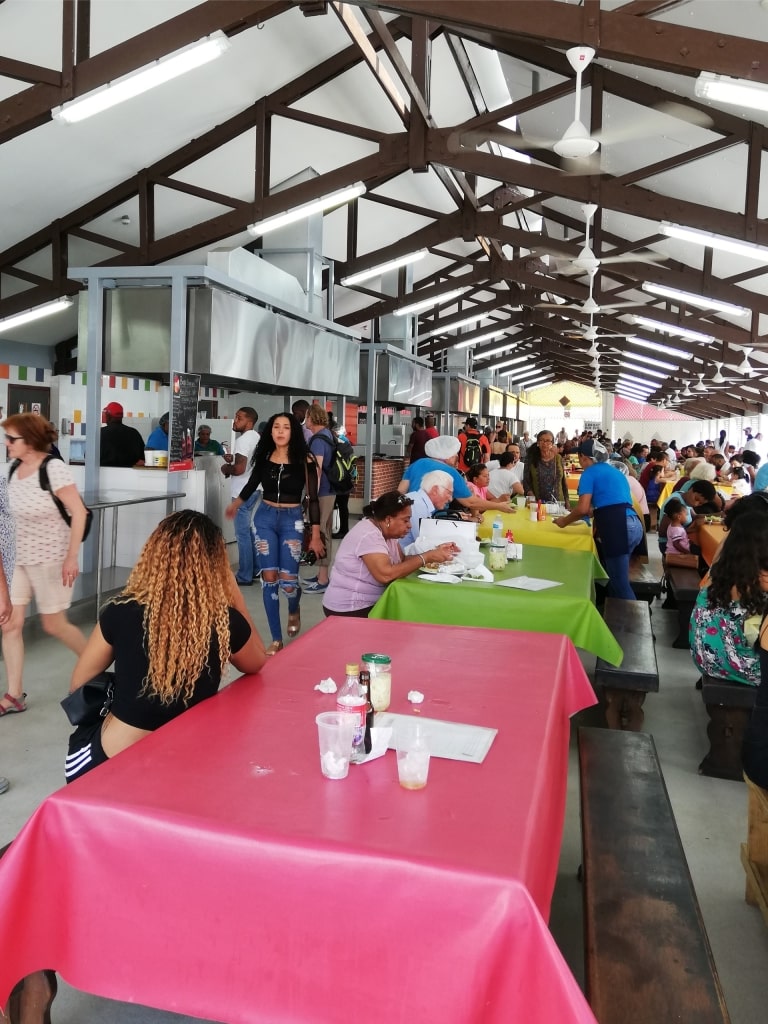
Plasa Bieu Photo by Kattiel on Wikimedia Commons, licensed under CC BY-SA 4.0
Willemstad’s old market, known as Plasa Bieu, sits right in the heart of Punda. It’s not overly pretty, looking a little like a huge shed with long, communal wooden tables—but it’s the best place on the island to sample home-style Curaçaoan dishes.
Bustling, noisy, and full of aromas, the food stalls offer treats such as stoba, a beef or goat stew, funchi, a cornmeal polenta-style side, fried fish, and fresh juices.
Chichi Store
For an arty souvenir that’s unique to Curaçao, head to the Chichi Store in Punda. The Chichi doll is the island’s signature art piece, created by local artist Serena Janet Israel and produced at her workshop, Serena’s Art Factory, just outside the city.
Representing the strong, nurturing Caribbean “big sister” or matriarch figure, each doll is hand-painted by local female artists, so no two dolls are the same.
Floating Market
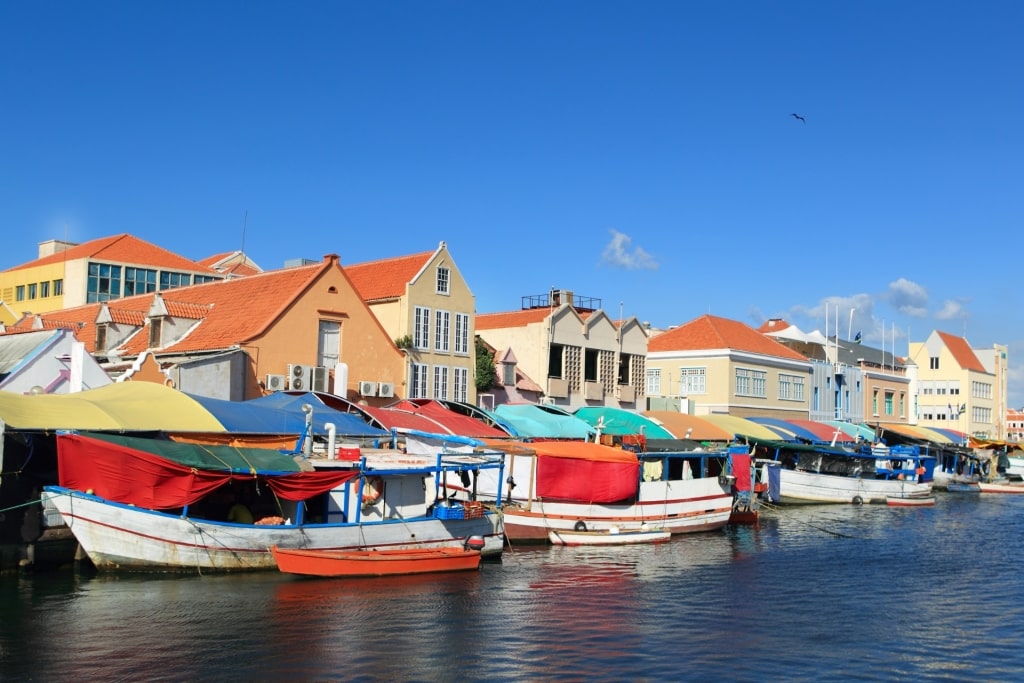
Floating Market
If Handelskade is Willemstad’s most photographed spot, the floating market in Punda comes a close second, consisting of a row of boats moored on the waterfront. Traders sell fresh fruit, vegetables, and fish straight from the boats or stalls on the quay.
Visiting the market is one of the best things to do in Curaçao. It’s colorful and lively, a great reminder of both Curaçao’s close ties with South America, as many boats come from Venezuela, and its history as a trading hub.
Curaçao Museum
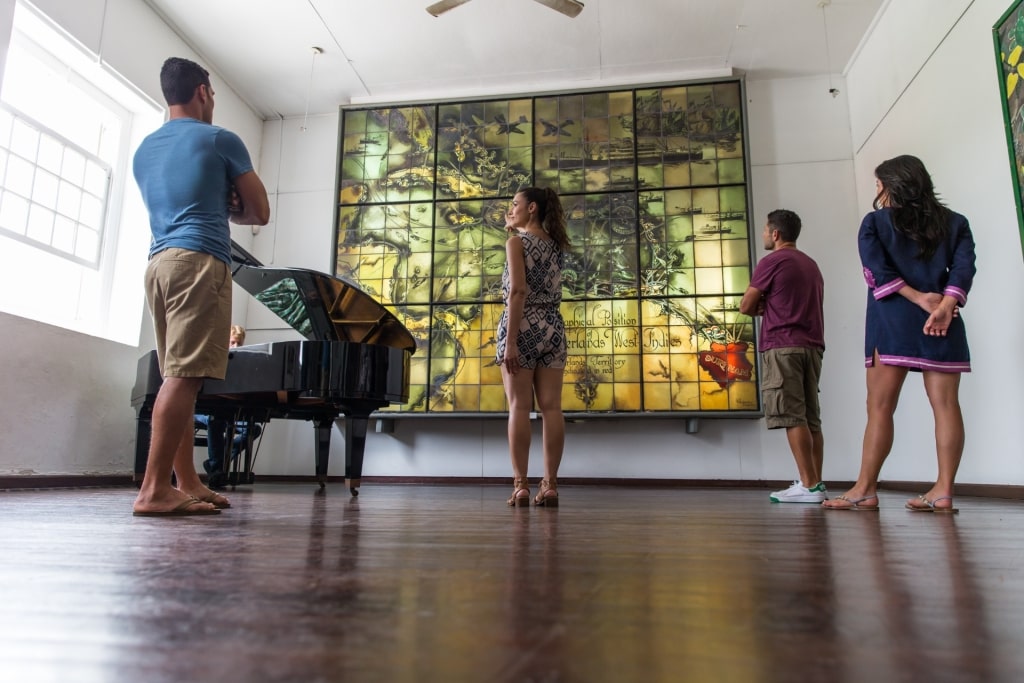
Curaçao Museum
For a broad overview of Curaçao’s history, head to this museum on the Otrobanda side. Established in 1946 and housed in a restored 19th-century military hospital, it gives a broad sweep of Curaçao’s history through a mix of antique furniture, artifacts, and traditional island crafts. Look out, too, for the old Fokker airplane here that was used in the island’s first transatlantic flight.
Fort Amsterdam & Governor’s Palace
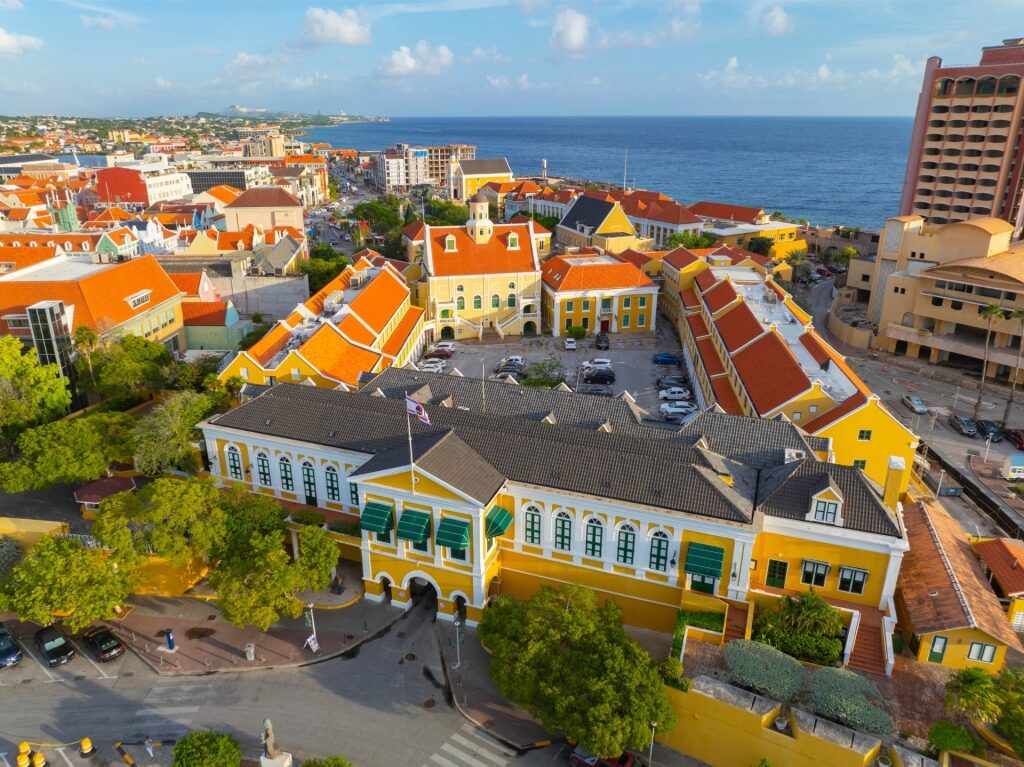
Fort Amsterdam
Adjacent to each other on the Punda side, these are two of the island’s most historic structures. Fort Amsterdam was built by the Dutch West India Company in 1635 to defend Willemstad and control St. Anna Bay.
A massive yellow bastion and the oldest surviving structure in the city, there’s history quite literally in the walls here, as a cannonball is lodged in the wall of a small church. The cannon was fired in 1804, when the island was under attack by the British. It was left in the wall as a reminder.
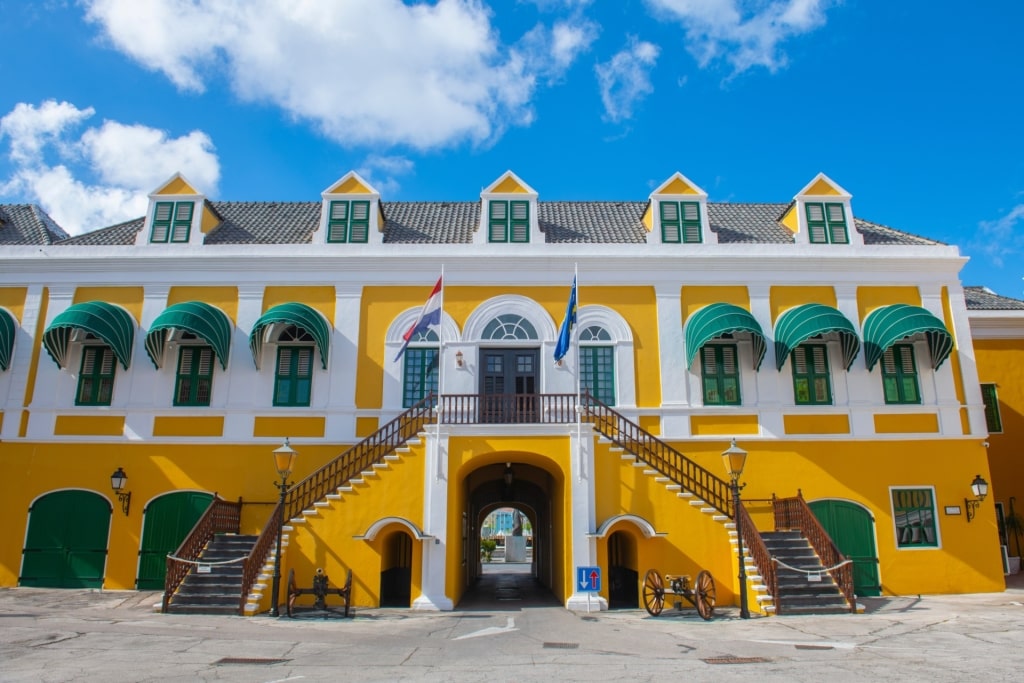
Governor’s Palace
Next door is the Governor’s Palace. Still the official residence of the governor, it’s not open to the public, but the elegant colonial façade is worth checking out.
Queen Emma Bridge
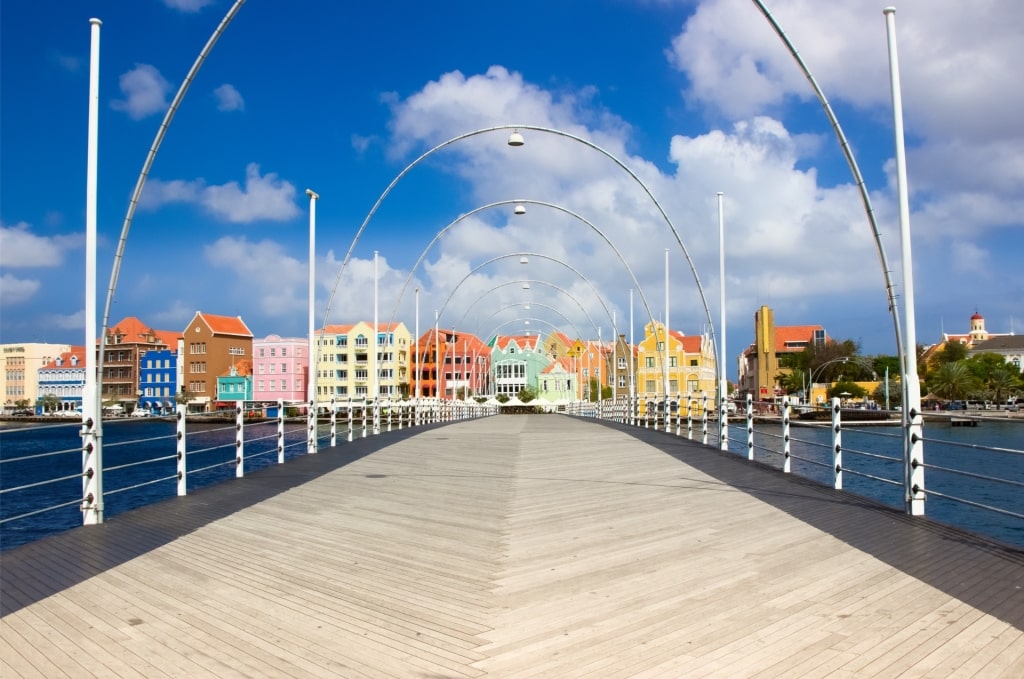
Queen Emma Bridge
The “Swinging Old Lady” pontoon bridge connects Punda and Otrobanda across St. Anna Bay. When they call her “old,” they’re not exaggerating, either. Built in 1888 and restored several times, she remains central to daily life.
If you’re visiting and it starts to open, it’s quite fun to feel it swing sideways to allow ships to pass through the channel. Once the bridge is fully open, you can hop on a free ferry back to the other side.
Landhuis Chobolobo
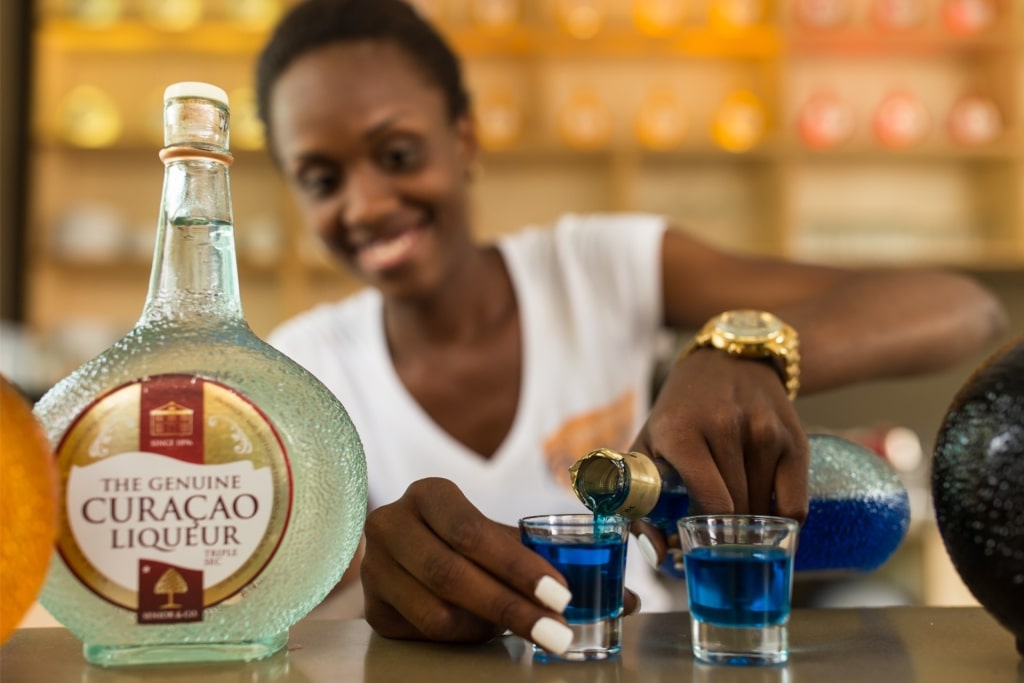
Landhuis Chobolobo
Just outside town, this restored 19th-century country estate is best known as the home of the Senior & Co. distillery, where the original Blue Curaçao liqueur is made. Visitors can tour the distillery, learn how the liqueur is produced from the laraha orange, and see the old copper stills.
Tasting is part of the visit—including flavors beyond the signature blue variety.
Food & Drink
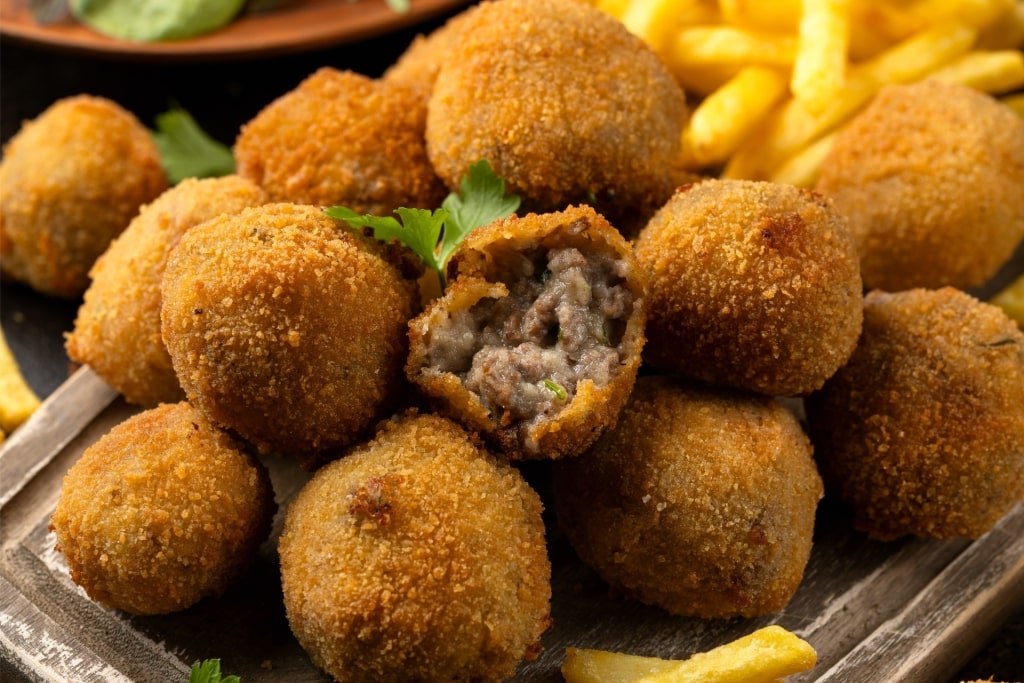
Bitterballen
The cuisine on Curaçao is as bright as Willemstad’s façades, a mix of Caribbean, African, Latin American, and Dutch influences. At its heart are island staples such as the aforementioned stoba and funchi, as well as keshi yena, a baked cheese stuffed with spiced meat or chicken.
The Dutch influence is never far away, either, with Gouda, pancakes, and bitterballen adding a European touch to island menus. Eateries range in style, too. Plasa Bieu is great for home-cooked traditional dishes. At the other end of the scale, there are high-end restaurants in Pietermaai’s pastel villas, as well as in restored colonial mansions.
Best Time to Visit
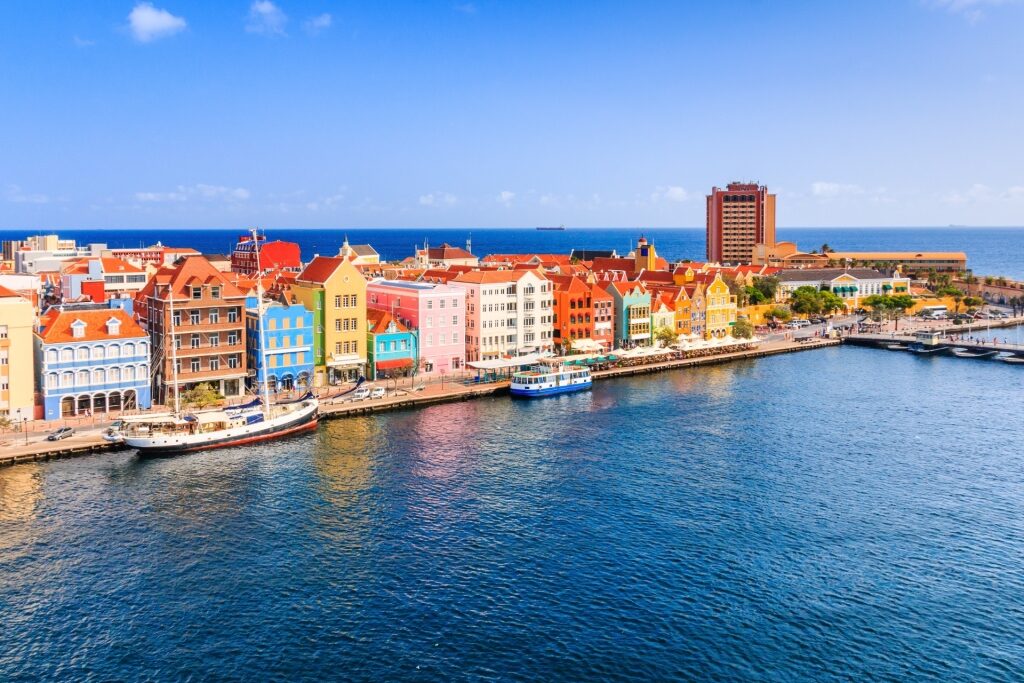
Willemstad
Curaçao is known for having year-round sun, so there’s never really a bad time to visit. While it’s out of the main hurricane belt, the dry season from October to April means it’s a much safer bet against rainfall.
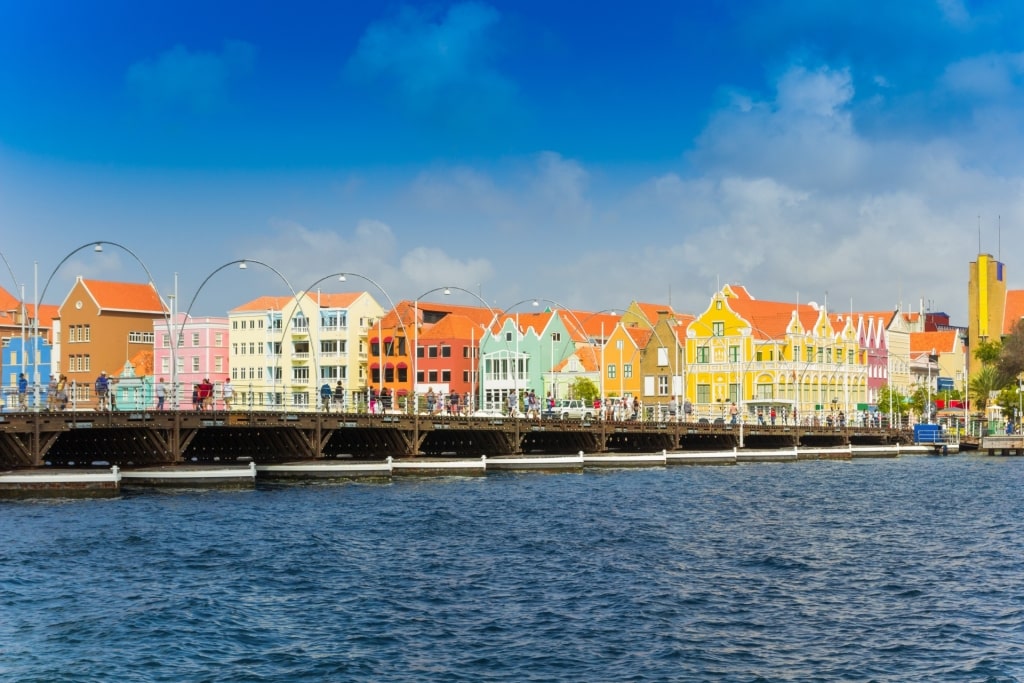
Willemstad
Discover the colorful city of Willemstad for yourself. Browse Celebrity’s cruises to Curaçao and book your dream tropical vacation today.