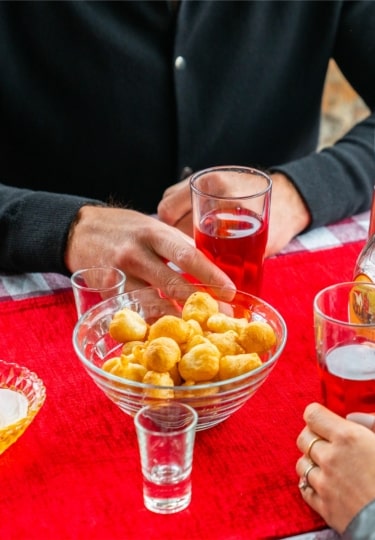
Food in Montenegro is diverse, influenced by its location, sandwiched between the Balkans and the Adriatic Sea, with influences from Italy, Turkey, and Slavic states, such as Bosnia and Herzegovina, Croatia, Serbia, and Slovenia. Montenegro might be a relatively small country—similar in size to Connecticut—but its culinary culture punches way above its weight.
Montenegrin cuisine includes plenty of fresh seafood, with fish caught straight from the azure waters of the Adriatic Sea, and heritage dishes, such as Njeguški pršut, a famous Montenegrin smoked ham from the mountain village of Njeguški.
From the dishes to try and customs to understand, here’s everything you need to know about food in Montenegro.
Njeguški Pršut
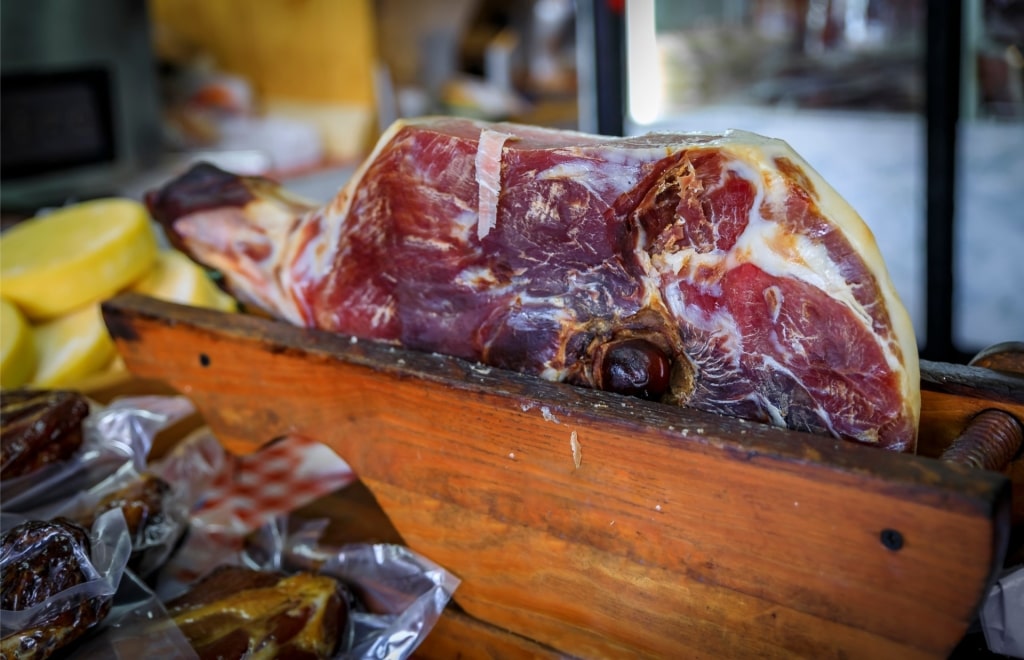
Njeguški pršut
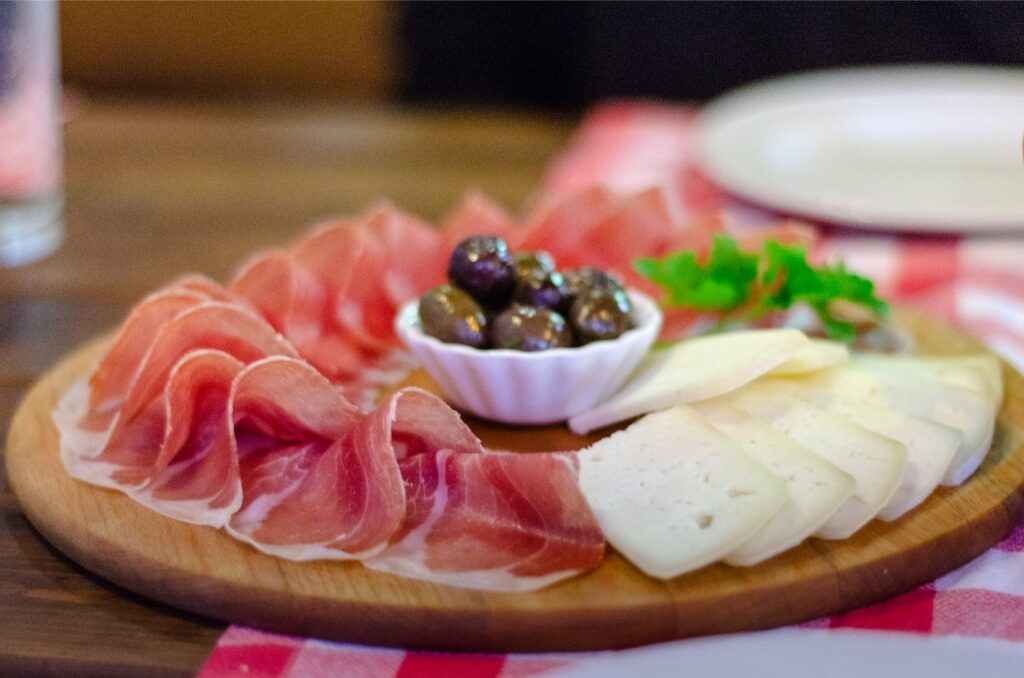
Originating in the mountain village of Njeguši, high up in the limestone Lovćen mountains, Njeguški pršut—sometimes referred to as Njeguš prosciutto—is an air-dried, smoked ham that gets its unique flavor from the combination of salty sea air and mountain breezes to which it’s exposed.
This intensely rich food in Montenegro has been made for centuries, said to date back to the Venetian and Ottoman times. Sea salt is rubbed onto the pork, which is then rested for a few weeks before the meat is smoked over beechwood and hung to dry for several months. When the meat is ready, it is thinly sliced and served with cheeses, other meats, olives, and bread.
Njeguški Sir
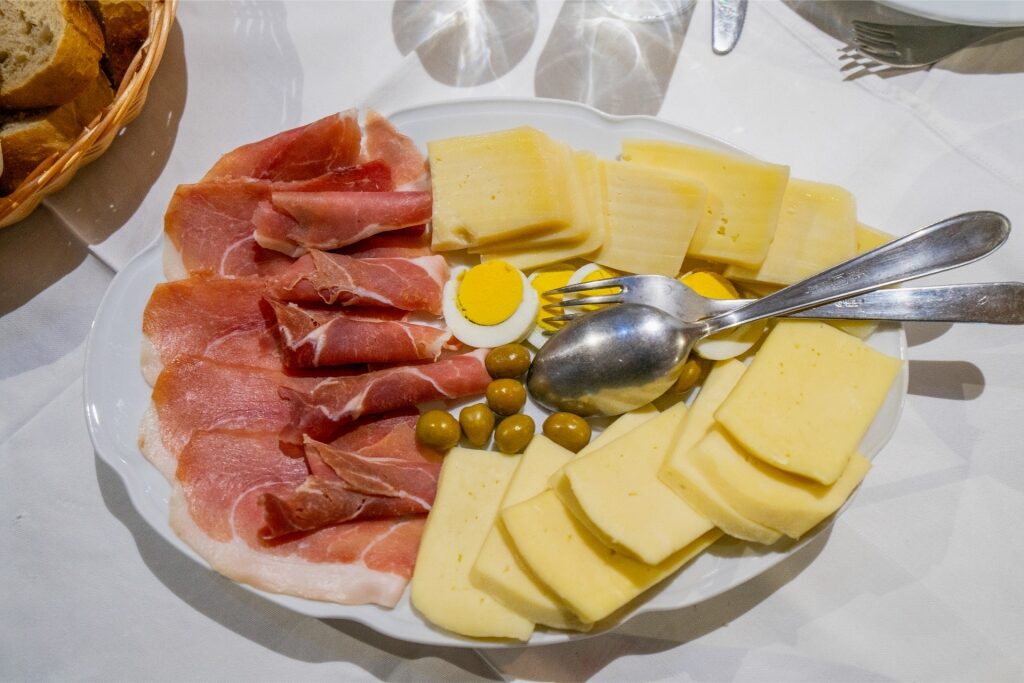
Njeguški sir
Often served with Njeguški pršut, Njeguški sir is a mountain cheese made in the same village. Together, they are two of the most famous foods in Montenegro.
This cheese is usually produced using cow’s milk mixed with sheep or goat’s milk, from animals that graze on Lovćen’s wild herbs and dewy mountain grass.
The end product is delicious, with a semi-hard texture and an intense tangy and salty flavor. Mild varieties are aged for just a few weeks. For a stronger, sharper taste, the cheese is aged for several months.
Crni Rižot
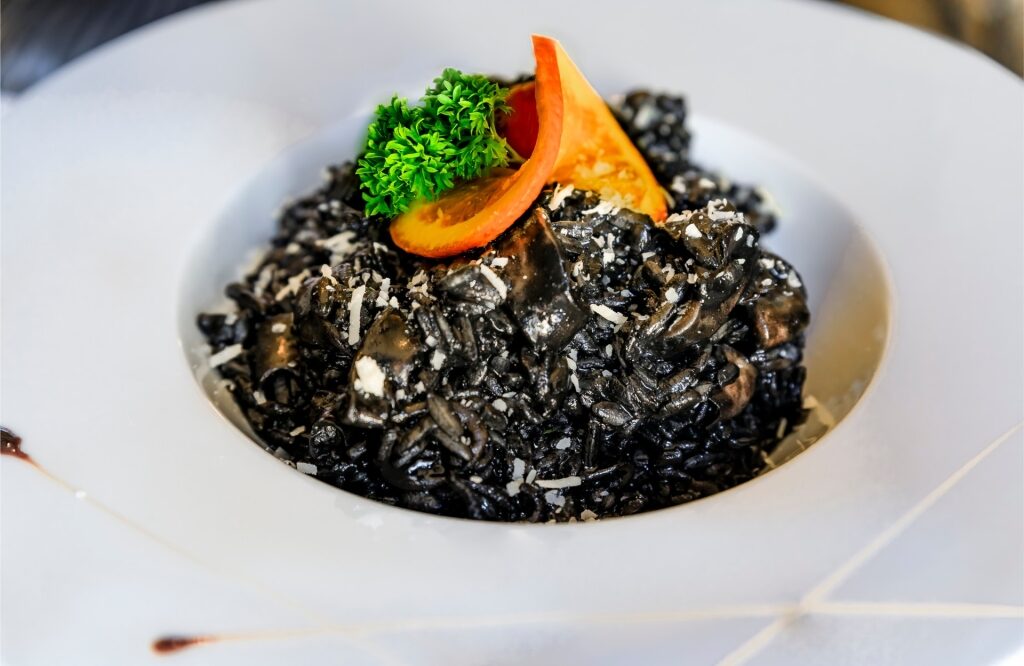
Crni rižot
Comforting crni rižot, translating as black risotto, is a favorite dish in Montenegro. Taking influence from Mediterranean cuisine, it features risotto made with cuttlefish or squid ink, giving the dish its jet black color.
The result of the ink stirred into the rice as it’s cooking is a dish that’s rich and briny, with a true taste of the Adriatic. There’s more that goes into this sublime risotto, however, starting with chopped onions and garlic sautéed in olive oil.
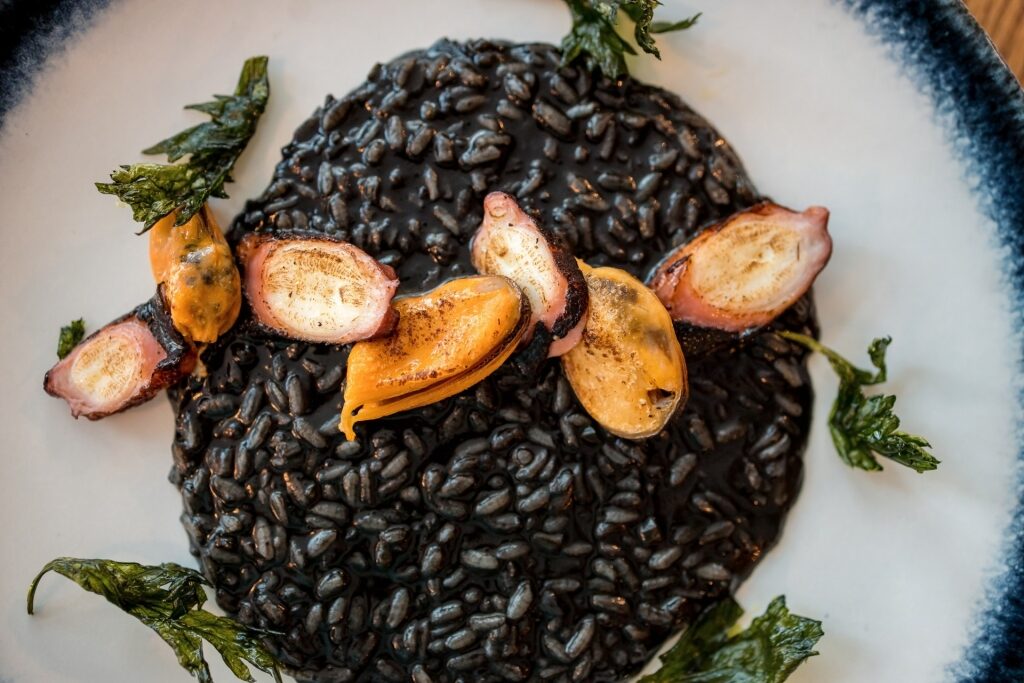
Crni rižot
Arborio or carnaroli rice is added to the base, along with the seafood, followed by ladles of white wine and fish stock, before the squid ink is stirred in. Crni rižot is finished with a drizzle of olive oil, a smattering of parsley, and sometimes, grated hard cheese.
I recommend sampling this umami-packed dish in coastal resorts, such as Kotor or Bar, ideally paired with a crisp, white local Montenegrin wine. You could savor crni rižot at Galion, a lovely waterfront restaurant in Kotor where the dish is enhanced with an infusion of thyme and those dazzling fjord views.
Buzara
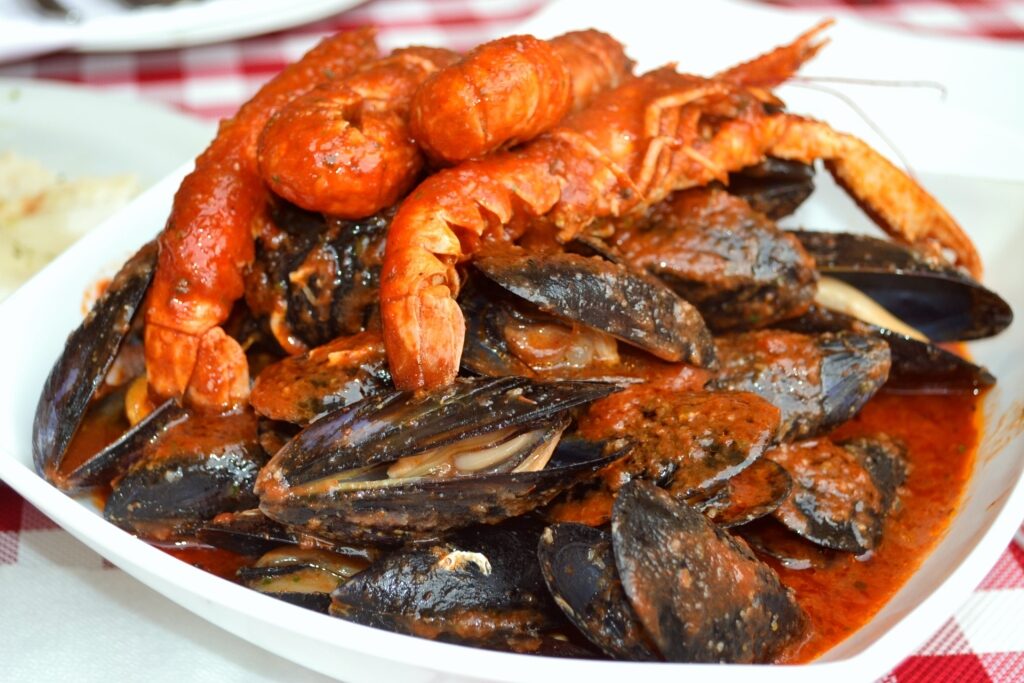
Buzara
This lip-smacking shellfish dish, usually featuring scampi, shrimp, or mussels, sees the shellfish cooked in a flavorful sauce of olive oil, garlic, white wine, and a generous helping of parsley. Breadcrumbs are added to thicken the sauce, with tomatoes sometimes added, too.
My tip is to order buzara as an appetizer and ample bread to mop up the tasty sauce. Order it to share with a selection of other appetizers, such as sardines, octopus, and scallops. Scala Santa in Kotor’s Old Town is a charming, family-run tavern that serves buzara with mouthwatering mussels, clams, and shrimps.
Grilled Fish
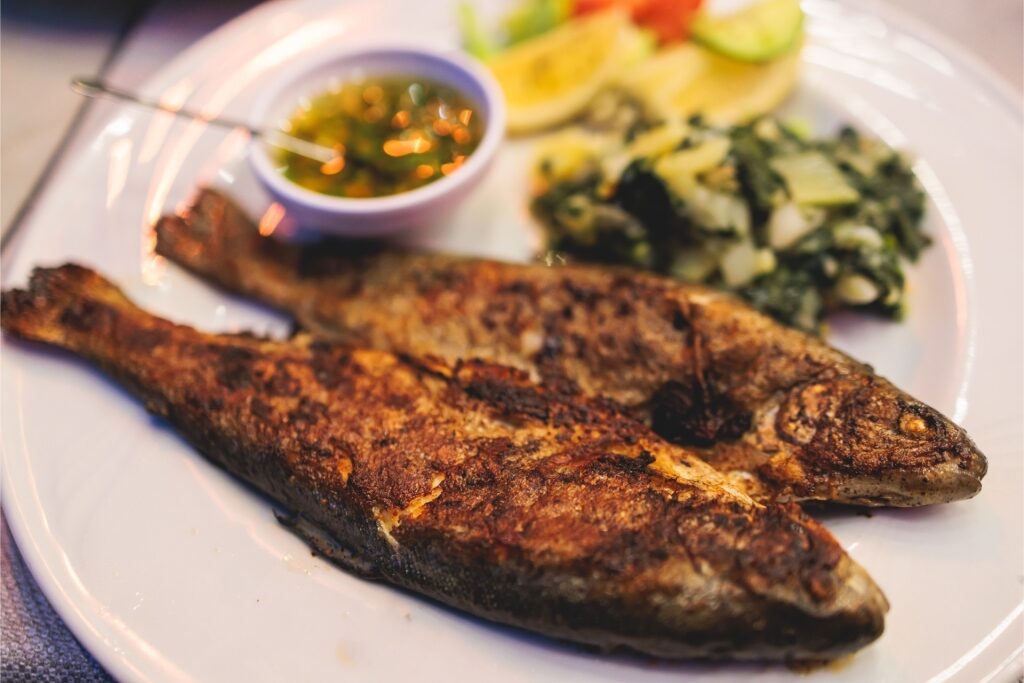
Grilled fish
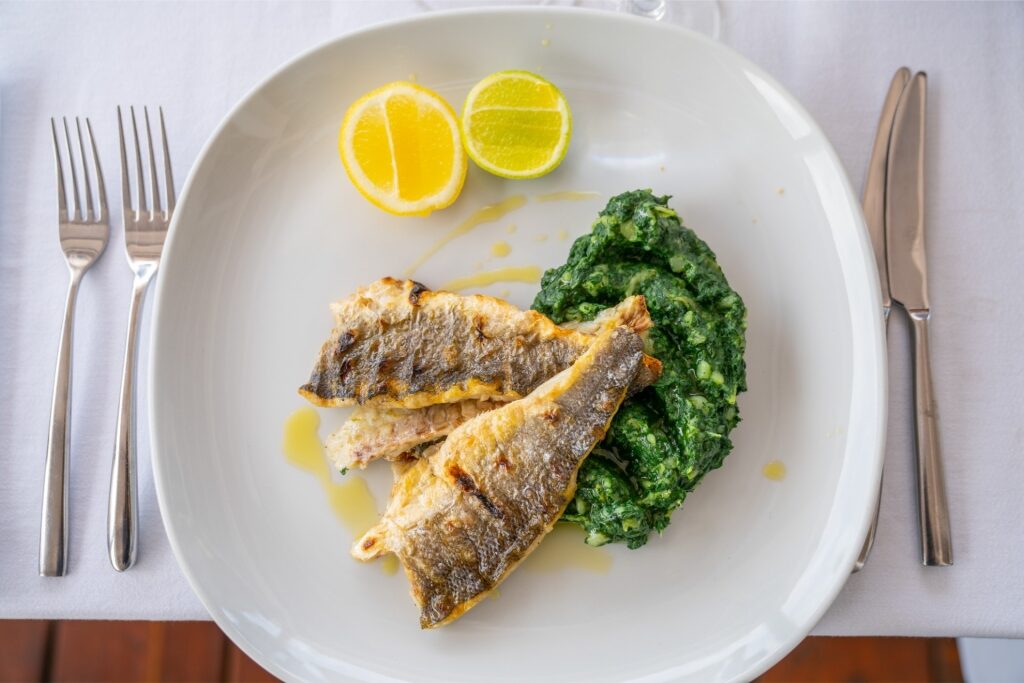
Naturally, food in Montenegro often involves fresh, grilled fish that’s sourced straight from the rich waters of the Adriatic. This staple Montenegrin cuisine appears on menus as “riba na žaru” and is usually served whole, including sea bass, sea bream, sardines, mullet, John Dory, and monkfish.
This seafood dish is kept simple, seasoned with salt, olive oil, lemon, and herbs, with the fish then grilled over charcoal. When dining in Montenegro, grilled fish is accompanied by potatoes, salad, and vegetables.
Pašticada
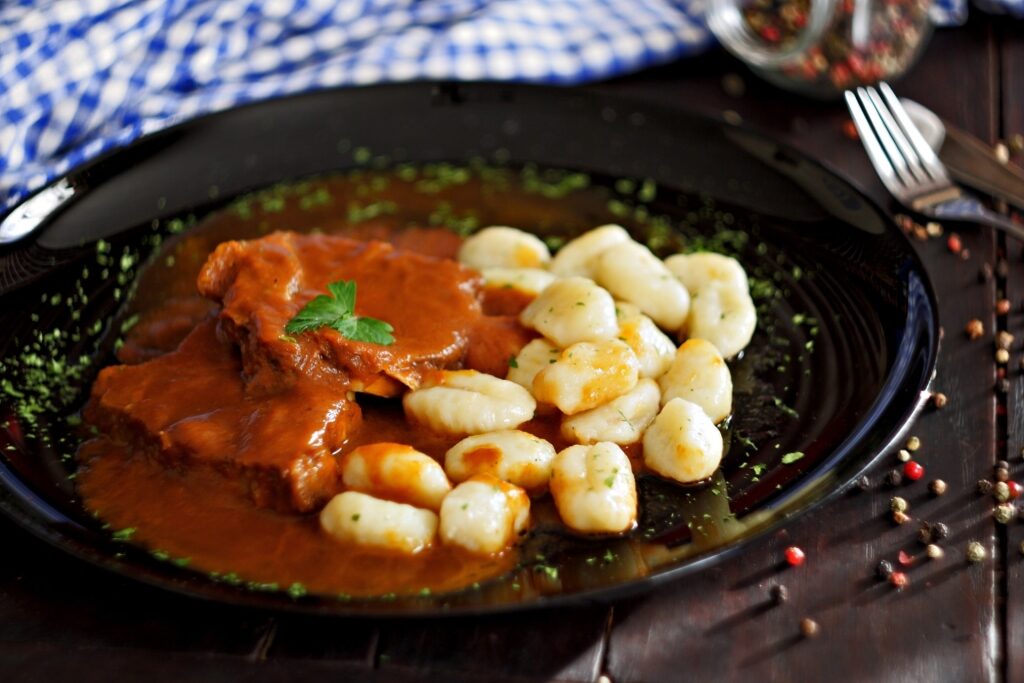
Pašticada
Meat lovers will enjoy this food in Montenegro. With its roots in the Dalmatian coast, this gorgeous beef stew sees rump marinated in red wine vinegar and cloves, then braised with carrots, onions, spices—including nutmeg and more cloves—red wine, prunes, and figs. Some variations also include bacon or prosciutto in the recipe.
The meat is slow-cooked to allow the flavors to infuse into the dish, resulting in a delightful sweet and savory flavor profile. Pašticada is served with pasta, gnocchi, or mashed potatoes.
In the pretty coastal resort of Petrovac, around a 30-minute drive north of Bar, Pašticada is even celebrated with an annual festival each June.
Ćevapi
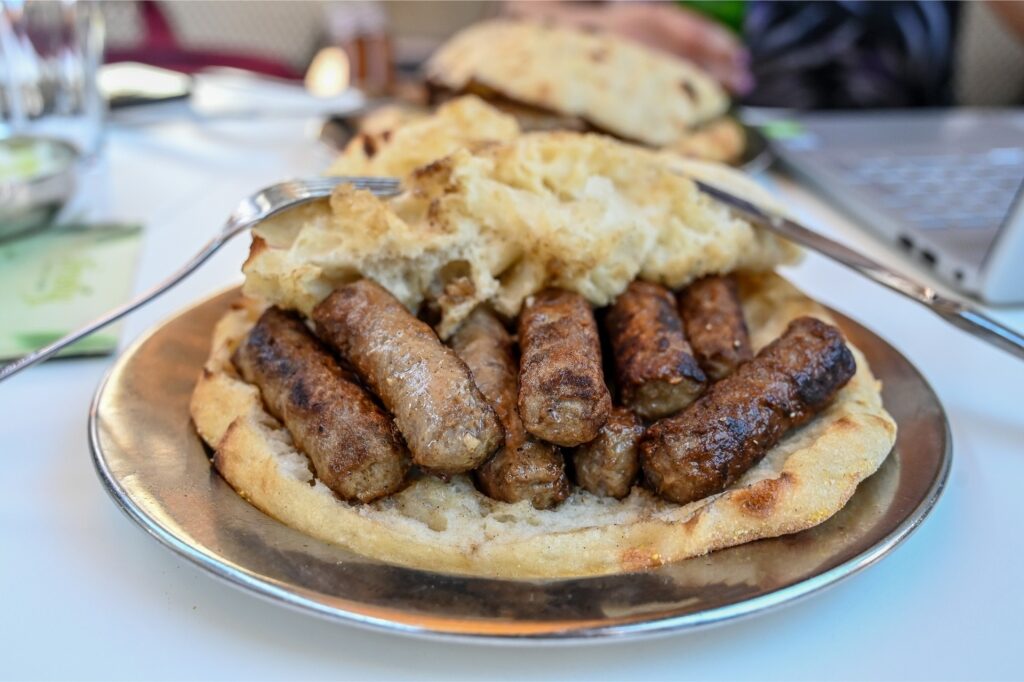
Ćevapi
Ćevapi is a grilled, ground meat dish of beef, lamb, and/or pork, similar to a kebab. Its roots lie in Bosnia and Herzegovina and Serbia, although it is widely eaten across the Balkans, including in Montenegro.
To cook it, ćevapi is seasoned with salt, pepper, garlic, and paprika. It’s then served in a portion of five or 10 pieces, with onion, ajvar, a roasted red pepper relish, and sometimes sour cream, stuffed into a flatbread. It’s quick and easy Montenegrin cuisine at its finest, served by street vendors, at taverns, and at food festivals.
Chargrilled Octopus
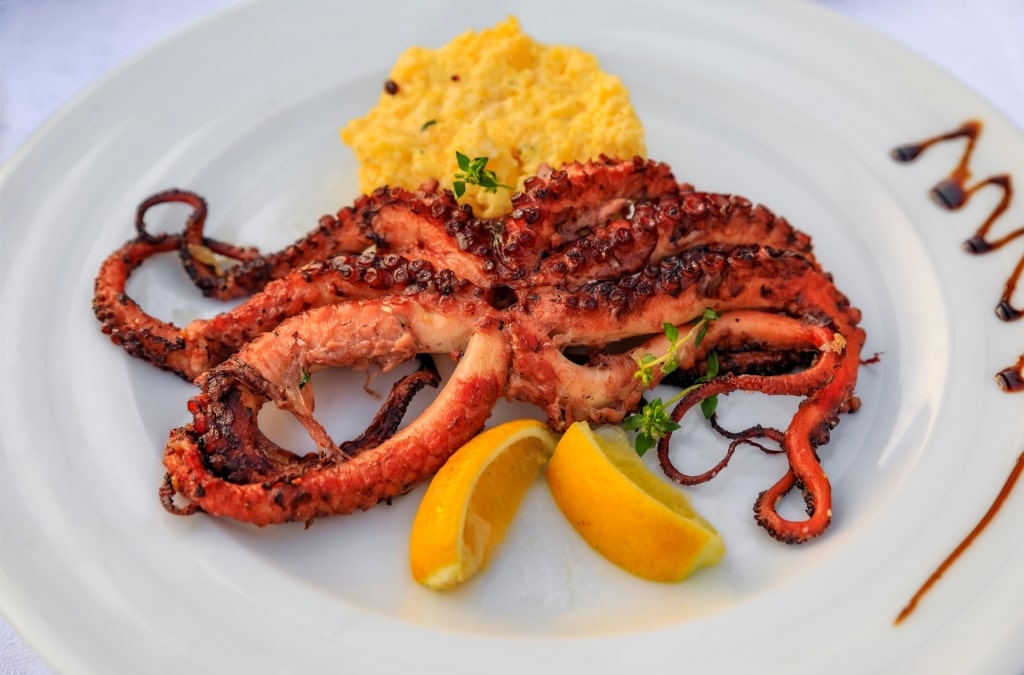
Chargrilled octopus
Few gourmet dining experiences compare to savoring tantalizing octopus in the Mediterranean. In Montenegro, grilled octopus is a seaside specialty, typically chargrilled to create a smoky flavor.
The octopus, sourced from the Adriatic, is first tenderized through gently simmering for around 30 to 45 minutes, with wine sometimes added to the water. Once tender, the octopus is brushed with olive oil, garlic, and herbs, and grilled until the skin becomes slightly charred.
This simple dish is then served with a drizzle of olive oil and lemon, and a sprinkling of sea salt and parsley. I suggest trying it in Kotor’s enchanting Old Town, where venues such as the Old Winery serve it grilled with a side of salad or vegetables.
Brav u Mlijeku
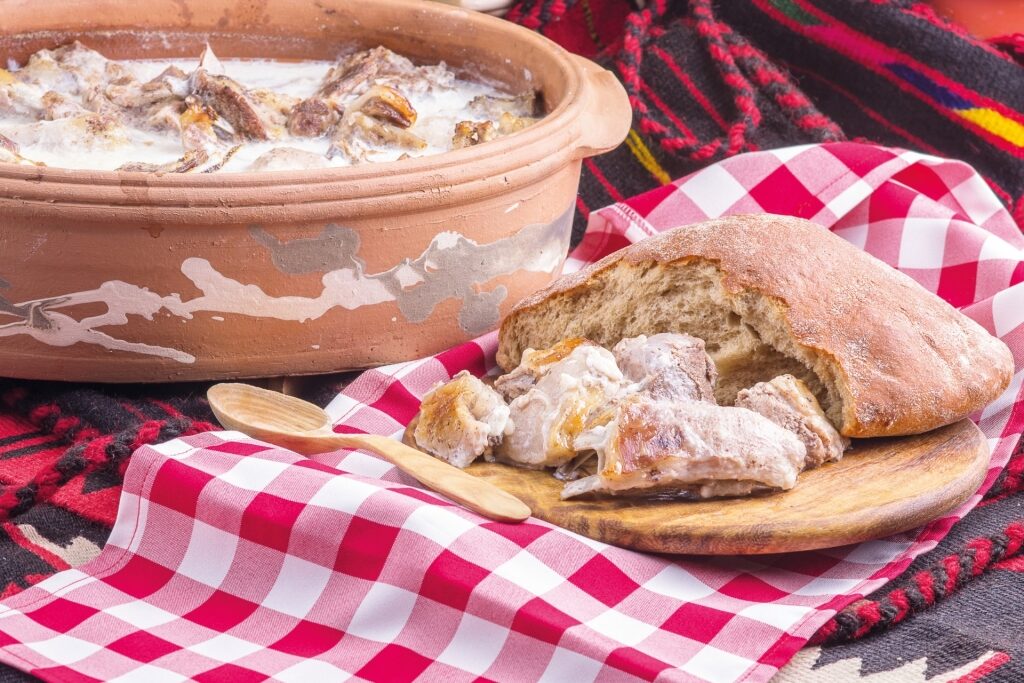
Brav u mlijeku
This beautiful Montenegrin food literally means lamb in milk, one of the country’s most traditional and rustic dishes. This countryside cuisine is all about comforting flavors that involve lamb being slowly braised in milk, with garlic, bay leaves, and herbs such as rosemary and thyme added during the cooking process.
Brav u mlijeku is lovingly prepared, with the meat first seasoned and lightly browned, before it’s added to a deep pan or clay pot to simmer in the milk. The milk thickens over time, turning into a creamy, caramelized sauce, coating the lamb.
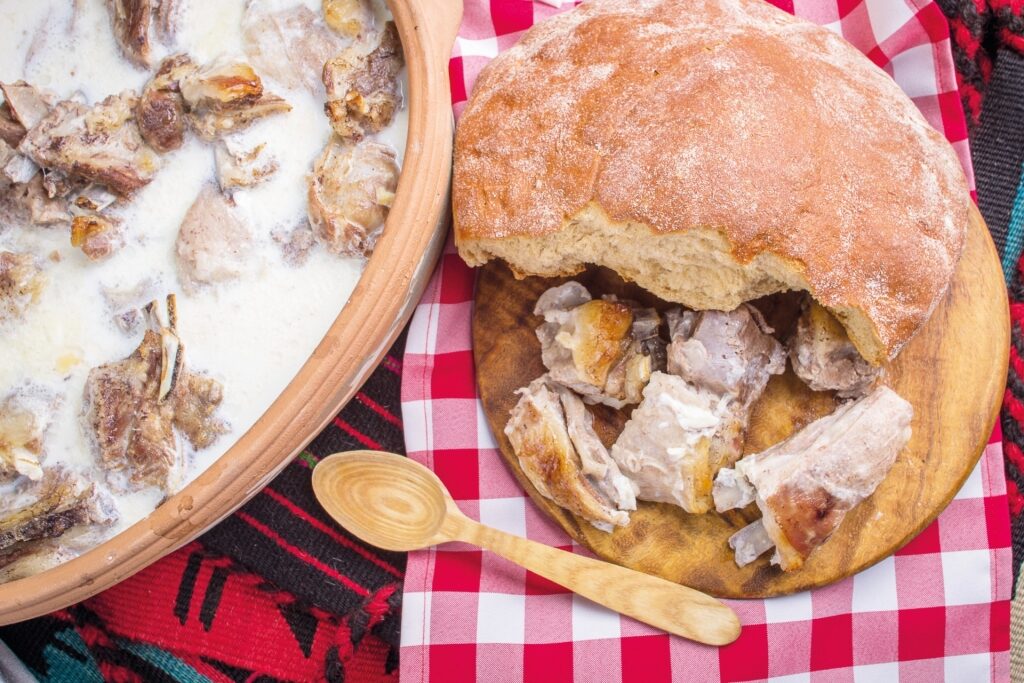
Brav u mlijeku
The slower the meat is cooked, the better the result, and the dish usually takes several hours, served with potatoes or homemade bread to soak up the sauce.
Brav u mlijeku is often saved for Sunday feasts and entertaining, with its origins in shepherding, where sheep and goats and their milk are farmed on pastoral mountain regions in the north of the country. It’s not so easy to find brav u mlijeku in coastal regions, but if you spend any time in Montenegro’s mountainous regions, you stand a greater chance of finding it on countryside menus.
Kačamak
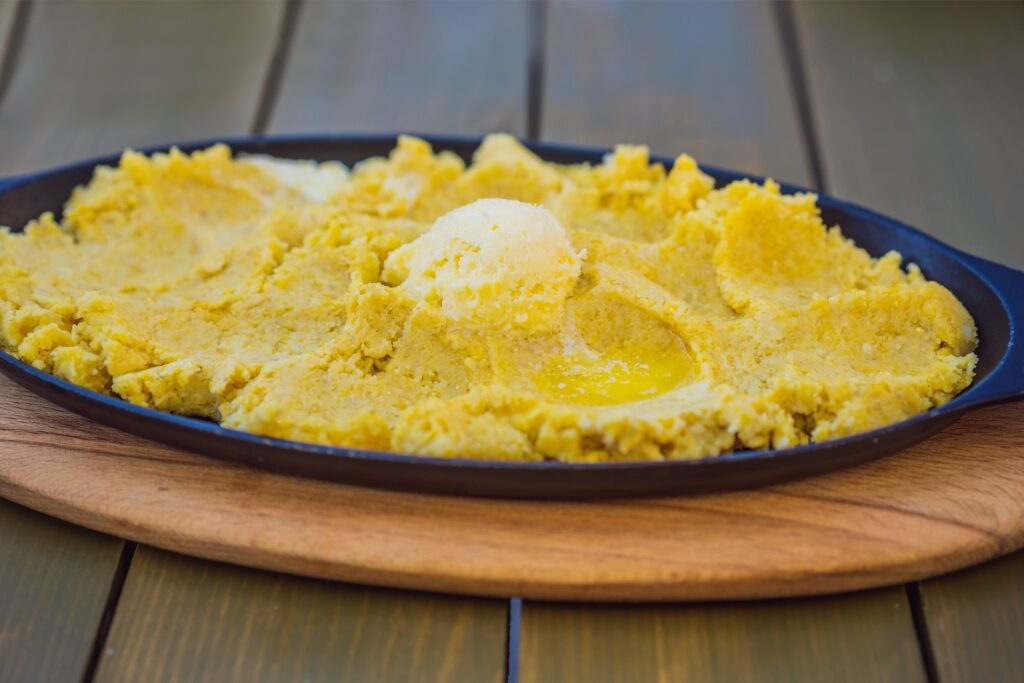
Kačamak
This beloved food in Montenegro is like comfort in a bowl. Kačamak is made from cornmeal and is cooked slowly until it turns thick and smooth, with an oatmeal-like consistency.
The dish is upgraded with cheese, kajmak—a thick, creamy dairy product—or butter. Mashed potato is sometimes added to the cornmeal as it’s cooked and then eaten as breakfast, lunch, or as a snack.
Pljeskavica
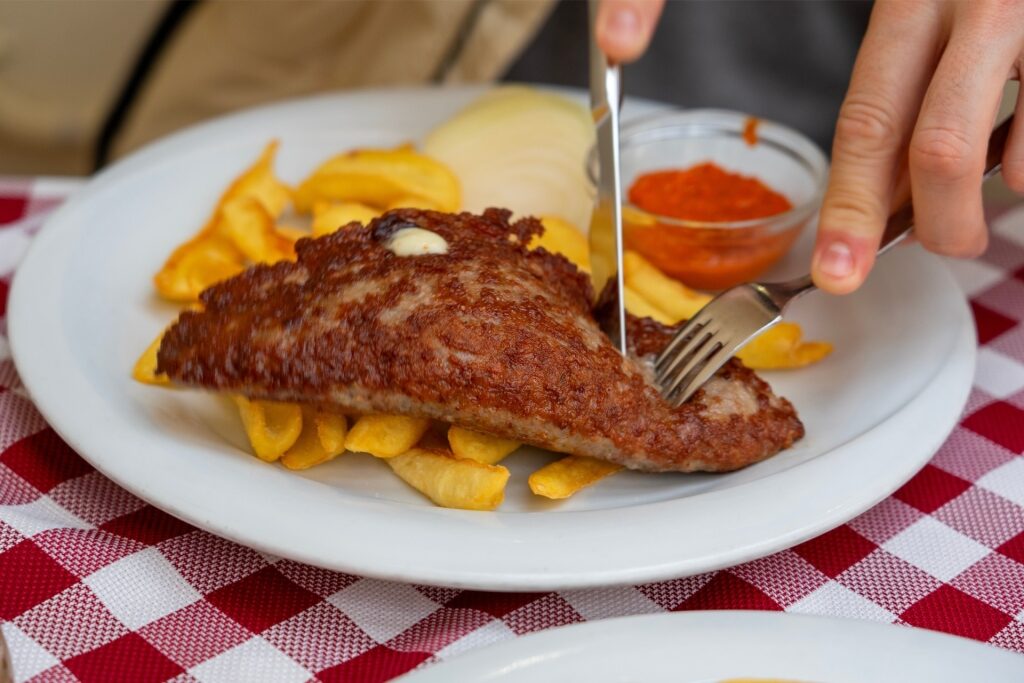
Pljeskavica
Pronounced plyes-kah-vee-tsa, this is a humble Montenegrin dish consisting of a grilled beef, pork, or lamb patty, similar to a burger. Pljeskavica is seasoned and usually grilled, giving it a smoky flavor. Additional ingredients might include finely chopped onions and paprika.
In Montenegro, you’ll typically find restaurants serving this succulent dish with the meat tucked inside a flatbread, with lashings of kajmak and ajvar. Order it with a side of salad and fries, and a cold local beer after a busy day of exploring Montenegro’s famous sights, such as Our Lady of the Rocks or Kotor’s San Giovanni Fortress.
Ajvar
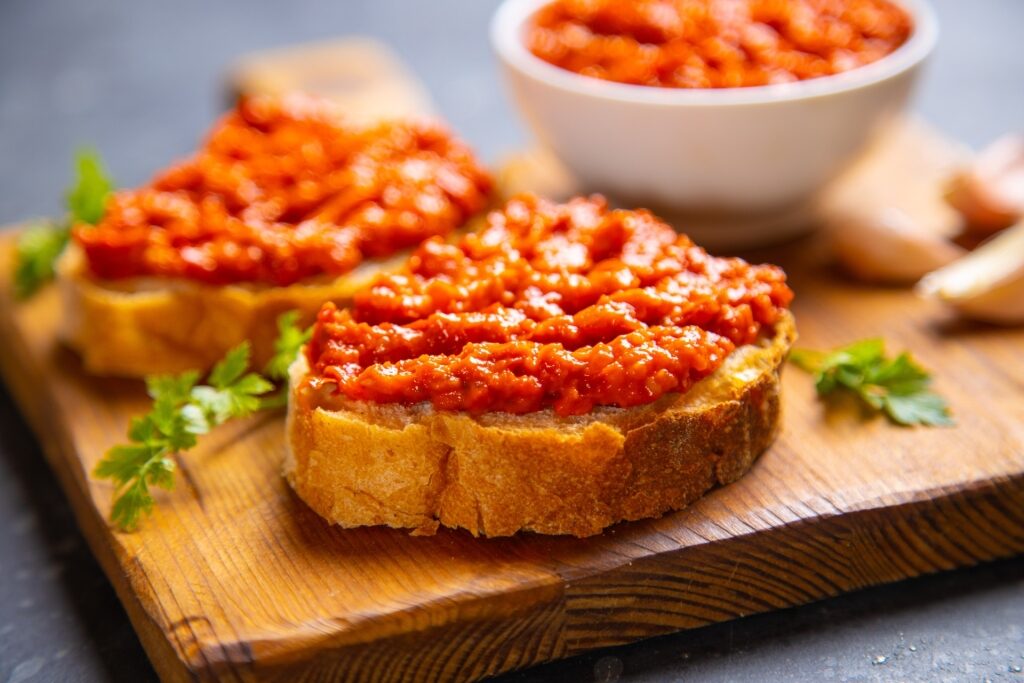
Ajvar
Ajvar is a deliciously rich Montenegrin relish consisting of red bell peppers and eggplants. The two main ingredients are roasted with olive oil and salt, often over flames to give the condiment an extra smoky flavor.
Some versions of ajvar also include chili pepper, cayenne, and smoked paprika to give the taste a kick of heat. Ajvar is eaten with flatbreads, olive oil, meats, and cheeses. It’s also delicious added to chicken or cheese sandwiches as a relish.
My advice is to not only sample ajvar while in Montenegro, but to bring it home with you as a souvenir. You can pick it up easily from Idea, a grocery store close to the center of Kotor.
Priganice
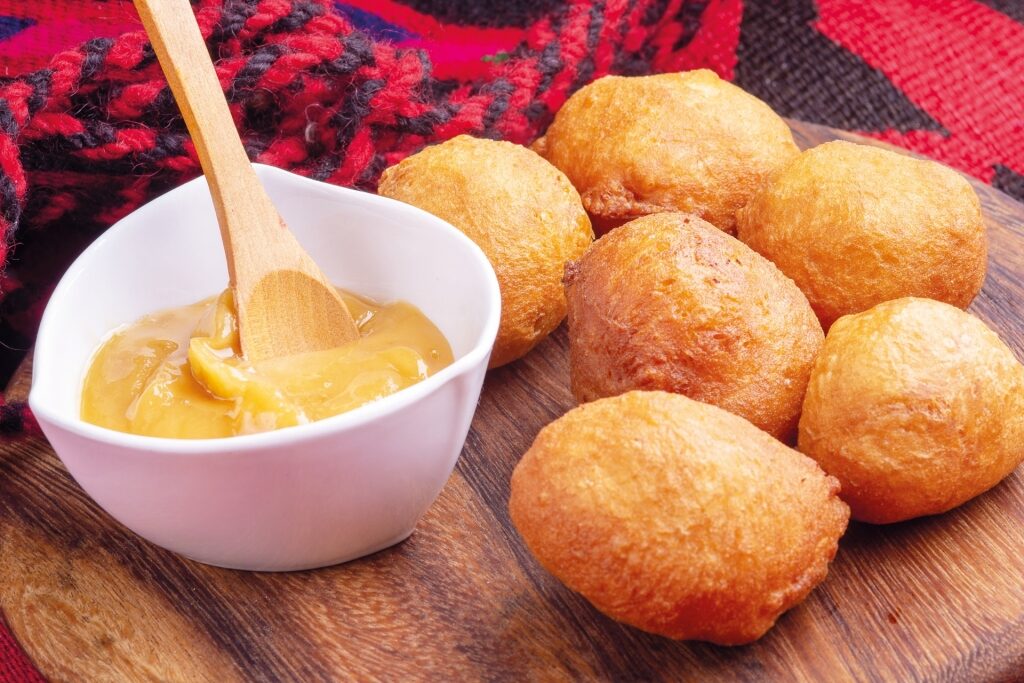
Priganice
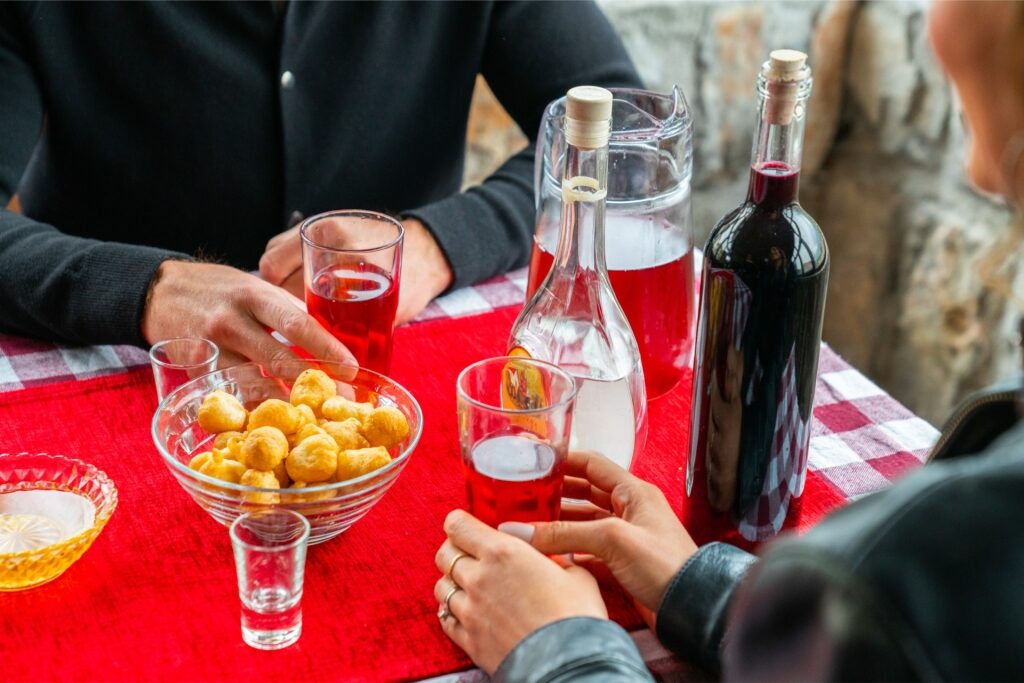
This food in Montenegro is a warm and comforting fried snack, very much like a doughnut, fluffy as a cloud on the inside and crisp on the outside.
Priganice is usually eaten as a sweet snack or for breakfast, either coated in sugar or served with jelly or honey. Priganice can also be eaten as a savory dish, accompanied by cheese, kajmak, or Njeguški pršut.
Priganice’s batter of flour, water or milk, yeast, a pinch of salt, and sometimes a small amount of sugar, is mixed and deep fried in extra-hot oil until golden-brown on the outside.
Priganice
In Montenegro, priganice is often served as a symbol of hospitality, with guests welcomed into a home with a plate of these delectable, sweet or savory treats.
Read: Best Things to Do in Kotor
FAQs
Is Montenegro a good food destination?
Perast
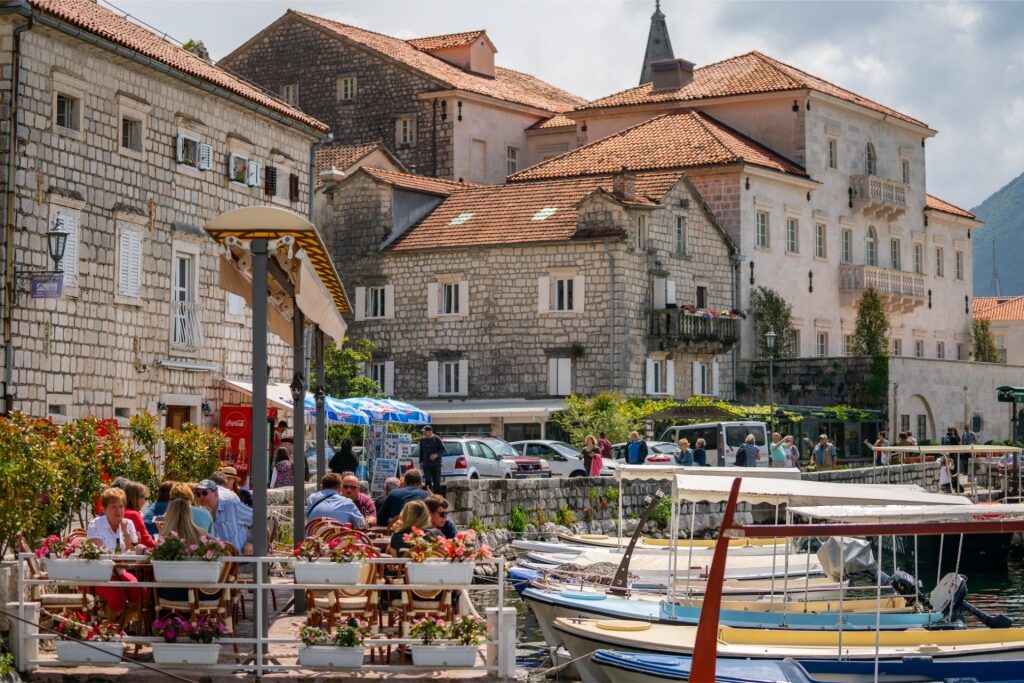
Montenegro is a fabulous foodie destination, with fresh seafood straight from the Adriatic, fresh Montenegrin produce, and influences from across the region contributing to a rich and diverse local food culture.
Wonderful taverns and traditional restaurants found in mountain villages and coastal resorts serve rustic menus of hot and cold appetizers, seafood, meat, stew, steak, soups, and salads. Best of all, Montenegro also produces its own wine, which is the perfect match for local cuisine.
What dish is Montenegro most famous for?
Njeguški pršut
Montenegro is famous for several dishes, though one of the best known is the air-dried ham, Njeguški pršut. Montenegrin cuisine is also famous for kačamak, a savory dish consisting of cornmeal porridge topped with cheese or kajmak, often eaten at breakfast.
What time does dinner typically start in Montenegro?
Restaurant in Montenegro
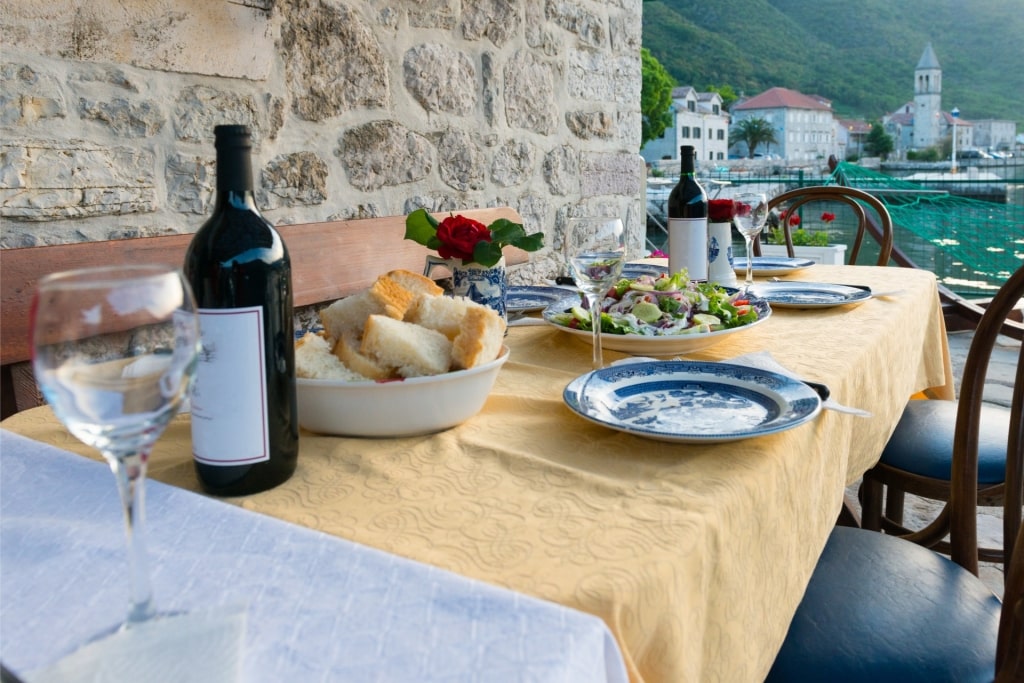
In Montenegrin culture, dinner time is usually between 7 and 9 p.m. In coastal resorts, such as Kotor, however, you’ll find restaurants opening until late during the peak summer season. Long, hearty
lunches and dinners are encouraged in Montenegro, allowing diners to relax and enjoy conversation, while grazing over a selection of food and wine.
Are there any food or dining customs I should know about?
Restaurant in Montenegro
While there are certainly no strict dining rules in Montenegro, there are things to know when discovering the local cuisine. You can expect generous portions, especially for entrées, with dishes accompanied by vegetables, potatoes, and salad. Sharing dishes between your group is common practice, as is toasting a meal with Rakija, a type of local fruit brandy.
When it comes to tipping, the culture is slightly different from that of the United States. It’s not expected, though it is still customary to tip a small amount in restaurants and cafés, where the best thing to do is to add 5–10% onto your bill.
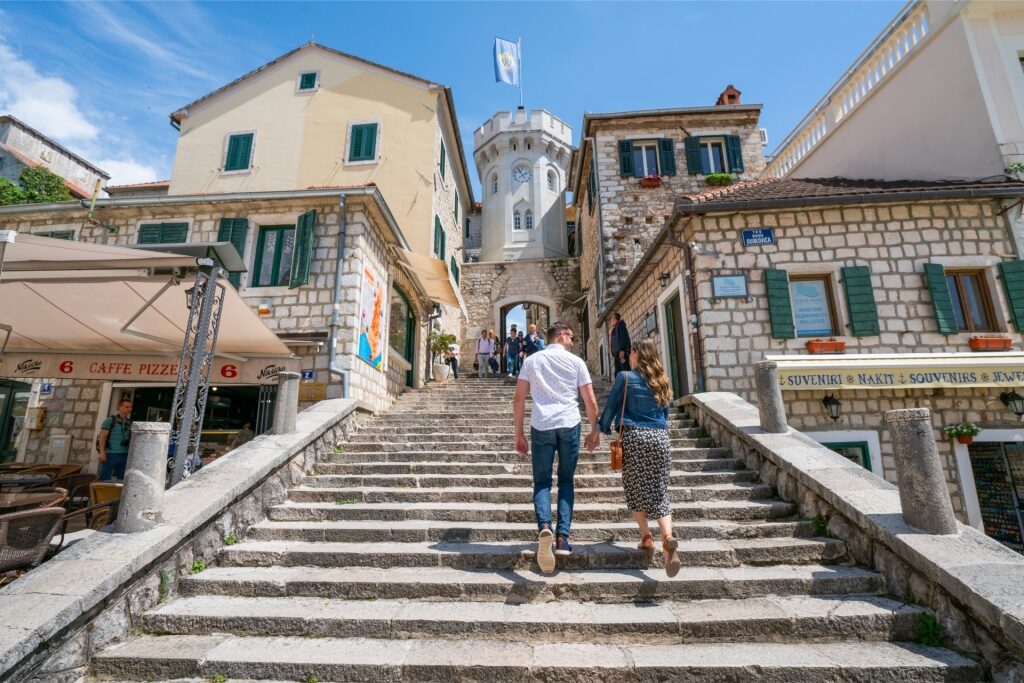
Kotor
Discover the cuisine and culture of this tiny country for yourself. Browse Celebrity’s Montenegro cruise itineraries and plan your exciting European vacation.