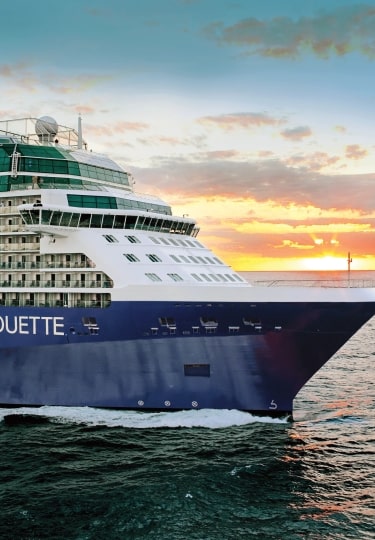
Some of the best travel moments happen when destinations aren’t at their busiest. Shoulder season—the period between peak and off-season travel—brings a different side of many places, with inviting weather, fewer crowds, and a little more room to slow down and enjoy where you are. It’s an especially rewarding time to cruise, when days on board and ashore seem to flow together a bit more naturally.
Here’s what shoulder season means, when it happens around the world, and why the right timing can completely change the way a trip comes together from start to finish.
What Is Shoulder Season?
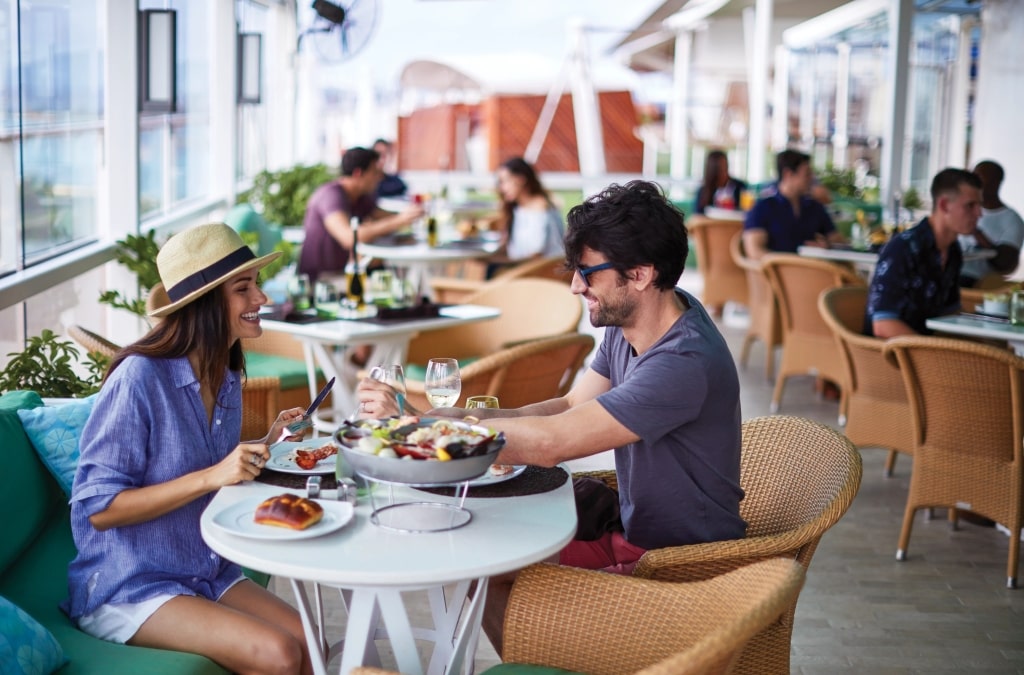
Smiling couple shares fresh cruise ship restaurant lunch dishes
Shoulder season is the period between a destination’s peak season and off-season, usually landing in late spring and early fall. In many places, the shoulder months are May through June and September through October, though the timing varies depending on where you’re headed.
The term comes from its position on either side of peak travel season—like the shoulders between two high points. For travelers, it often brings the best of both worlds. Think:
- Pleasant weather.
- Fewer crowds.
- A more relaxed pace overall.
It’s also the time of year when destinations begin to settle back into their everyday character. You might linger longer at a sidewalk café, wander through a landmark without constantly weaving through tour groups, or find that you can enjoy waterfront promenades at your own speed.
Is Shoulder Season a Good Time to Travel?

Smiling couple foregrounds historic Florence Piazza della Signoria palace architecture landmarks in a shoreside activity
Yes, shoulder season is often one of the best times to travel if you enjoy a more laid-back atmosphere without missing out on great conditions or memorable experiences:
- Popular attractions are generally easier to explore.
- Reservations tend to be less competitive.
- Daily plans unfold with a little less pressure.
That same shift carries over to cruising, too. A day ashore often feels more relaxed when ports aren’t packed at every turn, and coming back on board after exploring is often calmer and more restorative.
There are still a few things to consider if you’re traveling during shoulder months:
- Weather may be slightly less predictable than during peak season.
- Certain seasonal activities or businesses may operate on reduced schedules.
For many travelers, though, those small trade-offs are part of the appeal. The overall experience simply strikes a better balance.
Why Shoulder Season Matters for Travel

Four laughing friends enjoy a gourmet lakeside Wachau Valley picnic showcasing filled wine glasses
The timing of a trip can shape the entire experience, and shoulder season often changes the mood of a destination in subtle but noticeable ways. Places that get hectic during the busiest months can suddenly seem more welcoming, more local, and easier to move through once the peak crowds thin out.
Here’s why many travelers gravitate toward shoulder season:
- Fewer crowds: You can better navigate historic sites, waterfront neighborhoods, and popular ports, with less waiting and more freedom to explore at your own pace.
- Comfortable weather: Milder temperatures can make long afternoons outdoors much more enjoyable, especially in destinations known for summer heat.
- More connection to place: Without the rush of peak travel season, you’ll start to notice the smaller details—a quiet piazza at sunset, a conversation with a shop owner, or the sound of live music drifting through a side street.
- Smoother pace: Dining, sightseeing, and getting around often feel less hurried, leaving more time to enjoy the experience instead of constantly planning the next step.
That combination is what makes shoulder season stand out. You still get the energy and atmosphere of a top cruise destination, though with more room to settle into it naturally.
When Is Shoulder Season? Timing by Region
Shoulder season looks a little different around the world, though it usually falls just before or after the busiest travel months. In many destinations, it’s the point when places are still lively, though with a calmer atmosphere overall.
Here’s when shoulder season typically happens across a few popular regions:
- In Europe, shoulder season generally falls from May through June and September through October. Mediterranean cities and coastal towns remain lively during these months, and sightseeing, outdoor dining, and cultural attractions tend to feel more manageable than in midsummer. Plus, the weather in Europe in June is generally a favorite with travelers.
- In the Caribbean, shoulder season often arrives in late spring after April and again in the fall before the holiday season begins. Beaches, port towns, and island neighborhoods on Caribbean cruises usually move at a slower pace during these periods.
- Alaska’s shoulder season typically takes place in May and September. Wildlife sightings and dramatic landscapes remain a major draw, though with fewer visitors compared to the height of summer in Alaska.
- In Hawaii, shoulder season generally runs from April through early June and September through mid-November. Across the Hawaiian Islands, there’s often a quieter atmosphere that makes it easier to settle into the scenery, beaches, and local routines.
Shoulder Season vs. Peak Season vs. Off-Season

Happy couple strolls, foregrounding the magnificent neo-Gothic Budapest Parliament Building
Every travel season offers something a little different, and understanding those differences can help you choose the experience that suits you best.
- Shoulder season: Weather is usually mild, crowds are moderate to low, and destinations tend to strike a balance between lively and relaxed. There’s still plenty happening, though, without the intensity of peak travel periods.
- Peak season: This is when weather conditions are often at their most predictable, though it’s also when destinations are busiest. Attractions, restaurants, and major landmarks typically draw the largest crowds.
- Off-season: Off-season travel can bring quieter surroundings and fewer visitors, though weather conditions may vary more, and some experiences may operate on limited schedules.
For many travelers, shoulder season lands right in the middle—in a good way. There’s still energy in the destination, though with more opportunities to slow down and enjoy the experience as it comes.
What Shoulder Season Means for Cruising
For ocean and river cruises, shoulder season refers to sailings just before or after peak travel periods, when both the ship and the destinations often move at a gentler pace. The itinerary may look similar to a summer sailing on paper, though the experience can feel noticeably different once you arrive.
- Ports are easier to explore: Popular waterfronts, historic centers, and major landmarks are often less congested, making it simpler to move through each destination without rushing.
- Onboard spaces feel more open: Restaurants, lounges, and outdoor decks tend to have a more relaxed atmosphere, giving guests extra room to settle in and enjoy time on board between ports.
- Shore time stays connected: With fewer crowds around, local culture and everyday life become easier to notice, from neighborhood cafés to quieter scenic overlooks.
This balance is part of what makes shoulder season cruising so appealing. Time ashore blends more naturally with life on board, creating a journey that’s both restorative and immersive at the same time.
When Is Shoulder Season in Europe for Cruises?
For European cruises, shoulder season typically falls from May through June and September through October. These months sit just outside the busiest summer period, when many of Europe’s most popular ports see their highest visitor numbers.
It can be the best time to visit Europe because:
- Temperatures are usually comfortable for spending full days exploring historic cities, seaside villages, and open-air markets. Whether you’re wandering the cobblestone streets of Dubrovnik or strolling Barcelona’s waterfront, you can stay out and enjoy the day.
- Major landmarks remain lively, though without the same level of peak-season congestion. That way, you can explore places like Lisbon’s hilltop neighborhoods or the villages of the French Riviera at your own pace.
- Longer daylight hours make it easier to combine sightseeing ashore with slower evenings back on board. There’s often time for a scenic coastal walk or a sunset café stop after a day of exploring.
In many ways, Europe shoulder season is the kind of timing that encourages travelers to linger a little longer over meals, scenic walks, and afternoons spent wandering without a strict schedule.
How To Plan a Trip During Shoulder Season

A smiling couple uses a tablet to plan future travel
A little flexibility can go a long way when planning an ocean or river cruise during shoulder season. The timing naturally creates a more balanced style of travel, though a few thoughtful choices can make the experience even smoother.
Here are a few tips to keep in mind:
- Leave room for flexibility: Weather patterns can shift slightly depending on the destination, so it helps to keep parts of your schedule open. If a cooler morning delays your plans, it’s the perfect excuse to linger over breakfast or explore a museum before heading outdoors.
- Choose itineraries built around the destination: Some regions are especially rewarding during shoulder season. Think Mediterranean sailings in May or September, when comfortable temperatures make walking historic cities and coastal towns even more enjoyable.
- Reserve popular experiences early: Even outside the busiest months, sought-after shore excursions and cultural experiences can still fill up. If there’s a landmark, wine tasting, or scenic tour you don’t want to miss, book it ahead of time.
- Pack layers: Mornings and evenings may bring cooler temperatures, especially near the water. Versatile clothing, like a light jacket, sweater, or scarf, can help travelers stay comfortable throughout the day.
- Enjoy the slower pace: Shoulder season is often at its best when you leave time to wander, linger over dinner, or simply enjoy the view from the ship between destinations.
Plan Your Next Shoulder Season Cruise
Shoulder season offers a different way to experience a destination. With milder weather, fewer crowds, and a more relaxed atmosphere, it gives you more room to slow down and enjoy each place without feeling like you’re constantly on the go.
On a cruise, that balance carries through the entire journey. Days ashore often unfold at a simpler pace, while time on board becomes an opportunity to settle in and savor the experience between places. Sometimes, a simple shift in timing can completely change the rhythm of a trip from start to finish.
Ready to plan your own shoulder season escape? Explore River Cruises and find your next itinerary.