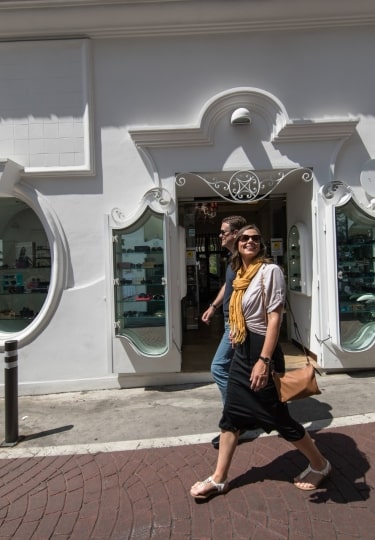
“The first cut is the deepest,” as Cat Stevens famously sang, and his lyrics absolutely could relate to Positano, Italy. When driving east from Sorrento on the Amalfi Coast drive, it’s the first town encountered along this vertiginous, near-mythical stretch of Italian coastline.
In the sunnier months, glamorous Positano is one of the most exclusive corners of the Mediterranean. Sun worshippers pay top euro for lounge chairs on its beaches, where polo-wearing beach boys deliver cooling cocktails. Yachts idle offshore, their tan crew enjoying one of Italy’s most picturesque architectural arrangements.
For all of this wealth and exclusivity, there’s just about space for everyone, providing you’re prepared. Dip a toe, or dive deep; Positano is a must-visit when touring the Amalfi Coast.
Why Visit Positano?
Positano
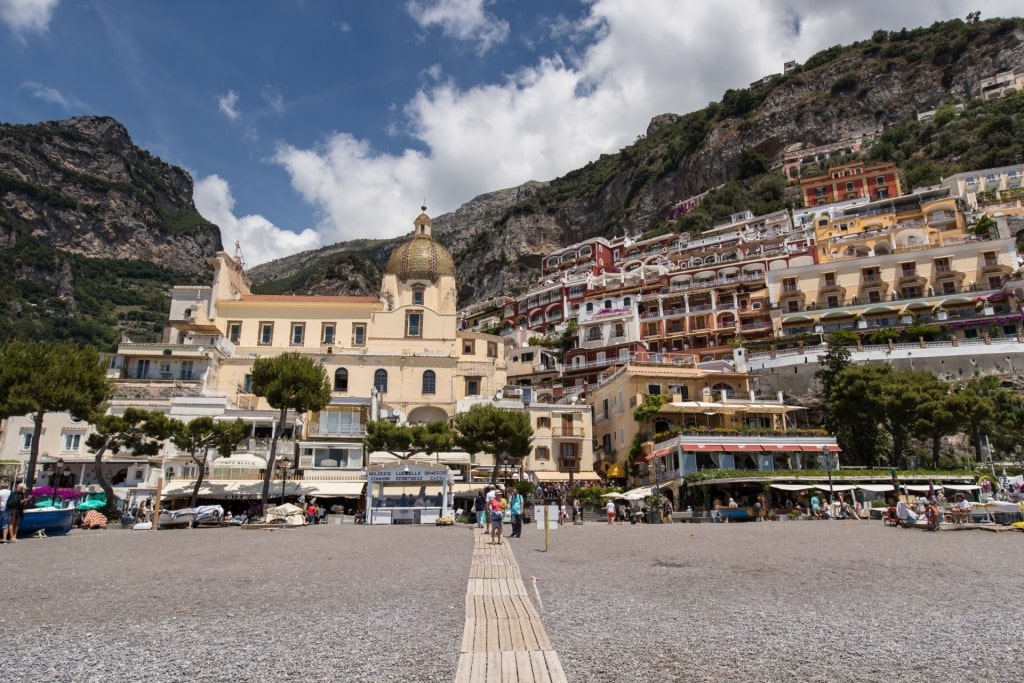
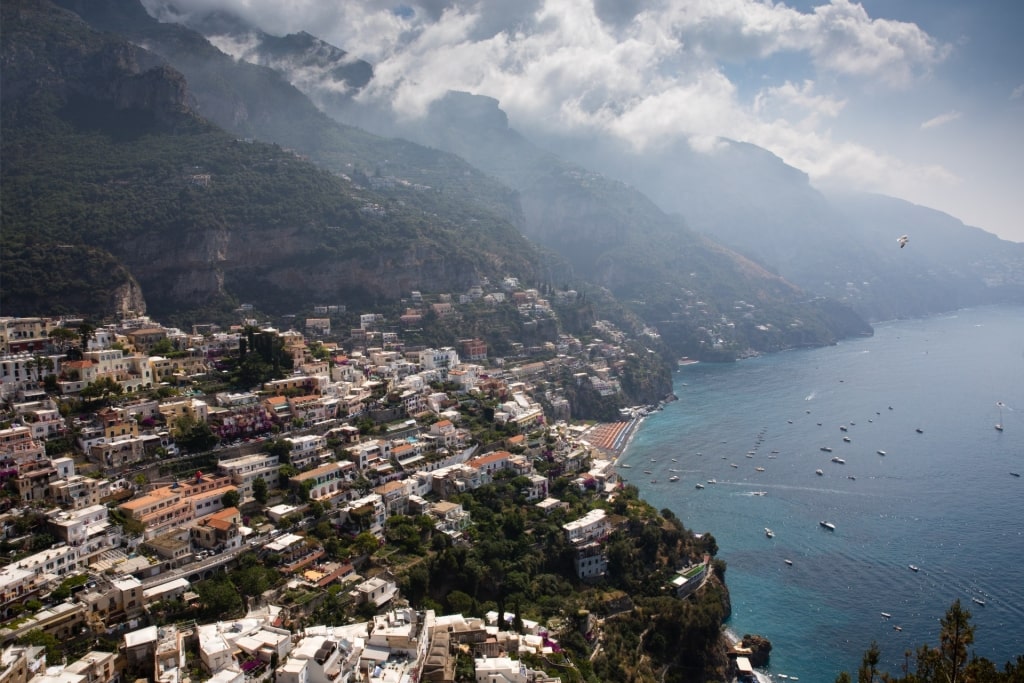
In the mid-20th century, John Steinbeck famously wrote: “Positano bites deep,” and this Campanian town is undeniably striking. When viewed from a boat, the pastel-colored buildings tumble down steep hills toward the swelling, majolica-tiled dome of its lemon-and-lime Church of Santa Maria Assunta.
With such a setting, it’s little wonder that Positano has become a byword for Italian glamor in the latter half of the 20th century. The town even enjoyed its own Moda Positano fashion movement.
Italian movie stars bought homes high in the hills, and Positano became part of the European travel circuit for the era’s jet set. While Positano’s days as a fishing village are well in the polished chrome rearview mirror, its new, luxe identity offers plenty to discover while wandering its higgledy-piggledy staircases or pine-scented waterfront.
History and Culture
Positano
For a destination that’s almost as much hype as it is reality, it seems suitable that Positano’s history has its roots in myth. The Greek sea god Poseidon apparently founded Positano as a show of affection toward a favored nymph.
The Roman upper classes moved in after the ancient Greeks had moved on. The patrician class demonstrated their superb eye for a vacation destination by building villas here as refuges from the summer heat of their cities.
Positano’s next period of significance arrived between the 9th and 11th centuries, when it flourished under the banner of the Maritime Republic of Amalfi. Wealth and security for the town were built on a pan-Mediterranean trade in spices, silk, and salt.
Alas, it wasn’t to last. As the republic waned, pirate raids on the coast began to grow in number. Watchtowers hearkening back to this era of uncertainty stand sentinel on promontories to this day.

Positano
By the beginning of the 20th century, Positano had become a quiet fishing village, with terraces overflowing with lemons, grapes, and bougainvillea. During WWII, it housed refugees from nearby Naples. In the years that followed, artists and writers found their way to this inspirational nook in the cliffs.
Its star in the ascendant, Positano, from the 1950s to the end of the century, slowly evolved from a fishing village to an upscale tourism destination. It became the summer getaway for the stars of Italy’s La Dolce Vita era. International celebrities continue to descend for their vacations, and, in the era of social media, Positano, Italy, has become one of the most shared destinations.
Tips for Visiting Positano
Positano
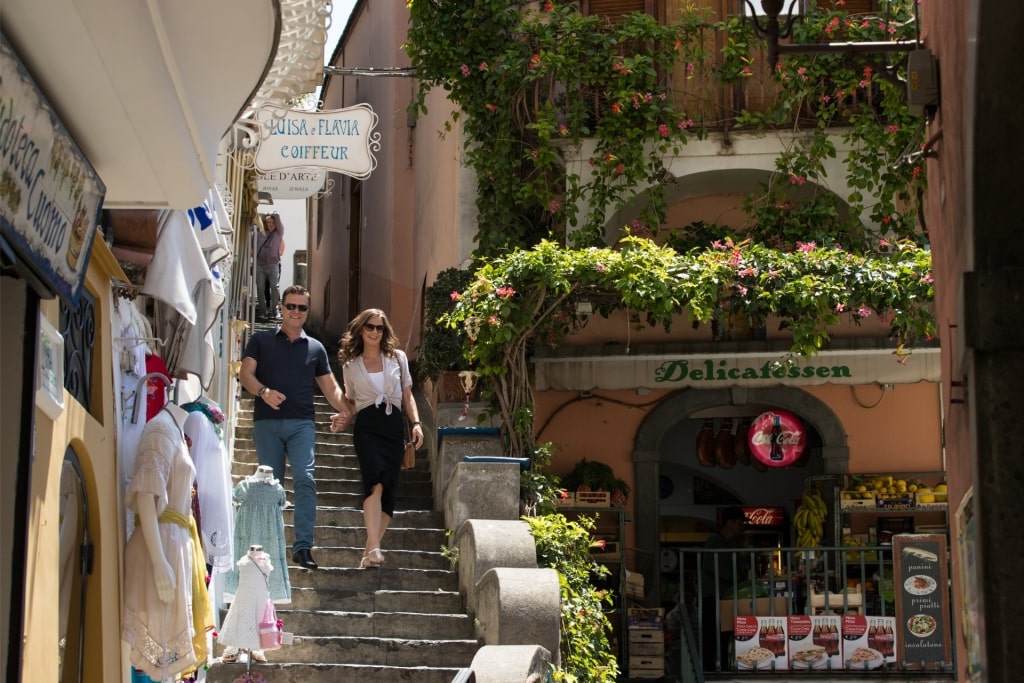
For all of its grand evolution from fishing village to luxury vacation spot, Positano, Italy, still retains much of its original character. Once you’ve finished your chilled glass of floral Falanghina at a sea-view bar, wander off into the flower-box-brightened backstreets that thread through the pastel jumble.
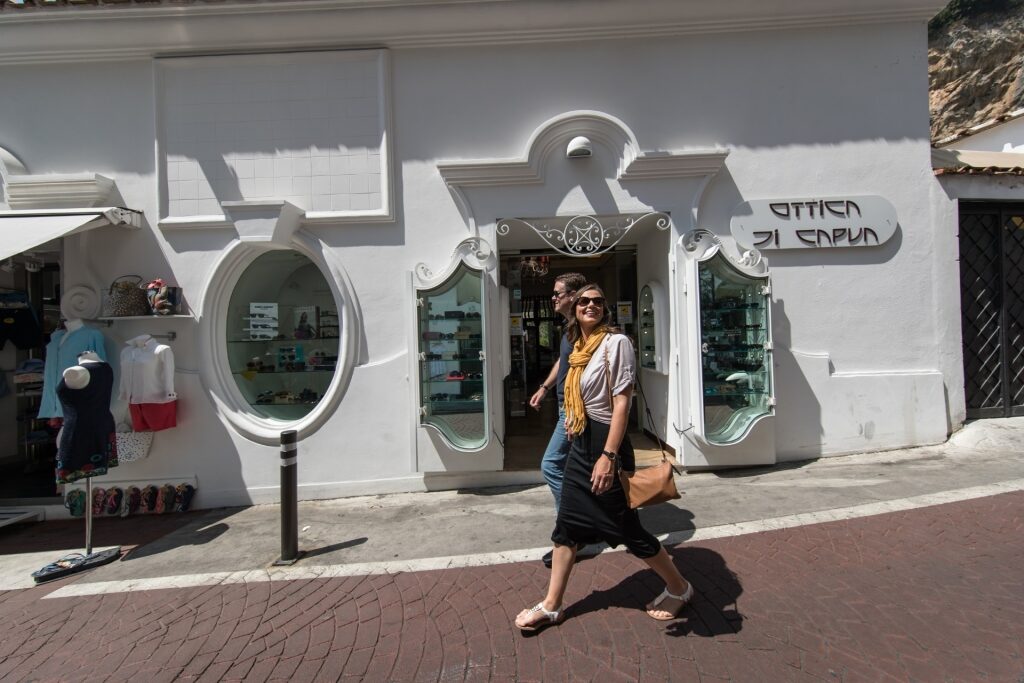
Along the way, you’ll discover a weave of gorgeous, well-kept lanes. They’re lined with shops—artisan jewelry, clothes boutiques, and the occasional fishmonger. Browse the flowy Moda Positano racks or have your own artisan sandals created at shops like Safari or Nana’s.
After about half an hour, pick them up and break them in along the beachfront Via del Brigantino as you decide which restaurant to try out today. Enjoy a swim in the warm Tyrrhenian, admiring the view of the Li Galli islets on the horizon, and feel that quintessential Positano sense of well-being.
Things to Do & Attractions in Positano, Italy
Spiaggia Grande
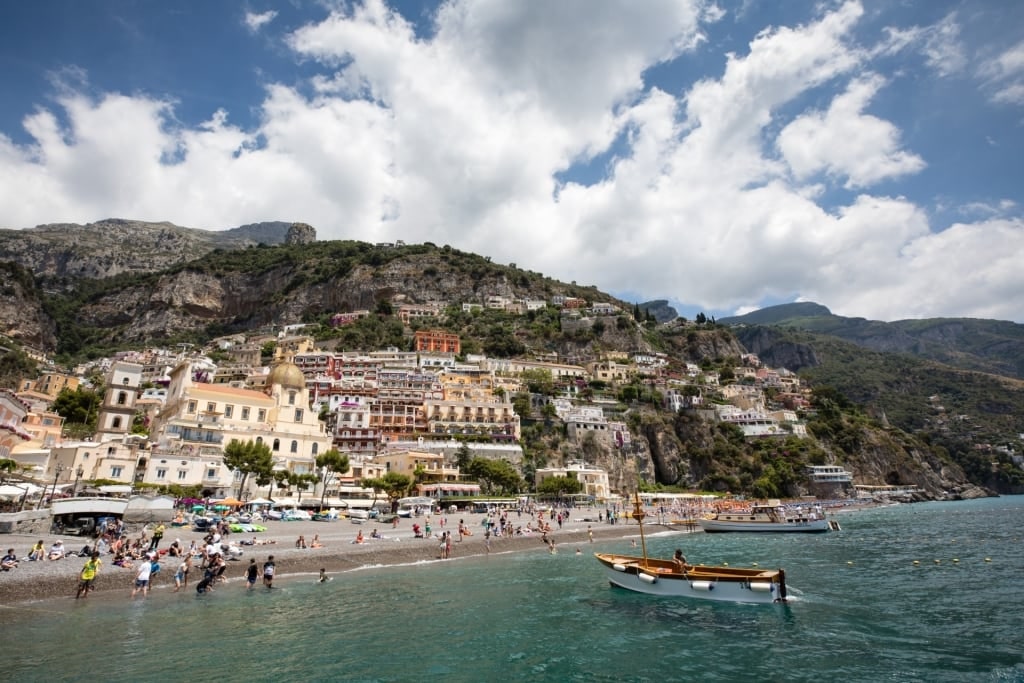
Spiaggia Grande
Spiaggia Grande is the main beach of Positano, Italy. It’s also often referred to as Positano Beach.
As with many Italian beaches, the surface is not sand, but rock, in this case, a soft gray shingle. Many Italians love this as they’re happy to go without sandy softness underfoot to avoid the hassle of having to shower off the sand. And they’re wearing Gucci sandals anyway.

Spiaggia Grande
In high season, Spiaggia Grande is busy. However, arrive early and you should find space in the free section to the right, near the fishing boats.
If you’re comfortable paying out for a lounge chair, usually around €50 depending on which row you’d like, there are plenty for rent, each one equipped with a circular shelf on the parasol on which to perch your chilled Negroni and snacks.
Church of Santa Maria Assunta
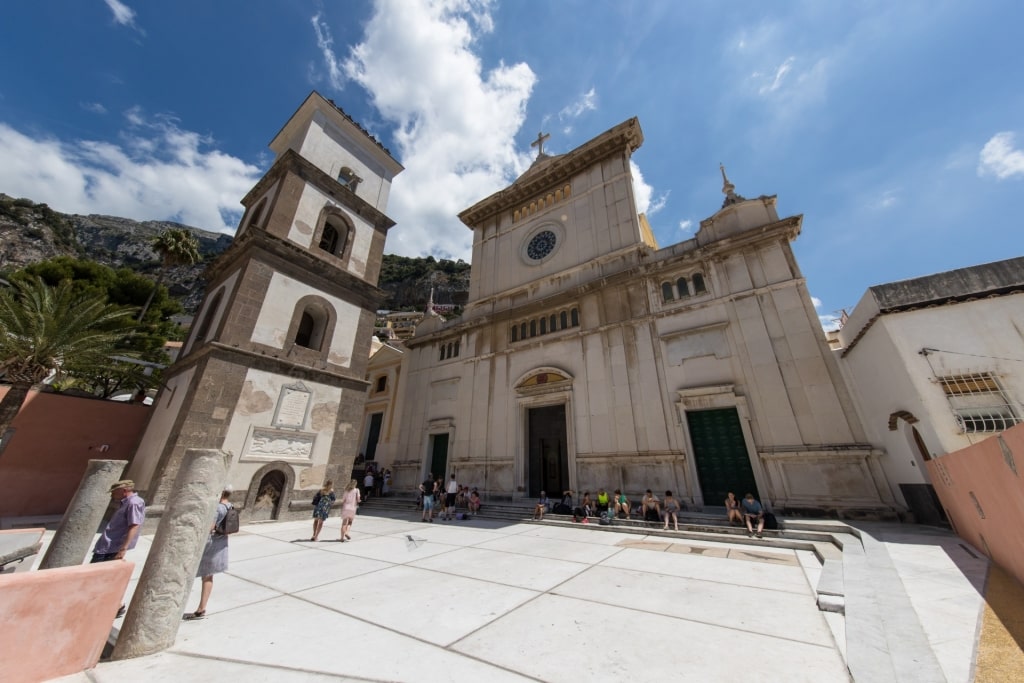
Church of Santa Maria Assunta
The most distinctive element of Positano’s waterfront, the Church of Santa Maria Assunta reflects the local colors of nature with its yellow, green, and blue-tiled dome.
Renovated in the late 18th century, its Baroque interior is a spiritual continuation of the rest of Positano’s joyous architecture. Be sure to see the Byzantine Virgin Mary icon installed above the altar.
One of the best preserved parts of the church is the medieval bas-relief above the bell tower door—it has depictions of various creatures that date back to the Middle Ages. Above that same door is a dedication to Flavio Gioia, the Amalfi Coast local who invented the compass.
MAR Positano Villa Romana
Before you wander out of the Church of Santa Maria Assunta’s teal-colored entryways looking for your next gelato, make sure you’ve taken time to see what lies beneath.
Remarkably, a Roman villa was buried beneath volcanic material in Positano by the same eruption that destroyed Pompeii. Positano lies nearly 12 miles from Mount Vesuvius as the crow flies.
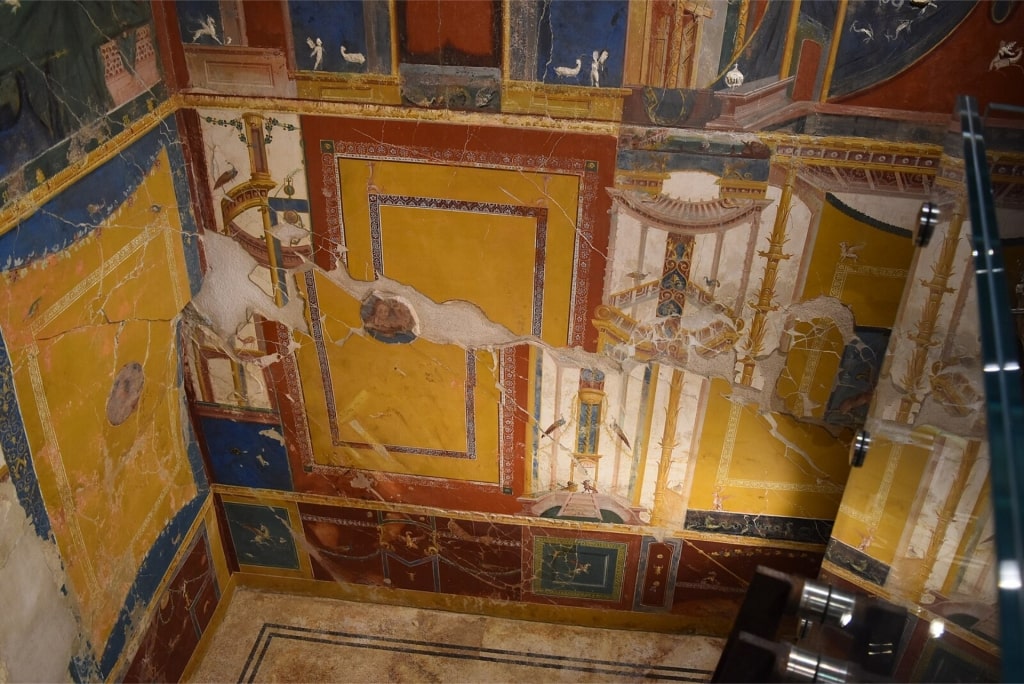
Villa Romana Photo by MaR Positano on Wikimedia Commons, licensed under CC BY-SA 4.0
Archaeologists have now opened up the frescoed rooms of the villa, some 30 feet below the church’s flagstoned floor. The villa can be accessed from the museum entrance in Piazza Flavio Gioia, behind the church’s bell tower.
Buy a ticket for a guided tour and you’ll discover the impressively preserved remains, including intricate mosaic floors and frescoes of sea monsters. It’s believed that the actual footprint of the entire villa, if completely uncovered, would take up two acres—stratospherically expensive real estate in modern Positano.
Fornillo Beach
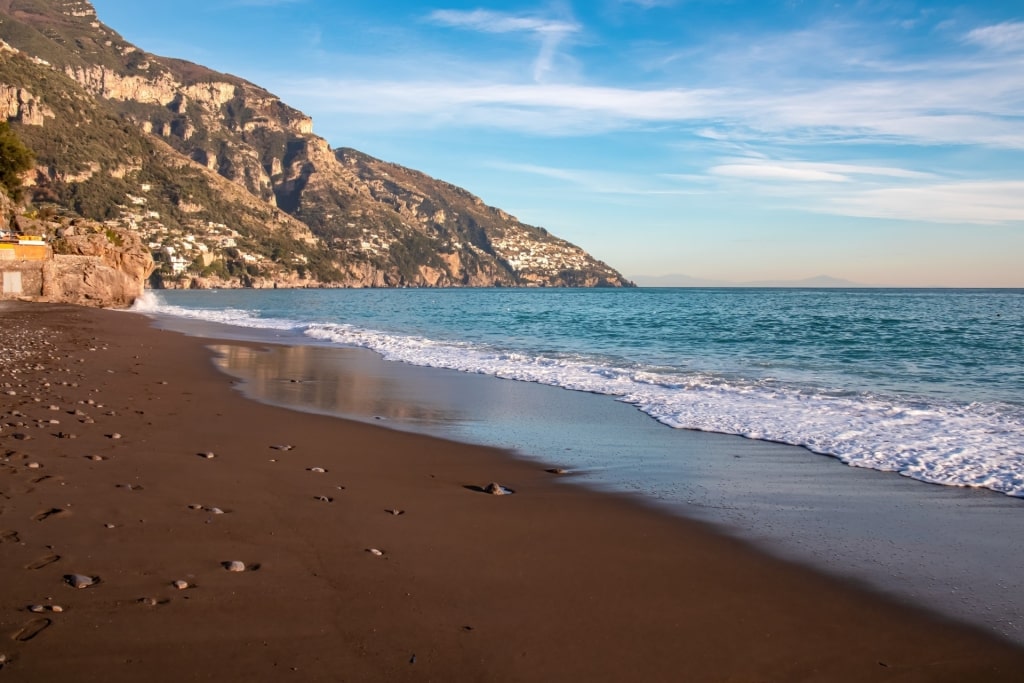
Fornillo Beach
On my final morning during my last visit to the Amalfi Coast in high season, I took the reception desk’s recommendation and sought out Fornillo Beach instead of the daily Positano Beach carnival.
After a lovely, mostly level ten-minute walk from the west end of Positano Beach, I arrived at Fornillo Beach. Ensconced within dual watch towers, the far one of which is now an enviable vacation rental, Fornillo is a long tongue of shaley beach bristling with a rainbow of beach club parasols.

Fornillo Beach
Yes, it’s still popular, but it feels significantly less intense. The water also seems more crystalline—it’s not churned up by as much boat traffic—and the pleasant free beach at the far end feels less like an afterthought. In the lee of the cliff, it does lose the sun quite early in the afternoon.
If you would rather not make the walk, you can book a lounge chair at one of Fornillo’s beach clubs and catch the complimentary shuttle boat from Positano Beach.
Minori
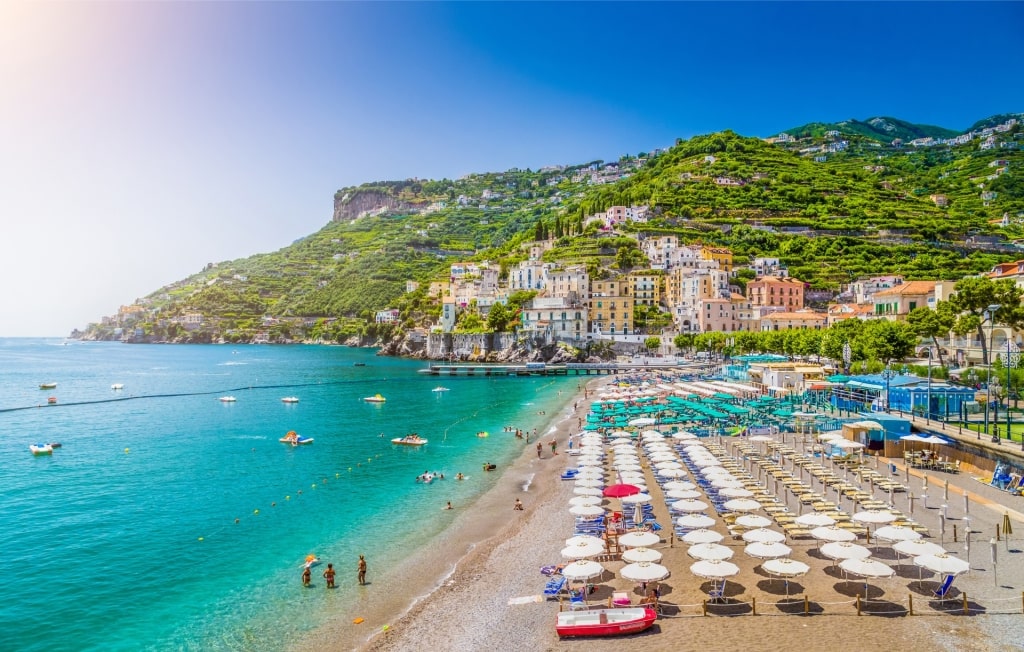
Minori
There are numerous compelling reasons to visit Minori, an authentic Amalfi Coast town less than an hour east of Positano. But it’s probably the pastries that top the list.
On the beachfront sits Sal De Riso’s pasticceria and café, backed by a hillside of coral, ivory, and butter-yellow houses. De Riso is a famed pastry chef who produces his own creations and local specialties; he’s even branched out into bikinis. A must-try is his delizia al limone, a limoncello-soaked sponge filled with custard and lemon cream.
After you’ve filled up on cake and coffee, explore unpretentious Minori, which is something of a black sheep among its glitzier neighbors. Follow the ceramic signs in the backstreets for clothes boutiques and your lunchtime pasta fix. You’ll also come across a bright yellow church that looks as though it was designed by Sal De Riso.
Grotta dello Smeraldo Cave
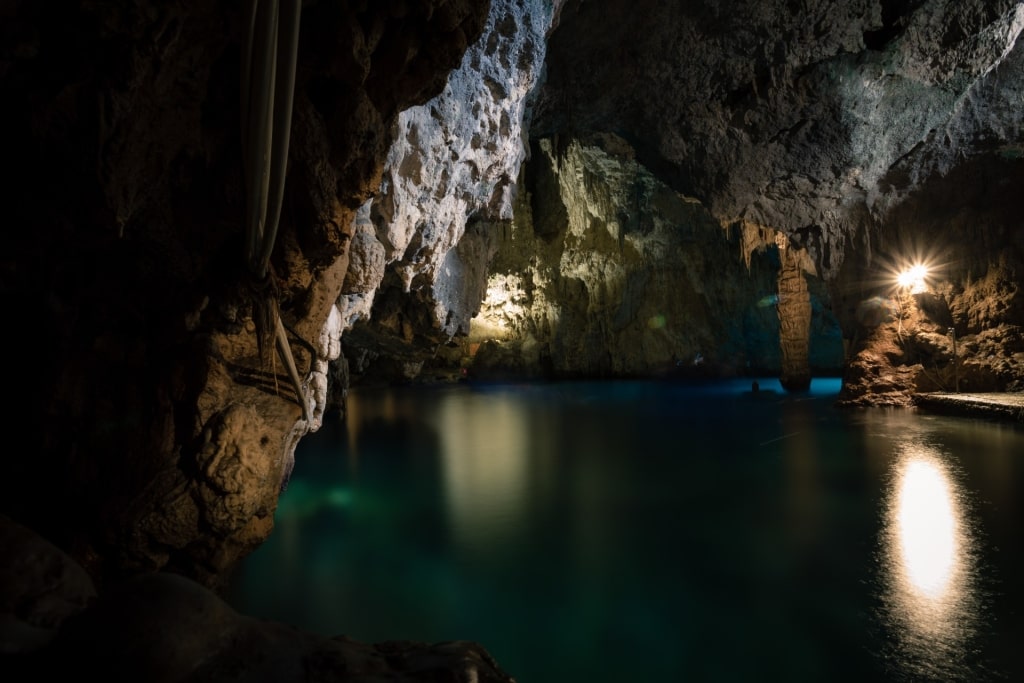
Grotta dello Smeraldo Cave
While visiting the Amalfi Coast, it’s essential to take a boat from the beaches and look back at the synthesis of stunning topography and architecture that makes this gorgeous spot so unique. And hidden among the geological frown lines and high-hurdling bridges are little gems like the Grotta dello Smeraldo.
Most small boat tours setting off from Positano include this beautiful karst sea cave in their itineraries. It was first discovered in 1932 by a fisherman who came upon it while near the village of Conca dei Marini.
On a sunny day, the light strikes the water and illuminates the grotto with an otherworldly emerald glow. There’s also an array of cave formations to see, as well as a sunken nativity scene.
Food & Drink
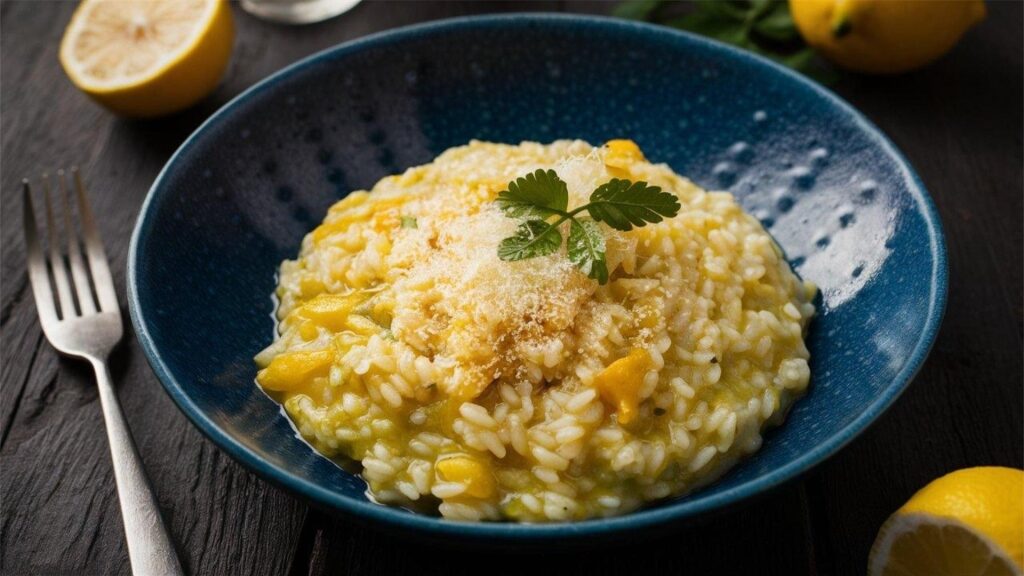
Risotto al limone
With its proximity to the sparkling Tyrrhenian Sea and its inclusion in the Campania region of Italy—home of buffalo mozzarella, pizza, and San Marzano tomatoes—Positano really is a gastronome’s playground.
The Amalfi’s lemons are almost as omnipresent in the cuisine as they are when crowding out the crumbling stone terraces. Their vivid flavor is used as a delicious counterpoint in the classic risotto al limone, or in the local dessert, delizia al limone. The fruit also knocks your socks off in a shot of limoncello.
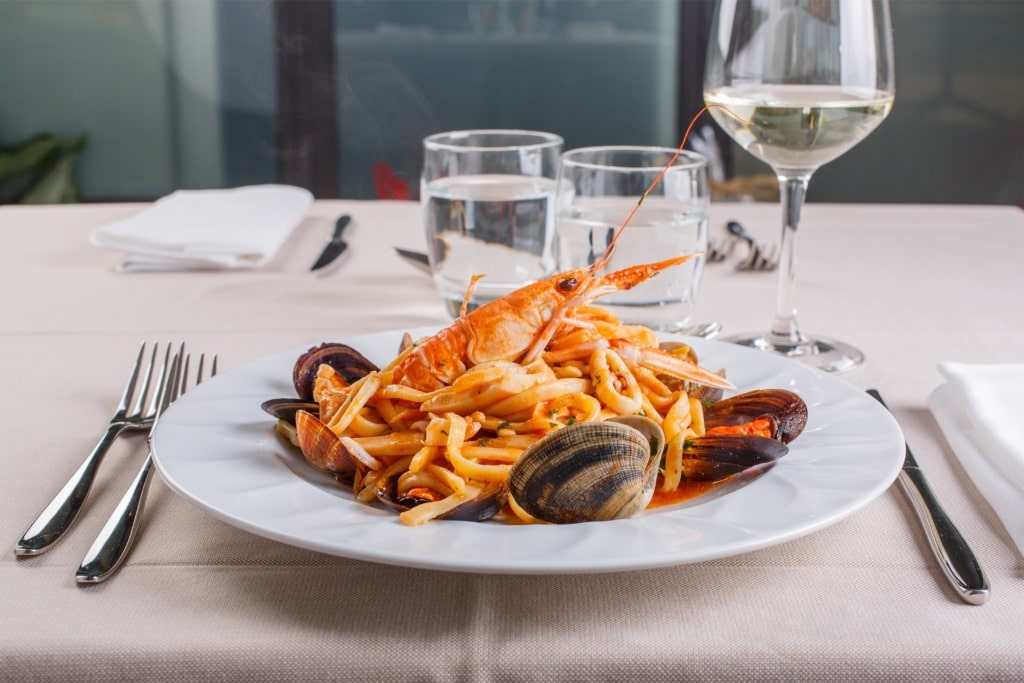
Scialatielli allo scoglio
Beyond the lemons, you’ll find Italian dishes of grilled vegetables mingled with shreds of mozzarella di bufala. And look out for scialatielli—this is the regional pasta variety, offering a little more width than spaghetti, that’s ideal for picking up delicious seafood sauces as in dishes such as scialatielli allo scoglio.
Where to try it? La Pergola is a great lunch spot on the promenade, while a little higher up, but worth the hike, is Casa e Bottega—a charming little brunch spot. While you’re in the upper elevations, grab sophisticated gelato at the outstanding Collina Bakery.

Spritz
Easily the most important meal of the day in Positano is aperitivo. Aldo’s at Le Sirenuse is an old favorite for champagne and oysters, while Franco’s Bar is like a sunset-view balcony above the town. Its royal blue seats go quickly, though, so consider waiting in line for up to 15 minutes before they open for an unforgettable vantage point.
What to drink? Campania is famous for its wines with aromatic whites like Falanghina and Greco di Tufo. Aglianico is a bold red that’s a perfect match for grilled meats.
Weather & Climate
Positano
Helping the colors pop on Positano’s stunning architecture is the region’s abundance of sun. From late spring to early fall, its warmth collects in the jinking stairways of the town, while the highs of July and August reach 86°F and above. The balmy sea breezes that wash the cliffs help to keep things cool, and this satisfying situation lingers into September.
Because of this, and Positano’s popularity, May and September are the sweet spots—pleasantly warm at 70–77°F and, in May, fragranced with the scent of the town’s countless flowers. Rain is rare in summer but can appear in the shoulder months, with brief showers refreshing the slopes and sharpening the colors of this famously photogenic town.

Spiaggia Grande
Discover the emerald grottos, beautiful beaches, and peerless pastries of Positano, Italy, for yourself. Browse Celebrity’s cruises to the Amalfi Coast and plan a memorable vacation to this destination of effortless glamor.