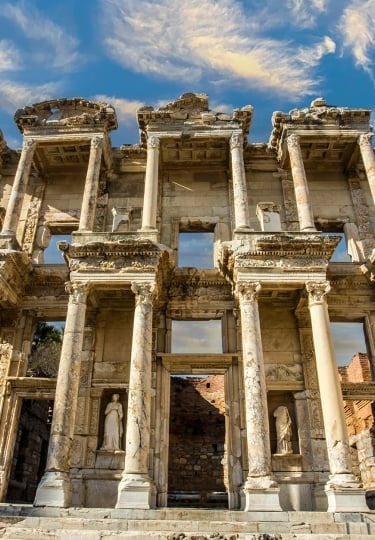
The most compelling sites in Ephesus, Turkey, include the Library of Celsus, the Great Theater, and the Terrace Houses, all of which are on the beaten path as you wander through the Turkish ruins. Guests spending a day at the cruise port tend to split their time between the ancient city and attractions further afield, like the Ephesus Archaeological Museum or the House of the Virgin Mary in nearby Selçuk.
Officially inscribed as a UNESCO World Heritage Site in 2015, Ephesus was once one of the wealthiest cities in the Roman world, home to as many as 250,000 people. This guide explores how to plan to see Ephesus during one port day, top attractions, and considerations as you plan your itinerary.
How To Experience One Port Day in Ephesus
Ephesus is a revered cruise port destination near Kuşadasi, Turkey. Most guests walk through the heart of the ancient city in two to four hours, then explore one or two nearby attractions in Selçuk.
Throughout the day, you’ll likely come across classical sites, such as:
- Library of Celsus: This two-story marble facade is among the best-preserved library buildings from the Roman world.
- The Great Theater: Carved into the slopes of Mount Pion, the Great Theater is a massive amphitheater that can seat up to 25,000 people.
- Curetes Street: An ancient marble-clad avenue that served as the the central thoroughfare connecting the Library of Celsus and the Great Theater.
- Terrace Houses: This hillside residential complex provides insight into the lives of Ephesus’ ultra-rich.
- Temple of Artemis: Located further afield in Selçuk, just a single reconstructed column remains of this ancient wonder.
- House of the Virgin Mary: You can see the House of the Virgin Mary, a secluded stone chapel nestled among the hills, in a 30-minute drive from Ephesus.
- Ephesus Archaeological Museum: In Selçuk proper, this museum houses recovered treasures and is close to local restaurants.
- Isa Bey Mosque and Basilica of St. John: These two historical sites are positioned just a five-minute walk apart on Selçuk’s Ayasuluk Hill.
Why Visit Ephesus?
For most intrepid travelers cruising the Aegean Sea, Ephesus is a hard one to pass up. This UNESCO World Heritage Site is among the Mediterranean’s best-preserved Greco-Roman ruins, having endured for more than two millennia.
If you’re weighing Greece or Italy for your next cruise, you won’t have to choose here: Ephesus was built by the Greeks, expanded by the Romans, and later evolved into one of early Christianity’s most significant cities, all accessible in a day’s walk.
Best Things To Do in Ephesus During a Day at Port
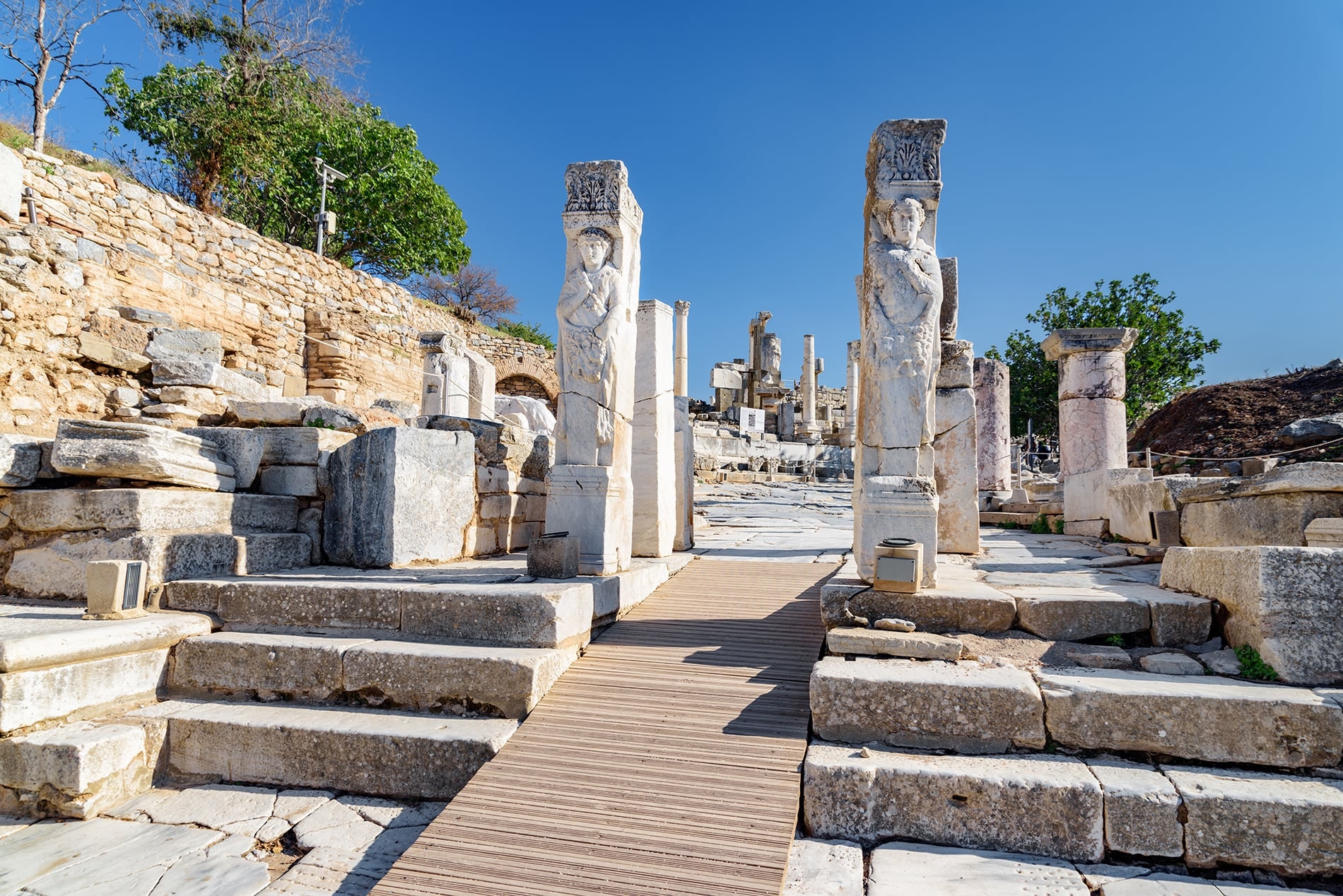
View of ruins in Ephesus (Efes). Scenic ruins of the ancient Greek city in Selcuk, Izmir Province, Turkey.
To help you make the most of your time in port, here are the must-see sites and historical landmarks that define the unforgettable experience of visiting this ancient city.
Library of Celsus
The Library of Celsus is the most photographed structure in Ephesus, a two-story marble facade rebuilt between 1970 and 1978 from original fragments scattered around the site. The Roman senator it honors, Celsus, was buried in a marble sarcophagus inside a sealed crypt directly beneath the main hall. As you approach, you’ll notice its elaborate two-story facade, featuring Corinthian columns and meticulously carved statues of women, each representing wisdom, virtue, knowledge, and intelligence.
This library remains one of the best-preserved library buildings from the Roman world, and its grand facade has become a symbol of the ancient city. If this is your first time visiting, it’s worth prioritizing. Photos of the morning light on its marble edifice never quite do it justice, so plan to arrive early.
The Great Theater
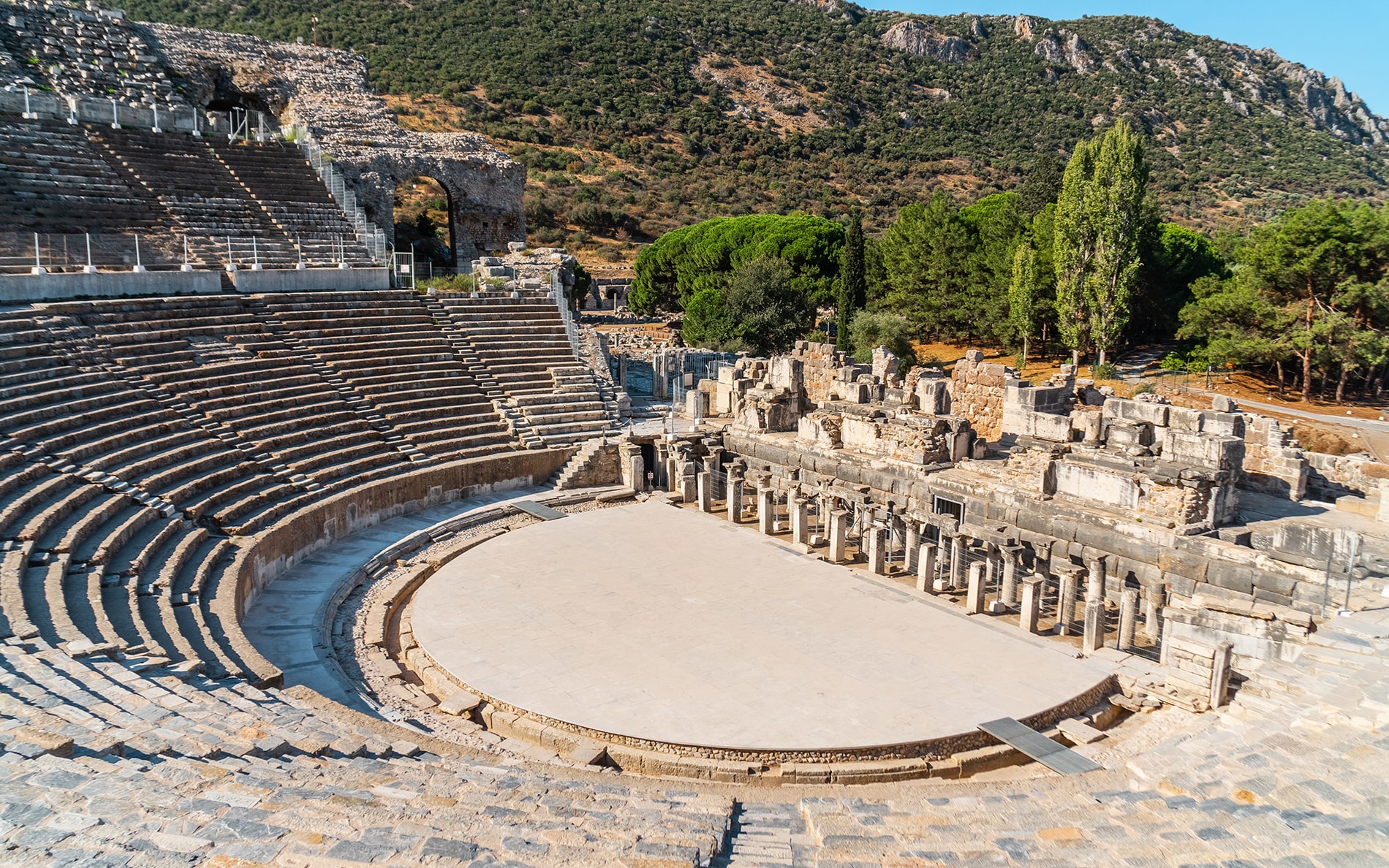
Ancient Theater of Ephesus in Turkey. Ancient greek ruins
| The Great Theater is Ephesus’s largest structure, an amphitheater carved into the slopes of Mount Pion and built to hold up to 25,000 spectators. The Greeks built the original structure in the third century BC, which the Romans later expanded for gladiator games.
Modern restoration has made it possible for the Great Theater to host contemporary performances by the likes of Elton John and Sting. Roam freely on the center stage and test out the impeccable acoustics (at a respectful volume), but mind the upper echelons of the amphitheater seating, where the site is cordoned off due to lack of structural integrity. |
Curetes Street
Walking Curetes Street, the marble-clad road threading between the Library of Celsus and the Great Theater, provides the quintessential “everyday” experience of Ephesus, Turkey. Furrows worn into the marble evoke images of the centuries of chariot and cart wheels hauling goods through the city.
You’ll also notice remnants of shops and statues that shadow what was once the liveliest stretch of Ephesus. Now, cats prefer to sun themselves on the fallen columns, largely unbothered by visitors.
Terrace Houses
Also known as the Houses of the Rich, the Terrace Houses are a premium add-on for visitors interested in the daily affairs of Ephesus’s wealthiest. Their mosaic floors and elaborate frescoes remain intact underfoot, along with a precocious heating system beneath the floor.
This shaded, cool complex is accessible by stairs, and you’ll need to purchase a separate on-site ticket for a small fee. Allocate an extra 30 to 45 minutes if you plan to visit.
Temple of Artemis
Once named among the Seven Wonders of the Ancient World, the Temple of Artemis now stands as just a single reconstructed column of its former glory. Historically, this temple was the epicenter of the region’s spiritual and civic life: a place of asylum, a host for theatrical and athletic events, and, not least, a financial institution.
Consider this a brief stop, rather than a destination—but one that’ll leave a lingering impression of the gravity of time’s passing.
House of the Virgin Mary
The House of the Virgin Mary is a small stone chapel about a 30-minute drive toward the hills above Ephesus. Legend holds that Mary spent her final years here, brought to Ephesus by the apostle John. Several popes have visited and blessed this spiritual and cultural site, which continues to draw pilgrims each year.
Ephesus Archaeological Museum
Located in Selçuk proper, the Ephesus Archaeological Museum houses original artifacts and statues recovered from the ancient city. See the marble statues of Artemis, cloaked in egg-shaped ornaments whose significance is still debated today. Continue wandering to view friezes, oil lamps, and ancient coins that depict daily life.
With the town’s center close by, you’ll find plenty of restaurants within a five-minute walk to try local Turkish delicacies, like gözleme and çöp şiş.
Isa Bey Mosque and Basilica of St. John
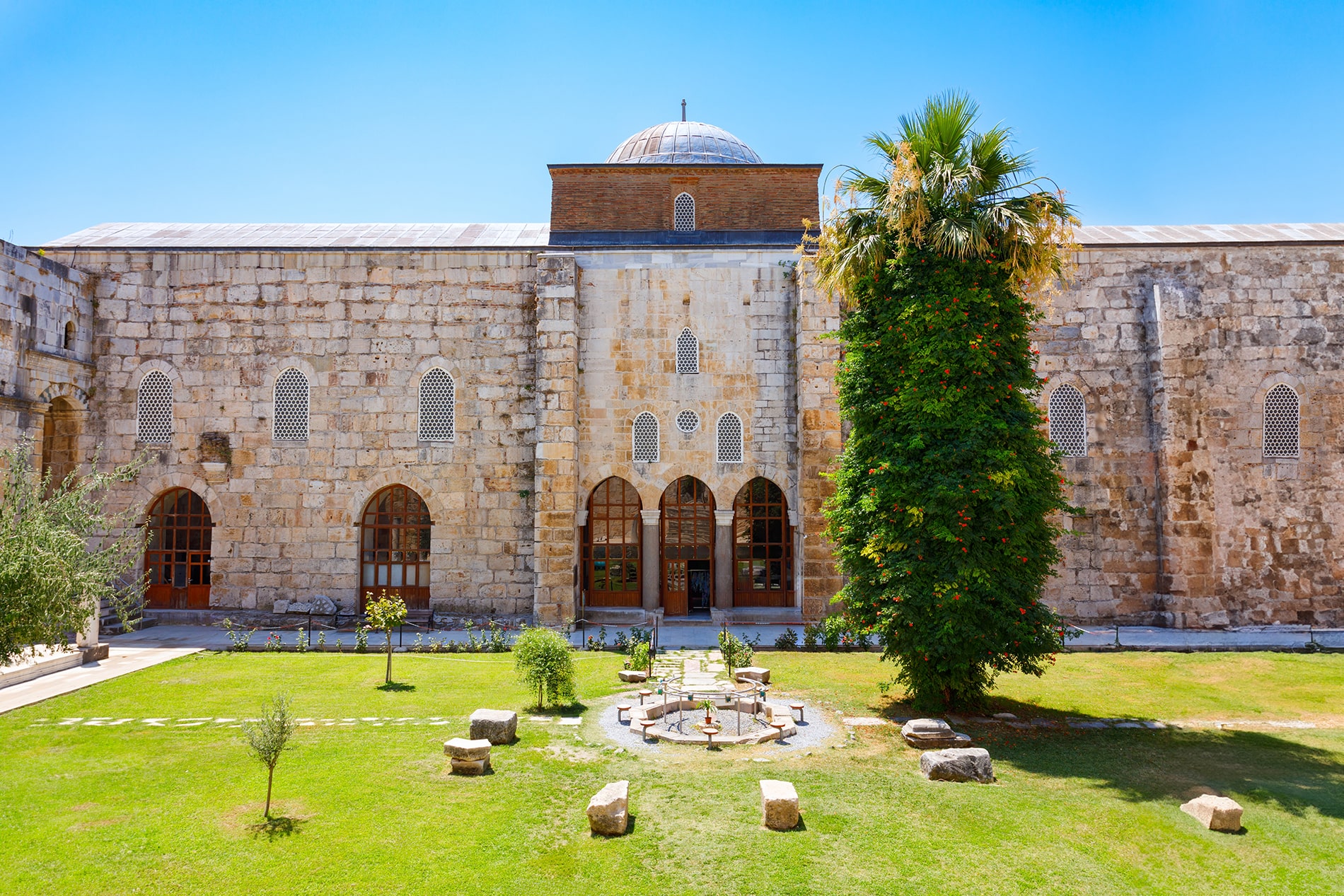
Isa Bey Mosque, an ancient mosque located near Ephesus in the modern city of Selçuk, Izmir Province, Turkey
Preparing for One Day in Ephesus From a Cruise Ship
Though once a thriving, well-trafficked seaport, centuries of silting from the Meander River have left this ancient giant stranded three miles inland from the Aegean coast, connecting Turkey and Greece. From the cruise port, you’ll find taxi vendors, shared mini-buses, and private tour operators waiting nearby to transport you to the upper or lower gate, with a 20- to 30-minute drive.
By starting at the upper gate, you’ll navigate your tour downhill. This orientation is a more forgiving route, given the heat emanating from the sun-warmed marble paving. Here are a few tips to help you plan the day:
- Structuring your itinerary: The ancient city of Ephesus is usually the longest visit, taking between two and four hours. Plan to arrive early, before the day’s warmth sets in. By scheduling attractions in Selçuk for the afternoon, it’s easier to retreat to the cooler indoors.
- What to bring: In your day pack, bring plenty of water, effective sun protection, and a small snack in case you get hungry along the way. Drones and professional photography gear are forbidden on site, unless you have written advance consent.
- What to wear: Aim for comfortable walking shoes and light layers to protect you from the sun without contributing to the heat.
- When to visit: The best time to visit Turkey is during the shoulder seasons, around May or September, as the heat is not as intense as in mid-summer, nor are the crowds as full. Early morning arrivals generally work better to avoid excessive crowding from tour buses and the heat of the midday sun.
- Kusadasi connection: Ephesus is a common excursion from Kusadasi during a Mediterranean cruise. Booking a planned tour can make the day run that much smoother if you prefer to go without the logistics.
- End of the day: Leave additional time to return to the cruise ship. Worst case, you’ll have time for a traditional Turkish coffee at Kahve Dünyası, located at the port.
FAQs: Visiting Ephesus, Turkey, During a Day at Port
What are the best things to do in Ephesus, Turkey?
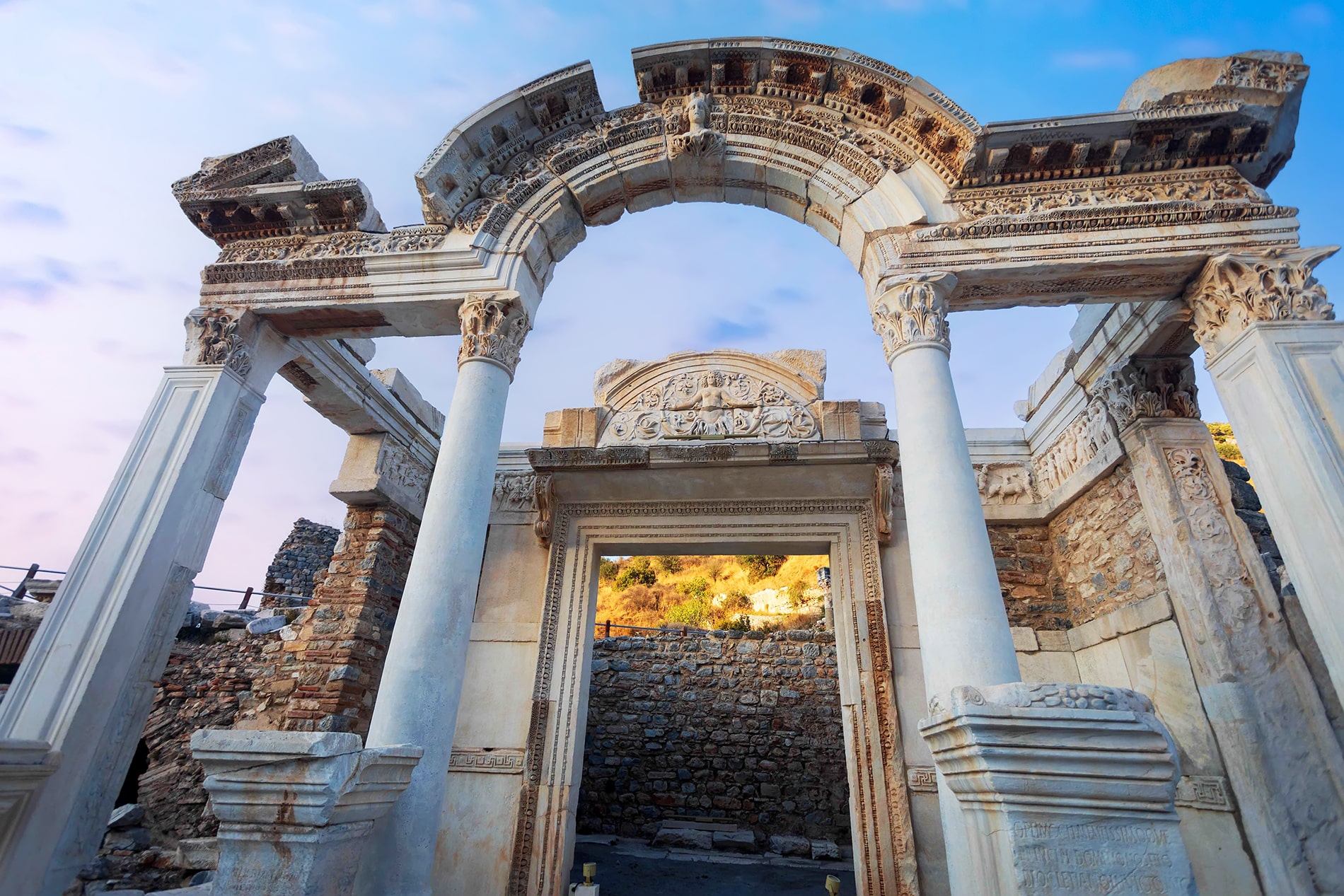
Ancient city of Ephesus, İzmir Selçuk
Is Ephesus worth visiting on a cruise stop?
Yes. Ephesus is one of the best-preserved ancient cities in the Mediterranean and a UNESCO World Heritage Site that you can walk through in a single day, making it an easy port of call to justify.
What can you realistically see in Ephesus in one day?
In one day, most visitors see the main archaeological site, including the Library of Celsus, Great Theater, and Curetes Street, as well as a few attractions in Selçuk.
Should you book a guided tour or visit Ephesus on your own?
You can do both. Guided tours simplify logistics and add historical context, while independent visits offer more flexibility and pacing throughout the day.
What’s the best Ephesus itinerary for a cruise excursion?
A realistic Ephesus itinerary starts at the upper gate, moves through the main ruins in two to four hours, then adds one Selçuk stop before returning to port.
What are the best things to do in Ephesus for first-time visitors?
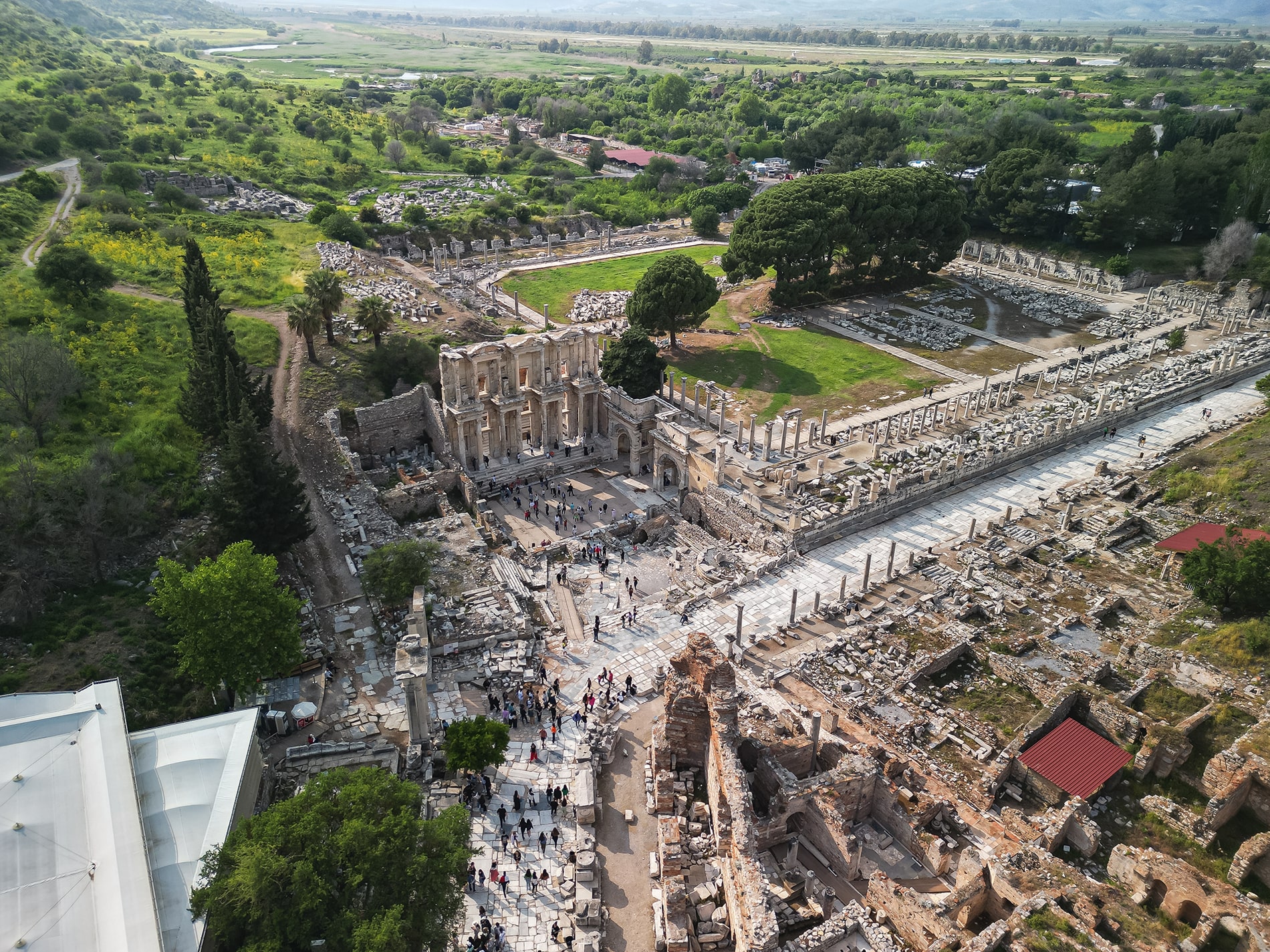
The Library of Celsus in Ephesus stands amid marble lanes, columns, greenery, and Turkey’s historic hills.
First-time visitors might prioritize the Library of Celsus, the Great Theater, and Curetes Street—the three sites that best capture the scale and history of ancient Ephesus.
What are the best things to do in Ephesus with kids?
Is Ephesus too crowded during cruise ship days?
Ephesus gets busiest once tour buses arrive mid-morning, particularly in peak summer. Arrive right at opening, and visit during the shoulder seasons (around May and September) to avoid heavy foot traffic.
Plan Your Quintessential Day in Ephesus
Within a single day at port, Ephesus enables a complete immersion in over two thousand years of layered spiritual and cultural heritage. Few port stops pack as much history into just one afternoon.
View cruises to Ephesus and start preparing to visit the wonders of this venerable city.