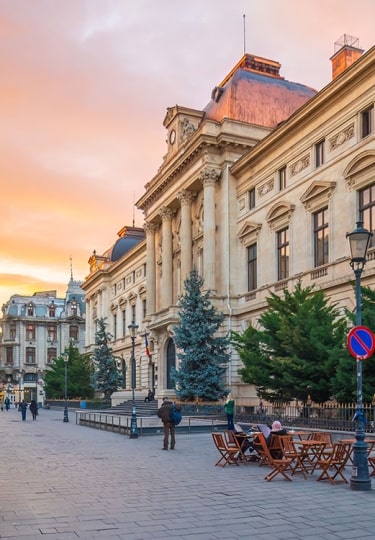
When you think of Bucharest, one word often comes to mind: elegance. The Romanian capital’s cobblestone boulevards curve past Belle Époque architecture, whisking you away to a romanticized era modeled after France — ultimately, giving the city its nickname, “Little Paris.”
The elaborate bookstore, charming Old Town, and lively Lipscani Street bring a fairytale atmosphere to a place whose storied past includes decades under communist rule. The city persevered and honors its history with striking communist-era landmarks alongside well-maintained palaces. Moreover, its vibrant modern culture, blended with an intriguing culinary scene, puts Bucharest city on the map — and it’s just 90 minutes from the river port of Giurgiu.
Select Celebrity River Cruises℠ itineraries include Bucharest as a natural extension of the Danube River journey. Grand opera houses, historic monasteries, and lively markets offer plenty to explore. This guide highlights 15 of the best things to do in Bucharest.
Exploring Bucharest’s Top Attractions
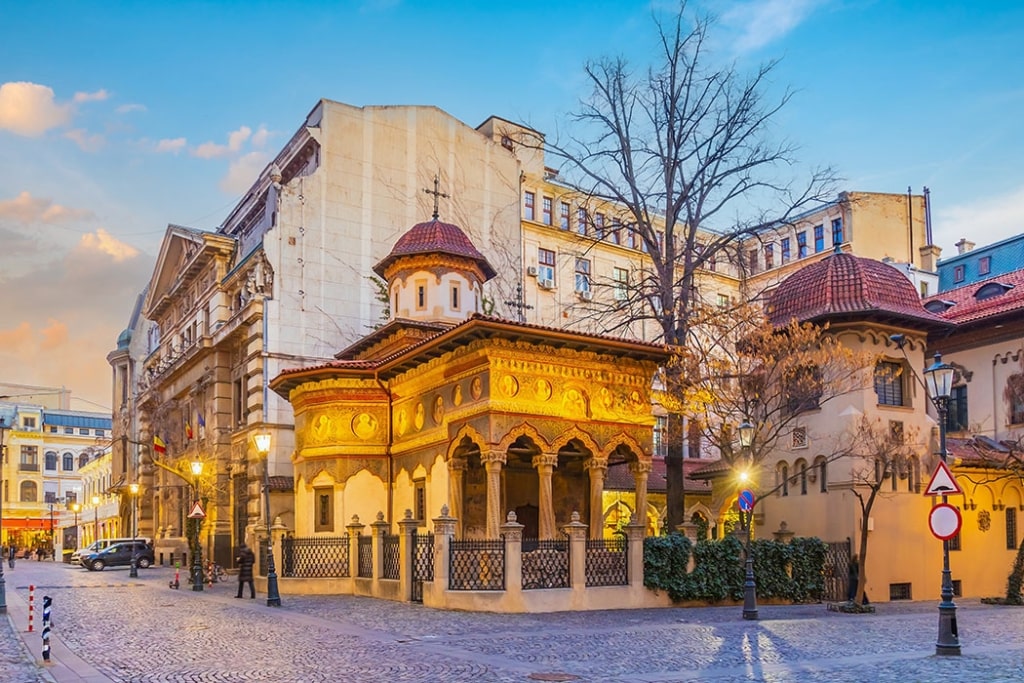
Old Town Bucharest skyline, cityscape of Romania at dusk
Bucharest offers a well-balanced mix of culture, history, and everyday life.
Its Old Town offers a glimpse into the past while revealing a promising future — and that sentiment is also shared among the city’s parks and museums. These spaces give guests an interactive way to learn about Romanian history and the rural traditions that shaped the country long before its grand architecture took hold.
For leisure, the culinary scene lets guests shop, dine, and unwind, while day trips take visitors on an unexpected journey to fantasy-like castles that rank among Europe’s most beautiful.
With Celebrity River Cruises, experiencing all of this can feel overwhelming — especially if it’s your first river cruise. But don’t worry: a simple plan helps make the most of your time in the city.
Explore the Old Town (Lipscani)
Get a feel for “Little Paris” in the historic heart of Bucharest: The Old Town of Lipscani. Here, locals sip coffee on the terrace of buzzing cafés, while dome-structured buildings with fascinating architectural details fill the gaps between cobbled walkways. On your path through Bucharest Old Town, there are a few hidden gems you can’t miss.
Traveler tip: As with any major city, keep valuables close and stay alert in crowded squares, especially around Lipscani Street’s busiest restaurant rows at night.
Cărturești Carusel
Cărturești Carusel is a six-floor bookstore with crisp white spiral staircases that add to its grandeur. The 19th-century building is frequently ranked as one of the world’s most beautiful bookstores — even tour groups make it a stop on their walking route through Old Town Bucharest.
Traveler tip: After you flip through the book spines and make your purchase, head to the rooftop bistro to read those first few chapters with a view. The best time to go is mid-morning on a weekday to avoid crowds.
Stavropoleos Monastery
The Stavropoleos Monastery is a Byzantine-Ottoman structure with a peaceful, quiet courtyard — a contrast to the area’s surrounding noise. Built in the early 1700s, its interior is just as impressive as its outdoor space. Step beneath the dome and look up to admire the intricate craftsmanship overhead. As an added touch, there’s an on-site museum that displays medieval Romanian icons.
Macca-Villacrosse Passage
The Macca-Villacrosse Passage connects Calea Victoriei and Lipscani Street through a forked, yellow-tinted glass roof arcade — one of the most photographed corners of the Old Town. Guests can wander past cafés, bars, and shisha lounges that give it a distinctly Parisian feel, especially once the lights come on at night.
Parks & Local Culture
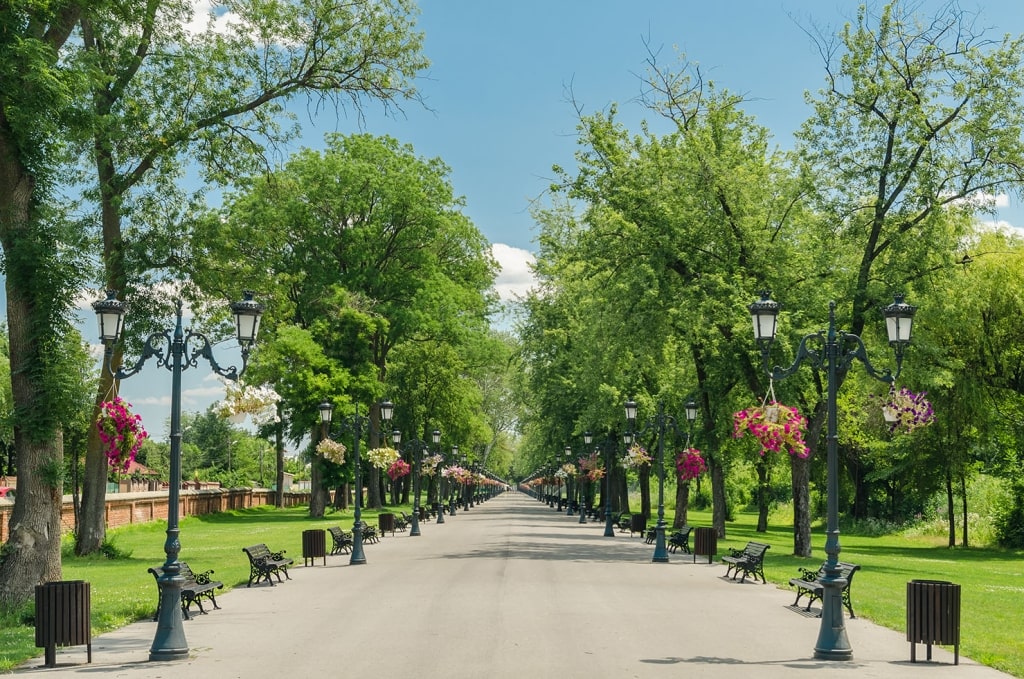
A tree-lined promenade in Mogosoaia Public Park Alley in Bucharest, Romania.
Communist-era monuments, lush green spaces, and historical squares are where Bucharest’s past chapters meet a modern-day story. The parks and local culture here are what shape the Romanian capital as one of the best cities to visit on the Danube River.
Palace of Parliament
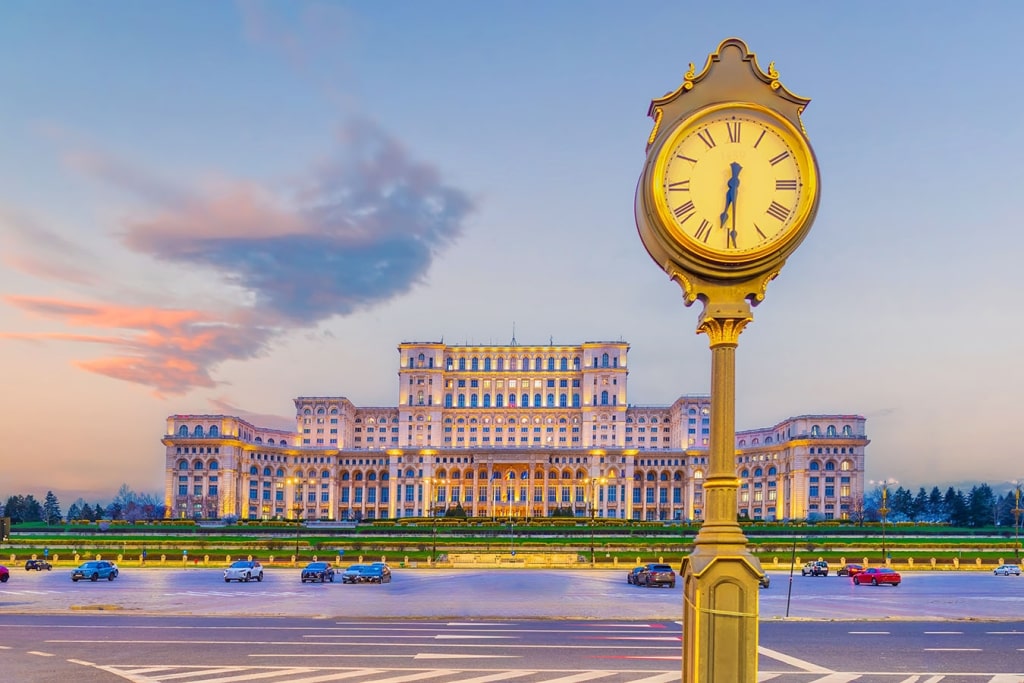
The Palace of the Parliament in Bucharest, Romania, viewed at sunset with a historic street clock in the foreground.
The Palace of Parliament is the second-largest administrative building in the world. It is a symbol of communist Bucharest and one of the city’s most visited landmarks. You should book guided tours in advance and bring a passport for entry.
Calea Victoriei & Revolution Square
This is where communist president Nicolae Ceaușescu gave his final speech in 1989 before the Romanian Revolution unfolded — hence the name, Revolution Square. Here, the crowd turned against him, and the Romanian Revolution reached Bucharest. Nearby is Calea Victoriei, home to the National Museum of Art, the Royal Palace, and several landmarks tied to Romanian history.
Romanian Athenaeum
The Romanian Athenaeum is an iconic theater with a red and gold-leafed ceiling. It seats almost 800 people and is every bit as impressive as the performances staged within it. The lobby and rotunda are open to visitors, even if they don’t have a concert ticket, making it one of the best places to experience Bucharest’s cultural side.
Herăstrău Park
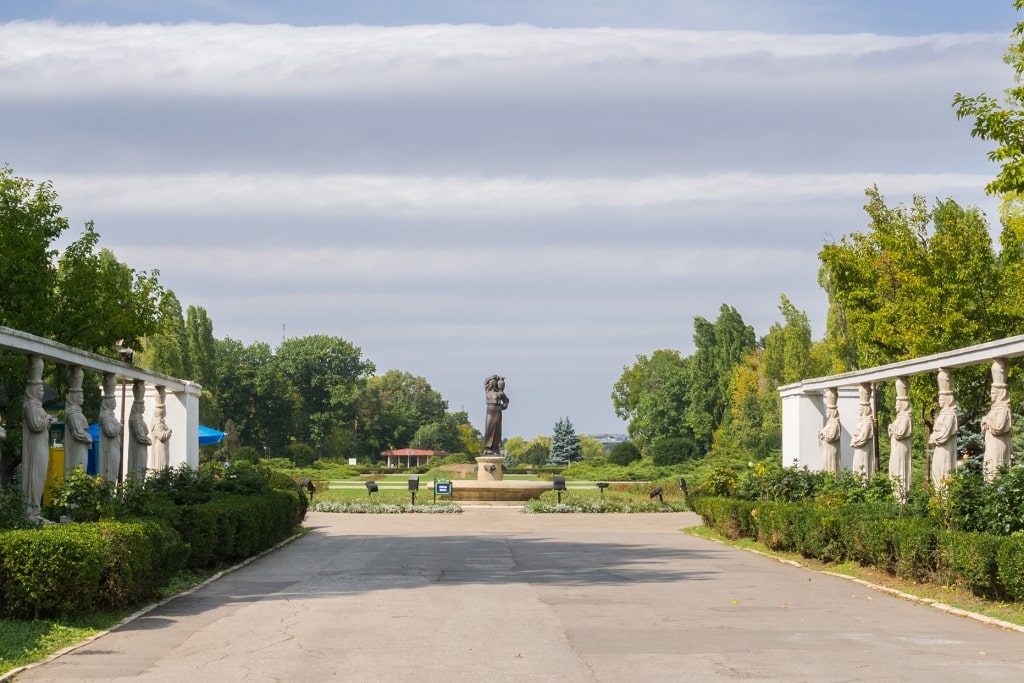
Graceful classical statues welcome travelers into the lush tranquility of Bucharest’s Herăstrău Park.
The city’s largest park is filled with green spaces, riverfront views, restaurants, and a mix of architectural styles. There is an unexpected pop-culture landmark — a tombstone for the “King of Pop” commemorating Michael Jackson’s visit to Romania.
National Village Museum
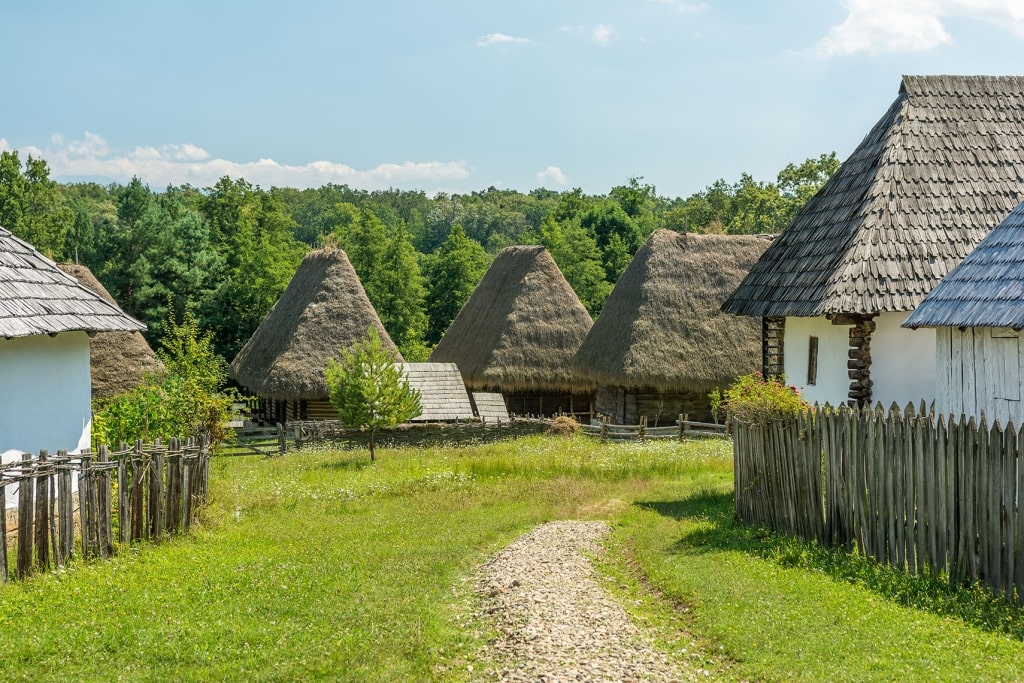
Traditional thatched-roof houses at the Dimitrie Gusti National Village Museum in Bucharest, Romania.
The National Village Museum is an open-air museum showcasing traditional Romanian village life. Set along the edge of Herăstrău Park, it gathers restored homes, churches, and rural structures from across the country. Each one was relocated and rebuilt to preserve regional building styles that might otherwise have been lost.
Museum of the Romanian Peasant
Explore the Museum of the Romanian Peasant to gain a deeper understanding of Romania’s cultural heritage. The exhibitions highlight Romania’s folk traditions through textiles, ceramics, and cultural artifacts, revealing what the country once was before its larger-than-life architecture.
Therme Bucharest
Relax at Therme Bucharest — Europe’s largest indoor wellness and entertainment center. This indoor oasis has a glass ceiling for natural light and is home to Romania’s largest botanical garden, with over 800,000 plants, providing fresh air and natural aromas.
Eats
A visit to any destination is not complete without trying the local gastronomy, and Bucharest doesn’t disappoint. Hearty and comfort-driven, the city’s cuisine can be enjoyed in historic restaurants, bustling markets, and inviting neighborhood bars.
Caru’ cu Bere
Dine at Caru’ cu Bere, Bucharest’s oldest beer hall, established in 1879. This century-old restaurant features traditional Romanian architecture and a Gothic cathedral-style interior.
Not sure what to order? Sarmale is Romania’s national dish, made of minced pork and rice wrapped in sauerkraut or grape leaves. Also, try mici — small grilled sausages made from a mix of pork, beef, and lamb, spiced with garlic and savory herbs. Pair it with a house draft to eat just like a local.
Traveler tip: Lunch is less crowded and has lower prices for the same atmosphere.
Obor Market
Bucharest’s largest and oldest market is filled with stalls of Romanian cheeses, fresh bread, cured meats, and seasonal produce. Guests can get a taste of what it’s like to live the Romanian lifestyle with a touch of history.
Traveler tip: Go hungry, and bring small bills — some vendors may be cash-only.
Strada Arthur Verona
This artistic street is filled with garden bars and craft beers. On the way, murals decorate walls, bringing the streets to life. Grădina Eden is a popular open-air hangout for locals and visitors alike.
Day Trips
When it comes to the Danube, it’s not hard to decide which river cruise to take. Bucharest is the easy answer if you want to extend your adventure to some of Romania’s most famous landmarks in the Carpathian region — and some can be done in a day.
Peleș Castle
The royal Peleș Castle in the Carpathian foothills is about a 90-minute train ride from Bucharest. The 19th-century beauty is known to be one of the most striking in Europe, and it’s not only the structure itself, but the dramatic mountains surrounding it.
Bran Castle
Atop a cliff about two hours from Bucharest by train, you’ll come across the outstanding Bran Castle, surrounded by Bran Village and the Carpathian Mountains. Widely believed to have inspired Dracula’s castle, it remains one of Romania’s most famous attractions.
Traveler tip: Combine a visit to Peleș Castle for an epic Transylvania experience.
Depart for the Danube
Bucharest’s centuries-old history, Belle Époque architecture, and layered culture make it one of Romania’s most multifaceted and memorable destinations — and yes, it’s well worth the stop. Palaces, castles, monasteries, and even bookstores are carefully preserved down to the smallest artistic touch. Beyond its landmarks, visitors can spend their time browsing lively markets, wandering atmospheric passageways, sipping coffee beneath historic arcades, or enjoying a local beer in a garden bar.
One day is enough to hit the highlights — the Old Town, the Palace of Parliament, and a meal at Caru’ cu Bere — but in three, you can include a day trip to Peleș or Bran Castle without rushing. The main thing to watch for is pickpocketing in crowded tourist areas like Lipscani at night, and Bucharest’s traffic, which moves fast and prompts pedestrians to be more aware.
The river port of Giurgiu is just a 90-minute shuttle ride from Bucharest, leaving you with a full day of sightseeing. Just budget time for the return trip so you’re back at the port in time to embark.
On select Celebrity River Cruises itineraries, Bucharest is part of the journey from the very beginning. Guests can start with an included overnight stay in the heart of Bucharest city, along with an included shore excursion that introduces Romania’s capital through its grand boulevards, Belle Époque architecture, lively markets, and layered history. The following day, guests travel to Oltenita to board the ship and begin their Danube River cruise.
Explore river cruises to Bucharest and discover Romania’s capital in person.