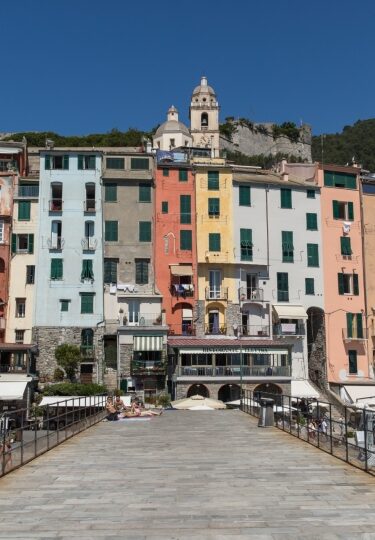
The small towns in Italy are often the locations where you have the richest encounters with the Italian way of life.
Slightly larger than those stunning, if sleepy, small villages in Italy and free of the din of city life, these towns are just the right size to allow la dolce vita to thrive.
Think sun-warmed stone streets lined with artisan boutiques, magenta bougainvillea cascading beside brightly painted shutters, and a compact piazza full of life and ideal for an aperitivo in the warm Italian evening.
Vietri Sul Mare
Vietri Sul Mare
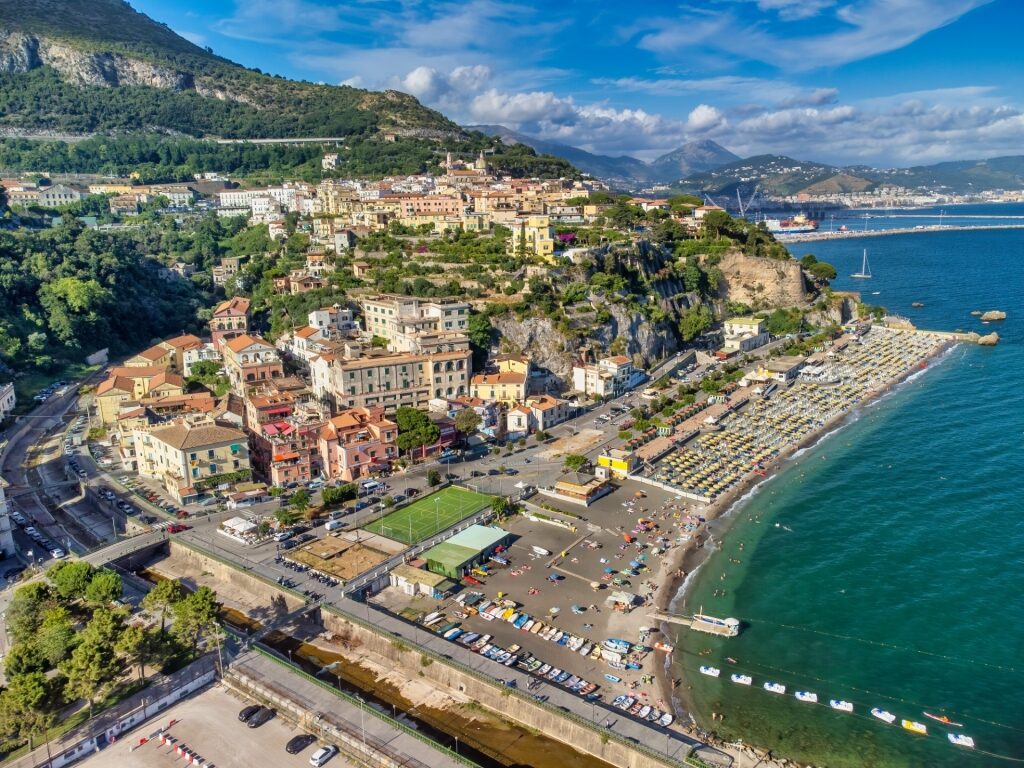
What makes Vietri sul Mare one of the most appealing small towns in Italy is how it fits into the Amalfi Coast jigsaw.
West of the city of Salerno, the sparkling majolica-tiled dome of Vietri sul Mare’s duomo signals your arrival at the Amalfi’s eastern border. Each of the towns of the Amalfi has its own distinctive personality, and Vietri sul Mare is as idiosyncratic as the rest.
Vietri Sul Mare
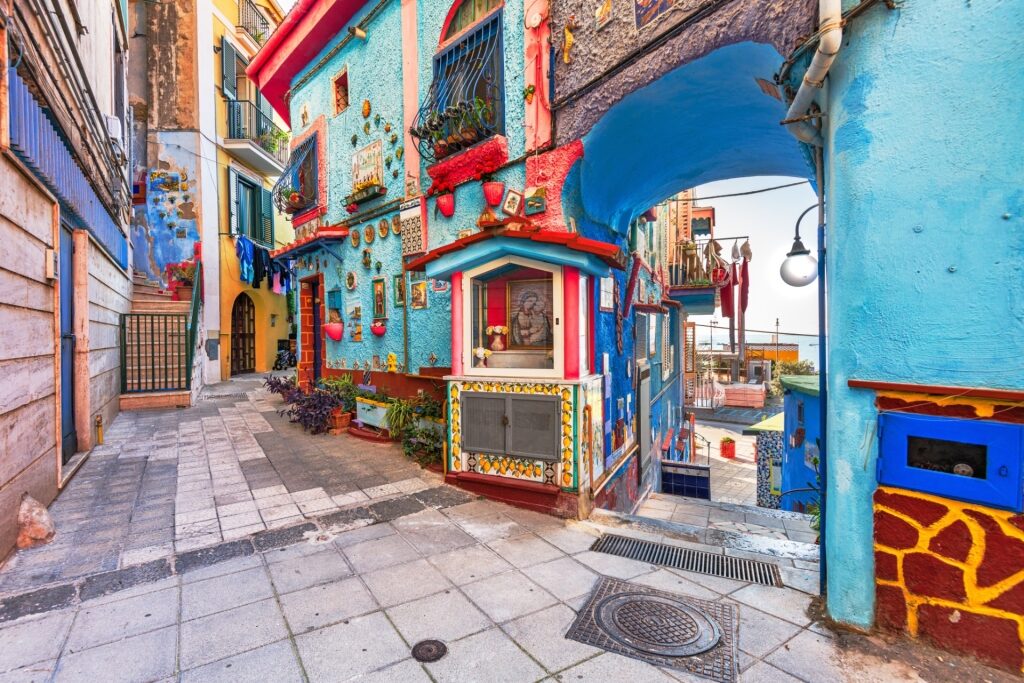
Having been an epicenter for ceramics for at least 500 years, Vietri sul Mare definitely exudes an artistic vibe. Wandering its whitewashed lanes, you’ll encounter an abundance of riches if you’re a lover of bright, joyful pottery and kitchen ceramics. A visit to the architecturally arresting Ceramiche Solimene Factory is essential.
Flying under the tourism radar compared to lofty Ravello or posturing Positano, Vietri sul Mare benefits from a generally calmer, less crowded feel. That extends to its beaches, especially the spacious, yellow sand La Baia, with its beguiling views of the “Due Fratelli” (two brothers) sea stacks.
Positano
Positano
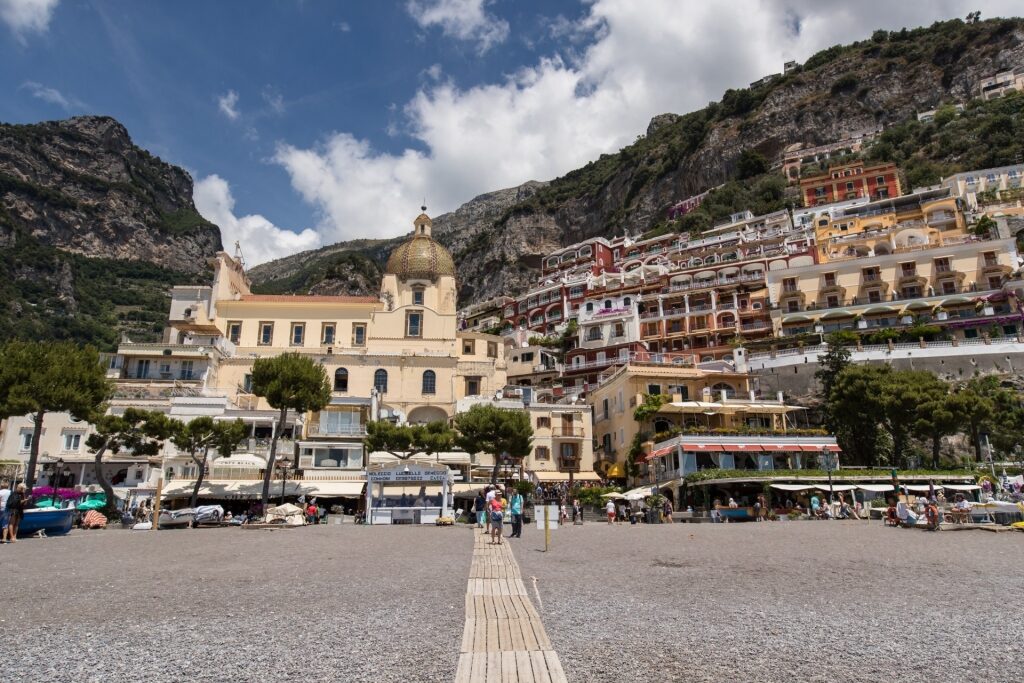
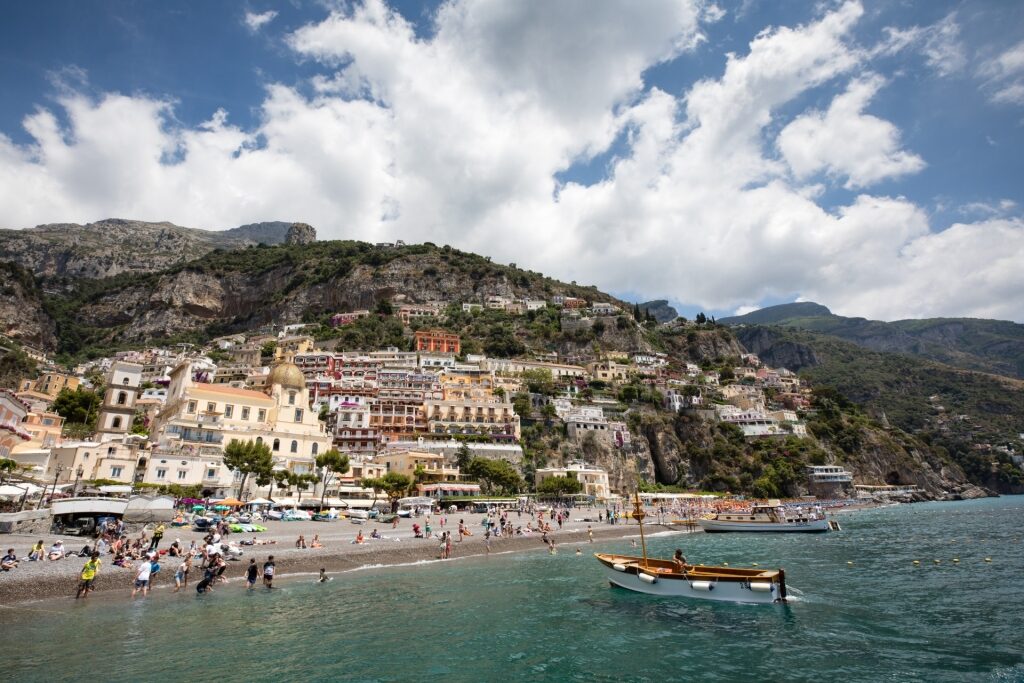
The western gateway to the Amalfi Coast, Positano is easily one of the most beautiful Italian towns.
Even if it’s your first time visiting, you’ll no doubt have a sense of déjà vu when arriving among this social media star’s staircase-style architecture.
Long a magnet for the chic and celebrated, Positano, once a simple fishing village in a setting of extreme natural beauty, has since blossomed into a glamorous resort town.
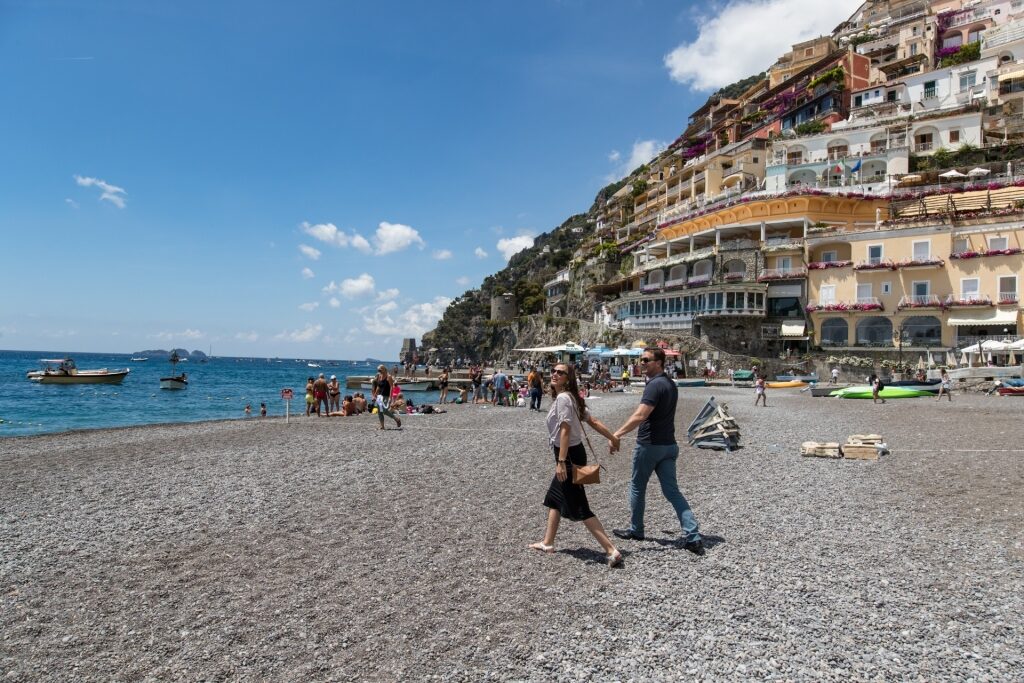
Spiaggia Grande, Positano
During the sun-splashed days of high season, its Spiaggia Grande is a destination for those looking to flaunt expensive swimsuits. Wander the gorgeous maze of bougainvillea-draped backstreets, and you’ll find plenty of boutiques to browse, as well as the town’s renowned leather sandal makers—Artigianato Rallo is well worth a visit.
When you need a refreshment, find your way to either a beachside bar or one at altitude—Franco’s is ever popular—for breathtaking views over the Tyrrhenian.
Ravello
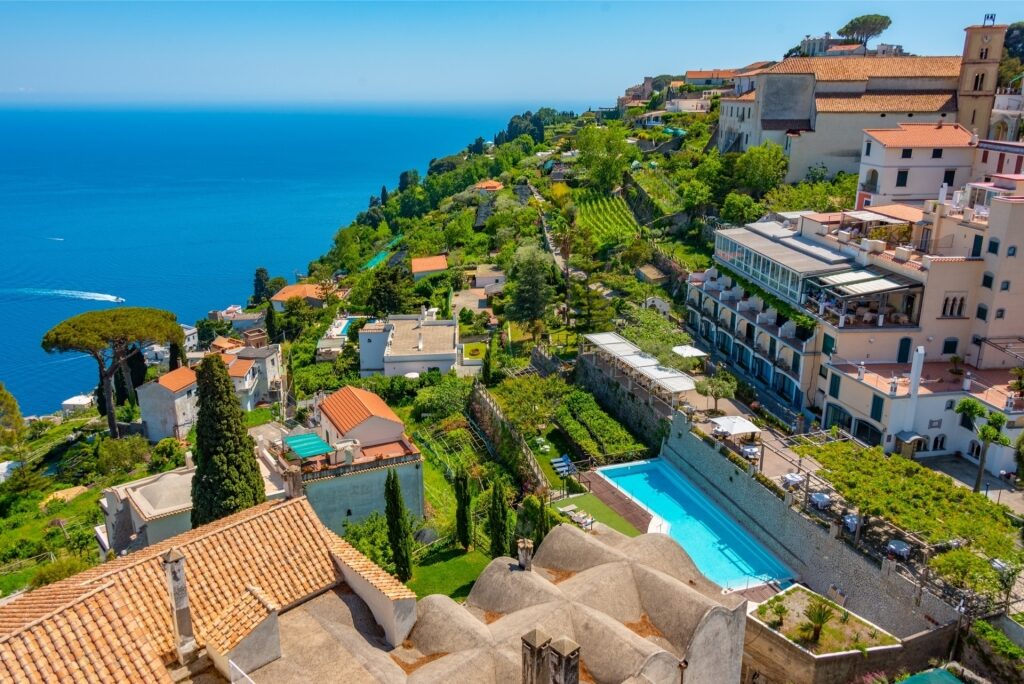
Ravello
While Positano is the buzzy sea-level shopfront of the Amalfi Coast, the stately enclave of Ravello, set in the higher altitudes of the Amalfi’s Lattari range, sits at a haughty remove.
It’s a stunning spot, with the superyachts only a glimmer on the cerulean disc of the Tyrrhenian far below, as seen from this verdant town’s envy-inducing gardens.
The villas here are often spectacular. Visit Villa Cimbrone, set slightly above the main town of Ravello, to explore the immaculately groomed gardens and the jaw-dropping outlook over the Amalfi Coast.
Taormina
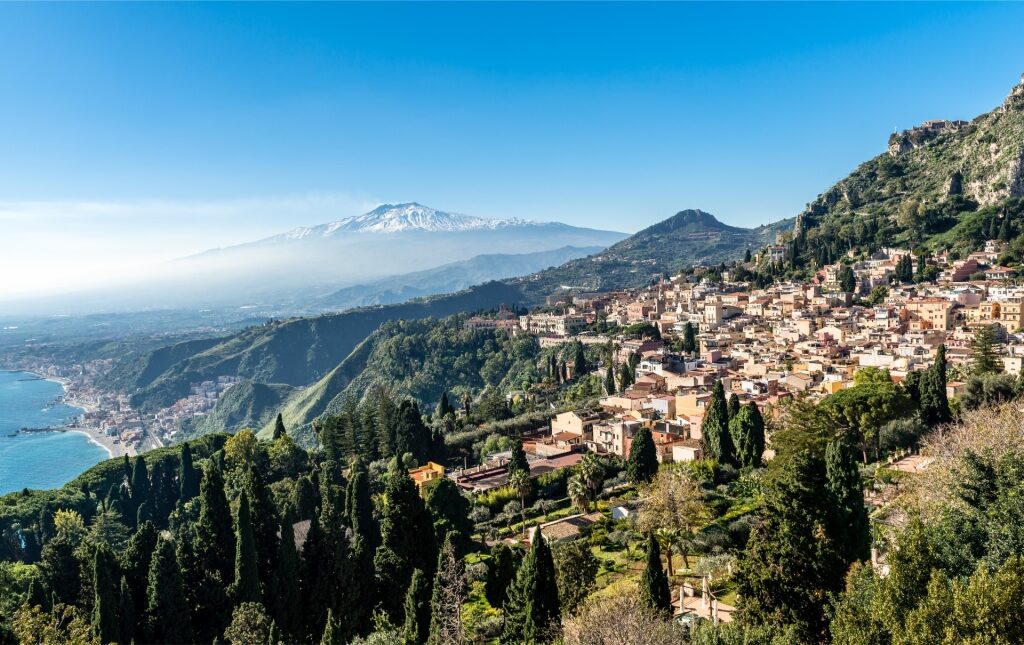
Taormina
The Sicilian town of Taormina has long been considered one of the most beautiful small towns in Italy.
The stories that litter its history only embellish the seductive aura that surrounds this east coast hot spot. D.H. Lawrence wrote some of Lady Chatterley’s Lover while in situ, and an English lady dwelt in exile on Taormina’s famous beach, Isola Bella, after a dalliance with a member of the British royal family. She later went on to marry the town’s mayor.
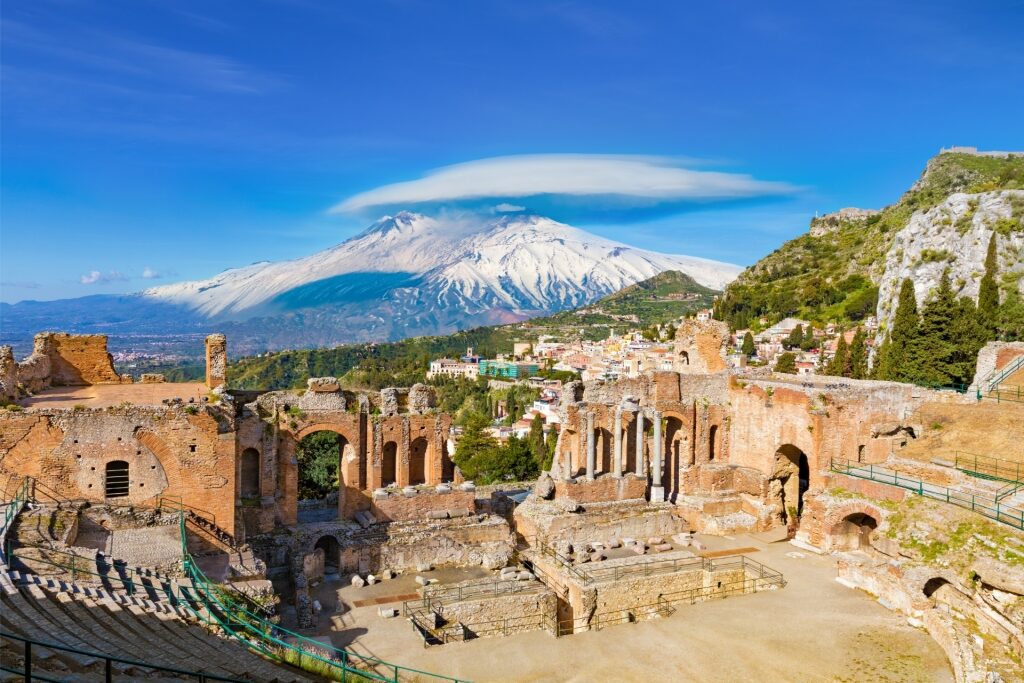
Greek Theater of Taormina
With volcanic Etna’s cone arrestingly visible from the 3rd-century Greek Theater that crowns Monte Tauro, into which the town is set, there’s more than a frisson of romance about this spectacular place.
Soak up the energy while strolling the basalt-paved Corso Umberto or watching the sparrows catching the updrafts at the seaview piazza.
Cefalù
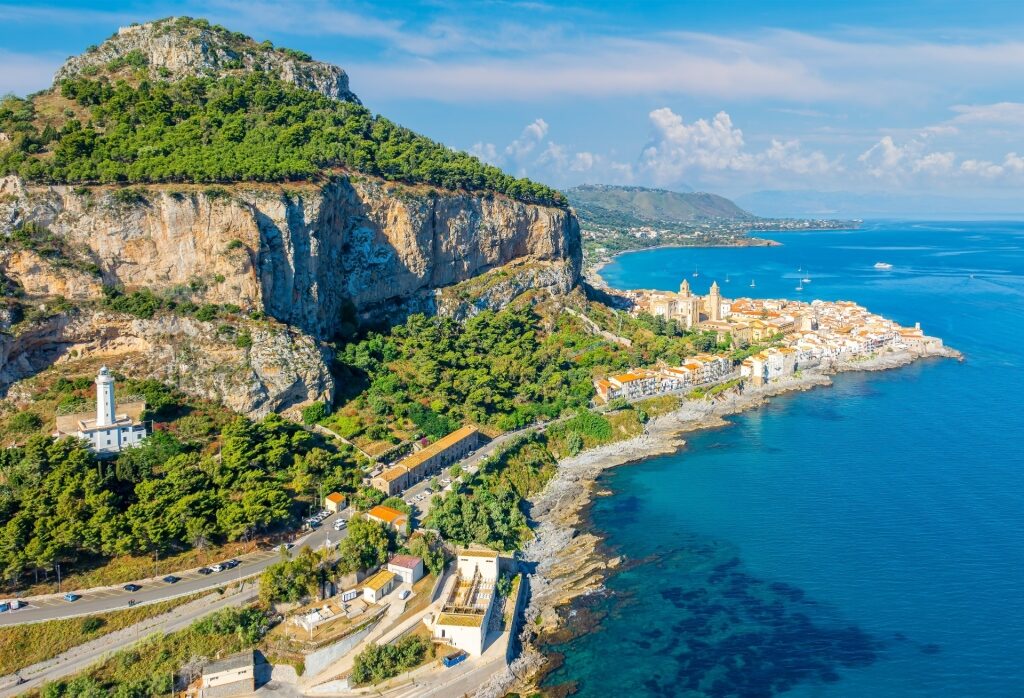
Cefalù
Cefalù, a stunning small town in Sicily, has a cathedral that seems out of proportion to the urban area over which it presides.
Now UNESCO-listed for its exquisite Byzantine mosaics, this impressive place of worship was a gesture to the Almighty from a Norman king after he nearly drowned in storm-tossed seas.
Arriving at Cefalù is always a time for celebration, whether you’ve survived a sea squall or just breezed in on the hour-long coastal train from Palermo.
The cathedral is rightfully a big draw, but larger still is the gorgeous ribbon of sand that gilds the coast here, with the silken shallows that seem to stretch on for miles.
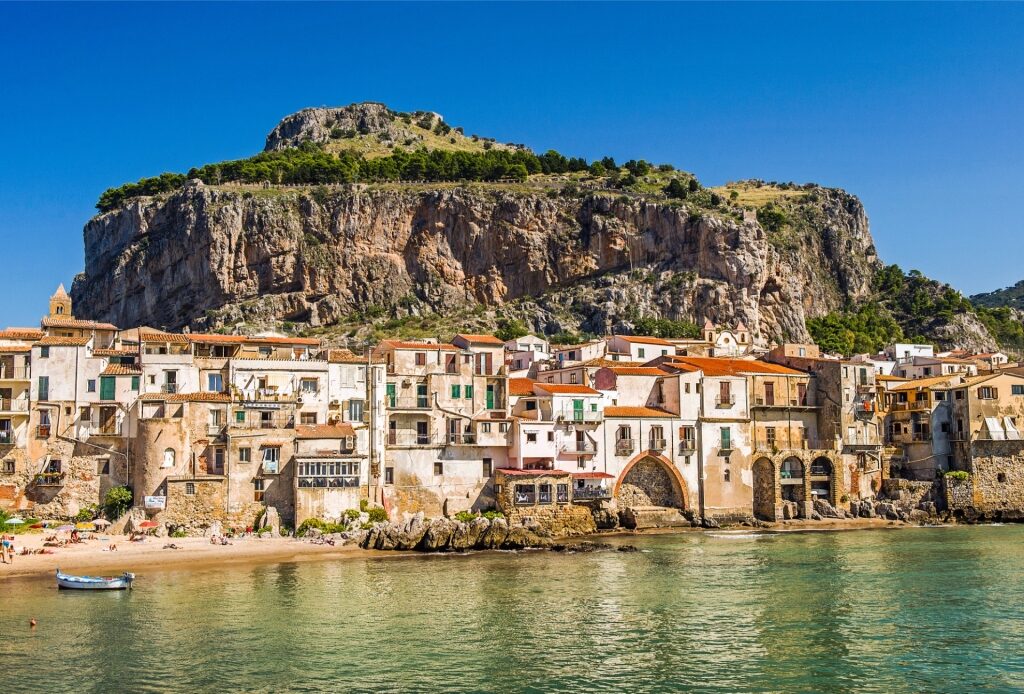
Cefalù
When I visited in April for a family vacation, the water was nearly the perfect temperature for out-of-towners like myself; the locals, however, kept strictly to the beach. Between the pairs of sun-worshippers, Italian teens played good-humored and not very skillful games of beach volleyball.
Afterwards, the sea salt drying on our skin, my family and I explored the atmospheric Old Town. It’s a weave of flagstoned lanes, with galleries, souvenir shops, and al taglio pizza places, as well as restaurants with stunning waterfront terraces.
San Gimignano
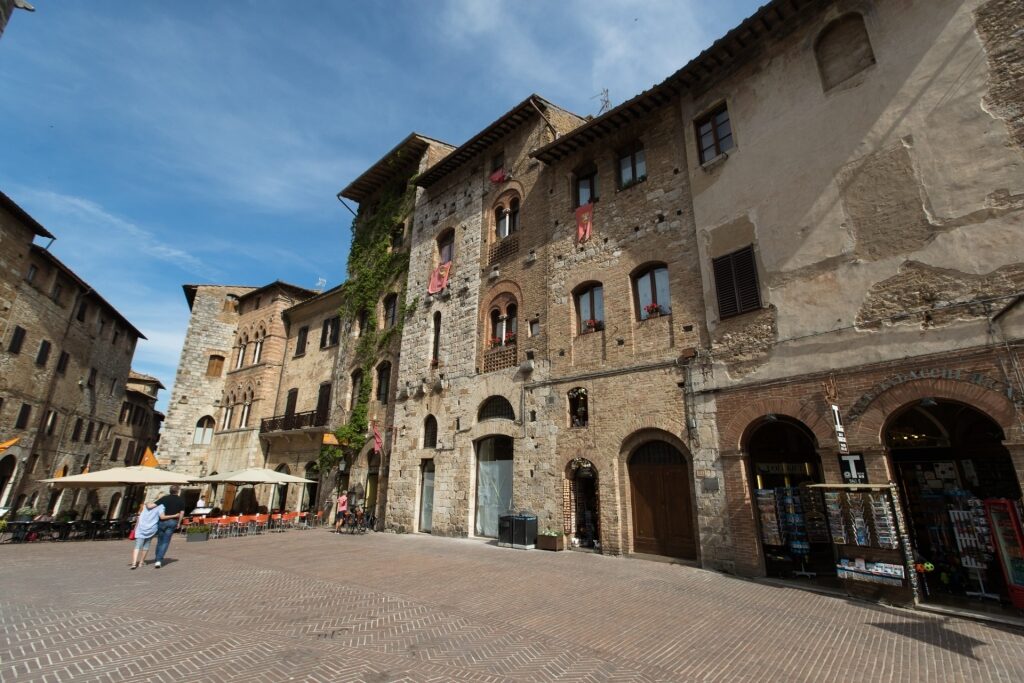
San Gimignano
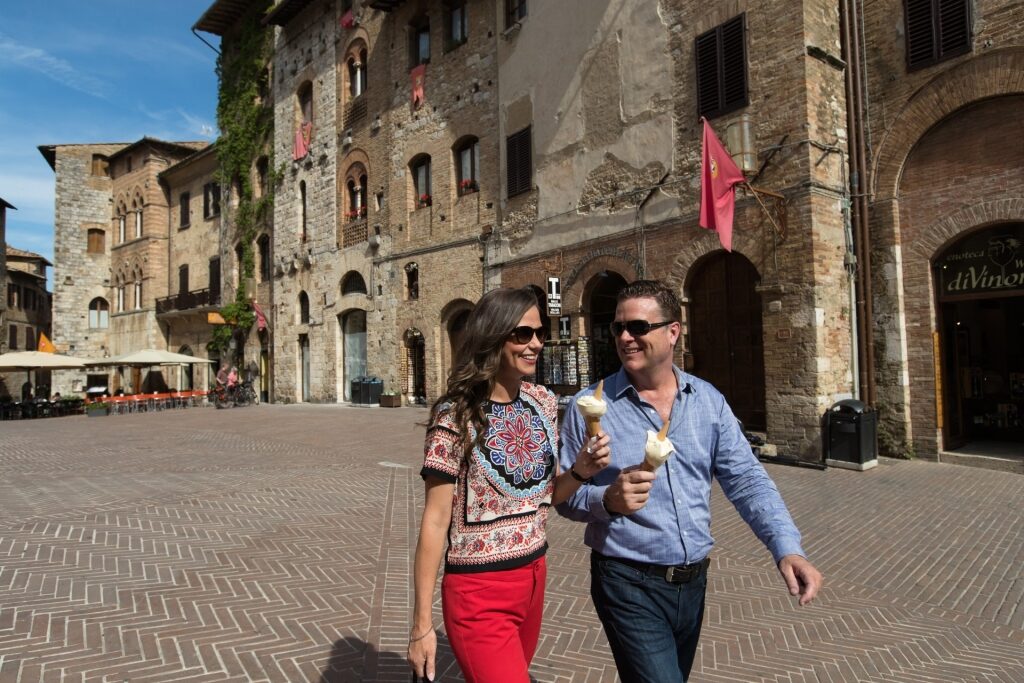
A UNESCO gem buried in the Tuscan countryside, San Gimignano is best known for its skyline.
In the Tuscan capital of Florence, you have a historic center where restrictions, enforced since medieval times, ensure that Brunelleschi’s dome remains floating above the rest of the city’s buildings.
However, in the small town of San Gimignano, only an hour south of Florence, a more gung-ho approach to medieval building regulations has been observed.
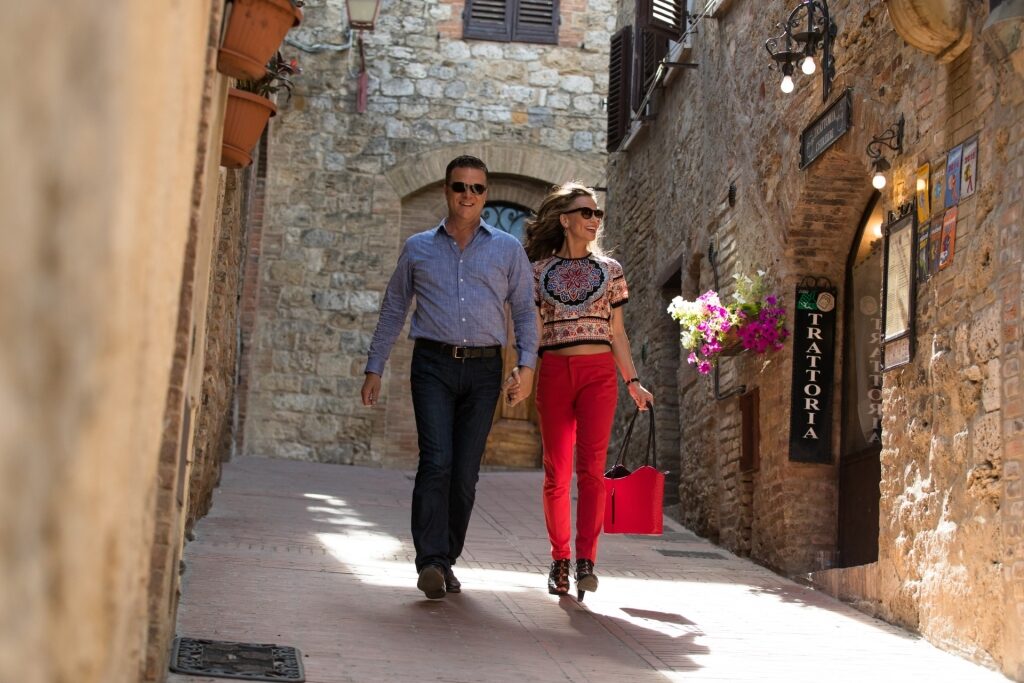
San Gimignano
Known as “the town of fine towers”, San Gimignano is essentially a showcase for ostentatious shows of medieval wealth. The noble families of the time, grown fat on the pilgrims stopping over en route to Rome, began to construct towers to flaunt their success. The builders of Torre Grossa, which stands at over 170 feet, were clearly the winners.
There are fourteen towers still standing today. Torre Grossa remains in place and is open to the public.
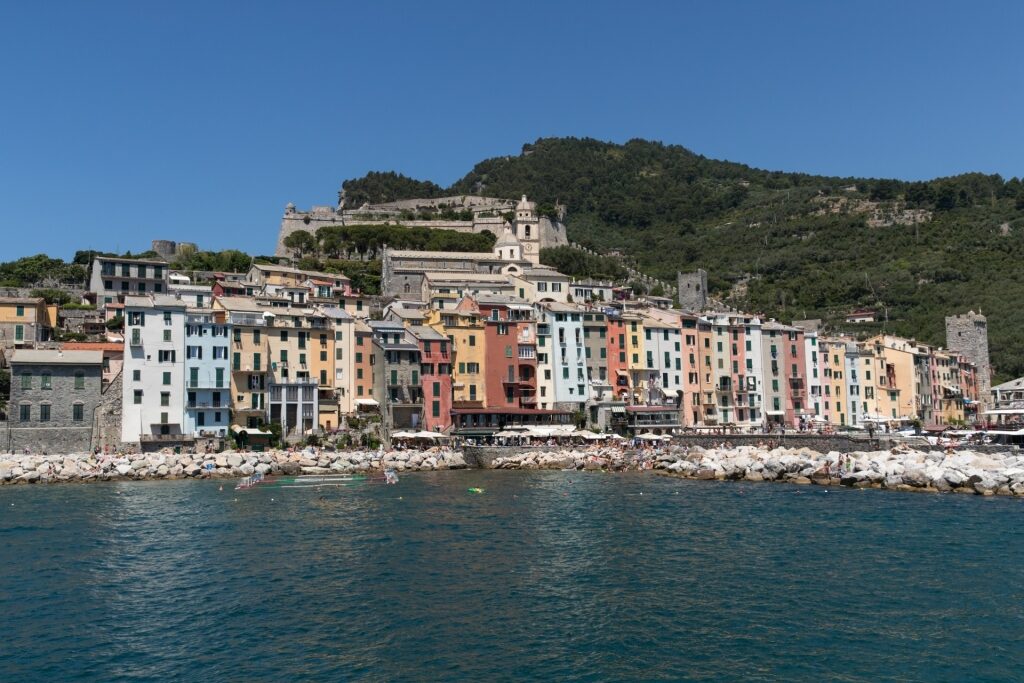
Porto Venere
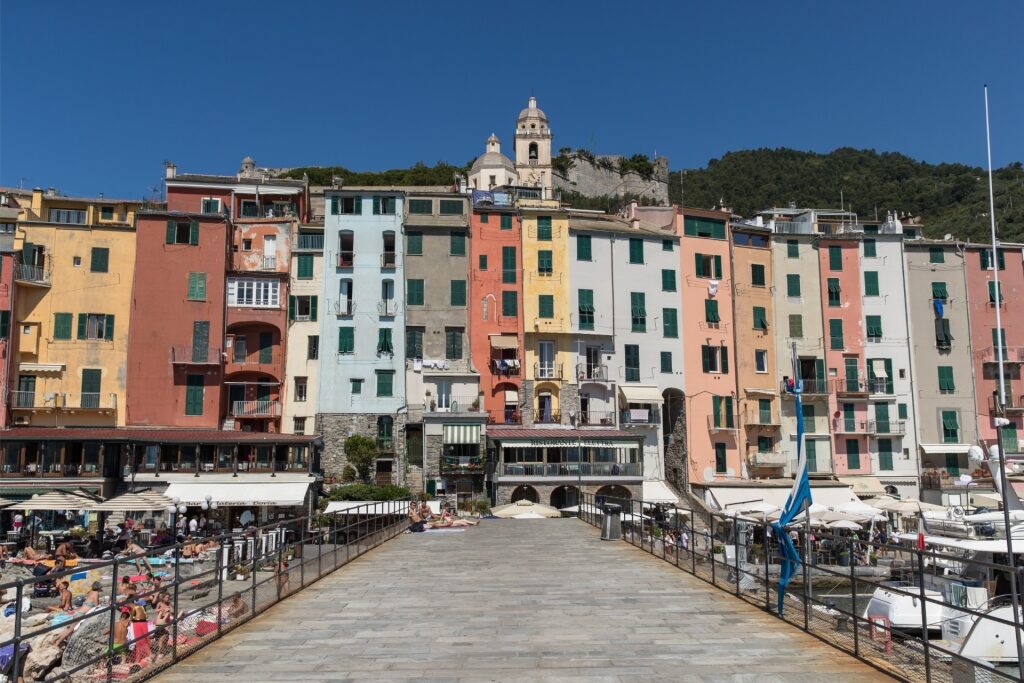
Porto Venere
The label “sixth Cinque Terre” sounds suspicious, as if a mayor of a nearby town might be attempting a rebrand in an effort to redirect some of the tourism riches into the local coffers.
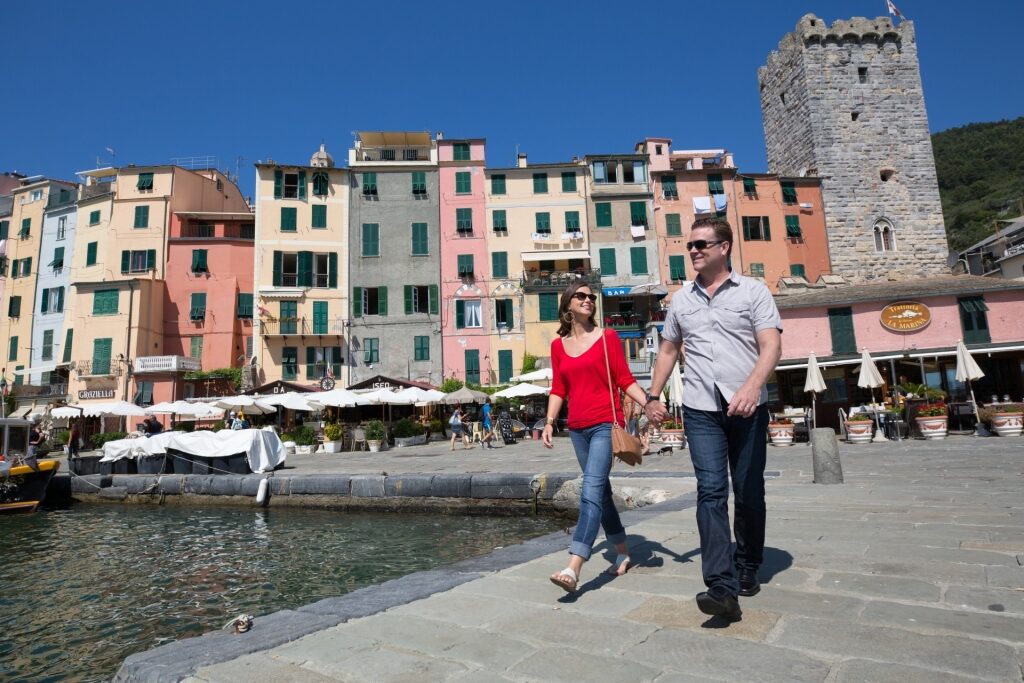
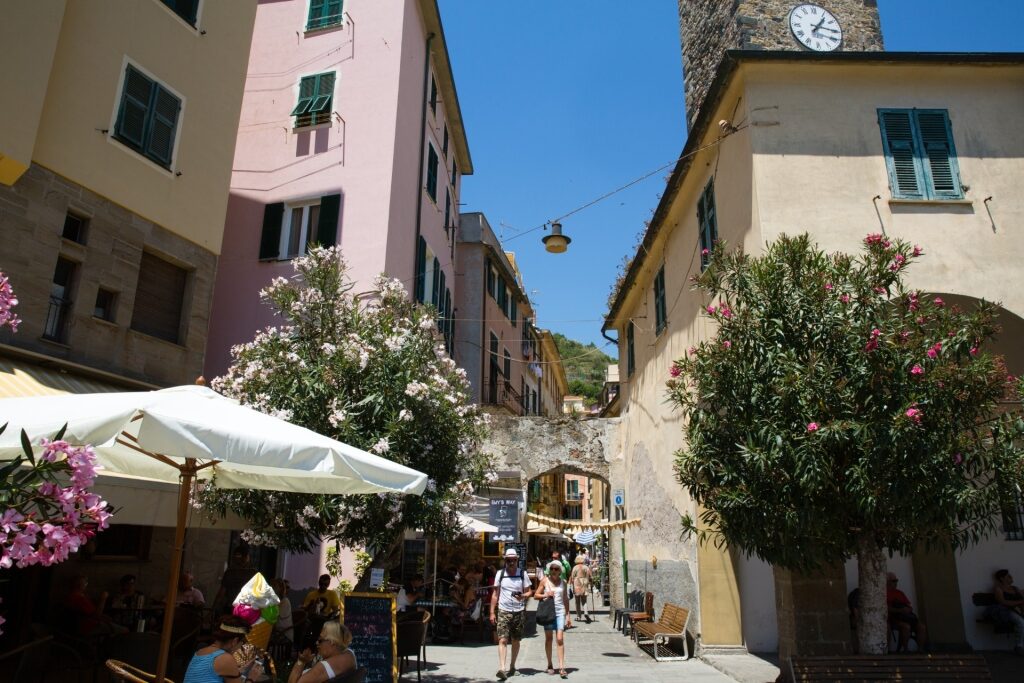
Fortunately, with the town of Porto Venere, the label is justified. Geographically, it sits just south of the Cinque Terre, and exists on the same architectural continuum as those storied fishing villages.
At Porto Venere, the Ligurian Sea laps at a seafront of shoulder-to-shoulder tower houses resplendent in carnivalesque color.
Slightly larger by population than Monterosso (the Cinque Terre’s largest village), Porto Venere offers plenty to do.
Visit the Gothic Church of San Pietro, the austere Doria Castle, or find the sea cave, named for the poet and former resident Lord Byron, who would use it as his access to the water, now part of a protected marine reserve.
Portofino
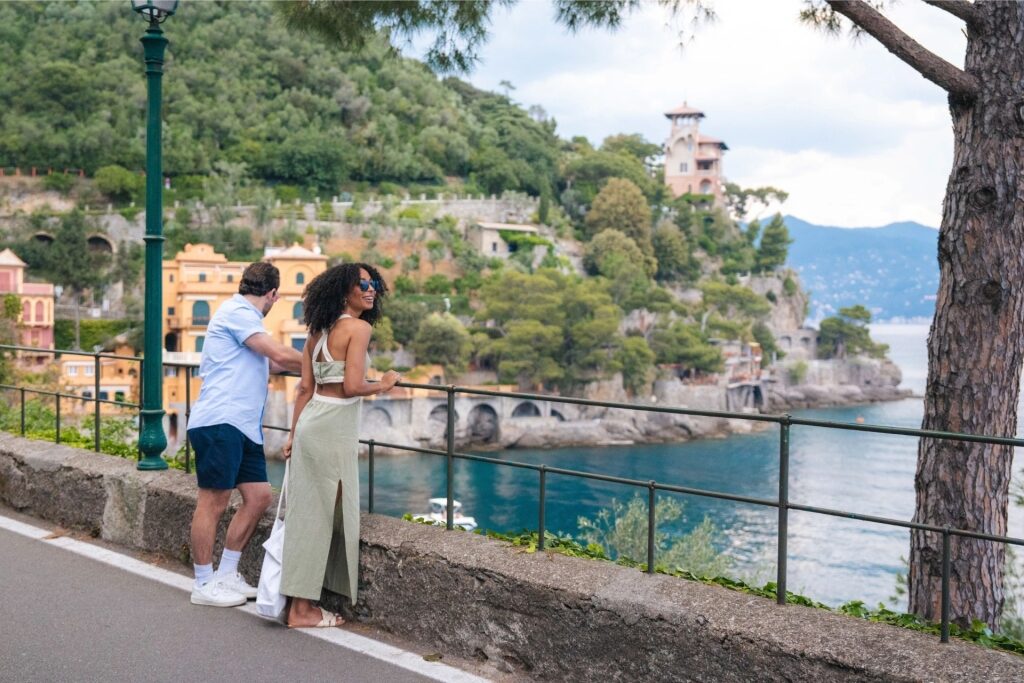
Portofino
A fishing village turned celebrity bolthole, Portofino is the rainbow-hued ideal of the Ligurian fishing village.
Surrounded by crystalline seas and pine-shaded hills, Portofino is one of the most exquisitely wrought small towns in Italy. Its postcard-perfect small harbor, once home only to the bobbing, cheerfully painted gozzi fishing boats, is now a mooring for some of the world’s most expensive yachts.
In the hills behind the town, luxury villas poke their tiled roofs above the surrounding woodland. Poets and prime ministers have regularly holidayed in this slice of Italian Riviera perfection, slightly removed as it is at the end of a peninsula. Its star has not diminished, so visiting in the shoulder season is recommended.
Camogli
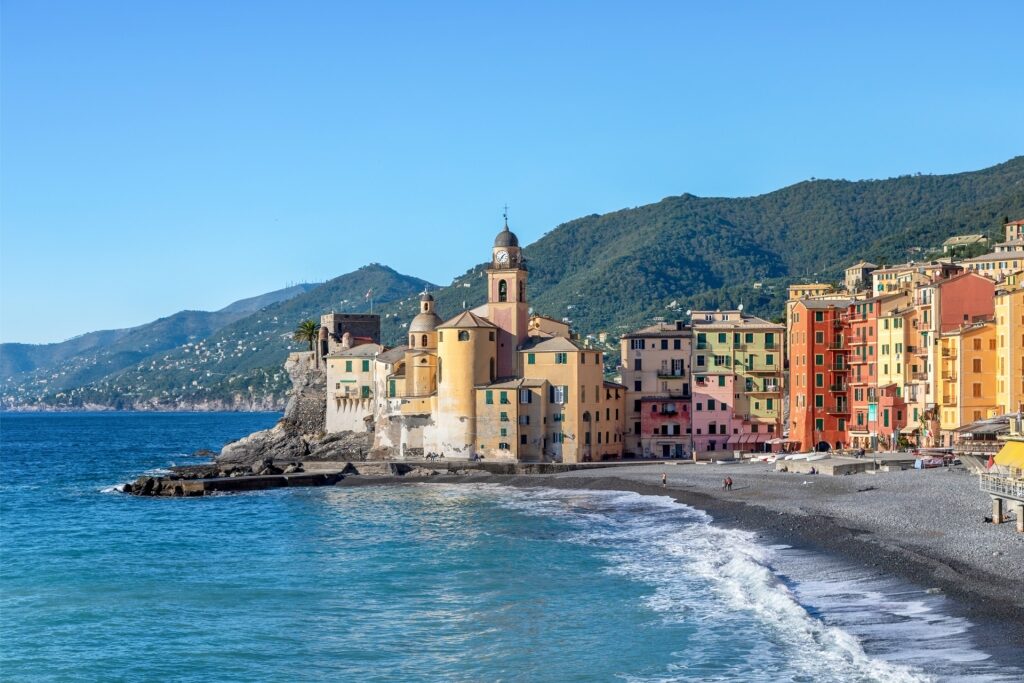
Camogli
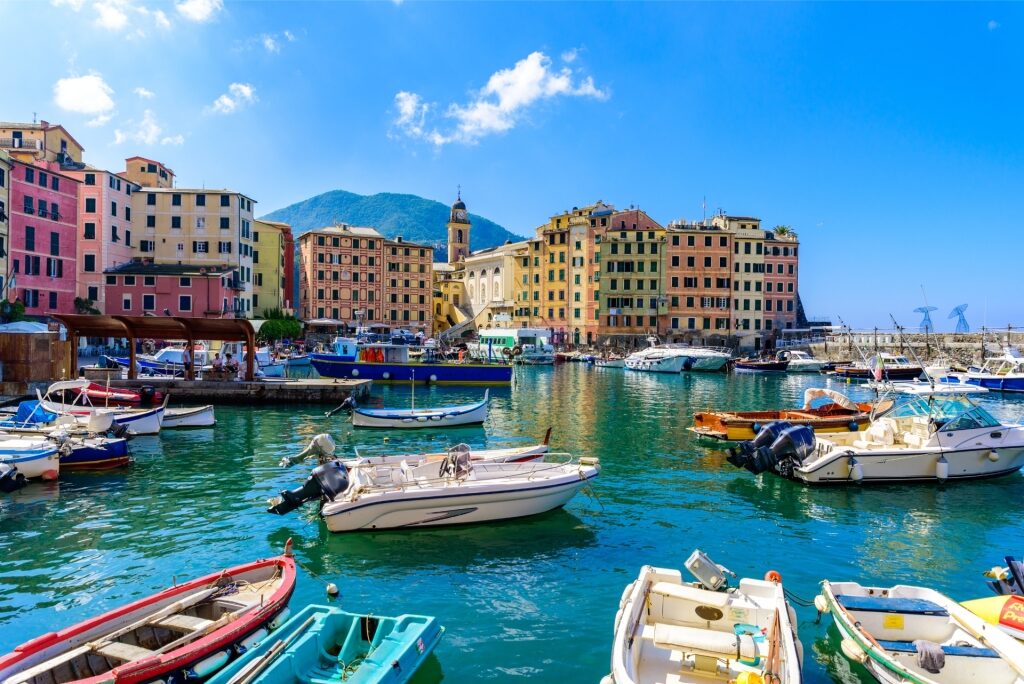
Situated on the same protruding fist of land as Portofino and Santa Margherita, Camogli, something of an all-rounder, is often overshadowed by its big-name neighbors.
It offers a terracotta and ochre-painted old town, a good-sized pebble beach with a piazza-like ambiance, and restaurants with tables outside serving platters of plump shrimp or pansotti ravioli in walnut sauce. La Camogliese, on the seafront, is ever popular.
Camogli also manages to squeeze in a sizeable Baroque basilica, as well as its austere Dragonara Castle, still equipped with 16th-century cannons.
Alassio
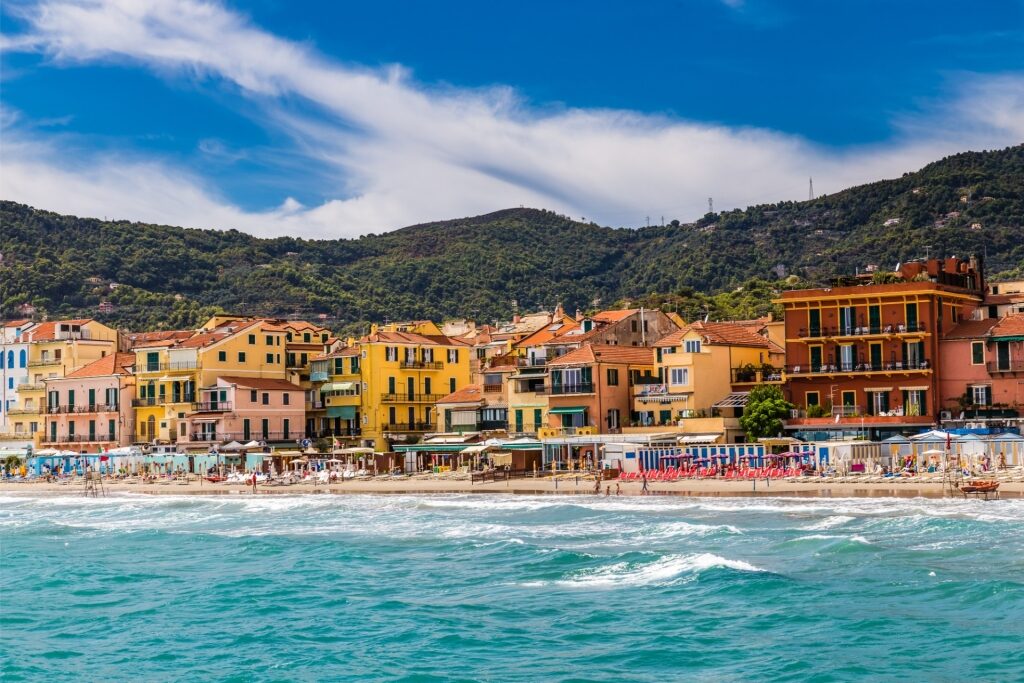
Alassio
One of the Italian Riviera’s best beach towns, Alassio’s broad swathe of butter-yellow sand stands out in a region better known for stony shores.
With its history as a resort stretching back to the early 20th century, its seafront is characterized by grand Belle Époque hotels painted in Ligurian pastels of a sunny hue.
Running just behind that powdery sand, Alassio’s pedestrianized high street is a charming warren of summery boutiques, seafood restaurants, and the occasional pasticceria displaying tempting chocolatey Baci di Alassio (Alassio Kiss) in their window displays.
Sestri Levante
Sestri Levante
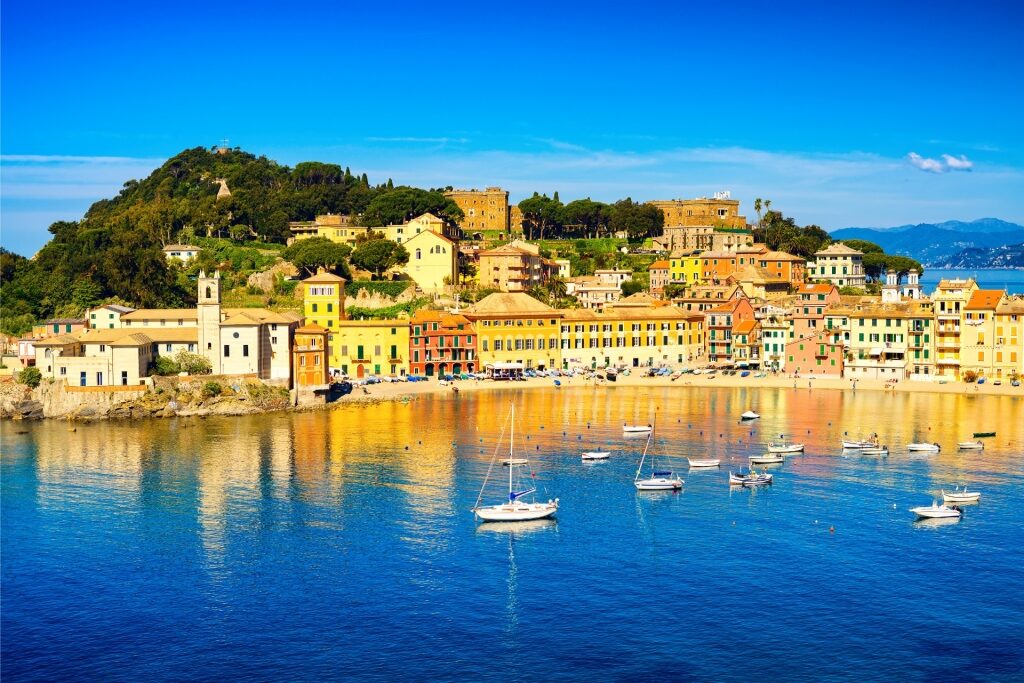
When you hear about a spot where the Italians go, you know you’ve struck gold. Sitting quietly near the big-hitting Cinque Terre and Portofino, Sestri Levante is a stunning town with two knockout Italian beaches.
Called “la città dei due mari” (city of two seas), the Old Town is clustered on the rocky tip of a peninsula. Falling away on either side of this spit of land are two well-groomed beaches, including the unusual beach-club-free Bay of Silence.
If you prefer facilities, cross over to the larger Bay of Fairy Tales, named for Hans Christian Andersen, who wisely took up residence in Sestri Levante in 1833.
The promenade, lined with palms and grand 19th-century buildings, is buzzy in the summertime, with couples eating cones of fritto misto and sipping Aperol Spritz at seafront bars.
Volterra
Volterra
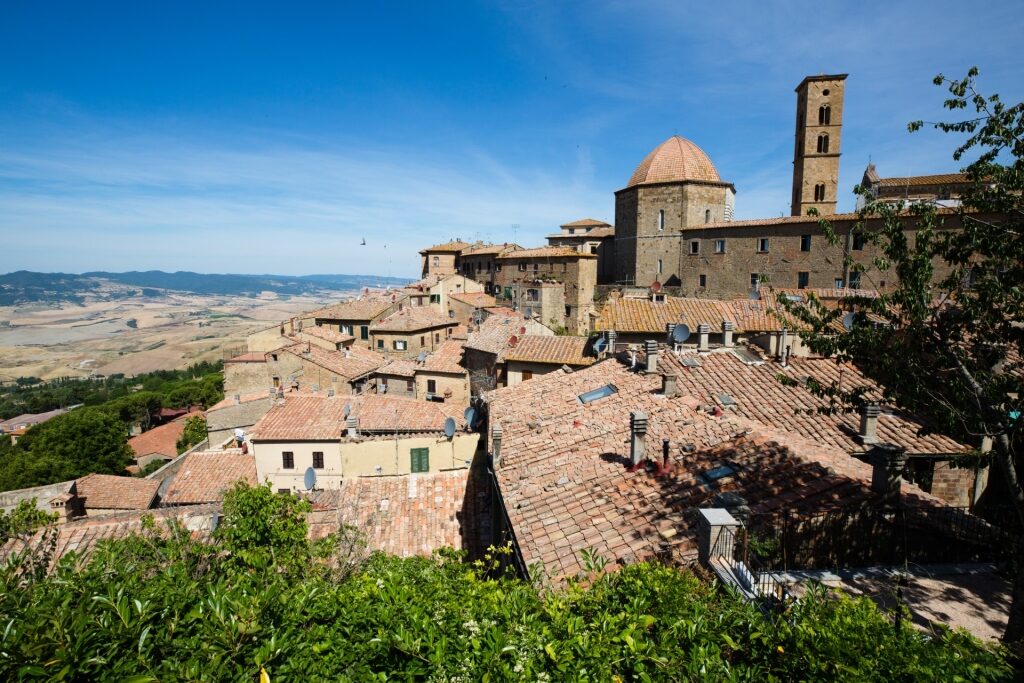
A beautiful example of a sun-kissed, golden-stoned Tuscan town, Volterra’s appeal is amplified by its history.
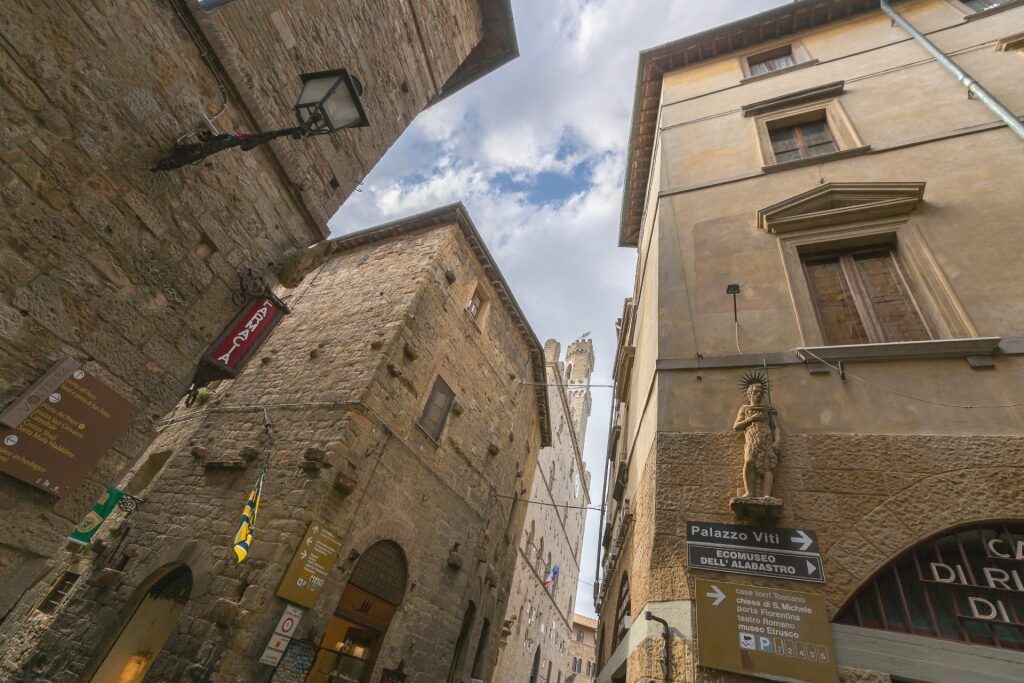
Ringed with double walls—some parts of which date back to the 4th century BC—and positioned on a hilltop in a way that seems to get the best of the sun whatever time of day, Volterra is a wonderful town to explore on foot. There’s a stunning medieval Piazza dei Priori as well, but what makes it really stand out is that it’s a repository of Etruscan history.
Volterra
A center for alabaster since pre-Roman times, you can discover the Etruscan artistic bent in the town’s Guarnacci Museum. Here, you’ll see the decorative objects, often rich with symbolism, that were created from what those Roman precursors called “the stone of the dead.”
Volterra, however, is far from dead. You’ll discover yourself while exploring its streets, stopping into family-run alabaster workshops, or having a delicious lunch of Tuscan cuisine with views at I Ponti Volterra Bistro.
FAQs
What makes Italy’s small towns so special?
Positano
Each of Italy’s small villages and towns offers a unique slice of Italian identity, from the lemon-scented lanes of the Amalfi Coast to the terracotta-tipped towers of Tuscany.
What are the most beautiful small towns in Italy?
San Gimignano
Review this list to discover some of the country’s best. If you’re looking for something by the sea, check out Portofino or Camogli. If you’re traveling in Tuscany, then San Gimignano and Volterra are conveniently close to one another. In Sicily, Taormina is unmissable.
What towns are worth visiting for first-timers?
Porto Venere
Positano, Porto Venere, and San Gimignano all offer rich experiences for first-time visitors to Italy.
What are the best small coastal towns?
Camogli
Camogli, Vietri sul Mare, Porto Venere, and Alassio offer a taste of authentic local flavor, as well as wonderful seafronts.
Which small towns in Italy are UNESCO World Heritage Sites?
Porto Venere
There are too many to name, but among their number are San Gimignano, Porto Venere, and Cefalù.
Porto Venere
Experience all of these beautiful small towns in Italy and more on a cruise to Italy. Browse our cruise itineraries and book an unforgettable vacation.