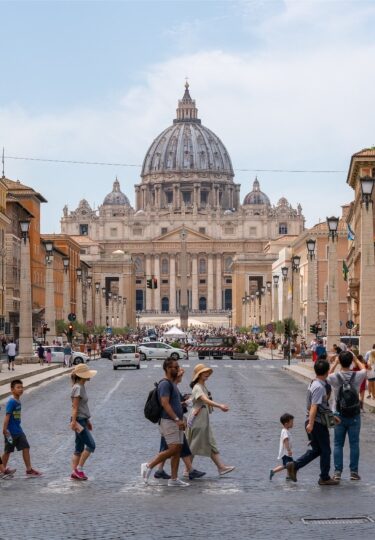
Many of the most famous Rome streets are majestic boulevards that slice through the centuries-old urban weave of the Eternal City. The Italians who created these extraordinary streets would often do so as acts of great symbolism. Via Giulia is a good example, now a sought-after strip of broad-chested palazzi, but originally the first part of a grand four-part plan around the Vatican.
That scheme was never realized, and Via Giulia’s significance and atmosphere developed into something else, more unplanned. This is another element of the draw of many of the most significant streets of Rome—how the city as a whole has, like some kind of natural force, absorbed and overruled the ambition of men to reshape its millennia-old face.
Via Veneto
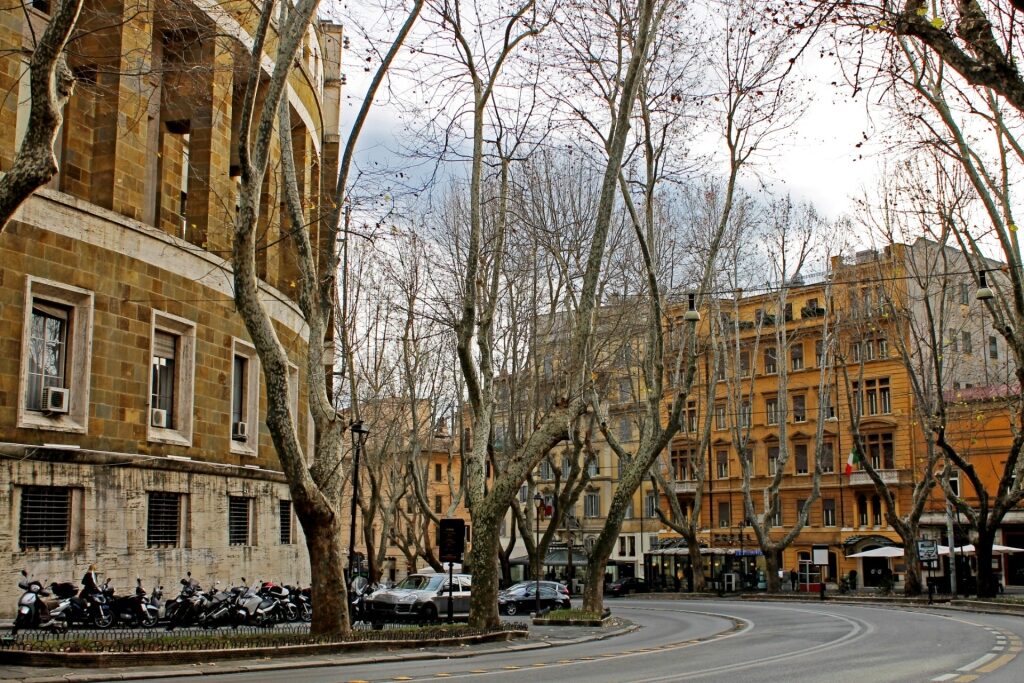
Via Veneto
Via Veneto is the aging glamor-puss of Rome streets. Its heyday was during the Golden Age of Italian cinema, when its graceful curve, shaped by the line of the ancient city walls, was the backdrop to some of Federico Fellini’s finest films in the 1950s and ’60s.
Via Veneto captured that director’s imagination with its strong-jawed good looks—its grand hotels and flag-fronted embassies. There are also café terraces here, the seating boxed in by oblong privet hedges, where Sophia Loren, in immaculate dress, once looked surprised to be photographed sipping an espresso.
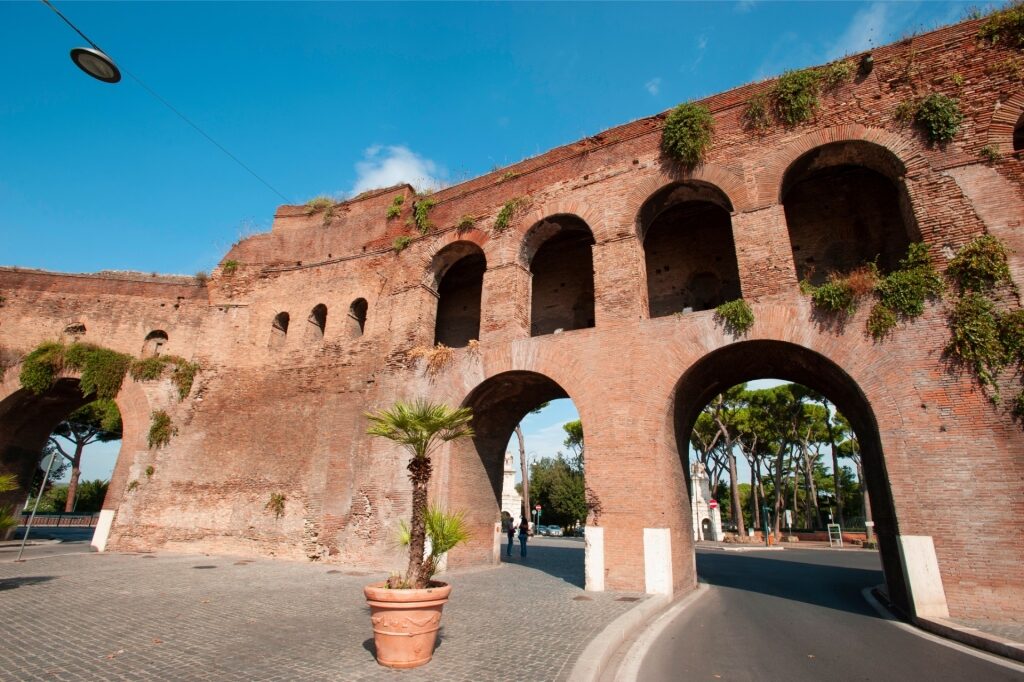
Porta Pinciana
As with everything Rome, the shadow of the ancient empire is never far away. At one end of Via Veneto’s graceful curve is the Porta Pinciana, once part of the Aurelian walls, and more history lies beneath the warm tarmac in the cool of the catacombs.
The Capuchin Crypt is perhaps the most striking catacomb, or bone church, to discover on Via Veneto. Close to the Trevi Fountain, it’s filled with macabre arrangements made from the bones of Capuchin friars. The scale of this work I found to be singularly striking and eerie.
Via Sacra
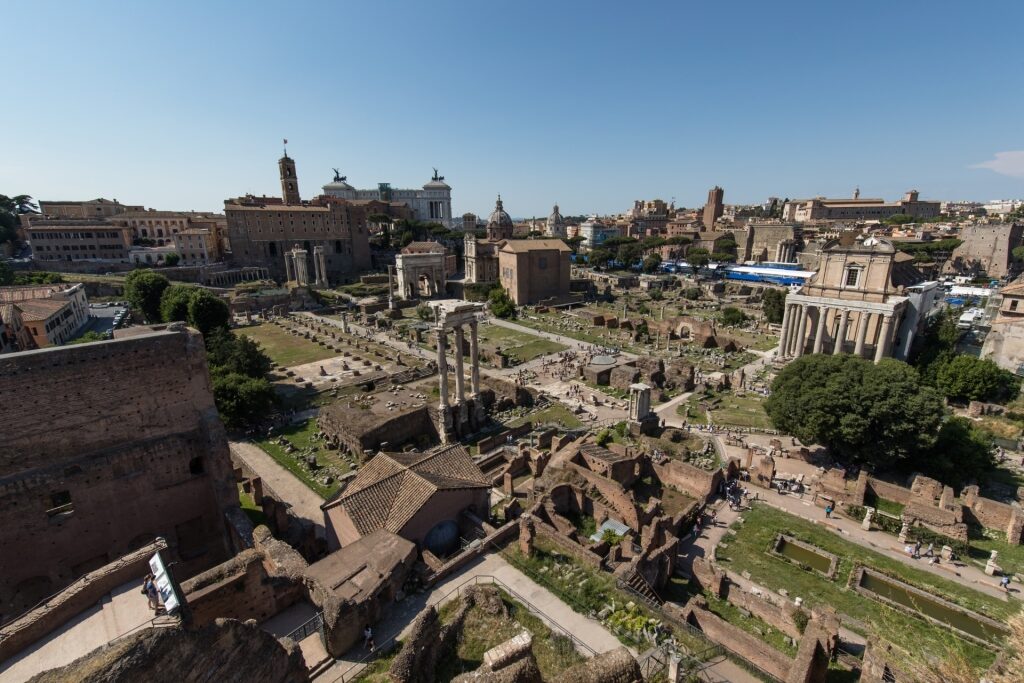
Via Sacra
The simple jigsaw of its dusty paving slabs slipping past the ruined temples of the Roman Forum, the Via Sacra was once Rome’s most significant ceremonial street.
It connected the first-century Arch of Titus to the political power center of the Capitoline Hill. An ancient parade route, the Via Sacra was once lined with cheering citizens welcoming home victorious generals. It also served as the route through which the bodies of deceased emperors would be carried to be placed before funeral orations at the Forum.
Via del Portico d’Ottavia
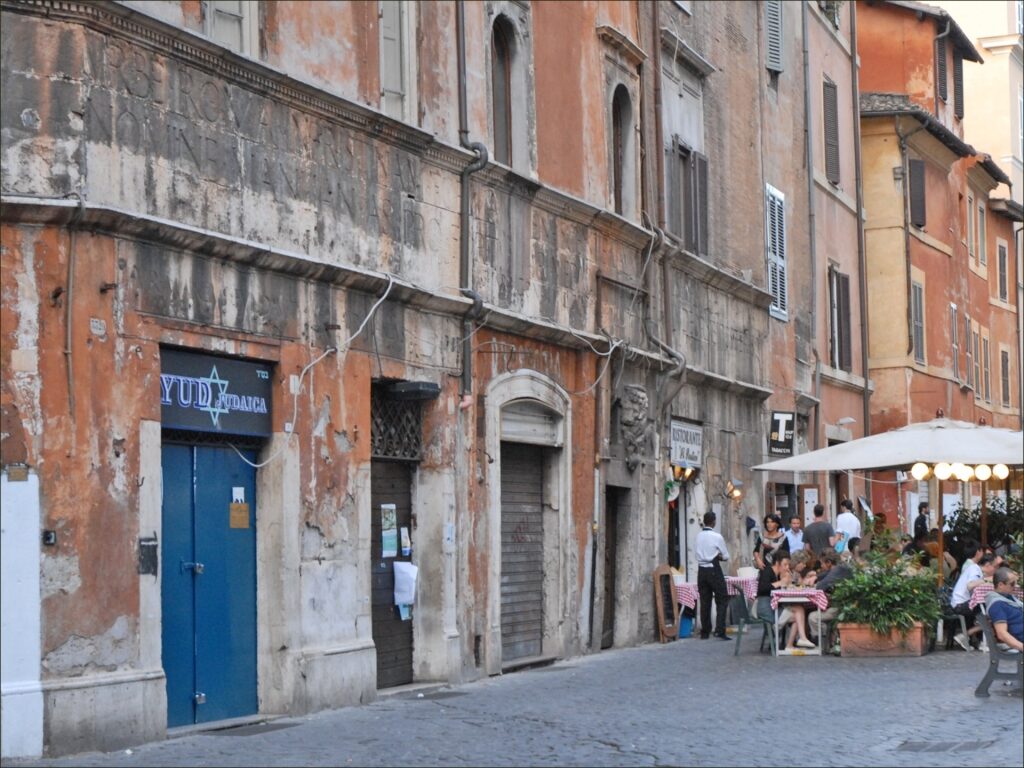
Via del Portico d’Ottavia Photo by Jean-Pierre Dalbéra on Wikimedia Commons, licensed under CC BY 2.0
Located in the atmospheric riddle of lanes that comprise the Jewish Ghetto in central Sant’Angelo, Via del Portico d’Ottavia is a destination for those keen to try iconic Roman dishes.
The most emblematic dish of the area might well be carciofi alla giudia—deep-fried artichokes that are a keystone of Roman Jewish cooking, featuring one of the city’s most beloved vegetables. In artichoke season, the faint fried sweetness of its preparation laces the air along this buzzy street lined with family-run restaurants, a pasticceria, and gift shops.
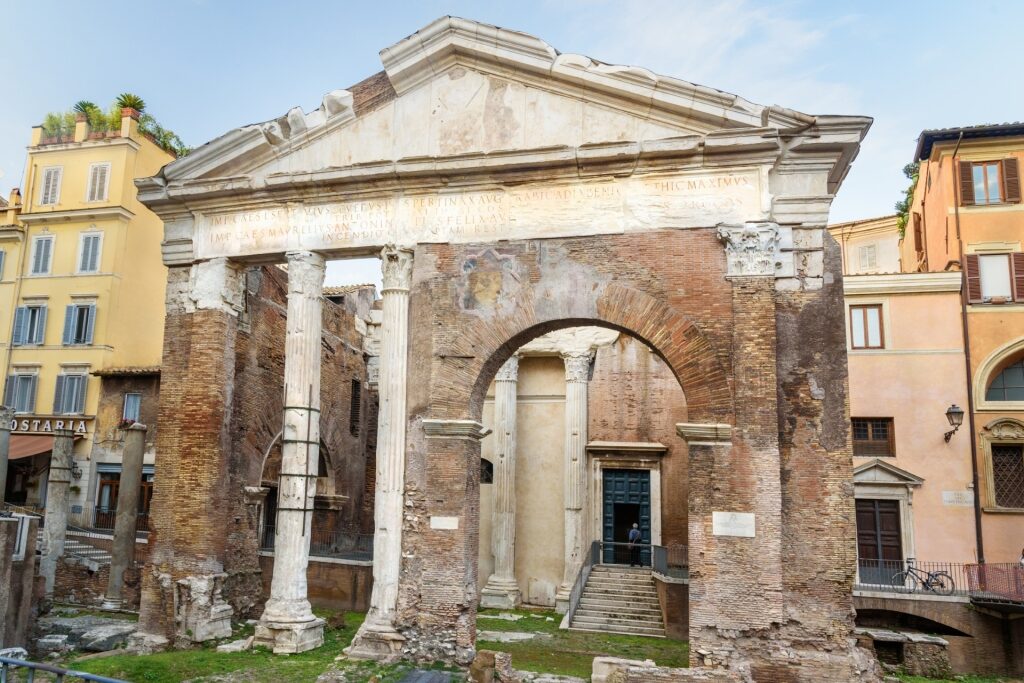
Portico d’Ottavia
The history behind the street’s name is tangible in the ruined portico, named for Augustus’s sister, which you can still find here, enclosed behind some iron fencing. Also close by is the Teatro Marcello, a cousin of the Colosseum with a much less gruesome history.
Via del Corso
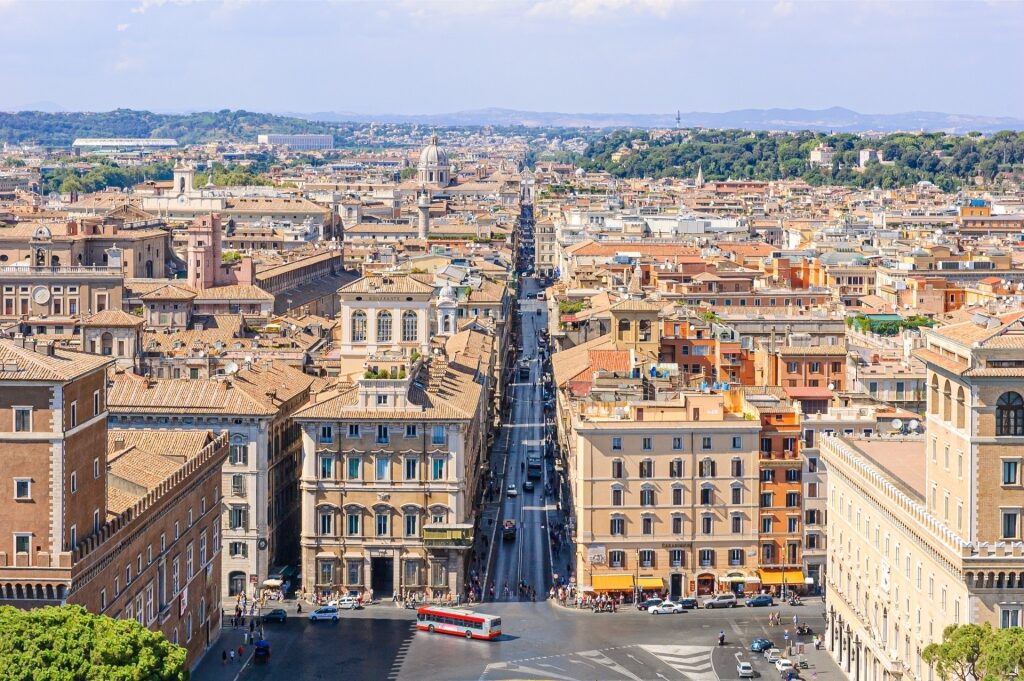
Via del Corso
The longest shopping street in Rome, Via del Corso, used to be a place to race horses. Its straightness is also a legacy of when it was part of Via Flaminia, an ancient cross-country highway that was used to reach the Adriatic.
Today, its mile-long length is dedicated to retail therapy. You’ll find everything from wearable tech to stylish accessories, with plenty of main street giants represented here, such as Zara and H&M, as well as Italian brands like Calzedonia.
Take a break from window shopping with a detour to a small museum just off Via del Corso. The Casa di Goethe is set in the building that used to be where Goethe, the German politician and writer, stayed while living in Rome.
The exhibition explores Goethe’s experiences in Italy, how he became a committed Italophile, and subsequently, a kind of proto-influencer for the Bel Paese.
Via Condotti
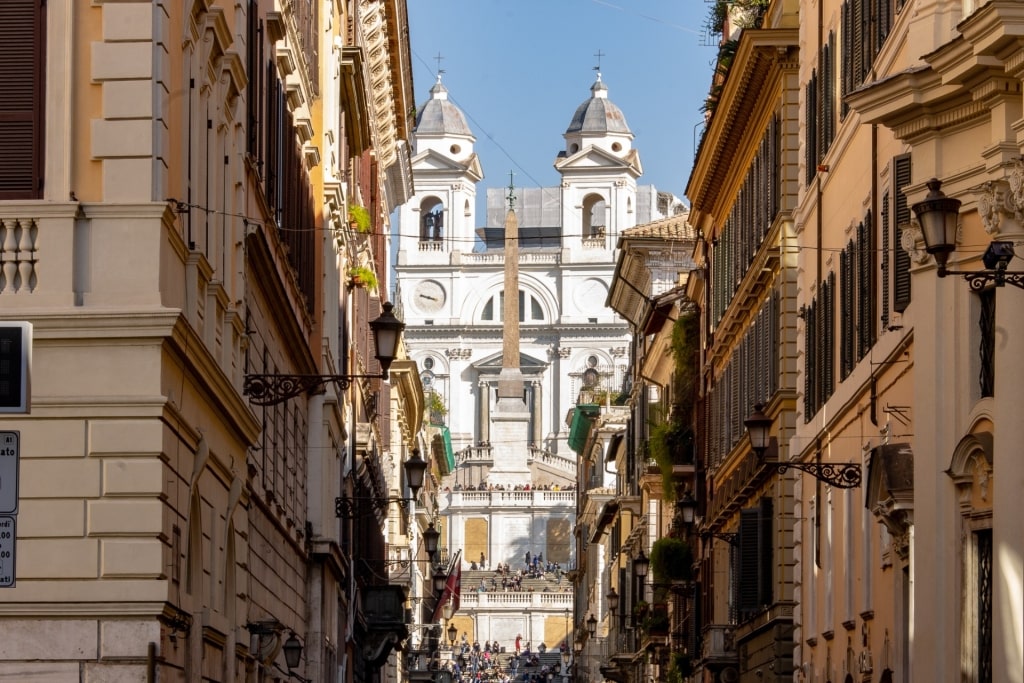
Via Condotti
Of all Rome streets, Via Condotti is the one that most encourages one to break into a catwalk strut. Leading off from the glamorous Spanish Steps, Via Condotti is lined with luxury boutiques of the Prada and Louis Vuitton stripe and is one of Italy’s main haute couture arteries.
Before the arrival of the alligator skin handbags, Via Condotti was so named due to its association with the ancient channels, or condotti, that once supplied the Baths of Agrippa with its water.
Not quite as ancient, but just as important, is Caffè Greco—Rome’s oldest café, located on Via Condotti. Popular with poets and writers, the café once almost had to close following a sixfold rent hike before the Ministry of Culture stepped in to save this piece of the city’s history.
Via Appia Antica
Via Appia Antica
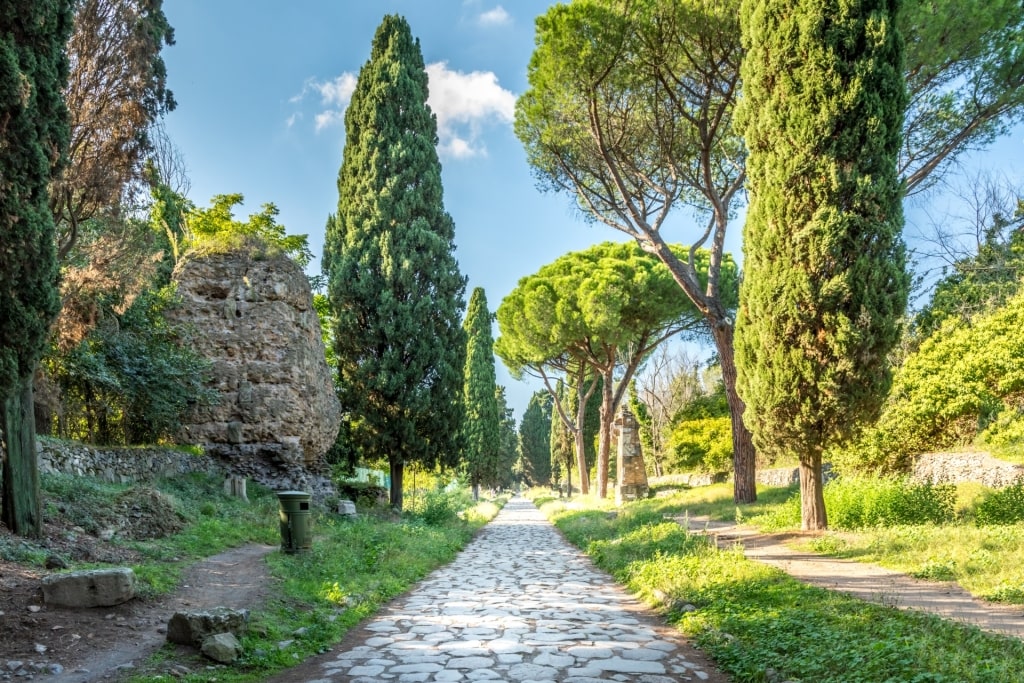
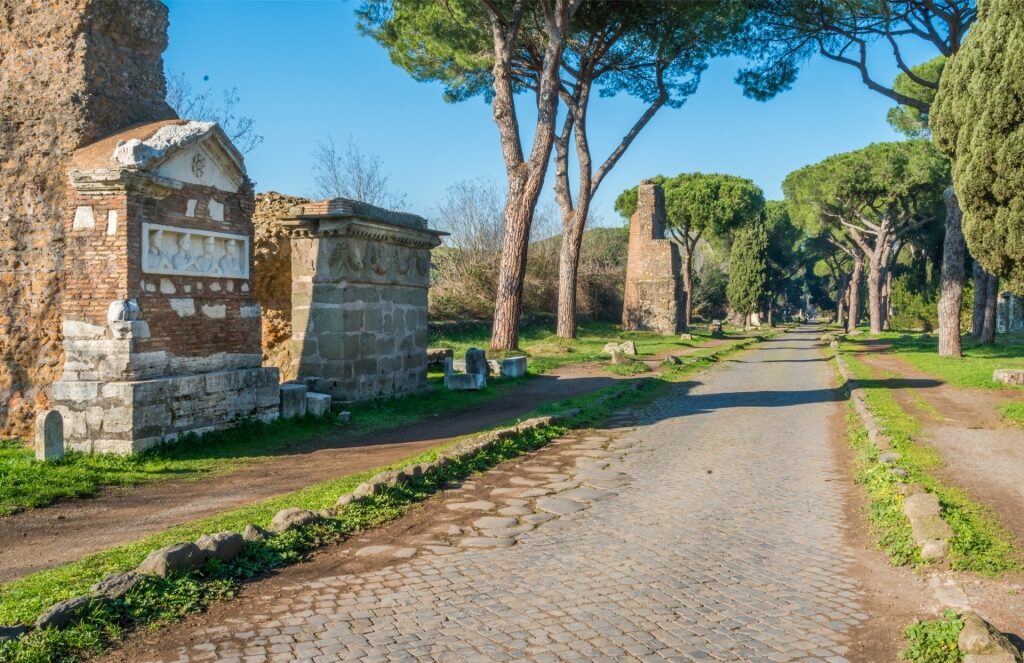
Perhaps the grandest of Rome streets, Via Appia Antica is also one of the oldest, dating back to 312 BC. Its basalt paving slabs took the legions, pilgrims, and traders from Rome to the port of Brindisi in southern Puglia, around 335 miles in total.
Italy’s 60th UNESCO site, Via Appia Antica, or “The Appian Way” as the name translates in English, makes for an atmospheric break from the frenzy of inner Rome. Explore it in a car, by bike, or on foot, and you’ll pass beneath the shade of the umbrella pines that line the route, with ruins behind them just off the road.
Via Appia Antica
The so-called “Queen of Roads” also has its own visitor center that you can find close to the Villa Geta. The city is plowing more money into enhancing the visitor experience along this fascinating route.
Via dei Fori Imperiali
Via dei Fori Imperiali
An epic boulevard that slices through the city’s ancient core, Via dei Fori Imperiali was created by the dictator Mussolini in the 1930s. Naturally, with the city being somewhat established at this time, the project involved the leveling of entire Roman neighborhoods for what many consider a dictator’s “vanity project.”
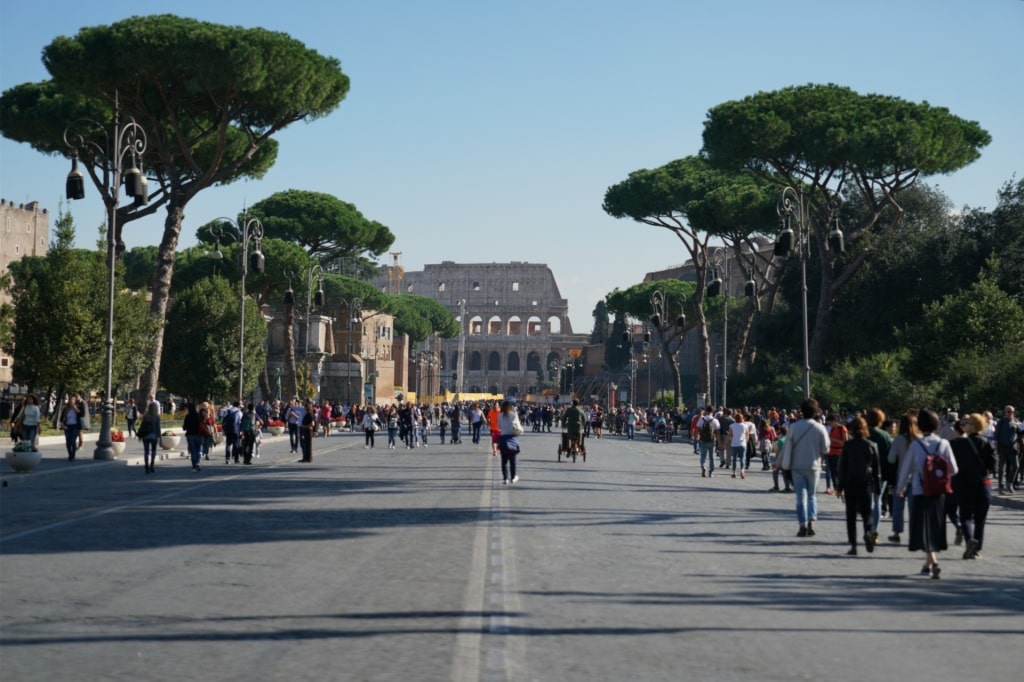
As Rome streets go, it is unquestionably a big hitter, from a cultural perspective as well as in sheer acreage. Connecting Piazza Venezia with the Colosseum, it’s bordered by the Roman Empire’s former administrative and commercial centers and is lined with historic sites.
Via dei Fori Imperiali is best visited on a Sunday when its cobblestones are pedestrianized and the mass of scooters and Fiat 500s have to reroute for the day. It makes for a lovely passeggiata in the warmth of the evening, the leaning trunks of the pines contrasting nicely with the upright Corinthian columns.
Via Giulia
Via Giulia
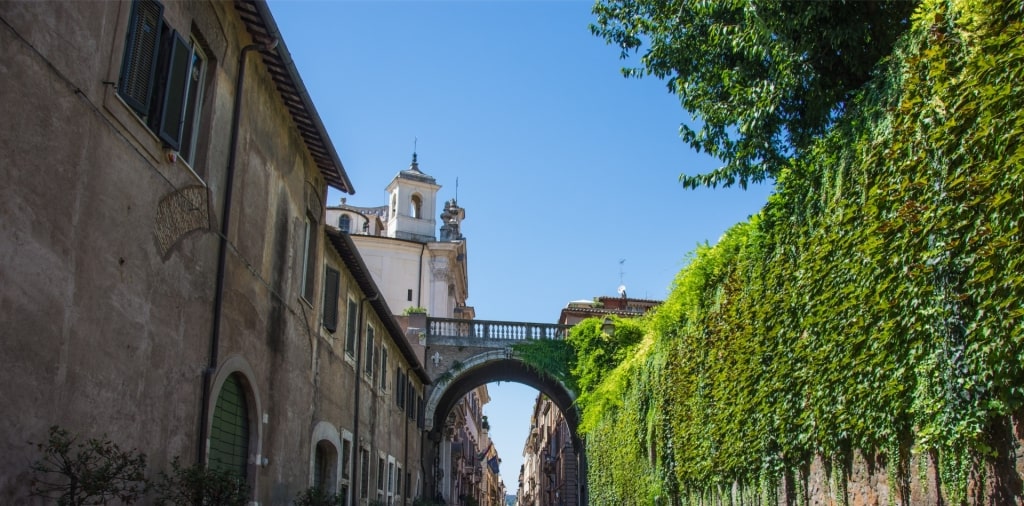
Among the most elegant of Rome streets, Via Giulia strolls parallel with the broad waters of the Tiber in the artistic quarter of the Regola, also home to the Renaissance palace, Palazzo Farnese. Among its roughly half-mile length of impressive ivy-attired palazzi and baroque churches, Via Giulia is also close to some excellent antique shops.
Created in the early 1500s as one of the city’s first “Renaissance” streets, its original purpose was as a conduit for papal aggrandizement; the street is named for Pope Julius II, who commissioned its construction. However, the original plan, to create a square of such glorious roads, didn’t pan out due to a variety of issues, including the Pope’s death.
Via Giulia instead drew artists and powerful Italian families, including the Medicis. The Florentines used to have a palazzo here, next to the large white Church of Santa Caterina at the street’s conclusion. Another Roman landmark here is the Arco Farnese—this arch, designed by Michelangelo, was yet another grand, yet doomed, scheme witnessed on the Via Giulia.
Via del Babuino
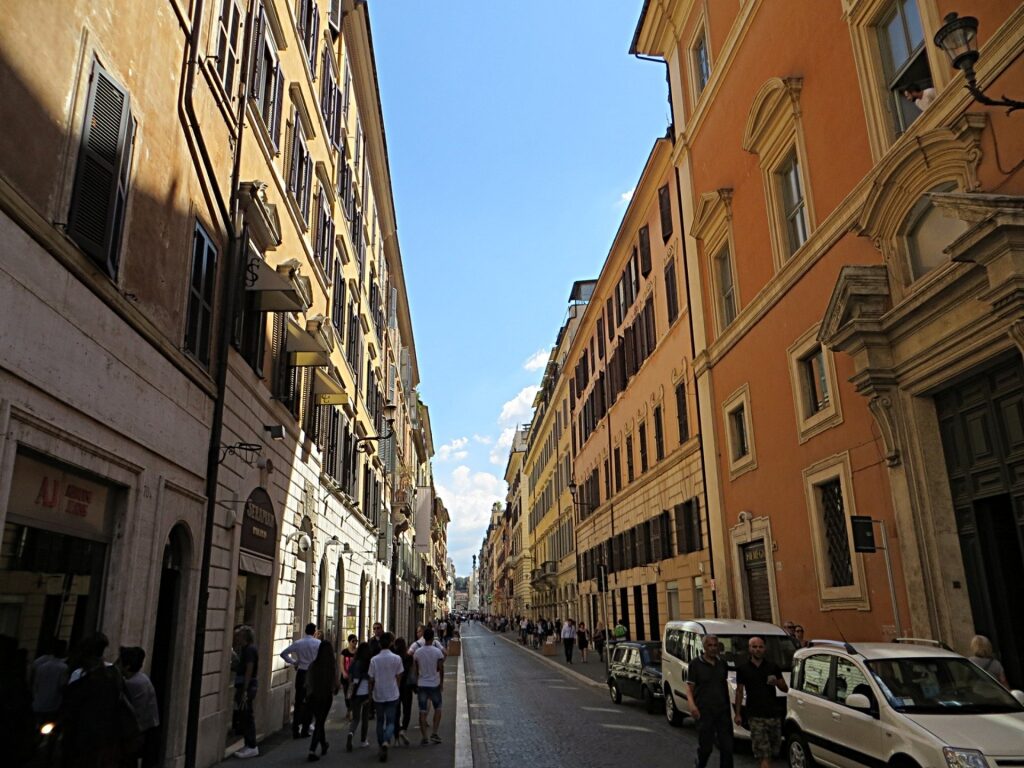
Via del Babuino Photo by Mister No on Wikimedia Commons, licensed under CC BY 3.0
Named for the lounging Silenus statue that’s found here, Via del Babuino is actually part of the trio of high-end shopping streets in Rome known as the “Tridente.” The trident shape is formed from the way Via del Corso, Via di Ripetta, and Via del Babuino radiate out from Piazza del Popolo.
Before the baboon moniker—whether the statue resembles a baboon or not is up to you—the street was known as Via Clementina in honor of Pope Clement VII, who conceived it as part of a grand entrance to the city.
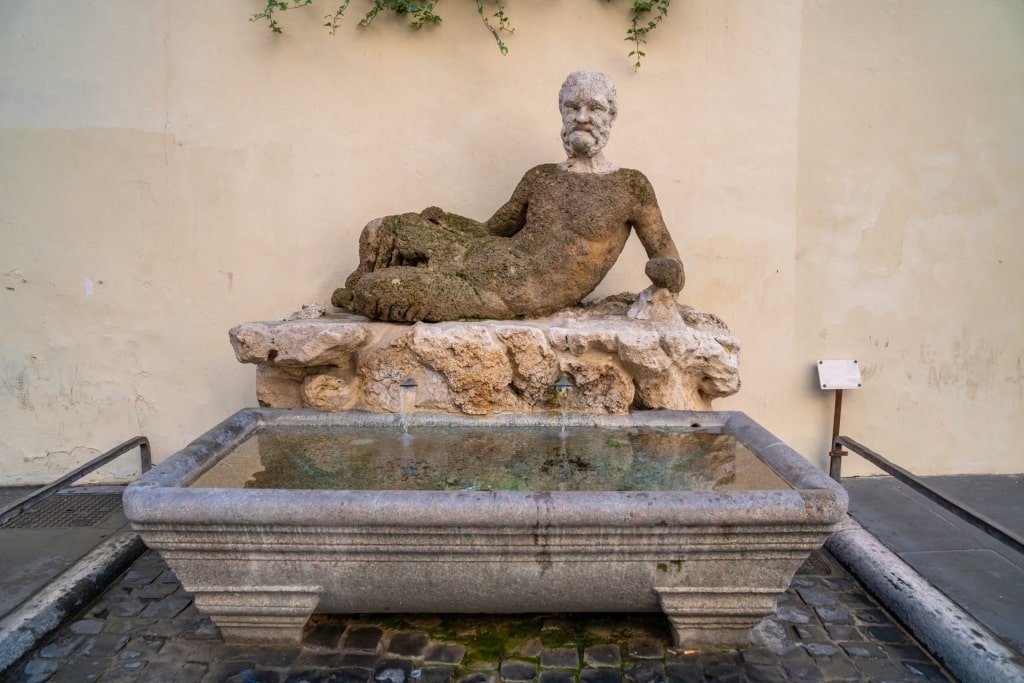
Silenus Statue
The weathered statue—the ornamental element of a fountain that dates back to 1576—is also part of an interesting Renaissance-era tradition known as the “Congrega degli Arguti” or Congregation of Wits. People would leave anonymous notes beside six statues in the city, the messages often critical of those in the upper echelons of society.
Via Margutta
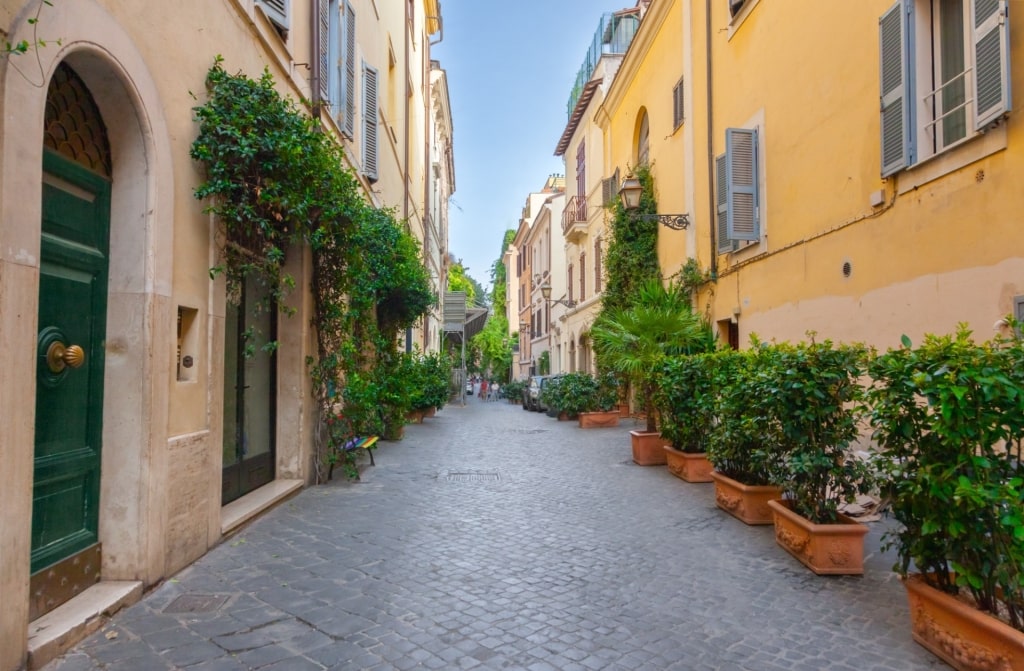
Via Margutta
Once a drainage lane for nearby villas, Via Margutta has shaken off its humble origins to become one of the streets in Rome that visitors really want to experience.
This is primarily due to its Hollywood connections, when it was featured in the hit film Roman Holiday. Federico Fellini liked it so much that he lived here for decades, at number 110, while Pablo Picasso had his own Margutta period while dwelling in number 54.
Artists have been drawn to Via Margutta, located in the central Campo Marzio rione, since the Renaissance era. Then, it was a hive of painters and craftsmen, a legacy that’s continued in the galleries that dot the street amid the stylish homes and upscale eateries.
Via Nazionale
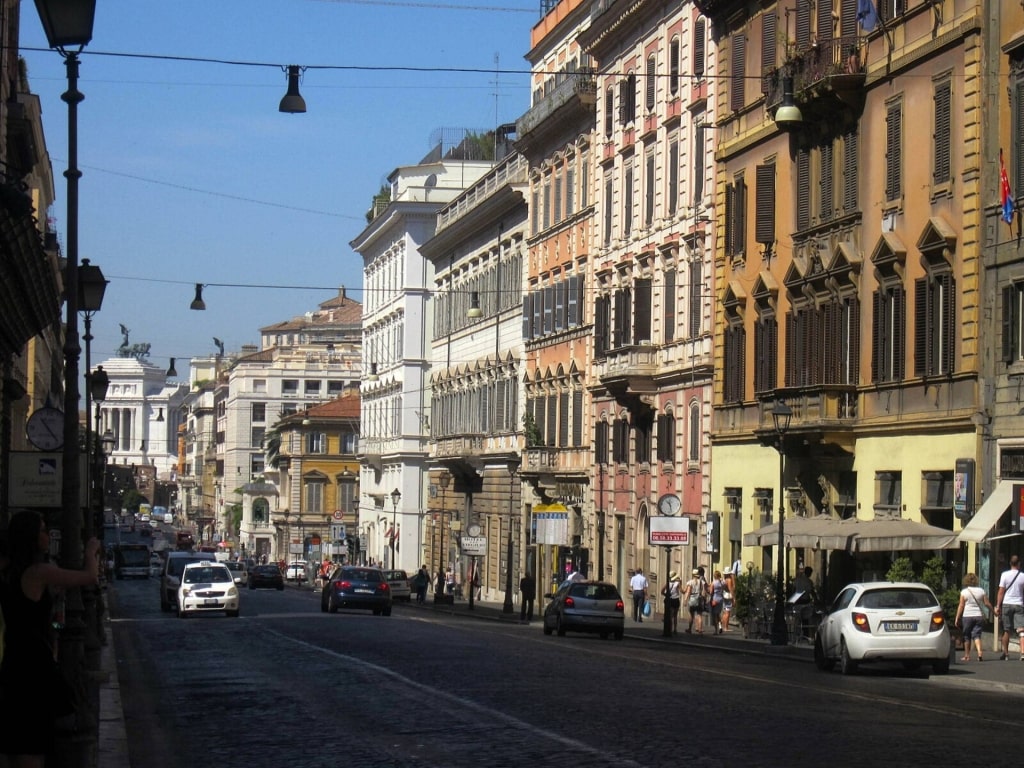
Via Nazionale Photo by Luca Aless on Wikimedia Commons, licensed under CC BY-SA 3.0
Linking the ancient rioni of Monti and Trevi, Via Nazionale is an elegant boulevard that, as the name suggests, was intended as a grand statement regarding Italy’s unification. More prosaically, it was also created to connect the Termini train station to the main government area of the capital.
Its broad length can be a welcome change after the tight-knit weave of the centro storico. Its arrow-straight progress is partly because it follows the path of an old Roman road, the Vicus Longus. Lined with Belle Époque-era buildings, Via Nazionale is dotted with pastel-painted hotels and runs through a clutch of major theaters.
Perhaps the most eye-catching building is the immense neoclassical Palazzo delle Esposizioni, one of the city’s top spots to catch major art exhibitions.
Via della Conciliazione
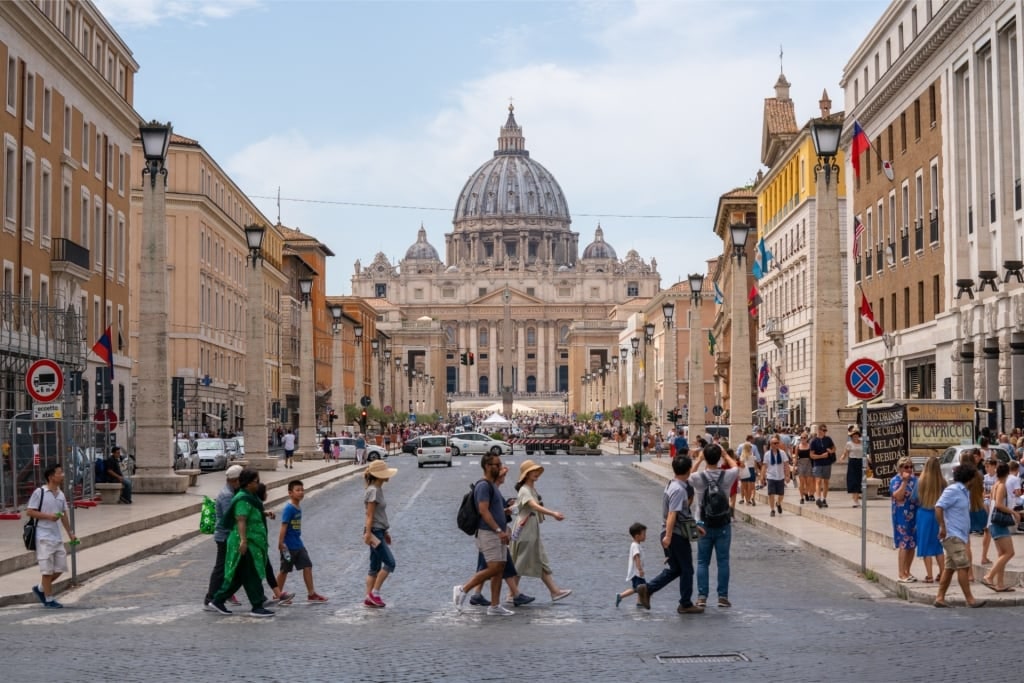
Via della Conciliazione
One of those Rome streets that’s rich with symbolism, Via della Conciliazione was paved in the 1930s to celebrate the reconciliation between the Italian state and the Vatican. The falling out was the result of Italy’s reunification in 1870, and ended with the Vatican being recognized as an independent state, which it continues to be.
For some, Via della Conciliazione, another of Mussolini’s grand schemes, ruined the age-old approach to the Vatican. While it’s easy to catch sight of the shining Catholic citadel from a distance as you approach today, in medieval times, pilgrims would have had to wind their way through a maze of tight lanes before suddenly emerging to a grand and inspiring reveal.
Read: Tips for Visiting Rome
Via Cavour
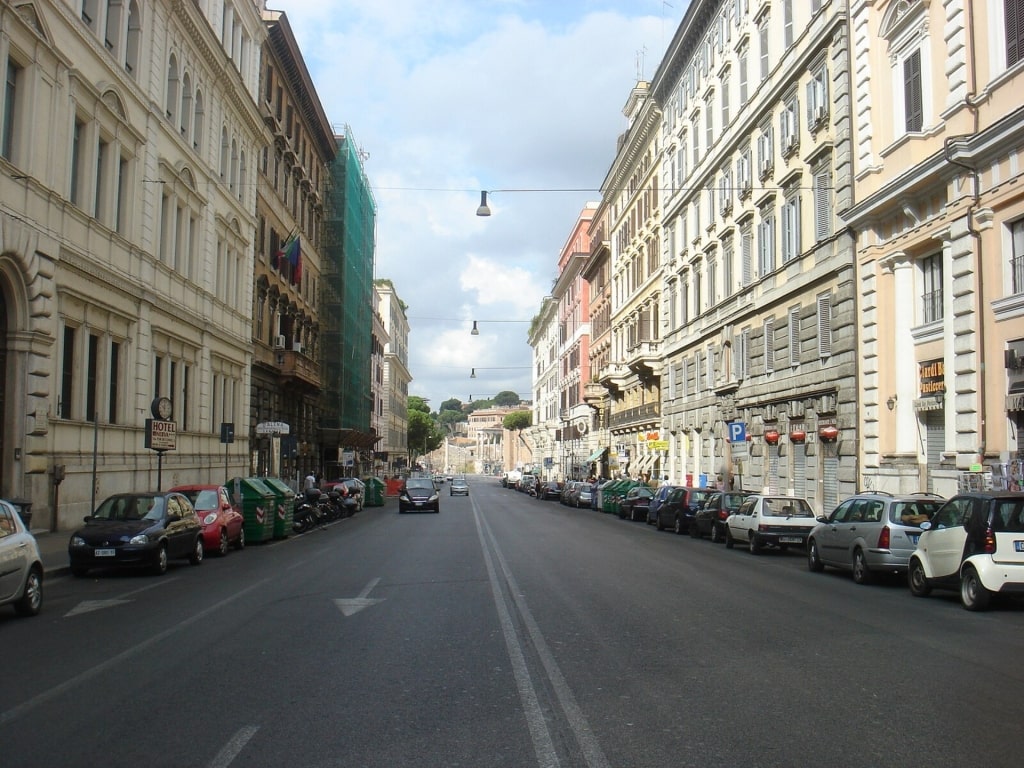
Via Cavour Photo by Lalupa on Wikimedia Commons, licensed under CC BY-SA 3.0
Via Cavour is an ever-crowded commercial artery that’s perhaps best known for what lies behind it than for the street itself.
It’s named for the Count of Cavour, who was the first Prime Minister of Italy following the reunification. Unfortunately, he only filled the post for three months before his death. But away from its hotels, shops, and the sun-bleached awnings of the trattorias, you’ll find its true treasures.
Via Cavour’s lanes lead off into the arty, bohemian district of Monti. There’s also a metro station nearby that’s colloquially known as “the gateway to pasta,” as the lanes in this area are filled with storied pasta shops.
Rome
Explore the magical streets of Rome and experience the Eternal City’s matchless historical and cultural heritage, not to mention its aperitivi. Browse Celebrity’s cruises to Rome and book a vacation to this stunning country today.