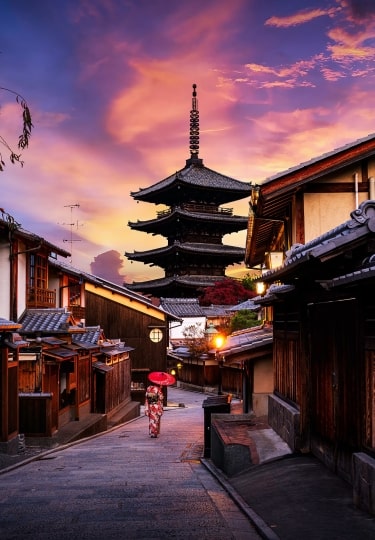
When the sun goes down, that usually means closed shops, only a few restaurants staying open late, and limited excursions. Kyoto tells a different story—one where consumerism isn’t the whole point; its natural landscape is.
By day, its moss-blanketed gardens and temples make it one of the most peaceful places, but after dark, the magic happens. Its quiet streets glow with red and white lanterns lined along the narrow stone lanes of Pontocho Alley and the Gion District. Visitors sit along the Kamogawa, or Kamo River, relaxing where serenity lingers.
Kyoto is an illuminated fantasy every night—and a Celebrity Cruises® overnight port stay means it’s one guests can actually experience.
Follow the Lantern-Lit Roads: Gion, Pontocho, and the Kamo River
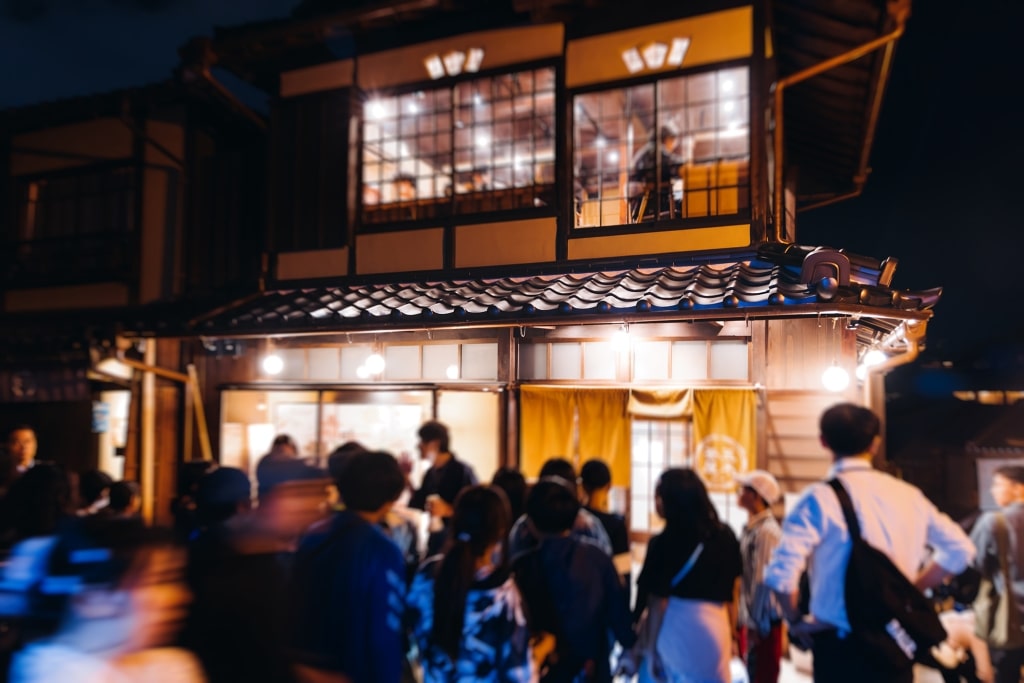
Nighttime street scene in Kyoto, Japan, with people gathered outside a warmly lit traditional wooden building.
Kyoto reveals its intentionality in the details, and nowhere more so than in the Gion District, Pontocho Alley, and the Kamo River. A port day in Kyoto is enough to soak in each area’s beauty, but during an overnight stay, its spiritual and cultural roots come through in the lantern-lit roads that guide guests after dark.
While many think lanterns are decorations, to the Japanese, they are so much more than that. Red paper lanterns, or chōchin, illuminate the way forward, believed to ward off evil spirits and invite good fortune. White lanterns, however, symbolize purity and the divine. You’ll see both throughout Gion, the Pontocho Alley, and along the Kamo River.
The Gion District
The Gion District carries its centuries-old history through traditional wooden machiya houses and winding stone passageways. There are views of Yasaka Shrine to the east and the Kamo River to the west.
Restaurants—some disguised as merchant homes—line Hanami-koji Street from Shijo Avenue, one of the neighborhood’s most popular stretches. Teahouses, or ochaya, share the road, where guests may spot maiko and geiko—the Kyoto dialect for geisha and their apprentices, respectively.
Tip for traveling to Japan: Photography is still allowed on Hanami-koji itself, but private side lanes are off-limits, with posted penalties of up to ¥10,000 for entering or taking photos there. Admire from a distance and respect their space.
Pontocho Alley
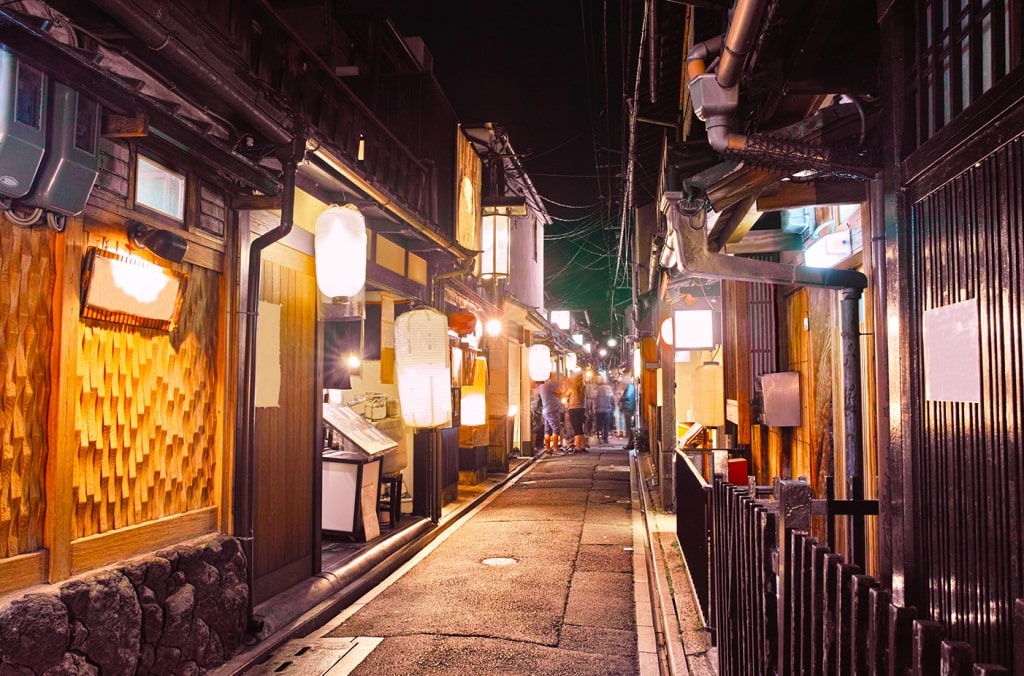
Lanterns illuminate a narrow, atmospheric alleyway of traditional wooden restaurants and teahouses in Pontocho Alley at night.
Picture lantern-lit lanes, restaurants, and casual sake shops, or izakaya—that’s Pontocho Alley. It’s a narrow pedestrian street packed with everything from budget-friendly counters to high-end establishments and invitation-only teahouses.
Between May and September, some eateries build platforms called kawayuka over the Kamo River for open-air dining. Reservations are recommended in season, especially on weekends.
Unlike Gion’s quieter, tradition-focused streets, Pontocho buzzes with nighttime energy built for visitors.
Kamo River
The Kamo River runs directly through downtown Kyoto. After dark, it’s where guests come to sit along the banks, stroll the walking paths, and watch the city’s lit-up buildings reflect on the black-glass surface.
The river hasn’t always been a place to gather. During the Heian period (794–1185), it flowed east toward Toribeno, one of Kyoto’s cremation grounds, while its west side remained the mortal city. Crossing the water carried real weight: Leaving the world of the living behind, if only for a moment. Shinto shrines were later built along its banks—Kamigamo and Shimogamo, both UNESCO World Heritage sites—in part to protect the area from misfortune.
What was once a boundary between two worlds is now the city’s favorite escape from one.
Meditative Magic: Yasaka, Fushimi Inari, and Beyond
Some of the best places to visit in Japan for first-timers are its temples and shrines. Those that are open 24 hours include the Yasaka Shrine and the Fushimi Inari Taisha—suitable for overnight port stays. Some, like Kiyomizu-dera Temple, have special seasonal night openings, while others, like the Shinto shrines along the Kamo River, can only be viewed from outside.
Yasaka Shrine
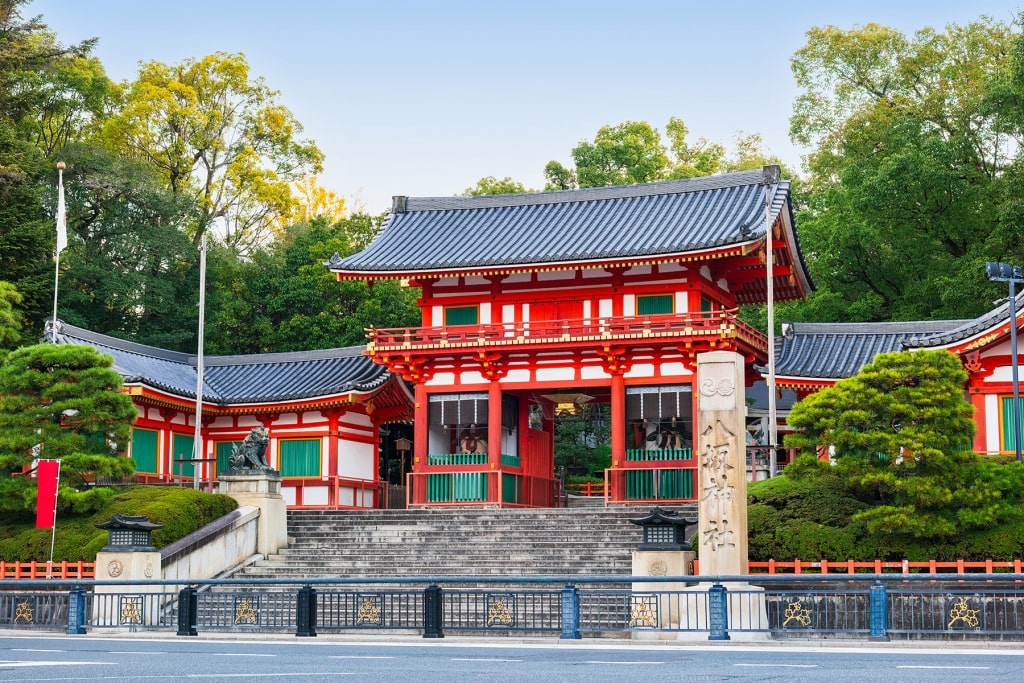
The iconic Nishi-ro-mon (West Gate) entrance and stone pillar of Yasaka Shrine at the eastern end of Shijo Avenue in the Gion district.
Yasaka Shrine is a Shinto place of worship located in the Gion District. It is separated into two parts: The main hall and the dance stage, where hundreds of white paper lanterns light up above the platform. The lanterns bear the names of local businesses that made donations.
Seasonally, Yasaka Shrine is home to one of the most famous summer festivals in the country, Gion Matsuri. It’s near one of the most famous sights to spot cherry blossoms in town, Maruyama Park, so it also gets quite popular between March and April.
Fushimi Inari Taisha
The Fushimi Inari Taisha is named after a Shinto deity of rice. Behind the main shrine is a tunnel covered with thousands of large vermilion torii gates. The trail leads through the forests of sacred Mount Inari. The lower stretch of the trail has lanterns that light up the way for evening visitors. Past that point, the trail does get darker and quieter further up the mountain—worth exploring with a group or a guide.
Not only is it a picture-worthy place for tourists, but worshippers also pray for success in agriculture and business.
Seasonal Openings
Not all temples and shrines are open through the night, but some are seasonally open late. Kiyomizu-dera stays open outside of its normal daytime hours for spring’s cherry blossom season, summer’s Sennichi-mairi pilgrimage, and fall’s foliage. Guests can explore it until 9:30 p.m., with last entry at 9:00 p.m.
Kyoto Cravings
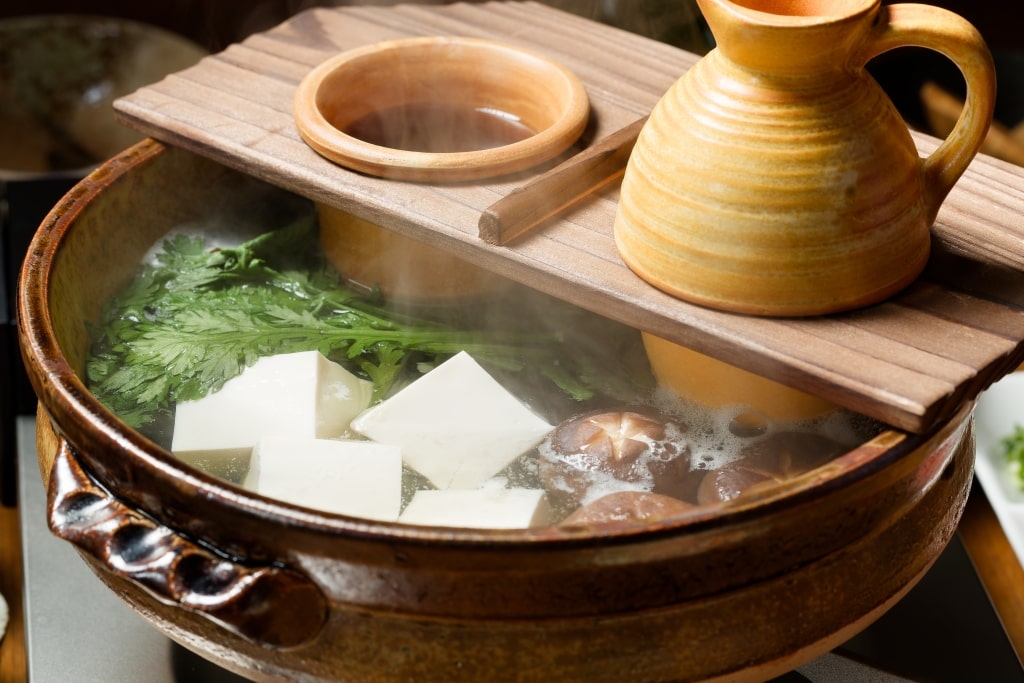
Traditional Japanese yudofu (boiled tofu hot pot) served with fresh vegetables and warm ponzu dipping sauce in an earthenware donabe pot.
Between the food in Osaka and the dishes of Tokyo, Japan is widely known for incredible cuisine—but Kyoto’s gastronomy is a frontrunner in its own right. Traditional Kyoto dishes include:
- Yudofu and yuba: tofu and tofu skin simmered in a light broth
- Shojin ryori: plant-based cuisine built on soybeans, sesame, and seasonal vegetables
- Nishin soba: hot buckwheat noodles topped with sweetened, simmered herring
- Sabazushi: pressed mackerel sushi
Kyoto also has its own traditions around how to eat. Kaiseki is a refined, multi-course meal built around seasonal ingredients and careful plating, while obanzai covers the city’s everyday home-style cooking. For a taste of both, head to the Gion District and Pontocho Alley and turn dinner into a proper excursion.
Light Up the Night: Your Kyoto Guide
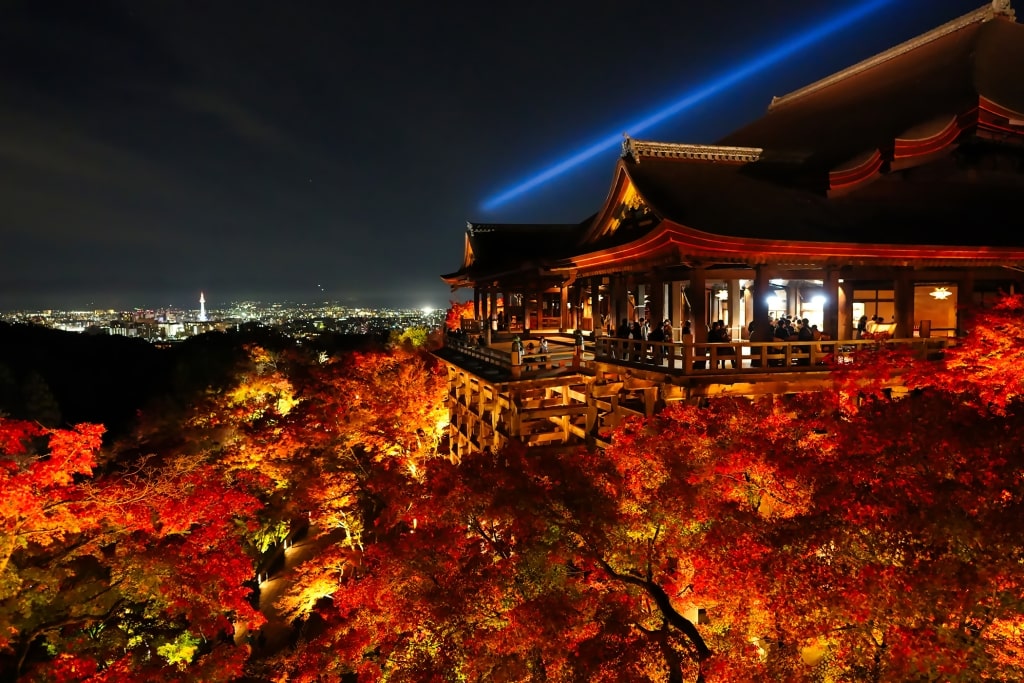
The illuminated wooden main hall and stage of Kiyomizu-dera Temple, framed by vibrant autumn foliage with a blue beam of light shining over the city skyline at night.
Between religious temples and leisurely walks across glimmering lantern-lit streets, choosing a cruise to Japan with an overnight port stay in Kyoto is an unforgettable experience. After spending the day admiring its gardens and quiet passageways, when the sun goes down, your guide begins.
- Early evening: Start at Yasaka Shrine as its lanterns come on, then wander into Gion for an early appetizer among the machiya houses.
- Dusk: Head to the Kamo River and walk the stone lanes to Pontocho Alley. The red-lit lanterns will reveal themselves along a strip of restaurants to explore.
- Dinner: Grab a multi-course kaiseki meal to taste all of the local eats. Head to a casual izakaya that overlooks the Kamo River with a glass of sake.
- Late evening: Walk back toward the riverbank and watch the city’s lights reflect on the water. Take a moment to absorb the eventful night and Kyoto’s beauty before calling it a night.
Tip: In season, start at Kiyomizu-dera instead to catch its special night hours, then work backward through Gion and Pontocho.
While many people spend time wondering if they should take a trip to Osaka or Tokyo, those who have been to Kyoto know the true experience lies in the lantern-lit city.
Frequently Asked Questions
What are the best things to do in Kyoto at night?
The best things to do in Kyoto at night include visiting lantern-lit temples and shrines, wandering Pontocho Alley and the Gion District, as well as relaxing along the Kamo River.
Guests can lean into the culture through sake tastings, lantern-making classes, or a calligraphy lesson.
What temples or shrines in Kyoto are best seen at night?
Yasaka Shrine and Fushimi Inari Taisha stay open around the clock, while Kiyomizu-dera holds special night illuminations each spring, summer, and fall.
What food experiences should travelers look for in Kyoto at night?
Multi-course kaiseki meals in the Gion District and obanzai home-style cooking restaurants in Pontocho Alley.
How can travelers plan an evening in Kyoto during an overnight port call?
Japan cruises are filled with rich experiences, and an overnight port call to Kyoto begins with exploring the Gion District, the Pontocho Alley, and the Kamo River.
Visiting the lantern-lit shrines, streets, and riverbank, all while tasting all of the local dishes, is the best way to spend an overnight port call in Kyoto.
Interested in booking a sailing? There are plenty of cruise deals year-round to choose from.
Cruise to Kyoto
For many, Kyoto is a bucket-list destination. For the few who get the experience, it’s a city that never quite leaves you.
Before you go, wear comfortable walking shoes, but pack slip-on shoes in a bag for religious sites that require barefoot entry. Ensure your socks don’t have any holes in them. Likewise, wear modest clothing, especially items that cover your shoulders and knees for temples and shrines.
Your outfits might be heavily dependent on the season you travel, so a temperature check is a must.
No matter the time of year you go, a cruise to Kyoto with an overnight port is invaluable.