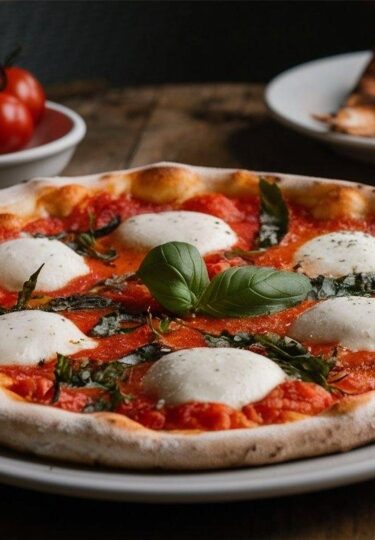
For many outsiders, food in Naples exists beneath the circular shadow cast by the ubiquitous dish that is pizza. However, it was only a century before the advent of pizza that the Neapolitans were known as the mangiamaccheroni for all of the pasta they were consuming beneath the warm southern Italian sun.
In Napoli, food is an intrinsic part of the culture; this is Italy, after all. Set on the Gulf of Naples, fresh fish glisten on ice in the thriving street markets, while an abundance of local pastries, sauces, and pastas await discovery in one of Italy’s best food cities.
Pizza Margherita
Pizza Margherita
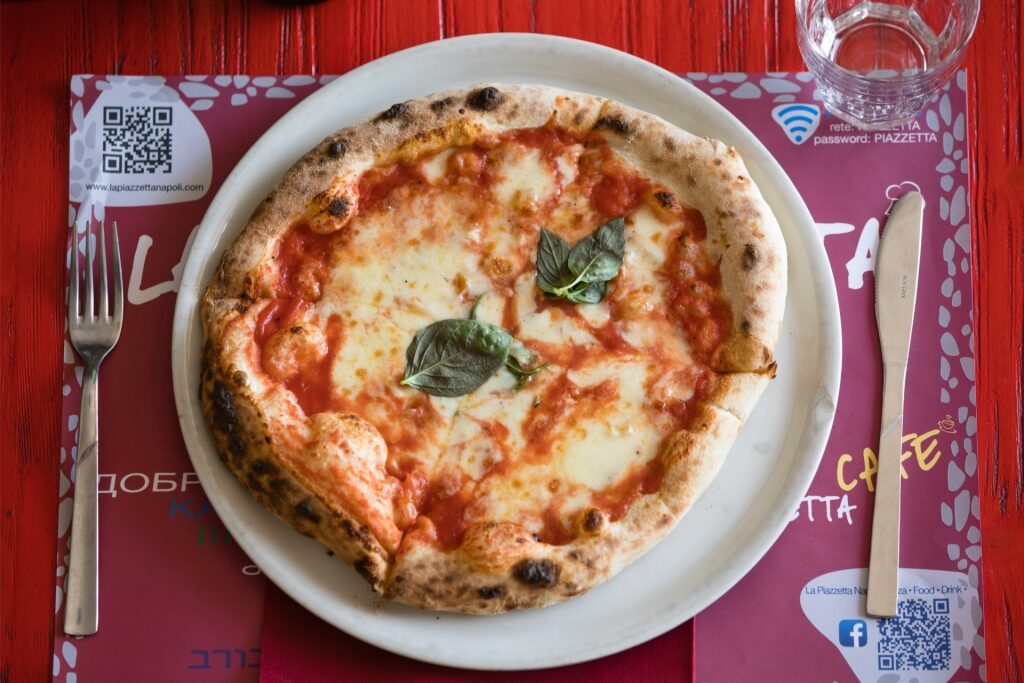
The Pizza Margherita is Naples’ most famous export. Pizzeria Brandi claims the honor of inventing this particular form of pizza Napoletano, created to celebrate the visit of Margherita, the queen of Italy, in 1889.
With a dash of marketing genius and a healthy dose of culinary savvy, chef Raffaele Esposito combined tomato, basil, and buffalo mozzarella to create a patriotic pie that reflected Italy’s red, green, and white flag, Il Tricolore.
Restaurant in Naples
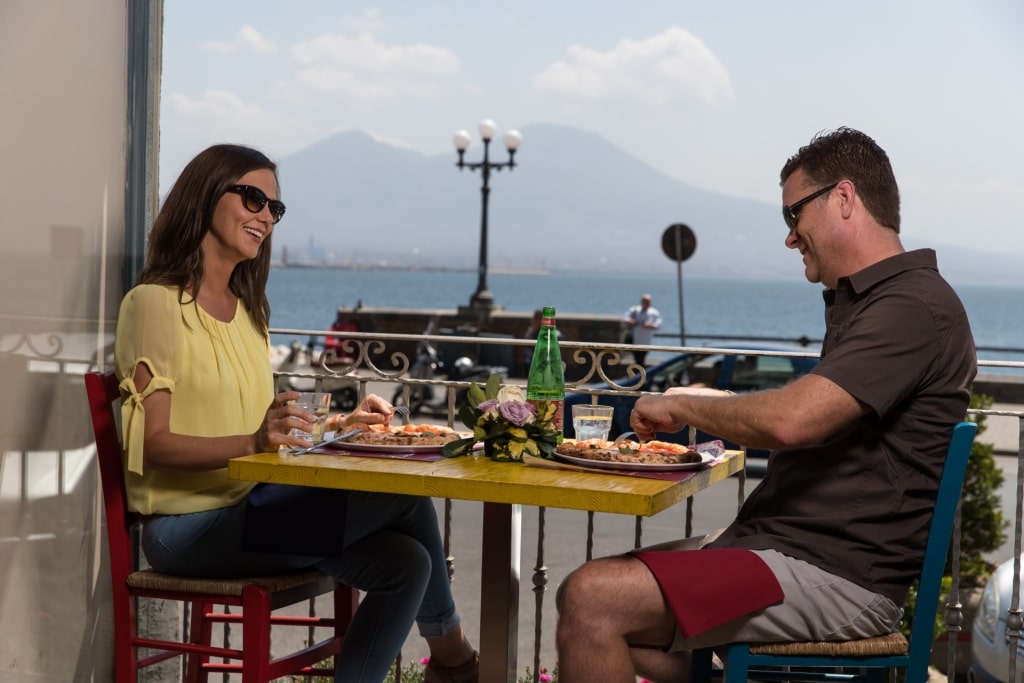
Today, you’ll eat the best pizza of your life in the kinetic streets of Naples. Pizza places aren’t hard to find; however, Pizzeria Brandi continues to produce delicious, history-making pies, conveniently located near Piazza del Plebiscito.
Pizza Marinara
Pizza Marinara
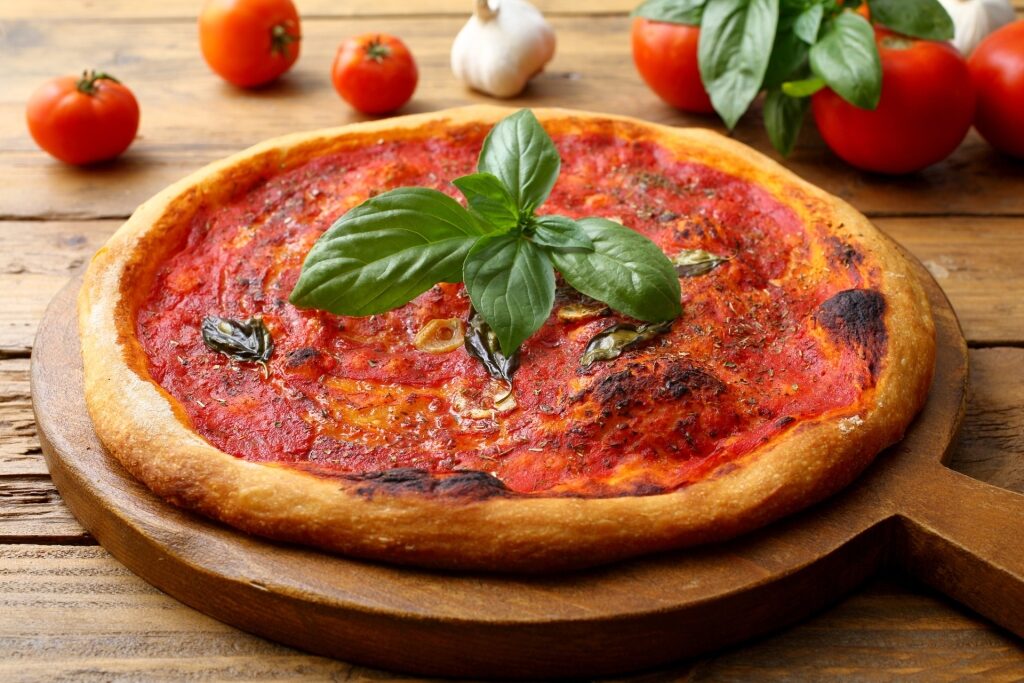
An icon of Neapolitan cuisine, the Pizza Marinara is also a baffling creation for those who only understand pizza that glistens with cheese.
There’s no fault with the recipe—this mozzarella-free pie was being devoured by Neapolitans years before the creation of the Margherita. Instead, it’s an example of how food in Naples can be delicious with only the most basic ingredients: tomato sauce, garlic, a speckling of oregano, and a generous drizzle of olive oil.
It’s named for the sailors or “marinai” who would fill up on cheap and delicious Marinaras ahead of less well-catered sea journeys. Today, the Italian dish is a popular summer option since it’s a lighter choice than a heavier cheese pizza.
Frittatina di Pasta
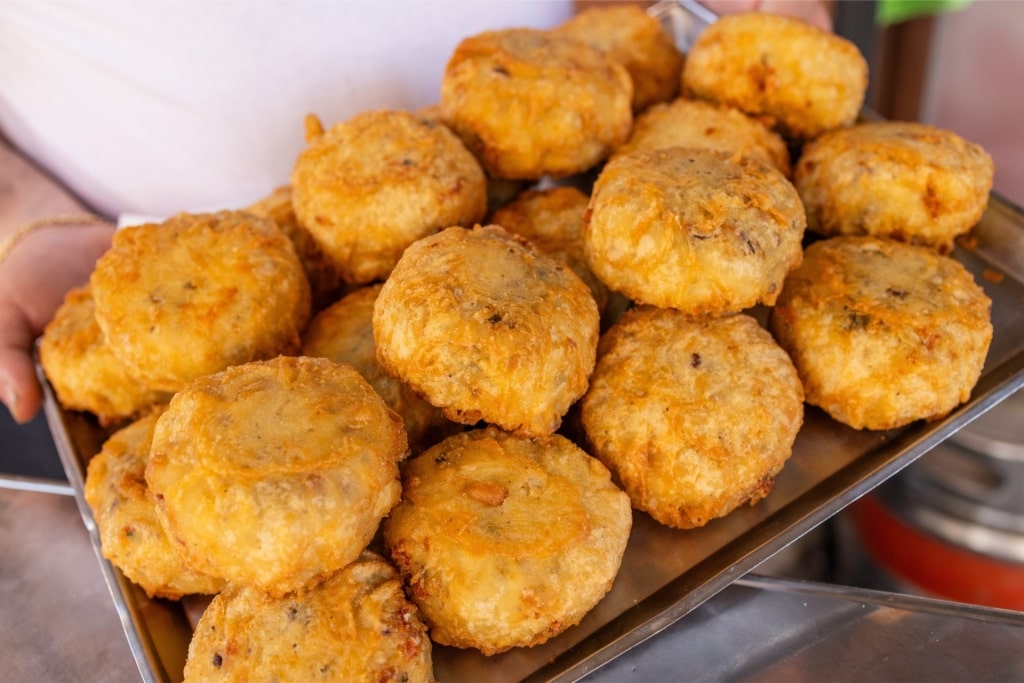
Frittatina di pasta
Dynamite street food, the frittatina di pasta is a fried, breaded parcel of leftover pasta.
As constant as Vesuvius on the horizon, pasta has simmered at the heart of Neapolitan life. The frittatina was born out of the needs of Naples’ working class to reuse any leftovers. With culinary skill and imagination, the frittatina di pasta was born.
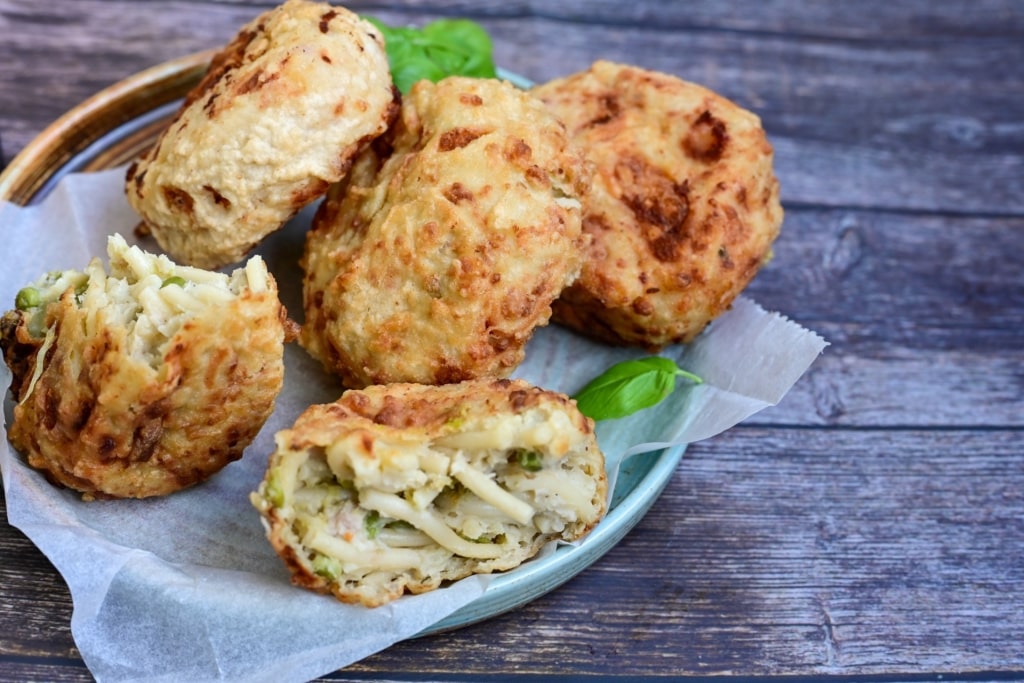
Frittatina di pasta
A breaded puck of pasta, ham, and peas, melded together with a creamy bechamel sauce, the frittatina is then fried to a perfect crispy finish.
You’ll often see them being enjoyed at street fairs, but so beloved is this dish that it’s often found on restaurant menus. A fried food go-to that reliably serves some of the best is Friggitoria Vomero, in the district of the same name.
Cuoppo Napoletana
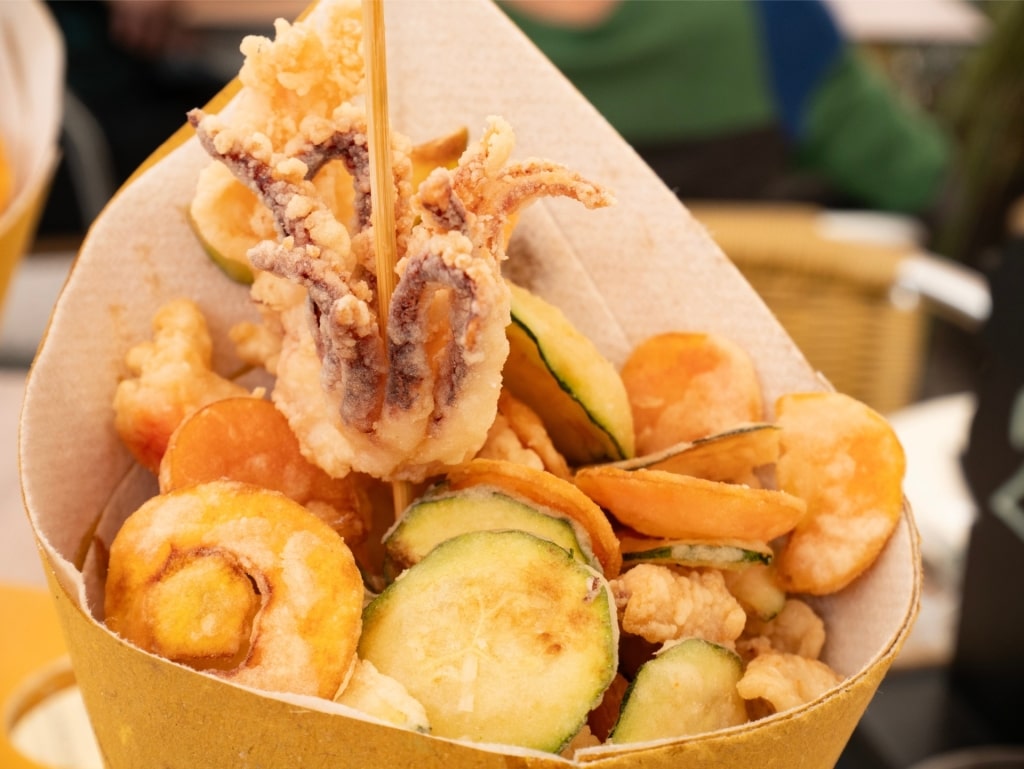
Cuoppo Napoletana
A common sight around Italy’s coastline in the summer is cones of fried seafood being shared by sunset watchers. The Cuoppo Napoletana is exactly this: a snacky portion of fried anchovies, calamari, shrimp, or vegetables, perfect to carry off and enjoy with a squeeze of lemon and a bayside view.
Today, it’s an emblem of the summer and good times. However, the cuoppo was very much born out of the city’s working-class hardship. It first became popular in the 19th century, as this lightly battered meal was a cheap feast for the working classes.
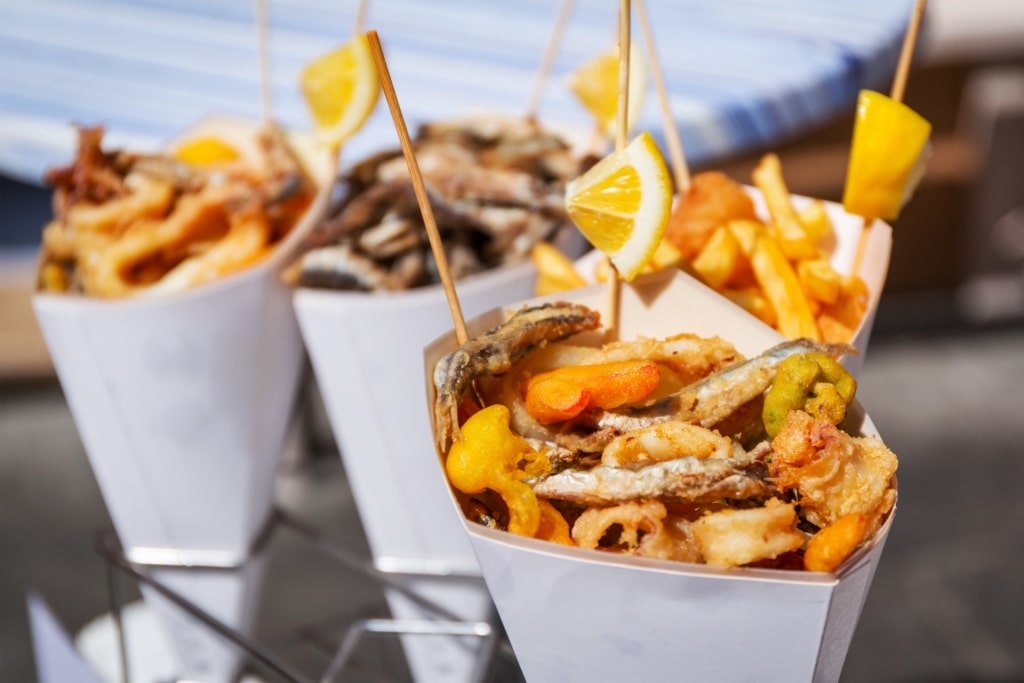
Cuoppo Napoletana
Part of the history of food in Naples is the custom of “oggi a otto”, which is the Neapolitan version of “put it on my tab.” This allowed the cash-strapped to eat a decent, light, and frankly delicious meal, and pay later. It’s unlikely today, though, that the friggitoria you buy your warm handful from will offer any credit.
Ragù Napoletano
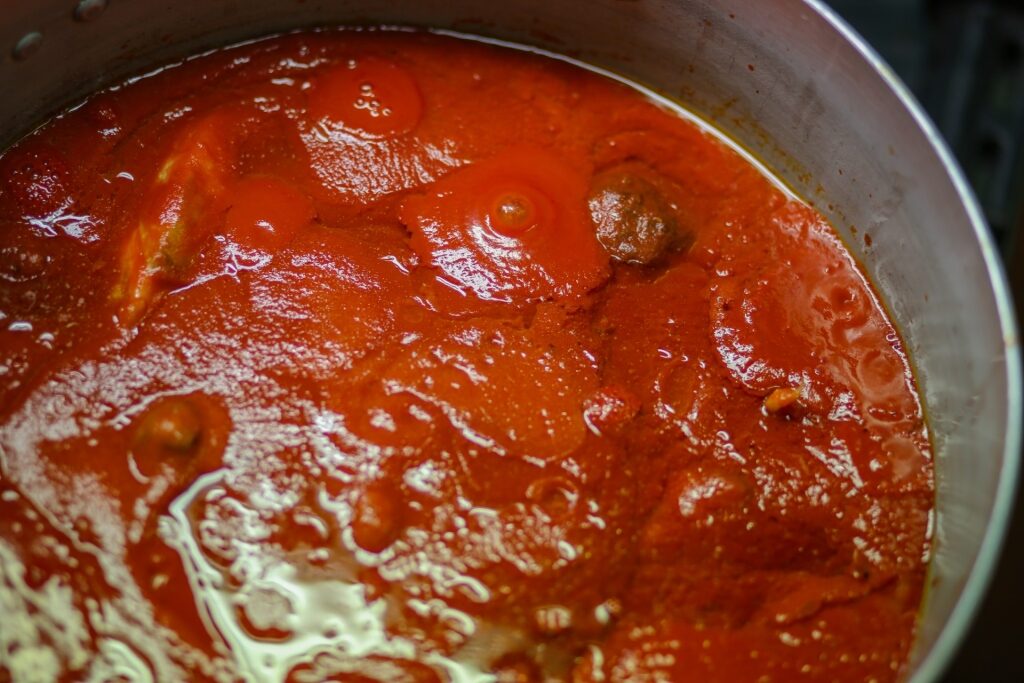
Ragù Napoletano
As with the more famous Ragù Bolognese from Bologna in the north of Italy, Ragù Napoletano is the mainstay of the Neapolitan Sunday dinner.
The two ragus act as rich, meaty sauces for an Italian pasta dish—tagliatelle for Bolognese, tubular ziti for Napoletano. However, there are distinctions in how they’re prepared and where the emphasis lies in terms of flavor.
The traditional Napoletano is more like a stew that’s been reduced to a sauce. Made using whole cuts of meat, it serves to fill two courses: one to coat the ziti in a rich umami sauce, and a main featuring tender cuts of beef, pork, or braciole, which is rolled beef filled with cheese, raisins, pine nuts, and parsley that have been slow-cooked in the sauce.
Red wine added to the Naples version amps up the richness—the Bolognese sometimes prefer to use white—and the southerners also add more tomato, which contributes a distinctive sweetness.
Sfogliatella Riccia
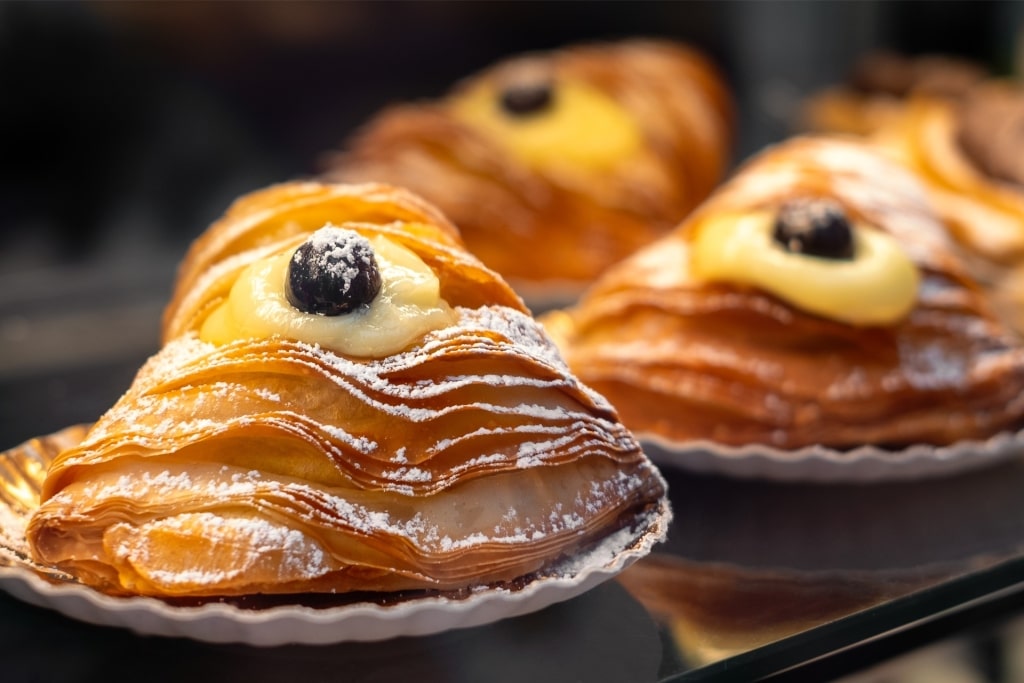
Sfogliatella riccia
As food in Naples goes, sfogliatelle are, locally, almost as important a player as pizza.
Sfogliatella riccia is probably the most famous version of these fragrant, sugar-dusted pastries. In Italian, “riccia” means “curly,” and these sfogliatelle are instantly identifiable by their shell-like, intricately layered form.
Within their crispy shells, a filling of sweet ricotta awaits the taste buds, often flavored with vanilla, cinnamon, orange zest, and candied orange peel. Pasticcerias throughout Naples offer the opportunity to grab a bagful; however, the reliable line at Pintauro Pasticceria indicates just how irresistible their sfogliatelle are.
Pastiera Napoletana
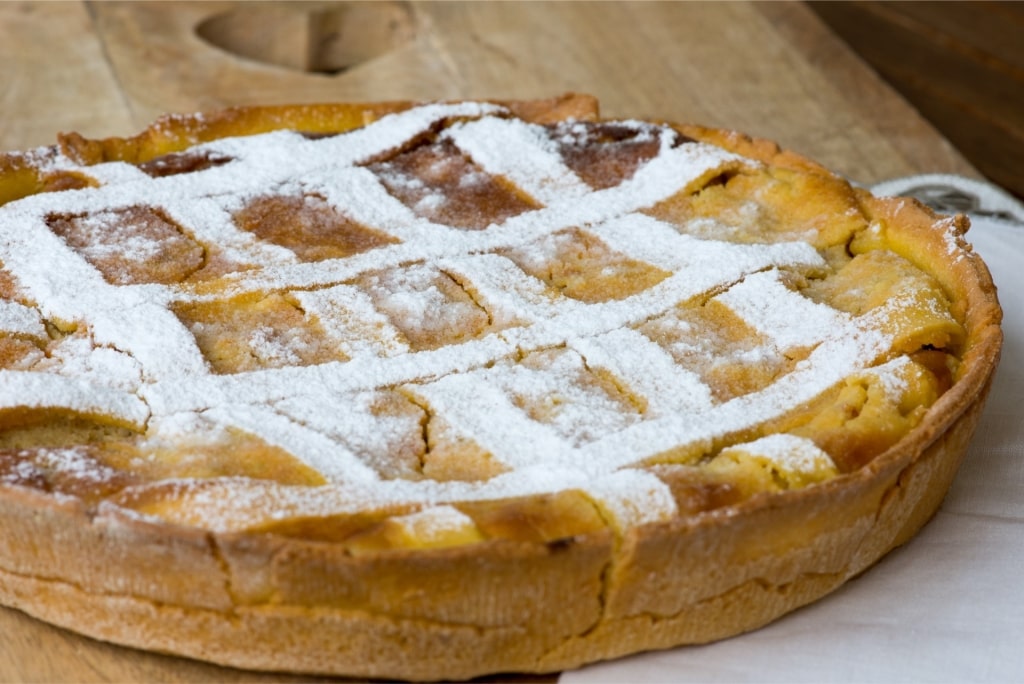
Pastiera Napoletana
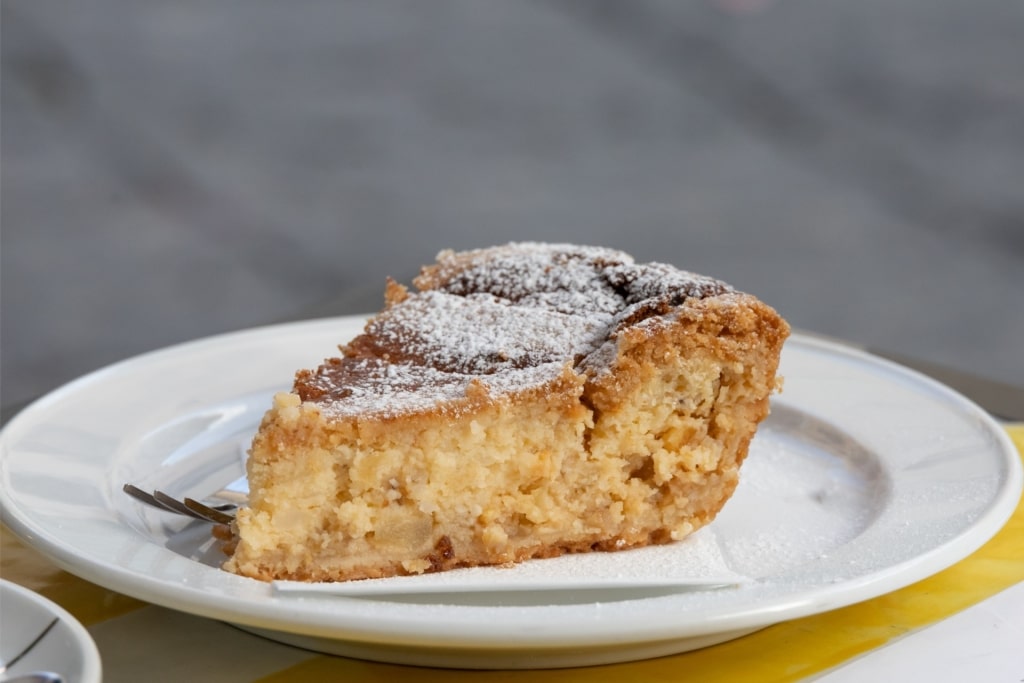
Pastiera Napoletana is a shortcrust pie made with ricotta, candied citrus fruit, and orange blossom water, served at Easter and acting as a ritualistic cornerstone of Naples’ culinary culture. It was originally a pagan pie, but the Christians wisely welcomed it into their gastronomic flock.
Neapolitans attach the mythical origins of this pie to the siren Partenope, the supernatural founder of Naples. The story goes that the ingredients found within this fragrant treat were symbolic gifts offered to the siren. Partenope then went and made an outstanding pie out of them.
Pastiera Napoletana
Today, it’s made by human hand but tastes magical. Pastiera Napoletana is served as the sweet centerpiece of Easter Sunday at homes throughout the city. If you’re not in Naples over Easter, don’t fret—occasionally it’s on offer at a bakery or café. May Partenope watch over your search.
Babà al Rum
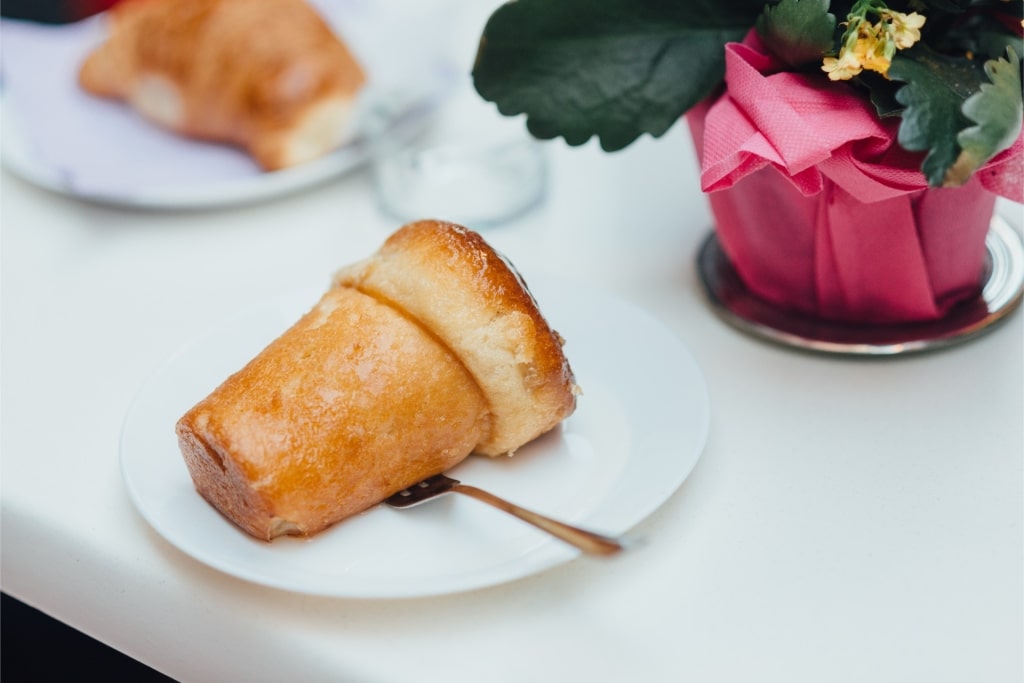
Babà al Rum
The Babà al Rum was a Polish invention adopted by French pastry chefs in the 18th century. However, it’s been so thoroughly embraced by the Neapolitans that it seems the city might collapse if these champagne cork-shaped boozy treats weren’t vying with tiramisu as the city’s most prevalent dessert option.
Perhaps what makes this rum syrup-infused cake so popular with the Neapolitans is how well it goes with the local coffee. Made with the distinctive Neapolitan cuccumella pot, the brew has a filter coffee viscosity with an espresso’s aromas. You’ll often see Neapolitans enjoying a small Babà al Rum as part of their mid-morning or afternoon pick-me-up.
Taralli Napoletani
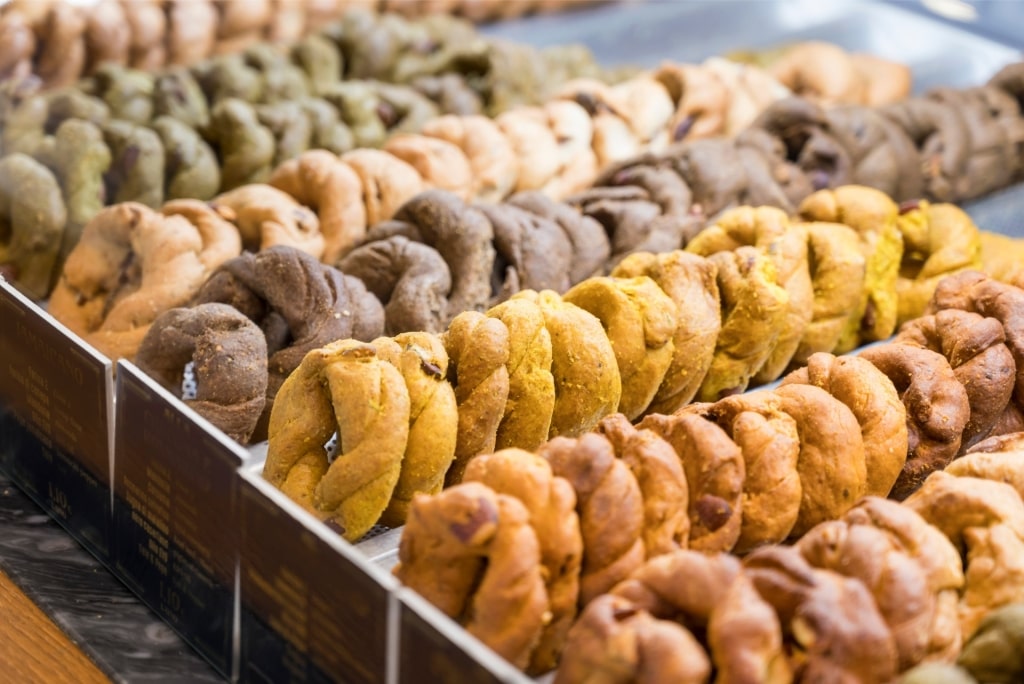
Taralli Napoletani
A wonderful snack food in Naples that goes beautifully with a chilled Peroni or gin and tonic, the Taralli Napoletani are larger cousins of the smaller tarallini popular in southern Puglia.
The Neapolitan version emerged in the 17th century as a way to use up leftover bread dough. Cooked with lard and flavored with pepper and almonds, the dough is then twisted into a ring. Besides being a superb bar snack, you’ll frequently see Neapolitans munching on a bagful as they enjoy their passeggiate along the waterfront.
Casatiello
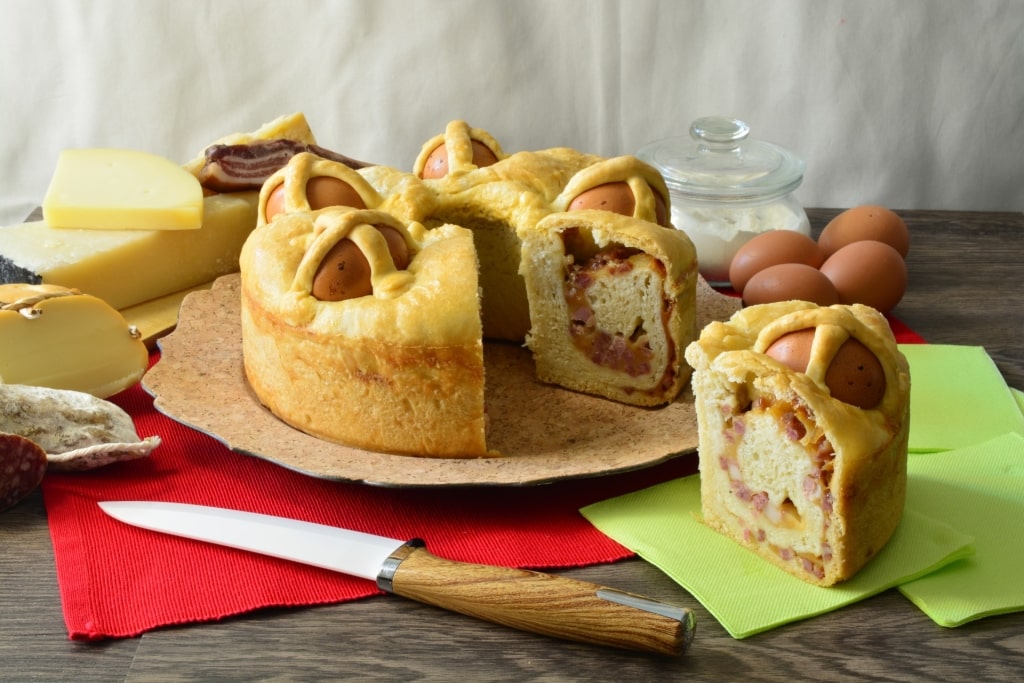
Casatiello
A relative rarity in the city outside of spring, casatiello is the rustic loaf that embodies the Neapolitan Easter celebrations. If you do manage to hunt down this ancient bread, however, watch out: a good-sized slice can be as filling as an entire meal.
Casatiello is a savory, lard-enriched loaf. Its most traditional form is striking: a circular loaf with whole eggs strapped on by pastry crosses. The eggs emerge ready to eat after baking, while the casatiello dough itself is enriched with salami and cheese cubes. Sweet versions, featuring more prosaic sprinkles and icing, can also be found.
Zeppole di San Giuseppe
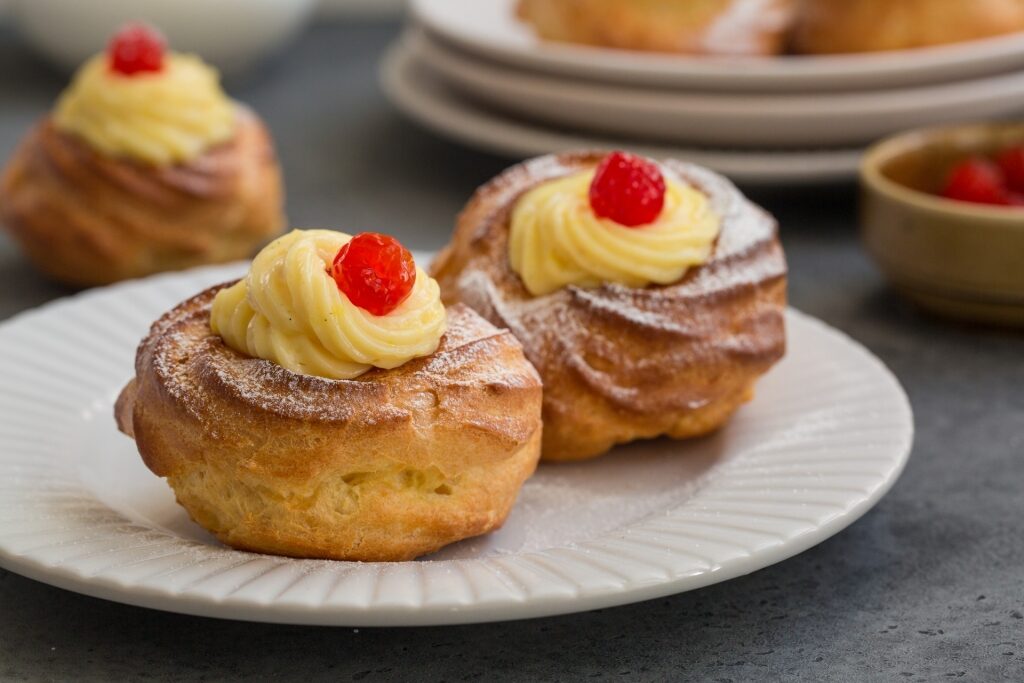
Zeppole di San Giuseppe
Preceding the excesses of the Easter celebrations is St. Joseph’s Day on March 19, also Italy’s Father’s Day. During this celebration of the spring/winter cusp, zeppole di San Giuseppe are shaped, fried, and eaten in abundance.
Traditionally cooked in lard—although more often baked these days—they’re choux pastry buns with a filling of crema pasticcera that’s topped with a cherry. The zeppole have their roots in pagan winter festivals, when fried sweets were served drizzled with honey.
With one version of St. Joseph’s story claiming that he sold fritters to ensure he could support his family, it’s little wonder that Joseph moonlights as the patron saint of fryers and pastry chefs. On March 19 in Naples, there is no shortage of zeppole.
Pizza Fritta
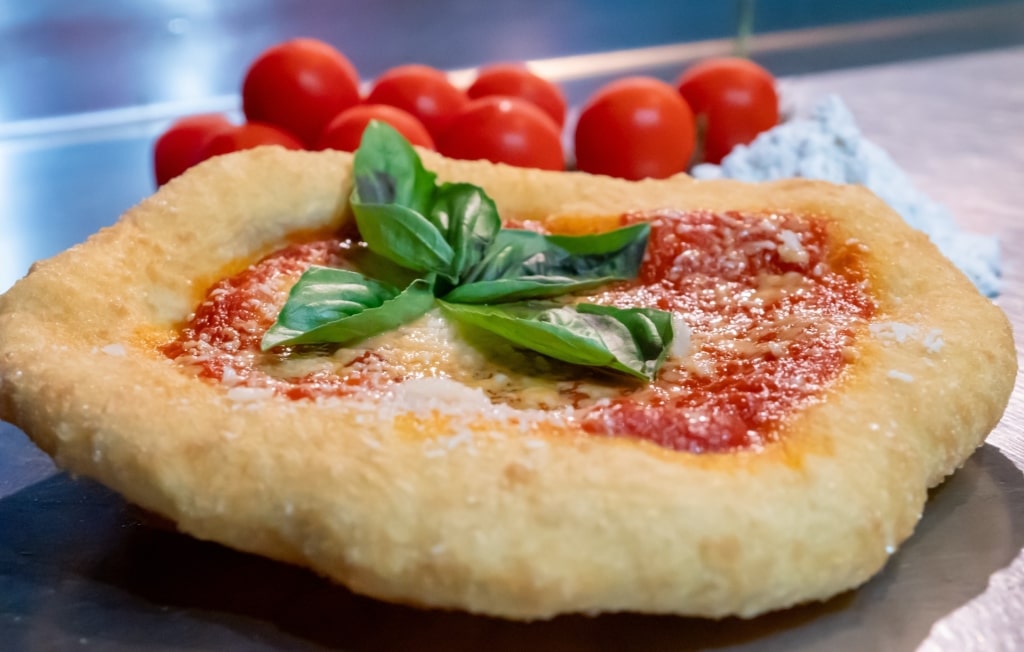
Pizza fritta
Two cornerstones of food in Naples are fried delights and pizza, so it makes sense that these two things should eventually come together.
However, the pizza fritta is not the random experimentation of an imaginative chef, but actually an innovation brought on by scarcity following WWII. With ovens hard to come by, frying your food was the obvious alternative. And with that, one of Naples’ most delicious street foods was born.
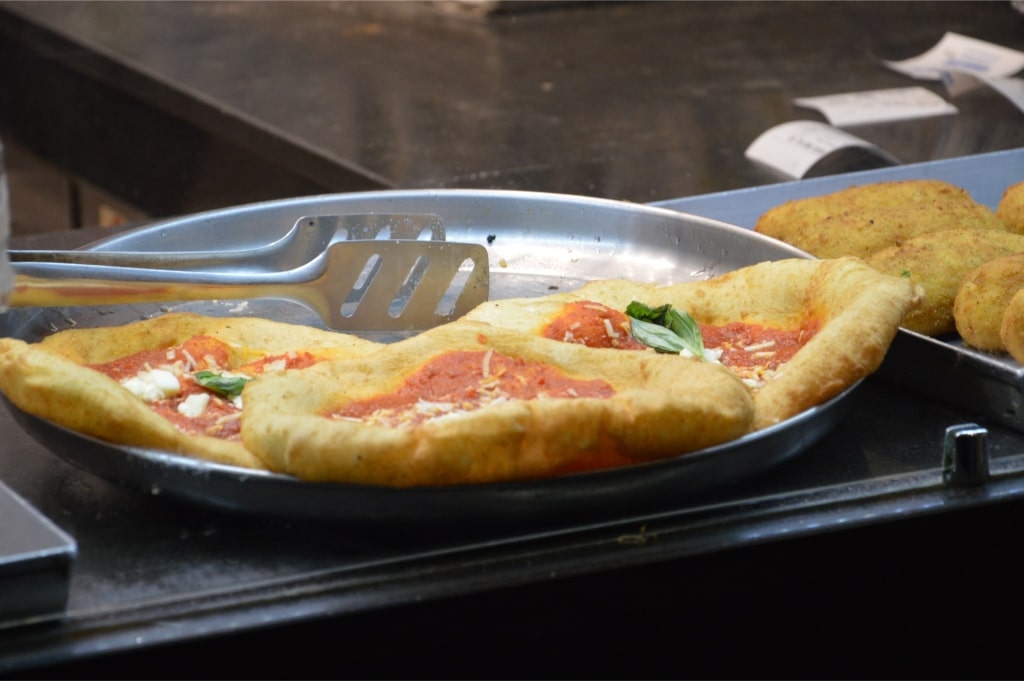
Pizza fritta
Now, pizza fritta isn’t just a standard Margherita tossed in a deep-fat fryer. Far from it. Think of it instead like a small, fried calzone. Typical fillings include a mix of salami or ciccioli pork pieces, with a provola and ricotta cheese mix. Warm, gooey, and rich, they’re highly addictive, as are the sweet versions that come slathered with Nutella.
FAQs
Is Naples a good food city?
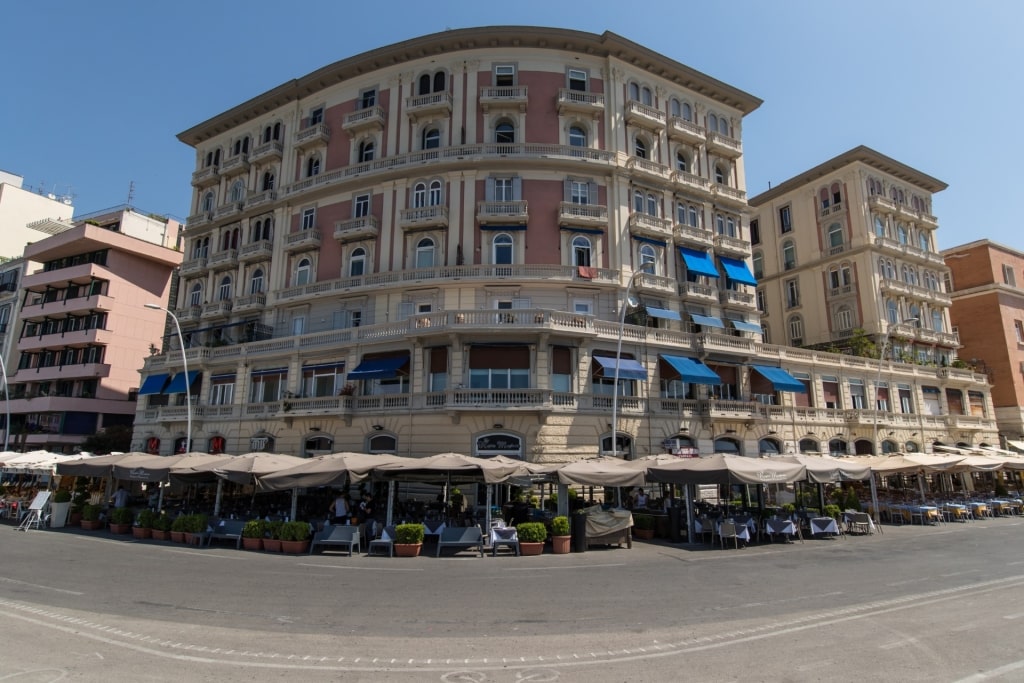
Naples
Naples is one of the best food cities in Italy, renowned for its cuisine and standing out even among the intense competition within the country’s borders. While food in Naples reflects the influence of civilizations like the Greeks, the French, and the Spanish, it bears a distinctive Neapolitan stamp.
Part of that is the quality of the ingredients used, whether it’s the flavorful buffalo mozzarella, the sweet San Marzano tomatoes, or the fresh daily catch from the Gulf of Naples. Then there’s the city’s history, and how ingenuity helped working-class families not only survive but thrive with flavorful leftovers.
What dish is Naples most famous for?
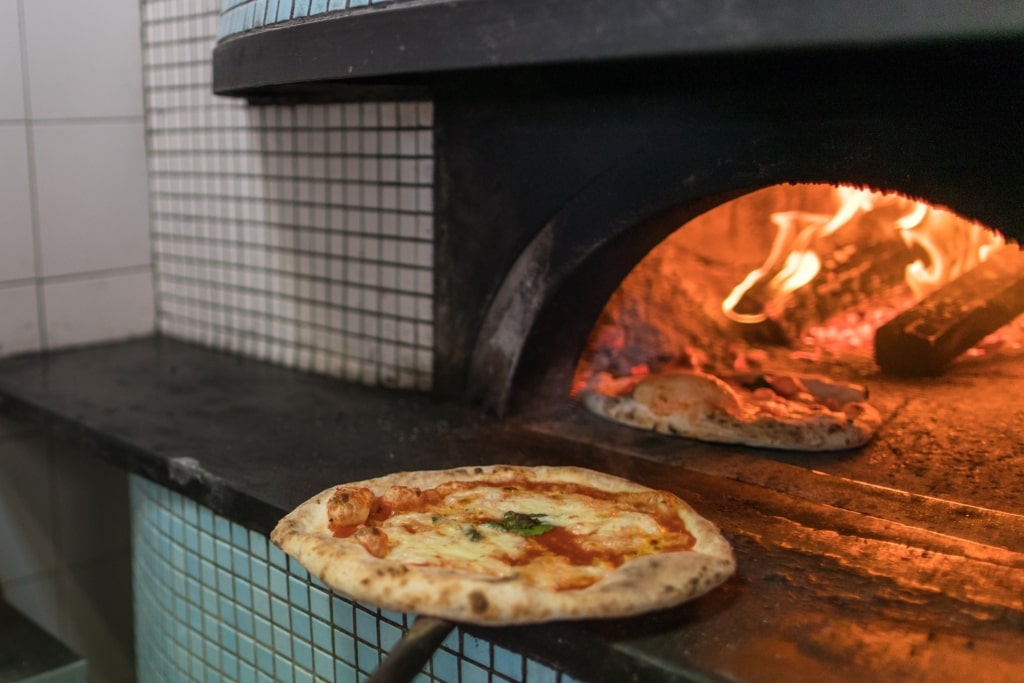
Pizza Margherita
It has to be pizza. Or, technically speaking, Pizza Margherita. How it’s made in Naples has received recognition as an Intangible Cultural Heritage of Humanity by UNESCO.
The elements inscribed by UNESCO include how the dough balls and crust are shaped, what it’s topped with, and the skillful use of a peel while cooking the pizza in a wood-fired oven.
While the heritage might be intangible, the results certainly aren’t. The most famous products created from the “Art of the Neapolitan Pizzaiuolo” are the Pizza Margherita and the Pizza Marinara. Both exemplify the dynamic results achieved through simplicity and a respect for ingredients and technique.
What time does dinner typically start in Naples?
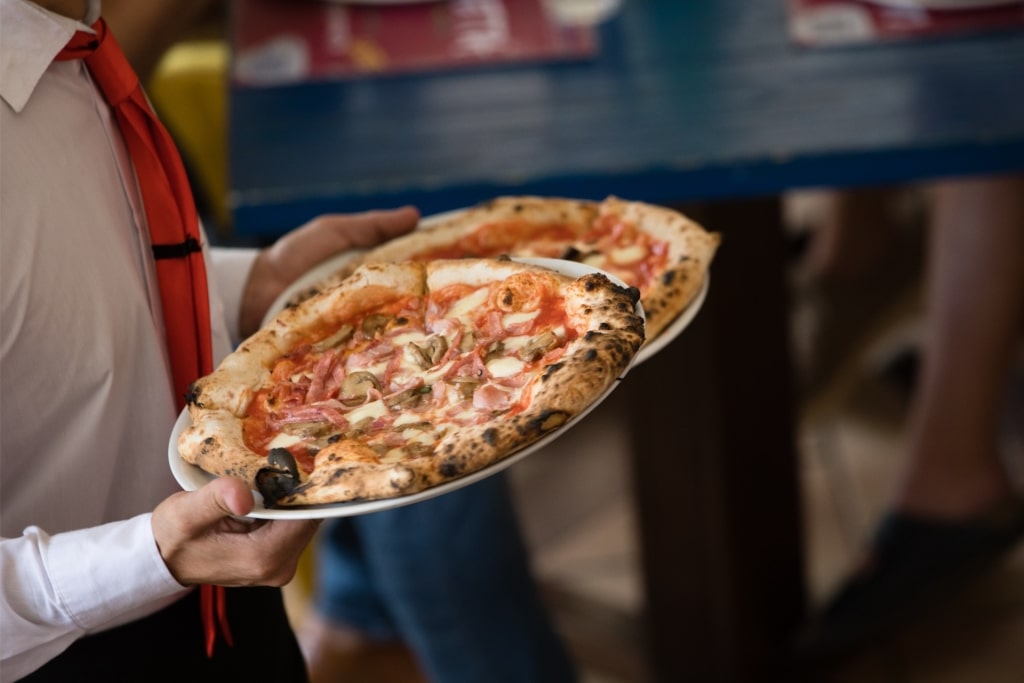
Restaurant in Naples
Neapolitans tend to eat later than is typical in the USA and many northern European countries.
Restaurants open their dinner service at around 7.30 p.m., with locals sitting down at tables about an hour later. Of course, during the balmy summer evenings, those dinners tend to start later and stretch on for longer as well.
Are there any food customs I should know about?
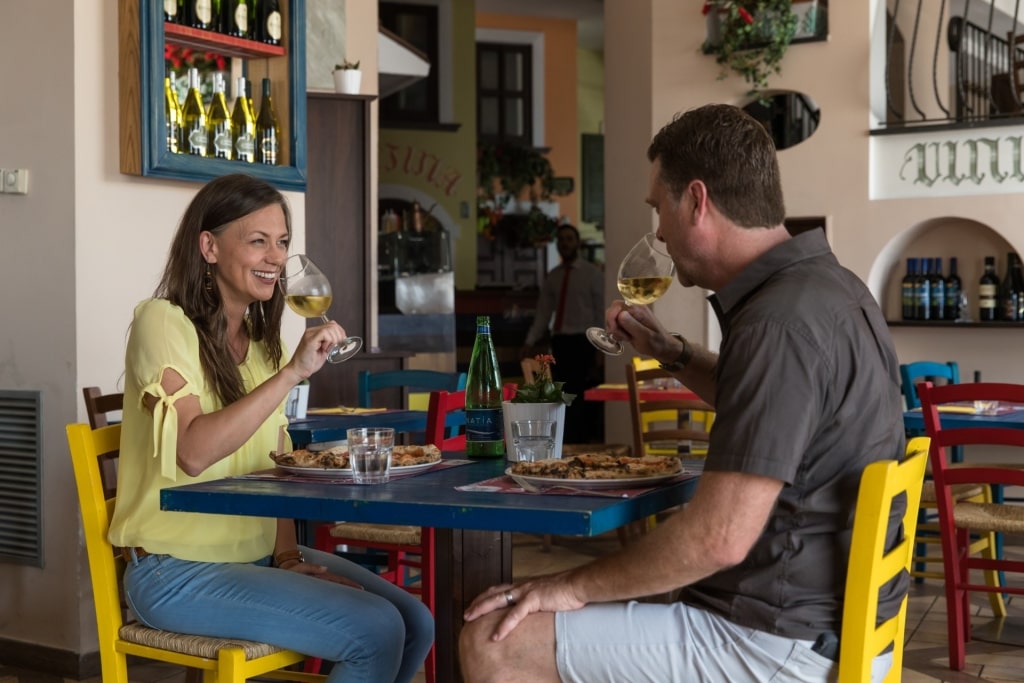
Restaurant in Naples
Napoli food culture doesn’t throw up any dining idiosyncrasies that a visitor should be aware of outside of the standard quirks of everyday Italian food culture. And as with anywhere in Italy, food is something to linger over and a way to socialize and connect.

Naples
Discover delicious, authentic Neapolitan dishes for yourself. Browse Celebrity’s cruises to Naples and plan your gourmet adventure today.