Whether you’re in Sydney or San Francisco, the world’s most famous bridges do far more than simply get people from one place to another. They connect cities, countries, cultures, and even continents — a constant reminder that both progress and connection can be forged with a bold idea and a span of stone, concrete, or steel.
Bridges have a function, for sure, but they also tell stories about the people who built them and the places they serve. Whether centuries old or hyper-modern, this selection of iconic crossings shows how great design can move people in more ways than one.
Golden Gate Bridge, San Francisco, USA
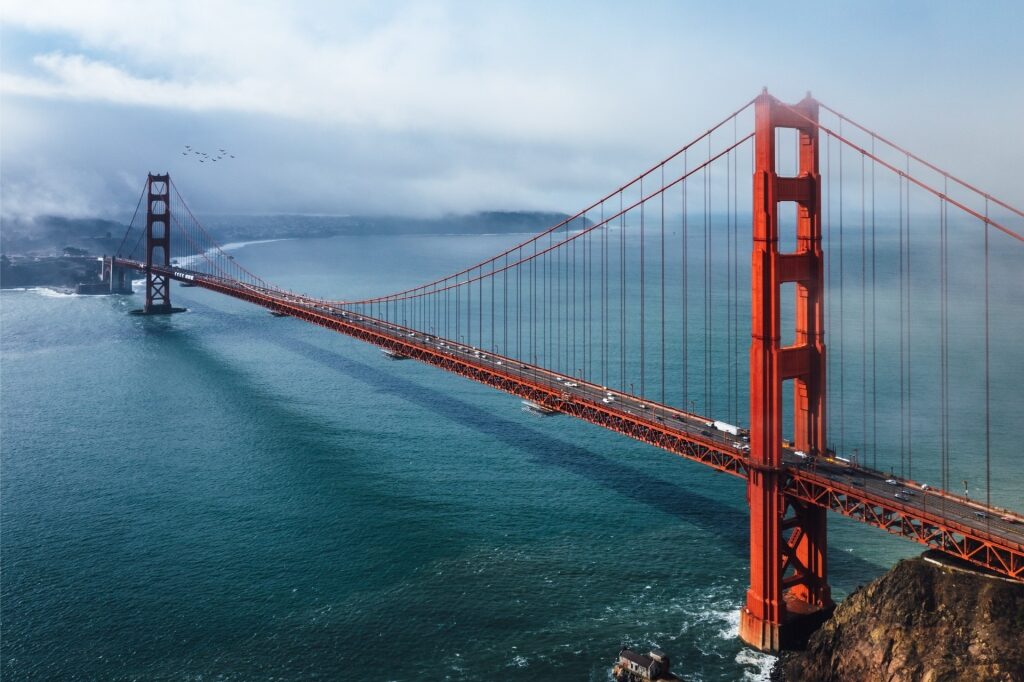
Golden Gate Bridge in San Francisco, USA
When it comes to famous bridges in the world, there are probably few more iconic than the Golden Gate. Linking San Francisco to Marin County, the bridge has been recognized as one of the Wonders of the Modern World by the American Society of Civil Engineers, and is also claimed to be the most photographed bridge in the world.
The Golden Gate Bridge is such an awe-inspiring piece of engineering, spanning the 1.6-mile strait that connects San Francisco Bay to the Pacific, that it’s not hard to see what draws so many with their cameras clicking away. The bridge’s two Art Deco “International Orange” towers rise for some 750 feet, holding the huge suspension cables that keep it aloft, sometimes glittering in the sun, others shrouded in fog.
Confederation Bridge, Prince Edward Island, Canada
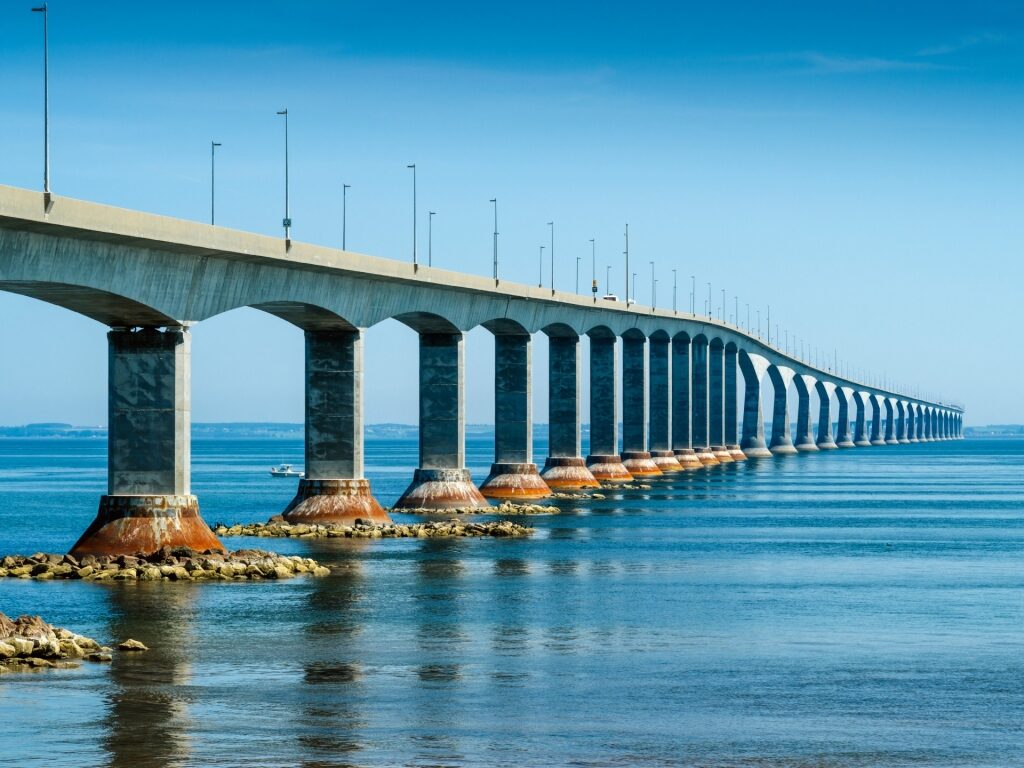
Confederation Bridge in Prince Edward Island, Canada
For those who live on Canada’s Prince Edward Island, the Confederation Bridge is something of a lifeline. Spanning eight miles long, it provides a vital connection to New Brunswick on the mainland, especially in winter when, for around four months, it becomes the longest bridge in the world to cross ice-covered water.
The bridge was built in 1997 and took some four years to complete. To say it’s vast is an understatement: the concrete used could fill around 300 Olympic-sized swimming pools. Interestingly, the bridge’s gentle curves were not added for aesthetic reasons—they were designed to keep drivers alert. You can get some of the best views of it from Cape Jourimain Nature Centre on the New Brunswick side or Borden-Carleton on the PEI side.
Sydney Harbour Bridge, Sydney, Australia
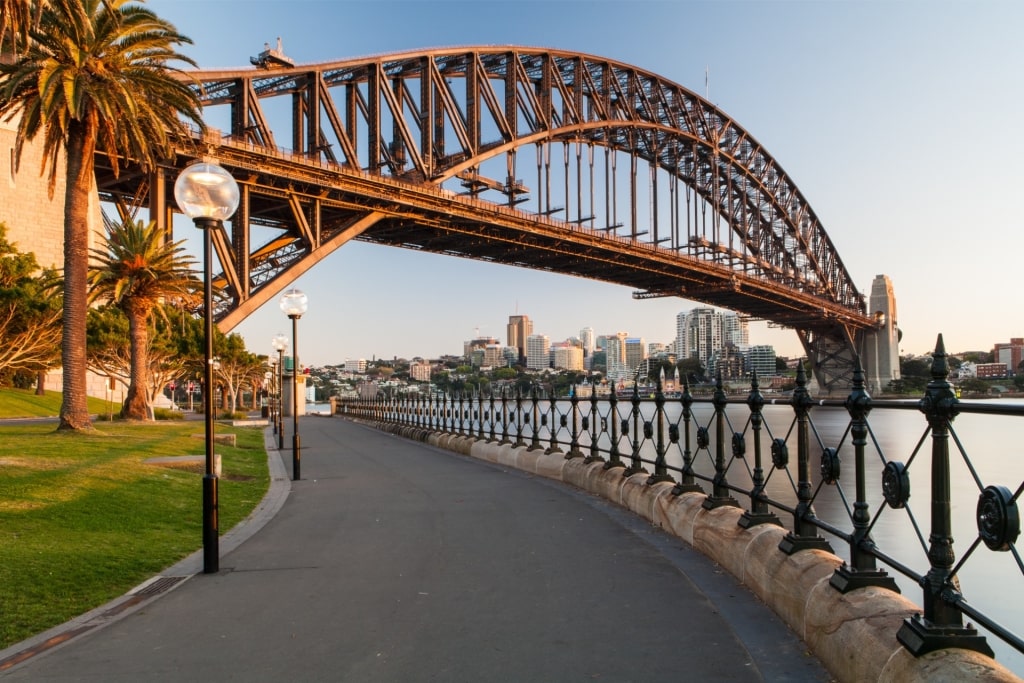
Sydney Harbour Bridge in Sydney, Australia
If there’s a bridge to challenge the Golden Gate as one of the most famous bridges in the world, it has to be the Sydney Harbour Bridge. Connecting the Central Business District with the North Shore and completed in 1932, the vast structure, allied with the nearby Sydney Opera House, provides one of the world’s greatest harbor skylines.
Locals call the bridge the “coathanger” due to its magnificent arch, and, while the name is affectionate, it scarcely does the bridge justice, given that it consists of 52,000 tons of steel and six million hand-driven rivets.
Get the best views from the Opera House itself, or the pedestrian path from The Rocks—the oldest district in Sydney.
Ponte Vecchio, Florence, Italy
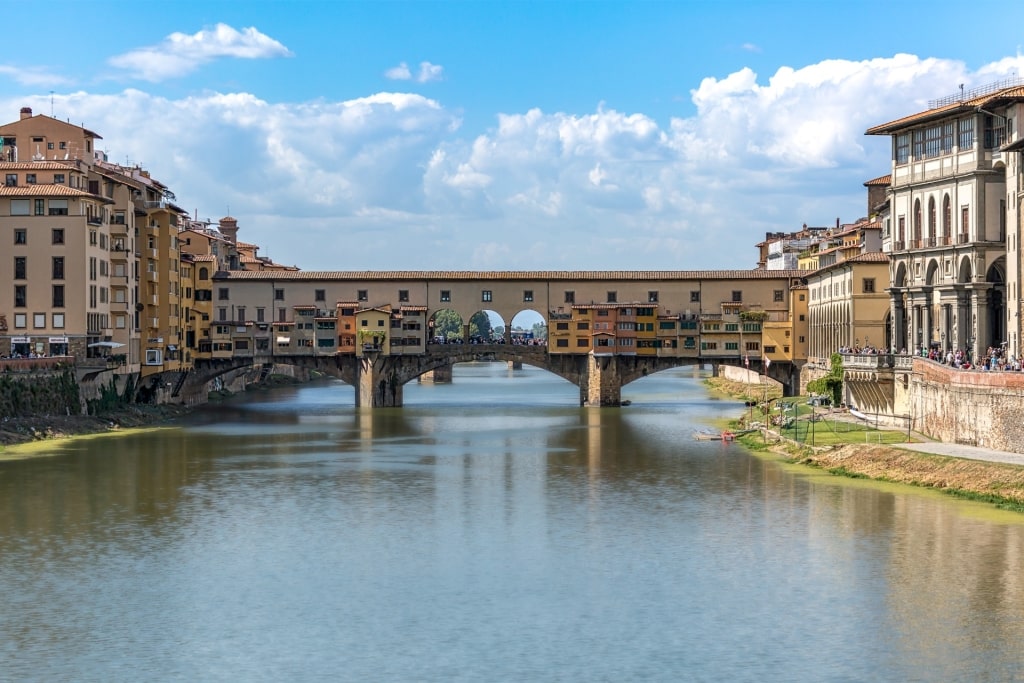
Ponte Vecchio in Florence, Italy
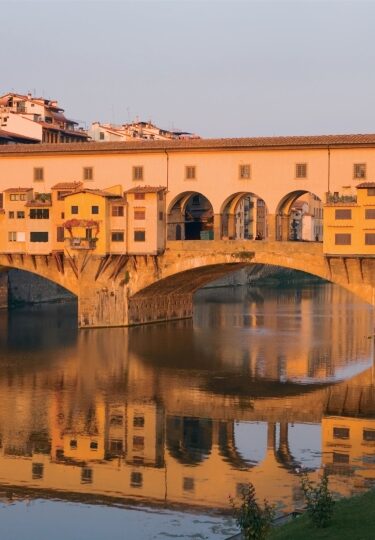
In a city packed full of things to see, Florence’s Ponte Vecchio should be right up there on your list of things to check off while in the city. The “Old Bridge” spans the River Arno at one of its narrowest points, and while only 312 feet long, it packs a real punch as it is lined with shops.
Back in 1345, when the old Roman bridge was rebuilt, those shops would have housed butchers and tanners, but the rancid smells they created saw them taken over by jewelers and goldsmiths in the 16th century.
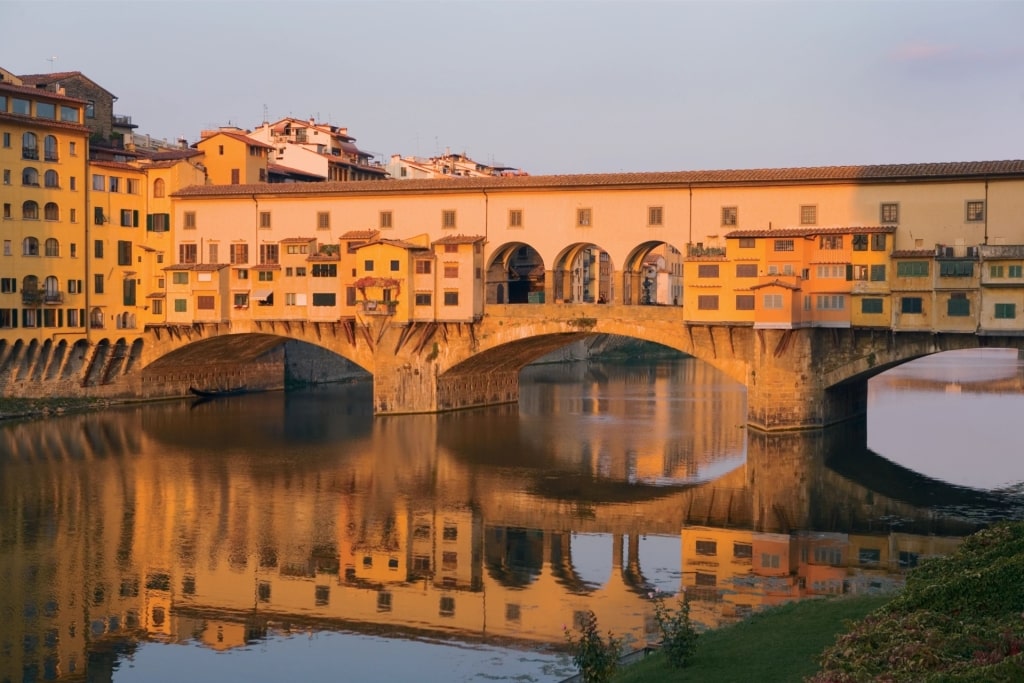
Ponte Vecchio in Florence, Italy
Today, the Italian landmark is probably one of Europe’s most atmospheric walkways, though it can be incredibly busy. For an alternative way of seeing it, get tickets to the Vasari Corridor. This once-secret walkway over the bridge was built in 1565 to allow the ruling Medici family to go from the Palazzo Vecchio to the Pitti Palace undetected and in safety.
Bosphorus Bridge, Istanbul, Turkey
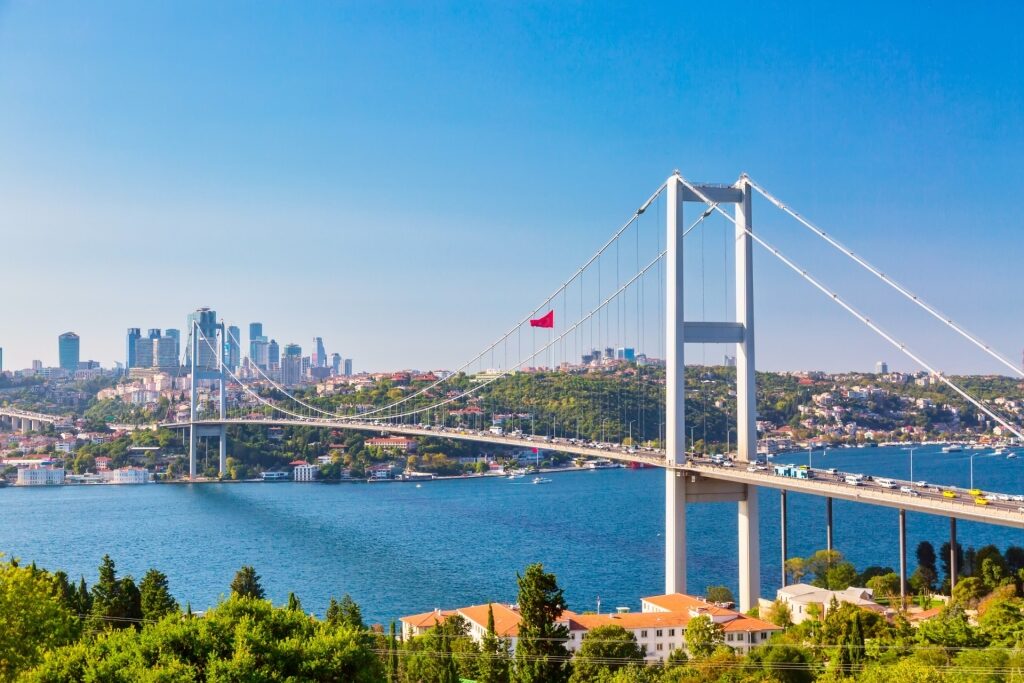
Bosphorus Bridge in Istanbul, Turkey
Officially the 15 July Martyrs Bridge, this sweeping suspension bridge not only connects the two halves of Istanbul separated by the Bosphorus Strait, but also provides a literal link between Europe and Asia.
Opened in 1973 and designed by British engineers Gilbert Roberts and William Brown, the bridge was the first permanent link between the two continents and remains a symbol of modern Turkey. And what a symbol it is, too.
Almost a mile in length and with towers reaching some 540 feet tall, the bridge dominates the skyline. As cars pass over the elegant structure in their thousands, the city buzzes on either side, an urban sprawl of markets, palaces, waterside residences, and minarets.
Pont Neuf, Paris, France
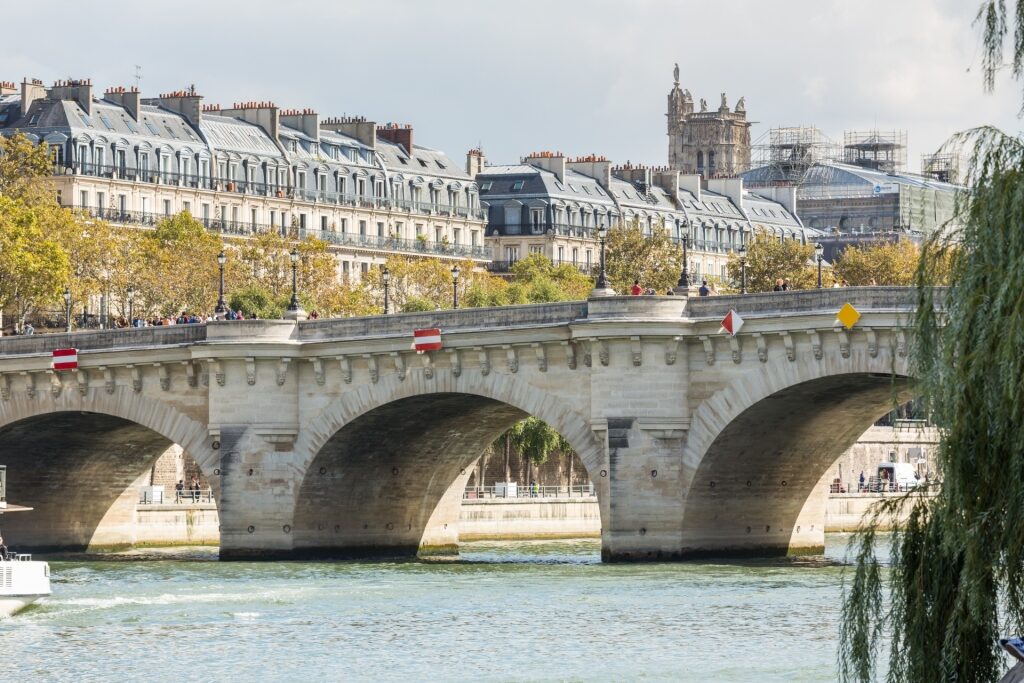
Pont Neuf in Paris, France
Pont Neuf may translate as “New Bridge,” but it’s somewhat of a misnomer—it’s actually the oldest surviving bridge in the French capital. Completed in 1607 under King Henry IV, it spans the River Seine, which flows through the heart of Paris. The bridge links the Left and Right banks and touches on the western tip of the Île de la Cité.
As far as Paris icons go, it’s a classic, thanks to its 12 graceful stone arches and open views of the river; it was the first bridge in Paris to be built without houses, which was revolutionary at the time.
Look out for the 381 carved stone grotesque faces that adorn the bridge. Known as “mascarons,” they were originally designed to ward off evil spirits. In the middle of the bridge sits another statue—that of King Henry IV.
Ponte di Rialto, Venice, Italy
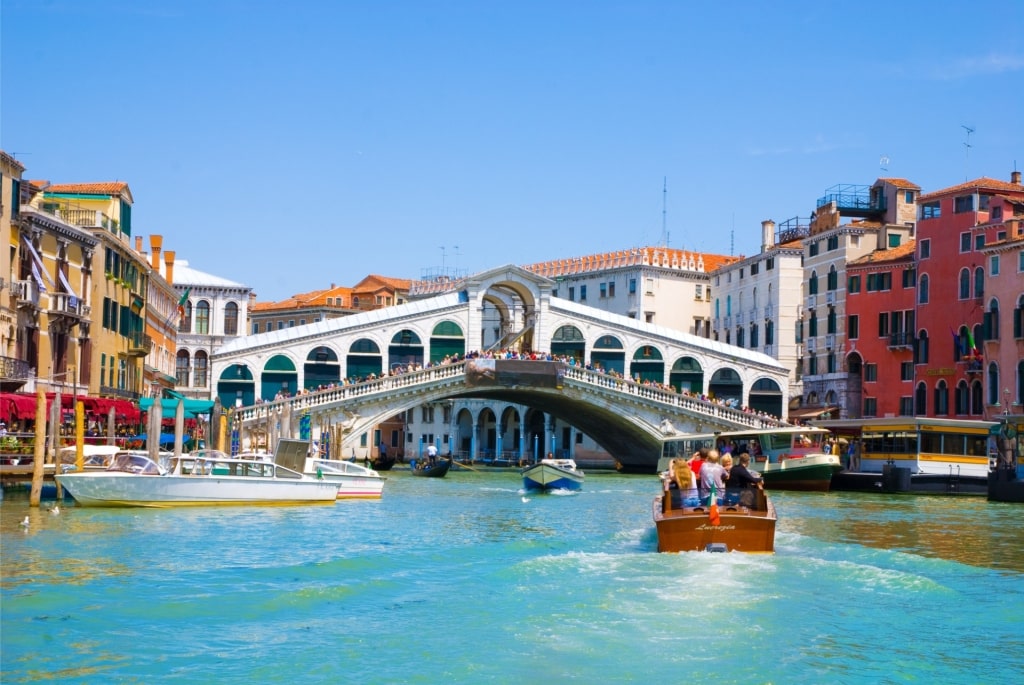
Ponte di Rialto in Venice, Italy
Want to see Venice in miniature? Take a walk across the Ponte di Rialto. The oldest of four bridges that cross the iconic Grand Canal, it connects the San Marco and San Polo districts with one single span.
Just 157 feet long, it’s lined with shops selling leather goods, jewelry, and Murano glass—a nod to its mercantile past—and offers great views both up and down the canal itself.
Designed by Antonio da Ponte, whose surname translates as “of the bridge,” Ponte di Rialto was completed in 1591 after 6,000 timber piles were driven into the lagoon bed. It was painstaking work for those involved in construction, but their legacy remains intact to this day.
Helix Bridge, Singapore
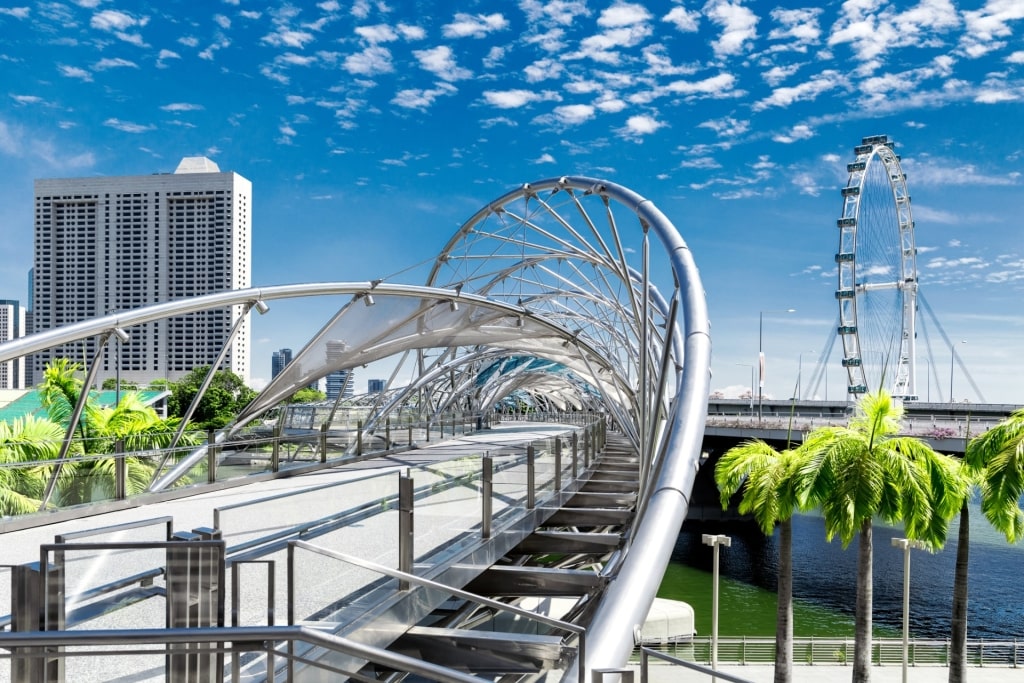
Helix Bridge, Singapore
Not all of the most famous bridges in the world are ancient monuments. In fact, the Helix Bridge in Singapore is about as contemporary as architecture gets. Adorning Marina Bay and connecting Marina Centre with Marina South, the striking pedestrian bridge doubles as a work of public art.
The stainless-steel spiral bridge was inspired by the very thing that makes us human, our DNA. Proving that a bridge can be both functional and futuristic at the same time, the 918-foot walkway also has an educational element. Along its length are viewing pods with red and green letters embedded into the design. The letters C, G, A, and T reference the four different human DNA bases.
Banpo Bridge, Seoul, South Korea
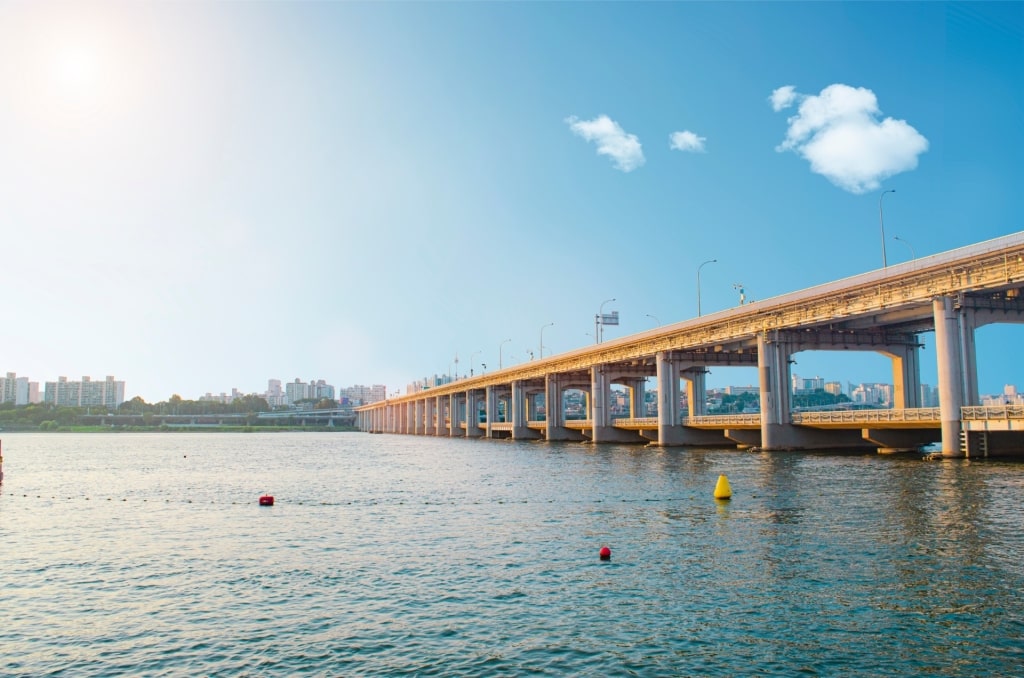
Banpo Bridge in Seoul, South Korea
Another bridge that blends art and architecture is this 5,000-foot crossing that connects the Yongsan and Seocho districts in the South Korean capital of Seoul. Spanning the Han River and completed in 1982, the bridge is a double-decker, with traffic flowing above and the Jamsu Bridge directly below it serving pedestrians and cyclists.
So far, so functional, but it’s later in the day when the bridge really comes to life. Between April and October, the bridge turns into the world’s longest bridge fountain, officially recognized by Guinness World Records. Several times a day, some 10,000 LED-lit nozzles project water 60 feet either side in a dazzling display that takes the breath away. Most of the shows are at night, but there are occasional daytime viewings too.
Puente de la Mujer, Buenos Aires, Argentina
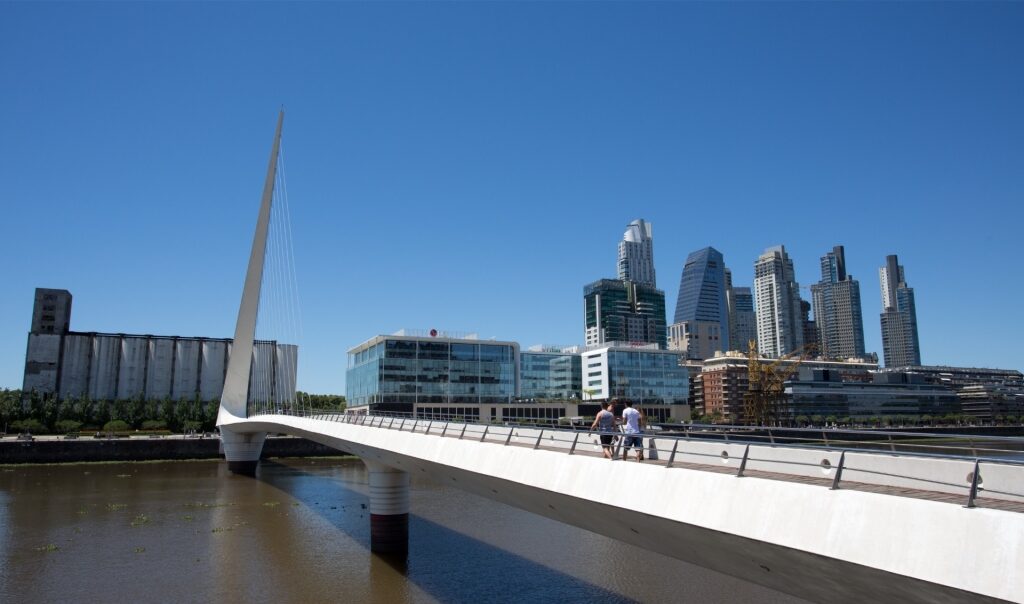
Puente de la Mujer in Buenos Aires, Argentina
Spanish-Swiss architect Santiago Calatrava is one of the modern greats. One of his most interesting works is this bridge across the Dique 3 waterway in Puerto Madero, a rejuvenated and stylish part of Buenos Aires.
The area is dedicated to women and their contribution to Argentine society, with each street being named after a notable female Argentine. In kind, the bridge’s name translates as “Bridge of the Woman,” and, following completion in 2001, it has gone on to become one of the capital’s most photographed landmarks.
The bridge’s sleek central form resembles a fishhook, but it’s actually supposed to represent a couple dancing the tango. This central area rotates a full 90 degrees to allow ships to pass, providing quite the show if you’re lucky enough to be in the area at the time.
Ponte 25 de Abril, Lisbon, Portugal
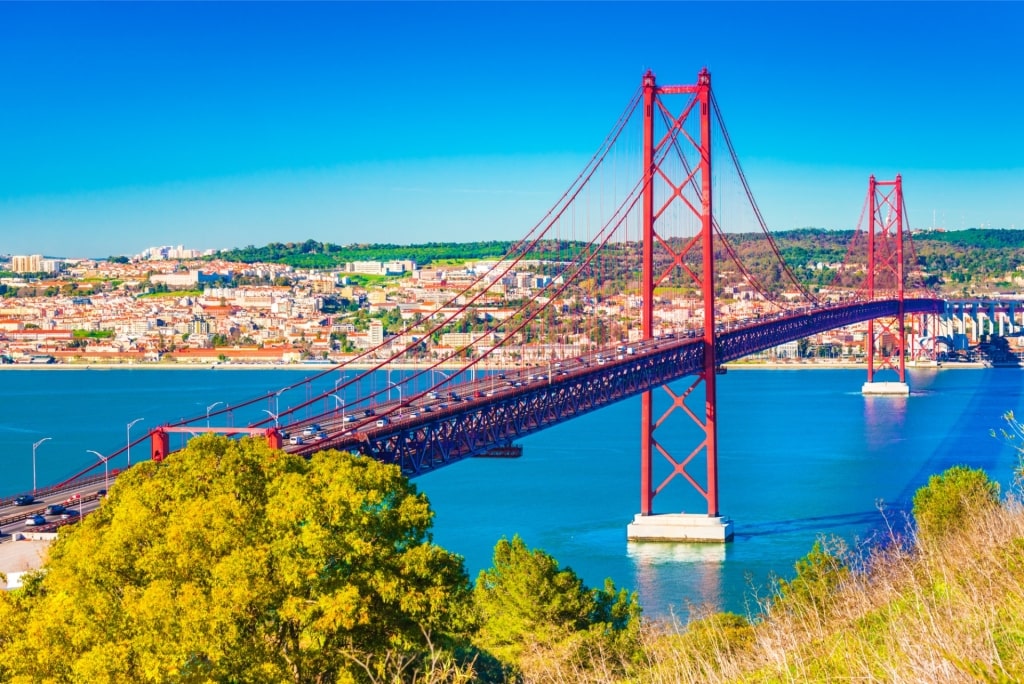
Ponte 25 de Abril in Lisbon, Portugal
Stretching across the Tagus River between Lisbon and the Almada district to the south, the Ponte 25 de Abril is one of Portugal’s most impressive modern architectural structures.
A close cousin of San Francisco’s Golden Gate, the gleaming suspension bridge even has the same International Orange color as the Bay Area icon. It was, however, designed by a different architectural firm, the American Bridge Company, which also designed the San Francisco-Oakland Bay Bridge.
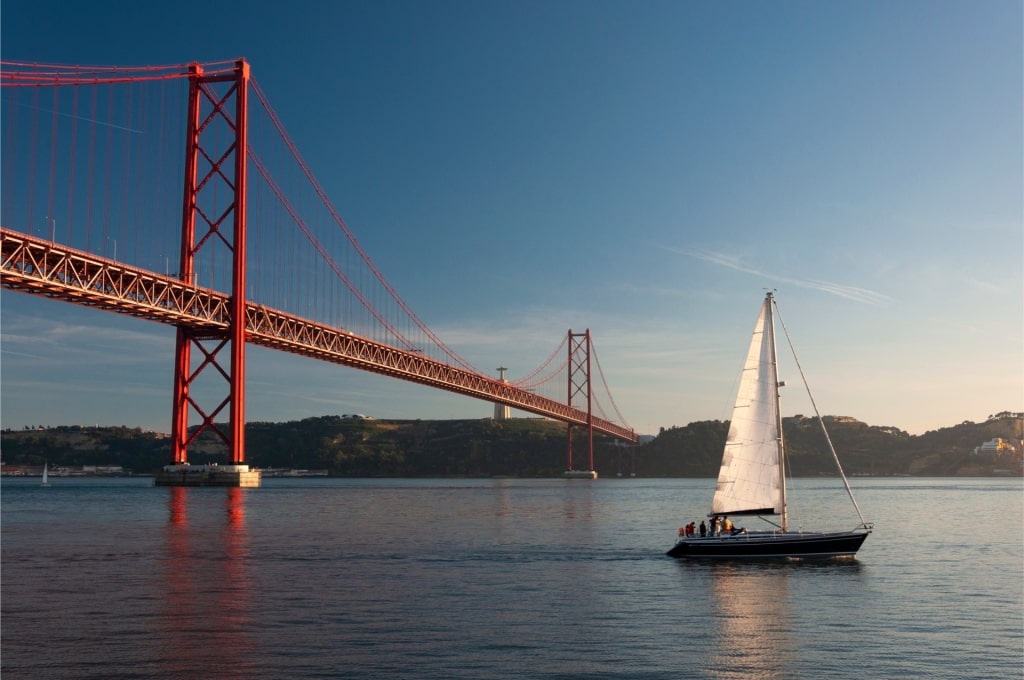
Ponte 25 de Abril in Lisbon, Portugal
Opened in 1966, the Ponte 25 de Abril carries both road and rail traffic over two decks, although runners can make the journey both ways during the Lisbon Half Marathon each spring.
The best views in daytime can be had from the Belém waterfront in Lisbon or Cristo Rei in Almada. From here, the views back to the capital with its sprawl of red-tiled rooftops make for particularly good photos.
Forth Bridge, Scotland
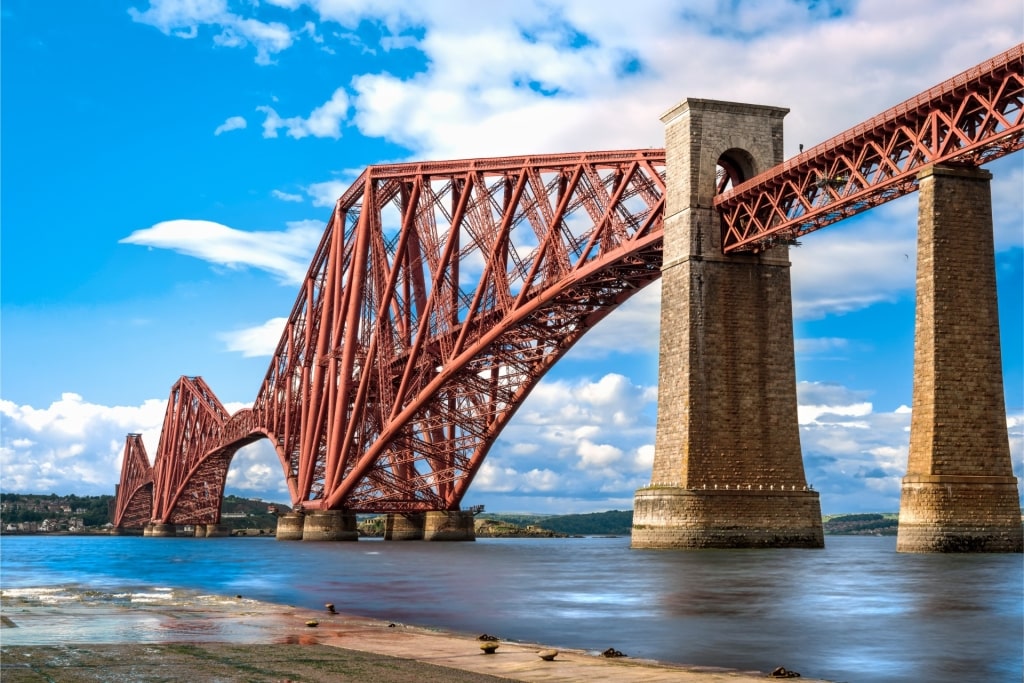
Forth Bridge, Scotland
There’s an expression in the UK for describing something long and arduous: “Like painting the Forth Bridge.” It was once believed that maintenance on this imposing bridge took so long that as soon as painting was completed, the workers had to start again from the other side. While that was never strictly true, and even less so with modern paint, it does illustrate just how large this magnificent bridge is.
Spanning the Firth of Forth to connect South Queensferry near Edinburgh with North Queensferry in Fife, the colossal structure was, at its 1890 opening, the world’s longest cantilever bridge. Even today, the sheer size and scale are breathtaking. More than 1.5 miles in length, the bridge was built from 53,000 tons of steel and six million rivets, making it one of the greatest feats of Victorian engineering ever built.
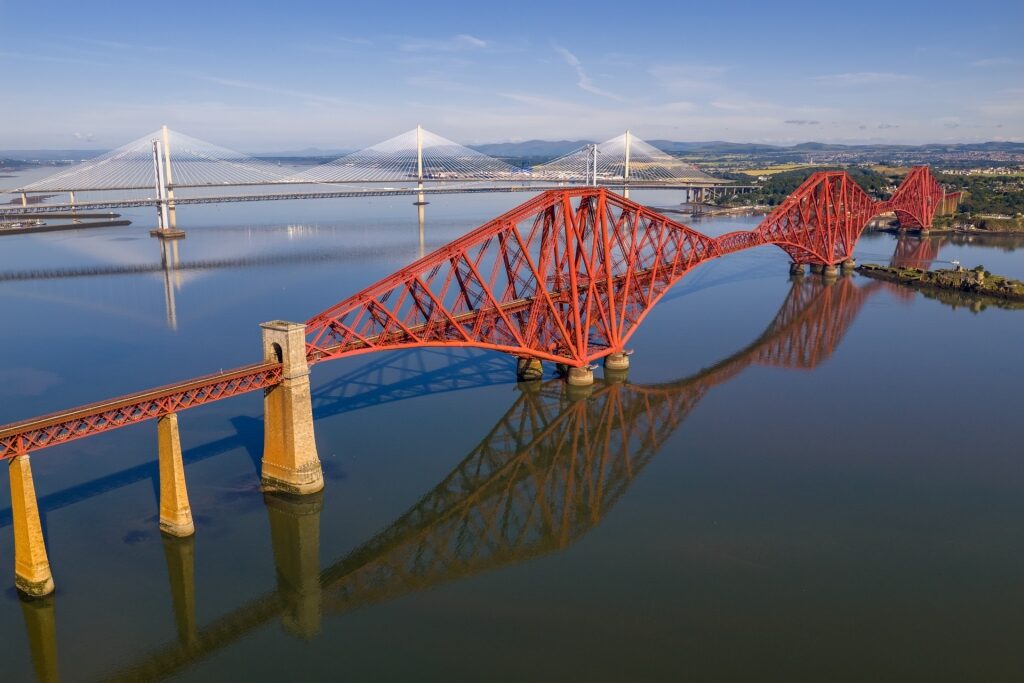
Forth Bridge, Scotland
Sail under and around some of the world’s most remarkable bridges on a voyage with Celebrity Cruises. Browse itineraries and plan your dream vacation today.