Ask any local what Nova Scotia is known for, and they’ll give you a dozen different replies. These range from wild, glacier-sculpted landscapes to vast skies, scenic lighthouses, buzzing, multicultural cities, and award-winning wines. It’s no surprise that visitors fall in love with this Canadian province, given how much there is to see and do.
Whether you’re interested in history, culture, hiking, or simply can’t resist fresh-caught lobster, Nova Scotia will restore your mind and spirit with its friendly welcome. Here are some of the most intriguing and delightful things that Nova Scotia is famous for.
Halifax Citadel
Halifax Citadel
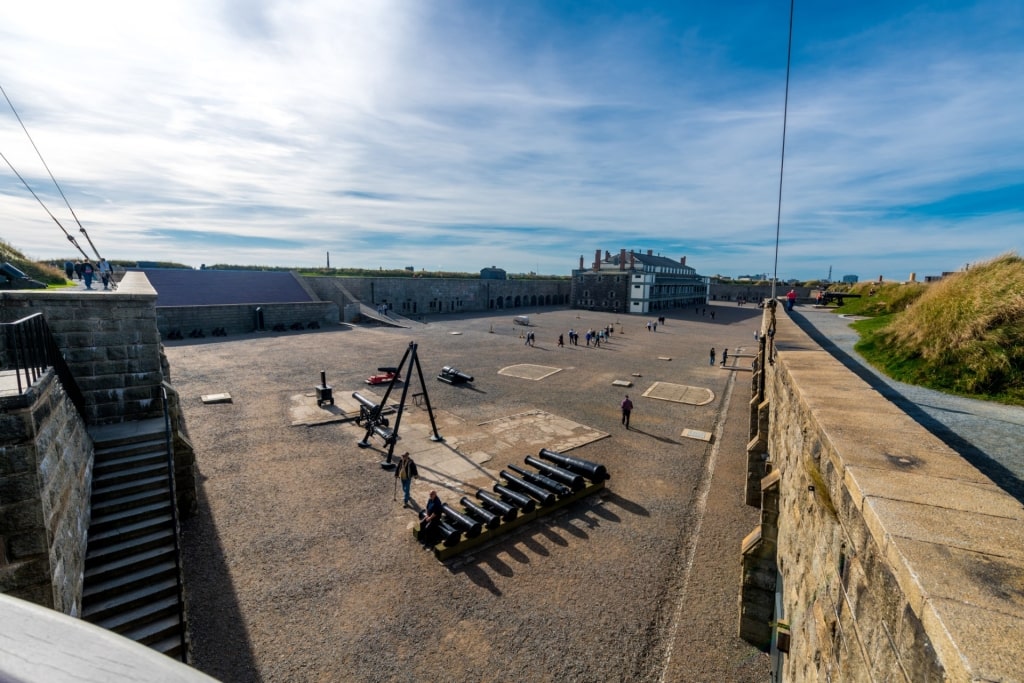
Halifax’s star-shaped fortress has defended the city’s protected harbor for centuries. The citadel you see today was built between 1828 and 1856, although the original was constructed in 1749. The star shape was a typical design of fortresses of the time.
The Citadel is perched atop a steep, grassy hill with spectacular views down over the city and the harbor. It’s easy to see why this location was chosen to build a defensive structure.
Halifax Citadel
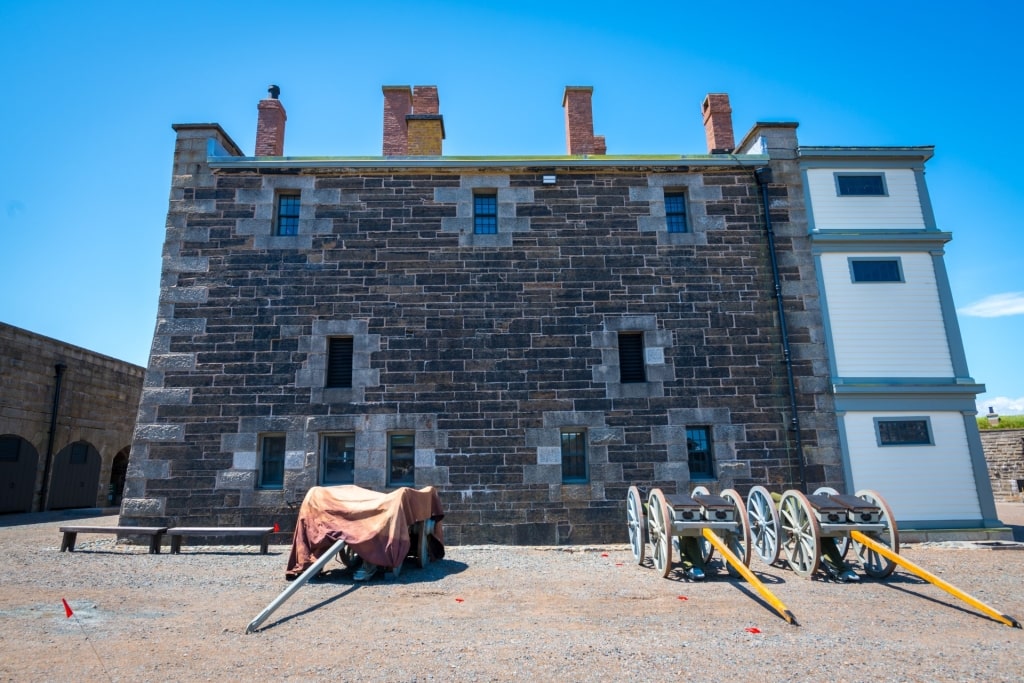
You can wander around the battlements, taking in the views, and visit the gunpowder magazines, signal post, and barracks.
You’ll be able to see military drills being reenacted by volunteers who are part of a Parks Canada living history program. In this case, the 78th Highland Regiment and the 3rd Brigade Royal Artillery are brought back to life, complete with 19th-century costumes and tartan kilts.
Canadian Museum of Immigration at Pier 21

Canadian Museum of Immigration
Nova Scotia may seem like a remote corner of Canada, but it was the gateway for waves of immigrants, which is reflected in the multicultural community you’ll find here today. The original inhabitants of the land were the Mi’kmaq people, who were joined by settlers from the French Acadians to people migrating from Scotland, England, Ireland, and Africa from the 18th century onwards.
The immigration terminal at Halifax’s Pier 21 was one of the major entry points into Canada, processing nearly one million hopefuls from all over Europe, the Middle East, Asia, and the Caribbean between 1928 and 1971. It was also the point from which hundreds of thousands of military personnel departed to fight in the two World Wars.
Today, the pier is a museum where you can step back in time to those days of hope, hardship, and resilience. You can join a tour to learn what the experience of a newcomer to Canada would have been.
Time travel through 400 years of Canadian history through a multimedia exhibition. Most interestingly, you can research your own family tree at the Scotiabank Family History Centre, which holds information from all the points of entry in North America.
Wine

Wine in Nova Scotia
Nova Scotia may appear to be a long way north on the map for wine growing, but the award-winning wines from Annapolis Valley will attract the attention of any oenophile. The terroir and climate of this beautiful, lush region are perfect for cultivating Riesling and Gewürztraminer grapes, and there are wineries dotted all over the region offering tours and tastings. Don’t miss Tidal Bay, the light, crisp signature white wine of Nova Scotia, produced only with locally-grown grapes.
You’ll find wine bars and tasting rooms all over Sydney, which is close to the Annapolis Valley, offering samplings of the local reds, whites, and rosés. More fun is to be had on a wine tour out to the vineyards, where someone else does the driving and you can taste to your heart’s content.
The Maritime Museum of the Atlantic
Maritime Museum of the Atlantic
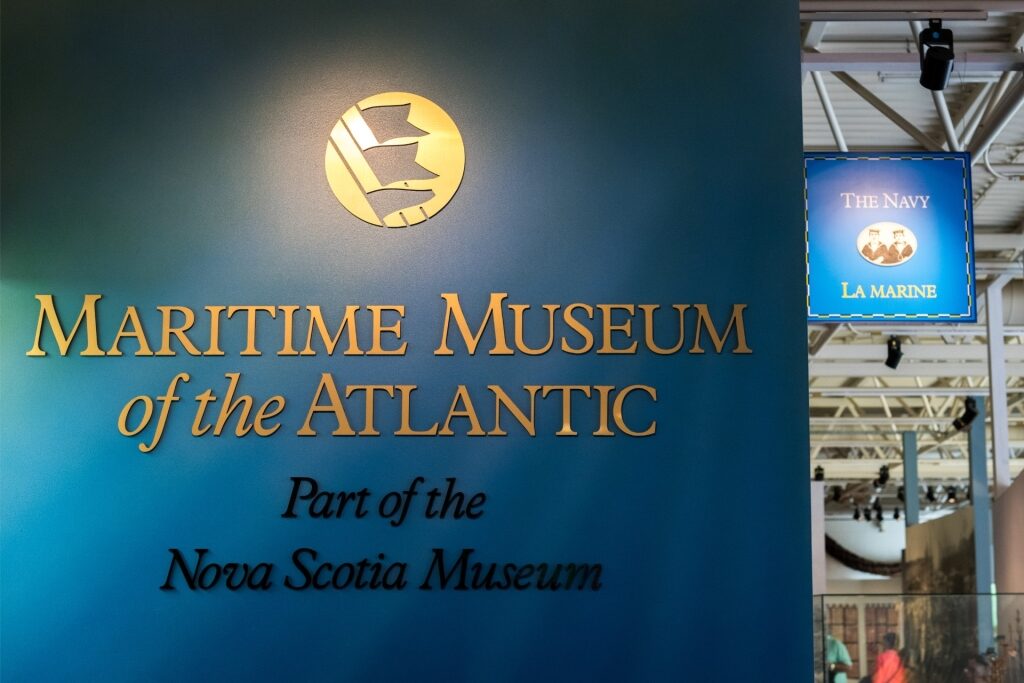
Visiting the Maritime Museum of the Atlantic is one of the best things to do in Halifax if you’re interested in shipping, vintage boats, or the Titanic story. It’s thoughtfully laid out and provides a fascinating insight into Nova Scotia’s maritime history.
There’s a range of beautifully preserved wooden boats, fully intact, as well as a collection of scale models of fine old steamships. You’ll learn about World War convoys, chandlery from the early 1900s, and boat building. Outside the museum, there are two boats to explore: the hydrographic vessel CSS Acadia and the HMCS Sackville, a corvette that saw action in WWII.
A permanent exhibit tells the story of the Halifax Explosion of 1917, a tragedy on a massive scale that happened when two ships collided in the harbor, one carrying supplies of explosives and barrels of petrochemicals. The blast, which had the strength of a three-kiloton bomb, killed some 1,700 and injured a further 9,000.

Maritime Museum of the Atlantic
Most visitors, however, are most interested in the Titanic tragedy. Halifax is where the bodies of the deceased were brought for burial by the CS Mackay Bennett. Many are buried in the city’s Fairview Lawn Cemetery, which you can also visit.
The exhibit tells the story of the tragedy and includes a collection of items salvaged from the site, including letters, postcards, and pieces of wood from the ship, as well as a pair of child’s shoes.
Seafood & Other Culinary Delights

Lobster roll
With 8,000 miles of shoreline, it’s no surprise that Nova Scotia has an impressive history of delicious seafood. You’ll find fresh-caught lobster and scallops on menus everywhere—and the fishing season is year-round. Look out for lobster rolls, lobster tacos, lobster poutine, and even lobster fondue.
The province also has culinary traditions reflecting the produce of its lush interior. Try a hodge podge, a creamy soup served in summer, packed with fresh seasonal vegetables. Rappie pie is an Acadian specialty, filled with potatoes and chicken.
A blueberry grunt is a tasty cobbler, packed with blueberries; Nova Scotia is an important producer of the fruit.

Halifax donair
Here’s a fascinating fact about Nova Scotia, at least, if you’re into kebabs. Somewhat unexpectedly, Halifax has its own take on the doner kebab, called a Halifax donair. This is essentially a warm pita bread filled with spiced, ground beef and drenched in a sweet garlic sauce. You’ll find them all over the city.
For a first-hand view of the kind of produce available in Nova Scotia, head to the Halifax Seaport Farmers Market, which is the oldest continuously running market in either Canada or the U.S.; it’s been going for more than 270 years.
Peggy’s Cove
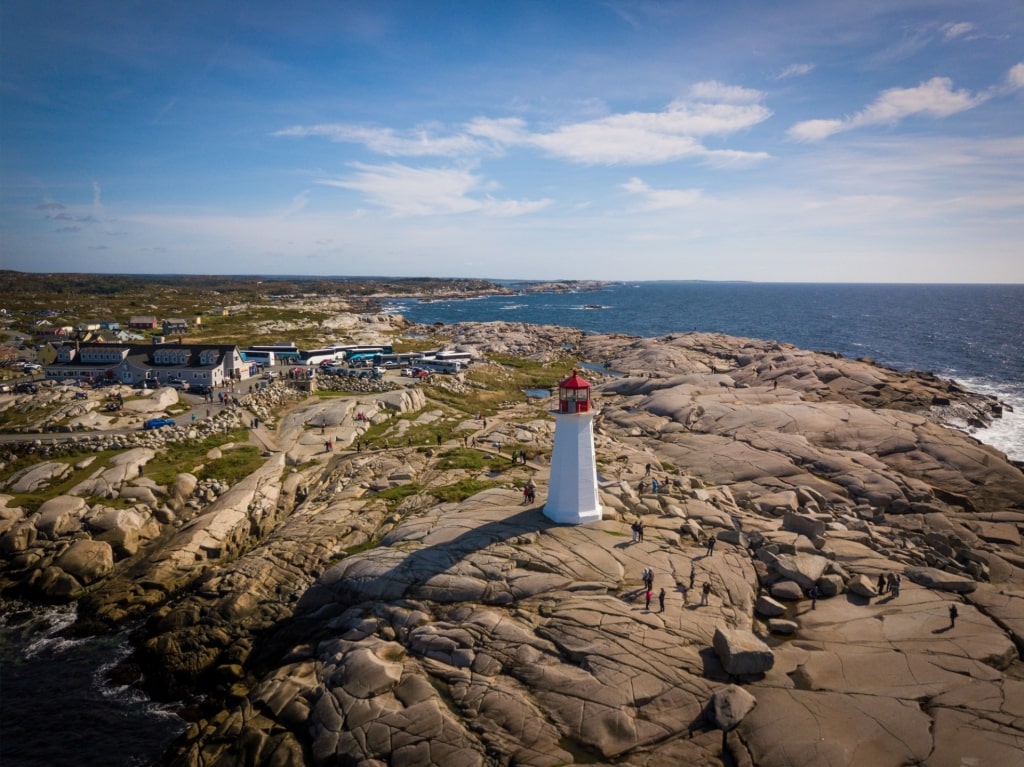
Peggy’s Cove
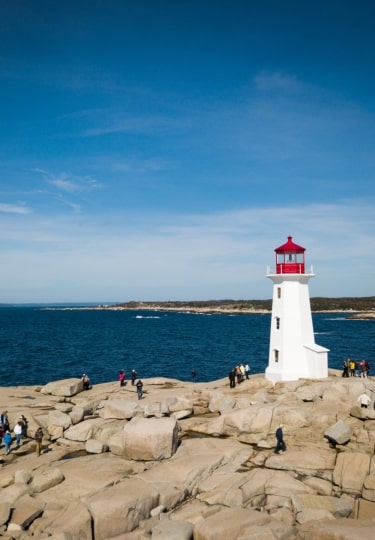
Here’s one of many fascinating facts about Nova Scotia: the province has more lighthouses than any other in Canada. These lighthouses are part of the scenery and an inherent part of Nova Scotia’s seafaring history.
One of the most beautiful and photogenic is the famous Peggy’s Cove Lighthouse, or Peggy’s Point Lighthouse, which is less than an hour’s drive from Halifax. The lighthouse, which stands on a rocky outcrop at the edge of the village, was built in 1915 and still functions today.
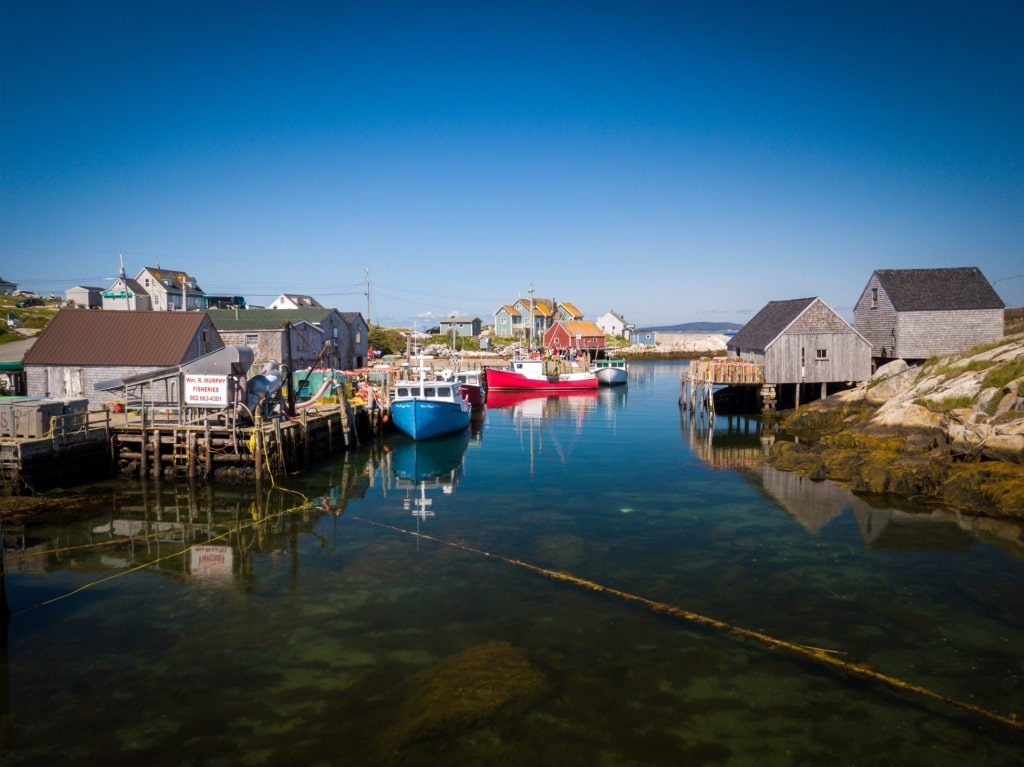
Peggy’s Cove
The village itself is exquisitely pretty, a cluster of white houses straggling along the shoreline, with piles of brightly painted lobster pots adding pops of color to the scene. Many of the inhabitants of the village are generations-old fishing families. Those who are not involved in fishing often run art galleries and gift shops.
You can wander over the rocks and up to the famous lighthouse, but do pay attention to the safety signs. Visit on a wild, windy day and you’ll see waves pounding the rocks, often crashing over the marked trails.
Cape Breton
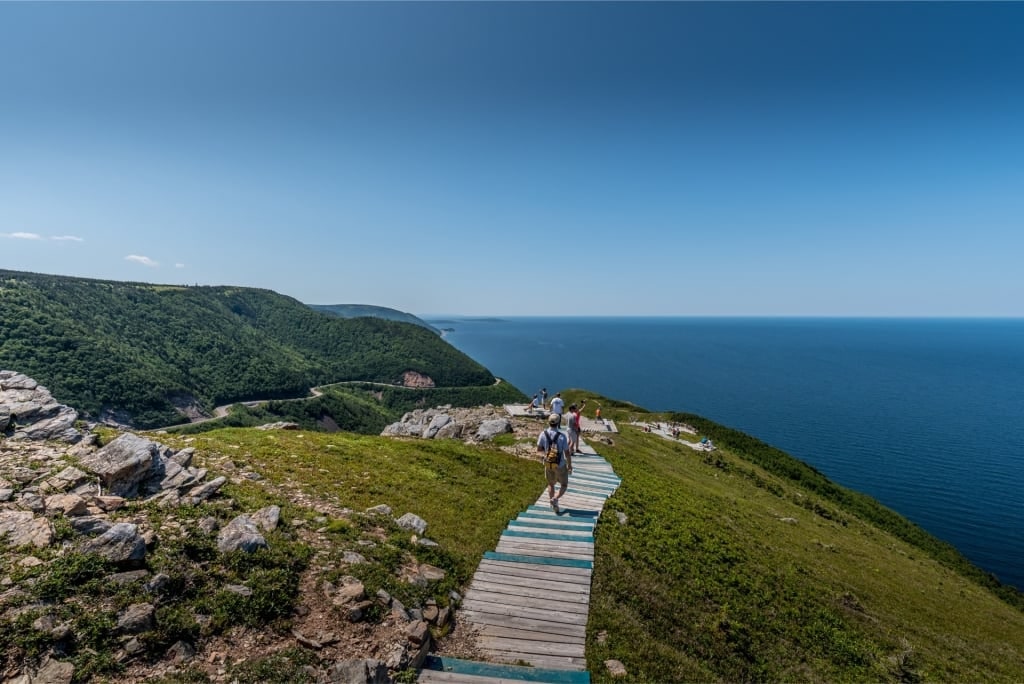
Cape Breton
Rugged Cape Breton is an island in the far northeast of Nova Scotia, which almost feels like a world apart. The coastline here is craggy, wave-pounded, and rocky, the interior of the island swathed in dense forest, which puts on a spectacular display of ocher, orange, and scarlet in fall.
The best way to see Cape Breton is to drive, hike, or cycle part of the 185-mile-long Cabot Trail, which loops around the island and along the boundary of the Cape Breton Highlands National Park.
A third of the trail runs along the coastline, so you’ll enjoy magnificent views of the wild Atlantic shoreline. There’s a good chance of spotting whale blows in the distance if the sea isn’t too rough; some 12 species of whale migrate through this area every year.
Read: Best Fall Foliage Cruise Destinations
The Fortress of Louisbourg
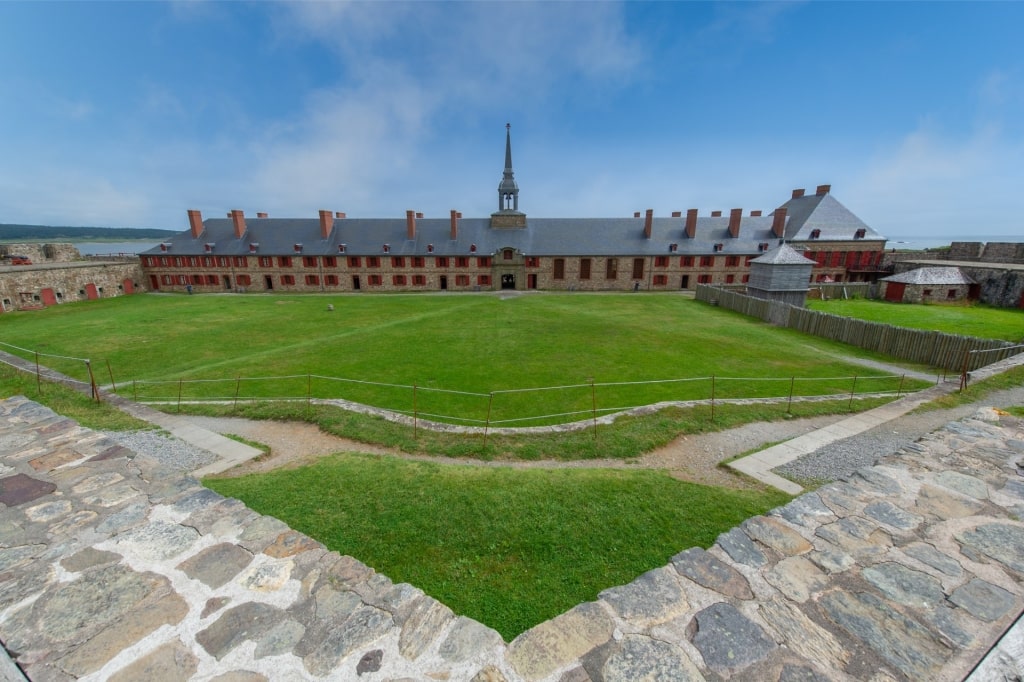
Fortress of Louisbourg
Just 35 minutes’ drive from Sydney, the Fortress of Louisbourg National Historic Site is the biggest historical reconstruction in North America. It’s located on the wild, rocky shoreline of Cape Breton, with sweeping views of the coast.
Construction on the fortress began in 1719, with parts added over time. The structure was as much of a community as a military structure, with civilians including Mi’kmaq, French, and other Europeans living and working inside its walls.
A visit here is like stepping back in time to the era of French colonialism, which lasted from 1713 to 1758. You can wander the original 18th-century ruins, but what’s even more fun is exploring the reconstructed houses, discovering the kitchen gardens, and interacting with costumed characters who are a mine of information about days gone by.
Lunenburg
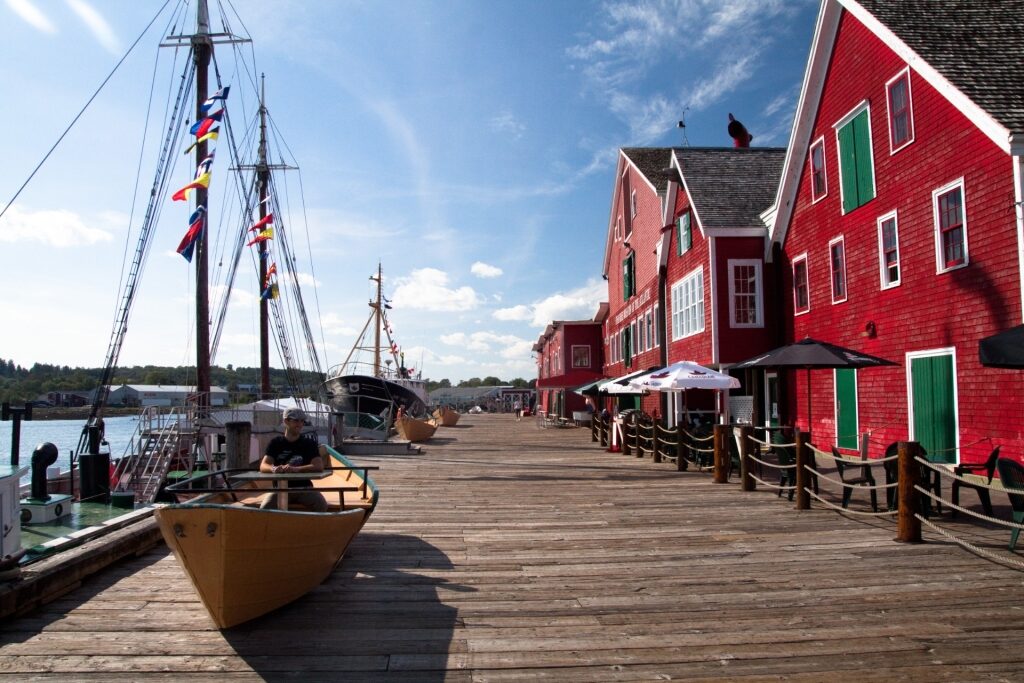
Lunenburg
An easy day trip from Halifax, pretty Lunenburg is a UNESCO World Heritage Site. It’s considered the best-preserved example of a planned British colonial town in North America. Around 70 percent of the original buildings, dating back to the 18th and 19th centuries, are still intact.
When you get there, you’ll be enchanted by the horse-drawn carriages, beautifully kept wooden houses, and tall ships along the waterfront. It’s like stepping back in time.
Lunenburg is very artsy, and every other shop seems to be a gallery or a craft workshop, so come prepared to pick up nautically themed gifts, handmade jewelry, local fudge, artisan coffee, and Nova Scotia tartan.
Alexander Graham Bell
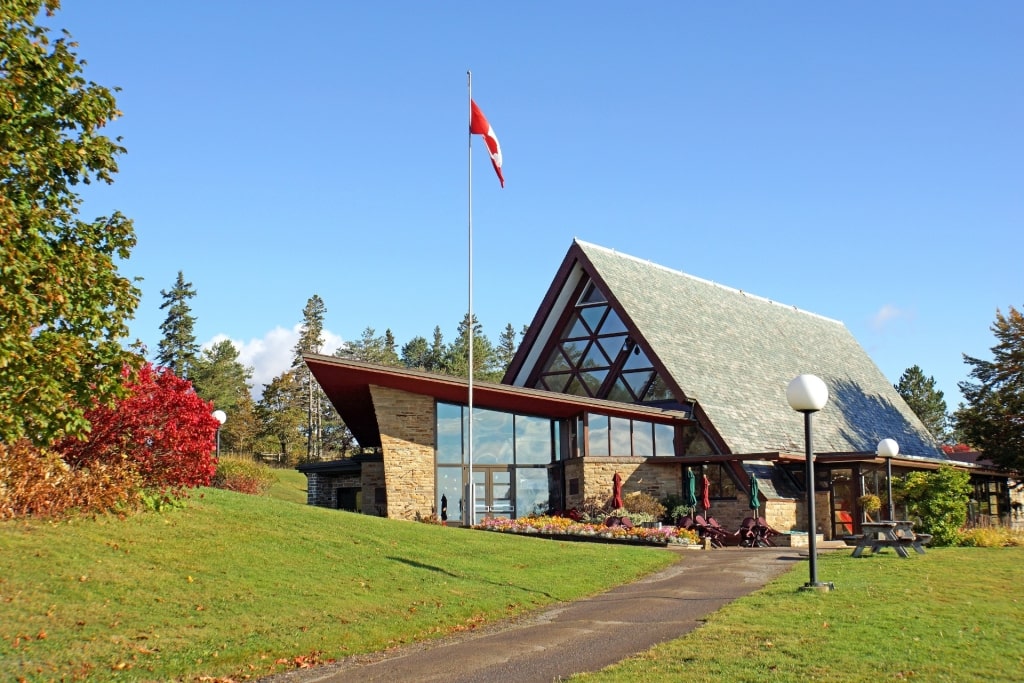
Alexander Graham Bell National Historic Site Photo by
Dennis Jarvis on Flickr, licensed under CC BY-SA 2.0
Alexander Graham Bell, the inventor of the telephone, may have been a Scotsman, but he fell in love with Nova Scotia’s rugged landscapes. He summered here in Bras d’Or with his family and built an impressive summer estate over the bay from Baddeck, named Beinn Bhreagh, which is Gaelic for “beautiful mountain.” Today, the house is a museum dedicated to his work and a National Historic Site.
As you’ll learn, what’s intriguing about Bell is that while the telephone is his most famous legacy, he was, arguably, one of the greatest inventors of the 19th century. He was fascinated by human flight and invented an airplane called the Silver Dart, which took off in 1909 over Baddeck Bay, shortly after the pioneering efforts of the Wright brothers.
You can see a replica of the Silver Dart in the museum, as well as an early hydrofoil, telegraphs, notebooks, sketches, and kites. The inventor was buried here on the estate in 1922.
Halifax’s Waterfront
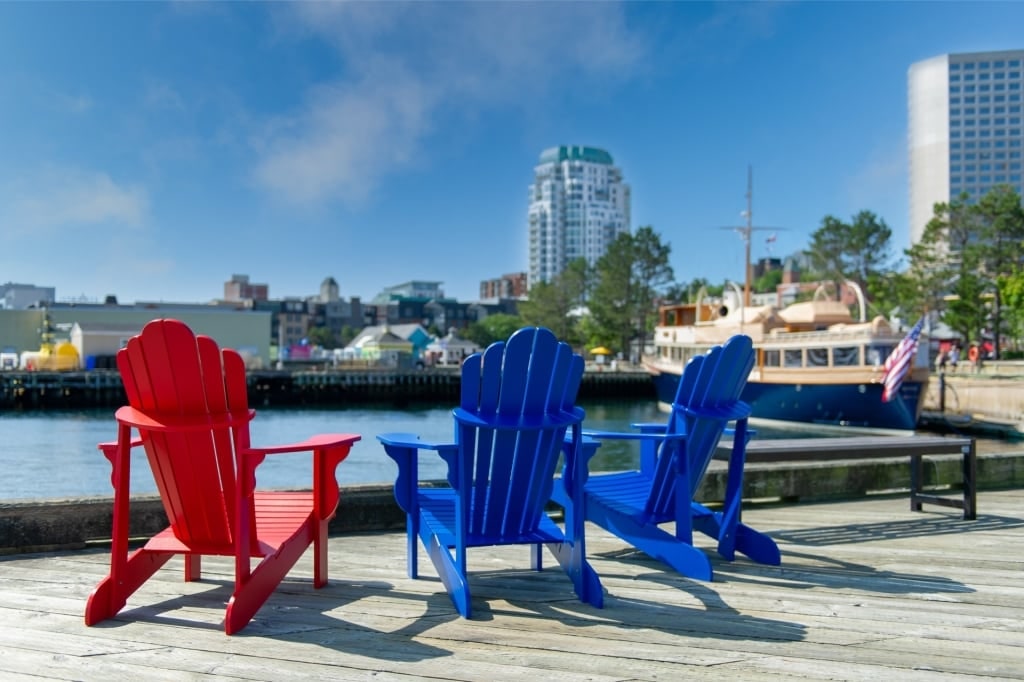
Halifax’s waterfront
On a fine day, there’s little better than a stroll in the sunshine along the two-and-a-half-mile boardwalk of Halifax’s waterfront. This sun-warmed walkway stretches from the Canadian Museum of Immigration at Pier 21 to Casino Nova Scotia and is lined with upscale shops, restaurants, and seafood shacks. This is where you’ll also find the Halifax Seaport Farmers Market—and where you can board local boats offering harbor cruises.
Benches and Adirondack chairs facing the water are the perfect place to relax and watch boats zipping back and forth across the wide harbor.
Leaf Peeping
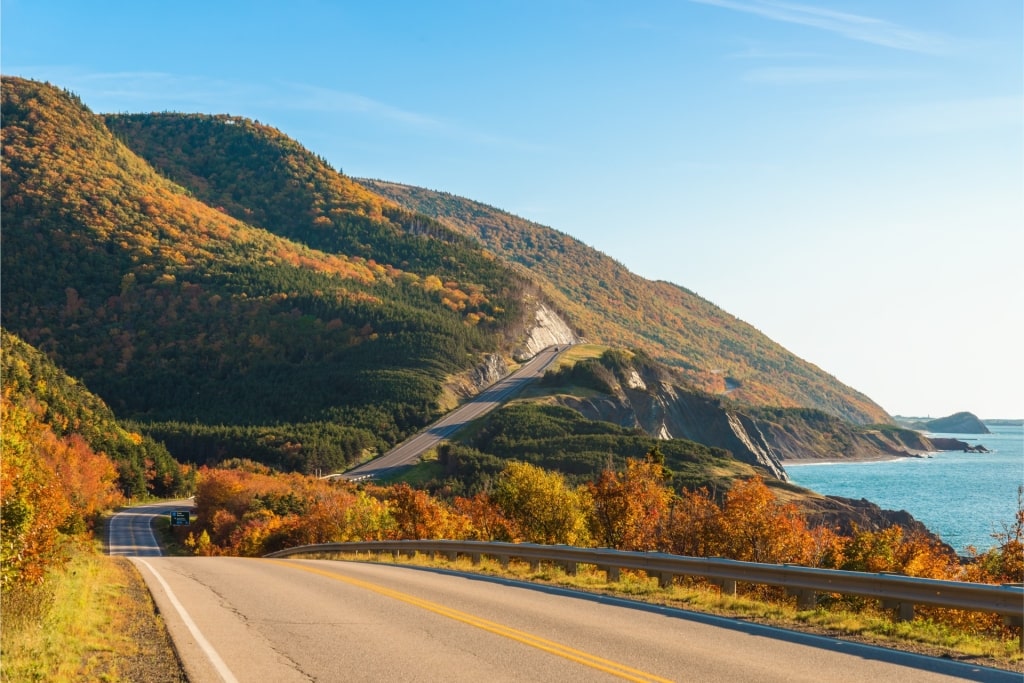
Cabot Trail
What is Nova Scotia known for? Fall colors, of course; fall is one of the best times to visit Nova Scotia for the scenery. In September and October, the trees in the deciduous forests that cover much of the province turn intense shades of orange, scarlet, and yellow.
There are multiple opportunities to take in this spectacle. The Rum Runners Trail from Halifax to Lunenburg is a gorgeous coastal drive through forests and tiny seaside villages. From Sydney, even a short drive along the Cabot Trail will provide endless photo opportunities of nature in all its fall glory.
You don’t even need to leave the city; in Halifax, Point Pleasant Park has miles of easy hiking trails through woodlands in dazzling shades.
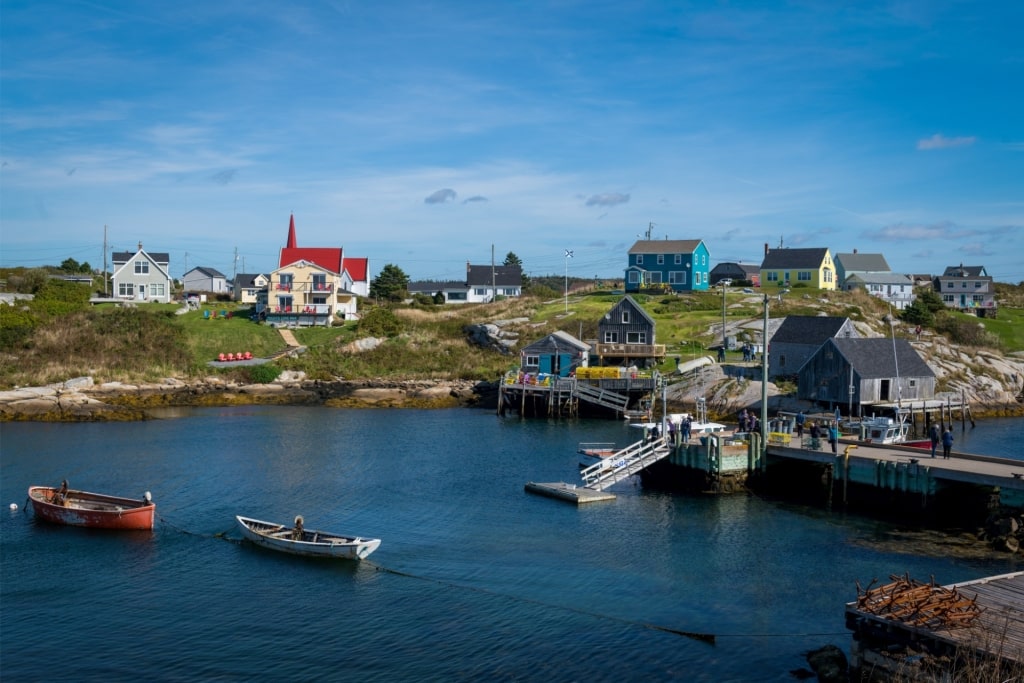
Peggy’s Cove
Discover the history, nature, and cultural diversity of this beautiful place for yourself. Browse Celebrity’s cruises to Nova Scotia and plan your Canadian adventure today.