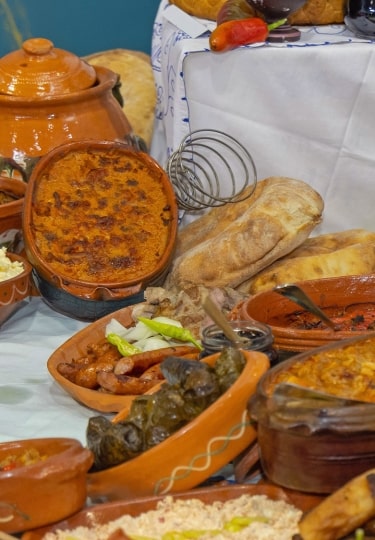
Serbia, at the crossroads of the Balkans, reflects Ottoman, Byzantine, and Austro-Hungarian influence in its cuisine. Sailing along the Danube, you can sample centuries-old Serbian dishes made from local harvests grown, caught, or smoked the same day.
Grilled meat and slow-cooked stews dance across Serbian menus, but the country’s culinary character comes from dishes like rakija, which families have perfected over generations.
This guide explores Serbia’s dishes, how they’re made, and the local touches that distinguish them from neighboring Balkan cuisines.
Defining Flavors of the Serbian Palate
Serbian traditional food is an agrarian, meat-and-potatoes cuisine that layers centuries of Austro-Hungarian, Mediterranean, and Ottoman influences, much like its Balkan neighbors. You’ll find predominantly home-style meals on the menu, featuring grilled meats, flaky pastries, and rich stews.
Paprika has become the backbone of traditional Serbian food since it was introduced to the region in the 16th century, with dairy and meat fat carrying its warmth. Black pepper, garlic, and bay leaves add aromatic depth, reminding you that you’re still in the Mediterranean.
Serbia’s farms facilitate fresh grilled meats and vegetable-based meals in summer, and hearty stews and beans in winter. For the alfresco diners, spring and autumn are by far the best seasons to visit, sharing long kafana tables with your travel companions, passing traditional dishes down the line as you dine on the Danube riverbanks.
Here’s a taste of what you can try.
Creamy Serbian Condiments
Beyond the main courses, no Serbian meal is complete without the creamy spreads and savory relishes that elevate every bite. These condiments are culinary staples, often used to add richness, tang, or a smoky depth to bread, meats, and appetizers.
Kajmak
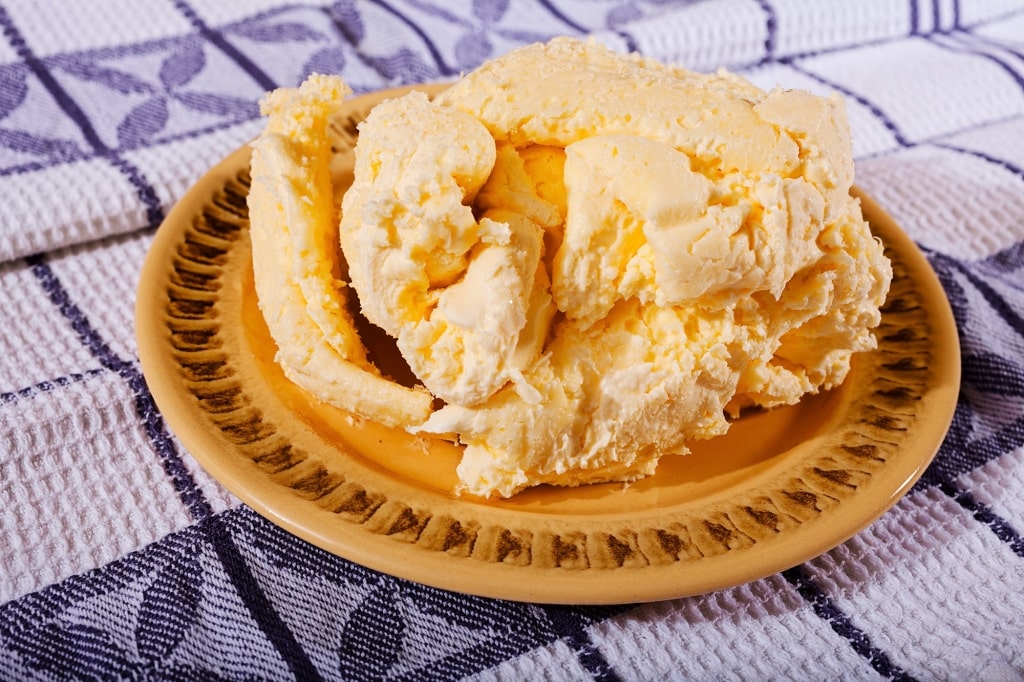
Rich, creamy kajmak served on a rustic ceramic plate
Kajmak is a rich, creamy dairy condiment that adds a zesty tang to virtually anything you can eat. To start the process, farmers skim the cream off boiled milk and ferment it for two to three days in wooden barrels. As it ages, the cream develops into a thick, rich, salty spread.
Spread it over freshly baked crusty bread or enjoy it with meats. Similar dairy spreads permeate across Bosnia, North Macedonia, and Bulgaria, each with subtle regional differences.
Ajvar
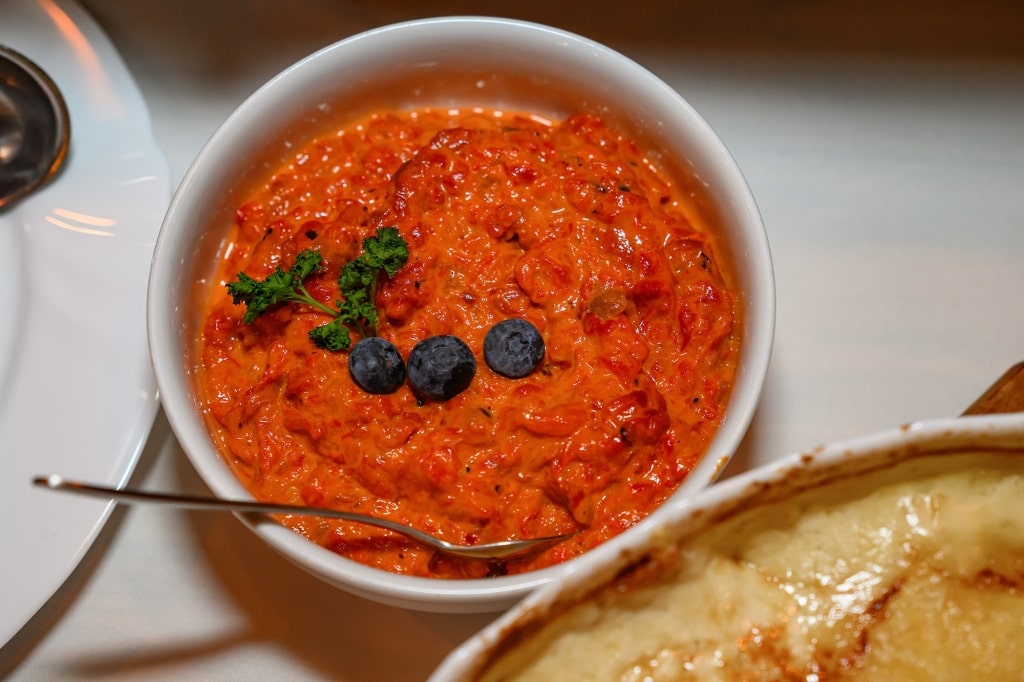
Vibrant serving of ajvar relish, topped with a sprig of fresh parsley
Ajvar is another prized Serbian condiment with a similar texture to baba ganoush. Preparing it involves charring red peppers and eggplant over an open flame until the skins blister. Chefs then peel, mince, and simmer the vegetables down into a deep, smoky relish. The grilled peppers’ sweetness helps cut through Serbia’s meat-heavy dishes.
Breakfast Foods and Appetizers
Serbian mornings typically begin with savory pastries and shared plates, setting the stage for a day of culinary exploration. These breakfast staples and appetizers highlight the country’s affinity for dough, dairy, and bold, comforting flavors that prepare locals for the day ahead.
Burek
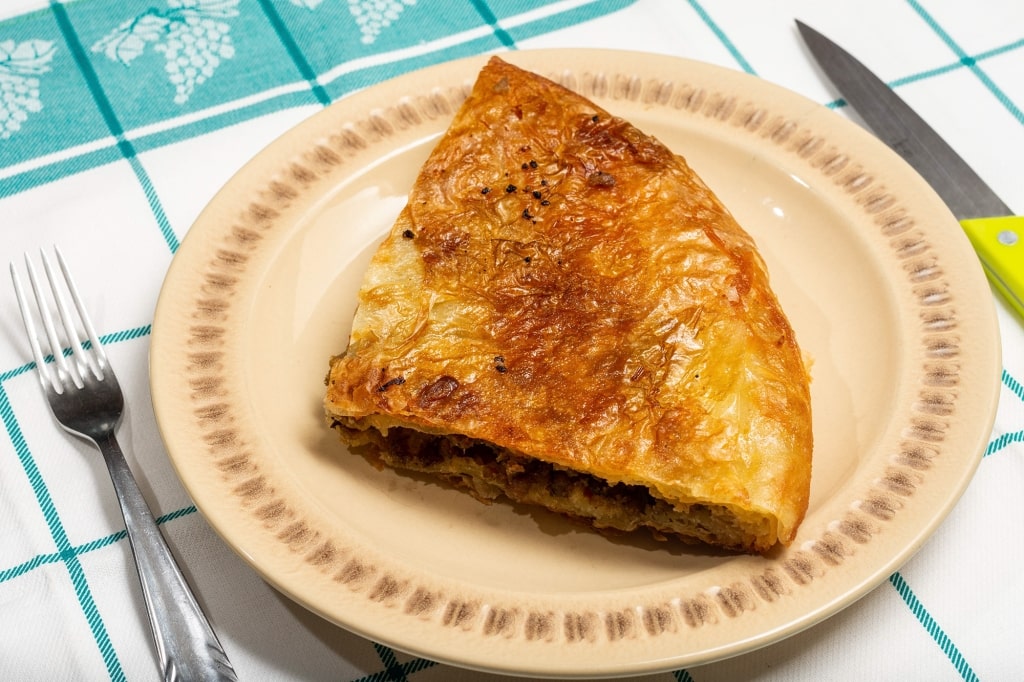
Warm, flaky burek meat pie, perfectly sliced and presented on a rustic wooden board
Burek comprises paper-thin layers of filo pastry folded around minced meat, cheese, or spinach, coiled into a spiral. The pastry bakes until the layers crust into golden, buttery flakes.
Serbians often grab warm burek with yogurt from burekdžinice bakeries on their way to work. Meat and cheese are the favorites locally, but potato and spinach versions appear in some bakeries, too.
Gibanica
Gibanica drowns flaky filo in a rich egg-and-cheese cream for a savory custard-like pastry. The custard features whisked eggs and crumbled white cheese, sometimes with a fold of kajmak for an extra-creamy texture. The mixture sits on crumpled filo before baking in the oven until golden and crisp.
Serbians enjoy gibanica warm or cold as a breakfast staple or appetizer alongside a cool glass of yogurt. You might taste a similar dish in surrounding countries like Bulgaria, Slovenia, and Croatia, usually without the added cream and occasionally served sweet with walnuts, apples, and poppy seeds.
Serbia’s Hearty Main Meals
From the smoky aroma of grilled meats to the slow-simmered comfort of traditional stews, Serbia’s main courses are a testament to the country’s love for bold, rustic flavors. Whether you’re dining at a local kafana or enjoying a home-cooked feast, these hearty dishes form the backbone of the Serbian dining experience.
Ćevapi
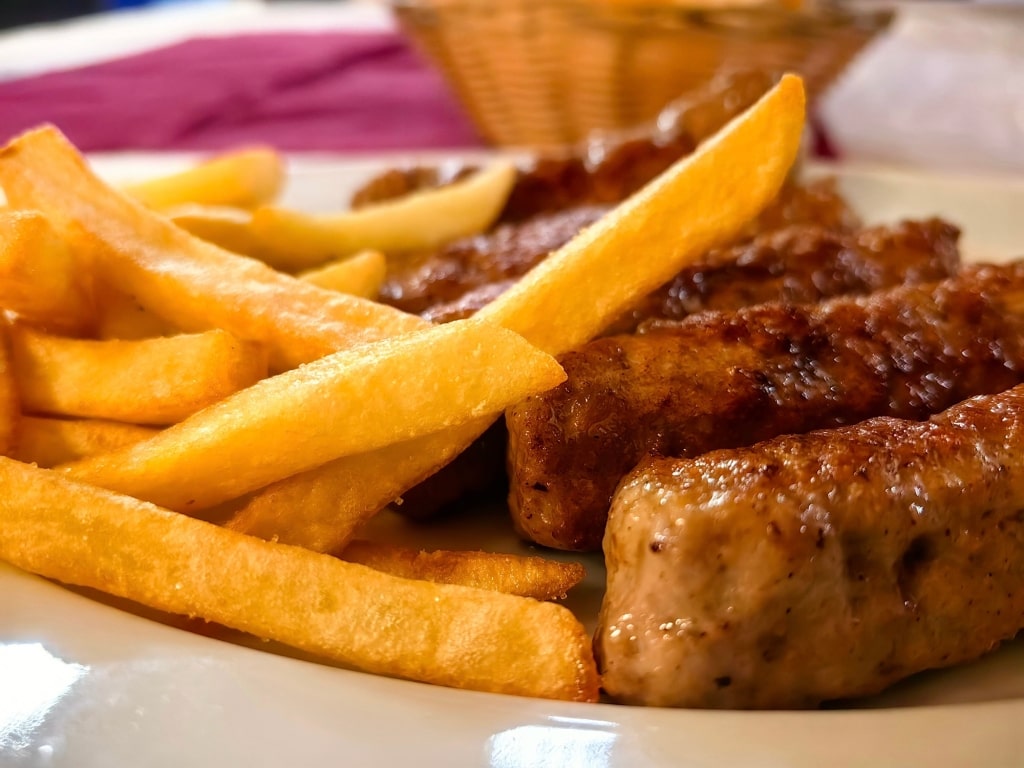
Charred ćevapi alongside golden french fries, plated for a traditional feast
Ćevapi is a minced meat roll that stars in Serbia’s street food and backyard grill culture. Heavily seasoned palm-sized balls of minced beef, pork, and lamb char over coals before landing inside warm lepinja flatbread, topped with raw onion and a spoonful of ajvar or kajmak.
You’ll find ćevapi at kafanas, street stalls, and family cook-offs from Belgrade to Leskovac. Bosnia has a similar dish, although it’s smaller and more mildly seasoned.
Pljeskavica
Think of Pljeskavica as Serbia’s answer to a burger. It uses the same seasoned minced meat mixture as ćevapi, though pressed flat into a wide patty, sizzling on the grill until juicy inside and crispy on the outside.
Pljeskavica is served inside warm lepinja flatbread or on its own with kajmak or ajvar. Unsurprisingly, this dish often rivals ćevapi as the grilled order of the day.
Sarma
Sarma wraps tangy, fermented cabbage around a rich meat-and-rice filling for one of Serbia’s bite-sized winter warmers. Chefs fold minced beef, rice, and smoked bacon into salt-pickled cabbage leaves, roll them tight, and pack them into a pot. The sarma is then braised for a few hours until the cabbage softens and the flavors meld.
Sarma is a popular dish during Slava celebrations and Christmas dinners, often accompanied by a big spoonful of sour cream. You might recognize dolma, a similar dish served throughout the Mediterranean and the Middle East, made with vine leaves—which Serbia rarely entertains.
Prebranac
During winter, local families layer simple white beans with caramelized onion, garlic, bay, and sweet paprika, then oven-bake it into a creamy, thick stew. Prebranac remains primarily a vegetarian dish, though sometimes you’ll find sausages or bell peppers baked in.
You’ll usually find it with a dusting of fresh herbs and served with a side of crusty bread or sauerkraut to warm the coldest winter evenings.
Karađorđeva Šnicla
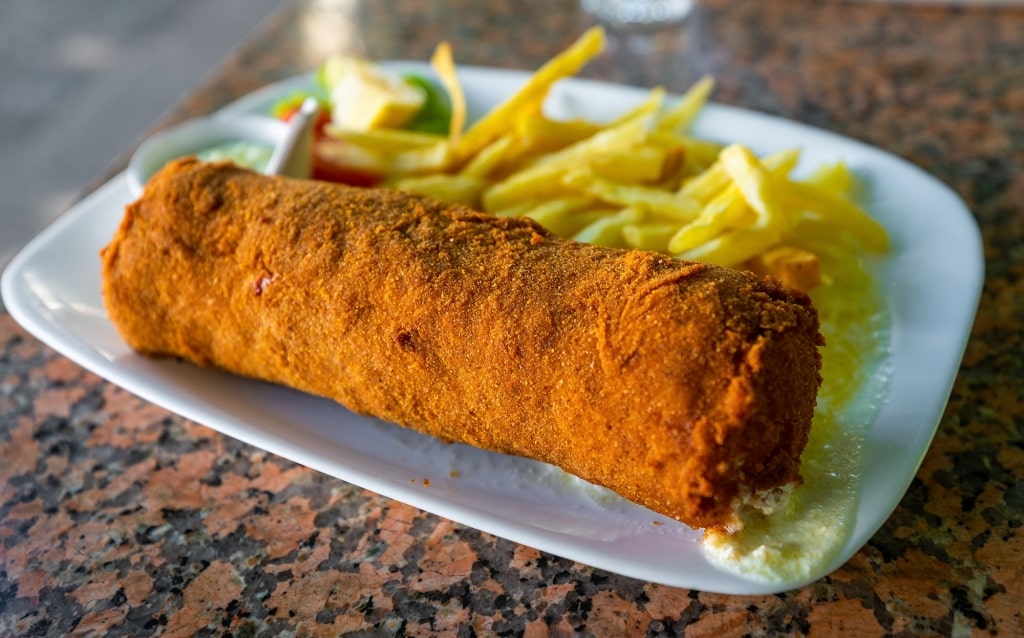
Golden-brown Karađorđeva šnicla, accompanied by crisp fries and smooth tartar sauce
This rolled, kajmak-stuffed cutlet hails from Belgrade in 1956, and it’s been a national favorite ever since. If you’re looking for things to do in Belgrade, you can visit the “Golf” restaurant site, where chef Milovan Mića Stojanović first introduced it to local menus.
Karađorđeva šnicla uses pounded veal or pork cutlets wrapped around a core of kajmak, then crusted with breadcrumbs and fried until the outer layer turns golden-brown and crispy. The result looks similar to a large cigar.
Restaurants plate it with a lemon wedge, tartar sauce, and a side of fries, reserving it for special dinners rather than everyday meals. Croatia’s zagrebački odrezak follows the same rolled, breaded technique, but stuffs the cutlet with ham and cheese instead of kajmak.
Paprikaš
Along the Danube, fishermen make paprikaš, a paprika-rich stew of carp or catfish simmered over an open fire with sweetened onions until the broth turns brick-red and silky.
The dish traces back to Vojvodina’s riverside fishing communities, where both bean and paprikaš cooking competitions take place every summer. Hungarian paprikás is similar, though usually thickened with sour cream and leans on chicken rather than fish, affording the Serbian version a lighter finish.
Gulaš
Gulaš takes both its name and roots from Hungary but has firmly established itself in Serbian home kitchens. Cooks brown cubes of beef or pork, then let them stew slowly with paprika, black pepper, and a touch of cayenne until the meat turns tender and the sauce thickens.
Serbians spoon it over pasta or mashed potatoes, keeping portions modest (especially given how assertively the paprika comes through). Hungarian gulyás is technically a soup, thin and paprika-red. What Hungarians call pörkölt is the thicker, more concentrated stew, which is a closer match to Serbia’s gulaš.
Desserts and Drinks
After enjoying the savory richness of Serbia’s main courses, it’s time to indulge in the country’s sweeter side. From potent fruit brandies to decadent layered cakes, these traditional desserts and drinks offer the perfect finish to any Serbian feast.
Rakija
Rakija is Serbia’s fruit brandy, most often distilled from plums as šljivovica, though apricot, quince, and pear versions also exist. You may receive a glass as a welcome, an aperitif, or a nightcap, always from a shot glass or stemmed tulip. The trick is to sip it slowly.
A point of comparison would be Hungary’s pálinka. The main difference is that pálinka carries protected EU status, whereas Serbian rakija follows a looser, homemade tradition.
Vasina Torta
Vasina torta tops a walnut sponge with an orange-scented chocolate cream under a cloud of meringue. The cake originates from Paraćin circa 1908, where mothers-in-law would gift it to their sons-in-law. Now, it’s a fixture at birthdays, weddings, and holiday tables.
How Serbian Dishes Compare to Neighboring Regions
Across the Balkans, there’s a strong Ottoman, Byzantine, Slavic, and Austro-Hungarian presence at family tables. While the ties are undeniable, Serbia distinguishes its traditional cuisine with a stronger emphasis on grilled meats and a greater reliance on dairy.
Compared with its neighbors, a few distinctions stand out:
- Hungary shares Serbia’s love of paprika and slow-cooked stews. Still, Hungarian cooking leans further into sour cream-thickened sauces and sweet pastry culture, with less emphasis on open-flame grilling.
- Inland Croatian cooking closely assimilates Serbia’s Austro-Hungarian roots, using lard, paprika, and black pepper. Coastal Croatia uses Mediterranean staples like olive oil, seafood, and fresh herbs, less commonly found in Serbian cooking.
- The broader Balkan region shares Turkish-influenced sweets, cheese pies, and grilled meats, though Serbia’s dairy and meat fat content sets it apart from the olive oil-based cooking further south.
FAQs: Traditional Serbian Food
What unique culinary traditions set Serbian food apart from neighboring European cultures?
Serbian food leans more into char-grilling and paprika-driven stews than its neighbors, combining Ottoman, Byzantine, and Austro-Hungarian influences into a culinary style of smoke, dairy fat, and slow braising.
What specific dishes are highly recommended for a first-time traveler enjoying a one-day stop in Belgrade?
First-time visitors to Belgrade should try ćevapi, burek, and rakija, three dishes that capture Serbia’s grilling, pastry, and spirit traditions in one sitting.
How do local beverage pairings enhance traditional dining along the Danube River corridor?
Rakija, Serbia’s fruit brandy, traditionally opens or closes a meal, cutting through rich, paprika-forward dishes like gulaš and paprikaš with its sharp finish.
Experience Serbia’s Delicacies on a River Cruise
There’s only so much a menu description can tell you about a place. Serbia’s food makes more sense when you’re sitting at a long table, perched inside or alfresco, with kajmak spread thick on warm bread while charcoal scents drift off a nearby grill.
A river cruise along the Danube provides ample opportunity to taste your way through the country’s prized menus, often with lunch and history within the same afternoon.
Explore Belgrade river cruises with Celebrity and taste Serbia’s delicacies firsthand.