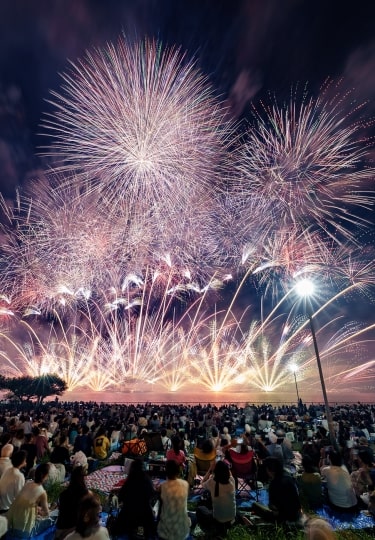
A grilled skewer in hand, a lantern-lit food stand, and a bustling Japanese alley feel like the only components needed for a successful Japan trip, until you look up. Between July and October, fireworks dance in the night sky in choreographed bursts. The seconds between eruptions feel like a moment that’s frozen in time, as you realize you’re part of one of the country’s oldest traditions: hanabi festivals—hanabi taikai in Japanese. Four of Japan’s best firework festivals include Sumidagawa, Nagaoka, Omagari, and Yodogawa. The pyrotechnic displays started as a spiritual ritual, but later became a spectacle for hundreds of thousands of visitors. Each event runs its own calendar, giving Celebrity Cruises® guests multiple opportunities to plan a sailing around an event. Look for an itinerary that visits Tokyo and Osaka, putting you within reach of two of the biggest shows.
Hanabi Taikai Explained
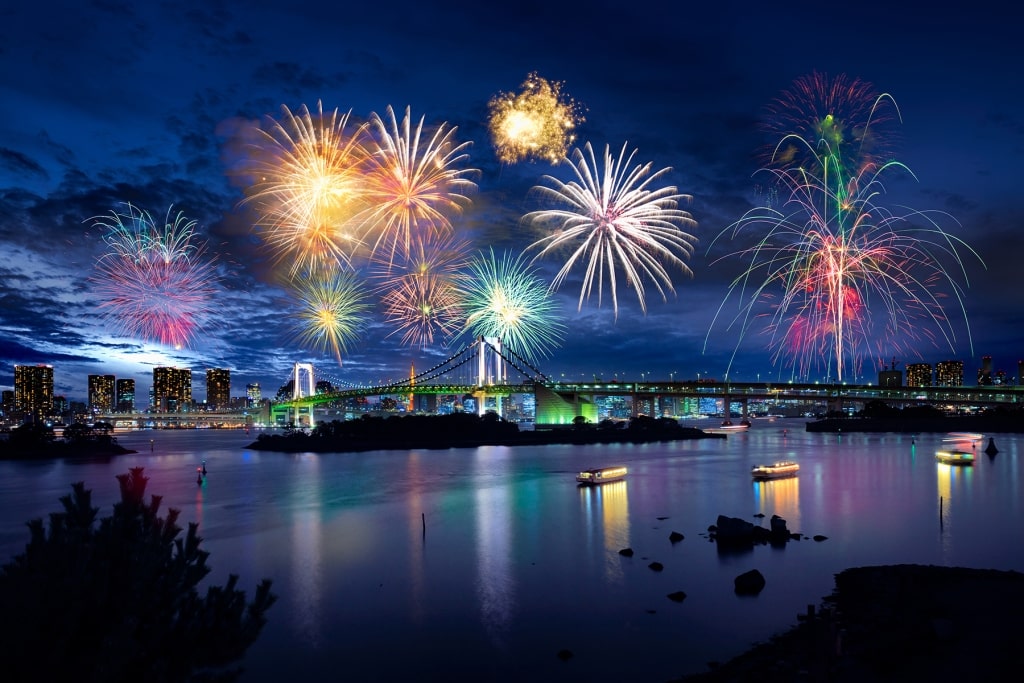
Colorful fireworks illuminate the night sky above the Rainbow Bridge and Tokyo Bay, framed by the distant city skyline during a Hanabi Taikai festival.
During hanabi taikai, fireworks are sparked to honor the dead, ward off misfortune, and mark the end of hardship. Its first recorded public display dates back to the 1700s, when it grew from a private ritual into a summer spectacle. Today, guests watch in awe as the main event, called the starmine, surges into the sky. The starmine is a synchronized pyrotechnic sequence typically timed to music, turning the sky into one continuous canvas of color rather than individual illuminations.
Participants dress in yukata—a light cotton kimono commonly worn at summer festivals—and line up at food stalls called yatai. Grilled skewers, shaved ice, and sweets are on the menu, as strangers eat shoulder to shoulder down narrow passageways. Others fan out blankets along open stretches, like beaches or the Sumida Riverbank, to watch the starmine. The vibrant energy that stirs through the various cities feels almost palpable.
Beyond the seasoned meals and enchanting sparklers, there is always a massive turnout—with some drawing close to a million attendees. It reminds those visiting that hanabi festivals are rooted in customs from centuries ago: transforming grief into a shared celebration of renewal. These festivals give a glimpse into the country’s sacred traditions, making it worth planning your cruise to Japan around its four biggest hanabi festivals.
Four Festivals at a Glance:
- Sumidagawa: Located in Asakusa, Tokyo, on the last Saturday of July
- Nagaoka: Located in Nagaoka, Niigata, on August 2 and 3
- Omagari: Located in Daisen City, Akita, on the last Saturday of August
- Naniwa Yodogawa: Located in Osaka, typically the first Saturday of August; however, recent celebrations have shifted to October
A Deep Dive on Hanabi Taikai’s Independent Festivals
Each festival has a similar concept—fireworks, street food, and large crowds—yet no two are alike. Some lean into scale; others history; and each has its own personality. The Sumidagawa, Nagaoka, Omagari, and Naniwa Yodogawa Festivals take place in their own host city, so paying close attention to Celebrity Cruises ports of call can make all the difference for your Asia excursions.
Sumidagawa Fireworks Festival
On the last Saturday of July, Asakusa’s skies illuminate with fireworks over the Sumida River. First held in 1733, Sumidagawa is considered the oldest hanabi taikai on record. The Tokyo Skytree serves as the backdrop—Japan’s tallest structure—which even lights up for the event.
As the most historic, the Sumidagawa festival is probably the best for first-time visitors. It also has an easily accessible route from central Tokyo. A shore excursion or independent transit can get you from the ship into the city center in time for the show—check available options during pre-cruise planning.
Nagaoka Festival Grand Fireworks
Held in Nagaoka, the Nagaoka Festival is watched by nearly a million people and is one of the most impressive fireworks displays in all of Japan. Nagaoka sits well outside Celebrity’s Japan ports of call, making it a fit for guests extending their trip beyond the sailing—a bullet-train ride from Tokyo puts you in Nagaoka in time for the show. It’s a multi-day show on August 2-3, giving cruise guests more time to take it all in.
It’s known for its glorious “Phoenix” display set to music, signifying the reconstruction of the city after a devastating earthquake destroyed the Chuetsu region. Many spectators are so moved by the designs that sparkle in the sky that they are brought to tears. It’s easy to see why Nagaoka is considered one of the country’s top three firework festivals. For those wanting an unforgettable experience, this is the type where pictures and videos will never do it justice; it’s an all-sensory experience.
Omagari Fireworks Festival
Daisen City, Akita, is a quieter, more rural town, but on the last Saturday of August, the Omagari Fireworks Festival brings it to life. While Sumidagawa is historical and Nagaoka is emotional, Omagari is competitive. The fireworks display is a part of a juried national competition for the Prime Minister’s Award.
Daisen City is best reached as an extension trip rather than a port stop—pyrotechnicians from across the country travel here for the competition, making the distance a reward for guests building extra time into their Japan visit.
Naniwa Yodogawa Fireworks Festival
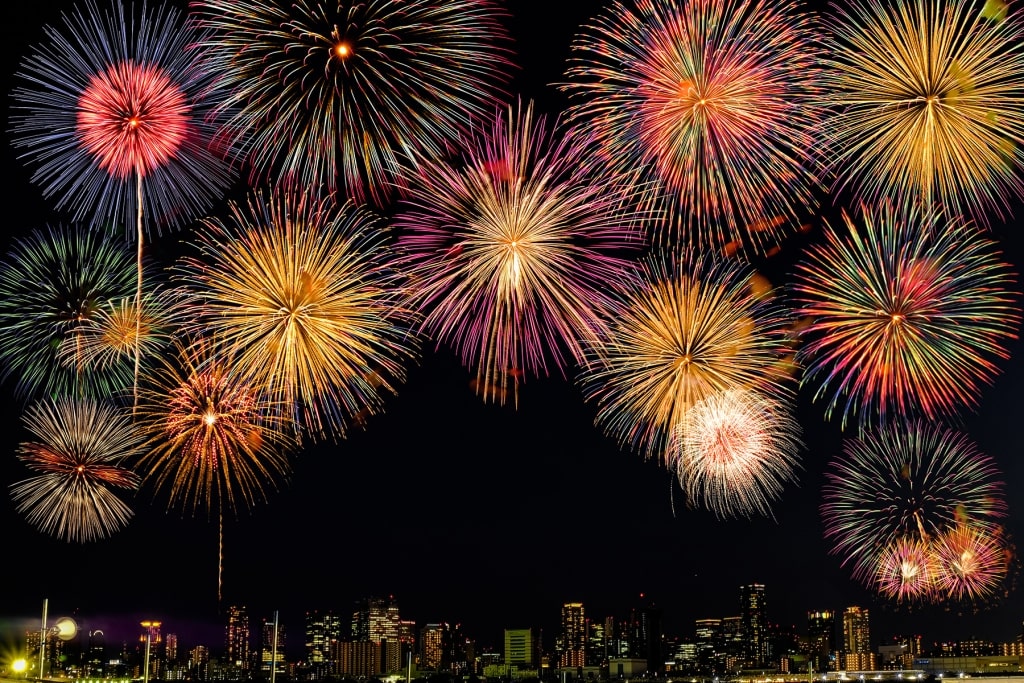
Unique and colorful fireworks over Osaka city in the Naniwa Yodogawa Fireworks Festival.
Celebrity Cruises docks in Osaka for the Naniwa Yodogawa Fireworks Festival. Traditionally, the festival takes place on the first Saturday of August, but recent celebrations were in October, so it’s advised to check the current year’s schedule for safe planning.
You might see the festival referred to as Yodogawa only; Naniwa is the ancient term for Osaka. It takes place at the Yodo River, where starmines are launched from the water and burst above the surface, lighting up the Osaka skyline. Close to 500,000 people come to watch the event. The crowd gets busy, but the sea of people is easy to overlook with such a stunning display.
Traveler Tips for Planning Your Hanabi Festival Visit
If you’re planning your Asia trip around one of the hanabi festivals, preparedness, punctuality, and packing are important. With such large crowds, arriving one or two hours before the fireworks start can help you grab a spot in the free public viewing areas. Paid seating is beneficial for those who want to skip the wait.
Finding and sticking to a purposeful route matters just as much for the exit as the arrival. Sumidagawa and Nagaoka each draw close to a million people, so expect delays after the show ends. Pro tip: It might be worth leaving early to make it back to the ship on time.
Check the weather in advance before packing for a Japan trip. Check the schedule in case of rain delays or potential cancellations. The official festival site usually posts updates the morning of, so it’s worth checking before you head out.
Backup rain gear will allow you to explore the city even if there isn’t a show. At the festival, a yukata can be rented locally to get into the spirit. Some of the city’s stations are a 20- to 40-minute walk away from the festival viewing areas, so comfortable walking shoes will make long days on your feet effortless.
Frequently Asked Questions
Which are the best hanabi festivals in Japan?
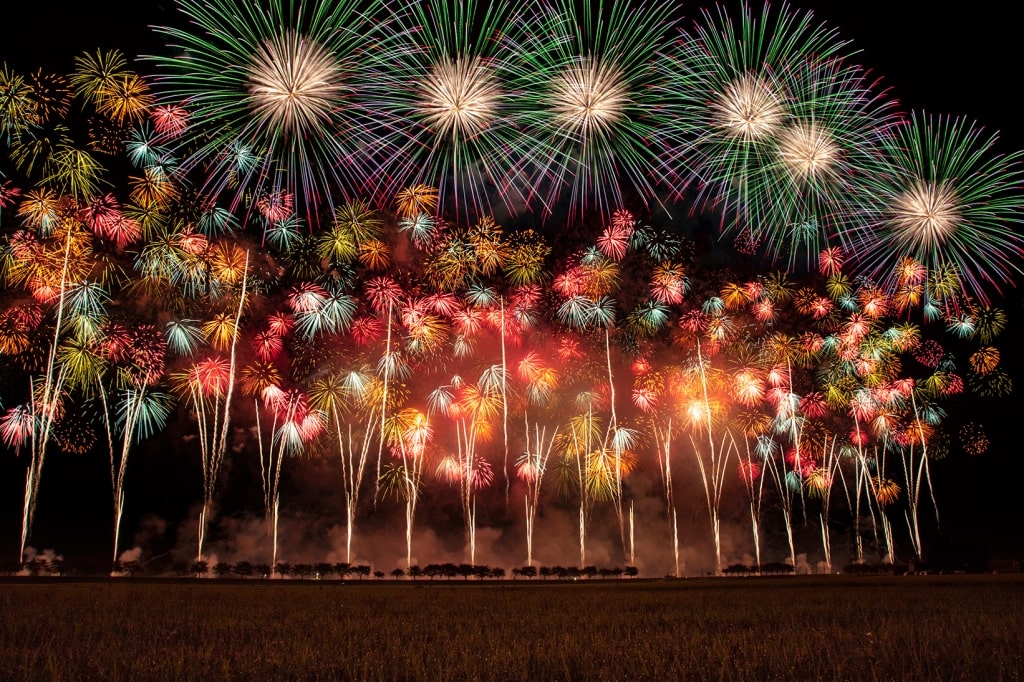
A spectacular wide burst of colorful pyrotechnics fills the night sky over the Omono River during the prestigious Omagari Fireworks Festival.
The best hanabi festivals in Japan are the Sumidagawa, Nagaoka, Omagari, and Naniwa Yodogawa Festivals. Each draws large crowds and has its own signature, whether it’s historic weight, emotional scale, or the precision of a national competition—Nagaoka, for instance, is considered one of the country’s top three hanabi taikai.
What should visitors wear to a hanabi festival?
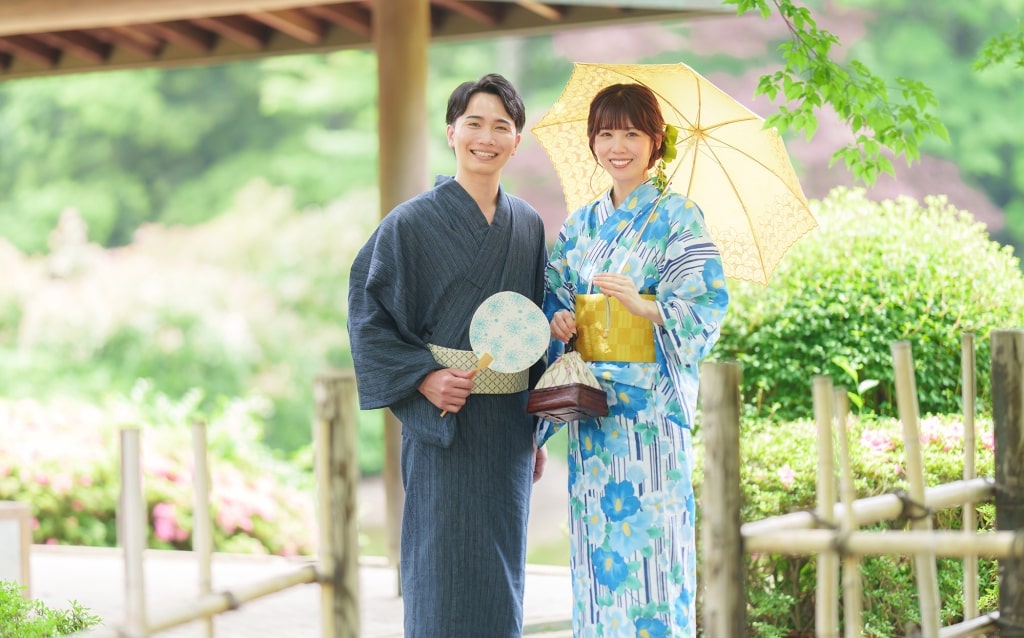
A couple dressed in traditional summer yukata holding a paper fan and parasol while strolling through a lush Japanese garden.
At a hanabi festival, yukata can be rented locally. Yukata is a traditional Japanese kimono for the summer. Most festivals are in July and August, so bring breathable clothing for the heat and a rain jacket for any unpredictable weather.
How early should you arrive for a hanabi festival?
It is recommended to arrive at the hanabi festivals one or two hours early. Public areas fill up fast, and many people attend each one.
You can purchase seats to skip the wait if you’d rather not deal with the early arrival.
Which hanabi festivals are easiest to pair with major Japan gateway cities?
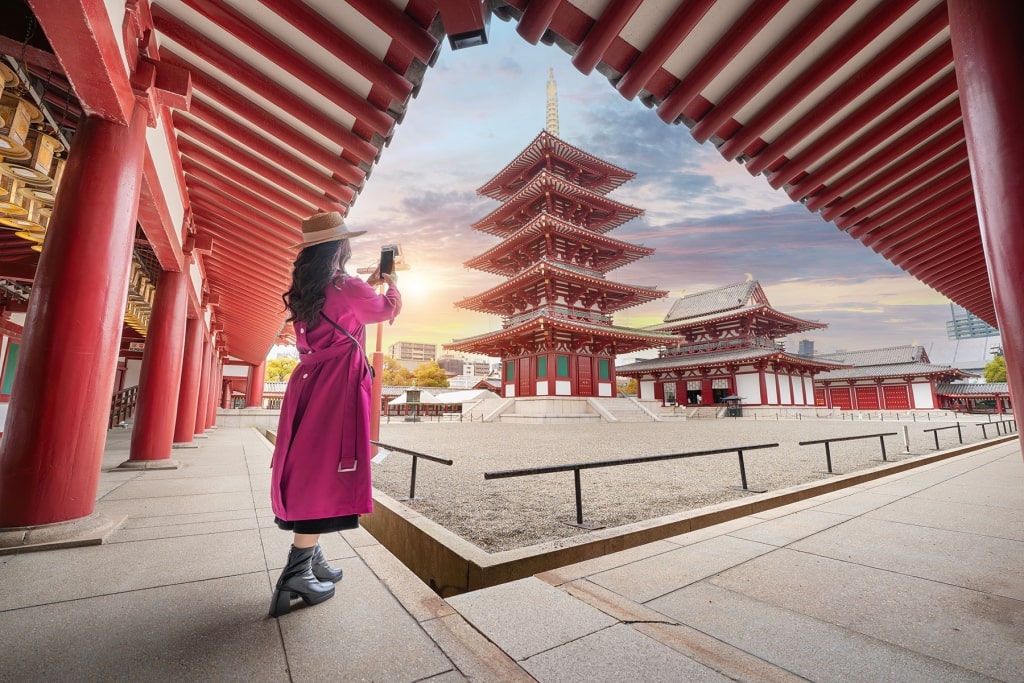
A traveler takes a photo of the iconic five-story pagoda and inner complex of Shitennoji Temple, one of Japan’s oldest Buddhist temples in Osaka.
Sumidagawa and Yodogawa are the easiest festivals to pair with major Japan gateway cities because the cruise ports are in Yokohama and Osaka, respectively. You can explore Tokyo at the Sumidagawa festival and enjoy time in Osaka when celebrating Yodogawa. Kyoto is an easy add-on for guests extending their time in the region.
Head to a Hanabi Taikai on a Japan Sailing
From commemoration displays in Nagaoka to exciting competitions in Omagari, all four of Japan’s most popular hanabi taikai add another dimension to your Japan getaway. The intricate pyrotechnic exhibitions in the sky are an opportunity to see how the Japanese have transformed a spiritual ritual into a cultural event.
Ports like Yokohama and Osaka are just a few of the stops on an Asian itinerary, making some days even more seasonally unique than any other trip. A sailing timed to hanabi season means guests can pair a night of fireworks with days exploring temples, markets, and Mount Fuji views before returning to the ship.
Explore cruises to Japan in July, August, or early October to be present for the Sumidagawa, Nagaoka, Omagari, or Naniwa Yodogawa Festivals.