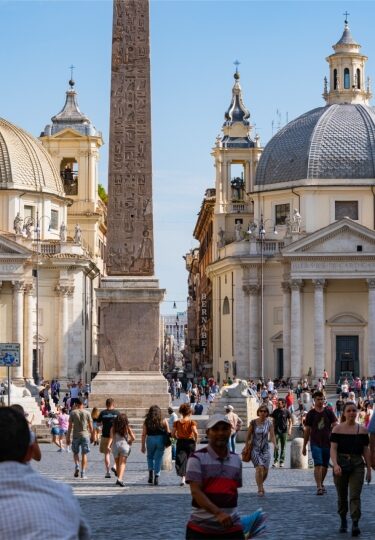
Florence vs. Rome is a wonderful choice to consider. Both cities not only offer a unique, culturally rich experience, but are also home to some of the world’s most beautiful historical architecture.
Florence is a former capital of Italy, while Rome is the current one. However, these bucket-list destinations have very different flavors, especially with Rome having a population around seven times that of Florence.
Weather
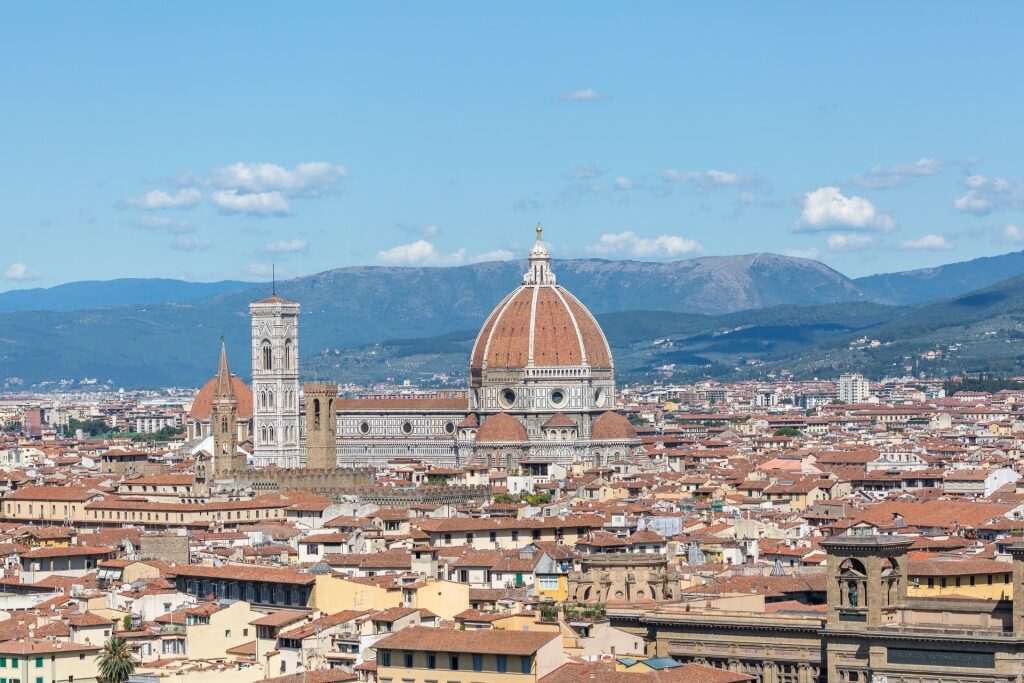
Duomo, Florence
When it comes to the climate, there isn’t much to help you decide the Florence vs. Rome debate. Both sit within the geographical stretch of Italy that consistently enjoys outstanding Mediterranean weather. The tiles on Brunelleschi’s dome and those on St. Peter’s are often sun-warmed on the same days.
However, there are subtle climatic differences to consider (especially if you have curly hair).
The shoulder seasons are the sweet spots for both cities. The period from late April to June typically delivers excellent conditions for exploring historic sites outdoors, as well as decoding cocktail menus in rooftop bars, without the jostle of high-season crowds.
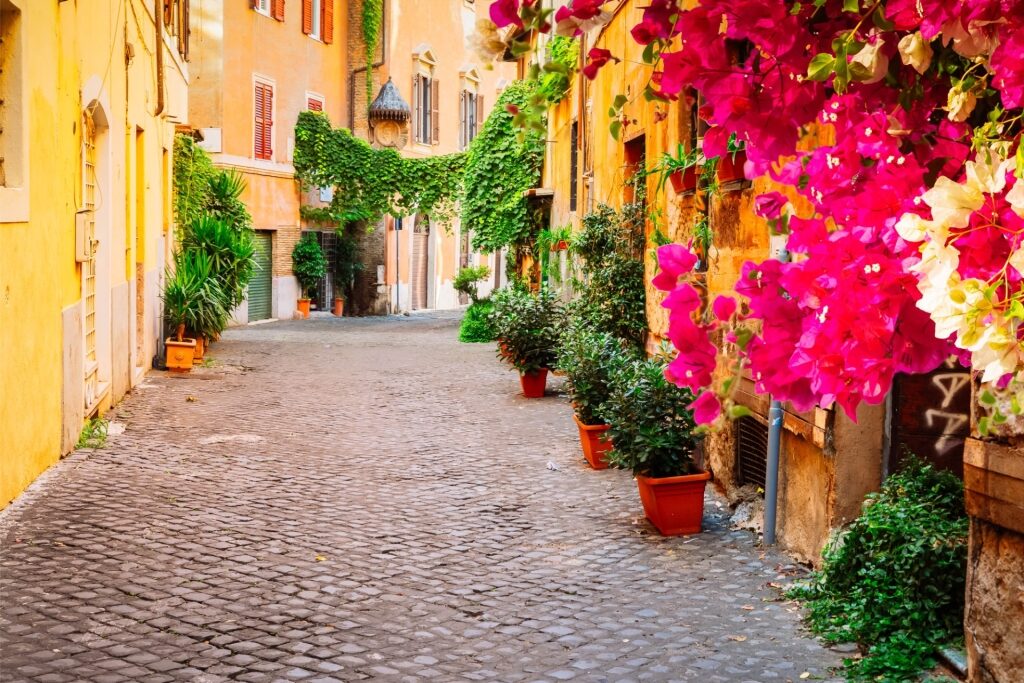
Trastevere, Rome
During May, the begonias bloom in the flower boxes of Rome’s Trastevere neighborhood, while Florence’s Boboli Gardens are billowing with floral fragrance. Daytime averages are in the low to mid-70s. Later in the year, September holds onto the summer warmth with cooler evenings, but still warm enough for al-fresco dining (just bring a sweater).
The high season for both cities is extremely busy, with some figures suggesting that the population in Florence swells by a factor of five in July and August. During those months, the weather is reliably sunny in both cities, with highs that reach into the upper 80s.
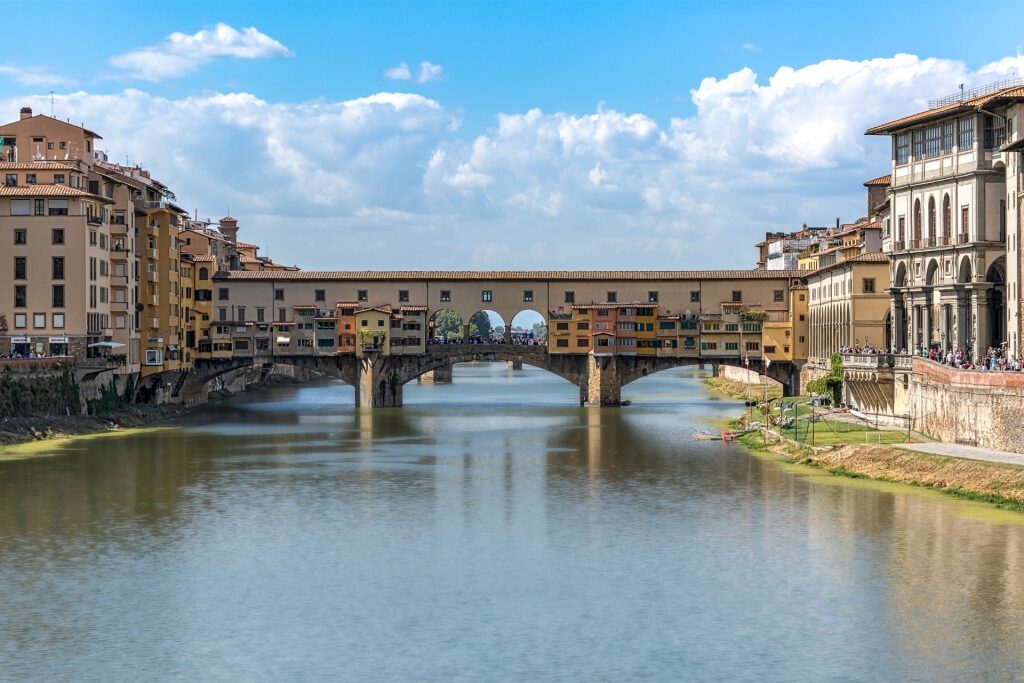
Arno River, Florence
In Florence’s Arno Valley, the inland humidity can become oppressive on the very hottest days, while in Rome, it can be sticky, but not quite as intense as the Tuscan capital.
The takeaway here is that both cities reward off-season visitors, and with very little penalty in terms of inclement weather. Just be sure to pack a light jacket for the evenings. If you’re visiting Italy in summer, book time to browse the air-conditioned Uffizi Gallery or Vatican City during those scorching hours of high sun.
Location
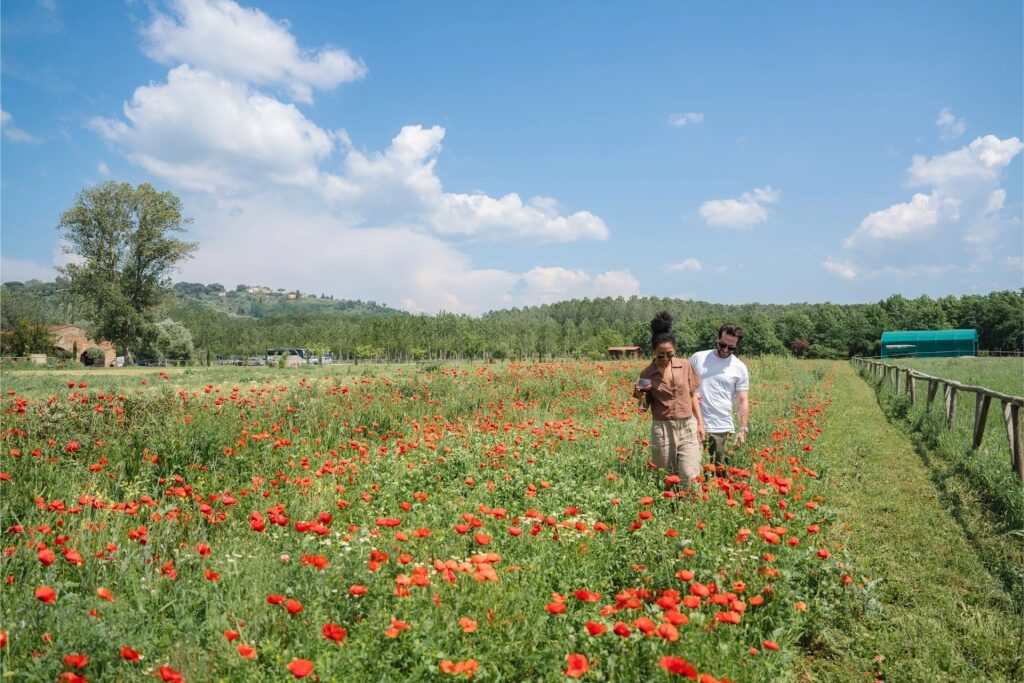
Farmhouse in Tuscany
In the tricky balance of Florence vs. Rome, the location of both cities offers compelling reasons to visit.
Florence is the capital of Tuscany, a region that is the poster child for the Italian countryside. Set slightly north of the peninsula’s center, its landscape of rolling hills, vineyards, and breathtaking hill towns is endlessly painted and spoken about in revered tones.
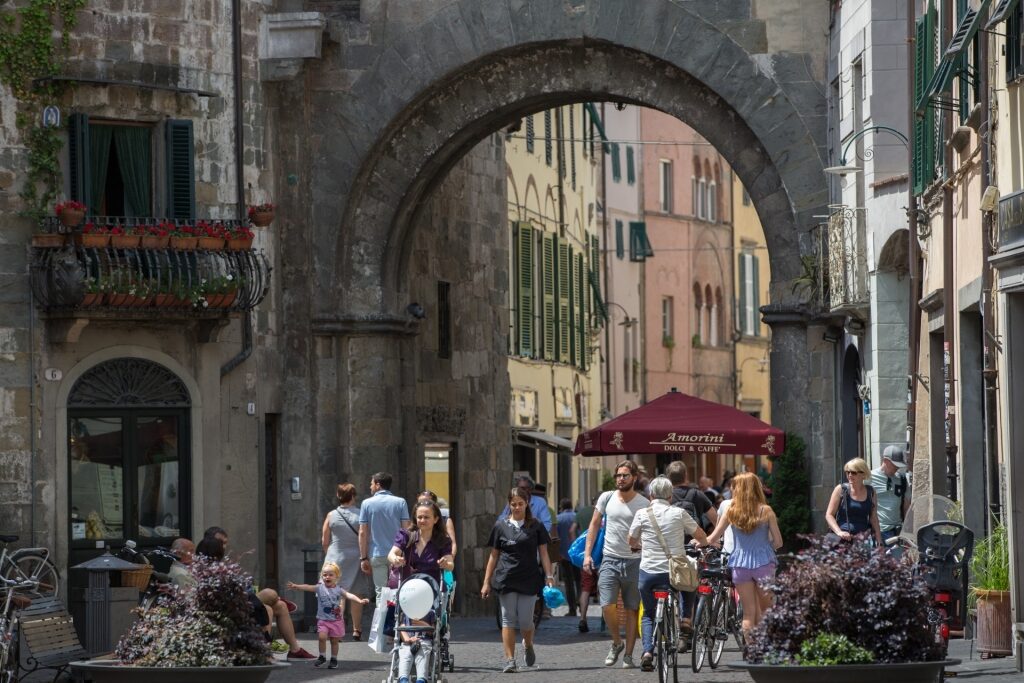
Lucca, near Florence
A visit to Florence brings you close to other tantalizing destinations. There’s the wine country of Chianti, or the exquisite smaller cities of Siena or Lucca. About an hour’s drive west from Florence is Pisa—home to the iconic Leaning Tower of Pisa.
From the top of that tilted structure, on a clear day, you might be able to catch a glimpse of the coastline as a golden haze on the horizon with the cobalt Tyrrhenian beyond.
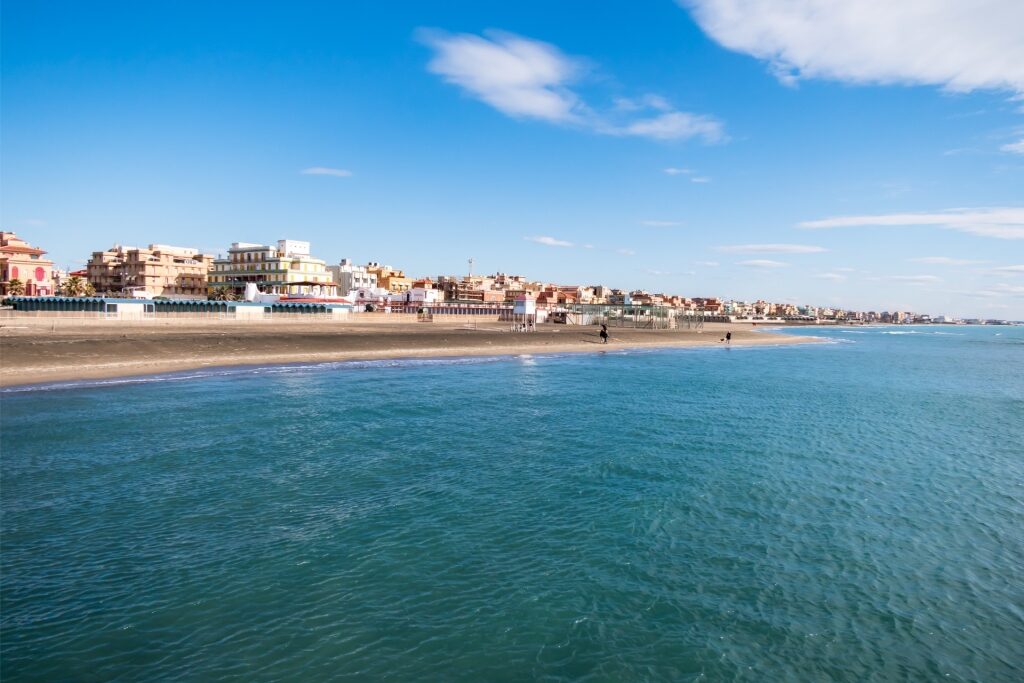
Ostia Beach, near Rome
Rome also has its beaches. Located in the more southerly region of Lazio, the capital is set inland, a short way from the coast. It takes about 40 minutes by car to reach the closest beach, Ostia, from the city center.
On the country’s western coastline, its beaches are also lapped, like those of Tuscany, by the Tyrrhenian Sea.
Lazio, as a region, is less well known than Tuscany, primarily because Rome exudes such a powerful gravity that it seems like the only destination when you’re in the area.
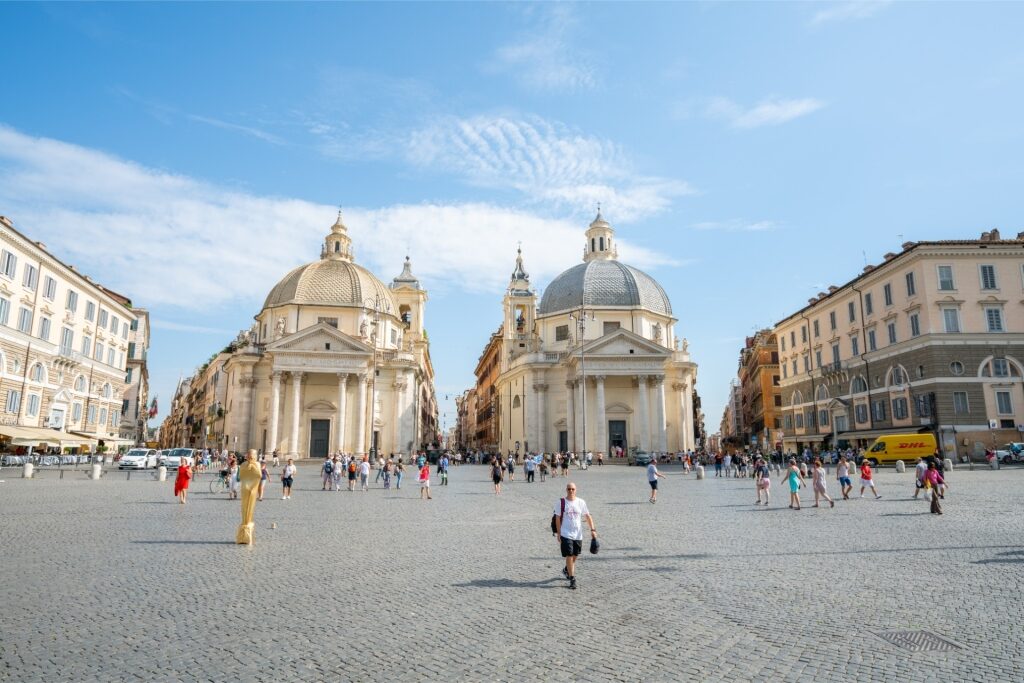
Piazza del Popolo, Rome
With Rome being much larger than Florence, you’re likely to spend your time exploring the big city and its varying neighborhoods (rione) rather than day-tripping beyond its limits.
History
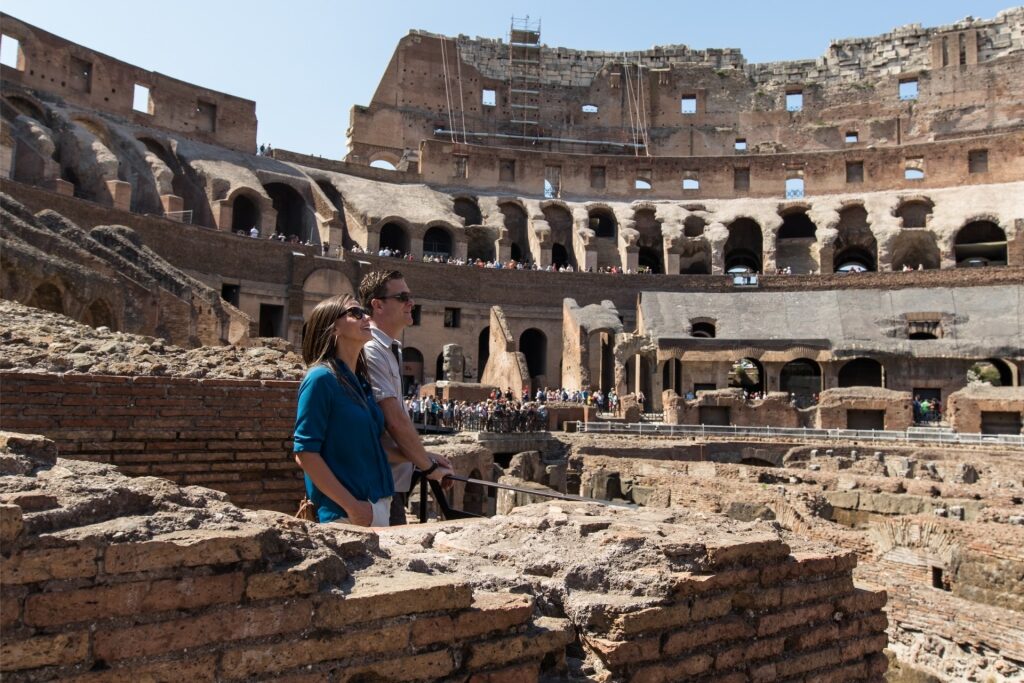
Colosseum, Rome
It’s fair to say that Rome has the edge when it comes to history. Nevertheless, Florence plays an outsized role when it comes to the past events of the Italian peninsula—as well as European art and culture as a whole—and is, by no means, entirely eclipsed by Rome’s prodigious geopolitical importance in antiquity and beyond.
The history of the Eternal City stretches back to 753 BC, when, according to legend, Romulus founded Rome on the Palatine Hill after slaying his twin brother Remus. Over the centuries that followed, that small settlement beside the Tiber River blossomed into a powerful city-state and, by 509 BC, the Roman Republic emerged.
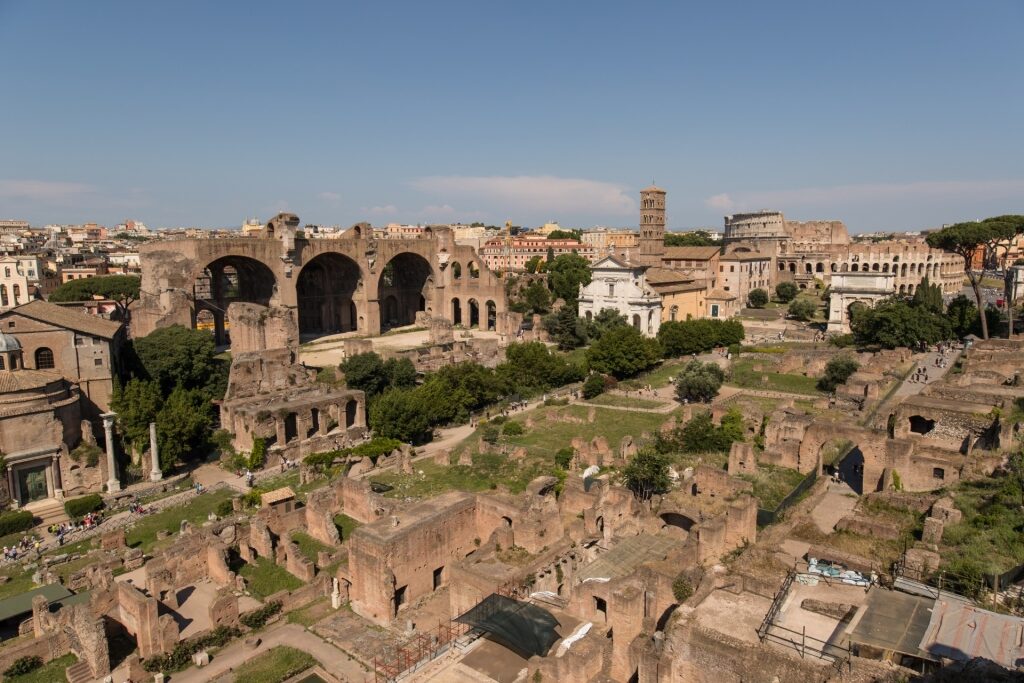
Roman Forum, Rome
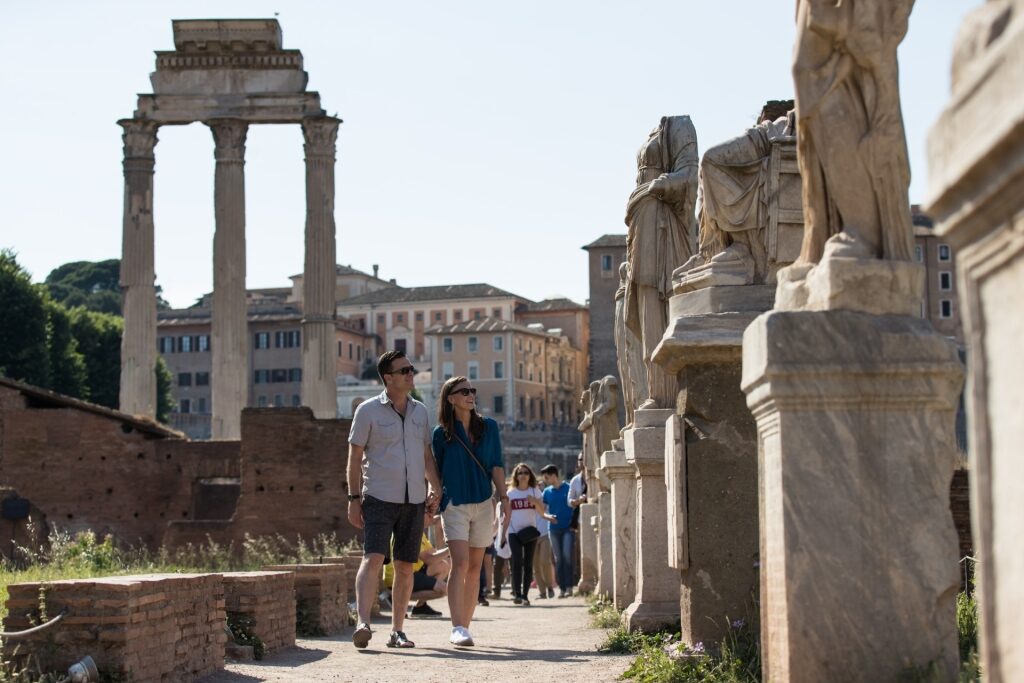
This fledgling power, governed by a senate rather than a king, expanded across the Mediterranean. In time, it evolved into the Roman Empire, dominating Europe, North Africa, and the Near East for centuries. Remnants of this dominant period are found throughout the city in Roman landmarks such as the Roman Forum or enshrined in artifacts like Trajan’s Column.
As imperial power waned and Christianity rose to prominence, Rome underwent a profound transformation. St. Peter’s Basilica is a powerful symbol of this shift and how it continued to evolve.
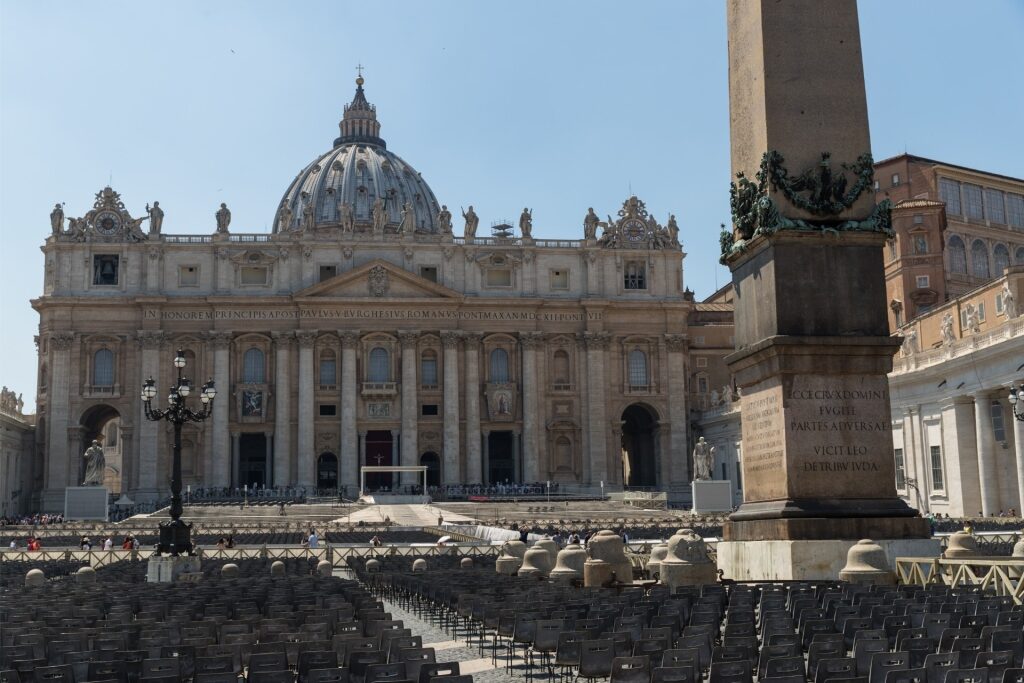
St. Peter’s Basilica, Vatican City
The original fourth-century church was replaced during the Renaissance with a grand new structure featuring Bramante’s classical plan and Michelangelo’s instantly recognizable dome.
The counterpoint to this Christian grandeur is the Pantheon, which stands as a reminder of the city’s pre-Christian origins across the Tiber.
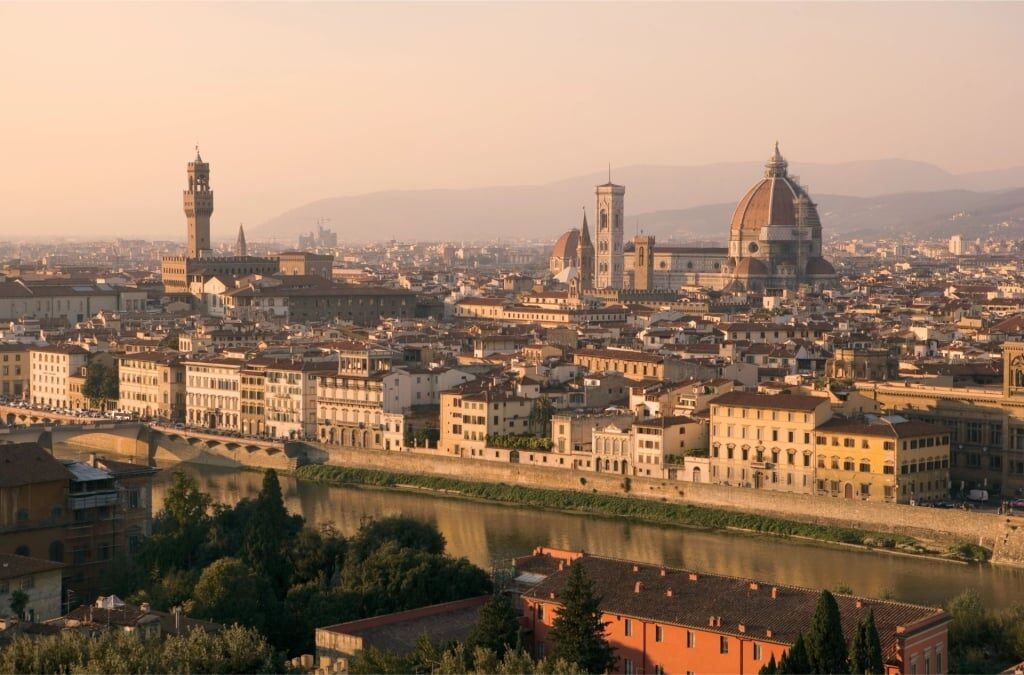
Florence
With the Vatican City buried in the heart of Rome (the Pantheon even more so), religion is clearly central to the capital’s story. However, in Florence to the north, that city’s heyday was powered more by mercantile cunning and artistic patronage.
Famously known as the “Cradle of the Renaissance,” Florence grew from its humble origins as a Roman military colony to a center for medieval banking. The Medici family of bankers cast the greatest shadow over its medieval history.
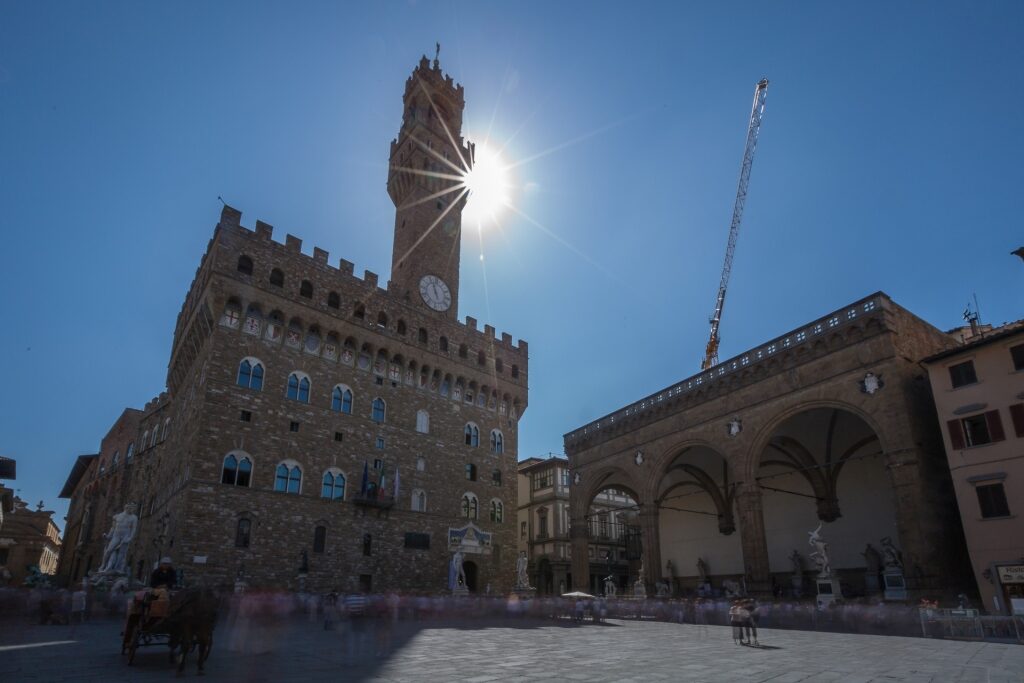
Piazza della Signoria, Florence
The Medici’s patronage of the arts during the Renaissance brought cultural heft to sit alongside the city’s mercantile might. Art in Florence became a way to signal power, as still visible in the Piazza della Signoria, and where Michelangelo’s David, turned defiantly towards the Goliath that is Rome, once stood.
Food
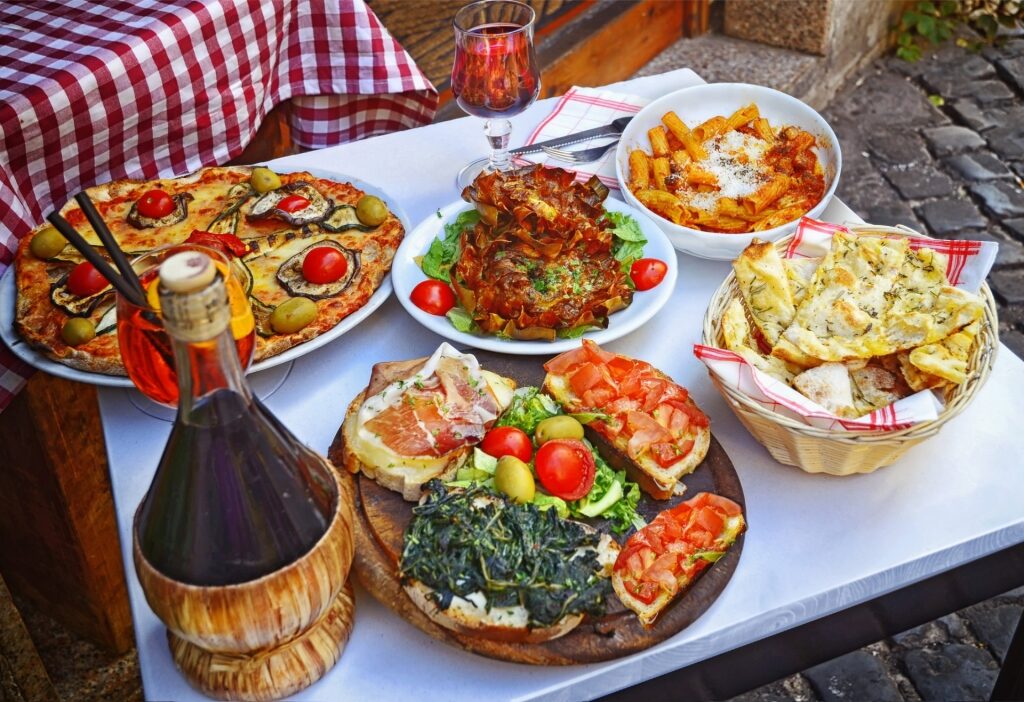
Restaurant in Rome
While struggling with the dilemma of choosing between Rome and Florence, you can be sure that whichever you choose, you’re going to eat very well. Both cities have international-class dining scenes, as well as superbly developed regional cuisine.
Rome has a well-earned reputation for street food, especially with its pizza al taglio (pizza by the slice) or its crunchy-crusted Pizza Romana-style pies.
If you’d rather have something other than pizza while exploring the Spanish Steps or the Villa Borghese, try classic Roman dishes such as the city’s magnificent porchetta sandwiches, or stop by its countless gelaterias for something to take the edge off hot July afternoons.
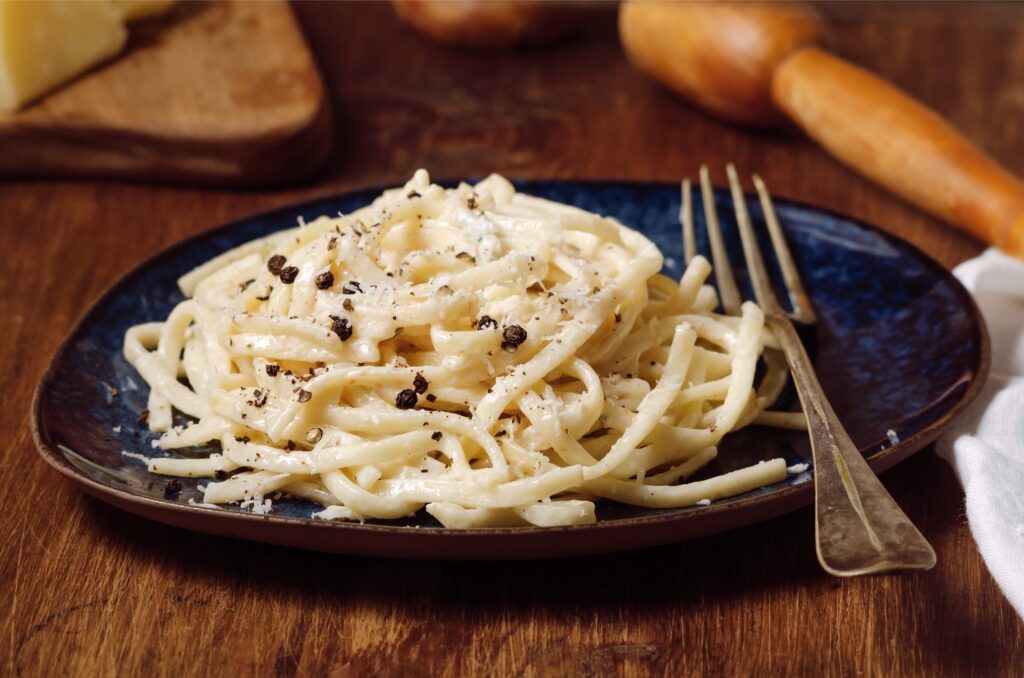
Cacio e Pepe
When you’re sitting down for dinner in Rome, it’s essential to try at least one or two of the famous quartet of pasta dishes that the city is known for. This foursome is cacio e pepe, carbonara, amatriciana, and gricia.
Each of these dishes offers a salty and satisfying link with the city’s culinary history, and they are superior when eaten at a side street Roman trattoria.
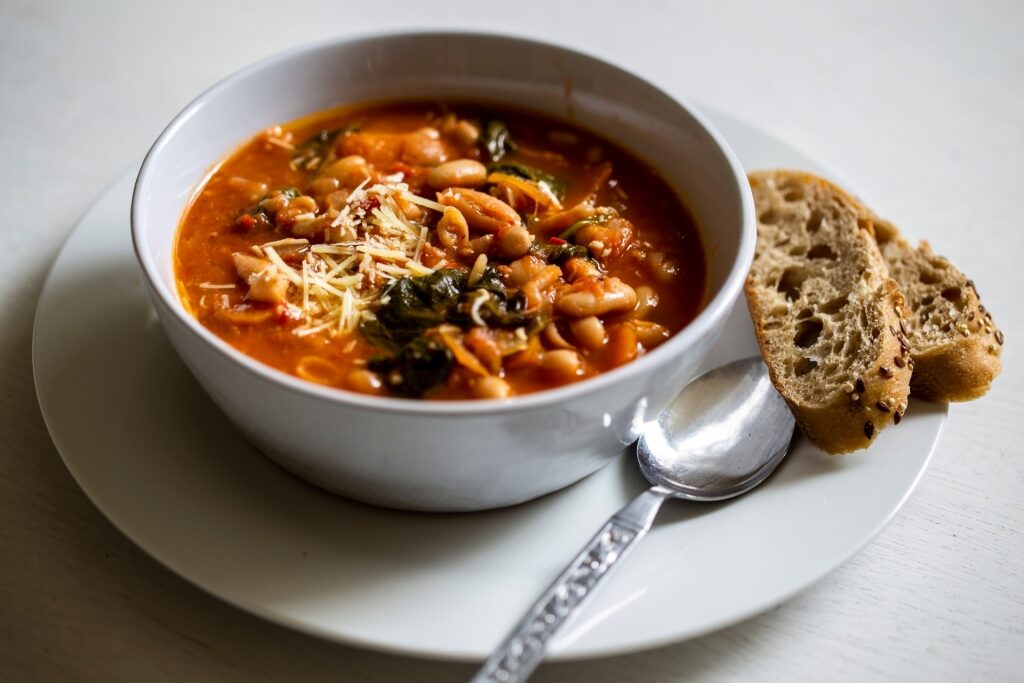
Ribollita
In Florence, you’ll be served the bounty of those rolling hills, with the flavor mix involving chestnut, creamy cannellini beans, and cherry-forward Sangiovese wines. Vegetarians are well served in a region known for its peasant food (cucina povera), with Florentine dishes like the bean stew ribollita or the tomato and bread soup, pappa al pomodoro.
Both places offer something for the more daring culinary traveler. In the working-class Testaccio district of Rome, you can often find dishes that fall within the historic category of the “Quinto Quarto.” This referred to the remaining cuts of meat that were left to the lower classes, such as offal.
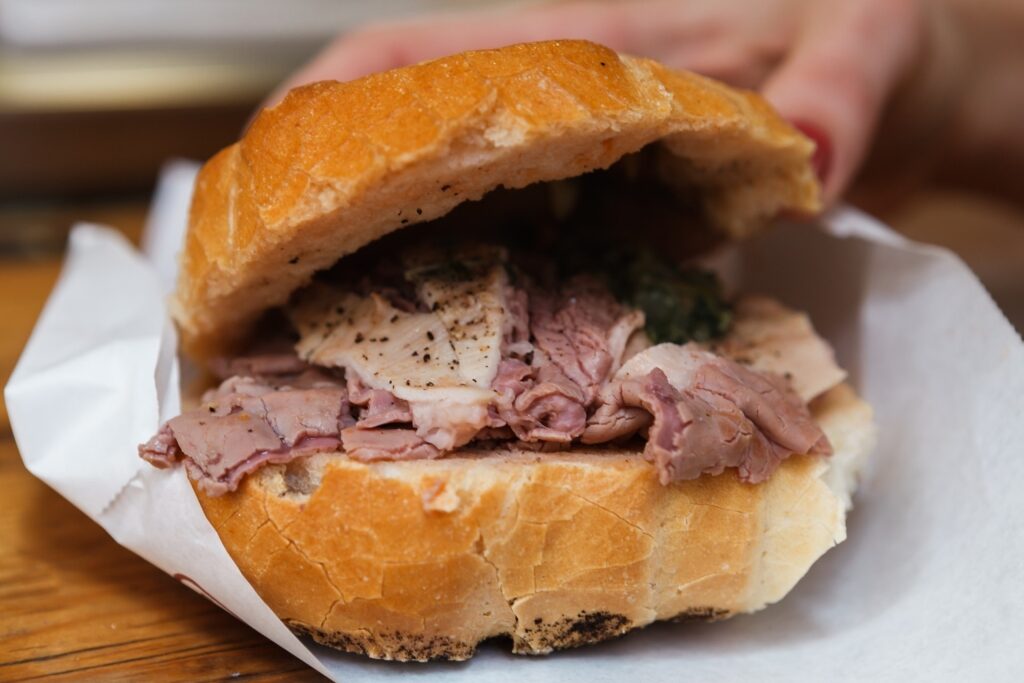
Panino lampredotto
Offal is also popular in Florence, particularly in the form of its street food favorite, the panino lampredotto—a stewed offal sandwich with its origins in 13th-century Florence. Again, this was all the meat that remained for the working classes to eat.
Today, it’s a symbol of pride—and the Florentines genuinely enjoy it, spiced up with black pepper and salsa verde.
FAQs
Which is safer, Rome or Florence?
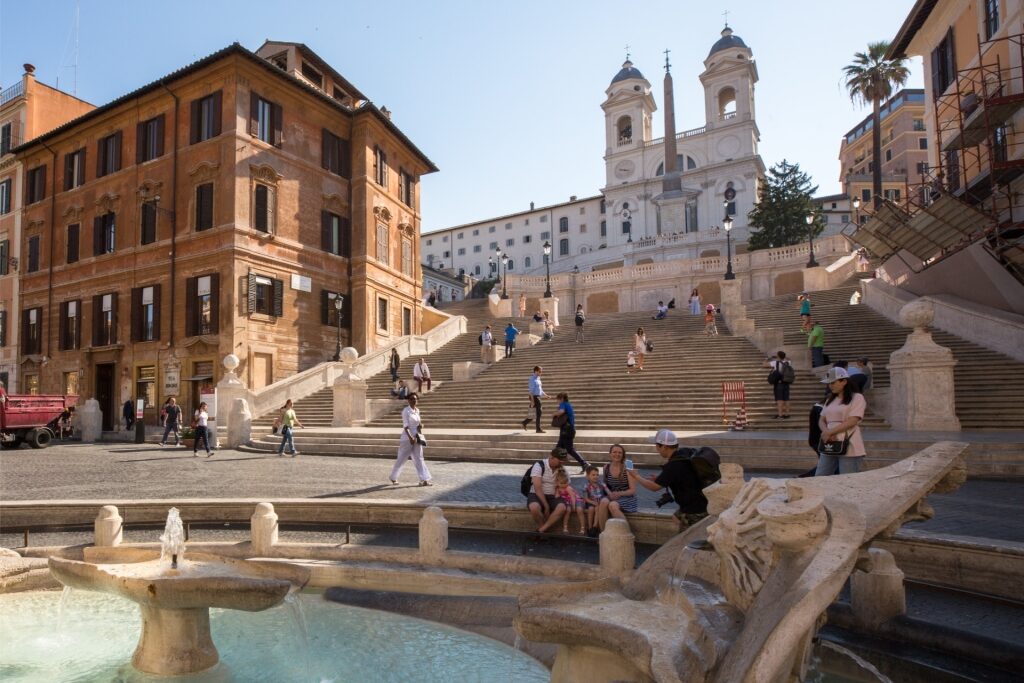
Spanish Steps, Rome
With both Italian cities being major tourist destinations, you can travel there with the knowledge that the safety of visitors is uppermost in the minds of the authorities.
Both cities actually have a similar crime rate, with Florence coming in slightly lower than Rome. Personally, I’ve never felt at risk in either of these cities.
As you’d expect with so many tourists, pickpocketing is the main risk to most visitors to these cities. With the bustle around major tourist hubs such as the Termini train station or the Colosseum, it’s important to have valuables safely secured on your person.
The same goes for Florence’s Piazza del Duomo or amid the stunning statuary of Piazza della Signoria.
What makes Florence different from Rome?
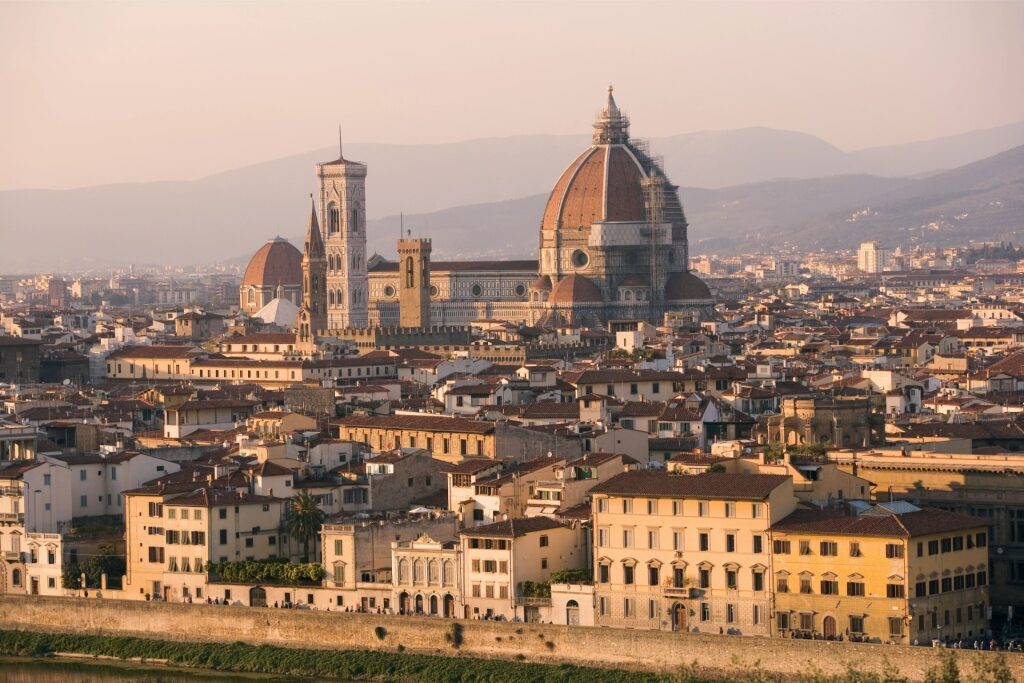
Duomo, Florence
One of the major differences between the two is the scale. Florence can feel like an open-air Renaissance sculpture park, while Rome is an epic city layered with remnants of empire, religion, and the primary colors of modern life.
In Florence, Brunelleschi’s Duomo is the obvious centerpiece of the skyline, whereas in Rome, domes bubble up throughout its historic center.
There’s a refinement to Florence, with its artisan workshops in the Oltrarno and fashion legacy. In Rome, there’s grandeur and a palpable awareness of history’s layers—ancient ruins sit beside Baroque piazzas, while Vatican grandiosity is surrounded by the human-scale modernity of Roman neighborhoods like Prati.
Is the food better in Florence or Rome?
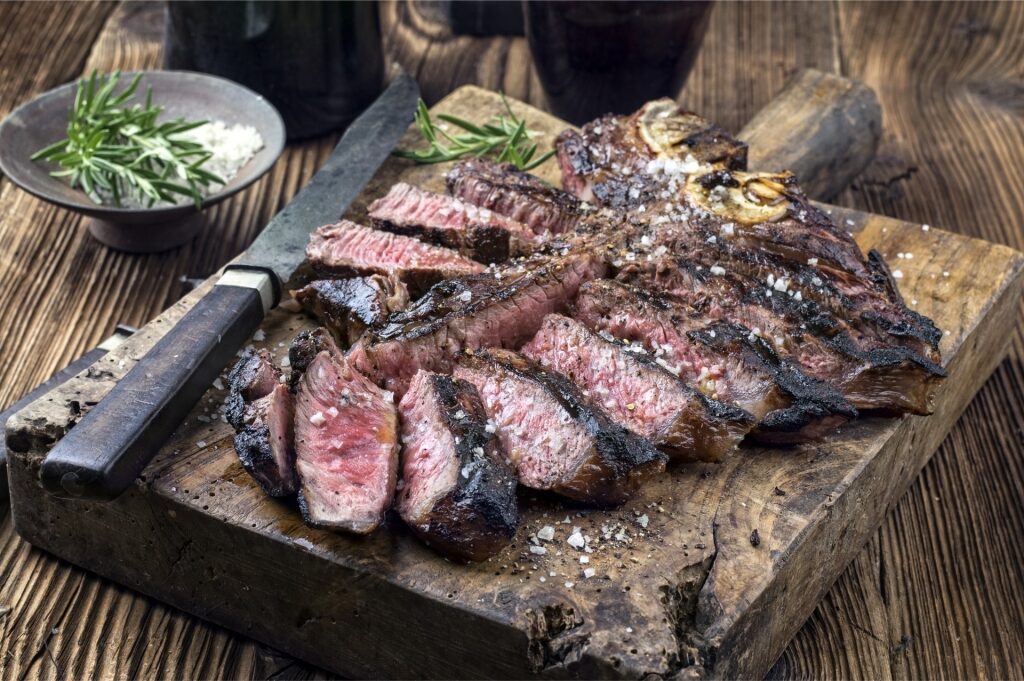
Bistecca alla Fiorentina
When it comes to Florence vs. Rome in terms of food, it’s important to remember that it all falls beneath the umbrella of Italian food. So think plenty of pizza and pasta alongside the regional specialties that can make a dinner in a particular city or region really stand out.
Big cities tend to equal big flavors, as you’ll find in Rome’s legendary dishes such as carbonara, cacio e pepe, or the fried artichoke dish, carciofi alla giudia.
Florence is more influenced by the regional Tuscan menu—think dishes of rustic pici pasta, its famously unsalted bread, and the spectacular bistecca alla fiorentina.
Think of Florence as the restaurant attached to the farmer’s market, offering excellent ingredients simply done. Rome, meanwhile, brings big, bold flavors and a superb street-food offering. Wherever you go, you’ll not return home hungry.
Is Florence more walkable than Rome?
Florence
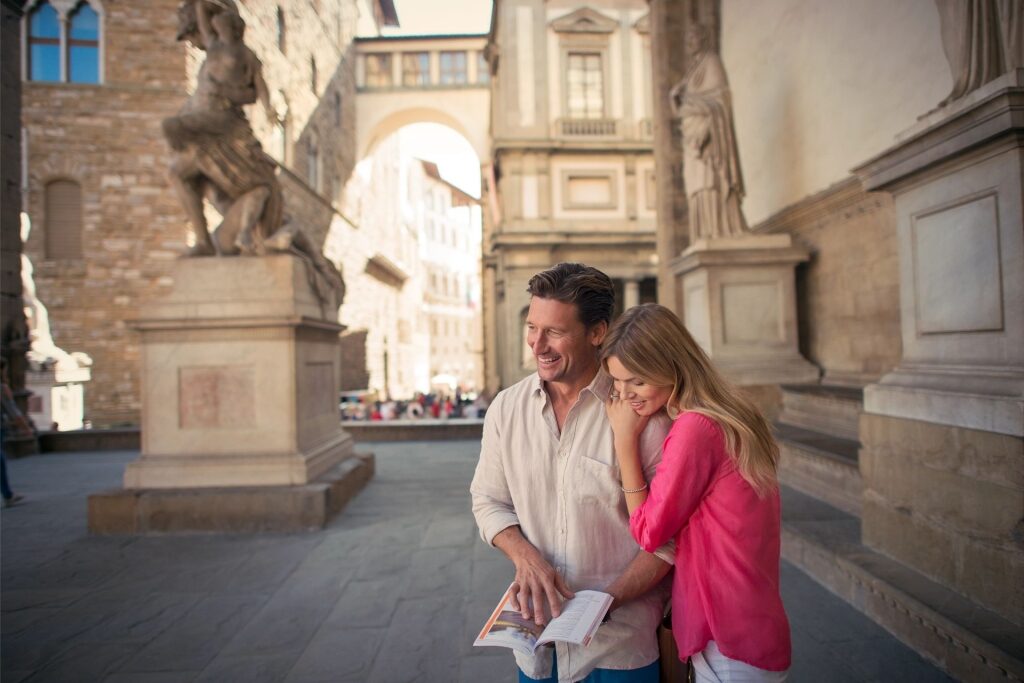
Very much so. Florence’s richly atmospheric historic center can be crossed on foot in about 20 minutes. That means you can plan a day that begins with a stroll across the Ponte Vecchio before easily ticking off several other sites that Florence is known for, such as the Duomo, the Uffizi Gallery, and even get to Piazzale Michelangelo without feeling too rushed.
Rome is on a different scale entirely, and you’ll probably wish to turn to the metro or the bus service if you’re planning to see different areas of the city. Whereas traffic in Florence is restricted in the city center, this isn’t the case in Rome, and it can detract from the ambiance of a walking tour.
That said, there are pedestrianized areas in places like the Forum and the neighborhood of Trastevere that make things feel a little less hectic.
Roman Forum, Rome
Figure out your perspective on Rome or Florence, or just experience both of these extraordinary cultural capitals, on a cruise to Italy. From world-renowned architecture and artworks to incredible culture and cuisine, Italy is deservedly one of the world’s most popular destinations.