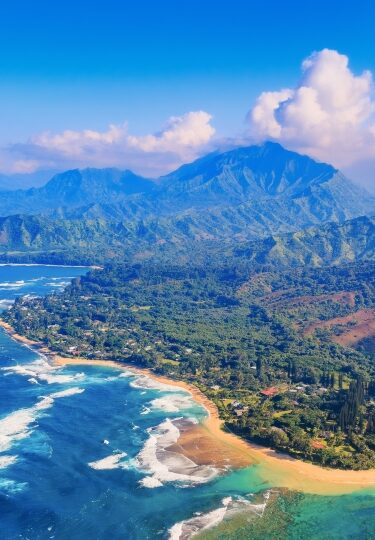
The Hawaiian Islands are a volcanic archipelago in the North Pacific Ocean, made up of eight major islands: Hawaiʻi, Maui, Oʻahu, Kauaʻi, Molokaʻi, Lānaʻi, Niʻihau, and Kahoʻolawe. Celebrity Edge® and Celebrity Solstice® are two Celebrity ships that sail around Hawaii, giving guests a way to experience several islands in one vacation.
A Hawaiian Islands cruise makes it easier to explore more of the state without arranging interisland flights. Depending on the itinerary, guests can visit ports on Oʻahu, Maui, Kauaʻi, and the island of Hawaiʻi, with time to experience beaches, volcanoes, cultural sites, local food, and scenic coastlines along the way. This guide explains what makes each island distinct, which Celebrity ships sail to Hawaii, what to expect on board, and how to choose the right itinerary.
Discover the 8 Hawaiian Islands
Every one of the eight Hawaiian Islands is unique. Visitors might be surprised how easily they can escape the buzz of tourism and discover serene swimming spots, flower-covered jungle hikes, dramatic lava fields, active volcanoes, the freshest of tropical fruits, historical sacred sites, and a rainbow of beach beauties.
Some volcanoes form in the middle of a tectonic plate, where magma rises until it erupts on the seafloor, causing a fixed “hot spot.” The Hawaiian Islands were formed when the Pacific Plate drifted over the hot spot, forming the string of islands in the Hawaiian chain. Sailing and admiring the palm-dotted beaches and volcanic peaks might be the best way to see the Hawaiian Islands.
Here’s a quick look at the eight major Hawaiian Islands and what each is known for:
- Hawaiʻi: The Big Island is known for active volcanoes, manta ray experiences, Kona coffee, and dramatic lava landscapes.
- Maui: The Valley Isle is known for the Road to Hana, Haleakalā National Park, beaches, and snorkeling.
- Oʻahu: The Gathering Place is home to Honolulu, Waikiki Beach, Pearl Harbor, Diamond Head, and the North Shore.
- Kauaʻi: The Garden Isle is known for the Nā Pali Coast, Waimea Canyon, lush landscapes, and river scenery.
- Molokaʻi: The Friendly Isle is known for local culture, sea cliffs, and a quieter pace.
- Lānaʻi: The Pineapple Isle is known for secluded beaches, rugged landscapes, and a more remote feel.
- Niʻihau: The Forbidden Isle is privately owned and generally not open to visitors.
- Kahoʻolawe: The Target Isle is uninhabited and not open to general tourism.
Hawaii, the Big Island
The Big Island is split into two distinct sides, Kailua-Kona and Hilo. Hilo is a humid, lush, tropical place of waterfalls and botanical gardens. Kailua-Kona is hotter and drier, home to refreshing watersports like snorkeling, scuba diving, fishing, and boogie boarding off soft white sand beaches.
Hilo, Big Island of Hawaii
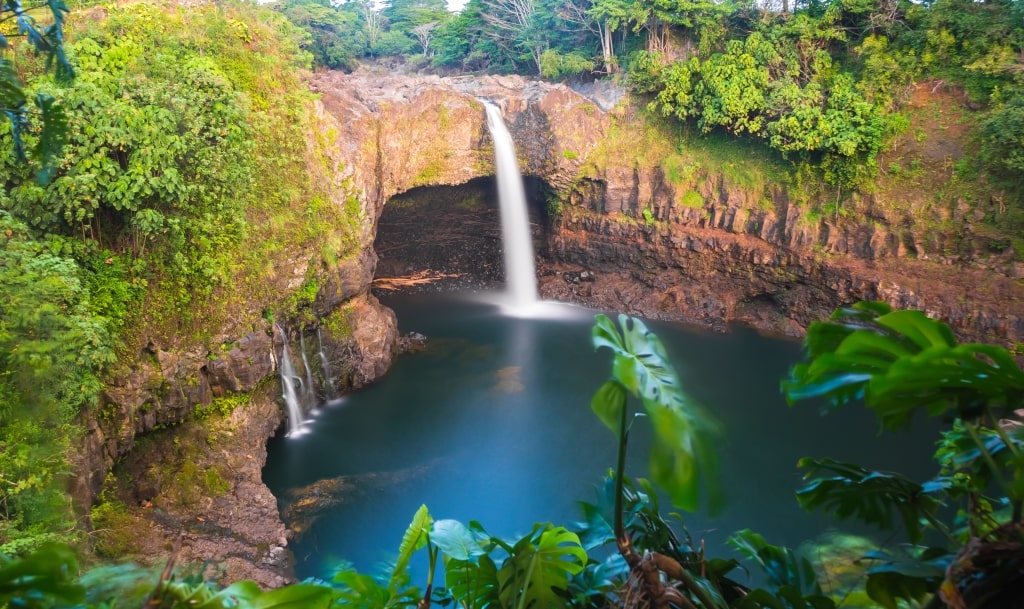
Majestic Hilo Rainbow Falls cascading powerfully into a deep blue tropical volcanic basin pool.
Hilo is the more humid side of the island of Hawaii, where everyday life is lived. Sprawling gardens and hikes to waterfalls are abundant.
Hawaiʻi Volcanoes National Park is a 45-minute drive from Hilo. The park climbs from sea level to more than 13,000 feet with an excellent interpretive center. Trails lead up to viewing points to see the antics of Kīlauea, one of the world’s most active volcanoes, and Mauna Loa, the world’s largest active subaerial volcano.
On my last trip, I flew on locally owned Paradise Helicopters for a thrilling open-door tour over the active lava trails.
Kailua-Kona, Big Island of Hawaii
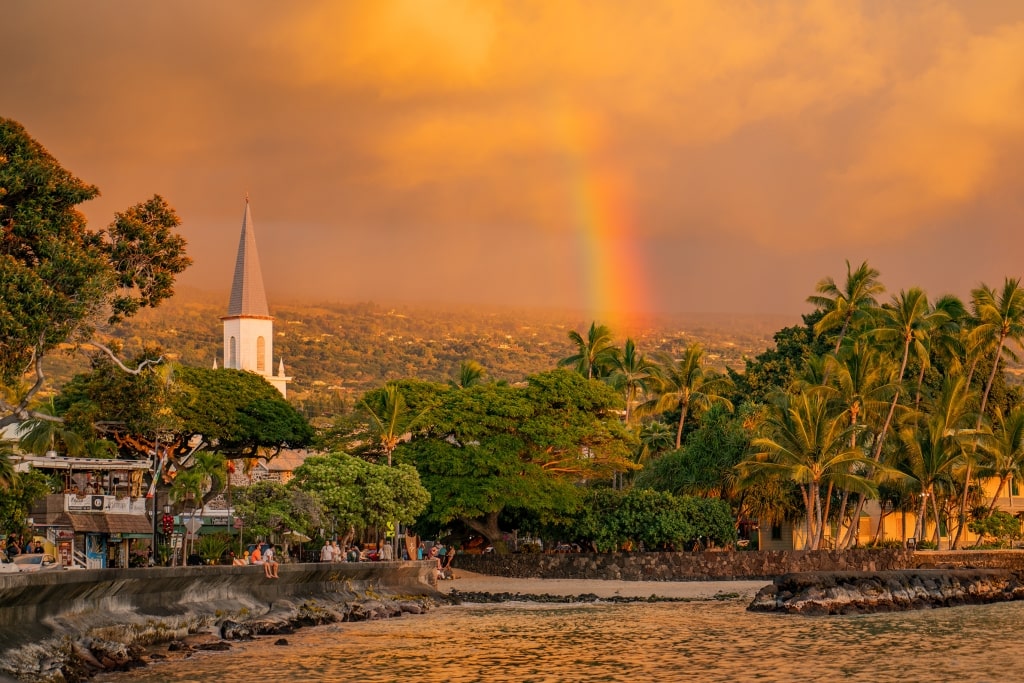
A vibrant rainbow arches over lush palm trees and the iconic church spire of Kailua-Kona at sunset.
Kailua-Kona is known for snorkeling, scuba diving, and soft white sand beaches. A large population of manta rays makes this one of the best places in Hawaii for a night snorkel or dive, where you can watch these gentle giants swoop through the water to feed on tiny plankton. I lived in Hawaii for years and worked as a PADI divemaster, and one of my most memorable dives was near Puako with Kohala Divers, where my son and I were lucky enough to see three humpback whales in the clear blue water.
This side of the island is also known for boogie boarding, with dramatic black sand breaks and white sand coves that draw wave riders of all experience levels. Kona is also a world-class sportfishing destination, where boats head out in search of marlin, mahi mahi, tuna, and other prized catches.
If you prefer to keep your feet dry, hike through the lava fields at Kaloko-Honokōhau National Historical Park to view ancient petroglyphs. This side of the island is also home to Kona coffee plantations, known for producing some of the world’s most celebrated beans. At the Kona Farmers Market, you can buy coffee directly from local growers, along with locally harvested produce, artisan goods, and other island-made finds.
O’ahu, the Gathering Place
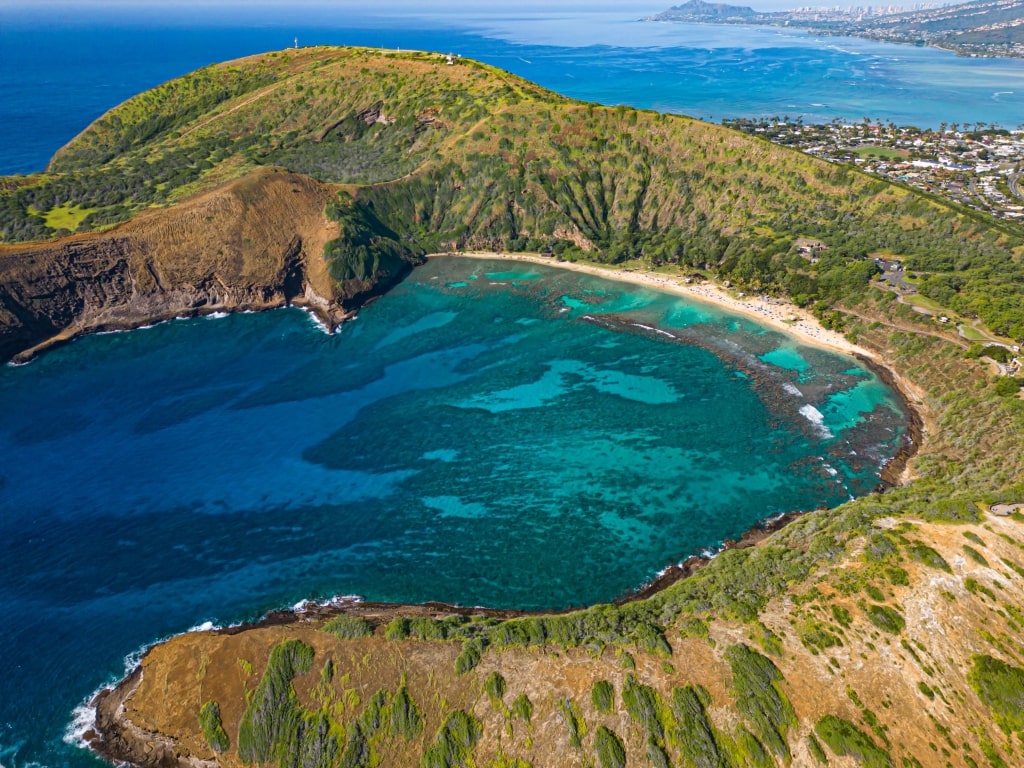
Vibrant O’ahu tropical coastline displaying crashing blue Pacific Ocean waves alongside sunlit green headlands.
Oahu’s 1 million residents represent nearly 70% of the population of all the Hawaiian Islands combined. The quieter seasons of spring and fall are the best times to visit Honolulu, the political, economic, and cultural hub of the state. That isn’t the only draw to O’ahu. Famous beaches, world-class surf, and a backdrop of tropical forest growing up the sides of a dormant volcano are charming additions to what makes this island such a popular stop for both cruise ships and resort-based travelers.
Here are some of the top ways to experience O’ahu during a Hawaiian Islands cruise:
- Pearl Harbor: Visit this moving memorial and museum complex to learn more about World War II history through exhibits, historic sites, and guided experiences.
- Waikiki Beach: Spend time along one of Hawaii’s most famous beaches, where guests can swim, take a surf lesson, explore nearby shops, or enjoy live Hawaiian music.
- Haleiwa: Head to the North Shore to experience O’ahu’s laid-back surf culture, local shops, food trucks, and famous big-wave beaches.
- Local dining: Try the island’s mix of Hawaiian, Japanese, Korean, Filipino, and Portuguese influences, from plate lunches and poke to shave ice and fresh seafood.
- Diamond Head: Hike this famous volcanic crater for sweeping views of Honolulu, Waikiki, and the Pacific Ocean.
- Polynesian Cultural Center: Learn about the music, dance, art, and traditions of several Polynesian cultures through exhibits and live performances.
- Hanauma Bay: Reserve a time slot to snorkel in one of O’ahu’s most popular marine conservation areas.
- Ala Moana Center: Browse this open-air shopping center, where national retailers, local boutiques, restaurants, and beach access come together near Waikiki.
Maui, the Valley Isle
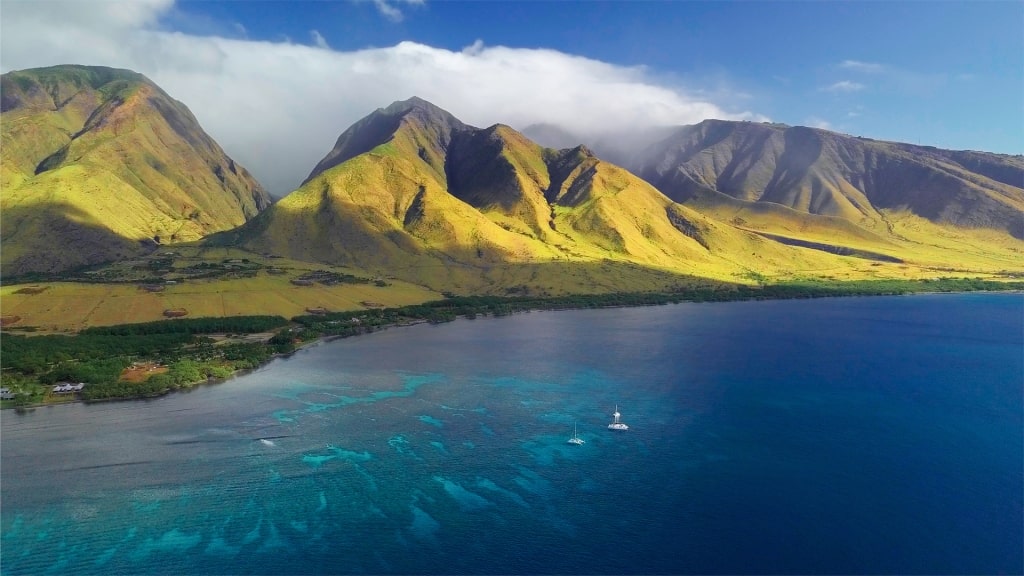
Lush Maui volcanic sea cliffs overlooking deep blue ocean waters during bright daylight
Maui is a beautiful island offering cultural sites, waterfall hike experiences, excellent diving and snorkeling, and locally inspired cuisine. Although the island suffered a tragic fire that devastated the west side port town of Lahaina, the other areas of the island welcome visitors with a variety of ways to enjoy its natural beauty:
- Haleakalā National Park: Visit this volcanic national park for sweeping summit views, sunrise scenery, hiking trails, and rare high-elevation landscapes.
- Road to Hana: Follow this famous winding drive along Maui’s north coast, where waterfalls, rainforests, coastal views, and historic sites make the journey as memorable as the destination.
- Molokini Crater: Snorkel or scuba dive around this partially submerged volcanic crater, known for clear water and marine life.
- Black Rock at Kāʻanapali: Visit this volcanic outcrop for snorkeling, cliff-diving traditions, sunset views, and access to one of Maui’s most famous beach areas.
- Sea turtle snorkeling: Look for Hawaiian green sea turtles at popular snorkeling spots and shore-diving areas around the island.
- Big Beach, Mākena: Spend time on this wide stretch of white sand, known for boogie boarding, coastal views, and nearby food trucks.
As a PADI divemaster with Maui Dive Shop, I found the back wall of Molokini Crater ideal for spotting large pelagics like oceanic manta rays, humpback whales, whale sharks, Galapagos sharks, and pods of passing spinner dolphins.
Kaua’i, the Garden Isle
This sleepy, flower-covered island with beautiful beaches, desert canyons, and dramatic sea cliffs is widely considered the most beautiful in the chain.
Here are some of the top attractions in Kauaʻi:
- Nā Pali Coast: Take a boat or Zodiac tour along this stunning 17-mile coastline, where steep, 3,000-foot sea cliffs rise above turquoise water.
- Waimea Canyon: Drive through or hike around this colorful canyon, often called the Grand Canyon of the Pacific.
- Wailua River: Cruise or paddle along the river to reach Smith’s Fern Grotto, a lush lava-rock cave surrounded by tropical greenery.
- Famous movie locations: Visit scenic spots featured in films such as Jurassic Park, South Pacific, and Blue Hawaii.
Moloka’i, the Friendly Isle
Molokaʻi is one of Hawaii’s least-visited islands, known for its deep local culture, quiet landscapes, and dramatic natural scenery. The island is home to a largely Native Hawaiian community and has a slower, more traditional pace than some of the more developed islands.
One of Molokaʻi’s most significant historic sites is Kalaupapa National Historical Park, a remote peninsula below towering sea cliffs where people with Hansen’s disease were forcibly isolated for more than a century. Today, the site is remembered for its history, resilience, and connection to Saint Damien and Saint Marianne Cope.
Molokaʻi is also known for some of the tallest sea cliffs in the world, which rise dramatically from the Pacific. Visitors may see the island’s rugged coastline by air on a helicopter tour from nearby Maui, or by water when conditions allow. On calm days, experienced divers may also explore offshore sites known for clear water, coral formations, and the possibility of seeing marine life such as hammerhead sharks.
Lānaʻi, the Pineapple Isle
This smallest of the inhabited, visitable islands was a former pineapple plantation, hence its nickname. Today, Larry Ellison of Oracle owns 98% of the Pineapple Isle.
The island’s remote character is part of its appeal. Visitors can explore red-dirt roads, dramatic lookout points, and beaches that feel far removed from the busier resort areas on other Hawaiian Islands. Hulopoʻe Bay is one of Lānaʻi’s best-known coastal spots, with clear water, tide pools, and a protected marine area that draws snorkelers when conditions are calm.
Lānaʻi is also known for excellent scuba diving, including sites such as the Cathedrals, where underwater lava formations create archways, caverns, and dramatic shafts of light. These dive sites are often reached by boat from Maui, making Lānaʻi a memorable add-on for guests interested in seeing a quieter, wilder side of Hawaii.
Ni’ihau, the Forbidden Isle
Ni’ihau is a natural, undeveloped island owned by the Robinson family, who have tightly controlled visitors for the past century. The “Forbidden Isle” is inhabited by 100-200 Native Hawaiians who live a traditional lifestyle without modern conveniences and speak a specific Ni’ihau dialect. Among the many rules for the few guests are requirements not to speak about the island to the media, so most who have been to Ni’ihau keep their experiences private.
Kaho’olawe, the Target Isle
Kahoʻolawe is the smallest of the eight major Hawaiian Islands and is uninhabited today. Visible from parts of Maui, Lānaʻi, and Molokini Crater, the island has a stark, windswept landscape and a complex modern history.
For decades, Kahoʻolawe was used by the U.S. military for bombing practice and training exercises. After years of advocacy by Native Hawaiian activists, the island was returned to the state of Hawaii and is now managed for cultural, environmental, and restoration purposes. Because of remaining safety risks from unexploded ordnance and ongoing restoration work, Kahoʻolawe is not open to general tourism, and visitors may not enter the island or its surrounding waters without authorization.
While most travelers will not visit Kahoʻolawe directly, seeing it from nearby waters can offer a reminder of the Hawaiian Islands’ layered history, from ancient cultural significance to modern conservation and restoration efforts.
Which Ships Sail the Hawaiian Islands?
Two Celebrity ships visit the Hawaiian islands: Celebrity Edge and Celebrity Solstice. Both sail between the islands and stop at a variety of Hawaii ports during their journeys. Cruises sail from Honolulu and offer unique, indulgent experiences to connect with the spirit of aloha.
Celebrity Edge
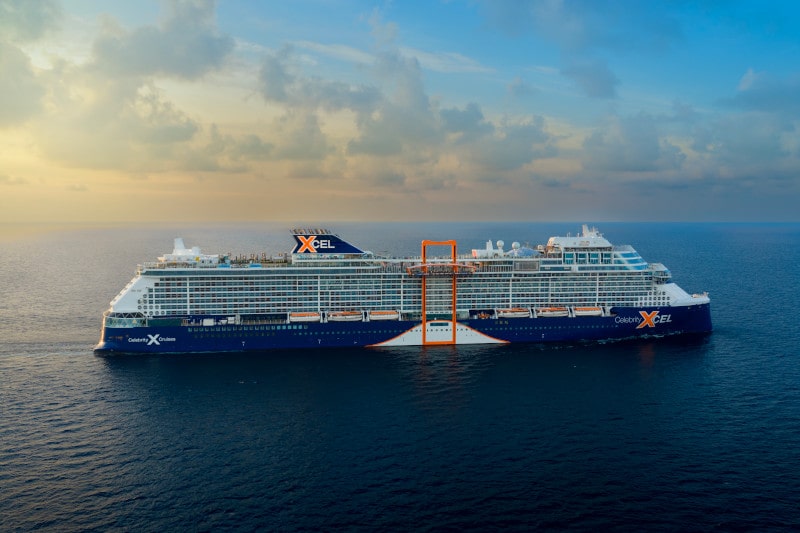
Massive Celebrity Edge cruise ship navigating calm deep blue open ocean waters daytime.
Celebrity Edge brings a more modern ship experience to Hawaiian Islands cruises, with outward-facing spaces designed to keep the ocean and destination in view. As the first ship in the Edge Series, it introduced signature features like Magic Carpet®, a cantilevered venue that moves along the side of the ship and creates a striking place for open-air views, drinks, and dining.
Guests can also enjoy Infinite Veranda® staterooms, which open up to the sea with the touch of a button, as well as spaces like Eden, Rooftop Garden, and a wide range of restaurants, bars, and lounges. With 14 guest decks, nearly 1,500 staterooms, and a double occupancy of over 2,900 guests, Celebrity Edge offers plenty to explore between island stops, from poolside afternoons to specialty dining and live entertainment.
For Hawaii, Celebrity Edge is a strong choice for guests who want a newer ship with innovative design, destination-facing venues, and many ways to enjoy their time on board while sailing between the islands.
Celebrity Solstice
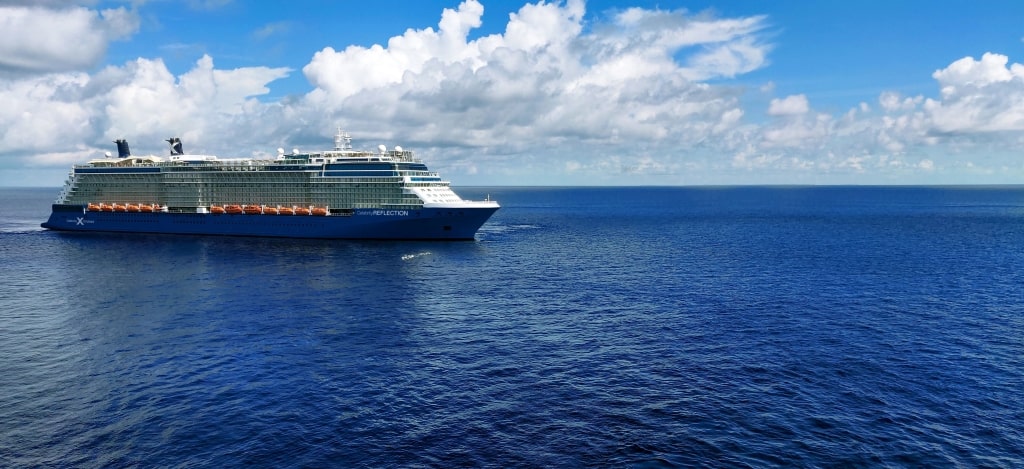
Elegant Celebrity Solstice cruise ship upper pool deck featuring lounge chairs alongside manicured lawns.
Celebrity Solstice offers a classic Celebrity ship experience, now refreshed with new venues, updated accommodations, and more ways to enjoy days at sea between Hawaiian Islands ports. The renewed ship introduces spaces like Sunset Park, an open-air setting for drinks, concerts, movies, lawn games, and ocean views, along with an expanded Sunset Bar designed for relaxed evenings outdoors.
Dining and entertainment are also part of the refreshed experience. Guests can look forward to additions such as Trattoria Rossa, Fine Cut Steakhouse, Boulevard Lounge, and The Parlor, giving the ship more variety from day to night. Updated rooms, expanded AquaClass® accommodations, and reimagined experiences for guests of The Retreat® add to the sense that Celebrity Solstice has been made new again while keeping the easygoing appeal guests already know.
For Hawaii, Celebrity Solstice is a strong choice for guests who want a renewed ship with open-air spaces, familiar Celebrity style, and plenty of dining, entertainment, and relaxation options between days spent exploring the islands.
How Hawaiian Island Cruises Work
Most Hawaiian island cruises sail from the mainland and stop at ports within the four major islands, with possible stops at ports on both the Kailua Kona and the Hilo sides of the Big Island of Hawai’i.
Scuba divers love exploring the islands by cruise ship because they can dive on multiple islands without needing to spend 12-24 hours on the surface before flying. Visitors from December through May might hear the haunting call of the humpbacks during dives and snorkel trips. The best time to cruise to Hawaii is during the shoulder season of spring and fall. Both air and sea temperatures are fairly consistent all year, but enjoying the islands outside of peak tourist season is ideal.
Under the Passenger Vessel Services Act, most foreign-flagged cruise ships cannot transport guests solely between U.S. ports. As a result, many Hawaii, Alaska, and Pacific Coast itineraries include a foreign port call, such as Ensenada, Mexico, or Victoria, Canada, depending on the route. U.S.-flagged ships or ships operating under specific exemptions may be treated differently.
What To Pack for a Hawaiian Islands Cruise
When packing for a Hawaiian Islands cruise, think casual, sun-ready, and respectful of the local environment. Lightweight clothing, swimsuits, sandals, and a hat will help you stay comfortable during beach days, scenic drives, and time spent exploring port towns. An aloha shirt with khakis or a sundress is also appropriate in many restaurants and nicer settings throughout the islands.
Reef-safe sunscreen is essential in Hawaii, where the marine environment is a major part of the experience. Pack broad-spectrum SPF, sunglasses with strong UV protection, and a beach towel or sand-resistant blanket for time on the shore. You may also want a reusable water bottle, comfortable walking shoes, and a light layer for breezy evenings or higher-elevation stops.
For the flight or sea days, download a playlist with Hawaiian slack-key guitar or classics from Israel Kamakawiwoʻole to set the mood before you arrive.
Add Aloha to Your Next Vacation by Booking a Celebrity Cruise to the Hawaiian Islands
Get to know the incredible beauty and unique spirit of aloha throughout the eight islands of Hawaii. Book your inspiring dream cruise to the Hawaiian Islands with Celebrity to deeply connect with culture and enjoy the island indulgence of the highest order.
View cruises to Honolulu and explore all that Hawaii has to offer.