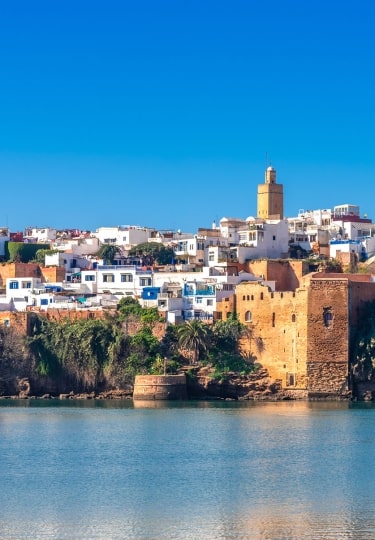
Architectural masterpieces to explore, glittering trinkets piled high in the souks, the taste of sweet mint tea on your tongue, and sun-drenched dunes stretching to the horizon line. This is what guests can expect from a trip to Morocco.
But the finer nuances of Moroccan culture are just as important. First-time visitors often wonder: What should I wear in Morocco? What language do locals speak? Are there local customs or cultural taboos to avoid? Before you book a flight to Marrakech or hop on a cruise to Tangier, it’s worth learning about Moroccan heritage, traditions, and etiquette to better understand this fascinating country.
Dive into traditional music, incredible Moroccan cuisine, and important etiquette in this guide to Moroccan culture, a must-read before any trip.
What Is Morocco Known For?
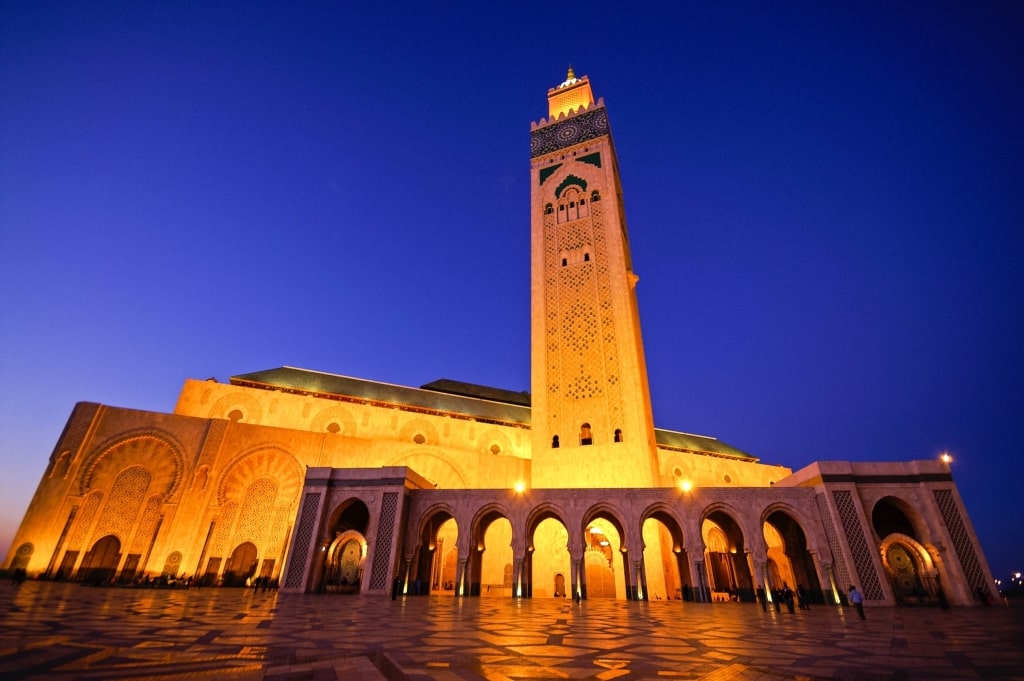
As twilight descends, the magnificent Hassan II Mosque in Casablanca is bathed in a brilliant glow.
From steaming hammams to the maze of souks and a kaleidoscope of mosaics, Morocco is a destination that inspires. Located at the intersection of North Africa and Europe, this coastal country offers visitors an intoxicating culture that’s all its own.
A crossroads between the ancient and the modern, Morocco is rich in history, with eras like the Arab conquest and its time as a French protectorate having a lasting impact. Because of its geographic location, this country of sea and sand has been influenced by a variety of communities and cultures, from the Indigenous Amazigh community, often referred to as Berber, to Sub-Saharan influence from nearby North African countries and Andalusian, French, and Arab imprints.
Long a muse for famous artists like Matisse and Delacroix, and writers like Mark Twain, Morocco reveals a colorful expression of heritage and traditions evident in everything from Moroccan cuisine to Moroccan architecture. Whether you’re looking for interesting things to do in Casablanca or you’re curious about discovering delicious food specialties, read on to explore Moroccan culture and all it has to offer.
Heritage and Social Etiquette in Morocco
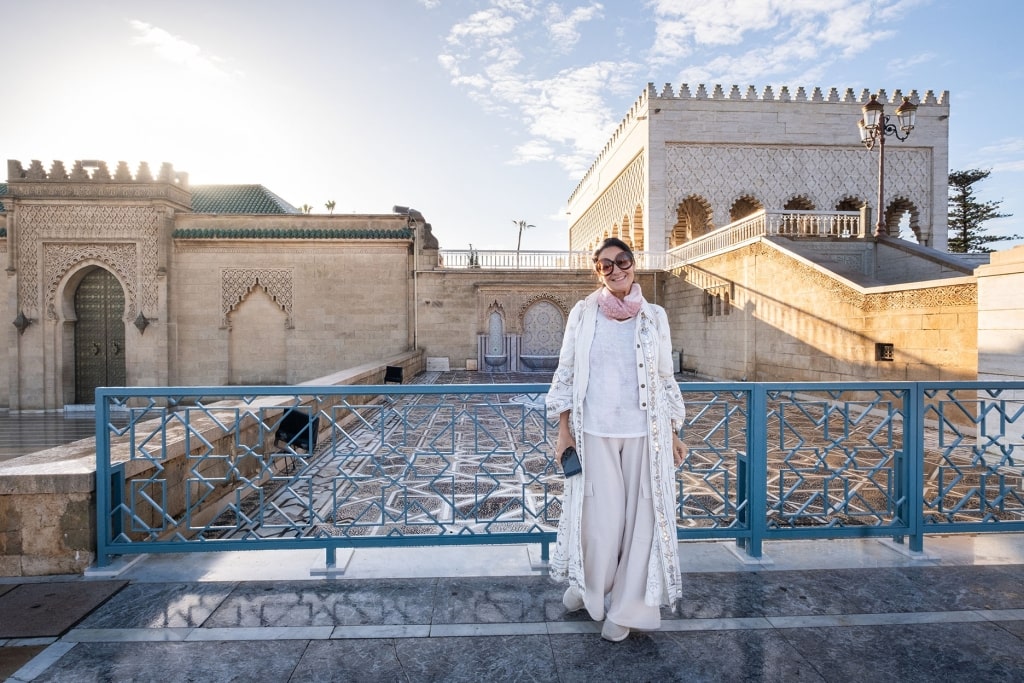
A tourist stands before the architectural splendor of Rabat’s Mausoleum of Mohammed V.
Morocco’s heritage and social etiquette go hand in hand. While European influence has had a lasting effect on cultural customs, Islam is also an important factor in everyday Moroccan life. As a predominantly Sunni Muslim country, Morocco has social customs that may be different from what first-time visitors are used to. Many travelers wonder about the dos and don’ts of local customs and how to prepare ahead of their trip.
Gender norms may be different in Morocco than in your home country. Public displays of affection are generally discouraged, and greetings between opposite sexes tend to be formal, although that doesn’t mean they aren’t warm and friendly. It’s customary to use your right hand for eating, giving gifts or money, and shaking hands. Despite European influences, drinking alcohol in public is illegal. That said, it’s not difficult to find beer and wine in local bars, licensed liquor stores, and hotels that cater to tourists.
While the best time to visit Morocco varies depending on each traveler’s preferences, keep in mind that dressing appropriately, no matter the temperature, is important. In general, the dress code in Morocco isn’t as strict as in other Islamic countries. That said, both men and women will want to ensure that their knees and shoulders are covered. Loose fabrics like linen and cotton are ideal for beating the heat and dressing modestly.
Bargaining in the souks—open-air marketplaces—is not only encouraged but also expected, and it can be an entertaining Moroccan tradition. It should be a fun and playful experience. At the end of the day, you’re trying to find a happy medium between the price that was first quoted and your budget. This kind of exchange is part of Moroccan society, where conversation, patience, and hospitality often shape everyday interactions.
Culinary Arts in Moroccan Cuisine
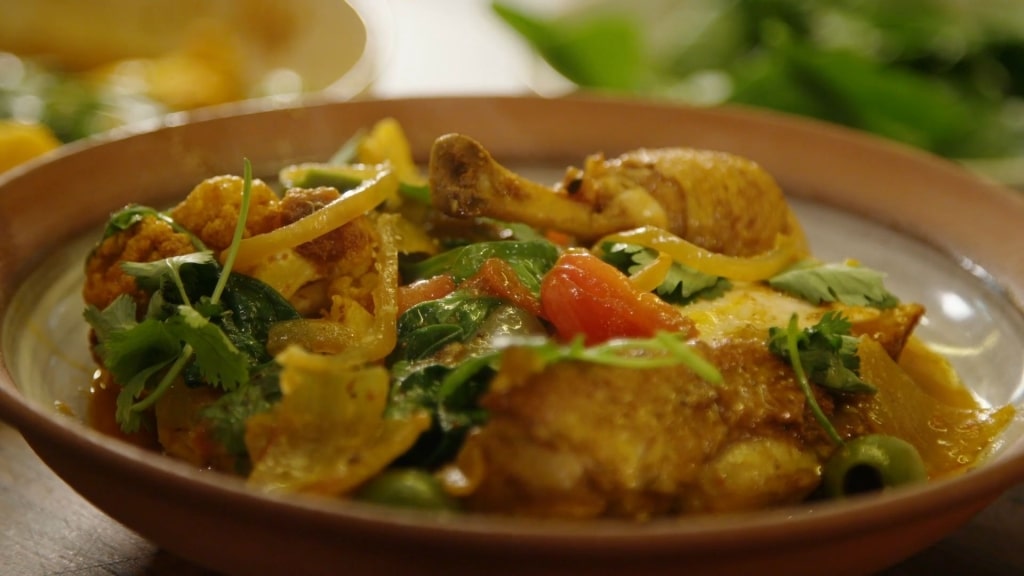
A traditional Moroccan chicken tagine served with tender vegetables and fresh herbs.
From rustic Berber cooking techniques to French baking, Moroccan food is a beautiful mix of gastronomic heritage. Once again, European, Middle Eastern, and African influences are at play in the country’s traditional cuisine.
Both couscous and tagine share the coveted title of Morocco’s national dish, and you’ll find them in almost every restaurant in several popular variations. Tagine is a mix of rice, root vegetables, and meat, traditionally cooked in a clay pot of the same name until fall-off-the-bone tender. Couscous, on the other hand, is a hearty pasta made from durum wheat. This pearl-shaped grain is traditionally served with meat and veggies like pumpkin, eggplant, and turnips.
The ubiquitous mint tea is a culinary staple across the country. Affectionately referred to as “Berber whiskey,” mint tea is often served with a flourish. Hot gunpowder green tea is poured from a metal kettle, high above the glass, over fresh mint leaves. It is also a classic expression of Moroccan hospitality, offered in homes, shops, and restaurants throughout the country.
Pyramids of spices in the souks are a hint to what visitors can expect from Moroccan cuisine. Ingredients like cumin, paprika, saffron, turmeric, and ginger come together in a symphony of delicate, aromatic spices. Unique combinations like the iconic ras al hanout—a blend of cinnamon, coriander, cumin, and ginger—are used in many signature dishes, brought to Morocco by Arab traders sometime between the 7th and 8th centuries. Lovers of spicy cuisine should also keep their eyes peeled for harissa, a Tunisian chili paste that’s a beloved condiment.
A more under-the-radar Moroccan food specialty, pastilla is a sweet and savory pie that was traditionally made with pigeon. Most modern versions use spiced chicken, along with other classic ingredients like egg and nuts, wrapped in flaky warqa dough, and dusted with cinnamon and sugar. This interesting concoction came to Morocco with the Moors and Sephardic Jewish communities from Spain sometime in the late 15th century.
Bread is another important element of Moroccan cuisine. You’ll find two varieties everywhere in the country, m’semen and khubz, although there are dozens more to discover. A staple of every breakfast table in Morocco, m’semen is a flaky flatbread that makes for the perfect vessel for another local favorite, amlou, a thick spread made from ground almonds and honey. Khubz, akin to pita, is served with tagine and makes for a great utensil.
Art and Architecture in Morocco
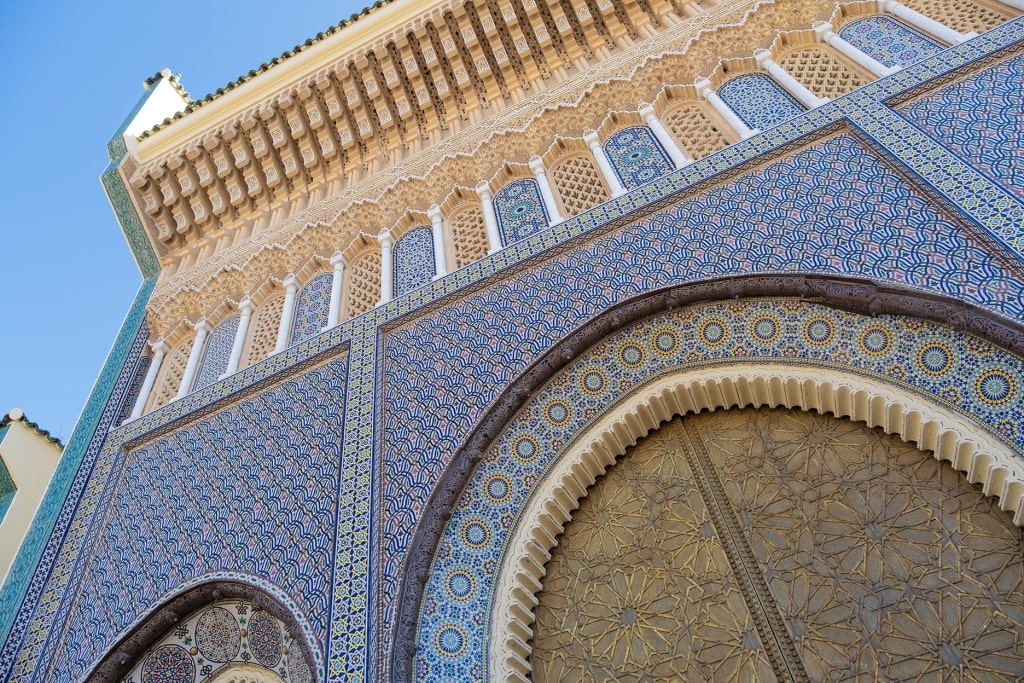
A golden brass entryway at the Royal Palace in Fez is framed by elaborate zellij tilework.
Morocco is renowned for artisan crafts, many of which have been perfected for centuries. From rug making to intricate zellij mosaics and leatherwork, you’ll find gorgeous examples of traditional craft and distinctive Moroccan art in every nook and cranny.
The best place to search for these fine handicrafts is in the souks, where the clink of jewelrymakers’ hammers and the smell of leather tanning haven’t changed for hundreds of years. While these labyrinths have certainly been infiltrated by foreign-made trinkets, there are plenty of handmade items to find, too, including rugs that often take months to make.
Islamic motifs are central to art and architecture in Morocco, but European influence from Andalusia and France has also made its mark. This is especially evident in Moroccan architecture, where geometric patterns, carved plaster, zellij tilework, and ornate courtyards reflect the country’s layered cultural heritage.
One of the best things to do in Morocco that highlights the country’s jaw-dropping architecture is to stay in a traditional home, whether that be a riad in the heart of Marrakech or a High Atlas kasbah. Both of these accommodation options reveal elaborate mosaic work inspired by Islamic art, Berber red-brick clay facades, burbling Moorish fountains, and whimsical geometric patterns, all quintessential Moroccan architectural features.
While traditional buildings are what you often picture when conjuring up images of Morocco, Art Deco and Art Nouveau works are also worth seeking out. Many of these buildings survive in the form of old cinemas and private homes, scattered across the country. In an ancient medina, meanwhile, architecture often feels like a living record of Moroccan identity, shaped by centuries of cultural exchange.
Moroccan Music and Language
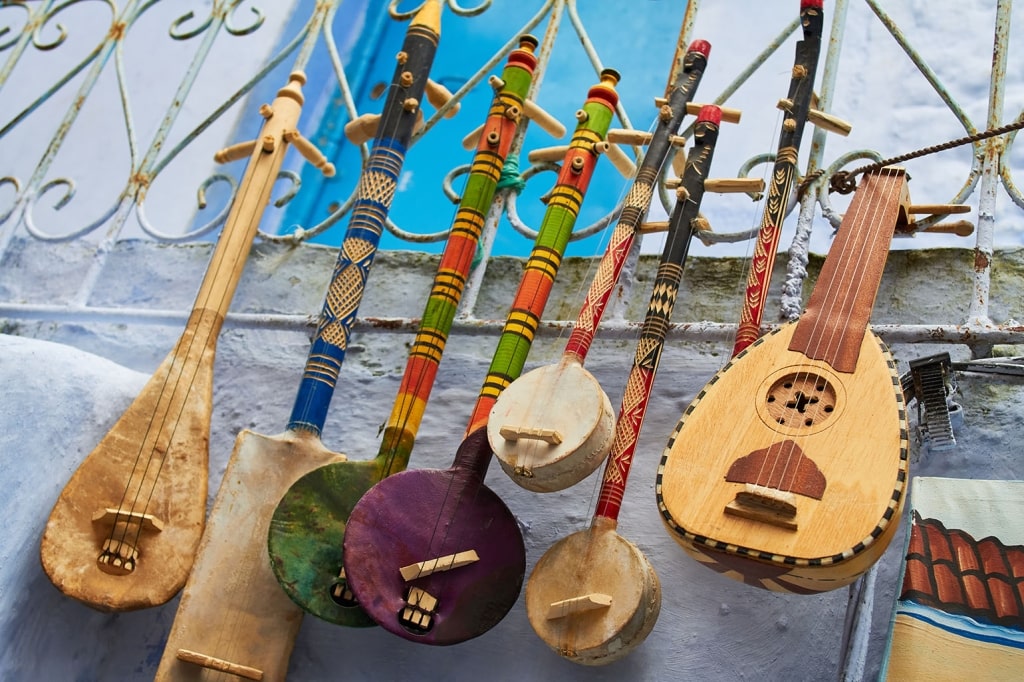
A collection of vibrant, hand-crafted Moroccan lutes and traditional stringed instruments.
Morocco’s unique blend of communities has coexisted for thousands of years. Visitors will realize this quickly, as some locals speak multiple languages, including Arabic and Amazigh, the country’s two official languages. Many Moroccans also speak Darija, or Moroccan Arabic, a lingua franca that bridges Amazigh and Arabic. This dialect can be difficult to understand for other Arabic speakers.
Modern Standard Arabic is used in formal settings, while Classical Arabic is associated with religion and traditional scholarship. Amazigh, sometimes referred to as a Berber language, is also an important part of the country’s cultural identity. Many Moroccans also speak or understand French due to the country’s time as a French protectorate. English and Spanish are also widely spoken. Practicing a few basic phrases of Arabic is always welcome, with bonus points if you can manage to learn a few words in Amazigh.
This same influence has also had an impact on Moroccan music, which is as diverse as the people who call this fascinating country home. Several instruments are closely associated with Morocco, including the oud and bendir. Most travelers, especially those who venture into the Sahara Desert, will be treated to Amazigh music, which revolves heavily around percussion. The bendir is a traditional Amazigh drum, often played in unison with the ghaita, which is similar to an oboe with a distinctive whine.
Of course, modern tunes in the country also have a distinctive Moroccan lilt, and there are several genres specific to the country, including Chaabi, a kind of urban folk music, and Al-Ala, which features Andalusian tones. Music lovers may also hear about Moroccan festivals such as the Gnaoua World Music Festival in Essaouira or the Fes Festival of World Sacred Music, both of which reflect the country’s deep musical heritage.
How To Experience Moroccan Culture on a One-Day Tangier Port Visit
Tangier is Morocco’s main port of call in the Mediterranean, offering cruise guests a window into the country’s enchanting culture. While this coastal enclave has a unique vibe all its own, influenced by its proximity to Europe, there are plenty of cultural experiences to prioritize on a one-day Tangier port visit.
- Shopping: Your first stop of the day should be one of the best things to do in Tangier—visiting the souks. While you’ll still get the labyrinthine shopping experience that you’d expect from a traditional Moroccan medina, Tangier’s souks are considered to be a more laid-back experience. Sift through soaring piles of spices and colorful trinkets to find the perfect souvenir.
- Museums: Several museums help tell the story of the city, including the Kasbah Museum. Here, you’ll find not only panoramic ocean views but remnants of Morocco’s rich history. Once a sultan’s palace, it now houses artifacts that span centuries from the Phoenicians to the modern era. The American Legation Museum is another important site and was the first diplomatic American property in the world, gifted to the United States by the Sultan of Morocco.
- Cafes: Wrap up by exploring the city’s legendary cafe scene. Because Tangier embraces its European influence wholeheartedly (it’s only 9 miles from Spain), many locals favor coffee over the iconic mint tea you’ll find in the rest of the country. Be sure to order a nuss nuss, Morocco’s answer to the classic latte, a mixture of espresso and steamed milk.
Uncover Moroccan Culture With Celebrity Cruises
From Tangier’s atmospheric souks and café culture to the traditions, flavors, and artistry that shape everyday life, Morocco offers a vivid introduction to North Africa. Discover its rich heritage, warm hospitality, and coastal beauty on a Celebrity Cruises® journey to Tangier.
Browse upcoming itineraries and immerse yourself in Moroccan culture like a local.